Category: Travel

  • 7 Must-Have 3 in 1 Apple Chargers That Make Charging Effortless

    7 Must-Have 3 in 1 Apple Chargers That Make Charging Effortless

    If you travel with an iPhone, an Apple Watch and AirPods, you know the nightly ritual: three cables, two or three bricks, a hunt for enough outlets behind the hotel bed, and at least one device that did not charge because its cable slipped out. A 3-in-1 Apple charger replaces all of that with one stand or pad that charges your phone, your watch and your earbuds at the same time from a single outlet. For travelers that is a real improvement: less to pack, less to forget at checkout and a tidy spot on the nightstand where everything goes every evening. Not every 3-in-1 charger is a good travel charger, though. Some are heavy desk stands, some charge slowly, some leave you to find your own power adapter, and some do not charge an Apple Watch properly at all. This guide explains how these chargers work, what to look for when you buy one for travel, the seven styles from our original list and who each one suits, how to use one abroad, and the rules that apply when you fly with chargers and power banks. It is part of our travel gear series, which starts with our main guide to choosing travel luggage.

    The short answer

    For travel, choose a foldable 3-in-1 charger that closes to pocket size, with magnetic alignment for the iPhone (MagSafe or Qi2), a proper Apple Watch charging puck from a certified module, and a pad or cradle for AirPods with a wireless case. Make sure you know which power adapter it needs and whether one is included, and pick one that runs from a USB-C adapter that accepts 100 to 240 volts, so all you need abroad is a plug adapter. Leave the heavy, weighted desk stands at home. And if you also carry a power bank, remember that power banks travel in the cabin only, never in checked bags.
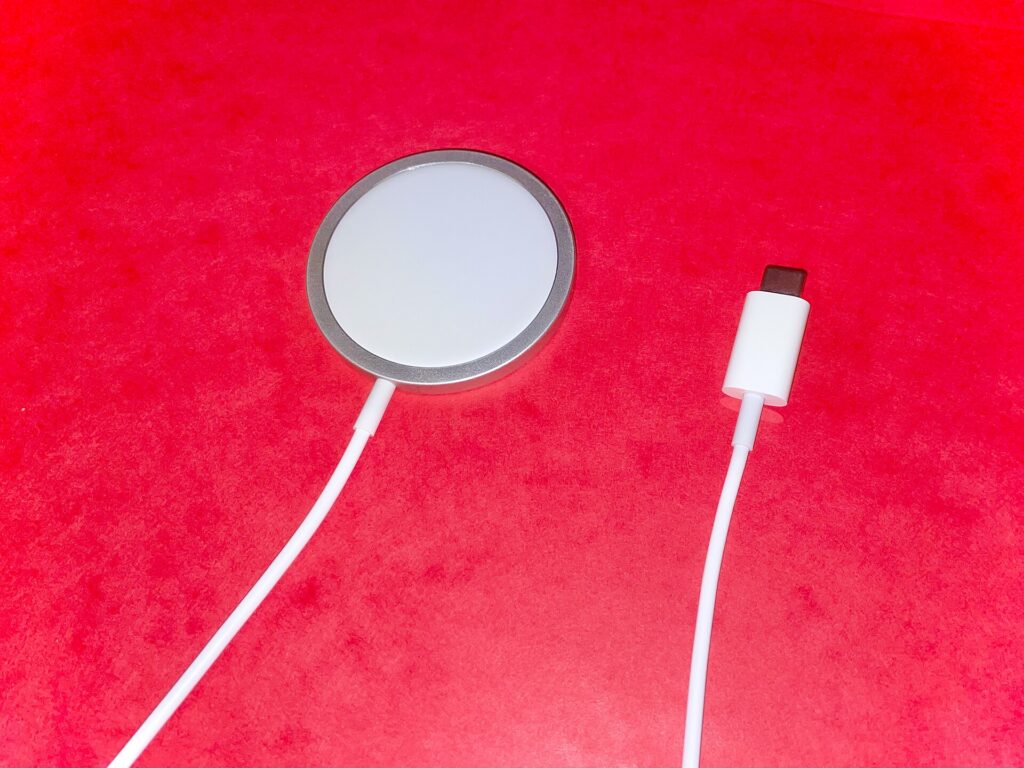
    A round magnetic MagSafe charging puck with its USB-C cable
    Magnetic alignment is what makes wireless phone charging reliable on a hotel nightstand (Photo: James Tamim via Wikimedia Commons, CC BY-SA 4.0)

    How 3-in-1 Apple chargers work

    A 3-in-1 charger combines three different chargers in one housing, powered from one cable:

    • The iPhone charger is a wireless charging pad, usually magnetic. Most iPhone models from the iPhone 12 onward support MagSafe, Apple’s magnetic wireless charging system (Apple’s MagSafe guide lists the exact models), and newer iPhones also support Qi2, the magnetic wireless charging standard from the Wireless Power Consortium. Magnets hold the phone in the right spot, which matters because wireless charging is sensitive to alignment.
    • The Apple Watch charger is a separate magnetic puck. Apple Watch does not charge on an ordinary phone wireless pad; it needs its own charger. Apple recommends chargers made by Apple or chargers that have completed its MFi certification and carry the “Made for Apple Watch” badge, and it explains how to spot them on its page about identifying authentic and certified Apple Watch chargers.
    • The AirPods charger is usually a small wireless pad or cradle. It works with AirPods cases that support wireless charging; a case that charges only by cable will not charge on the pad.

    The whole unit then draws power from a wall adapter, usually through a USB-C cable. The adapter matters more than people realize: an underpowered adapter can make everything charge slowly, or leave one device not charging at all.

    MagSafe, Qi2 and plain Qi

    These labels cause more confusion than anything else on charger listings:

    • MagSafe is Apple’s magnetic wireless charging for iPhone. Apple’s own MagSafe Charger guide lists the iPhone models it supports and the adapter wattage it recommends for the fastest charging.
    • Qi2 is an open standard from the Wireless Power Consortium that adds magnetic attachment to Qi wireless charging. Certified Qi2 chargers are designed to work with recent iPhones in much the same way as MagSafe, and the consortium keeps a database of certified products.
    • Qi is the older, non-magnetic wireless standard. It still charges an iPhone, but without magnets the phone can slip out of position, and charging is generally slower.
    • “MagSafe-compatible” on a third-party product usually means it has magnets that attach to an iPhone, not that it is certified by Apple or charges at the same speed as Apple’s own charger. Look for Qi2 certification or official MagSafe certification if speed matters to you.

    Who needs a 3-in-1 charger, and who does not

    A 3-in-1 makes the most sense if you carry all three devices every day and travel often enough that packing three separate chargers has become a chore. Frequent business travelers, people who wear an Apple Watch to track sleep or workouts on the road, and couples who share one nightstand in a hotel room get the most out of one. It makes less sense if you do not own an Apple Watch or wireless-charging AirPods, since a 2-in-1 or a single magnetic charger will be smaller and cheaper. It also makes less sense if you mostly charge in the car or at your desk by cable, or if you are happy with a single multi-port USB-C charger and three short cables, which is lighter still. Be honest about your routine before you buy.

    What to look for in a travel 3-in-1 charger

    Folded size and weight

    The biggest difference between a travel charger and a desk charger is how it packs. Foldable 3-in-1 chargers close into a flat square or a small block that fits in a cable pouch. Weighted desk stands are stable on a nightstand but heavy and awkward in a bag. For travel, folded size and weight matter more than looks.

    Charging speed

    Speed is set by the charger’s rating, its certification and the adapter you plug it into. Watch and earbud chargers are slower by design. For most travelers, overnight charging is what matters, and nearly any decent 3-in-1 fills everything by morning. Faster charging helps if you top up during a short hotel stop or an airport lounge visit.

    Power adapter included or not

    Some 3-in-1 chargers come with a wall adapter, others only with a cable. If an adapter is not included, check the minimum wattage the maker recommends and make sure the adapter you already carry meets it. Using an underpowered adapter is the most common reason a 3-in-1 charger seems slow or unreliable.

    Apple Watch module

    Check that the watch puck supports your watch model and, ideally, that the charger is MFi-certified for Apple Watch. Some chargers let the puck tilt to a flat position so the watch can sit in nightstand mode on its side, which is a nice touch in a dark hotel room.

    Case compatibility

    Magnetic chargers work best with the phone bare or in a case designed for MagSafe. Thick, rugged or non-magnetic cases can weaken the magnetic hold and slow charging or stop it entirely. Remove card wallets before charging; Apple warns not to put credit cards, security badges, passports or key fobs between an iPhone and a MagSafe charger because it can damage magnetic strips or chips.

    Stand or flat pad

    A stand holds the phone upright so you can see notifications, use it as a bedside clock or take a video call while it charges. A flat pad packs thinner. Many foldable designs manage both, with a panel that props up or lies flat.

    Heat and safety

    Wireless charging creates heat. Good chargers include temperature protection, and iPhones manage battery heat themselves; Apple notes that if the battery gets too warm, software might limit charging above 80 percent. Charge on a hard surface with some air around it, not under a pillow or on a bed, and do not charge in direct hot sun.

    FeatureWhy it matters for travelWhat to check
    Foldable designPacks flat in a cable pouchFolded size and weight
    MagSafe or Qi2 for iPhoneMagnetic alignment and faster wireless chargingCertification, not just “compatible”
    Apple Watch puckCharges the watch without a separate cableMFi “Made for Apple Watch” badge, model support
    AirPods padCharges wireless-charging casesYour case supports wireless charging
    Included adapterOne less thing to buy and matchWattage, plug type, 100 to 240 V input
    USB-C inputShares a cable and adapter with other gearCable length for hotel outlets
    Stand modeBedside clock, video callsStability when you tap the screen
    Temperature protectionSafer overnight chargingMaker’s stated protections
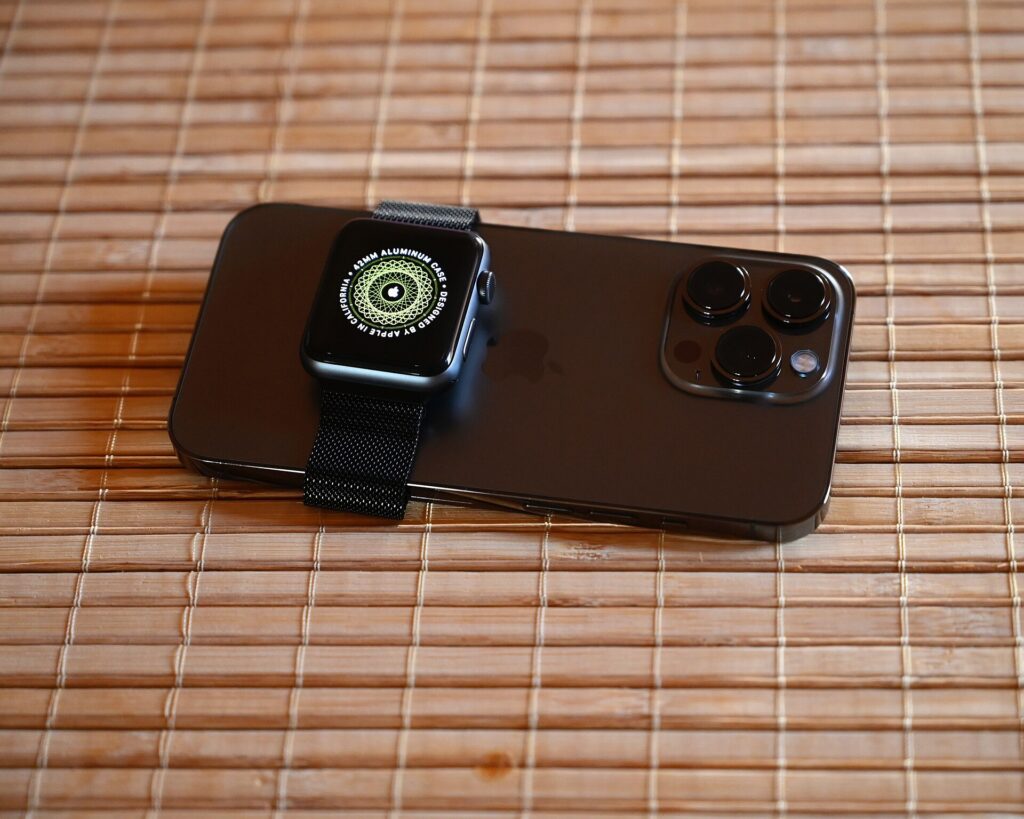
    An Apple Watch resting on an iPhone on a bamboo mat
    iPhone and Apple Watch charge differently, so a 3-in-1 needs a proper watch puck as well as a phone pad (Photo: SimonWaldherr via Wikimedia Commons, CC BY-SA 4.0)

    Seven styles from our original list

    The original version of this guide featured seven chargers. Most were listed by description rather than by brand and model, so we have kept them as styles, with what each is good for. Two were Anker MagGo models, which we describe below. Designs change and third-party listings change often, so check the current details from the maker before you buy.

    1. Foldable magnetic 3-in-1 dock

    A tri-fold or bi-fold magnetic dock that charges iPhone, Apple Watch and AirPods and closes flat for packing. This is the classic travel 3-in-1: small enough for a cable pouch, quick to set up on a nightstand. It suits frequent flyers and minimalist packers. Check the certification for the iPhone pad, whether the watch puck is certified, and whether an adapter is included.

    2. Desk charging station

    A heavier stand with the phone held upright, the watch on an arm and AirPods on a base. It keeps a desk tidy and makes notifications easy to see, which is why the original list included one for workstations. It is a better fit for a home office than a suitcase, but worth it if you split time between home and a regular second base, such as a company apartment.

    3. Anker MagGo 3-in-1 charging station

    Anker’s MagGo line includes several 3-in-1 chargers for iPhone, Apple Watch and AirPods built around Qi2 wireless charging for the phone. Anker makes both stand-style and foldable versions, so look at the current range on Anker’s official product page and compare the folded size, the included accessories and the watch models listed as compatible. A MagGo station suits Apple users who want a charger from a well-known accessory brand with Qi2 certification rather than a generic “magnetic” label.

    4. Slim charger for the nightstand

    A low-profile charger designed to look tidy on a bedside table, often with indicator lights. It suits people who want one charger for home and occasional trips. If you want it for travel, check that the indicator lights can be dimmed or are not too bright; a glowing charger in a dark hotel room is surprisingly distracting.

    5. Foldable magnetic dock for travel

    A compact folding dock sold specifically as a travel charger, with magnetic alignment for the phone and room for the watch and earbuds. It is aimed at the same traveler as the first style but usually prioritizes the smallest folded size. Small chargers can be light enough to be pulled off a nightstand by a cable, so check how stable it feels with the phone attached.

    6. Anker MagGo foldable Qi2 charger

    The original list also featured a foldable Anker MagGo charger. On Anker’s product page, the MagGo Wireless Charging Station (Foldable 3-in-1) is listed with Qi2 charging for the iPhone, separate charging for Apple Watch and AirPods, a folding design, and a USB-C wall charger and cable in the box. It is a strong fit for travelers who want a certified, foldable 3-in-1 with the adapter included, so there is nothing extra to match. Check the compatibility list on the product page for your watch and earbud models.

    7. Travel 3-in-1 charger with a night light

    A magnetic 3-in-1 charger with a built-in soft light. In an unfamiliar hotel room, a gentle light by the bed is genuinely useful for finding the bathroom at night without switching on the room lights. It also makes a practical gift for a frequent traveler. Check that the light can be turned off completely for people who sleep better in full darkness.
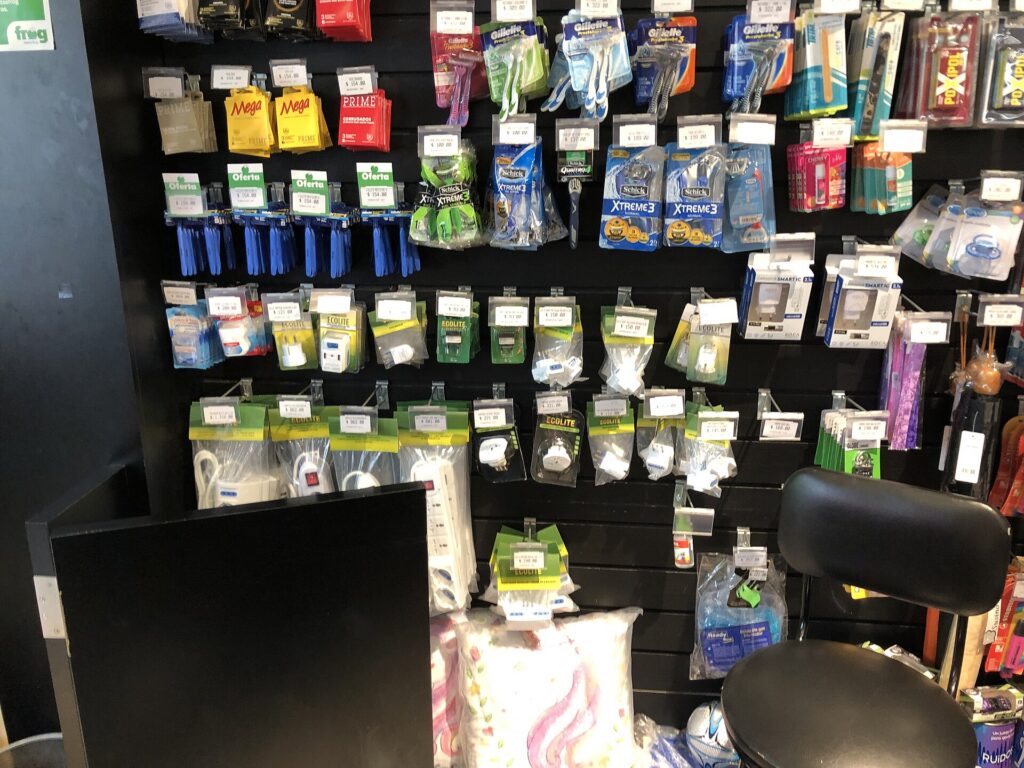
    Travel plug adapters and power strips hanging on a store display
    With a 100 to 240 volt USB-C adapter, all you need abroad is the right plug (Photo: Grandmaster Huon via Wikimedia Commons, CC0)

    Using a 3-in-1 charger abroad

    Most of the work is in the adapter, not the charger:

    • Check the adapter’s input rating. Apple says its USB power adapters are designed for power sources from 100 to 240 volts at 50 to 60 hertz, which covers most of the world. Many third-party USB-C adapters are similar, but check the small print on yours.
    • Bring a plug adapter, not a converter. If the power adapter accepts 100 to 240 volts, you only need the right plug shape for the country.
    • Consider a multi-port USB-C charger with swappable plugs. One well-made charger can run the 3-in-1 and your laptop, and replace several bricks.
    • Pack a longer cable. Hotel outlets are often behind the bed or across the room. A cable long enough to reach the nightstand saves you from charging on the floor.

    For the rest of your tech kit, from adapters to cable pouches, see our guide to laptop travel accessories.

    Flying with chargers and power banks

    A 3-in-1 wireless charger has no battery of its own, so it is simply an electronic accessory. Magnetic power banks and other battery packs are different, because they contain lithium batteries. The principles:

    • Power banks and spare lithium batteries go in your carry-on only. They are not allowed in checked baggage. If your carry-on is gate-checked, take them out first.
    • Watt-hours set the limits. Most phone power banks fall well under the common 100 Wh threshold. Larger batteries generally need airline approval, and there is an upper limit beyond which they are not allowed.
    • Protect the terminals by keeping spares in their packaging, a case or a separate bag, away from keys and coins.
    • Airlines can be stricter. Some carriers have added their own rules about using or charging power banks during flights, so check your airline before you fly.
    • Damaged or swollen batteries should not fly.

    Official guidance: the FAA’s PackSafe page on lithium batteries, the TSA’s power banks entry and CATSA’s guidelines for batteries for Canadian airports. Rules change, so confirm before each trip.
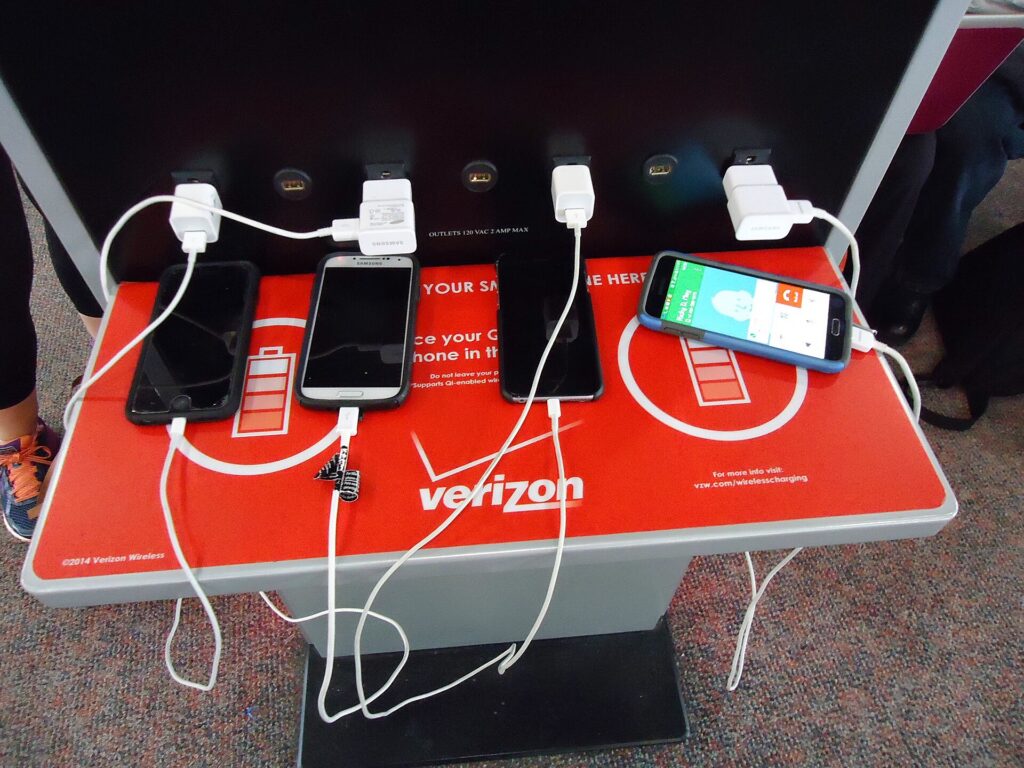
    Several phones plugged into a public charging station at an airport
    Treat airport charging stations as a bonus and arrive with everything charged (Photo: Tomwsulcer via Wikimedia Commons, CC0)

    Charging on the move: airports, planes and hotels

    At the airport

    Airport charging stations and seat outlets are handy, but they are often crowded or broken. Arrive with everything charged and treat airport outlets as a bonus. Use your own adapter and cable in public outlets rather than unknown cables left at a station.

    On the plane

    Seat power varies by aircraft. Some seats have USB ports that deliver limited power, some have AC outlets and some have nothing. A 3-in-1 charger is not practical on a tray table; a short cable or a small magnetic power bank is better in the air.

    At the hotel

    Set up the charger on the nightstand as soon as you arrive, and make it the one place your phone, watch and earbuds go every night. That habit alone stops most lost-charger and dead-watch mornings. When you check out, the charger is the last thing you pack, and one quick look at the nightstand tells you if you have left anything behind.

    On a road trip

    In a rental car, a magnetic car mount and a single USB-C cable are more useful than a 3-in-1. Save the 3-in-1 for the hotel. If you are planning a driving trip, our car rental search helps you compare options.

    Building a smaller charging kit

    A 3-in-1 charger is one part of a lighter, simpler travel kit. A good all-Apple setup might be: a foldable 3-in-1 for the nightstand, one multi-port USB-C adapter with swappable plugs, one USB-C cable for the laptop, one short cable for the phone in transit and a small power bank for long days. Keep it all in one cable pouch in your personal item. If you work on the road, add a folding travel keyboard, and if your tech bag is heavy, a rolling laptop bag keeps it off your shoulders. For long flights, noise-cancelling headphones are the other piece of tech most travelers are glad they packed. And for keeping the pouch safe in busy places, our guide to anti-theft backpacks covers bags that make pickpocketing harder.

    Common mistakes

    • Buying a desk stand for travel. Weighted stands are great at home and heavy in a bag.
    • Using a weak adapter. An underpowered adapter makes all three devices charge slowly or not at all.
    • Assuming “MagSafe-compatible” means certified. Look for Qi2 or official MagSafe certification if speed matters.
    • Forgetting the watch puck matters. Uncertified watch chargers can charge slowly or unreliably.
    • Charging through a thick case or a card wallet. Take them off, or use a MagSafe case.
    • Packing a power bank in a checked bag. Power banks are cabin only.
    • Leaving it on the nightstand. Make the charger the last thing you pack.

    Frequently asked questions

    Are 3-in-1 Apple chargers safe?

    Chargers from reputable brands with proper certification, such as Qi2 for the phone and MFi for the Apple Watch module, and with temperature protection are designed to charge safely. Use the recommended adapter, charge on a hard surface and avoid uncertified no-name chargers.

    Will a 3-in-1 charger work with my Apple Watch?

    Only if it has a proper Apple Watch charging puck that supports your model. Apple Watch does not charge on a standard phone wireless pad. Check the compatibility list and look for the “Made for Apple Watch” badge.

    Can I charge my iPhone through a case?

    Usually, if the case is designed for MagSafe or is thin and non-metallic. Thick or rugged cases can weaken the magnets and slow or stop charging. Remove card wallets, badges and key fobs before charging.

    Do I need a voltage converter to use a 3-in-1 charger abroad?

    Usually not. If your USB-C power adapter accepts 100 to 240 volts, as Apple’s adapters do, you only need a plug adapter. Check the rating printed on your adapter.

    Do 3-in-1 chargers come with a power adapter?

    Some do and some do not. Check the box contents on the maker’s page and make sure your adapter meets the recommended wattage.

    Can I bring a 3-in-1 charger on a plane?

    Yes. A wireless charger with no built-in battery is an ordinary electronic accessory. Power banks and other battery packs are different: they must travel in the cabin, not in checked baggage.

    Will it charge AirPods?

    Yes, if your AirPods case supports wireless charging. Cases that charge only by cable will not charge on the pad.

    Is Qi2 the same as MagSafe?

    They are different names from different organizations, but both use magnetic alignment for wireless charging, and recent iPhones support both. Qi2 is the open standard; MagSafe is Apple’s own system.

    With your charging kit down to one pouch, all that is left is the trip. Compare fares on our flight search, find a hotel on our hotel search and, for road trips, compare rentals on our car rental search. Planning a long weekend? Flights to New York and our guide to things to do in New York will keep your phone busy all day, and your new charger busy all night. For bags and the rest of your gear, start with our main guide to travel luggage.
  • Top 10 Bag for Travel Pillows: Keep Comfort Clean and Convenient

    Top 10 Bag for Travel Pillows: Keep Comfort Clean and Convenient

    A travel pillow is one of the most useful things you can bring on a long flight and one of the most awkward to carry. It is too bulky to disappear into a backpack, too soft to protect itself, and it spends a surprising amount of time touching things you would rather it did not: airport floors, security trays, seat pockets and the bottom of a crowded overhead bin. A good pillow bag solves that. It shrinks the pillow down, keeps it clean, and lets you clip it to your luggage so your hands and your bag space stay free. This guide covers the kinds of bags and cases that work for travel pillows, from compression cases for memory foam neck pillows to totes for a full-size bed pillow, how to choose one, how pillow bags fit with airline carry-on rules, packing and hygiene tips, and the bags from our original list with who each one suits. It is part of our travel gear series, which starts with our main guide to choosing travel luggage.

    The short answer

    For a memory foam neck pillow, use a compression case with a clip, ideally the one designed for your pillow, so it squeezes down and hangs from your bag strap or suitcase handle. For an inflatable pillow, a small drawstring pouch is enough. If you travel with a full-size bed pillow for road trips, hotels or family visits, a zippered pillow tote with handles keeps it clean and easy to carry. If you want warmth as well as support, a blanket and pillow combo that packs into its own case is worth a look. Whatever you choose, make sure it is washable or wipeable, the clip is sturdy, and the bag does not push you over a strict airline’s carry-on limit.

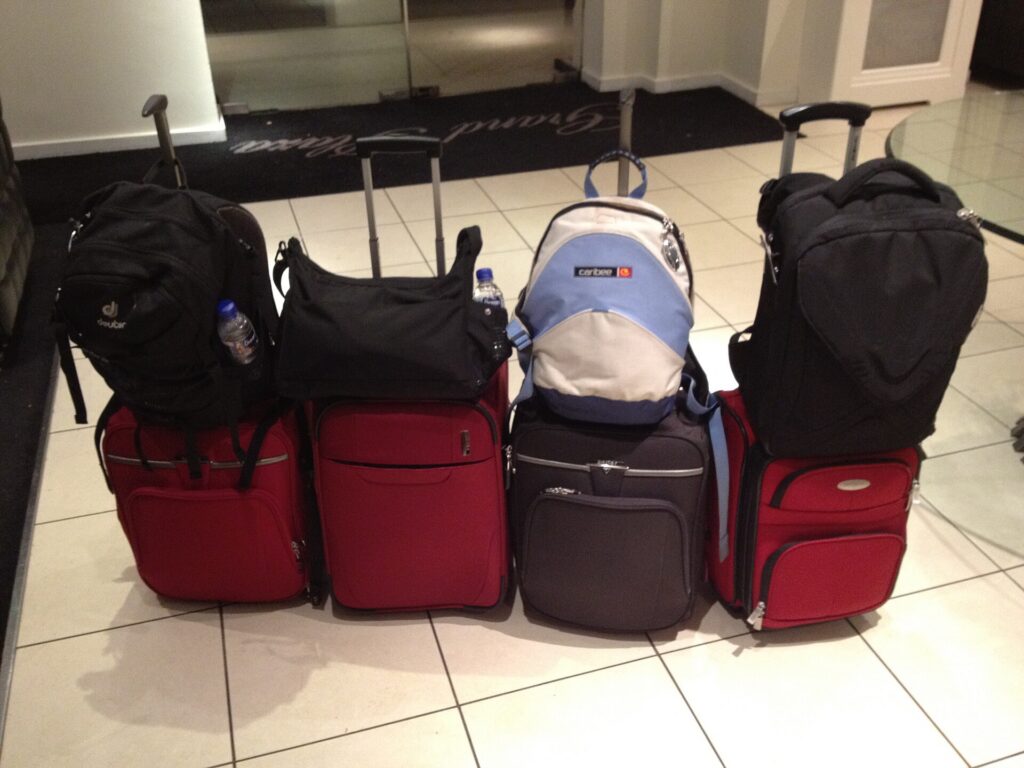
    Backpacks balanced on top of rolling carry-on suitcases in a hotel lobby
    A luggage sleeve or clip lets a pillow bag ride on your suitcase instead of in your hands (Photo: Kathryn Greenhill via Wikimedia Commons, CC BY-SA 2.0)

    Why use a bag for a travel pillow?

    • Hygiene. A pillow sits against your face and hair for hours. Keeping it in a bag between uses keeps it away from floors, trays and seat pockets.
    • Space. A compression case can shrink a memory foam pillow to a fraction of its size, which matters when you travel with one bag.
    • Free hands. A clip or luggage sleeve lets the pillow ride on your suitcase or backpack instead of being carried or worn around your neck through the terminal.
    • Protection. A bag keeps the cover from getting snagged, stained or wet.
    • Organization. Some bags have pockets for an eye mask, earplugs and a charging cable, so your whole sleep kit is in one place.

    Types of pillow bags and cases

    Compression cases for neck pillows

    Many memory foam neck pillows come with a case that squeezes the pillow down when you zip or cinch it closed, and has a clip or strap to attach it to a bag. These are the most practical option for neck pillows. Cabeau, for example, says the travel case included with its Evolution S3 pillow compresses the pillow to about a third of its size and has a quick-release clasp for attaching to luggage. If your pillow did not come with a case, or you lost it, check whether the maker sells a replacement before buying a generic one.

    Drawstring pouches and stuff sacks

    A simple drawstring pouch is all an inflatable pillow needs, because it packs flat once deflated. Stuff sacks, borrowed from camping gear, can also hold fiber or microbead pillows, compressing them a little as you stuff them in. They are light and cheap but offer little protection.

    Pillow cases designed for specific pillows

    Some bags are made to fit a particular pillow shape, such as wrap-style supports like the trtl Pillow. A shaped bag protects the pillow without crushing its internal support, and often includes a strap or clip.

    Pillow totes for full-size pillows

    If you bring your own bed pillow on road trips or to hotels, a zippered tote sized for a standard pillow keeps it clean and gives you handles to carry it. Totes are too big for most carry-on allowances, so they suit car travel and checked-bag trips better than tight flights.

    Blanket and pillow combos

    Some travel blankets fold into their own zippered case, which then works as a pillow. Others come with a separate pillow and a carry bag that has a luggage sleeve and backpack clip. These are useful on cold flights, long layovers, road trips and trains. They take up more room than a neck pillow alone.

    Packing cubes and compression bags

    Compression packing cubes are not made for pillows, but a larger cube can hold a small neck pillow or a compressible pillow inside your suitcase, keeping it separate from your clothes. Roll-down compression bags squeeze air out of soft items, and some compressible pillows are designed to be packed this way.

    Canvas storage bags

    Large zippered canvas storage bags, often sold for bedding, can hold several pillows at once for a family move, a long stay or a camping trip. They are too big for a flight, but useful in a car or for storage at home between trips.

    Bag typeBest forCarry-on friendly?StrengthsWatch out for
    Compression case with clipMemory foam neck pillowsYes, usually clipped to a bagShrinks pillow, frees handsClips can snap; foam needs time to re-expand
    Drawstring pouchInflatable pillowsYes, fits in a pocketTiny, lightLittle protection
    Shaped pillow caseWrap-style or specific pillowsYesFits properly, protects shapeOnly fits one pillow
    Pillow toteFull-size bed pillowsRarelyHandles, keeps a big pillow cleanBulky; best for car trips
    Blanket and pillow comboCold flights, layovers, trainsOften, if clipped or sleevedWarmth and support in oneTakes more room
    Packing cube or compression bagPillow packed inside a suitcaseInside your bagKeeps pillow separate and compactNot reachable mid-flight if packed deep
    Canvas storage bagSeveral pillows, family tripsNoHolds a lotCar or storage only
    A small gray fabric drawstring pouch on a plain background
    A simple drawstring pouch is all a deflated inflatable pillow needs (Photo: Fructibus via Wikimedia Commons, CC0)

    How to choose a pillow bag

    Match the bag to the pillow

    Measure your pillow, or better, try it in the bag. A case that is too small will not close without crushing the pillow; one that is too big lets it flop around and wastes space. If your pillow’s maker sells a case, it is the safest fit.

    Compression

    For memory foam, compression is the main reason to buy a case. Look for a zip or cinch that squeezes the pillow down evenly. Remember that foam needs a few minutes to regain its shape after it comes out, so take it out a little before you want to sleep.

    Attachment

    A strong clip, carabiner or strap lets you hang the bag from a backpack strap or suitcase handle. A luggage sleeve, which slides over the telescoping handle of a rolling suitcase, is even more secure. Check that the clip is sturdy; cheap plastic clips are the first thing to break. If a clip does break, a small carabiner is an easy fix.

    Material

    Water-resistant fabrics protect against spills and rain on the walk to the car. Mesh panels let a pillow breathe, which helps if you pack it slightly damp after cleaning the cover, although it is better to let it dry fully. Soft, brushed fabrics feel nicer if the bag doubles as a pillow cover.

    Washability

    A bag that goes in the washing machine or wipes clean is much easier to keep fresh. Check the care label.

    Extra pockets

    A small pocket for an eye mask, earplugs, lip balm and a charging cable makes the pillow bag into a sleep kit. Some bags include a pocket sized for a tracking tag, which can help if you are prone to leaving things behind.

    Visibility

    Pillows are among the items most often left behind on planes, in taxis and in hotel rooms. A bright color or a name tag makes the bag easier to spot, and a small luggage tag with your contact details gives it a chance of coming back.

    Bags from our original list

    The bags and cases below were featured in the original version of this guide. They cover different needs rather than a strict ranking. Designs, sizes and prices change, so check the current details from the maker or seller before you buy.

    EverSnug travel blanket and pillow with carry case

    EverSnug was featured for a combination travel blanket and pillow that packs into a carry bag with a luggage sleeve and backpack clip. It suits travelers who get cold on planes and at airports, and who want a blanket, a pillow and a bag in one item. Check the listing for the current size and washing instructions.

    Lincove pillow tote bag

    The Lincove pillow tote was featured as a zippered tote with handles sized for a standard bed pillow. It suits travelers who bring their own full-size pillow on road trips, family visits and hotel stays. It is too big for most carry-on allowances, so treat it as a car or checked-bag item.

    BlueHills travel blanket and pillow sets

    Two BlueHills items were on the list: a soft blanket and pillow set that folds into a compact bag with a backpack clip, and a similar set with a luggage belt that slides over a suitcase handle. They suit travelers who want warmth and a pillow in one package that attaches to their bags.

    Soft canvas storage bags with zipper

    These large zippered canvas bags, with handles and a label window, were featured for storing and carrying several pillows or bedding. They suit families, long stays and camping trips by car, and storage between trips.

    Gonex compression packing cubes

    Gonex compression packing cubes were featured as a flexible option. They are not made for pillows, but a larger cube can hold a small neck pillow or a foldable pillow inside your suitcase and keep it separate from clothes. They suit travelers who already pack with cubes.

    Cabeau pillow carrying case

    Cabeau’s carrying case for its neck pillows compresses the pillow and clips to your luggage, as described on the Evolution S3 product page. It suits owners of Cabeau memory foam pillows who want the case designed for them.

    Travel bag for trtl pillows

    The original list featured a third-party bag made to fit trtl pillows, with a strap and a clip for attaching to a backpack or carry-on. It suits owners of wrap-style trtl pillows who want to keep the pillow clean and attached to their bag. Check the listing for fit with your specific trtl model.

    Vera Bradley hanging travel organizer

    The Vera Bradley hanging organizer was included as a toiletry and accessory organizer that can also hold a small pillow or sleep accessories. It suits travelers who want one stylish bag for toiletries and a compact sleep kit. It is not a pillow bag as such, so check the size against your pillow.

    Compressible memory foam pillow with carry bag

    The list also included a compressible memory foam pillow sold with a washable cover and its own carry bag, suitable for camping and long flights. It suits travelers who want a pillow and bag designed together.

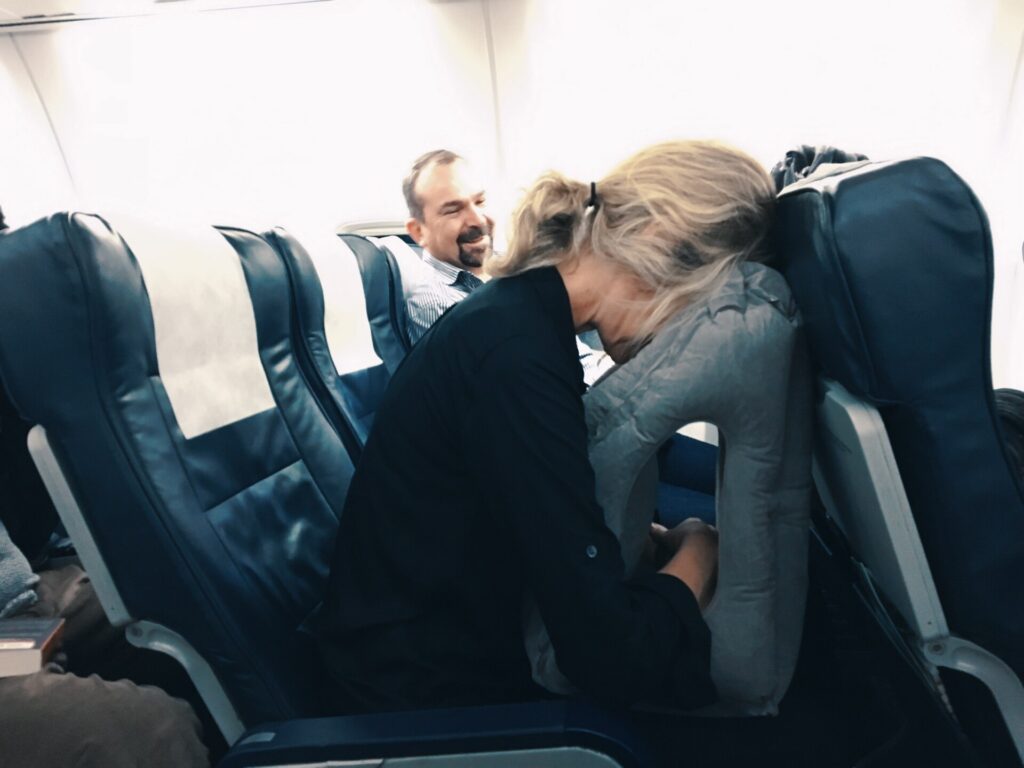
    A gray inflatable travel pillow lying on a woven mat
    Inflatable pillows fold flat, so they need the smallest bag of all (Photo: Vaughan McShane via Wikimedia Commons, CC BY-SA 2.0)

    Pillow bags and airline carry-on rules

    Airlines set their own carry-on rules, and they change. The principles are:

    • Most fares allow a carry-on bag and a personal item. Some basic and ultra-low-cost fares allow only the personal item.
    • Whether a pillow counts is up to the airline. Many airlines are relaxed about a neck pillow clipped to your bag or worn around your neck, but on strict fares, a bulky pillow bag or blanket set carried separately can be counted as an extra item.
    • Clipped items still add to the size. If your bag is right at the limit, a pillow clipped to the outside may push it over at a sizer.
    • When in doubt, pack it inside or wear it. A compressed neck pillow often fits inside a personal item.

    Check your airline’s official page before you fly, for example Air Canada carry-on baggage or Delta carry-on baggage. Our guide to Delta carry-on size rules goes through one airline in detail, and our luggage guide explains carry-on and personal-item allowances in general.

    At security, pillows and pillow bags are generally allowed. The TSA’s What Can I Bring? tool and CATSA’s What can I bring? page let you check items in the US and Canada. Put the pillow bag in a tray or leave it clipped to your bag, as the officers instruct.

    Packing strategies

    Carry-on only

    Use an inflatable pillow in a pouch, or a compressed memory foam pillow inside your personal item. Clip it outside only if the bag has room to spare under the airline’s limit. A travel backpack with an external strap system, like those in our guide to the Peak Design Travel Backpack 45L, can hold a clipped pillow securely.

    Rolling suitcase

    A pillow bag with a luggage sleeve slides over the suitcase handle and rides on top of the case. It is easy to grab as you board. On a rolling laptop bag, a small clipped case works the same way.

    Road trips

    Space is less of a problem in a car, so bring a full-size pillow in a tote for hotel nights and a neck pillow for passengers. Keep the pillow bag where passengers can reach it.

    Families

    Give each child a pillow bag in a different color, with a name tag, so nobody argues and nothing gets left behind. A canvas storage bag holds the whole family’s pillows in the car.

    Bringing your own pillow to a hotel

    Hotel pillows are a lottery. Some rooms have a choice of firm and soft pillows, some have a single pile of very soft ones, and people who sleep badly away from home often find that their own pillow is the fix. If that is you, a few habits help:

    • Ask first. Many hotels keep extra pillows, and some offer a choice of firmness on request. Ask at check-in before you haul your own across the country.
    • Use a bright pillowcase. Housekeeping strips white bedding every day, and a plain white pillow of your own can disappear with the laundry. A colored or patterned case makes yours obvious.
    • Pack it last and unpack it first. Keep the pillow in its tote until you are in the room, and put it back in the tote the night before you leave, so you do not forget it on the bed.
    • Consider a compressible pillow. Some pillows are designed to squash into a small bag and recover overnight, which is a good compromise for flights.

    If sleep quality decides your trip, choose the room carefully too. Our guide to hotel booking tips covers how to find a quieter room.

    Keeping pillow and bag clean

    • Keep the pillow in the bag whenever it is not in use, especially at security and in seat pockets.
    • Wash the pillow cover and the bag regularly, following the care labels, and let both dry fully before packing.
    • Air out memory foam after a trip before compressing it again.
    • Do not leave a pillow compressed for months. Store memory foam uncompressed at home so it keeps its shape.
    • Carry a spare cover on long trips, if one is available for your pillow.
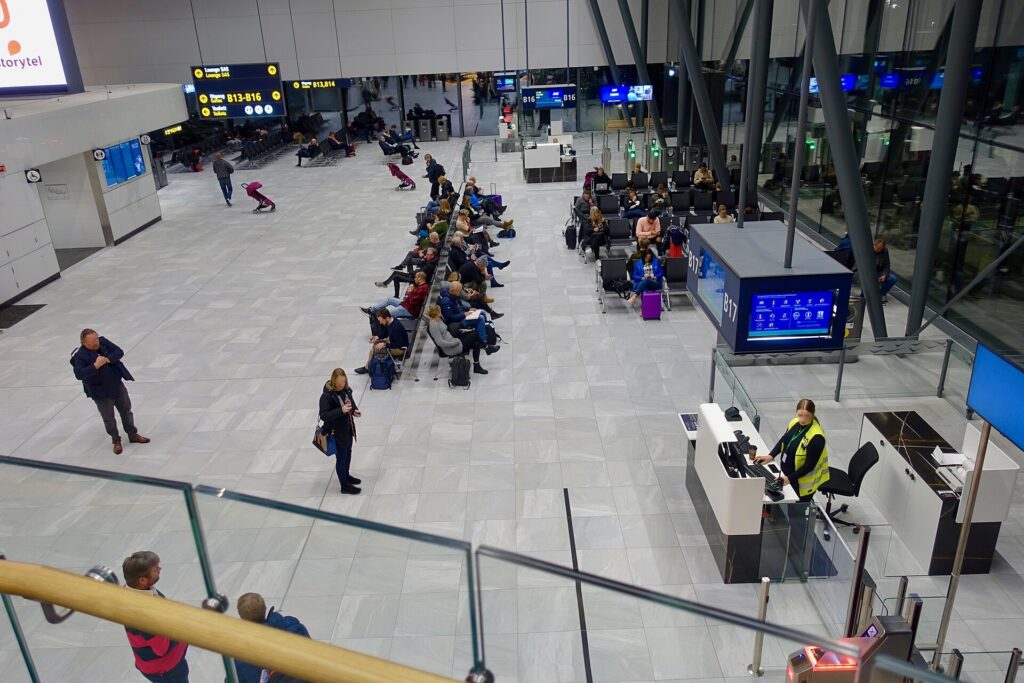
    Passengers seated at a departure gate waiting to board a flight
    Take a memory foam pillow out of its case a few minutes before boarding so it can regain its shape (Photo: Wolfmann via Wikimedia Commons, CC BY-SA 4.0)

    Alternatives if you do not want another bag

    • Wear the pillow around your neck through the airport. It is not elegant, but it takes no bag space.
    • Use a pillowcase from home as a simple pouch; it is washable and weighs almost nothing.
    • Choose an inflatable that folds into a pocket.
    • Use a scarf or jacket as a pillow. A rolled fleece gives surprising support against a window.
    • Buy a pillow that includes a good case in the first place. Our guide to airplane pillows for neck support covers designs that come with compression cases.

    Building a complete sleep kit

    A pillow bag with a spare pocket is a natural home for the rest of your sleep kit: an eye mask, earplugs or noise-cancelling headphones, a small bottle of water bought after security, lip balm and a light layer. On long-haul flights, add compression socks if they suit you, and read our guide to sleeping on flights for routines that help. Keep it all in your personal item under the seat, not in the overhead bin, so you can reach it without standing up.

    Common mistakes

    • Buying a bag that does not fit the pillow. Try it, or buy the maker’s own case.
    • Relying on a flimsy clip. Replace a weak plastic clip with a small carabiner.
    • Clipping a bulky bag to a carry-on that is already at the limit. It may not fit the sizer.
    • Taking a full-size pillow tote on a strict budget flight. It will probably count as an extra item.
    • Never washing the bag. It touches the same surfaces the pillow would have.
    • Storing memory foam compressed. It can lose its shape over time.

    Frequently asked questions

    Can I use a regular bag to carry my travel pillow?

    Yes. Any clean bag or pouch works. Purpose-made cases compress the pillow and clip to your luggage, which saves space and frees your hands.

    Does a pillow bag count as a carry-on item?

    It depends on the airline and the fare. A neck pillow clipped to your bag is often fine, but strict fares may count a separate bag as an extra item. Check the airline’s rules before you fly.

    How do I clean a travel pillow bag?

    Most can be machine washed or wiped clean. Follow the care label and let the bag dry fully before packing.

    Will a pillow bag fit any travel pillow?

    No. Sizes and shapes vary a lot. Check the bag’s dimensions against your pillow, or buy the case made for your pillow.

    Can I bring a full-size pillow on a plane?

    Some airlines allow it and some count it toward your allowance. On strict fares, pack it in a checked bag or leave it at home. For road trips, a pillow tote is ideal.

    Is it bad to keep a memory foam pillow compressed?

    For a trip, it is fine. For long-term storage, keep memory foam uncompressed so it keeps its shape.

    How do I stop leaving my pillow behind?

    Use a brightly colored bag, add a name tag, and make a habit of checking your seat, the seat pocket and the floor before you leave the plane.

    With your pillow packed and clipped, the next step is the trip itself. Compare fares on our flight search, find a hotel on our hotel search, and for road trips where a full-size pillow comes along, book a car on our car rental search. Heading somewhere with a long flight and a scenic drive? Flights to Vancouver and our guide to things to do in Vancouver are a good place to start.

  • Top Travel Luggage Bags for Smooth and Stylish Air Travel

    Top Travel Luggage Bags for Smooth and Stylish Air Travel

    Your luggage is the piece of travel gear you touch the most and think about the least. It rides with you from the curb to the check-in desk, gets lifted into overhead bins, bounces over sidewalks and sits open on a hotel luggage rack for days. A good bag makes all of that quietly easy. A poor one breaks a wheel in the first terminal, blows past the airline’s size limit by an inch, or weighs so much empty that you hit the checked-bag limit before you pack your shoes. This guide explains how to choose travel luggage that actually fits the way you travel: carry-on versus checked, hardside versus softside, wheels, handles and weight, how airline size rules work, when a backpack beats a suitcase, and a short list of well-known suitcases and sets worth a look at different budgets. It is also the hub for our travel gear guides, so wherever a bag leads to a related question, from neck pillows to passport holders, you will find a link to the detailed guide.

    The short answer

    If you only buy one bag, make it a carry-on spinner that fits the strictest airline you fly regularly, with a light empty weight, a handle that locks firmly and wheels that roll quietly. Add a personal item, such as a backpack or tote that fits under the seat, for the things you need during the flight. Buy a checked case only if you regularly take trips longer than a week, travel with bulky gear or pack for a family. Choose hardside if you check bags often and want crush protection; choose softside if you want outside pockets, a little give for overstuffed bins and a lighter bag for its size. Before you buy anything, measure it against your airline’s published limits, including wheels and handles, and check those limits again before every trip, because they change.

    Start with how you travel, not with the bag

    Most luggage regret comes from buying for an imagined trip instead of the trips you actually take. Four questions settle most of the decision:

    • How long are your trips? Weekend and business trips of up to about five nights fit comfortably in a carry-on for most people. Trips of one to two weeks can still work carry-on only if you do laundry once; beyond that, or in cold weather, a checked bag starts to make sense.
    • Do you check bags or avoid it? If you want to walk off the plane and straight to the train, everything you own has to fit the carry-on and personal item limits. If you check bags anyway, you can choose a lighter, cheaper cabin bag and put the bulk in the hold.
    • What surfaces will you cross? Smooth airport floors and hotel corridors favor four-wheel spinners. Cobblestones, gravel, stairs, ferries and old train stations favor two-wheel cases or backpacks.
    • Which airlines do you fly? A bag that fits a major North American carrier’s carry-on limit may be too big for a European budget airline, and some basic fares only include a small under-seat item. Size the bag for the strictest airline you use often.

    Answer those honestly and the rest of this guide becomes a series of easy trade-offs rather than a wall of options.

    How airline size and weight rules work

    Every airline sets its own limits, and they change often enough that any number printed in a blog post can go out of date. The principles, though, are stable:

    • There are usually two cabin allowances. A carry-on for the overhead bin and a smaller personal item that must fit under the seat in front of you. Some basic or ultra-low-cost fares include only the personal item, and charge for the overhead bag.
    • Limits include wheels and handles. A case advertised as “22 inches” may measure more once you count the wheels, the handle housing and a full front pocket. Measure the real outside dimensions yourself.
    • Many large North American airlines publish a carry-on limit close to 22 x 14 x 9 inches (roughly 56 x 36 x 23 cm), while many European and low-cost carriers are smaller or add a weight limit for cabin bags. Treat that as a starting point only.
    • Checked bags have size and weight limits too. Economy checked bags are commonly limited to around 23 kg (50 lb), with fees or refusal beyond that, and a combined length plus width plus height limit. Premium cabins and elite status often allow more.
    • Gate agents have the final say. On a full flight, even a compliant carry-on may be gate-checked if the bins fill up. Keep medications, documents, chargers and valuables in your personal item so they stay with you.

    Check the official page for your airline before you buy a bag and again before you fly. Useful starting points: Air Canada carry-on baggage, WestJet carry-on baggage, Delta carry-on baggage and American Airlines carry-on bags. If you fly budget carriers in Europe, read their cabin bag pages closely, since the free allowance is often a small under-seat bag. Our guide to Delta carry-on size rules walks through one airline in detail.

    Overhead luggage bins in the cabin of a widebody airliner
    Carry-on limits are set by what fits in the bins, and those bins are smaller on regional jets (Photo: Andrey Filippov 安德烈 from Moscow, Russia via Wikimedia Commons, CC BY 2.0)

    Bag types compared

    There is no single best bag, only the best bag for a trip. This table sums up the main options and who each one suits.

    Bag typeBest forStrengthsWatch out for
    Hardside carry-on spinnerShort trips, airport-heavy travel, businessProtects contents, glides on smooth floors, easy to wipe cleanNo outside pockets, clamshell needs floor space, shell scuffs
    Softside carry-onFrequent flyers, packers who like pocketsOutside pockets, flexes into tight bins, often expandableLess crush protection, fabric can stain
    Travel backpackMulti-city trips, trains, stairs, cobblestonesHands free, goes anywhere, fits many carry-on limitsWeight sits on your back; hard to organize without cubes
    Duffel or duffel-backpackRoad trips, sports and outdoor gearHuge opening, squashes into car trunks and binsLittle structure; heavy loads are tiring to carry
    Large checked spinnerLong trips, cold weather, familiesHolds a lot, rolls easily when heavyEasy to overpack past the weight limit
    Under-seat bag or rolling laptop bagPersonal item, work tripsKeeps essentials and tech at your seatMust fit the personal-item limit, which is small

    Hardside or softside?

    Hardside

    Hardside cases are made from plastics such as polycarbonate and ABS, or from aluminum at the premium end. Polycarbonate is generally the better plastic: it flexes under impact and springs back, where cheaper ABS shells are lighter but more likely to crack. Aluminum cases are very tough and look great, but they are heavy, dent visibly and tend to be expensive. Hardside cases protect fragile items well, shrug off rain and wipe clean after a trip. The trade-offs are that most open like a clamshell, which needs space on a small hotel floor, they rarely have outside pockets, and the shell will scuff. Choose a textured or matte finish if scuffs bother you.

    Softside

    Softside cases use woven nylon or polyester fabrics. Higher-denier ballistic nylon resists abrasion best. Fabric bags usually have front pockets for a jacket, a book or a quart bag of liquids, they often expand with an extra zipper, and they compress slightly to squeeze into a full overhead bin. They hide wear well and are easy to repair. They offer less protection from crushing and can absorb water in heavy rain, so pack electronics in the middle and consider a light rain cover if you walk a lot outdoors.

    If you mostly carry on, softside is often the more practical choice. If you mostly check bags and worry about baggage handling, hardside earns its place.

    Wheels, handles and zippers

    These three parts fail first, so they deserve the most attention in the store.

    • Spinner wheels (four wheels that rotate in every direction) are easiest in terminals and let you push the case beside you without carrying weight on your wrist. Double spinner wheels roll more smoothly than single ones. They are less happy on rough ground and can roll away on a sloped platform or a moving train.
    • Two-wheel inline cases are pulled behind you. They handle curbs and cobbles better, the wheels are recessed and less likely to snap off, and you gain a little packing space inside. They put more strain on your wrist over long distances.
    • Handles should lock firmly at more than one height and not wobble. Tall travelers should check the fully extended height. Side and top carry handles matter every time you lift the bag into a bin or a car trunk.
    • Zippers should be large, run smoothly around corners and have sturdy pulls. A split zipper is one of the most common ways a bag fails mid-trip.

    If you can, test a bag in person: extend the handle, roll it in a circle, lift it by each handle and open it on the floor. Thirty seconds tells you more than a long product description.

    Weight: the spec people ignore

    Empty weight matters twice. On airlines with cabin bag weight limits, every kilogram the bag weighs is a kilogram you cannot pack. In the hold, a heavy empty case pushes you toward the checked weight limit, where fees get steep. A light bag is also simply easier to lift into an overhead bin, carry up station stairs and haul into a hotel without an elevator. When two bags seem equal, choose the lighter one. A cheap luggage scale is worth packing on long trips, since it lets you check the weight before you reach the airport.

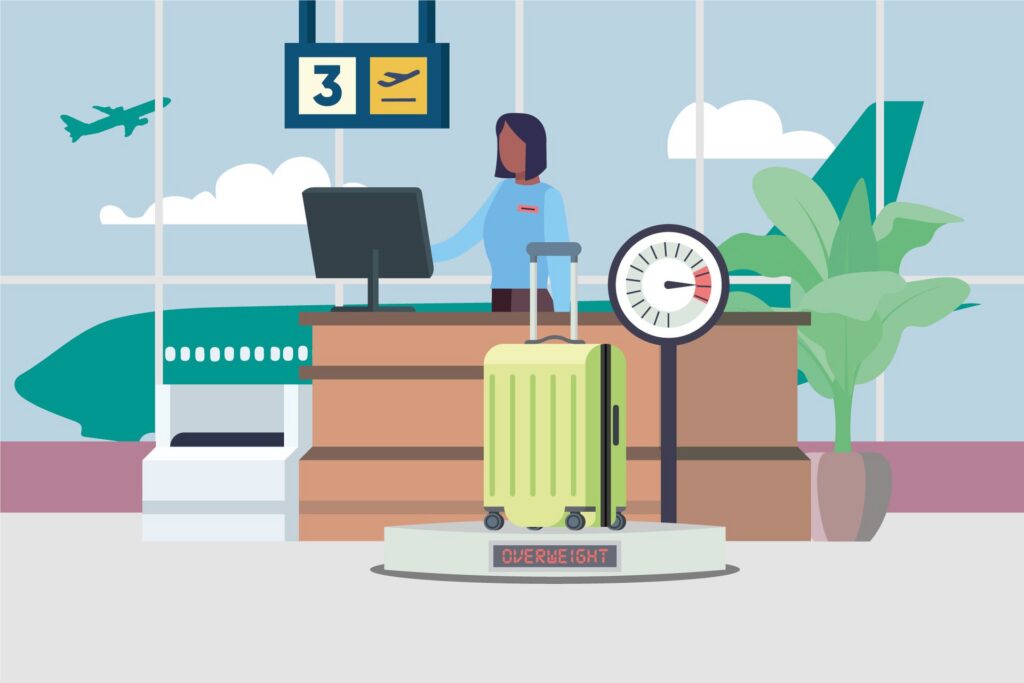
    Illustration of a suitcase being weighed at an airport check-in desk
    A heavy empty case eats into your checked-bag allowance before you pack anything (Photo: Familydestinationsguide.com Images via Wikimedia Commons, CC BY 2.0)

    Suitcase or backpack?

    For many trips, the right main bag is not a suitcase at all. A travel backpack with a clamshell opening packs like a suitcase but carries on your back, which is a real advantage on multi-city trips with trains, ferries, stairs and old streets. Our guide to the Peak Design Travel Backpack 45L covers one of the best-known carry-on travel backpacks, plus how to size and pack any travel pack. If you are heading into crowded cities, look at anti-theft backpacks, which add locking zippers, hidden pockets and cut-resistant materials. For trips built around trails rather than terminals, a proper frame pack with a hip belt carries weight much better; see our guide to hiking backpacks.

    Business travelers often split the difference: a carry-on spinner for clothes plus a laptop bag as the personal item. If your shoulders object to a heavy tech bag, a rolling laptop bag can slide over the handle of your suitcase and roll through the terminal with it.

    Suitcases and sets worth a look

    The bags below are well-known models at different price points. They are starting points, not a ranked test: sizes, weights, colors and prices change between versions and retailers, so check the manufacturer’s current specifications against your airline’s limits before you buy.

    Budget carry-on: Wrangler 22-inch hardside spinner

    Wrangler’s hardside spinner carry-on is an affordable choice for occasional travelers who want a simple four-wheel case in the classic 22-inch carry-on size. It suits weekend trips and people who fly a few times a year. At this size, confirm the full outside dimensions against your airline’s limit, since 22-inch cases sit right at the edge of many carry-on allowances.

    Budget basics: Amazon Basics hardside carry-on and checked spinners

    Amazon Basics sells plain hardside spinners in carry-on and checked sizes, including a compact 21-inch expandable case and a larger 26-inch checked bag. They are no-frills options for travelers who fly now and then, want a matching carry-on and checked pair, and would rather spend their budget on the trip. Keep in mind that an expandable carry-on may no longer fit the airline’s limit once expanded.

    Compact carry-on: SwissGear 7366 hardside spinner

    The SwissGear 7366 is a compact 19-inch hardside spinner. A smaller case like this is a smart choice if you fly airlines with tight cabin limits, travel for short trips, or want a case that fits more easily in small overhead bins on regional jets. It holds less than a full-size carry-on, so it rewards light packers.

    Frequent-flyer softside: Travelpro Platinum Elite carry-on

    Travelpro has long been associated with flight crews, and the Platinum Elite is its well-known softside line for frequent travelers. A softside carry-on of this kind suits business travelers and anyone who likes outside pockets for quick access. Check which size of the carry-on fits the airlines you use, since the line comes in more than one cabin size.

    Premium spinner: Briggs & Riley 22-inch spinner

    Briggs & Riley sits at the premium end and is known for durable softside luggage backed by a lifetime guarantee. A 22-inch spinner from the brand is an investment for people who travel often enough that a bag lasting many years outweighs a much higher price. Read the current guarantee terms on the manufacturer’s site before you buy, so you know what is covered.

    Stylish set: Delsey Paris Chatelet two-piece set

    Delsey’s Chatelet line pairs hardside cases with vintage-inspired styling, and the two-piece set gives you a carry-on and a larger checked case that match. It suits travelers who care about how their luggage looks as much as how it rolls, and couples who want one cabin bag and one checked bag for longer trips.

    Value sets: five-piece expandable luggage sets

    Multi-piece sets bundle several sizes, often from a small carry-on up to a large checked spinner, at a price per bag well below buying separately. They are good value for families or anyone starting from nothing. The catch is that you may never use every size, sets often use lighter materials, and the “carry-on” in a set is not always within the airline’s limits. Check the dimensions of each piece, not just the set’s description.

    Build a system around the main bag

    A suitcase is only half of a comfortable trip. The small things you pack in and around it decide how the journey feels. Our travel gear guides go deeper on each of these:

    Tech and work

    Comfort in the air

    Clothes and shoes

    Documents and valuables

    Health and personal care

    Packing a bag so it works

    • Use packing cubes. Cubes keep a suitcase or backpack organized, compress soft clothing and make unpacking at a hotel a two-minute job.
    • Roll soft items, fold structured ones. Rolled T-shirts and knits take less space; shirts and blazers crease less when folded flat.
    • Heavy items at the wheel end. Shoes and toiletry bags near the wheels keep a rolling case stable and stop it tipping forward.
    • Liquids where you can reach them. Cabin liquids generally have to fit the security rules for your departure airport. In the United States, see the TSA liquids rule; in Canada, check CATSA’s what-can-I-bring page. Keep the bag of liquids in an outside pocket or at the top of your personal item.
    • Leave room. A bag packed to the zipper on the way out has nowhere to put anything you buy. Aim for about 80 percent full.
    • Keep a day in the cabin. If you check a bag, put a change of clothes, medication and chargers in your carry-on in case the checked bag is delayed.

    Locks, security and smart luggage

    If you lock a checked bag when flying to or within the United States, use a lock that security officers can open with a master key, usually labeled as TSA-accepted, so the lock is not cut if the bag needs inspection. The TSA’s What Can I Bring? tool covers specific items, and CATSA publishes the equivalent guidance for Canadian airports. A lock is mainly a deterrent against casual opening; for real valuables, the answer is to keep them in the cabin with you.

    So-called smart luggage with built-in power banks is a special case. Lithium batteries are regulated in aviation: spare lithium batteries generally must travel in the cabin, not in checked bags, and many airlines require a smart bag’s battery to be removable. The FAA’s PackSafe guidance on lithium batteries explains the rules. If a bag’s battery cannot be removed, you may not be able to check it or even gate-check it, so read the airline’s policy before buying. A small Bluetooth tracker tucked inside a pocket is a simpler way to keep tabs on a checked bag.

    An airport baggage claim carousel in an arrivals hall
    A bright tag or strap makes your bag easy to spot and harder to take by mistake (Photo: Larry D. Moore via Wikimedia Commons, CC BY 4.0)

    If your bag is delayed, damaged or lost

    • Report it before you leave the airport. Go to the airline’s baggage service desk, file a report and keep the reference number.
    • Photograph your bag and its contents before trips. Photos make a claim far easier, and a picture helps staff identify the bag.
    • Keep receipts for essentials you buy while waiting for a delayed bag; airlines often reimburse reasonable expenses within their policy.
    • Know your rights. For flights to, from and within Canada, the Air Passenger Protection Regulations set out airline obligations, including for baggage. International itineraries may also fall under international conventions with their own time limits for claims, so file promptly.
    • Label inside and out. A tag with your phone number and email outside, and the same details on a card inside, helps a bag find its way back if the outer tag is torn off.

    Care, repairs and warranties

    Luggage lasts longer with a little care. Empty and air out softside bags before storing them, wipe hardside shells after a trip, and store bags somewhere dry. Push the handle fully down before lifting by the side handle, and do not sit on a spinner. Check wheels and zippers a week before a trip, not the night before. Many manufacturers sell replacement wheels, handles and zipper pulls, and a local luggage repair shop can often fix a broken wheel for much less than a new bag. Warranties vary a lot: some cover only manufacturing defects, while some premium brands also cover damage from airline handling. Register the bag if the brand asks you to, keep the receipt, and read the warranty terms before you choose between two similar bags.

    Common luggage mistakes

    • Buying the biggest carry-on on the shelf. The biggest case that technically fits a North American airline’s limit may not fit a regional jet’s bins or a European carrier’s rules.
    • Ignoring empty weight. A heavy case eats into your weight allowance before you pack anything.
    • Expanding a carry-on and still carrying it on. Most expandable carry-ons exceed the limit once expanded.
    • Checking valuables. Laptops, cameras, jewelry, medication, passports and spare batteries belong in the cabin.
    • Choosing a black bag with no marking. Every third bag on the carousel is black. A bright tag or strap saves time and prevents mix-ups.
    • Skipping the personal item. A good under-seat bag holds your flight essentials and keeps the carry-on’s contents in reserve if it gets gate-checked.
    • Buying a set you do not need. Three bags at a bargain price is not a bargain if two of them live in the closet.

    Frequently asked questions

    What size luggage is allowed as a carry-on?

    It depends on the airline and the fare. Many large North American airlines publish a limit close to 22 x 14 x 9 inches including wheels and handles, while many European and budget airlines are smaller or include only an under-seat bag on basic fares. Always check the airline’s official page before you fly.

    Is hardside or softside luggage better?

    Neither is better for everyone. Hardside protects contents and resists rain; softside is flexible, has outside pockets and often weighs less for its size. Frequent checkers tend to prefer hardside, carry-on travelers often prefer softside.

    Are spinner wheels better than two wheels?

    Spinners are easier on smooth floors and let you push the bag beside you. Two-wheel cases handle rough ground and curbs better and their wheels break less often. Choose based on where you will be rolling.

    Should I buy a luggage set or individual pieces?

    A set is good value if you will use every piece, such as a family that needs several sizes. If you mainly want one carry-on and one checked bag, buying the two pieces you want lets you choose quality and size precisely.

    How long should good luggage last?

    It depends heavily on how often you fly and how much you check bags. Quality construction, replaceable wheels and a good warranty all extend a bag’s life, and basic care helps any bag last longer.

    Can I bring a backpack as a personal item?

    Usually yes, as long as it fits the airline’s personal-item dimensions and goes under the seat in front of you. A large travel backpack usually counts as the carry-on, not the personal item.

    Do I need a TSA-accepted lock?

    If you lock checked bags on flights in or to the United States, a TSA-accepted lock lets officers inspect the bag without cutting the lock. It is a deterrent, not real security, so keep valuables in the cabin.

    Is smart luggage allowed on planes?

    Often, but many airlines require the lithium battery to be removable, and spare batteries generally travel in the cabin. Check the airline’s policy and the FAA’s PackSafe guidance before you buy.

    Once the bag is sorted, the trip is the fun part. Compare fares on our flight search, including flexible dates that can make room in the budget for better gear, find a place to stay on our hotel search, and pick up a car with room for your luggage on our car rental search. Allow enough time for bag drop with our guide to airport arrival times for international flights, and if you are testing a new carry-on on a city break, a trip to Paris with our guide to things to do in Paris is a fine place to start.

  • Top 7 Hacks for Hotel Booking in Canada Every Traveler Should Know

    Top 7 Hacks for Hotel Booking in Canada Every Traveler Should Know

    Booking a hotel in Canada has its own quirks. Prices swing hard with a short, intense summer and a long winter, a handful of festivals and sporting events can fill an entire city for a week, taxes differ from province to province and are often added only at the final step, and the places many visitors most want to stay, such as Banff, Lake Louise, Old Quebec or the Whistler village, have far fewer rooms than people who want them. Whether you are planning a weekend in Montreal, a business trip to Toronto or a week in the Rockies, the same handful of habits will get you a better room at a fairer price. This guide sets out seven practical hacks for hotel booking in Canada, explains how the seasons and taxes work, and gives city-by-city advice on where to stay and when to book.

    The short answer

    Compare broadly and always compare the total in Canadian dollars, taxes and fees included. Book early on a refundable rate for summer, festival weeks and the mountain parks, then keep watching the price. Join the chain’s loyalty program before you book. Use the map to stay near transit or the sights you will visit most. Plan the flight, hotel and car together, contact the hotel directly with any requests, and read recent reviews rather than the overall score. Start comparing on our hotel search, and see our pillar guide to hotel booking tips for the principles that apply everywhere.

    How hotel prices work in Canada

    Most Canadian destinations have a pronounced high season and a long low one, and the timing depends on the place.

    • Summer is peak almost everywhere. From late June to Labour Day, cities fill with tourists and festivals, and the national parks, lake country and coasts are at capacity. Canada Day on July 1 is one of the busiest weekends of the year.
    • Winter is peak in ski towns and at winter festivals. Whistler, Banff, Lake Louise, Mont-Tremblant and the Quebec City region are busiest at Christmas, New Year and the school holidays; Quebec City’s Winter Carnival and Ottawa’s Winterlude draw crowds in February.
    • Shoulder seasons are the value windows. Late April to mid-June and mid-September to October are often the best balance of weather and price in cities, with fall colors in Ontario and Quebec a draw of their own.
    • Big events override the calendar. The Canadian Grand Prix in Montreal in June, the Toronto International Film Festival in September, the Calgary Stampede in July, major concerts, playoff runs and large conventions can push rates up across an entire city.
    • Business districts flip on weekends. Downtown hotels in Toronto, Calgary, Ottawa and other business centers that fill with corporate travelers from Monday to Thursday often have lower rates on Friday and Saturday nights.

    Holiday weekends also matter: Victoria Day in May, Canada Day, the August civic holiday in many provinces, Labour Day, and Thanksgiving on the second Monday in October all bring domestic travelers out. Ontario’s March Break and the school holidays in other provinces, which fall on different weeks, affect family destinations and ski resorts.

    Hack 1: Compare broadly, and always compare the total in Canadian dollars

    The same room is often sold through several channels at different prices and on different terms. The first habit is to look at a wide spread of options before you commit, which is what our hotel search is built to do: it lets you compare rates across providers for Canadian cities in one place. Then, before you book, check the hotel’s own website for a member rate or package that includes something you want, such as breakfast or parking.

    Two details make comparisons fair. First, compare totals, not nightly rates. The headline number on a listing often excludes taxes and fees that can add a substantial percentage by the time you check out. Always take each option to the final booking step, or to a screen that shows the full price, before deciding. Second, watch the currency. Canadian hotels price in Canadian dollars, and some booking sites show prices in the currency of the country they think you are in. If you are visiting from the United States or elsewhere, check which currency the price is in, whether the rate is charged now or at the hotel, and whether your card charges a foreign transaction fee. A rate that looks cheaper in one currency may not be once the conversion and fees are applied.

    Our guide to finding the best hotel deals online explains how to read rate conditions and compare offers properly.

    Hack 2: Book at the right time, and protect yourself with a refundable rate

    No one can predict the cheapest night to book a given hotel, and claims that a particular day of the week is always cheapest do not survive contact with real pricing. What reliably works is booking at the right point relative to demand and keeping your options open:

    • Summer in the Rockies, Old Quebec, the Whistler village and other small, popular places: book as early as you can, often many months ahead. These destinations have limited rooms, and the best-located ones sell out first.
    • Festival and event weeks: check the city’s event calendar before you choose dates, and book as soon as your plans are firm if your trip overlaps a big event. Our Montreal events and Toronto events pages show what is on sale.
    • City trips in shoulder season: a few weeks ahead is often enough, and flexible travelers can sometimes wait.
    • Last-minute trips: possible in cities when demand is low, rarely in the mountain parks in summer. Our guide to last-minute hotel booking explains when it works.

    Whatever the window, the strategy is the same: book a refundable rate as soon as you know your dates, note the free-cancellation deadline, keep checking the price, and rebook if it drops, confirming the new booking before you cancel the old one. For families, whose dates are tied to school holidays, our guide to the best time to book hotels for family vacations sets out specific booking windows.

    The Château Frontenac illuminated at night
    The Château Frontenac in Old Quebec, where rooms inside the walls sell out early for summer and Carnival (Photo: Wilfredor via Wikimedia Commons, CC0)

    Hack 3: Use loyalty programs and check your credit card’s travel benefits

    Hotel loyalty programs are free to join, and even occasional travelers benefit. Members usually get access to member rates on the chain’s own website, free Wi-Fi at many brands, mobile check-in and a better chance of having requests honored. The major chains are all well represented in Canada, including Marriott Bonvoy and Hilton Honors. Canada’s famous railway-era hotels, such as the Château Frontenac in Quebec City, the Banff Springs, the Chateau Lake Louise, the Royal York in Toronto and the Château Laurier in Ottawa, are operated under the Fairmont brand, part of Accor, whose program is ALL – Accor Live Limitless.

    Many Canadian travel credit cards also include benefits that matter for hotel stays, such as trip cancellation or interruption insurance, or points that can be redeemed for travel. Benefits and eligibility differ by card and change over time, so read your card’s current terms before you rely on them, and check whether coverage requires the booking to be charged to that card.

    Book in a way that the program recognizes if you want points and elite credit, which usually means directly with the hotel. And do not let points override location: a hotel of your preferred brand that adds an hour of travel each day is rarely worth it.

    Hack 4: Use filters and the map to find the right location

    Filters save time and money when you use them for what matters:

    • Free cancellation, for the reasons above.
    • Breakfast included, which is often good value, especially in cities where breakfast out is expensive.
    • Parking, if you are driving. Downtown hotels in Toronto, Vancouver, Montreal and other big cities often charge a nightly parking fee, sometimes valet-only.
    • Guest rating with a meaningful number of recent reviews, rather than a high score based on a handful.
    • Pool, kitchenette or family rooms, if they matter to you, especially in winter when an indoor pool is a lifesaver with children.

    Then switch to the map. In Canada’s big cities, a hotel near a subway or SkyTrain station can save you the cost of a car and hours in traffic; in winter, staying near a station or an underground walkway network, such as Toronto’s PATH or Montreal’s underground city, keeps you out of the cold. Plot the places you will visit most and look for hotels in the middle of them. Our city transport guides, including Toronto: car rental or public transit and Montreal: rent a car or use transit, explain how getting around works in each city.

    Hack 5: Plan the flight, hotel and car together

    A hotel booking depends on everything around it. Your flight sets your arrival and departure days and whether you need an early check-in or late checkout; your transport plan decides whether you need hotel parking; and in the Rockies or the Maritimes, where a car is often essential, rental availability can shape the itinerary. Planning the three together helps in several ways:

    • Dates. A cheaper flight a day earlier may be worth an extra hotel night. Compare fares on our flight search across a range of dates before you lock the hotel.
    • Location. If you are renting a car for the whole trip, a hotel with free parking outside the core may beat a downtown hotel with an expensive garage. If you are not, location near transit matters much more.
    • Pickup point. Renting at the airport versus downtown can change your hotel choice. Compare both on our car rental search.

    Packages that bundle a flight and hotel can sometimes be cheaper than booking separately, but not always, and they often come with stricter change rules. Compare the package against the parts and read the cancellation terms for each element.

    Hack 6: Contact the hotel directly after you book

    After booking, a short, polite message or call to the hotel can make a real difference to your stay. It is the best way to:

    • Confirm requests, such as a crib, connecting rooms, a quiet room, an accessible room or a particular bed configuration, which are otherwise only preferences.
    • Ask about early check-in or late checkout, especially if your flight arrives in the morning or leaves in the evening.
    • Mention a special occasion, such as an anniversary or birthday. There is no guarantee, but hotels sometimes note it on the reservation.
    • Check parking and access, such as the height limit on an underground garage, which matters with a roof box or a large rental.
    • Ask about renovations if recent reviews mention construction.

    Something simple works: “Hello, I have a reservation arriving on [date] under [name]. We are celebrating an anniversary, and I wanted to ask whether a quiet room on a higher floor might be possible. Thank you.” Be courteous, keep expectations realistic, and do not expect a free upgrade just for asking.

    The Fairmont Banff Springs Hotel surrounded by forest and mountains
    The Banff Springs: summer rooms in the Rockies are among the hardest in Canada to book late (Photo: DXR via Wikimedia Commons, CC BY-SA 4.0)

    Hack 7: Read reviews critically, and focus on recent ones

    An overall rating tells you less than it seems. Hotels change: rooms are renovated, management changes, a new building goes up across the street. Read reviews with a method:

    • Sort by most recent and focus on the last few months.
    • Look for patterns, not individual complaints. One review about a noisy room is noise; five is a problem.
    • Read the specifics about cleanliness, noise, beds, Wi-Fi, parking and staff, which matter more than general enthusiasm.
    • Match reviewers to your trip. A family’s view of a hotel’s pool is more useful to you than a business traveler’s, and vice versa.
    • Look at guest photos, which show the room as it is, rather than professional photography.
    • Check for renovation notes. If reviews mention work in progress, contact the hotel to ask whether it will affect your dates.

    Taxes and fees on Canadian hotel stays

    Canadian hotel bills often surprise visitors, because several layers of tax and fees can apply, and the combination differs by province and city.

    • Sales tax. Accommodation is subject to the federal GST or the harmonized HST, depending on the province, and in some provinces to provincial sales tax as well; Quebec has its own QST.
    • Accommodation taxes. Many provinces and cities add a separate tax on hotel stays, such as Toronto’s Municipal Accommodation Tax, British Columbia’s Municipal and Regional District Tax in participating communities, and Quebec’s tax on lodging.
    • Destination marketing fees. Some hotels add their own fee to fund tourism promotion. Read the rate details to see whether it applies.
    • Parking and resort fees. Downtown parking can be a significant nightly charge; some resort properties add a daily resort fee.

    Canada amended its Competition Act in 2022 to address “drip pricing”, the practice of advertising a price that cannot be obtained because mandatory fees are added later; the Competition Bureau publishes guidance on it. Mandatory fees should be included in the price you are shown, but taxes may still be added at the end. Either way, the total at the final step is the only figure to compare.

    The Château Laurier hotel beside the Rideau Canal in Ottawa
    The Château Laurier in Ottawa, one of Canada's railway-era hotels, a short walk from Parliament Hill (Photo: DXR via Wikimedia Commons, CC BY-SA 4.0)

    Paying and checking in

    Most Canadian hotels ask for a credit card at check-in, both for the stay and for a hold to cover incidentals, which is released after checkout. Some accept debit cards, but they may take a larger hold or place it as an actual charge, which can tie up your money for days. If you plan to pay by debit or cash, contact the hotel before arrival to ask. Some hotels also set a minimum age for the person checking in. Prepaid rates are charged at booking; pay-at-hotel rates are charged at the property, sometimes in Canadian dollars even if the booking site showed another currency.

    International visitors should also check entry requirements. Visa-exempt travelers flying to Canada from countries other than the United States generally need an Electronic Travel Authorization, and entry rules change, so confirm them on the official page before you book anything non-refundable.

    Where to stay: a city-by-city guide

    Toronto

    Canada’s largest city has the widest choice. The Entertainment District and the financial core put you near the CN Tower, theaters, the waterfront and Union Station, with the PATH underground network for winter. Yorkville is upscale; the airport strip suits early flights. Rates rise sharply during TIFF in September and big conventions. Compare options on our Toronto hotel page.

    Montreal

    Old Montreal offers cobblestone streets and boutique hotels; downtown near the Metro is practical and connected to the underground city. The Grand Prix weekend and the summer festival season are the busiest times. See our Montreal hotel page.

    Vancouver

    Downtown, Coal Harbour and Yaletown are walkable and on the SkyTrain; the Canada Line links the airport to downtown. Summer and the cruise season, from spring to fall, are the peak. See our Vancouver hotel page, and Destination BC for trip ideas across the province.

    Quebec City

    Staying inside or just outside the walls of Old Quebec is the experience most visitors want, and rooms there are limited; book early for summer, the fall colors and the Winter Carnival in February. See our Quebec City hotel page and Bonjour Québec for the province.

    Ottawa

    The ByWard Market and downtown near Parliament Hill are central and walkable. Canada Day and Winterlude are the peaks, and weekday rates reflect government business travel. See our Ottawa hotel page.

    Calgary, Banff and Lake Louise

    Calgary’s downtown and the Beltline suit city stays; during the Stampede in July, book months ahead. For the Rockies, Banff and Lake Louise have limited rooms and high summer demand, and Canmore, just outside the park, often has more availability. Every vehicle in Banff National Park needs a Parks Canada pass, and Banff and Lake Louise Tourism lists local options. See our Calgary hotel page and Travel Alberta.

    Edmonton, Winnipeg and Halifax

    Edmonton’s Ice District puts you near the arena and downtown; Winnipeg’s Exchange District is its historic core; Halifax’s downtown waterfront is the base for exploring Nova Scotia, where summer is short and busy. Compare on our Edmonton, Winnipeg and Halifax hotel pages.

    The Toronto skyline and CN Tower at dawn
    Toronto has Canada's widest choice of hotels, and its busiest weeks during TIFF and big conventions (Photo: Geo Swan (talk) via Wikimedia Commons, Public domain)

    When to book: a quick reference

    Destination and seasonBookWhy
    Banff, Lake Louise, Jasper in summerAs early as possibleFew rooms, short season, very high demand
    Whistler or Mont-Tremblant at ChristmasSeveral months aheadSki holidays fill resort villages
    Old Quebec in summer or CarnivalSeveral months aheadLimited inventory inside the walls
    Calgary during the StampedeSeveral months aheadTen days of citywide demand in July
    Montreal on Grand Prix weekendAs soon as dates are setOne of the busiest hotel weekends in the city
    Toronto during TIFFAs soon as dates are setDowntown hotels fill with festival visitors
    Big-city trips in shoulder seasonA few weeks aheadModerate demand; room to watch prices
    Downtown weekend city breaksA few weeks aheadBusiness hotels often discount Friday and Saturday

    Common mistakes to avoid

    • Comparing nightly rates instead of totals. Taxes, accommodation levies, destination fees and parking can change which hotel is cheapest.
    • Booking non-refundable too early. It removes your ability to rebook if prices fall and leaves you exposed if plans change.
    • Ignoring the event calendar. A festival or convention you did not know about can double the price of a routine trip.
    • Underestimating the mountain parks. Waiting to book Banff or Lake Louise in summer often means no rooms at all.
    • Forgetting parking. Downtown parking can add a substantial amount per night to the true cost.
    • Paying in the wrong currency. Check whether you are being charged in Canadian dollars and what your card charges for conversion.
    • Relying on an old overall rating. Recent reviews tell you about the hotel as it is now.

    Frequently asked questions

    What is the best way to book a hotel in Canada?

    Compare rates across providers on a comparison tool such as our hotel search, check the hotel’s own site for member rates, and choose a refundable rate so you can rebook if the price drops.

    Is it cheaper to book directly with the hotel?

    Sometimes. Member rates on a chain’s own site can beat other channels, and booking directly usually earns loyalty points. Other times a third-party rate is lower. Compare the total, including cancellation terms.

    Can I book a hotel in Canada without a credit card?

    Some hotels accept debit cards or cash, but most prefer a credit card for the incidentals hold. If you plan to pay another way, contact the hotel before arrival.

    When is the cheapest time to stay in Canadian hotels?

    In most cities, the shoulder seasons of late spring and fall, and winter outside the holidays and festivals. Ski resorts reverse this, with summer usually cheaper.

    Why is my hotel bill higher than the advertised rate?

    Canadian hotel stays can attract GST or HST, provincial sales tax, accommodation taxes, destination marketing fees and parking. The total at the final booking step is the figure to compare.

    How far ahead should I book a hotel in Banff?

    For summer, as early as possible; the best-located rooms sell out months ahead. Canmore, just outside the park, is a good alternative when Banff is full.

    Are Canadian hotel prices shown in Canadian dollars?

    Hotels price in Canadian dollars, but booking sites may display another currency. Check which currency you will be charged in and whether your card adds a fee.

    Ready to book? Compare stays across the country on our hotel search, find fares on our flight search, and price a rental on our car rental search. Heading to Toronto first? Our guide to things to do in Toronto and cheap flights to Toronto will get you started, and if you are traveling for work, our business travel hotels guide covers what to look for.

  • Your Ultimate Guide to Booking Cheap Flight Tickets to Las Vegas: Tips, Tricks & Tools

    Your Ultimate Guide to Booking Cheap Flight Tickets to Las Vegas: Tips, Tricks & Tools

    Las Vegas is one of the easiest cities in North America to fly to. Huge numbers of flights arrive every day from across the United States and Canada, many airlines compete for the traffic, and the airport sits just a short ride from the Strip. That competition is why cheap flights to Las Vegas are genuinely possible. But Vegas also has a pricing quirk that trips up first-time visitors: the cost of a trip is driven less by the weather than by the event calendar. A fare that looks cheap can come with hotel rates that have soared because a major convention is in town. This guide explains how Las Vegas pricing works, the cheapest times to go, when to book, how to choose airlines and fares, how to think about packages, what to know about the airport and getting to your hotel, and how to keep the total cost of the trip down. It is part of our flight booking series, which starts with our guide to the best time to book cheap flights and hotels.

    The short answer

    Check the event calendar before anything else. Big conventions, fight nights, race weekends and holidays push up both fares and hotel rates. Fly and stay midweek if you can: Sunday through Thursday nights are usually far cheaper than weekends. Book about one to three months ahead for ordinary domestic trips, and earlier for holiday weekends and major events. Compare the full price, including bags and seats on the flight and resort fees at the hotel. Consider a flight and hotel package, which can be good value in Las Vegas, but compare it with booking separately. And fly into Harry Reid International Airport, formerly known as McCarran, which is only a short drive from the Strip. You can compare fares across a whole month on our Las Vegas flights page.

    The Las Vegas Strip lit up at night
    In Las Vegas, the event calendar moves prices more than the weather (Photo: Clément Bardot via Wikimedia Commons, CC BY-SA 3.0)

    Why Las Vegas flights can be cheap, and why they sometimes are not

    Las Vegas is a leisure destination on a massive scale, with a very large number of hotel rooms and flights from almost every major city on the continent. Airlines add capacity to Vegas because they know they can fill it, and that capacity creates competition, especially on routes where several airlines fly the same city pair. Low-cost and ultra-low-cost carriers are strong in Vegas, which puts pressure on fares from the larger airlines too.

    The flip side is that demand is lumpy. When a trade show with tens of thousands of attendees comes to town, or a championship fight or race weekend sells out, seats and rooms fill fast and prices climb. Weekends are busy almost all year, because Vegas is a classic weekend getaway from Southern California and other Western cities. Understanding those two patterns, events and weekends, is most of the battle.

    When to go: the cheapest and priciest times

    Las Vegas is a desert city. Summers are very hot, winters are mild during the day and cool at night, and spring and fall are pleasant. But weather is only one factor. Here is how the year usually plays out.

    PeriodWeatherWhat drives prices
    JanuaryCool, mild daysQuiet after New Year, except during the huge consumer electronics trade show early in the month
    FebruaryMildOften good value outside Valentine’s Day and Presidents’ Day weekends and big events
    March to MayWarm and pleasantPopular; spring break, college basketball tournament weekends, festivals and conventions add demand
    June to AugustVery hotMidweek hotel rates are often lower as visitors avoid the heat; pool season on weekends
    September to NovemberWarm to mild, often idealBusy convention season; a major Formula 1 race weekend in November sends prices very high
    DecemberCoolEarly December can be quiet, but the national rodeo finals and New Year’s Eve are very busy

    The cheapest windows tend to be midweek dates in January outside the trade show, parts of February, midsummer weekdays and quiet stretches in early December. But the only reliable way to know is to check the calendar for your dates. The official tourism site, Visit Las Vegas, lists major events and conventions, and our Las Vegas events page shows concerts and shows. For a month-by-month view of weather, crowds and fares, read our guide to the best time to fly to Las Vegas.

    Days of the week

    Vegas has one of the strongest weekday and weekend patterns in travel. Flights into Las Vegas on Thursday and Friday and home on Sunday are the busiest, and hotel rates on Friday and Saturday nights can be far higher than on a Tuesday or Wednesday at the same property. A Sunday-to-Wednesday or Monday-to-Thursday trip usually costs much less than a Thursday-to-Sunday one. If you must go on a weekend, consider arriving Saturday instead of Friday, or leaving Monday instead of Sunday, and compare the totals.

    When to book

    TripSensible booking windowNotes
    Ordinary midweek trip from the U.S.About 1 to 3 months aheadPlenty of flights; set an alert and book when the fare looks normal or better
    Weekend tripAbout 2 to 3 months aheadFriday and Sunday flights fill first
    Holiday weekends, New Year’s Eve, major fights and racesAs early as 3 to 6 months aheadHotels and flights rise steadily as the date approaches
    From CanadaAbout 2 to 4 months aheadWinter is popular with Canadian travelers; book earlier for school breaks
    Last minuteOccasionally works midweekOnly when nothing big is happening in town

    For flights within or to the United States booked at least seven days before departure, most airlines let you cancel within 24 hours without penalty. Use that window to confirm your hotel dates line up with your flights, and remember that a late-evening departure from the East Coast lands in Vegas the same night because of the time difference, while an overnight flight home lands the next morning.

    Choosing airlines and fares

    Las Vegas is served by the large network airlines, by value airlines such as Southwest, which has long been one of the biggest carriers at the airport, and by several ultra-low-cost carriers. Each sells different things for the same headline price.

    OptionBest forWhat to check
    Ultra-low-cost airlinesTravelers with only a small personal item and firm plansCarry-on, checked bag and seat fees; bag size limits; how changes work
    Basic economy on larger airlinesPrice-focused travelers who do not need a full carry-on or seat choiceWhether a full-size carry-on is allowed on your airline; boarding order; change rules
    Standard economyTravelers with bags, groups who want to sit togetherWhether a checked bag is included on your fare; change flexibility
    Premium or extra-legroom seatsLonger flights from the East Coast or CanadaWhether the upgrade price is worth it on a flight of four or five hours

    Airline bag and seat policies have changed repeatedly in recent years, so check the current rules on each airline’s own site rather than relying on reputation. Then add up the total. A group of friends checking bags for a long weekend can easily find that a standard fare on one airline beats a bare-bones fare on another. Our carry-on size guide explains how to measure your bag against airline limits, and our flight details guide decodes fare brands.

    Choosing where to fly from

    If you live near more than one airport, compare them. In Southern California, for example, flights to Vegas leave from LAX, Burbank, Long Beach, Ontario, Orange County and San Diego. In the Bay Area, compare SFO, Oakland and San Jose. In Canada, several cities have nonstop service to Las Vegas, especially in winter, and larger Canadian airports such as Toronto Pearson offer U.S. preclearance, so you complete U.S. border formalities before departure and land in Vegas as a domestic passenger. Our flights from Toronto and flights from Los Angeles pages are useful starting points.

    Should you fly to a different city and drive?

    For most travelers, no. Harry Reid International is the obvious airport for Las Vegas, and fares into it are usually competitive because of the volume of flights. Flying into Los Angeles and driving across the desert adds several hours each way plus a rental car and fuel. That said, many Southern Californians skip flying entirely, and the drive can make sense for a group or as part of a larger road trip. Our Los Angeles to Las Vegas road trip page covers that route, and combining Vegas with the national parks of the Southwest is a classic trip that needs a car anyway.

    Harry Reid International Airport in Las Vegas
    Harry Reid International is only a few miles from the Strip (Photo: Another Believer via Wikimedia Commons, CC BY-SA 4.0)

    Flight and hotel packages

    Las Vegas is one of the destinations where packages often make sense. Hotels have a lot of rooms to fill, especially midweek, and packaging a room with a flight lets them discount without publicly cutting their room rates. A package can save money, but only if you compare it properly.

    • Price the pieces separately. Search the same flights and hotel on their own, add taxes and resort fees, and compare with the package total.
    • Check the room type and fees. Make sure the package includes the room you want and that resort fees are included or clearly shown.
    • Read the change and cancellation rules. Packages bundle conditions too. A nonrefundable package is a risk if your dates might move.
    • Check the flight times. A cheap package with a 6 a.m. departure and a late-night return may not be the trip you want.

    If you book separately, book the flight first and a refundable hotel right after, then recheck the hotel rate before your cancellation deadline. Our hotel booking tips guide walks through the process.

    Hotels: where the real savings are

    On many Vegas trips, the hotel is a bigger cost than the flight, so it deserves as much attention.

    • Resort fees. Most Strip hotels charge a mandatory daily resort fee on top of the room rate. In the United States, the Federal Trade Commission’s rule on hotel junk fees requires the total price including mandatory fees to be shown up front. Compare totals, not nightly rates. Parking fees are separate at many resorts.
    • Strip or downtown. Staying on the Strip puts you in the middle of the action. Downtown, around Fremont Street, is often cheaper and has its own character. Compare on our Strip hotels and downtown Fremont Street hotels pages.
    • Midweek nights. The same room often costs much less on a Tuesday than on a Saturday.
    • Off-Strip properties. Hotels a short ride from the Strip can be good value, but factor in the cost of getting to and from the places you want to go.

    Search all Las Vegas hotels on our Las Vegas hotel page.

    At Harry Reid International Airport

    Harry Reid International Airport (code LAS) was renamed from McCarran International in 2021. It is only a few miles from the Strip, one of the most convenient major airports in the country for a city center. It has two passenger terminals, Terminal 1 and Terminal 3, and different airlines use different terminals, so check yours before you arrive, especially for your flight home. The airport’s official site has terminal, parking and ground transportation information, and our Harry Reid airport guide covers the essentials.

    Getting to your hotel

    • Taxi: taxis wait at designated ranks outside baggage claim. The ride to most Strip hotels is short.
    • Ride-hailing: app-based rides pick up at designated areas, usually in the parking garages; follow the signs.
    • Shuttles: shared shuttles serve the Strip and downtown hotels.
    • Public bus: the Regional Transportation Commission of Southern Nevada runs buses from the airport; check routes and fares on the RTC website.
    • Rental car: rental companies operate from a consolidated rental car center reached by shuttle bus from the terminals.

    Do you need a car at all? For a Strip-focused trip, usually not: parking fees, traffic and walking between neighboring resorts make a car more trouble than it is worth. For day trips to Red Rock Canyon, the Hoover Dam or the national parks, it is essential. Our guide to whether you need a rental car in Las Vegas weighs it up, and you can compare prices on Las Vegas car rentals.

    Flying home

    Security lines at LAS can be long on Sunday afternoons and after big events, when tens of thousands of visitors head home at once. Allow extra time, check which terminal your airline uses, and make sure your ID meets the REAL ID requirement: TSA began enforcing it on May 7, 2025, and its REAL ID page lists accepted documents. Keep liquids within TSA’s 3-1-1 rule if you are carrying on.

    The exterior of the Las Vegas Convention Center
    A big trade show can send hotel rates soaring, so check the calendar first (Photo: Michael Gray via Wikimedia Commons, CC BY-SA 2.0)

    Tips that save money, and myths that do not

    Worth doing

    • Search a whole month. A fare calendar shows the cheap days at a glance.
    • Set price alerts. Watch your route for a few weeks to learn what a normal fare is.
    • Watch for airline sales. Vegas is a staple of fare sales, including the late-November sales around Black Friday and Cyber Monday; our guide to Cyber Monday flight deal destinations explains how to judge whether a sale fare is really a deal.
    • Travel light. A carry-on-only trip avoids checked bag fees and the wait at baggage claim.
    • Use points where they are worth it. Compare the points price with the cash fare; on busy weekend flights, points can be good value.
    • Consider early and late flights. First flights of the morning and red-eyes are often cheaper, but price in the lost sleep and any extra hotel night.
    • Book the show and the hotel for the same dates. Check the events calendar before you fix dates so the trip is built around what you want to see.

    Not worth your time

    • Incognito mode. There is little evidence that airlines raise fares because you searched before. Prices change because seats sell.
    • Booking on a particular weekday. The day you fly matters; the day you buy mostly does not.
    • Waiting for last-minute deals on a weekend. Vegas weekends rarely get cheaper as they approach.

    Group trips and special occasions

    Las Vegas is a favorite for bachelor and bachelorette parties, milestone birthdays, reunions and weddings, and group trips have their own booking challenges. The more people involved, the more a small difference per person adds up, and the harder it is to find seats together at a good price.

    • Fix the dates early. Agree on dates before anyone books, and check the event calendar first so the group does not land on a convention week.
    • Let people book their own flights. Group members flying from different cities usually do better booking their own fares and meeting in Vegas, rather than trying to buy one block of tickets.
    • Agree on bag and seat expectations. One person on an ultra-low fare with no carry-on and another on a standard fare can end up paying very different totals for the same trip.
    • Book rooms early and flexibly. For weekend group trips, book refundable rooms as soon as the dates are set. Suites and connecting rooms go first.
    • Plan the airport runs. Arrivals spread across the day make a single shuttle impractical; taxis and ride-hailing are simpler for small groups.
    • Book shows and restaurants in advance. Popular shows and group dinners on Saturday night sell out; our Las Vegas events page shows what is on.

    For weddings and other fixed-date events, book flights as soon as the date is confirmed. Fares for a specific Saturday rarely get cheaper as it approaches.

    Planning the rest of the trip

    A cheap flight leaves more for the things you actually went for. Our guide to things to do in Las Vegas covers the Strip, downtown, shows, food and day trips, including Red Rock Canyon and the Hoover Dam. If you are planning a group trip, such as a bachelor or bachelorette weekend, the rules in this guide matter even more: book early for weekends, compare packages and check bag rules for everyone. And if you want to combine Vegas with other destinations, our guide to booking cheap local flights in the USA covers short-haul pricing across the country.

    Common mistakes to avoid

    • Booking flights before checking the event calendar. A cheap fare on a convention week is not a cheap trip.
    • Comparing hotel rates without resort fees. Compare totals.
    • Defaulting to Friday to Sunday. Shifting by a day can cut the cost significantly.
    • Choosing an ultra-low fare for a bag-heavy trip. Add the bag fees first.
    • Renting a car you will not use. Parking fees and traffic make a car a poor value for a Strip-only trip.
    • Cutting it close on the way home. Sunday security lines can be long.
    A Southwest Airlines jet climbing over Las Vegas
    Heavy airline competition is why cheap Vegas fares are possible (Photo: Aero Icarus from Zürich, Switzerland via Wikimedia Commons, CC BY-SA 2.0)

    Frequently asked questions

    What is the cheapest month to fly to Las Vegas?

    There is no single cheapest month, because big events move prices more than the season. Midweek dates in January outside the major trade show, parts of February, midsummer weekdays and early December are often good value. Check the event calendar and a fare calendar for your dates.

    How far in advance should I book a flight to Las Vegas?

    About one to three months ahead for ordinary domestic trips, two to four months from Canada, and earlier for holiday weekends, New Year’s Eve and major events.

    What is the cheapest day to fly to Las Vegas?

    Midweek days, especially Tuesday and Wednesday, are often cheaper than Thursday, Friday and Sunday. Hotels follow the same pattern, so a midweek trip usually saves on both.

    Are flight and hotel packages to Las Vegas worth it?

    They can be, especially midweek. Compare the package with the flight and hotel booked separately, including resort fees, and read the change rules before you pay.

    What is the airport in Las Vegas called now?

    Harry Reid International Airport, code LAS. It was renamed from McCarran International in 2021, and the airport code did not change.

    Do I need a car in Las Vegas?

    Not for a trip focused on the Strip. For day trips to Red Rock Canyon, the Hoover Dam or the national parks, a car is the easiest option.

    Are last-minute Las Vegas deals real?

    Sometimes, for midweek trips when nothing big is happening in town. On weekends and during events, prices usually rise as the date approaches.

    Is it cheaper to fly into Los Angeles and drive?

    Rarely, once you add the rental car, fuel and the hours on the road. It can make sense as part of a longer road trip or for a group driving together from Southern California.

    Ready to plan your trip? Search a whole month of fares on our Las Vegas flights page to find the cheapest days, check the events calendar for your dates, then compare total prices on our Las Vegas hotels page. For more on timing, read our guide to the best time to book cheap flights and hotels.

  • Top 10 Noise Cancelling Headphones For Airplane Travel in 2025: Comfort Meets Silence

    Top 10 Noise Cancelling Headphones For Airplane Travel in 2025: Comfort Meets Silence

    An airplane cabin is a loud place to spend a few hours. Engines and air-conditioning produce a steady low roar, and on top of that come galley carts, announcements, conversations and the occasional crying baby. You stop noticing it after a while, but it keeps wearing on you, and it is a big part of why a long flight leaves you more tired than a day of sitting still should. Good noise-cancelling headphones take much of that edge off. They make movies and podcasts easier to hear at lower volume, they make sleep more likely, and they make it possible to read or work without your brain filtering noise the whole time. This guide explains how noise cancelling works, which features matter on a plane and which are marketing, over-ear versus earbuds, how to connect to seatback entertainment, the airline and battery rules that apply, and the models from our original list with who each one suits. It is part of our travel gear series, which starts with our main guide to choosing travel luggage.

    The short answer

    For most flyers, the best choice is a pair of over-ear headphones with active noise cancelling (ANC) that fold into a protective case, can be used with a cable for seatback screens, and have a battery that comfortably outlasts your longest flight plus the journey either side. Comfort matters more than a small difference in noise-cancelling strength, because you will wear these for hours: look for soft, deep ear cushions and moderate clamping force. If you hate the bulk, noise-cancelling earbuds with a good seal are the lighter alternative, at the cost of some low-frequency quiet and a harder time with wired seatback systems. Whatever you choose, pack a 3.5 mm cable and a two-prong airline adapter if your headphones support wired use, charge them before you leave home, and check what your airline allows during takeoff, landing and the safety briefing.

    A pair of black over-ear wireless noise-cancelling headphones lying flat on a white surface
    Deep, soft ear cushions matter as much as the noise cancelling when you wear headphones for hours (Photo: www.digitalpush.net via Wikimedia Commons, CC BY 4.0)

    How noise cancelling actually works

    There are two kinds of quiet at work in a good pair of travel headphones, and understanding them helps you choose.

    Passive isolation

    Passive isolation is simply blocking sound physically. Thick, well-sealed ear cushions on over-ear headphones, or snug tips on earbuds, stop a lot of higher-pitched sound such as voices, clinking cutlery and the rattle of a trolley. It needs no battery and it works even when the headphones are switched off. The quality of the seal matters a great deal: glasses arms, long hair or a poor fit can break the seal and let noise in.

    Active noise cancelling

    Active noise cancelling uses small microphones to listen to the noise around you and produces an opposing sound wave that cancels much of it before it reaches your ear. It is most effective against steady, low-frequency noise, which is exactly what engine and air-system noise is. It is less effective against sudden or irregular sounds, like a nearby conversation or a call button chime. That is why the best travel headphones combine both: ANC for the low drone and a good passive seal for everything else.

    Hybrid ANC

    “Hybrid” ANC means the headphones use microphones on both the outside and the inside of the ear cup, which generally lets them cancel a wider range of noise than systems with outside microphones only. Many mid-priced and premium headphones use this approach, and it is a reasonable feature to look for, though real-world results depend on the whole design, not one label.

    Transparency or ambient modes

    Most noise-cancelling headphones also offer a mode that deliberately lets outside sound in through the microphones, variously called transparency, ambient or aware mode. On a plane, it is useful for hearing a crew member’s question or a boarding announcement without taking the headphones off. Some models can switch into it automatically when you start speaking.

    What matters on a plane

    Comfort over hours

    This is the most underrated factor. A pair that sounds wonderful in a shop can become painful after three hours if the headband presses on the top of your head, the ear cups press on your glasses, or the cushions trap heat. Look for deep, soft cushions that surround your ears rather than sitting on them, a padded headband and moderate clamping force. If you wear glasses, try them on with your glasses. If you plan to sleep in them, consider how they feel when you lean your head against a window or a neck pillow: flatter, smaller ear cups are easier to rest against.

    Noise-cancelling strength

    Premium models from long-established audio brands generally lead on noise cancelling, and budget models have improved a lot. The difference between a good budget pair and a premium pair is most noticeable on long-haul flights and in the loudest seats, which tend to be further back near the engines. If you fly long-haul often, the premium end is easier to justify. For occasional short flights, a well-reviewed budget hybrid-ANC pair can be plenty.

    Battery life and charging

    Your headphones need to last the whole journey, not just the flight: the train to the airport, the wait at the gate, a delay, a connection and the ride to your hotel. Look at the maker’s figure for battery life with ANC switched on, which is usually lower than the headline figure, and aim for a comfortable margin over your longest door-to-door trip. Quick charging, where a short charge gives a few hours of use, is useful when you realize at the gate that you forgot. A USB-C port lets the headphones share a charger and cable with your phone and laptop, which is one fewer thing to pack.

    Wired use

    Many seatback entertainment systems still need a wire. Headphones with a 3.5 mm input and a supplied cable can plug straight into the seat, and many keep noise cancelling working while wired as long as they are switched on. Some also play passively when the battery is flat, without ANC, which is a useful fallback. Check this before you buy if you watch a lot of in-flight movies.

    Folding design and a case

    A hard or semi-hard case protects the headband hinges and ear cups from being crushed in a backpack, and keeps the cable and adapter together. Headphones that fold flat or fold inward take up less room. If space is tight, earbuds win easily; our guide to laptop travel accessories covers other small items that are easy to lose in a bag, and why a single pouch helps.

    Microphones and calls

    If you take calls at airports and in hotel rooms, microphone quality matters. Most noise-cancelling headphones handle calls in quiet places reasonably well; busy terminals are the hard test. On the plane itself, calls are rarely allowed or practical, so this is mainly an airport and destination feature.

    Multipoint and app features

    Multipoint Bluetooth lets the headphones stay connected to two devices at once, such as a phone and a laptop, which saves re-pairing when you switch. Companion apps can offer an equalizer, adjustable noise cancelling and firmware updates. These are nice extras; they do not make up for poor comfort or weak battery life.

    Over-ear, on-ear or earbuds?

    Each style has a place. This table sums up the trade-offs for flying.

    StyleNoise reductionComfort on long flightsPackingBest for
    Over-ear ANC headphonesUsually the strongest, especially for low engine noiseVery good if cushions are deep and soft; can feel warmBulky; needs a caseLong-haul flights, frequent flyers, watching movies
    On-ear ANC headphonesModerate; passive seal is weakerCan press on ears after a few hoursSmaller than over-earShort flights, people who dislike covering the whole ear
    ANC earbudsGood, depends heavily on tip fitGood for side sleepers; can tire ear canalsPocket sizeLight packers, side sleepers, travelers with small bags
    Wired earbuds or basic headphonesPassive onlyVariesTinyBackup pair, children, seatback screens only

    Many frequent flyers carry over-ear headphones for the flight and a small pair of earbuds as a backup and for the gym or the street at their destination. If you only want one, choose based on how you sleep on planes: if you rest your head sideways, earbuds and a good neck pillow are usually more comfortable than bulky ear cups.

    Connecting to seatback entertainment

    This catches out many travelers with new wireless headphones.

    • Most seatback screens use a wired jack. Some are standard 3.5 mm sockets; older aircraft may use a two-prong socket, which needs a small airline adapter. Some headphones include one, and they are inexpensive to buy.
    • Some newer systems support Bluetooth pairing. It depends on the airline and the aircraft, so you cannot count on it. If it is available, it will be explained on the seatback screen.
    • Bluetooth transmitters are small battery-powered dongles that plug into the seat jack and send the audio to wireless headphones. They are handy if your headphones have no cable input, but they are another thing to charge.
    • Check the wired-mode behavior. Some headphones keep noise cancelling working while wired only if they are switched on, and some play without power at all. Know which before you board.
    • Bring your own cable. Airline-supplied headphones are usually basic, and the seat jack only helps if you have a cable to plug in.
    A passenger wearing headphones using a seatback entertainment screen in an economy cabin
    Most seatback screens still need a wire, so pack the cable and a two-prong adapter (Photo: Jetstar Airways from Melbourne, Australia via Wikimedia Commons, CC BY-SA 2.0)

    Airline rules and etiquette

    Rules on using headphones and wireless devices on board vary by airline and country, and they change. We will not quote specific policies here, because they go out of date. The principles are stable:

    • Crew instructions always come first. Some airlines ask passengers to remove headphones, or at least one ear, during the safety briefing, taxi, takeoff and landing, so that you can hear instructions in an emergency. Do so when asked.
    • Airplane mode is expected. Phones and tablets are generally used in airplane mode or with the cellular connection switched off. Whether you can use Bluetooth accessories, and when, is the airline’s decision. The FAA explained when it expanded device use that policies would vary by airline, and that passengers should check with their airline.
    • Use transparency mode or remove a cup to talk to crew. It is quicker and more polite than asking someone to repeat themselves.
    • Keep the volume sensible. Sound leaks from open or poorly sealed headphones, and a neighbor trying to sleep will notice. A side benefit of noise cancelling is that you can listen at lower volume, which is kinder to your ears too.
    • Tell the person next to you if you plan to sleep. If you are in the window seat with headphones on, a small note on the seatback or a quick word before you nod off saves an awkward shoulder tap when they need to get out.

    Batteries and security screening

    Headphones and earbuds contain small lithium-ion batteries built into the device. As principles:

    • Headphones and earbuds are generally fine in carry-on bags, and it is sensible to keep them there anyway so they are not crushed or lost.
    • Spare lithium batteries and power banks must travel in the cabin, not in checked baggage, and should be protected from short circuits. If you carry a power bank to top up headphones, it goes in your carry-on.
    • Check the official guidance before flying: the FAA’s PackSafe lithium battery page, the TSA’s What Can I Bring? tool and CATSA’s guidelines for batteries in Canada. Airlines can add their own rules.
    • At security, large electronics may need to come out of your bag depending on the airport and the screening lane. Headphones in a case can usually stay in the bag, but follow the officer’s instructions.

    To keep the number of chargers down, a multi-device charger is worth considering; our guide to 3-in-1 Apple chargers covers one approach.

    Headphones from our original list

    The headphones below were featured in the original version of this guide. They cover a range of budgets and styles rather than a strict ranking. Models are updated and replaced often, and prices change constantly, so check the current specifications and battery figures from the maker before you buy. Where we have linked to a maker’s page, the details mentioned come from that page.

    Soundcore Life Q20

    The Soundcore Life Q20 from Anker’s audio brand is a budget over-ear pair with hybrid active noise cancelling. Soundcore describes memory foam ear cups and says the headphones target low- and mid-frequency noise such as airplane engines, and the product page lists AUX wired use. It suits travelers who fly a few times a year and want real noise cancelling without spending much. Budget ANC is not as strong as the premium end, but it is a large step up from basic earbuds.

    Soundcore Life Q30 and Soundcore Q20i

    Two more Soundcore models appeared on the original list. The Life Q30 sits above the Q20 in the range and was featured for its multiple noise-cancelling modes and app-based sound customization. The Q20i is another budget hybrid-ANC model with app support. Both suit value-minded travelers. Soundcore’s lineup changes often, so compare the current models on the maker’s site before you buy.

    TOZO HT2

    The TOZO HT2 was featured as a budget over-ear pair with hybrid noise cancelling and app-based sound adjustment. It suits travelers who want long battery life and a basic app at a low price. As with any budget pair, check the current listing for the battery figure with ANC on and whether a cable is included for seatback screens.

    INFURTURE active noise cancelling headphones

    The original list included a pair of INFURTURE over-ear ANC headphones, featured in a rose gold finish. They are a budget option for travelers who care about looks as well as function. With lesser-known brands, pay particular attention to the seller’s return policy and read the listing carefully for battery and wired-use details.

    Beats Studio Pro

    The Beats Studio Pro is an over-ear pair with fully adaptive active noise cancelling and a transparency mode. Beats describes a foldable design with a carrying case, lossless audio over USB-C, and a 3.5 mm analog input for wired sources and in-flight entertainment. It suits travelers in the Apple ecosystem who want quick pairing, and also works with Android. Beats lists separate battery figures for ANC on and off, so look at the lower one when planning a long flight.

    Beats Studio3 Wireless

    The Studio3 was on the original list as an earlier Beats noise-cancelling model. Beats’ website now sends visitors looking for the Studio3 to the Studio Pro, a sign that the older model has been superseded. If you find a Studio3 as remaining stock or refurbished at a good price, it can still be a reasonable choice, but compare it with the Studio Pro first.

    Sony WH-1000XM4

    Sony’s WH-1000XM4 has been a popular choice among frequent flyers for years. Sony’s help guide for the XM4 explains using the supplied headphone cable on an airplane, where noise cancelling keeps working while the headset is switched on, and mentions a supplied plug adaptor for in-flight use. It also supports Speak-to-Chat, which pauses playback when you start talking. Sony has released newer models since, so the XM4 is often found at lower prices; compare it with the current generation before deciding.

    Bose QuietComfort Headphones and QuietComfort Ultra Headphones

    Bose has made noise-cancelling headphones for travelers for a long time, and two of its models were on the original list. The QuietComfort Headphones are the more affordable of the two. The QuietComfort Ultra Headphones are Bose’s premium over-ear model, which Bose describes with an Aware mode for hearing your surroundings and Bose Immersive Audio for spatialized sound. Bose announced a second-generation QuietComfort Ultra in 2025, so check which version you are buying. These suit frequent long-haul flyers who put noise cancelling and comfort first.

    How to choose between them

    • Occasional flyer on a budget: a Soundcore or TOZO hybrid-ANC pair, as long as it has a cable input for seatback screens.
    • Apple user who wants seamless pairing: Beats Studio Pro.
    • Frequent long-haul flyer: a premium Sony or Bose model, chosen for the fit that feels best on your head.
    • Value in a premium model: the previous generation of a premium pair, such as the Sony WH-1000XM4, when it is discounted after a newer model arrives.
    The economy cabin of a widebody Boeing 787 with rows of seats and overhead bins
    Engine and air-system noise is a steady low drone, exactly what active noise cancelling handles best (Photo: 4300streetcar via Wikimedia Commons, CC BY 4.0)

    Getting the most from your headphones on a flight

    • Charge fully the night before, and top up at the gate if there is an outlet.
    • Download content before you leave. In-flight Wi-Fi can be slow, expensive or unavailable, and streaming apps often let you download for offline use.
    • Keep the case, cable and adapter together in your personal item, not the overhead bin, so you can reach them without standing up.
    • Switch ANC on at the gate. Airports are loud too, and starting the journey calm helps.
    • Take short breaks. On a long flight, give your ears and head a rest every couple of hours, which also reminds you to stand up and stretch.
    • Use a sleep playlist or white noise if you want to sleep. Silence plus ANC can feel odd at first; a quiet steady sound helps many people drift off. Our guide to sleeping on flights covers routines, light and seat choice.
    • Keep one ear free on the ground in busy streets and stations at your destination. Transparency mode helps, but staying aware of traffic and your bag matters more.

    Choosing a seat for a quieter flight

    Headphones do most of the work, but where you sit helps too. Seats toward the front of the cabin are generally quieter than seats near the engines or behind the wing on many aircraft, and seats close to galleys and lavatories see more foot traffic, conversation and door noise. Bulkhead rows are often near bassinet positions, which some travelers prefer to avoid if they want to sleep. When you compare flights, look at the aircraft type as well as the time and price, and use the airline’s seat map when you select a seat. If a quiet flight really matters to you, our guide to the difference between first class and business class explains what premium cabins add beyond the seat.

    Headphones for other parts of the trip

    Noise-cancelling headphones earn their keep beyond the plane. On trains and buses, they cut the rumble of the track and road. In hotel rooms near elevators, busy streets or nightlife, they can make it possible to sleep, although soft foam earplugs are more comfortable for side sleepers. In coworking spaces and cafés, they help you focus on work; our guide to travel keyboards covers the rest of a portable work setup. If you are choosing a room for a work trip, our business travel hotels guide explains how to find a quieter room.

    Care, storage and hygiene

    • Store them in the case whenever they are not on your head. Crushed headbands and snapped hinges are the most common travel failures.
    • Wipe the ear cushions with a slightly damp cloth after long flights and let them dry fully. Avoid soaking them or using harsh cleaners that can crack synthetic leather.
    • Replace worn cushions. Many premium headphones sell replacement ear pads, which restore comfort and passive isolation for a fraction of the cost of a new pair.
    • Keep the battery healthy by charging it every few weeks if the headphones sit unused between trips.
    • Update firmware through the companion app before a big trip, not at the gate.
    • Label the case or add a luggage tag. Headphones are among the items most often left behind in seat pockets.

    Common mistakes

    • Buying on noise cancelling alone. The quietest pair is no good if it hurts after two hours.
    • Forgetting the cable. Without it, many seatback screens are useless to you.
    • Trusting the headline battery figure. Look at the figure with ANC on, and plan for delays.
    • Packing headphones in checked luggage. They can be crushed or lost, and you will not have them on the flight.
    • Ignoring crew requests. When asked to remove headphones, do it promptly.
    • Turning the volume up to drown out the engines. Let the noise cancelling do the work and keep the volume moderate.
    Over-ear noise-cancelling headphones beside their protective carrying case
    A protective case keeps the hinges, cable and adapter safe in a packed backpack (Photo: Florian Fuchs via Wikimedia Commons, CC BY-SA 3.0)

    Frequently asked questions

    Can I use Bluetooth headphones on a plane?

    Usually yes, with your phone or tablet in airplane mode and Bluetooth switched back on, but it is up to the airline, and crew instructions come first. Some airlines ask passengers to remove headphones during the safety briefing, takeoff and landing.

    Will wireless headphones work with the seatback screen?

    Only if the headphones have a cable input, the seat supports Bluetooth pairing, or you use a Bluetooth transmitter plugged into the seat jack. Most seatback systems still expect a wire.

    Are noise-cancelling earbuds as good as over-ear headphones on a plane?

    Good earbuds with a snug seal work well, but over-ear headphones usually cut more low engine noise. Earbuds are lighter, smaller and better for sleeping on your side.

    Do noise-cancelling headphones block voices and crying babies?

    Partly. Active noise cancelling works best on steady low sounds like engines. Voices and sudden sounds are reduced mainly by the passive seal, so fit matters, and some sound always gets through.

    How much battery life do I need?

    Enough for your longest door-to-door journey with noise cancelling switched on, plus a margin for delays. Check the maker’s figure for ANC-on use, which is lower than the headline number.

    Can I bring headphones and a power bank in my carry-on?

    Headphones are generally fine in carry-on bags. Power banks and spare lithium batteries must travel in the cabin, not in checked luggage. Check the FAA, TSA or CATSA guidance and your airline’s rules before flying.

    What is the two-prong adapter for?

    Some older aircraft use a two-prong audio socket. A small adapter lets you plug a standard 3.5 mm headphone cable into it. Some headphones include one, and they are inexpensive to buy separately.

    Can I sleep in over-ear headphones?

    Many people do, especially sitting upright or leaning back. If you rest your head on the side, the ear cups can press uncomfortably; earbuds or soft earplugs with a neck pillow may be better.

    With the cabin noise handled, the rest is choosing the flight. Compare fares, aircraft and schedules on our flight search, find a quiet room on our hotel search, and if your trip continues by road, check our car rental search. Planning a long-haul trip to try your new headphones? Flights to London and our guide to things to do in London are a good place to start.

  • Sleeping Pills for Flights: What to Know Before You Take Anything

    Sleeping Pills for Flights: What to Know Before You Take Anything

    If you have searched for the best sleeping pills for flights, you are probably dreading a long overnight flight, a red-eye before an important meeting, or a trip across so many time zones that you expect to arrive exhausted. That is a real problem and worth solving. But the honest answer is that no website can tell you which pill is right for you, and we are not going to try. Sleep medicines, sedating antihistamines and even supplements such as melatonin carry risks that depend on your health, your other medicines and the flight itself. Those decisions belong with a doctor or pharmacist who knows your history. What we can do is explain the risks in plain terms, point you to the official sources that doctors use, and spend most of this guide on the things that help almost everyone sleep better in the air without taking anything: choosing the right seat, timing the flight, managing light, blocking noise, supporting your neck and using a simple jet-lag routine before and after you land.

    The short answer

    Before you take any sleep aid on a plane, including an over-the-counter product or melatonin, talk to a doctor or pharmacist first. Official health agencies flag real concerns: sleep medicines can leave you drowsy afterward, they can interact with alcohol and other medicines, and staying still for hours on a long flight is itself a risk factor for blood clots. For most travelers, the bigger and safer gains come from drug-free strategies: pick a seat that suits how you sleep, book a flight whose timing matches your body clock, use an eye mask and earplugs or noise-cancelling headphones, support your head properly, go easy on alcohol and caffeine, move around the cabin when you are awake, and shift your sleep schedule toward your destination before and after you fly.

    An economy class airplane cabin with dimmed violet mood lighting on a long-haul flight
    Dimmed cabin lighting on overnight flights is your cue to start a sleep routine, not to reach for a pill (Photo: Prateek Karandikar via Wikimedia Commons, CC BY-SA 4.0)

    Why we changed this guide

    An earlier version of this post ranked sleep supplements and an over-the-counter sleep aid and suggested when to take them. We removed that. Ranking medicines on a travel site is not responsible: a product that is harmless for one traveler can be risky for another, and the right choice, if there is one, depends on things only a clinician can weigh, such as your age, pregnancy, other prescriptions, breathing or heart conditions and history of blood clots. This guide now does two things. It explains the risks in general terms, with a link to the official source for every health statement, and it gives you a practical, step-by-step plan for sleeping better on a plane without medication.

    What the official sources say about sleep aids on flights

    We have kept this section deliberately general. It is not medical advice, and it does not name or compare products. Read it as a list of questions to bring to your doctor or pharmacist.

    Drowsiness does not end when you land

    The US Food and Drug Administration warns that with certain prescription insomnia medicines, you may still feel drowsy the day after taking one, and that these medicines can cause rare but serious “complex sleep behaviors” such as sleepwalking while not fully awake (source: FDA). On a plane, that matters in practical ways. You may need to wake quickly and follow crew instructions if there is turbulence, a medical situation on board or an emergency. You may need to navigate a busy connection, pass immigration, collect bags or drive a rental car soon after landing. Anything that leaves you groggy works against all of that, which is one reason to get professional advice before you fly rather than experimenting in the air.

    Sitting still for hours and blood clot risk

    The CDC says that anyone traveling more than four hours, by air, car, bus or train, can be at risk for blood clots, although the risk is generally very small; it is higher for people with other risk factors such as older age, obesity, recent surgery, pregnancy or a previous clot (source: CDC). The CDC’s clinical guidance for travel medicine adds that immobility while flying is a risk for venous thromboembolism, and that maintaining mobility could help prevent it (source: CDC Yellow Book). The UK’s NHS lists a long journey of more than four hours by plane, car or train among the situations that raise the chance of deep vein thrombosis (source: NHS). A deep, long sleep in a cramped seat means hours without moving your legs. If you have any clot risk factors, raise this specifically with your doctor before a long flight.

    Interactions with other medicines and supplements

    The FDA advises people taking prescription Z-drug insomnia medicines not to take them with any other sleep drugs, including over-the-counter ones (source: FDA). The US National Center for Complementary and Integrative Health says that people taking medicine should consult their health care providers before using melatonin, and that people with epilepsy and those taking blood thinners need medical supervision if they use it (source: NCCIH). The CDC’s clinical guidance also notes that sedating antihistamines and long-acting sedatives can worsen cognitive impairment, increase the risk of falls and impair physical performance (source: CDC Yellow Book). Travel adds its own complications: you may be taking a new antimalarial, a motion sickness remedy or a cold medicine at the same time. A pharmacist can check the whole list in a few minutes.

    Alcohol and sleep aids do not mix

    The FDA says not to drink alcohol before or while taking Z-drug insomnia medicines because together they may be more likely to cause side effects (source: FDA). The NHS notes that drinking alcohol while taking melatonin can stop it working as well as it should (source: NHS). A glass of wine with dinner service is part of the ritual of flying for many people, so this is worth planning for rather than deciding in the moment.

    Sleep aids are not a jet lag cure

    The NHS says that medicines are not usually needed for jet lag, which often improves within a few days, and that sleeping tablets can be addictive, so should only be used for a short time and if symptoms are severe (source: NHS). The CDC’s traveler advice is to talk to your doctor about taking medicine or other sleep aids if you struggle with jet lag, and to take any medicine or sleep aid as your healthcare provider directs (source: CDC).

    Melatonin: a supplement in some countries, a prescription drug in others

    Many travelers think of melatonin as a harmless natural option. Its legal status is a good reminder that it is not that simple, and that the same product can be treated very differently from one border to the next.

    Two practical takeaways. First, if you are thinking about melatonin, ask a doctor or pharmacist whether it is appropriate for you, the same as you would for any other sleep aid. Second, if you are flying to a country where it is prescription-only, check that country’s rules before packing a supplement bottle bought at home. We are not giving doses or timing for melatonin or any other product here; that is exactly the kind of advice that needs to come from someone who knows your health.

    When to talk to a doctor or pharmacist

    A short conversation before a long trip is worthwhile for almost anyone considering a sleep aid, and especially if any of these apply to you:

    • You are thinking about any sleep aid on the flight, including melatonin, antihistamine-based products or herbal remedies.
    • You take other prescription medicines, including blood thinners, antidepressants, pain medicines or anything for epilepsy, anxiety, heart or breathing conditions.
    • You have ever had a blood clot, have had recent surgery, are pregnant or have other clot risk factors (the CDC lists these on its blood clots and travel page).
    • You have a sleep condition, snore heavily or have been told you stop breathing during sleep.
    • You are traveling with a child and wondering about anything to help them sleep.
    • Your jet lag is severe or lasts well beyond a few days after previous trips.

    Bring a list of everything you take, including supplements, plus your flight times and the time difference at your destination. A pharmacist at your usual drugstore can often help on the spot.

    Several sleeping masks from airline amenity kits laid out side by side
    An eye mask is one of the simplest sleep aids the NHS suggests for flights (Photo: User:Mattes via Wikimedia Commons, CC BY-SA 3.0)

    How to sleep on a plane without medication

    This is where most of the real gains are. None of the steps below is dramatic on its own, but together they can turn a miserable overnight flight into a few hours of useful rest.

    1. Choose your seat for sleep

    Seat choice matters more than almost anything else you control.

    • Window seat if you want to sleep for a long stretch. You can lean against the wall, you control the shade and nobody climbs over you. The trade-off is that you have to climb over others to get up.
    • Aisle seat if you want to get up and walk without disturbing anyone. The CDC’s clinical guidance notes that an aisle seat also might be a protective factor against blood clots because it makes moving around easier (source: CDC Yellow Book). If you have clot risk factors, that may outweigh the comfort of the window.
    • Away from galleys and lavatories. Light, noise and foot traffic are constant near them, especially during meal service and before landing.
    • Not in the row in front of an exit row on many aircraft, where seats may not recline. Check a seat map before you choose.
    • Bulkhead rows give you legroom but often have fixed armrests and tray tables, and some airlines use them for bassinets, so they can be busy with families.
    • Premium economy or business class make the biggest difference on long overnight flights, and a lie-flat seat changes the equation entirely. Our guides to the difference between first and business class and to business class upgrade strategies explain when the extra cost can make sense.

    2. Time the flight to your body clock

    When you compare fares, the schedule is part of the value. An overnight flight that departs late in the evening, after your normal bedtime, is far easier to sleep on than one that leaves at dinner time and lands before dawn at your destination. On daytime flights heading east, you may be better off staying awake and resetting to local time on arrival. If the fare difference is small, a well-timed flight is often worth more than the savings. Use a flexible-date search on our flight search to compare departure times across several days, and see our international flight booking tips for choosing connections that leave room for rest.

    3. Start shifting your schedule before you fly

    The NHS suggests getting plenty of rest before you travel and going to bed and getting up earlier or later than usual, closer to the time zone you are heading to (source: NHS). The CDC’s clinical guidance similarly suggests adjusting sleep time toward the destination’s sleep period for a few days before the trip where possible (source: CDC Yellow Book). Even a partial shift helps. Just as important: do not arrive at the airport already sleep-deprived from late-night packing. Pack a day early.

    4. Manage light, the strongest signal to your body clock

    According to the CDC’s clinical guidance, bright light in the morning tends to shift your body clock earlier, while light in the evening tends to shift it later (source: CDC Yellow Book). In practice:

    5. Use an eye mask and earplugs

    Both the NHS and the CDC’s clinical guidance mention an eye mask and earplugs as simple ways to help you sleep on a flight (sources: NHS, CDC Yellow Book). The amenity-kit mask airlines hand out is better than nothing, but a contoured mask that sits off your eyelids blocks light more completely and is more comfortable over several hours. For noise, foam earplugs are cheap and light; reusable silicone or flanged plugs suit people who find foam uncomfortable. Pack two pairs, because one always goes missing under the seat.

    6. Consider noise-cancelling headphones

    Engine noise is a constant low rumble that earplugs only partly block. Active noise-cancelling headphones or earbuds are designed to reduce exactly that kind of steady low-frequency sound, and many travelers find them the single biggest upgrade for sleeping on planes. Over-ear models are often more comfortable for long wear if you sleep sitting up; small earbuds are easier if you lean your head against the window. Our guide to noise-cancelling headphones for airplane travel covers how to choose, battery life and using them with the seatback screen. Keep the volume low or play nothing at all; the cancellation alone helps.

    7. Support your head and neck

    The reason people wake up on planes is often their head falling forward or sideways. A good travel pillow solves that. Traditional U-shaped pillows help if you sleep upright; wrap-style or chin-support designs help if your head drops forward; a window-seat sleeper may prefer a small wedge against the wall. Our guide to the best airplane pillows for your neck goes through the styles and who each suits, and if space is tight, our guide to bags for travel pillows shows how to carry one without it taking over your carry-on.

    8. Dress for sleep and for the cabin

    Cabins swing between warm during boarding and cold at altitude. Wear soft, loose layers and bring a warm top or a light scarf that can double as a blanket. The NHS lists wearing loose clothing among ways to lower the chance of DVT on journeys of four hours or more (source: NHS). Slip-on shoes and warm socks make it easier to get comfortable. The CDC notes that some people may benefit from graduated compression stockings and advises talking with your doctor if you think you may be at risk for blood clots (source: CDC); our guide to compression socks for long flights covers the practical side of choosing and wearing them. For the rest of your outfit, see what not to wear on a flight.

    9. Go easy on alcohol and caffeine

    The CDC advises travelers to avoid alcohol because it disrupts sleep, and to use caffeine strategically during the day but avoid it in the evening (source: CDC). Its clinical guidance explains that alcohol tends to help you fall asleep faster but fragments sleep, so minimizing alcohol and caffeine helps in-flight sleep (source: CDC Yellow Book). The NHS gives similar advice: do not drink too much caffeine or alcohol, as both can make jet lag worse (source: NHS). A practical approach is to switch to water or herbal tea once the meal service starts on an overnight flight.

    10. Drink water and keep moving when you are awake

    The NHS recommends drinking plenty of water and keeping active by stretching and regularly walking around the cabin during your flight (source: NHS). For blood clot prevention, the CDC suggests moving your legs frequently on long trips, getting up and walking around every one to two hours, and exercising your calf muscles, for example by extending your legs and flexing your ankles to pull your toes toward you (source: CDC). Fasten your seatbelt loosely over your blanket so the crew does not need to wake you during turbulence, and plan your sleep around getting up once or twice, rather than aiming for one unbroken block.

    11. Build a mini bedtime routine on board

    Your brain responds to cues. The same small ritual you use at home, in the same order, tells it that it is time to sleep: brush your teeth in the lavatory, change into warm socks, put your phone on airplane mode and do not disturb, pull on the mask, put in earplugs or turn on noise cancelling, and recline. Eat the meal early or skip it if you are not hungry; you can ask the crew to not wake you for service. A familiar playlist, podcast or white-noise track can help you drift off.

    12. Use the layover well

    On a long itinerary with a connection, the layover can make or break the trip. Stretch, walk, get daylight if it is daytime at your destination and eat a light meal. For very long connections, some airports have quiet zones, lounges or airside hotels. Our guide to airport arrival times for international flights helps you plan the ground side of the trip so you are not rushing and stressed before you even board.

    A jet lag routine for the days around your flight

    WhenWhat to doWhy (source)
    A few days beforeShift bedtime and wake time toward your destinationRecommended by the NHS and the CDC Yellow Book
    The night beforePack early and get a full night’s sleepThe NHS advises getting plenty of rest before you travel
    On board, destination nightMask, earplugs or headphones, pillow, dim screens, limit alcoholEye masks, earplugs and limiting alcohol and caffeine are advised by the NHS
    On board, awakeWater, stretching, walking the aisleAdvised by the NHS and the CDC
    Arrival daySwitch to local time, get outside in daylight, avoid long daytime napsAdvised by the NHS and CDC
    First few nightsSet an alarm so you do not oversleep; keep caffeine to the daytimeAdvised by the NHS and CDC

    For short trips, the NHS notes that if you are away only two or three days, you could try keeping your home eating and sleeping times to avoid having to change them again when you get back (source: NHS). For trips across more than three time zones, the CDC suggests following your destination’s sleep and waking routine once you arrive (source: CDC).

    Sunrise seen through an airplane window above the clouds
    Morning light is a powerful signal to your body clock; use it on arrival to adjust to local time (Photo: Lenny K Photography from Sydney, Australia via Wikimedia Commons, CC BY 2.0)

    Situations that need a different plan

    Red-eyes within North America

    A five-hour red-eye gives you, at best, three or four hours of broken sleep. Treat it as a nap rather than a night: get settled fast, skip the meal and drinks, use every sleep tool you packed, and plan a short nap and early night on arrival day rather than a full schedule. If you have an important meeting, a daytime flight the day before is usually the better choice.

    Ultra-long-haul flights

    On flights of 14 hours or more, you will likely be awake for part of the flight whatever you do. Plan two sleep periods matched to your destination’s night, and use the waking time to walk, stretch and drink water. This is the kind of flight where the CDC’s movement advice matters most.

    Traveling with children

    Children sleep best with their own routine: pajamas, a familiar blanket or toy, a story. Book seats together, bring snacks and headphones sized for children, and plan for broken sleep for everyone. Health Canada encourages parents to consult a healthcare professional before giving melatonin to children and adolescents (source: Health Canada), and the same caution applies to any other sleep aid for a child.

    Flying for work

    If you must perform soon after landing, protect your sleep the night before the flight, choose a flight time that suits you, and build in a buffer on arrival. Groggy is not a good state for a presentation or a drive from the airport.

    Anxious flyers

    If fear of flying is what keeps you awake, that is worth discussing with a doctor in its own right, since anxiety and sleep are different problems with different answers. Breathing exercises, calming audio and choosing a seat over the wing, where motion tends to feel smoother, help some people.

    A packing checklist for sleeping on planes

    • Contoured eye mask
    • Earplugs (two pairs) or noise-cancelling headphones, fully charged
    • A travel pillow that suits how you sleep
    • Warm layer, scarf or wrap, warm socks
    • Refillable water bottle, empty through security
    • Toothbrush, lip balm and a small moisturizer within liquid limits
    • Any medicines you already take, in your carry-on, with the label
    • A downloaded playlist, podcast or white-noise track

    Keep all of this in one pouch at the top of your personal item so you can set up in a minute once you reach your seat. Our main guide to travel luggage helps you choose a carry-on and personal item that make this easy, and our guide to a travel first aid kit covers the small health items worth packing for any trip.

    Common mistakes

    • Trying a sleep aid for the first time on a plane. If you and your doctor decide a sleep aid is appropriate, you do not want your first experience of it to be at 35,000 feet.
    • Combining alcohol and sleep aids. The FDA specifically warns against mixing alcohol with Z-drug insomnia medicines (FDA).
    • Assuming “natural” means safe. The NCCIH is clear that it does not, and that supplements can interact with medicines (NCCIH).
    • Sleeping for hours without moving on a long flight, especially with clot risk factors (CDC).
    • Choosing the cheapest flight at any hour. A 6 a.m. departure after a sleepless night can cost you a day of your trip.
    • Napping all afternoon on arrival day. The NHS advises only sleeping at night after you arrive (NHS).
    • Forgetting your own routine. The same cues that help you sleep at home help in the air.

    Frequently asked questions

    What is the best sleeping pill for a long flight?

    We do not recommend or rank any sleeping pill, sedative, antihistamine or supplement. The right answer depends on your health and other medicines, so ask a doctor or pharmacist before taking anything. Official sources such as the FDA and the CDC describe risks including next-day drowsiness, interactions and blood clots on long journeys.

    Is it safe to take melatonin on a plane?

    Talk to a doctor or pharmacist first. Melatonin is sold as a dietary supplement in the United States, as an over-the-counter natural health product for adults in Canada and as a prescription-only medicine in the United Kingdom, according to the NCCIH, Health Canada and the NHS. The NCCIH advises anyone taking medicine to consult their provider before using it.

    Can I drink alcohol to help me sleep on a flight?

    It tends to backfire. The CDC says alcohol disrupts sleep, and its clinical guidance explains that alcohol helps you fall asleep but fragments sleep (source: CDC). Alcohol should never be combined with sleep medicines unless a doctor has told you otherwise.

    Which seat is best for sleeping on a plane?

    A window seat away from galleys and lavatories is best for uninterrupted sleep. If you need to get up often or have clot risk factors, an aisle seat makes moving easier, which the CDC Yellow Book notes might be protective against clots.

    Do eye masks and earplugs really help?

    They are simple, cheap and recommended by the NHS as ways to help you sleep on a flight. Noise-cancelling headphones go further for engine noise.

    How can I reduce jet lag without medicine?

    Shift your schedule before you go, sleep on the plane when it is night at your destination, limit alcohol and caffeine, drink water, get daylight after you land and switch to local time quickly. These steps come from the NHS and CDC.

    Should I wear compression socks if I plan to sleep on the flight?

    The CDC says some people may benefit from graduated compression stockings and advises talking with your doctor if you think you may be at risk for blood clots. Ask your doctor whether they suit you.

    Is it better to stay awake on a red-eye?

    Usually not. Even a few hours of broken sleep is better than none. Treat a short red-eye as a nap, then keep arrival day light and go to bed early.

    Good sleep in the air starts with the booking. Compare departure times across flexible dates on our flight search to find an overnight flight that fits your body clock, and if you are heading across the Atlantic, our guide to the best time to fly to London and our London flight deals are a good place to start. Book a hotel near the airport or city center on our hotel search so you can get to bed quickly on arrival. For the rest of your kit, start with our main guide to travel luggage. This guide is general information, not medical advice; for any question about medicines or supplements, speak with a doctor or pharmacist.

  • The Best Cities for Christmas in USA: Where to Spend the Holidays in Style

    The Best Cities for Christmas in USA: Where to Spend the Holidays in Style

    Some cities put up a tree and call it Christmas. Others turn the whole season into a reason to travel: German-style markets with mulled wine and wooden stalls, river walks strung with lights, candlelit historic districts, ice rinks under skyscrapers, and holiday shows that sell out months ahead. The United States has all of it, from snowy mountain towns to palm-lined boulevards where you can spend Christmas Day outdoors in a T-shirt. The hard part is not finding a festive city. It is choosing the one that matches the trip you actually want, and then booking it before the rest of the country does. This guide sorts the best American cities for Christmas by the kind of holiday they deliver, explains when to go and how to book around the busiest travel weeks of the year, and flags the planning mistakes that turn a festive getaway into a stressful one.

    The short answer

    For the classic big-city Christmas, New York is still the benchmark, with Chicago, Boston, Philadelphia and Washington, DC close behind and often cheaper. For Christmas markets and storybook small towns, look at Bethlehem, Pennsylvania, Leavenworth, Washington, Grapevine, Texas, Williamsburg, Virginia and Asheville, North Carolina. For a warm-weather holiday, San Antonio, Orlando, San Diego and Las Vegas deliver lights without the snow. For mountain scenery and a chance of a white Christmas, try Denver, Park City via Salt Lake City, or Santa Fe. The festive season generally runs from late November through December, and the sweet spot for most travelers is the first two weeks of December, when the decorations are up but fares and hotel rates have not yet hit their Christmas-week peak. Start by comparing a few weekends on our flight search, then lock in a refundable room on our hotel search.

    The Christmas tree and holiday decorations at Rockefeller Center in Midtown Manhattan
    The Rockefeller Center tree, lit around the start of December, anchors New York's holiday season (Photo: JJonahJackalope via Wikimedia Commons, CC BY-SA 4.0)

    How to choose the right Christmas city

    Before you look at a single fare, decide what kind of Christmas trip you are after. Four questions narrow the field quickly.

    1. Do you want snow, or do you want to be warm?

    Nobody can promise a white Christmas anywhere, but the odds are very different in Denver or Park City than in New York, where December snow is possible but far from guaranteed. If snow matters, go to the mountains. If you would rather stroll outdoors after dark without a parka, head south or west: San Antonio, Orlando, San Diego and Las Vegas all have mild December evenings, and they put just as much effort into their lights.

    2. Markets, lights, shows or history?

    Every city on this list has decorations, but each does one thing especially well. Chicago, Bethlehem and Denver are the places for European-style Christmas markets. San Antonio, Grapevine and Nashville are light-display destinations. New York is the capital of holiday shows and store windows. Williamsburg, Philadelphia and Boston lean on history, candlelight and old architecture. Pick the experience you care about most and plan the rest around it.

    3. Who is coming?

    Families with young children usually do best somewhere compact, with daytime activities and early-evening light shows: Orlando, Grapevine and San Antonio are strong picks. Couples looking for romance often prefer Williamsburg, Leavenworth or Santa Fe. Groups of friends tend to enjoy the energy of New York, Chicago or Las Vegas. Multigenerational trips work best in cities with good transit or short walking distances, so nobody spends the holiday in traffic.

    4. How much time and money do you have?

    A long weekend works for a city you can reach nonstop, especially from Canada or the Northeast. Small towns like Leavenworth and Bethlehem take extra travel time from the nearest major airport, so budget at least three nights. Hotel prices in big cities rise sharply in December, while some warm-weather destinations are relatively good value until Christmas week itself. Our guide on how to save money for a trip shows how to turn a holiday wish list into a savings plan, and the pillar guide to budget travel destinations explains how to weigh the flight against the daily cost of being there.

    When to go: the four phases of the holiday season

    The festive season is not one block of time. Prices, crowds and what is open change noticeably from week to week.

    PhaseRoughly whenWhat to expectWho it suits
    Opening weeksLate November, around US ThanksgivingTree lightings, market openings and parades; Thanksgiving weekend itself is one of the busiest travel periods of the yearTravelers who want the kickoff events and can avoid the holiday weekend
    Early DecemberFirst two weeks of DecemberEverything is decorated and open, weekdays are calm, fares and room rates are usually softer than later in the monthMost travelers; the best balance of atmosphere and value
    Christmas weekRoughly December 18 to 25Peak crowds, peak prices, school holidays; some attractions close or shorten hours on Christmas Eve and Christmas DayFamilies spending Christmas itself away from home
    Between the holidaysDecember 26 to New Year’s EveDecorations still up in most cities, sales in the shops, very busy leisure destinations, high New Year’s Eve hotel ratesTravelers with time off after Christmas

    Some attractions keep their lights up into early January, while many markets wind down just before or right after Christmas. Always check the official event page for the current season’s schedule, since dates shift from year to year.

    The big-city Christmas

    New York City

    New York sets the template that the rest of the country copies. The tree at Rockefeller Center, lit each year around the start of December, anchors a stretch of Midtown that also includes the decorated windows of the Fifth Avenue department stores, the ice rink below the tree and the Radio City Christmas Spectacular just across the street. Bryant Park turns into a winter village with a free-admission skating rink and dozens of market stalls, and there are more holiday markets at Union Square, Columbus Circle and Grand Central. In Brooklyn, the residential streets of Dyker Heights are famous for over-the-top home light displays; go on a weeknight to avoid the worst of the crowds.

    • Where to stay: Midtown puts you close to the tree, the windows and Broadway, although it is the busiest and priciest area in December. Our guide to hotels around Times Square covers the trade-offs, and New York hotels lets you compare neighborhoods for your dates.
    • How to keep it affordable: go in the first half of December, stay a subway ride from Midtown, and put the free experiences (windows, markets, the tree, Central Park) at the center of the plan. Our guide to New York on a budget goes deeper.
    • Getting around: do not rent a car. The subway and your feet are faster and far cheaper; our guide to car rental versus transit in New York explains why.

    For show tickets, games and concerts during your stay, browse events in New York, and for the full list of sights, see things to do in New York. The official visitor site, NYC Tourism, publishes a seasonal events guide each year.

    Chicago

    Chicago does the German Christmas market better than almost anywhere outside Germany. Christkindlmarket, a Chicago tradition for decades, fills Daley Plaza in the Loop with wooden huts selling ornaments, sausages, pretzels and hot spiced wine in collectible boot-shaped mugs, and the organizers have run additional locations in some seasons. The Magnificent Mile Lights Festival opens the season along Michigan Avenue in mid-to-late November, Millennium Park and Maggie Daley Park have seasonal skating, and Lincoln Park Zoo’s ZooLights is a free-spirited favorite with families.

    • Where to stay: the Loop and River North keep you walking distance from the market, the lakefront and the theaters. Browse hotels in the Loop or compare the city on Chicago hotels.
    • Weather: it is cold, often bitterly so by the lake. Pack a proper coat, hat and gloves, and plan indoor breaks at the Art Institute or the Field Museum.
    • Getting there: O’Hare has a huge range of nonstop routes, including from most Canadian cities; compare fares on our Chicago flights page.

    Our guide to things to do in Chicago covers the year-round highlights, and Choose Chicago, the city’s official tourism site, lists the season’s events.

    Wooden stalls and shoppers at the Christkindlmarket Christmas market in Chicago
    Chicago's Christkindlmarket brings a German-style Christmas market to the Loop (Photo: Daniel X. O'Neil from USA via Wikimedia Commons, CC BY 2.0)

    Boston

    Boston’s Christmas has a Canadian thread running through it. Each year, Nova Scotia sends a large tree to stand on Boston Common as a thank-you for the help Boston sent after the Halifax Explosion of 1917, and its lighting is one of the city’s favorite holiday traditions. Add skating on the Frog Pond, the decorated brick lanes of Beacon Hill, the tree and lights at Faneuil Hall Marketplace, and holiday concerts at Symphony Hall, and you have a compact, walkable Christmas city with real character.

    • Where to stay: Back Bay puts you between the Common, Newbury Street and Copley Square; see our guide to hotels in Back Bay.
    • Getting around: the T and walking cover almost everything a visitor needs. Our guide to renting a car versus transit in Boston explains when a car makes sense.

    For sights and neighborhoods, see things to do in Boston.

    Philadelphia

    Philadelphia combines European-style market stalls with American history. The Christmas Village in LOVE Park brings a German-style market to the heart of Center City, Dilworth Park beside City Hall runs a seasonal rink and light displays, and the historic streets around Independence Hall look their best on a crisp December evening. Hotel rates in Center City are often noticeably lower than in Manhattan, which makes Philadelphia a smart alternative for travelers who want a big-city Christmas on a smaller budget.

    Stay near Old City for cobblestones and history, and read our guide to things to do in Philadelphia for the rest.

    Washington, DC

    The capital’s centerpiece is the National Christmas Tree on the Ellipse, near the White House, surrounded by smaller trees representing each state and territory. The National Park Service manages the tree and the lighting ceremony, and publishes details on its President’s Park page. Beyond the tree, the city’s big museums are free, which makes DC one of the best-value holiday trips on this list: you can spend days indoors on cold afternoons without buying a single ticket. See our guide to things to do in Washington, DC, and compare rooms near Dupont Circle.

    Christmas markets and storybook towns

    Bethlehem, Pennsylvania

    The self-styled Christmas City earns its nickname. Named on Christmas Eve by its Moravian founders, Bethlehem decorates its historic Moravian district with candles in the windows and a large illuminated star above the city. Its Christkindlmarkt, run by the nonprofit arts organization ArtsQuest at the SteelStacks campus beside the old Bethlehem Steel blast furnaces, is one of the best-known Christmas markets in the country, with heated tents, artisans and food. Visit ArtsQuest’s Christmas City page for the current season’s schedule.

    • How to get there: Lehigh Valley International Airport is closest; many visitors fly into Philadelphia instead and drive about an hour and a half north. Compare flights to Philadelphia and car rentals in Philadelphia.
    • Tip: combine Bethlehem with a few nights in Philadelphia or New York for two very different Christmases in one trip.
    Christmas decorations on the Hill to Hill Bridge looking toward the Moravian Church in Bethlehem, Pennsylvania
    Bethlehem, Pennsylvania, has called itself the Christmas City for generations (Photo: The Mebane Greeting Card Co., Wilkes-Barre, PA. via Wikimedia Commons, Public domain)

    Leavenworth, Washington

    Leavenworth rebuilt itself decades ago as a Bavarian-style alpine village in the Cascade Mountains, and in December it becomes one of the most photographed Christmas towns in the country. Its Village of Lights season covers the whole town in lights, with carolers, roasted chestnuts and snow on the peaks behind Front Street. The official tourism site, Leavenworth.org, posts the season’s events and parking information, which matters: weekends are extremely busy.

    • How to get there: fly into Seattle, then drive roughly two and a half hours over Stevens Pass. Winter mountain driving requires care; check the WSDOT mountain pass reports before you set out, and carry chains if the rules require them. Compare flights to Seattle and car rentals in Seattle.
    • Where to stay: rooms in town sell out early for December weekends. Book as soon as your dates are fixed, or stay midweek.

    Spending a night or two in the city first? See things to do in Seattle.

    Grapevine, Texas

    Grapevine, between Dallas and Fort Worth, markets itself as the Christmas Capital of Texas and backs it up with a packed season of events from mid-November through early January. The historic Main Street is lit up, the Grapevine Vintage Railroad runs holiday-themed trips, and local wineries add seasonal tastings. The town’s official site has a dedicated Christmas Capital of Texas page with the current calendar.

    Grapevine sits right next to Dallas/Fort Worth International Airport, one of the easiest airports in the country to reach, so this is an excellent short-break choice. See our DFW airport guide, compare flights to Dallas, and read things to do in Dallas if you want to add a city day.

    Williamsburg, Virginia

    Colonial Williamsburg’s restored eighteenth-century town is decorated with natural materials in the colonial style: wreaths of greenery, fruit and dried flowers on the doors, candlelit windows and fifes and drums in the streets. Its Grand Illumination, traditionally held in early December, opens the season with music and lights. It is a quieter, more thoughtful Christmas than the big cities offer, and ideal for couples and history-minded families. Pair it with a few days in Washington, DC, about three hours north by car.

    Asheville, North Carolina

    Asheville’s star attraction in December is Christmas at Biltmore, when the enormous Vanderbilt mansion is decorated room by room with trees, garland and ornaments. The estate’s evening Candlelight Christmas Evenings run from early November into January and require timed tickets; details are on the official Biltmore Christmas page. Downtown Asheville adds craft galleries, breweries and a strong restaurant scene. Asheville has its own regional airport; Charlotte, about two hours away, has many more flights, so compare flights to Charlotte and Charlotte car rentals if the direct fares look high.

    A warm-weather Christmas

    San Antonio, Texas

    The River Walk is San Antonio’s great holiday stage. Lights hang from the cypress trees along the river, a lighted river parade usually opens the season around Thanksgiving weekend, and on select December evenings the Fiesta de las Luminarias lines the paths with thousands of candle-lit paper bags, a tradition rooted in the region’s Mexican heritage. Mild December evenings make it easy to linger over Tex-Mex on a patio after dark. Visit San Antonio, the official tourism site, lists each season’s events.

    Christmas lights strung through the trees along the San Antonio River Walk at night
    San Antonio's River Walk: holiday lights and mild December evenings (Photo: Nan Palmero from San Antonio, TX, USA via Wikimedia Commons, CC BY 2.0)

    Orlando, Florida

    Orlando’s theme parks treat Christmas as one of their biggest seasons. Walt Disney World and Universal Orlando both decorate their parks and run holiday entertainment, and some of the most popular experiences are separately ticketed evening events that sell out. Holiday weeks are among the busiest of the year at the parks, so buy park tickets and any special-event tickets early, and expect crowds between Christmas and New Year’s. Compare Orlando hotels, including rooms along International Drive, and look at Orlando car rentals, since the parks are spread out and a car is often the simplest option.

    San Diego, California

    San Diego offers the rare combination of a genuine holiday atmosphere and beach weather. Balboa Park hosts December Nights, a long-running free festival with lights, food and performances, usually held over a weekend early in the month, and the harbor has boat parades with decorated vessels. Stay in the Gaslamp Quarter for walkable restaurants, and see things to do in San Diego for the rest.

    Las Vegas, Nevada

    Las Vegas goes all in on spectacle at Christmas too. The Bellagio Conservatory and Botanical Garden installs an elaborate seasonal display, the big resorts decorate their lobbies, and the shows run through the holidays. Early and mid-December can be surprisingly good value for rooms, apart from weekends with big conventions or events, while the days around New Year’s Eve are among the most expensive of the year. See hotels on the Strip and things to do in Las Vegas.

    Mountains, snow and music

    Denver, Colorado

    Denver has a German-style Christmas market of its own in Skyline Park downtown, a lit-up Union Station, the Blossoms of Light display at Denver Botanic Gardens, and the Rocky Mountains an hour or two away for skiing or a snowy cabin. Stay in LoDo, near Union Station and the market, and read things to do in Denver. If you plan to head into the mountains, our guide on renting a car in Denver covers winter tires and I-70 traffic.

    Park City and Salt Lake City, Utah

    Park City combines a snowy historic Main Street with two major ski areas, all about forty minutes from Salt Lake City International Airport. It is one of the most reliable places in the country for a white Christmas. The trade-off is price: Christmas week is peak ski season, and lodging books up early. Staying in Salt Lake City and driving up for the day can save money. Compare flights to Salt Lake City, see our SLC airport guide, and read things to do in Salt Lake City.

    Santa Fe, New Mexico

    Santa Fe’s Christmas is unlike anywhere else in the country. Adobe buildings are outlined with farolitos, the small paper-bag lanterns also called luminarias, and on Christmas Eve crowds stroll the galleries of Canyon Road among bonfires and lanterns. Add red and green chile, Pueblo and Spanish colonial traditions, and a high-desert setting that can bring snow, and you have one of the most atmospheric holiday trips in the Southwest. Tourism Santa Fe, the official visitor bureau, lists each season’s events.

    Nashville and Branson

    For Christmas with a soundtrack, Nashville delivers holiday concerts, honky-tonks and the huge light and decoration displays at the Gaylord Opryland Resort. Branson, in Missouri’s Ozarks, is built around live entertainment, and Silver Dollar City’s long-running An Old Time Christmas festival adds millions of lights to the theme park. Both are strong family options, and both are driving destinations for much of the Midwest and South.

    Also worth a look

    Charleston and Savannah decorate their historic squares and host candlelight tours of historic homes, with mild weather for walking. Minneapolis and Saint Paul embrace winter properly, with a European-style holiday market and lots of indoor escapes; see things to do in Minneapolis. If snow is less important than scenery, our guide to America’s most unique state parks includes winter-friendly options.

    Compare the cities at a glance

    CityStyleDecember weatherBest forNearest major airport
    New YorkTree, windows, shows, marketsCold, snow possibleFirst-timers, couples, friendsJFK, LaGuardia, Newark
    ChicagoGerman market, lights, skatingVery cold, windyMarket lovers, food loversO’Hare, Midway
    BostonHistory, tree, concertsCold, snow possibleWalkers, history fansLogan
    PhiladelphiaMarket, history, rinkColdBig city on a smaller budgetPHL
    Washington, DCNational tree, free museumsCool to coldFamilies, value seekersDCA, IAD, BWI
    BethlehemMarket, Moravian candlelightColdMarket lovers, add-on to Philly or NYCABE or PHL
    LeavenworthAlpine village lightsSnowyCouples, photographersSeattle-Tacoma
    GrapevineLights, railroad, eventsMild to coolFamilies, short breaksDFW
    WilliamsburgColonial decorationsCoolHistory lovers, couplesRichmond or Norfolk; DC by car
    AshevilleBiltmore, mountainsCool to coldCouples, architecture fansAVL or Charlotte
    San AntonioRiver lights, luminariasMildWarm-weather strollingSAT
    OrlandoTheme park holidaysWarmFamilies with kidsMCO
    San DiegoPark festival, boat paradesMild, sunnyBeach plus lightsSAN
    Las VegasResort displays, showsCool, dryFriends, show-goersLAS
    DenverMarket, gardens, mountainsCold, sunny, snow possibleCity plus skiDEN
    Park CitySki town Main StreetSnowyWhite Christmas seekersSLC
    Santa FeFarolitos, adobe, chileCold, dry, snow possibleCulture lovers, couplesSAF or Albuquerque

    How to book flights and hotels for the holidays

    Christmas is the toughest booking season of the year. Planes are full, many travelers are flying to visit family rather than for fun, and the most popular dates are the same for everyone. A few rules make a real difference.

    Book the peak dates early

    If you must fly on the weekend before Christmas, the days right after it, or around New Year’s Eve, search early and book once you see a fare you can live with. Waiting for a last-minute deal on Christmas-week dates rarely pays off. Our guide to the best time to book cheap flights and hotels explains how booking windows work.

    Fly on the quiet days

    Christmas Day itself, Christmas Eve morning and New Year’s Day are often among the calmer days to fly, because most people want to be somewhere by then. Tuesdays and Wednesdays in early December are usually easier than Fridays and Sundays. A flexible-date search shows the difference quickly.

    Choose refundable rooms, then keep checking

    Book a refundable hotel rate as soon as your dates are set, especially for small towns with limited rooms, then keep comparing. If a better rate appears, you can switch. Our hotel booking tips cover cancellation terms, resort fees and location, and our guide to last-minute hotel booking helps if you are planning late.

    Look at nearby airports

    Many Christmas destinations can be reached through more than one airport. Newark or LaGuardia can beat JFK for New York, Midway can beat O’Hare for Chicago, and Philadelphia often beats the small airport near Bethlehem. Compare the total cost, including the drive or train from each airport.

    Watch the weather and leave buffer time

    Winter storms can delay flights anywhere in the northern half of the country. Avoid the last flight of the day on your outbound trip, leave a full day’s buffer before anything you cannot miss, and pack medication and a change of clothes in your carry-on.

    Getting around once you arrive

    Whether you need a car depends entirely on the destination. In New York, Chicago, Boston, Philadelphia and Washington, DC, transit and walking beat driving, and parking near the holiday attractions is expensive and scarce. In Orlando, San Antonio, Asheville, Grapevine and anywhere in the mountains, a car is usually the practical choice. For mountain destinations, reserve a vehicle suitable for snow and learn the local chain and tire rules. Our rental car booking tips cover insurance, fuel and airport fees, and each city guide in our series has a dedicated car-or-transit breakdown.

    Tips for Canadian travelers

    Many of these destinations are an easy hop from Canada. New York, Boston, Chicago and Philadelphia have frequent flights from Toronto, Montreal and Ottawa, while Seattle for Leavenworth is a short trip from Vancouver. Start with our pages for flights from Toronto, from Montreal and from Vancouver. Remember that the exchange rate affects every hotel night and meal, bring a passport that is valid for your whole trip, and check current entry requirements on the Government of Canada’s United States travel page before you go. Buy travel medical insurance, since provincial health plans cover very little in the United States.

    Common mistakes to avoid

    • Assuming everything is open on Christmas Day. Many museums, restaurants and shops close or run reduced hours on December 24 and 25. Book Christmas dinner early and confirm hours for anything you plan to visit.
    • Going on the busiest weekends. The weekend after Thanksgiving and the weekend before Christmas are the most crowded times at markets and light shows. Weeknights are calmer and often cheaper.
    • Leaving show tickets to the last minute. Holiday shows, ballets and special events sell out, especially on weekends.
    • Underestimating the cold. An evening at an outdoor market in Chicago or Bethlehem is much colder than a quick walk between buildings. Layers, warm boots and gloves make the difference.
    • Ignoring the drive. Small towns like Leavenworth and Bethlehem need extra travel time, and winter roads can slow you down.
    • Relying on last year’s dates. Markets, tree lightings and festivals shift slightly each year. Always check the official site for the current season.

    Frequently asked questions

    What is the best city in the USA to spend Christmas?

    For the classic experience, New York is hard to beat: the Rockefeller Center tree, the store windows, holiday shows and markets. For a cozier, more traditional feel, Bethlehem, Leavenworth and Williamsburg are excellent. For warm weather, try San Antonio, San Diego or Orlando.

    When do Christmas markets open in the US?

    Most open in mid-to-late November, around US Thanksgiving, and run through December; some close before Christmas Eve and a few continue into early January. Check the official site for each market’s current schedule.

    Where can I get a white Christmas in the United States?

    Snow is never guaranteed, but mountain destinations such as Park City, Colorado’s ski towns and Leavenworth have the best odds. Denver, Minneapolis, Chicago and New England are possible but less reliable.

    What is the cheapest time to travel for Christmas?

    The first two weeks of December, on weekdays, usually offer the best combination of decorations and prices. Christmas Day and New Year’s Day can be cheaper days to fly, while the weekend before Christmas and the days around New Year’s Eve are typically the most expensive.

    Which Christmas cities are best for families?

    Orlando, Grapevine, San Antonio and Washington, DC stand out for families: plenty of daytime activities, early-evening lights and easy logistics. New York is magical for children but tiring, so plan shorter days.

    Do I need a car for a Christmas trip?

    Not in New York, Chicago, Boston, Philadelphia or Washington, DC. You probably will in Orlando, Asheville, Grapevine, Leavenworth and the mountains.

    How far ahead should I book a Christmas trip?

    For Christmas week and New Year’s, the earlier the better: book flights as soon as you see an acceptable fare and reserve a refundable room. For early December, you have a little more flexibility, but small towns still fill up on weekends.

    More guides in this series

    This article is part of our destinations and planning series. Start with the pillar guide to budget travel destinations, then explore relaxing vacations for doing absolutely nothing if you would rather escape the holidays entirely, the best places to visit in Europe in fall for an autumn trip, and our guide to planning and booking a trip on TicketScanner.

    Ready to plan a festive getaway? Compare a few December weekends on our flight search, then find a refundable room near the markets and lights on our hotel search. If New York is calling, start with our New York flights page and our guide to the best time to fly to New York.

  • Top 10 Destinations to Book with Cyber Monday Flight Deals

    Top 10 Destinations to Book with Cyber Monday Flight Deals

    Every year, the Monday after U.S. Thanksgiving turns into one of the busiest days on the travel calendar. Airlines, hotels and booking sites stretch their Black Friday promotions into Cyber Monday, and plenty of travelers use the moment to lock in trips for the winter, spring and even the following summer. Some of those sale fares are genuinely good. Others are ordinary prices with a countdown clock attached. The difference between the two is preparation: knowing where you want to go, what a normal fare looks like for your route, and what the sale fare actually includes. This guide explains how travel sales around Cyber Monday work, how to get ready before the sales start, how to judge whether a fare is really a deal, and ten destinations that make especially good use of a sale fare, with the seasons, airports and practical details for each. It is part of our flight booking series, which starts with our guide to the best time to book cheap flights and hotels.

    The short answer

    Cyber Monday is a good time to buy travel, not necessarily a good time to travel. The best sale fares are usually for trips in the quieter months that follow, so think about late winter, spring and early fall rather than the holidays. Decide on two or three destinations and a range of dates before the sales begin, and check normal fares for those routes in the weeks before, so you can recognize a real discount. Read the fare rules before paying, because sale fares are often the most restrictive. Book hotels on refundable rates so you can rebook if a better price appears. And remember that for flights to, from or within the United States booked at least seven days out, most airlines let you cancel within 24 hours without penalty. The destinations below all have strong airline competition and plenty of seats, which is what makes sale fares likely. Compare fares across a whole month on our flight search.

    The Golden Gate Bridge rising above the fog, seen from Battery Spencer
    The best sale fares are usually for trips in the quieter months that follow (Photo: Dongmin03 via Wikimedia Commons, CC BY 4.0)

    How Black Friday and Cyber Monday travel sales work

    Airline sales are not random generosity. They are a tool for filling seats that revenue management systems expect to go empty. That tells you a lot about what a sale will and will not include.

    • Travel windows favor quiet periods. Sale fares typically apply to flights in the airline’s slow months: early in the new year after the holidays, parts of late winter, and sometimes spring and fall. Peak dates such as Christmas, spring break weeks and midsummer are usually excluded or have very few sale seats.
    • Seats at the sale price are limited. An airline might offer the sale fare on only a portion of seats on each flight. When those are gone, the price reverts to the normal fare level, even while the sale is still advertised.
    • Days of the week are restricted. Many sales apply only to certain departure days, often Tuesdays, Wednesdays and Saturdays, when flights are least full.
    • Conditions are strict. Sale fares are often nonrefundable, may not allow changes, and are frequently in the basic economy family with no seat selection and limited carry-on allowance.
    • Sales are not only on one day. Many travel companies run promotions from before Black Friday through Cyber Monday and sometimes beyond, and airlines hold sales at other points in the year too. Missing Cyber Monday does not mean missing your chance to buy a good fare.

    Hotels behave a little differently. Hotel sales around Cyber Monday often take the form of discounted prepaid rates, extra nights free, or credits for food and drink. The discount on a prepaid, nonrefundable rate can be real, but so is the risk if your plans change. A flexible rate booked now and rechecked later is often almost as good with none of the risk.

    How to prepare before the sales start

    The travelers who get the best value out of Cyber Monday do their homework in October and early November.

    • Shortlist destinations. Pick two or three places you would genuinely like to visit, using the list below as a starting point.
    • Set a date range, not fixed dates. Decide which months or weeks work for you, and how long a trip you want.
    • Build a price baseline. Search your routes a few times in the weeks before the sales. Note the typical fare for your dates, including the fare type you would actually buy. Set price alerts. Without a baseline, you cannot tell a discount from a normal price.
    • Check the calendar at the destination. A big convention, festival or sporting event can make hotels expensive even if flights are cheap. Our events pages, such as New York events and Las Vegas events, show what is on.
    • Get your details ready. Traveler names exactly as they appear on ID, loyalty numbers, passport details for international trips and the payment card you want to use. Sale seats go quickly, and a fumbled checkout can cost you the fare.
    • Check your documents. For international trips, make sure passports are valid well beyond your travel dates and check entry requirements. Canadians should read the Government of Canada’s travel advice and advisories; for U.S. domestic flights, adults need a REAL ID-compliant license or another accepted document, as explained on TSA’s REAL ID page.

    How to tell whether a sale fare is really a deal

    A red banner and a countdown clock are not evidence of savings. Run every sale fare through these checks.

    CheckWhat to look forRed flag
    Compared with your baselineA meaningful drop from the fare you saw for the same dates before the saleThe “sale” price matches what you saw a month ago
    Fare typeThe same fare type you would normally buy, or a clear saving after adding what the basic fare excludesA basic fare compared against a standard one
    Travel datesYour actual dates are available at the advertised priceThe advertised price only exists on dates you cannot use
    Total priceTaxes, fees, bags and seats includedA low base fare that grows at checkout
    Change and cancellation rulesRules you can live with if plans moveNo changes, no refunds, on a trip that is not yet certain
    ScheduleReasonable departure times and connectionsA cheap fare with a very early departure, an overnight layover or two separate tickets

    Price rules help with the total. In Canada, the Canadian Transportation Agency’s all-inclusive air price advertising rules require advertised air prices to include all mandatory taxes, fees and charges. In the United States, the Federal Trade Commission’s rule on junk fees for hotels and short-term rentals requires the total price, including mandatory fees, to be shown up front. Optional extras like bags, seats and parking are still yours to add. Our flight details guide explains how to read fare brands and baggage allowances.

    Ten destinations that make the most of a sale fare

    These ten cities share what makes sale fares likely: large airports with many airlines competing, lots of seats, and clear quiet seasons when airlines need to fill planes. For each, we note when a sale fare is most useful, which airports to compare and where to read more. None of this is a list of current prices; check live fares on our flight search.

    1. New York City

    New York rewards almost any length of trip: Broadway, the big museums, Central Park, food from every corner of the world and neighborhoods that feel like different cities. It is also one of the best-served air markets in North America, with three major airports, JFK, LaGuardia and Newark, which keeps competition high. The sale sweet spot is January through early March, when the holiday crowds have gone and hotel rates are at their lowest, with a second window in late spring before summer peak. Winter in New York is cold, but museums, shows and restaurants are indoors, and hotel savings can be substantial. Our guides to the best time to fly to New York and things to do in New York go deeper; compare flights on New York flights and rooms near the theaters on Times Square hotels.


    2. Los Angeles

    Los Angeles is a mild-weather escape when the rest of the continent is cold, which makes winter and early spring sale fares especially attractive. LAX is one of the busiest airports in the world, and the region also has Burbank, Long Beach, Ontario and Orange County airports, so compare by where you will actually stay. Plan for a city that is spread out: most visitors base themselves in one or two areas and use a car or rideshare for the rest. Read our best time to fly to Los Angeles and Los Angeles car rental or public transit guides, and compare fares on Los Angeles flights.

    3. Miami

    Miami’s high season is winter, when northern travelers head south, so sale fares for January and February can be valuable if you can find them, while late spring usually brings lower prices and warm water. Summer and early fall are the cheapest but hottest months and fall inside the Atlantic hurricane season, which runs June through November; travel insurance and flexible bookings make sense then. Compare Miami International with Fort Lauderdale, depending on where you are staying. Our guides to the best time to fly to Miami and things to do in Miami help you choose, and you can compare flights on Miami flights and hotels on South Beach hotels.

    4. Las Vegas

    Las Vegas is built for sale fares: huge airline capacity, many carriers and dense competition from across North America. What moves the price is not the season so much as the event calendar. Big conventions, fight nights, major races and holiday weekends can push hotel rates sharply higher, while ordinary midweek dates are often very reasonable. Check the calendar before you buy a sale fare, and compare the total with resort fees included. Our dedicated guide to cheap flights to Las Vegas covers the patterns, along with our best time to fly to Las Vegas and things to do in Las Vegas guides. Compare fares on Las Vegas flights.

    5. Chicago

    Chicago has world-class architecture, museums, a lakefront and a food scene well beyond deep-dish pizza. Winter is cold and windy, which is exactly why January and February fares and hotel rates can be low. Late spring and early fall are the sweet spots for weather and value; summer is lively and priced accordingly. Compare O’Hare and Midway: Midway is closer to downtown for many visitors, O’Hare has more airlines. Our best time to fly to Chicago and things to do in Chicago guides help you plan, and you can compare fares on Chicago flights.

    The Chicago skyline seen from the Nichols Bridgeway in Millennium Park
    Chicago's cold months are often its cheapest (Photo: Michael Barera via Wikimedia Commons, CC BY-SA 4.0)

    6. San Francisco

    San Francisco’s weather is famously unpredictable, with cool, foggy summers and often clear, pleasant falls, so September and October are some of its best months. Conference weeks can push hotel rates very high, so check the convention calendar before buying a sale fare. Compare SFO, Oakland and San Jose by where you will spend your time. The city is compact and well served by transit, so many visitors skip the rental car. Read our best time to fly to San Francisco and things to do in San Francisco guides and compare fares on San Francisco flights.

    7. Orlando

    Orlando is the family destination of choice, which means the most expensive weeks follow the school calendar: spring break, summer and the holidays. Sale fares are most valuable for the quieter periods, such as parts of January and February, late April and May outside holidays, and early fall. Orlando International is the main airport, with Orlando Sanford as an alternative on some routes. Theme park tickets and hotel stays add up quickly, so compare packages with separate bookings and read the change rules carefully. Compare fares on Orlando flights and hotels on Orlando hotels.

    8. Seattle

    Seattle’s summers are dry and beautiful and its winters are gray and damp, and fares follow the weather: July and August are the peak, while the rainy season is usually cheaper. Pike Place Market, the waterfront, the Space Needle, ferries across Puget Sound and day trips into the mountains all work year-round, but spring and early fall offer the best balance. Seattle-Tacoma International is the main airport; our Sea-Tac airport guide covers terminals and getting into the city. See our best time to fly to Seattle and things to do in Seattle guides, and compare fares on Seattle flights.

    Bell Street Pier and the Space Needle seen from Elliott Bay in Seattle
    Seattle fares follow the weather, with summer the peak (Photo: Joe Mabel via Wikimedia Commons, CC BY-SA 4.0)

    9. Austin

    Austin is known for live music, barbecue, Tex-Mex, swimming holes and a busy festival calendar. That calendar is the key to prices: major festival and conference weeks fill the city and send hotel rates soaring, while ordinary weeks are much calmer. Summers are very hot, so spring and fall are the most comfortable seasons. Austin-Bergstrom International is the airport, a short drive from downtown. Search for Austin on our main flight search and compare dates across the month so you can see which weeks the festivals push up. If you are combining Austin with another Texas city, our Houston and Dallas guides can help.

    10. Washington, D.C.

    Washington is one of the best-value major cities in North America for sightseeing, because the Smithsonian museums and the monuments on the National Mall are free. Spring brings cherry blossom season and big crowds; late fall and winter outside the holidays are quieter and cheaper. Compare Reagan National, which is on the Metro close to the city, with Dulles and Baltimore/Washington. Read our best time to fly to Washington, D.C., things to do in Washington, D.C. and rent a car or take the Metro guides, and compare fares on Washington, D.C. flights.

    The ten destinations at a glance

    DestinationAirports to compareWhen a sale fare helps mostWatch out for
    New York CityJFK, LaGuardia, NewarkJanuary to early March; late springHoliday season and big event weekends
    Los AngelesLAX, Burbank, Long Beach, Ontario, Orange CountyWinter and early springLong drives between areas; pick your base
    MiamiMiami, Fort LauderdaleLate spring; winter if you find a real dealWinter peak; hurricane season June to November
    Las VegasHarry Reid InternationalMidweek dates without big eventsConvention and event weekends; resort fees
    ChicagoO’Hare, MidwayLate winter; late spring and early fallCold January weather; summer peak
    San FranciscoSFO, Oakland, San JoseSeptember and October; winter weekdaysConference weeks
    OrlandoOrlando International, SanfordQuiet weeks outside school holidaysSpring break, summer, holidays
    SeattleSeattle-TacomaSpring and early fallSummer peak; rainy winters
    AustinAustin-BergstromOrdinary spring and fall weeksFestival weeks; summer heat
    Washington, D.C.Reagan National, Dulles, BWILate fall and winter outside holidaysCherry blossom season crowds

    Flying from Canada? What changes

    Many of our readers fly from Canadian cities, and a few things differ for cross-border trips. Transborder fares from Toronto, Montreal, Vancouver and Calgary can be competitive during sales, but also compare driving to a nearby U.S. airport, including the cost of parking, fuel, tolls and time. Several major Canadian airports, including Toronto Pearson, offer U.S. preclearance, so you clear U.S. border formalities before you leave and arrive as a domestic passenger. Check the exchange rate when comparing fares priced in different currencies, and see the Government of Canada’s advice on travel to the United States for entry requirements. For a close look at one of the busiest cross-border routes, read our guide to cheap flights between New York and Toronto; for the reverse direction, our Toronto flight deals guide covers flying in.
    The west front of the United States Capitol in Washington, D.C.
    Washington's free museums make it strong value outside cherry blossom season (Photo: Architect of the Capitol via Wikimedia Commons, Public domain)

    Book the hotel and the car too

    A cheap flight is only half a cheap trip. Once your sale fare is booked, move quickly on the rest, because hotel rates on your dates can rise as other sale shoppers book.

    • Book a refundable room first. Reserve on a flexible rate for your exact nights on our hotel search, then keep checking for better rates before the cancellation deadline. Our hotel booking tips guide explains how to compare total prices and neighborhoods.
    • Only prepay if you are certain. A prepaid hotel sale rate is worth it if your trip is fixed and the discount is real.
    • Decide whether you need a car. In New York, Chicago, San Francisco and Washington you probably do not; in Los Angeles, Orlando and Austin you probably do. Compare on our car rental search.
    • Consider timing for the holidays. If you are planning a festive trip, our guide to the best cities for Christmas in the USA shows which cities are worth it, and why booking early matters.

    Common mistakes during travel sales

    • Buying a trip you had not planned. A cheap fare to somewhere you did not want to go is not a saving.
    • Not checking the fare type. A basic fare with no carry-on and no seat selection can cost more than a standard fare once you add what you need.
    • Ignoring the hotel side. A cheap flight on a weekend when the city is full of conventioneers is not a cheap trip.
    • Forgetting the return. Check both directions of a round trip; the sale may only apply to one.
    • Booking nonrefundable everything. Keep at least the hotel flexible if you can.
    • Waiting for the last hour of the sale. Sale seats are limited. If your fare meets your target price, book it.
    • Assuming Cyber Monday is the only chance. Airlines run sales throughout the year; a fare that meets your baseline in any month is worth taking.

    Frequently asked questions

    Are Cyber Monday flight deals really cheaper?

    Sometimes. Sale fares can be genuinely lower for travel in quieter months, but some “deals” are ordinary prices. Compare against the fare you saw for the same dates before the sale, with the same fare type and extras included.

    What dates do Cyber Monday sale fares usually cover?

    Each airline sets its own terms, but sale fares commonly apply to travel in the slower months that follow, with blackout dates around major holidays. Always check the travel window and day-of-week restrictions in the fare rules.

    Is Black Friday or Cyber Monday better for flights?

    Neither is reliably better. Many promotions run across the whole period. Prepare in advance and book when a fare meets your target.

    Can I cancel a sale fare?

    For flights to, from or within the United States booked at least seven days before departure, most airlines let you cancel within 24 hours without penalty. After that, sale fares are often nonrefundable, so read the rules before you pay.

    Should I book the hotel during the sale too?

    Book a refundable room as soon as your flight is set, then recheck the price. Only choose a prepaid sale rate if your plans are certain and the discount is meaningful.

    Which destinations usually have the best sale fares?

    Big airports with lots of airline competition and clear quiet seasons, such as the ten cities above, are where sale fares appear most often. Smaller airports with one or two airlines see fewer and shallower sales.

    Are sale fares refundable if the airline changes my flight?

    If an airline cancels or significantly changes your flight and you choose not to travel, U.S. Department of Transportation rules say you are entitled to a refund, even on a nonrefundable fare. Canadian passengers have rights under the Air Passenger Protection Regulations. The details depend on the situation, so check the rules for your trip.

    Ready for the next sale? Build your price baseline now on our flight search by checking your routes across a whole month, shortlist hotels for the same dates on our hotel search, and you will know a real deal the moment you see one. For more on timing, read our guide to the best time to book cheap flights and hotels.

  • Top 10 Travel Wallets for Women: Stylish and Functional Options

    Top 10 Travel Wallets for Women: Stylish and Functional Options

    The wallet you carry at home is rarely the wallet you want on a trip. At home it holds a dozen cards, receipts, loyalty cards and coins you never use. On the road you need something different: a place for a passport or boarding pass on flying days, one or two payment cards, some local cash, a transit card and perhaps a hotel key, all in something you can hold securely in a crowded market or on a packed train. A good travel wallet is slim enough to keep in a front pocket or crossbody bag, closes securely, and makes it obvious at a glance whether everything is still there. This guide covers the main styles of travel wallets for women, what matters in size, closures, materials and card layout, an honest look at RFID blocking, how to split money and cards so one loss does not strand you, and ten wallets from our original list, grouped by the kind of traveler they suit.

    The short answer

    For most trips, the best setup is two small wallets rather than one big one: a slim everyday wallet or card holder with one card and the day’s cash, and a passport wallet or hidden pouch with your passport, a backup card and emergency money. Choose an everyday wallet with a zipper or secure snap, room for a few cards and folded notes, and a size that fits a front pocket or a small crossbody bag. A wristlet strap is useful for markets and festivals. RFID blocking is a harmless extra rather than a must-have. Leave the rest of your cards at home.

    A slim minimalist wallet holding cards and euro banknotes
    On a trip, carry less: one card, a transit card and the day's cash in a slim wallet you can keep in a front pocket (Photo: www.kartenetui.info via Wikimedia Commons, CC BY 4.0)

    What makes a travel wallet different

    • It carries less. A travel wallet is about subtraction: fewer cards, less cash and nothing you would hate to lose.
    • It handles more than one currency. On international trips you may have home currency for the airport and local currency for the trip. Separate note sections make that easier.
    • It may need to hold travel documents. Passport wallets and larger zip-around wallets have room for a passport, boarding pass and tickets on flying days.
    • It has to be secure in crowds. A zip closure, a wrist strap or a size that fits a zipped bag pocket matter more on a trip than at home.
    • It has to be easy to use one-handed. Paying at a ticket machine while holding a bag, a coffee or a child’s hand is normal travel life.

    The main styles

    Passport wallets

    A passport wallet is a zippered case sized for a passport, with card slots, a note section and often a pen loop. It is ideal for flying days, when you need your passport, boarding pass and a card in quick succession. Once you arrive, many travelers move the passport to the hotel safe and switch to a smaller wallet. For more on this style, see our guide to passport holders.

    Zip-around wallets and wristlets

    A zip-around wallet closes on three sides, so nothing falls out, and holds cards, notes and coins in separate sections. Many include a wrist strap, which lets you carry the wallet on its own for an evening out or keep it looped around your wrist in a busy market. The trade-off is size: they are usually too large for a pocket.

    Trifold wallets

    Trifolds pack cards, notes and a coin pocket into a compact, thick rectangle. They hold a lot for their footprint and fit most handbags. For travel, look for a secure snap or zipper on the coin pocket, and resist filling every slot.

    Slim bifolds and card holders

    A small bifold or card holder carries a few cards, folded notes and sometimes an ID window. It fits a front pocket or the smallest crossbody bag, which makes it the best everyday travel wallet for many women. The ID window is handy for transit passes and building access cards.

    Keychain and wristlet card cases

    Tiny zip card cases that clip to a key ring or bag strap hold a couple of cards and a few notes. They are great for festivals, beach days and nights out when you want the bare minimum and something that is hard to set down and forget.

    Crossbody wallet bags

    A small crossbody bag with built-in card slots doubles as a wallet and a purse, with room for a phone. Worn across the body and moved to the front in crowds, it is one of the most practical anti-theft carries for city days.

    StyleBest forWatch out for
    Passport walletFlying days, documents plus cardsToo big for daily carry
    Zip-around wristletMarkets, evenings, organized carryUsually too large for a pocket
    TrifoldHandbag carry with coinsGets thick if overfilled
    Slim bifold or card holderFront-pocket everyday travel walletLimited room for coins and receipts
    Keychain card caseFestivals, beach, nights outHolds only the bare minimum
    Crossbody wallet bagCity days, phone plus wallet in oneAnother bag to keep track of

    What to look for

    Size and where you will carry it

    Decide first where the wallet will live. A front trouser pocket, a jacket’s inside pocket, a small crossbody bag and a large tote all suit different sizes. A wallet that fits the pocket or bag you use every day is one you will not leave lying on a table.

    Closures

    Zippers are the most secure closure for travel because nothing falls out and it takes a moment to open. Snaps are quicker and fine for wallets carried inside a zipped bag. Magnetic closures are convenient but less secure in a crowd.

    Card slots and layout

    You probably need three to six slots on a trip: one or two payment cards, a transit card, an ID and perhaps a hotel key or museum pass. A wallet with far more slots tempts you to carry cards you do not need. Clear ID windows are useful for transit passes you tap often.

    Notes and coins

    If you are traveling to a country where cash and coins are still widely used, a zipped coin pocket and a full-length note section are worth having. Two note sections make it easy to keep home and local currency apart.

    Materials

    • Leather is durable and looks polished, but can be heavier and needs care if soaked.
    • Vegan and synthetic leather is lighter and often cheaper; better versions wear well, cheaper ones can peel at the edges.
    • Nylon and fabric are light, quick-drying and good for beach, hiking and adventure trips.

    Color and visibility

    A bright or patterned wallet is easier to find in a dark bag and harder to leave behind on a café table. An understated wallet draws less attention in places where you want to blend in. Many travelers pick a bright interior and a plain exterior for both reasons.

    RFID blocking, honestly

    RFID-blocking wallets use a lining meant to stop radio signals reaching contactless cards. It does no harm, and plenty of good travel wallets include it. But contactless card payments are designed so that each transaction uses a one-time code, and card skimming from a distance is a far less common problem than a wallet lifted from a bag or left on a counter. Choose a wallet for its size, closure and layout first, and treat RFID blocking as a small bonus rather than a deciding feature.

    Card payment terminals for contactless and chip card payments at a shop counter
    When a terminal offers to charge you in your home currency, choosing the local currency is usually the better deal (Photo: RuinDig/Yuki Uchida via Wikimedia Commons, CC BY 4.0)

    Build a simple money system for the trip

    The wallet matters less than how you split your money. A system that works for most trips:

    • Everyday wallet. One payment card, a transit card and the day’s cash. This is what you pull out in shops, cafés and ticket machines.
    • Backup stash. A second card from a different account and some emergency cash in a money belt, a hidden pouch or a separate zipped pocket.
    • Hotel safe. Your passport on days you do not need it, spare cash and any cards you are not using.
    • Phone wallet. A card loaded on your phone is a useful extra backup, as long as your phone is charged and secured.

    Split like this, a lost or stolen wallet is an annoyance instead of a crisis.

    Cards and cash abroad

    • Tell your bank or check your app. Many banks no longer need travel notices, but it is worth confirming your cards work abroad and noting the phone numbers for reporting a lost card.

    • Know your fees. Foreign transaction fees and ATM fees vary by card and account. Canada’s Financial Consumer Agency has plain-language information on bank and credit card fees.

    • Pay in local currency. If a card terminal or ATM offers to charge you in your home currency, the conversion rate is often worse. Choosing the local currency is usually the better option.
    • Carry a little cash. Even in card-friendly countries, small cafés, markets, tips and some transit need cash.
    • Use bank ATMs. Machines inside or attached to banks are generally safer than standalone machines in quiet spots. Cover the keypad when you type your PIN.

    Ten travel wallets from our original list

    The wallets below were featured in the original version of this guide. They are grouped by the kind of traveler they suit rather than ranked. Colors, sizes and features change between versions, and we have not tested them ourselves, so check the current details from the manufacturer or seller before you buy.

    1. Travelon RFID Blocking Passport Zip Wallet

    Travelon is a well-known travel accessories brand, and this zip wallet is sized for a passport with room for cards and travel documents, plus RFID-blocking lining. It suits flying days and anyone who wants documents, cards and cash in one zipped case. Patterned designs make it easy to spot in a bag.

    2. GOIACII Women’s Large Capacity Wallet

    A large zip-around wallet with multiple card slots, a cash compartment and a wrist strap, sold with RFID blocking. It suits travelers who like everything organized in one place and want to carry the wallet on its own, looped on the wrist, for markets and evenings out.

    3. Michael Kors Women’s Trifold Wallet

    A trifold with compartments for cards, cash and coins and a snap closure. It suits travelers who want a dressier wallet that works for a business trip or a nice dinner, carried inside a zipped handbag rather than a pocket.

    4. Black Cat Floral RFID Wallet

    A small, slim bifold in synthetic leather with a zipper coin pocket and an ID window. It suits travelers who want a compact everyday wallet with a bit of personality, and the ID window is handy for a transit card.

    5. CLUCI Leather RFID Trifold Wallet

    A larger trifold with multiple card slots and compartments for cash and coins, sold with RFID blocking. It suits women who carry a handbag and want room for two currencies and receipts on a longer trip.

    6. BOSTANTEN Vegan Leather Small Crossbody Bag

    A small crossbody bag that doubles as a wallet, with an adjustable strap and compartments for cards, cash and a phone. It suits city days when you want your phone and wallet in one bag worn across your body, which you can move to the front in crowds.

    7. Slim RFID card holder with ID window

    The original list included a small, slim card holder with an ID window and several card slots. This style is ideal for the “everyday wallet” in a two-wallet system: one or two cards, a transit card and folded notes in a front pocket.

    8. CLUCI Small Bifold Mini Card Holder

    A mini bifold organizer with card slots, a zipper coin pocket and a removable ID window. It suits travelers who want a compact wallet that still handles coins, without carrying a bulky purse.

    9. FurArt Keychain Credit Card Wallet

    A small zipper card case with a keychain attachment, sold with RFID blocking. It suits festivals, beaches and nights out, when you want just a card and a little cash clipped to your keys or bag strap.

    10. Gostwo Small RFID Trifold Wallet

    A compact trifold with multiple card slots and a zippered coin pocket. It suits travelers who want trifold organization in a smaller size that fits a crossbody bag.

    Choosing by trip type

    City breaks

    A slim bifold or card holder in a front pocket or crossbody bag, with a backup card at the hotel. If you are heading somewhere famous for crowds, such as the big sights in Rome or Paris, add a hidden pouch for your passport on days you need it. Our guides to things to do in Rome and things to do in Paris will help you plan those days.

    Business trips

    A dressier trifold or slim leather wallet, plus a passport wallet for the airport. Keep receipts in a separate envelope so your wallet does not swell.

    Beach and resort holidays

    A small fabric or synthetic card case that can handle sand and damp hands, and a waterproof pouch for the beach. Leave the leather wallet and most of your cards in the room safe.

    Festivals and events

    A keychain or wristlet card case with one card and a little cash, carried in a front pocket or a small crossbody bag. If you are traveling for a concert or game, our Toronto events page is one place to see what is on.

    Backpacking and long trips

    A light nylon everyday wallet plus a money belt for backups. Durability and quick-drying fabric matter more than looks when you are on the road for months.

    A small handbag on display in a store
    A small zipped bag worn across the body is easier to guard in crowds than a wallet loose in an open tote (Photo: Missvain via Wikimedia Commons, CC BY 4.0)

    Habits that protect your wallet

    • Front, not back. Keep your wallet in a front pocket or a zipped bag pocket, never a back pocket or an open tote.
    • Nothing on the table. Cafés and restaurant terraces are a favorite place for quick grabs. Keep the wallet and phone in your bag, and the bag on your lap or strapped to your chair leg.
    • Take out only what you need. Have the fare or payment ready before you reach the counter or ticket machine.
    • Watch for distractions. If someone bumps you, spills something or asks for help in a crowd, check your wallet first.
    • Carry the bag in front in crowds. A crossbody bag or anti-theft backpack worn to the front on packed transit is much harder to open.
    • Read local advice. Canada’s travel advice and advisories describe common scams and theft hot spots by country.

    At the airport

    Keep your wallet, passport and phone in one zipped pocket of your personal item, not in a jacket that goes through the scanner separately. Check the tray before you walk away from security. In Canada, CATSA’s what can I bring page covers screening rules for carry-on items; in the US, the TSA’s What Can I Bring? tool does the same. If your trip starts early, our guide to airport arrival times for international flights helps you avoid the rush that leads to lost items.

    What to pack alongside your wallet

    A travel wallet is one part of a small everyday carry. Alongside it, most travelers want a phone with a charged battery, a compact power bank, a copy of their passport, hand sanitizer and a few basic first aid items. Our guide to travel first aid kits covers what to put in a small pouch, and our guide to travel-friendly feminine hygiene products covers the personal items that are easy to forget. If you are bringing jewelry, a small travel jewelry case keeps it organized and easy to lock in the safe.

    If your wallet is lost or stolen

    • Lock or cancel cards immediately using your banking apps or the phone numbers you saved before the trip.
    • Use your backup card and cash from the separate stash.
    • Report it to the police and get a report number for insurance claims.
    • If your passport was in the wallet, contact your embassy or consulate. Canadians abroad can use the Government of Canada’s emergency assistance page, and US citizens can start with the State Department’s traveler’s checklist resources.
    • Contact your travel insurer promptly; many policies have time limits.

    Common mistakes

    • Bringing your whole home wallet. Remove loyalty cards, extra credit cards and anything you will not use on the trip.
    • One wallet for everything. Keep a backup card and cash somewhere else.
    • Choosing style over closure. An open card sleeve looks neat but loses cards in a busy bag.
    • Buying for RFID alone. It is a small extra; closure, size and layout matter more.
    • A wallet too big for your bag. If it does not fit the bag you carry every day, it will end up in an outside pocket.
    • Not photographing your cards. Keep a secure note of card numbers and bank phone numbers so you can report a loss quickly.
    Close-up of the chip contact pad on a credit card
    Keep a secure note of your card numbers and your bank's phone numbers so you can lock a lost card in minutes (Photo: Bautsch via Wikimedia Commons, CC0)

    Caring for your wallet on the road

    Empty receipts every evening so the wallet stays slim and closes properly. If a leather wallet gets wet, empty it, blot it and let it dry naturally away from a heater. Fabric wallets can often be hand-washed after a beach trip. Before a long trip, check the zipper runs smoothly and the stitching around card slots is intact, since those are the first things to fail.

    Frequently asked questions

    What is the best type of travel wallet for women?

    For most trips, a slim zippered wallet or card holder for daily spending plus a passport wallet or hidden pouch for documents and backups. Choose the size by where you will carry it.

    Do I need an RFID-blocking wallet?

    No. It is a harmless extra. Losing a wallet or having it taken from a bag is much more common than remote card skimming, so choose a wallet for its closure and size first.

    Can a travel wallet hold my passport?

    Passport wallets and larger zip-around wallets can. Slim card holders and most trifolds cannot, which is one reason many travelers use two wallets.

    Is a crossbody bag safer than a wallet in a handbag?

    A crossbody bag worn across the body and moved to the front in crowds is easier to keep an eye on than a wallet loose in an open tote. A zipped bag is always better than an open one.

    How much cash should I carry?

    Enough for the day’s small purchases, tips and transit, plus a separate emergency amount. The right number depends on how widely cards are accepted at your destination.

    Are leather wallets better than synthetic ones?

    Leather is durable and polished but heavier. Good synthetic and fabric wallets are lighter and handle damp conditions better. Choose by trip type and personal preference.

    How do I clean a travel wallet?

    Follow the maker’s care instructions. Leather is usually wiped with a slightly damp cloth; many fabric wallets can be hand-washed. Empty the wallet first.

    Once your wallet is sorted, put the savings toward the trip itself. Compare fares on our flight search, find a hotel with an in-room safe on our hotel search, and if you are renting a car, compare pickup options on our car rental search. For the bag that carries it all, start with our main guide to travel luggage bags.