
An international flight is usually the largest single cost of a trip abroad, and it is the booking with the most ways to go wrong. The fare you see first depends on the dates, the airports, the routing and the fare brand. The price you actually pay depends on bags, seats and the currency you are charged in. And a flight that looks perfect on screen can still leave you stranded at a connection, turned away at check-in for a passport that expires too soon, or arriving at dawn with nowhere to sleep. The good news is that a handful of habits fix almost all of it. This guide walks through how to find a good international fare, how to choose a routing and a connection you can trust, what to check before you pay, the entry documents to sort out first, and the mistakes that cost travelers the most money and stress.
The short answer
If you only remember a handful of things, make it these. Check your passport and entry requirements before you book, not after. Search flexible dates and nearby airports, because a one-day shift or a different departure city often saves more than anything else. Book long-haul trips roughly two to six months ahead, earlier for summer in Europe and the December holidays. Keep connections on one ticket whenever you can, and allow more time than the minimum. Compare the full price, with bags, seats and change conditions, not the headline fare. And read the fare rules before you pay, so you know what happens if your plans change. You can compare international fares across a whole month on our flight search.

Step 1: Sort out passports and entry rules first
It sounds backward to think about documents before fares, but it is the order that saves money. An airline will deny boarding if you do not meet the entry rules of your destination, and a nonrefundable ticket will not be refunded because your passport was the problem.
Passport validity
Many countries require your passport to be valid for a period beyond your stay, commonly three or six months, and some require blank pages for stamps. For most of the Schengen area in Europe, the rule is that your passport must have been issued within the previous ten years and remain valid for at least three months after you plan to leave. Several countries in Asia, the Middle East and Latin America ask for six months of validity on arrival. If your passport is close to expiry, renew it before you book. Canadians can check timelines on the Government of Canada passport page, and U.S. citizens on the State Department passport page.
Visas and electronic travel authorizations
More and more countries that do not require a visa now require an online authorization before you fly. The United Kingdom’s Electronic Travel Authorisation (ETA) applies to most visa-exempt visitors, including Canadians and Americans. The United States requires an ESTA for travelers under the Visa Waiver Program; Canadian citizens are exempt. Canada requires an eTA for most visa-exempt visitors arriving by air. The European Union is introducing a digital Entry/Exit System and an authorization called ETIAS for visa-exempt visitors; the official EU travel site has the current status. Apply only through official government websites, since lookalike sites charge extra for the same form.
Transit counts too
Your connection airport has rules of its own. The United States has no airside international transit, so every passenger connecting through a U.S. airport must be admissible to the U.S., with an ESTA or visa as required, even if you never leave the airport. Canada, the United Kingdom and other countries have transit requirements for certain nationalities. Check the rules for every country you will touch before choosing a routing. Your government’s travel advice, such as Canada’s travel advice and advisories, lists entry requirements and safety information by destination.
Once you have confirmed you can go, keep your documents organized for the day; a simple passport holder helps keep your passport, boarding pass and printouts together.
Step 2: Choose your dates with demand in mind
International fares follow demand closely. Summer in Europe, the December holidays, spring break for beach destinations and major national holidays in your destination all push prices up. The shoulder seasons, April to early June and September to October for much of the Northern Hemisphere, usually offer the best mix of price and weather. Our pillar guide to the best time to book cheap flights and hotels goes through the seasons and booking windows in detail.
Day of the week
Midweek departures, often Tuesday and Wednesday, and sometimes Saturday, are frequently cheaper than Friday and Sunday. On long-haul routes with one flight a day, the pattern can be weaker, so use a fare calendar to see the cheapest days for your specific route rather than relying on a rule.
How far ahead to book
For long-haul international trips, fares are often at their best somewhere around two to six months before departure. Book toward the earlier end for July and August in Europe, Christmas and New Year, and any trip tied to school holidays, because the cheapest fare levels on those dates sell first and rarely come back. For off-peak trips, you can watch longer and book when a good fare appears. Set a price alert as soon as you start planning; it teaches you what a normal fare looks like for your route, so you recognize a good one when you see it.
Sales
Airlines run international fare sales several times a year, with the late-November Black Friday and Cyber Monday period among the most dependable. Sale fares are often valid for winter and spring travel and come with tight conditions. Our guide to Cyber Monday flight deals explains how to judge them.
Step 3: Widen your airport search
Flexible airports are one of the most reliable ways to save on international flights. Fares vary between airports because of competition, the airlines that serve them and airport charges.
- Departure airports: if you live between two cities, price both. In Canada, a larger hub such as Toronto, Montreal or Vancouver usually has more nonstop international flights and more competition than a smaller airport, which can outweigh the cost of getting there. Some Canadians also compare U.S. border airports; include parking, the drive and currency when you do.
- Arrival airports: many big destinations have several airports. In New York, compare JFK, Newark and LaGuardia. In London, Heathrow, Gatwick, Stansted and Luton all see international flights. In the San Francisco Bay Area, compare SFO with Oakland and San Jose. In Paris, compare Charles de Gaulle and Orly.
- Nearby cities: flying into a major hub and taking a train can beat flying directly to a smaller city, especially in Europe. For multi-country trips, our guide to traveling Europe on a multi-city route explains how to plan it.
Always price the transfer. A cheaper fare into an airport an hour and a half from your hotel can cost more once you add a train, a taxi or a night’s parking at home. Our airport guides, such as London Heathrow and Paris Charles de Gaulle, cover the ground transport options.
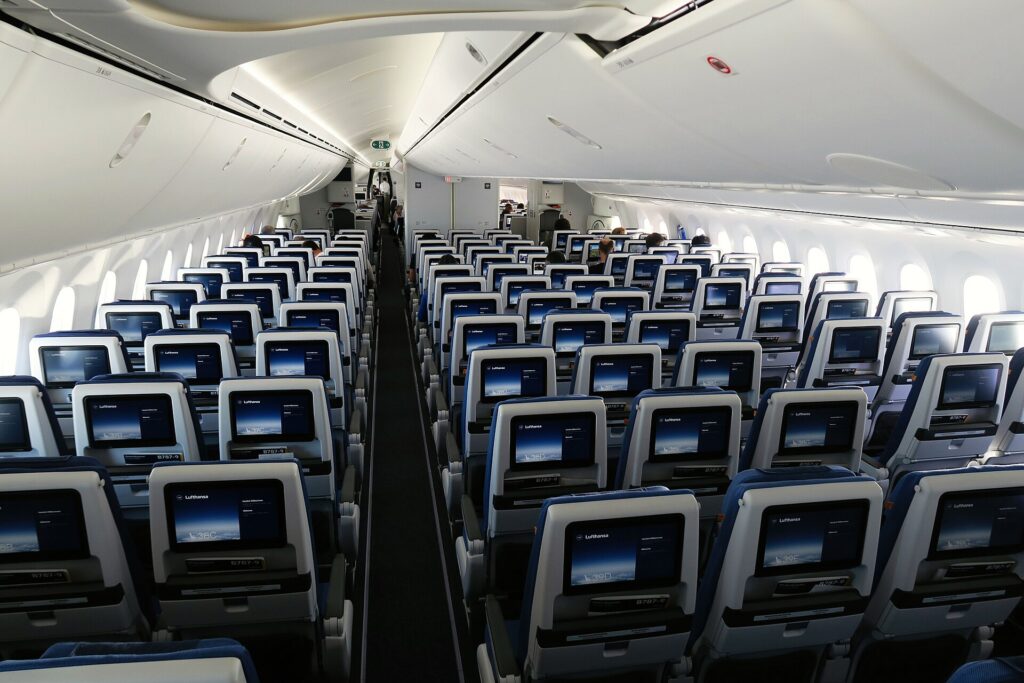
Step 4: Pick a routing you can live with
The cheapest international fares often involve a connection, and the connection is where most trips go wrong. Weigh time, reliability and comfort alongside price.
Nonstop versus one stop
A nonstop flight costs more on many routes, but it removes the risk of a missed connection and saves hours. On long-haul trips, a single well-timed connection at a major hub is often a reasonable compromise. Two or more connections to save a small amount is rarely worth it.
Choose the hub, not just the fare
If you connect, where you connect matters. Large hubs have more flights, so if you miss a connection there are more options to rebook you. Some airports are easier to connect through than others: a connection that requires changing terminals, clearing immigration, rechecking bags and going through security again takes much longer than one within the same terminal. Connecting through the United States always involves immigration and customs, so allow extra time.
How much connection time to allow
Airlines and airports set a minimum connection time, and a ticket sold with a connection meets that minimum on paper. In practice, give yourself more when you can: on international itineraries, a buffer of two hours or more is more comfortable than the bare minimum, especially at large airports, in winter, when you are traveling with children, or when you must clear immigration during the connection.
One ticket, or separate tickets?
This is the single most important routing decision. When all your flights are on one ticket, the airline is responsible for getting you to your destination if a delay makes you miss a connection, and your checked bags are usually transferred for you. When you book separate tickets, for example a long-haul flight to London and a separate low-cost flight to Italy, each airline treats its flight as the whole journey. If the first is late and you miss the second, you may lose the second ticket and have to buy another. If you do combine separate tickets, leave several hours between them, or better, stay a night at the connecting city, and budget for the risk.
Open-jaw and multi-city tickets
You do not have to fly in and out of the same city. An open-jaw itinerary, such as flying into Paris and home from Rome, often costs about the same as a round trip and saves you backtracking. Use the multi-city search option to price it. Our Rome and Paris timing guides help you choose which end to start from.
Step 5: Compare the full price
International fares are increasingly sold in fare brands, often called something like basic, standard, flexible and premium. They share the same seat but differ in what is included. The cheapest brand on some airlines, even on long-haul routes, may exclude a checked bag, advance seat selection, changes or refunds.
| What to check | Why it matters | Tip |
|---|---|---|
| Checked baggage | Some long-haul basic fares do not include a checked bag | Compare the fare with a bag included; adding a bag later can cost more |
| Carry-on allowance | Size and weight limits vary by airline, and some have weight limits on cabin bags | Check each airline on your itinerary; see our carry-on size guide |
| Seat selection | Families and couples who want to sit together may need to pay | Check whether seats can be chosen free at check-in |
| Changes and refunds | The cheapest brands are often nonrefundable and unchangeable | If your dates might move, the flexible brand is effectively insurance |
| Mixed airlines | Different airlines on one ticket may have different bag rules | The rules of the airline operating the longest or first flight often apply; confirm with the booking |
| Currency | Paying in a foreign currency can add card fees; paying in your home currency on a foreign site can add a poor exchange rate | Use a card without foreign transaction fees where you can |
A fare that looks slightly more expensive but includes a checked bag and a seat can easily win once extras are added. Our flight details guide explains how to read fare brands and baggage allowances on your itinerary.
Premium economy, business and upgrades
On long overnight flights, a better cabin can be worth more than on any other trip. Premium economy, where offered, gives more space for a moderate premium. Business class on long-haul routes usually means a flat bed. Prices swing widely by route and date, and upgrade offers sometimes appear after booking. Our guides to business class upgrade strategies and the difference between first and business class explain when paying up makes sense.
Step 6: Compare booking channels
Use a comparison search to find the best combination of dates, airports and airlines, then check the booking terms before you pay. Booking directly with the airline can make changes and disruption handling simpler, because you deal with one company. Travel agencies and online agencies can offer fares or combinations the airline does not show, but changes may need to go through the agency. Whichever you choose, check that the traveler names exactly match the passports, confirm the fare brand, and save the booking reference and ticket number.
Step 7: Use loyalty programs and points
Joining an airline’s frequent flyer program is free, and you can usually credit flights to a partner program in the same alliance. The three big alliances are Star Alliance, oneworld and SkyTeam. If you travel internationally more than once a year, concentrating your flying in one alliance helps you build status and use miles. If you already hold points on a credit card, check their value for your trip before paying cash, especially on expensive peak dates when award seats can be the better deal. Availability of reward seats is limited, so search early.
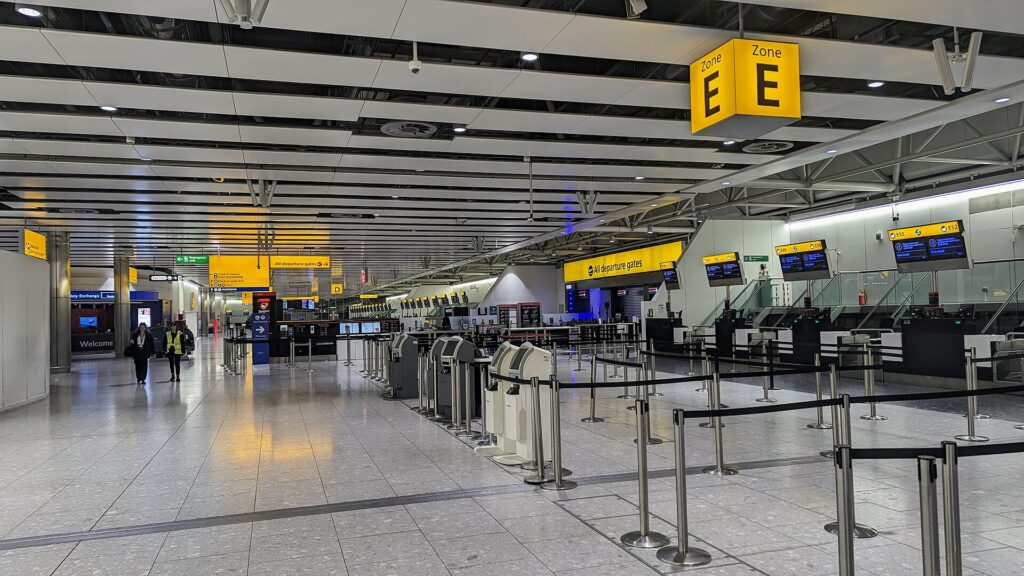
Step 8: Know your rights if things go wrong
Passenger protection rules depend on where you fly and on which airline. Knowing the basics before you travel helps you ask for the right thing at the airport.
- Canada: the Air Passenger Protection Regulations set airline obligations for flights to, from and within Canada, including communication, care, rebooking, refunds and, in some cases, compensation for delays and cancellations.
- European Union: EU air passenger rights cover flights departing from the EU and flights into the EU on EU airlines, including compensation for long delays and cancellations in many circumstances.
- United States: the Department of Transportation requires refunds when an airline cancels or significantly changes a flight and you choose not to travel, and requires the 24-hour free cancellation or hold option for tickets bought at least seven days before departure.
Rules change and exceptions apply, so check the official page for your situation.
Travel insurance
Government health plans usually cover little or nothing abroad, and a medical emergency overseas can be very expensive. Consider insurance that covers emergency medical care, and read what it says about trip cancellation, interruption and delay. Check whether a credit card you already hold includes any travel coverage, and what its limits are, before buying a separate policy.
Step 9: Plan the arrival, not just the flight
Overnight flights to Europe from North America typically land in the morning, and hotel check-in is usually in the afternoon. A few habits make the first day far easier.
- Think about the arrival time when choosing flights. A slightly later departure that lands mid-morning can make the first day more manageable.
- Book the hotel from the night you arrive if you want a room waiting for you in the morning, or ask the hotel about early check-in and luggage storage. Our hotel booking tips explain how to ask.
- Remember the date change. An overnight flight arrives the next calendar day; book hotel nights to match.
- Plan the transfer from the airport before you land, including how to pay for it.
- Handle jet lag with light and sleep. Get daylight on arrival, stay up until a reasonable local bedtime and keep the first day light.
The day of travel
International departures need more time at the airport than domestic flights, because of document checks at check-in, bag drop cutoffs and, in some cases, exit or pre-clearance controls. Many airlines recommend arriving about three hours before an international flight. Our guide to how early to arrive for an international flight explains check-in deadlines, security and the variables by airport. Check in online as soon as it opens, usually 24 hours before departure on many airlines, and make sure your security-sensitive items follow the rules at your departure airport, such as the CATSA screening guidance in Canada.
For a long flight, comfortable, layered clothing and good footwear matter; our guide to what not to wear on a flight covers it, and our guides to compression socks for long flights and noise-cancelling headphones help with the long haul.
Common mistakes that cost the most
- Booking before checking entry rules. A passport that expires too soon or a missing electronic authorization can mean denied boarding and a lost fare.
- Names that do not match the passport. Enter names exactly as they appear in the passport. Fixing an error after ticketing can be costly.
- Tight connections on separate tickets. If the first flight is late, you absorb the loss.
- Ignoring the transit country. Connecting through the United States requires U.S. entry documents.
- Comparing headline fares instead of totals. Bags and seats change the ranking.
- Booking the cheapest brand for uncertain plans. If your dates might change, flexibility is worth paying for.
- Forgetting the arrival. A dawn arrival with no room and a long transfer can cost a day.
- Using unofficial visa sites. Apply directly through the government website.
A quick pre-booking checklist
- Passport valid for the required period after your trip, with blank pages if needed.
- Visa or electronic authorization for the destination and any transit country.
- Dates chosen after checking a fare calendar.
- Alternative departure and arrival airports priced, with transfers included.
- Routing checked: connection airport, connection time, one ticket.
- Fare brand compared with bags, seats and change conditions.
- Names match passports exactly.
- Travel insurance decided.
- Arrival plan: hotel check-in, transfer and first night.

Destination examples
Canada to Europe
Nonstop options are widest from Toronto, Montreal and Vancouver, with summer the most expensive season and late fall and winter the cheapest. Consider an open-jaw ticket if you are visiting more than one country. Start with our London flights and Paris flights pages.
North America to Mexico
Beach resorts peak in winter and around spring break. A big hub such as Mexico City can offer more competition and more flights; our guide to cheap flights to Mexico City covers the options, and our Cancun flights page shows fares to the coast.
Transborder flights between Canada and the U.S.
Flights between Canada and the United States behave much like domestic flights in pricing, but you need a passport or an accepted travel document, and at several large Canadian airports you clear U.S. customs and immigration before you board. Our guide to cheap flights between New York and Toronto is a good example of how airport choice changes the fare.
Asia
Long-haul trips to Asia from Canada usually route through Vancouver or a Pacific hub. Check passport validity rules carefully, since six months is common in the region. Our Japan travel guide covers planning a first trip.
Frequently asked questions
How far in advance should I book an international flight?
As a guide, about two to six months ahead for long-haul trips, earlier for peak summer and holiday dates. Set a price alert and book when the fare reaches or dips below the normal level for your route.
Is it cheaper to book international flights directly with the airline?
Sometimes, sometimes not. Use a comparison search to find the best option, then compare the airline’s own price and conditions. Booking directly can make changes and disruptions simpler to handle.
Are one-way international tickets more expensive?
On many routes, one-way fares are now reasonably priced, but on some, a round trip is still cheaper. Compare both, and consider an open-jaw ticket if you are flying home from a different city.
What is a safe connection time for international flights?
The minimum connection time on your ticket is legal, not generous. On international trips, two hours or more is more comfortable, especially if you must clear immigration or change terminals.
What happens if I miss a connection on separate tickets?
The second airline usually has no obligation to help, and you may have to buy a new ticket. Leave a large buffer or book all flights on one ticket.
Do I need a visa to connect through another country?
It depends on the country and your nationality. The United States requires every connecting passenger to be admissible to the U.S. Check each transit country’s rules before booking.
Should I buy travel insurance for an international trip?
Medical coverage is strongly worth considering, because government health plans cover little abroad. Read the policy to see what it covers for cancellation, delays and pre-existing conditions.
Ready to find your fare? Start with a flexible date range and a few nearby airports on our flight search, then line up your stay with our hotel search. For the timing side of the decision, read our guide to the best time to book cheap flights and hotels.
Keep planning with TicketScanner
- Best time to book cheap flights and hotels
- How early to arrive for an international flight
- Flight details, decoded
- Business class upgrade strategies
- Cheap flights to Mexico City
- What not to wear on a flight
- Traveling Europe on a multi-city route
- Compare international fares — flexible dates and nearby airports
- Cheap flights to London
- Best time to fly to Paris
Leave a Reply