After a long flight, a lot of people notice the same thing: shoes that feel tighter than they did at takeoff, ankles that look puffy, and legs that feel heavy and restless. Sitting still for hours with your knees bent and little room to move is hard on legs, and it is the reason compression socks have become a staple in many travelers’ carry-on bags. They are also surrounded by more marketing claims than almost any other travel product, and because they touch on health, it is worth getting the facts straight. This guide explains what compression socks are, how compression levels and sizing work, how to put them on and wear them on a flight, what official health sources say about blood clots and travel, the other habits that keep your legs comfortable on long trips, and the socks from our original list with who each one suits. It is part of our travel gear series, which starts with our main guide to choosing travel luggage.
Talk to your doctor first, especially if you have a circulation condition or are pregnant. This guide is general travel information, not medical advice. Compression is not suitable for everyone, and some health conditions make it a bad idea. If you have had a blood clot before, have a circulation or heart condition, diabetes, recent surgery or injury, are pregnant or have recently given birth, or take blood thinners, ask your doctor, midwife or pharmacist whether compression socks are right for you and what level to use before you fly.
The short answer
For a healthy traveler who simply wants more comfortable legs on a long flight, well-fitting, knee-high graduated compression socks at a light to moderate level, sized from your ankle and calf measurements rather than your shoe size, are the usual choice. Put them on before you leave for the airport, make sure they lie smooth without bunching or rolling at the top, and take them off if they cause pain, numbness, tingling or skin color changes. Compression socks are not a substitute for getting up and moving, flexing your ankles and staying hydrated, which the CDC and the NHS recommend for long journeys. If you have any risk factors for blood clots, the decision about compression, and which level, belongs with your doctor.
What compression socks are
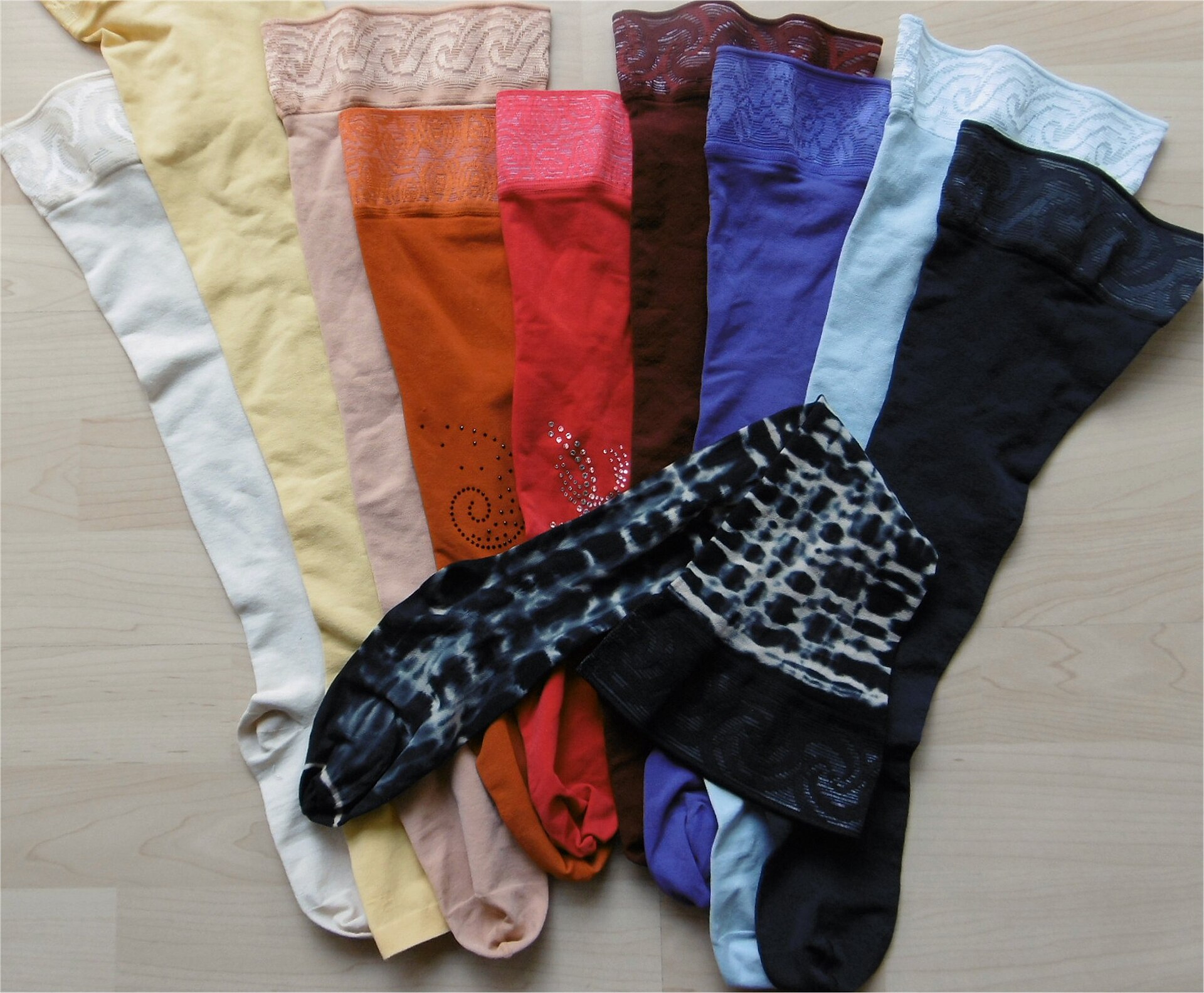
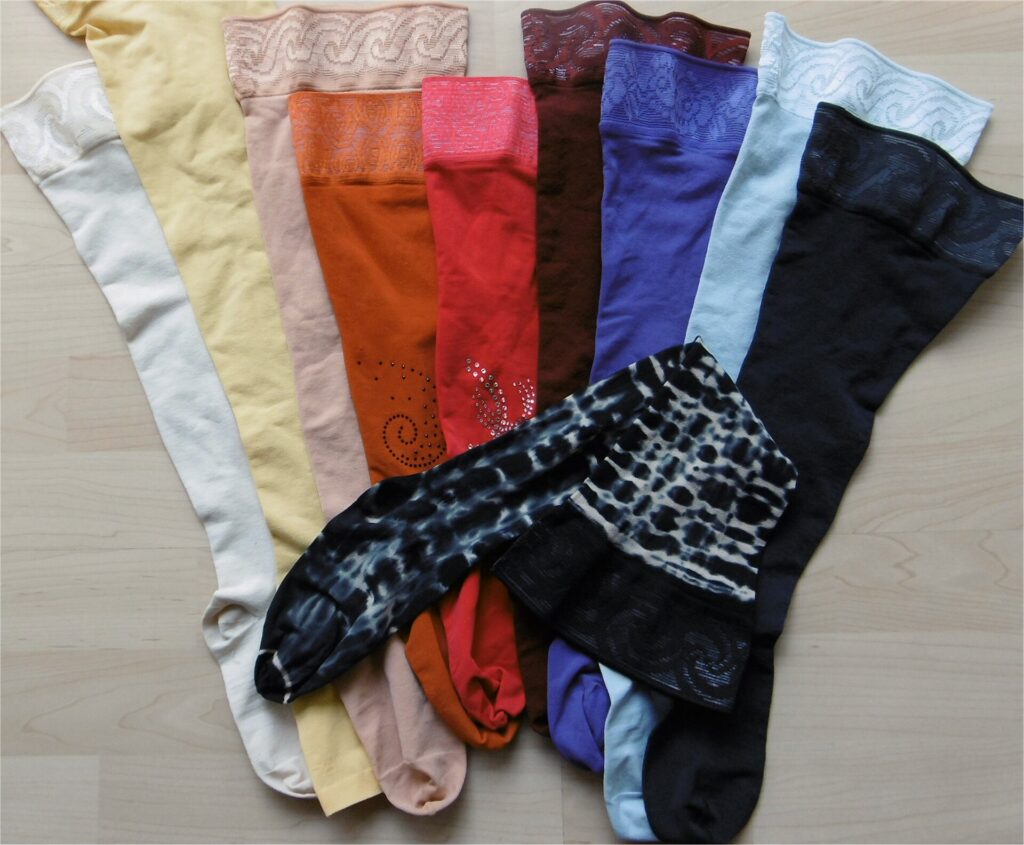
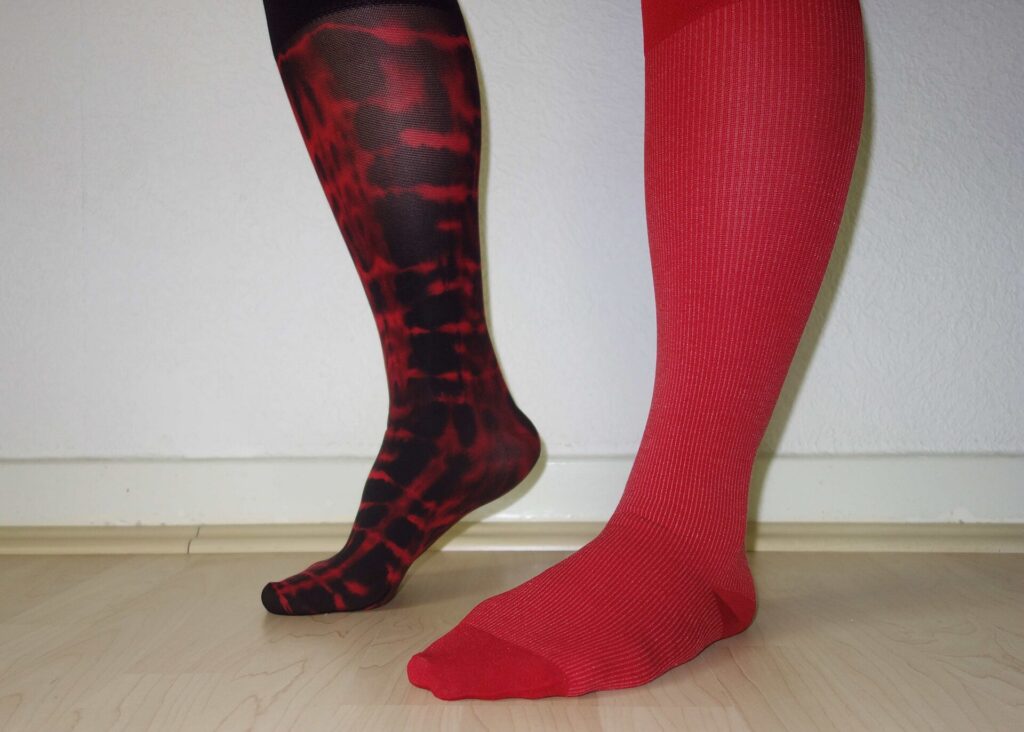
Compression socks are tight, stretchy socks designed to squeeze the leg. Most travel compression socks are graduated, which means they are tightest at the ankle and gradually looser up the calf. The idea is to support the veins in the lower leg while you are sitting still. They look much like ordinary sports socks or dress socks, and many come in patterns and colors that make them easy to wear on the plane and afterwards.
How compression is measured
Compression is usually given in millimeters of mercury (mmHg), the same unit used for blood pressure. The number, or range, is printed on the packaging and describes how much pressure the sock applies, usually at the ankle. Higher numbers mean firmer compression.
Compression levels
Sellers group socks into rough bands, and the labels vary by brand and country:
- Light or mild compression is widely sold for travel, standing jobs and everyday wear.
- Moderate compression is also sold over the counter and marketed for travel and sport, often labeled as “firm” or “medical grade”.
- Firmer levels are generally used under medical supervision and may need professional measuring and fitting.
A higher number is not automatically better. Firmer socks are harder to put on and can be uncomfortable if they are not needed or do not fit. If you are unsure which level suits you, and particularly if you are considering a firmer level, ask your doctor or pharmacist.
Travel socks, sports socks and medical stockings
Travel and sports compression socks are consumer products sold in shops and online. Medical compression stockings prescribed for a condition, and the anti-embolism stockings used in hospitals for patients in bed, are different products chosen and fitted for a specific medical purpose. Do not assume that a sock sold for travel does the same job as a stocking your doctor prescribed, or the reverse.
Blood clots and long flights: what official sources say
Much of the marketing around compression socks mentions deep vein thrombosis (DVT), a blood clot that forms in a deep vein, usually in the leg. It is worth hearing what public health sources actually say.
- The risk is generally very small. The CDC’s page on blood clots and travel says that anyone traveling more than about four hours, by air, car, bus or train, can be at risk, but that even for long-distance travelers the risk of developing a blood clot is generally very small.
- Other risk factors matter most. The CDC says most people who develop travel-associated blood clots have one or more other risk factors. Its list includes older age, obesity, recent surgery or injury, estrogen-containing contraceptives or hormone replacement therapy, pregnancy and the postpartum period, a previous blood clot or a family history of clots, an inherited clotting disorder, active cancer, certain long-term conditions, limited mobility and varicose veins.
- Compression is one option for some people. The CDC says that if you are at risk, you should talk with your doctor about prevention, and that some people may benefit from wearing graduated compression stockings.
- Guidelines target people at increased risk. The CDC Yellow Book chapter on deep vein thrombosis and pulmonary embolism, written for health professionals, summarizes clinical guidelines that consider properly fitted compression stockings for long-distance travelers at increased risk, and that do not recommend them for clot prevention in travelers without risk factors.
In plain terms: many healthy travelers wear compression socks because their legs feel more comfortable, which is a perfectly good reason. But a sock is not a guarantee against blood clots, and if you have risk factors, the right prevention plan is a conversation with your doctor, not a purchase.
Know the warning signs
The CDC lists the common symptoms of DVT as swelling of the leg or arm, pain or tenderness you cannot explain, skin that is warm to the touch, and redness or discoloration, and advises contacting your doctor as soon as possible if you notice them. It also lists symptoms of a pulmonary embolism, which is a clot that has traveled to the lungs, including difficulty breathing, chest pain, a fast or irregular heartbeat, coughing up blood and lightheadedness or fainting, and says to seek medical help immediately. The NHS page on deep vein thrombosis gives similar urgent advice. Symptoms can appear during or after a trip, including days later, so do not dismiss them because you are already home.
Who should talk to a doctor before wearing compression socks
This bears repeating. Talk to a doctor, midwife or pharmacist before you buy or wear compression socks for a flight if any of these apply:
- You have a circulation condition, such as problems with the arteries in your legs, or heart failure.
- You are pregnant or have given birth in the last few months.
- You have had a blood clot before, or a close family member has.
- You have diabetes, especially with numbness in your feet.
- You have had recent surgery or an injury, or you have a leg in a cast.
- You have skin problems on your legs, such as fragile skin, wounds or dermatitis.
- You take blood thinners or other medicines that affect clotting.
- You have any condition for which a doctor has told you to avoid tight clothing on your legs.
Your doctor can tell you whether compression is appropriate, what level to use and how to be measured, and whether you need any other precautions for your trip.
How to choose compression socks
Compression level
For comfort on a flight, most healthy travelers choose light to moderate compression. If you are buying on a doctor’s advice, use the level they recommend. Read the mmHg figure on the packaging rather than relying on words like “medical” or “athletic”, which are not used consistently.
Size and fit
Fit matters more than almost anything else. Compression socks are usually sized by ankle and calf circumference, sometimes combined with shoe size. Measure in the morning, before your legs have had a chance to swell, and use the maker’s size chart. A sock that is too tight can dig in and be uncomfortable; one that is too loose will not compress evenly. If you are between sizes or your calves are unusually slim or muscular, look for brands with more size options or wide-calf versions.
Length
Knee-high socks are the most common choice for travel. They should sit just below the bend of the knee. Thigh-high stockings and full tights exist, mainly for medical use, and are harder to put on and wear in a cramped seat. Ankle-length compression socks are sold for sport but do little for the calf.
Material
Most compression socks are made from nylon and spandex, sometimes blended with cotton, bamboo-derived fibers or merino wool. Synthetic blends are durable and dry quickly. Wool blends are warmer and handle odor well on long travel days. Cotton blends feel familiar but can hold moisture. If you run hot, look for thinner, breathable knits.
Toe and heel
Most travel socks have a closed toe and a shaped heel. Open-toe versions exist, mostly for medical use and for wearing with sandals. A well-shaped heel pocket keeps the compression in the right place.
Durability and care
Compression fabric loses its stretch over time, especially with hot washing and tumble drying. Follow the care label, usually a cool wash and air drying, and replace socks when they start to feel loose. Buying two pairs lets you wear one while the other dries on a long trip.
| Type | Typical use | Ease of wearing on a plane | Notes |
|---|---|---|---|
| Knee-high travel socks, light compression | Comfort on flights and long days standing | Easy | Common starting point for healthy travelers |
| Knee-high socks, moderate compression | Travel and sport; sometimes on medical advice | Moderate; firmer to put on | Check fit carefully; ask a doctor if unsure |
| Wool-blend compression socks | Cold destinations, long travel days | Easy | Warmer; good for odor control |
| Thigh-high stockings or tights | Mainly medical, on professional advice | Harder in a cramped seat | Should be fitted as advised |
| Hospital anti-embolism stockings | Patients in bed in hospital | Not designed for travel | A different product; do not substitute |
How to put compression socks on
Compression socks are tighter than ordinary socks, and the first attempt can be a wrestle. A few tricks help:
- Put them on in the morning, before your legs swell, ideally before you leave home for the airport.
- Turn the sock inside out down to the heel. Slide your foot into the foot section, position the heel, then roll the rest of the sock up your leg a little at a time.
- Smooth out every wrinkle. Bunching creates tight bands that concentrate pressure in the wrong place.
- Never fold or roll the top down. A doubled-over top can act like a tight band around your calf.
- Use rubber gloves for grip if you find the fabric hard to pull, and keep your fingernails short to avoid snagging.
- Consider a donning aid if you have limited hand strength or flexibility. Pharmacies and medical supply stores sell frames and slippery sleeves that make putting socks on easier.
Practice at home before your trip. You do not want to learn in a cramped airplane lavatory.
Wearing them on a flight
- Wear them from the start of the journey, not just once you are on the plane.
- Check them during the flight. If a sock has slipped or bunched, straighten it.
- Take them off if something feels wrong. Pain, numbness, tingling, pins and needles, or skin that turns pale, blue or dark are signs to remove the socks and seek advice.
- Remove them after you arrive, unless your doctor has advised otherwise, and check your skin for marks or irritation.
- Wear comfortable, roomy shoes. Feet can still swell a little, and tight shoes add pressure. Our guide to comfortable walking shoes for traveling covers shoes that suit long travel days.
- Dress loosely elsewhere. Tight waistbands and restrictive trousers undo some of the comfort. Our guide to what not to wear on a flight covers clothing choices, and travel pants for men covers comfortable trousers.
Other ways to keep your legs comfortable
Compression socks are one tool. The habits that official sources recommend for long journeys apply whether you wear them or not.
Move regularly
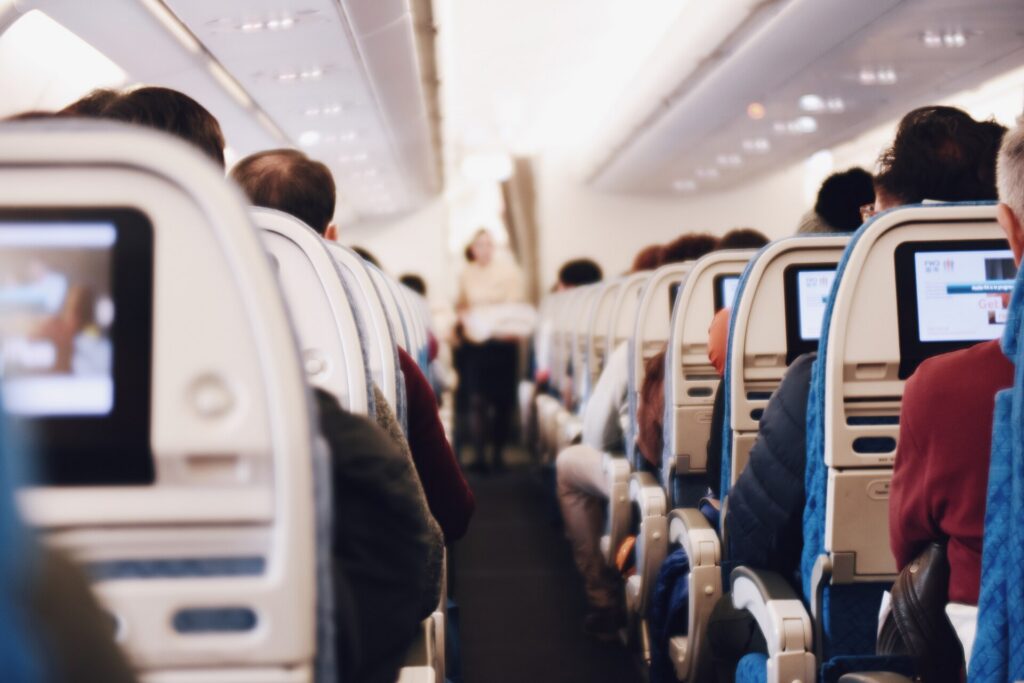
The CDC recommends moving your legs frequently on long trips and exercising your calf muscles. When the seat belt sign is off and it is safe, get up and walk the aisle, and stand for a few minutes near the galley or lavatories if space allows. The NHS advises getting up and moving around when possible on journeys of four hours or more.
Exercise in your seat
The CDC describes simple seated movements: extend your legs and flex your ankles, pulling your toes toward you. Point and flex your feet, draw circles with your ankles and press your heels and then your toes into the floor. Do these every so often, especially when you cannot get up.
Choose your seat thoughtfully
An aisle seat makes it easy to get up without disturbing anyone. Bulkhead and exit rows may give more legroom, though exit rows come with conditions and are not available to everyone. Keep the space under the seat in front as clear as you can so you can stretch your feet, by putting bulky bags in the overhead bin.
Drink water and go easy on alcohol
Cabin air is dry. The NHS advises drinking plenty of water and avoiding alcohol on long journeys. Bring an empty refillable bottle through security and fill it afterwards.
Break up long road and rail trips too
The same principles apply to long drives, bus rides and train journeys. On a road trip, plan regular stops to walk around. If you are renting a car for a long drive after a flight, build in a break before you set off.
Pregnancy and travel
The CDC lists pregnancy and the first months after childbirth among the factors that can increase the risk of blood clots. If you are pregnant or have recently given birth, talk to your doctor or midwife before a long flight about whether you should wear compression socks, what level to use and how to fit them, and about any other precautions they recommend. Airlines also have their own rules on flying late in pregnancy, so check with your airline as well.
Socks from our original list
The socks below were featured in the original version of this guide. They cover different styles and budgets rather than a strict ranking, and we have not made claims about any of them preventing blood clots. Check each product’s compression level, size chart and care instructions from the maker or seller before you buy, and follow your doctor’s advice if you have one.
Physix Gear compression socks
Physix Gear sells compression socks marketed for travel, running and everyday wear. They suit travelers who want a sports-style sock that also works on a flight. Check the compression level on the listing against what you need.
NEWZILL compression socks
NEWZILL was featured for compression socks for men and women aimed at travel, hiking and everyday use. They suit travelers looking for an everyday sock in a range of colors.
Dr. Scholl’s compression socks for women and men
Dr. Scholl’s was featured twice, for knee-high women’s socks and over-the-calf men’s socks with graduated compression. They suit travelers who prefer a familiar brand found in many pharmacies, which also makes it easier to try sizes in a store.
Multi-pack compression socks
The list included several multi-packs, including an unbranded pack for men and women, FITRELL, fenglaoda and CHARMKING. Multi-packs suit frequent flyers and people who wear compression socks for work as well as travel, since having several pairs means one can dry while you wear another. Compression levels vary between packs, so read the listing.
Crucial Compression socks
Crucial Compression was featured for socks aimed at athletes and travelers. They suit people who want one pair for the gym and the plane.
Wanderlust travel compression socks
Wanderlust was featured for socks designed specifically for travel. They suit travelers who want a sock marketed for long-haul flights, often in travel-themed designs.
Packing compression socks
Socks take almost no space, so pack two pairs for a long trip: one to wear on the way out and one for the return, or for a long travel day in the middle. Keep them in your carry-on, so you can put on a fresh pair if a flight is delayed or you have a long connection. They fit neatly alongside a travel first aid kit and the rest of your in-flight comfort gear, such as a neck pillow and noise-cancelling headphones. If you carry the pillow separately, a pillow bag with a pocket can hold the socks too.
If you need medicines or medical supplies for your trip, carry them in your hand luggage in their original packaging and check the official guidance for your destination. The Government of Canada’s travel health and safety pages are a good place to start for Canadian travelers.
Common mistakes
- Buying by shoe size alone. Measure your ankle and calf and use the size chart.
- Choosing the highest compression available. Firmer is not better unless you need it; ask a doctor.
- Letting the top roll down. A folded top acts like a tight band.
- Treating socks as protection against clots. They are one option for some people, not a guarantee.
- Staying in your seat the whole flight. Movement matters whether or not you wear compression.
- Ignoring warning signs. Pain, numbness or color changes mean take them off and get advice.
- Skipping the doctor conversation when you are pregnant, have a circulation condition or have other risk factors.
Frequently asked questions
Do compression socks prevent blood clots on flights?
They are not a guarantee. The CDC says some people at risk may benefit from graduated compression stockings and advises talking with your doctor. Clinical guidelines summarized by the CDC consider them for travelers at increased risk, not for clot prevention in travelers without risk factors. Many healthy travelers wear them for comfort.
What compression level should I choose for a flight?
Many healthy travelers choose light to moderate compression for comfort. If you have any health condition or risk factors, ask your doctor which level is right for you.
Can I wear compression socks if I am pregnant?
Talk to your doctor or midwife first. Pregnancy and the postpartum period are listed by the CDC as risk factors for blood clots, and your doctor can advise on compression and other precautions.
Who should not wear compression socks?
Compression is not suitable for everyone. People with circulation conditions, certain skin problems, diabetes with numb feet or other medical conditions should ask a doctor before wearing them.
When should I put them on and take them off?
Put them on in the morning before you travel, and take them off after you arrive, unless your doctor advises otherwise. Remove them immediately if they cause pain, numbness or skin color changes.
How do I know what size to buy?
Measure your ankle and calf circumference in the morning and compare with the maker’s size chart. Fit matters more than brand.
Are compression socks allowed through airport security?
Yes. They are ordinary clothing as far as security is concerned, and you can wear them through screening.
What else can I do to keep my legs comfortable on a long flight?
Get up and walk when it is safe, flex your ankles and calves in your seat, choose an aisle seat, drink water, avoid alcohol and wear loose clothing, as the CDC and the NHS recommend.
With your legs looked after, choose a flight that makes the journey easier: nonstop routes cut total travel time, and a good schedule leaves time to stretch before a connection. Compare options on our flight search, book a hotel near the airport for a long layover on our hotel search, and if you are driving on arrival, plan stops along the way with a car from our car rental search. Flying long-haul to Europe? Flights to Paris and our guide to things to do in Paris are a good place to start, with plenty of walking to get your legs moving again.
Keep planning with TicketScanner
- Top travel luggage bags: the buying guide — the travel gear guide
- Neck pillows for flying
- Noise-cancelling headphones for flying
- Bags and cases for travel pillows
- Comfortable walking shoes for traveling
- Travel first aid kits
- Travel pants for men
- What not to wear on a flight
- Search flights — nonstop routes mean less time sitting
- Things to do in Paris
Leave a Reply