
On a long international flight, the cabin you choose shapes the whole trip: whether you sleep, how you feel when you land, and how much of your first day you lose. Business class and first class both promise comfort, but the names are less helpful than they sound. “First class” means something very different on a two-hour domestic flight in North America than on a long-haul flight to Asia or the Middle East, and on many airlines business class is now the best seat on the plane. A modern business class seat on one airline can beat an older first class product on another. This guide explains what each cabin really offers, how to tell which product you are buying, how they compare on seats, sleep, lounges, food, service and baggage, and how to decide which is worth it for your trip. It is part of our flight booking series, which starts with our guide to the best time to book cheap flights and hotels.
The short answer
On long-haul international flights, business class usually means a lie-flat seat, lounge access, priority services and restaurant-style meals. International first class, where it still exists, adds more space and privacy, often a suite with a door, more personal service, more elaborate dining and more exclusive ground facilities, at a price that is often several times higher. On domestic flights in the United States and Canada, “first class” is usually a wider recliner with more legroom, closer to a short-haul business seat than to international first. Many airlines no longer sell international first at all, making business class their top cabin. For most travelers, long-haul business is the sweet spot of comfort and value, and the right question is not “business or first?” but “which seat, on which aircraft, at what price?” Compare cabins and dates for your route on our flight search.
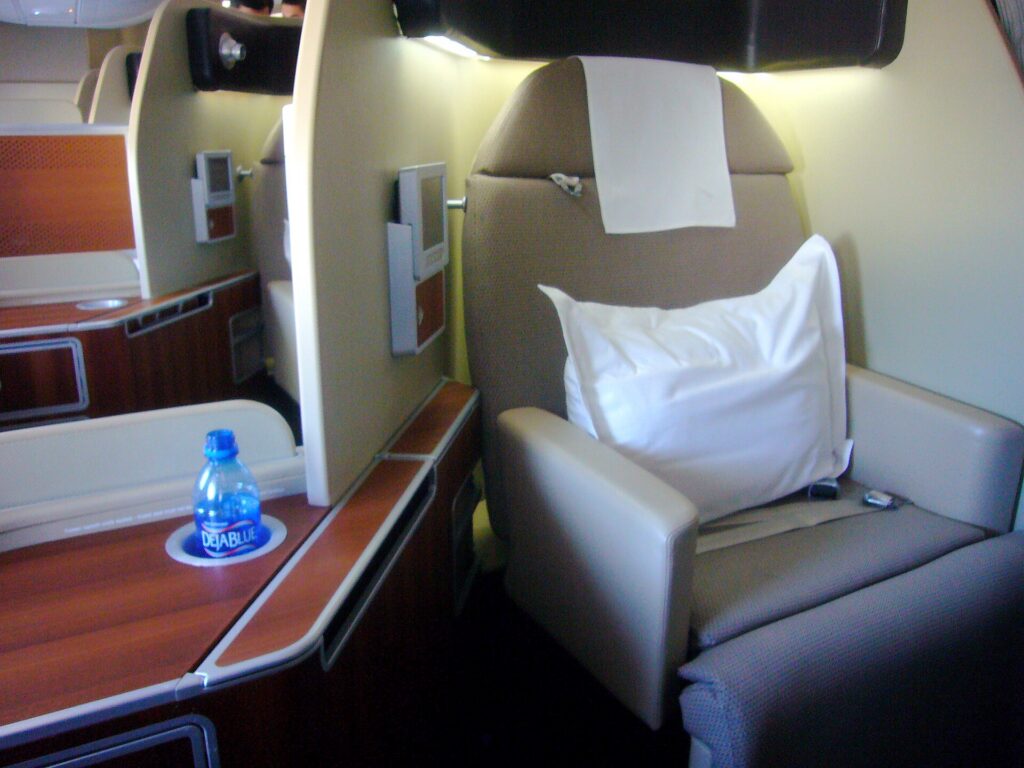
Why cabin names are confusing
Airlines use cabin names as brands, not as standard definitions. There is no rule that says what a business class seat must include, and the same word can describe very different products. It helps to think of three situations.
Long-haul flights with three premium tiers
A small number of airlines fly large widebody aircraft with a first class cabin at the front, business class behind it, then premium economy and economy. On these flights, first is clearly the top product, and business is a step below it, though usually still a lie-flat bed. Emirates, for example, describes its first class cabin features separately from its business class, and the difference is presented as one of space, privacy and service.
Long-haul flights where business is the top cabin
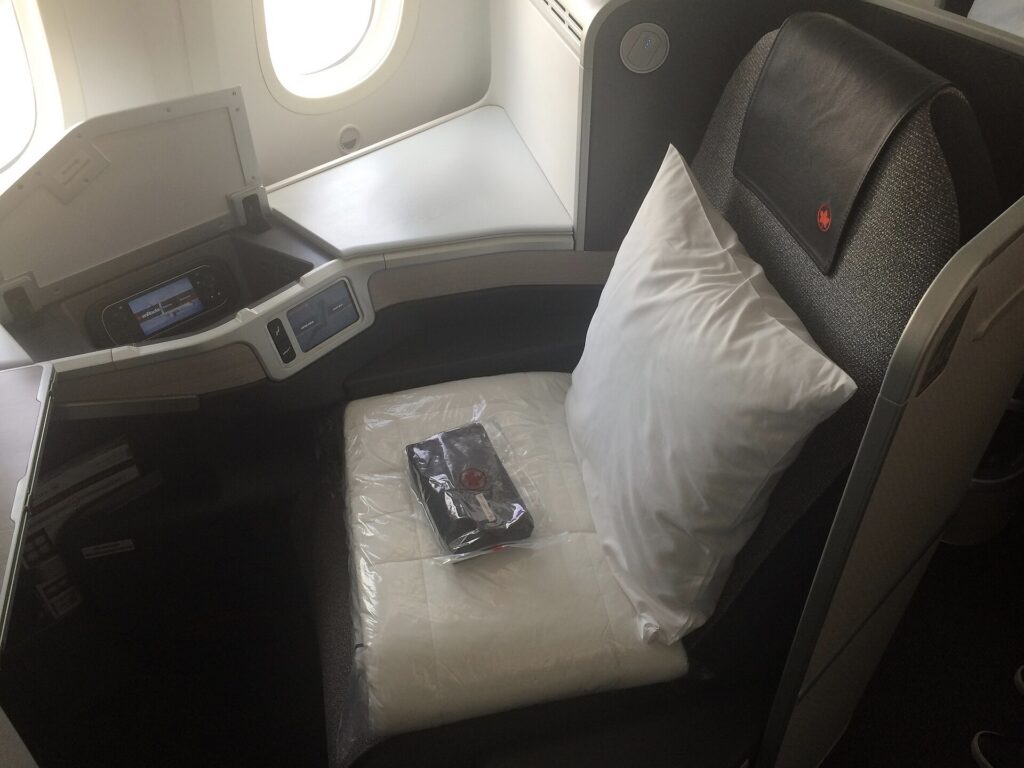
Many airlines, including most North American carriers on their international routes, sell business class as their best long-haul product. Delta calls its version Delta One and describes it as its most premium experience, with 180-degree lie-flat seats on international and select long-haul domestic routes. Air Canada’s long-haul business cabin uses lie-flat pods on many of its international aircraft. On these flights there is no first class to buy: business is first, in practice.
Short and medium flights in North America
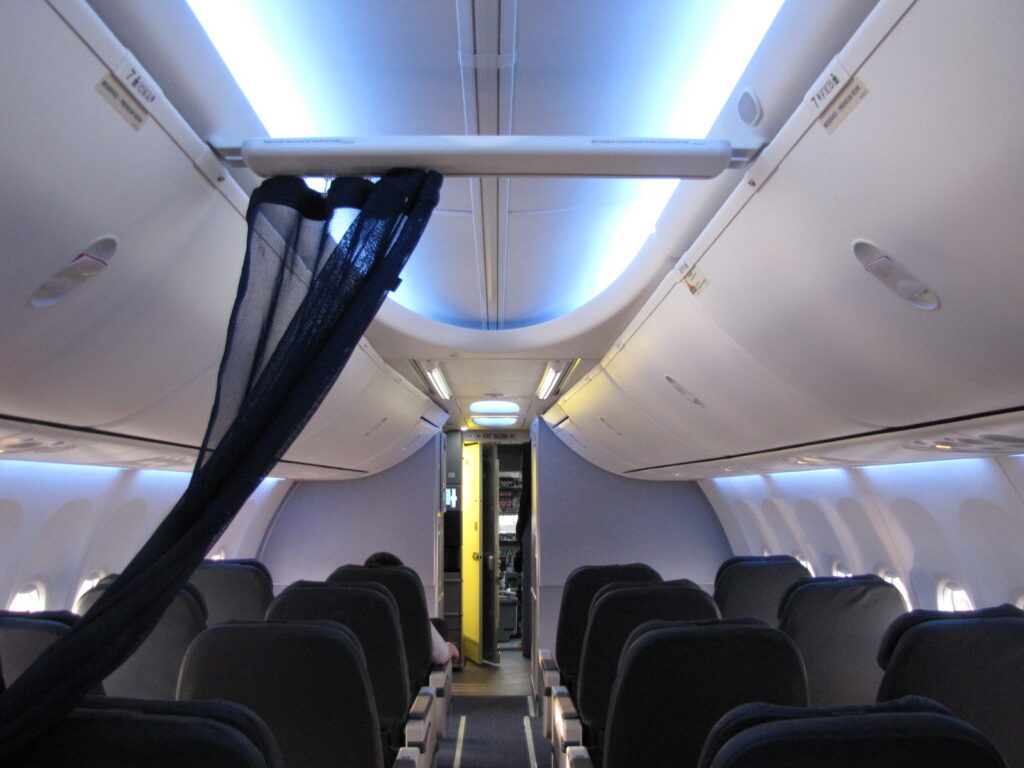
On domestic and regional flights in the United States and Canada, the front cabin is often branded “first class” or given an airline-specific name. It usually offers wider seats, more legroom, more recline, priority services and better food and drink, but not a bed. Delta’s Delta First page, for instance, describes up to 8 inches of extra legroom and up to 5.4 inches of recline compared with a standard Delta Main seat. That is a very comfortable seat for a three-hour flight, but it is a different product from international first class, and closer to what many airlines call business class on short routes.
Europe adds one more twist: on many short-haul flights within Europe, business class is an economy-style seat with the middle seat kept free, plus lounge access, priority services and a meal. It is worth the money for flexibility and ground benefits, not for the seat itself.
Even within one airline, the ladder can have many rungs. Delta’s onboard experience overview lists Delta Main Basic, Delta Main, Delta Comfort, Delta First, Delta Premium Select and Delta One, and notes that several of these now come in basic versions too. Extra-legroom economy such as Delta Comfort, with more legroom, earlier boarding and dedicated overhead bin space, is not a premium cabin at all, but it is often the most cost-effective step up on a short flight.
The lesson is simple: judge the seat and the service, not the label. Our guide to reading your flight details explains how to find the aircraft type and fare brand on a booking.
First class vs business class at a glance
The table compares typical long-haul products with the domestic first class and premium economy cabins travelers often weigh them against. These are general patterns; the details depend on the airline, the aircraft and the fare.
| Feature | Premium economy | Domestic first (North America) | Long-haul business | International first |
|---|---|---|---|---|
| Seat | Wider recliner with more legroom | Wide recliner, more legroom and recline | Usually lie-flat; many with direct aisle access | Lie-flat, larger; often a private suite |
| Privacy | Low | Low to moderate | Moderate to high; some seats have doors | High; doors and enclosed suites common |
| Sleep | Better than economy, still upright | Rest, not real sleep | A proper bed on most long-haul aircraft | A larger bed, often with extra bedding |
| Ground services | Sometimes priority boarding | Priority check-in, security and boarding | Priority services and lounge access | Dedicated check-in, first class lounges on some airlines |
| Dining | Upgraded economy meals | Snacks or meals depending on distance | Multi-course meals and premium drinks | More elaborate menus and more flexible timing |
| Service | Shared crew with economy on some airlines | Dedicated flight attendant | Dedicated crew, more attention | Highest crew-to-passenger ratio |
| Checked bags | Often more than economy | Usually included | Usually generous | Usually the most generous |
| Relative price | Moderate step up | Moderate to high step up | High | Very high, often several times business |
Seats and sleep: the difference that matters most
On an overnight flight, the seat is what you are really paying for. A few details decide how well you sleep.
Lie-flat, angled-flat and recliners
A true lie-flat seat turns into a flat bed parallel to the floor. Some older business class seats are angled-flat: they recline a long way but leave you sliding gently toward your feet, which many people find harder to sleep in. Recliners, found in premium economy and domestic first, are comfortable for a daytime flight but not a bed. If sleep is your priority, confirm that your seat is fully flat, not just “flat bed” in marketing language.
Direct aisle access and layout
In modern long-haul business cabins, many seats are arranged so that every passenger can reach the aisle without climbing over anyone. Older layouts may have two seats side by side with the window passenger stepping over the aisle passenger. On a long overnight flight, direct aisle access is one of the most valuable features a business cabin can have. First class cabins are smaller and almost always give every passenger direct aisle access.
Privacy and doors
Doors and high partitions used to be a first class signature. Several airlines now fit them in business class too, which is one reason the gap between the two cabins has narrowed. Where first class still exists, the suites are usually larger, with more storage, a bigger screen, and sometimes room to sit opposite a companion for dinner.
Bed length and space
Seat dimensions vary by aircraft and seat position. Taller travelers should look at the specific seat map, since footwells and bed lengths can differ within the same cabin. Airline pages and seat maps at booking are the reliable source; if the airline does not publish a figure, do not rely on one you read elsewhere.
The airport experience
A lot of what separates the cabins happens before you board.
- Check-in and security. Business and first passengers usually get priority check-in and, at many airports, faster security lanes. Some airlines offer first class passengers dedicated check-in areas or separate terminals at their home airport.
- Lounges. Long-haul business class usually includes lounge access. Some airlines operate separate first class lounges with à la carte dining and more space. At outstations, first and business passengers may share the same lounge.
- Ground transport. A few airlines include chauffeur service for premium passengers on some routes. This is more common in first class and varies widely.
- Boarding and baggage. Priority boarding and priority baggage handling are standard in both cabins. Delta’s Delta First page, for instance, lists priority check-in, security and boarding, bags delivered first and up to two free checked bags.
Watch for exclusions. Some airlines now sell stripped-back versions of premium cabins with fewer ground benefits. Delta’s Delta One page notes that its basic business fare excludes some lounge access, for example. If the lounge matters to you, check the fare brand before you pay.
Premium check-in and security lanes do not change how early you should arrive for an international departure, especially if you have bags to drop or a document check. Our guide to how early to arrive for an international flight gives realistic timings.

Food, drink and service
Both premium cabins serve far better food than economy, but the style differs.
Business class usually offers a multi-course meal with a choice of main dishes, a selection of wines and spirits, and a lighter meal or snacks before landing. On overnight flights, many airlines let you skip the main service or eat quickly so you can maximize sleep.
First class usually adds more choice, more premium ingredients and drinks, and more flexibility: dining when you want rather than when the cart comes around. With fewer passengers per flight attendant, service is more personal, and crews often remember your preferences through the flight.
On short domestic flights, the difference is smaller. Delta First, for example, describes snacks on shorter flights and meals on longer ones, with the offering depending on distance. If food matters, check what is served on your specific flight rather than assuming.
Baggage, flexibility and the fine print
Premium tickets typically include a larger checked baggage allowance, and many come with more flexible change and refund rules. Neither is universal: basic versions of premium cabins may carry stricter rules, and allowances differ by route and airline. Before you book, check:
- The baggage allowance for your fare and route, including weight limits per bag.
- Change and cancellation rules, especially if you are paying a premium partly for flexibility.
- Lounge access, including whether it applies at every airport on your journey.
- The aircraft and seat on every flight. A long itinerary may include a short connection on a smaller aircraft with a much simpler premium cabin, or none at all. The cabin you booked describes the fare, not a guarantee that every flight has the same seat.
That last point catches many travelers out. A business class ticket from a smaller city to Asia might include a regional flight with a domestic-style first class seat, then a long-haul flight with a lie-flat bed. Look at each flight in the booking before you pay.
Price and value
International first class is usually priced far above business, often several times the fare, while the improvement in comfort is smaller than the price gap suggests. You are paying for exclusivity, space and service as much as for sleep. That is why many experienced travelers regard long-haul business as the best value premium product: it solves the biggest problem of a long flight, a proper bed, for a fraction of the cost of first.
A few ways to think about value:
- Price the sleep. On an overnight flight, compare the premium over economy with the cost of losing your first day at the destination.
- Count what is included. Bags, lounge access, meals and flexibility reduce the real gap.
- Look at premium economy. On daytime flights or when business prices are high, premium economy can deliver much of the comfort for much less.
- Watch premium fare sales. Business fares drop on leisure routes and in quieter seasons, and flexible dates make a big difference. Our booking timing guide explains the seasons.
- Consider upgrades. Paid upgrade offers, bids and miles can sometimes bring business class within reach. Our guide to business class upgrade hacks explains which methods work.
Which cabin should you choose?
The right answer depends on the flight and what you need at the other end.
Choose long-haul business class if
- You are on an overnight flight and need to function the next day.
- You want a flat bed, lounge access and good food at a price that is high but not extreme.
- You are traveling for work and arriving straight into meetings.
- Your airline does not offer first class on the route anyway.
Consider international first class if
- Maximum privacy and space are worth a large premium to you.
- You value highly personal service and flexible dining.
- The trip is a once-in-a-lifetime occasion and you want the experience itself.
- You can use miles for it at good value, which is how many travelers experience first class.
Choose premium economy or domestic first if
- The flight is short or in daytime, and a bed would be wasted.
- You want more space and calm without the cost of long-haul business.
- You are flying within North America, where the front cabin is a recliner anyway.
Business travelers and company policies
If your employer is paying, the travel policy may decide for you: many companies allow business class only above a certain flight length, and few allow first. Where you have a choice, a lie-flat seat on an overnight flight before a working day is the strongest case for business class, because the cost of arriving exhausted falls on the work itself. Our guide to business travel hotels covers the other half of a work trip.
Traveling as a couple or family
Seat layout matters more when you travel together. Some business cabins have center pairs designed for companions; others isolate every passenger. First class suites on some airlines can be arranged for companions to dine together. With children, check the airline’s rules on minimum ages in premium cabins and the availability of bassinets, and consider whether the cost for the whole family makes premium economy a better compromise.
How to check what you are really getting
- Find the aircraft type for each flight during booking. The same route can be flown by different aircraft with very different cabins.
- Open the seat map. Look at the layout: a 1-2-1 pattern usually means direct aisle access in business, while 2-2-2 or 2-3-2 patterns often mean you climb over a neighbor.
- Read the airline’s cabin page. Airlines describe their seats, lounges, meals and fare brands on their own sites, which are the most reliable source.
- Check the fare brand. Basic premium fares may exclude lounges, seat selection or changes.
- Check every flight. Confirm the cabin and seat on connections, not just the main long-haul flight.
- Check bags and flexibility. Make sure the allowance and rules fit your trip.
For more on comparing routings and fare brands on long-haul trips, see our international flights booking tips.
Getting the most from a premium cabin
- Pick your seat early. Seats away from galleys and lavatories are quieter, and window seats in 1-2-1 layouts are often the most private.
- Use the lounge wisely. Eat a proper meal in the lounge before an overnight flight, then skip the onboard service and sleep sooner.
- Dress for sleep. Some airlines provide pajamas in premium cabins, but many do not. Comfortable layers help either way; our guide to what not to wear on a flight has practical advice.
- Pack light anyway. A generous allowance is useful, but a sensible carry-on makes connections easier. Our carry-on size guide explains dimensions and packing.
- Plan your arrival. If you arrive early in the morning, a hotel that allows early check-in or a day room can extend the rest you started on board. Compare options with our hotel search.
Common mistakes when choosing a premium cabin
- Trusting the cabin name. “First” on a domestic flight and “first” on a long-haul flight are different products.
- Not checking the aircraft. An older aircraft on the same route may have angled seats or no direct aisle access.
- Ignoring connections. A premium ticket may include a flight with a much simpler cabin.
- Paying for first when business already solves the problem. For most travelers, a good business seat delivers the sleep that matters.
- Buying a basic premium fare without reading the terms. Missing lounge access or strict change rules may not be worth the saving.
- Booking a daytime flight in a lie-flat seat you will not use. Premium economy or a better economy seat may be enough.
Frequently asked questions
Is first class always better than business class?
On the same aircraft and airline, yes: first is the higher product. Across airlines, not necessarily. A new business class seat can be more comfortable than an older first class seat on another airline, so compare the actual seat and service.
What is the main difference between first and business class?
Space, privacy and service. Long-haul business class usually offers a lie-flat seat, lounge access and good dining. First class adds larger suites, often with doors, more personal service, more elaborate dining and sometimes more exclusive ground services.
Why is domestic first class different from international first class?
On shorter flights in North America, airlines brand their front cabin as first class, but it is usually a wide recliner with better service, not a bed. It is closer to short-haul business class elsewhere than to international first.
Do all airlines have first class?
No. Many airlines sell business class as their top cabin on long-haul routes. First class is found mainly on some large international carriers and often only on certain aircraft and routes.
Is business class worth it on a long-haul flight?
It often is on overnight flights, where a flat bed lets you arrive rested. On daytime flights or when prices are high, premium economy can be the better value.
Does business class include lounge access?
On long-haul international flights, usually. But some airlines now sell basic premium fares that exclude lounge access, so check the fare brand before booking.
How do I know if my business class seat is lie-flat?
Check the aircraft type and seat map during booking and read the airline’s description of the cabin for that aircraft. If the airline shows a 1-2-1 layout and describes fully flat beds, you are likely in a modern product.
Is premium economy the same as business class?
No. Premium economy is a better economy seat with more legroom and recline, sometimes with better food and priority services. It is not a bed and usually does not include lounge access.
Ready to compare cabins for your trip? Search economy, premium economy and business fares across flexible dates on our flight search, then book somewhere comfortable to land with our hotel search. If you are heading across the Atlantic, our guide to the best time to fly to London will help you pick your dates.
Keep planning with TicketScanner
- Best time to book cheap flights and hotels
- Business class upgrade hacks that work
- International flights booking tips
- Flight details, decoded
- How early to arrive for an international flight
- What not to wear on a flight
- Delta carry-on size guide
- Compare flight prices — search economy and premium cabins
- Best time to fly to London
Leave a Reply