Tag: International Flights

  • How To Find Cheap Flights To Mexico City For Your Next Trip

    How To Find Cheap Flights To Mexico City For Your Next Trip

    Mexico City is one of the great cities of the Americas: a historic center built on the ruins of Tenochtitlan, museums that rank with any in the world, leafy neighborhoods full of cafés, and some of the best food you will eat anywhere, from street tacos to tasting menus. It is also a major airline hub, which is good news for anyone hunting for a fair price. Big hubs attract competition, and competition keeps fares honest. Finding a genuinely cheap flight still takes a method, though: choosing the right season, comparing airports and routings, understanding what each fare includes and knowing how the city’s two main airports differ. This guide walks through when to go, when to book, how to compare nonstop and connecting options from Canada and the United States, what the entry process looks like, how to get from the airport into the city, and how to keep the rest of the trip affordable. It is part of our flight booking series, which starts with our guide to the best time to book cheap flights and hotels.

    The short answer

    Travel outside the big holiday weeks, especially Christmas and New Year, Semana Santa (Holy Week) and the Día de Muertos period around the start of November, and you will usually find better fares and hotel rates. Book roughly two to four months ahead for ordinary dates and earlier for holidays. Search a range of dates and compare nonstop and one-stop options, because a sensible connection can be much cheaper. Check which airport your flight uses: Mexico City International (AICM, code MEX) is close to the city, while Felipe Ángeles International (AIFA, code NLU) is well to the north. Price the whole trip, with bags and seats included. And read the official entry requirements for your passport before you book. You can compare fares across a whole month on our flight search.

    The Palacio de Bellas Artes in Mexico City at dusk
    Mexico City's historic center is one of the great sights of the Americas (Photo: Daniel Case via Wikimedia Commons, CC BY-SA 3.0)

    When to visit Mexico City

    Mexico City sits in a high valley at about 2,240 meters, which gives it a mild climate year-round. It rarely gets very hot, and evenings can be cool at any time of year. The seasons that matter are wet and dry, not summer and winter.

    PeriodWeatherCrowds and prices
    November to FebruaryDry, sunny days and cool nights; the coolest monthsPopular with visitors from the north; Christmas and New Year are peak
    March to MayDry and the warmest time of year; spring can be hazySemana Santa is very busy and many locals travel; otherwise good value
    June to SeptemberRainy season, usually with afternoon or evening showers and sunny morningsOften the lowest prices outside summer school holidays
    OctoberRains tapering off, pleasant temperaturesBuilds toward Día de Muertos at the start of November, when demand rises

    For value, the rainy season can be surprisingly good: showers usually come later in the day, mornings are often clear, and the city is green. Pack a light rain jacket and plan museum visits for the afternoon. Visitors with respiratory conditions should note the Government of Canada’s advice that air pollution in Mexico City peaks between December and March.

    Holidays and events that move prices

    • Christmas and New Year: the busiest and most expensive period for flights from Canada and the United States.
    • Semana Santa: Holy Week, the week before Easter, when many Mexicans travel. Flights and hotels across the country get expensive.
    • Independence Day: celebrations on the night of September 15 and on September 16 bring big crowds to the historic center.
    • Día de Muertos: the Day of the Dead celebrations around November 1 and 2 are a major draw, with events and decorations throughout the city in the days before. Book early if you want to be there.
    • Summer school holidays: July and August bring family travel from the north and within Mexico.

    If you want the best balance of weather and price, look at late January and February outside long weekends, late April and May after Semana Santa, and the quieter weeks of the rainy season.

    When to book

    Flights from Canada and the United States to Mexico City behave like other medium-haul international routes. Use these windows as a guide, then book when a fare lands at or below the normal level for your route.

    TripSensible booking window
    Ordinary dates from the U.S.About 1 to 3 months ahead
    Ordinary dates from CanadaAbout 2 to 4 months ahead
    Christmas, New Year, Semana Santa, Día de MuertosAbout 4 to 6 months ahead, or as soon as your plans are firm
    Short noticePossible on a busy hub route, but rarely cheap on peak dates

    Start watching fares as soon as you know roughly when you want to go. Look at a month view to spot the cheap days, set a price alert, and book once you see a fare that matches or beats what you have been seeing. For flights to or from the United States booked at least seven days before departure, most airlines let you cancel within 24 hours without penalty, which gives you a day to double-check. Our international flights booking tips explain the wider strategy for trips abroad.

    Choosing your airports

    At the Mexico City end

    Mexico City now has two main airports, and it matters which one your ticket uses.

    • Mexico City International Airport (AICM, code MEX), officially Benito Juárez International, sits inside the city, east of the center. It has two terminals, Terminal 1 and Terminal 2, and handles most international flights. Being so close to neighborhoods like the Centro Histórico, Roma and Condesa, it is usually the most convenient choice. Check your terminal on your booking and on the airport’s official site.
    • Felipe Ángeles International Airport (AIFA, code NLU) opened in 2022 north of the city in the State of Mexico. Some domestic and a smaller number of international flights use it. It can be a good option if the fare is much lower, but the ground transfer to central Mexico City is much longer, and in traffic can take well over an hour.
    • Toluca International (TLC), west of the city, handles a small number of flights. It is rarely the right choice for a visitor unless the fare saving is large.

    When you compare fares, look at the airport code on each option. A cheaper flight into AIFA may cost you more in time and transport than it saves.

    At your end

    From Canada, Toronto, Montreal and Vancouver have typically had nonstop service to Mexico City; from other Canadian cities, you will usually connect, either through one of those airports or through a U.S. or Mexican hub. From the United States, many large hubs have nonstops, including cities such as Chicago, Dallas, Houston, Los Angeles, New York and Atlanta, and connections are easy from almost everywhere. Search from every airport you could realistically use, and remember to include the cost of getting there. Our flights from Toronto, flights from Montreal and flights from Vancouver pages are a good place to start from Canada.

    Terminal 2 at Mexico City International Airport
    Check the airport code: AICM is inside the city, AIFA is well to the north (Photo: Sharon Hahn Darlin via Wikimedia Commons, CC BY 2.0)

    Nonstop or connecting?

    A nonstop flight is the easy choice when the price difference is small. A connection can make sense when the saving is significant or when nonstop times do not suit you. Weigh these points:

    • Total travel time. A connection can add several hours. Compare door-to-door time, not just the fare.
    • Connection length. Very short connections are risky, especially if you need to change terminals or clear immigration. Very long ones eat into the value of the saving.
    • Connecting through the United States. The U.S. has no international transit zone, so travelers connecting through a U.S. airport go through U.S. border formalities even if they never leave the airport. Canadians generally need only a valid passport, but travelers of other nationalities may need U.S. travel authorization. Allow extra time for the process.
    • One ticket or two. On a single ticket, the airline rebooks you if a delay makes you miss your connection. On two separate tickets, you are usually on your own. Avoid self-connecting on a tight schedule.
    • Checked bags. On a single ticket, bags are normally checked through to Mexico City, although you may need to collect and recheck them at your first point of entry in some countries. Ask at check-in.

    Comparing airlines and fares

    Mexico City is the main hub of Aeroméxico, Mexico’s flag carrier, and an important base for Mexican low-cost airlines such as Volaris and Viva Aerobus. Major U.S. and Canadian airlines also fly in from their hubs. That variety is the reason prices can be competitive, but it also means fares are structured very differently.

    Airline typeTypical strengthsWhat to check
    Full-service airlinesMore included, easier connections, loyalty benefitsWhether your fare type includes a checked bag and seat selection
    Low-cost airlinesLow base fares, especially on nonstop routesCarry-on and checked bag fees, seat fees and size limits
    Basic economy fares on any airlineThe lowest price on that flightNo changes, last boarding, possible carry-on restrictions

    Compare the total with the bags and seats you actually need. A slightly higher fare that includes a checked bag can easily beat a bare-bones one. Our carry-on size guide explains how to check limits, and our flight details guide explains fare brands and baggage allowances.

    Entry requirements: check before you book

    Entry rules change, and they depend on your passport, so always read the official page for your nationality before booking.

    • Canadians: the Government of Canada’s travel advice for Mexico says Canadian tourists do not need a visa for stays of up to 180 days, and that your passport must be valid for the expected duration of your stay. It also explains how arrival works: an officer may stamp your passport with your permitted stay, or you may be directed to an e-gate kiosk, and you may need to complete a digital migration form. Keep proof of your entry with you.
    • U.S. citizens: read the U.S. State Department’s Mexico country information page for passport and entry requirements.
    • Other nationalities: check Mexico’s requirements for your passport, and U.S. transit rules if you connect through the United States.

    The same government pages carry safety and health advice, including regional advisories within Mexico, so read them as part of your planning. The Canadian page notes that Mexico City’s altitude can affect some visitors; take it easy on your first day, drink water and talk to a doctor before you go if you have heart or lung conditions.

    Getting from the airport into the city

    From AICM, the main options are:

    • Authorized airport taxis. Buy a ticket at an official taxi booth inside the terminal, with the price based on your destination zone, then take it to the taxi rank. This is the simplest option for most first-time visitors, especially at night.
    • Ride-hailing apps. App-based rides operate in Mexico City; follow the airport signs to the designated pickup areas.
    • Metrobús and Metro. Metrobús Line 4 serves the airport terminals and runs toward the historic center, and the Metro has a station near Terminal 1. Public transit is very cheap but can be crowded, and it is awkward with large suitcases.
    • Hotel transfers. Some hotels arrange pickups; compare the price with an authorized taxi.

    From AIFA, allow much more time. Check the current transport options on the airport’s information before you fly, and weigh the cost of the transfer against the fare saving. Most visitors do not need a rental car in Mexico City itself: traffic is heavy, parking is limited, and taxis, apps and transit cover the areas you will want to see. A car can make sense for road trips beyond the city.

    The Zocalo and Metropolitan Cathedral in Mexico City
    The Centro Historico is a convenient base for first-time visitors (Photo: Jeff Kramer via Wikimedia Commons, CC BY 2.0)

    Where to stay, and how it affects your budget

    Hotel prices vary widely by neighborhood. Choosing the right base can save both money and hours in traffic.

    NeighborhoodWhy stay thereGood for
    Centro HistóricoWalking distance to the Zócalo, the cathedral, Templo Mayor and Bellas ArtesFirst-time visitors and sightseeing
    Roma Norte and CondesaTree-lined streets, parks, cafés, restaurants and nightlifeFood lovers and longer stays
    JuárezCentral, between the historic center and Roma, near Paseo de la ReformaEasy access to several areas
    PolancoUpscale hotels, shopping, fine dining, near Chapultepec Park and major museumsComfort and business travelers
    CoyoacánColonial streets, a relaxed pace, near the Frida Kahlo MuseumA quieter base, farther from the center

    Book a refundable room on our hotel search once your flight is set, then recheck the price before your cancellation deadline. Our hotel booking tips explain how to compare total prices.

    What to do once you are there

    You can fill a week in Mexico City without leaving the city limits. The highlights most visitors build a trip around:

    • The historic center: the Zócalo, one of the largest public squares in the world, the Metropolitan Cathedral, the ruins of the Templo Mayor and the Palacio de Bellas Artes.
    • Chapultepec: a vast park with Chapultepec Castle and the National Museum of Anthropology, one of the most important museums in the Americas. Give it at least half a day.
    • Coyoacán: the Frida Kahlo Museum, the Casa Azul, is hugely popular; buy timed tickets in advance.
    • Xochimilco: the canals in the south of the city, where colorful boats called trajineras carry groups along the water.
    • Teotihuacan: the pyramids of the Sun and Moon, an easy and very popular day trip northeast of the city. Start early to beat the heat and the crowds.
    • Food: markets, taco stands, bakeries and some of the most celebrated restaurants in Latin America. Eating well here does not have to be expensive.

    The city’s official tourism site, CDMX Travel from the Mexico City tourism ministry, lists attractions, neighborhoods and events.

    Keeping the rest of the trip affordable

    • Eat where locals eat. Markets, fondas serving set lunches and street stands offer excellent food for very little.
    • Use the free and low-cost sights. Walking the historic center, Chapultepec Park and many churches and public buildings costs nothing; some museums have free days for residents, so check.
    • Use transit or taxis wisely. Metro and Metrobús fares are very low; apps and authorized taxis are reasonably priced for longer trips.
    • Carry some pesos. Cards are widely accepted in hotels and restaurants, but markets and small vendors often prefer cash. Use bank ATMs inside branches or shopping centers.
    • Drink bottled or filtered water. Tap water is not recommended for drinking; most hotels provide bottled water.

    Mexico City or the beach?

    Many travelers from Canada and the United States think of Mexico as the beach. If you are deciding between a city trip and a resort, Mexico City often offers more to do for the money, with lower hotel prices outside the luxury end and a cooler climate. A beach resort offers rest and sun. Some travelers combine both, flying into Mexico City and continuing to the coast on a domestic flight. If the beach is calling, our guides to the best time to fly to Cancun and things to do in Cancun cover the Caribbean side, and you can compare fares on Cancun flights. For more ideas on stretching your budget, see our list of budget travel destinations.

    Use alerts, points and flexibility together

    The travelers who find the best fares to Mexico City usually combine several small habits rather than relying on one trick.

    • Set alerts on more than one route. If you could fly from two or three airports, watch all of them. A fare drop from a nearby city might beat your home airport.
    • Consider one-way fares. Flying out on one airline and back on another can sometimes give better times or a lower total, especially when low-cost airlines are involved. Compare with a round trip before booking.
    • Price points against cash. Loyalty points can be good value on routes where cash fares are high, such as holiday dates. Compare the points price and taxes with the cash fare before redeeming.
    • Stay flexible by a day or two. Moving your departure by a single day can drop the fare to a cheaper level.
    • Book the hotel on a refundable rate. Once the flight is set, a flexible room lets you rebook if prices fall.

    Common mistakes to avoid

    • Not checking the airport code. A flight into AIFA instead of AICM can mean a much longer transfer.
    • Booking during Semana Santa or Día de Muertos without meaning to. Check the calendar before choosing dates.
    • Comparing base fares instead of totals. Add bags and seats, especially on low-cost airlines.
    • Tight connections through a U.S. airport. Border formalities take time.
    • Ignoring the altitude. Plan a lighter first day.
    • Skipping the travel advice. Read your government’s page for Mexico before you book and again before you fly.
    • Arriving too late for check-in. International check-in deadlines are earlier than domestic ones; our guide on how early to arrive for an international flight explains why.

    An aerial view of Chapultepec Castle on its hill in Chapultepec Park, Mexico City
    Chapultepec Park holds the castle and the National Museum of Anthropology (Photo: ProtoplasmaKid via Wikimedia Commons, CC BY 4.0)

    Frequently asked questions

    What is the cheapest time to fly to Mexico City?

    Outside the major holiday periods: late January and February outside long weekends, late April and May after Semana Santa, and the quieter weeks of the rainy season often have better fares. Check a fare calendar for your route.

    How far ahead should I book a flight to Mexico City?

    About one to three months ahead from the United States and two to four months ahead from Canada for ordinary dates, and earlier for Christmas, Semana Santa and Día de Muertos.

    Which airport should I fly into?

    For most visitors, Mexico City International (AICM, MEX) is the most convenient because it is inside the city. Felipe Ángeles (AIFA, NLU) is much farther north, so only choose it if the saving justifies the longer transfer.

    Do Canadians need a visa for Mexico?

    According to the Government of Canada, Canadian tourists do not need a visa for stays of up to 180 days. Entry rules can change, so check the official travel advice before you book and before you fly.

    Is it cheaper to connect through the United States?

    Sometimes. A connection through a U.S. hub can be cheaper than a nonstop, but you will go through U.S. border formalities during the connection, so allow enough time and check any travel authorization your passport requires.

    Is the rainy season a bad time to visit?

    Not necessarily. Rain usually comes in the afternoon or evening, mornings are often clear, and prices can be lower. Pack a rain jacket and plan indoor visits for later in the day.

    Do I need a rental car in Mexico City?

    Usually not. Traffic is heavy and parking is limited, while taxis, ride-hailing apps, the Metro and Metrobús cover the main areas. A car can be useful for trips outside the city.

    How do I get from the airport to my hotel?

    From AICM, an authorized taxi bought at an official booth inside the terminal is the simplest option. Ride-hailing apps, Metrobús Line 4 and the Metro are alternatives.

    Ready to plan your trip? Search a whole month of fares to Mexico City on our flight search to find the cheapest days and routings, then compare rooms in the neighborhood that suits you on our hotel search. For the bigger picture on timing, read our guide to the best time to book cheap flights and hotels.

  • Difference Between First Class And Business Class For International Flights

    Difference Between First Class And Business Class For International Flights

    On a long international flight, the cabin you choose shapes the whole trip: whether you sleep, how you feel when you land, and how much of your first day you lose. Business class and first class both promise comfort, but the names are less helpful than they sound. “First class” means something very different on a two-hour domestic flight in North America than on a long-haul flight to Asia or the Middle East, and on many airlines business class is now the best seat on the plane. A modern business class seat on one airline can beat an older first class product on another. This guide explains what each cabin really offers, how to tell which product you are buying, how they compare on seats, sleep, lounges, food, service and baggage, and how to decide which is worth it for your trip. It is part of our flight booking series, which starts with our guide to the best time to book cheap flights and hotels.

    The short answer

    On long-haul international flights, business class usually means a lie-flat seat, lounge access, priority services and restaurant-style meals. International first class, where it still exists, adds more space and privacy, often a suite with a door, more personal service, more elaborate dining and more exclusive ground facilities, at a price that is often several times higher. On domestic flights in the United States and Canada, “first class” is usually a wider recliner with more legroom, closer to a short-haul business seat than to international first. Many airlines no longer sell international first at all, making business class their top cabin. For most travelers, long-haul business is the sweet spot of comfort and value, and the right question is not “business or first?” but “which seat, on which aircraft, at what price?” Compare cabins and dates for your route on our flight search.

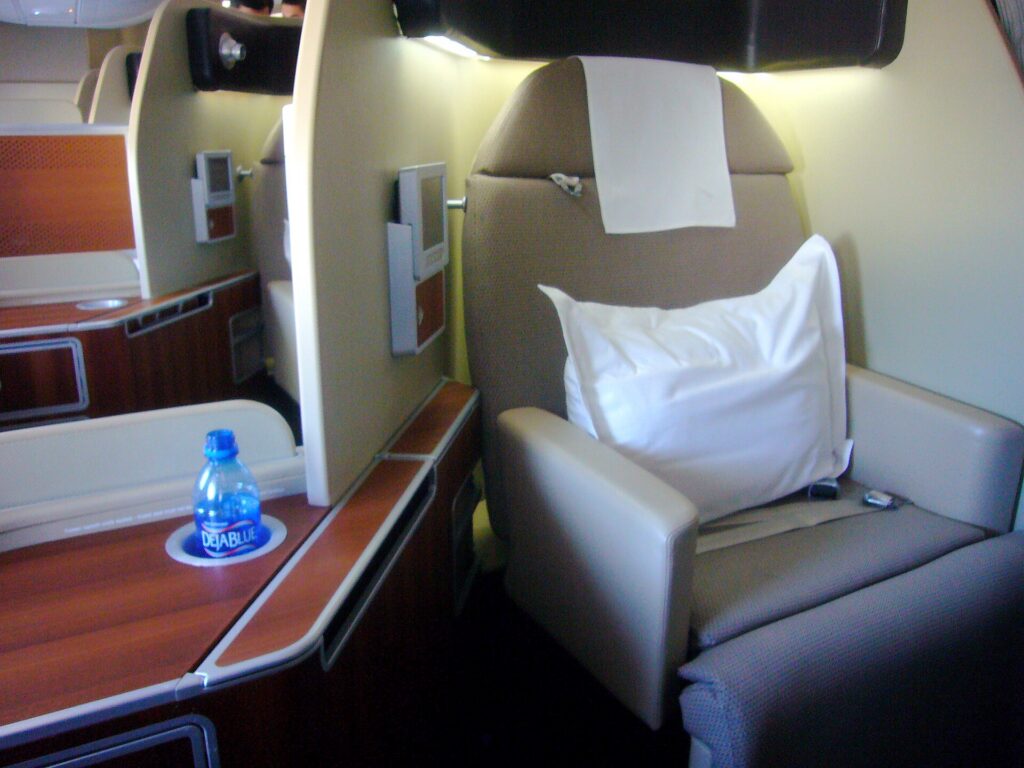
    A private first class suite with a wide seat and screen on a long-haul aircraft
    International first class: more space, more privacy and more personal service (Photo: David Lytle from San Francisco, CA, USA via Wikimedia Commons, CC BY 2.0)

    Why cabin names are confusing

    Airlines use cabin names as brands, not as standard definitions. There is no rule that says what a business class seat must include, and the same word can describe very different products. It helps to think of three situations.

    Long-haul flights with three premium tiers

    A small number of airlines fly large widebody aircraft with a first class cabin at the front, business class behind it, then premium economy and economy. On these flights, first is clearly the top product, and business is a step below it, though usually still a lie-flat bed. Emirates, for example, describes its first class cabin features separately from its business class, and the difference is presented as one of space, privacy and service.

    Long-haul flights where business is the top cabin

    Many airlines, including most North American carriers on their international routes, sell business class as their best long-haul product. Delta calls its version Delta One and describes it as its most premium experience, with 180-degree lie-flat seats on international and select long-haul domestic routes. Air Canada’s long-haul business cabin uses lie-flat pods on many of its international aircraft. On these flights there is no first class to buy: business is first, in practice.

    Short and medium flights in North America

    On domestic and regional flights in the United States and Canada, the front cabin is often branded “first class” or given an airline-specific name. It usually offers wider seats, more legroom, more recline, priority services and better food and drink, but not a bed. Delta’s Delta First page, for instance, describes up to 8 inches of extra legroom and up to 5.4 inches of recline compared with a standard Delta Main seat. That is a very comfortable seat for a three-hour flight, but it is a different product from international first class, and closer to what many airlines call business class on short routes.

    Europe adds one more twist: on many short-haul flights within Europe, business class is an economy-style seat with the middle seat kept free, plus lounge access, priority services and a meal. It is worth the money for flexibility and ground benefits, not for the seat itself.

    Even within one airline, the ladder can have many rungs. Delta’s onboard experience overview lists Delta Main Basic, Delta Main, Delta Comfort, Delta First, Delta Premium Select and Delta One, and notes that several of these now come in basic versions too. Extra-legroom economy such as Delta Comfort, with more legroom, earlier boarding and dedicated overhead bin space, is not a premium cabin at all, but it is often the most cost-effective step up on a short flight.

    The lesson is simple: judge the seat and the service, not the label. Our guide to reading your flight details explains how to find the aircraft type and fare brand on a booking.

    First class vs business class at a glance

    The table compares typical long-haul products with the domestic first class and premium economy cabins travelers often weigh them against. These are general patterns; the details depend on the airline, the aircraft and the fare.

    FeaturePremium economyDomestic first (North America)Long-haul businessInternational first
    SeatWider recliner with more legroomWide recliner, more legroom and reclineUsually lie-flat; many with direct aisle accessLie-flat, larger; often a private suite
    PrivacyLowLow to moderateModerate to high; some seats have doorsHigh; doors and enclosed suites common
    SleepBetter than economy, still uprightRest, not real sleepA proper bed on most long-haul aircraftA larger bed, often with extra bedding
    Ground servicesSometimes priority boardingPriority check-in, security and boardingPriority services and lounge accessDedicated check-in, first class lounges on some airlines
    DiningUpgraded economy mealsSnacks or meals depending on distanceMulti-course meals and premium drinksMore elaborate menus and more flexible timing
    ServiceShared crew with economy on some airlinesDedicated flight attendantDedicated crew, more attentionHighest crew-to-passenger ratio
    Checked bagsOften more than economyUsually includedUsually generousUsually the most generous
    Relative priceModerate step upModerate to high step upHighVery high, often several times business

    Seats and sleep: the difference that matters most

    On an overnight flight, the seat is what you are really paying for. A few details decide how well you sleep.

    Lie-flat, angled-flat and recliners

    A true lie-flat seat turns into a flat bed parallel to the floor. Some older business class seats are angled-flat: they recline a long way but leave you sliding gently toward your feet, which many people find harder to sleep in. Recliners, found in premium economy and domestic first, are comfortable for a daytime flight but not a bed. If sleep is your priority, confirm that your seat is fully flat, not just “flat bed” in marketing language.

    Direct aisle access and layout

    In modern long-haul business cabins, many seats are arranged so that every passenger can reach the aisle without climbing over anyone. Older layouts may have two seats side by side with the window passenger stepping over the aisle passenger. On a long overnight flight, direct aisle access is one of the most valuable features a business cabin can have. First class cabins are smaller and almost always give every passenger direct aisle access.

    Privacy and doors

    Doors and high partitions used to be a first class signature. Several airlines now fit them in business class too, which is one reason the gap between the two cabins has narrowed. Where first class still exists, the suites are usually larger, with more storage, a bigger screen, and sometimes room to sit opposite a companion for dinner.

    Bed length and space

    Seat dimensions vary by aircraft and seat position. Taller travelers should look at the specific seat map, since footwells and bed lengths can differ within the same cabin. Airline pages and seat maps at booking are the reliable source; if the airline does not publish a figure, do not rely on one you read elsewhere.

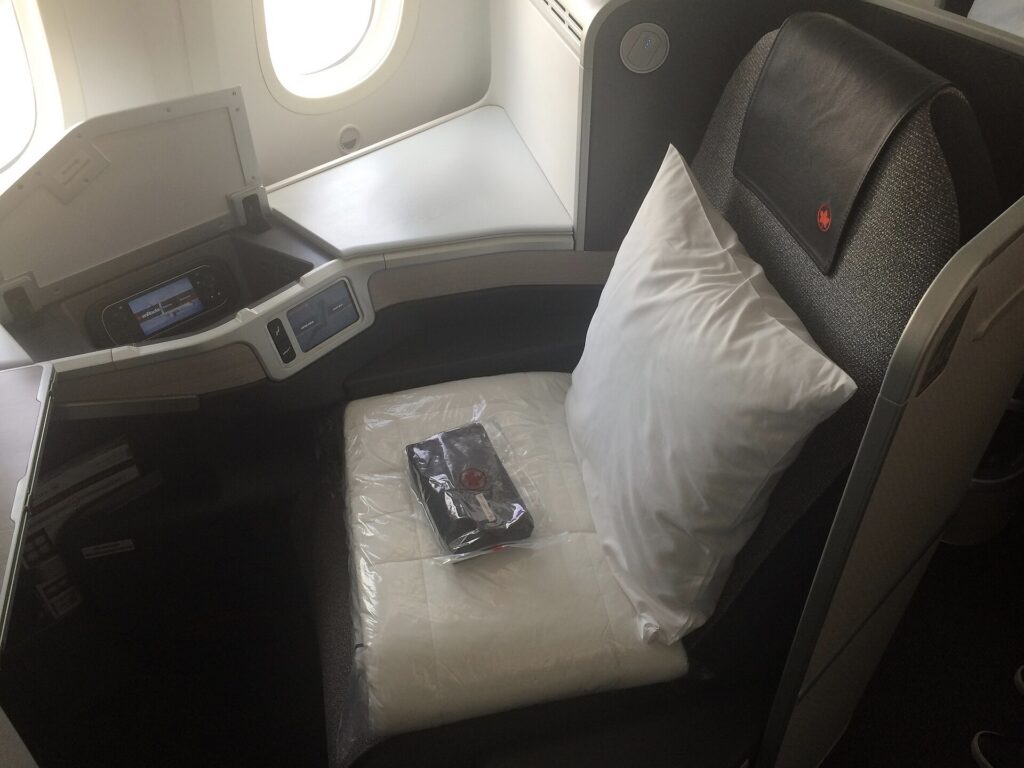
    A lie-flat business class pod on an Air Canada long-haul aircraft
    On many airlines, a lie-flat business seat is the best seat on the plane (Photo: Orcair via Wikimedia Commons, CC BY-SA 4.0)

    The airport experience

    A lot of what separates the cabins happens before you board.

    • Check-in and security. Business and first passengers usually get priority check-in and, at many airports, faster security lanes. Some airlines offer first class passengers dedicated check-in areas or separate terminals at their home airport.
    • Lounges. Long-haul business class usually includes lounge access. Some airlines operate separate first class lounges with à la carte dining and more space. At outstations, first and business passengers may share the same lounge.
    • Ground transport. A few airlines include chauffeur service for premium passengers on some routes. This is more common in first class and varies widely.
    • Boarding and baggage. Priority boarding and priority baggage handling are standard in both cabins. Delta’s Delta First page, for instance, lists priority check-in, security and boarding, bags delivered first and up to two free checked bags.

    Watch for exclusions. Some airlines now sell stripped-back versions of premium cabins with fewer ground benefits. Delta’s Delta One page notes that its basic business fare excludes some lounge access, for example. If the lounge matters to you, check the fare brand before you pay.

    Premium check-in and security lanes do not change how early you should arrive for an international departure, especially if you have bags to drop or a document check. Our guide to how early to arrive for an international flight gives realistic timings.

    Seating in an airline lounge at Heathrow Terminal 5
    Lounge access comes with most long-haul business tickets, but check basic premium fares (Photo: Mike McBey via Wikimedia Commons, CC BY 2.0)

    Food, drink and service

    Both premium cabins serve far better food than economy, but the style differs.

    Business class usually offers a multi-course meal with a choice of main dishes, a selection of wines and spirits, and a lighter meal or snacks before landing. On overnight flights, many airlines let you skip the main service or eat quickly so you can maximize sleep.

    First class usually adds more choice, more premium ingredients and drinks, and more flexibility: dining when you want rather than when the cart comes around. With fewer passengers per flight attendant, service is more personal, and crews often remember your preferences through the flight.

    On short domestic flights, the difference is smaller. Delta First, for example, describes snacks on shorter flights and meals on longer ones, with the offering depending on distance. If food matters, check what is served on your specific flight rather than assuming.

    Baggage, flexibility and the fine print

    Premium tickets typically include a larger checked baggage allowance, and many come with more flexible change and refund rules. Neither is universal: basic versions of premium cabins may carry stricter rules, and allowances differ by route and airline. Before you book, check:

    • The baggage allowance for your fare and route, including weight limits per bag.
    • Change and cancellation rules, especially if you are paying a premium partly for flexibility.
    • Lounge access, including whether it applies at every airport on your journey.
    • The aircraft and seat on every flight. A long itinerary may include a short connection on a smaller aircraft with a much simpler premium cabin, or none at all. The cabin you booked describes the fare, not a guarantee that every flight has the same seat.

    That last point catches many travelers out. A business class ticket from a smaller city to Asia might include a regional flight with a domestic-style first class seat, then a long-haul flight with a lie-flat bed. Look at each flight in the booking before you pay.

    Price and value

    International first class is usually priced far above business, often several times the fare, while the improvement in comfort is smaller than the price gap suggests. You are paying for exclusivity, space and service as much as for sleep. That is why many experienced travelers regard long-haul business as the best value premium product: it solves the biggest problem of a long flight, a proper bed, for a fraction of the cost of first.

    A few ways to think about value:

    • Price the sleep. On an overnight flight, compare the premium over economy with the cost of losing your first day at the destination.
    • Count what is included. Bags, lounge access, meals and flexibility reduce the real gap.
    • Look at premium economy. On daytime flights or when business prices are high, premium economy can deliver much of the comfort for much less.
    • Watch premium fare sales. Business fares drop on leisure routes and in quieter seasons, and flexible dates make a big difference. Our booking timing guide explains the seasons.
    • Consider upgrades. Paid upgrade offers, bids and miles can sometimes bring business class within reach. Our guide to business class upgrade hacks explains which methods work.

    Which cabin should you choose?

    The right answer depends on the flight and what you need at the other end.

    Choose long-haul business class if

    • You are on an overnight flight and need to function the next day.
    • You want a flat bed, lounge access and good food at a price that is high but not extreme.
    • You are traveling for work and arriving straight into meetings.
    • Your airline does not offer first class on the route anyway.

    Consider international first class if

    • Maximum privacy and space are worth a large premium to you.
    • You value highly personal service and flexible dining.
    • The trip is a once-in-a-lifetime occasion and you want the experience itself.
    • You can use miles for it at good value, which is how many travelers experience first class.

    Choose premium economy or domestic first if

    • The flight is short or in daytime, and a bed would be wasted.
    • You want more space and calm without the cost of long-haul business.
    • You are flying within North America, where the front cabin is a recliner anyway.

    Business travelers and company policies

    If your employer is paying, the travel policy may decide for you: many companies allow business class only above a certain flight length, and few allow first. Where you have a choice, a lie-flat seat on an overnight flight before a working day is the strongest case for business class, because the cost of arriving exhausted falls on the work itself. Our guide to business travel hotels covers the other half of a work trip.

    Traveling as a couple or family

    Seat layout matters more when you travel together. Some business cabins have center pairs designed for companions; others isolate every passenger. First class suites on some airlines can be arranged for companions to dine together. With children, check the airline’s rules on minimum ages in premium cabins and the availability of bassinets, and consider whether the cost for the whole family makes premium economy a better compromise.

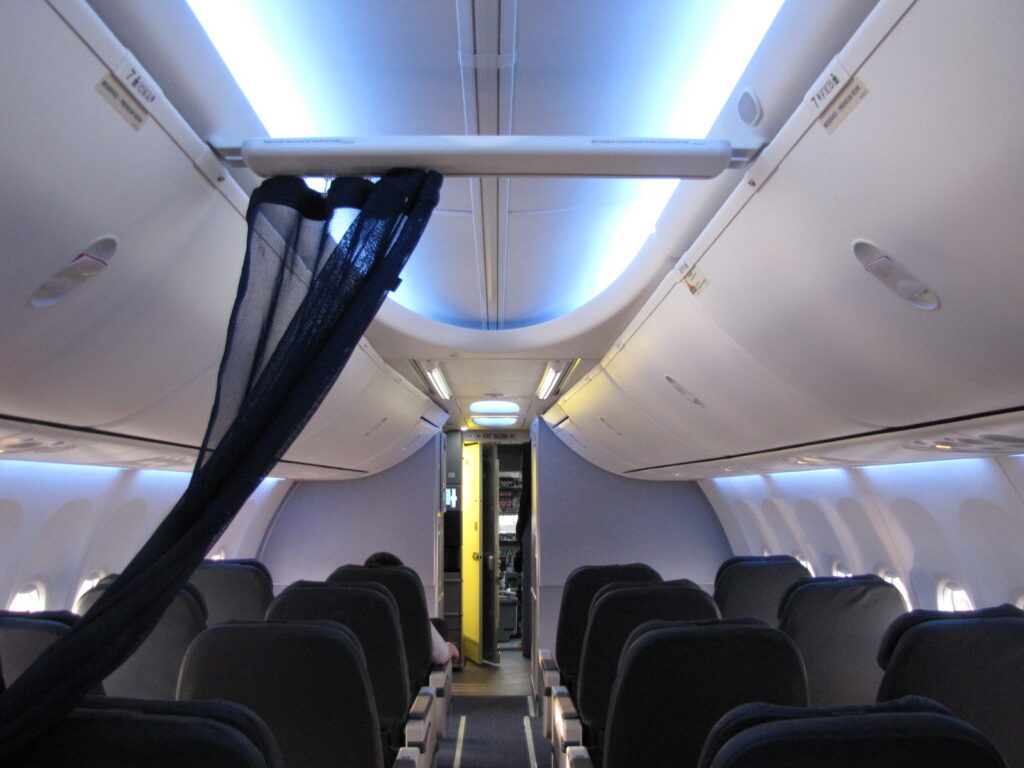
    Recliner seats in the first class cabin of a Boeing 737
    Domestic first class in North America: a wide recliner, not a bed (Photo: Planes and Places via Wikimedia Commons, CC BY-SA 2.0)

    How to check what you are really getting

    1. Find the aircraft type for each flight during booking. The same route can be flown by different aircraft with very different cabins.
    2. Open the seat map. Look at the layout: a 1-2-1 pattern usually means direct aisle access in business, while 2-2-2 or 2-3-2 patterns often mean you climb over a neighbor.
    3. Read the airline’s cabin page. Airlines describe their seats, lounges, meals and fare brands on their own sites, which are the most reliable source.
    4. Check the fare brand. Basic premium fares may exclude lounges, seat selection or changes.
    5. Check every flight. Confirm the cabin and seat on connections, not just the main long-haul flight.
    6. Check bags and flexibility. Make sure the allowance and rules fit your trip.

    For more on comparing routings and fare brands on long-haul trips, see our international flights booking tips.

    Getting the most from a premium cabin

    • Pick your seat early. Seats away from galleys and lavatories are quieter, and window seats in 1-2-1 layouts are often the most private.
    • Use the lounge wisely. Eat a proper meal in the lounge before an overnight flight, then skip the onboard service and sleep sooner.
    • Dress for sleep. Some airlines provide pajamas in premium cabins, but many do not. Comfortable layers help either way; our guide to what not to wear on a flight has practical advice.
    • Pack light anyway. A generous allowance is useful, but a sensible carry-on makes connections easier. Our carry-on size guide explains dimensions and packing.
    • Plan your arrival. If you arrive early in the morning, a hotel that allows early check-in or a day room can extend the rest you started on board. Compare options with our hotel search.

    Common mistakes when choosing a premium cabin

    • Trusting the cabin name. “First” on a domestic flight and “first” on a long-haul flight are different products.
    • Not checking the aircraft. An older aircraft on the same route may have angled seats or no direct aisle access.
    • Ignoring connections. A premium ticket may include a flight with a much simpler cabin.
    • Paying for first when business already solves the problem. For most travelers, a good business seat delivers the sleep that matters.
    • Buying a basic premium fare without reading the terms. Missing lounge access or strict change rules may not be worth the saving.
    • Booking a daytime flight in a lie-flat seat you will not use. Premium economy or a better economy seat may be enough.

    Frequently asked questions

    Is first class always better than business class?

    On the same aircraft and airline, yes: first is the higher product. Across airlines, not necessarily. A new business class seat can be more comfortable than an older first class seat on another airline, so compare the actual seat and service.

    What is the main difference between first and business class?

    Space, privacy and service. Long-haul business class usually offers a lie-flat seat, lounge access and good dining. First class adds larger suites, often with doors, more personal service, more elaborate dining and sometimes more exclusive ground services.

    Why is domestic first class different from international first class?

    On shorter flights in North America, airlines brand their front cabin as first class, but it is usually a wide recliner with better service, not a bed. It is closer to short-haul business class elsewhere than to international first.

    Do all airlines have first class?

    No. Many airlines sell business class as their top cabin on long-haul routes. First class is found mainly on some large international carriers and often only on certain aircraft and routes.

    Is business class worth it on a long-haul flight?

    It often is on overnight flights, where a flat bed lets you arrive rested. On daytime flights or when prices are high, premium economy can be the better value.

    Does business class include lounge access?

    On long-haul international flights, usually. But some airlines now sell basic premium fares that exclude lounge access, so check the fare brand before booking.

    How do I know if my business class seat is lie-flat?

    Check the aircraft type and seat map during booking and read the airline’s description of the cabin for that aircraft. If the airline shows a 1-2-1 layout and describes fully flat beds, you are likely in a modern product.

    Is premium economy the same as business class?

    No. Premium economy is a better economy seat with more legroom and recline, sometimes with better food and priority services. It is not a bed and usually does not include lounge access.

    Ready to compare cabins for your trip? Search economy, premium economy and business fares across flexible dates on our flight search, then book somewhere comfortable to land with our hotel search. If you are heading across the Atlantic, our guide to the best time to fly to London will help you pick your dates.

  • How Early Should You Arrive at the Airport Before Your International Flight

    How Early Should You Arrive at the Airport Before Your International Flight

    “Get there three hours early” is the standard advice for international flights, and for many trips it is about right. But it is a rule of thumb, not a law. The time you actually need depends on the airport, the season, the time of day, whether you are checking bags, which border controls you pass through before boarding and who you are traveling with. Arrive too late and you can miss a check-in deadline you did not know existed, even with the plane still at the gate. Arrive far too early and you spend hours in a terminal you did not need to be in. This guide explains what the three hours is actually for, the deadlines that matter, the factors that add or remove time, how U.S. preclearance at Canadian airports changes the math, what happens when you land, and how to build a timeline for your own flight.

    The short answer

    For most international flights, plan to arrive about three hours before departure, which is what many airlines and large airports recommend. Allow more at peak holiday periods, at very large or unfamiliar airports, when you are checking bags, traveling with children or needing assistance, and when you clear U.S. customs and immigration before boarding at a Canadian airport. You can cut it closer at a smaller airport, off-peak, with no checked bags and a trusted traveler membership, but never plan to arrive after the airline’s check-in and bag drop deadlines. The three numbers to look up for every flight are the check-in cutoff, the bag drop cutoff and the boarding gate closing time. Your airline’s website lists them, and your airport’s website usually lists its own recommended arrival times.

    Travelers lined up for security screening at Toronto Pearson International Airport
    A security line at Toronto Pearson: the least predictable step in any airport timeline (Photo: Mike from Vancouver, Canada via Wikimedia Commons, CC BY-SA 2.0)

    What the three hours is actually for

    The recommendation is built from a sequence of steps, each of which can take a few minutes or a long time depending on the day. Here is a typical international departure, working backward from the departure time.

    StepTypical time neededWhat can slow it down
    Getting to the airport and into the terminalVaries; add a buffer to your normal travel timeTraffic, parking shuttles, rental car returns, weather
    Check-in and bag dropA few minutes to more than an hourPeak times, document checks, oversize items, overweight bags
    Security screeningA few minutes to more than an hourTime of day, holidays, bags pulled for extra screening
    Exit controls or U.S. preclearance (some airports)A few minutes to an hour or moreSeveral departures at once, secondary inspection
    Walking or taking a train to the gate5 to 30 minutes at large airportsRemote gates, terminal transfers
    BoardingOften begins 30 to 60 minutes before departure on long-haul flightsDocument checks at the gate on international flights

    On a quiet day, all of this can take well under an hour. On a busy day, each step can stack. The three-hour guideline gives you enough margin for a bad day at most large airports, and on a good day, time for a meal before you board.

    The deadlines that actually matter

    Airlines set hard cutoffs, and missing them can cost you your seat even if the aircraft has not left. These vary by airline, airport and route, so check the details for your flight; the principles are the same everywhere.

    Check-in cutoff

    This is the latest time you can check in for your flight, online or at the airport. For international flights, it is commonly around 60 minutes before departure and can be earlier at some airports and on some routes. After the cutoff, the system may close and the airline can give your seat away. Checking in online, often from 24 hours before departure, protects you from missing this one, but international passengers sometimes must still have documents verified at the counter before a boarding pass is issued.

    Bag drop cutoff

    If you are checking a bag, there is usually a separate, and sometimes earlier, deadline for dropping it off. Bags need time to be screened and loaded. Arrive after the bag drop closes and you may be told you can fly without the bag or not at all.

    Boarding gate closing time

    Gates typically close somewhere from 10 to 30 minutes before departure, often earlier on international and wide-body flights, so the airline can finalize the passenger list and close the doors on time. “Departure time” means the time the aircraft door closes and it pushes back, not the time you need to reach the gate.

    Put all three times in your calendar the day before, and plan to be at the gate well before boarding begins. Our flight details guide explains where to find these times on your booking and boarding pass.

    What adds time, and what saves it

    FactorEffectWhat to do
    Peak holidays and school breaksLonger lines at every stepAdd an hour to your usual buffer
    Early morning departure bankMany flights leave at once; security can be busy right after openingCheck when security opens and arrive with margin
    Checked bagsAdds the bag drop step and its cutoffUse online check-in and bag tags where offered
    Children, strollers, car seatsSlower at security and check-inAdd 30 minutes or more; see family lanes where available
    Wheelchair or mobility assistanceAssistance must be arranged and can take timeRequest assistance in advance through the airline and arrive early
    Pets, sports equipment, oversized itemsSpecial handling counters and documentsConfirm airline procedures and add time
    U.S. preclearance or exit passport controlAn extra border control before the gateAdd time; use trusted traveler programs if eligible
    Returning a rental carReturn, inspection and shuttle to the terminalAdd 30 minutes or more; see our car rental return timing guide
    Trusted traveler membershipFaster security or border lanesCan cut time significantly, but lanes are not always open
    Carry-on only, checked in onlineSkips the counter entirely at many airportsGo straight to security if no document check is required

    Trusted traveler programs

    If you fly internationally more than once or twice a year, a trusted traveler program is the most effective way to shorten your airport time.

    • NEXUS is a joint Canada and U.S. program for pre-approved travelers. It provides expedited border processing when entering Canada and the United States, and members can use dedicated security lines at many Canadian airports.
    • Global Entry is the U.S. program for expedited entry into the United States for pre-approved travelers.
    • TSA PreCheck provides expedited security screening at participating U.S. airports, on participating airlines.

    Applications take time and include an interview or in-person step, so apply well before a trip. Eligibility and benefits change, so check the official page before relying on a program for a specific flight.

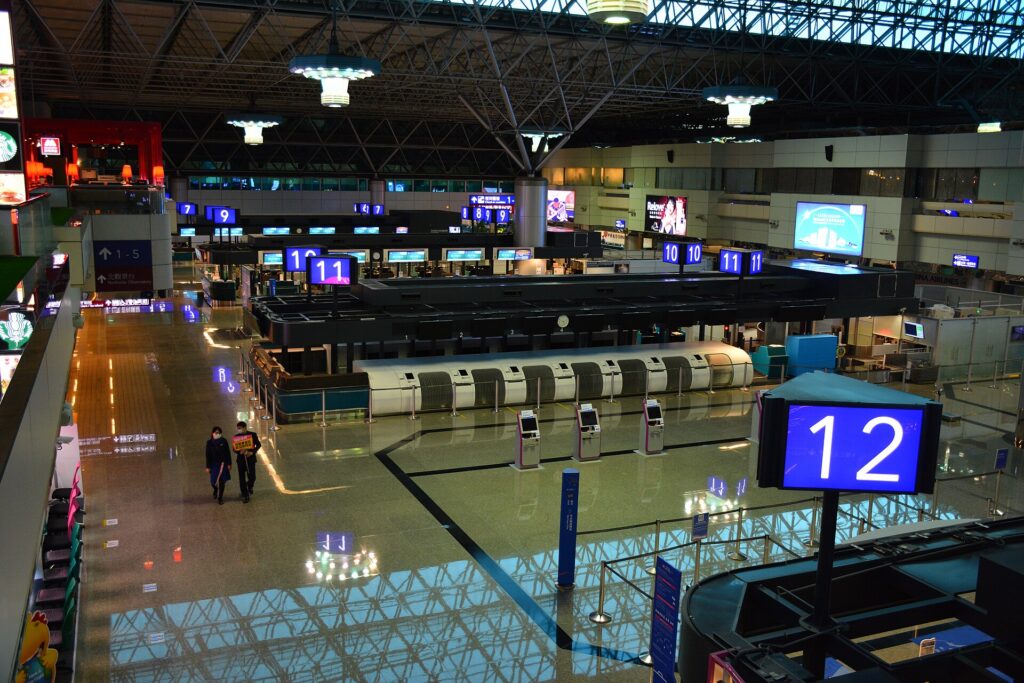
    Rows of airline check-in counters in an international departure hall
    Check-in and bag drop close well before departure, even when the plane is still at the gate (Photo: Cheng-en Cheng via Wikimedia Commons, CC BY-SA 2.0)

    Flying from Canada to the U.S.: preclearance

    Several large Canadian airports, including Toronto Pearson, Vancouver, Montreal, Calgary, Edmonton, Ottawa, Winnipeg and Halifax, have U.S. preclearance. That means you go through U.S. customs and immigration in Canada, before you board, and arrive in the United States as if on a domestic flight.

    Preclearance makes arrival easy, but it moves a border control to the start of your trip. After check-in and security, you queue for U.S. Customs and Border Protection, and the time this takes varies with how many U.S.-bound flights are leaving at once. For that reason, transborder flights often need as much time as long-haul international flights. Many airports and airlines recommend arriving around the same time as for international departures. Checked bags travel through the preclearance process too, so bag drop deadlines can be earlier.

    If you are traveling between Canada and the U.S., our guide to cheap flights between New York and Toronto covers the route, and our Toronto Pearson airport guide explains the terminals.

    Departing from the U.S., the UK and Europe

    From the United States

    The U.S. does not have exit passport control in the way many countries do. After check-in, you go through TSA screening, and your airline checks your passport and any required visa or authorization for your destination at check-in or the gate. The liquids rule for carry-on bags is explained on the TSA liquids page, and the full list of what you can bring is on TSA’s What Can I Bring page.

    From Canada

    Canada does not have exit immigration either. Screening is carried out by CATSA, whose site lists what you can pack. For flights to the United States from a preclearance airport, add the U.S. border step described above.

    From the UK and the Schengen area

    Leaving the Schengen area involves exit passport control after security, and the EU’s digital Entry/Exit System, which records non-EU travelers’ biometrics, can add time, particularly during rollout and at busy times. Large hubs such as London Heathrow and Paris Charles de Gaulle also have long walks and transit trains between areas, so allow extra time when returning home too.

    Security rules that slow people down

    Most delays at screening come from avoidable items in carry-on bags. The main principles are similar at most airports, though details differ and change, so check before you fly.

    • Liquids: in Canada and the U.S., carry-on liquids, gels and aerosols generally must be in containers of 100 ml (3.4 oz) or less, together in one clear, resealable bag of about one liter. Some airports with newer scanners have relaxed these rules, but assume the limit applies unless your departure airport says otherwise, and remember the return airport may have different rules.
    • Electronics: have laptops and larger electronics easy to reach in case you are asked to remove them.
    • Sharp items and tools: check the rules for knives, scissors, tools and sporting goods before packing.
    • Batteries: spare lithium batteries and power banks typically must be in carry-on, not checked bags.
    • Clothing: belts with big buckles, heavy jewelry and complicated footwear slow things down. Our guide to what not to wear on a flight covers what makes screening easier.
    • Bag size: an oversized carry-on can be sent back to check-in at the gate. Check your airline’s limits; our carry-on size guide explains how.

    Getting to the airport

    Your airport timeline starts at home. Build a buffer into the journey itself, especially at rush hour and in winter.

    • Public transit and airport trains: often the most predictable option at rush hour. Toronto has the UP Express from Union Station to Pearson, and Vancouver’s Canada Line runs to YVR. Check the first and last trains for early or late flights.
    • Driving and parking: allow time to park and take a shuttle from long-term lots, which can add 20 to 30 minutes. Reserve airport parking ahead at busy times.
    • Rental car returns: returning a car, having it inspected and taking a shuttle to the terminal can take longer than expected.
    • Staying near the airport: for very early departures, a hotel near the airport can remove the biggest source of uncertainty. Our hotel search can show properties near major airports.
    The gate areas along the concourse of Terminal 1 at Toronto Pearson
    At large airports the walk to the gate can take 20 minutes or more; gates close 10 to 30 minutes before departure (Photo: Daniel Case via Wikimedia Commons, CC BY-SA 3.0)

    How to build your own timeline

    Instead of guessing, work backward from your flight.

    • Start with departure time and look up the gate closing time for your airline. Aim to be at the gate at least 15 minutes before boarding begins.
    • Add the walk to the gate, which can be 20 minutes or more at large airports.
    • Add security and any border control. Many airports show estimated wait times online. At busy times, allow at least 30 to 60 minutes for each.
    • Add check-in and bag drop if you need them, and make sure the result is well before the cutoffs.
    • Add your journey to the airport plus a buffer for traffic or transit delays.

    For most international trips, this works out close to the three-hour guideline. At a small airport off-peak, with no bags and a trusted traveler card, it may be less. At a major hub during the holidays, it may be more.

    Examples

    ScenarioSuggested arrivalWhy
    Long-haul flight from a major hub, checked bags, summer3 hours or a little moreBusy counters, security and long walks
    Transborder flight from a Canadian preclearance airportAbout 3 hours, especially at peak timesSecurity plus U.S. customs and immigration before boarding
    International flight from a small regional airport, carry-on onlyAbout 2 hoursShorter lines, but deadlines still apply
    Family with young children and a stroller, holiday period3.5 hours or moreEvery step takes longer, and you want time for a break
    Traveler needing wheelchair assistanceAt least the airline’s recommended time, plus a bufferAssistance is coordinated across check-in, security and the gate

    These are planning examples, not guarantees. Always check your airline’s and airport’s current recommendations for your flight.

    Notes on some major airports

    Every airport publishes its own advice, and it is worth reading before you go. A few patterns at airports our readers use most:

    • Toronto Pearson (YYZ): Canada’s busiest airport, with two terminals connected by a free automated train. Know which terminal your airline uses before you set out, and allow time for U.S. preclearance on transborder flights. The Toronto Pearson website shows current guidance and security wait estimates.
    • Vancouver (YVR): the main gateway to Asia and a preclearance airport for U.S. flights. Domestic, U.S. and international departures use different areas of the terminal, so follow signs for your flight type.
    • Montreal-Trudeau (YUL): handles domestic, transborder and international flights in one terminal building with separate zones, and has U.S. preclearance.
    • Calgary (YYC): has U.S. preclearance and a busy international area in summer and during the ski season.
    • New York JFK: several separate terminals linked by the AirTrain. Road traffic to the airport can be slow, so many travelers use rail connections to the AirTrain instead of a taxi at rush hour.
    • London Heathrow (LHR): multiple terminals that are not all walkable from each other; check your terminal, and allow for long walks and transit to remote gates.
    • Paris Charles de Gaulle (CDG): a very large airport where terminals can be far apart. Leave time for exit passport control on flights leaving the Schengen area.

    Whatever the airport, check your terminal the day before. Going to the wrong one is among the most common ways people lose half an hour they did not have.

    Using the extra time well

    Arriving early is less painful if you plan to use the time. International terminals often have better food and more seating than domestic ones. If you have lounge access through your ticket, status or a card, check its hours and location beforehand. If you are flying in a premium cabin, our guides to business class upgrade strategies and the difference between first and business class explain the lounge and priority lane benefits that come with them. Otherwise, a refillable water bottle, a snack and a charged phone make the wait easier.

    Passport control desks in an airport arrivals hall
    On arrival, immigration queues depend on how many flights land at once (Photo: Vasyatka1 via Wikimedia Commons, CC BY-SA 4.0)

    When you land: immigration and customs

    The other half of the airport experience is arriving. Plan for it when you book connections and ground transport.

    • Immigration: present your passport and any visa or authorization. Many airports use automated kiosks or e-gates for eligible passengers. Queues vary widely with how many flights arrive together.
    • Baggage claim: if you checked bags, collect them before customs.
    • Customs: declare goods as required. Entering Canada, the Canada Border Services Agency explains what to declare; entering the U.S., U.S. Customs and Border Protection does the same.
    • Connections: if you connect after arriving in a new country, you may need to clear immigration, collect and recheck bags and go through security again. This is why international connections need more time; our international flights booking tips cover how much to allow.

    If you are running late

    • Check in online as soon as you can, so you are inside the check-in deadline.
    • Contact your airline through its app or phone line; it may be able to rebook you before you miss the flight.
    • Tell staff in line if your flight is close to closing; many airports have procedures to help passengers on imminent flights.
    • Do not abandon a checked bag plan at the last minute without asking; a bag that misses the cutoff may need to travel on a later flight.
    • Know the rules if you miss it: policies vary by airline and fare. Some airlines have a same-day rebooking policy for passengers who arrive shortly after departure; others treat a missed flight as a no-show, which can cancel the rest of your itinerary.

    The day before your flight

    • Check in online when it opens and download or print boarding passes.
    • Check the flight status and the terminal.
    • Look up check-in, bag drop and gate closing times.
    • Confirm your passport, visa or electronic authorization.
    • Pack liquids and electronics where you can reach them.
    • Weigh checked bags.
    • Plan your journey to the airport, including a backup.
    • Set two alarms for early departures.

    Frequently asked questions

    Is three hours really necessary for an international flight?

    Often, yes, at large airports and busy times. At a smaller airport off-peak, with no checked bags, two hours may be enough. Always stay well ahead of the check-in, bag drop and gate closing deadlines.

    How early should I arrive for a flight from Canada to the U.S.?

    At airports with U.S. preclearance, plan for roughly the same time as an international flight, because you clear U.S. customs and immigration before boarding. Check your airport’s current guidance.

    What happens if I arrive after check-in closes?

    The airline can refuse to check you in, and you may need to rebook. Policies vary; contact the airline immediately.

    Does online check-in mean I can arrive later?

    It helps, especially with carry-on only. International passengers may still need a document check at the counter, and security and border lines take the same time either way.

    How long does security usually take?

    From a few minutes to an hour or more depending on the airport, time of day and season. Many airports publish live wait times on their websites.

    Should I arrive earlier during holidays?

    Yes. Add at least an hour around major holidays, school breaks and long weekends.

    Can I arrive too early?

    Yes. Check-in counters for a specific flight often open only a few hours before departure, so arriving much earlier with bags may mean waiting landside. If you have a very early arrival, check when your airline’s counter opens and whether the airport offers bag storage.

    How long does it take to clear immigration when I land?

    It varies widely by airport and time of arrival. Trusted traveler programs and automated kiosks can shorten it considerably.

    Ready to book? Compare departure times as well as fares on our flight search, since an early-morning flight changes your airport timeline, and read our guide to the best time to book cheap flights and hotels before you choose dates. If you need a room near the airport for an early start, check our hotel search.