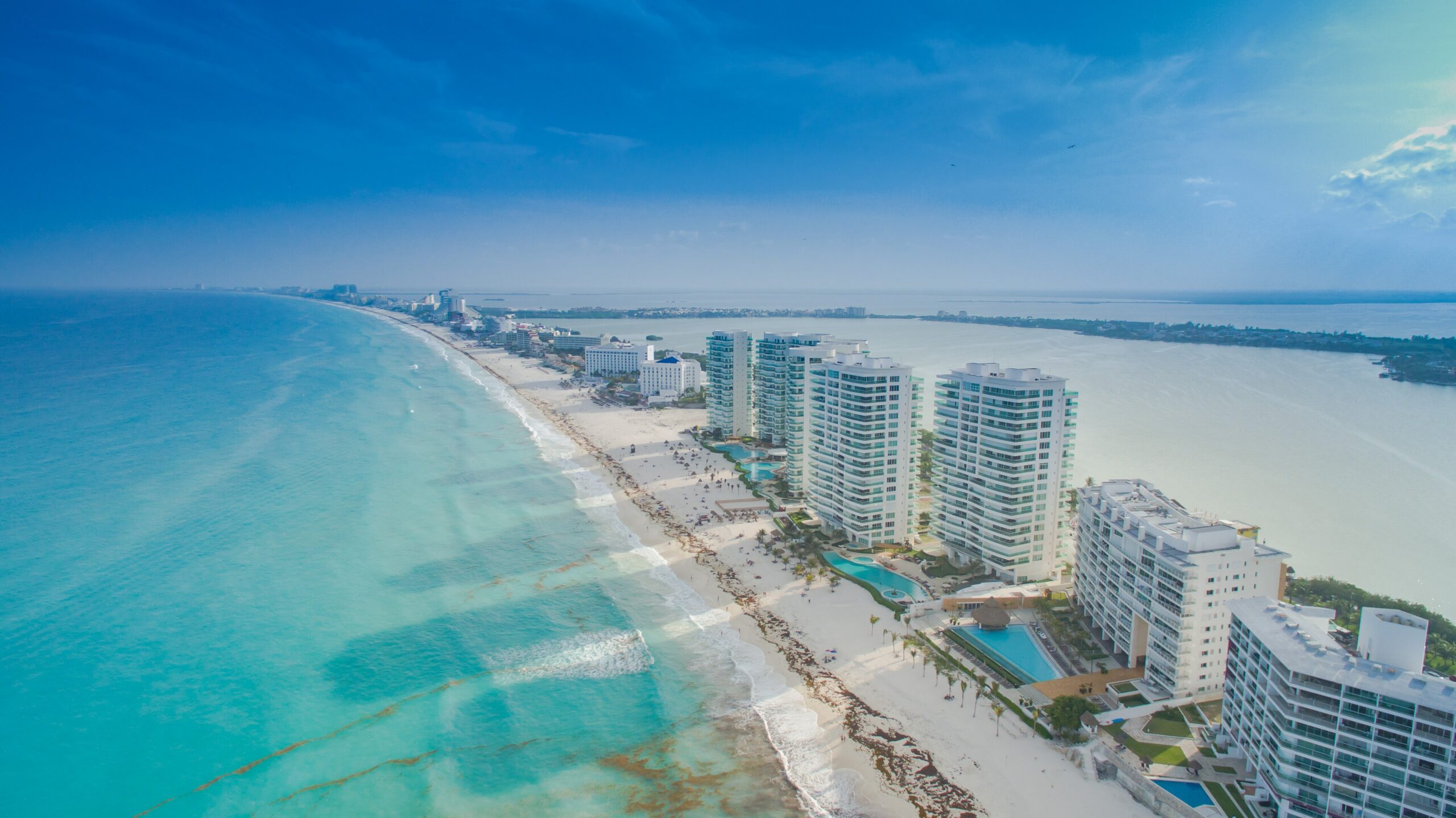
Cancun’s travel calendar is set by other people’s winters. When Toronto, Chicago and Calgary are frozen, demand for seats into Cancun International climbs, every resort in the Hotel Zone fills, and fares from almost every city in Canada and the United States reach their peak. When summer arrives up north, Cancun gets hotter, wetter and cheaper, except for the weeks when Mexican and European families take their own holidays. On top of that sit spring break, Easter week, the U.S. and Canadian long weekends, and two natural hazards that no other North American beach destination faces in quite the same way: the Atlantic hurricane season, which runs for half the year, and the sargassum seaweed that can wash up on the Caribbean-facing beaches in the warmer months. Add the fact that Cancun is the second-busiest airport in Mexico, with nonstop service from dozens of cities and a huge charter and package market, and the “best time” question has several right answers. This guide walks through the weather month by month, the fare seasons, the events that move prices, and how to handle the airport.
The short answer
For the best mix of weather and value, aim for late April to early June, after spring break and Easter but before the rainy season sets in, and mid-November to mid-December, when the rains have ended and the high-season crowds have not yet arrived. For pure weather, December to April is ideal, dry and sunny with comfortable nights, but it is also the most expensive stretch of the year. The cheapest fares and hotel rates usually come in September and October, the heart of hurricane season, with late August and early November not far behind. The most expensive stretches are Christmas to New Year, February and March with Presidents’ Day, Family Day and spring break, Easter week, and the peak of Mexican summer holidays in late July and early August. Whatever you choose, run a flexible-date search on our Cancun flights page; a shift of a few days around a holiday week can change the fare band entirely.
Cancun’s weather, season by season
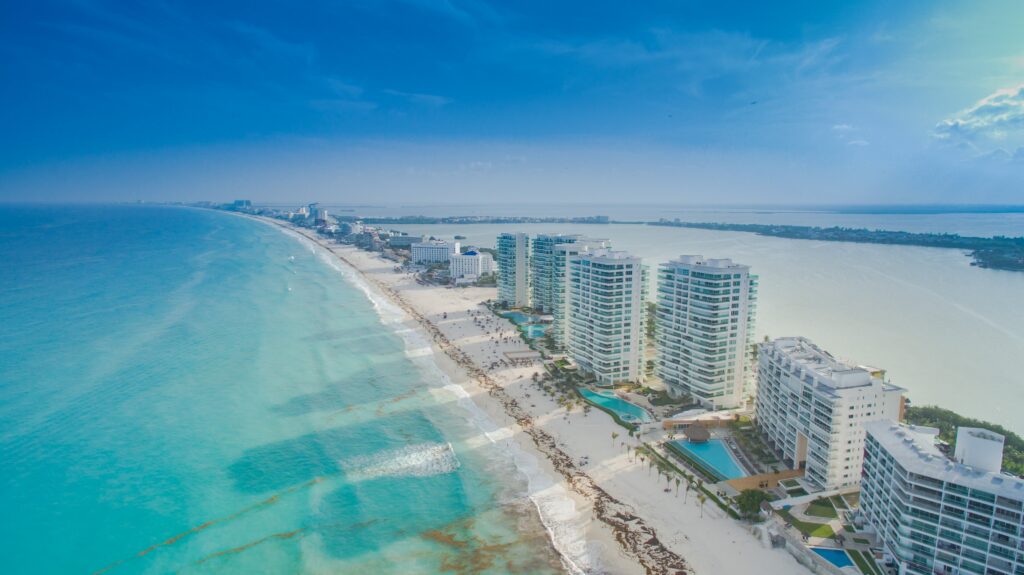
Cancun has a tropical savanna climate: hot every day of the year, with a dry season from roughly November to April and a wet season from May or June to October. The Caribbean keeps things steady, so it rarely goes much above the low 30s °C (low 90s °F) and rarely falls below the high teens °C (mid-60s °F) even on a winter night. The figures below are approximate seasonal patterns based on the long-term climate normals from Mexico’s national weather service, the Servicio Meteorológico Nacional (SMN), part of the national water commission, Conagua; check the current forecast before you pack, and in hurricane season, keep an eye on the tropics.
| Month | Typical daytime high | Typical overnight low | What it feels like | Fare pressure |
|---|---|---|---|---|
| January | around 28 °C (82 °F) | around 19 °C (66 °F) | Dry, sunny and breezy; the occasional norte brings a cool, windy day with rough seas | High, peak in the first week |
| February | around 28 °C (82 °F) | around 19 °C (66 °F) | Similar, with the driest, most reliable weather of the year | High; peaks for Presidents’ Day and Family Day |
| March | around 30 °C (86 °F) | around 21 °C (70 °F) | Warmer and still dry; ideal beach weather | Peak for spring break |
| April | around 31 °C (88 °F) | around 22 °C (72 °F) | Hot and mostly dry; the sea warms up | High around Easter, then falling |
| May | around 32 °C (90 °F) | around 23 °C (73 °F) | Hot and increasingly humid; the first rains and often the start of the seaweed season | Low to moderate |
| June | around 32 °C (90 °F) | around 24 °C (75 °F) | Humid, with short, heavy afternoon showers; hurricane season begins | Moderate, rising late in the month |
| July | around 33 °C (91 °F) | around 24 °C (75 °F) | Hot and sticky; a drier spell mid-summer is common | High for summer holidays |
| August | around 33 °C (91 °F) | around 24 °C (75 °F) | The hottest weeks; the tropics become more active | High early, falling later |
| September | around 32 °C (90 °F) | around 24 °C (75 °F) | Among the wettest months and the peak of hurricane season | Lowest of the year |
| October | around 31 °C (88 °F) | around 23 °C (73 °F) | Still wet and stormy, with drier spells toward the end | Low |
| November | around 29 °C (84 °F) | around 21 °C (70 °F) | The rains taper off and the air freshens | Low early, rising for U.S. Thanksgiving |
| December | around 28 °C (82 °F) | around 20 °C (68 °F) | Dry, sunny and pleasant; nortes begin | Moderate until mid-month, then peak |
Three things the table cannot show. First, hurricanes: the Atlantic season runs from June 1 to November 30, with the greatest risk from August to October. A direct hit on Cancun is rare in any given year, and most weeks even in September are simply hot, humid and punctuated by afternoon storms, but a tropical storm can close the airport and the beaches for a few days; buy travel insurance that covers weather, and follow the U.S. National Hurricane Center and the SMN when you travel. Second, sargassum: since the early 2010s, large mats of floating brown seaweed have drifted onto the Mexican Caribbean coast in the warmer months, typically from spring into late summer. The amount varies enormously from year to year and even week to week; the east-facing beaches of the Hotel Zone, Playa del Carmen and Tulum are the most exposed, while the north-facing beaches of the Hotel Zone, Costa Mujeres and Isla Mujeres’ Playa Norte are usually far less affected. The state and several independent monitoring networks publish seaweed forecast maps, and it is worth looking at them before you choose a hotel. Third, the nortes: in winter, cold fronts from the north can bring two or three days of wind, clouds, cooler air and rough, murky water, which briefly cancels snorkel trips and ferries.
How Cancun’s fare seasons work
Three calendars drive seats into Cancun: the winter escape from Canada and the northern United States, which fills planes from December to April; the school holidays of the United States, Canada and Mexico, which create sharp spikes at Christmas, spring break, Easter and in summer; and the weather, which empties the resorts in the rainiest and most storm-prone weeks of the fall. Package and charter airlines add capacity in winter and pull it back in summer, which is one reason fares from smaller Canadian cities can swing more than those from big U.S. hubs. The result is a long winter plateau with holiday spikes, a soft late spring, a summer bump, and a deep autumn trough.
Peak season
Mid-December to mid-April, with the most expensive weeks from roughly December 20 to January 3, around Presidents’ Day and Family Day in February, through the whole of March for spring break, and during Easter week, whether it falls in March or April. Resorts sell out, all-inclusive rates reach their annual maximum, and the flights from Canada and the Northeast fill early. If you must travel in peak, book early, fly mid-week, and compare packages against booking flight and hotel separately.
Shoulder season
Late April to early June, and mid-November to mid-December, plus the Mexican summer holiday peak in July and early August, which lifts hotel rates more than international fares. Late spring gives you hot, mostly dry days and warm water at a clear discount, with the caveat that the seaweed season often begins in May. Late fall gives you the start of the dry season before the holiday rush, with U.S. Thanksgiving the one week to watch.
Low season
Late August through early November, and to a lesser degree June. Fares and hotel rates are at their lowest, the beaches and ruins are uncrowded, and the weather is hot, humid and wet, with a real if modest chance of a tropical storm. Build flexibility into the trip, choose a refundable rate or good insurance, and you can have a Caribbean beach for a fraction of the winter price.
As with most routes, mid-week departures and early or late flights usually price below Saturday departures on the same route, and a search across a whole month reveals cheaper pairs of dates close to your first choice. Our guide to the best times to book explains how to read those patterns.
Cancun month by month
January
Dry, sunny and warm, with comfortable nights and the occasional windy norte. The first week is among the most expensive of the year as the holidays end; after that, fares ease a little but remain high as the winter escape from Canada and the northern U.S. gets into its stride. Visibility is often excellent for snorkeling between fronts, and this is a strong month for Chichén Itzá and the ruins, when walking in the midday sun is bearable.
February
Often the most reliable weather of the year and one of the busiest months. The Presidents’ Day weekend in the U.S. and Family Day in several Canadian provinces, both on the third Monday, push fares up, and Carnival, the week before Lent, brings parades to downtown and Isla Mujeres in some years. Book early.
March
Spring break runs through the whole month, with U.S. colleges and schools, Ontario’s March Break and other Canadian school breaks landing on different weeks, and the Hotel Zone’s Party Center is at its loudest. The spring equinox draws big crowds to Chichén Itzá for the serpent shadow on the pyramid. Weather is excellent; prices are at their peak. If you want calm, choose a resort away from Punta Cancún or look north to Costa Mujeres.
April
Hot and dry. Easter week, Semana Santa, is the biggest domestic holiday in Mexico, and beaches, ferries and ruins are packed with Mexican families as well as foreign visitors. Once Easter has passed, rates fall noticeably, and the last two weeks of April are one of the best-value windows of the year for good weather.
May
Hot and increasingly humid, with the first rains toward the end of the month. It is one of the best-value months of the year, the sea is warm and clear, and turtle nesting season begins on the beaches. It is also, in many years, when sargassum starts to arrive on the Caribbean-facing beaches, so check the seaweed maps and favor a north-facing beach if the forecasts look heavy.
June
Hurricane season opens, but June storms tend to be weaker, and the month is more often humid with short, heavy afternoon showers than genuinely stormy. The whale shark season off Isla Mujeres and Holbox usually starts in late May or June. Fares are moderate, climbing late in the month as North American schools finish.
July
Hot and busy. Mexican school holidays begin in July, and European and North American families arrive, which keeps hotel rates high. A drier mid-summer spell is common, whale sharks are at their most reliable, and sargassum can be heavy. Fares are high, especially for the U.S. Independence Day and Canada Day weeks.
August
The hottest weeks and the start of the most active part of hurricane season. The first half is still busy with Mexican and European families; the second half, once schools return, gets steadily quieter and cheaper. Plan outdoor sightseeing for early morning and evening.
September
The cheapest month of the year, and among the wettest, with the statistical peak of hurricane season. Resorts run their deepest discounts, some restaurants and smaller hotels close for renovations, and the beaches are nearly empty. The autumn equinox brings another serpent shadow to Chichén Itzá. Travel with flexibility and good insurance, and it can be excellent value.
October
Still wet and stormy for much of the month, with drier spells arriving toward the end. Fares remain low apart from Canadian Thanksgiving, on the second Monday, which brings a small bump from Canada. The sea is warm, the seaweed has usually eased, and crowds are thin.
November
The rains taper off and the dry season returns. Día de Muertos on November 1 and 2 brings altars and celebrations to the region, and fares are low in the first half of the month. The week of U.S. Thanksgiving, the fourth Thursday, is the first real spike of the winter, and prices climb steadily into December.
December
Two months in one. The first half is one of the best-kept secrets in the Caribbean: dry, sunny, warm and comparatively affordable. From around December 18, fares and resort rates jump for the Christmas and New Year holidays, which are the most expensive weeks of the year and sell out months ahead.
Events that move Cancun flight and hotel prices
Cross-check these against your dates before you book. Exact dates shift each year, and Mexican holidays and school calendars are published by the Mexican government each year.
- Christmas to New Year: the most expensive two weeks of the year.
- Presidents’ Day and Family Day (third Monday of February): a big winter-escape weekend from the U.S. and Canada.
- Spring break (the whole of March, varying by school and college): the Hotel Zone’s busiest and loudest weeks.
- Easter week (Semana Santa, March or April): Mexico’s biggest domestic travel week.
- The spring and autumn equinoxes at Chichén Itzá (around March 21 and September 22): big crowds at the site.
- Mexican summer holidays (July to mid-August): high hotel rates, especially at weekends.
- U.S. Thanksgiving (fourth Thursday of November): the start of the winter season.
- Large conventions, weddings and concerts in the Hotel Zone, which can fill resorts at short notice. Our Cancun events page shows what is on sale for your dates.
Getting in from the airport
Cancun International (CUN), operated by the airport group ASUR, sits about 20 kilometers (12 miles) south of downtown and roughly 15 to 25 minutes by road from most Hotel Zone resorts. It is the gateway for the entire Mexican Caribbean, from Costa Mujeres to Tulum, and has nonstop flights from most large Canadian and U.S. cities and from Mexico City, Europe and Latin America, with Mexican carriers such as Aeroméxico, Volaris and Viva Aerobus serving domestic routes. The airport has several terminals, well apart from one another and linked by a shuttle, so check which one your airline uses, especially when returning. Getting to your hotel: ADO buses run from the terminals to the downtown bus station and to Playa del Carmen; pre-booked shared and private shuttles are the most common option for the Hotel Zone and Riviera Maya; licensed airport taxis operate from the terminals at set fares; and every major rental company has counters or a shuttle to its lot. In the arrivals halls, walk past the eager people offering transport, free tours or “information”; many are selling timeshares. Our Cancun car-versus-transit guide works through the transport decision, and our CUN airport guide covers the layout.

Timing tricks that work for Cancun
- Search the whole month. The holiday weeks create sharp edges in the fare calendar. A calendar search on TicketScanner shows them instantly, and the week after Easter is often dramatically cheaper than the week of it.
- Price the package and the pieces. Cancun is one of the biggest package markets in North America, and a flight-plus-all-inclusive bundle can undercut booking separately in winter. Run a Cancun hotel search for the same dates and compare.
- Fly mid-week. Saturday is the classic changeover day for package travelers and resorts; Tuesday and Wednesday departures are often cheaper.
- Choose your beach by season. In the sargassum months, a north-facing hotel in the Hotel Zone or Costa Mujeres, or a day trip to Isla Mujeres, protects the beach part of your trip.
- Consider the whole coast. Tulum now has its own international airport, and for a Tulum-focused trip it can be worth comparing fares; for Cancun, Playa del Carmen and Puerto Morelos, CUN is the obvious choice.
- Build in flexibility in hurricane season. Refundable rates and insurance that covers weather are worth the modest extra from August to October. Our guide to how early to arrive for an international flight covers the return leg.
- Flying out of Cancun instead? The same seasonality applies in reverse; see cheap flights from Cancun.
What to pack, by season
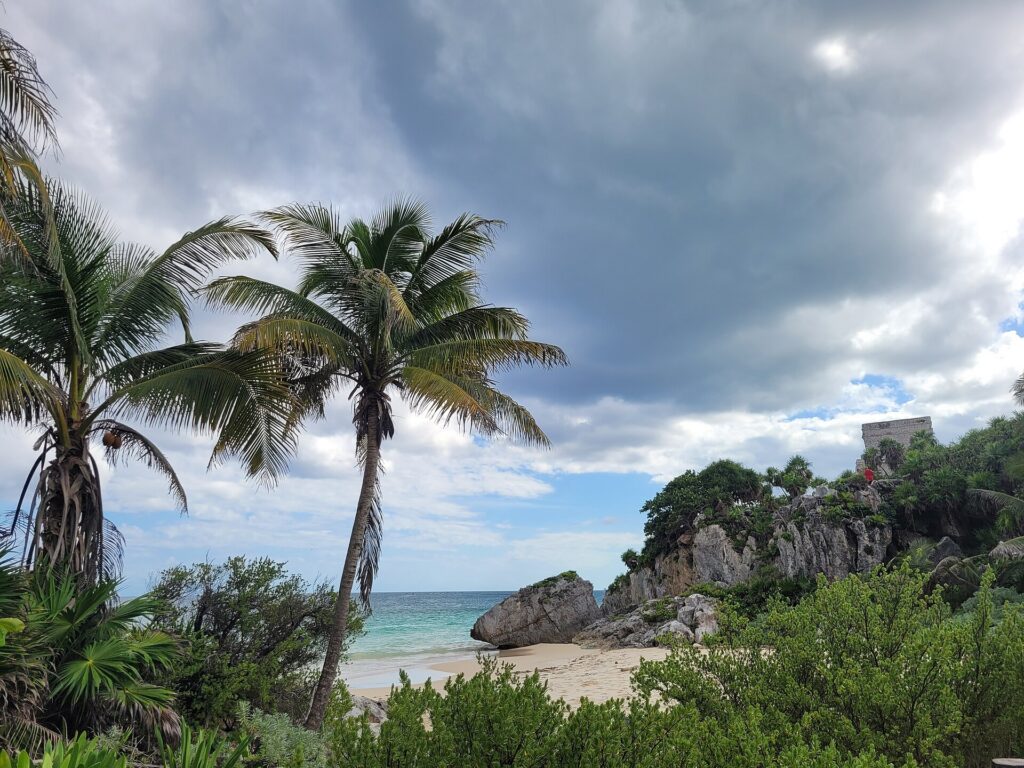
Dry season (November to April): light summer clothing, swimwear, a light sweater or jacket for breezy evenings and the occasional norte, and comfortable walking shoes for the ruins. Wet season (May to October): the lightest, most breathable clothing you own, a compact umbrella or rain jacket for the afternoon storms, and plenty of insect repellent. Year-round: high-factor, reef-safe sunscreen, a hat, sunglasses, a rash guard for long snorkel sessions, water shoes for the cenotes and rocky entries, and a smart-casual outfit, because some resort restaurants have a dress code at dinner. Bring your passport, of course, and a photocopy or photo of it kept separately.
The best time to fly to Cancun for…
The best weather
February to April, with January and March close behind. It is dry and sunny, but also the most expensive season.
The lowest fares
September and October, followed by late August, early November, and late April to early June outside the holiday weeks.
Beaches without seaweed
November to April, when sargassum is least likely. In the warmer months, choose a north-facing beach and check the seaweed maps.
Snorkeling, diving and whale sharks
Late spring and summer for warm, calm water and the whale shark season from roughly June to September; winter for dry weather between nortes.
Families
The weeks just after Easter, late June, or the first half of December, when the weather is good and the holiday crowds are thinner.
Canadian and American visitors
U.S. and Canadian citizens flying to Mexico need a valid passport and, at the time of writing, no visa for a tourist stay; the immigration officer decides the length of stay granted on arrival. Requirements can change, so check the U.S. State Department or the Government of Canada’s travel site before you book, and Mexico’s National Migration Institute for the Mexican rules. Quintana Roo also charges foreign visitors a small state tourism fee, known as Visitax; check the current requirement before you travel.
Frequently asked questions
What is the cheapest month to fly to Cancun?
September is usually the cheapest, followed by October, late August and early November. Late April to early June is the cheapest window with reliably good weather.
What is the best month to visit Cancun for weather?
February to April is dry and sunny, with March and April the warmest of the dry months. December and January are also excellent, with slightly cooler nights.
When is hurricane season in Cancun?
June 1 to November 30, with the greatest risk from August to October. A direct hit is rare in any given year, but a storm can disrupt a trip, so travel with flexibility and insurance.
When is sargassum season in Cancun?
Seaweed usually arrives in spring and peaks in summer, easing in the fall, but it varies greatly by year. North-facing beaches and Isla Mujeres are usually the least affected.
Is it worth going to Cancun in the rainy season?
Often, yes. Rain usually comes in short afternoon bursts, the prices are far lower and the crowds thinner. Just avoid rigid plans in September and October.
How far ahead should I book?
Well ahead for Christmas, spring break and Easter, when fares tend only to rise. For May, June and the fall, fares are softer, and finding the right dates matters more than booking early.
Is Cancun crowded during spring break?
The Party Center and some Hotel Zone resorts are very crowded through March. Families and couples who want quiet should look at Costa Mujeres, Puerto Morelos or adult-focused resorts away from Punta Cancún.
Ready to pick your dates? Compare fares across the whole month on our Cancun flights page, then find a room with our Cancun hotel search. For what to do when you land, start with our first-timer’s guide to Cancun.
Keep planning with TicketScanner
- Cheap flights to Cancun — compare fares across the whole month
- Cancun hotels — book early for Christmas, spring break and Easter
- Where to stay: the Hotel Zone
- Cancun car rentals — for Tulum, Chichén Itzá and the cenotes
- Events in Cancun — concerts, shows and games on sale
- Things to do in Cancun: a first-timer's guide
- Cancun: rent a car or use transit?
- Cancun International (CUN) airport guide
- Best times to book flights and hotels
Leave a Reply