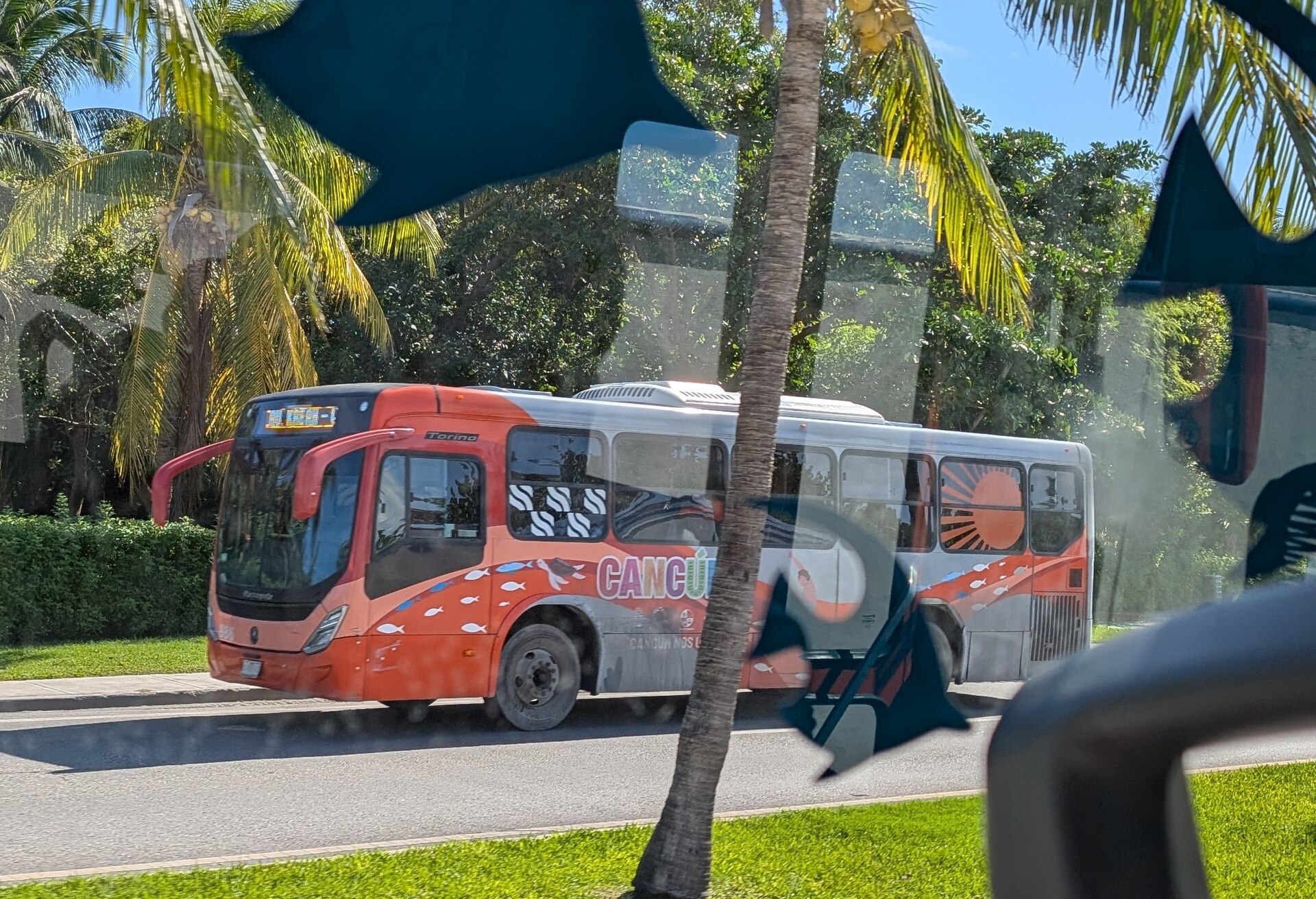
Cancun splits visitors into two camps. Many never need a car at all: they take a shuttle from the airport to an all-inclusive in the Hotel Zone, ride the cheap, frequent city buses when they want to see downtown, take the ferry to Isla Mujeres, and book a tour for Chichén Itzá. Others treat Cancun as the airport for the whole Mexican Caribbean and want to drive south to Tulum and the cenotes, west to the colonial towns and the ruins, and stop wherever a jungle road or a quiet beach looks interesting. Both approaches work, and the right one depends less on the city than on the trip you have in mind. Driving here is also genuinely different from driving at home, with mandatory Mexican insurance that catches many visitors out at the rental counter, speed bumps that appear without warning, and full-service gas stations with their own etiquette. This guide explains how the area is laid out, how the buses, colectivos, ferries and the new train work, what driving is really like, when a car is worth it, and gives you a straightforward way to decide.
The short answer
Skip the car if you are staying in the Hotel Zone or downtown and your plans are the beaches, downtown, Isla Mujeres and one or two organized day trips; the R-1 and R-2 buses, taxis, ferries and tours cover all of it, and you avoid the insurance, the parking and the stress. That is most visitors on a first trip. Rent a car if you want to explore the Riviera Maya on your own schedule, visit several cenotes, reach Chichén Itzá or Tulum at opening time before the tour buses, stay in Tulum, Puerto Morelos or Playa del Carmen, or are traveling as a family or group, where a car quickly becomes cheaper than tours. And if you want independence without driving, the ADO buses, the colectivo vans and the Tren Maya connect Cancun with Playa del Carmen, Tulum, Valladolid and Chichén Itzá. Compare rental rates for any of these plans on our Cancun car rental page.
How Cancun is laid out
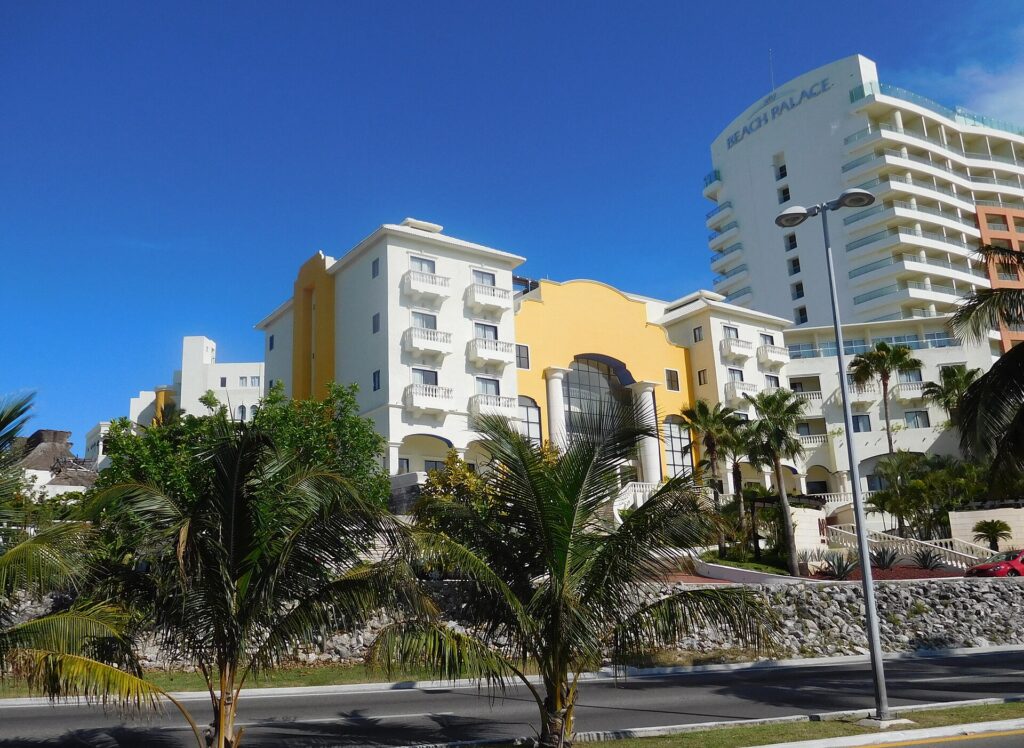
Cancun is really two cities joined by one road. The Hotel Zone, a thin barrier island shaped like a 7, runs for about 22 kilometers between the Caribbean and the Nichupté lagoon, and almost everything on it sits on Boulevard Kukulcán, with addresses given as kilometer markers from km 0 near downtown to the mid-20s near Punta Nizuc. Downtown, El Centro, is on the mainland at the northern end, laid out around Avenida Tulum, the main street, with the ADO bus station, the markets and the square at Parque de las Palapas. North of downtown, Puerto Juárez has the Isla Mujeres ferry pier, and beyond it are the newer resorts of Costa Mujeres. The airport is on the mainland south of the city, near the southern end of the Hotel Zone. From there, Highway 307 runs south along the coast through Puerto Morelos, Playa del Carmen and the resort corridor of the Riviera Maya to Tulum, while Highway 180D, a toll road, runs west across the peninsula to Valladolid, Chichén Itzá and Mérida.
Hotels cluster along the whole length of the Hotel Zone, with the densest nightlife around Punta Cancún at km 9, and in smaller, cheaper properties downtown. Our Cancun hotel search lets you compare them.
Getting in from the airport
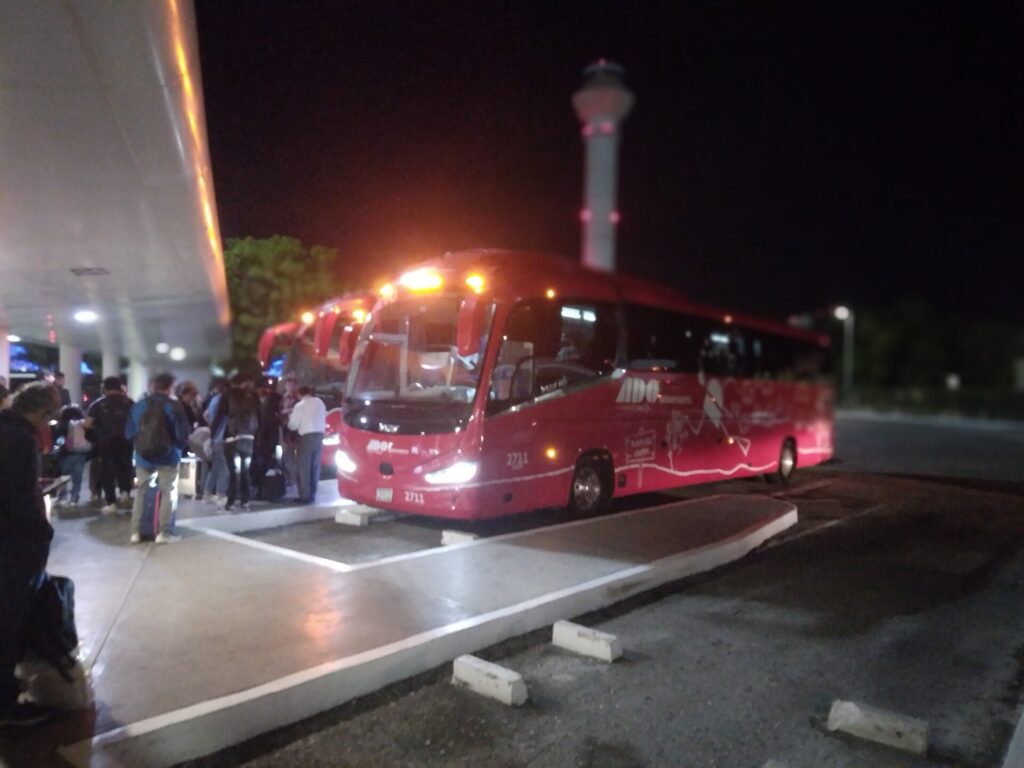
Cancun International (CUN) has several terminals, spaced well apart and linked by an inter-terminal shuttle, and every transport option starts outside the one you land at. ADO buses run from the terminals to the downtown bus station on Avenida Tulum and directly to Playa del Carmen, for a modest fare; from downtown, the R-1 or R-2 city bus or a taxi reaches the Hotel Zone. Pre-booked shuttles, shared or private, are the most popular way to reach Hotel Zone and Riviera Maya resorts, and many all-inclusives include or sell them. Airport taxis are federally licensed and charge fixed, zone-based fares that are higher than city taxis; ordinary city taxis and most ride-hail drivers are not allowed to pick up at the terminals. The drive to the Hotel Zone takes 15 to 30 minutes, to downtown about 25, and to Playa del Carmen roughly 45 minutes to an hour. Every major rental company has counters in the terminals or a free shuttle to a nearby lot. On the way out, you will pass a hall of people offering transport and “information”; many are selling timeshares, so head for the exit and your pre-arranged ride. The airport operator, ASUR, lists the terminals, and our CUN airport guide covers the layout.
Cancun’s transit, explained
Cancun has no metro or tram; its public transport is a dense network of privately operated city buses, supplemented by intercity coaches, shared vans and, since late 2023, a long-distance train. It is cheap, frequent on the routes that matter to visitors, and entirely adequate for a Hotel Zone and downtown stay.
The Hotel Zone buses
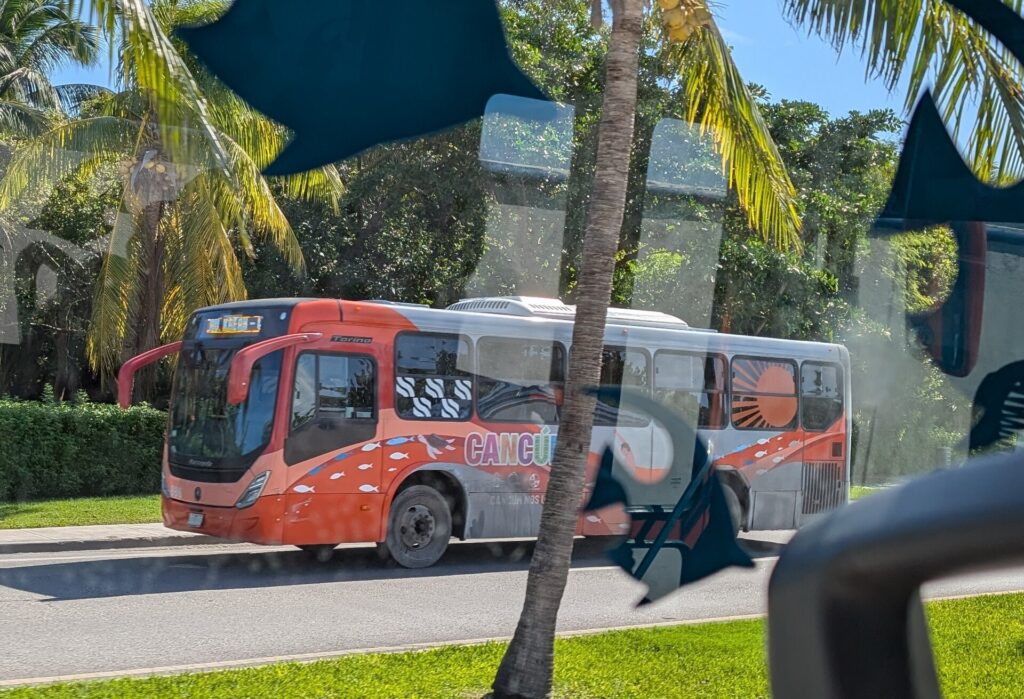
The routes visitors use are the R-1 and R-2, which run the length of Boulevard Kukulcán through the Hotel Zone and into downtown along Avenida Tulum, with a windshield sign showing “Zona Hotelera” or the route number. They come every few minutes for most of the day and run from early morning until late at night, you flag them down at the marked stops or anywhere safe along the boulevard, and you pay the driver in cash in pesos, a small flat fare, with no transfers. Keep small bills and coins; drivers rarely have change for a large note. The ride from the southern Hotel Zone to downtown takes 30 to 45 minutes depending on traffic. The buses are basic and busy at shift-change times, but safe and very widely used by visitors.
ADO intercity buses
ADO runs comfortable, air-conditioned, first-class coaches from the downtown terminal and the airport to Puerto Morelos, Playa del Carmen, Tulum, Valladolid, Chichén Itzá, Mérida and beyond. Buy tickets at the counter, from machines or online, and on busy routes buy a day ahead in high season. For a car-free Riviera Maya trip, ADO is the backbone.
Colectivos
Shared white vans, known as colectivos, run constantly along Highway 307 from downtown Cancun to Puerto Morelos and Playa del Carmen, and from Playa del Carmen onward to Tulum, stopping anywhere along the highway on request. They are cheaper than ADO, leave when full, and are the easiest way to reach the resort entrances, cenotes and small beaches between the towns. Pay in cash in pesos.
The Tren Maya
The Tren Maya, a new intercity railway around the Yucatán Peninsula, has a station near Cancun’s airport and connects with Puerto Morelos, Playa del Carmen, Tulum, Valladolid, Chichén Itzá and Mérida. It is comfortable and scenic, but frequencies are still limited and the stations can be some way from the town centers or sites they serve, so check the current timetable and onward connections before you plan a day around it.
Accessibility
This is Cancun’s weakest area. Many city buses have steps and few are wheelchair-accessible, and sidewalks in the Hotel Zone are narrow in places. ADO coaches and the Tren Maya are more accommodating, and accessible private transfers and taxis can be arranged in advance.
Beyond the buses
- Taxis. Plentiful in the Hotel Zone and downtown, and unmetered: fares are set by zone, rates in the Hotel Zone are higher than downtown, and you should always agree on the price before getting in. Hotels can tell you the going rate for common trips, and many display a rate sheet.
- Ride-hail. Uber operates in Cancun, but it has faced strong opposition from local taxi unions, and pickups at the airport and some hotels are restricted. Check what is permitted when you travel, and treat it as a useful extra rather than something to rely on.
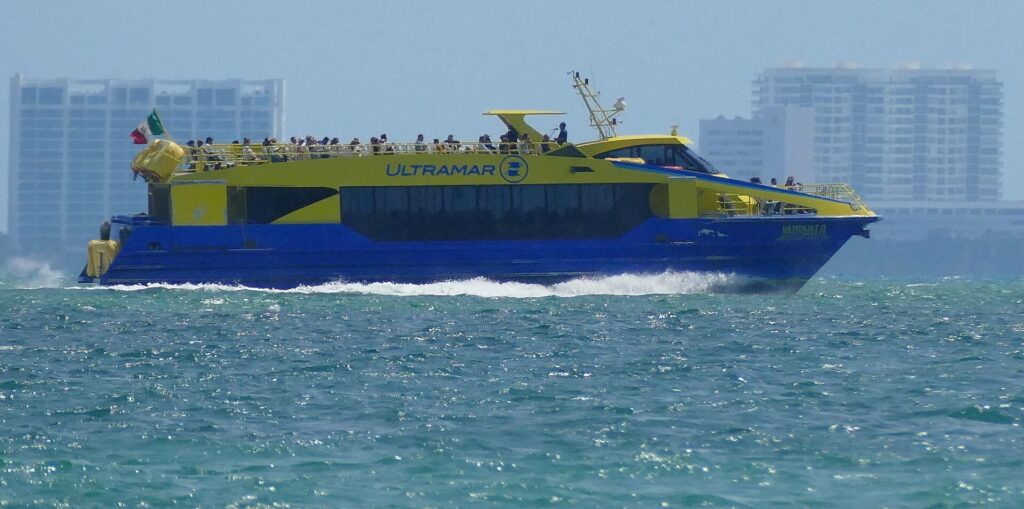
- Ferries. Passenger ferries leave for Isla Mujeres from Puerto Juárez, north of downtown, and from piers in the Hotel Zone; a separate car ferry runs from Punta Sam, although you do not need a car on the island. For Cozumel, ferries leave from Playa del Carmen.
- Walking and cycling. Downtown and Punta Cancún are walkable, and a paved path runs along much of Boulevard Kukulcán for bikes and runners, best used in the early morning before the heat and traffic build.
- Golf carts. On Isla Mujeres, a rented golf cart is the classic way to tour the island, and a scooter or bicycle works too.
- Tours. For Chichén Itzá, Tulum, the cenotes, Isla Contoy and the whale sharks, organized tours with hotel pickup are the most common car-free option and remove every logistical question.
Driving in Cancun and beyond: what it is really like
Outside the city, driving on the Yucatán Peninsula is easier than many visitors expect: the land is flat, the main highways are in reasonable condition, and signage to the big sights is clear. The challenges are specific. Topes, speed bumps, appear on every road through every village and at many junctions, sometimes unmarked and occasionally large enough to damage a car taken at speed. Highway 307, the coastal road from Cancun to Tulum, is busy with trucks, tour buses and colectivos stopping without warning, and its speed limits change frequently. In the city, Boulevard Kukulcán and Avenida Tulum get congested at rush hour, and Cancun’s many traffic circles (glorietas) take some getting used to. And the road rules are enforced by several layers of police, from municipal traffic officers in town to the National Guard on the highways.
Parking
Parking is rarely a serious problem. Most Hotel Zone resorts have parking for guests, sometimes for a daily fee; downtown has street parking and paid lots; and the malls have large lots. The public beaches in the Hotel Zone have limited parking, and the spaces at Playa Delfines fill early on weekends. At the archaeological sites, Chichén Itzá and Tulum have paid parking lots, and Tulum’s town and beach road can be congested. Never leave valuables visible in a parked car, and use the attended lots where they exist.
Rules and conditions worth knowing
- Mexican liability insurance is mandatory, and your insurance at home and most credit-card coverage do not satisfy it. Many online quotes exclude it, so the price at the counter can be far higher than the price you booked; read what the rate includes before you pay, and expect a sizable deposit hold on your credit card.
- Your license: a valid U.S. or Canadian driver’s license is generally accepted for tourists; carry your passport and rental papers too.
- Gas stations are full-service. Check that the pump reads zero before fueling begins, pay in pesos where you can, and tip the attendant a little for washing the windshield.
- Toll roads: the 180D toll highway to Valladolid and Chichén Itzá is faster, safer and better maintained than the free road; tolls are paid at booths, and cash in pesos is the safest way to pay.
- Checkpoints by the military or National Guard are routine on the highways; slow down, be polite, and follow instructions.
- Police stops: if you are stopped, stay calm and courteous and ask for a written ticket that you can pay officially; the U.S. State Department and the Government of Canada both publish advice on driving in Mexico.
- Night driving: avoid rural roads after dark, when topes, pedestrians, cyclists and animals are hard to see.
- Help on the road: 911 is Mexico’s emergency number, and the government’s Green Angels roadside assistance patrols the main highways.
When renting a car makes sense
- The cenotes. The Ruta de los Cenotes near Puerto Morelos and the cenotes around Tulum and Valladolid are spread out and best visited early, when the water is clearest and the crowds are thin.
- Chichén Itzá at opening time. Driving out the evening before, staying in Valladolid, and walking in at opening is the best way to see the site, and impossible on a day tour.
- Tulum and the Riviera Maya. A car lets you base yourself in Tulum or Puerto Morelos and cover the ruins, beaches, parks and Sian Ka’an on your own schedule.
- Families and groups. For four people, a rental quickly becomes cheaper than tours and taxis, and car seats solve a real problem.
- A Yucatán loop. Cancun, Valladolid, Mérida and back is one of the great road trips in Mexico, and a round trip back to the airport avoids the steep one-way fees most companies charge.
If any of those apply, our rental car booking tips cover insurance, deposits and the questions to ask at the counter, and our family car rental guide looks at vehicle choice.
When it does not
- You are staying at an all-inclusive in the Hotel Zone and plan to leave it only for downtown, Isla Mujeres and one or two tours.
- You are staying downtown and are happy with the R-1 and R-2 buses and the ferries.
- You are in town for a wedding, a conference or spring break, when the car will sit in the lot.
- You want to see Tulum and Playa del Carmen and are comfortable on ADO buses and colectivos.
The hybrid plan for a beach-plus-ruins trip
Go car-free for the beach days and rent for the exploring days, and think about where you pick up. Renting at the airport makes sense if you are heading straight to Tulum, Puerto Morelos or Playa del Carmen, because Highway 307 starts beside the terminal and you never enter city traffic. If you are spending the first nights in the Hotel Zone, a shuttle from the airport and a one- or two-day rental from a Hotel Zone or downtown office for the Chichén Itzá or cenote days saves you paying for a car that sits in the resort lot. A pattern that works well: shuttle to the Hotel Zone, three car-free days of beach, downtown and Isla Mujeres, then a rental for the second half of the trip, driving to Valladolid and Chichén Itzá, down to Tulum and the cenotes, and back to the airport for the flight home. Book ahead for Christmas, spring break and Easter, and check what insurance is included before you commit. Compare day rates on our Cancun car rental page against a full-trip rental and the difference is usually clear.
A worked cost comparison
Prices change with the season, the exchange rate and the booking window, so treat this as a method rather than a quote, and check current rates before deciding. For a five-night all-inclusive stay in the Hotel Zone for two people, the car-free version costs a return airport shuttle, a few R-1 bus rides and a taxi back from downtown, return ferry tickets to Isla Mujeres, and one organized Chichén Itzá tour; the rental version adds five days of a compact car with the mandatory insurance, resort parking, fuel and tolls, and buys you little you could not have reached by bus, ferry or tour. The car-free option wins clearly. For the same five nights with two days of exploring, the car-free version adds two organized tours for two; the hybrid version adds a two-day rental from the Hotel Zone with insurance, fuel, the 180D tolls and site parking. For two people the costs are often close, and the rental wins on flexibility and early starts; for a family of four, the rental is usually clearly cheaper. For a week based in Tulum or Puerto Morelos, a rental from the airport is the most practical answer unless you are comfortable with colectivos and taxis for every outing. Run the rental rates for your dates, with insurance, on our Cancun car rental page and put them beside the tour prices before you choose.
Driving Highway 307 and the Riviera Maya in each season
Highway 307 from Cancun to Tulum is a divided highway for most of its length and one of the main arteries of the Mexican Caribbean, and conditions change through the year. In winter (December to April), the weather is dry and the driving easy, but traffic is at its heaviest, the resort entrances and the big parks see queues, and the Tulum ruins and the popular cenotes are crowded by mid-morning; go early. Around Easter week, Mexican families fill the roads and the beaches, and you should expect slower traffic everywhere. In late spring, the roads are quieter, the heat builds, and the first rains arrive; this is an excellent time to drive. In summer, short, heavy downpours can flood low sections of road and city streets for an hour or two, and visibility drops sharply in a storm; slow down and wait it out. In the fall, hurricane season can close roads, ferries and the airport for a few days, and fuel stations can run short as a storm approaches; if a warning is issued, follow official instructions, fill the tank early and stay put. The drive west to Valladolid and Chichén Itzá on the 180D is straight, fast and largely empty in every season; plan to arrive before dark. In any season, the combination of a quiet cenote in the morning and an empty beach in the afternoon is the reason many visitors rent a car here in the first place.
Decision table
| Your trip | Recommendation | Why |
|---|---|---|
| All-inclusive in the Hotel Zone | No car | Shuttle, R-1 and R-2 buses, ferries and tours cover it |
| Spring break or a wedding | No car | The car would sit in the lot; taxis handle nights out |
| Downtown stay on a budget | No car | Cheap buses to the beaches, ADO for day trips |
| Beach plus a day or two of ruins and cenotes | Hybrid: rent for those days, or book tours | Car-free beach days, flexibility for the exploring days |
| Chichén Itzá at opening time | Rent | Overnight in Valladolid and beat the tour buses |
| Based in Tulum or Puerto Morelos | Rent at the airport | Highway 307 starts at the terminal; sights are spread out |
| Family of four or more | Rent | Cheaper than tours for a group, and car seats are easier |
| Riviera Maya without driving | ADO, colectivos and the Tren Maya | Frequent, cheap and connect the main towns and sites |
Money-saving tips for both options
- On transit: use the R-1 and R-2 instead of taxis within the Hotel Zone, carry small bills and coins, take colectivos rather than ADO for short hops along Highway 307, and buy ADO tickets a day ahead in high season.
- On taxis: agree on the fare before you get in, ask your hotel for the going rate, and remember that downtown taxis are cheaper than those waiting at Hotel Zone resorts.
- On a rental: compare prices that include Mexican liability insurance, not headline rates; check what your credit card covers for collision damage, and get it in writing; photograph the car before you leave; and return it with a full tank from a station you trust. Mexico’s consumer protection agency, Profeco, handles complaints about misleading pricing.
- On tolls and fuel: the 180D toll is worth it for time and safety; carry pesos for the booths and the gas stations.
- On timing: rent outside Christmas, spring break and Easter if you can, and avoid Highway 307 on holiday weekends; the best time to fly to Cancun guide lists the busiest weeks.
Frequently asked questions
Is it worth renting a car in Cancun?
For exploring the cenotes, Tulum, Valladolid and Chichén Itzá on your own schedule, or for a family, yes. For a Hotel Zone beach stay with a tour or two, no; buses, taxis and ferries are enough.
Is public transport in Cancun good for tourists?
Yes, for a cheap, basic system. The R-1 and R-2 buses cover the Hotel Zone and downtown frequently, and ADO coaches, colectivos and the Tren Maya link the wider region.
How do I get from Cancun airport to the Hotel Zone?
A pre-booked shuttle or an airport taxi in 15 to 30 minutes, or the ADO bus to downtown followed by the R-1 or R-2 city bus or a taxi.
Can I get to Chichén Itzá or Tulum without a car?
Yes. ADO buses run from downtown Cancun to both, the Tren Maya serves stations near each, and organized tours with hotel pickup are widely available.
Do I need Mexican car insurance?
Yes. Mexican third-party liability insurance is required by law, and insurance from home usually does not cover it. Check that it is included in the rental price before you pay.
Is it safe to drive in the Cancun area?
The main highways are generally safe in daylight, and many visitors drive the region without problems. Watch for speed bumps, avoid rural roads at night, and check your government’s current advisory before you go.
Are taxis in Cancun metered?
No. Fares are set by zone, so agree on the price before you get in. Hotel Zone taxis charge more than those downtown.
Whichever way you go, start with the flight. Compare cheap flights to Cancun, choose an area with our Cancun hotel search, and if the ruins and cenotes are on the list, price the rental for those days on our Cancun car rental page. For the sights themselves, read our first-timer’s guide to Cancun.
Keep planning with TicketScanner
- Cancun car rentals — compare airport and Hotel Zone pickup
- Cheap flights to Cancun
- Cancun hotels — check resort parking if you rent
- Where to stay: the Hotel Zone
- Things to do in Cancun: a first-timer's guide
- Best time to fly to Cancun: month by month
- Cancun International (CUN) airport guide
- Rental car booking tips
- Car, transit or taxi in a new city?
Leave a Reply