Tag: Mexico Travel

  • How To Find Cheap Flights To Mexico City For Your Next Trip

    How To Find Cheap Flights To Mexico City For Your Next Trip

    Mexico City is one of the great cities of the Americas: a historic center built on the ruins of Tenochtitlan, museums that rank with any in the world, leafy neighborhoods full of cafés, and some of the best food you will eat anywhere, from street tacos to tasting menus. It is also a major airline hub, which is good news for anyone hunting for a fair price. Big hubs attract competition, and competition keeps fares honest. Finding a genuinely cheap flight still takes a method, though: choosing the right season, comparing airports and routings, understanding what each fare includes and knowing how the city’s two main airports differ. This guide walks through when to go, when to book, how to compare nonstop and connecting options from Canada and the United States, what the entry process looks like, how to get from the airport into the city, and how to keep the rest of the trip affordable. It is part of our flight booking series, which starts with our guide to the best time to book cheap flights and hotels.

    The short answer

    Travel outside the big holiday weeks, especially Christmas and New Year, Semana Santa (Holy Week) and the Día de Muertos period around the start of November, and you will usually find better fares and hotel rates. Book roughly two to four months ahead for ordinary dates and earlier for holidays. Search a range of dates and compare nonstop and one-stop options, because a sensible connection can be much cheaper. Check which airport your flight uses: Mexico City International (AICM, code MEX) is close to the city, while Felipe Ángeles International (AIFA, code NLU) is well to the north. Price the whole trip, with bags and seats included. And read the official entry requirements for your passport before you book. You can compare fares across a whole month on our flight search.
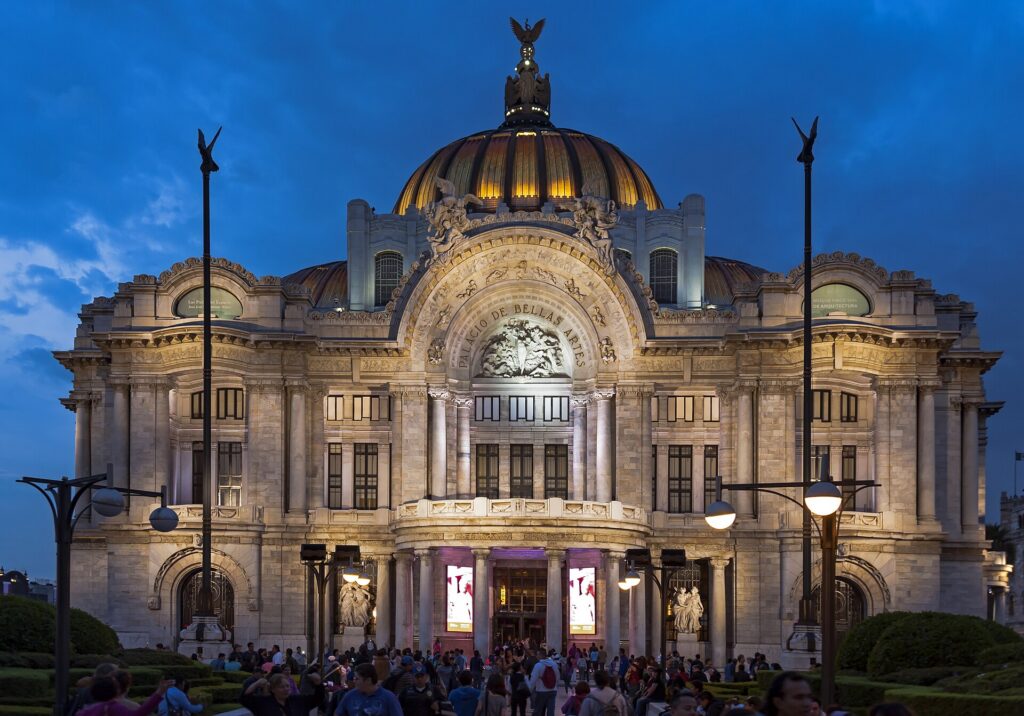
    The Palacio de Bellas Artes in Mexico City at dusk
    Mexico City's historic center is one of the great sights of the Americas (Photo: Daniel Case via Wikimedia Commons, CC BY-SA 3.0)

    When to visit Mexico City

    Mexico City sits in a high valley at about 2,240 meters, which gives it a mild climate year-round. It rarely gets very hot, and evenings can be cool at any time of year. The seasons that matter are wet and dry, not summer and winter.

    PeriodWeatherCrowds and prices
    November to FebruaryDry, sunny days and cool nights; the coolest monthsPopular with visitors from the north; Christmas and New Year are peak
    March to MayDry and the warmest time of year; spring can be hazySemana Santa is very busy and many locals travel; otherwise good value
    June to SeptemberRainy season, usually with afternoon or evening showers and sunny morningsOften the lowest prices outside summer school holidays
    OctoberRains tapering off, pleasant temperaturesBuilds toward Día de Muertos at the start of November, when demand rises

    For value, the rainy season can be surprisingly good: showers usually come later in the day, mornings are often clear, and the city is green. Pack a light rain jacket and plan museum visits for the afternoon. Visitors with respiratory conditions should note the Government of Canada’s advice that air pollution in Mexico City peaks between December and March.

    Holidays and events that move prices

    • Christmas and New Year: the busiest and most expensive period for flights from Canada and the United States.
    • Semana Santa: Holy Week, the week before Easter, when many Mexicans travel. Flights and hotels across the country get expensive.
    • Independence Day: celebrations on the night of September 15 and on September 16 bring big crowds to the historic center.
    • Día de Muertos: the Day of the Dead celebrations around November 1 and 2 are a major draw, with events and decorations throughout the city in the days before. Book early if you want to be there.
    • Summer school holidays: July and August bring family travel from the north and within Mexico.

    If you want the best balance of weather and price, look at late January and February outside long weekends, late April and May after Semana Santa, and the quieter weeks of the rainy season.

    When to book

    Flights from Canada and the United States to Mexico City behave like other medium-haul international routes. Use these windows as a guide, then book when a fare lands at or below the normal level for your route.

    TripSensible booking window
    Ordinary dates from the U.S.About 1 to 3 months ahead
    Ordinary dates from CanadaAbout 2 to 4 months ahead
    Christmas, New Year, Semana Santa, Día de MuertosAbout 4 to 6 months ahead, or as soon as your plans are firm
    Short noticePossible on a busy hub route, but rarely cheap on peak dates

    Start watching fares as soon as you know roughly when you want to go. Look at a month view to spot the cheap days, set a price alert, and book once you see a fare that matches or beats what you have been seeing. For flights to or from the United States booked at least seven days before departure, most airlines let you cancel within 24 hours without penalty, which gives you a day to double-check. Our international flights booking tips explain the wider strategy for trips abroad.

    Choosing your airports

    At the Mexico City end

    Mexico City now has two main airports, and it matters which one your ticket uses.

    • Mexico City International Airport (AICM, code MEX), officially Benito Juárez International, sits inside the city, east of the center. It has two terminals, Terminal 1 and Terminal 2, and handles most international flights. Being so close to neighborhoods like the Centro Histórico, Roma and Condesa, it is usually the most convenient choice. Check your terminal on your booking and on the airport’s official site.
    • Felipe Ángeles International Airport (AIFA, code NLU) opened in 2022 north of the city in the State of Mexico. Some domestic and a smaller number of international flights use it. It can be a good option if the fare is much lower, but the ground transfer to central Mexico City is much longer, and in traffic can take well over an hour.
    • Toluca International (TLC), west of the city, handles a small number of flights. It is rarely the right choice for a visitor unless the fare saving is large.

    When you compare fares, look at the airport code on each option. A cheaper flight into AIFA may cost you more in time and transport than it saves.

    At your end

    From Canada, Toronto, Montreal and Vancouver have typically had nonstop service to Mexico City; from other Canadian cities, you will usually connect, either through one of those airports or through a U.S. or Mexican hub. From the United States, many large hubs have nonstops, including cities such as Chicago, Dallas, Houston, Los Angeles, New York and Atlanta, and connections are easy from almost everywhere. Search from every airport you could realistically use, and remember to include the cost of getting there. Our flights from Toronto, flights from Montreal and flights from Vancouver pages are a good place to start from Canada.
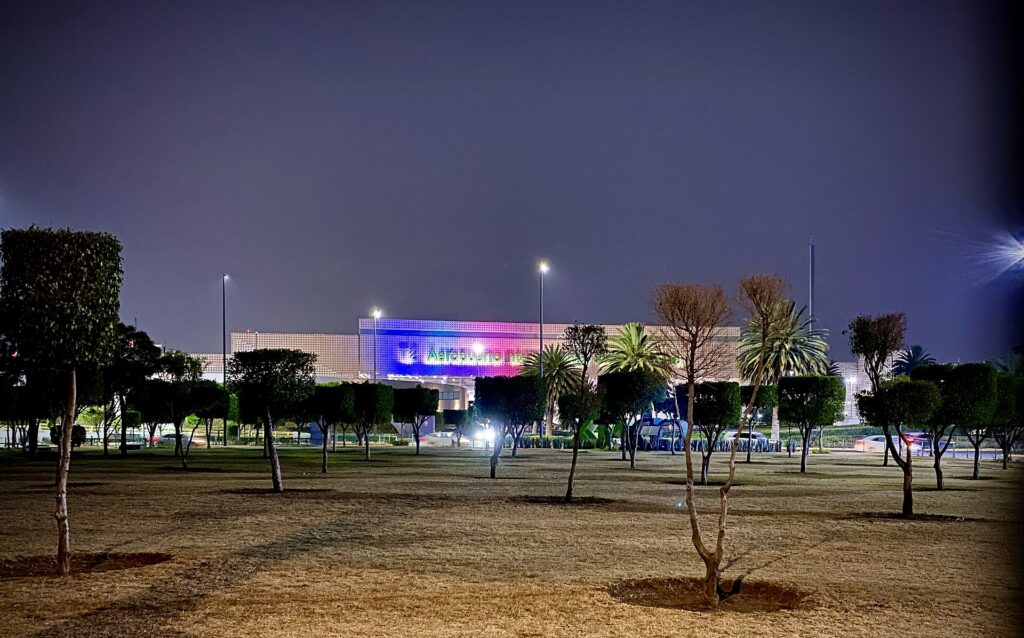
    Terminal 2 at Mexico City International Airport
    Check the airport code: AICM is inside the city, AIFA is well to the north (Photo: Sharon Hahn Darlin via Wikimedia Commons, CC BY 2.0)

    Nonstop or connecting?

    A nonstop flight is the easy choice when the price difference is small. A connection can make sense when the saving is significant or when nonstop times do not suit you. Weigh these points:

    • Total travel time. A connection can add several hours. Compare door-to-door time, not just the fare.
    • Connection length. Very short connections are risky, especially if you need to change terminals or clear immigration. Very long ones eat into the value of the saving.
    • Connecting through the United States. The U.S. has no international transit zone, so travelers connecting through a U.S. airport go through U.S. border formalities even if they never leave the airport. Canadians generally need only a valid passport, but travelers of other nationalities may need U.S. travel authorization. Allow extra time for the process.
    • One ticket or two. On a single ticket, the airline rebooks you if a delay makes you miss your connection. On two separate tickets, you are usually on your own. Avoid self-connecting on a tight schedule.
    • Checked bags. On a single ticket, bags are normally checked through to Mexico City, although you may need to collect and recheck them at your first point of entry in some countries. Ask at check-in.

    Comparing airlines and fares

    Mexico City is the main hub of Aeroméxico, Mexico’s flag carrier, and an important base for Mexican low-cost airlines such as Volaris and Viva Aerobus. Major U.S. and Canadian airlines also fly in from their hubs. That variety is the reason prices can be competitive, but it also means fares are structured very differently.

    Airline typeTypical strengthsWhat to check
    Full-service airlinesMore included, easier connections, loyalty benefitsWhether your fare type includes a checked bag and seat selection
    Low-cost airlinesLow base fares, especially on nonstop routesCarry-on and checked bag fees, seat fees and size limits
    Basic economy fares on any airlineThe lowest price on that flightNo changes, last boarding, possible carry-on restrictions

    Compare the total with the bags and seats you actually need. A slightly higher fare that includes a checked bag can easily beat a bare-bones one. Our carry-on size guide explains how to check limits, and our flight details guide explains fare brands and baggage allowances.

    Entry requirements: check before you book

    Entry rules change, and they depend on your passport, so always read the official page for your nationality before booking.

    • Canadians: the Government of Canada’s travel advice for Mexico says Canadian tourists do not need a visa for stays of up to 180 days, and that your passport must be valid for the expected duration of your stay. It also explains how arrival works: an officer may stamp your passport with your permitted stay, or you may be directed to an e-gate kiosk, and you may need to complete a digital migration form. Keep proof of your entry with you.
    • U.S. citizens: read the U.S. State Department’s Mexico country information page for passport and entry requirements.
    • Other nationalities: check Mexico’s requirements for your passport, and U.S. transit rules if you connect through the United States.

    The same government pages carry safety and health advice, including regional advisories within Mexico, so read them as part of your planning. The Canadian page notes that Mexico City’s altitude can affect some visitors; take it easy on your first day, drink water and talk to a doctor before you go if you have heart or lung conditions.

    Getting from the airport into the city

    From AICM, the main options are:

    • Authorized airport taxis. Buy a ticket at an official taxi booth inside the terminal, with the price based on your destination zone, then take it to the taxi rank. This is the simplest option for most first-time visitors, especially at night.
    • Ride-hailing apps. App-based rides operate in Mexico City; follow the airport signs to the designated pickup areas.
    • Metrobús and Metro. Metrobús Line 4 serves the airport terminals and runs toward the historic center, and the Metro has a station near Terminal 1. Public transit is very cheap but can be crowded, and it is awkward with large suitcases.
    • Hotel transfers. Some hotels arrange pickups; compare the price with an authorized taxi.

    From AIFA, allow much more time. Check the current transport options on the airport’s information before you fly, and weigh the cost of the transfer against the fare saving. Most visitors do not need a rental car in Mexico City itself: traffic is heavy, parking is limited, and taxis, apps and transit cover the areas you will want to see. A car can make sense for road trips beyond the city.
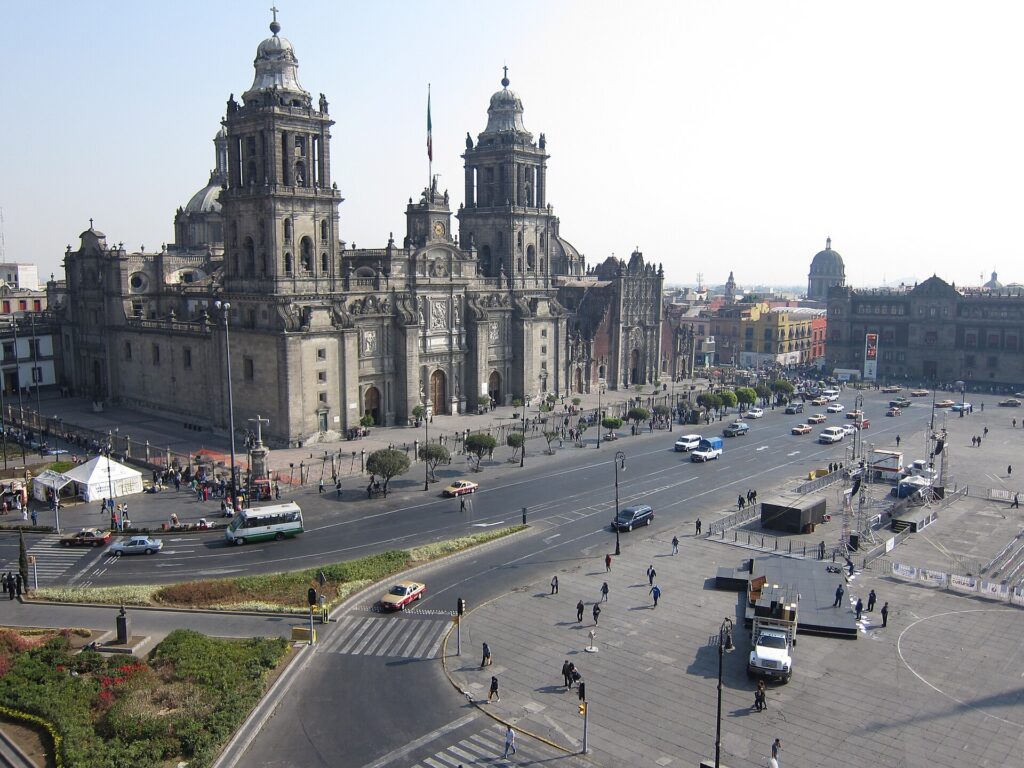
    The Zocalo and Metropolitan Cathedral in Mexico City
    The Centro Historico is a convenient base for first-time visitors (Photo: Jeff Kramer via Wikimedia Commons, CC BY 2.0)

    Where to stay, and how it affects your budget

    Hotel prices vary widely by neighborhood. Choosing the right base can save both money and hours in traffic.

    NeighborhoodWhy stay thereGood for
    Centro HistóricoWalking distance to the Zócalo, the cathedral, Templo Mayor and Bellas ArtesFirst-time visitors and sightseeing
    Roma Norte and CondesaTree-lined streets, parks, cafés, restaurants and nightlifeFood lovers and longer stays
    JuárezCentral, between the historic center and Roma, near Paseo de la ReformaEasy access to several areas
    PolancoUpscale hotels, shopping, fine dining, near Chapultepec Park and major museumsComfort and business travelers
    CoyoacánColonial streets, a relaxed pace, near the Frida Kahlo MuseumA quieter base, farther from the center

    Book a refundable room on our hotel search once your flight is set, then recheck the price before your cancellation deadline. Our hotel booking tips explain how to compare total prices.

    What to do once you are there

    You can fill a week in Mexico City without leaving the city limits. The highlights most visitors build a trip around:

    • The historic center: the Zócalo, one of the largest public squares in the world, the Metropolitan Cathedral, the ruins of the Templo Mayor and the Palacio de Bellas Artes.
    • Chapultepec: a vast park with Chapultepec Castle and the National Museum of Anthropology, one of the most important museums in the Americas. Give it at least half a day.
    • Coyoacán: the Frida Kahlo Museum, the Casa Azul, is hugely popular; buy timed tickets in advance.
    • Xochimilco: the canals in the south of the city, where colorful boats called trajineras carry groups along the water.
    • Teotihuacan: the pyramids of the Sun and Moon, an easy and very popular day trip northeast of the city. Start early to beat the heat and the crowds.
    • Food: markets, taco stands, bakeries and some of the most celebrated restaurants in Latin America. Eating well here does not have to be expensive.

    The city’s official tourism site, CDMX Travel from the Mexico City tourism ministry, lists attractions, neighborhoods and events.

    Keeping the rest of the trip affordable

    • Eat where locals eat. Markets, fondas serving set lunches and street stands offer excellent food for very little.
    • Use the free and low-cost sights. Walking the historic center, Chapultepec Park and many churches and public buildings costs nothing; some museums have free days for residents, so check.
    • Use transit or taxis wisely. Metro and Metrobús fares are very low; apps and authorized taxis are reasonably priced for longer trips.
    • Carry some pesos. Cards are widely accepted in hotels and restaurants, but markets and small vendors often prefer cash. Use bank ATMs inside branches or shopping centers.
    • Drink bottled or filtered water. Tap water is not recommended for drinking; most hotels provide bottled water.

    Mexico City or the beach?

    Many travelers from Canada and the United States think of Mexico as the beach. If you are deciding between a city trip and a resort, Mexico City often offers more to do for the money, with lower hotel prices outside the luxury end and a cooler climate. A beach resort offers rest and sun. Some travelers combine both, flying into Mexico City and continuing to the coast on a domestic flight. If the beach is calling, our guides to the best time to fly to Cancun and things to do in Cancun cover the Caribbean side, and you can compare fares on Cancun flights. For more ideas on stretching your budget, see our list of budget travel destinations.

    Use alerts, points and flexibility together

    The travelers who find the best fares to Mexico City usually combine several small habits rather than relying on one trick.

    • Set alerts on more than one route. If you could fly from two or three airports, watch all of them. A fare drop from a nearby city might beat your home airport.
    • Consider one-way fares. Flying out on one airline and back on another can sometimes give better times or a lower total, especially when low-cost airlines are involved. Compare with a round trip before booking.
    • Price points against cash. Loyalty points can be good value on routes where cash fares are high, such as holiday dates. Compare the points price and taxes with the cash fare before redeeming.
    • Stay flexible by a day or two. Moving your departure by a single day can drop the fare to a cheaper level.
    • Book the hotel on a refundable rate. Once the flight is set, a flexible room lets you rebook if prices fall.

    Common mistakes to avoid

    • Not checking the airport code. A flight into AIFA instead of AICM can mean a much longer transfer.
    • Booking during Semana Santa or Día de Muertos without meaning to. Check the calendar before choosing dates.
    • Comparing base fares instead of totals. Add bags and seats, especially on low-cost airlines.
    • Tight connections through a U.S. airport. Border formalities take time.
    • Ignoring the altitude. Plan a lighter first day.
    • Skipping the travel advice. Read your government’s page for Mexico before you book and again before you fly.
    • Arriving too late for check-in. International check-in deadlines are earlier than domestic ones; our guide on how early to arrive for an international flight explains why.
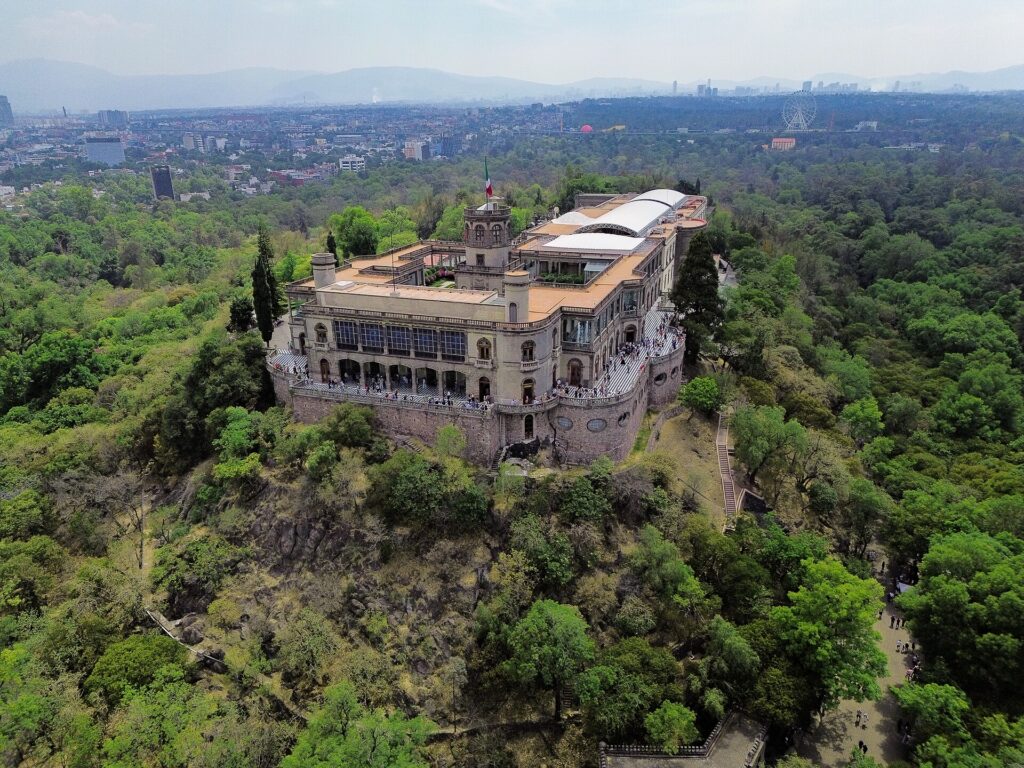
    An aerial view of Chapultepec Castle on its hill in Chapultepec Park, Mexico City
    Chapultepec Park holds the castle and the National Museum of Anthropology (Photo: ProtoplasmaKid via Wikimedia Commons, CC BY 4.0)

    Frequently asked questions

    What is the cheapest time to fly to Mexico City?

    Outside the major holiday periods: late January and February outside long weekends, late April and May after Semana Santa, and the quieter weeks of the rainy season often have better fares. Check a fare calendar for your route.

    How far ahead should I book a flight to Mexico City?

    About one to three months ahead from the United States and two to four months ahead from Canada for ordinary dates, and earlier for Christmas, Semana Santa and Día de Muertos.

    Which airport should I fly into?

    For most visitors, Mexico City International (AICM, MEX) is the most convenient because it is inside the city. Felipe Ángeles (AIFA, NLU) is much farther north, so only choose it if the saving justifies the longer transfer.

    Do Canadians need a visa for Mexico?

    According to the Government of Canada, Canadian tourists do not need a visa for stays of up to 180 days. Entry rules can change, so check the official travel advice before you book and before you fly.

    Is it cheaper to connect through the United States?

    Sometimes. A connection through a U.S. hub can be cheaper than a nonstop, but you will go through U.S. border formalities during the connection, so allow enough time and check any travel authorization your passport requires.

    Is the rainy season a bad time to visit?

    Not necessarily. Rain usually comes in the afternoon or evening, mornings are often clear, and prices can be lower. Pack a rain jacket and plan indoor visits for later in the day.

    Do I need a rental car in Mexico City?

    Usually not. Traffic is heavy and parking is limited, while taxis, ride-hailing apps, the Metro and Metrobús cover the main areas. A car can be useful for trips outside the city.

    How do I get from the airport to my hotel?

    From AICM, an authorized taxi bought at an official booth inside the terminal is the simplest option. Ride-hailing apps, Metrobús Line 4 and the Metro are alternatives.

    Ready to plan your trip? Search a whole month of fares to Mexico City on our flight search to find the cheapest days and routings, then compare rooms in the neighborhood that suits you on our hotel search. For the bigger picture on timing, read our guide to the best time to book cheap flights and hotels.

  • Best Time to Fly to Cancun: Seasons, Weather & Prices

    Best Time to Fly to Cancun: Seasons, Weather & Prices

    Cancun’s travel calendar is set by other people’s winters. When Toronto, Chicago and Calgary are frozen, demand for seats into Cancun International climbs, every resort in the Hotel Zone fills, and fares from almost every city in Canada and the United States reach their peak. When summer arrives up north, Cancun gets hotter, wetter and cheaper, except for the weeks when Mexican and European families take their own holidays. On top of that sit spring break, Easter week, the U.S. and Canadian long weekends, and two natural hazards that no other North American beach destination faces in quite the same way: the Atlantic hurricane season, which runs for half the year, and the sargassum seaweed that can wash up on the Caribbean-facing beaches in the warmer months. Add the fact that Cancun is the second-busiest airport in Mexico, with nonstop service from dozens of cities and a huge charter and package market, and the “best time” question has several right answers. This guide walks through the weather month by month, the fare seasons, the events that move prices, and how to handle the airport.

    The short answer

    For the best mix of weather and value, aim for late April to early June, after spring break and Easter but before the rainy season sets in, and mid-November to mid-December, when the rains have ended and the high-season crowds have not yet arrived. For pure weather, December to April is ideal, dry and sunny with comfortable nights, but it is also the most expensive stretch of the year. The cheapest fares and hotel rates usually come in September and October, the heart of hurricane season, with late August and early November not far behind. The most expensive stretches are Christmas to New Year, February and March with Presidents’ Day, Family Day and spring break, Easter week, and the peak of Mexican summer holidays in late July and early August. Whatever you choose, run a flexible-date search on our Cancun flights page; a shift of a few days around a holiday week can change the fare band entirely.

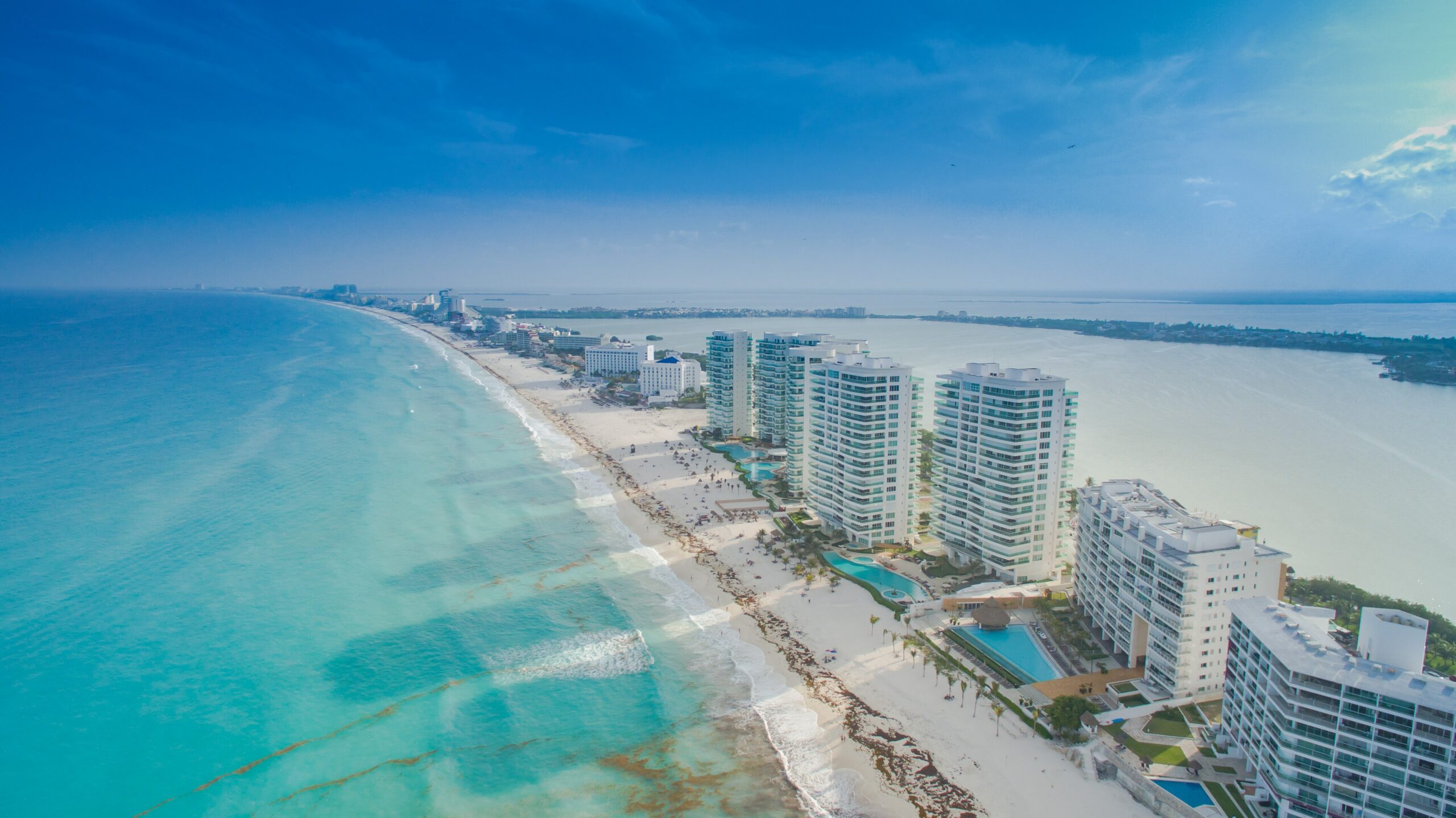
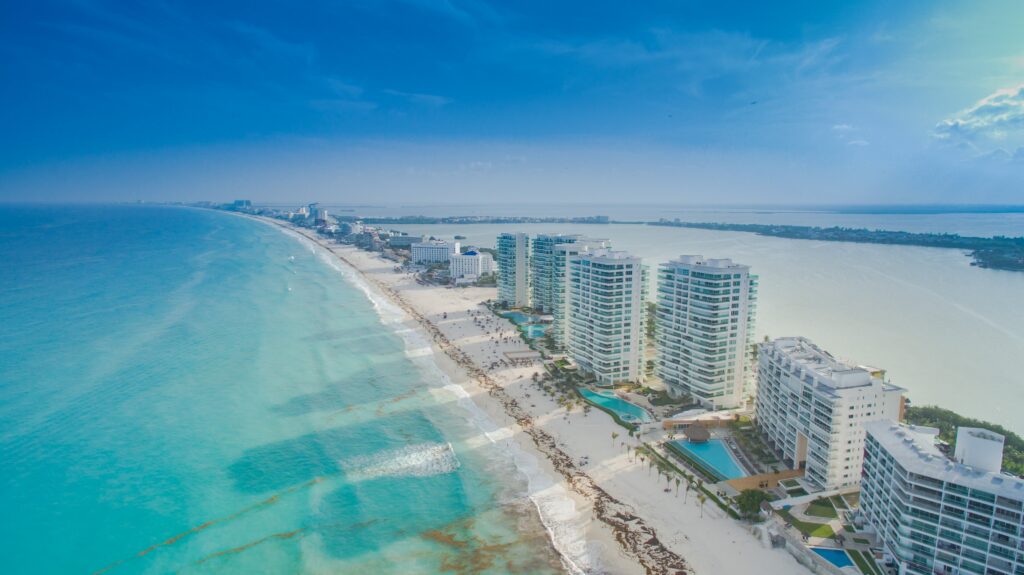
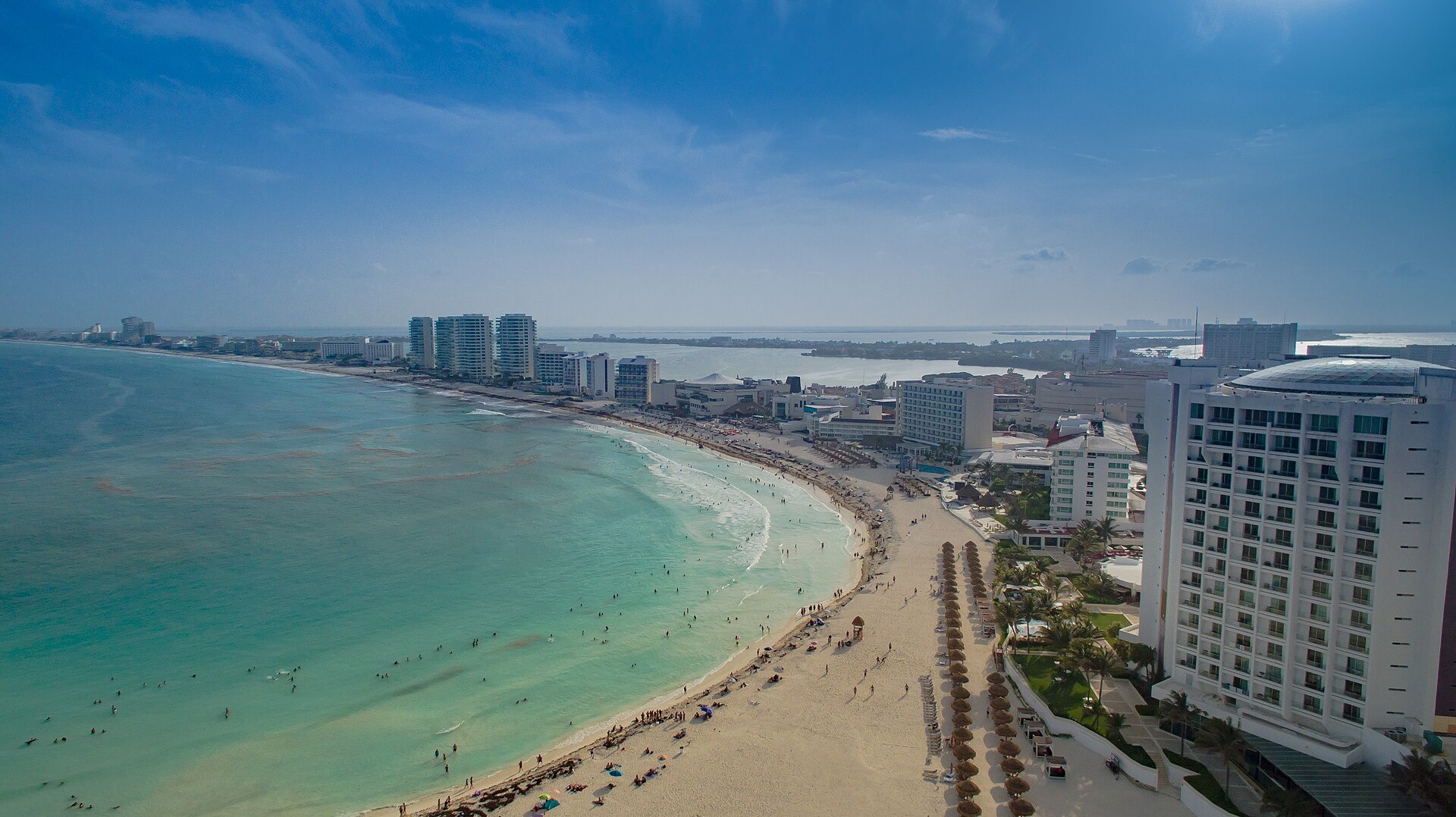
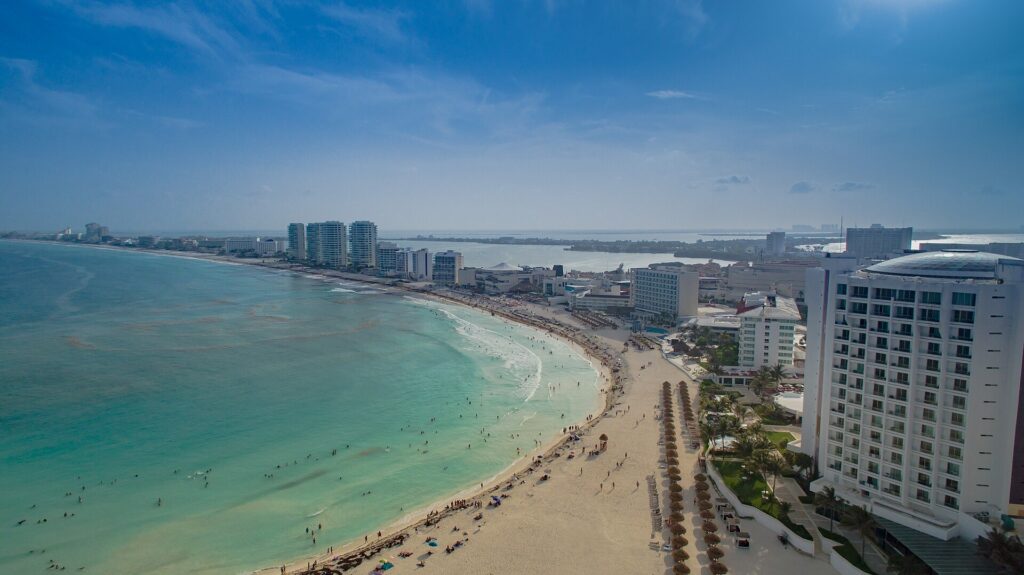
    An aerial view of the Cancun Hotel Zone beach and turquoise water
    The Cancun Hotel Zone from the air (Photo: dronepicr via Wikimedia Commons, CC BY 2.0)

    Cancun’s weather, season by season

    Cancun has a tropical savanna climate: hot every day of the year, with a dry season from roughly November to April and a wet season from May or June to October. The Caribbean keeps things steady, so it rarely goes much above the low 30s °C (low 90s °F) and rarely falls below the high teens °C (mid-60s °F) even on a winter night. The figures below are approximate seasonal patterns based on the long-term climate normals from Mexico’s national weather service, the Servicio Meteorológico Nacional (SMN), part of the national water commission, Conagua; check the current forecast before you pack, and in hurricane season, keep an eye on the tropics.

    MonthTypical daytime highTypical overnight lowWhat it feels likeFare pressure
    Januaryaround 28 °C (82 °F)around 19 °C (66 °F)Dry, sunny and breezy; the occasional norte brings a cool, windy day with rough seasHigh, peak in the first week
    Februaryaround 28 °C (82 °F)around 19 °C (66 °F)Similar, with the driest, most reliable weather of the yearHigh; peaks for Presidents’ Day and Family Day
    Marcharound 30 °C (86 °F)around 21 °C (70 °F)Warmer and still dry; ideal beach weatherPeak for spring break
    Aprilaround 31 °C (88 °F)around 22 °C (72 °F)Hot and mostly dry; the sea warms upHigh around Easter, then falling
    Mayaround 32 °C (90 °F)around 23 °C (73 °F)Hot and increasingly humid; the first rains and often the start of the seaweed seasonLow to moderate
    Junearound 32 °C (90 °F)around 24 °C (75 °F)Humid, with short, heavy afternoon showers; hurricane season beginsModerate, rising late in the month
    Julyaround 33 °C (91 °F)around 24 °C (75 °F)Hot and sticky; a drier spell mid-summer is commonHigh for summer holidays
    Augustaround 33 °C (91 °F)around 24 °C (75 °F)The hottest weeks; the tropics become more activeHigh early, falling later
    Septemberaround 32 °C (90 °F)around 24 °C (75 °F)Among the wettest months and the peak of hurricane seasonLowest of the year
    Octoberaround 31 °C (88 °F)around 23 °C (73 °F)Still wet and stormy, with drier spells toward the endLow
    Novemberaround 29 °C (84 °F)around 21 °C (70 °F)The rains taper off and the air freshensLow early, rising for U.S. Thanksgiving
    Decemberaround 28 °C (82 °F)around 20 °C (68 °F)Dry, sunny and pleasant; nortes beginModerate until mid-month, then peak

    Three things the table cannot show. First, hurricanes: the Atlantic season runs from June 1 to November 30, with the greatest risk from August to October. A direct hit on Cancun is rare in any given year, and most weeks even in September are simply hot, humid and punctuated by afternoon storms, but a tropical storm can close the airport and the beaches for a few days; buy travel insurance that covers weather, and follow the U.S. National Hurricane Center and the SMN when you travel. Second, sargassum: since the early 2010s, large mats of floating brown seaweed have drifted onto the Mexican Caribbean coast in the warmer months, typically from spring into late summer. The amount varies enormously from year to year and even week to week; the east-facing beaches of the Hotel Zone, Playa del Carmen and Tulum are the most exposed, while the north-facing beaches of the Hotel Zone, Costa Mujeres and Isla Mujeres’ Playa Norte are usually far less affected. The state and several independent monitoring networks publish seaweed forecast maps, and it is worth looking at them before you choose a hotel. Third, the nortes: in winter, cold fronts from the north can bring two or three days of wind, clouds, cooler air and rough, murky water, which briefly cancels snorkel trips and ferries.

    How Cancun’s fare seasons work

    Three calendars drive seats into Cancun: the winter escape from Canada and the northern United States, which fills planes from December to April; the school holidays of the United States, Canada and Mexico, which create sharp spikes at Christmas, spring break, Easter and in summer; and the weather, which empties the resorts in the rainiest and most storm-prone weeks of the fall. Package and charter airlines add capacity in winter and pull it back in summer, which is one reason fares from smaller Canadian cities can swing more than those from big U.S. hubs. The result is a long winter plateau with holiday spikes, a soft late spring, a summer bump, and a deep autumn trough.

    Peak season

    Mid-December to mid-April, with the most expensive weeks from roughly December 20 to January 3, around Presidents’ Day and Family Day in February, through the whole of March for spring break, and during Easter week, whether it falls in March or April. Resorts sell out, all-inclusive rates reach their annual maximum, and the flights from Canada and the Northeast fill early. If you must travel in peak, book early, fly mid-week, and compare packages against booking flight and hotel separately.

    Shoulder season

    Late April to early June, and mid-November to mid-December, plus the Mexican summer holiday peak in July and early August, which lifts hotel rates more than international fares. Late spring gives you hot, mostly dry days and warm water at a clear discount, with the caveat that the seaweed season often begins in May. Late fall gives you the start of the dry season before the holiday rush, with U.S. Thanksgiving the one week to watch.

    Low season

    Late August through early November, and to a lesser degree June. Fares and hotel rates are at their lowest, the beaches and ruins are uncrowded, and the weather is hot, humid and wet, with a real if modest chance of a tropical storm. Build flexibility into the trip, choose a refundable rate or good insurance, and you can have a Caribbean beach for a fraction of the winter price.

    As with most routes, mid-week departures and early or late flights usually price below Saturday departures on the same route, and a search across a whole month reveals cheaper pairs of dates close to your first choice. Our guide to the best times to book explains how to read those patterns.

    Cancun month by month

    January

    Dry, sunny and warm, with comfortable nights and the occasional windy norte. The first week is among the most expensive of the year as the holidays end; after that, fares ease a little but remain high as the winter escape from Canada and the northern U.S. gets into its stride. Visibility is often excellent for snorkeling between fronts, and this is a strong month for Chichén Itzá and the ruins, when walking in the midday sun is bearable.

    February

    Often the most reliable weather of the year and one of the busiest months. The Presidents’ Day weekend in the U.S. and Family Day in several Canadian provinces, both on the third Monday, push fares up, and Carnival, the week before Lent, brings parades to downtown and Isla Mujeres in some years. Book early.

    March

    Spring break runs through the whole month, with U.S. colleges and schools, Ontario’s March Break and other Canadian school breaks landing on different weeks, and the Hotel Zone’s Party Center is at its loudest. The spring equinox draws big crowds to Chichén Itzá for the serpent shadow on the pyramid. Weather is excellent; prices are at their peak. If you want calm, choose a resort away from Punta Cancún or look north to Costa Mujeres.

    April

    Hot and dry. Easter week, Semana Santa, is the biggest domestic holiday in Mexico, and beaches, ferries and ruins are packed with Mexican families as well as foreign visitors. Once Easter has passed, rates fall noticeably, and the last two weeks of April are one of the best-value windows of the year for good weather.

    May

    Hot and increasingly humid, with the first rains toward the end of the month. It is one of the best-value months of the year, the sea is warm and clear, and turtle nesting season begins on the beaches. It is also, in many years, when sargassum starts to arrive on the Caribbean-facing beaches, so check the seaweed maps and favor a north-facing beach if the forecasts look heavy.

    June

    Hurricane season opens, but June storms tend to be weaker, and the month is more often humid with short, heavy afternoon showers than genuinely stormy. The whale shark season off Isla Mujeres and Holbox usually starts in late May or June. Fares are moderate, climbing late in the month as North American schools finish.

    July

    Hot and busy. Mexican school holidays begin in July, and European and North American families arrive, which keeps hotel rates high. A drier mid-summer spell is common, whale sharks are at their most reliable, and sargassum can be heavy. Fares are high, especially for the U.S. Independence Day and Canada Day weeks.

    August

    The hottest weeks and the start of the most active part of hurricane season. The first half is still busy with Mexican and European families; the second half, once schools return, gets steadily quieter and cheaper. Plan outdoor sightseeing for early morning and evening.

    September

    The cheapest month of the year, and among the wettest, with the statistical peak of hurricane season. Resorts run their deepest discounts, some restaurants and smaller hotels close for renovations, and the beaches are nearly empty. The autumn equinox brings another serpent shadow to Chichén Itzá. Travel with flexibility and good insurance, and it can be excellent value.

    October

    Still wet and stormy for much of the month, with drier spells arriving toward the end. Fares remain low apart from Canadian Thanksgiving, on the second Monday, which brings a small bump from Canada. The sea is warm, the seaweed has usually eased, and crowds are thin.

    November

    The rains taper off and the dry season returns. Día de Muertos on November 1 and 2 brings altars and celebrations to the region, and fares are low in the first half of the month. The week of U.S. Thanksgiving, the fourth Thursday, is the first real spike of the winter, and prices climb steadily into December.

    December

    Two months in one. The first half is one of the best-kept secrets in the Caribbean: dry, sunny, warm and comparatively affordable. From around December 18, fares and resort rates jump for the Christmas and New Year holidays, which are the most expensive weeks of the year and sell out months ahead.

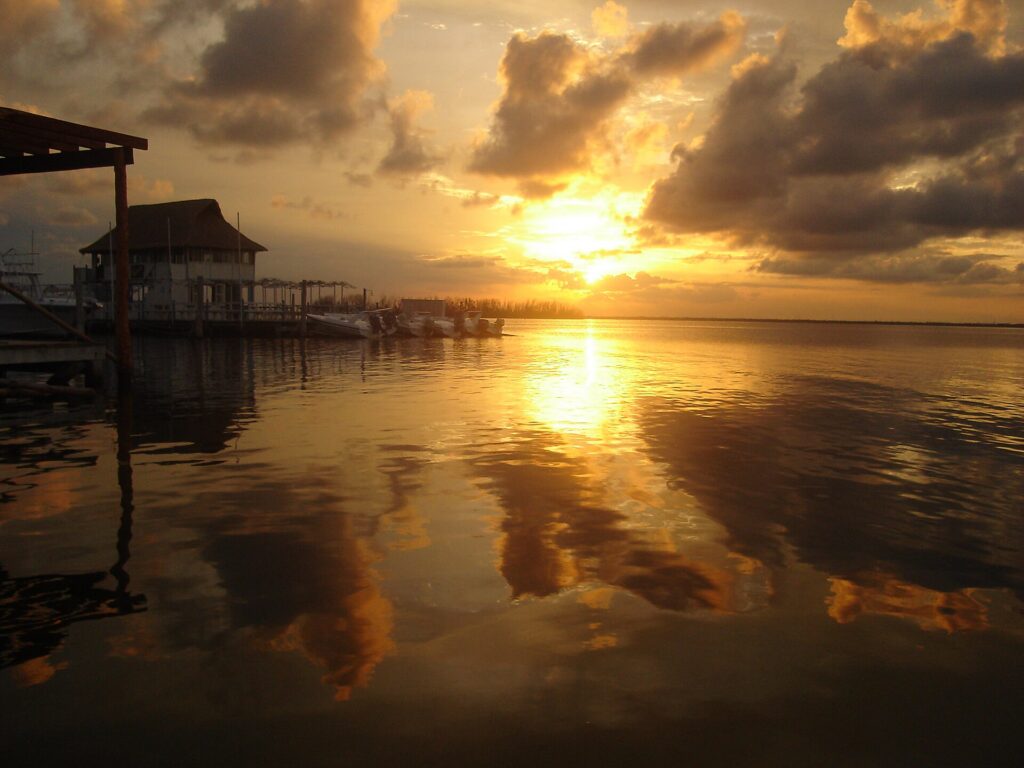
    The Nichupté lagoon and the Cancun Hotel Zone
    The Nichupté lagoon, on the quiet side of the Hotel Zone (Photo: Manuel Canela from Cancun, Mexico via Wikimedia Commons, CC BY 2.0)

    Events that move Cancun flight and hotel prices

    Cross-check these against your dates before you book. Exact dates shift each year, and Mexican holidays and school calendars are published by the Mexican government each year.

    • Christmas to New Year: the most expensive two weeks of the year.
    • Presidents’ Day and Family Day (third Monday of February): a big winter-escape weekend from the U.S. and Canada.
    • Spring break (the whole of March, varying by school and college): the Hotel Zone’s busiest and loudest weeks.
    • Easter week (Semana Santa, March or April): Mexico’s biggest domestic travel week.
    • The spring and autumn equinoxes at Chichén Itzá (around March 21 and September 22): big crowds at the site.
    • Mexican summer holidays (July to mid-August): high hotel rates, especially at weekends.
    • U.S. Thanksgiving (fourth Thursday of November): the start of the winter season.
    • Large conventions, weddings and concerts in the Hotel Zone, which can fill resorts at short notice. Our Cancun events page shows what is on sale for your dates.

    Getting in from the airport

    Cancun International (CUN), operated by the airport group ASUR, sits about 20 kilometers (12 miles) south of downtown and roughly 15 to 25 minutes by road from most Hotel Zone resorts. It is the gateway for the entire Mexican Caribbean, from Costa Mujeres to Tulum, and has nonstop flights from most large Canadian and U.S. cities and from Mexico City, Europe and Latin America, with Mexican carriers such as Aeroméxico, Volaris and Viva Aerobus serving domestic routes. The airport has several terminals, well apart from one another and linked by a shuttle, so check which one your airline uses, especially when returning. Getting to your hotel: ADO buses run from the terminals to the downtown bus station and to Playa del Carmen; pre-booked shared and private shuttles are the most common option for the Hotel Zone and Riviera Maya; licensed airport taxis operate from the terminals at set fares; and every major rental company has counters or a shuttle to its lot. In the arrivals halls, walk past the eager people offering transport, free tours or “information”; many are selling timeshares. Our Cancun car-versus-transit guide works through the transport decision, and our CUN airport guide covers the layout.

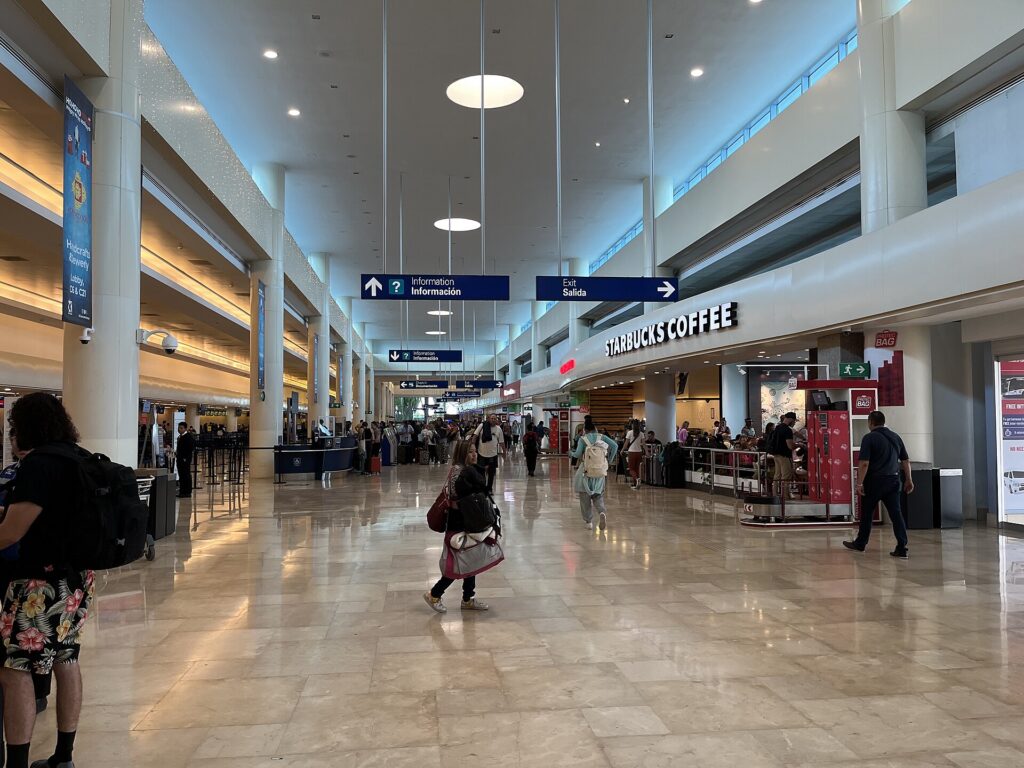
    A terminal at Cancun International Airport (CUN)
    Cancun International (CUN), the second-busiest airport in Mexico and the gateway to the whole Mexican Caribbean (Photo: Antony-22 via Wikimedia Commons, CC BY-SA 4.0)

    Timing tricks that work for Cancun

    • Search the whole month. The holiday weeks create sharp edges in the fare calendar. A calendar search on TicketScanner shows them instantly, and the week after Easter is often dramatically cheaper than the week of it.
    • Price the package and the pieces. Cancun is one of the biggest package markets in North America, and a flight-plus-all-inclusive bundle can undercut booking separately in winter. Run a Cancun hotel search for the same dates and compare.
    • Fly mid-week. Saturday is the classic changeover day for package travelers and resorts; Tuesday and Wednesday departures are often cheaper.
    • Choose your beach by season. In the sargassum months, a north-facing hotel in the Hotel Zone or Costa Mujeres, or a day trip to Isla Mujeres, protects the beach part of your trip.
    • Consider the whole coast. Tulum now has its own international airport, and for a Tulum-focused trip it can be worth comparing fares; for Cancun, Playa del Carmen and Puerto Morelos, CUN is the obvious choice.
    • Build in flexibility in hurricane season. Refundable rates and insurance that covers weather are worth the modest extra from August to October. Our guide to how early to arrive for an international flight covers the return leg.
    • Flying out of Cancun instead? The same seasonality applies in reverse; see cheap flights from Cancun.
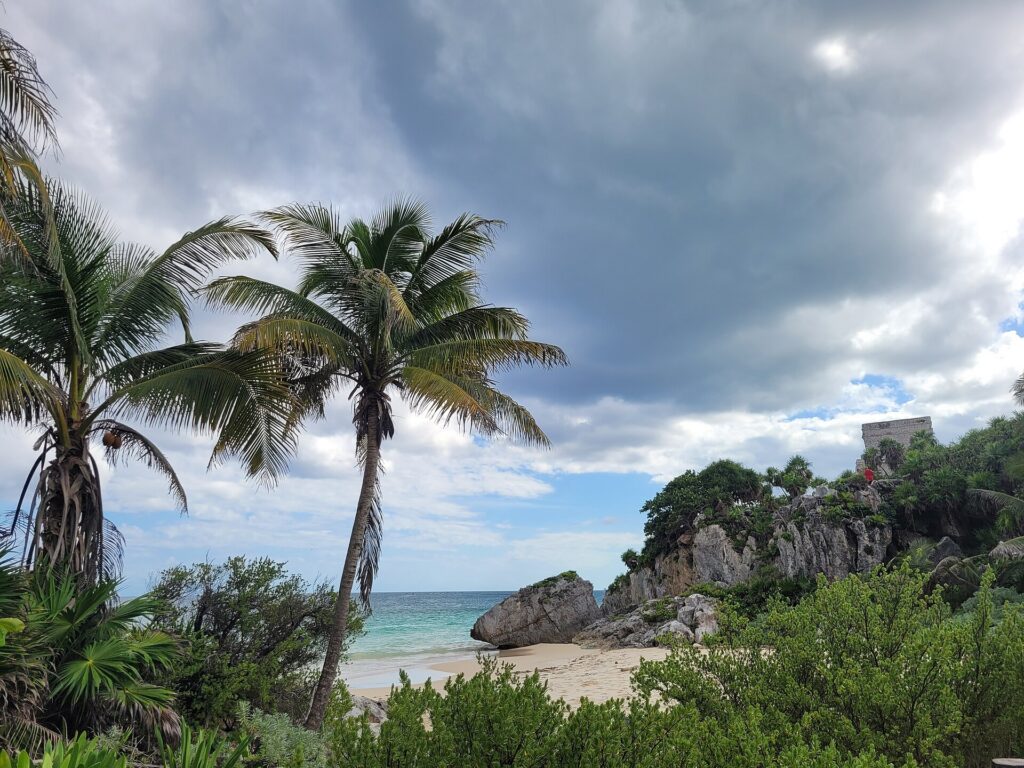
    The Maya ruins of Tulum above a Caribbean beach
    The ruins at Tulum, two hours south of Cancun and busiest in the winter high season (Photo: Erik Cleves Kristensen via Wikimedia Commons, CC BY 2.0)

    What to pack, by season

    Dry season (November to April): light summer clothing, swimwear, a light sweater or jacket for breezy evenings and the occasional norte, and comfortable walking shoes for the ruins. Wet season (May to October): the lightest, most breathable clothing you own, a compact umbrella or rain jacket for the afternoon storms, and plenty of insect repellent. Year-round: high-factor, reef-safe sunscreen, a hat, sunglasses, a rash guard for long snorkel sessions, water shoes for the cenotes and rocky entries, and a smart-casual outfit, because some resort restaurants have a dress code at dinner. Bring your passport, of course, and a photocopy or photo of it kept separately.

    The best time to fly to Cancun for…

    The best weather

    February to April, with January and March close behind. It is dry and sunny, but also the most expensive season.

    The lowest fares

    September and October, followed by late August, early November, and late April to early June outside the holiday weeks.

    Beaches without seaweed

    November to April, when sargassum is least likely. In the warmer months, choose a north-facing beach and check the seaweed maps.

    Snorkeling, diving and whale sharks

    Late spring and summer for warm, calm water and the whale shark season from roughly June to September; winter for dry weather between nortes.

    Families

    The weeks just after Easter, late June, or the first half of December, when the weather is good and the holiday crowds are thinner.

    Canadian and American visitors

    U.S. and Canadian citizens flying to Mexico need a valid passport and, at the time of writing, no visa for a tourist stay; the immigration officer decides the length of stay granted on arrival. Requirements can change, so check the U.S. State Department or the Government of Canada’s travel site before you book, and Mexico’s National Migration Institute for the Mexican rules. Quintana Roo also charges foreign visitors a small state tourism fee, known as Visitax; check the current requirement before you travel.

    Frequently asked questions

    What is the cheapest month to fly to Cancun?

    September is usually the cheapest, followed by October, late August and early November. Late April to early June is the cheapest window with reliably good weather.

    What is the best month to visit Cancun for weather?

    February to April is dry and sunny, with March and April the warmest of the dry months. December and January are also excellent, with slightly cooler nights.

    When is hurricane season in Cancun?

    June 1 to November 30, with the greatest risk from August to October. A direct hit is rare in any given year, but a storm can disrupt a trip, so travel with flexibility and insurance.

    When is sargassum season in Cancun?

    Seaweed usually arrives in spring and peaks in summer, easing in the fall, but it varies greatly by year. North-facing beaches and Isla Mujeres are usually the least affected.

    Is it worth going to Cancun in the rainy season?

    Often, yes. Rain usually comes in short afternoon bursts, the prices are far lower and the crowds thinner. Just avoid rigid plans in September and October.

    How far ahead should I book?

    Well ahead for Christmas, spring break and Easter, when fares tend only to rise. For May, June and the fall, fares are softer, and finding the right dates matters more than booking early.

    Is Cancun crowded during spring break?

    The Party Center and some Hotel Zone resorts are very crowded through March. Families and couples who want quiet should look at Costa Mujeres, Puerto Morelos or adult-focused resorts away from Punta Cancún.

    Ready to pick your dates? Compare fares across the whole month on our Cancun flights page, then find a room with our Cancun hotel search. For what to do when you land, start with our first-timer’s guide to Cancun.

  • Cancun: Should You Rent a Car or Rely on Public Transit?

    Cancun: Should You Rent a Car or Rely on Public Transit?

    Cancun splits visitors into two camps. Many never need a car at all: they take a shuttle from the airport to an all-inclusive in the Hotel Zone, ride the cheap, frequent city buses when they want to see downtown, take the ferry to Isla Mujeres, and book a tour for Chichén Itzá. Others treat Cancun as the airport for the whole Mexican Caribbean and want to drive south to Tulum and the cenotes, west to the colonial towns and the ruins, and stop wherever a jungle road or a quiet beach looks interesting. Both approaches work, and the right one depends less on the city than on the trip you have in mind. Driving here is also genuinely different from driving at home, with mandatory Mexican insurance that catches many visitors out at the rental counter, speed bumps that appear without warning, and full-service gas stations with their own etiquette. This guide explains how the area is laid out, how the buses, colectivos, ferries and the new train work, what driving is really like, when a car is worth it, and gives you a straightforward way to decide.

    The short answer

    Skip the car if you are staying in the Hotel Zone or downtown and your plans are the beaches, downtown, Isla Mujeres and one or two organized day trips; the R-1 and R-2 buses, taxis, ferries and tours cover all of it, and you avoid the insurance, the parking and the stress. That is most visitors on a first trip. Rent a car if you want to explore the Riviera Maya on your own schedule, visit several cenotes, reach Chichén Itzá or Tulum at opening time before the tour buses, stay in Tulum, Puerto Morelos or Playa del Carmen, or are traveling as a family or group, where a car quickly becomes cheaper than tours. And if you want independence without driving, the ADO buses, the colectivo vans and the Tren Maya connect Cancun with Playa del Carmen, Tulum, Valladolid and Chichén Itzá. Compare rental rates for any of these plans on our Cancun car rental page.

    How Cancun is laid out

    Cancun is really two cities joined by one road. The Hotel Zone, a thin barrier island shaped like a 7, runs for about 22 kilometers between the Caribbean and the Nichupté lagoon, and almost everything on it sits on Boulevard Kukulcán, with addresses given as kilometer markers from km 0 near downtown to the mid-20s near Punta Nizuc. Downtown, El Centro, is on the mainland at the northern end, laid out around Avenida Tulum, the main street, with the ADO bus station, the markets and the square at Parque de las Palapas. North of downtown, Puerto Juárez has the Isla Mujeres ferry pier, and beyond it are the newer resorts of Costa Mujeres. The airport is on the mainland south of the city, near the southern end of the Hotel Zone. From there, Highway 307 runs south along the coast through Puerto Morelos, Playa del Carmen and the resort corridor of the Riviera Maya to Tulum, while Highway 180D, a toll road, runs west across the peninsula to Valladolid, Chichén Itzá and Mérida.

    Hotels cluster along the whole length of the Hotel Zone, with the densest nightlife around Punta Cancún at km 9, and in smaller, cheaper properties downtown. Our Cancun hotel search lets you compare them.

    Getting in from the airport

    Cancun International (CUN) has several terminals, spaced well apart and linked by an inter-terminal shuttle, and every transport option starts outside the one you land at. ADO buses run from the terminals to the downtown bus station on Avenida Tulum and directly to Playa del Carmen, for a modest fare; from downtown, the R-1 or R-2 city bus or a taxi reaches the Hotel Zone. Pre-booked shuttles, shared or private, are the most popular way to reach Hotel Zone and Riviera Maya resorts, and many all-inclusives include or sell them. Airport taxis are federally licensed and charge fixed, zone-based fares that are higher than city taxis; ordinary city taxis and most ride-hail drivers are not allowed to pick up at the terminals. The drive to the Hotel Zone takes 15 to 30 minutes, to downtown about 25, and to Playa del Carmen roughly 45 minutes to an hour. Every major rental company has counters in the terminals or a free shuttle to a nearby lot. On the way out, you will pass a hall of people offering transport and “information”; many are selling timeshares, so head for the exit and your pre-arranged ride. The airport operator, ASUR, lists the terminals, and our CUN airport guide covers the layout.

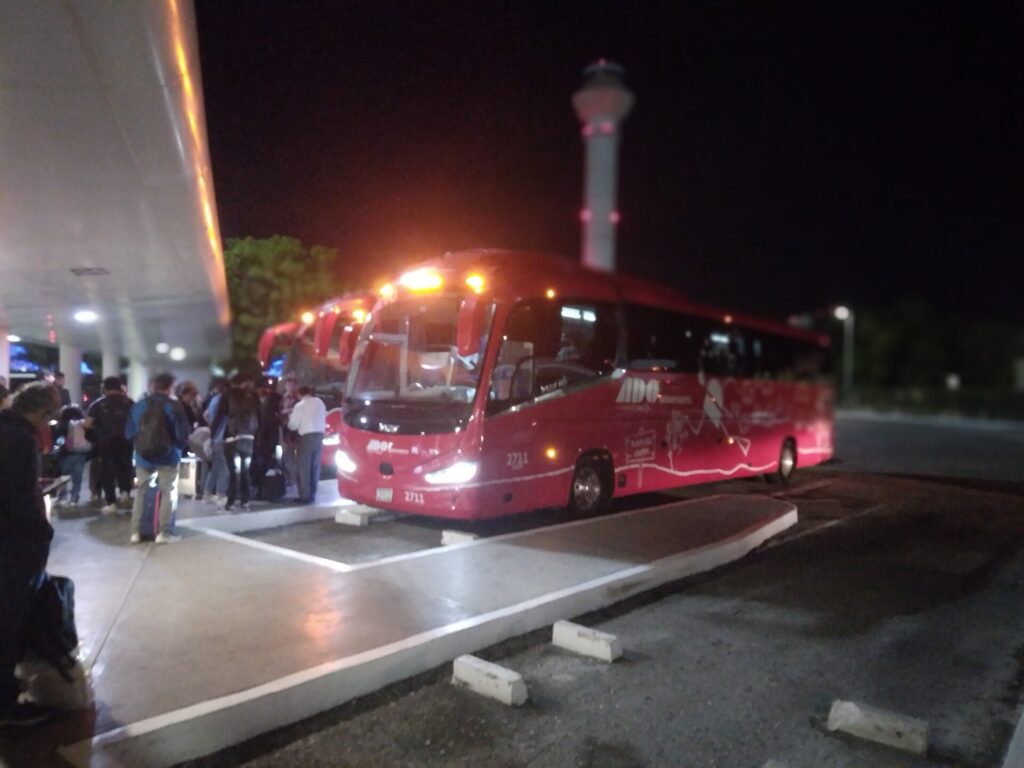
    ADO bus platforms outside a terminal at Cancun International Airport
    ADO buses leave the airport terminals for downtown Cancun and Playa del Carmen (Photo: Mrkstvns via Wikimedia Commons, CC BY-SA 4.0)

    Cancun’s transit, explained

    Cancun has no metro or tram; its public transport is a dense network of privately operated city buses, supplemented by intercity coaches, shared vans and, since late 2023, a long-distance train. It is cheap, frequent on the routes that matter to visitors, and entirely adequate for a Hotel Zone and downtown stay.

    The Hotel Zone buses

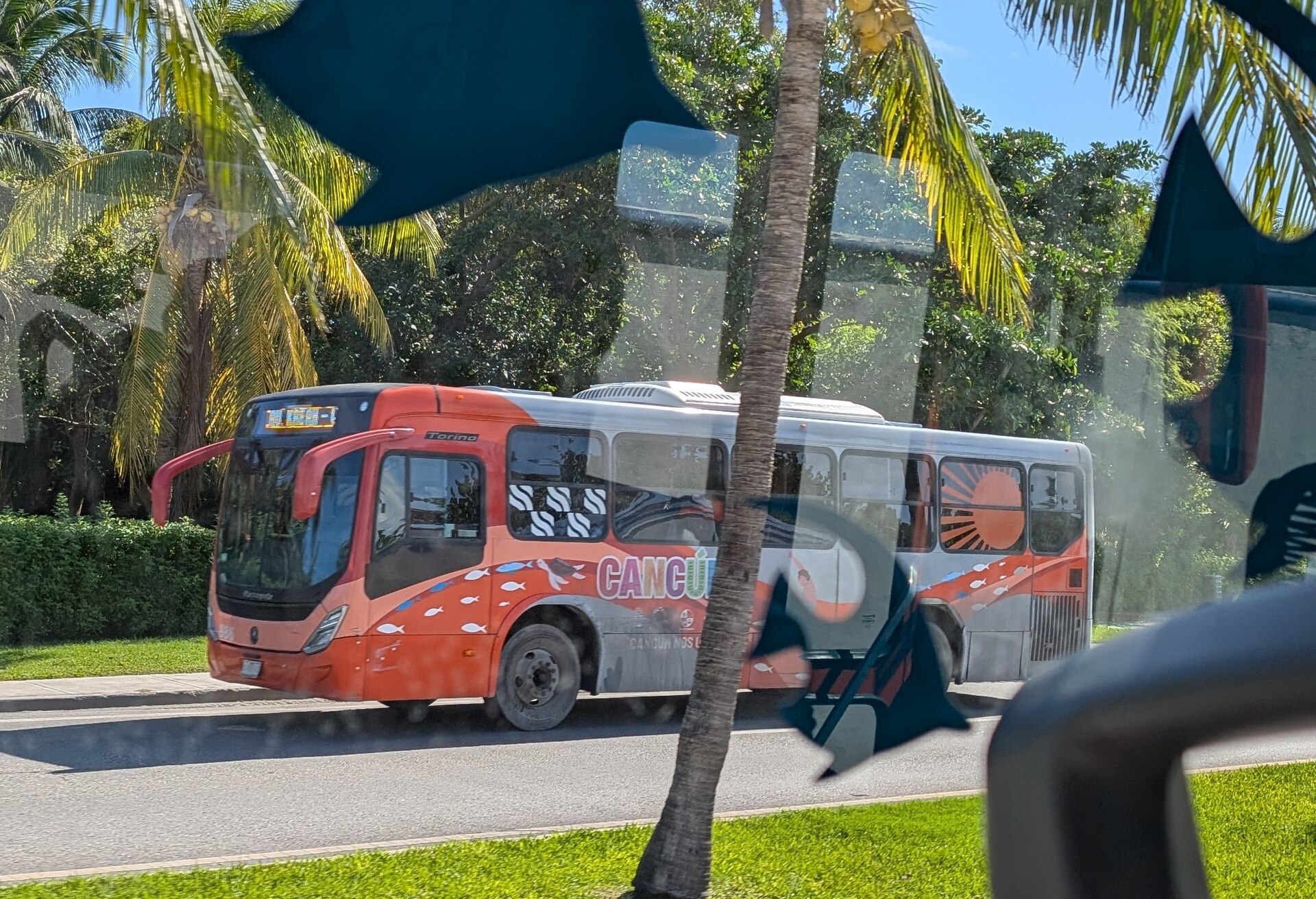
    The routes visitors use are the R-1 and R-2, which run the length of Boulevard Kukulcán through the Hotel Zone and into downtown along Avenida Tulum, with a windshield sign showing “Zona Hotelera” or the route number. They come every few minutes for most of the day and run from early morning until late at night, you flag them down at the marked stops or anywhere safe along the boulevard, and you pay the driver in cash in pesos, a small flat fare, with no transfers. Keep small bills and coins; drivers rarely have change for a large note. The ride from the southern Hotel Zone to downtown takes 30 to 45 minutes depending on traffic. The buses are basic and busy at shift-change times, but safe and very widely used by visitors.

    ADO intercity buses

    ADO runs comfortable, air-conditioned, first-class coaches from the downtown terminal and the airport to Puerto Morelos, Playa del Carmen, Tulum, Valladolid, Chichén Itzá, Mérida and beyond. Buy tickets at the counter, from machines or online, and on busy routes buy a day ahead in high season. For a car-free Riviera Maya trip, ADO is the backbone.

    Colectivos

    Shared white vans, known as colectivos, run constantly along Highway 307 from downtown Cancun to Puerto Morelos and Playa del Carmen, and from Playa del Carmen onward to Tulum, stopping anywhere along the highway on request. They are cheaper than ADO, leave when full, and are the easiest way to reach the resort entrances, cenotes and small beaches between the towns. Pay in cash in pesos.

    The Tren Maya

    The Tren Maya, a new intercity railway around the Yucatán Peninsula, has a station near Cancun’s airport and connects with Puerto Morelos, Playa del Carmen, Tulum, Valladolid, Chichén Itzá and Mérida. It is comfortable and scenic, but frequencies are still limited and the stations can be some way from the town centers or sites they serve, so check the current timetable and onward connections before you plan a day around it.

    Accessibility

    This is Cancun’s weakest area. Many city buses have steps and few are wheelchair-accessible, and sidewalks in the Hotel Zone are narrow in places. ADO coaches and the Tren Maya are more accommodating, and accessible private transfers and taxis can be arranged in advance.

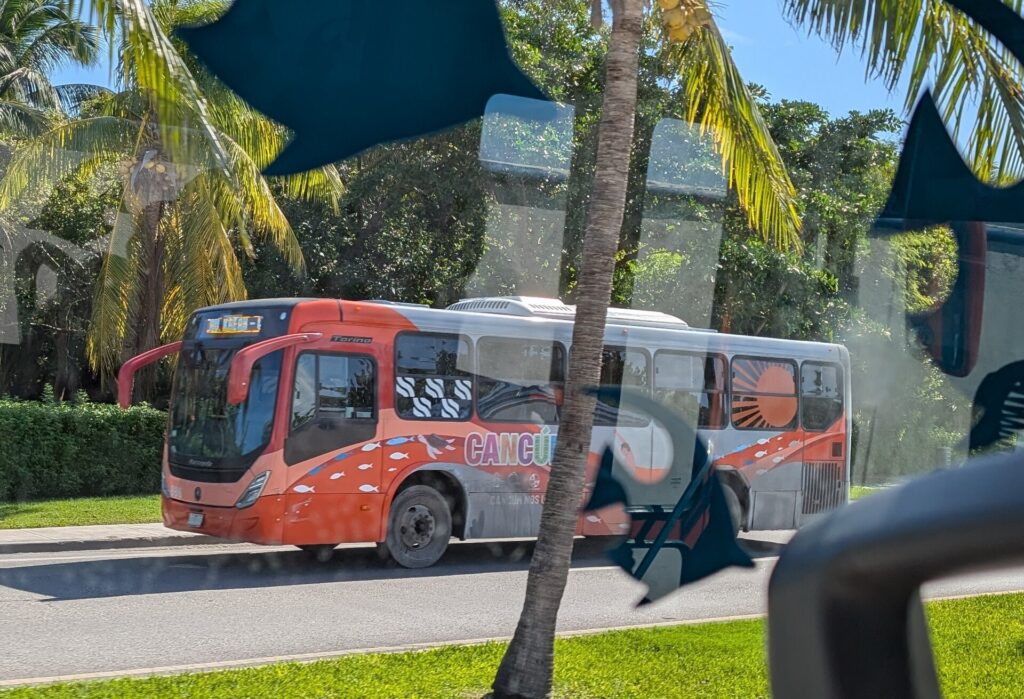
    A city bus in the Cancun Hotel Zone
    The R-1 and R-2 buses run the length of the Hotel Zone into downtown for a small flat fare (Photo: O.iyle via Wikimedia Commons, CC BY-SA 4.0)

    Beyond the buses

    • Taxis. Plentiful in the Hotel Zone and downtown, and unmetered: fares are set by zone, rates in the Hotel Zone are higher than downtown, and you should always agree on the price before getting in. Hotels can tell you the going rate for common trips, and many display a rate sheet.
    • Ride-hail. Uber operates in Cancun, but it has faced strong opposition from local taxi unions, and pickups at the airport and some hotels are restricted. Check what is permitted when you travel, and treat it as a useful extra rather than something to rely on.
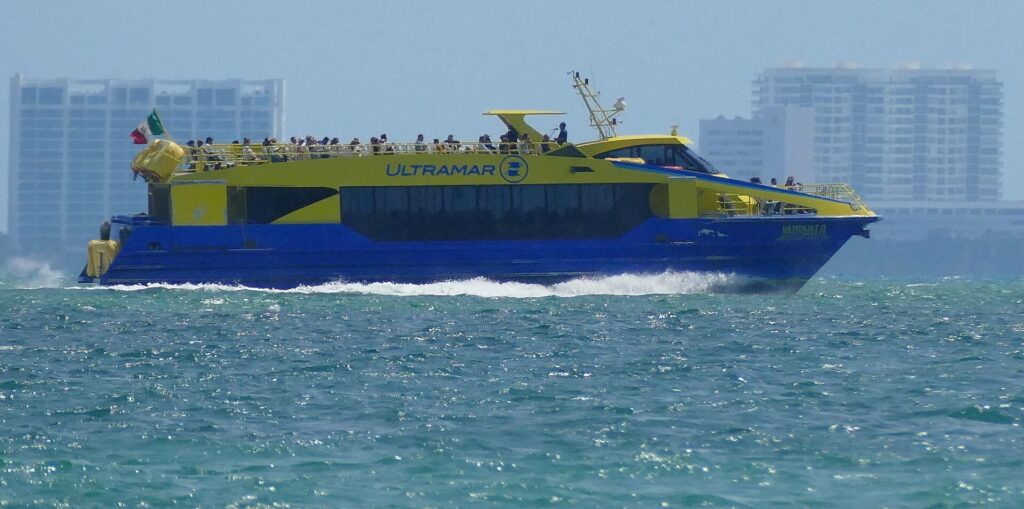
    • Ferries. Passenger ferries leave for Isla Mujeres from Puerto Juárez, north of downtown, and from piers in the Hotel Zone; a separate car ferry runs from Punta Sam, although you do not need a car on the island. For Cozumel, ferries leave from Playa del Carmen.
    • Walking and cycling. Downtown and Punta Cancún are walkable, and a paved path runs along much of Boulevard Kukulcán for bikes and runners, best used in the early morning before the heat and traffic build.
    • Golf carts. On Isla Mujeres, a rented golf cart is the classic way to tour the island, and a scooter or bicycle works too.
    • Tours. For Chichén Itzá, Tulum, the cenotes, Isla Contoy and the whale sharks, organized tours with hotel pickup are the most common car-free option and remove every logistical question.
    A fast ferry crossing from Cancun to Isla Mujeres
    Ferries to Isla Mujeres leave from Puerto Juárez and the Hotel Zone; no car needed on the island (Photo: Bernard DUPONT via Wikimedia Commons, CC BY-SA 2.0)

    Driving in Cancun and beyond: what it is really like

    Outside the city, driving on the Yucatán Peninsula is easier than many visitors expect: the land is flat, the main highways are in reasonable condition, and signage to the big sights is clear. The challenges are specific. Topes, speed bumps, appear on every road through every village and at many junctions, sometimes unmarked and occasionally large enough to damage a car taken at speed. Highway 307, the coastal road from Cancun to Tulum, is busy with trucks, tour buses and colectivos stopping without warning, and its speed limits change frequently. In the city, Boulevard Kukulcán and Avenida Tulum get congested at rush hour, and Cancun’s many traffic circles (glorietas) take some getting used to. And the road rules are enforced by several layers of police, from municipal traffic officers in town to the National Guard on the highways.

    Boulevard Kukulcán, the single road through the Cancun Hotel Zone
    Boulevard Kukulcán, where every Hotel Zone address is a kilometer marker (Photo: MARELBU via Wikimedia Commons, CC BY 3.0)

    Parking

    Parking is rarely a serious problem. Most Hotel Zone resorts have parking for guests, sometimes for a daily fee; downtown has street parking and paid lots; and the malls have large lots. The public beaches in the Hotel Zone have limited parking, and the spaces at Playa Delfines fill early on weekends. At the archaeological sites, Chichén Itzá and Tulum have paid parking lots, and Tulum’s town and beach road can be congested. Never leave valuables visible in a parked car, and use the attended lots where they exist.

    Rules and conditions worth knowing

    • Mexican liability insurance is mandatory, and your insurance at home and most credit-card coverage do not satisfy it. Many online quotes exclude it, so the price at the counter can be far higher than the price you booked; read what the rate includes before you pay, and expect a sizable deposit hold on your credit card.
    • Your license: a valid U.S. or Canadian driver’s license is generally accepted for tourists; carry your passport and rental papers too.
    • Gas stations are full-service. Check that the pump reads zero before fueling begins, pay in pesos where you can, and tip the attendant a little for washing the windshield.
    • Toll roads: the 180D toll highway to Valladolid and Chichén Itzá is faster, safer and better maintained than the free road; tolls are paid at booths, and cash in pesos is the safest way to pay.
    • Checkpoints by the military or National Guard are routine on the highways; slow down, be polite, and follow instructions.
    • Police stops: if you are stopped, stay calm and courteous and ask for a written ticket that you can pay officially; the U.S. State Department and the Government of Canada both publish advice on driving in Mexico.
    • Night driving: avoid rural roads after dark, when topes, pedestrians, cyclists and animals are hard to see.
    • Help on the road: 911 is Mexico’s emergency number, and the government’s Green Angels roadside assistance patrols the main highways.

    When renting a car makes sense

    • The cenotes. The Ruta de los Cenotes near Puerto Morelos and the cenotes around Tulum and Valladolid are spread out and best visited early, when the water is clearest and the crowds are thin.
    • Chichén Itzá at opening time. Driving out the evening before, staying in Valladolid, and walking in at opening is the best way to see the site, and impossible on a day tour.
    • Tulum and the Riviera Maya. A car lets you base yourself in Tulum or Puerto Morelos and cover the ruins, beaches, parks and Sian Ka’an on your own schedule.
    • Families and groups. For four people, a rental quickly becomes cheaper than tours and taxis, and car seats solve a real problem.
    • A Yucatán loop. Cancun, Valladolid, Mérida and back is one of the great road trips in Mexico, and a round trip back to the airport avoids the steep one-way fees most companies charge.

    If any of those apply, our rental car booking tips cover insurance, deposits and the questions to ask at the counter, and our family car rental guide looks at vehicle choice.

    When it does not

    • You are staying at an all-inclusive in the Hotel Zone and plan to leave it only for downtown, Isla Mujeres and one or two tours.
    • You are staying downtown and are happy with the R-1 and R-2 buses and the ferries.
    • You are in town for a wedding, a conference or spring break, when the car will sit in the lot.
    • You want to see Tulum and Playa del Carmen and are comfortable on ADO buses and colectivos.

    The hybrid plan for a beach-plus-ruins trip

    Go car-free for the beach days and rent for the exploring days, and think about where you pick up. Renting at the airport makes sense if you are heading straight to Tulum, Puerto Morelos or Playa del Carmen, because Highway 307 starts beside the terminal and you never enter city traffic. If you are spending the first nights in the Hotel Zone, a shuttle from the airport and a one- or two-day rental from a Hotel Zone or downtown office for the Chichén Itzá or cenote days saves you paying for a car that sits in the resort lot. A pattern that works well: shuttle to the Hotel Zone, three car-free days of beach, downtown and Isla Mujeres, then a rental for the second half of the trip, driving to Valladolid and Chichén Itzá, down to Tulum and the cenotes, and back to the airport for the flight home. Book ahead for Christmas, spring break and Easter, and check what insurance is included before you commit. Compare day rates on our Cancun car rental page against a full-trip rental and the difference is usually clear.

    A worked cost comparison

    Prices change with the season, the exchange rate and the booking window, so treat this as a method rather than a quote, and check current rates before deciding. For a five-night all-inclusive stay in the Hotel Zone for two people, the car-free version costs a return airport shuttle, a few R-1 bus rides and a taxi back from downtown, return ferry tickets to Isla Mujeres, and one organized Chichén Itzá tour; the rental version adds five days of a compact car with the mandatory insurance, resort parking, fuel and tolls, and buys you little you could not have reached by bus, ferry or tour. The car-free option wins clearly. For the same five nights with two days of exploring, the car-free version adds two organized tours for two; the hybrid version adds a two-day rental from the Hotel Zone with insurance, fuel, the 180D tolls and site parking. For two people the costs are often close, and the rental wins on flexibility and early starts; for a family of four, the rental is usually clearly cheaper. For a week based in Tulum or Puerto Morelos, a rental from the airport is the most practical answer unless you are comfortable with colectivos and taxis for every outing. Run the rental rates for your dates, with insurance, on our Cancun car rental page and put them beside the tour prices before you choose.

    Driving Highway 307 and the Riviera Maya in each season

    Highway 307 from Cancun to Tulum is a divided highway for most of its length and one of the main arteries of the Mexican Caribbean, and conditions change through the year. In winter (December to April), the weather is dry and the driving easy, but traffic is at its heaviest, the resort entrances and the big parks see queues, and the Tulum ruins and the popular cenotes are crowded by mid-morning; go early. Around Easter week, Mexican families fill the roads and the beaches, and you should expect slower traffic everywhere. In late spring, the roads are quieter, the heat builds, and the first rains arrive; this is an excellent time to drive. In summer, short, heavy downpours can flood low sections of road and city streets for an hour or two, and visibility drops sharply in a storm; slow down and wait it out. In the fall, hurricane season can close roads, ferries and the airport for a few days, and fuel stations can run short as a storm approaches; if a warning is issued, follow official instructions, fill the tank early and stay put. The drive west to Valladolid and Chichén Itzá on the 180D is straight, fast and largely empty in every season; plan to arrive before dark. In any season, the combination of a quiet cenote in the morning and an empty beach in the afternoon is the reason many visitors rent a car here in the first place.

    Decision table

    Your tripRecommendationWhy
    All-inclusive in the Hotel ZoneNo carShuttle, R-1 and R-2 buses, ferries and tours cover it
    Spring break or a weddingNo carThe car would sit in the lot; taxis handle nights out
    Downtown stay on a budgetNo carCheap buses to the beaches, ADO for day trips
    Beach plus a day or two of ruins and cenotesHybrid: rent for those days, or book toursCar-free beach days, flexibility for the exploring days
    Chichén Itzá at opening timeRentOvernight in Valladolid and beat the tour buses
    Based in Tulum or Puerto MorelosRent at the airportHighway 307 starts at the terminal; sights are spread out
    Family of four or moreRentCheaper than tours for a group, and car seats are easier
    Riviera Maya without drivingADO, colectivos and the Tren MayaFrequent, cheap and connect the main towns and sites

    Money-saving tips for both options

    • On transit: use the R-1 and R-2 instead of taxis within the Hotel Zone, carry small bills and coins, take colectivos rather than ADO for short hops along Highway 307, and buy ADO tickets a day ahead in high season.
    • On taxis: agree on the fare before you get in, ask your hotel for the going rate, and remember that downtown taxis are cheaper than those waiting at Hotel Zone resorts.
    • On a rental: compare prices that include Mexican liability insurance, not headline rates; check what your credit card covers for collision damage, and get it in writing; photograph the car before you leave; and return it with a full tank from a station you trust. Mexico’s consumer protection agency, Profeco, handles complaints about misleading pricing.
    • On tolls and fuel: the 180D toll is worth it for time and safety; carry pesos for the booths and the gas stations.
    • On timing: rent outside Christmas, spring break and Easter if you can, and avoid Highway 307 on holiday weekends; the best time to fly to Cancun guide lists the busiest weeks.

    Frequently asked questions

    Is it worth renting a car in Cancun?

    For exploring the cenotes, Tulum, Valladolid and Chichén Itzá on your own schedule, or for a family, yes. For a Hotel Zone beach stay with a tour or two, no; buses, taxis and ferries are enough.

    Is public transport in Cancun good for tourists?

    Yes, for a cheap, basic system. The R-1 and R-2 buses cover the Hotel Zone and downtown frequently, and ADO coaches, colectivos and the Tren Maya link the wider region.

    How do I get from Cancun airport to the Hotel Zone?

    A pre-booked shuttle or an airport taxi in 15 to 30 minutes, or the ADO bus to downtown followed by the R-1 or R-2 city bus or a taxi.

    Can I get to Chichén Itzá or Tulum without a car?

    Yes. ADO buses run from downtown Cancun to both, the Tren Maya serves stations near each, and organized tours with hotel pickup are widely available.

    Do I need Mexican car insurance?

    Yes. Mexican third-party liability insurance is required by law, and insurance from home usually does not cover it. Check that it is included in the rental price before you pay.

    Is it safe to drive in the Cancun area?

    The main highways are generally safe in daylight, and many visitors drive the region without problems. Watch for speed bumps, avoid rural roads at night, and check your government’s current advisory before you go.

    Are taxis in Cancun metered?

    No. Fares are set by zone, so agree on the price before you get in. Hotel Zone taxis charge more than those downtown.

    Whichever way you go, start with the flight. Compare cheap flights to Cancun, choose an area with our Cancun hotel search, and if the ruins and cenotes are on the list, price the rental for those days on our Cancun car rental page. For the sights themselves, read our first-timer’s guide to Cancun.

  • Things to Do in Cancun: A First-Timer’s Guide

    Things to Do in Cancun: A First-Timer’s Guide

    Cancun has a reputation that is both deserved and incomplete. Yes, it is a 22-kilometer strip of resorts on a sandbar, with water so blue it looks retouched, spring-break clubs at the elbow of the island and all-inclusive buffets from one end to the other. But visitors who never leave the hotel pool miss nearly everything that makes this corner of Mexico remarkable: a working downtown with taco stands, markets and a lively evening square; Isla Mujeres a short ferry ride across the bay; a reef system that runs south for hundreds of kilometers; the freshwater sinkholes called cenotes scattered through the jungle; and the Maya world, from a small ruin beside the Hotel Zone golf course to Chichén Itzá, one of the most famous archaeological sites on the planet, a morning’s drive inland. This guide covers the beaches and sights that earn a day, the neighborhoods worth a half-day, the food, the big dates and the sports, the day trips that make Cancun a base rather than just a resort, and the practical details that turn a week at a hotel into a real trip.

    If you are still comparing cheap flights to Cancun, read this alongside our guides to the best time to fly to Cancun and whether you need a car. Between the three you can plan the whole trip.

    Aerial view of the Cancun Hotel Zone between the Caribbean and the Nichupté lagoon
    The Hotel Zone, a 22-kilometer sandbar with the Caribbean on one side and the lagoon on the other (Photo: dronepicr via Wikimedia Commons, CC BY 2.0)

    Cancun at a glance for first-timers

    • Airport: Cancun International (CUN), about 20 km (12 miles) south of downtown and roughly 15 to 25 minutes by road from most Hotel Zone resorts. It has several terminals that are not within walking distance of each other, so check which one your airline uses. ADO buses run to downtown and Playa del Carmen, and taxis, shuttles and rental counters are all at the terminals. See our CUN airport guide.
    • Getting around: the R-1 and R-2 city buses run the length of Boulevard Kukulcán through the Hotel Zone and into downtown for a small flat fare in pesos, and they run frequently from early morning until late at night. Taxis are plentiful but unmetered, so agree on the price before you get in. For Chichén Itzá, Tulum and the cenotes, most visitors book a tour or rent a car.
    • Money: Mexican pesos. US dollars are widely accepted in the Hotel Zone, but usually at a poor exchange rate, so pay in pesos where you can and withdraw from bank ATMs inside branches or malls. Tipping 10 to 15 percent in restaurants is customary, and a small tip for housekeeping, bartenders and guides is expected even at all-inclusives.
    • Weather: warm every day of the year. The dry season from November to April is the high season; the wet season from May to October is hotter and more humid, and the Atlantic hurricane season runs from June through November. Seaweed called sargassum can foul the Caribbean-facing beaches in the warmer months. Our month-by-month guide has the detail.
    • Where to stay: the Hotel Zone for the beach and the big resorts; downtown for local food, lower prices and the bus station; Costa Mujeres and Playa Mujeres, north of the city, for newer, quieter resorts; Puerto Morelos or Playa del Carmen if you would rather be in a town than on a strip. Our Cancun hotel search covers them all.

    The Hotel Zone: Boulevard Kukulcán and the beaches

    The Hotel Zone, the Zona Hotelera, is a long, thin barrier island shaped like the number 7, with the Caribbean on one side and the Nichupté lagoon on the other. A single road, Boulevard Kukulcán, runs its full length, and every address is given as a kilometer marker, from km 0 near downtown to the mid-20s at Punta Nizuc near the airport. The short upper arm of the 7, from roughly km 3 to km 9, faces north onto the Bahía de Mujeres, and its beaches, including Playa Langosta, Playa Tortugas and Playa Caracol, have calm, shallow water that suits children and weak swimmers. The long arm faces east onto the open Caribbean, with bigger waves, stronger currents and a flag system you should take seriously; red and black flags mean stay out of the water. Playa Delfines, around km 18, is the most famous public beach, with no hotel in front of it, a lookout over the sea, and the big colored CANCUN letters that everyone photographs. Playa Chac Mool and Playa Gaviota Azul, near Punta Cancún, are the other good public options. Every beach in Mexico is federal property and open to all, and public access points are signposted from the boulevard. Do not swim in the lagoon itself: crocodiles live there, and the signs mean it.

    Playa Delfines, the best-known public beach in the Cancun Hotel Zone
    Playa Delfines, a public beach with no hotel in front of it, around km 18 of Boulevard Kukulcán (Photo: ERVIN ESCOBAR via Wikimedia Commons, CC BY-SA 3.0)

    Downtown Cancun: Parque de las Palapas and the markets

    Cancun was built from scratch in the early 1970s as a planned resort, and its downtown, known simply as El Centro, grew up as the city where the people who run the resorts actually live. It is not pretty in the way of a colonial town, but it is lively, cheap and very Mexican. Start at Parque de las Palapas, the main square, where families gather after dark around food stalls selling marquesitas (crisp rolled crepes filled with cheese and Nutella), esquites and tacos, with live music on weekends. Avenida Tulum, the main street, runs past the city hall and the ADO bus station. Mercado 28 is the souvenir market, with hammocks, silver, blankets and embroidered clothing at lower prices than the Hotel Zone once you bargain. Mercado 23, a few blocks away, is the locals’ market for fruit, spices, piñatas and cheap lunch counters. The streets around Avenida Yaxchilán are full of taquerías and cantinas. The R-1 and R-2 buses connect the Hotel Zone to Avenida Tulum in about half an hour, and a taxi back after dinner is inexpensive.

    The water: Isla Mujeres, the reefs and the underwater museum

    The single best half-day from the Hotel Zone is a ferry to Isla Mujeres, a small, laid-back island across the bay. Ferries leave from Puerto Juárez, just north of downtown, and from piers in the Hotel Zone, and the crossing takes roughly 20 minutes from Puerto Juárez and longer from the Hotel Zone. On the island, Playa Norte has shallow, glassy water and some of the best sunsets in the region, the small town is walkable, and a rented golf cart takes you down to Punta Sur, the cliffs at the southern tip, where a sculpture garden and a small Maya shrine look out over the sea. The waters around Cancun belong to a marine national park, and they are part of the Mesoamerican Reef, the largest reef system in the Western Hemisphere. Snorkel and dive boats leave from the Hotel Zone marinas to shallow reefs off Punta Nizuc and Isla Mujeres, and to the Underwater Museum of Art, known as MUSA, a collection of hundreds of submerged sculptures designed to become an artificial reef and draw divers away from the natural one. From around June to September, whale sharks, the largest fish in the sea, gather off Isla Mujeres and Holbox, and tours leave at dawn; responsible operators limit swimmers per shark. For the reef at its best without a boat, Puerto Morelos, 30 minutes south, has a protected reef a short swim from the beach. CONANP, Mexico’s national protected-areas agency, manages the marine parks.

    Turquoise water and beach on Isla Mujeres, a short ferry ride from Cancun
    Isla Mujeres, the best half-day escape from the Hotel Zone (Photo: dronepicr via Wikimedia Commons, CC BY 2.0)

    Neighborhoods worth a half-day

    Punta Cancún and the Party Center

    The elbow of the Hotel Zone, around km 9, is where Cancun’s nightlife concentrates: a few blocks of big clubs, bars and restaurants, including the long-running Coco Bongo show-and-club. It is loud, expensive and busiest during spring break, and lively and well policed every evening.

    The lagoon side and La Isla

    Between km 12 and km 13, the La Isla shopping center sits on canals off the lagoon, with an aquarium and restaurants facing the water; the lagoon-side restaurants farther south are the places to watch the sun set over the mangroves.

    Costa Mujeres and Puerto Juárez

    North of downtown, the old fishing village of Puerto Juárez, with the Isla Mujeres ferry pier and simple seafood restaurants, gives way to Costa Mujeres and Playa Mujeres, where the newest large resorts line a quieter stretch of north-facing beach.

    Puerto Morelos

    Half an hour south, Puerto Morelos is the Riviera Maya’s small-town counterpoint to Cancun: a square by the sea, a leaning lighthouse, the reef just offshore and, inland, the Ruta de los Cenotes, a road lined with swimming holes in the jungle.

    Museums, culture and family attractions

    The Museo Maya de Cancún, at around km 16.5 of the Hotel Zone, is the essential rainy-day or first-afternoon stop, a modern museum run by Mexico’s national institute of anthropology and history with a strong collection of Maya artifacts from across the peninsula. Its admission includes the adjoining San Miguelito archaeological site, a small cluster of structures shaded by jungle, and a couple of kilometers south, the El Rey ruins sit beside the lagoon, often patrolled by large iguanas. INAH, which runs both and every other major site in the region, publishes opening days and fees. For families, the theme parks run by Grupo Xcaret, south of Cancun on the road to Tulum, are a big draw: Xcaret combines underground rivers, a butterfly pavilion, animal exhibits and an evening show about Mexican history and culture, Xel-Há is built around a snorkeling inlet, and Xplor is zip lines and underground rafting. Closer in, the Hotel Zone has an interactive aquarium, a water park and a family adventure park, and the ferry to Isla Mujeres is an adventure on its own for younger children. For shows, concerts and matches during your dates, our Cancun events page lists what is on sale.

    Festivals and the big dates

    Cancun does not have one defining festival the way some cities do; instead, its calendar is shaped by the holidays of the countries its visitors come from and by Mexico’s own. Spring break, spread across March, fills the Party Center and the Hotel Zone with American college students, and Semana Santa, the Easter week, brings Mexican families to the beaches in huge numbers. Carnival, the week before Lent in February or early March, brings parades and costumes to downtown and to Isla Mujeres. At the start of November, Día de Muertos brings altars, marigolds and candlelit cemeteries, and Xcaret stages a large festival around it. Nature keeps its own calendar: sea turtles nest on the Hotel Zone and Riviera Maya beaches from roughly May to October, and hotels often protect the nests with small fenced corrals. At Chichén Itzá, the spring and autumn equinoxes, around March 21 and September 22, produce the famous shadow of a serpent descending the steps of the great pyramid, and draw very large crowds. Avoid those weeks for quiet, or book early for the spectacle.

    Sports

    For spectator sport, the local team is the Tigres de Quintana Roo, who play in the Mexican Baseball League at the Estadio Beto Ávila in spring and summer; a game is cheap, loud and a genuinely local night out, with beer, tortas and a brass band. Concerts and boxing or lucha libre cards appear through the year; check what is on sale in Cancun for your dates. For participant sport, the water is the stadium. Diving ranges from easy reef dives and MUSA to the extraordinary cavern dives in the cenotes, which require certification and a specialized guide. Deep-sea fishing charters leave the marinas for sailfish, mahi-mahi and marlin, with sailfish most reliable in late winter and spring. Kiteboarding is popular on the north-facing beaches when the winter winds blow. The lagoon, meanwhile, is a playground for paddleboards and the speedboat “jungle tours” through the mangroves.

    What to eat, and where

    Cancun sits on the Yucatán Peninsula, and the peninsula has its own cuisine, distinct from the Mexican food most visitors know. The signature dish is cochinita pibil, pork marinated in sour orange and achiote and slow-cooked in banana leaves, served in tacos or tortas, usually in the morning; look for it in the markets and at the downtown taquerías. Sopa de lima, a chicken soup sharpened with local lime, panuchos and salbutes, small fried tortillas topped with shredded turkey or chicken and pickled onion, and poc chuc, grilled citrus-marinated pork, are the other Yucatecan staples. On the coast, the specialty is seafood: ceviche, aguachile, shrimp and fish tacos, and tikin xic, a whole fish rubbed with achiote and grilled, best eaten at a beach restaurant in Puerto Juárez, Isla Mujeres or Puerto Morelos. The Hotel Zone has the expensive steakhouses, sushi bars and international restaurants you would expect, but eating downtown is cheaper and better; Parque de las Palapas, Mercado 28 and Avenida Yaxchilán are the places to start, and tacos al pastor from a busy street stand are one of the great bargains of the trip. Try a local craft beer or a mezcal alongside the tequila.

    Cancun through the seasons

    Cancun is warm all year, but the character of a visit changes with the season. Winter (December to March) is high season: dry, sunny days, comfortable nights, and the occasional norte, a cold front from the north that brings wind, cloud and a couple of cooler days with rough seas. It is the most expensive and most crowded time. Spring (April to May) is hotter and still mostly dry, with spring break and Easter at the start and some of the best-value weeks of the year in late April and May, although this is also when the seaweed season usually begins. Summer (June to August) is hot and humid, with short tropical downpours, Mexican and European family holidays, whale sharks, turtle nesting, and the sargassum at its most variable; some years the east-facing beaches are clear, others they are heavily affected for weeks. Fall (September to November) is the heart of hurricane season, with September and October the wettest and quietest months and the lowest prices; by mid-November the weather turns dry again and the high season begins. Hurricanes are a real risk but not a constant one: most weeks, even in September, are simply hot with afternoon storms. Mexico’s national weather service and the U.S. National Hurricane Center track every storm. Our month-by-month guide has the fare patterns that go with each season.

    Cancun with kids

    Cancun is one of the easiest international destinations for families, especially from North America: short nonstop flights, no jet lag from the eastern half of the continent, and resorts built around children. Choose a hotel on the calm, shallow north-facing beaches rather than the surf-pounded east side. The ferry to Isla Mujeres and a golf cart around the island are a hit at almost any age. The Grupo Xcaret parks are the big full-day outings, with the most animal and water attractions for younger children at Xcaret and the snorkeling lagoon at Xel-Há for confident swimmers. The Museo Maya is manageable in an hour, and the iguanas at the El Rey ruins are a bonus. For older children, snorkeling at Puerto Morelos, a swim in a shallow cenote on the Ruta de los Cenotes, and an early morning at Chichén Itzá before the heat builds are memorable. Bring reef-safe sunscreen, rash guards and hats; the sun is fierce. For the vehicle question on a family trip, our family car rental guide covers car seats and choice of vehicle.

    Cancun on a budget

    Cancun can be very expensive or surprisingly cheap, depending on a few choices. The beaches are free and public, and a day at Playa Delfines, Playa Tortugas or Playa Norte on Isla Mujeres costs little beyond lunch. The R-1 and R-2 buses cost a fraction of a taxi, and the ADO buses to Playa del Carmen and Tulum and the colectivo vans along the coast make the Riviera Maya cheap to explore independently. Stay downtown and you can spend a fraction of Hotel Zone rates while being a short bus ride from the sand, and eat at the markets and taquerías for the price of a single resort cocktail. The archaeological sites charge modest fees compared with the theme parks; Chichén Itzá and Tulum can both be reached by ADO bus without a tour. The biggest savings are in timing: late April to early June and September to mid-November are far cheaper than winter, and package deals that bundle a flight and an all-inclusive hotel can undercut booking the two separately. Compare rates by area on our Cancun hotel search.

    Day trips from Cancun

    Chichén Itzá, roughly two and a half hours west by the toll highway, is the great Maya city of the peninsula and a UNESCO World Heritage Site: the pyramid of Kukulcán, the Great Ball Court, the Sacred Cenote and a vast site that is best seen at opening time, before the tour buses arrive; climbing the pyramid is no longer allowed. Combine it with a swim at a nearby cenote and lunch in Valladolid, a colonial town of pastel streets and a cathedral on a leafy square. Tulum, two hours south on Highway 307, has the most photographed ruins in Mexico, set on a cliff above a turquoise beach, plus a bohemian beach strip; go early. On the way, Playa del Carmen has ferries to Cozumel, a world-class dive island. The cenotes, from the Ruta de los Cenotes near Puerto Morelos to the famous Gran Cenote and Dos Ojos near Tulum, are the region’s natural wonder: clear freshwater pools in collapsed limestone caves, perfect for swimming and snorkeling. Holbox, a car-free island off the northern tip of the peninsula, is a long day or better an overnight, reached by road and a ferry from Chiquilá. Isla Contoy, a protected bird sanctuary north of Isla Mujeres, admits a limited number of visitors each day through licensed boat tours. And Sian Ka’an, the vast biosphere reserve south of Tulum and another UNESCO World Heritage Site, is a full day of lagoons, mangroves and dolphins. Most of these work as tours, by bus or with a rental; see our Cancun car rental page and our guide to getting around without one.

    El Castillo, the pyramid of Kukulcán at Chichén Itzá
    El Castillo at Chichén Itzá, about two and a half hours from Cancun and best seen at opening time (Photo: Daniel Schwen via Wikimedia Commons, CC BY-SA 4.0)

    Two sample itineraries

    Four days, no car

    Day one: a Hotel Zone beach in the morning, the Museo Maya and San Miguelito in the afternoon heat, and sunset on the lagoon side. Day two: an early ferry to Isla Mujeres, a golf cart to Punta Sur, lunch and Playa Norte, then back for dinner downtown at Parque de las Palapas. Day three: a snorkel or MUSA boat trip in the morning and an afternoon on Playa Delfines. Day four: an organized tour to Chichén Itzá, a cenote and Valladolid, which leaves early and returns after dark.

    Seven days, with the Riviera Maya

    Spend three days in Cancun as above, then pick up a car or take the ADO bus south: a night in Puerto Morelos with an afternoon on the Ruta de los Cenotes, two nights in Tulum for the ruins, the Gran Cenote and Sian Ka’an, and a final day at Xcaret or Xel-Há on the way back to the airport. Our car-versus-transit guide helps you decide how to cover that stretch.

    Practical details

    • Entry requirements: U.S. and Canadian citizens flying to Mexico need a valid passport and, at the time of writing, no visa for a tourist stay; the immigration officer on arrival decides how many days you are granted, so keep the record of entry you are given until you leave. Rules can change, so check the U.S. State Department or Government of Canada travel site before you go, and Mexico’s National Migration Institute for the Mexican side.
    • From CUN: the ADO bus to downtown, a pre-booked shuttle, an airport taxi, or a rental from the terminal. In arrivals, walk briskly past the people offering “free” transport or information; many are timeshare sales staff. Our airport guide covers the layout, and the operator’s site, ASUR, lists the terminals.
    • Tourist fees: the state of Quintana Roo charges foreign visitors a small tourism fee known as Visitax, and hotels add lodging taxes; check the current requirements before you travel.
    • Water and health: do not drink the tap water; hotels provide purified water. Use strong, reef-safe sunscreen and insect repellent, particularly at dusk and in the jungle.
    • Time zone: Quintana Roo stays on Eastern Standard Time all year, so it matches New York and Toronto in winter and runs an hour behind them in summer.
    • Safety: the Hotel Zone and the main tourist areas are well policed and most visits are trouble-free, but crime does occur in the region, as in any large city. Check your government’s current advisory for Quintana Roo, use official taxis at night, and keep valuables in the hotel safe.

    Frequently asked questions

    How many days do you need in Cancun?

    Four days covers the beaches, Isla Mujeres, downtown and a day trip to Chichén Itzá. A week lets you add Tulum, the cenotes and a slower pace on the Riviera Maya.

    What is the number one thing to do in Cancun?

    Beyond the beach itself, take the ferry to Isla Mujeres for a day. For the bigger picture, an early morning at Chichén Itzá is the one experience most visitors remember longest.

    Is Cancun walkable?

    Parts of it are. Downtown and Punta Cancún are pleasant on foot, but the Hotel Zone stretches over 20 kilometers, so use the buses or taxis to cover it.

    Do I need a car in Cancun?

    Not for the Hotel Zone, downtown or Isla Mujeres. For Tulum, the cenotes and Chichén Itzá, a car gives you freedom and early starts, but tours, ADO buses and the Tren Maya are real alternatives.

    Which Cancun beaches are best for swimming?

    The north-facing beaches between roughly km 3 and km 9, such as Playa Langosta and Playa Tortugas, and Playa Norte on Isla Mujeres, have the calmest water. The east-facing beaches are beautiful but often rough.

    What is Cancun known for?

    Turquoise Caribbean water, the resort strip of the Hotel Zone, spring break, the nearby Maya ruins of Chichén Itzá and Tulum, the cenotes, and some of the best diving and snorkeling in the Americas.

    Ready to go? Compare flights to Cancun, find a place to stay with our Cancun hotel search, and if the ruins and cenotes are on the list, price a rental car for those days.