Tag: Travel Tips

  • Hotel Booking Tips For Saving Money On Your Next Trip

    Hotel Booking Tips For Saving Money On Your Next Trip

    For most trips, the hotel is the biggest single cost after the flight, and on a longer stay it is often bigger. It is also the part of a trip where small decisions compound: a room that looks cheap but sits forty minutes from everything you came to see, a nonrefundable rate booked before your dates were firm, a parking charge nobody mentioned, a resort fee that shows up at checkout. Saving money on a hotel is rarely about finding a secret discount. It is about knowing what a room will really cost you, choosing the right location and the right rate for your situation, and booking at a sensible moment. This guide walks through the whole process in order, from deciding what you need to what to check at the front desk, and links to the more detailed guides in this series for deal hunting, last-minute stays, family trips, business travel and hotels in Canada.

    The short answer

    If you only remember a handful of things, make it these. Choose the neighborhood before the hotel, because location drives both your daily costs and how much you enjoy the trip. Compare the total price, including taxes, mandatory fees, parking and breakfast, not the nightly rate on the search results. Match the rate to your certainty: pay the premium for free cancellation when your plans might move, and take the cheaper prepaid rate only when they will not. Book early for peak dates and big events, and stay flexible for quiet periods, when waiting can pay. Read recent reviews for patterns, not for the single angry post. And once you have found a property you like, check the hotel’s own site before you pay, since the same room sometimes comes with better terms there. You can start comparing properties and prices across your dates on our hotel search.

    A spacious hotel lobby with couches, rugs and a chandelier
    A great lobby is nice; the total price, the location and the cancellation terms matter more (Photo: Basile Morin via Wikimedia Commons, CC BY-SA 4.0)

    Step 1: Decide what you actually need

    The fastest way to overspend is to start scrolling before you know what you are looking for. Every filter you set in advance removes rooms you would never have booked.

    Who is traveling, and why

    A couple on a city break, a family of five, a solo business traveler and a group of friends going to a concert need different things. Families usually care about room size, bed configuration, a pool and breakfast; our guide to the best time to book hotels for family vacations covers timing around school holidays in detail. Business travelers care about location relative to meetings, a reliable desk and Wi-Fi, early breakfast and a smooth late check-in, which is the focus of the business travel hotels guide.

    Your must-haves and your nice-to-haves

    Write down the three or four things you will not compromise on, then everything else. Typical must-haves are a maximum total budget, a specific area, two beds or a separate sleeping space for children, parking if you are driving, an accessible room, or a quiet room if you are a light sleeper. Nice-to-haves are the gym, the rooftop bar and the view. Nice-to-haves break ties; they should never push you over budget.

    Your real budget

    Set the budget as a total for the stay, including taxes and fees, not as a nightly rate. A single figure for the whole trip forces you to account for costs that do not appear on the first page of results.

    Step 2: Pick the neighborhood before the hotel

    Location is the decision that most affects both cost and experience, and it is the one people rush. A cheaper hotel on the edge of the city is only a deal if the savings survive the taxis, transit fares, parking and time it costs you to get to the places you came for. A slightly more expensive room near a subway stop, in a walkable district, or next to the conference center can be the cheaper option once the whole trip is counted.

    A practical way to choose:

    • List the three or four places you will go most. Attractions, a conference venue, a relative’s house, a stadium.
    • Look at them on a map together. The area in the middle, or along a direct transit line between them, is usually where to stay.
    • Check the walk to the nearest station, not just the distance to downtown. A hotel described as “near the center” might be close in a straight line and awkward in practice.
    • Look at the street, not just the building. Street View and reviews that mention the area show whether it is lively, quiet or empty at night.
    • Price in parking if you are driving. Downtown hotels in large cities often charge a daily parking fee, sometimes steep, while suburban and airport properties frequently include it.

    Each city has a handful of areas that suit most visitors. Our neighborhood pages show hotels in the districts people ask about most, such as the Entertainment District in Toronto, Old Montreal, Times Square in New York and the Las Vegas Strip. If you are weighing whether you will need a car at all, our comparison of renting a car, public transit and taxis helps you decide how central you need to be.

    Step 3: Choose your dates with demand in mind

    Hotel prices follow demand closely, and demand follows a few predictable patterns. Understanding them lets you shift a trip by a day or two and pay noticeably less for the same room.

    Weekdays versus weekends

    In business-heavy downtowns, rooms are often busiest from Monday to Thursday and quieter on Friday and Saturday nights, when those hotels chase leisure guests. In resort towns, beach areas and weekend-getaway destinations it tends to work the other way around. Run the same search across a few arrival days and compare the totals.

    Seasons, holidays and school breaks

    Every destination has a high season, a low season and the shoulder months in between. Summer and the December holidays are peak almost everywhere in North America, ski areas peak in winter, and shoulder months often combine decent weather with much better availability. Our guide to the best time to book cheap flights and hotels goes through the seasonal patterns and booking windows in more depth.

    Events and conventions

    The biggest price swings come from events: a major concert, a playoff game, a marathon, a trade show, a festival. Before you book, check event listings for your dates; if something big is on, book early or shift your trip. Our Toronto events and Las Vegas events pages are good examples of the calendars worth checking.

    The reception desk in a city-center hotel lobby
    Check-in is the moment to confirm your rate, what is included and the room you want (Photo: JIP via Wikimedia Commons, CC BY-SA 4.0)

    Step 4: Compare the total price, not the nightly rate

    This is the single most important habit. Two hotels showing the same nightly rate can end up far apart once taxes, fees and extras are added.

    The rules on how prices must be displayed have tightened. In the United States, the Federal Trade Commission has adopted a rule requiring hotels and booking sites to show the total price, including mandatory fees, up front. In Canada, the Competition Bureau treats advertising a price that cannot be attained because of added mandatory fees as drip pricing, a deceptive marketing practice. These rules cover mandatory charges; optional ones like parking and breakfast are still yours to add, so check the rate details before you compare.

    Charges to look for before you book

    ChargeWhat it isHow to handle it
    TaxesSales, lodging and tourism taxes, which vary by city and province or stateCompare totals after tax; some sites show pre-tax prices by default
    Resort or destination feeA mandatory daily charge for amenities such as Wi-Fi, pool or gym accessCheck the rate details; it must be in the total where display rules apply
    ParkingDaily self-parking or valet charge, often high downtownAdd it for every night you will have a car; compare with nearby public lots
    BreakfastIncluded in some rates, a separate charge in othersValue it at what you would otherwise spend; families save the most
    Extra guestsA charge for additional adults, or for children above a certain ageEnter every traveler correctly so the price you see is the price you pay
    Early check-in or late checkoutGuaranteed early arrival or late departure, sometimes chargedAsk at booking; often free on request if the hotel is not full
    Pet feePer-night or per-stay charge, sometimes a cleaning depositConfirm the policy and any size limits before booking
    Deposit or incidentals holdA temporary hold on your card at check-inNot a charge, but it reduces available credit; see the payment section below

    Build a quick total for your two or three finalists that includes every night, taxes, fees, parking and breakfast if it matters to you. The ranking often changes.

    Step 5: Choose the right rate type

    The same room is usually sold at several prices with different conditions attached. Picking the right one is about matching flexibility to how certain your plans are.

    Rate typeTypical conditionsBest for
    Flexible, pay at the hotelFree cancellation until a deadline, often a day or two before arrival; card held as a guaranteePlans that might change; trips booked well in advance
    Advance purchase, nonrefundableLower price, paid in full at booking, no refund if you cancelFixed dates, such as a wedding or a conference you are sure to attend
    Member rateA discount for signing in to the hotel’s free loyalty programAlmost everyone who books directly; joining is usually free
    Package (flight plus hotel)Bundled price; changes and cancellations follow the package’s own termsResort and beach trips where the bundle genuinely beats separate prices
    Discount rates (auto club, senior, government, corporate)Eligibility required; ID or proof is often checked at check-inTravelers who genuinely qualify

    The flexible rate is effectively insurance. If the nonrefundable rate is only slightly cheaper, the flexibility is almost always worth paying for. If the gap is large and your dates are fixed, take the savings. Read the cancellation deadline carefully: “free cancellation” sometimes ends several days before arrival, not the evening before.

    A flexible booking also lets you take advantage of price drops. If you book a refundable rate early and prices fall closer to your dates, you can book the cheaper rate and cancel the first one, as long as you are still inside the free cancellation window. Always make the new reservation before canceling the old one.

    Step 6: Read reviews like an investigator

    Reviews are the best free information you have, but they reward a careful reading. Star ratings tell you the category of a hotel; recent reviews tell you what it is actually like to stay there now.

    • Sort by most recent. Hotels renovate, change management and sometimes decline. Reviews from the last few months matter far more than a high average built years ago.
    • Look for patterns. One complaint about noise is a light sleeper; ten complaints about noise from the bar downstairs is a fact about the building.
    • Search reviews for your must-haves. “Parking”, “crib”, “elevator”, “air conditioning”, “walls” or “Wi-Fi”, whatever matters to you.
    • Compare guest photos with the hotel’s photos. Professional photos use wide lenses and good light; guest photos show the real room.
    • Read how management responds. A thoughtful reply to a complaint is a good sign about how they will treat you if something goes wrong.

    Step 7: Compare where you book

    The smart approach is usually to use a comparison search to find the property and the price, then check the terms on the hotel’s own site before paying.

    ChannelStrengthsWatch for
    Comparison searchShows many properties and sites side by side; quick to see price ranges across dates and areasThe final price and conditions are set by the site you book with; check them there
    Online travel agencyWide choice, one account for many bookings, sometimes package or member discountsChanges and problems may need to go through the agency rather than the hotel; loyalty points may not apply
    Hotel directlyLoyalty points and elite benefits, member rates, easier special requests and changesNot always the lowest price; compare like for like, including cancellation terms

    When you compare, make sure you are comparing the same thing: the same room type, the same bed configuration, the same cancellation policy, and the same inclusions such as breakfast. The companion guide to finding the best hotel deals online goes deeper into comparison tactics, member pricing, bundles and how to avoid fake booking sites.

    A double bed with bedside lamps in a hotel room
    Room names vary by brand; check the bed configuration and room size, not just the label (Photo: JIP via Wikimedia Commons, CC BY-SA 4.0)

    Loyalty programs, briefly

    Every major hotel group runs a free loyalty program, and joining the one for the hotel you are booking is nearly always worthwhile, even for a single stay. Members typically get a lower rate when booking directly, free Wi-Fi at many brands, and the chance of perks such as late checkout.

    Loyalty becomes genuinely valuable when you travel often enough to concentrate your stays with one or two groups, which is where elite status, upgrades and breakfast benefits begin. If you travel once or twice a year, take the best total price and collect points where it costs nothing. Note that stays booked through third-party sites often do not earn points or recognize status, so check the program’s terms if that matters to you.

    Room types, beds and alternatives to hotels

    Room names vary wildly between brands, so read what is actually included. A “double” in one country is a single double bed; in another it means two beds. “Queen”, “king”, “two queens” and “double-double” are clearer. If you need two beds, choose a room type that guarantees them, because a “bed type requested” note is a request, not a promise. The listed room size tells you more than the name.

    For families and longer stays, consider suites and apartment-style hotels, which often include a kitchenette and a separate sleeping area. Solo travelers on a budget can look at hostels with private rooms. Vacation rentals can suit groups, but compare the full price including cleaning and service fees, and remember you give up a front desk.

    If you need an accessible room, book a room type that is specifically designated as accessible rather than adding a note, and call the hotel to confirm the features you need, such as a roll-in shower or visual alarms. In the United States, hotels are covered by the Americans with Disabilities Act, which includes requirements for how accessible rooms are described and reserved.

    When to book: a practical timeline

    • Peak dates and events: book as soon as your plans are firm, on a refundable rate. The best-located rooms go first.
    • Normal dates in a big city: booking a few weeks ahead is usually comfortable. Use a refundable rate and keep an eye on the price.
    • Quiet periods and low season: waiting can work, because hotels with empty rooms may lower rates close to the date. This is where last-minute booking shines, as explained in our last-minute hotel booking guide.
    • Small towns, national parks and island destinations: book early regardless of season, since there are only a few properties and they fill.

    The best strategy for most trips is to reserve a refundable room early, then check again a week or two before arrival. If the price has fallen, rebook. If it has risen, you are already protected.

    Paying: deposits, holds and currency

    Most hotels place a temporary hold on your card at check-in to cover incidentals, and sometimes the room total as well. The hold is released after checkout, but it can take several business days to disappear, and it reduces your available credit in the meantime. If you use a debit card, the hold may tie up money in your bank account, which is one reason many travelers prefer a credit card for hotels.

    When paying abroad, you may be offered the choice of paying in your home currency rather than the local one. This convenience usually comes with a less favorable exchange rate than your card would apply, so choosing the local currency is typically the cheaper option. If you are traveling internationally, also check your government’s advice for your destination before you book, such as Canada’s travel advice and advisories, for entry rules and local safety information.

    After you book, and at check-in

    Save your confirmation and check the dates, names, room type and number of guests. If you booked through a third party, contact the hotel a few days before arrival to confirm they have your reservation, and tell them if you will arrive late or have a special request such as a crib or a quiet room. Put your cancellation deadline in your calendar so you can recheck prices before it passes.

    At the desk, confirm the rate, the total and what is included, and ask politely about the room if anything matters to you; staff can often move you away from the elevator or to a higher floor when the hotel is not full. If something is wrong with the room, report it the first evening, when it is easiest to fix, and check the final bill before you leave.

    Common mistakes that cost money

    • Comparing nightly rates instead of totals. Taxes, mandatory fees and parking change the ranking.
    • Booking a nonrefundable rate for uncertain plans. The savings disappear the moment you need to change.
    • Choosing the cheapest area without costing the commute. Transit, taxis and lost time add up quickly.
    • Ignoring event calendars. A concert or convention can double the price of a normal weekend.
    • Booking through an unfamiliar site that looks like the hotel’s. Use known sites or the hotel’s official website, and be careful with phone numbers found in search ads; the FTC’s travel advice covers common booking scams.
    • Forgetting to recheck prices on a refundable booking. A quick search before your deadline can save real money.

    A carpeted guest-room corridor in a downtown Toronto hotel
    Ask for a room away from the elevators and ice machine if you are a light sleeper (Photo: Chris Woodrich via Wikimedia Commons, CC BY-SA 4.0)

    Tips for specific situations

    Family trips

    Prioritize space and sleep, check that the rate covers every child, and book early for school holidays. The family vacation hotel booking guide covers timing, room choices and what to check with children in tow.

    Business travel

    Proximity to meetings is worth paying for. Check your employer’s policy and negotiated rates first, and confirm the hotel issues an itemized invoice. Our business travel hotels guide covers what to look for and how to handle expenses.

    Spontaneous trips

    If you are booking days or hours ahead, flexibility on area and room type is your biggest advantage, and checking whether there is an event in town is essential. The last-minute hotel booking guide explains when waiting pays and when it backfires.

    Traveling in Canada

    Big Canadian cities are busiest in summer and during major events, and national-park towns fill early. Our guide to hotel booking in Canada covers taxes, seasons and where to stay in the main cities, and you can browse options in Toronto, Vancouver, Montreal and Calgary.

    Combining hotel, flight and car

    If you are also flying, book the flight first when fares are the more volatile part of the trip, then fit the hotel around it, using a refundable rate so a schedule change does not strand you with a room for the wrong nights. If you are renting a car, factor hotel parking into your choice of property; our rental car booking tips cover the other half of that decision. You can compare flights and rental cars for the same dates on TicketScanner.

    Frequently asked questions

    Is it cheaper to book a hotel directly or through a booking site?

    It depends on the hotel and the date. Booking sites are best for finding and comparing options; the hotel’s own site often matches the price and may add a member discount, loyalty points or better cancellation terms. Check both for the same room and conditions before you pay.

    How far in advance should I book a hotel?

    For peak seasons, holidays and major events, as soon as your plans are firm. For ordinary dates in a large city, a few weeks ahead is usually fine. For quiet periods, waiting can sometimes pay. Reserving a refundable rate early and rechecking later gives you the best of both.

    What day of the week is cheapest for a hotel stay?

    In business districts, Friday and Saturday nights are often cheaper; in resort and leisure destinations, weeknights usually are. Search a few arrival days to see the pattern.

    Are resort fees mandatory?

    Where a hotel charges one, it is typically mandatory for every night of the stay. In the United States, federal rules now require the total price including mandatory fees to be shown up front, and in Canada, advertising prices that leave out mandatory fees is treated as drip pricing.

    Should I pay for a refundable rate?

    If there is any real chance your plans will change, yes, especially when the price difference is small. A refundable rate also lets you rebook if prices fall before your cancellation deadline.

    Why did my card get charged more than the room price at check-in?

    Most likely it is a temporary hold for incidentals, not a charge. It is released after checkout, though it can take several business days to clear. Ask the front desk how much it will be.

    Ready to put this into practice? Start with the neighborhood and your dates, then compare properties, prices and totals side by side on our hotel search. If you still need to get there, check cheap flights for the same dates, and read the guide to the best hotel deals online before you book.

  • How To Find Cheap Flights To Mexico City For Your Next Trip

    How To Find Cheap Flights To Mexico City For Your Next Trip

    Mexico City is one of the great cities of the Americas: a historic center built on the ruins of Tenochtitlan, museums that rank with any in the world, leafy neighborhoods full of cafés, and some of the best food you will eat anywhere, from street tacos to tasting menus. It is also a major airline hub, which is good news for anyone hunting for a fair price. Big hubs attract competition, and competition keeps fares honest. Finding a genuinely cheap flight still takes a method, though: choosing the right season, comparing airports and routings, understanding what each fare includes and knowing how the city’s two main airports differ. This guide walks through when to go, when to book, how to compare nonstop and connecting options from Canada and the United States, what the entry process looks like, how to get from the airport into the city, and how to keep the rest of the trip affordable. It is part of our flight booking series, which starts with our guide to the best time to book cheap flights and hotels.

    The short answer

    Travel outside the big holiday weeks, especially Christmas and New Year, Semana Santa (Holy Week) and the Día de Muertos period around the start of November, and you will usually find better fares and hotel rates. Book roughly two to four months ahead for ordinary dates and earlier for holidays. Search a range of dates and compare nonstop and one-stop options, because a sensible connection can be much cheaper. Check which airport your flight uses: Mexico City International (AICM, code MEX) is close to the city, while Felipe Ángeles International (AIFA, code NLU) is well to the north. Price the whole trip, with bags and seats included. And read the official entry requirements for your passport before you book. You can compare fares across a whole month on our flight search.

    The Palacio de Bellas Artes in Mexico City at dusk
    Mexico City's historic center is one of the great sights of the Americas (Photo: Daniel Case via Wikimedia Commons, CC BY-SA 3.0)

    When to visit Mexico City

    Mexico City sits in a high valley at about 2,240 meters, which gives it a mild climate year-round. It rarely gets very hot, and evenings can be cool at any time of year. The seasons that matter are wet and dry, not summer and winter.

    PeriodWeatherCrowds and prices
    November to FebruaryDry, sunny days and cool nights; the coolest monthsPopular with visitors from the north; Christmas and New Year are peak
    March to MayDry and the warmest time of year; spring can be hazySemana Santa is very busy and many locals travel; otherwise good value
    June to SeptemberRainy season, usually with afternoon or evening showers and sunny morningsOften the lowest prices outside summer school holidays
    OctoberRains tapering off, pleasant temperaturesBuilds toward Día de Muertos at the start of November, when demand rises

    For value, the rainy season can be surprisingly good: showers usually come later in the day, mornings are often clear, and the city is green. Pack a light rain jacket and plan museum visits for the afternoon. Visitors with respiratory conditions should note the Government of Canada’s advice that air pollution in Mexico City peaks between December and March.

    Holidays and events that move prices

    • Christmas and New Year: the busiest and most expensive period for flights from Canada and the United States.
    • Semana Santa: Holy Week, the week before Easter, when many Mexicans travel. Flights and hotels across the country get expensive.
    • Independence Day: celebrations on the night of September 15 and on September 16 bring big crowds to the historic center.
    • Día de Muertos: the Day of the Dead celebrations around November 1 and 2 are a major draw, with events and decorations throughout the city in the days before. Book early if you want to be there.
    • Summer school holidays: July and August bring family travel from the north and within Mexico.

    If you want the best balance of weather and price, look at late January and February outside long weekends, late April and May after Semana Santa, and the quieter weeks of the rainy season.

    When to book

    Flights from Canada and the United States to Mexico City behave like other medium-haul international routes. Use these windows as a guide, then book when a fare lands at or below the normal level for your route.

    TripSensible booking window
    Ordinary dates from the U.S.About 1 to 3 months ahead
    Ordinary dates from CanadaAbout 2 to 4 months ahead
    Christmas, New Year, Semana Santa, Día de MuertosAbout 4 to 6 months ahead, or as soon as your plans are firm
    Short noticePossible on a busy hub route, but rarely cheap on peak dates

    Start watching fares as soon as you know roughly when you want to go. Look at a month view to spot the cheap days, set a price alert, and book once you see a fare that matches or beats what you have been seeing. For flights to or from the United States booked at least seven days before departure, most airlines let you cancel within 24 hours without penalty, which gives you a day to double-check. Our international flights booking tips explain the wider strategy for trips abroad.

    Choosing your airports

    At the Mexico City end

    Mexico City now has two main airports, and it matters which one your ticket uses.

    • Mexico City International Airport (AICM, code MEX), officially Benito Juárez International, sits inside the city, east of the center. It has two terminals, Terminal 1 and Terminal 2, and handles most international flights. Being so close to neighborhoods like the Centro Histórico, Roma and Condesa, it is usually the most convenient choice. Check your terminal on your booking and on the airport’s official site.
    • Felipe Ángeles International Airport (AIFA, code NLU) opened in 2022 north of the city in the State of Mexico. Some domestic and a smaller number of international flights use it. It can be a good option if the fare is much lower, but the ground transfer to central Mexico City is much longer, and in traffic can take well over an hour.
    • Toluca International (TLC), west of the city, handles a small number of flights. It is rarely the right choice for a visitor unless the fare saving is large.

    When you compare fares, look at the airport code on each option. A cheaper flight into AIFA may cost you more in time and transport than it saves.

    At your end

    From Canada, Toronto, Montreal and Vancouver have typically had nonstop service to Mexico City; from other Canadian cities, you will usually connect, either through one of those airports or through a U.S. or Mexican hub. From the United States, many large hubs have nonstops, including cities such as Chicago, Dallas, Houston, Los Angeles, New York and Atlanta, and connections are easy from almost everywhere. Search from every airport you could realistically use, and remember to include the cost of getting there. Our flights from Toronto, flights from Montreal and flights from Vancouver pages are a good place to start from Canada.

    Terminal 2 at Mexico City International Airport
    Check the airport code: AICM is inside the city, AIFA is well to the north (Photo: Sharon Hahn Darlin via Wikimedia Commons, CC BY 2.0)

    Nonstop or connecting?

    A nonstop flight is the easy choice when the price difference is small. A connection can make sense when the saving is significant or when nonstop times do not suit you. Weigh these points:

    • Total travel time. A connection can add several hours. Compare door-to-door time, not just the fare.
    • Connection length. Very short connections are risky, especially if you need to change terminals or clear immigration. Very long ones eat into the value of the saving.
    • Connecting through the United States. The U.S. has no international transit zone, so travelers connecting through a U.S. airport go through U.S. border formalities even if they never leave the airport. Canadians generally need only a valid passport, but travelers of other nationalities may need U.S. travel authorization. Allow extra time for the process.
    • One ticket or two. On a single ticket, the airline rebooks you if a delay makes you miss your connection. On two separate tickets, you are usually on your own. Avoid self-connecting on a tight schedule.
    • Checked bags. On a single ticket, bags are normally checked through to Mexico City, although you may need to collect and recheck them at your first point of entry in some countries. Ask at check-in.

    Comparing airlines and fares

    Mexico City is the main hub of Aeroméxico, Mexico’s flag carrier, and an important base for Mexican low-cost airlines such as Volaris and Viva Aerobus. Major U.S. and Canadian airlines also fly in from their hubs. That variety is the reason prices can be competitive, but it also means fares are structured very differently.

    Airline typeTypical strengthsWhat to check
    Full-service airlinesMore included, easier connections, loyalty benefitsWhether your fare type includes a checked bag and seat selection
    Low-cost airlinesLow base fares, especially on nonstop routesCarry-on and checked bag fees, seat fees and size limits
    Basic economy fares on any airlineThe lowest price on that flightNo changes, last boarding, possible carry-on restrictions

    Compare the total with the bags and seats you actually need. A slightly higher fare that includes a checked bag can easily beat a bare-bones one. Our carry-on size guide explains how to check limits, and our flight details guide explains fare brands and baggage allowances.

    Entry requirements: check before you book

    Entry rules change, and they depend on your passport, so always read the official page for your nationality before booking.

    • Canadians: the Government of Canada’s travel advice for Mexico says Canadian tourists do not need a visa for stays of up to 180 days, and that your passport must be valid for the expected duration of your stay. It also explains how arrival works: an officer may stamp your passport with your permitted stay, or you may be directed to an e-gate kiosk, and you may need to complete a digital migration form. Keep proof of your entry with you.
    • U.S. citizens: read the U.S. State Department’s Mexico country information page for passport and entry requirements.
    • Other nationalities: check Mexico’s requirements for your passport, and U.S. transit rules if you connect through the United States.

    The same government pages carry safety and health advice, including regional advisories within Mexico, so read them as part of your planning. The Canadian page notes that Mexico City’s altitude can affect some visitors; take it easy on your first day, drink water and talk to a doctor before you go if you have heart or lung conditions.

    Getting from the airport into the city

    From AICM, the main options are:

    • Authorized airport taxis. Buy a ticket at an official taxi booth inside the terminal, with the price based on your destination zone, then take it to the taxi rank. This is the simplest option for most first-time visitors, especially at night.
    • Ride-hailing apps. App-based rides operate in Mexico City; follow the airport signs to the designated pickup areas.
    • Metrobús and Metro. Metrobús Line 4 serves the airport terminals and runs toward the historic center, and the Metro has a station near Terminal 1. Public transit is very cheap but can be crowded, and it is awkward with large suitcases.
    • Hotel transfers. Some hotels arrange pickups; compare the price with an authorized taxi.

    From AIFA, allow much more time. Check the current transport options on the airport’s information before you fly, and weigh the cost of the transfer against the fare saving. Most visitors do not need a rental car in Mexico City itself: traffic is heavy, parking is limited, and taxis, apps and transit cover the areas you will want to see. A car can make sense for road trips beyond the city.

    The Zocalo and Metropolitan Cathedral in Mexico City
    The Centro Historico is a convenient base for first-time visitors (Photo: Jeff Kramer via Wikimedia Commons, CC BY 2.0)

    Where to stay, and how it affects your budget

    Hotel prices vary widely by neighborhood. Choosing the right base can save both money and hours in traffic.

    NeighborhoodWhy stay thereGood for
    Centro HistóricoWalking distance to the Zócalo, the cathedral, Templo Mayor and Bellas ArtesFirst-time visitors and sightseeing
    Roma Norte and CondesaTree-lined streets, parks, cafés, restaurants and nightlifeFood lovers and longer stays
    JuárezCentral, between the historic center and Roma, near Paseo de la ReformaEasy access to several areas
    PolancoUpscale hotels, shopping, fine dining, near Chapultepec Park and major museumsComfort and business travelers
    CoyoacánColonial streets, a relaxed pace, near the Frida Kahlo MuseumA quieter base, farther from the center

    Book a refundable room on our hotel search once your flight is set, then recheck the price before your cancellation deadline. Our hotel booking tips explain how to compare total prices.

    What to do once you are there

    You can fill a week in Mexico City without leaving the city limits. The highlights most visitors build a trip around:

    • The historic center: the Zócalo, one of the largest public squares in the world, the Metropolitan Cathedral, the ruins of the Templo Mayor and the Palacio de Bellas Artes.
    • Chapultepec: a vast park with Chapultepec Castle and the National Museum of Anthropology, one of the most important museums in the Americas. Give it at least half a day.
    • Coyoacán: the Frida Kahlo Museum, the Casa Azul, is hugely popular; buy timed tickets in advance.
    • Xochimilco: the canals in the south of the city, where colorful boats called trajineras carry groups along the water.
    • Teotihuacan: the pyramids of the Sun and Moon, an easy and very popular day trip northeast of the city. Start early to beat the heat and the crowds.
    • Food: markets, taco stands, bakeries and some of the most celebrated restaurants in Latin America. Eating well here does not have to be expensive.

    The city’s official tourism site, CDMX Travel from the Mexico City tourism ministry, lists attractions, neighborhoods and events.

    Keeping the rest of the trip affordable

    • Eat where locals eat. Markets, fondas serving set lunches and street stands offer excellent food for very little.
    • Use the free and low-cost sights. Walking the historic center, Chapultepec Park and many churches and public buildings costs nothing; some museums have free days for residents, so check.
    • Use transit or taxis wisely. Metro and Metrobús fares are very low; apps and authorized taxis are reasonably priced for longer trips.
    • Carry some pesos. Cards are widely accepted in hotels and restaurants, but markets and small vendors often prefer cash. Use bank ATMs inside branches or shopping centers.
    • Drink bottled or filtered water. Tap water is not recommended for drinking; most hotels provide bottled water.

    Mexico City or the beach?

    Many travelers from Canada and the United States think of Mexico as the beach. If you are deciding between a city trip and a resort, Mexico City often offers more to do for the money, with lower hotel prices outside the luxury end and a cooler climate. A beach resort offers rest and sun. Some travelers combine both, flying into Mexico City and continuing to the coast on a domestic flight. If the beach is calling, our guides to the best time to fly to Cancun and things to do in Cancun cover the Caribbean side, and you can compare fares on Cancun flights. For more ideas on stretching your budget, see our list of budget travel destinations.

    Use alerts, points and flexibility together

    The travelers who find the best fares to Mexico City usually combine several small habits rather than relying on one trick.

    • Set alerts on more than one route. If you could fly from two or three airports, watch all of them. A fare drop from a nearby city might beat your home airport.
    • Consider one-way fares. Flying out on one airline and back on another can sometimes give better times or a lower total, especially when low-cost airlines are involved. Compare with a round trip before booking.
    • Price points against cash. Loyalty points can be good value on routes where cash fares are high, such as holiday dates. Compare the points price and taxes with the cash fare before redeeming.
    • Stay flexible by a day or two. Moving your departure by a single day can drop the fare to a cheaper level.
    • Book the hotel on a refundable rate. Once the flight is set, a flexible room lets you rebook if prices fall.

    Common mistakes to avoid

    • Not checking the airport code. A flight into AIFA instead of AICM can mean a much longer transfer.
    • Booking during Semana Santa or Día de Muertos without meaning to. Check the calendar before choosing dates.
    • Comparing base fares instead of totals. Add bags and seats, especially on low-cost airlines.
    • Tight connections through a U.S. airport. Border formalities take time.
    • Ignoring the altitude. Plan a lighter first day.
    • Skipping the travel advice. Read your government’s page for Mexico before you book and again before you fly.
    • Arriving too late for check-in. International check-in deadlines are earlier than domestic ones; our guide on how early to arrive for an international flight explains why.
    An aerial view of Chapultepec Castle on its hill in Chapultepec Park, Mexico City
    Chapultepec Park holds the castle and the National Museum of Anthropology (Photo: ProtoplasmaKid via Wikimedia Commons, CC BY 4.0)

    Frequently asked questions

    What is the cheapest time to fly to Mexico City?

    Outside the major holiday periods: late January and February outside long weekends, late April and May after Semana Santa, and the quieter weeks of the rainy season often have better fares. Check a fare calendar for your route.

    How far ahead should I book a flight to Mexico City?

    About one to three months ahead from the United States and two to four months ahead from Canada for ordinary dates, and earlier for Christmas, Semana Santa and Día de Muertos.

    Which airport should I fly into?

    For most visitors, Mexico City International (AICM, MEX) is the most convenient because it is inside the city. Felipe Ángeles (AIFA, NLU) is much farther north, so only choose it if the saving justifies the longer transfer.

    Do Canadians need a visa for Mexico?

    According to the Government of Canada, Canadian tourists do not need a visa for stays of up to 180 days. Entry rules can change, so check the official travel advice before you book and before you fly.

    Is it cheaper to connect through the United States?

    Sometimes. A connection through a U.S. hub can be cheaper than a nonstop, but you will go through U.S. border formalities during the connection, so allow enough time and check any travel authorization your passport requires.

    Is the rainy season a bad time to visit?

    Not necessarily. Rain usually comes in the afternoon or evening, mornings are often clear, and prices can be lower. Pack a rain jacket and plan indoor visits for later in the day.

    Do I need a rental car in Mexico City?

    Usually not. Traffic is heavy and parking is limited, while taxis, ride-hailing apps, the Metro and Metrobús cover the main areas. A car can be useful for trips outside the city.

    How do I get from the airport to my hotel?

    From AICM, an authorized taxi bought at an official booth inside the terminal is the simplest option. Ride-hailing apps, Metrobús Line 4 and the Metro are alternatives.

    Ready to plan your trip? Search a whole month of fares to Mexico City on our flight search to find the cheapest days and routings, then compare rooms in the neighborhood that suits you on our hotel search. For the bigger picture on timing, read our guide to the best time to book cheap flights and hotels.

  • Difference Between First Class And Business Class For International Flights

    Difference Between First Class And Business Class For International Flights

    On a long international flight, the cabin you choose shapes the whole trip: whether you sleep, how you feel when you land, and how much of your first day you lose. Business class and first class both promise comfort, but the names are less helpful than they sound. “First class” means something very different on a two-hour domestic flight in North America than on a long-haul flight to Asia or the Middle East, and on many airlines business class is now the best seat on the plane. A modern business class seat on one airline can beat an older first class product on another. This guide explains what each cabin really offers, how to tell which product you are buying, how they compare on seats, sleep, lounges, food, service and baggage, and how to decide which is worth it for your trip. It is part of our flight booking series, which starts with our guide to the best time to book cheap flights and hotels.

    The short answer

    On long-haul international flights, business class usually means a lie-flat seat, lounge access, priority services and restaurant-style meals. International first class, where it still exists, adds more space and privacy, often a suite with a door, more personal service, more elaborate dining and more exclusive ground facilities, at a price that is often several times higher. On domestic flights in the United States and Canada, “first class” is usually a wider recliner with more legroom, closer to a short-haul business seat than to international first. Many airlines no longer sell international first at all, making business class their top cabin. For most travelers, long-haul business is the sweet spot of comfort and value, and the right question is not “business or first?” but “which seat, on which aircraft, at what price?” Compare cabins and dates for your route on our flight search.

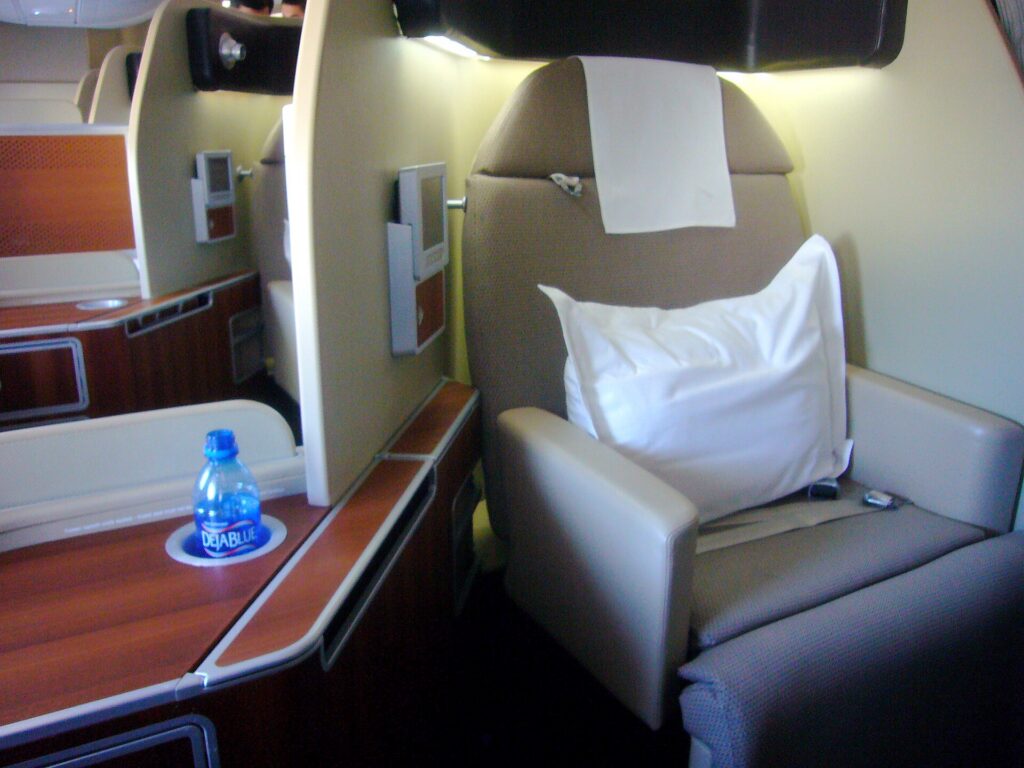
    A private first class suite with a wide seat and screen on a long-haul aircraft
    International first class: more space, more privacy and more personal service (Photo: David Lytle from San Francisco, CA, USA via Wikimedia Commons, CC BY 2.0)

    Why cabin names are confusing

    Airlines use cabin names as brands, not as standard definitions. There is no rule that says what a business class seat must include, and the same word can describe very different products. It helps to think of three situations.

    Long-haul flights with three premium tiers

    A small number of airlines fly large widebody aircraft with a first class cabin at the front, business class behind it, then premium economy and economy. On these flights, first is clearly the top product, and business is a step below it, though usually still a lie-flat bed. Emirates, for example, describes its first class cabin features separately from its business class, and the difference is presented as one of space, privacy and service.

    Long-haul flights where business is the top cabin

    Many airlines, including most North American carriers on their international routes, sell business class as their best long-haul product. Delta calls its version Delta One and describes it as its most premium experience, with 180-degree lie-flat seats on international and select long-haul domestic routes. Air Canada’s long-haul business cabin uses lie-flat pods on many of its international aircraft. On these flights there is no first class to buy: business is first, in practice.

    Short and medium flights in North America

    On domestic and regional flights in the United States and Canada, the front cabin is often branded “first class” or given an airline-specific name. It usually offers wider seats, more legroom, more recline, priority services and better food and drink, but not a bed. Delta’s Delta First page, for instance, describes up to 8 inches of extra legroom and up to 5.4 inches of recline compared with a standard Delta Main seat. That is a very comfortable seat for a three-hour flight, but it is a different product from international first class, and closer to what many airlines call business class on short routes.

    Europe adds one more twist: on many short-haul flights within Europe, business class is an economy-style seat with the middle seat kept free, plus lounge access, priority services and a meal. It is worth the money for flexibility and ground benefits, not for the seat itself.

    Even within one airline, the ladder can have many rungs. Delta’s onboard experience overview lists Delta Main Basic, Delta Main, Delta Comfort, Delta First, Delta Premium Select and Delta One, and notes that several of these now come in basic versions too. Extra-legroom economy such as Delta Comfort, with more legroom, earlier boarding and dedicated overhead bin space, is not a premium cabin at all, but it is often the most cost-effective step up on a short flight.

    The lesson is simple: judge the seat and the service, not the label. Our guide to reading your flight details explains how to find the aircraft type and fare brand on a booking.

    First class vs business class at a glance

    The table compares typical long-haul products with the domestic first class and premium economy cabins travelers often weigh them against. These are general patterns; the details depend on the airline, the aircraft and the fare.

    FeaturePremium economyDomestic first (North America)Long-haul businessInternational first
    SeatWider recliner with more legroomWide recliner, more legroom and reclineUsually lie-flat; many with direct aisle accessLie-flat, larger; often a private suite
    PrivacyLowLow to moderateModerate to high; some seats have doorsHigh; doors and enclosed suites common
    SleepBetter than economy, still uprightRest, not real sleepA proper bed on most long-haul aircraftA larger bed, often with extra bedding
    Ground servicesSometimes priority boardingPriority check-in, security and boardingPriority services and lounge accessDedicated check-in, first class lounges on some airlines
    DiningUpgraded economy mealsSnacks or meals depending on distanceMulti-course meals and premium drinksMore elaborate menus and more flexible timing
    ServiceShared crew with economy on some airlinesDedicated flight attendantDedicated crew, more attentionHighest crew-to-passenger ratio
    Checked bagsOften more than economyUsually includedUsually generousUsually the most generous
    Relative priceModerate step upModerate to high step upHighVery high, often several times business

    Seats and sleep: the difference that matters most

    On an overnight flight, the seat is what you are really paying for. A few details decide how well you sleep.

    Lie-flat, angled-flat and recliners

    A true lie-flat seat turns into a flat bed parallel to the floor. Some older business class seats are angled-flat: they recline a long way but leave you sliding gently toward your feet, which many people find harder to sleep in. Recliners, found in premium economy and domestic first, are comfortable for a daytime flight but not a bed. If sleep is your priority, confirm that your seat is fully flat, not just “flat bed” in marketing language.

    Direct aisle access and layout

    In modern long-haul business cabins, many seats are arranged so that every passenger can reach the aisle without climbing over anyone. Older layouts may have two seats side by side with the window passenger stepping over the aisle passenger. On a long overnight flight, direct aisle access is one of the most valuable features a business cabin can have. First class cabins are smaller and almost always give every passenger direct aisle access.

    Privacy and doors

    Doors and high partitions used to be a first class signature. Several airlines now fit them in business class too, which is one reason the gap between the two cabins has narrowed. Where first class still exists, the suites are usually larger, with more storage, a bigger screen, and sometimes room to sit opposite a companion for dinner.

    Bed length and space

    Seat dimensions vary by aircraft and seat position. Taller travelers should look at the specific seat map, since footwells and bed lengths can differ within the same cabin. Airline pages and seat maps at booking are the reliable source; if the airline does not publish a figure, do not rely on one you read elsewhere.

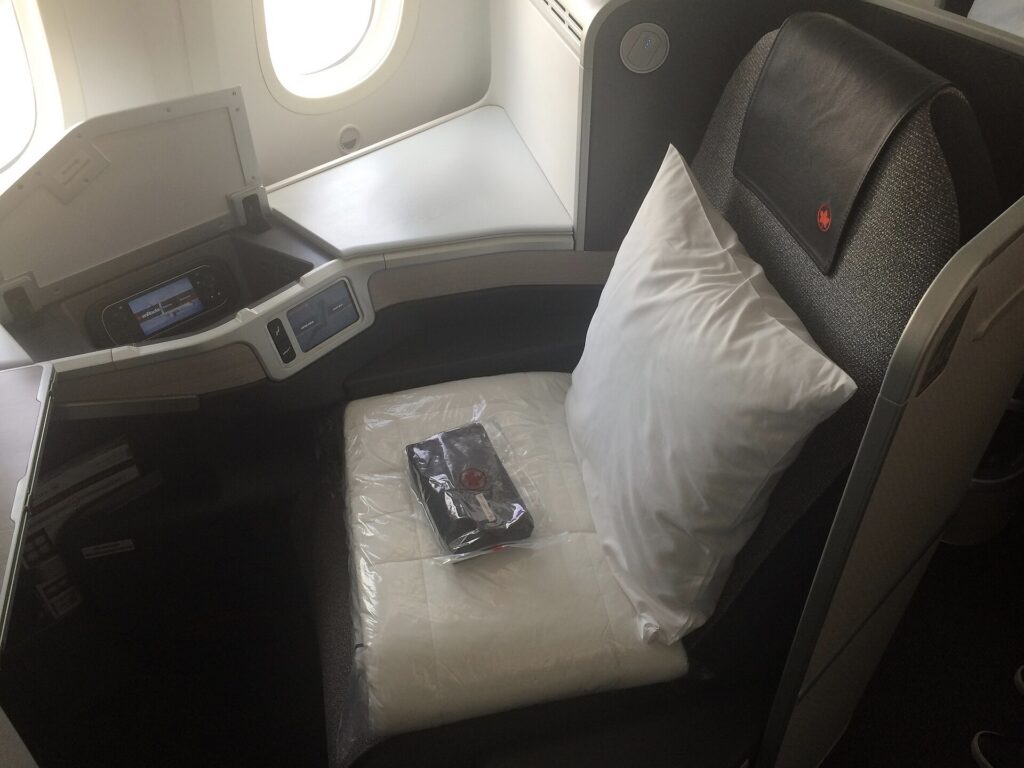
    A lie-flat business class pod on an Air Canada long-haul aircraft
    On many airlines, a lie-flat business seat is the best seat on the plane (Photo: Orcair via Wikimedia Commons, CC BY-SA 4.0)

    The airport experience

    A lot of what separates the cabins happens before you board.

    • Check-in and security. Business and first passengers usually get priority check-in and, at many airports, faster security lanes. Some airlines offer first class passengers dedicated check-in areas or separate terminals at their home airport.
    • Lounges. Long-haul business class usually includes lounge access. Some airlines operate separate first class lounges with à la carte dining and more space. At outstations, first and business passengers may share the same lounge.
    • Ground transport. A few airlines include chauffeur service for premium passengers on some routes. This is more common in first class and varies widely.
    • Boarding and baggage. Priority boarding and priority baggage handling are standard in both cabins. Delta’s Delta First page, for instance, lists priority check-in, security and boarding, bags delivered first and up to two free checked bags.

    Watch for exclusions. Some airlines now sell stripped-back versions of premium cabins with fewer ground benefits. Delta’s Delta One page notes that its basic business fare excludes some lounge access, for example. If the lounge matters to you, check the fare brand before you pay.

    Premium check-in and security lanes do not change how early you should arrive for an international departure, especially if you have bags to drop or a document check. Our guide to how early to arrive for an international flight gives realistic timings.

    Seating in an airline lounge at Heathrow Terminal 5
    Lounge access comes with most long-haul business tickets, but check basic premium fares (Photo: Mike McBey via Wikimedia Commons, CC BY 2.0)

    Food, drink and service

    Both premium cabins serve far better food than economy, but the style differs.

    Business class usually offers a multi-course meal with a choice of main dishes, a selection of wines and spirits, and a lighter meal or snacks before landing. On overnight flights, many airlines let you skip the main service or eat quickly so you can maximize sleep.

    First class usually adds more choice, more premium ingredients and drinks, and more flexibility: dining when you want rather than when the cart comes around. With fewer passengers per flight attendant, service is more personal, and crews often remember your preferences through the flight.

    On short domestic flights, the difference is smaller. Delta First, for example, describes snacks on shorter flights and meals on longer ones, with the offering depending on distance. If food matters, check what is served on your specific flight rather than assuming.

    Baggage, flexibility and the fine print

    Premium tickets typically include a larger checked baggage allowance, and many come with more flexible change and refund rules. Neither is universal: basic versions of premium cabins may carry stricter rules, and allowances differ by route and airline. Before you book, check:

    • The baggage allowance for your fare and route, including weight limits per bag.
    • Change and cancellation rules, especially if you are paying a premium partly for flexibility.
    • Lounge access, including whether it applies at every airport on your journey.
    • The aircraft and seat on every flight. A long itinerary may include a short connection on a smaller aircraft with a much simpler premium cabin, or none at all. The cabin you booked describes the fare, not a guarantee that every flight has the same seat.

    That last point catches many travelers out. A business class ticket from a smaller city to Asia might include a regional flight with a domestic-style first class seat, then a long-haul flight with a lie-flat bed. Look at each flight in the booking before you pay.

    Price and value

    International first class is usually priced far above business, often several times the fare, while the improvement in comfort is smaller than the price gap suggests. You are paying for exclusivity, space and service as much as for sleep. That is why many experienced travelers regard long-haul business as the best value premium product: it solves the biggest problem of a long flight, a proper bed, for a fraction of the cost of first.

    A few ways to think about value:

    • Price the sleep. On an overnight flight, compare the premium over economy with the cost of losing your first day at the destination.
    • Count what is included. Bags, lounge access, meals and flexibility reduce the real gap.
    • Look at premium economy. On daytime flights or when business prices are high, premium economy can deliver much of the comfort for much less.
    • Watch premium fare sales. Business fares drop on leisure routes and in quieter seasons, and flexible dates make a big difference. Our booking timing guide explains the seasons.
    • Consider upgrades. Paid upgrade offers, bids and miles can sometimes bring business class within reach. Our guide to business class upgrade hacks explains which methods work.

    Which cabin should you choose?

    The right answer depends on the flight and what you need at the other end.

    Choose long-haul business class if

    • You are on an overnight flight and need to function the next day.
    • You want a flat bed, lounge access and good food at a price that is high but not extreme.
    • You are traveling for work and arriving straight into meetings.
    • Your airline does not offer first class on the route anyway.

    Consider international first class if

    • Maximum privacy and space are worth a large premium to you.
    • You value highly personal service and flexible dining.
    • The trip is a once-in-a-lifetime occasion and you want the experience itself.
    • You can use miles for it at good value, which is how many travelers experience first class.

    Choose premium economy or domestic first if

    • The flight is short or in daytime, and a bed would be wasted.
    • You want more space and calm without the cost of long-haul business.
    • You are flying within North America, where the front cabin is a recliner anyway.

    Business travelers and company policies

    If your employer is paying, the travel policy may decide for you: many companies allow business class only above a certain flight length, and few allow first. Where you have a choice, a lie-flat seat on an overnight flight before a working day is the strongest case for business class, because the cost of arriving exhausted falls on the work itself. Our guide to business travel hotels covers the other half of a work trip.

    Traveling as a couple or family

    Seat layout matters more when you travel together. Some business cabins have center pairs designed for companions; others isolate every passenger. First class suites on some airlines can be arranged for companions to dine together. With children, check the airline’s rules on minimum ages in premium cabins and the availability of bassinets, and consider whether the cost for the whole family makes premium economy a better compromise.

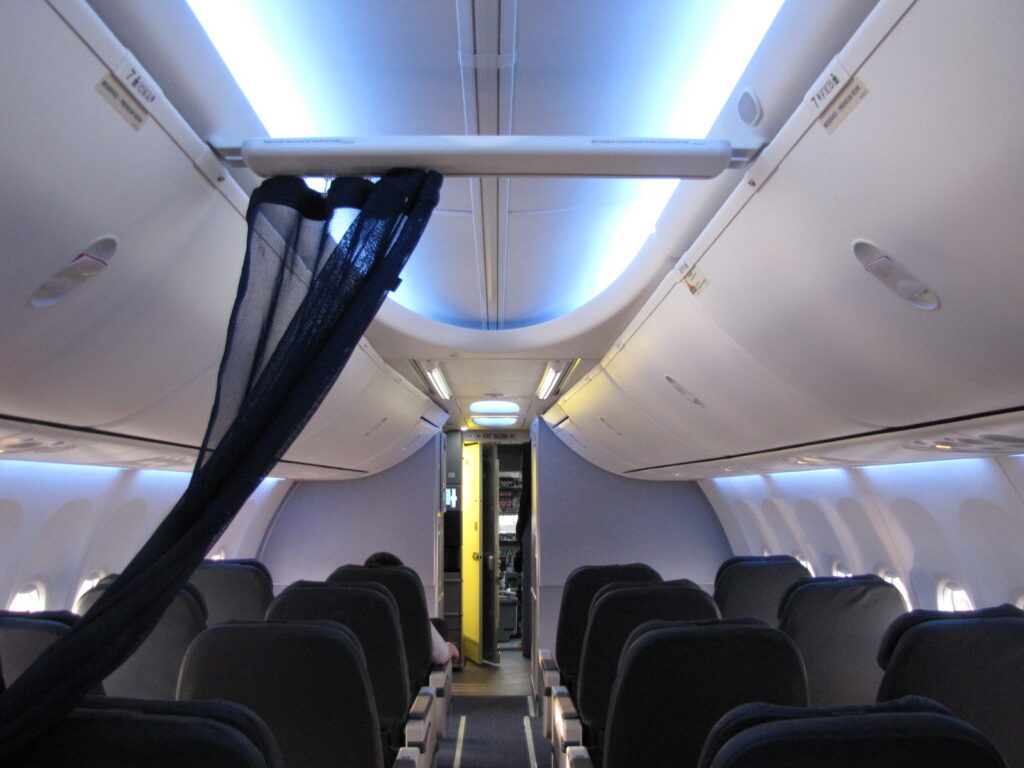
    Recliner seats in the first class cabin of a Boeing 737
    Domestic first class in North America: a wide recliner, not a bed (Photo: Planes and Places via Wikimedia Commons, CC BY-SA 2.0)

    How to check what you are really getting

    1. Find the aircraft type for each flight during booking. The same route can be flown by different aircraft with very different cabins.
    2. Open the seat map. Look at the layout: a 1-2-1 pattern usually means direct aisle access in business, while 2-2-2 or 2-3-2 patterns often mean you climb over a neighbor.
    3. Read the airline’s cabin page. Airlines describe their seats, lounges, meals and fare brands on their own sites, which are the most reliable source.
    4. Check the fare brand. Basic premium fares may exclude lounges, seat selection or changes.
    5. Check every flight. Confirm the cabin and seat on connections, not just the main long-haul flight.
    6. Check bags and flexibility. Make sure the allowance and rules fit your trip.

    For more on comparing routings and fare brands on long-haul trips, see our international flights booking tips.

    Getting the most from a premium cabin

    • Pick your seat early. Seats away from galleys and lavatories are quieter, and window seats in 1-2-1 layouts are often the most private.
    • Use the lounge wisely. Eat a proper meal in the lounge before an overnight flight, then skip the onboard service and sleep sooner.
    • Dress for sleep. Some airlines provide pajamas in premium cabins, but many do not. Comfortable layers help either way; our guide to what not to wear on a flight has practical advice.
    • Pack light anyway. A generous allowance is useful, but a sensible carry-on makes connections easier. Our carry-on size guide explains dimensions and packing.
    • Plan your arrival. If you arrive early in the morning, a hotel that allows early check-in or a day room can extend the rest you started on board. Compare options with our hotel search.

    Common mistakes when choosing a premium cabin

    • Trusting the cabin name. “First” on a domestic flight and “first” on a long-haul flight are different products.
    • Not checking the aircraft. An older aircraft on the same route may have angled seats or no direct aisle access.
    • Ignoring connections. A premium ticket may include a flight with a much simpler cabin.
    • Paying for first when business already solves the problem. For most travelers, a good business seat delivers the sleep that matters.
    • Buying a basic premium fare without reading the terms. Missing lounge access or strict change rules may not be worth the saving.
    • Booking a daytime flight in a lie-flat seat you will not use. Premium economy or a better economy seat may be enough.

    Frequently asked questions

    Is first class always better than business class?

    On the same aircraft and airline, yes: first is the higher product. Across airlines, not necessarily. A new business class seat can be more comfortable than an older first class seat on another airline, so compare the actual seat and service.

    What is the main difference between first and business class?

    Space, privacy and service. Long-haul business class usually offers a lie-flat seat, lounge access and good dining. First class adds larger suites, often with doors, more personal service, more elaborate dining and sometimes more exclusive ground services.

    Why is domestic first class different from international first class?

    On shorter flights in North America, airlines brand their front cabin as first class, but it is usually a wide recliner with better service, not a bed. It is closer to short-haul business class elsewhere than to international first.

    Do all airlines have first class?

    No. Many airlines sell business class as their top cabin on long-haul routes. First class is found mainly on some large international carriers and often only on certain aircraft and routes.

    Is business class worth it on a long-haul flight?

    It often is on overnight flights, where a flat bed lets you arrive rested. On daytime flights or when prices are high, premium economy can be the better value.

    Does business class include lounge access?

    On long-haul international flights, usually. But some airlines now sell basic premium fares that exclude lounge access, so check the fare brand before booking.

    How do I know if my business class seat is lie-flat?

    Check the aircraft type and seat map during booking and read the airline’s description of the cabin for that aircraft. If the airline shows a 1-2-1 layout and describes fully flat beds, you are likely in a modern product.

    Is premium economy the same as business class?

    No. Premium economy is a better economy seat with more legroom and recline, sometimes with better food and priority services. It is not a bed and usually does not include lounge access.

    Ready to compare cabins for your trip? Search economy, premium economy and business fares across flexible dates on our flight search, then book somewhere comfortable to land with our hotel search. If you are heading across the Atlantic, our guide to the best time to fly to London will help you pick your dates.

  • The Complete Guide to Rental Car Booking Tips for Every Traveler

    The Complete Guide to Rental Car Booking Tips for Every Traveler

    A rental car can be the best money you spend on a trip or the most frustrating line item on your credit card statement, and the difference is rarely luck. It comes down to a handful of decisions made before you ever reach the counter: whether you need a car at all, which class to book, when and where to pick it up, how the insurance and fuel rules work, and what you agree to when you sign. This guide walks through every one of those decisions in the order you will face them, explains what the jargon on the rental agreement actually means, and flags the mistakes that cost travelers the most. It is written for North American travelers renting at home or abroad, whether you are picking up a compact for a weekend in Chicago, a minivan in Orlando or a manual hatchback in Rome.

    If you already know you need a car, you can compare rates from the major companies side by side on our car rental search. If you are still deciding, start with the first section.

    The short version

    If you read nothing else, these are the habits that save the most money and trouble:

    • Decide whether you need a car for the whole trip. Many city trips need a car for one or two days, not seven.
    • Book early on a free-cancellation rate, then keep checking. If the price drops, rebook and cancel the original.
    • Compare the total price, not the daily rate. Taxes, airport fees and add-ons can change the ranking completely.
    • Know your insurance before you arrive. Call your auto insurer and your card issuer, and write down exactly what each covers.
    • Choose full-to-full fuel and refill close to the return location.
    • Photograph and video the car at pickup and at return, including the fuel gauge and odometer.
    • Return on time. Rental days are usually counted in 24-hour blocks from pickup, and a short delay can cost a full day.

    Step 1: Decide whether you need a car, and for how long

    The cheapest rental is the one you do not take. In dense cities with good transit, such as New York, London, Paris, Toronto or Montreal, a car is often a liability: parking is scarce and expensive, hotels charge nightly for it, and traffic eats the time you saved. In spread-out places such as Los Angeles, Phoenix, Orlando, Dallas or Calgary, or anywhere your plans include national parks, small towns or a coastline, a car is often the only practical way to get around.
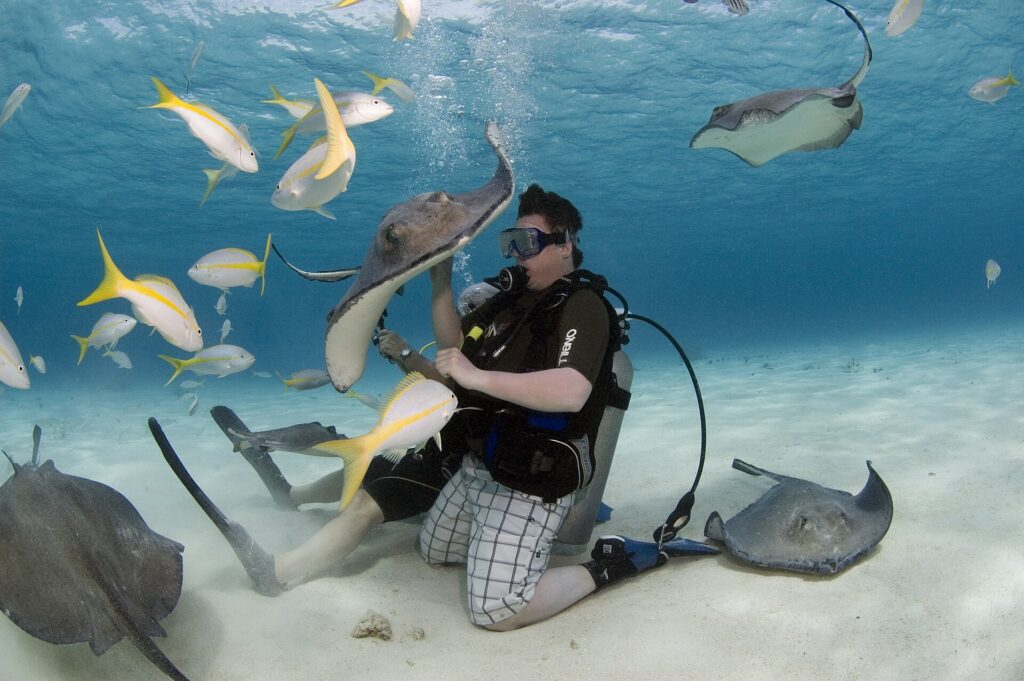
    The smartest answer is frequently a split: go without a car for the city days, then rent for the day trips or the road-trip leg. Neighborhood branches often open later and close earlier than airport counters, but their rates can be lower and they save you paying for a car that sits in a hotel garage. Our guide to renting a car versus public transport versus taxis works through the decision in detail, and our city guides answer it for specific places, for example New York, Los Angeles and Las Vegas.

    Step 2: Choose the right car class

    Rental companies sell car classes, not specific models. The listing will show one model with the words “or similar”, and you are guaranteed the class, not the car in the picture. Book the smallest class that genuinely fits your people and your luggage; bigger cars cost more per day, burn more fuel and are harder to park in old city centers. But do not squeeze four adults and four suitcases into a compact to save a little, because you will pay for it in comfort on every drive.

    ClassRealistic fitBest forWatch out for
    Economy / compactTwo adults, two carry-ons and one checked bagCity driving, tight parking, short tripsSmall trunk; can feel underpowered on mountain roads or highways
    Intermediate / standard sedanTwo to four adults, two large bagsMost couples and small familiesRear seats get tight for three adults on long drives
    Full-size sedanFour adults, three or four bagsLong highway drives, business travelParking in older European and downtown garages
    Compact or midsize SUVFour people, luggage plus a strollerFamilies, winter trips, gravel roadsHigher fuel use; “SUV” does not always mean all-wheel drive
    Full-size or three-row SUVFive to seven people with limited luggage when all rows are upLarger families, ski tripsLuggage space disappears with the third row in use
    MinivanSeven or eight people, or five with plenty of luggageFamilies with car seats, groupsLimited supply at peak times; book early
    Premium / luxuryAs a sedan, with more comfort and featuresBusiness travel, special occasionsOften excluded from credit card rental coverage

    Two class details trip travelers up regularly. First, if you need all-wheel or four-wheel drive, for a ski trip or a mountain road in winter, check whether the class guarantees it; many listings do not. Second, if you are renting in Europe, Latin America or much of Asia, the default is often a manual transmission. If you cannot drive stick confidently, filter for automatic and book early, because automatics are the smaller part of many fleets outside North America.

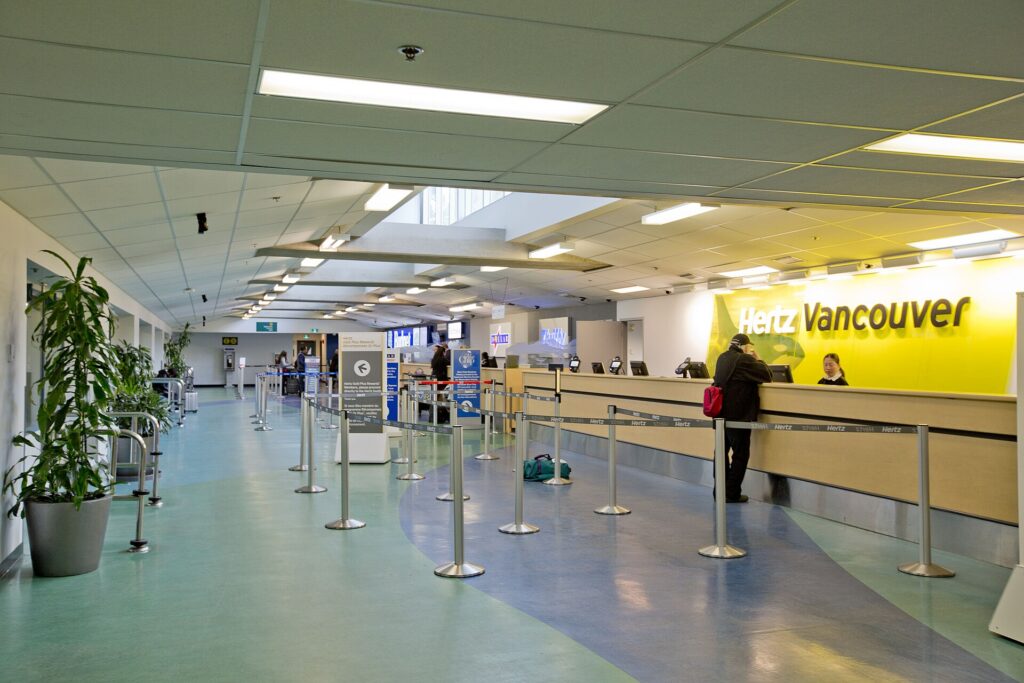
    A car rental counter in the arrivals area at Vancouver International Airport
    Airport rental counters are the most convenient place to pick up, and usually the most expensive (Photo: GoToVan from Vancouver, Canada via Wikimedia Commons, CC BY 2.0)

    Step 3: When to book

    Car rental prices move with supply and demand, and unlike airline seats, the fleet at a given location is fixed in the short term. When every car on the lot is spoken for, prices climb sharply and the minivans and SUVs go first. The periods that reliably tighten supply are summer, the Christmas and New Year weeks, spring break and school holidays, long weekends, and big local events such as a major conference, a championship game or a festival.

    The practical strategy is simple:

    1. Book as soon as your dates are firm, on a “pay later” or free-cancellation rate. For peak periods and larger vehicles, that means weeks or months ahead.
    2. Check the price again a few weeks out and a few days out. Rental rates do fall as well as rise, especially when a location has more cars than expected.
    3. If it drops, book the cheaper rate first, then cancel the original. Never cancel first; the lower price may disappear.

    Prepaid rates can be cheaper, but they usually carry cancellation fees or no refund at all, and some companies do not refund unused days if you return early. Use them only when your plans cannot change. It also pays to test slightly different pickup and return times: because rentals are priced in 24-hour periods, and weekly rates sometimes undercut five or six daily rates, a small shift can change the price noticeably.

    Step 4: Airport or neighborhood pickup?

    Airport locations are the most convenient and usually the most expensive. Many airports allow rental companies to pass on concession fees and facility charges, which appear on your bill as separate line items, and some add a customer facility charge that pays for a consolidated rental car center. Off-airport and neighborhood branches avoid some of those charges, but they add a shuttle ride or a taxi, and their opening hours are shorter; an office that closes at 6 pm on Saturday and reopens Monday is not much use for a Sunday afternoon return.

    A few rules of thumb:

    • Arriving late at night, with kids or with lots of luggage: pay for the airport location.
    • Spending the first days in a transit-friendly city: take the train or a taxi to your hotel and rent from a neighborhood branch on the day you leave town.
    • Flying in with a flight that might be delayed: add your flight number to the reservation, so the counter knows to hold the car rather than marking you a no-show.

    Our airport guides, such as Toronto Pearson, LAX and Denver International, explain where the rental counters are and how to reach them.

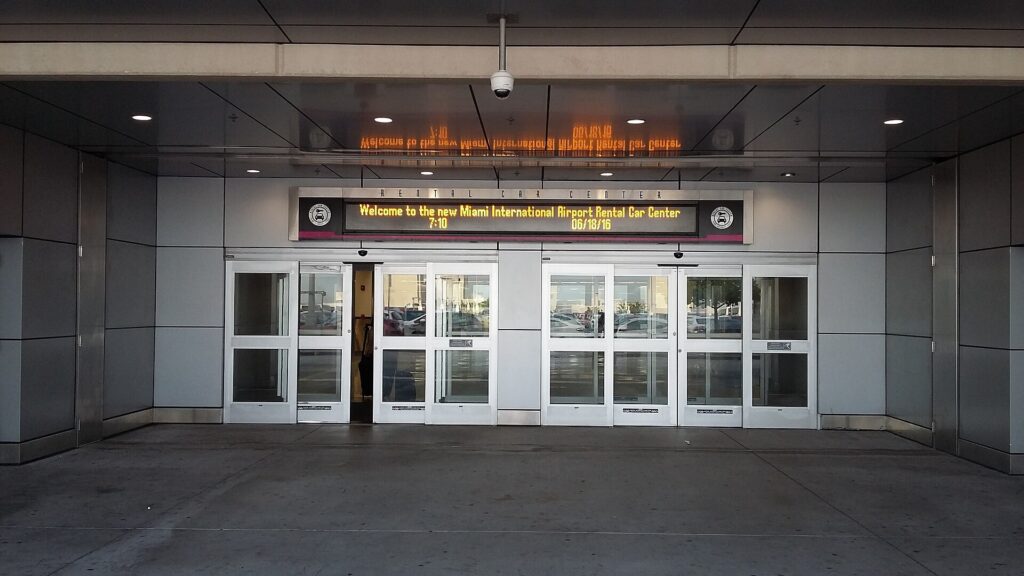
    The entrance to the consolidated Rental Car Center at Miami International Airport
    Many large airports group every company in one rental car center, often paid for through a facility charge on your bill (Photo: Xnatedawgx via Wikimedia Commons, CC BY-SA 4.0)

    Step 5: Read the whole price

    The daily rate in large type is the start of the price, not the end. Before you compare two offers, open the full breakdown and look for:

    • Taxes and airport fees, which vary widely by city and state or province.
    • Young driver surcharges, typically for drivers under 25.
    • Additional driver fees, charged per day at many companies.
    • One-way or drop fees if you return to a different location.
    • Equipment: child seats, GPS, ski racks, snow chains, each usually charged per day, often with a cap per rental.
    • Mileage limits, rare on North American leisure rentals but common on some specialty vehicles and international rentals.
    • Toll programs and their daily service fees.
    • Coverage products you may or may not need, covered in the next step.

    A rate that looks cheaper per day can end up costing more once these are added. Compare like for like: the same class, the same pickup and return times, the same drivers, the same coverage.

    Step 6: Understand rental car insurance

    Insurance is where most counter arguments happen and where most travelers either overpay or leave themselves exposed. There are four products you are likely to be offered, under slightly different names depending on the company and country.

    Collision damage waiver (CDW) or loss damage waiver (LDW)

    Strictly speaking, not insurance but a waiver: if you buy it, the company agrees not to charge you for damage to, or theft of, its car, subject to exclusions. Without it, you are responsible for the car’s damage, and sometimes also for “loss of use” while it is being repaired and for administrative fees. In Europe and many other regions a basic waiver is often included in the price but comes with a high deductible (called an “excess”), and the counter will offer a second product to reduce that deductible.

    Liability coverage

    Liability covers damage you cause to other people and their property. Rules differ sharply by country, state and province: some rentals include a legal minimum, some include very little, and in some countries, Mexico being the best-known example for North Americans, locally issued liability insurance is mandatory and your home policy is not accepted. Rental companies sell supplemental liability to top up the minimum.

    Personal accident and personal effects coverage

    These cover medical costs for you and your passengers and theft of belongings from the car. Many travelers already have this through health insurance, travel insurance or a home or renter’s policy.

    Where you may already be covered

    • Your own auto policy. In the US and Canada, many personal policies extend some coverage to rental cars for personal use, but often only within your home country, and not always collision.
    • Your credit card. Many cards include a rental collision benefit if you pay for the whole rental with that card and decline the company’s waiver. Some are primary, some are secondary to your own policy, and most have exclusions: certain countries, luxury and exotic cars, large vans and trucks, and rentals longer than a set number of days. Liability is almost never included.
    • Travel insurance. Some policies include rental car damage coverage as an option.

    Do this before the trip, not at the counter: call your insurer and your card issuer, ask exactly what is covered, in which countries, for which vehicle types and for how long, and ask them to send the benefit terms in writing. Then decide which of the counter products you actually need. Declining coverage you do not have is the expensive mistake; buying coverage you already have is the common one.

    Step 7: Drivers, age, license and payment

    • Minimum age. At most major companies in the US and Canada, the minimum is 21 (sometimes 20), with a daily surcharge for drivers under 25 and restrictions on premium classes. A few US states require companies to rent to younger drivers, with fees. Outside North America the rules vary, and some countries also have upper age limits or extra requirements for older drivers.
    • Additional drivers. Anyone who will drive must be on the agreement, present at pickup with a valid license. Some companies, and some jurisdictions, waive the fee for a spouse or domestic partner; ask. An unlisted driver in an accident can void your coverage.
    • Credit versus debit. Nearly every company prefers a credit card in the main driver’s name and places a hold for the estimated total plus a deposit. Debit cards are accepted at some locations with extra conditions, such as proof of a return flight or a credit check, and the hold ties up real money in your account for days after the return.
    • Your license. Bring the physical card. A digital license is not accepted everywhere, and an expired or temporary paper license can be refused.
    • International Driving Permit. An IDP is a translation of your license recognized under international conventions. Some countries require it, others recommend it, and rental companies sometimes ask for it even where the law does not. Canadians get one from CAA, as explained on the Government of Canada’s IDP page; Americans get one from the issuers listed by the US State Department. Get it before you leave; it cannot be issued abroad.

    Step 8: Fuel policies and electric cars

    PolicyHow it worksWhen it makes sense
    Full-to-fullPick up full, return full; you pay only for fuel you use, at pump pricesAlmost always the best value
    Prepaid fuel (full-to-empty)Pay for a full tank at pickup, return at any level, no refund for fuel leftOnly if you will genuinely return near empty and have no time to refuel
    Refuel on returnReturn below full and the company refills it at its own per-unit rate plus a service feeRarely; this is usually the most expensive way to buy fuel
    Same-to-sameReturn at the level you received itFine, but photograph the gauge at pickup

    Fill up within a few miles of the return location and keep the receipt; some companies ask for it if the gauge reads just below full. If you rent an electric vehicle, ask about the return charge requirement (many companies set a minimum percentage), where the nearest fast chargers are, which charging networks work with the car, and whether charging cables are included. EVs are excellent in cities with good charging and less relaxing on long rural drives where chargers are sparse. The US Department of Energy’s Alternative Fuels Data Center has a station locator that is useful for planning.

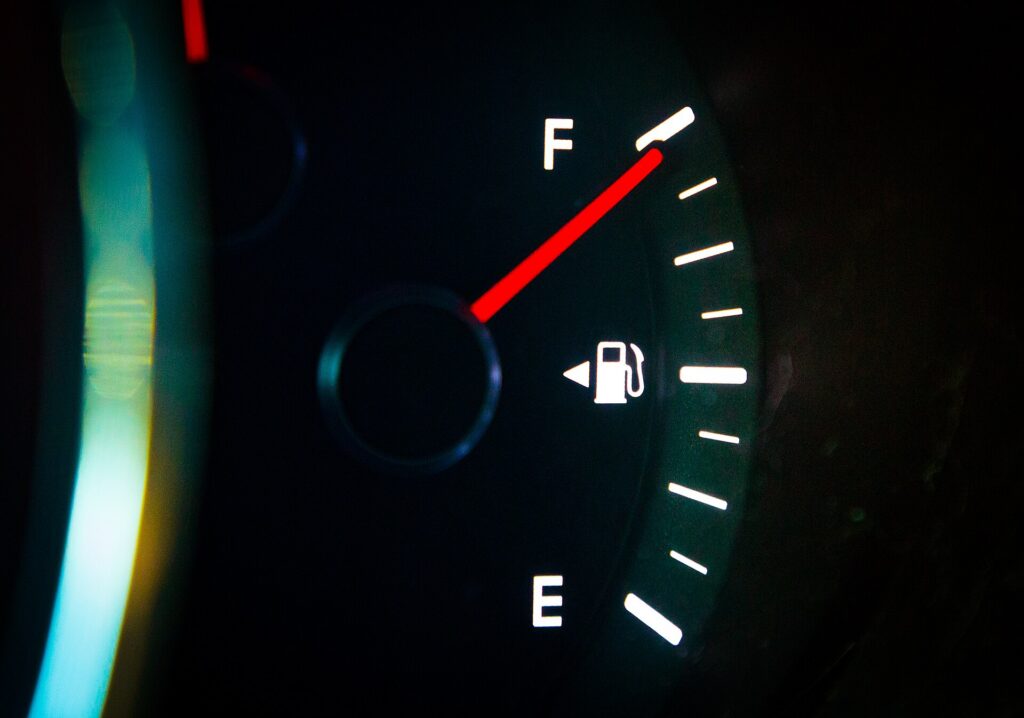
    A car dashboard fuel gauge showing a full tank
    On a full-to-full rental, photograph the gauge at pickup and bring the car back showing the same (Photo: Tony Webster via Wikimedia Commons, CC BY 2.0)

    Step 9: Mileage, one-way trips and borders

    Most leisure rentals in the US and Canada include unlimited mileage, but check, especially for specialty vehicles, local-renter rates and some international rentals. If you plan to drop the car somewhere else, price the one-way fee early; it can be large, but some popular routes are cheap in one direction when companies need to rebalance fleets. Our drive guides, such as Toronto to Montreal and Los Angeles to Las Vegas, are a good place to compare.
    Crossing a border needs to be declared at booking. Driving between the US and Canada is routine with the major companies, though some restrict certain vehicle classes; taking a US rental into Mexico, or driving between some European countries, can be restricted or require extra coverage and fees. Ask at booking and make sure the permission is written on the agreement.

    Step 10: Tolls

    Toll roads have increasingly gone cashless, charging by transponder or by photographing the license plate. Rental companies handle this through their own toll programs, which typically add a daily service fee on top of the tolls, sometimes for every day of the rental rather than only the days you use a toll road. Your options are to accept the program, use your own transponder where it is compatible and allowed, pay the toll operator directly online where that is possible, or plan routes that avoid tolls. Highway 407 ETR north of Toronto, for example, is fully electronic, and its operator’s site explains how unregistered vehicles are billed. Ask at the counter how tolls will be charged and read the program terms before you drive off.

    At the counter: handling the upsell

    Counter staff are often paid partly on what they sell, so expect offers of an upgrade, prepaid fuel, coverage and a toll package. None of that is a scam; some of it is useful. But decide in advance. A calm “no thank you, I have coverage through my card and my policy” is enough. Before you sign, check that the agreement matches your reservation: the class, the total estimate, the return date and time, the fuel policy, the drivers, and that nothing you declined has been added. If the class you booked is not available, the usual practice is a free upgrade to a larger class, not a paid one; ask for it.

    Loyalty programs are free to join at most companies and are worth it even if you rent once a year: members at many large airports skip the counter and go straight to the car, which saves time and removes the sales pitch entirely.

    Inspect the car before you leave the lot

    1. Walk around the car with your phone recording video. Get every panel, the bumpers, the wheels and the windshield, then close-ups of anything scratched, dented or chipped.
    2. Photograph the dashboard showing the fuel level, the odometer and any warning lights.
    3. Check the interior for stains, burns, damage and smells, and confirm the spare tire or inflation kit is present.
    4. Test the basics: lights, wipers, air conditioning, mirrors, seat adjustment and any child seat you rented.
    5. Get damage noted. Make sure anything you find is recorded on the checkout sheet or in the app, and ask an agent to initial it if possible.

    It is also worth entering the license plate or VIN into the recall lookup on the NHTSA recalls page if you are renting in the US; it takes a minute.

    While you have the car

    • Breakdowns: the roadside assistance number is usually on the key tag, the windshield sticker or the agreement. Call it before you call a tow truck yourself, or you may not be reimbursed.
    • Accidents: make sure everyone is safe, call the police if required locally, photograph everything, exchange details, and notify the rental company as soon as you can. Do not sign anything admitting fault.
    • Parking tickets and traffic cameras: fines follow the car. The company pays the authority, bills your card and usually adds an administrative fee, sometimes months later.
    • Changing plans: if you need the car longer, call and extend before your return time rather than just keeping it; the rate can be very different.
    Rows of rental cars parked in an airport rental lot
    Before you drive off, record a video walkaround of the car and photograph the dashboard (Photo: User:Mattes via Wikimedia Commons, Public domain)

    Returning the car

    Return timing matters more than most travelers expect. Rental days are usually counted in 24-hour blocks from pickup, grace periods are short, and being a few hours late can add a full day at a higher rate. Returning early is not always cheaper either, because rates may be recalculated. Allow extra time at airports, where the return garage can be a shuttle ride from the terminal, refill nearby, and do another video walkaround and dashboard photo. If you drop after hours, you normally remain responsible for the car until staff check it in, so your photos matter even more. Our guide to car rental return timing covers grace periods, late fees, early returns and after-hours drop-offs in detail. Check your final receipt before you leave and your card statement for the following weeks.

    Renting with kids

    Families have extra choices to make: vehicle size once car seats go in, whether to rent seats or bring your own, and which companies make pickup easiest with tired children. Child seats rented at the counter are charged per day, availability is not guaranteed unless reserved, and staff are generally not permitted to install them for you. Car seat laws vary by state, province and country; Transport Canada’s child car seat safety page is a good starting point for the principles. Our guide to the best car rental services for family vacations covers all of this, including seat math for three-across rows.

    Renting abroad

    • Check the license rules for each country, including whether you need an IDP.
    • Learn the road basics: which side of the road, how roundabouts work, speed units, and local rules such as low-emission zones and restricted historic centers, which are enforced by camera in many European cities and generate fines that reach you long after the trip.
    • Confirm what “included” means. Quoted rates abroad may or may not include basic collision cover, theft protection and liability, and deductibles can be large.
    • Expect smaller cars and manual gearboxes, and narrow streets and parking spaces to match.
    • Keep your passport with your license; many counters ask for both.

    Our city guides for Rome, London, Paris and Cancun go into local specifics.

    The mistakes that cost the most

    • Booking late for peak dates and paying whatever is left, often for a car that is too big or too small.
    • Comparing daily rates instead of totals, then discovering the fees at the counter.
    • Assuming a credit card covers everything, including liability, luxury cars or a country it excludes.
    • Letting an unlisted friend drive.
    • Skipping the pickup video, then having no proof about a scratch that was already there.
    • Accepting prepaid fuel and returning with half a tank.
    • Keeping the car an extra few hours without calling, and paying for an extra day at a walk-up rate.
    • Renting for the entire trip when you only needed a car for two days of it.

    Book the trip, not just the car

    A rental works best when it fits the rest of the itinerary. Match pickup to your flight’s arrival time, leaving a buffer for delays; choose a hotel with parking if you will keep the car overnight, and factor the parking fee into the room rate; and time the return so you are not racing for a flight. Our guide to the best time to book flights and hotels covers timing for the other two pieces, and our hotel booking tips explain how to read the fees on a room rate the same way you now read a rental agreement.

    Frequently asked questions

    How far in advance should I book a rental car?

    As soon as your dates are firm, on a free-cancellation rate. For summer, holidays, spring break and large vehicles, that means weeks to months ahead. Then keep checking and rebook if the price drops.

    Is it cheaper to rent a car at the airport or in town?

    Often in town, because airport locations pass on concession and facility fees. But neighborhood branches have shorter hours and require getting there, so the saving is only worth it when the timing works.

    Do I need the rental company’s insurance?

    It depends on what you already have. Check your own auto policy and your credit card’s rental benefit before the trip, get the terms in writing, and buy only what fills a real gap, especially liability and any coverage abroad.

    Can I rent a car with a debit card?

    At some locations, with conditions such as proof of travel or a credit check, and a hold on your funds. A credit card in the main driver’s name is far simpler.

    What happens if I return the car late?

    After a short grace period, most companies charge hourly and then a full extra day once you pass a threshold of a few hours. Call before your return time if you know you will be late.

    Which fuel option is best?

    Full-to-full in almost every case. Prepaid fuel only makes sense if you will return nearly empty.

    Do I need an International Driving Permit?

    For some countries, yes, and rental counters may ask for one even where it is only recommended. Check the official government guidance for your destination and get the permit before you leave home.

    Can I add a second driver?

    Yes, at pickup, with their license present. There is often a daily fee, sometimes waived for a spouse or partner. Never let an unlisted person drive.

    Ready to price it out? Compare rates from the major companies on our car rental search, or go straight to a destination such as Orlando, Calgary or Phoenix, and line up the rest of the trip with cheap flights and hotels.

  • Sleeping Pills for Flights: What to Know Before You Take Anything

    Sleeping Pills for Flights: What to Know Before You Take Anything

    If you have searched for the best sleeping pills for flights, you are probably dreading a long overnight flight, a red-eye before an important meeting, or a trip across so many time zones that you expect to arrive exhausted. That is a real problem and worth solving. But the honest answer is that no website can tell you which pill is right for you, and we are not going to try. Sleep medicines, sedating antihistamines and even supplements such as melatonin carry risks that depend on your health, your other medicines and the flight itself. Those decisions belong with a doctor or pharmacist who knows your history. What we can do is explain the risks in plain terms, point you to the official sources that doctors use, and spend most of this guide on the things that help almost everyone sleep better in the air without taking anything: choosing the right seat, timing the flight, managing light, blocking noise, supporting your neck and using a simple jet-lag routine before and after you land.

    The short answer

    Before you take any sleep aid on a plane, including an over-the-counter product or melatonin, talk to a doctor or pharmacist first. Official health agencies flag real concerns: sleep medicines can leave you drowsy afterward, they can interact with alcohol and other medicines, and staying still for hours on a long flight is itself a risk factor for blood clots. For most travelers, the bigger and safer gains come from drug-free strategies: pick a seat that suits how you sleep, book a flight whose timing matches your body clock, use an eye mask and earplugs or noise-cancelling headphones, support your head properly, go easy on alcohol and caffeine, move around the cabin when you are awake, and shift your sleep schedule toward your destination before and after you fly.

    An economy class airplane cabin with dimmed violet mood lighting on a long-haul flight
    Dimmed cabin lighting on overnight flights is your cue to start a sleep routine, not to reach for a pill (Photo: Prateek Karandikar via Wikimedia Commons, CC BY-SA 4.0)

    Why we changed this guide

    An earlier version of this post ranked sleep supplements and an over-the-counter sleep aid and suggested when to take them. We removed that. Ranking medicines on a travel site is not responsible: a product that is harmless for one traveler can be risky for another, and the right choice, if there is one, depends on things only a clinician can weigh, such as your age, pregnancy, other prescriptions, breathing or heart conditions and history of blood clots. This guide now does two things. It explains the risks in general terms, with a link to the official source for every health statement, and it gives you a practical, step-by-step plan for sleeping better on a plane without medication.

    What the official sources say about sleep aids on flights

    We have kept this section deliberately general. It is not medical advice, and it does not name or compare products. Read it as a list of questions to bring to your doctor or pharmacist.

    Drowsiness does not end when you land

    The US Food and Drug Administration warns that with certain prescription insomnia medicines, you may still feel drowsy the day after taking one, and that these medicines can cause rare but serious “complex sleep behaviors” such as sleepwalking while not fully awake (source: FDA). On a plane, that matters in practical ways. You may need to wake quickly and follow crew instructions if there is turbulence, a medical situation on board or an emergency. You may need to navigate a busy connection, pass immigration, collect bags or drive a rental car soon after landing. Anything that leaves you groggy works against all of that, which is one reason to get professional advice before you fly rather than experimenting in the air.

    Sitting still for hours and blood clot risk

    The CDC says that anyone traveling more than four hours, by air, car, bus or train, can be at risk for blood clots, although the risk is generally very small; it is higher for people with other risk factors such as older age, obesity, recent surgery, pregnancy or a previous clot (source: CDC). The CDC’s clinical guidance for travel medicine adds that immobility while flying is a risk for venous thromboembolism, and that maintaining mobility could help prevent it (source: CDC Yellow Book). The UK’s NHS lists a long journey of more than four hours by plane, car or train among the situations that raise the chance of deep vein thrombosis (source: NHS). A deep, long sleep in a cramped seat means hours without moving your legs. If you have any clot risk factors, raise this specifically with your doctor before a long flight.

    Interactions with other medicines and supplements

    The FDA advises people taking prescription Z-drug insomnia medicines not to take them with any other sleep drugs, including over-the-counter ones (source: FDA). The US National Center for Complementary and Integrative Health says that people taking medicine should consult their health care providers before using melatonin, and that people with epilepsy and those taking blood thinners need medical supervision if they use it (source: NCCIH). The CDC’s clinical guidance also notes that sedating antihistamines and long-acting sedatives can worsen cognitive impairment, increase the risk of falls and impair physical performance (source: CDC Yellow Book). Travel adds its own complications: you may be taking a new antimalarial, a motion sickness remedy or a cold medicine at the same time. A pharmacist can check the whole list in a few minutes.

    Alcohol and sleep aids do not mix

    The FDA says not to drink alcohol before or while taking Z-drug insomnia medicines because together they may be more likely to cause side effects (source: FDA). The NHS notes that drinking alcohol while taking melatonin can stop it working as well as it should (source: NHS). A glass of wine with dinner service is part of the ritual of flying for many people, so this is worth planning for rather than deciding in the moment.

    Sleep aids are not a jet lag cure

    The NHS says that medicines are not usually needed for jet lag, which often improves within a few days, and that sleeping tablets can be addictive, so should only be used for a short time and if symptoms are severe (source: NHS). The CDC’s traveler advice is to talk to your doctor about taking medicine or other sleep aids if you struggle with jet lag, and to take any medicine or sleep aid as your healthcare provider directs (source: CDC).

    Melatonin: a supplement in some countries, a prescription drug in others

    Many travelers think of melatonin as a harmless natural option. Its legal status is a good reminder that it is not that simple, and that the same product can be treated very differently from one border to the next.

    Two practical takeaways. First, if you are thinking about melatonin, ask a doctor or pharmacist whether it is appropriate for you, the same as you would for any other sleep aid. Second, if you are flying to a country where it is prescription-only, check that country’s rules before packing a supplement bottle bought at home. We are not giving doses or timing for melatonin or any other product here; that is exactly the kind of advice that needs to come from someone who knows your health.

    When to talk to a doctor or pharmacist

    A short conversation before a long trip is worthwhile for almost anyone considering a sleep aid, and especially if any of these apply to you:

    • You are thinking about any sleep aid on the flight, including melatonin, antihistamine-based products or herbal remedies.
    • You take other prescription medicines, including blood thinners, antidepressants, pain medicines or anything for epilepsy, anxiety, heart or breathing conditions.
    • You have ever had a blood clot, have had recent surgery, are pregnant or have other clot risk factors (the CDC lists these on its blood clots and travel page).
    • You have a sleep condition, snore heavily or have been told you stop breathing during sleep.
    • You are traveling with a child and wondering about anything to help them sleep.
    • Your jet lag is severe or lasts well beyond a few days after previous trips.

    Bring a list of everything you take, including supplements, plus your flight times and the time difference at your destination. A pharmacist at your usual drugstore can often help on the spot.

    Several sleeping masks from airline amenity kits laid out side by side
    An eye mask is one of the simplest sleep aids the NHS suggests for flights (Photo: User:Mattes via Wikimedia Commons, CC BY-SA 3.0)

    How to sleep on a plane without medication

    This is where most of the real gains are. None of the steps below is dramatic on its own, but together they can turn a miserable overnight flight into a few hours of useful rest.

    1. Choose your seat for sleep

    Seat choice matters more than almost anything else you control.

    • Window seat if you want to sleep for a long stretch. You can lean against the wall, you control the shade and nobody climbs over you. The trade-off is that you have to climb over others to get up.
    • Aisle seat if you want to get up and walk without disturbing anyone. The CDC’s clinical guidance notes that an aisle seat also might be a protective factor against blood clots because it makes moving around easier (source: CDC Yellow Book). If you have clot risk factors, that may outweigh the comfort of the window.
    • Away from galleys and lavatories. Light, noise and foot traffic are constant near them, especially during meal service and before landing.
    • Not in the row in front of an exit row on many aircraft, where seats may not recline. Check a seat map before you choose.
    • Bulkhead rows give you legroom but often have fixed armrests and tray tables, and some airlines use them for bassinets, so they can be busy with families.
    • Premium economy or business class make the biggest difference on long overnight flights, and a lie-flat seat changes the equation entirely. Our guides to the difference between first and business class and to business class upgrade strategies explain when the extra cost can make sense.

    2. Time the flight to your body clock

    When you compare fares, the schedule is part of the value. An overnight flight that departs late in the evening, after your normal bedtime, is far easier to sleep on than one that leaves at dinner time and lands before dawn at your destination. On daytime flights heading east, you may be better off staying awake and resetting to local time on arrival. If the fare difference is small, a well-timed flight is often worth more than the savings. Use a flexible-date search on our flight search to compare departure times across several days, and see our international flight booking tips for choosing connections that leave room for rest.

    3. Start shifting your schedule before you fly

    The NHS suggests getting plenty of rest before you travel and going to bed and getting up earlier or later than usual, closer to the time zone you are heading to (source: NHS). The CDC’s clinical guidance similarly suggests adjusting sleep time toward the destination’s sleep period for a few days before the trip where possible (source: CDC Yellow Book). Even a partial shift helps. Just as important: do not arrive at the airport already sleep-deprived from late-night packing. Pack a day early.

    4. Manage light, the strongest signal to your body clock

    According to the CDC’s clinical guidance, bright light in the morning tends to shift your body clock earlier, while light in the evening tends to shift it later (source: CDC Yellow Book). In practice:

    5. Use an eye mask and earplugs

    Both the NHS and the CDC’s clinical guidance mention an eye mask and earplugs as simple ways to help you sleep on a flight (sources: NHS, CDC Yellow Book). The amenity-kit mask airlines hand out is better than nothing, but a contoured mask that sits off your eyelids blocks light more completely and is more comfortable over several hours. For noise, foam earplugs are cheap and light; reusable silicone or flanged plugs suit people who find foam uncomfortable. Pack two pairs, because one always goes missing under the seat.

    6. Consider noise-cancelling headphones

    Engine noise is a constant low rumble that earplugs only partly block. Active noise-cancelling headphones or earbuds are designed to reduce exactly that kind of steady low-frequency sound, and many travelers find them the single biggest upgrade for sleeping on planes. Over-ear models are often more comfortable for long wear if you sleep sitting up; small earbuds are easier if you lean your head against the window. Our guide to noise-cancelling headphones for airplane travel covers how to choose, battery life and using them with the seatback screen. Keep the volume low or play nothing at all; the cancellation alone helps.

    7. Support your head and neck

    The reason people wake up on planes is often their head falling forward or sideways. A good travel pillow solves that. Traditional U-shaped pillows help if you sleep upright; wrap-style or chin-support designs help if your head drops forward; a window-seat sleeper may prefer a small wedge against the wall. Our guide to the best airplane pillows for your neck goes through the styles and who each suits, and if space is tight, our guide to bags for travel pillows shows how to carry one without it taking over your carry-on.

    8. Dress for sleep and for the cabin

    Cabins swing between warm during boarding and cold at altitude. Wear soft, loose layers and bring a warm top or a light scarf that can double as a blanket. The NHS lists wearing loose clothing among ways to lower the chance of DVT on journeys of four hours or more (source: NHS). Slip-on shoes and warm socks make it easier to get comfortable. The CDC notes that some people may benefit from graduated compression stockings and advises talking with your doctor if you think you may be at risk for blood clots (source: CDC); our guide to compression socks for long flights covers the practical side of choosing and wearing them. For the rest of your outfit, see what not to wear on a flight.

    9. Go easy on alcohol and caffeine

    The CDC advises travelers to avoid alcohol because it disrupts sleep, and to use caffeine strategically during the day but avoid it in the evening (source: CDC). Its clinical guidance explains that alcohol tends to help you fall asleep faster but fragments sleep, so minimizing alcohol and caffeine helps in-flight sleep (source: CDC Yellow Book). The NHS gives similar advice: do not drink too much caffeine or alcohol, as both can make jet lag worse (source: NHS). A practical approach is to switch to water or herbal tea once the meal service starts on an overnight flight.

    10. Drink water and keep moving when you are awake

    The NHS recommends drinking plenty of water and keeping active by stretching and regularly walking around the cabin during your flight (source: NHS). For blood clot prevention, the CDC suggests moving your legs frequently on long trips, getting up and walking around every one to two hours, and exercising your calf muscles, for example by extending your legs and flexing your ankles to pull your toes toward you (source: CDC). Fasten your seatbelt loosely over your blanket so the crew does not need to wake you during turbulence, and plan your sleep around getting up once or twice, rather than aiming for one unbroken block.

    11. Build a mini bedtime routine on board

    Your brain responds to cues. The same small ritual you use at home, in the same order, tells it that it is time to sleep: brush your teeth in the lavatory, change into warm socks, put your phone on airplane mode and do not disturb, pull on the mask, put in earplugs or turn on noise cancelling, and recline. Eat the meal early or skip it if you are not hungry; you can ask the crew to not wake you for service. A familiar playlist, podcast or white-noise track can help you drift off.

    12. Use the layover well

    On a long itinerary with a connection, the layover can make or break the trip. Stretch, walk, get daylight if it is daytime at your destination and eat a light meal. For very long connections, some airports have quiet zones, lounges or airside hotels. Our guide to airport arrival times for international flights helps you plan the ground side of the trip so you are not rushing and stressed before you even board.

    A jet lag routine for the days around your flight

    WhenWhat to doWhy (source)
    A few days beforeShift bedtime and wake time toward your destinationRecommended by the NHS and the CDC Yellow Book
    The night beforePack early and get a full night’s sleepThe NHS advises getting plenty of rest before you travel
    On board, destination nightMask, earplugs or headphones, pillow, dim screens, limit alcoholEye masks, earplugs and limiting alcohol and caffeine are advised by the NHS
    On board, awakeWater, stretching, walking the aisleAdvised by the NHS and the CDC
    Arrival daySwitch to local time, get outside in daylight, avoid long daytime napsAdvised by the NHS and CDC
    First few nightsSet an alarm so you do not oversleep; keep caffeine to the daytimeAdvised by the NHS and CDC

    For short trips, the NHS notes that if you are away only two or three days, you could try keeping your home eating and sleeping times to avoid having to change them again when you get back (source: NHS). For trips across more than three time zones, the CDC suggests following your destination’s sleep and waking routine once you arrive (source: CDC).

    Sunrise seen through an airplane window above the clouds
    Morning light is a powerful signal to your body clock; use it on arrival to adjust to local time (Photo: Lenny K Photography from Sydney, Australia via Wikimedia Commons, CC BY 2.0)

    Situations that need a different plan

    Red-eyes within North America

    A five-hour red-eye gives you, at best, three or four hours of broken sleep. Treat it as a nap rather than a night: get settled fast, skip the meal and drinks, use every sleep tool you packed, and plan a short nap and early night on arrival day rather than a full schedule. If you have an important meeting, a daytime flight the day before is usually the better choice.

    Ultra-long-haul flights

    On flights of 14 hours or more, you will likely be awake for part of the flight whatever you do. Plan two sleep periods matched to your destination’s night, and use the waking time to walk, stretch and drink water. This is the kind of flight where the CDC’s movement advice matters most.

    Traveling with children

    Children sleep best with their own routine: pajamas, a familiar blanket or toy, a story. Book seats together, bring snacks and headphones sized for children, and plan for broken sleep for everyone. Health Canada encourages parents to consult a healthcare professional before giving melatonin to children and adolescents (source: Health Canada), and the same caution applies to any other sleep aid for a child.

    Flying for work

    If you must perform soon after landing, protect your sleep the night before the flight, choose a flight time that suits you, and build in a buffer on arrival. Groggy is not a good state for a presentation or a drive from the airport.

    Anxious flyers

    If fear of flying is what keeps you awake, that is worth discussing with a doctor in its own right, since anxiety and sleep are different problems with different answers. Breathing exercises, calming audio and choosing a seat over the wing, where motion tends to feel smoother, help some people.

    A packing checklist for sleeping on planes

    • Contoured eye mask
    • Earplugs (two pairs) or noise-cancelling headphones, fully charged
    • A travel pillow that suits how you sleep
    • Warm layer, scarf or wrap, warm socks
    • Refillable water bottle, empty through security
    • Toothbrush, lip balm and a small moisturizer within liquid limits
    • Any medicines you already take, in your carry-on, with the label
    • A downloaded playlist, podcast or white-noise track

    Keep all of this in one pouch at the top of your personal item so you can set up in a minute once you reach your seat. Our main guide to travel luggage helps you choose a carry-on and personal item that make this easy, and our guide to a travel first aid kit covers the small health items worth packing for any trip.

    Common mistakes

    • Trying a sleep aid for the first time on a plane. If you and your doctor decide a sleep aid is appropriate, you do not want your first experience of it to be at 35,000 feet.
    • Combining alcohol and sleep aids. The FDA specifically warns against mixing alcohol with Z-drug insomnia medicines (FDA).
    • Assuming “natural” means safe. The NCCIH is clear that it does not, and that supplements can interact with medicines (NCCIH).
    • Sleeping for hours without moving on a long flight, especially with clot risk factors (CDC).
    • Choosing the cheapest flight at any hour. A 6 a.m. departure after a sleepless night can cost you a day of your trip.
    • Napping all afternoon on arrival day. The NHS advises only sleeping at night after you arrive (NHS).
    • Forgetting your own routine. The same cues that help you sleep at home help in the air.

    Frequently asked questions

    What is the best sleeping pill for a long flight?

    We do not recommend or rank any sleeping pill, sedative, antihistamine or supplement. The right answer depends on your health and other medicines, so ask a doctor or pharmacist before taking anything. Official sources such as the FDA and the CDC describe risks including next-day drowsiness, interactions and blood clots on long journeys.

    Is it safe to take melatonin on a plane?

    Talk to a doctor or pharmacist first. Melatonin is sold as a dietary supplement in the United States, as an over-the-counter natural health product for adults in Canada and as a prescription-only medicine in the United Kingdom, according to the NCCIH, Health Canada and the NHS. The NCCIH advises anyone taking medicine to consult their provider before using it.

    Can I drink alcohol to help me sleep on a flight?

    It tends to backfire. The CDC says alcohol disrupts sleep, and its clinical guidance explains that alcohol helps you fall asleep but fragments sleep (source: CDC). Alcohol should never be combined with sleep medicines unless a doctor has told you otherwise.

    Which seat is best for sleeping on a plane?

    A window seat away from galleys and lavatories is best for uninterrupted sleep. If you need to get up often or have clot risk factors, an aisle seat makes moving easier, which the CDC Yellow Book notes might be protective against clots.

    Do eye masks and earplugs really help?

    They are simple, cheap and recommended by the NHS as ways to help you sleep on a flight. Noise-cancelling headphones go further for engine noise.

    How can I reduce jet lag without medicine?

    Shift your schedule before you go, sleep on the plane when it is night at your destination, limit alcohol and caffeine, drink water, get daylight after you land and switch to local time quickly. These steps come from the NHS and CDC.

    Should I wear compression socks if I plan to sleep on the flight?

    The CDC says some people may benefit from graduated compression stockings and advises talking with your doctor if you think you may be at risk for blood clots. Ask your doctor whether they suit you.

    Is it better to stay awake on a red-eye?

    Usually not. Even a few hours of broken sleep is better than none. Treat a short red-eye as a nap, then keep arrival day light and go to bed early.

    Good sleep in the air starts with the booking. Compare departure times across flexible dates on our flight search to find an overnight flight that fits your body clock, and if you are heading across the Atlantic, our guide to the best time to fly to London and our London flight deals are a good place to start. Book a hotel near the airport or city center on our hotel search so you can get to bed quickly on arrival. For the rest of your kit, start with our main guide to travel luggage. This guide is general information, not medical advice; for any question about medicines or supplements, speak with a doctor or pharmacist.

  • The Best Cities for Christmas in USA: Where to Spend the Holidays in Style

    The Best Cities for Christmas in USA: Where to Spend the Holidays in Style

    Some cities put up a tree and call it Christmas. Others turn the whole season into a reason to travel: German-style markets with mulled wine and wooden stalls, river walks strung with lights, candlelit historic districts, ice rinks under skyscrapers, and holiday shows that sell out months ahead. The United States has all of it, from snowy mountain towns to palm-lined boulevards where you can spend Christmas Day outdoors in a T-shirt. The hard part is not finding a festive city. It is choosing the one that matches the trip you actually want, and then booking it before the rest of the country does. This guide sorts the best American cities for Christmas by the kind of holiday they deliver, explains when to go and how to book around the busiest travel weeks of the year, and flags the planning mistakes that turn a festive getaway into a stressful one.

    The short answer

    For the classic big-city Christmas, New York is still the benchmark, with Chicago, Boston, Philadelphia and Washington, DC close behind and often cheaper. For Christmas markets and storybook small towns, look at Bethlehem, Pennsylvania, Leavenworth, Washington, Grapevine, Texas, Williamsburg, Virginia and Asheville, North Carolina. For a warm-weather holiday, San Antonio, Orlando, San Diego and Las Vegas deliver lights without the snow. For mountain scenery and a chance of a white Christmas, try Denver, Park City via Salt Lake City, or Santa Fe. The festive season generally runs from late November through December, and the sweet spot for most travelers is the first two weeks of December, when the decorations are up but fares and hotel rates have not yet hit their Christmas-week peak. Start by comparing a few weekends on our flight search, then lock in a refundable room on our hotel search.

    The Christmas tree and holiday decorations at Rockefeller Center in Midtown Manhattan
    The Rockefeller Center tree, lit around the start of December, anchors New York's holiday season (Photo: JJonahJackalope via Wikimedia Commons, CC BY-SA 4.0)

    How to choose the right Christmas city

    Before you look at a single fare, decide what kind of Christmas trip you are after. Four questions narrow the field quickly.

    1. Do you want snow, or do you want to be warm?

    Nobody can promise a white Christmas anywhere, but the odds are very different in Denver or Park City than in New York, where December snow is possible but far from guaranteed. If snow matters, go to the mountains. If you would rather stroll outdoors after dark without a parka, head south or west: San Antonio, Orlando, San Diego and Las Vegas all have mild December evenings, and they put just as much effort into their lights.

    2. Markets, lights, shows or history?

    Every city on this list has decorations, but each does one thing especially well. Chicago, Bethlehem and Denver are the places for European-style Christmas markets. San Antonio, Grapevine and Nashville are light-display destinations. New York is the capital of holiday shows and store windows. Williamsburg, Philadelphia and Boston lean on history, candlelight and old architecture. Pick the experience you care about most and plan the rest around it.

    3. Who is coming?

    Families with young children usually do best somewhere compact, with daytime activities and early-evening light shows: Orlando, Grapevine and San Antonio are strong picks. Couples looking for romance often prefer Williamsburg, Leavenworth or Santa Fe. Groups of friends tend to enjoy the energy of New York, Chicago or Las Vegas. Multigenerational trips work best in cities with good transit or short walking distances, so nobody spends the holiday in traffic.

    4. How much time and money do you have?

    A long weekend works for a city you can reach nonstop, especially from Canada or the Northeast. Small towns like Leavenworth and Bethlehem take extra travel time from the nearest major airport, so budget at least three nights. Hotel prices in big cities rise sharply in December, while some warm-weather destinations are relatively good value until Christmas week itself. Our guide on how to save money for a trip shows how to turn a holiday wish list into a savings plan, and the pillar guide to budget travel destinations explains how to weigh the flight against the daily cost of being there.

    When to go: the four phases of the holiday season

    The festive season is not one block of time. Prices, crowds and what is open change noticeably from week to week.

    PhaseRoughly whenWhat to expectWho it suits
    Opening weeksLate November, around US ThanksgivingTree lightings, market openings and parades; Thanksgiving weekend itself is one of the busiest travel periods of the yearTravelers who want the kickoff events and can avoid the holiday weekend
    Early DecemberFirst two weeks of DecemberEverything is decorated and open, weekdays are calm, fares and room rates are usually softer than later in the monthMost travelers; the best balance of atmosphere and value
    Christmas weekRoughly December 18 to 25Peak crowds, peak prices, school holidays; some attractions close or shorten hours on Christmas Eve and Christmas DayFamilies spending Christmas itself away from home
    Between the holidaysDecember 26 to New Year’s EveDecorations still up in most cities, sales in the shops, very busy leisure destinations, high New Year’s Eve hotel ratesTravelers with time off after Christmas

    Some attractions keep their lights up into early January, while many markets wind down just before or right after Christmas. Always check the official event page for the current season’s schedule, since dates shift from year to year.

    The big-city Christmas

    New York City

    New York sets the template that the rest of the country copies. The tree at Rockefeller Center, lit each year around the start of December, anchors a stretch of Midtown that also includes the decorated windows of the Fifth Avenue department stores, the ice rink below the tree and the Radio City Christmas Spectacular just across the street. Bryant Park turns into a winter village with a free-admission skating rink and dozens of market stalls, and there are more holiday markets at Union Square, Columbus Circle and Grand Central. In Brooklyn, the residential streets of Dyker Heights are famous for over-the-top home light displays; go on a weeknight to avoid the worst of the crowds.

    • Where to stay: Midtown puts you close to the tree, the windows and Broadway, although it is the busiest and priciest area in December. Our guide to hotels around Times Square covers the trade-offs, and New York hotels lets you compare neighborhoods for your dates.
    • How to keep it affordable: go in the first half of December, stay a subway ride from Midtown, and put the free experiences (windows, markets, the tree, Central Park) at the center of the plan. Our guide to New York on a budget goes deeper.
    • Getting around: do not rent a car. The subway and your feet are faster and far cheaper; our guide to car rental versus transit in New York explains why.

    For show tickets, games and concerts during your stay, browse events in New York, and for the full list of sights, see things to do in New York. The official visitor site, NYC Tourism, publishes a seasonal events guide each year.

    Chicago

    Chicago does the German Christmas market better than almost anywhere outside Germany. Christkindlmarket, a Chicago tradition for decades, fills Daley Plaza in the Loop with wooden huts selling ornaments, sausages, pretzels and hot spiced wine in collectible boot-shaped mugs, and the organizers have run additional locations in some seasons. The Magnificent Mile Lights Festival opens the season along Michigan Avenue in mid-to-late November, Millennium Park and Maggie Daley Park have seasonal skating, and Lincoln Park Zoo’s ZooLights is a free-spirited favorite with families.

    • Where to stay: the Loop and River North keep you walking distance from the market, the lakefront and the theaters. Browse hotels in the Loop or compare the city on Chicago hotels.
    • Weather: it is cold, often bitterly so by the lake. Pack a proper coat, hat and gloves, and plan indoor breaks at the Art Institute or the Field Museum.
    • Getting there: O’Hare has a huge range of nonstop routes, including from most Canadian cities; compare fares on our Chicago flights page.

    Our guide to things to do in Chicago covers the year-round highlights, and Choose Chicago, the city’s official tourism site, lists the season’s events.

    Wooden stalls and shoppers at the Christkindlmarket Christmas market in Chicago
    Chicago's Christkindlmarket brings a German-style Christmas market to the Loop (Photo: Daniel X. O'Neil from USA via Wikimedia Commons, CC BY 2.0)

    Boston

    Boston’s Christmas has a Canadian thread running through it. Each year, Nova Scotia sends a large tree to stand on Boston Common as a thank-you for the help Boston sent after the Halifax Explosion of 1917, and its lighting is one of the city’s favorite holiday traditions. Add skating on the Frog Pond, the decorated brick lanes of Beacon Hill, the tree and lights at Faneuil Hall Marketplace, and holiday concerts at Symphony Hall, and you have a compact, walkable Christmas city with real character.

    • Where to stay: Back Bay puts you between the Common, Newbury Street and Copley Square; see our guide to hotels in Back Bay.
    • Getting around: the T and walking cover almost everything a visitor needs. Our guide to renting a car versus transit in Boston explains when a car makes sense.

    For sights and neighborhoods, see things to do in Boston.

    Philadelphia

    Philadelphia combines European-style market stalls with American history. The Christmas Village in LOVE Park brings a German-style market to the heart of Center City, Dilworth Park beside City Hall runs a seasonal rink and light displays, and the historic streets around Independence Hall look their best on a crisp December evening. Hotel rates in Center City are often noticeably lower than in Manhattan, which makes Philadelphia a smart alternative for travelers who want a big-city Christmas on a smaller budget.

    Stay near Old City for cobblestones and history, and read our guide to things to do in Philadelphia for the rest.

    Washington, DC

    The capital’s centerpiece is the National Christmas Tree on the Ellipse, near the White House, surrounded by smaller trees representing each state and territory. The National Park Service manages the tree and the lighting ceremony, and publishes details on its President’s Park page. Beyond the tree, the city’s big museums are free, which makes DC one of the best-value holiday trips on this list: you can spend days indoors on cold afternoons without buying a single ticket. See our guide to things to do in Washington, DC, and compare rooms near Dupont Circle.

    Christmas markets and storybook towns

    Bethlehem, Pennsylvania

    The self-styled Christmas City earns its nickname. Named on Christmas Eve by its Moravian founders, Bethlehem decorates its historic Moravian district with candles in the windows and a large illuminated star above the city. Its Christkindlmarkt, run by the nonprofit arts organization ArtsQuest at the SteelStacks campus beside the old Bethlehem Steel blast furnaces, is one of the best-known Christmas markets in the country, with heated tents, artisans and food. Visit ArtsQuest’s Christmas City page for the current season’s schedule.

    • How to get there: Lehigh Valley International Airport is closest; many visitors fly into Philadelphia instead and drive about an hour and a half north. Compare flights to Philadelphia and car rentals in Philadelphia.
    • Tip: combine Bethlehem with a few nights in Philadelphia or New York for two very different Christmases in one trip.
    Christmas decorations on the Hill to Hill Bridge looking toward the Moravian Church in Bethlehem, Pennsylvania
    Bethlehem, Pennsylvania, has called itself the Christmas City for generations (Photo: The Mebane Greeting Card Co., Wilkes-Barre, PA. via Wikimedia Commons, Public domain)

    Leavenworth, Washington

    Leavenworth rebuilt itself decades ago as a Bavarian-style alpine village in the Cascade Mountains, and in December it becomes one of the most photographed Christmas towns in the country. Its Village of Lights season covers the whole town in lights, with carolers, roasted chestnuts and snow on the peaks behind Front Street. The official tourism site, Leavenworth.org, posts the season’s events and parking information, which matters: weekends are extremely busy.

    • How to get there: fly into Seattle, then drive roughly two and a half hours over Stevens Pass. Winter mountain driving requires care; check the WSDOT mountain pass reports before you set out, and carry chains if the rules require them. Compare flights to Seattle and car rentals in Seattle.
    • Where to stay: rooms in town sell out early for December weekends. Book as soon as your dates are fixed, or stay midweek.

    Spending a night or two in the city first? See things to do in Seattle.

    Grapevine, Texas

    Grapevine, between Dallas and Fort Worth, markets itself as the Christmas Capital of Texas and backs it up with a packed season of events from mid-November through early January. The historic Main Street is lit up, the Grapevine Vintage Railroad runs holiday-themed trips, and local wineries add seasonal tastings. The town’s official site has a dedicated Christmas Capital of Texas page with the current calendar.

    Grapevine sits right next to Dallas/Fort Worth International Airport, one of the easiest airports in the country to reach, so this is an excellent short-break choice. See our DFW airport guide, compare flights to Dallas, and read things to do in Dallas if you want to add a city day.

    Williamsburg, Virginia

    Colonial Williamsburg’s restored eighteenth-century town is decorated with natural materials in the colonial style: wreaths of greenery, fruit and dried flowers on the doors, candlelit windows and fifes and drums in the streets. Its Grand Illumination, traditionally held in early December, opens the season with music and lights. It is a quieter, more thoughtful Christmas than the big cities offer, and ideal for couples and history-minded families. Pair it with a few days in Washington, DC, about three hours north by car.

    Asheville, North Carolina

    Asheville’s star attraction in December is Christmas at Biltmore, when the enormous Vanderbilt mansion is decorated room by room with trees, garland and ornaments. The estate’s evening Candlelight Christmas Evenings run from early November into January and require timed tickets; details are on the official Biltmore Christmas page. Downtown Asheville adds craft galleries, breweries and a strong restaurant scene. Asheville has its own regional airport; Charlotte, about two hours away, has many more flights, so compare flights to Charlotte and Charlotte car rentals if the direct fares look high.

    A warm-weather Christmas

    San Antonio, Texas

    The River Walk is San Antonio’s great holiday stage. Lights hang from the cypress trees along the river, a lighted river parade usually opens the season around Thanksgiving weekend, and on select December evenings the Fiesta de las Luminarias lines the paths with thousands of candle-lit paper bags, a tradition rooted in the region’s Mexican heritage. Mild December evenings make it easy to linger over Tex-Mex on a patio after dark. Visit San Antonio, the official tourism site, lists each season’s events.

    Christmas lights strung through the trees along the San Antonio River Walk at night
    San Antonio's River Walk: holiday lights and mild December evenings (Photo: Nan Palmero from San Antonio, TX, USA via Wikimedia Commons, CC BY 2.0)

    Orlando, Florida

    Orlando’s theme parks treat Christmas as one of their biggest seasons. Walt Disney World and Universal Orlando both decorate their parks and run holiday entertainment, and some of the most popular experiences are separately ticketed evening events that sell out. Holiday weeks are among the busiest of the year at the parks, so buy park tickets and any special-event tickets early, and expect crowds between Christmas and New Year’s. Compare Orlando hotels, including rooms along International Drive, and look at Orlando car rentals, since the parks are spread out and a car is often the simplest option.

    San Diego, California

    San Diego offers the rare combination of a genuine holiday atmosphere and beach weather. Balboa Park hosts December Nights, a long-running free festival with lights, food and performances, usually held over a weekend early in the month, and the harbor has boat parades with decorated vessels. Stay in the Gaslamp Quarter for walkable restaurants, and see things to do in San Diego for the rest.

    Las Vegas, Nevada

    Las Vegas goes all in on spectacle at Christmas too. The Bellagio Conservatory and Botanical Garden installs an elaborate seasonal display, the big resorts decorate their lobbies, and the shows run through the holidays. Early and mid-December can be surprisingly good value for rooms, apart from weekends with big conventions or events, while the days around New Year’s Eve are among the most expensive of the year. See hotels on the Strip and things to do in Las Vegas.

    Mountains, snow and music

    Denver, Colorado

    Denver has a German-style Christmas market of its own in Skyline Park downtown, a lit-up Union Station, the Blossoms of Light display at Denver Botanic Gardens, and the Rocky Mountains an hour or two away for skiing or a snowy cabin. Stay in LoDo, near Union Station and the market, and read things to do in Denver. If you plan to head into the mountains, our guide on renting a car in Denver covers winter tires and I-70 traffic.

    Park City and Salt Lake City, Utah

    Park City combines a snowy historic Main Street with two major ski areas, all about forty minutes from Salt Lake City International Airport. It is one of the most reliable places in the country for a white Christmas. The trade-off is price: Christmas week is peak ski season, and lodging books up early. Staying in Salt Lake City and driving up for the day can save money. Compare flights to Salt Lake City, see our SLC airport guide, and read things to do in Salt Lake City.

    Santa Fe, New Mexico

    Santa Fe’s Christmas is unlike anywhere else in the country. Adobe buildings are outlined with farolitos, the small paper-bag lanterns also called luminarias, and on Christmas Eve crowds stroll the galleries of Canyon Road among bonfires and lanterns. Add red and green chile, Pueblo and Spanish colonial traditions, and a high-desert setting that can bring snow, and you have one of the most atmospheric holiday trips in the Southwest. Tourism Santa Fe, the official visitor bureau, lists each season’s events.

    Nashville and Branson

    For Christmas with a soundtrack, Nashville delivers holiday concerts, honky-tonks and the huge light and decoration displays at the Gaylord Opryland Resort. Branson, in Missouri’s Ozarks, is built around live entertainment, and Silver Dollar City’s long-running An Old Time Christmas festival adds millions of lights to the theme park. Both are strong family options, and both are driving destinations for much of the Midwest and South.

    Also worth a look

    Charleston and Savannah decorate their historic squares and host candlelight tours of historic homes, with mild weather for walking. Minneapolis and Saint Paul embrace winter properly, with a European-style holiday market and lots of indoor escapes; see things to do in Minneapolis. If snow is less important than scenery, our guide to America’s most unique state parks includes winter-friendly options.

    Compare the cities at a glance

    CityStyleDecember weatherBest forNearest major airport
    New YorkTree, windows, shows, marketsCold, snow possibleFirst-timers, couples, friendsJFK, LaGuardia, Newark
    ChicagoGerman market, lights, skatingVery cold, windyMarket lovers, food loversO’Hare, Midway
    BostonHistory, tree, concertsCold, snow possibleWalkers, history fansLogan
    PhiladelphiaMarket, history, rinkColdBig city on a smaller budgetPHL
    Washington, DCNational tree, free museumsCool to coldFamilies, value seekersDCA, IAD, BWI
    BethlehemMarket, Moravian candlelightColdMarket lovers, add-on to Philly or NYCABE or PHL
    LeavenworthAlpine village lightsSnowyCouples, photographersSeattle-Tacoma
    GrapevineLights, railroad, eventsMild to coolFamilies, short breaksDFW
    WilliamsburgColonial decorationsCoolHistory lovers, couplesRichmond or Norfolk; DC by car
    AshevilleBiltmore, mountainsCool to coldCouples, architecture fansAVL or Charlotte
    San AntonioRiver lights, luminariasMildWarm-weather strollingSAT
    OrlandoTheme park holidaysWarmFamilies with kidsMCO
    San DiegoPark festival, boat paradesMild, sunnyBeach plus lightsSAN
    Las VegasResort displays, showsCool, dryFriends, show-goersLAS
    DenverMarket, gardens, mountainsCold, sunny, snow possibleCity plus skiDEN
    Park CitySki town Main StreetSnowyWhite Christmas seekersSLC
    Santa FeFarolitos, adobe, chileCold, dry, snow possibleCulture lovers, couplesSAF or Albuquerque

    How to book flights and hotels for the holidays

    Christmas is the toughest booking season of the year. Planes are full, many travelers are flying to visit family rather than for fun, and the most popular dates are the same for everyone. A few rules make a real difference.

    Book the peak dates early

    If you must fly on the weekend before Christmas, the days right after it, or around New Year’s Eve, search early and book once you see a fare you can live with. Waiting for a last-minute deal on Christmas-week dates rarely pays off. Our guide to the best time to book cheap flights and hotels explains how booking windows work.

    Fly on the quiet days

    Christmas Day itself, Christmas Eve morning and New Year’s Day are often among the calmer days to fly, because most people want to be somewhere by then. Tuesdays and Wednesdays in early December are usually easier than Fridays and Sundays. A flexible-date search shows the difference quickly.

    Choose refundable rooms, then keep checking

    Book a refundable hotel rate as soon as your dates are set, especially for small towns with limited rooms, then keep comparing. If a better rate appears, you can switch. Our hotel booking tips cover cancellation terms, resort fees and location, and our guide to last-minute hotel booking helps if you are planning late.

    Look at nearby airports

    Many Christmas destinations can be reached through more than one airport. Newark or LaGuardia can beat JFK for New York, Midway can beat O’Hare for Chicago, and Philadelphia often beats the small airport near Bethlehem. Compare the total cost, including the drive or train from each airport.

    Watch the weather and leave buffer time

    Winter storms can delay flights anywhere in the northern half of the country. Avoid the last flight of the day on your outbound trip, leave a full day’s buffer before anything you cannot miss, and pack medication and a change of clothes in your carry-on.

    Getting around once you arrive

    Whether you need a car depends entirely on the destination. In New York, Chicago, Boston, Philadelphia and Washington, DC, transit and walking beat driving, and parking near the holiday attractions is expensive and scarce. In Orlando, San Antonio, Asheville, Grapevine and anywhere in the mountains, a car is usually the practical choice. For mountain destinations, reserve a vehicle suitable for snow and learn the local chain and tire rules. Our rental car booking tips cover insurance, fuel and airport fees, and each city guide in our series has a dedicated car-or-transit breakdown.

    Tips for Canadian travelers

    Many of these destinations are an easy hop from Canada. New York, Boston, Chicago and Philadelphia have frequent flights from Toronto, Montreal and Ottawa, while Seattle for Leavenworth is a short trip from Vancouver. Start with our pages for flights from Toronto, from Montreal and from Vancouver. Remember that the exchange rate affects every hotel night and meal, bring a passport that is valid for your whole trip, and check current entry requirements on the Government of Canada’s United States travel page before you go. Buy travel medical insurance, since provincial health plans cover very little in the United States.

    Common mistakes to avoid

    • Assuming everything is open on Christmas Day. Many museums, restaurants and shops close or run reduced hours on December 24 and 25. Book Christmas dinner early and confirm hours for anything you plan to visit.
    • Going on the busiest weekends. The weekend after Thanksgiving and the weekend before Christmas are the most crowded times at markets and light shows. Weeknights are calmer and often cheaper.
    • Leaving show tickets to the last minute. Holiday shows, ballets and special events sell out, especially on weekends.
    • Underestimating the cold. An evening at an outdoor market in Chicago or Bethlehem is much colder than a quick walk between buildings. Layers, warm boots and gloves make the difference.
    • Ignoring the drive. Small towns like Leavenworth and Bethlehem need extra travel time, and winter roads can slow you down.
    • Relying on last year’s dates. Markets, tree lightings and festivals shift slightly each year. Always check the official site for the current season.

    Frequently asked questions

    What is the best city in the USA to spend Christmas?

    For the classic experience, New York is hard to beat: the Rockefeller Center tree, the store windows, holiday shows and markets. For a cozier, more traditional feel, Bethlehem, Leavenworth and Williamsburg are excellent. For warm weather, try San Antonio, San Diego or Orlando.

    When do Christmas markets open in the US?

    Most open in mid-to-late November, around US Thanksgiving, and run through December; some close before Christmas Eve and a few continue into early January. Check the official site for each market’s current schedule.

    Where can I get a white Christmas in the United States?

    Snow is never guaranteed, but mountain destinations such as Park City, Colorado’s ski towns and Leavenworth have the best odds. Denver, Minneapolis, Chicago and New England are possible but less reliable.

    What is the cheapest time to travel for Christmas?

    The first two weeks of December, on weekdays, usually offer the best combination of decorations and prices. Christmas Day and New Year’s Day can be cheaper days to fly, while the weekend before Christmas and the days around New Year’s Eve are typically the most expensive.

    Which Christmas cities are best for families?

    Orlando, Grapevine, San Antonio and Washington, DC stand out for families: plenty of daytime activities, early-evening lights and easy logistics. New York is magical for children but tiring, so plan shorter days.

    Do I need a car for a Christmas trip?

    Not in New York, Chicago, Boston, Philadelphia or Washington, DC. You probably will in Orlando, Asheville, Grapevine, Leavenworth and the mountains.

    How far ahead should I book a Christmas trip?

    For Christmas week and New Year’s, the earlier the better: book flights as soon as you see an acceptable fare and reserve a refundable room. For early December, you have a little more flexibility, but small towns still fill up on weekends.

    More guides in this series

    This article is part of our destinations and planning series. Start with the pillar guide to budget travel destinations, then explore relaxing vacations for doing absolutely nothing if you would rather escape the holidays entirely, the best places to visit in Europe in fall for an autumn trip, and our guide to planning and booking a trip on TicketScanner.

    Ready to plan a festive getaway? Compare a few December weekends on our flight search, then find a refundable room near the markets and lights on our hotel search. If New York is calling, start with our New York flights page and our guide to the best time to fly to New York.

  • Everything You Need to Know About Flight Details

    Everything You Need to Know About Flight Details

    A flight booking packs a surprising amount of information into a few lines: a six-character code, a thirteen-digit number, a flight number that may belong to a different airline than the one you fly, times in two time zones, a fare brand, a baggage code, a seat, and a set of rules you probably never opened. Most of the time none of it matters. When something changes, though, knowing how to read those details is what separates a quick fix from hours on hold or a missed flight. This guide explains every part of a typical flight itinerary and boarding pass, what to check right after you book, how to handle schedule changes, and what happens on the day, from check-in to customs at the other end. It is written for anyone who wants to understand exactly what they have bought.

    The short answer

    Right after booking, check five things: the names match your passport or ID exactly, the dates and airports are the ones you meant (including arrival dates on overnight flights), which airline actually operates each flight, what your fare includes in bags, seats and changes, and that any connections are on one ticket with enough time. Save your booking reference and e-ticket number, add the flights to your calendar, and turn on notifications in the airline’s app so you hear about schedule changes first. On the day, the details that matter most are the check-in cutoff, the terminal and the time the boarding gate closes. You can compare flights by time, connection and airline on our flight search before you book.

    A flight departure board at Geneva Airport listing destinations, times and gates
    Flight numbers, times and gates: the details worth checking again on the day (Photo: Tiia Monto via Wikimedia Commons, CC BY-SA 3.0)

    Anatomy of a flight booking

    Here is what the main items on a confirmation mean and why each one matters.

    DetailWhat it looks likeWhy it matters
    Booking referenceSix letters and numbers, also called a confirmation code, record locator or PNRUsed to manage the booking, check in and contact the airline
    E-ticket numberUsually 13 digits; the first three identify the airline that issued the ticketProof that the ticket is paid for; needed for refunds and some changes
    Passenger namesSurname and given names as entered at bookingMust match the passport or ID you travel with
    Flight numberTwo-character airline code plus a number, such as AC 123Identifies the flight; codeshares have more than one number
    Operated byThe airline that flies the aircraftDetermines where you check in, which terminal and often which bag rules
    AirportsThree-letter codes such as YYZ, YVR, JFK, LHR, CDGMany cities have more than one airport
    TimesLocal times at each airport; a “+1” means the next dayArrival dates on overnight flights affect hotel bookings
    Cabin and fare brandEconomy, premium economy, business; basic, standard, flexible and similarControls bags, seat selection, changes and refunds
    Booking classA single letter, sometimes shown next to the cabinAffects miles earned and upgrade eligibility
    Baggage allowancePieces (1PC, 2PC, 0PC) or weight (23 kg)Shows whether a checked bag is included
    SeatRow number and letter, or “assigned at check-in”Whether you are seated together and where

    A ten-minute routine right after you book

    The best time to catch a problem is the moment the confirmation arrives, when changes are cheapest or free. Work through this list before you close the email.

    • Open the confirmation and the e-ticket receipt. A booking without a ticket number may not be fully ticketed yet. If no ticket number appears within a day, contact whoever you booked with.
    • Read every name letter by letter against the passports.
    • Check every date and airport code. Look for “+1” arrivals and any change of airport at a connection.
    • Look up the booking on the airline’s website, and on the operating airline’s website for codeshare flights. Seeing the same reservation there confirms it is active.
    • Add your frequent flyer number so the flights earn miles and any status benefits apply.
    • Choose seats if your fare allows it, especially if you are traveling with children or want to sit together.
    • Note the baggage allowance for each traveler and decide whether to prepay for a bag.
    • Save the fare rules or a screenshot of the conditions shown when you bought the ticket.
    • Add the flights to your calendar and turn on notifications in the airline app.
    • Check entry requirements for every country on the trip, including connections.

    If anything is wrong and you booked a flight to, from or within the United States at least seven days before departure, you usually have 24 hours to cancel without penalty. Other markets have different rules, so act quickly either way.

    Names: the detail that causes the most trouble

    Airlines check that the name on your ticket matches the name on your government ID, and on international flights, the name in your passport. Small differences can cause problems at check-in or at the border, and some airlines charge to correct a name after ticketing.

    • Use your full legal name as it appears on your passport, not a nickname.
    • Middle names are usually fine to include or leave out, but follow the airline’s instructions and be consistent.
    • Hyphenated and multiple surnames can be displayed differently by different systems; enter them exactly as on your passport.
    • Titles such as Mr or Ms are sometimes appended to the first name on tickets; that is normal.
    • Fix mistakes immediately. For flights to, from or within the U.S. booked at least seven days ahead, the Department of Transportation’s 24-hour rule lets you cancel without penalty within a day of booking, explained on the DOT Aviation Consumer Protection site. Otherwise, call the airline as soon as you notice an error.

    Flight numbers and codeshares

    A codeshare is a flight sold by one airline but operated by another. You might buy a ticket from one airline with its flight number, but the aircraft, crew and service belong to its partner. Your itinerary will say “operated by” followed by the partner’s name.

    This matters in several practical ways:

    • Check-in and terminal: you usually check in with the operating airline, and at airports with several terminals, you go to the operating airline’s terminal.
    • Bags: baggage rules can follow the operating or marketing carrier depending on the itinerary. Check your booking, and ask if unsure.
    • Seats: seat selection may only be possible through the operating airline’s website, using its own booking reference, which can differ from the one you received.
    • Service: the cabin, food and entertainment are those of the operating airline.

    If a codeshare is involved, look up the booking on the operating airline’s website as well, so you can see its version of your reservation and seat.

    Airports, terminals and times

    Airport codes

    Every commercial airport has a three-letter code. Some cities also have a city code covering several airports, such as NYC for New York or LON for London, which search engines use to show all airports at once. When you book, check which airport each flight actually uses: arriving at London Gatwick when your hotel is near Heathrow, or at Newark instead of JFK, changes your ground transport. Our airport guides, such as JFK, London Heathrow and Toronto Pearson, explain terminals and transfers.

    Terminals

    Terminals are sometimes shown on the booking and sometimes only on the day. Check the airline app or the airport website the day before, especially at large airports where terminals are far apart.

    Times and dates

    All times on an itinerary are local to the airport. A flight from Toronto to London that leaves at 9 p.m. arrives the next morning, shown with a “+1”. Flights west across the Pacific can arrive two calendar days later, while some eastbound flights across the Pacific appear to arrive before they left. The flight duration shown is the real time in the air plus taxiing, which is the easiest way to sanity-check an itinerary. When you book the hotel, match the arrival date, not the departure date.

    Passengers boarding a Boeing 737 at an airport gate
    Boarding time is when the line starts, not when the door closes (Photo: Infrastorian via Wikimedia Commons, CC0)

    Fare brands, cabins and booking classes

    Most airlines now sell each cabin in several fare brands. The names differ, but they usually run from a basic fare with the fewest inclusions to a flexible fare with the most.

    Typical fare brandOften includesOften excludes
    BasicA seat, and a personal itemAdvance seat selection, changes, refunds; on some airlines a full-size carry-on or checked bag
    StandardCarry-on, free or low-cost seat selection, changes with a fare differenceRefunds; sometimes checked bags
    FlexibleChanges without fees, often refunds, more milesPremium cabin benefits
    Premium cabinsMore space, checked bags, priority servicesVaries by airline and route

    The single letter shown next to your cabin is the booking class, a code for the fare level within the cabin. You rarely need it, but it determines how many miles you earn and whether you can use certain upgrade options. Our guides to business class upgrade strategies and the difference between first and business class explain how cabins and upgrades work.

    The fare rules

    Every fare has rules, usually behind a link near the price. They cover changes, cancellations, refunds or credits, and what happens if you miss a flight. One rule surprises many travelers: on many airlines, if you do not show up for one flight on your itinerary, the remaining flights may be cancelled. If you need to skip a leg, contact the airline first.

    Baggage allowance, decoded

    Baggage allowances are usually shown in one of two ways. The piece concept lists a number of bags, such as 1PC or 2PC, each with a weight and size limit, and is common on flights to and from North America. The weight concept gives a total weight, such as 23 kg, across all your checked bags. “0PC” or “no free bags” means you will pay for any checked bag.

    • Carry-on: most airlines allow one carry-on and one personal item in economy, with size limits, and some fares allow only the personal item. Our carry-on size guide explains how to check your airline’s current limits.
    • Checked bags: fees are often per bag, per direction, and can be cheaper when paid in advance.
    • Multiple airlines: when more than one airline is on your ticket, the rules of one carrier generally apply to the whole journey; your booking should say which.
    • Separate tickets: each ticket has its own allowance, and bags are not transferred between separate tickets automatically.

    Seats

    Seat maps use row numbers and letters. On a typical single-aisle aircraft with three seats on each side, A and F are windows and C and D are aisles. Wide-body aircraft add more letters, and the pattern varies, so look at the seat map rather than guessing. Exit rows have extra legroom but come with age and ability requirements. Bulkhead rows often have bassinet positions for infants but may have fixed armrests.

    If your fare does not include seat selection, seats are usually assigned at check-in. Families traveling with young children should check the airline’s seating policy for keeping children with an adult; many airlines have one, and the U.S. DOT tracks which airlines commit to family seating.

    Connections and layovers

    Connections are where itineraries break, so check them carefully.

    • Connection time: every airport has a minimum connection time, and tickets sold as one itinerary meet it. On international connections, especially where you must clear immigration or change terminals, more time is more comfortable.
    • Change of airport: some itineraries connect between two airports in the same city, such as arriving at one London airport and leaving from another. The booking will flag it; it requires a ground transfer and much more time.
    • Overnight connections: a long layover overnight may require a hotel and, in some countries, a visa to leave the airport.
    • Stops versus connections: a “direct” flight with one stop keeps the same flight number but lands on the way. A nonstop does not land.
    • One ticket versus several: on one ticket, the airline must rebook you if a delay causes a missed connection. On separate tickets, it does not.

    Our international flights booking tips cover how to choose routings and how much connection time to allow.

    Schedule changes and flight status

    Airlines adjust schedules regularly, especially in the months before a flight. A change of a few minutes is routine. A change of hours, a new connection or a cancelled flight gives you options.

    • Watch for notifications. Keep your contact details in the booking and turn on app notifications.
    • Check the new itinerary. Is the connection still long enough? Does the new arrival still work for your hotel and plans?
    • Know your options. In the U.S., the DOT requires a refund when an airline cancels or significantly changes a flight and you choose not to travel. In Canada, the Air Passenger Protection Regulations set out airline obligations for schedule disruptions. In the EU, EU air passenger rights apply to many flights.
    • Ask for alternatives. If the new time does not work, airlines can often move you to another flight on the same day or nearby dates.

    For flight status on the day, the airline’s app is the most accurate source. The U.S. DOT’s FlightRights.gov dashboard summarizes what major U.S. airlines commit to when flights are delayed or cancelled for reasons within their control.

    Check-in

    Online check-in typically opens 24 hours before departure on many airlines, sometimes earlier. It confirms you will travel, lets you choose or confirm a seat and issues a boarding pass. On international flights you may need to enter passport details, known as advance passenger information, and some passengers must still have documents verified at the airport before boarding.

    Know the airline’s check-in and bag drop deadlines for your flight. For international departures they are often around an hour before departure and can be earlier. Our guide to how early to arrive for an international flight explains how to plan your airport timeline.

    A mobile boarding pass with a 2D barcode on a phone screen
    The barcode holds your booking reference, so keep boarding passes off social media (Photo: Mtcv via Wikimedia Commons, CC BY-SA 3.0)

    Your boarding pass, decoded

    FieldMeaning
    NameMust match your ID
    Flight and dateFlight number and the local departure date
    GateMay be blank or change; check airport screens
    Boarding timeWhen boarding begins, not when the door closes
    Group or zoneYour boarding order
    SeatYour assigned seat, or a note to see an agent
    Sequence numberThe order in which you checked in
    Security indicatorsOn U.S. flights, “TSA PreCheck” if eligible; “SSSS” means selected for additional screening
    Barcode or QR codeContains your name and booking reference

    Do not post a photo of your boarding pass online. The barcode contains your booking reference, which someone could use to access or change your reservation.

    Security and boarding

    Security screening rules are set by each country. In the U.S., the TSA’s What Can I Bring page lists what is allowed, and the liquids rule limits carry-on liquids to small containers in one bag. In Canada, CATSA publishes the equivalent guidance. Pack liquids and electronics where you can reach them, and dress for easy screening; our guide to what not to wear on a flight covers what slows people down.

    Boarding usually begins 30 to 60 minutes before departure on larger aircraft, in groups or zones. Have your boarding pass and ID ready. On international flights, staff often check passports again at the gate. Gates close before departure, so do not wander too far once boarding is near.

    The economy cabin of an Austrian Airlines long-haul aircraft
    Seat letters vary by aircraft; check the seat map rather than guessing (Photo: Austrian Airlines via Wikimedia Commons, CC BY-SA 2.0)

    On board

    For comfort on longer flights, a few things help: wear layers, drink water, move around when it is safe, and keep essentials such as your passport, medications, chargers and a change of clothes in your carry-on, not in a checked bag. On long-haul flights, entertainment is usually provided, but downloading shows to your own device is a good backup. Our guides to airplane neck pillows and noise-cancelling headphones cover gear worth packing.

    Arrival, immigration and customs

    On an international arrival, follow signs to immigration, present your passport and any visa or authorization, collect your bags and then clear customs. Customs rules vary by country; entering Canada, the Canada Border Services Agency explains what to declare. If you are connecting, you may need to recheck bags and go through security again. Before you travel, check your destination’s entry rules through your government’s travel advice, such as Canada’s travel advice and advisories.

    Special situations to flag on your booking

    Some details are not part of the ticket itself but need to be added to the reservation, ideally at the time of booking.

    • Infants and children: a lap infant usually needs to be added to the booking and may need their own ticket on international flights. Request a bassinet early if the aircraft offers them.
    • Young travelers flying alone: airlines have their own age limits and procedures, and some charge for the service. Arrange it directly with the airline.
    • Accessibility and assistance: request wheelchair assistance or other support when you book, and confirm it before the flight. Mobility aids and medical devices have specific handling rules.
    • Special meals: dietary meals on full-service flights generally need to be requested in advance, often at least a day or two before departure.
    • Pets: pets in the cabin or hold must be booked with the airline, have limited spaces and require documents for international travel.
    • Sports equipment and musical instruments: check size limits and fees, and add them to the booking where the airline allows.

    Keeping your flight details organized

    • Save the essentials in one place: booking reference, e-ticket number, airline contact details and your frequent flyer number.
    • Add every flight to your calendar in the local time of departure, and check that your calendar handles time zones correctly.
    • Take a screenshot of your boarding pass in case the app fails, and keep a paper copy for important trips.
    • Share your itinerary with someone at home.
    • Add your frequent flyer number to each booking, including codeshares.
    • Keep receipts for bags and seats in case of refunds or disputes.

    Common mistakes

    • Name mismatches between the ticket and the passport.
    • Booking the wrong airport in a multi-airport city.
    • Missing the “+1” and booking the hotel for the wrong night.
    • Going to the wrong terminal on a codeshare flight.
    • Assuming a bag is included on a basic fare.
    • Skipping a flight and losing the rest of the itinerary.
    • Ignoring schedule change notices that break a connection.
    • Posting a boarding pass photo online.

    Frequently asked questions

    What is the difference between a booking reference and a ticket number?

    The booking reference is a six-character code that identifies your reservation. The ticket number, usually 13 digits, proves the ticket has been paid for. You typically use the booking reference to manage your trip and the ticket number for refunds and some changes.

    What does “operated by” mean on my ticket?

    It means the flight is a codeshare: another airline flies the aircraft. You usually check in with that airline and go to its terminal.

    Why does my arrival say “+1”?

    The flight lands the next calendar day, local time. Book your hotel for that date.

    How do I know if my fare includes a checked bag?

    Look for the baggage allowance on your booking, often shown as 1PC, 2PC, 0PC or a weight. If unsure, check the airline’s website with your booking reference.

    What should I do if the airline changes my flight time?

    Check whether the new schedule still works, including connections. If it does not, contact the airline about alternatives or a refund, depending on the rules that apply.

    Can I skip one flight on my itinerary?

    Be careful. Many airlines cancel the rest of your itinerary if you miss a flight without telling them. Contact the airline first.

    What does SSSS on my boarding pass mean?

    On U.S. flights, it means you have been selected for additional security screening. Allow extra time at security.

    Ready to book with confidence? Compare flights by time, connection and operating airline on our flight search, and read our guide to the best time to book cheap flights and hotels to pick the right dates. Once your flight is set, find a room for the right night on our hotel search.

  • Plan a Perfect Honeymoon in the Cayman Islands: Your Ultimate Guide

    Plan a Perfect Honeymoon in the Cayman Islands: Your Ultimate Guide

    The Cayman Islands are made for honeymoons. Grand Cayman’s Seven Mile Beach is one of the most famous stretches of sand in the Caribbean, the water is famously clear, and the islands combine polished resorts and excellent restaurants with quiet corners where you will barely see another couple. It is also easy to reach: a short flight from Miami and a direct flight from several other North American cities. What makes the difference between a nice week and a perfect one is planning: choosing the right island and the right part of it, picking dates that balance weather and price, understanding the entry rules, and booking the handful of experiences that really are worth it, from swimming with stingrays to night kayaking in glowing water. This guide covers all of it, step by step, so you can spend the trip itself doing as little planning as possible.

    The short answer

    For most couples, the best plan is five to seven nights on Grand Cayman, split between a resort or condo on or near Seven Mile Beach and, if you want more seclusion, a few nights on the quieter East End or North Side. Divers and couples who want real solitude should add two to four nights on Little Cayman or Cayman Brac, reached by a short inter-island flight. The dry season from December to April has the most reliable weather and the highest prices; May and early June and late November to mid-December are the value windows. The Atlantic hurricane season runs from June through November, so buy travel insurance if you book then. Rent a car for at least part of the stay, and remember that Cayman drives on the left. Compare fares to Grand Cayman on our flight search and book as soon as your wedding date is set.

    White sand and turquoise water along Seven Mile Beach on Grand Cayman
    Seven Mile Beach on Grand Cayman: calm water, soft sand and sunsets over the sea (Photo: Coolcaesar via Wikimedia Commons, CC BY 4.0)

    Choosing your island

    The Cayman Islands are three islands with very different personalities.

    IslandBest forWhere you stayHow you get there
    Grand CaymanBeaches, dining, variety, first-time visitorsBeachfront resorts, condos and villasInternational flights to Owen Roberts International Airport
    Cayman BracDiving, hiking, caves, quietSmall resorts, dive lodges, rental homesInter-island flight from Grand Cayman
    Little CaymanWall diving, snorkeling, total seclusionA handful of small resorts and lodgesInter-island flight from Grand Cayman

    Grand Cayman

    Grand Cayman is the largest and most developed island and where almost every honeymoon starts. The west coast is home to Seven Mile Beach, the capital George Town, the Camana Bay waterfront with its shops and restaurants, and most of the big resorts. The north side and the East End are much quieter, with smaller resorts, villas and long empty stretches of coast. Grand Cayman gives you the widest choice of restaurants, spas and activities, and it is the easiest island to reach.

    Cayman Brac

    Cayman Brac is named for the Bluff, a limestone ridge that rises along the island and ends in dramatic cliffs at the eastern end. It appeals to couples who like to be active: diving and snorkeling, hiking the Bluff, exploring caves and watching for birds. Accommodation is low-key, and evenings are quiet.

    Little Cayman

    The smallest of the three is the most secluded. Little Cayman is famous among divers for Bloody Bay Wall, where the reef drops away into deep blue water, and for the Booby Pond Nature Reserve, home to a large colony of seabirds. Beaches like Point of Sand are often empty. There is very little nightlife and only a few places to stay, which is exactly the point.

    The official Visit Cayman Islands site has guides to each island, and its pages on Little Cayman and Cayman Brac are useful if you are considering a two-island trip.

    When to go

    Peak season: December to April

    This is the dry season, with warm, sunny days, lower humidity and calm seas on the west coast. It is also the busiest and most expensive time, especially over Christmas, New Year and US and Canadian spring breaks. If you are marrying in winter and want to travel right away, book flights and rooms as early as possible.

    Shoulder seasons: May to early June, late November to mid-December

    These are the sweet spots for many honeymooners. The weather is usually still good, crowds thin out, and room rates generally ease compared with the winter peak. May and June can be hotter and more humid, and late November sits at the tail end of hurricane season.

    Hurricane season: June to November

    The Atlantic hurricane season officially runs from June 1 to November 30, with the greatest activity usually from August to October. Most days in this period are fine, and prices are at their lowest, but a storm can disrupt flights and plans. If you travel in these months, buy travel insurance that covers weather disruption, choose flexible bookings, and follow forecasts from the US National Hurricane Center in the days before departure.

    Festivals

    Cayman’s calendar includes Pirates Week, the national festival, usually held in November, and Batabano, the islands’ carnival, usually in spring. Both are fun, but they also bring crowds, so check dates before you book if you want to join in or avoid them.

    Entry rules and what to bring

    Rules change and depend on your nationality, so confirm everything on the official government pages before you travel.

    • Passport and return ticket. Visitors must show a passport or other valid travel document that is valid beyond the date of their return ticket, together with a return or onward ticket, and may be asked to show they have enough funds for their stay. See the Cayman Islands Customs and Border Control entry requirements for the details.
    • Visas. Some nationalities need a visitor visa; many, including Canadian and US citizens, do not for a normal vacation. Check the official list for your passport.
    • Newlywed names. Book your flights in the names shown on your passports. If you plan to change your name after the wedding, travel on your existing passport and change it after the trip.
    • Zero tolerance for drugs. The Cayman Islands strictly enforce their drug laws. Cannabis in all forms is illegal, including THC and CBD products such as gummies, vapes and edibles, even if they are legal where you live. Leave them at home.
    • Travel advice. Canadians can read the Government of Canada’s travel advice for the Cayman Islands; US citizens should check the State Department’s page.

    If you are thinking of marrying in the Cayman Islands rather than just honeymooning there, the legal requirements for a marriage license are set by the Cayman Islands Government. Start early and confirm them through official sources before you book.

    Booking your flights

    All international flights arrive at Owen Roberts International Airport on Grand Cayman. Cayman Airways, the national carrier, flies from several US cities, including Miami, Tampa and New York, and other airlines add service from further US hubs and from Toronto. Some routes run only seasonally, so check current schedules on the Cayman Airways website and the Cayman Islands Airports Authority site.

    • From Canada: compare nonstop options from Toronto with one-stop routings through US hubs. From other Canadian cities, a connection is usually needed.
    • From the US: Miami is the busiest gateway, with a short flight across to Grand Cayman. Compare fares from Miami, from New York and your nearest hub.
    • Consider a stopover. If you are connecting through Miami anyway, a night or two there can add a city break to the honeymoon; our guide to things to do in Miami has ideas, and our best time to fly to Miami guide covers the seasons.
    • Book early for peak dates. Winter holiday and spring break flights fill up. Our guide to the best time to book cheap flights and hotels explains booking windows, and our international flight booking tips cover connections and baggage.
    • Inter-island flights. Cayman Airways operates the short flights from Grand Cayman to Cayman Brac and Little Cayman. The small aircraft have tight baggage limits, so check the rules and pack accordingly, especially if you are bringing dive gear.

    Where to stay

    Accommodation shapes a honeymoon more than anything else, so choose the setting first and the specific property second.

    Seven Mile Beach

    The classic choice. The beach faces west, so you get sunsets over the water, the sea is usually calm and good for swimming, and restaurants, bars and shops are close at hand. Options range from large full-service resorts to smaller condo complexes with kitchens. The beach is public, so it is lively around the big hotels and quieter at the northern and southern ends.

    East End and North Side

    If you want quiet, stay here. The pace is slower, the reefs are close to shore, and many places have a real sense of seclusion. You will want a rental car, because restaurants and sights are more spread out. Villas and smaller resorts are common, and some couples split the stay: a few nights of seclusion here, then a few near Seven Mile Beach for dining and nightlife.

    Villas and condos

    A private villa or condo gives you space, a kitchen and often a pool of your own. It can also help the budget: Cayman is expensive to eat out in, and cooking some breakfasts and lunches makes a noticeable difference over a week.

    Cayman Brac and Little Cayman

    Expect small resorts and dive lodges, often with meal plans and dive packages. They are relaxed rather than luxurious, but the setting is extraordinary. Book early, since there are only a few properties.

    Wherever you stay, tell the property it is your honeymoon when you book; some offer small extras. Compare total prices including taxes and service charges, and read the cancellation terms carefully, especially for hurricane-season dates. Our hotel booking tips explain what to check, and you can compare rooms on our hotel search.

    Getting around

    A rental car is the easiest way to explore Grand Cayman beyond Seven Mile Beach. Cayman drives on the left, roundabouts are common, and the roads around George Town can be congested at rush hour. Your rental company will explain what you need to drive legally as a visitor, so ask when you book. Taxis are widely available but can add up; there is also a public bus network on Grand Cayman. On Cayman Brac and Little Cayman, many visitors rent a car, scooter or bicycle. Our rental car booking tips cover insurance and pickup, and our comparison of renting a car, public transport and taxis can help you decide how much driving you need.

    What to do on your honeymoon

    Beach days on Seven Mile Beach

    The original version of this guide started with the beach, and so should you. Seven Mile Beach is soft, wide and calm, with clear water for swimming and snorkeling right off the sand. Despite the name, it is a little shorter than seven miles. Pick a quiet stretch, bring snorkel gear and plan to watch the sunset.

    Stingray City and Starfish Point

    Stingray City is a series of shallow sandbars in the North Sound where southern stingrays gather, and standing in waist-deep water as they glide around you is one of the Caribbean’s great experiences. Boat trips usually combine it with snorkeling on a nearby reef, and some stop at Starfish Point on the north coast, where starfish sit in the shallows. Follow your guide’s instructions, never lift starfish out of the water, and treat the rays gently. The official Stingray City page explains how visits work.

    Snorkelers standing in shallow water with southern stingrays at Stingray City, Grand Cayman
    Stingray City, a sandbar in Grand Cayman's North Sound where wild southern stingrays gather (Photo: Kfulgham84 via Wikimedia Commons, CC BY-SA 3.0)

    Snorkeling and diving

    Cayman is one of the Caribbean’s best-known diving destinations, with walls, reefs and wrecks close to shore. Highlights include the Kittiwake, a former US Navy ship sunk off Seven Mile Beach as an artificial reef, which snorkelers can see from the surface; the reefs of the East End; and, for experienced divers, the walls of Little Cayman and Cayman Brac. If you have never dived, a resort course with a reputable operator is a good way to try it together. Much of the coastline is protected in marine parks with rules on fishing, anchoring and touching marine life; the Department of Environment’s marine parks page explains them.

    Bioluminescent bay

    Night tours by kayak or boat take you into waters where tiny organisms light up with every paddle stroke. The effect is strongest on dark nights, so check the moon phase and book for a night near the new moon if you can.

    Rum Point and the north coast

    Rum Point, on Grand Cayman’s north side, is a relaxed beach with hammocks under the trees and calm, shallow water. Drive around, or take a boat across the North Sound, and spend a lazy afternoon there.

    Nature and history

    The Queen Elizabeth II Botanic Park on the north side has gardens, woodland trails and a conservation program for the endangered blue iguana, found only on Grand Cayman. Pedro St. James, a restored historic great house on the south coast, tells the story of the islands’ early history, and the Mastic Trail follows an old footpath through native forest. In West Bay, the jagged black rock formations of Hell make a quirky short stop.

    An endangered Grand Cayman blue iguana resting on rocks
    The blue iguana is found only on Grand Cayman; see it at the Queen Elizabeth II Botanic Park (Photo: Charles J. Sharp via Wikimedia Commons, CC BY-SA 4.0)

    Island tours

    The original guide suggested exploring all three islands, and it is a good idea if you have the time. A day trip to Little Cayman or Cayman Brac is possible by air, but two or more nights are far more rewarding.

    Fine dining and local food

    Grand Cayman has a remarkable restaurant scene for an island of its size, from beachfront fine dining to casual fish shacks. Try the local catch prepared Cayman-style with peppers and onions, conch fritters and ceviche, and fish fry nights at local spots. Book popular restaurants ahead, especially for special-occasion dinners, and ask for a table at sunset.

    Sunset sails and spa days

    A sunset catamaran sail, a private boat charter or a couples’ spa day at one of the resorts are classic honeymoon splurges. They are worth booking in advance in peak season.

    Sample honeymoon itineraries

    Five days on Grand Cayman: arrive and settle in on Seven Mile Beach; spend day two on a boat trip to Stingray City and Starfish Point; day three is a beach and spa day; on day four, drive to the East End and the Botanic Park, then Rum Point for the afternoon; finish with a sunset sail and a special dinner.

    Seven days, two settings: three nights near Seven Mile Beach for restaurants, snorkeling and Stingray City, then four nights in a villa on the East End or North Side for quiet days, reef snorkeling, a bioluminescence tour and slow evenings.

    Ten days, two islands: five nights on Grand Cayman, then fly to Little Cayman or Cayman Brac for four or five nights of diving, hiking and empty beaches.

    Planning timeline

    • Six to twelve months before: set your dates, choose the island and the area, and book flights and accommodation, especially for December to April.
    • Three to six months before: check passports and entry rules, buy travel insurance, and book the experiences that sell out, such as dive packages, private charters and special dinners.
    • One month before: reserve your rental car, confirm inter-island flights and baggage limits, and plan a rough outline for each day.
    • The week before: check the weather forecast, confirm bookings, save documents offline and pack reef-safe sunscreen.

    Keeping costs under control

    The Cayman Islands are one of the more expensive destinations in the Caribbean, particularly for dining and groceries, so it pays to be deliberate.

    • Travel in the shoulder season, when room rates are generally lower than in winter.
    • Choose a condo or villa with a kitchen and cook breakfasts and some lunches.
    • Splurge selectively on the two or three experiences that matter most, and enjoy the free ones: public beaches, snorkeling from shore and sunsets.
    • Understand the currency. The Cayman Islands dollar is pegged to the US dollar, and US dollars are widely accepted, but change is often given in local currency. Check whether prices are quoted in Cayman or US dollars.
    • Check for service charges on restaurant bills before adding a tip.

    Our guide on how to save money for a trip shows how to set up a honeymoon fund, and our pillar guide to budget travel destinations explains how to time a splurge trip for the best value.

    Calm shallow water and palm-shaded sand at Rum Point on Grand Cayman's north side
    Rum Point on the north side of Grand Cayman, made for a slow afternoon in a hammock (Photo: Lhb1239 via Wikimedia Commons, CC BY-SA 3.0)

    Safety and practical tips

    • Sun and sea: the tropical sun is strong. Use reef-safe sunscreen, wear a rash guard for long snorkels and drink plenty of water. Watch the currents and swim where others do.
    • Marine life: never touch coral, and do not stand on reefs. Follow your guide’s instructions at Stingray City.
    • Driving: stay on the left, take roundabouts slowly and do not drink and drive.
    • Valuables: Cayman is generally considered safe, but do not leave belongings unattended on beaches or visible in parked cars.
    • Health: buy travel insurance with medical coverage, since provincial and many US plans cover little abroad.

    Common mistakes to avoid

    • Booking too late for winter. The best rooms and fares for December to April go early.
    • Skipping travel insurance in hurricane season. Most trips go ahead, but you want cover if one does not.
    • Staying in one place without a car. The quieter parts of Grand Cayman are what many couples remember most.
    • Packing CBD products. They are illegal in the Cayman Islands.
    • Overpacking for the small inter-island planes. Check the baggage limits first.
    • Over-scheduling. Leave at least a couple of days with nothing planned. If that is the whole idea, our list of relaxing vacations for doing absolutely nothing has more inspiration.

    Frequently asked questions

    What is the best month for a Cayman honeymoon?

    For weather, December to April. For the best balance of weather, price and crowds, consider May or early December. Late summer and early fall are the cheapest but carry the highest hurricane risk.

    Which Cayman island is best for a honeymoon?

    Grand Cayman for beaches, dining and variety; Little Cayman for seclusion and world-class diving; Cayman Brac for active couples who like hiking and caves. Many couples combine Grand Cayman with one of the smaller islands.

    How many days do we need?

    Five to seven nights on Grand Cayman is ideal. Add three to five nights if you want to include Little Cayman or Cayman Brac.

    Do we need a passport to visit the Cayman Islands?

    Yes. Visitors must have a passport or other valid travel document that is valid beyond their return date, plus a return or onward ticket. Some nationalities also need a visa, so check the official Customs and Border Control page.

    Do we need to rent a car?

    Not if you stay on Seven Mile Beach and join organized tours, but a car makes it much easier to explore the East End, the north coast and the Botanic Park. Remember that Cayman drives on the left.

    Is the Cayman Islands expensive?

    Yes, compared with many Caribbean destinations, especially for food and drink. A condo with a kitchen, shoulder-season dates and selective splurges keep costs under control.

    Can we swim with stingrays?

    Yes. Boat tours to Stingray City in the North Sound let you stand in shallow water with wild southern stingrays. Book with an established operator and follow the guide’s instructions.

    Ready to plan your Cayman honeymoon? Compare flights to Grand Cayman from your nearest airport on our flight search, then find the right beachfront hotel or villa on our hotel search. If you are still deciding between a beach honeymoon and a city adventure, see our guides to England, Italy and France and traveling to Japan.