
Booking a hotel in Canada has its own quirks. Prices swing hard with a short, intense summer and a long winter, a handful of festivals and sporting events can fill an entire city for a week, taxes differ from province to province and are often added only at the final step, and the places many visitors most want to stay, such as Banff, Lake Louise, Old Quebec or the Whistler village, have far fewer rooms than people who want them. Whether you are planning a weekend in Montreal, a business trip to Toronto or a week in the Rockies, the same handful of habits will get you a better room at a fairer price. This guide sets out seven practical hacks for hotel booking in Canada, explains how the seasons and taxes work, and gives city-by-city advice on where to stay and when to book.
The short answer
Compare broadly and always compare the total in Canadian dollars, taxes and fees included. Book early on a refundable rate for summer, festival weeks and the mountain parks, then keep watching the price. Join the chain’s loyalty program before you book. Use the map to stay near transit or the sights you will visit most. Plan the flight, hotel and car together, contact the hotel directly with any requests, and read recent reviews rather than the overall score. Start comparing on our hotel search, and see our pillar guide to hotel booking tips for the principles that apply everywhere.
How hotel prices work in Canada
Most Canadian destinations have a pronounced high season and a long low one, and the timing depends on the place.
- Summer is peak almost everywhere. From late June to Labour Day, cities fill with tourists and festivals, and the national parks, lake country and coasts are at capacity. Canada Day on July 1 is one of the busiest weekends of the year.
- Winter is peak in ski towns and at winter festivals. Whistler, Banff, Lake Louise, Mont-Tremblant and the Quebec City region are busiest at Christmas, New Year and the school holidays; Quebec City’s Winter Carnival and Ottawa’s Winterlude draw crowds in February.
- Shoulder seasons are the value windows. Late April to mid-June and mid-September to October are often the best balance of weather and price in cities, with fall colors in Ontario and Quebec a draw of their own.
- Big events override the calendar. The Canadian Grand Prix in Montreal in June, the Toronto International Film Festival in September, the Calgary Stampede in July, major concerts, playoff runs and large conventions can push rates up across an entire city.
- Business districts flip on weekends. Downtown hotels in Toronto, Calgary, Ottawa and other business centers that fill with corporate travelers from Monday to Thursday often have lower rates on Friday and Saturday nights.
Holiday weekends also matter: Victoria Day in May, Canada Day, the August civic holiday in many provinces, Labour Day, and Thanksgiving on the second Monday in October all bring domestic travelers out. Ontario’s March Break and the school holidays in other provinces, which fall on different weeks, affect family destinations and ski resorts.
Hack 1: Compare broadly, and always compare the total in Canadian dollars
The same room is often sold through several channels at different prices and on different terms. The first habit is to look at a wide spread of options before you commit, which is what our hotel search is built to do: it lets you compare rates across providers for Canadian cities in one place. Then, before you book, check the hotel’s own website for a member rate or package that includes something you want, such as breakfast or parking.
Two details make comparisons fair. First, compare totals, not nightly rates. The headline number on a listing often excludes taxes and fees that can add a substantial percentage by the time you check out. Always take each option to the final booking step, or to a screen that shows the full price, before deciding. Second, watch the currency. Canadian hotels price in Canadian dollars, and some booking sites show prices in the currency of the country they think you are in. If you are visiting from the United States or elsewhere, check which currency the price is in, whether the rate is charged now or at the hotel, and whether your card charges a foreign transaction fee. A rate that looks cheaper in one currency may not be once the conversion and fees are applied.
Our guide to finding the best hotel deals online explains how to read rate conditions and compare offers properly.
Hack 2: Book at the right time, and protect yourself with a refundable rate
No one can predict the cheapest night to book a given hotel, and claims that a particular day of the week is always cheapest do not survive contact with real pricing. What reliably works is booking at the right point relative to demand and keeping your options open:
- Summer in the Rockies, Old Quebec, the Whistler village and other small, popular places: book as early as you can, often many months ahead. These destinations have limited rooms, and the best-located ones sell out first.
- Festival and event weeks: check the city’s event calendar before you choose dates, and book as soon as your plans are firm if your trip overlaps a big event. Our Montreal events and Toronto events pages show what is on sale.
- City trips in shoulder season: a few weeks ahead is often enough, and flexible travelers can sometimes wait.
- Last-minute trips: possible in cities when demand is low, rarely in the mountain parks in summer. Our guide to last-minute hotel booking explains when it works.
Whatever the window, the strategy is the same: book a refundable rate as soon as you know your dates, note the free-cancellation deadline, keep checking the price, and rebook if it drops, confirming the new booking before you cancel the old one. For families, whose dates are tied to school holidays, our guide to the best time to book hotels for family vacations sets out specific booking windows.
Hack 3: Use loyalty programs and check your credit card’s travel benefits
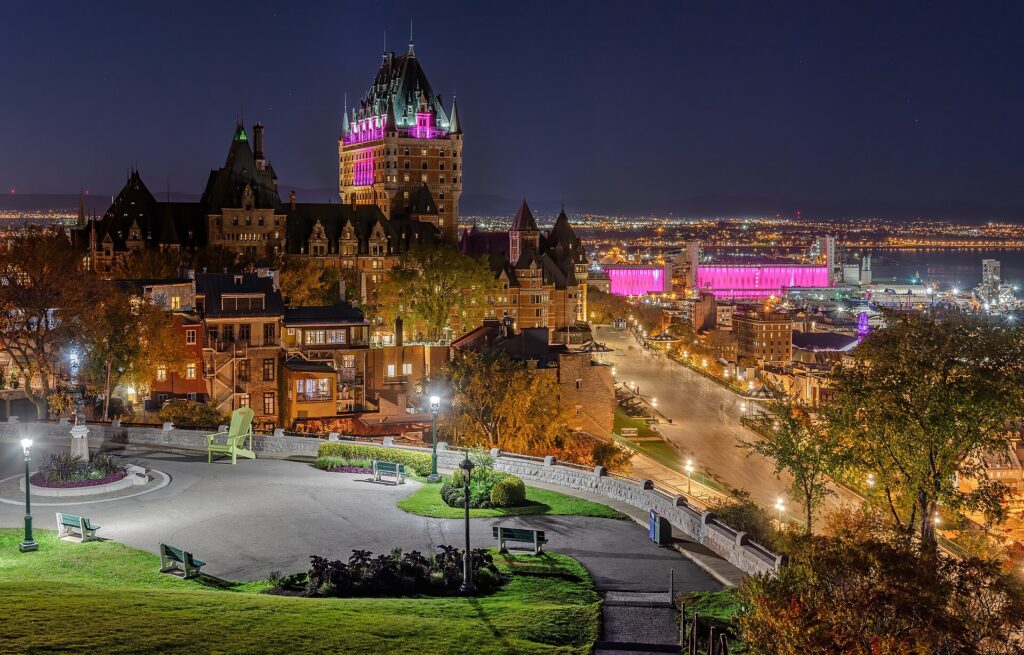
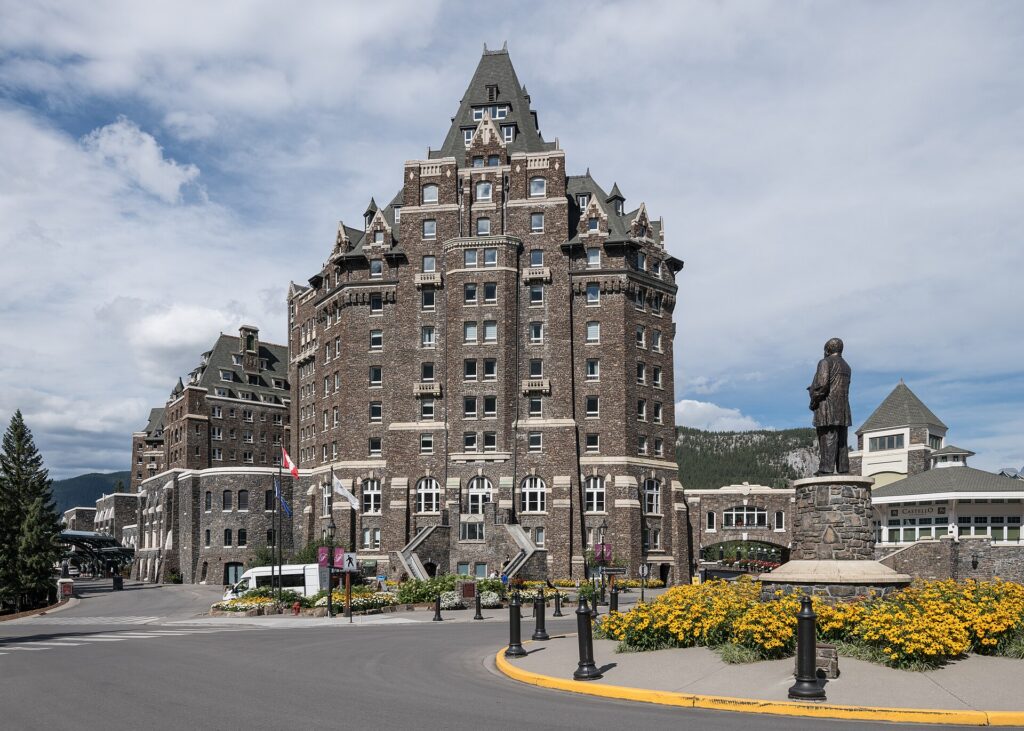
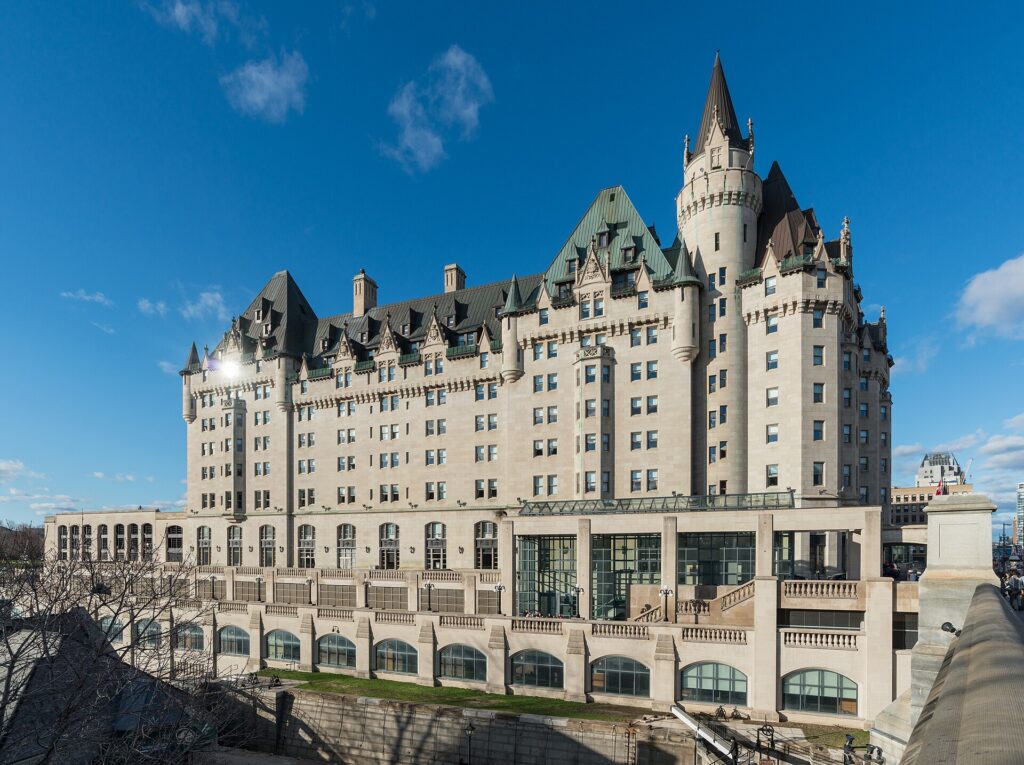
Hotel loyalty programs are free to join, and even occasional travelers benefit. Members usually get access to member rates on the chain’s own website, free Wi-Fi at many brands, mobile check-in and a better chance of having requests honored. The major chains are all well represented in Canada, including Marriott Bonvoy and Hilton Honors. Canada’s famous railway-era hotels, such as the Château Frontenac in Quebec City, the Banff Springs, the Chateau Lake Louise, the Royal York in Toronto and the Château Laurier in Ottawa, are operated under the Fairmont brand, part of Accor, whose program is ALL – Accor Live Limitless.
Many Canadian travel credit cards also include benefits that matter for hotel stays, such as trip cancellation or interruption insurance, or points that can be redeemed for travel. Benefits and eligibility differ by card and change over time, so read your card’s current terms before you rely on them, and check whether coverage requires the booking to be charged to that card.
Book in a way that the program recognizes if you want points and elite credit, which usually means directly with the hotel. And do not let points override location: a hotel of your preferred brand that adds an hour of travel each day is rarely worth it.
Hack 4: Use filters and the map to find the right location
Filters save time and money when you use them for what matters:
- Free cancellation, for the reasons above.
- Breakfast included, which is often good value, especially in cities where breakfast out is expensive.
- Parking, if you are driving. Downtown hotels in Toronto, Vancouver, Montreal and other big cities often charge a nightly parking fee, sometimes valet-only.
- Guest rating with a meaningful number of recent reviews, rather than a high score based on a handful.
- Pool, kitchenette or family rooms, if they matter to you, especially in winter when an indoor pool is a lifesaver with children.
Then switch to the map. In Canada’s big cities, a hotel near a subway or SkyTrain station can save you the cost of a car and hours in traffic; in winter, staying near a station or an underground walkway network, such as Toronto’s PATH or Montreal’s underground city, keeps you out of the cold. Plot the places you will visit most and look for hotels in the middle of them. Our city transport guides, including Toronto: car rental or public transit and Montreal: rent a car or use transit, explain how getting around works in each city.
Hack 5: Plan the flight, hotel and car together
A hotel booking depends on everything around it. Your flight sets your arrival and departure days and whether you need an early check-in or late checkout; your transport plan decides whether you need hotel parking; and in the Rockies or the Maritimes, where a car is often essential, rental availability can shape the itinerary. Planning the three together helps in several ways:
- Dates. A cheaper flight a day earlier may be worth an extra hotel night. Compare fares on our flight search across a range of dates before you lock the hotel.
- Location. If you are renting a car for the whole trip, a hotel with free parking outside the core may beat a downtown hotel with an expensive garage. If you are not, location near transit matters much more.
- Pickup point. Renting at the airport versus downtown can change your hotel choice. Compare both on our car rental search.
Packages that bundle a flight and hotel can sometimes be cheaper than booking separately, but not always, and they often come with stricter change rules. Compare the package against the parts and read the cancellation terms for each element.
Hack 6: Contact the hotel directly after you book
After booking, a short, polite message or call to the hotel can make a real difference to your stay. It is the best way to:
- Confirm requests, such as a crib, connecting rooms, a quiet room, an accessible room or a particular bed configuration, which are otherwise only preferences.
- Ask about early check-in or late checkout, especially if your flight arrives in the morning or leaves in the evening.
- Mention a special occasion, such as an anniversary or birthday. There is no guarantee, but hotels sometimes note it on the reservation.
- Check parking and access, such as the height limit on an underground garage, which matters with a roof box or a large rental.
- Ask about renovations if recent reviews mention construction.
Something simple works: “Hello, I have a reservation arriving on [date] under [name]. We are celebrating an anniversary, and I wanted to ask whether a quiet room on a higher floor might be possible. Thank you.” Be courteous, keep expectations realistic, and do not expect a free upgrade just for asking.
Hack 7: Read reviews critically, and focus on recent ones
An overall rating tells you less than it seems. Hotels change: rooms are renovated, management changes, a new building goes up across the street. Read reviews with a method:
- Sort by most recent and focus on the last few months.
- Look for patterns, not individual complaints. One review about a noisy room is noise; five is a problem.
- Read the specifics about cleanliness, noise, beds, Wi-Fi, parking and staff, which matter more than general enthusiasm.
- Match reviewers to your trip. A family’s view of a hotel’s pool is more useful to you than a business traveler’s, and vice versa.
- Look at guest photos, which show the room as it is, rather than professional photography.
- Check for renovation notes. If reviews mention work in progress, contact the hotel to ask whether it will affect your dates.
Taxes and fees on Canadian hotel stays
Canadian hotel bills often surprise visitors, because several layers of tax and fees can apply, and the combination differs by province and city.
- Sales tax. Accommodation is subject to the federal GST or the harmonized HST, depending on the province, and in some provinces to provincial sales tax as well; Quebec has its own QST.
- Accommodation taxes. Many provinces and cities add a separate tax on hotel stays, such as Toronto’s Municipal Accommodation Tax, British Columbia’s Municipal and Regional District Tax in participating communities, and Quebec’s tax on lodging.
- Destination marketing fees. Some hotels add their own fee to fund tourism promotion. Read the rate details to see whether it applies.
- Parking and resort fees. Downtown parking can be a significant nightly charge; some resort properties add a daily resort fee.
Canada amended its Competition Act in 2022 to address “drip pricing”, the practice of advertising a price that cannot be obtained because mandatory fees are added later; the Competition Bureau publishes guidance on it. Mandatory fees should be included in the price you are shown, but taxes may still be added at the end. Either way, the total at the final step is the only figure to compare.
Paying and checking in
Most Canadian hotels ask for a credit card at check-in, both for the stay and for a hold to cover incidentals, which is released after checkout. Some accept debit cards, but they may take a larger hold or place it as an actual charge, which can tie up your money for days. If you plan to pay by debit or cash, contact the hotel before arrival to ask. Some hotels also set a minimum age for the person checking in. Prepaid rates are charged at booking; pay-at-hotel rates are charged at the property, sometimes in Canadian dollars even if the booking site showed another currency.
International visitors should also check entry requirements. Visa-exempt travelers flying to Canada from countries other than the United States generally need an Electronic Travel Authorization, and entry rules change, so confirm them on the official page before you book anything non-refundable.
Where to stay: a city-by-city guide
Toronto
Canada’s largest city has the widest choice. The Entertainment District and the financial core put you near the CN Tower, theaters, the waterfront and Union Station, with the PATH underground network for winter. Yorkville is upscale; the airport strip suits early flights. Rates rise sharply during TIFF in September and big conventions. Compare options on our Toronto hotel page.
Montreal
Old Montreal offers cobblestone streets and boutique hotels; downtown near the Metro is practical and connected to the underground city. The Grand Prix weekend and the summer festival season are the busiest times. See our Montreal hotel page.
Vancouver
Downtown, Coal Harbour and Yaletown are walkable and on the SkyTrain; the Canada Line links the airport to downtown. Summer and the cruise season, from spring to fall, are the peak. See our Vancouver hotel page, and Destination BC for trip ideas across the province.
Quebec City
Staying inside or just outside the walls of Old Quebec is the experience most visitors want, and rooms there are limited; book early for summer, the fall colors and the Winter Carnival in February. See our Quebec City hotel page and Bonjour Québec for the province.
Ottawa
The ByWard Market and downtown near Parliament Hill are central and walkable. Canada Day and Winterlude are the peaks, and weekday rates reflect government business travel. See our Ottawa hotel page.
Calgary, Banff and Lake Louise
Calgary’s downtown and the Beltline suit city stays; during the Stampede in July, book months ahead. For the Rockies, Banff and Lake Louise have limited rooms and high summer demand, and Canmore, just outside the park, often has more availability. Every vehicle in Banff National Park needs a Parks Canada pass, and Banff and Lake Louise Tourism lists local options. See our Calgary hotel page and Travel Alberta.
Edmonton, Winnipeg and Halifax
Edmonton’s Ice District puts you near the arena and downtown; Winnipeg’s Exchange District is its historic core; Halifax’s downtown waterfront is the base for exploring Nova Scotia, where summer is short and busy. Compare on our Edmonton, Winnipeg and Halifax hotel pages.

When to book: a quick reference
| Destination and season | Book | Why |
|---|---|---|
| Banff, Lake Louise, Jasper in summer | As early as possible | Few rooms, short season, very high demand |
| Whistler or Mont-Tremblant at Christmas | Several months ahead | Ski holidays fill resort villages |
| Old Quebec in summer or Carnival | Several months ahead | Limited inventory inside the walls |
| Calgary during the Stampede | Several months ahead | Ten days of citywide demand in July |
| Montreal on Grand Prix weekend | As soon as dates are set | One of the busiest hotel weekends in the city |
| Toronto during TIFF | As soon as dates are set | Downtown hotels fill with festival visitors |
| Big-city trips in shoulder season | A few weeks ahead | Moderate demand; room to watch prices |
| Downtown weekend city breaks | A few weeks ahead | Business hotels often discount Friday and Saturday |
Common mistakes to avoid
- Comparing nightly rates instead of totals. Taxes, accommodation levies, destination fees and parking can change which hotel is cheapest.
- Booking non-refundable too early. It removes your ability to rebook if prices fall and leaves you exposed if plans change.
- Ignoring the event calendar. A festival or convention you did not know about can double the price of a routine trip.
- Underestimating the mountain parks. Waiting to book Banff or Lake Louise in summer often means no rooms at all.
- Forgetting parking. Downtown parking can add a substantial amount per night to the true cost.
- Paying in the wrong currency. Check whether you are being charged in Canadian dollars and what your card charges for conversion.
- Relying on an old overall rating. Recent reviews tell you about the hotel as it is now.
Frequently asked questions
What is the best way to book a hotel in Canada?
Compare rates across providers on a comparison tool such as our hotel search, check the hotel’s own site for member rates, and choose a refundable rate so you can rebook if the price drops.
Is it cheaper to book directly with the hotel?
Sometimes. Member rates on a chain’s own site can beat other channels, and booking directly usually earns loyalty points. Other times a third-party rate is lower. Compare the total, including cancellation terms.
Can I book a hotel in Canada without a credit card?
Some hotels accept debit cards or cash, but most prefer a credit card for the incidentals hold. If you plan to pay another way, contact the hotel before arrival.
When is the cheapest time to stay in Canadian hotels?
In most cities, the shoulder seasons of late spring and fall, and winter outside the holidays and festivals. Ski resorts reverse this, with summer usually cheaper.
Why is my hotel bill higher than the advertised rate?
Canadian hotel stays can attract GST or HST, provincial sales tax, accommodation taxes, destination marketing fees and parking. The total at the final booking step is the figure to compare.
How far ahead should I book a hotel in Banff?
For summer, as early as possible; the best-located rooms sell out months ahead. Canmore, just outside the park, is a good alternative when Banff is full.
Are Canadian hotel prices shown in Canadian dollars?
Hotels price in Canadian dollars, but booking sites may display another currency. Check which currency you will be charged in and whether your card adds a fee.
Ready to book? Compare stays across the country on our hotel search, find fares on our flight search, and price a rental on our car rental search. Heading to Toronto first? Our guide to things to do in Toronto and cheap flights to Toronto will get you started, and if you are traveling for work, our business travel hotels guide covers what to look for.
Keep planning with TicketScanner
- Hotel booking tips: the complete guide
- How to find the best hotel deals online
- Last-minute hotel booking: when waiting works
- When to book hotels for family vacations
- The business travel hotels guide
- Compare hotels across Canada — totals in Canadian dollars
- Toronto hotels
- Where to stay: Old Quebec
- Things to do in Toronto
- Best time to fly to Calgary (and Banff)
Leave a Reply