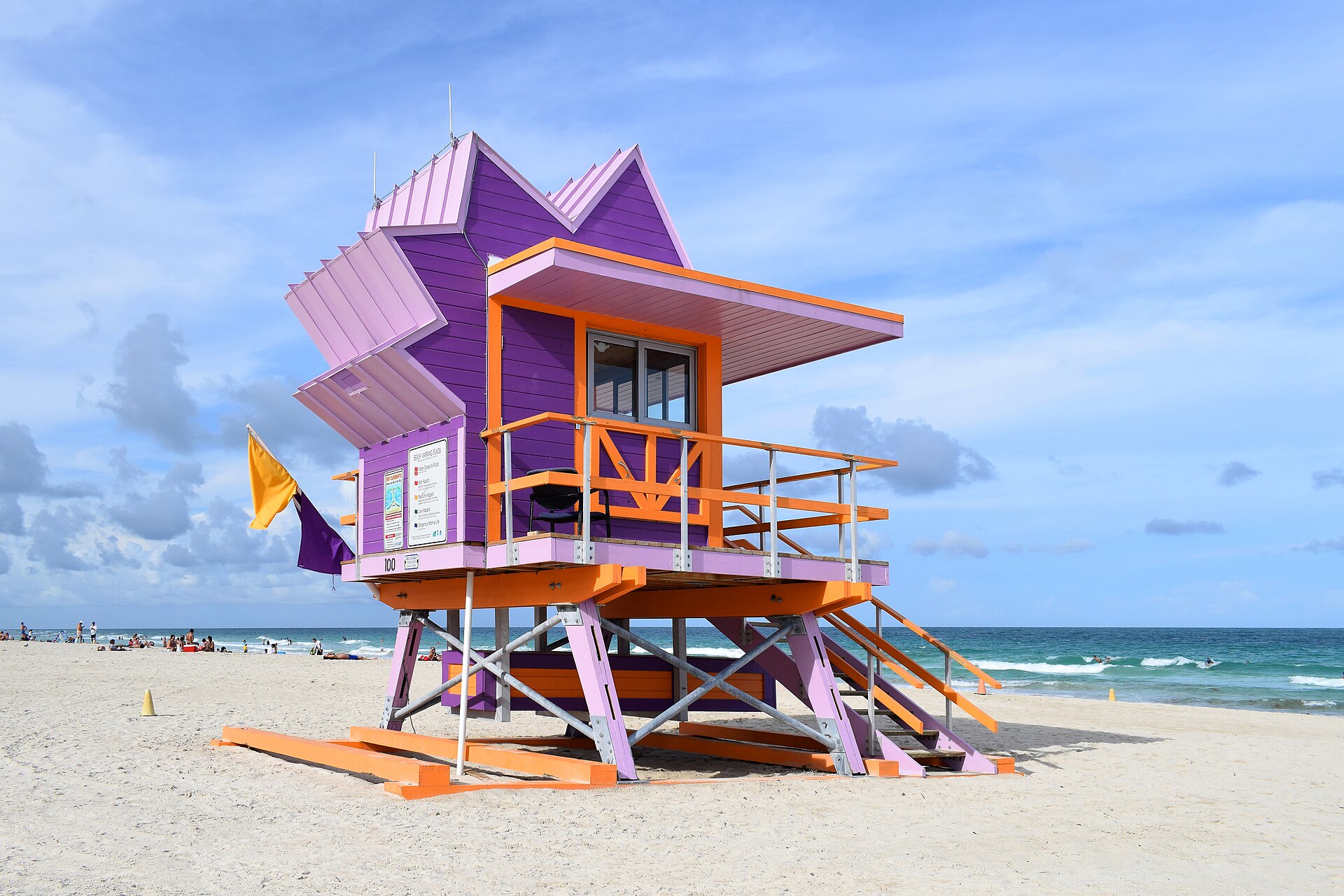
Miami turns the usual travel calendar upside down. In most of the United States, summer is peak season and winter is cheap; in Miami, the months when the rest of North America is cold are the ones that fill every hotel on Miami Beach, and the long, hot, stormy summer is when prices fall. On top of that seasonal swing sit some of the biggest events in the country, from Art Basel in December to spring break, Ultra and the Formula 1 Grand Prix, a cruise port that sends hundreds of thousands of passengers through the airport every winter weekend, and one of the busiest international gateways in the country, with flights to almost every capital in Latin America and the Caribbean. Add hurricane season, which runs for half the year, and the “best time” question has several right answers depending on what you want. This guide walks through the weather month by month, the fare seasons, the events that move prices, and how to handle the airport.
The short answer
For the best mix of weather and value, aim for late April to mid-May, after spring break and before the rainy season, and November to mid-December, when the humidity has broken but the winter crowds and holiday prices have not yet arrived. For pure weather, January to April is ideal, but it is also the most expensive stretch of the year. The cheapest fares and hotel rates usually come from late August to October, the heart of hurricane season, with June and early July not far behind. The most expensive stretches are Christmas to New Year, Art Basel week in early December, February and March with Presidents’ Day and spring break, and the weekends of Ultra and the Grand Prix. Whatever you choose, run a flexible-date search on our Miami flights page; a shift of a few days around a festival or a holiday weekend can change the fare band entirely.
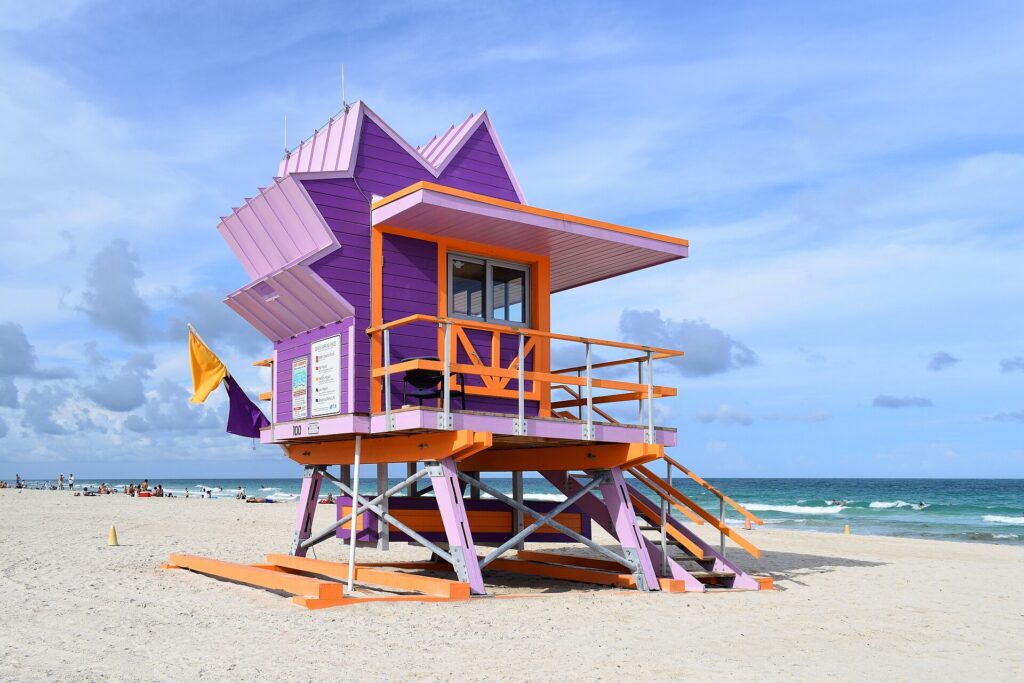
Miami’s weather, season by season
Miami has a tropical monsoon climate: warm every day of the year, with a dry, sunny winter and a hot, humid, rainy summer. The ocean keeps the extremes in check, so it rarely goes much above the low 30s °C (low 90s °F) even in August, and it almost never freezes. The figures below are approximate seasonal patterns based on the long-term climate normals from NOAA and the National Weather Service’s Miami office; check the current forecast before you pack, and in hurricane season, keep an eye on the tropics.
| Month | Typical daytime high | Typical overnight low | What it feels like | Fare pressure |
|---|---|---|---|---|
| January | around 24 °C (76 °F) | around 16 °C (61 °F) | Dry, sunny and pleasant; occasional cool fronts bring a few chilly nights | High, especially holiday weekends |
| February | around 26 °C (78 °F) | around 17 °C (63 °F) | The classic winter escape; low humidity, blue skies | Peak; Presidents’ Day and festivals |
| March | around 27 °C (80 °F) | around 19 °C (66 °F) | Warm and dry; the beach is busy | Peak; spring break, Ultra, Miami Open |
| April | around 28 °C (83 °F) | around 21 °C (70 °F) | Warm and still mostly dry; one of the nicest months | High early, easing after Easter |
| May | around 30 °C (87 °F) | around 23 °C (74 °F) | Hot; the rainy season usually starts in the second half | Moderate; Grand Prix and Memorial Day spikes |
| June | around 32 °C (89 °F) | around 25 °C (77 °F) | Hot and humid, with afternoon storms most days; hurricane season begins | Low to moderate |
| July | around 33 °C (91 °F) | around 26 °C (78 °F) | Steamy mornings, thunderstorms in the afternoon, warm sea | Moderate; July 4 weekend busier |
| August | around 33 °C (91 °F) | around 26 °C (79 °F) | The hottest, most humid month; hurricane risk rising | Low |
| September | around 32 °C (89 °F) | around 25 °C (78 °F) | Peak of hurricane season; hot, wet and quiet | Lowest of the year |
| October | around 30 °C (86 °F) | around 24 °C (75 °F) | Still humid and stormy early, drier by the end of the month | Low |
| November | around 27 °C (81 °F) | around 21 °C (69 °F) | The dry season arrives; warm and comfortable | Moderate; Thanksgiving spike |
| December | around 26 °C (78 °F) | around 18 °C (64 °F) | Dry, sunny and mild; perfect beach weather for northerners | High for Art Basel, peak from mid-month |
Three things the table cannot show. First, the rain pattern: summer rain in Miami usually arrives as a short, intense thunderstorm in the afternoon, often with lightning, and then clears; a forecast of rain every day in July rarely means a washed-out day, only a planned indoor hour. Second, the humidity: the heat index from June to September often feels far hotter than the thermometer reads, and walking tours are best done early. Third, hurricane season: it officially runs from June 1 to November 30, with the greatest activity from mid-August to mid-October. A direct hit on Miami in any given year is unlikely, but storms do cause cancellations and evacuations; the National Hurricane Center is the source to watch, and travel insurance is worth considering for trips in those months.
How Miami’s fare seasons work
Four forces drive seats into Miami: the winter escape, when travelers from the northern US, Canada and Europe head south between December and April; the events calendar, which piles some of the biggest festivals in the country into the same winter and spring months; the cruise port, which makes Friday to Sunday the busiest days at the airport from November to April; and Miami’s role as the gateway to Latin America and the Caribbean, which keeps international traffic high all year and adds holiday peaks of its own at Christmas and in the summer. The result is a long, expensive winter, a spring punctuated by event spikes, and a summer and fall where fares and hotel rates drop to their lowest of the year.
Peak season
Mid-December to April. The Christmas and New Year fortnight is the most expensive, followed closely by February and March, when the weather, Presidents’ Day, the festivals and spring break overlap. Art Basel week in early December is a separate spike, driven by hotels rather than seats; Miami Beach rates can multiply for that week alone. If you must travel in peak, book early, fly mid-week, avoid the cruise weekends if you can, and consider staying in Brickell, downtown or Mid-Beach rather than South Beach itself.
Shoulder season
Late April to May, and November to mid-December. These are the value windows: the weather is warm and mostly dry, the beach is less crowded, and hotels drop well below their February rates. Watch Easter weekend, the Grand Prix weekend in early May, Memorial Day at the end of May, and Thanksgiving in November, which each bring short spikes.
Low season
June to October, deepest from late August to early October. Fares and hotel rates are at their lowest, the ocean is at its warmest, and restaurants run the Miami Spice fixed-price menus in August and September. The trade-offs are heat, humidity, afternoon storms and the risk of a hurricane disrupting plans; book flexible rates, and watch the tropics in the week before you fly. The July 4 weekend and the Latin American summer holidays keep July busier than August.
As elsewhere, mid-week departures and early or late flights usually price below Friday and Sunday afternoons on the same route, and a search across a whole month reveals cheaper pairs of dates close to your first choice. Our guide to the best times to book explains how to read those patterns.
Miami month by month
January
Dry, sunny and warm by day, with the occasional cool front that sends locals into jackets and leaves visitors on the beach. After New Year’s Day, fares ease briefly before the winter peak builds; the Martin Luther King Jr. Day weekend (the third Monday of January) is busy. Art Deco Weekend on Ocean Drive, usually in mid-January, celebrates the district’s architecture with tours and street events, and the cruise season is in full swing, filling the airport on weekends.
February
The classic Miami month and one of the most expensive. The weather is close to perfect, the Presidents’ Day weekend (the third Monday of February) and the Canadian and European winter holidays bring crowds, and the calendar is full: the Miami International Boat Show, the Coconut Grove Arts Festival and the South Beach Wine and Food Festival all fall in February. Book early.
March
Warm, dry and busy. Spring break brings college students to South Beach for most of the month, and Miami Beach has in recent years imposed curfews, parking restrictions and extra security on the busiest weekends. The Calle Ocho festival in Little Havana, Miami Music Week and the Ultra Music Festival in late March, and the Miami Open tennis tournament into early April all push hotel rates up. It is a great month for weather and a hard one for value.
April
One of the best months. It is warm and still mostly dry, spring break is over, and fares and hotel rates fall steadily after Easter weekend. The sea is warming up, the evenings are long, and the beach is noticeably quieter by the end of the month. The second half of April is one of the strongest value-and-weather windows of the year.
May
Hot, with the rainy season typically beginning in the second half of the month. The Formula 1 Miami Grand Prix at Hard Rock Stadium in early May fills hotels across the county for its weekend, and Memorial Day weekend at the end of the month is busy on Miami Beach. Outside those dates, May is shoulder season with good prices.
June
Hurricane season officially begins on June 1, but early-season storms are usually weaker and less frequent. Afternoon thunderstorms become a daily rhythm, the humidity climbs, and hotel rates fall. Early June is a good time for a beach-and-food trip if you can handle the heat: the ocean is warm, the hotel pools are quiet, and restaurant reservations are easy again.
July
Hot, humid and stormy in the afternoons, with a warm ocean that feels like bath water. The July 4 weekend brings fireworks and crowds, and summer holidays in Latin America and Europe keep international traffic busy, so July is not as cheap as August. Plan outdoor sights for the mornings and museums, lunch and a siesta for the afternoons.
August
The hottest and most humid month, with hurricane risk rising through the month. Fares and hotel rates fall toward their annual low, and Miami Spice brings fixed-price menus at many of the city’s best restaurants, which makes August a genuinely good month for food lovers. Keep your plans flexible and watch the tropics.
September
The peak of hurricane season and the quietest, cheapest month of the year. The weather is hot and wet, and most days still include sunshine; hotel rates on Miami Beach are at their lowest, and Miami Spice continues. Labor Day weekend is the only real spike. If you are flexible and willing to rebook if a storm threatens, September offers the best value.
October
Still humid and stormy early in the month, with hurricane risk continuing, then noticeably drier and more comfortable by the end. Stone crab season opens in mid-October, fares remain low, and the Dolphins, Heat and Hurricanes seasons are under way. Late October is a good bet for value with improving weather.
November
The dry season arrives, the humidity drops, and Miami becomes very pleasant again. Hurricane season officially ends on November 30, the cruise season ramps up, and prices rise steadily through the month. Thanksgiving week (the fourth Thursday of November) is busy and expensive, but the first half of the month is one of the best value windows of the year.
December
Two months in one. Art Basel Miami Beach in early December makes that week one of the most expensive of the year for hotels, but the weeks either side are good value, with dry weather and holiday lights. From about December 18, fares and hotel rates jump for Christmas and New Year, which are the most expensive weeks of the year, with the Orange Bowl and New Year’s Eve fireworks over Biscayne Bay adding to the demand.

Events that move Miami flight and hotel prices
Cross-check these against your dates before you book. Exact dates shift each year; Greater Miami and the Beaches, the official tourism board, keeps the current calendar.
- Christmas to New Year, with the Orange Bowl and New Year’s Eve: the most expensive fortnight of the year.
- Presidents’ Day weekend (third Monday of February) and the February festivals: the Boat Show, the Coconut Grove Arts Festival and the South Beach Wine and Food Festival.
- Spring break (most of March, varying by college and school district).
- Miami Music Week, Ultra and the Miami Open (late March into early April).
- Formula 1 Miami Grand Prix (early May): a single weekend spike across the county.
- Memorial Day, July 4 and Labor Day weekends: short, sharp peaks on Miami Beach.
- Thanksgiving (fourth Thursday of November).
- Art Basel Miami Beach (early December): the biggest hotel spike of the year outside the holidays.
- Heat, Dolphins and Marlins home games, stadium concerts and playoff runs. Our Miami events page shows what is on sale for your dates.
- Cruise weekends from November to April, when Saturday and Sunday departures fill flights and airport-area hotels on Friday nights.
Getting in from the airport
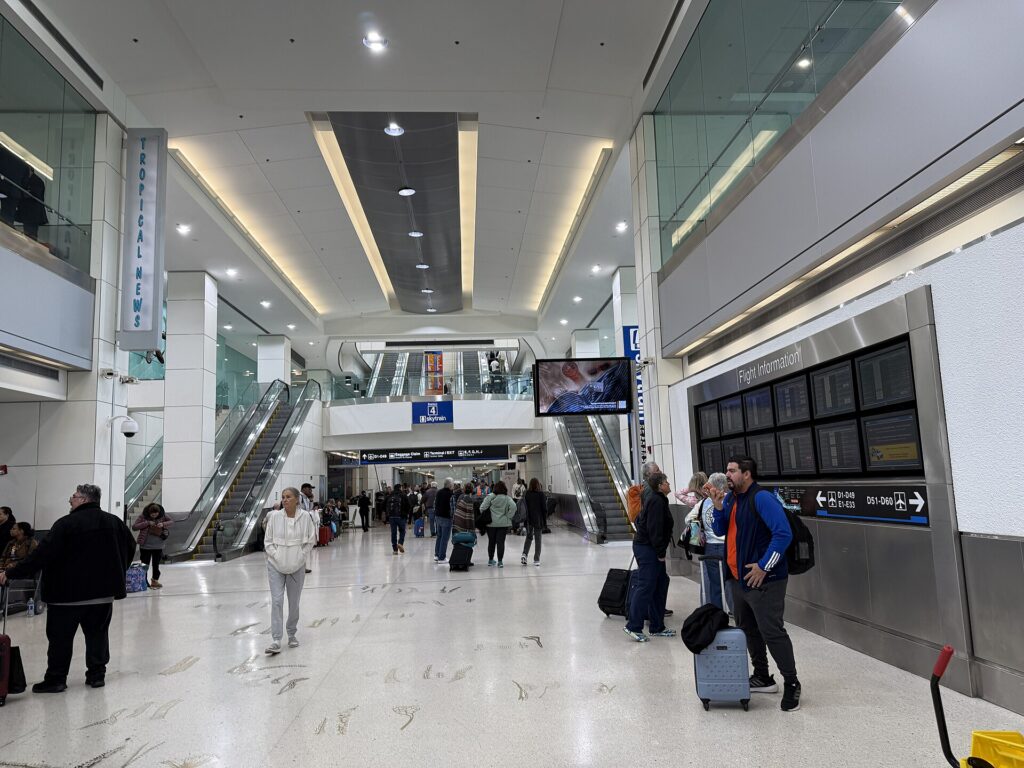
Miami International (MIA) is about 13 kilometers (8 miles) west of downtown and is one of the busiest international airports in the country. It is a major hub for American Airlines and the leading gateway between the US and Latin America, with nonstop flights to most large US and Canadian cities and to London, Madrid, Frankfurt and many other European hubs. The terminal is a single long building divided into North, Central and South sections. Getting into the city: the MIA Mover train links the terminal to the Miami Intermodal Center, where you can board Metrorail’s Orange Line to downtown and Brickell, pick up a car at the Rental Car Center, or connect to Tri-Rail for Fort Lauderdale and Palm Beach. The Airport Flyer bus runs directly to Miami Beach, taxis charge flat fares to zones on Miami Beach, and ride-hail pickups are on the arrivals level. Two other airports are worth checking: Fort Lauderdale-Hollywood, about 45 minutes north, often has lower fares from budget airlines, and Palm Beach, about 90 minutes north, is smaller and quieter. Our Miami car-versus-transit guide works through the ground options, and our MIA airport guide covers the layout.
Timing tricks that work for Miami
- Search the whole month. Art Basel, spring break, Ultra and the holiday weekends create sharp edges in the fare calendar. A calendar search on TicketScanner shows them instantly, and the week after a big event is often a bargain compared with the week of it.
- Book the hotel first in winter. A cheap fare into Art Basel week or the February festivals is not cheap once the room is added. Check South Beach hotel rates for the same dates before you commit to either.
- Avoid the cruise rush. If you are not sailing, skip Friday arrivals and Sunday afternoon departures in winter, when cruise passengers fill flights and the airport.
- Cruising? Fly in the day before. Ships do not wait for delayed flights, and a night in Miami is cheaper than missing the boat, especially in winter weather up north.
- Compare Fort Lauderdale. Budget airlines serve Fort Lauderdale heavily, and the fare difference can easily cover the extra drive or a Brightline ticket. If you are combining Miami with the theme parks, check flights to Orlando and consider driving or taking the train south.
- Use the hurricane season, carefully. Late August to October is the cheapest time of year; book flexible fares and refundable hotels, and watch the National Hurricane Center’s outlook the week before you fly.
- Build a winter buffer. Snow in the northern US and Canada disrupts connections into Miami in winter, and summer thunderstorms can delay afternoon flights; avoid the tightest connections. Our guide to how early to arrive covers what to allow.
- Flying out of Miami instead? The seasons shape outbound fares too; see cheap flights from Miami.
What to pack, by season
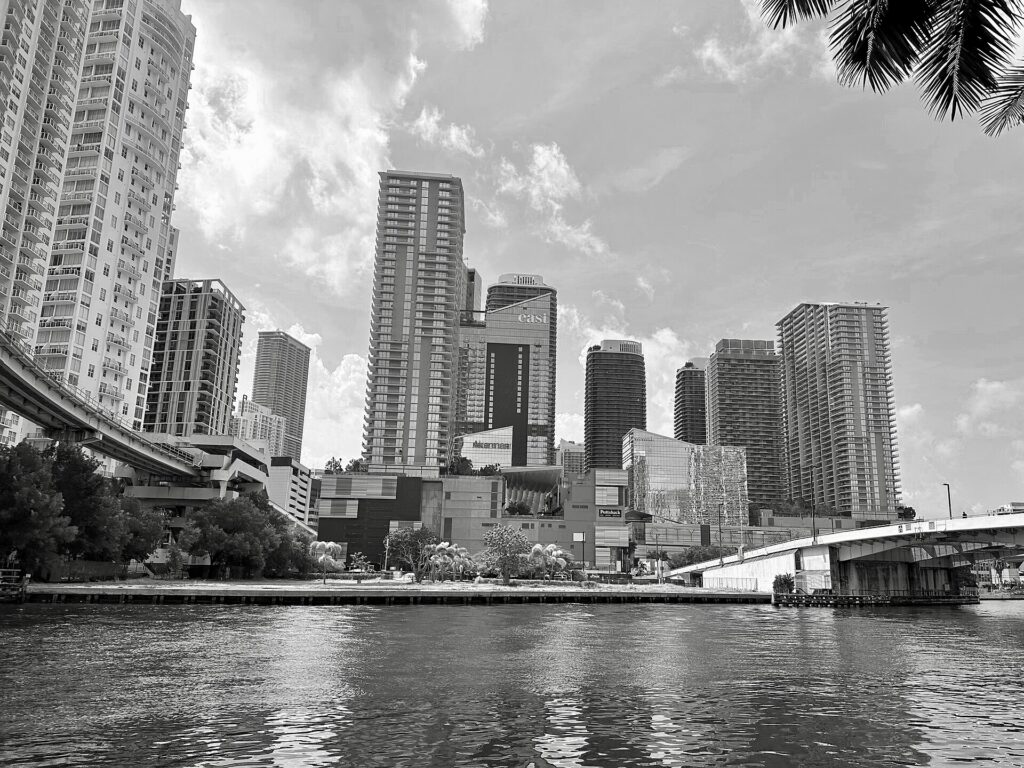
Winter (December to February): summer clothes for the day, a light sweater or jacket for cool fronts and air-conditioned restaurants, and a swimsuit for the beach. Spring (March to May): light clothing, sunglasses, a hat and strong sunscreen, because the sun is intense even when the air is not. Summer (June to August): the lightest breathable clothes you own, a compact umbrella or rain jacket for the afternoon storms, sandals that can handle a downpour, and plenty of sunscreen. Fall (September to November): the same as summer until October, with a light layer by November. In every season, bring something a little smarter for dinner in Miami Beach or Brickell, and a layer for the air conditioning, which is set cold everywhere.
The best time to fly to Miami for…
Beach weather
January to April for dry, sunny days and comfortable evenings, or late April and early May for warmer water with fewer crowds.
Art Basel
Early December, booked months in advance, with the hotel first and a stay in Wynwood, Brickell or downtown if Miami Beach is full.
The lowest fares
Late August to October, with flexible bookings and an eye on the tropics. Early June and the first half of November are good compromises.
Food lovers
August and September for Miami Spice, or mid-October to early May for stone crab season.
Cruises
November to April is the main season; fly in the day before, and check airport and PortMiami transfers in advance.
International visitors
Canadians need a valid passport; visitors from Visa Waiver Program countries need an approved ESTA before boarding, and everyone else needs a visa. U.S. Customs and Border Protection explains what applies to you, and the TSA lists what you can carry through security.
Frequently asked questions
What is the cheapest month to fly to Miami?
September is usually the cheapest, followed by late August, October and early June. Hotel rates on Miami Beach follow the same pattern.
What is the best month to visit Miami for weather?
March and April for warm, dry days, with January, February and November close behind. Summer is hot, humid and stormy.
Is it safe to visit Miami during hurricane season?
Most days of hurricane season are simply hot and humid, and a direct hit in any given year is unlikely. Book flexible rates, consider travel insurance, and follow the National Hurricane Center if a storm develops.
How expensive is Miami during Art Basel?
Very: hotel rates on Miami Beach and in Wynwood climb steeply and restaurants book out. Flights rise less. The weeks either side of Art Basel are much better value.
Should I fly into Miami or Fort Lauderdale?
Miami for the most nonstop and international options and the easiest transit into the city; Fort Lauderdale for lower fares on many domestic routes. Compare both before you book.
How far ahead should I book?
Well ahead for the holidays, Art Basel, February, spring break and the big festival weekends, when fares tend only to rise. For summer and fall, flexibility on dates matters more than booking early.
Does it rain every day in Miami in summer?
Often, but usually as a short afternoon thunderstorm rather than an all-day downpour. Plan the beach for the morning and keep an indoor option for mid-afternoon.
Ready to pick your dates? Compare fares across the whole month on our Miami flights page, then find a room with our South Beach hotel search. For what to do when you land, start with our first-timer’s guide to Miami, and if the Everglades or the Keys are on the list, price a rental car for those days.
Keep planning with TicketScanner
- Cheap flights to Miami — compare fares across the whole month
- South Beach hotels — book early for Art Basel and February
- Miami car rentals — for the Everglades and the Keys
- Events in Miami — Heat, Dolphins, Marlins, concerts and shows on sale
- Things to do in Miami: a first-timer's guide
- Miami: rent a car or use transit?
- Miami International (MIA) airport guide
- Cheap flights from Miami
- Best times to book flights and hotels
Leave a Reply