Tag: Miami

  • Miami: Should You Rent a Car or Rely on Public Transit?

    Miami: Should You Rent a Car or Rely on Public Transit?

    Miami is a city where the answer to “should I rent a car?” depends almost entirely on where you sleep and what you want to see. The famous parts of the city, South Beach, downtown, Brickell and Wynwood, are compact, flat and increasingly well served by free trolleys, the free Metromover and ride-hail, and parking in them is expensive and scarce. But Miami-Dade is a huge, sprawling county built around the car, the transit network thins out quickly beyond the core, and the trips that many visitors come for, the Everglades, the Florida Keys and the drive up the coast, are car trips. In between sits a surprisingly useful set of options: a rail line from the airport to downtown, a free people mover, trolleys on Miami Beach, and a fast intercity train to Fort Lauderdale, Palm Beach and Orlando. This guide explains how the city is laid out, how transit and fares work, what driving here is really like, when a car earns its keep, and gives you a straightforward way to decide.

    The short answer

    Skip the car if you are staying in South Beach, Brickell or downtown and your plans are the beach, the Art Deco District, Wynwood, Little Havana, the museums and the nightlife; walking, the free trolleys and Metromover, the Airport Flyer bus and the occasional ride-hail will cover it, and you will not pay nightly valet fees. Rent a car if the Everglades, the Florida Keys or the Gulf Coast are on the itinerary, if you are staying in the suburbs, Doral or near the airport, if you are traveling with small children and gear, or if Miami is one stop on a Florida road trip. And if you want the best of both, rent for a day or two in the middle of a car-free stay. Compare rental rates for any of these plans on our Miami car rental page.

    How Miami is laid out

    Miami is really two cities joined by causeways. On the mainland, the City of Miami has downtown and Brickell on Biscayne Bay, Wynwood, the Design District and Little Haiti to the north, Little Havana to the west, and Coconut Grove and Coral Gables (a separate city) to the south, with the airport about 13 kilometers (8 miles) west of downtown. Across the bay, Miami Beach is a separate city on a long barrier island, with South Beach at its southern tip, Mid-Beach and North Beach above it, and the towns of Surfside, Bal Harbour and Sunny Isles continuing north. Five causeways cross the bay between them; the MacArthur and the Julia Tuttle carry most of the traffic. Beyond that, Miami-Dade County spreads west toward the Everglades and south toward Homestead and the Keys, and north into Broward County and Fort Lauderdale without a break. The core is compact enough to explore without a car; the county is not.

    Hotels cluster in South Beach, along Collins Avenue in Mid-Beach and North Beach, in Brickell and downtown, near the airport and in Doral, and in smaller numbers in Coconut Grove and Coral Gables. If you are going car-free, South Beach, Brickell and downtown are the easiest bases.

    Getting in from the airport

    Miami International (MIA) is well connected by Florida standards. The free MIA Mover train runs from the terminal to the Miami Intermodal Center, where you will find the Rental Car Center, with every major company under one roof, and the Miami Airport station for Metrorail’s Orange Line, which reaches downtown and Brickell in around 15 to 20 minutes, and for Tri-Rail, the commuter train north to Fort Lauderdale and Palm Beach. For Miami Beach, the Airport Flyer bus runs from the terminal to South Beach and up Collins Avenue for a standard bus fare, and takes around 45 minutes to an hour depending on traffic. Taxis charge flat fares to zones on Miami Beach, and ride-hail pickups are on the arrivals level; the drive to South Beach takes 20 to 40 minutes, longer at rush hour. Check the airport’s site for current ground-transport details; our MIA airport guide covers the layout.

    A Metromover car on its elevated track in downtown Miami
    The Metromover: free, automated and the easiest way around downtown and Brickell (Photo: Phillip Pessar via Wikimedia Commons, CC BY 2.0)

    Miami’s transit, explained

    Miami-Dade Transit runs Metrorail, Metromover and the Metrobus network. The rail lines are clean, elevated and useful for the corridors they serve, and the free Metromover is one of the best-value rides in the country; the limitation is coverage, because Metrorail does not cross the bay to Miami Beach, and the buses that fill the gaps are often slow in traffic.

    Metrorail

    An elevated heavy-rail system of about 40 kilometers (25 miles) with two lines, Green and Orange, that share tracks through the center of the city. The Orange Line starts at the airport; the Green Line starts in the northwest suburbs; both run through the Civic Center hospital district, Overtown and downtown (Government Center station), then south through Brickell and on to Vizcaya, Coconut Grove, Douglas Road, University (for Coral Gables and the University of Miami) and Dadeland. For a visitor, the useful stretch is the airport to downtown and the run south to Vizcaya and the Grove. Trains run from early morning until around midnight, with lower frequency in the evenings and on weekends.

    Metromover

    A free, automated, elevated people mover with three loops: the Inner Loop around downtown, the Omni Loop north to Museum Park, the Pérez Art Museum and the Adrienne Arsht Center, and the Brickell Loop south through the financial district. It connects with Metrorail at Government Center and Brickell stations, stops near Bayside Marketplace and the Kaseya Center, and is the easiest way to move around the core. Riding a full loop is also a cheap tour of the skyline.

    Buses and trolleys

    Metrobus covers the whole county, including the Airport Flyer to Miami Beach and routes across the causeways, but buses share the roads with everyone else and can be slow. For visitors, the more useful services are the free trolleys: the City of Miami trolley routes serve Brickell, downtown, Wynwood, Little Havana, Coconut Grove and other neighborhoods; the Miami Beach trolley runs free loops through South Beach, Mid-Beach and North Beach; and Coral Gables runs its own free trolley along Ponce de Leon Boulevard. Several cities also run Freebee, a free on-demand electric shuttle booked through an app, within set zones.

    Fares and tickets

    Metromover and the city trolleys are free. For Metrorail and Metrobus, you can load an EASY Card or EASY Ticket at station machines, pay through the transit agency’s app, and, on most readers, tap a contactless bank card or phone wallet; check the current options and fares on the Miami-Dade Transit site before you go. Day and week passes are available and can pay off on a heavy sightseeing day.

    Accessibility

    All Metrorail and Metromover stations have elevators, and buses and trolleys have ramps or lifts. Elevator outages do happen, so check the agency’s service alerts before relying on a particular station.

    Beyond Miami-Dade Transit

    • Walking and cycling. South Beach, downtown, Brickell and Wynwood are flat and walkable, though the heat and the sun from May to October make distances feel longer. Citi Bike Miami docks are spread across Miami Beach and the city, the Miami Beach Beachwalk and Baywalk are good for cycling, and shared e-scooters operate in parts of the city.
    • Taxis and ride-hail. Uber, Lyft and licensed taxis operate everywhere. For a group of three or four, a ride across the causeway is often competitive with transit and much faster.
    • Brightline. The intercity train runs from MiamiCentral station downtown to Aventura, Fort Lauderdale, Boca Raton, West Palm Beach and Orlando International Airport, in about three and a half hours to Orlando. Brightline is the way to add a Fort Lauderdale or Palm Beach day, or the theme parks, without a car.
    • Tri-Rail. The Tri-Rail commuter line runs north from the airport through Broward and Palm Beach counties, with some trains continuing to MiamiCentral downtown; it is slower than Brightline but cheaper.
    • Tours and shuttles. Tour companies run day trips from Miami hotels to the Everglades, Key West and the Keys, a practical alternative to driving for a single day out.
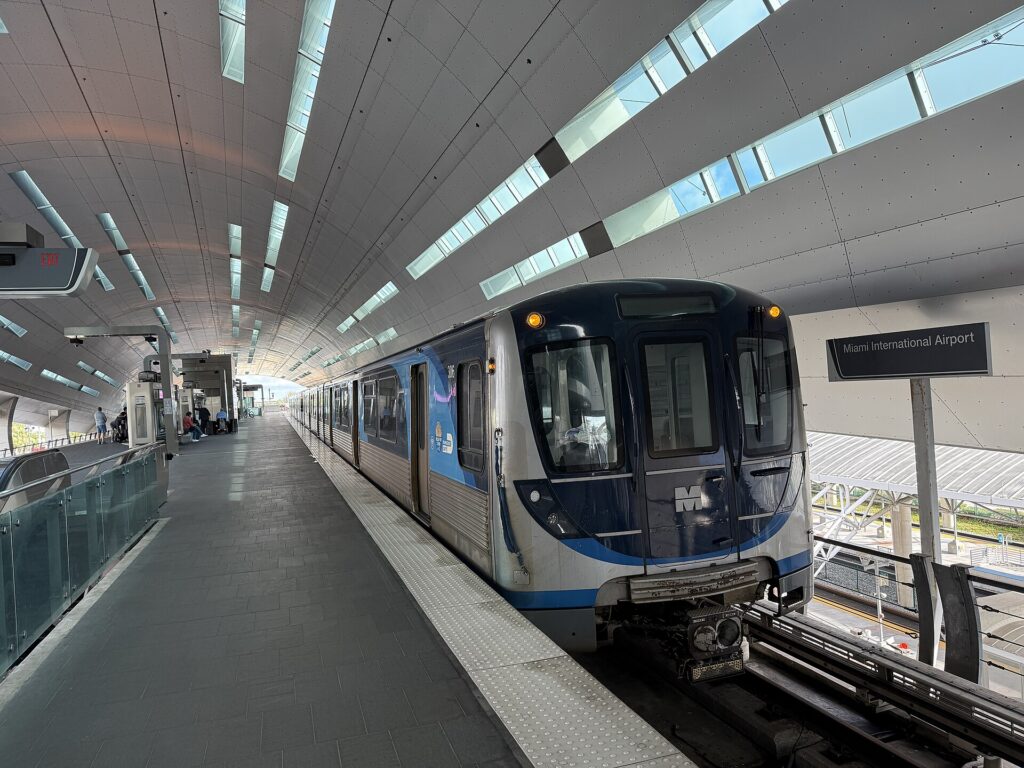
    A Miami-Dade Metrorail train on the elevated line
    Metrorail's Orange Line links the airport with downtown and Brickell (Photo: Dough4872 via Wikimedia Commons, CC BY-SA 4.0)

    Driving in Miami: what it is really like

    Driving in Miami is not difficult in the technical sense: the roads are flat, wide and on a grid, and signage is clear. It is, however, stressful. Traffic on I-95, the Palmetto Expressway (SR 826) and the Dolphin Expressway (SR 836) is heavy for much of the day, not only at rush hour, and local driving is assertive: fast lane changes, late merges and little patience at green lights. The causeways to Miami Beach back up on weekend evenings, during events and whenever there is a crash or a drawbridge opening, and South Beach itself is slow going at night. Heavy summer downpours can reduce visibility to almost nothing and flood low-lying streets within minutes.
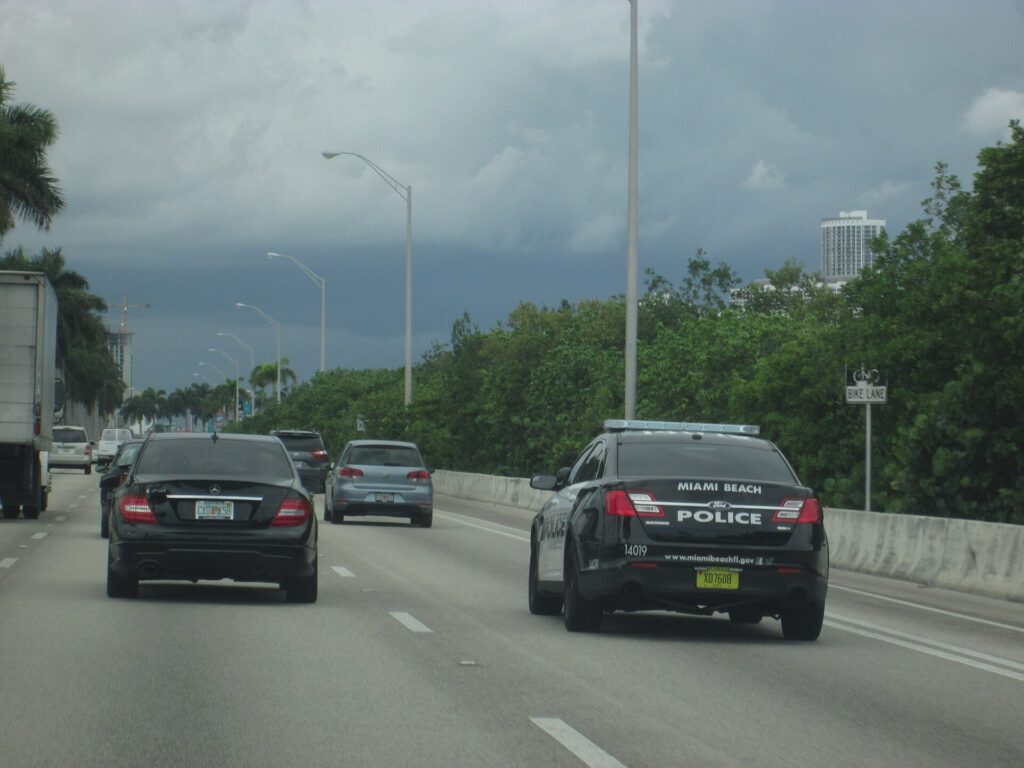
    A causeway crossing Biscayne Bay between Miami and Miami Beach
    The causeways to Miami Beach, which back up on weekend evenings and event nights (Photo: Ivan Curra via Wikimedia Commons, CC BY-SA 3.0)

    Parking

    Parking is the strongest argument against a car in the core. Many South Beach hotels offer only valet parking, charged by the night, and it can add significantly to the cost of a stay. On-street parking in South Beach and Brickell is metered, paid by app or machine, and expensive, and the city garages fill on weekends and during events; residential zones are strictly enforced and towing is fast and costly. Downtown and Brickell have plenty of garages, priced for office workers during the week. Outside the core, parking at the malls, Coral Gables, Coconut Grove, Key Biscayne and the Everglades visitor centers is straightforward, though Shark Valley’s lot fills early on winter weekends.

    Rules and conditions worth knowing

    • Tolls are all electronic. The Dolphin Expressway, the Airport Expressway, Florida’s Turnpike, the express lanes on I-95 and the Rickenbacker and Venetian Causeways charge tolls, mostly with no cash booths. Rental companies bill tolls plus a daily convenience fee through their own programs, which can add up; ask at the counter what applies, and whether you can use your own transponder. SunPass explains how Florida’s system works.
    • Headlights in the rain. Florida law requires headlights in rain, smoke and fog. In a heavy downpour, slow down and leave a large gap; do not stop in the travel lanes.
    • Flooded streets. Heavy storms and the seasonal king tides in the fall can flood streets in Miami Beach, Brickell and other low-lying areas. Do not drive through standing water; salt water damages cars, and the rental agreement will not cover it kindly.
    • Hurricanes. If a storm threatens, follow evacuation orders; Miami Beach and the Keys are evacuated first. FL511 publishes road conditions and closures.
    • Red-light cameras operate at many intersections; fines follow the car, and the rental company will bill you with a fee added.
    • Right turns on red are permitted after a full stop unless signed otherwise.
    • Move over for emergency and service vehicles stopped on the shoulder, which is Florida law, and do not hold a phone while driving through school or work zones.
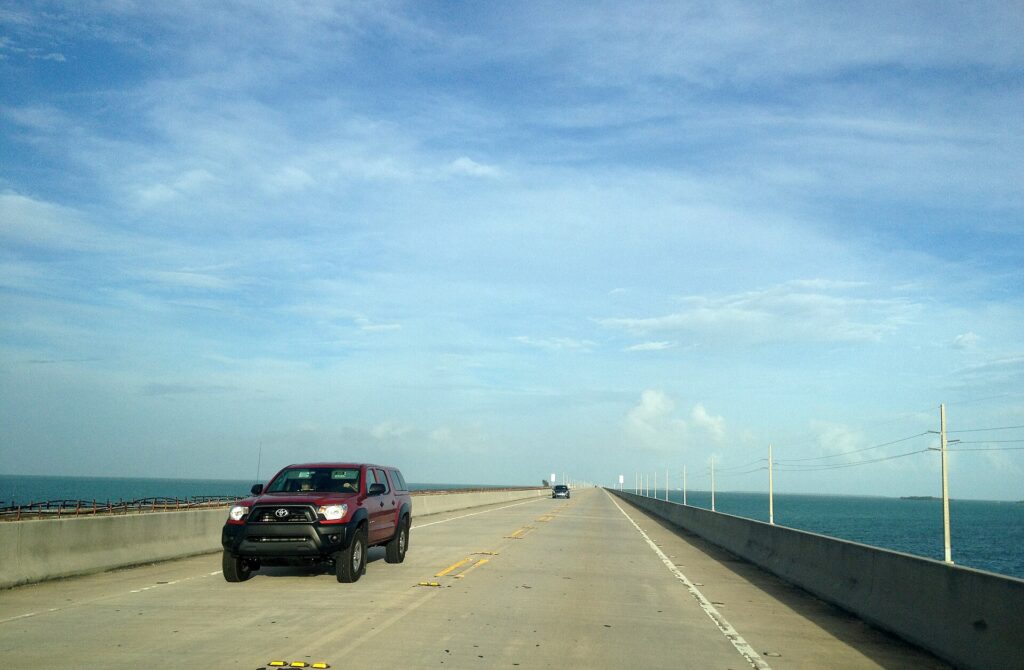
    The Seven Mile Bridge on the Overseas Highway in the Florida Keys
    The Seven Mile Bridge on the Overseas Highway: Key West is three and a half to four hours from Miami (Photo: David Broad via Wikimedia Commons, CC BY 3.0)

    When renting a car makes sense

    • The Everglades. Shark Valley and the Ernest F. Coe Visitor Center at the main park entrance are each about an hour from the city and have no useful public transit; Everglades National Park charges a per-vehicle entrance fee.
    • The Florida Keys. Key Largo is an easy day, Key West a long one, and the drive down the Overseas Highway is part of the experience.
    • Staying outside the core. Doral, the airport area, Kendall and the western suburbs are poorly served by transit for visitors.
    • Families with small children and gear. Beach equipment, strollers and car seats are easier with a car, especially for trips to Zoo Miami, Key Biscayne and the Everglades.
    • Florida road trips. Miami to Orlando, Naples and the Gulf Coast, or Palm Beach; our Orlando to Miami route guide covers the drive most visitors combine with the theme parks.

    If any of those apply, our rental car booking tips cover insurance, deposits and the questions to ask at the counter, and our family car rental guide looks at vehicle choice.

    When it does not

    • You are staying in South Beach and your plans are the beach, the Art Deco District and the restaurants.
    • You are in Brickell or downtown, where the Metromover, Metrorail and trolleys connect most of what you want to see.
    • You are in town for Art Basel, the Heat, a concert or a cruise, when parking is at its worst and ride-hail is easier.
    • You are traveling solo or as a couple and the rental, tolls, insurance and nightly valet add up to more than the rides you would take.

    The hybrid plan for a city-plus-Everglades-or-Keys trip

    Go car-free for the city days and rent for the day trips, and think carefully about where you pick up. Renting at the airport’s Rental Car Center makes sense if you are heading straight out of town on arrival, or if you are staying near the airport or in Doral; it has the widest choice and the easiest access to the highways. Renting from a neighborhood office in Miami Beach or Brickell makes sense if you are spending the first nights in the city, because you avoid the airport fees and the nightly valet on the nights you are not using the car. A common pattern that works well: the Airport Flyer, Metrorail or a taxi to your hotel, two or three car-free days, a one- or two-day rental from a city office for the Everglades and Key Largo, and a return at the airport on the way home, where one-way returns within the city are usually allowed. Book ahead for the winter season and the holidays, and ask about the toll program when you pick up. Compare the day rates on our Miami car rental page against a full-trip rental and the difference is usually obvious.

    A worked cost comparison

    Numbers change with the season and the booking window, so treat this as a method rather than a quote, and check current rates before deciding. For a four-night beach break in South Beach for two people, the car-free version costs the Airport Flyer or a flat-rate taxi each way, free trolleys on Miami Beach, and three or four ride-hail trips across the causeway to Wynwood, Little Havana and Brickell; the rental version adds four days of a compact car, four nights of hotel valet, the rental toll program, fuel and airport fees, and buys you very little you could not reach otherwise. The car-free option wins easily. For the same four nights with a day in the Everglades and a day in Key Largo, the car-free version adds two guided tours with hotel pickup for two people; the hybrid version adds a two-day rental from a city office, fuel, tolls, the park entrance fee and two nights of valet if you keep the car overnight. Priced honestly, the tours are often competitive for a couple who want a guide and an airboat ride, and the rental wins for families and anyone who wants to set their own pace, stop at the fruit stands in Homestead or snorkel at John Pennekamp. For a week split between Miami and Key West, a rental is the practical answer, and a one-way rental or a flight home from Key West is worth pricing. Run the rental rates for your dates on our Miami car rental page and put them beside the tour prices before you choose.

    Driving from Miami to the Keys in each season

    The Overseas Highway, US 1, runs from the mainland at Florida City across dozens of bridges to Key West, and it is one of the great drives in the United States. It is also mostly a two-lane road with few places to pass, and first-time visitors underestimate how long it takes. From Miami, allow around an hour to Key Largo and three and a half to four hours to Key West without traffic, and more with it. In winter, the high season, the road is at its busiest: southbound traffic builds on Friday afternoons and northbound on Sunday afternoons, and the stretch through the Upper Keys can crawl on holiday weekends. Leave early, or travel mid-week. In spring, the weather is at its best, with calm seas for snorkeling, but spring break and festival weekends add traffic. In summer, the road is quieter, the water is warm, and afternoon thunderstorms can make the bridges slow and slick; drive in the morning when you can. In fall, the peak of hurricane season, check the forecast before you set out; the Keys are the first place in the region to be evacuated, and the Overseas Highway is the only road out. In every season, obey the speed limits, which drop through the towns and are strictly enforced, watch the mile markers that serve as addresses along the route, and allow time to stop; the drive across the Seven Mile Bridge is a reason to go in itself. The Florida Keys tourism council has current information for each island.

    Decision table

    Your tripRecommendationWhy
    Beach break in South Beach, couple or soloNo carWalking, free trolleys and ride-hail cover it; hotel valet is expensive
    City break in Brickell or downtownNo carMetromover, Metrorail and trolleys link the core and the airport
    Art Basel, a cruise or a big eventNo carParking is at its worst; ride-hail and transit are easier
    City plus the Everglades or Key LargoHybrid: rent for a day or two from a city office, or take a tourCar-free city days, car or tour for the day trips
    Miami plus Key WestRent (consider one-way)The Overseas Highway is the trip; transit does not serve it well
    Family with small childrenRent for the whole stayGear, heat and spread-out attractions favor a car
    Staying near the airport or in DoralRent at the airportTransit to the sights is slow from the suburbs
    Florida road trip with OrlandoRent, or take Brightline one wayThe train links downtown Miami and Orlando airport

    Money-saving tips for both options

    • On transit: use the free Metromover and trolleys; take the Airport Flyer to Miami Beach instead of a taxi if you travel light; buy a day pass for a heavy Metrorail day.
    • On a rental: compare airport and city pickup, book early for the winter season, ask how the toll program is charged, decline extras you already have through a credit card or home policy (check first), and fill the tank before you return the car.
    • On the hotel: if you are renting, price the nightly valet into the room rate, and consider a hotel in Mid-Beach, Brickell or downtown with cheaper self-parking.
    • On timing: avoid I-95 and the causeways at rush hour, and the Overseas Highway southbound on Friday afternoons and northbound on Sunday afternoons in winter; the best time to fly to Miami guide lists the busiest weekends.
    • On day trips: for one or two people doing a single Everglades day, a guided tour with hotel pickup can cost less than a rental plus valet, tolls and fuel.

    Frequently asked questions

    Is it worth renting a car in Miami?

    For the Everglades, the Keys, the suburbs or a Florida road trip, yes. For a beach or city break based in South Beach, Brickell or downtown, no; transit, trolleys and ride-hail are enough.

    Is Miami public transit good for tourists?

    Good for the airport, downtown, Brickell and the Metrorail corridor south to Coconut Grove, with the free Metromover and trolleys filling gaps. It is weaker for Miami Beach, which has no rail link, and for the suburbs.

    How do I get from Miami airport to South Beach?

    The Airport Flyer bus in around 45 minutes to an hour, a flat-rate taxi, or ride-hail in 20 to 40 minutes depending on traffic.

    Can I visit the Everglades without a car?

    Yes, on a guided tour with hotel pickup from Miami; tour companies run daily trips. Public transit does not reach the park entrances.

    How do tolls work in a Miami rental car?

    Tolls are collected electronically, and rental companies charge them to you through their own programs, usually with a daily fee. Ask at the counter what the program costs before you drive away.

    Is parking expensive in South Beach?

    Yes. Hotel valet is charged by the night, street meters are pricey, garages fill on weekends, and towing in residential zones is strict.

    Can I take the train from Miami to Orlando?

    Yes. Brightline runs from downtown Miami to Orlando International Airport in about three and a half hours, with stops in Fort Lauderdale, Boca Raton and West Palm Beach.

    Whichever way you go, start with the flight. Compare cheap flights to Miami, choose a base with our South Beach hotel search, and if the Everglades or the Keys are on the list, price the rental for those dates on our Miami car rental page. For what to see once you arrive, start with our first-timer’s guide to Miami.

  • Best Time to Fly to Miami: Seasons, Weather & Prices

    Best Time to Fly to Miami: Seasons, Weather & Prices

    Miami turns the usual travel calendar upside down. In most of the United States, summer is peak season and winter is cheap; in Miami, the months when the rest of North America is cold are the ones that fill every hotel on Miami Beach, and the long, hot, stormy summer is when prices fall. On top of that seasonal swing sit some of the biggest events in the country, from Art Basel in December to spring break, Ultra and the Formula 1 Grand Prix, a cruise port that sends hundreds of thousands of passengers through the airport every winter weekend, and one of the busiest international gateways in the country, with flights to almost every capital in Latin America and the Caribbean. Add hurricane season, which runs for half the year, and the “best time” question has several right answers depending on what you want. This guide walks through the weather month by month, the fare seasons, the events that move prices, and how to handle the airport.

    The short answer

    For the best mix of weather and value, aim for late April to mid-May, after spring break and before the rainy season, and November to mid-December, when the humidity has broken but the winter crowds and holiday prices have not yet arrived. For pure weather, January to April is ideal, but it is also the most expensive stretch of the year. The cheapest fares and hotel rates usually come from late August to October, the heart of hurricane season, with June and early July not far behind. The most expensive stretches are Christmas to New Year, Art Basel week in early December, February and March with Presidents’ Day and spring break, and the weekends of Ultra and the Grand Prix. Whatever you choose, run a flexible-date search on our Miami flights page; a shift of a few days around a festival or a holiday weekend can change the fare band entirely.

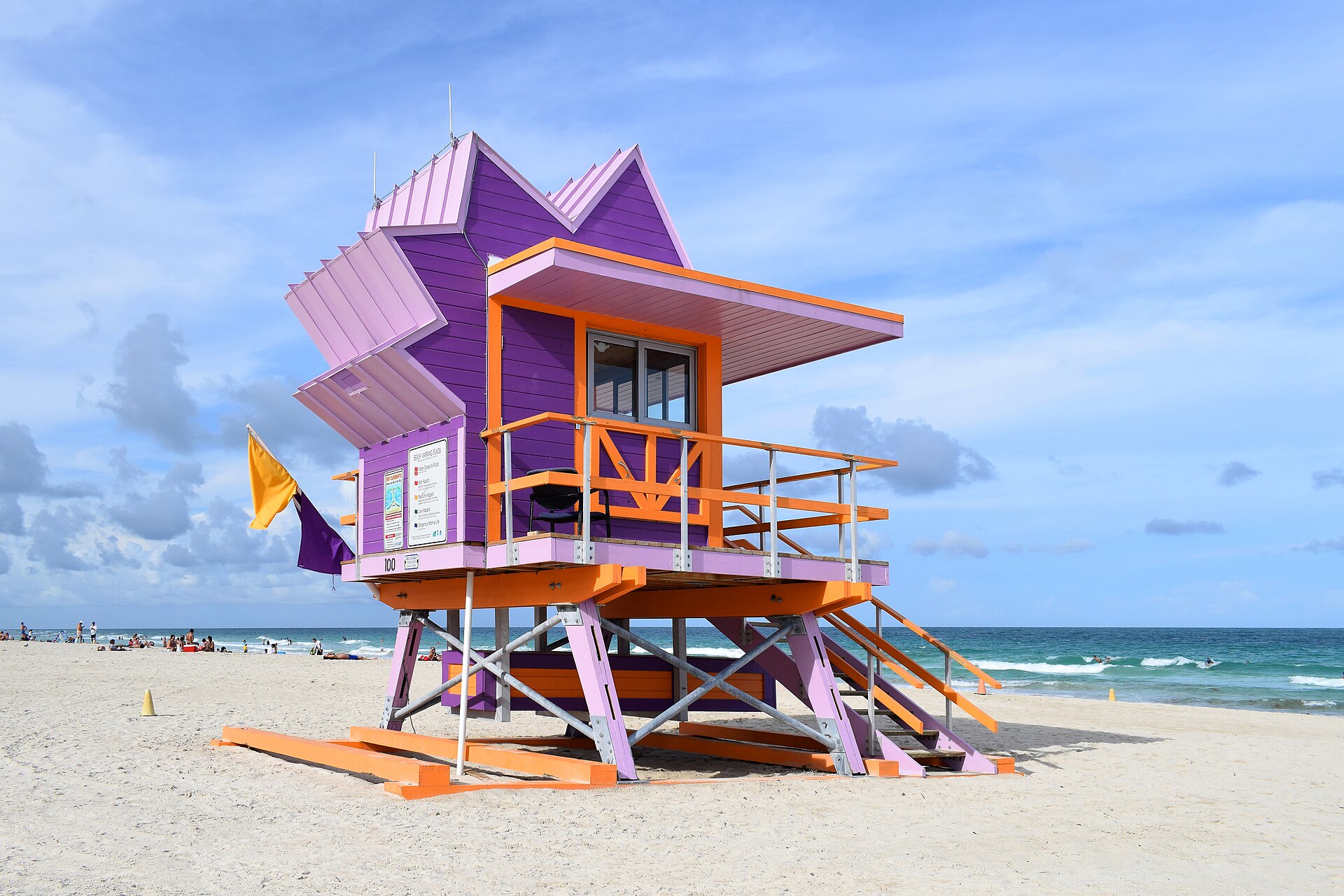
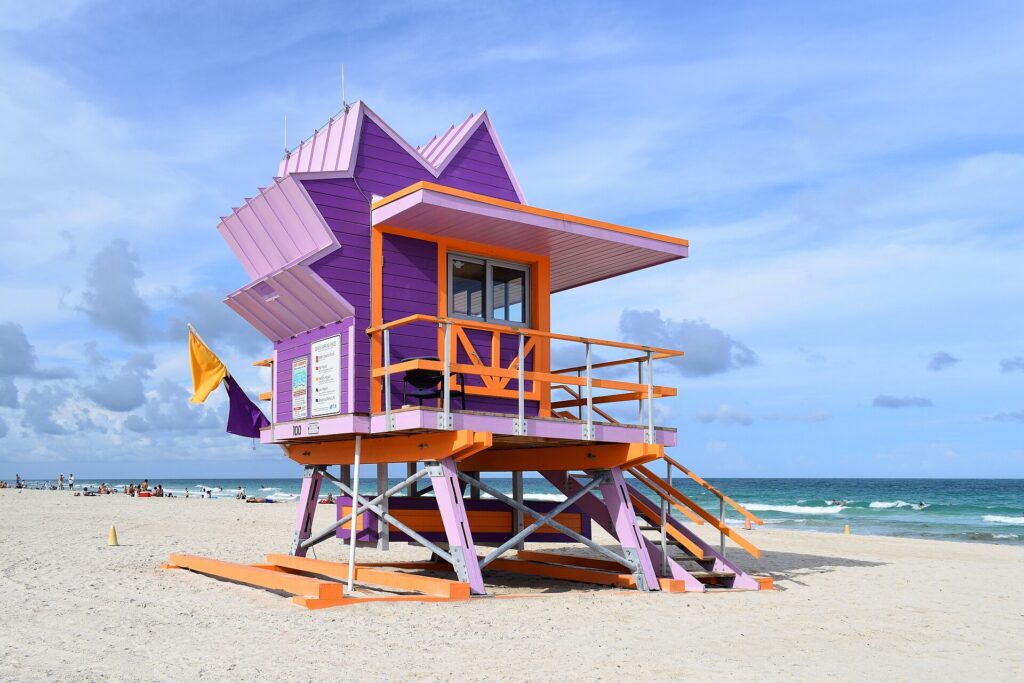
    A colorful lifeguard tower on South Beach in Miami Beach
    South Beach in the dry season, when the winter escape fills every hotel on Miami Beach (Photo: Radomianin via Wikimedia Commons, CC BY-SA 4.0)

    Miami’s weather, season by season

    Miami has a tropical monsoon climate: warm every day of the year, with a dry, sunny winter and a hot, humid, rainy summer. The ocean keeps the extremes in check, so it rarely goes much above the low 30s °C (low 90s °F) even in August, and it almost never freezes. The figures below are approximate seasonal patterns based on the long-term climate normals from NOAA and the National Weather Service’s Miami office; check the current forecast before you pack, and in hurricane season, keep an eye on the tropics.

    MonthTypical daytime highTypical overnight lowWhat it feels likeFare pressure
    Januaryaround 24 °C (76 °F)around 16 °C (61 °F)Dry, sunny and pleasant; occasional cool fronts bring a few chilly nightsHigh, especially holiday weekends
    Februaryaround 26 °C (78 °F)around 17 °C (63 °F)The classic winter escape; low humidity, blue skiesPeak; Presidents’ Day and festivals
    Marcharound 27 °C (80 °F)around 19 °C (66 °F)Warm and dry; the beach is busyPeak; spring break, Ultra, Miami Open
    Aprilaround 28 °C (83 °F)around 21 °C (70 °F)Warm and still mostly dry; one of the nicest monthsHigh early, easing after Easter
    Mayaround 30 °C (87 °F)around 23 °C (74 °F)Hot; the rainy season usually starts in the second halfModerate; Grand Prix and Memorial Day spikes
    Junearound 32 °C (89 °F)around 25 °C (77 °F)Hot and humid, with afternoon storms most days; hurricane season beginsLow to moderate
    Julyaround 33 °C (91 °F)around 26 °C (78 °F)Steamy mornings, thunderstorms in the afternoon, warm seaModerate; July 4 weekend busier
    Augustaround 33 °C (91 °F)around 26 °C (79 °F)The hottest, most humid month; hurricane risk risingLow
    Septemberaround 32 °C (89 °F)around 25 °C (78 °F)Peak of hurricane season; hot, wet and quietLowest of the year
    Octoberaround 30 °C (86 °F)around 24 °C (75 °F)Still humid and stormy early, drier by the end of the monthLow
    Novemberaround 27 °C (81 °F)around 21 °C (69 °F)The dry season arrives; warm and comfortableModerate; Thanksgiving spike
    Decemberaround 26 °C (78 °F)around 18 °C (64 °F)Dry, sunny and mild; perfect beach weather for northernersHigh for Art Basel, peak from mid-month

    Three things the table cannot show. First, the rain pattern: summer rain in Miami usually arrives as a short, intense thunderstorm in the afternoon, often with lightning, and then clears; a forecast of rain every day in July rarely means a washed-out day, only a planned indoor hour. Second, the humidity: the heat index from June to September often feels far hotter than the thermometer reads, and walking tours are best done early. Third, hurricane season: it officially runs from June 1 to November 30, with the greatest activity from mid-August to mid-October. A direct hit on Miami in any given year is unlikely, but storms do cause cancellations and evacuations; the National Hurricane Center is the source to watch, and travel insurance is worth considering for trips in those months.

    How Miami’s fare seasons work

    Four forces drive seats into Miami: the winter escape, when travelers from the northern US, Canada and Europe head south between December and April; the events calendar, which piles some of the biggest festivals in the country into the same winter and spring months; the cruise port, which makes Friday to Sunday the busiest days at the airport from November to April; and Miami’s role as the gateway to Latin America and the Caribbean, which keeps international traffic high all year and adds holiday peaks of its own at Christmas and in the summer. The result is a long, expensive winter, a spring punctuated by event spikes, and a summer and fall where fares and hotel rates drop to their lowest of the year.

    Peak season

    Mid-December to April. The Christmas and New Year fortnight is the most expensive, followed closely by February and March, when the weather, Presidents’ Day, the festivals and spring break overlap. Art Basel week in early December is a separate spike, driven by hotels rather than seats; Miami Beach rates can multiply for that week alone. If you must travel in peak, book early, fly mid-week, avoid the cruise weekends if you can, and consider staying in Brickell, downtown or Mid-Beach rather than South Beach itself.

    Shoulder season

    Late April to May, and November to mid-December. These are the value windows: the weather is warm and mostly dry, the beach is less crowded, and hotels drop well below their February rates. Watch Easter weekend, the Grand Prix weekend in early May, Memorial Day at the end of May, and Thanksgiving in November, which each bring short spikes.

    Low season

    June to October, deepest from late August to early October. Fares and hotel rates are at their lowest, the ocean is at its warmest, and restaurants run the Miami Spice fixed-price menus in August and September. The trade-offs are heat, humidity, afternoon storms and the risk of a hurricane disrupting plans; book flexible rates, and watch the tropics in the week before you fly. The July 4 weekend and the Latin American summer holidays keep July busier than August.

    As elsewhere, mid-week departures and early or late flights usually price below Friday and Sunday afternoons on the same route, and a search across a whole month reveals cheaper pairs of dates close to your first choice. Our guide to the best times to book explains how to read those patterns.

    Miami month by month

    January

    Dry, sunny and warm by day, with the occasional cool front that sends locals into jackets and leaves visitors on the beach. After New Year’s Day, fares ease briefly before the winter peak builds; the Martin Luther King Jr. Day weekend (the third Monday of January) is busy. Art Deco Weekend on Ocean Drive, usually in mid-January, celebrates the district’s architecture with tours and street events, and the cruise season is in full swing, filling the airport on weekends.

    February

    The classic Miami month and one of the most expensive. The weather is close to perfect, the Presidents’ Day weekend (the third Monday of February) and the Canadian and European winter holidays bring crowds, and the calendar is full: the Miami International Boat Show, the Coconut Grove Arts Festival and the South Beach Wine and Food Festival all fall in February. Book early.

    March

    Warm, dry and busy. Spring break brings college students to South Beach for most of the month, and Miami Beach has in recent years imposed curfews, parking restrictions and extra security on the busiest weekends. The Calle Ocho festival in Little Havana, Miami Music Week and the Ultra Music Festival in late March, and the Miami Open tennis tournament into early April all push hotel rates up. It is a great month for weather and a hard one for value.

    April

    One of the best months. It is warm and still mostly dry, spring break is over, and fares and hotel rates fall steadily after Easter weekend. The sea is warming up, the evenings are long, and the beach is noticeably quieter by the end of the month. The second half of April is one of the strongest value-and-weather windows of the year.

    May

    Hot, with the rainy season typically beginning in the second half of the month. The Formula 1 Miami Grand Prix at Hard Rock Stadium in early May fills hotels across the county for its weekend, and Memorial Day weekend at the end of the month is busy on Miami Beach. Outside those dates, May is shoulder season with good prices.

    June

    Hurricane season officially begins on June 1, but early-season storms are usually weaker and less frequent. Afternoon thunderstorms become a daily rhythm, the humidity climbs, and hotel rates fall. Early June is a good time for a beach-and-food trip if you can handle the heat: the ocean is warm, the hotel pools are quiet, and restaurant reservations are easy again.

    July

    Hot, humid and stormy in the afternoons, with a warm ocean that feels like bath water. The July 4 weekend brings fireworks and crowds, and summer holidays in Latin America and Europe keep international traffic busy, so July is not as cheap as August. Plan outdoor sights for the mornings and museums, lunch and a siesta for the afternoons.

    August

    The hottest and most humid month, with hurricane risk rising through the month. Fares and hotel rates fall toward their annual low, and Miami Spice brings fixed-price menus at many of the city’s best restaurants, which makes August a genuinely good month for food lovers. Keep your plans flexible and watch the tropics.

    September

    The peak of hurricane season and the quietest, cheapest month of the year. The weather is hot and wet, and most days still include sunshine; hotel rates on Miami Beach are at their lowest, and Miami Spice continues. Labor Day weekend is the only real spike. If you are flexible and willing to rebook if a storm threatens, September offers the best value.

    October

    Still humid and stormy early in the month, with hurricane risk continuing, then noticeably drier and more comfortable by the end. Stone crab season opens in mid-October, fares remain low, and the Dolphins, Heat and Hurricanes seasons are under way. Late October is a good bet for value with improving weather.

    November

    The dry season arrives, the humidity drops, and Miami becomes very pleasant again. Hurricane season officially ends on November 30, the cruise season ramps up, and prices rise steadily through the month. Thanksgiving week (the fourth Thursday of November) is busy and expensive, but the first half of the month is one of the best value windows of the year.

    December

    Two months in one. Art Basel Miami Beach in early December makes that week one of the most expensive of the year for hotels, but the weeks either side are good value, with dry weather and holiday lights. From about December 18, fares and hotel rates jump for Christmas and New Year, which are the most expensive weeks of the year, with the Orange Bowl and New Year’s Eve fireworks over Biscayne Bay adding to the demand.

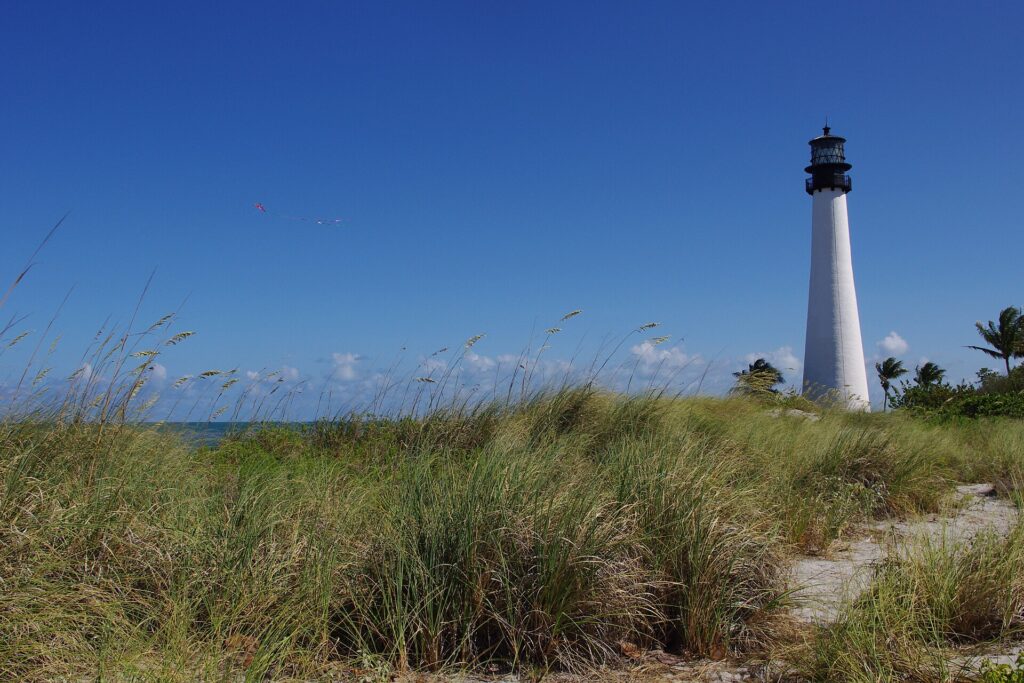
    The Cape Florida Lighthouse on Key Biscayne
    The Cape Florida Lighthouse on Key Biscayne, a quiet beach day in any season (Photo: Paolo Bernabei via Wikimedia Commons, CC BY-SA 3.0)

    Events that move Miami flight and hotel prices

    Cross-check these against your dates before you book. Exact dates shift each year; Greater Miami and the Beaches, the official tourism board, keeps the current calendar.

    • Christmas to New Year, with the Orange Bowl and New Year’s Eve: the most expensive fortnight of the year.
    • Presidents’ Day weekend (third Monday of February) and the February festivals: the Boat Show, the Coconut Grove Arts Festival and the South Beach Wine and Food Festival.
    • Spring break (most of March, varying by college and school district).
    • Miami Music Week, Ultra and the Miami Open (late March into early April).
    • Formula 1 Miami Grand Prix (early May): a single weekend spike across the county.
    • Memorial Day, July 4 and Labor Day weekends: short, sharp peaks on Miami Beach.
    • Thanksgiving (fourth Thursday of November).
    • Art Basel Miami Beach (early December): the biggest hotel spike of the year outside the holidays.
    • Heat, Dolphins and Marlins home games, stadium concerts and playoff runs. Our Miami events page shows what is on sale for your dates.
    • Cruise weekends from November to April, when Saturday and Sunday departures fill flights and airport-area hotels on Friday nights.

    Getting in from the airport

    Miami International (MIA) is about 13 kilometers (8 miles) west of downtown and is one of the busiest international airports in the country. It is a major hub for American Airlines and the leading gateway between the US and Latin America, with nonstop flights to most large US and Canadian cities and to London, Madrid, Frankfurt and many other European hubs. The terminal is a single long building divided into North, Central and South sections. Getting into the city: the MIA Mover train links the terminal to the Miami Intermodal Center, where you can board Metrorail’s Orange Line to downtown and Brickell, pick up a car at the Rental Car Center, or connect to Tri-Rail for Fort Lauderdale and Palm Beach. The Airport Flyer bus runs directly to Miami Beach, taxis charge flat fares to zones on Miami Beach, and ride-hail pickups are on the arrivals level. Two other airports are worth checking: Fort Lauderdale-Hollywood, about 45 minutes north, often has lower fares from budget airlines, and Palm Beach, about 90 minutes north, is smaller and quieter. Our Miami car-versus-transit guide works through the ground options, and our MIA airport guide covers the layout.

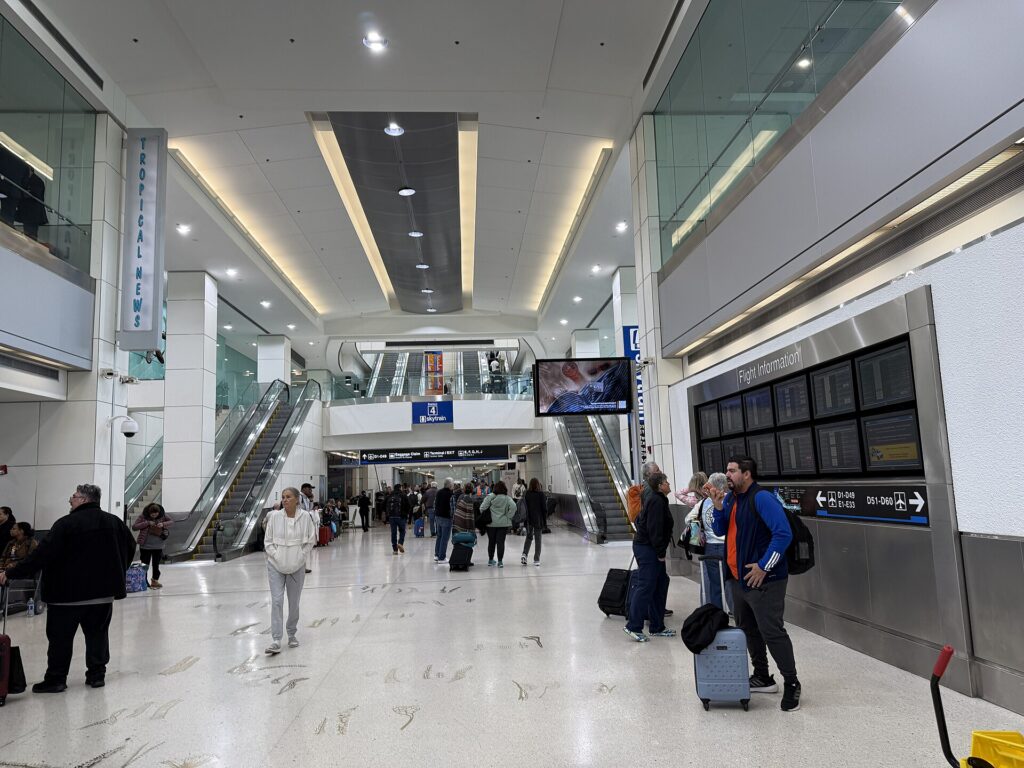
    Miami International Airport (MIA)
    Miami International (MIA), the leading gateway between the US and Latin America (Photo: Dough4872 via Wikimedia Commons, CC BY-SA 4.0)

    Timing tricks that work for Miami

    • Search the whole month. Art Basel, spring break, Ultra and the holiday weekends create sharp edges in the fare calendar. A calendar search on TicketScanner shows them instantly, and the week after a big event is often a bargain compared with the week of it.
    • Book the hotel first in winter. A cheap fare into Art Basel week or the February festivals is not cheap once the room is added. Check South Beach hotel rates for the same dates before you commit to either.
    • Avoid the cruise rush. If you are not sailing, skip Friday arrivals and Sunday afternoon departures in winter, when cruise passengers fill flights and the airport.
    • Cruising? Fly in the day before. Ships do not wait for delayed flights, and a night in Miami is cheaper than missing the boat, especially in winter weather up north.
    • Compare Fort Lauderdale. Budget airlines serve Fort Lauderdale heavily, and the fare difference can easily cover the extra drive or a Brightline ticket. If you are combining Miami with the theme parks, check flights to Orlando and consider driving or taking the train south.
    • Use the hurricane season, carefully. Late August to October is the cheapest time of year; book flexible fares and refundable hotels, and watch the National Hurricane Center’s outlook the week before you fly.
    • Build a winter buffer. Snow in the northern US and Canada disrupts connections into Miami in winter, and summer thunderstorms can delay afternoon flights; avoid the tightest connections. Our guide to how early to arrive covers what to allow.
    • Flying out of Miami instead? The seasons shape outbound fares too; see cheap flights from Miami.
    High-rise towers in Brickell, Miami's financial district
    Brickell, a good alternative base when Miami Beach hotels are full (Photo: Phillip Pessar via Wikimedia Commons, CC BY 2.0)

    What to pack, by season

    Winter (December to February): summer clothes for the day, a light sweater or jacket for cool fronts and air-conditioned restaurants, and a swimsuit for the beach. Spring (March to May): light clothing, sunglasses, a hat and strong sunscreen, because the sun is intense even when the air is not. Summer (June to August): the lightest breathable clothes you own, a compact umbrella or rain jacket for the afternoon storms, sandals that can handle a downpour, and plenty of sunscreen. Fall (September to November): the same as summer until October, with a light layer by November. In every season, bring something a little smarter for dinner in Miami Beach or Brickell, and a layer for the air conditioning, which is set cold everywhere.

    The best time to fly to Miami for…

    Beach weather

    January to April for dry, sunny days and comfortable evenings, or late April and early May for warmer water with fewer crowds.

    Art Basel

    Early December, booked months in advance, with the hotel first and a stay in Wynwood, Brickell or downtown if Miami Beach is full.

    The lowest fares

    Late August to October, with flexible bookings and an eye on the tropics. Early June and the first half of November are good compromises.

    Food lovers

    August and September for Miami Spice, or mid-October to early May for stone crab season.

    Cruises

    November to April is the main season; fly in the day before, and check airport and PortMiami transfers in advance.

    International visitors

    Canadians need a valid passport; visitors from Visa Waiver Program countries need an approved ESTA before boarding, and everyone else needs a visa. U.S. Customs and Border Protection explains what applies to you, and the TSA lists what you can carry through security.

    Frequently asked questions

    What is the cheapest month to fly to Miami?

    September is usually the cheapest, followed by late August, October and early June. Hotel rates on Miami Beach follow the same pattern.

    What is the best month to visit Miami for weather?

    March and April for warm, dry days, with January, February and November close behind. Summer is hot, humid and stormy.

    Is it safe to visit Miami during hurricane season?

    Most days of hurricane season are simply hot and humid, and a direct hit in any given year is unlikely. Book flexible rates, consider travel insurance, and follow the National Hurricane Center if a storm develops.

    How expensive is Miami during Art Basel?

    Very: hotel rates on Miami Beach and in Wynwood climb steeply and restaurants book out. Flights rise less. The weeks either side of Art Basel are much better value.

    Should I fly into Miami or Fort Lauderdale?

    Miami for the most nonstop and international options and the easiest transit into the city; Fort Lauderdale for lower fares on many domestic routes. Compare both before you book.

    How far ahead should I book?

    Well ahead for the holidays, Art Basel, February, spring break and the big festival weekends, when fares tend only to rise. For summer and fall, flexibility on dates matters more than booking early.

    Does it rain every day in Miami in summer?

    Often, but usually as a short afternoon thunderstorm rather than an all-day downpour. Plan the beach for the morning and keep an indoor option for mid-afternoon.

    Ready to pick your dates? Compare fares across the whole month on our Miami flights page, then find a room with our South Beach hotel search. For what to do when you land, start with our first-timer’s guide to Miami, and if the Everglades or the Keys are on the list, price a rental car for those days.

  • Things to Do in Miami: A First-Timer’s Guide

    Things to Do in Miami: A First-Timer’s Guide

    Miami is not one place but several, strung along a bay and a barrier island, and first-time visitors who only see the sand in front of their hotel leave with half the picture. South Beach is the postcard: pastel Art Deco hotels, a wide white beach and Ocean Drive at night. But the city across the causeways is just as interesting: a downtown that has grown into a forest of glass towers around a bayfront art museum, the murals of Wynwood, the Cuban cafés and domino tables of Little Havana, the banyan-shaded streets of Coconut Grove and Coral Gables, a food scene that runs from colada windows to some of the best Peruvian and Haitian cooking in the country, and, an hour to the west, the Everglades, one of the strangest and most important wild places in North America. This guide covers the sights that earn a day, the neighborhoods worth a half-day, the food, the big events and the sports, the day trips that make Miami a base as much as a beach, and the practical details that turn a resort stay into a real trip.

    If you are still comparing cheap flights to Miami, read this alongside our guides to the best time to fly to Miami and whether you need a car. Between the three you can plan the whole trip.

    The Miami skyline rising above Biscayne Bay
    Downtown Miami and Brickell from Biscayne Bay, a skyline that has grown faster than almost any in the country (Photo: P. Hughes via Wikimedia Commons, CC BY 4.0)

    Miami at a glance for first-timers

    • Airport: Miami International (MIA), about 13 km (8 miles) west of downtown and roughly twice that from South Beach. Metrorail’s Orange Line runs from the airport to downtown, the Airport Flyer bus goes straight to Miami Beach, and taxis, ride-hail and the Rental Car Center are all reached from the terminal. Fort Lauderdale’s airport, about 45 minutes north, is the main alternative. See our MIA airport guide.
    • Getting around: the free Metromover loops through downtown and Brickell, Metrorail links the airport, downtown, Coconut Grove and Coral Gables, and free trolleys run in Miami Beach and several city neighborhoods. South Beach itself is flat and easy on foot or by bike. For the Everglades, the Keys and the far-flung neighborhoods, most visitors drive or use ride-hail.
    • Money: US dollars. Sales tax is added at the register, hotels add their own taxes and often a nightly resort fee, and tipping 18 to 20 percent is expected. Many restaurants in Miami Beach add an automatic service charge to the bill, so read it before you tip on top.
    • Weather: warm all year. The dry season from November to April is sunny and pleasant and is the high season; the wet season from May to October brings heat, humidity and short, violent afternoon storms, and hurricane season runs from June through November. Our month-by-month guide has the detail.
    • Where to stay: South Beach for the beach, the Art Deco District and the nightlife; Mid-Beach and North Beach for quieter sand and bigger resorts; Brickell and downtown for the skyline, the bay and the Metromover; Coconut Grove or Coral Gables for a leafy, local feel.

    South Beach and the Art Deco District

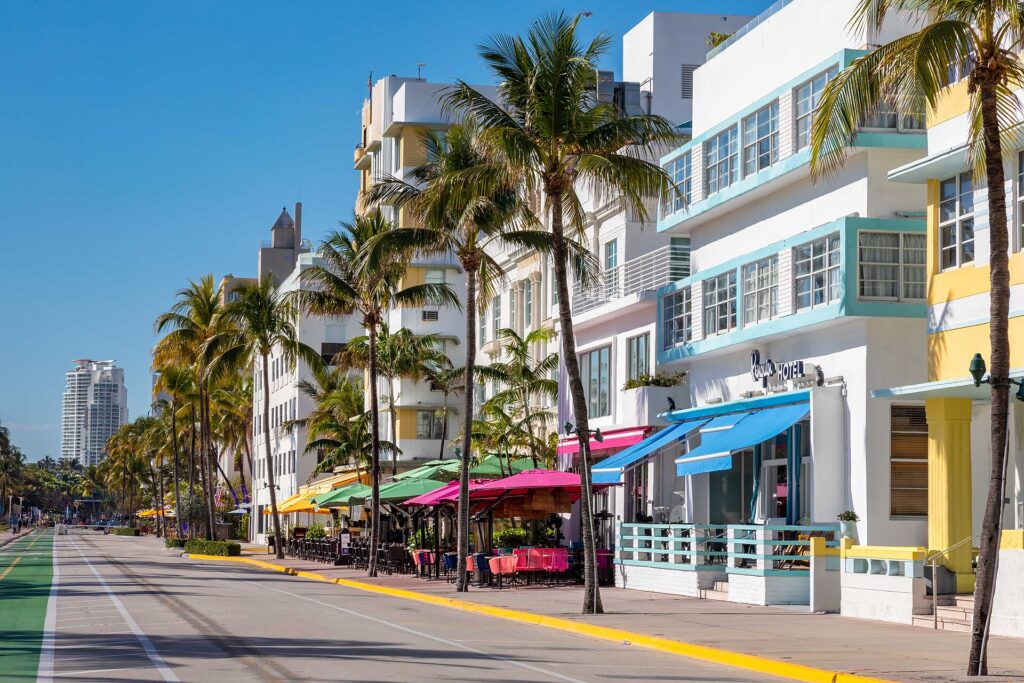
    South Beach, the southern end of the Miami Beach barrier island, is where most visitors start, and it earns its reputation. The Art Deco Historic District, the first twentieth-century neighborhood placed on the National Register of Historic Places, holds hundreds of low-rise hotels and apartment buildings from the 1930s and 1940s, painted in pastels and trimmed with neon, porthole windows and racing stripes. The best way to see it is on foot: the Miami Design Preservation League runs guided walking tours from its Art Deco Welcome Center on Ocean Drive, and a slow walk along Ocean Drive, Collins Avenue and Washington Avenue covers the highlights. Ocean Drive is at its most photogenic in the early morning and after dark, when the neon comes on. Across the road, the beach runs north for miles, backed by the dunes and Lummus Park, with the brightly painted lifeguard towers that have become a symbol of the city. At the southern tip, South Pointe Park has a pier, lawns and the best view of the cruise ships leaving PortMiami at dusk. Inland, Lincoln Road is a pedestrian mall of shops and restaurants designed by Morris Lapidus, and Española Way is a short, Mediterranean-style street of cafés and bars.

    Pastel Art Deco hotels along Ocean Drive in South Beach
    Ocean Drive in the Art Deco Historic District, best seen early in the morning or after dark (Photo: Robbschultz69 via Wikimedia Commons, CC BY-SA 4.0)

    Wynwood and the Design District

    Twenty years ago, Wynwood was a district of warehouses and garment factories north of downtown; now it is one of the largest collections of outdoor murals in the world. The Wynwood Walls, a ticketed open-air gallery of large-scale works by street artists from around the globe, is the centerpiece, but the murals cover almost every wall for blocks in every direction, and walking the streets around NW 2nd Avenue is free. The neighborhood has filled in with breweries, galleries, coffee shops, restaurants and bars, and it is busiest on the second Saturday of the month, when the galleries hold their Art Walk. Just north, the Design District went the other way, from furniture showrooms to a compact grid of luxury flagship stores wrapped in striking architecture and public art. It is also home to the Institute of Contemporary Art, Miami, a free museum with a sculpture garden, and a cluster of design-led restaurants. Between them, the two neighborhoods show the art-world side of Miami that Art Basel brings to a peak every December.

    Large-scale murals in the Wynwood arts district of Miami
    Wynwood, where murals cover almost every wall for blocks around the Wynwood Walls (Photo: osseous via Wikimedia Commons, CC BY 2.0)

    The water: Biscayne Bay, Key Biscayne and the beaches

    Miami is built around water, and some of its best days are spent on or beside it. Downtown’s Bayfront Park and Museum Park open onto Biscayne Bay, and the Baywalk links them to the Brickell waterfront. The causeways to the beach are sights in themselves: the Venetian Causeway, a low bridge hopping across a chain of residential islands, is a favorite route for cyclists and runners, while the MacArthur Causeway gives the classic view of the cruise ships and Star Island. South of downtown, the Rickenbacker Causeway crosses to Key Biscayne, where Crandon Park has a calm family beach and Bill Baggs Cape Florida State Park has a restored 1820s lighthouse, a quiet beach and a sea-wall trail looking back at the skyline. On Miami Beach, the character changes as you go north: South Beach is lively, Mid-Beach is lined with grand resorts and the paved Beachwalk, and North Beach and Surfside are quieter and more residential. Haulover Park, north of Bal Harbour, has a beach and an inlet where many fishing and sailing charters leave. Boat tours of the bay and Millionaire’s Row leave from Bayside Marketplace downtown, and paddleboard and kayak rentals are easy to find on the calm bay side of the islands.

    Neighborhoods worth a half-day

    Little Havana

    West of downtown along SW 8th Street, known as Calle Ocho, Little Havana is the heart of Cuban Miami. Stop at a ventanita, a walk-up coffee window, for a colada to share, watch the domino players in Máximo Gómez Park, look at the Walk of Fame stars and the murals, visit the cigar shops and the historic Tower Theater, and stay for a plate of ropa vieja. On the last Friday of each month, Viernes Culturales brings music and art to the street, and the Calle Ocho festival in March is one of the largest street parties in the country.

    Brickell and downtown

    Brickell, just south of the Miami River, is the city’s financial district and its densest neighborhood, a canyon of high-rise condos with rooftop bars and restaurants and the Brickell City Centre shopping complex. Downtown, to the north, has the museums in Museum Park, Bayside Marketplace, the Kaseya Center arena, the Freedom Tower and the Adrienne Arsht Center for the Performing Arts. The free Metromover links all of it, and riding its elevated loops is a good tour in its own right.

    Coconut Grove

    The Grove, on the bay south of Brickell, is one of the oldest settlements in the area, with shady streets under banyan trees, a marina full of sailboats, waterfront parks and a village center of shops and cafés. It is where Miami goes for a slower afternoon, and Vizcaya Museum and Gardens, a 1910s Italian Renaissance-style villa with formal gardens on the bay, is on its northern edge.

    Coral Gables

    A planned city from the 1920s, Coral Gables is all Mediterranean Revival architecture, tree canopy and wide boulevards. The Venetian Pool, a public swimming pool carved from a coral rock quarry with grottoes and waterfalls, is unique; the Biltmore Hotel is a landmark; and Miracle Mile is the main shopping street. Fairchild Tropical Botanic Garden, south of the city, is one of the finest tropical gardens in the country.

    Little Haiti and the MiMo District

    Little Haiti, north of the Design District, is the center of Haitian culture in the US, with the Little Haiti Cultural Complex, Caribbean markets, record shops and restaurants serving griot and diri djon djon. Farther north along Biscayne Boulevard, the MiMo District preserves the Miami Modern motels and buildings of the 1950s and 1960s, with a growing number of good restaurants.

    Museums, culture and family attractions

    The Pérez Art Museum Miami, in Museum Park on the bay, is the city’s flagship modern and contemporary art museum, and its building, with hanging gardens and a shaded terrace over the water, is worth the visit even before you go inside. Next door, the Phillip and Patricia Frost Museum of Science has a planetarium and a three-level aquarium that is a hit with children. On Miami Beach, The Bass shows contemporary art, and The Wolfsonian, run by Florida International University, has a remarkable collection of design and propaganda from the late nineteenth and early twentieth centuries. The Holocaust Memorial Miami Beach is small and deeply moving. The New World Center, a Frank Gehry building that is home to the New World Symphony, projects some concerts onto its outdoor wall for free WALLCAST screenings in the park, one of the best free evenings in the city. Downtown, the HistoryMiami Museum tells the story of South Florida, and the Adrienne Arsht Center hosts Broadway tours, opera and ballet. For families, Zoo Miami in the south of the county is large and suited to the climate, and Jungle Island on Watson Island has bird shows and animal encounters. For concerts, shows and games during your dates, our Miami events page lists what is on sale.

    Art Basel and the big events

    Miami’s calendar is packed, and a few events shape the city. Art Basel Miami Beach, in early December, is the big one: the art fair fills the Miami Beach Convention Center, dozens of satellite fairs and pop-ups spread across Wynwood, the Design District and the beach, and the parties run all week. Hotel rates are at their peak and restaurants are booked out, so plan months ahead or avoid those dates. In late March, Miami Music Week and the Ultra Music Festival bring the electronic music world to town, and the Miami Open tennis tournament runs at Hard Rock Stadium in Miami Gardens around the same time. In early May, the Formula 1 Miami Grand Prix fills the same stadium complex. Earlier in the year, Art Deco Weekend in January, the South Beach Wine and Food Festival in late February, the Coconut Grove Arts Festival and the Miami International Boat Show in February, and the Calle Ocho festival in March all draw crowds. Spring break brings college students to South Beach through March, and Miami Beach has in recent years introduced curfews and security measures on the busiest weekends. If you are coming for any of these, book the hotel before the flight; if you are not, check the dates and plan around them.

    Sports

    Miami is a four-team town, plus a soccer club with a global following. The Miami Heat play basketball at the Kaseya Center on the downtown waterfront, walkable from the Metromover and Bayside, and a game there is a lively night. The Miami Dolphins play football at Hard Rock Stadium in Miami Gardens, north of the city, from September to January; the University of Miami Hurricanes play there too. The Miami Marlins play baseball at loanDepot park, a retractable-roof stadium in Little Havana that keeps out the summer rain and heat. The Florida Panthers play hockey in Sunrise, west of Fort Lauderdale, and Inter Miami CF, the MLS club, has drawn huge interest since Lionel Messi arrived; it is moving from its temporary home in Fort Lauderdale to a new stadium at Miami Freedom Park, near the airport. Check what is on sale in Miami for your dates before you book flights.

    What to eat, and where

    Miami’s food is shaped by its Caribbean and Latin American communities, and eating well is one of the best reasons to leave the beach. Start with Cuban food: a Cuban sandwich, croquetas, pastelitos filled with guava and cheese, and a cafecito or a colada from a coffee window. Little Havana is the obvious place, and Versailles on Calle Ocho is the landmark, but good Cuban bakeries and cafés are all over the city, including near the airport and in Hialeah. Then explore further: Peruvian ceviche and Venezuelan arepas in Doral and Brickell, Haitian griot in Little Haiti, and Colombian and Nicaraguan kitchens across the western suburbs. From mid-October into early May, stone crab claws are in season, served cold with mustard sauce; Joe’s Stone Crab in South Beach, open since 1913, is the classic. Key lime pie is on nearly every dessert menu. For a big night, Brickell, the Design District and Miami Beach have the city’s high-end restaurants, and in August and September the Miami Spice program offers fixed-price menus at many of the best restaurants during the slow season, one of the best dining deals in the city.

    Miami through the seasons

    Miami is warm in every month, but the seasons are real, and what you do depends on when you come. Winter (December to February) is the high season: dry, sunny, warm by day and pleasant in the evening, with cool fronts that occasionally drop the temperature enough for locals to put on jackets. The beaches, restaurants and hotels are at their busiest, and Art Basel, the holidays and the festival calendar fill the weeks. Spring (March to May) is hotter and still dry until late May, with spring break, Ultra, the Miami Open and the Grand Prix bringing big crowds. Summer (June to August) is hot and humid, with afternoon thunderstorms most days; mornings are the time for the beach and outdoor sights, and the afternoons are for museums and long lunches. Hotel rates drop, the ocean is warm, and many locals think it is the best time for the water. Fall (September to November) is the peak of hurricane season, the quietest and cheapest time to visit, and it improves rapidly in November as the humidity falls. Our month-by-month guide has the fare patterns that go with each season.

    Miami with kids

    Miami is a good city for children, especially if you plan around the heat. The beaches are the main event: Crandon Park on Key Biscayne and the beaches in Mid-Beach and Surfside are calmer and quieter than South Beach, and the lifeguard towers make it easy to choose a supervised spot. The Frost Museum of Science, with its aquarium and planetarium, is the best rainy-afternoon option, and Zoo Miami, Jungle Island and the Venetian Pool in Coral Gables each fill a morning. Watching the cruise ships from South Pointe Park, riding the free Metromover above downtown, and a boat tour on Biscayne Bay are all easy wins. For a bigger outing, the Shark Valley tram tour in the Everglades, with alligators lying beside the path, is unforgettable for children of most ages. Pack sun protection, plan outdoor time for the morning, and our family car rental guide covers the vehicle question.

    Miami on a budget

    Much of the best of Miami costs nothing: the beach, the Art Deco District, South Pointe Park, the Wynwood murals outside the Walls, Little Havana’s streets and domino park, the Venetian Causeway on foot or by bike, the WALLCAST concerts at the New World Center, the ICA Miami in the Design District, and the Metromover and the city’s free trolleys. Stay a few blocks back from Ocean Drive and Collins, or in Mid-Beach or North Beach, and room rates drop sharply; always check whether a resort fee is added to the nightly rate before you book. Eat at Cuban cafés and bakeries, the Latin American kitchens in the western suburbs, and happy hours in Brickell and Wynwood. Summer and early fall are much cheaper for hotels, and Miami Spice makes the good restaurants affordable in August and September. Compare South Beach rates on our South Beach hotel page before you decide where to stay.

    Day trips from Miami

    The Everglades are the essential day trip. Everglades National Park has two easy entrances from Miami: Shark Valley, on the Tamiami Trail about an hour west, where a paved 15-mile loop can be walked, cycled or ridden on a tram tour to an observation tower, and the Ernest F. Coe Visitor Center near Homestead, from which the Anhinga Trail boardwalk offers some of the best alligator and bird viewing in the park. Airboat rides are run by private operators along the Tamiami Trail outside the park. Biscayne National Park, south of the city, is almost all water, with boat tours, snorkeling and paddling from its visitor center. The Florida Keys begin an hour south: Key Largo, with John Pennekamp Coral Reef State Park and its glass-bottom boats and snorkeling trips, is an easy day, while Key West, at the end of the Overseas Highway across the Seven Mile Bridge, is about three and a half to four hours each way and is better as an overnight; the Florida Keys tourism council covers the islands. North of the city, Fort Lauderdale has a beach promenade and canals, and Palm Beach has grand mansions and Worth Avenue, both reachable by Brightline train. Most of these are car trips; see our Miami car rental page, and if you are combining Miami with the theme parks, our Orlando to Miami drive guide covers the route. Greater Miami and the Beaches, the official tourism board, covers the wider region.

    Sawgrass and wetlands in Everglades National Park west of Miami
    Everglades National Park, about an hour from downtown Miami and the essential day trip (Photo: Judy Gallagher via Wikimedia Commons, CC BY 2.0)

    Two sample itineraries

    Three days, no car

    Day one: an early walk through the Art Deco District and along Ocean Drive, the morning on the beach at Lummus Park, lunch on Española Way, the Wolfsonian or the Bass in the afternoon, sunset at South Pointe Park and dinner in South Beach. Day two: a ride over the causeway to downtown, the Pérez Art Museum and a walk along the bay, lunch in Brickell, then Wynwood’s murals and breweries in the afternoon and a meal in the Design District. Day three: Little Havana in the morning for coffee and dominoes, Vizcaya and Coconut Grove in the afternoon, and a Heat game or a rooftop bar in Brickell at night.

    Five days, with the Everglades and the Keys

    Add a car for the last two days: one for the Everglades at Shark Valley and a drive back through Coral Gables, and one for Key Largo and the reef, or drive to Key West and stay the night, returning the car at the airport on the way home.

    Practical details

    • Transit: the Metromover is free; Metrorail and Metrobus take an EASY Card, the transit app or, on most readers, a contactless bank card. Miami-Dade Transit has maps and fares; our transit-versus-car guide goes into detail.
    • From MIA: the MIA Mover to the Miami Intermodal Center for Metrorail and the Rental Car Center, the Airport Flyer bus to Miami Beach, or a taxi or ride-hail from the arrivals level. The airport’s site covers ground transport.
    • Weather: light clothes, strong sun protection and a rain jacket or umbrella in every season, plus a light layer for air-conditioned interiors and the occasional cool winter evening. The National Weather Service’s Miami office is the forecast to check, especially in hurricane season.
    • Time zone: Eastern, the same as New York.
    • Entry requirements: Canadians need a valid passport; visitors from Visa Waiver Program countries need an approved ESTA before boarding, and everyone else needs a visa. U.S. Customs and Border Protection is the authoritative source.
    • Safety: the tourist districts are as safe as any big American city’s; use the usual care on quiet streets late at night, swim only near lifeguards and heed the beach flags for rip currents, and never leave valuables visible in a parked car.

    Frequently asked questions

    How many days do you need in Miami?

    Three full days covers South Beach, downtown, Wynwood and Little Havana; add a day for the Everglades and one or two more for the Keys.

    What is the number one thing to do in Miami?

    Walk the Art Deco District and spend the morning on South Beach. Then cross the causeway, because the city beyond the beach is what most visitors miss.

    Is Miami walkable?

    South Beach, downtown, Brickell, Wynwood, Coconut Grove and the center of Coral Gables are, and the free Metromover links downtown and Brickell. Between neighborhoods, distances and the heat make transit, ride-hail or a car more practical.

    Do I need a car in Miami?

    Not if you are staying in South Beach or Brickell and sticking to the city. For the Everglades, the Keys and the suburbs, yes; rent it for those days only.

    Is Miami expensive?

    In the winter high season and during Art Basel, spring break and the big festivals, very. From June to October, hotel rates fall sharply, and much of the best of the city is free.

    What is Miami known for?

    South Beach and its Art Deco hotels, Cuban culture in Little Havana, Latin American influence across the city, the Wynwood murals, Art Basel, the Everglades on its doorstep, and a skyline that has grown faster than almost any in the country.

    Ready to go? Compare flights to Miami, find a place to stay with our South Beach hotel search, and if the Everglades or the Keys are on the list, price a rental car for those days.