
Seattle has a reputation that arrives before you do: rain, coffee, grunge, tech money and the Space Needle. Some of that is true and most of it is beside the point. What first-time visitors actually find is a city squeezed between saltwater and freshwater, with snow-capped volcanoes on the horizon, a century-old public market that is still a working market, a new waterfront that has replaced an elevated highway with a promenade, ferries that double as the cheapest harbor cruise in the country, and neighborhoods that each feel like a small town with its own main street. Mount Rainier, the Olympic Peninsula, the San Juan Islands and Vancouver are all within a few hours. This guide covers the sights that earn a day, the neighborhoods worth a half-day, the food, the sports, the seasons, the day trips that make Seattle a base for the whole Pacific Northwest, and the practical details that turn a cruise stopover or a work trip into a proper visit.
If you are still comparing cheap flights to Seattle, read this alongside our guides to the best time to fly to Seattle and whether you need a rental car. Between the three you can plan the whole trip.
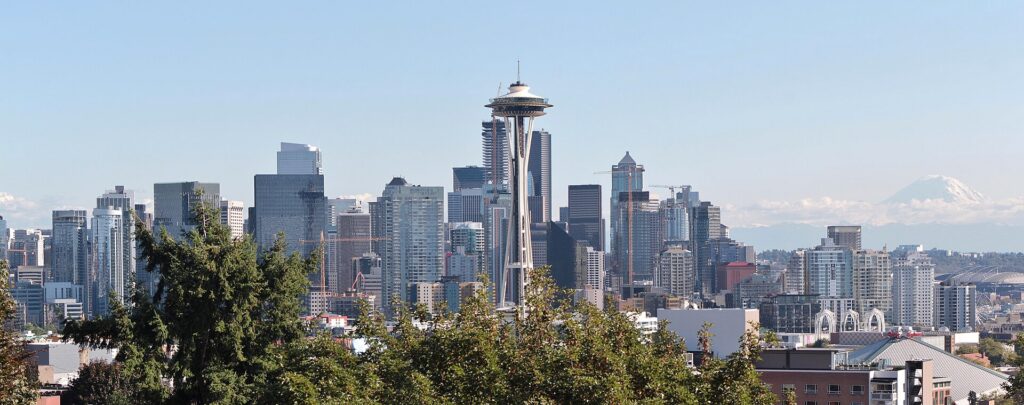
Seattle at a glance for first-timers
- Airport: Seattle-Tacoma International (SEA), about 20 km (13 miles) south of downtown; the Link light rail runs from the terminal to downtown in roughly 40 minutes, and a taxi, ride-hail or rental covers everything else. See our SEA airport guide.
- Getting around: downtown, Pike Place Market, the waterfront, Pioneer Square and Capitol Hill are walkable, if hilly, and the light rail, buses, streetcars and the monorail link most of what a visitor needs. For Mount Rainier, the Olympic Peninsula and the drive to Vancouver, you will want a car.
- Money: U.S. dollars. Washington has no state income tax, and it makes up for it at the register: the combined sales tax in Seattle is just over 10 percent, among the highest of any big U.S. city, and hotels and rental cars carry extra taxes on top. Tipping 18 to 20 percent in restaurants is standard.
- Weather: mild all year, rarely very hot or very cold, with a famously gray, drizzly stretch from October to May and a dry, sunny summer from July to September. Our month-by-month guide has the detail.
- Where to stay: downtown and around Pike Place Market for walking to almost everything; Belltown for bars and restaurants; South Lake Union and Queen Anne for Seattle Center; Capitol Hill for nightlife; the airport strip if you have an early flight or a cruise transfer. Our Seattle hotel search covers them all.
Pike Place Market and the waterfront
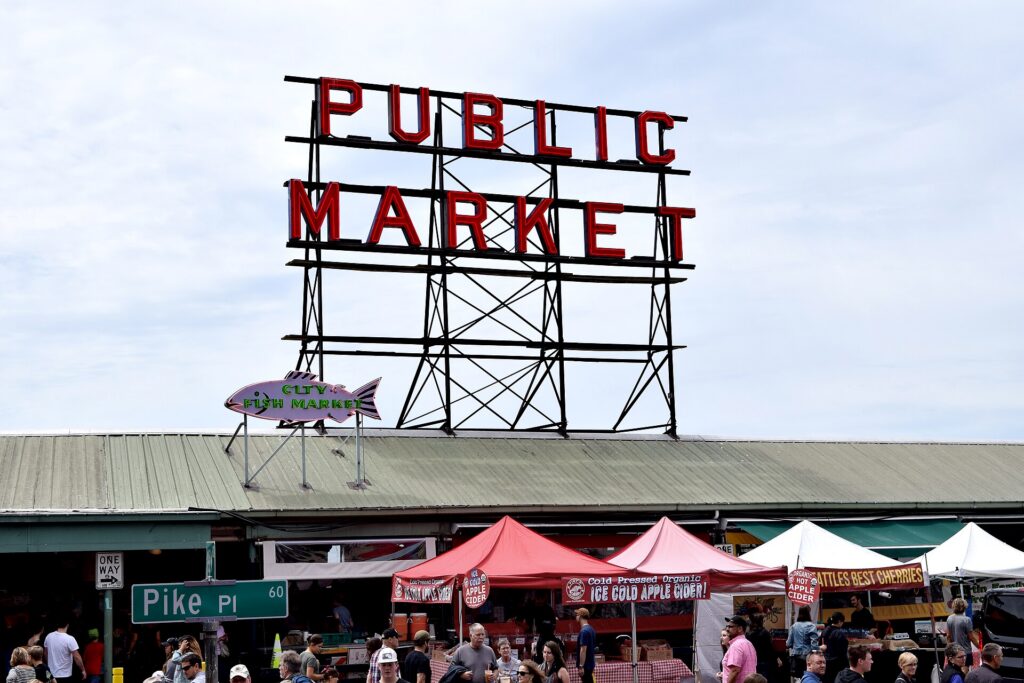
Start where Seattle starts. Pike Place Market opened in 1907 so that farmers could sell directly to shoppers, and more than a century later it is still a working market rather than a museum: produce stalls, flower sellers, fishmongers, bakeries, butchers, craft tables and tiny restaurants spread over several levels on the bluff above Elliott Bay. Go early, before the cruise-ship and tour-group crowds arrive around mid-morning, and walk the whole thing: the arcade under the famous neon clock, the fish stall where the staff throw salmon over the counter, Rachel the bronze pig, the lower levels full of comic shops and oddities, and Post Alley, with its notorious gum wall. The coffee shop that bills itself as the original Starbucks draws a queue all day; the market is full of better places to sit down. From the market’s newer terraces, the Overlook Walk now carries you straight down the bluff to the waterfront, which the city has rebuilt as a continuous public promenade since the elevated Alaskan Way Viaduct was torn down. Along it you will find the Seattle Aquarium and its newer Ocean Pavilion, the Seattle Great Wheel on Pier 57, souvenir shops and seafood bars on the old piers, and Colman Dock, the ferry terminal. A short walk north of the market, the Olympic Sculpture Park, run by the Seattle Art Museum, zigzags down to the water with large outdoor works and a view across the Sound to the Olympic Mountains, and it is free.
Seattle Center: the Space Needle, Chihuly and MoPOP
The grounds of the 1962 World’s Fair, about a mile north of downtown, hold three of the city’s most visited sights. The Space Needle is the one everyone photographs, and the observation level, with its glass walls and a rotating glass floor below, gives a full circle of city, water and, on a clear day, Mount Rainier; the view is worth paying for in clear weather and is not in fog, so check the sky before you buy. Beside it, Chihuly Garden and Glass shows the work of the Tacoma-born glass artist Dale Chihuly in darkened galleries, a glass-and-steel conservatory and a garden where glass sculptures grow among the plants; it is far better than its gift-shop reputation suggests. The Museum of Pop Culture, MoPOP, is the lumpy, multicolored Frank Gehry building the monorail runs through, with exhibits on Seattle music from Jimi Hendrix to Nirvana, science fiction, horror and video games, and a hands-on studio where you can play instruments. The Pacific Science Center, with its white Gothic arches, is the family option, and Climate Pledge Arena, rebuilt inside the old roof, hosts the Kraken, the Storm and the big concerts. The best way to arrive is the Seattle Center Monorail, another 1962 survivor, which covers the mile from Westlake Center in about two minutes. For the classic postcard view of the Needle in front of the skyline, walk up to Kerry Park on Queen Anne Hill at sunset.
Pioneer Square, the Underground and the International District
Seattle’s original downtown burned to the ground in 1889 and was rebuilt in brick and stone, a story level higher than before, which left the old storefronts at the bottom of the new streets. Pioneer Square is that rebuilt district, with Romanesque buildings, cast-iron pergolas, art galleries, bookshops and bars, and the Underground Tour takes you through the buried sidewalks and basements below with a guide and a good deal of humor. The free Seattle unit of Klondike Gold Rush National Historical Park, in a historic building on the square, explains how the 1897 gold rush turned Seattle into the outfitting town for the stampede north and made the city’s fortune. Smith Tower, which opened in 1914 and was for decades the tallest building on the West Coast, has an open-air observation deck and a speakeasy-style bar. A few blocks east, the Chinatown-International District is one of the oldest Asian American neighborhoods on the West Coast, with Chinese, Japanese, Vietnamese and Filipino roots; the Wing Luke Museum tells that history through the old hotel it occupies, and Uwajimaya, the big Asian grocery, has an excellent food court. The Mariners’ and Seahawks’ stadiums sit just south of both neighborhoods.
On the water: ferries, lakes and the great parks
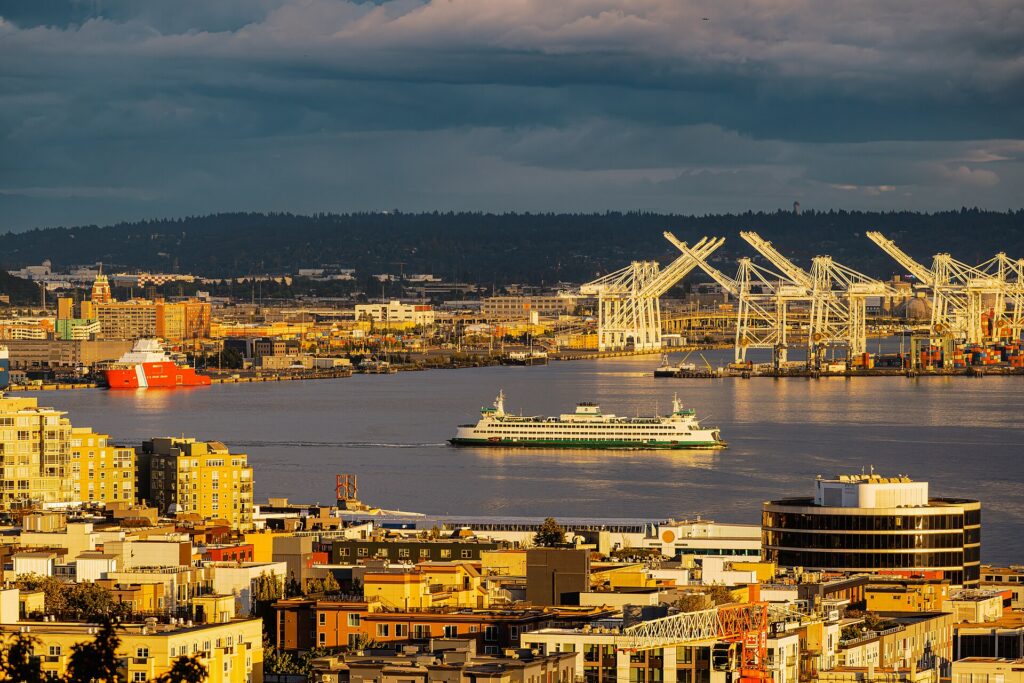
Seattle is built around water, and seeing the city from it is not optional. The simplest and cheapest way is the Washington State Ferries run from Colman Dock to Bainbridge Island, about 35 minutes each way, with the skyline, the Space Needle and, in clear weather, Mount Rainier and the Olympics all in view from the outside decks; walk-on passengers pay only on the westbound leg, and Winslow, the town at the ferry landing, has cafés, a small museum of art and wine bars within a few minutes’ walk. The run to Bremerton is longer and threads through narrower passages. On the city’s freshwater side, Lake Union is ringed with houseboats, seaplane docks and kayak rentals, and paddling past the floating homes of Eastlake and Westlake is a classic summer afternoon. Gas Works Park, on the north shore, turned a rusting gasification plant into a grassy hill with the best view of downtown across the lake. The Hiram M. Chittenden Locks in Ballard lift boats between the lake system and Puget Sound, and the fish ladder beside them has an underwater viewing room where you can watch salmon climbing upstream, best from July into September. Discovery Park, the largest park in the city, has bluffs, meadows, forest trails and a beach walk to the West Point Lighthouse; the Washington Park Arboretum and its Japanese Garden are the city’s gardens; and Alki Beach in West Seattle, reached by the water taxi from Pier 50 and a short walk or shuttle, has a long beach promenade with a skyline view.
Neighborhoods worth a half-day
Capitol Hill
The densest, liveliest neighborhood in the city, a short ride from downtown on the light rail. The Pike and Pine corridor is Seattle’s nightlife and restaurant strip, with record stores, cocktail bars, music venues and a long history as the center of the city’s LGBTQ community. At the north end, Volunteer Park has a Victorian glass conservatory, a water tower you can climb for the view and the Seattle Asian Art Museum, and Lake View Cemetery next door is where Bruce Lee and his son Brandon are buried.
Fremont
The self-declared “Center of the Universe” has a sense of humor about itself: a giant concrete troll crushing a real Volkswagen under the Aurora Bridge, a salvaged Soviet-era statue of Lenin, a rocket bolted to a building, and a Sunday market. It sits on the Ship Canal with a flat towpath trail along the water toward Gas Works Park, and its streets are full of cafés, breweries and vintage stores. The Fremont Solstice Parade, with its painted cyclists, is the neighborhood’s big day in June.
Ballard
Settled by Scandinavian fishermen and still home to the fishing fleet that works the Alaska waters, Ballard is now one of the city’s best places to eat and drink. The National Nordic Museum tells the story of Nordic immigration to the Northwest, the brewery district between the Locks and downtown Ballard has more than a dozen taprooms within walking distance, Ballard Avenue is lined with restaurants in old brick buildings, and the Sunday farmers market is one of the best in the city.
Queen Anne and South Lake Union
Queen Anne rises steeply above Seattle Center, with grand old houses, Kerry Park’s famous view and a pleasant village along the top of the hill. South Lake Union, below it, has been rebuilt as Amazon’s headquarters district, with the glass Spheres downtown, the Museum of History and Industry in Lake Union Park, and the Center for Wooden Boats, where you can rent a rowboat or sailboat by the hour.
The University District
The University of Washington’s campus has a Gothic-style library, views of Rainier across the Drumheller Fountain, and a quad of cherry trees that draws crowds when they bloom in late March. The Burke Museum of natural history and culture, with its visible working labs, and the Henry Art Gallery are both on campus, and the light rail makes it an easy trip from downtown.
Museums, culture and family attractions
The Seattle Art Museum downtown, with Jonathan Borofsky’s giant Hammering Man outside, has strong collections of Northwest Coast Native art, Asian art and modern American painting; its sister museum, the Asian Art Museum, is in Volunteer Park. The Museum of Flight, beside Boeing Field in the south of the city, is one of the largest air and space museums in the world, with a Concorde, the first jet Air Force One, a space shuttle trainer and the original red barn where Boeing began; plan half a day. The Frye Art Museum on First Hill is free, and the Seattle Aquarium on the waterfront has sea otters, a giant Pacific octopus and a focus on the life of Puget Sound. For performing arts, Benaroya Hall is home to the Seattle Symphony, McCaw Hall at Seattle Center hosts Seattle Opera and Pacific Northwest Ballet, the Paramount and the Moore are the grand old theaters for touring shows, and the Showbox, the Crocodile and the Neptune keep the city’s music reputation alive. For what is on stage and in the arenas during your dates, our Seattle events page lists concerts, shows and games.
Sports
Seattle is a loud sports town, and its stadiums are downtown, which makes a game easy to fit in. The Seahawks play NFL football at Lumen Field from September to January, in a stadium designed to trap crowd noise, and the Seattle “12th Man” is famous for it. The Sounders, one of the best-supported clubs in Major League Soccer, share the same stadium and march to their matches with a crowd behind a band, and the Reign play women’s professional soccer there too; Lumen Field also hosted matches during the 2026 World Cup. Next door, the Mariners play baseball at T-Mobile Park from April to September under a retractable roof that keeps rain off without closing the stadium in. The Kraken, the city’s NHL team, and the Storm, a four-time WNBA champion, play at Climate Pledge Arena at Seattle Center, and University of Washington football at Husky Stadium on the lake is a fall Saturday tradition, with fans arriving by boat. Check what is on sale in Seattle for your dates before you book flights.
What to eat, and where
Seattle eats from the water. Salmon is the signature, grilled, smoked or cured, and the first Copper River salmon of the season, flown in from Alaska in May, is a local event. Oysters from Puget Sound and Hood Canal, Dungeness crab and geoduck, the giant local clam, turn up on menus from waterfront shacks to the city’s best restaurants, and an oyster happy hour is one of the city’s great bargains. Coffee is the other obsession: the city built the modern espresso-bar culture, and independent roasters on Capitol Hill, in Fremont and in Ballard are where to taste it. Beyond that, Seattle’s food reflects its Pacific Rim ties: dim sum, pho and Vietnamese sandwiches in the International District, Japanese and Korean cooking across the city, and teriyaki, which Seattle adopted as its own everyday takeout decades ago. At the market, look for Beecher’s handmade cheese, the Russian pastries at Piroshky Piroshky and the tiny doughnuts at the Daily Dozen. The local street food is the Seattle dog, a grilled hot dog with cream cheese and onions, sold outside the stadiums and bars late at night. Washington is the second-largest wine-producing state in the country, and the tasting rooms of Woodinville, half an hour northeast, make an easy afternoon; Ballard and Fremont are the center of the craft beer scene.
Seattle through the seasons
Seattle is two cities, depending on when you arrive. Summer (July to September) is the reason locals put up with the rest of the year: dry, sunny, rarely hot, with long evenings that stay light past nine and the mountains visible almost every day. This is the season for ferries, kayaks, the Locks’ salmon run, rooftop bars and day trips to Rainier and the Olympics, and it is also the Alaska cruise season, when ships dock at the city’s piers every weekend. Seafair fills late July and early August with neighborhood parades, hydroplane races on Lake Washington and an air show over the lake, and Bumbershoot takes over Seattle Center on Labor Day weekend. Fall (October to November) starts golden and turns gray, with the rain usually returning by mid-October; it is a good season for museums, food and the start of the Seahawks and Kraken seasons. Winter (December to February) is mild, dark and damp, with snow rare in the city but deep in the mountains an hour east, where the ski areas at Snoqualmie Pass open. Spring (March to June) brings cherry blossoms on the university quad in late March, the tulip fields of the Skagit Valley in April, the Northwest Folklife Festival at Seattle Center on Memorial Day weekend, and Pride at the end of June. Our month-by-month guide has the fare patterns that go with each season.
Seattle with kids
Seattle is an easy city with children, rain or shine. Seattle Center is the obvious base, with the Pacific Science Center, the Seattle Children’s Museum, MoPOP’s instrument studio, the International Fountain, which children run through all summer, and the monorail to get there. The Woodland Park Zoo in the north of the city is known for its naturalistic habitats, and the Seattle Aquarium and a ferry ride to Bainbridge make a full waterfront day. The Museum of Flight lets kids sit in cockpits and walk through a Concorde, the fish ladder at the Locks is a hit in late summer, and the beaches at Alki and Golden Gardens are the summer afternoons. For rainy days, the Pacific Science Center, the children’s floors at the Central Library and the indoor play spaces of the big museums fill the gap. For families heading out on day trips to Rainier or the Olympics, our family car rental guide covers the vehicle question.
Seattle on a budget
Seattle is not a cheap city, but a lot of its best is free: Pike Place Market, the waterfront promenade, the Olympic Sculpture Park, the Klondike Gold Rush museum in Pioneer Square, the Locks and the fish ladder, Gas Works Park, Discovery Park, Kerry Park, the Fremont Troll and the Central Library, a striking glass-and-steel building downtown. The Frye Art Museum is always free, and several other museums offer free or reduced entry on certain days; check their sites. The Bainbridge ferry is one of the best-value harbor views anywhere, and children and teenagers 18 and under ride most local transit free. Eat well for less in the International District, at the market’s counters, at oyster and seafood happy hours, and at the city’s many teriyaki shops. A combination ticket like the CityPASS can pay off if you plan to do the Needle, Chihuly, the aquarium and MoPOP. Hotels are cheapest from November to March and most expensive on summer cruise weekends; compare rates by neighborhood on our Seattle hotel search.
Day trips from Seattle
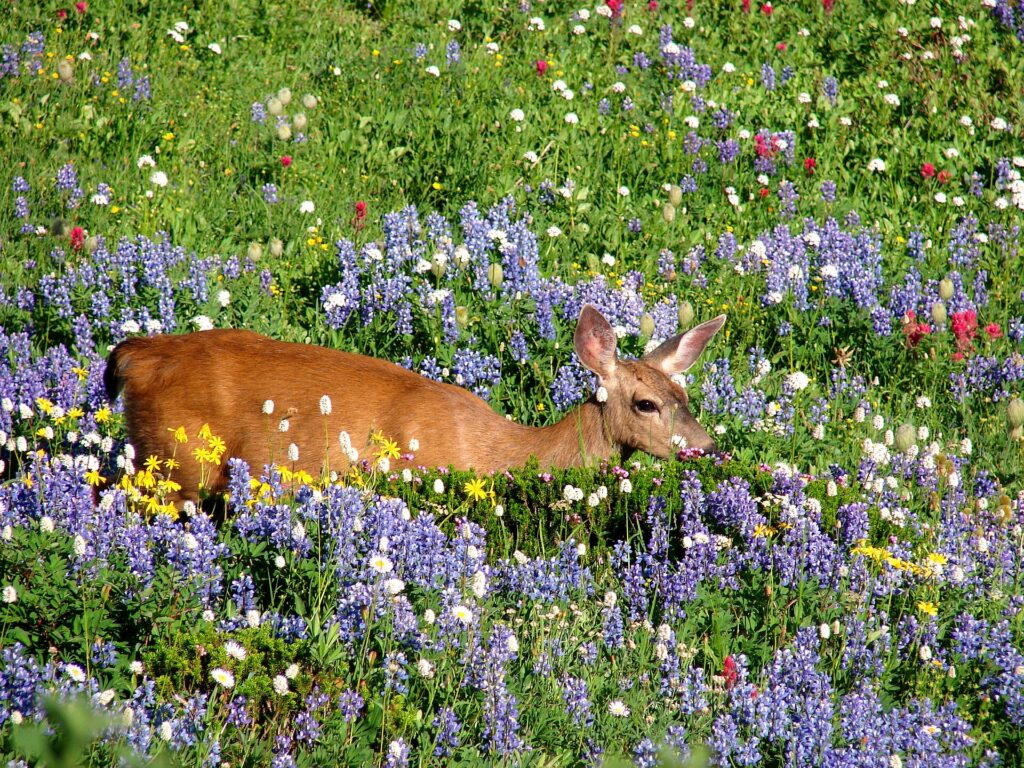
Mount Rainier, the 4,392-meter (14,410-foot) volcano that dominates the skyline, is about two to two and a half hours to the Paradise area of Mount Rainier National Park, where the wildflower meadows peak from late July into August; the park has used timed-entry reservations for its busiest areas in peak summer, so check before you go. Snoqualmie Falls, an 82-meter (268-foot) waterfall, is about 45 minutes east. The Olympic Peninsula, across the Sound by ferry, has Hurricane Ridge, glacier-fed lakes, the Hoh Rain Forest and wild Pacific beaches; it is better as an overnight trip. Bainbridge Island is the easiest half-day by ferry, and the San Juan Islands, reached by state ferry from Anacortes about 90 minutes north, are the place for orca-watching and island inns. Leavenworth, a Bavarian-themed mountain town over Stevens Pass, is about two and a half hours east, and Tacoma, 45 minutes south, has the Museum of Glass and Chihuly’s Bridge of Glass.
Vancouver is the big one, and it works better as two or three nights than as a day trip. It is about three hours north on I-5 when the border queue is short, or a scenic four-hour ride on the Amtrak Cascades train, which runs along the shore of Puget Sound and Chuckanut Bay for long stretches; see our Vancouver guide for what to do when you arrive and our Seattle to Vancouver route guide for the drive. Crossing into Canada, every traveler needs acceptable identity and travel documents for their citizenship, and the rules for returning to the U.S. are set separately; check the Canada Border Services Agency before you go north and U.S. Customs and Border Protection before you come back. Apart from Bainbridge and the train to Vancouver, these day trips are car trips; see our Seattle car rental page, and carry tire chains for Rainier and the mountain passes in winter.
Two sample itineraries
Three days, no car
Day one: Pike Place Market at opening time, the Overlook Walk down to the waterfront and the aquarium, the Olympic Sculpture Park in the afternoon, and dinner in Belltown. Day two: the monorail to Seattle Center for the Space Needle, Chihuly and MoPOP, then an afternoon ferry to Bainbridge and back for the skyline at sunset, and oysters downtown. Day three: the Underground Tour and the Klondike museum in Pioneer Square, lunch in the International District, the light rail to Capitol Hill for Volunteer Park and an evening on Pike and Pine, with a Mariners, Sounders or Kraken game if one is on.
Five days, with the mountains and Vancouver
Add a day for Fremont, Ballard and the Locks by bus or bike, then pick up a car and drive to Mount Rainier for a day, and either spend a night on the Olympic Peninsula or head north to Vancouver for two days, returning the car in Seattle or, if the rental company allows it, one way across the border.
Practical details
- Transit: load an ORCA card or a mobile ticket for the light rail, buses, streetcars, water taxis and monorail. Sound Transit has the Link maps; our car-versus-transit guide goes into detail.
- From SEA: the Link light rail to downtown, a taxi or ride-hail from the parking garage, or a rental from the off-site rental car facility. The Port of Seattle, which runs the airport, covers ground transport.
- Weather: layers and a waterproof jacket in every season; locals rarely carry umbrellas, because the rain is usually a drizzle. Sunglasses in summer, when the light is long and bright.
- Time zone: Pacific, three hours behind New York, the same as Vancouver.
- Entry requirements: Canadians need a valid passport to fly in; visitors from Visa Waiver Program countries need an approved ESTA before boarding, and everyone else needs a visa. U.S. Customs and Border Protection is the authoritative source. Visit Seattle has the current events calendar.
- Safety: the tourist areas are generally safe with ordinary big-city awareness; parts of downtown around Third Avenue and Pioneer Square can feel rough at night, and car break-ins are common, so leave nothing visible in a parked car.
Frequently asked questions
How many days do you need in Seattle?
Three days covers Pike Place, the waterfront, Seattle Center, Pioneer Square, a ferry ride and two neighborhoods; add one for Mount Rainier and two for Vancouver or the Olympic Peninsula.
What is the number one thing to do in Seattle?
Pike Place Market at opening time, followed by the walk down to the waterfront and a ferry to Bainbridge for the view of the city from the water.
Is Seattle walkable?
Downtown, the market, the waterfront, Pioneer Square, Belltown and Capitol Hill are, although the hills are steep. The light rail, buses and monorail link most of the rest.
Do I need a car in Seattle?
Not for the city itself, where parking is expensive and transit is good. For Mount Rainier, the Olympic Peninsula and the drive to Vancouver, yes; rent it for those days only.
Does it really rain all the time in Seattle?
No. Seattle gets less rain in a year than New York or Boston, but it falls as frequent drizzle from October to May under gray skies. July to September is dry and sunny.
What is Seattle known for?
Pike Place Market, the Space Needle, coffee, seafood, Boeing and the tech industry, the grunge music of the early 1990s, and a setting between Puget Sound, the lakes and the mountains.
Ready to go? Compare flights to Seattle, find a place to stay with our Seattle hotel search, and if Rainier or Vancouver is on the list, price a rental car for those days.
Keep planning with TicketScanner
- Cheap flights to Seattle
- Seattle hotels — downtown, Belltown, Capitol Hill and South Lake Union
- Seattle car rentals — for Mount Rainier, the Olympic Peninsula and Vancouver
- Events in Seattle — Seahawks, Mariners, Sounders, Kraken, concerts and shows on sale
- Best time to fly to Seattle: month by month
- Seattle: rent a car or use public transit?
- Seattle-Tacoma International (SEA) airport guide
- Where to stay: Pike Place Market
- Things to do in Vancouver
- Driving Seattle to Vancouver
Leave a Reply