
Las Vegas is a strange case for the “should I rent a car?” question. The valley is a sprawling, car-built desert metropolis of more than two million people, with freeways, huge parking garages and almost no rail transit. Yet most visitors spend nearly all their time on a single boulevard about 6 km (4 miles) long, where a car is more of a burden than a help: the resorts charge for parking, the traffic on the Strip crawls at night, and the Monorail, the Deuce bus, free trams and your own feet cover the distances. The answer changes the moment the desert enters the plan, because Red Rock Canyon, the Hoover Dam, the Valley of Fire and the national parks beyond are all car trips or organized tours. This guide explains how the city is laid out, how the Monorail, buses and trams work, what driving and parking are really like, when a rental is worth it, and gives you a straightforward way to decide.
The short answer
Skip the car if you are staying on the Strip or downtown for a few nights and your plans are casinos, shows, pools, restaurants and Fremont Street; taxis, ride-hail, the Monorail, the Deuce and walking will cover that, and you will save on parking fees. That is most first-time visitors. Rent a car if Red Rock, the Hoover Dam, the Valley of Fire, Mount Charleston, Zion or the Grand Canyon are on the itinerary, if you are staying off the Strip in Summerlin or Henderson, if you are traveling with young children, or if Las Vegas is one stop on a Southwest road trip. And the hybrid, car-free on the Strip and a one- or two-day rental for the desert, is often the smartest plan of all. Compare rental rates for any of these plans on our Las Vegas car rental page.
How Las Vegas is laid out
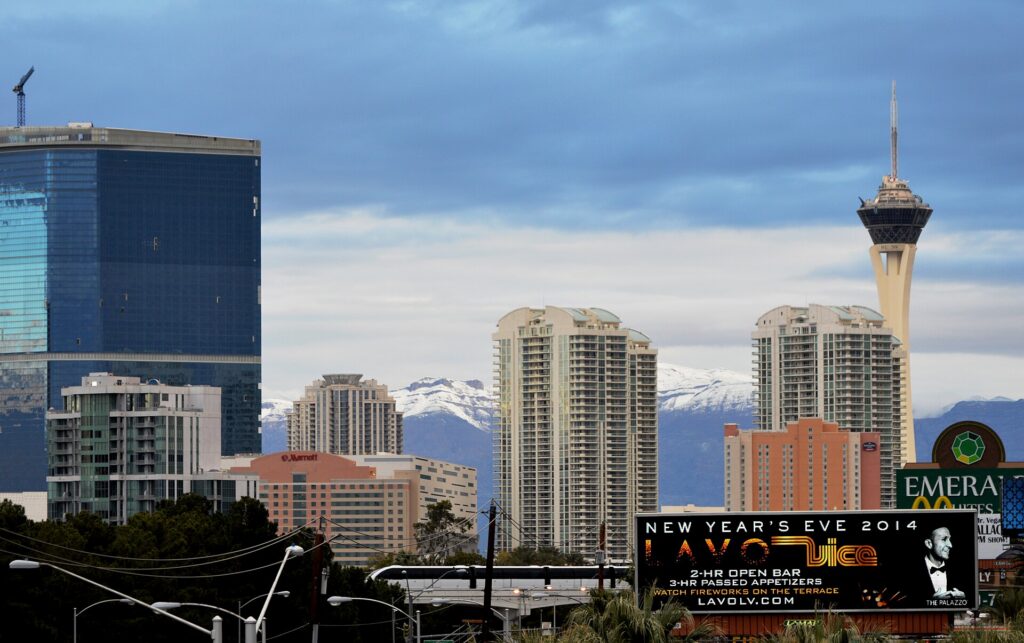
The Las Vegas Valley is a wide desert basin ringed by mountains, and the city spreads across it on a grid of long, straight arterial roads. Its spine is Las Vegas Boulevard. The southern section, the Strip, technically lies outside the city limits in unincorporated Clark County and runs from Mandalay Bay and the Welcome sign in the south to the STRAT tower in the north, with the big resorts lined up on both sides. Interstate 15 runs parallel to it a few hundred meters to the west, and the airport sits directly to the southeast. North of the STRAT, the boulevard continues to downtown, the original city around Fremont Street, about 3 km (2 miles) beyond the end of the Strip, with the Arts District in between. East of the Strip are the Convention Center and Paradise Road; west, across I-15, are Chinatown on Spring Mountain Road and then the suburbs rising toward Summerlin and Red Rock Canyon. Henderson spreads to the southeast. The Strip and downtown are dense; everything else assumes a car.
Hotels cluster along the Strip, around downtown and Fremont Street, near the Convention Center, and in the locals’ resorts of Summerlin and Henderson. Our Las Vegas hotel search lets you compare them.
Getting in from the airport
Harry Reid International (LAS) is one of the most conveniently placed big airports in the country: its runways run right beside the south end of the Strip, about 8 km (5 miles) from its center, and downtown is about 20 minutes away. Taxis queue at both Terminal 1 and Terminal 3, the ride to a Strip resort takes 15 to 25 minutes, and fares are regulated by the state. Ride-hail pickups are in designated areas of the terminal parking garages, which are well signed. Shared shuttle vans serve the major resorts, and several RTC bus routes stop at the airport, although none runs along the Strip itself, so a bus trip with luggage usually means a transfer. All the rental companies operate from the off-airport Rent-A-Car Center, about 5 km (3 miles) from the terminals and reached by free dedicated shuttle buses that run every few minutes; allow extra time for that shuttle when you return the car. Check the airport’s site for current ground-transport details; our LAS airport guide covers the layout.
Las Vegas transit, explained
Las Vegas has no subway or light rail. What it has is a privately built Monorail along the east side of the Strip, a public bus network run by the Regional Transportation Commission (RTC) with two Strip routes that run all day and night, and a set of free trams and tunnels that link specific resorts. For a Strip-and-downtown trip, together they are entirely adequate; for anything beyond, they thin out fast.
The Las Vegas Monorail
The Las Vegas Monorail runs for about 6 km (4 miles) along the east side of the Strip, from the MGM Grand in the south to the SAHARA in the north, with stations at the back of several resorts along the way, including Paris and Horseshoe, Flamingo and Caesars Palace, Harrah’s and the LINQ, and the Las Vegas Convention Center. Trains are frequent and the ride from end to end takes about a quarter of an hour. It is ideal for convention-goers and for hopping between the east-side resorts, but it has limits: the stations are tucked behind the casinos, so reaching them can mean a long walk through the resort, it does not serve the west side of the Strip directly, and it goes neither to the airport nor to downtown. It runs from the morning until after midnight, later on weekends; single rides and multi-day passes are sold at the stations and online.
The Deuce and the SDX
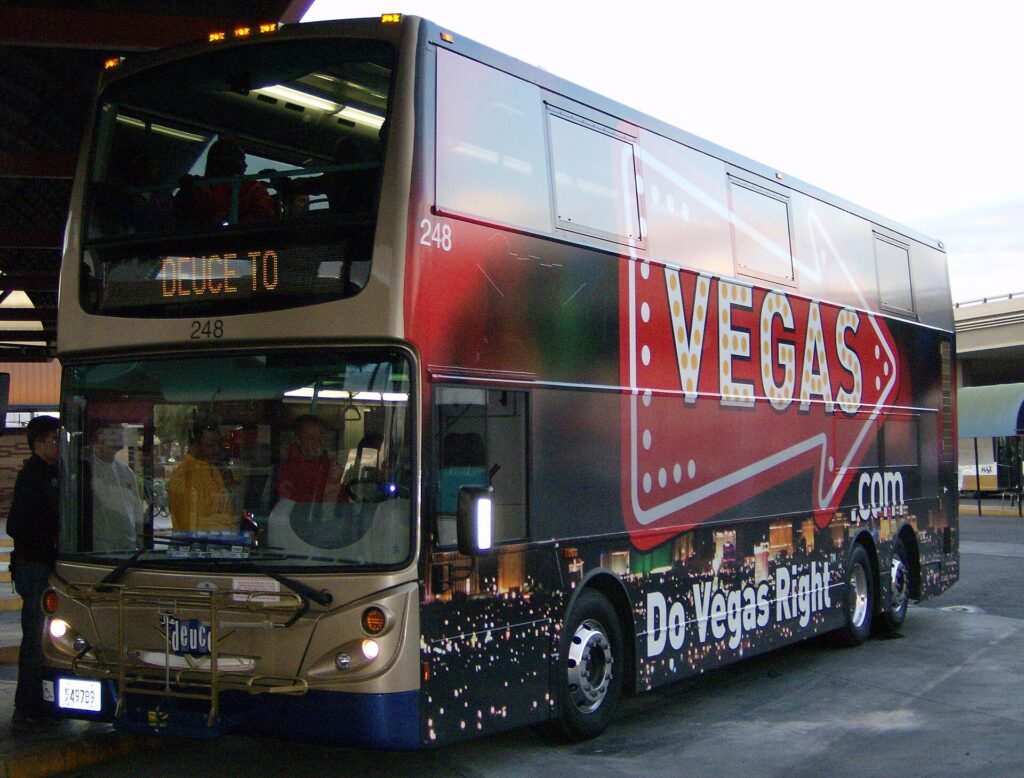
RTC’s Deuce is a double-decker bus that runs the full length of the Strip and on to downtown, 24 hours a day, stopping in front of or beside nearly every resort. It is slow in the evening traffic, but the view from the top deck is a sightseeing tour in itself, and it is the only transit that covers both sides of the Strip and downtown in one ride. The SDX (Strip and Downtown Express) runs a similar route with far fewer stops, which makes it the faster choice between the Strip and Fremont Street. Both stop at the South Strip Transfer Terminal, where other routes connect to the airport.
Fares and tickets
RTC sells passes for set periods, such as two hours, a day or three days, that cover the Deuce, the SDX and the rest of the bus network. Buy them on the rideRTC app on your phone or from the ticket machines at the Strip stops; the Strip routes cost more than the regular residential routes. Monorail tickets are separate. If you plan to ride more than twice in a day, a day pass is the obvious choice. Check RTC’s site for current fares before you go.
Accessibility
RTC buses are low-floor and accessible, and the Monorail stations have elevators. The pedestrian bridges over the Strip’s main intersections have elevators and escalators, although they are not always working, and distances inside the resorts are long.
Beyond RTC and the Monorail
- Walking and the pedestrian bridges. The Strip is walkable in stretches, and at the busiest intersections, such as Tropicana Avenue and Flamingo Road, you cross the boulevard on overhead bridges rather than at street level. Distances are deceptive: a resort that looks next door can be a 15-minute walk away, and in summer that walk is hot.
- Free trams. A free tram links Mandalay Bay, Luxor and Excalibur on the west side of the south Strip, and another connects Park MGM, Aria and Bellagio. They save a surprising amount of walking.
- The Vegas Loop. The Boring Company’s tunnels under the Convention Center campus carry visitors in Tesla cars between the halls for free, and the network is being extended to more resorts. Useful for conventions; check what is open when you travel.
- Taxis and ride-hail. Taxis wait at every resort’s taxi stand, and Uber and Lyft pick up at designated ride-hail zones, usually in or beside the parking garages. For a group of three or four, a ride is competitive with bus passes and far quicker.
- Tours and shuttles. Organized tours run from the Strip resorts to the Hoover Dam, Red Rock, the Valley of Fire, the Grand Canyon and Zion, with hotel pickup; for visitors who do not want to drive in the desert, they are a genuine alternative to a rental.
- Intercity coaches connect Las Vegas with Los Angeles, Phoenix and other cities. A high-speed rail line to Southern California is under construction, but until it opens the choices are drive, fly or take the bus.
Driving in Las Vegas: what it is really like
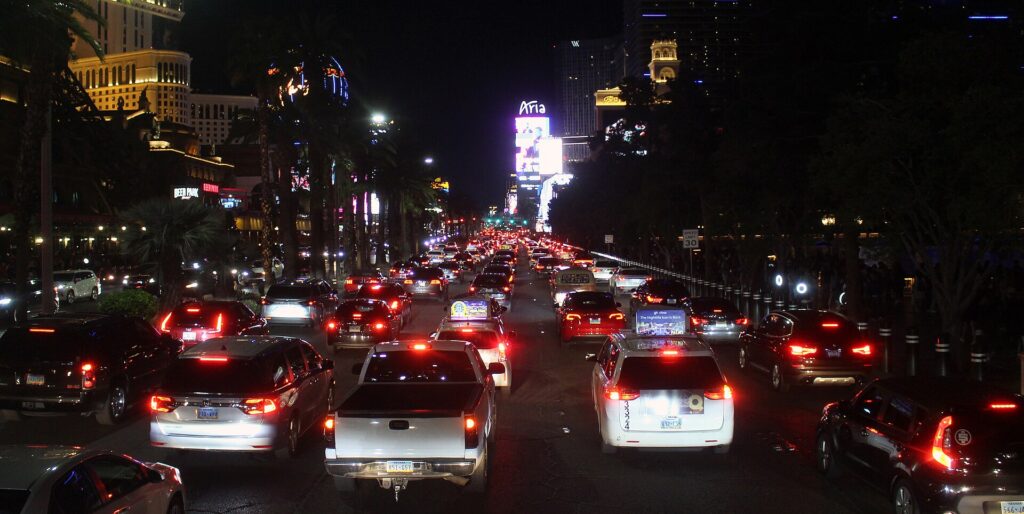
Outside the Strip, Las Vegas is an easy place to drive: wide, straight roads, a logical grid, freeways that are mostly free-flowing outside rush hour, and ample parking at the malls, locals’ casinos and attractions. The frustrations are concentrated on and around the Strip. Las Vegas Boulevard itself is slow at almost any hour and gridlocked on weekend nights, when it is full of cruising cars and limousines; locals avoid it and use the parallel roads, Frank Sinatra Drive and Dean Martin Drive on the west side and Koval Lane and Paradise Road on the east, which reach the back entrances and garages of the resorts. I-15 through the resort corridor jams at rush hour and on Friday afternoons and Sunday mornings, when visitors from Southern California arrive and leave. And the big events, from New Year’s Eve to the Grand Prix, close streets for days.
Parking
Parking is the main reason a car costs more on the Strip than it seems. Most of the big resorts now charge for self-parking and valet, including for their own hotel guests at many properties, and the daily charge adds up over a stay; some loyalty-program tiers and a few off-Strip and downtown properties offer free or validated parking. The garages themselves are enormous and well signed, but it can be a ten-minute walk from your space to the lobby. Downtown, most casinos validate parking for guests and players, and the Arts District has street parking. Outside the resort corridor, parking at Chinatown, the malls, the Springs Preserve and the locals’ casinos is generally free and easy. If you do rent for the whole stay, factor the parking fee into the room rate when you compare hotels.
Rules and conditions worth knowing
- The heat. From June to September, the car can be dangerously hot inside after sitting in the sun; never leave children or pets in it, carry plenty of water on any desert drive, keep the fuel tank topped up, and know that services are far apart once you leave the city. A breakdown in the desert in July is serious.
- Flash floods. During the summer monsoon and winter storms, water pours across roads and fills the dips and washes that are signed as flood zones. Never drive into flowing water; the storms pass within hours.
- Handheld phones are banned while driving in Nevada; use hands-free only.
- Pedestrians are everywhere on and around the Strip, often distracted; watch for them at the resort entrances and turning lanes.
- Right turns on red are permitted after a full stop unless signed otherwise.
- Impaired driving is enforced heavily in a city built around drinking; take a taxi after a night out.
- Park entry. Red Rock’s scenic drive requires a timed-entry reservation during the day for much of the year, and the national parks charge an entrance fee per vehicle. NVRoads publishes Nevada road conditions and closures.
When renting a car makes sense
- Red Rock Canyon and Mount Charleston. Both are 30 to 45 minutes from the Strip, with no practical transit, and the scenic drive and the trailheads need a car.
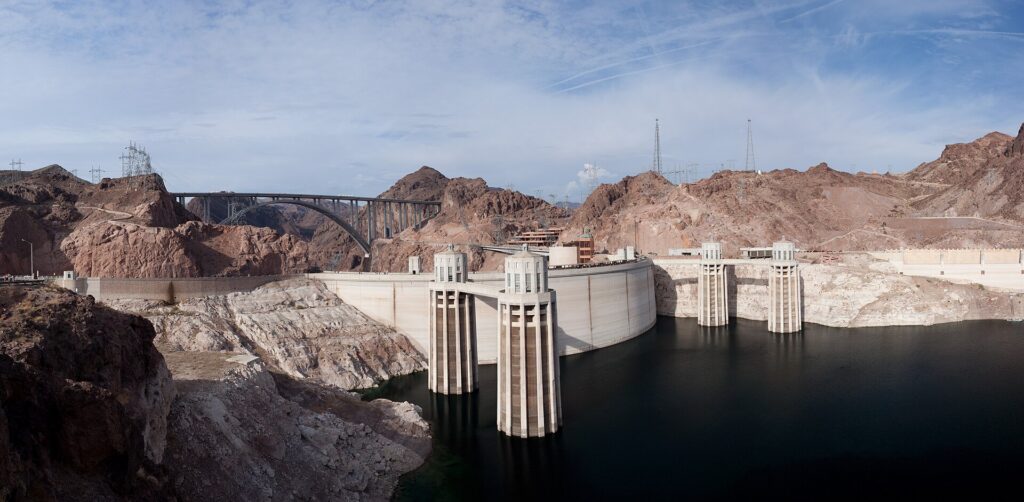
- The Hoover Dam and Lake Mead. About 45 minutes southeast; a car lets you combine the dam, the bypass bridge walkway, Boulder City and the lake in one day.
- The Valley of Fire, an hour northeast, is a car trip, and its best light is early and late in the day.
- Zion, the Grand Canyon and Death Valley. Each is a long day or an overnight; a car gives you the freedom to start at dawn and stop where you like.
- Staying off the Strip. Summerlin and Henderson resorts and vacation rentals are spread out and assume a car.
- Southwest road trips. Las Vegas pairs naturally with Los Angeles, Phoenix, Utah’s national parks and the Grand Canyon; our Los Angeles to Las Vegas and Las Vegas to Phoenix route guides cover the two classic drives.
If any of those apply, our rental car booking tips cover insurance, deposits and the questions to ask at the counter, and our family car rental guide looks at vehicle choice.
When it does not
- You are staying on the Strip or downtown and your plans are casinos, shows, pools and restaurants.
- You are in town for a convention, where the Monorail, the Vegas Loop and taxis serve the halls.
- You are coming for a big weekend event, such as New Year’s Eve, EDC or the Grand Prix, when streets close and parking is at its worst.
- You want the Hoover Dam or the Grand Canyon for a single day and are happy to take an organized tour with hotel pickup.
- You plan to drink; taxis and ride-hail are everywhere and cheaper than a DUI.
The hybrid plan for a Strip-plus-desert trip
Go car-free for the Strip days and rent only for the desert days, and think about where you pick up. Renting at the airport’s Rent-A-Car Center makes sense if you are heading straight out of town on arrival, to Zion, the Grand Canyon or Death Valley, because the freeways are minutes away and you never enter the Strip traffic. For a mid-trip day or two in the desert, many Strip resorts have rental desks in the lobby or nearby, which saves a taxi ride to the airport and the airport’s concession fees, and means you pay for parking only on the nights you have the car. A common pattern that works well: taxi from the airport to the Strip, two or three car-free days, pick up a rental at your resort for Red Rock and the Hoover Dam or a long day to the Grand Canyon, and return it at the airport on the way to your flight home. Book ahead for spring, fall and the big event weekends. Compare the day rates on our Las Vegas car rental page against a full-trip rental and the difference is usually obvious.
A worked cost comparison
Numbers change with the season and the booking window, so treat this as a method rather than a quote, and check current rates before deciding. For a four-night Strip trip for two people, the car-free version costs a return taxi or ride-hail from the airport, a couple of Deuce day passes, and a few rides between resorts and downtown; the rental version adds four days of a compact car, four nights of resort parking fees, fuel, and the taxes and airport fees that add a noticeable percentage to the headline rate, and buys you very little on a boulevard where traffic is slower than the bus. The car-free option wins easily. For the same four nights with one day at Red Rock and the Hoover Dam, the tour version adds two seats on a day tour; the hybrid version adds a one-day rental picked up on the Strip, one night of parking, fuel, and the Red Rock entry fee. Priced honestly, a tour is often similar for one or two people, the rental usually wins for three or four, and the rental wins on flexibility for anyone who wants to hike, linger for sunset or see both places at their own pace. For a week that includes Zion and the Grand Canyon, a rental is the only practical answer, and an airport pickup is simplest. Run the rental rates for your dates on our Las Vegas car rental page and put them beside the tour prices before you choose.
Driving out of Las Vegas in each season
The highways out of Las Vegas are among the most scenic in the West, and the seasons change them. In summer, the challenge is heat: temperatures in Death Valley and on the desert stretches of I-15 and US-93 can pass 45 °C (113 °F), so leave at dawn, carry several liters of water per person, keep the air conditioning and the tank in good order, and watch for monsoon storms and flash floods in the afternoons from July to September. In fall, conditions are ideal, and the weekend traffic is the main issue: the drive back to Southern California on I-15 on a Sunday afternoon can take hours longer than the four or so it takes on a quiet weekday, with the bottlenecks at the state line near Primm and at the Cajon Pass. In winter, the desert roads are mild, but snow and ice reach the higher country: the road up to Mount Charleston can require chains or four-wheel drive, and the routes to the Grand Canyon’s South Rim and to Zion via the high plateaus can be icy; check conditions before you go. In spring, strong winds blow dust across the highways and can make high-sided vehicles hard to handle, while the wildflowers and the mild temperatures make it the best season for the long drives. In every season, remember the clock: Arizona does not observe daylight saving time, so on the drive to the Grand Canyon or Phoenix the time is the same as Nevada’s in summer and an hour ahead in winter.
Decision table
| Your trip | Recommendation | Why |
|---|---|---|
| Strip weekend, couple or solo | No car | Taxis, the Monorail, the Deuce and walking cover it; parking fees add up |
| Convention trip | No car | The Monorail, the Vegas Loop and taxis serve the halls |
| Big event weekend (New Year’s Eve, EDC, the Grand Prix) | No car | Street closures, heavy traffic and scarce parking |
| Strip plus Red Rock or the Hoover Dam | Hybrid: rent for a day, or take a tour | Car-free Strip days, car or tour for the desert |
| Zion, the Grand Canyon or Death Valley | Rent at the airport | Long distances, early starts and the freeways minutes from the rental center |
| Staying in Summerlin or Henderson | Rent for the whole stay | Suburban distances and free parking make the car worthwhile |
| Family with young children | Rent, or hybrid | Car seats, heat and day trips all argue for a car |
| Southwest road trip | Rent (consider one-way to Los Angeles or Phoenix) | Las Vegas is a stop, not the destination |
Money-saving tips for both options
- On transit: buy a day or three-day RTC pass if you will ride more than twice a day; use the free trams on the south Strip; take the SDX rather than the Deuce when speed matters.
- On a rental: compare airport and Strip pickup, book early for spring, fall and the big weekends, decline extras you already have through a credit card or home policy (check first), and return the car full, because fuel near the rental center costs more.
- On the hotel: if you are renting, price the parking fee and the resort fee into the room rate, and look at downtown and off-Strip resorts where parking is often free or validated.
- On timing: avoid Las Vegas Boulevard on weekend nights and I-15 toward California on Sunday afternoons; the best time to fly to Las Vegas guide lists the busiest weekends.
- On tours: for one or two people doing a single desert day, compare a tour with hotel pickup against a rental plus parking, fuel and entry fees; the tour is often close in price and there is no driving after a late night.
Frequently asked questions
Do you need a rental car in Las Vegas?
For the Strip and downtown, no; taxis, ride-hail, the Monorail, the Deuce and walking are enough. For Red Rock, the Hoover Dam, the Valley of Fire and the national parks, yes, or an organized tour.
Is public transportation good in Las Vegas?
Good along the Strip and to downtown, with the 24-hour Deuce, the faster SDX and the Monorail. Beyond the resort corridor, buses are slower and less frequent, and there is no rail to the airport.
How do I get from Las Vegas airport to the Strip?
A taxi or ride-hail in 15 to 25 minutes, a shared shuttle van, or an RTC bus with a transfer. All rental cars are collected from the off-airport Rent-A-Car Center by shuttle.
Is parking free on the Las Vegas Strip?
At most big resorts, no; they charge for self-parking and valet, often even for hotel guests. Some off-Strip and downtown casinos offer free or validated parking.
Can I get to the Grand Canyon from Las Vegas without a car?
Yes, on an organized day tour by coach, or by air tour; the West Rim is about two and a half hours away and the South Rim about four and a half.
Is it easy to drive in Las Vegas?
Outside the Strip, yes: wide, straight roads and plentiful parking. On the Strip itself, traffic is slow, pedestrians are everywhere, and the back roads behind the resorts are faster.
Should I rent a car to drive from Los Angeles to Las Vegas?
It is one of the classic American road trips, about four hours on I-15 without traffic, and a one-way rental is widely available; just avoid the return on a Sunday afternoon.
Whichever way you go, start with the flight. Compare cheap flights to Las Vegas, choose a neighborhood with our Las Vegas hotel search, and if the desert is on the list, price the rental for those dates on our Las Vegas car rental page. For what to see, start with our first-timer’s guide to Las Vegas.
Keep planning with TicketScanner
- Las Vegas car rentals — compare airport and Strip pickup
- Cheap flights to Las Vegas
- Las Vegas hotels — factor parking and resort fees into the rate
- Things to do in Las Vegas: a first-timer's guide
- Best time to fly to Las Vegas: month by month
- Harry Reid International (LAS) airport guide
- Driving Los Angeles to Las Vegas
- Driving Las Vegas to Phoenix
- Rental car booking tips
- Car, transit or taxi in a new city?
Leave a Reply