Tag: Las Vegas

  • Best Time to Fly to Las Vegas: Seasons, Weather & Prices

    Best Time to Fly to Las Vegas: Seasons, Weather & Prices

    Las Vegas breaks most of the rules about when to fly. In most cities, weekends are cheap for hotels and summer is peak season; in Las Vegas, Friday and Saturday nights cost several times what a Tuesday does, and the hottest months of the year are among the cheapest. The city’s calendar is driven by three forces that have little to do with school holidays: the desert climate, which makes spring and fall glorious and midsummer punishing; the convention calendar, which can fill much of the city’s roughly 150,000 hotel rooms midweek with trade-show crowds; and a growing list of huge events, from the Electric Daisy Carnival to the Formula 1 Grand Prix, that can double room rates for a weekend. Airfares are the easier half of the equation, because Harry Reid International is one of the best-connected leisure airports in the country and competition keeps fares low. This guide walks through the weather month by month, the fare and hotel seasons, the events that move prices, and how to handle the airport.

    The short answer

    For the best weather, come in March to May or late September to early November, when days are warm, the pools are open and the desert parks are comfortable for hiking. For the lowest prices, look at July and August, when the heat keeps crowds away and resorts discount heavily, at the first half of December outside the rodeo, and at the weeks after CES in January. The most expensive stretches are New Year’s Eve, the Grand Prix weekend in November, big convention weeks such as CES in early January, and the spring and fall weekends generally, when the weather is perfect and the city is full. Whatever you choose, fly and stay Sunday to Thursday if you can, and check the convention calendar before you commit; then run a flexible-date search on our Las Vegas flights page, where shifting a trip by a couple of days can change the total cost dramatically.
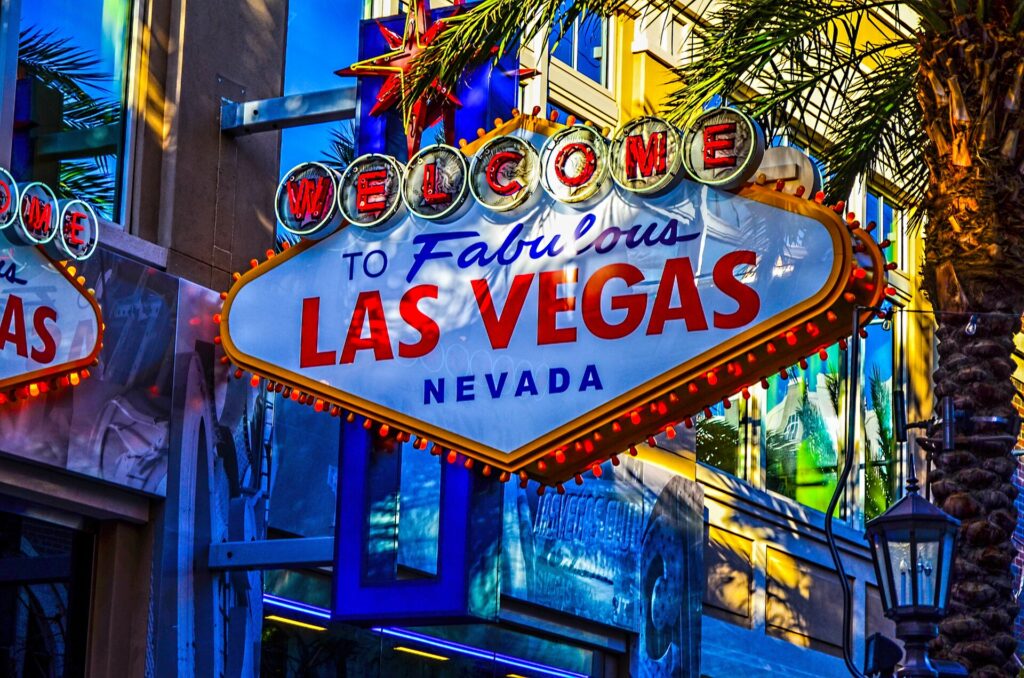
    The Welcome to Fabulous Las Vegas sign at the south end of the Strip
    The Welcome to Fabulous Las Vegas sign, in the median of the boulevard since 1959 (Photo: Tomás Del Coro via Wikimedia Commons, CC BY-SA 2.0)

    Las Vegas weather, season by season

    Las Vegas sits in a basin in the Mojave Desert, about 600 meters (2,000 feet) above sea level and ringed by mountains. It gets only about 100 mm (4 inches) of rain a year, sunshine on the great majority of days, low humidity, mild winters and some of the hottest summers of any large city in the country. The figures below are approximate seasonal patterns at the airport, based on the long-term climate normals published by NOAA and the National Weather Service’s Las Vegas office; check the current forecast before you pack, especially for heat warnings in summer and wind in spring.

    MonthTypical daytime highTypical overnight lowWhat it feels likeFare pressure
    Januaryaround 15 °C (59 °F)around 4 °C (40 °F)Cool, clear and sunny; cold after darkHigh for New Year and CES, then low
    Februaryaround 17 °C (63 °F)around 6 °C (43 °F)Mild days, chilly nights, the odd rainy spellModerate; Super Bowl and Presidents’ Day weekends busy
    Marcharound 22 °C (71 °F)around 10 °C (50 °F)Spring arrives; windy days are commonHigh; spring break and March Madness
    Aprilaround 26 °C (79 °F)around 14 °C (57 °F)Near-perfect; pools open, desert in flowerHigh
    Mayaround 32 °C (89 °F)around 19 °C (66 °F)Hot afternoons, warm evenings, full pool seasonHigh, with EDC and Memorial Day spikes
    Junearound 37 °C (99 °F)around 24 °C (76 °F)Very hot and dry; outdoor sightseeing at dawn onlyModerate, falling
    Julyaround 40 °C (104 °F)around 27 °C (81 °F)The hottest month; monsoon storms possibleLow, except the Fourth of July
    Augustaround 39 °C (102 °F)around 27 °C (80 °F)Extreme heat, more humid; flash-flood stormsLow
    Septemberaround 35 °C (95 °F)around 23 °C (73 °F)Still hot, cooling toward the end of the monthModerate, rising
    Octoberaround 27 °C (81 °F)around 15 °C (59 °F)Warm, dry and bright; ideal for hikingHigh
    Novemberaround 19 °C (67 °F)around 8 °C (47 °F)Pleasant days, cool nightsHigh for trade shows and the Grand Prix, low at Thanksgiving
    Decemberaround 14 °C (57 °F)around 4 °C (39 °F)Cool and sunny; frost some nights, snow on the mountainsModerate for the rodeo, low mid-month, peak at New Year

    Three things the table cannot show. First, the heat is dry, until it isn’t: for most of the year the humidity is so low that 35 °C (95 °F) feels bearable in the shade, but the desert sun is fierce, you dehydrate faster than you notice, and from mid-June to mid-September walking between resorts in the afternoon is genuinely dangerous for some people. Second, the monsoon: from July to September, moisture from the south brings sudden afternoon thunderstorms, dust storms and flash floods that can close roads and turn dry washes into rivers in minutes. Third, the evenings: the desert cools quickly after sunset in winter and spring, so a warm January afternoon at the pool can become a jacket night by eight o’clock, while in July the overnight low barely drops below 27 °C (80 °F).

    How Las Vegas fare seasons work

    Airfares into Las Vegas are among the most competitive in the country. Harry Reid is a huge leisure market served by almost every U.S. airline, with Southwest the largest carrier and low-cost airlines such as Frontier and Allegiant adding capacity, so seats from the West Coast and the Mountain states are plentiful and fares rarely spike as sharply as hotel rates do. The real price swings in Las Vegas are in the rooms. Three calendars drive them: the weekly cycle, in which Friday and Saturday nights cost far more than Sunday to Thursday; the convention calendar, which can make a Tuesday the most expensive night of the month; and the weather, which fills the city in spring and fall and empties it in the heat. The result is that the cheapest total trip is usually a midweek stay in a low season with no big convention in town.

    Peak season

    March to May and late September to mid-November, plus New Year’s Eve and the biggest event weekends. Spring and fall weekends fill every resort on the Strip, and room rates on a Saturday can be several times the Wednesday rate. Stack a convention on top, and even midweek rates climb. If you must travel in peak, book early, stay Sunday to Thursday, and consider a downtown or off-Strip hotel, where rates rise less sharply.

    Shoulder season

    February, early June and early September. The weather is either not quite warm enough for the pool or a little too hot for comfort, and prices sit in the middle. February is interesting because the Super Bowl weekend is one of the busiest betting weekends of the year, and Chinese New Year and Presidents’ Day draw crowds; outside those, it is good value with mild weather.

    Low season

    Late June to August, the first three weeks of December outside the National Finals Rodeo, and the middle of January once CES has left town. Summer is the classic Vegas bargain: the resorts discount heavily to fill rooms, the pools are at their best, and everything but outdoor sightseeing works as normal. Early December is quiet and festive. Thanksgiving week, oddly, is also often cheap on the Strip, because business travel stops and the city is not a traditional family destination.

    As elsewhere, mid-week departures and early or late flights usually price below Friday and Sunday afternoons on the same route, and a search across a whole month reveals cheaper pairs of dates close to your first choice. Our guide to the best times to book explains how to read those patterns, and our guide to cheap flight tickets to Las Vegas goes deeper on the airfare side.

    Las Vegas month by month

    January

    The year starts expensive. New Year’s Eve, when the Strip closes to traffic for fireworks from the resort rooftops, is one of the priciest nights of the year, and CES, the giant consumer-electronics show in the first full week of the month, fills the city with well over 100,000 attendees and sends room rates soaring. Once CES leaves, January becomes one of the cheapest months of the year: cool, sunny days around 15 °C (59 °F), quiet casinos, and ideal hiking weather at Red Rock and the Valley of Fire. The Golden Knights are in season, and the NFL playoffs keep the sportsbooks lively.

    February

    Mild and good value, with a few spikes. Super Bowl weekend in early February is one of the busiest weekends of the year for the sportsbooks and the parties; Chinese New Year brings lavish decorations to the resorts and crowds from the West Coast and Asia; and Presidents’ Day weekend and Valentine’s Day, with the city’s famous wedding chapels at full stretch, fill hotels too. Midweek in February is excellent value.

    March

    Spring arrives, and so do the crowds. Spring break brings college students and families; college basketball’s conference tournaments early in the month and the opening rounds of March Madness fill the sportsbooks from morning to night; and the weather is warm enough for the pools to open. Windy days are common. Weekends are expensive; midweek is manageable.

    April

    Possibly the best month of the year: warm, sunny, not yet hot, with the desert in bloom and the pools and dayclubs open. It is also one of the busiest, with conventions midweek and full resorts every weekend. Book early, and consider the Easter weekend and the big April trade shows when choosing dates.

    May

    Hot afternoons and warm nights, full pool season, and two big spikes. The Electric Daisy Carnival, one of the largest dance-music festivals in the world, takes over the Las Vegas Motor Speedway for three nights in mid-May and fills hotels across the valley; Memorial Day weekend is the unofficial start of summer and one of the biggest pool-party weekends of the year. Between those, May is excellent.

    June

    The heat arrives in earnest, with highs near 37 °C (99 °F) and rising, and prices begin to fall through the month. Father’s Day weekend and the big summer trade shows add pressure, but late June is often good value. Do outdoor sightseeing at dawn and spend the afternoons in the pool or inside.

    July

    The hottest month, with afternoons around 40 °C (104 °F) and nights that barely cool. It is also one of the cheapest: outside the Fourth of July weekend, when the resorts put on fireworks and the pools overflow, room rates drop to some of their lowest of the year. The monsoon can bring thunderstorms and flash floods in the second half of the month. If you are coming for the casinos, shows, restaurants and pools, July is a genuine bargain.

    August

    Still extremely hot, a little more humid, and still cheap. The monsoon storms are at their most frequent, and the big cybersecurity conferences and fashion trade shows fill midweek rooms for a few days. The Aces are in season, and the pools stay open. Book the desert day trips for sunrise, or skip them until fall.

    September

    Summer hangs on, with highs in the 30s °C (90s °F) most of the month, but prices climb as the conventions return after Labor Day and the weather improves. The Raiders’ season starts, the college football season fills weekends, and the last week of September is often very pleasant. Labor Day weekend is the last big pool party of the year.

    October

    One of the two best months: warm, dry, bright and ideal for hiking Red Rock, the Valley of Fire and the Grand Canyon. It is correspondingly busy and expensive, with big conventions midweek and full weekends, plus Halloween, when the Strip’s clubs and bars throw costume parties all weekend. Book early.

    November

    A month of extremes. The SEMA auto-industry show in the first week brings one of the largest trade crowds of the year, and the Las Vegas Grand Prix, a Formula 1 night race on a circuit through the Strip, sends room rates for its weekend in the second half of the month to eye-watering levels and closes streets for days. Then Thanksgiving week is often one of the cheapest of the year. Days are pleasant and nights cool.

    December

    The National Finals Rodeo, ten days in the first half of the month, brings cowboy hats, country concerts and full hotels to the whole city. The rest of early and mid December is quiet, festive and inexpensive, with the resorts dressed for the holidays and the Ethel M cactus garden lit up. From Christmas to New Year’s Eve, prices climb steeply for the biggest party of the year.
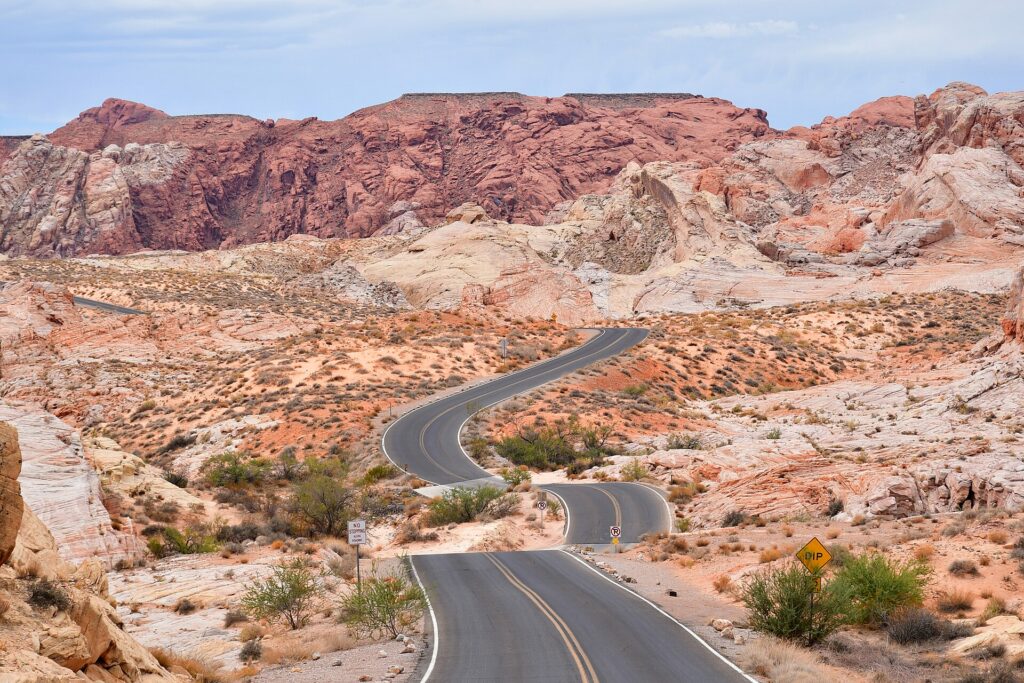
    A winding road through the red rock of Valley of Fire State Park
    Valley of Fire, an hour from the Strip and at its best from October to April (Photo: Gzzz via Wikimedia Commons, CC BY 4.0)

    Events that move Las Vegas flight and hotel prices

    Cross-check these against your dates before you book. Exact dates shift each year; the Las Vegas Convention and Visitors Authority keeps the current calendar, including the major conventions.

    • New Year’s Eve: the most expensive night of the year on the Strip.
    • CES (the first full week of January): the biggest convention of the year.
    • Super Bowl weekend (early February) and Chinese New Year (late January or February).
    • March Madness (conference tournaments and the opening rounds, early to mid-March) and spring break.
    • Electric Daisy Carnival (three nights in mid-May) and Memorial Day weekend.
    • Fourth of July and Labor Day weekends: the big pool-party weekends.
    • SEMA (early November) and the Las Vegas Grand Prix (a weekend in the second half of November).
    • National Finals Rodeo (ten days in the first half of December).
    • Big fights, residency openings, Raiders and Golden Knights games and stadium concerts. Our Las Vegas events page shows what is on sale for your dates.
    • Midweek trade shows, which can fill the city without warning; if your Tuesday rate looks higher than your Saturday rate, that is usually why.

    Getting in from the airport

    Harry Reid International Airport (LAS), named after the former Nevada senator and known as McCarran until 2021, is one of the busiest airports in the country and sits directly beside the south end of the Strip, about 8 km (5 miles) from its center. It has two terminals: Terminal 1, which handles Southwest and many domestic airlines, and Terminal 3, which handles international flights and several domestic carriers, connected airside by a tram to the D gates. Yes, there are slot machines at the gates. Getting to the Strip is quick: taxis wait at both terminals and the ride takes 15 to 25 minutes; ride-hail pickups are in designated areas of the parking garages; shared shuttle vans serve the major resorts; and RTC buses stop at the terminals, though with luggage and a transfer they are slower. All the rental companies operate from the off-airport Rent-A-Car Center, about 5 km (3 miles) away and reached by free dedicated shuttle buses from both terminals. Our Las Vegas rental car guide works through whether you need one, and our LAS airport guide covers the layout.
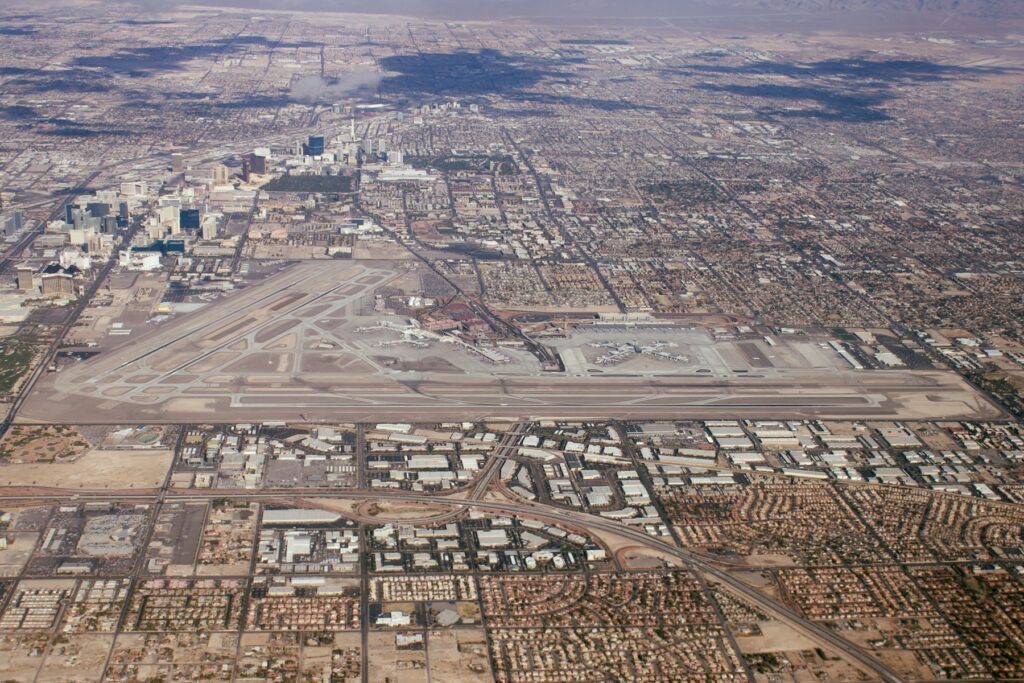
    Harry Reid International Airport (LAS), formerly McCarran, in Las Vegas
    Harry Reid International, known as McCarran until 2021, sits right beside the south end of the Strip (Photo: Craig Butz via Wikimedia Commons, CC BY-SA 3.0)

    Timing tricks that work for Las Vegas

    • Check the convention calendar first. A cheap fare into a CES or SEMA week is not cheap once the room is added. Run a Las Vegas hotel search for the same dates before you commit to either.
    • Stay Sunday to Thursday. Weekend nights on the Strip can cost several times the midweek rate for the same room; even shifting one night makes a difference.
    • Compare total prices. Nightly resort fees and parking charges add a substantial amount to the advertised room rate, so compare the all-in price, not the headline.
    • Use the summer. If the pool, the shows and the restaurants are the point, July and August offer the lowest rates of the year; do the desert at dawn or save it for another trip.
    • Consider driving from Southern California or Arizona. Las Vegas is a classic road trip from Los Angeles and Phoenix; see our Los Angeles to Las Vegas and Las Vegas to Phoenix route guides.
    • Leave time at the airport. Security lines at LAS can be long on Sunday and Monday mornings after a big weekend or convention. Our guide to how early to arrive covers what to allow.
    • Flying out of Las Vegas instead? The same seasonality applies in reverse; see cheap flights from Las Vegas.
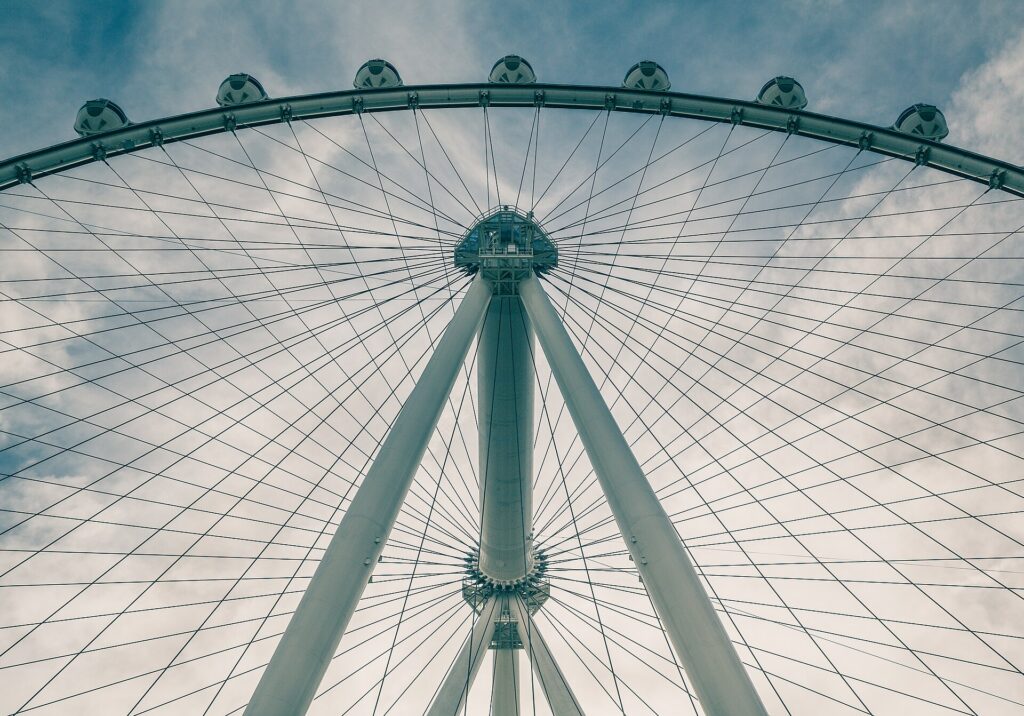
    The High Roller observation wheel at the LINQ in Las Vegas
    The High Roller at the LINQ; spring and fall bring the best weather and the highest weekend rates (Photo: Tony Webster from San Francisco, California via Wikimedia Commons, CC BY 2.0)

    What to pack, by season

    Winter (December to February): layers for mild days, a warm jacket for evenings that drop close to freezing, and sunglasses. Spring (March to May): light clothing, swimwear, a layer for the evenings, and sunscreen, because the sun is already strong. Summer (June to September): the lightest clothing you own, a hat, high-factor sunscreen, a refillable water bottle, and a sweater for the aggressively air-conditioned casinos and theaters. Fall (October to November): summer clothing into October, with a jacket for the cooler nights of November. In every season, bring comfortable walking shoes, because a stroll between two neighboring resorts can be longer than it looks, and something smarter for the restaurants and nightclubs, which enforce dress codes.

    The best time to fly to Las Vegas for…

    Pool parties

    April to early June, and September, when the dayclubs are in full swing and the heat is manageable; Memorial Day and Labor Day weekends are the biggest parties.

    Hiking and the national parks

    March to May and October to November for Red Rock, the Valley of Fire, Zion and the Grand Canyon; winter works for the lower desert parks but brings snow to the Grand Canyon’s South Rim and Zion’s higher trails.

    Shows and dining on a budget

    July and August, the first half of December, or mid-January to early February, midweek.

    The lowest fares and rates

    Midweek in July, August or early December, with no major convention in town.

    Families

    Spring break or a fall break for comfortable weather for the Hoover Dam and the parks; summer is cheap, but the heat makes outdoor sightseeing hard with children.

    International visitors

    Canadians need a valid passport; visitors from Visa Waiver Program countries need an approved ESTA before boarding, and everyone else needs a visa. U.S. Customs and Border Protection explains what applies to you, and the TSA lists what you can carry through security. Grand Canyon National Park and the other national parks charge an entrance fee per vehicle; the National Park Service sells passes online and at the gates.

    Frequently asked questions

    What is the cheapest month to fly to Las Vegas?

    July and August are usually the cheapest for the whole trip, followed by the first half of December and mid-January after CES. Airfares vary less than hotel rates, so the room is where the savings are.

    What is the best month to visit Las Vegas for weather?

    April and October, with March, May and early November close behind.

    Is Las Vegas too hot in summer?

    For outdoor sightseeing in the afternoon, yes; highs around 40 °C (104 °F) are normal. For the pools, casinos, shows and restaurants, which are all air-conditioned or built for the heat, summer is fine and far cheaper.

    Why are Las Vegas hotels so expensive on some weekdays?

    Conventions. The city hosts some of the largest trade shows in the world, and a big one can fill every resort midweek. Check the convention calendar before booking.

    Is it cheaper to go to Las Vegas midweek?

    Almost always. Sunday to Thursday nights are far cheaper than Friday and Saturday, unless a large convention is in town.

    How far ahead should I book?

    Earlier for New Year’s Eve, the Grand Prix, EDC, CES week and spring and fall weekends, when rates only rise; for midweek summer and early-December stays, rates are stable enough that finding the right dates matters more.

    Does it rain in Las Vegas?

    Rarely, about 100 mm (4 inches) a year, but winter storms and summer monsoon thunderstorms can bring sudden downpours and flash floods. Never drive into a flooded road.

    Ready to pick your dates? Compare fares across the whole month on our Las Vegas flights page, then find a room with our Las Vegas hotel search. For what to do when you land, start with our first-timer’s guide to Las Vegas.

  • Las Vegas: Do You Really Need a Rental Car?

    Las Vegas: Do You Really Need a Rental Car?

    Las Vegas is a strange case for the “should I rent a car?” question. The valley is a sprawling, car-built desert metropolis of more than two million people, with freeways, huge parking garages and almost no rail transit. Yet most visitors spend nearly all their time on a single boulevard about 6 km (4 miles) long, where a car is more of a burden than a help: the resorts charge for parking, the traffic on the Strip crawls at night, and the Monorail, the Deuce bus, free trams and your own feet cover the distances. The answer changes the moment the desert enters the plan, because Red Rock Canyon, the Hoover Dam, the Valley of Fire and the national parks beyond are all car trips or organized tours. This guide explains how the city is laid out, how the Monorail, buses and trams work, what driving and parking are really like, when a rental is worth it, and gives you a straightforward way to decide.

    The short answer

    Skip the car if you are staying on the Strip or downtown for a few nights and your plans are casinos, shows, pools, restaurants and Fremont Street; taxis, ride-hail, the Monorail, the Deuce and walking will cover that, and you will save on parking fees. That is most first-time visitors. Rent a car if Red Rock, the Hoover Dam, the Valley of Fire, Mount Charleston, Zion or the Grand Canyon are on the itinerary, if you are staying off the Strip in Summerlin or Henderson, if you are traveling with young children, or if Las Vegas is one stop on a Southwest road trip. And the hybrid, car-free on the Strip and a one- or two-day rental for the desert, is often the smartest plan of all. Compare rental rates for any of these plans on our Las Vegas car rental page.

    How Las Vegas is laid out

    The Las Vegas Valley is a wide desert basin ringed by mountains, and the city spreads across it on a grid of long, straight arterial roads. Its spine is Las Vegas Boulevard. The southern section, the Strip, technically lies outside the city limits in unincorporated Clark County and runs from Mandalay Bay and the Welcome sign in the south to the STRAT tower in the north, with the big resorts lined up on both sides. Interstate 15 runs parallel to it a few hundred meters to the west, and the airport sits directly to the southeast. North of the STRAT, the boulevard continues to downtown, the original city around Fremont Street, about 3 km (2 miles) beyond the end of the Strip, with the Arts District in between. East of the Strip are the Convention Center and Paradise Road; west, across I-15, are Chinatown on Spring Mountain Road and then the suburbs rising toward Summerlin and Red Rock Canyon. Henderson spreads to the southeast. The Strip and downtown are dense; everything else assumes a car.

    Hotels cluster along the Strip, around downtown and Fremont Street, near the Convention Center, and in the locals’ resorts of Summerlin and Henderson. Our Las Vegas hotel search lets you compare them.

    Getting in from the airport

    Harry Reid International (LAS) is one of the most conveniently placed big airports in the country: its runways run right beside the south end of the Strip, about 8 km (5 miles) from its center, and downtown is about 20 minutes away. Taxis queue at both Terminal 1 and Terminal 3, the ride to a Strip resort takes 15 to 25 minutes, and fares are regulated by the state. Ride-hail pickups are in designated areas of the terminal parking garages, which are well signed. Shared shuttle vans serve the major resorts, and several RTC bus routes stop at the airport, although none runs along the Strip itself, so a bus trip with luggage usually means a transfer. All the rental companies operate from the off-airport Rent-A-Car Center, about 5 km (3 miles) from the terminals and reached by free dedicated shuttle buses that run every few minutes; allow extra time for that shuttle when you return the car. Check the airport’s site for current ground-transport details; our LAS airport guide covers the layout.

    A Las Vegas Monorail train running behind the Strip resorts
    The Monorail runs along the east side of the Strip from the MGM Grand to the SAHARA (Photo: Nandaro via Wikimedia Commons, CC BY-SA 3.0)

    Las Vegas transit, explained

    Las Vegas has no subway or light rail. What it has is a privately built Monorail along the east side of the Strip, a public bus network run by the Regional Transportation Commission (RTC) with two Strip routes that run all day and night, and a set of free trams and tunnels that link specific resorts. For a Strip-and-downtown trip, together they are entirely adequate; for anything beyond, they thin out fast.

    The Las Vegas Monorail

    The Las Vegas Monorail runs for about 6 km (4 miles) along the east side of the Strip, from the MGM Grand in the south to the SAHARA in the north, with stations at the back of several resorts along the way, including Paris and Horseshoe, Flamingo and Caesars Palace, Harrah’s and the LINQ, and the Las Vegas Convention Center. Trains are frequent and the ride from end to end takes about a quarter of an hour. It is ideal for convention-goers and for hopping between the east-side resorts, but it has limits: the stations are tucked behind the casinos, so reaching them can mean a long walk through the resort, it does not serve the west side of the Strip directly, and it goes neither to the airport nor to downtown. It runs from the morning until after midnight, later on weekends; single rides and multi-day passes are sold at the stations and online.

    The Deuce and the SDX

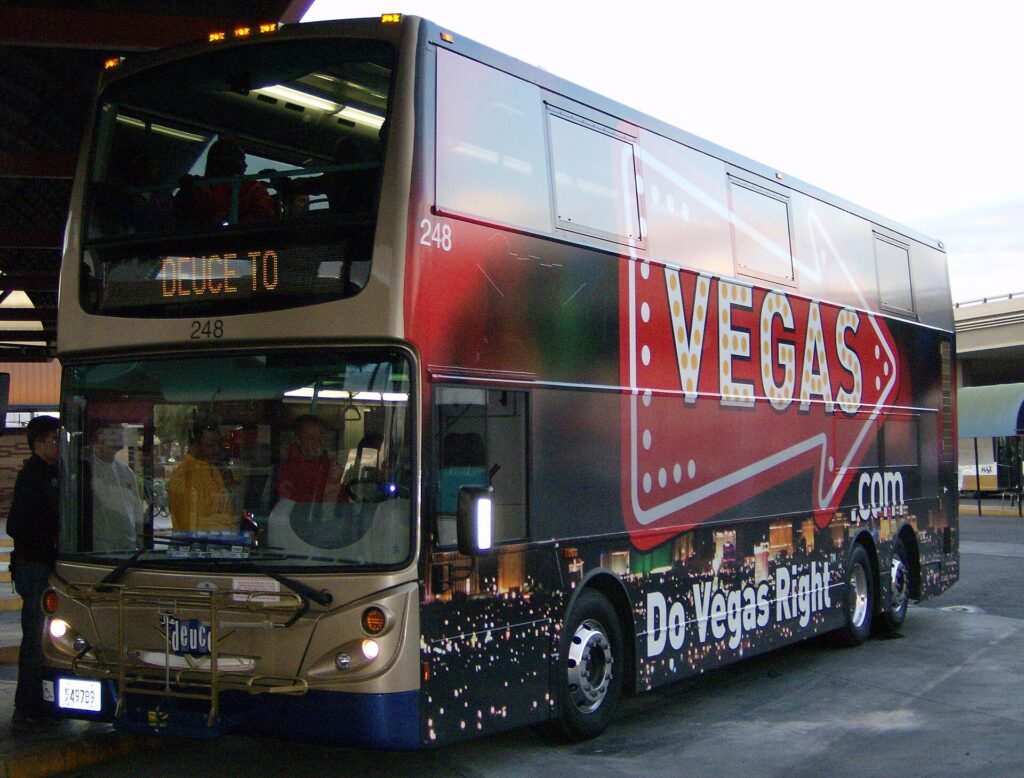
    RTC’s Deuce is a double-decker bus that runs the full length of the Strip and on to downtown, 24 hours a day, stopping in front of or beside nearly every resort. It is slow in the evening traffic, but the view from the top deck is a sightseeing tour in itself, and it is the only transit that covers both sides of the Strip and downtown in one ride. The SDX (Strip and Downtown Express) runs a similar route with far fewer stops, which makes it the faster choice between the Strip and Fremont Street. Both stop at the South Strip Transfer Terminal, where other routes connect to the airport.

    Fares and tickets

    RTC sells passes for set periods, such as two hours, a day or three days, that cover the Deuce, the SDX and the rest of the bus network. Buy them on the rideRTC app on your phone or from the ticket machines at the Strip stops; the Strip routes cost more than the regular residential routes. Monorail tickets are separate. If you plan to ride more than twice in a day, a day pass is the obvious choice. Check RTC’s site for current fares before you go.

    Accessibility

    RTC buses are low-floor and accessible, and the Monorail stations have elevators. The pedestrian bridges over the Strip’s main intersections have elevators and escalators, although they are not always working, and distances inside the resorts are long.

    Beyond RTC and the Monorail

    • Walking and the pedestrian bridges. The Strip is walkable in stretches, and at the busiest intersections, such as Tropicana Avenue and Flamingo Road, you cross the boulevard on overhead bridges rather than at street level. Distances are deceptive: a resort that looks next door can be a 15-minute walk away, and in summer that walk is hot.
    • Free trams. A free tram links Mandalay Bay, Luxor and Excalibur on the west side of the south Strip, and another connects Park MGM, Aria and Bellagio. They save a surprising amount of walking.
    • The Vegas Loop. The Boring Company’s tunnels under the Convention Center campus carry visitors in Tesla cars between the halls for free, and the network is being extended to more resorts. Useful for conventions; check what is open when you travel.
    • Taxis and ride-hail. Taxis wait at every resort’s taxi stand, and Uber and Lyft pick up at designated ride-hail zones, usually in or beside the parking garages. For a group of three or four, a ride is competitive with bus passes and far quicker.
    • Tours and shuttles. Organized tours run from the Strip resorts to the Hoover Dam, Red Rock, the Valley of Fire, the Grand Canyon and Zion, with hotel pickup; for visitors who do not want to drive in the desert, they are a genuine alternative to a rental.
    • Intercity coaches connect Las Vegas with Los Angeles, Phoenix and other cities. A high-speed rail line to Southern California is under construction, but until it opens the choices are drive, fly or take the bus.
    An RTC Deuce double-decker bus on the Las Vegas Strip
    The Deuce runs the length of the Strip and on to downtown, 24 hours a day (Photo via Wikimedia Commons, Public domain)

    Driving in Las Vegas: what it is really like

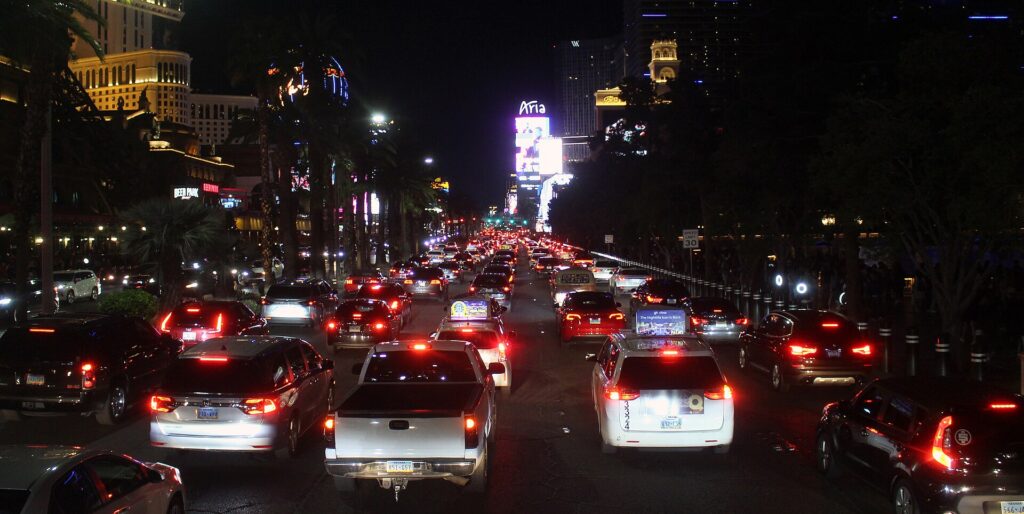
    Outside the Strip, Las Vegas is an easy place to drive: wide, straight roads, a logical grid, freeways that are mostly free-flowing outside rush hour, and ample parking at the malls, locals’ casinos and attractions. The frustrations are concentrated on and around the Strip. Las Vegas Boulevard itself is slow at almost any hour and gridlocked on weekend nights, when it is full of cruising cars and limousines; locals avoid it and use the parallel roads, Frank Sinatra Drive and Dean Martin Drive on the west side and Koval Lane and Paradise Road on the east, which reach the back entrances and garages of the resorts. I-15 through the resort corridor jams at rush hour and on Friday afternoons and Sunday mornings, when visitors from Southern California arrive and leave. And the big events, from New Year’s Eve to the Grand Prix, close streets for days.

    Stopped traffic on Las Vegas Boulevard on the Strip
    Las Vegas Boulevard at night: often slower than walking, which is why locals use the back roads (Photo: Coolcaesar via Wikimedia Commons, CC BY-SA 4.0)

    Parking

    Parking is the main reason a car costs more on the Strip than it seems. Most of the big resorts now charge for self-parking and valet, including for their own hotel guests at many properties, and the daily charge adds up over a stay; some loyalty-program tiers and a few off-Strip and downtown properties offer free or validated parking. The garages themselves are enormous and well signed, but it can be a ten-minute walk from your space to the lobby. Downtown, most casinos validate parking for guests and players, and the Arts District has street parking. Outside the resort corridor, parking at Chinatown, the malls, the Springs Preserve and the locals’ casinos is generally free and easy. If you do rent for the whole stay, factor the parking fee into the room rate when you compare hotels.

    Rules and conditions worth knowing

    • The heat. From June to September, the car can be dangerously hot inside after sitting in the sun; never leave children or pets in it, carry plenty of water on any desert drive, keep the fuel tank topped up, and know that services are far apart once you leave the city. A breakdown in the desert in July is serious.
    • Flash floods. During the summer monsoon and winter storms, water pours across roads and fills the dips and washes that are signed as flood zones. Never drive into flowing water; the storms pass within hours.
    • Handheld phones are banned while driving in Nevada; use hands-free only.
    • Pedestrians are everywhere on and around the Strip, often distracted; watch for them at the resort entrances and turning lanes.
    • Right turns on red are permitted after a full stop unless signed otherwise.
    • Impaired driving is enforced heavily in a city built around drinking; take a taxi after a night out.
    • Park entry. Red Rock’s scenic drive requires a timed-entry reservation during the day for much of the year, and the national parks charge an entrance fee per vehicle. NVRoads publishes Nevada road conditions and closures.
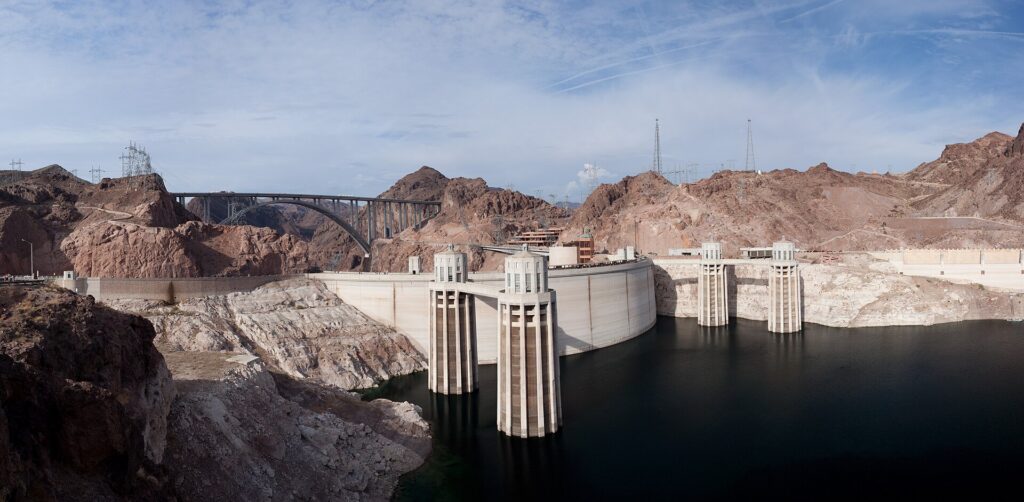
    The Hoover Dam with the Mike O'Callaghan-Pat Tillman Memorial Bridge behind it
    The Hoover Dam and its bypass bridge, about 45 minutes from the Strip by car (Photo: Alan Stark from Goodyear, AZ, United States via Wikimedia Commons, CC BY-SA 2.0)

    When renting a car makes sense

    • Red Rock Canyon and Mount Charleston. Both are 30 to 45 minutes from the Strip, with no practical transit, and the scenic drive and the trailheads need a car.
    • The Hoover Dam and Lake Mead. About 45 minutes southeast; a car lets you combine the dam, the bypass bridge walkway, Boulder City and the lake in one day.
    • The Valley of Fire, an hour northeast, is a car trip, and its best light is early and late in the day.
    • Zion, the Grand Canyon and Death Valley. Each is a long day or an overnight; a car gives you the freedom to start at dawn and stop where you like.
    • Staying off the Strip. Summerlin and Henderson resorts and vacation rentals are spread out and assume a car.
    • Southwest road trips. Las Vegas pairs naturally with Los Angeles, Phoenix, Utah’s national parks and the Grand Canyon; our Los Angeles to Las Vegas and Las Vegas to Phoenix route guides cover the two classic drives.

    If any of those apply, our rental car booking tips cover insurance, deposits and the questions to ask at the counter, and our family car rental guide looks at vehicle choice.

    When it does not

    • You are staying on the Strip or downtown and your plans are casinos, shows, pools and restaurants.
    • You are in town for a convention, where the Monorail, the Vegas Loop and taxis serve the halls.
    • You are coming for a big weekend event, such as New Year’s Eve, EDC or the Grand Prix, when streets close and parking is at its worst.
    • You want the Hoover Dam or the Grand Canyon for a single day and are happy to take an organized tour with hotel pickup.
    • You plan to drink; taxis and ride-hail are everywhere and cheaper than a DUI.

    The hybrid plan for a Strip-plus-desert trip

    Go car-free for the Strip days and rent only for the desert days, and think about where you pick up. Renting at the airport’s Rent-A-Car Center makes sense if you are heading straight out of town on arrival, to Zion, the Grand Canyon or Death Valley, because the freeways are minutes away and you never enter the Strip traffic. For a mid-trip day or two in the desert, many Strip resorts have rental desks in the lobby or nearby, which saves a taxi ride to the airport and the airport’s concession fees, and means you pay for parking only on the nights you have the car. A common pattern that works well: taxi from the airport to the Strip, two or three car-free days, pick up a rental at your resort for Red Rock and the Hoover Dam or a long day to the Grand Canyon, and return it at the airport on the way to your flight home. Book ahead for spring, fall and the big event weekends. Compare the day rates on our Las Vegas car rental page against a full-trip rental and the difference is usually obvious.

    A worked cost comparison

    Numbers change with the season and the booking window, so treat this as a method rather than a quote, and check current rates before deciding. For a four-night Strip trip for two people, the car-free version costs a return taxi or ride-hail from the airport, a couple of Deuce day passes, and a few rides between resorts and downtown; the rental version adds four days of a compact car, four nights of resort parking fees, fuel, and the taxes and airport fees that add a noticeable percentage to the headline rate, and buys you very little on a boulevard where traffic is slower than the bus. The car-free option wins easily. For the same four nights with one day at Red Rock and the Hoover Dam, the tour version adds two seats on a day tour; the hybrid version adds a one-day rental picked up on the Strip, one night of parking, fuel, and the Red Rock entry fee. Priced honestly, a tour is often similar for one or two people, the rental usually wins for three or four, and the rental wins on flexibility for anyone who wants to hike, linger for sunset or see both places at their own pace. For a week that includes Zion and the Grand Canyon, a rental is the only practical answer, and an airport pickup is simplest. Run the rental rates for your dates on our Las Vegas car rental page and put them beside the tour prices before you choose.

    Driving out of Las Vegas in each season

    The highways out of Las Vegas are among the most scenic in the West, and the seasons change them. In summer, the challenge is heat: temperatures in Death Valley and on the desert stretches of I-15 and US-93 can pass 45 °C (113 °F), so leave at dawn, carry several liters of water per person, keep the air conditioning and the tank in good order, and watch for monsoon storms and flash floods in the afternoons from July to September. In fall, conditions are ideal, and the weekend traffic is the main issue: the drive back to Southern California on I-15 on a Sunday afternoon can take hours longer than the four or so it takes on a quiet weekday, with the bottlenecks at the state line near Primm and at the Cajon Pass. In winter, the desert roads are mild, but snow and ice reach the higher country: the road up to Mount Charleston can require chains or four-wheel drive, and the routes to the Grand Canyon’s South Rim and to Zion via the high plateaus can be icy; check conditions before you go. In spring, strong winds blow dust across the highways and can make high-sided vehicles hard to handle, while the wildflowers and the mild temperatures make it the best season for the long drives. In every season, remember the clock: Arizona does not observe daylight saving time, so on the drive to the Grand Canyon or Phoenix the time is the same as Nevada’s in summer and an hour ahead in winter.

    Decision table

    Your tripRecommendationWhy
    Strip weekend, couple or soloNo carTaxis, the Monorail, the Deuce and walking cover it; parking fees add up
    Convention tripNo carThe Monorail, the Vegas Loop and taxis serve the halls
    Big event weekend (New Year’s Eve, EDC, the Grand Prix)No carStreet closures, heavy traffic and scarce parking
    Strip plus Red Rock or the Hoover DamHybrid: rent for a day, or take a tourCar-free Strip days, car or tour for the desert
    Zion, the Grand Canyon or Death ValleyRent at the airportLong distances, early starts and the freeways minutes from the rental center
    Staying in Summerlin or HendersonRent for the whole staySuburban distances and free parking make the car worthwhile
    Family with young childrenRent, or hybridCar seats, heat and day trips all argue for a car
    Southwest road tripRent (consider one-way to Los Angeles or Phoenix)Las Vegas is a stop, not the destination

    Money-saving tips for both options

    • On transit: buy a day or three-day RTC pass if you will ride more than twice a day; use the free trams on the south Strip; take the SDX rather than the Deuce when speed matters.
    • On a rental: compare airport and Strip pickup, book early for spring, fall and the big weekends, decline extras you already have through a credit card or home policy (check first), and return the car full, because fuel near the rental center costs more.
    • On the hotel: if you are renting, price the parking fee and the resort fee into the room rate, and look at downtown and off-Strip resorts where parking is often free or validated.
    • On timing: avoid Las Vegas Boulevard on weekend nights and I-15 toward California on Sunday afternoons; the best time to fly to Las Vegas guide lists the busiest weekends.
    • On tours: for one or two people doing a single desert day, compare a tour with hotel pickup against a rental plus parking, fuel and entry fees; the tour is often close in price and there is no driving after a late night.

    Frequently asked questions

    Do you need a rental car in Las Vegas?

    For the Strip and downtown, no; taxis, ride-hail, the Monorail, the Deuce and walking are enough. For Red Rock, the Hoover Dam, the Valley of Fire and the national parks, yes, or an organized tour.

    Is public transportation good in Las Vegas?

    Good along the Strip and to downtown, with the 24-hour Deuce, the faster SDX and the Monorail. Beyond the resort corridor, buses are slower and less frequent, and there is no rail to the airport.

    How do I get from Las Vegas airport to the Strip?

    A taxi or ride-hail in 15 to 25 minutes, a shared shuttle van, or an RTC bus with a transfer. All rental cars are collected from the off-airport Rent-A-Car Center by shuttle.

    Is parking free on the Las Vegas Strip?

    At most big resorts, no; they charge for self-parking and valet, often even for hotel guests. Some off-Strip and downtown casinos offer free or validated parking.

    Can I get to the Grand Canyon from Las Vegas without a car?

    Yes, on an organized day tour by coach, or by air tour; the West Rim is about two and a half hours away and the South Rim about four and a half.

    Is it easy to drive in Las Vegas?

    Outside the Strip, yes: wide, straight roads and plentiful parking. On the Strip itself, traffic is slow, pedestrians are everywhere, and the back roads behind the resorts are faster.

    Should I rent a car to drive from Los Angeles to Las Vegas?

    It is one of the classic American road trips, about four hours on I-15 without traffic, and a one-way rental is widely available; just avoid the return on a Sunday afternoon.

    Whichever way you go, start with the flight. Compare cheap flights to Las Vegas, choose a neighborhood with our Las Vegas hotel search, and if the desert is on the list, price the rental for those dates on our Las Vegas car rental page. For what to see, start with our first-timer’s guide to Las Vegas.

  • Things to Do in Las Vegas: A First-Timer’s Guide

    Things to Do in Las Vegas: A First-Timer’s Guide

    Las Vegas is the easiest city in America to do badly. Plenty of visitors fly in, spend three nights between a casino floor and a pool, see one show and fly home without noticing that the city has changed completely in the last decade. The Strip is still the main event, but it now has a globe-shaped arena that glows from across the valley, a major-league hockey team that won the Stanley Cup, an NFL stadium, a Formula 1 race through the resorts, and some of the best restaurants in the country. Downtown, the old Las Vegas of Fremont Street has been reborn around a museum of the mob, a boneyard of restored neon and an arts district full of bars. And the desert around the city, from Red Rock Canyon to the Hoover Dam and the Grand Canyon, is some of the most spectacular landscape in the West. This guide covers the sights that earn your time, the neighborhoods beyond the casinos, the shows, the food, the day trips, and the practical details that turn a weekend into a trip.

    If you are still comparing cheap flights to Las Vegas, read this alongside our guides to the best time to fly to Las Vegas and whether you need a rental car, and our guide to cheap flight tickets to Las Vegas. Between them you can plan the whole trip.

    The Las Vegas Strip skyline with its resort towers
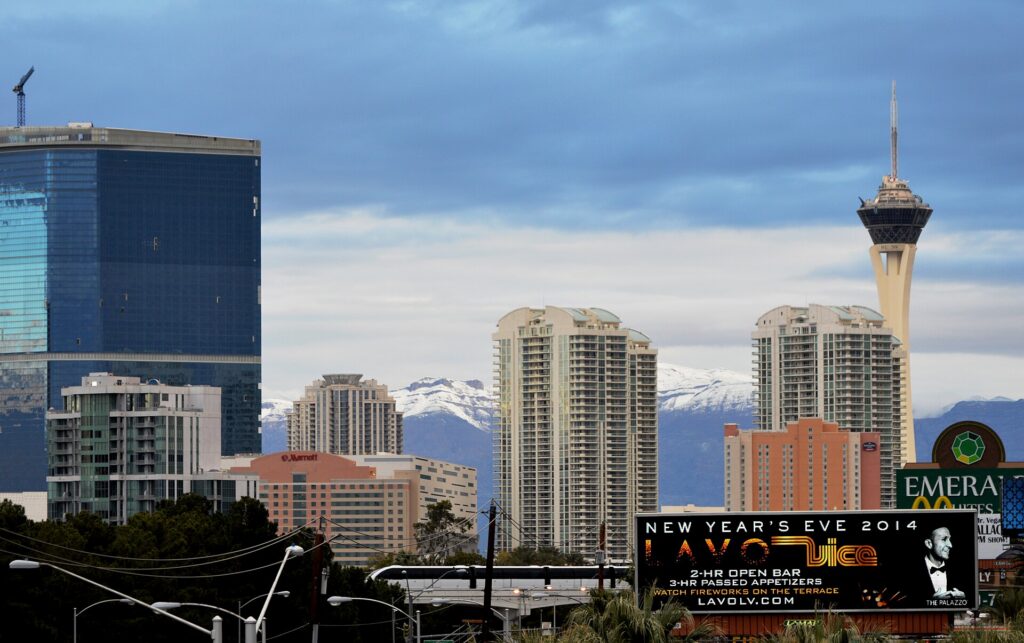
    The Strip, about 6 km of resorts from Mandalay Bay to the STRAT (Photo: King of Hearts via Wikimedia Commons, CC BY-SA 4.0)

    Las Vegas at a glance for first-timers

    • Airport: Harry Reid International (LAS), which sits right beside the south end of the Strip, about 8 km (5 miles) from the center of it; a taxi, ride-hail or a rental gets you in within 15 to 25 minutes. See our LAS airport guide.
    • Getting around: the Strip is walkable in pieces, the Monorail runs along its east side, and the Deuce double-decker bus runs its full length to downtown around the clock. For Red Rock, the Hoover Dam and anything farther, most visitors rent a car for a day or two.
    • Money: U.S. dollars. Almost every Strip resort adds a nightly resort fee to the room rate, and most charge for parking, so compare total prices rather than headline rates. Tipping 18 to 20 percent in restaurants is standard, and dealers, bartenders and valets are tipped too.
    • Weather: desert sun almost every day, mild winters, glorious springs and falls, and summers that regularly pass 40 °C (104 °F). Our month-by-month guide has the detail.
    • Where to stay: the Strip for the big resorts, the shows and the pools; downtown and Fremont Street for lower rates, older casinos and the best bars; off-Strip resorts and Summerlin for quiet and easy parking. Our Las Vegas hotel search covers them all.

    The Strip: fountains, gondolas and the big resorts

    Las Vegas Boulevard South, the Strip, runs for about 6 km (4 miles) from Mandalay Bay in the south to the STRAT tower in the north, and walking a stretch of it is the essential first evening. Start at the Welcome to Fabulous Las Vegas sign, designed by Betty Willis in 1959 and planted in the median just south of Mandalay Bay, which now has its own small parking lot and a queue for photographs. Then head north. The fountains of Bellagio dance to music in the lake in front of the resort every half hour in the afternoon and every 15 minutes in the evening, and they are free; so is the Bellagio Conservatory inside, whose flower displays change with the seasons. Across the road, Paris has its half-scale Eiffel Tower with an observation deck, and farther north the Venetian and the Palazzo have indoor canals under a painted sky, with gondoliers who sing as they row. Caesars Palace, the grande dame of the Strip since 1966, has the Forum Shops and the Colosseum theater. The resorts themselves are the attractions: each one is a small city of casino floor, restaurants, shops, pools and theaters, and most visitors underestimate how long it takes to walk through one, let alone between two.

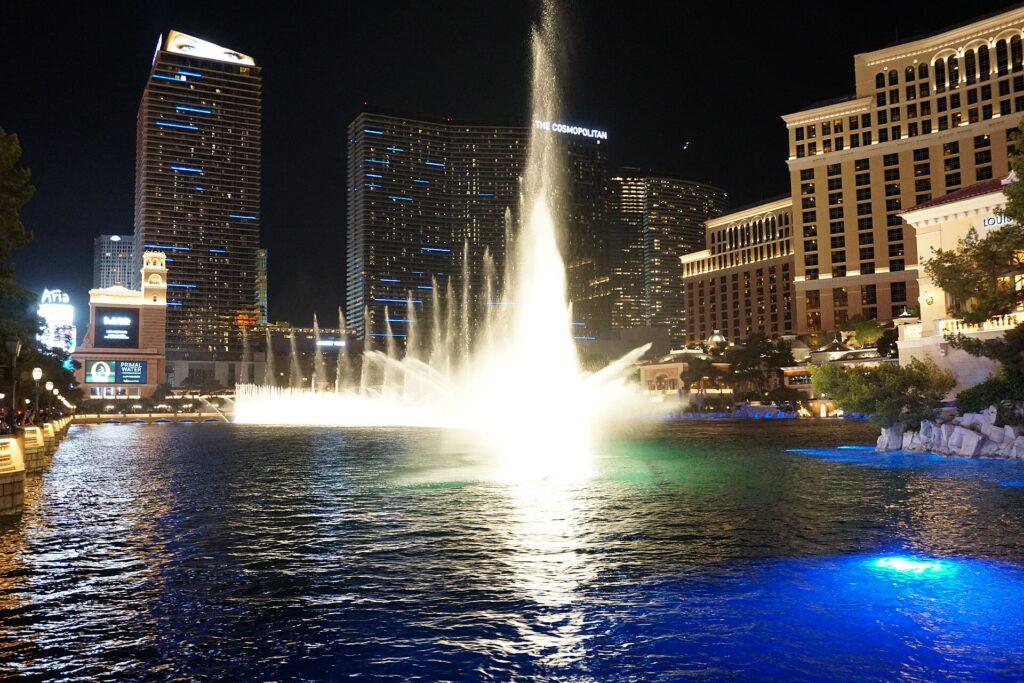
    The Bellagio fountains lit up at night on the Las Vegas Strip
    The Bellagio fountains: free, every 15 minutes in the evening, and the best show on the Strip for the price (Photo: Matt Kieffer via Wikimedia Commons, CC BY-SA 2.0)

    Sphere, the High Roller and the view from above

    The newest landmark is Sphere, the enormous LED-covered globe behind the Venetian that opened in 2023. Its outer skin plays animations that you can see from the freeway and from hotel windows across the valley, which is free; inside, a wraparound screen and a seat-shaking sound system host immersive films and concert residencies, and a ticket is worth it at least once. The High Roller at the LINQ, a 167-meter (550-foot) observation wheel, takes about half an hour to turn and gives the best view of the whole Strip, especially at dusk; some cabins come with a bar. At the north end, the STRAT has the tallest freestanding observation tower in the United States, with an indoor and outdoor deck and, for the brave, thrill rides that hang over the edge of the roof and a controlled free-fall jump down the side. The Eiffel Tower deck at Paris gives a closer view of the Bellagio fountains from above. If you only do one, make it the High Roller at sunset, then walk back down the Strip as the lights come on.

    Downtown: Fremont Street, the Mob Museum and the Neon Museum

    Downtown is where Las Vegas began, around the railroad depot in 1905, and it is where the city’s history is best told. The Fremont Street Experience is a five-block pedestrian mall covered by a giant LED canopy that plays light-and-music shows every evening, lined with the old casinos: the Golden Nugget, the Golden Gate, which opened in 1906 and is the oldest hotel in the city, and the El Cortez, still operating in its 1941 building. The SlotZilla zip line flies riders under the canopy. Two blocks away, The Mob Museum fills the 1933 federal courthouse where one of the Senate’s organized-crime hearings was held in 1950, and it is one of the best museums in the West, with a working speakeasy and distillery in the basement. A short ride north, the Neon Museum keeps the signs of demolished casinos in its Neon Boneyard, with a lobby in the shell-shaped former La Concha Motel; the guided tours after dark, when the restored signs are lit, are the ones to book, and they sell out. East of the canopy, Fremont East has the city’s best cocktail bars and the Downtown Container Park, built from shipping containers.

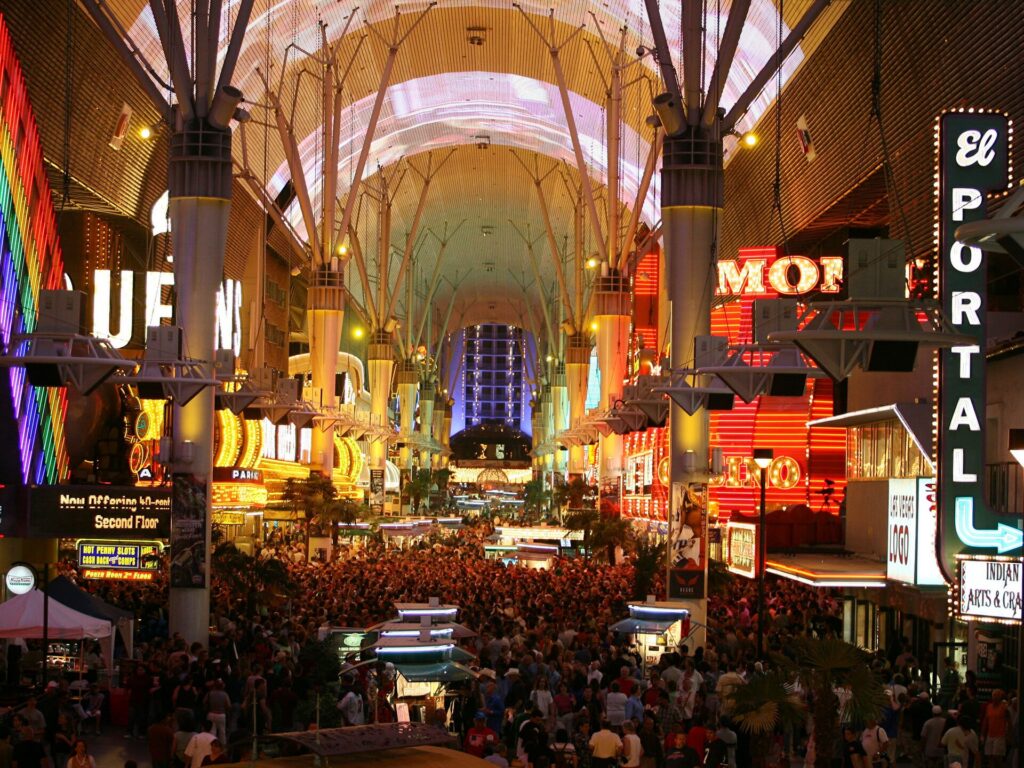
    The LED canopy of the Fremont Street Experience in downtown Las Vegas
    Fremont Street, where Las Vegas began, under its LED canopy (Photo: Unknown authorUnknown author or not provided via Wikimedia Commons, Public domain)

    Neighborhoods worth a half-day

    The Arts District

    South of downtown, around Main Street and Charleston Boulevard, the Arts District, also called 18b, is the city’s most walkable neighborhood away from the casinos: galleries, vintage and antique stores, breweries and some of the most interesting independent restaurants in town. On the first Friday of every month it hosts an art walk that draws thousands of locals.

    Chinatown and Spring Mountain Road

    A few minutes west of the Strip, Spring Mountain Road is lined for several miles with strip malls full of Chinese, Japanese, Korean, Thai, Vietnamese and Filipino restaurants, many open late for casino workers. It is where the city’s chefs eat on their nights off, and it is the best-value dinner in Las Vegas.

    Summerlin and the west side

    The master-planned suburb at the foot of Red Rock Canyon has Downtown Summerlin, an open-air shopping district, the ballpark of the Las Vegas Aviators minor-league baseball team, and the Red Rock and other locals’ casinos, where the rooms and parking are cheaper and the canyon is fifteen minutes away.

    Henderson

    Southeast of the airport, Henderson has the Ethel M chocolate factory with its free cactus garden, which is lit up for the holidays each winter, the Clark County Wetlands Park, and the Green Valley Ranch and other locals’ resorts. It is also on the way to the Hoover Dam and Lake Mead.

    The Strip’s east side and Paradise Road

    Behind the Strip resorts, the neighborhood around the Convention Center and Paradise Road holds non-casino hotels, apartment towers and a strip of restaurants that serve the convention crowds, and it is where the Monorail and the Vegas Loop tunnels do their work.

    Museums, culture and family attractions

    The Springs Preserve, on the site of the natural springs that gave Las Vegas, “the meadows” in Spanish, its name, has botanical gardens, desert trails, a butterfly habitat and the Nevada State Museum, and it is the best place to understand how a city came to exist in the desert. The Shark Reef Aquarium at Mandalay Bay has sharks, rays and a walk-through tunnel. AREA15, just off the Strip to the west, is a warehouse of immersive art and entertainment anchored by Meow Wolf’s Omega Mart, a surreal supermarket whose freezer doors open into other worlds. The Discovery Children’s Museum and the Smith Center for the Performing Arts, home of touring Broadway shows and the city’s philharmonic, sit side by side in Symphony Park downtown. The Bellagio Gallery of Fine Art hosts rotating exhibitions, and the Pinball Hall of Fame, a nonprofit arcade of hundreds of working machines, now sits near the Welcome sign at the south end of the Strip. For what is playing in the arenas and theaters during your dates, our Las Vegas events page lists concerts, shows and games.

    Shows, residencies and nightlife

    Las Vegas is the entertainment capital of the country, and seeing a show is not optional. Cirque du Soleil has several permanent productions on the Strip, including O at Bellagio, performed in and above a pool, and Mystère at Treasure Island, which has run since 1993; they are the benchmark. Residencies by major singers and bands fill the Colosseum at Caesars Palace, Dolby Live at Park MGM, Sphere and other theaters, often for a few weekends at a time, and they sell out quickly when a big name is announced. Comedy clubs, magicians and adult revues fill the gaps, and the big resorts’ lounges have free live music every night. Nightlife runs in two shifts: the dayclubs, pool parties with DJs from roughly spring to early fall, and the nightclubs, which get going after 11 p.m. Dress codes apply at both. For something older and cheaper, the lounges and bars along Fremont East are where locals drink. Book the headline show before you book the flight if your dates are fixed; for everything else, same-week tickets are easy to find.

    Sports

    A decade ago Las Vegas had no major-league teams; now it is one of the busiest sports cities in the country. The Vegas Golden Knights play hockey at T-Mobile Arena, just off the Strip behind New York-New York, and the pregame show, a medieval spectacle with knights and swords, is worth arriving early for; the team won the Stanley Cup in 2023. The Las Vegas Raiders play NFL football at Allegiant Stadium, across I-15 from Mandalay Bay, from September to January, and the stadium also hosts college football, concerts and the occasional soccer match. The Las Vegas Aces, WNBA champions in 2022 and 2023, play at Mandalay Bay in summer. Major League Baseball’s Athletics are building a ballpark on the Strip. In November, the Las Vegas Grand Prix turns the Strip into a Formula 1 night circuit, and in December the National Finals Rodeo brings ten days of cowboys to town. The sportsbooks at every casino make any big game a party. Check what is on sale in Las Vegas for your dates before you book flights.

    What to eat, and where

    Las Vegas has become one of the great restaurant cities in America, and you can eat at almost every level. At the top, nearly every famous chef in the world has a restaurant on the Strip, and a splurge dinner at one of them is a reasonable use of a trip’s budget. The buffets, the old Las Vegas signature, have shrunk in number but grown in ambition; the big ones at Caesars Palace, the Cosmopolitan and the Wynn are feasts, priced accordingly, and best at weekend brunch. Below that, the best food in the city is off the Strip: the Asian restaurants along Spring Mountain Road, the Mexican taquerias on the east side, the independent kitchens in the Arts District, and the steakhouses and cocktail bars downtown. Old-school pleasures survive too: the shrimp cocktail at the Golden Gate, served there since the 1950s, the late-night diners in the casinos, and the classic Italian rooms with red booths. Reservations matter on the Strip on weekends and during conventions; book the special dinners when you book the hotel.

    Las Vegas through the seasons

    Las Vegas is open every hour of every day, but the season shapes what you do. Winter (December to February) is mild and sunny, cool enough in the evenings for a jacket, with snow on Mount Charleston 45 minutes away and the Golden Knights and the Raiders in season. It is the best time to hike Red Rock and the Valley of Fire, and the resorts dress up for the holidays. Spring (March to May) is the city at its best: warm, dry and bright, with the pools opening, the desert in flower, the Electric Daisy Carnival in May and the busiest weekends of the year. Summer (June to August) is brutally hot, often above 40 °C (104 °F), and the city moves indoors and into the pools; hotel rates drop, dayclubs peak, and any outdoor sightseeing should be done at dawn. Fall (September to November) is the second golden season: warm days, pool weather into October, football, the Grand Prix, and the big trade shows. Our month-by-month guide has the fare patterns that go with each season.

    Las Vegas with kids

    Las Vegas is an adult city, and in Nevada anyone under 21 cannot gamble or linger on casino floors, but it works for families who plan around that. The Shark Reef at Mandalay Bay, the Bellagio fountains and conservatory, the gondolas at the Venetian, the High Roller and the Welcome sign all please children. Circus Circus has the Adventuredome, an indoor theme park under a pink dome with a roller coaster, and the free circus acts that give the resort its name. The Discovery Children’s Museum downtown and the Springs Preserve are made for younger kids, and Meow Wolf’s Omega Mart at AREA15 fascinates teenagers. Several Cirque du Soleil shows are family-friendly. The best family days, though, are outside the city: the Hoover Dam, the red rocks and petroglyphs at the Valley of Fire, and a day at the Grand Canyon. Choose a resort with a big pool and no casino requirement to reach the rooms, and our family car rental guide covers the vehicle question for the day trips.

    Las Vegas on a budget

    A surprising amount of the best of Las Vegas is free: the Bellagio fountains and conservatory, the canals at the Venetian, the light shows on the Fremont Street canopy, Sphere’s exterior, the Welcome sign, the lounges with live music, the First Friday art walk and the Ethel M cactus garden. Downtown hotels are usually much cheaper than the Strip and often charge lower resort fees; Sunday-to-Thursday stays cost far less than Friday and Saturday nights on the Strip, unless a big convention is in town. Eat well for less in Chinatown and at happy hours, which many Strip restaurants run in the late afternoon. Buy show tickets directly from the box office and watch for weeknight discounts. The Deuce bus’s day pass covers the whole Strip and downtown, and walking between neighboring resorts costs nothing but time. Compare rates by neighborhood on our Las Vegas hotel search.

    Day trips from Las Vegas

    Red Rock Canyon National Conservation Area, about 30 minutes west, has a one-way scenic drive through red and cream sandstone, and some of the best short hikes and rock climbing in the country; for much of the year a timed-entry reservation is required for the scenic drive during the day. The Hoover Dam, about 45 minutes southeast, is one of the great engineering works of the 20th century, with tours inside and a pedestrian walkway on the bypass bridge that looks straight down on it; Lake Mead National Recreation Area surrounds it. The Valley of Fire, an hour northeast, is Nevada’s oldest state park, with fiery red rock and ancient petroglyphs. Mount Charleston, 45 minutes northwest, is much cooler than the city and has a ski area in winter. The Grand Canyon is the big one: the West Rim, run by the Hualapai Tribe and home of the glass Skywalk, is about two and a half hours away, while the South Rim of Grand Canyon National Park is about four and a half hours each way and better as an overnight trip. Zion National Park in Utah and Death Valley in California are each about two to three hours. All of these are car trips or organized tours; see our Las Vegas car rental page, and carry plenty of water in summer. Travel Nevada covers the wider state.

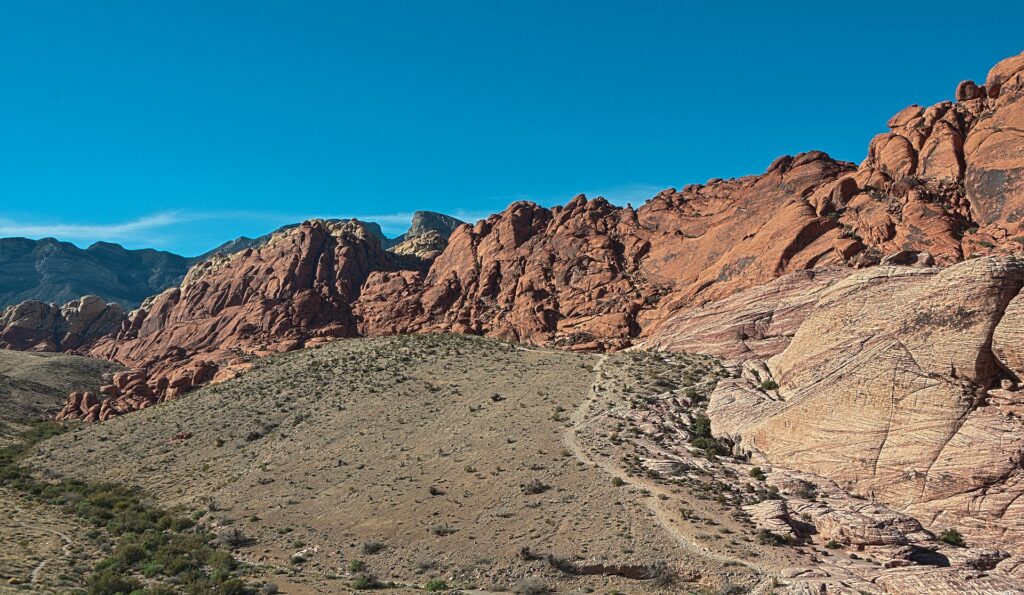
    The red sandstone Calico Hills in Red Rock Canyon National Conservation Area
    Red Rock Canyon, about 30 minutes west of the Strip (Photo: Sixflashphoto via Wikimedia Commons, CC BY-SA 4.0)

    Two sample itineraries

    Three days, no car

    Day one: the Welcome sign and Mandalay Bay’s Shark Reef in the morning, a walk north past New York-New York and the Bellagio fountains, lunch in a resort food hall, the pool in the afternoon, and dinner and a Cirque show at night. Day two: the Venetian’s canals and Sphere by day, the High Roller at sunset, and a Golden Knights game or a residency show. Day three: the Deuce to downtown for the Mob Museum, lunch on Fremont East, the Neon Museum at dusk, and cocktails under the Fremont canopy.

    Five days, with the desert

    Add a morning at Red Rock Canyon and an afternoon at the Hoover Dam in a rental car picked up on the Strip, then a long day to the Grand Canyon’s West Rim or the Valley of Fire, returning the car at the airport’s rental center on the way home.

    Practical details

    • Transit: buy Deuce and RTC bus passes on the rideRTC app or at ticket machines at the Strip stops, and Monorail passes at its stations. RTC Southern Nevada has maps; our rental car guide goes into detail.
    • From LAS: a taxi or ride-hail to the Strip in 15 to 25 minutes, a shuttle van, RTC buses, or a rental from the off-airport Rent-A-Car Center. The airport’s site covers ground transport.
    • Weather: sun protection and water every day of the year, a jacket for winter evenings, and serious heat precautions from June to September. The National Weather Service’s Las Vegas office issues the heat warnings.
    • Time zone: Pacific, three hours behind New York. Arizona does not observe daylight saving time, so in winter the Grand Canyon and Phoenix are an hour ahead.
    • Entry requirements: Canadians need a valid passport; visitors from Visa Waiver Program countries need an approved ESTA before boarding, and everyone else needs a visa. U.S. Customs and Border Protection is the authoritative source.
    • Safety: the Strip and Fremont Street are heavily policed and busy at all hours; keep an eye on your drink and your phone in crowds, use the pedestrian bridges to cross the Strip, and take the heat seriously on foot.

    Frequently asked questions

    How many days do you need in Las Vegas?

    Three nights covers the Strip, a show and downtown; four or five lets you add Red Rock, the Hoover Dam and a day at the Grand Canyon.

    What is the number one thing to do in Las Vegas?

    Walk the Strip at night, from the Bellagio fountains to the Venetian, with a stop at the High Roller at sunset. Then see a Cirque du Soleil show.

    Is Las Vegas walkable?

    The Strip is, in stretches, though distances are longer than they look and summer heat is punishing. Fremont Street and the Arts District are walkable; the rest of the valley assumes a car.

    Do I need a car in Las Vegas?

    Not for the Strip and downtown. For Red Rock, the Hoover Dam, the Valley of Fire and the national parks, yes, or an organized tour.

    Is Las Vegas expensive?

    It can be either. Midweek rooms, Chinatown dinners and the free sights keep it cheap; weekend rates, resort fees, parking and a headline show add up fast.

    What is Las Vegas known for?

    Casinos, the neon of the Strip, world-class shows and restaurants, weddings, conventions, and, increasingly, major-league sports and the desert parks on its doorstep.

    Ready to go? Compare flights to Las Vegas, find a place to stay with our Las Vegas hotel search, and if the desert is on the list, price a rental car for those days.

  • Your Ultimate Guide to Booking Cheap Flight Tickets to Las Vegas: Tips, Tricks & Tools

    Your Ultimate Guide to Booking Cheap Flight Tickets to Las Vegas: Tips, Tricks & Tools

    Las Vegas is one of the easiest cities in North America to fly to. Huge numbers of flights arrive every day from across the United States and Canada, many airlines compete for the traffic, and the airport sits just a short ride from the Strip. That competition is why cheap flights to Las Vegas are genuinely possible. But Vegas also has a pricing quirk that trips up first-time visitors: the cost of a trip is driven less by the weather than by the event calendar. A fare that looks cheap can come with hotel rates that have soared because a major convention is in town. This guide explains how Las Vegas pricing works, the cheapest times to go, when to book, how to choose airlines and fares, how to think about packages, what to know about the airport and getting to your hotel, and how to keep the total cost of the trip down. It is part of our flight booking series, which starts with our guide to the best time to book cheap flights and hotels.

    The short answer

    Check the event calendar before anything else. Big conventions, fight nights, race weekends and holidays push up both fares and hotel rates. Fly and stay midweek if you can: Sunday through Thursday nights are usually far cheaper than weekends. Book about one to three months ahead for ordinary domestic trips, and earlier for holiday weekends and major events. Compare the full price, including bags and seats on the flight and resort fees at the hotel. Consider a flight and hotel package, which can be good value in Las Vegas, but compare it with booking separately. And fly into Harry Reid International Airport, formerly known as McCarran, which is only a short drive from the Strip. You can compare fares across a whole month on our Las Vegas flights page.

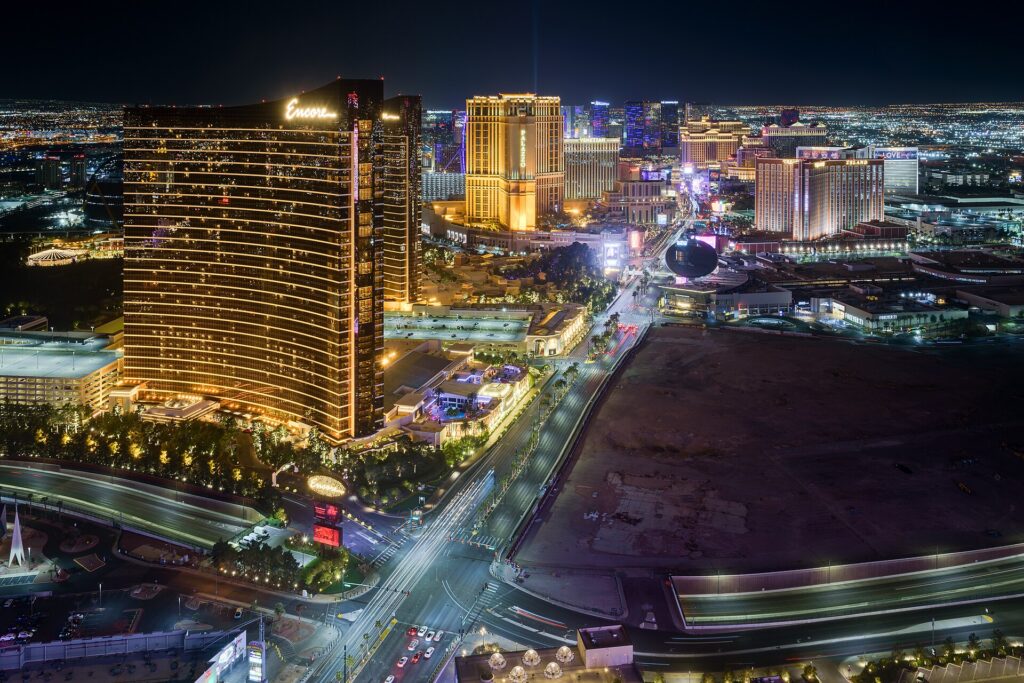
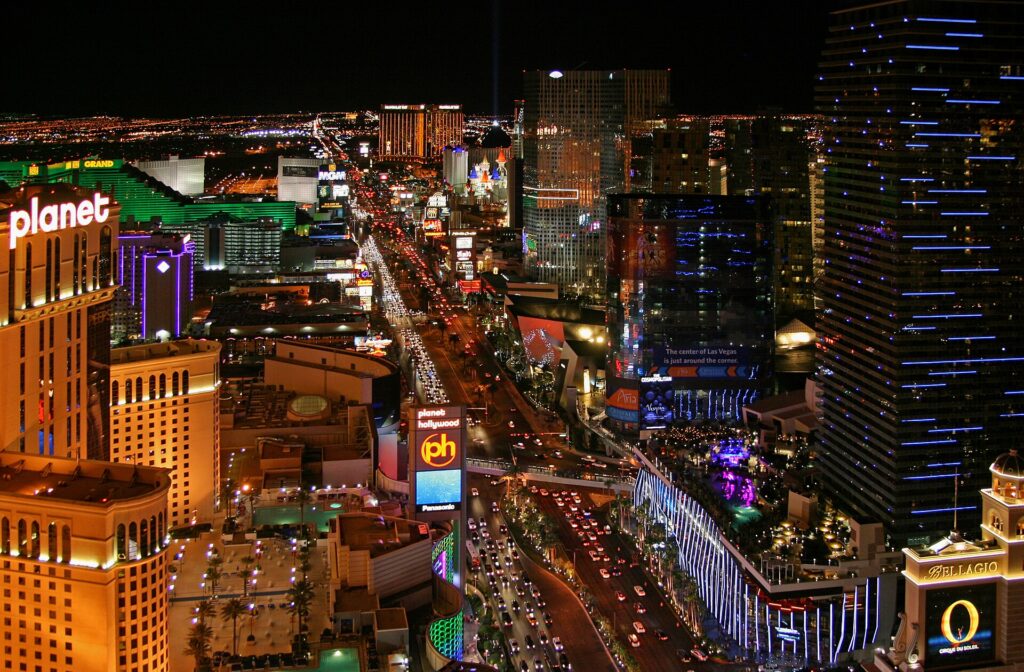
    The Las Vegas Strip lit up at night
    In Las Vegas, the event calendar moves prices more than the weather (Photo: Clément Bardot via Wikimedia Commons, CC BY-SA 3.0)

    Why Las Vegas flights can be cheap, and why they sometimes are not

    Las Vegas is a leisure destination on a massive scale, with a very large number of hotel rooms and flights from almost every major city on the continent. Airlines add capacity to Vegas because they know they can fill it, and that capacity creates competition, especially on routes where several airlines fly the same city pair. Low-cost and ultra-low-cost carriers are strong in Vegas, which puts pressure on fares from the larger airlines too.

    The flip side is that demand is lumpy. When a trade show with tens of thousands of attendees comes to town, or a championship fight or race weekend sells out, seats and rooms fill fast and prices climb. Weekends are busy almost all year, because Vegas is a classic weekend getaway from Southern California and other Western cities. Understanding those two patterns, events and weekends, is most of the battle.

    When to go: the cheapest and priciest times

    Las Vegas is a desert city. Summers are very hot, winters are mild during the day and cool at night, and spring and fall are pleasant. But weather is only one factor. Here is how the year usually plays out.

    PeriodWeatherWhat drives prices
    JanuaryCool, mild daysQuiet after New Year, except during the huge consumer electronics trade show early in the month
    FebruaryMildOften good value outside Valentine’s Day and Presidents’ Day weekends and big events
    March to MayWarm and pleasantPopular; spring break, college basketball tournament weekends, festivals and conventions add demand
    June to AugustVery hotMidweek hotel rates are often lower as visitors avoid the heat; pool season on weekends
    September to NovemberWarm to mild, often idealBusy convention season; a major Formula 1 race weekend in November sends prices very high
    DecemberCoolEarly December can be quiet, but the national rodeo finals and New Year’s Eve are very busy

    The cheapest windows tend to be midweek dates in January outside the trade show, parts of February, midsummer weekdays and quiet stretches in early December. But the only reliable way to know is to check the calendar for your dates. The official tourism site, Visit Las Vegas, lists major events and conventions, and our Las Vegas events page shows concerts and shows. For a month-by-month view of weather, crowds and fares, read our guide to the best time to fly to Las Vegas.

    Days of the week

    Vegas has one of the strongest weekday and weekend patterns in travel. Flights into Las Vegas on Thursday and Friday and home on Sunday are the busiest, and hotel rates on Friday and Saturday nights can be far higher than on a Tuesday or Wednesday at the same property. A Sunday-to-Wednesday or Monday-to-Thursday trip usually costs much less than a Thursday-to-Sunday one. If you must go on a weekend, consider arriving Saturday instead of Friday, or leaving Monday instead of Sunday, and compare the totals.

    When to book

    TripSensible booking windowNotes
    Ordinary midweek trip from the U.S.About 1 to 3 months aheadPlenty of flights; set an alert and book when the fare looks normal or better
    Weekend tripAbout 2 to 3 months aheadFriday and Sunday flights fill first
    Holiday weekends, New Year’s Eve, major fights and racesAs early as 3 to 6 months aheadHotels and flights rise steadily as the date approaches
    From CanadaAbout 2 to 4 months aheadWinter is popular with Canadian travelers; book earlier for school breaks
    Last minuteOccasionally works midweekOnly when nothing big is happening in town

    For flights within or to the United States booked at least seven days before departure, most airlines let you cancel within 24 hours without penalty. Use that window to confirm your hotel dates line up with your flights, and remember that a late-evening departure from the East Coast lands in Vegas the same night because of the time difference, while an overnight flight home lands the next morning.

    Choosing airlines and fares

    Las Vegas is served by the large network airlines, by value airlines such as Southwest, which has long been one of the biggest carriers at the airport, and by several ultra-low-cost carriers. Each sells different things for the same headline price.

    OptionBest forWhat to check
    Ultra-low-cost airlinesTravelers with only a small personal item and firm plansCarry-on, checked bag and seat fees; bag size limits; how changes work
    Basic economy on larger airlinesPrice-focused travelers who do not need a full carry-on or seat choiceWhether a full-size carry-on is allowed on your airline; boarding order; change rules
    Standard economyTravelers with bags, groups who want to sit togetherWhether a checked bag is included on your fare; change flexibility
    Premium or extra-legroom seatsLonger flights from the East Coast or CanadaWhether the upgrade price is worth it on a flight of four or five hours

    Airline bag and seat policies have changed repeatedly in recent years, so check the current rules on each airline’s own site rather than relying on reputation. Then add up the total. A group of friends checking bags for a long weekend can easily find that a standard fare on one airline beats a bare-bones fare on another. Our carry-on size guide explains how to measure your bag against airline limits, and our flight details guide decodes fare brands.

    Choosing where to fly from

    If you live near more than one airport, compare them. In Southern California, for example, flights to Vegas leave from LAX, Burbank, Long Beach, Ontario, Orange County and San Diego. In the Bay Area, compare SFO, Oakland and San Jose. In Canada, several cities have nonstop service to Las Vegas, especially in winter, and larger Canadian airports such as Toronto Pearson offer U.S. preclearance, so you complete U.S. border formalities before departure and land in Vegas as a domestic passenger. Our flights from Toronto and flights from Los Angeles pages are useful starting points.

    Should you fly to a different city and drive?

    For most travelers, no. Harry Reid International is the obvious airport for Las Vegas, and fares into it are usually competitive because of the volume of flights. Flying into Los Angeles and driving across the desert adds several hours each way plus a rental car and fuel. That said, many Southern Californians skip flying entirely, and the drive can make sense for a group or as part of a larger road trip. Our Los Angeles to Las Vegas road trip page covers that route, and combining Vegas with the national parks of the Southwest is a classic trip that needs a car anyway.

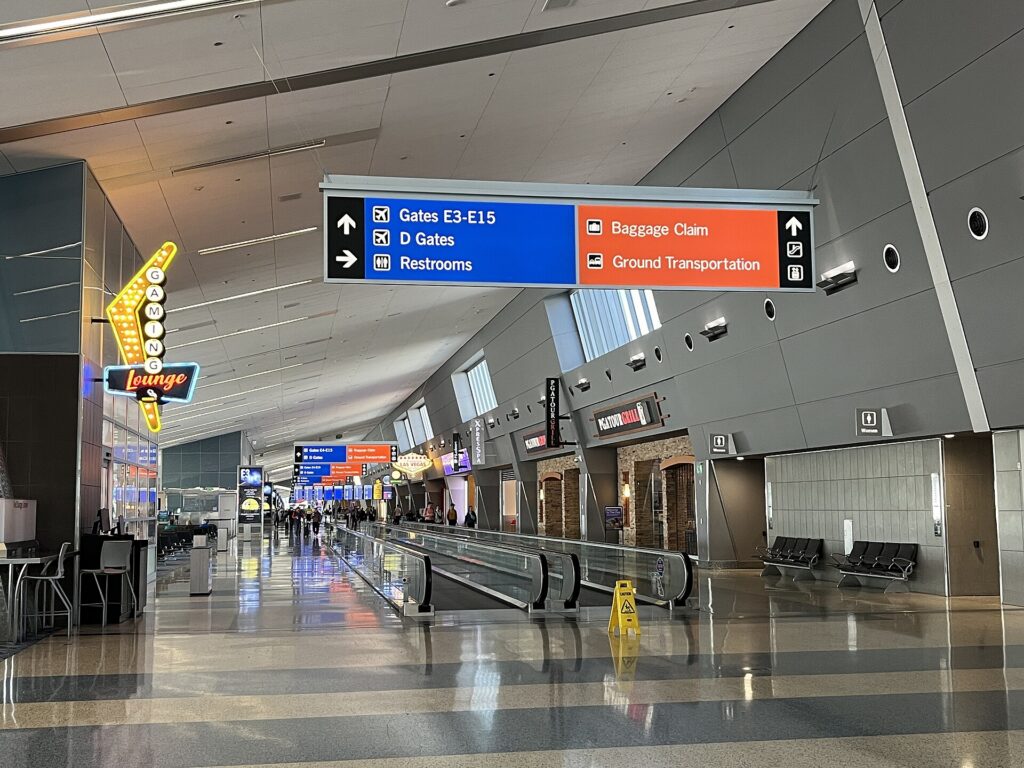
    Harry Reid International Airport in Las Vegas
    Harry Reid International is only a few miles from the Strip (Photo: Another Believer via Wikimedia Commons, CC BY-SA 4.0)

    Flight and hotel packages

    Las Vegas is one of the destinations where packages often make sense. Hotels have a lot of rooms to fill, especially midweek, and packaging a room with a flight lets them discount without publicly cutting their room rates. A package can save money, but only if you compare it properly.

    • Price the pieces separately. Search the same flights and hotel on their own, add taxes and resort fees, and compare with the package total.
    • Check the room type and fees. Make sure the package includes the room you want and that resort fees are included or clearly shown.
    • Read the change and cancellation rules. Packages bundle conditions too. A nonrefundable package is a risk if your dates might move.
    • Check the flight times. A cheap package with a 6 a.m. departure and a late-night return may not be the trip you want.

    If you book separately, book the flight first and a refundable hotel right after, then recheck the hotel rate before your cancellation deadline. Our hotel booking tips guide walks through the process.

    Hotels: where the real savings are

    On many Vegas trips, the hotel is a bigger cost than the flight, so it deserves as much attention.

    • Resort fees. Most Strip hotels charge a mandatory daily resort fee on top of the room rate. In the United States, the Federal Trade Commission’s rule on hotel junk fees requires the total price including mandatory fees to be shown up front. Compare totals, not nightly rates. Parking fees are separate at many resorts.
    • Strip or downtown. Staying on the Strip puts you in the middle of the action. Downtown, around Fremont Street, is often cheaper and has its own character. Compare on our Strip hotels and downtown Fremont Street hotels pages.
    • Midweek nights. The same room often costs much less on a Tuesday than on a Saturday.
    • Off-Strip properties. Hotels a short ride from the Strip can be good value, but factor in the cost of getting to and from the places you want to go.

    Search all Las Vegas hotels on our Las Vegas hotel page.

    At Harry Reid International Airport

    Harry Reid International Airport (code LAS) was renamed from McCarran International in 2021. It is only a few miles from the Strip, one of the most convenient major airports in the country for a city center. It has two passenger terminals, Terminal 1 and Terminal 3, and different airlines use different terminals, so check yours before you arrive, especially for your flight home. The airport’s official site has terminal, parking and ground transportation information, and our Harry Reid airport guide covers the essentials.

    Getting to your hotel

    • Taxi: taxis wait at designated ranks outside baggage claim. The ride to most Strip hotels is short.
    • Ride-hailing: app-based rides pick up at designated areas, usually in the parking garages; follow the signs.
    • Shuttles: shared shuttles serve the Strip and downtown hotels.
    • Public bus: the Regional Transportation Commission of Southern Nevada runs buses from the airport; check routes and fares on the RTC website.
    • Rental car: rental companies operate from a consolidated rental car center reached by shuttle bus from the terminals.

    Do you need a car at all? For a Strip-focused trip, usually not: parking fees, traffic and walking between neighboring resorts make a car more trouble than it is worth. For day trips to Red Rock Canyon, the Hoover Dam or the national parks, it is essential. Our guide to whether you need a rental car in Las Vegas weighs it up, and you can compare prices on Las Vegas car rentals.

    Flying home

    Security lines at LAS can be long on Sunday afternoons and after big events, when tens of thousands of visitors head home at once. Allow extra time, check which terminal your airline uses, and make sure your ID meets the REAL ID requirement: TSA began enforcing it on May 7, 2025, and its REAL ID page lists accepted documents. Keep liquids within TSA’s 3-1-1 rule if you are carrying on.

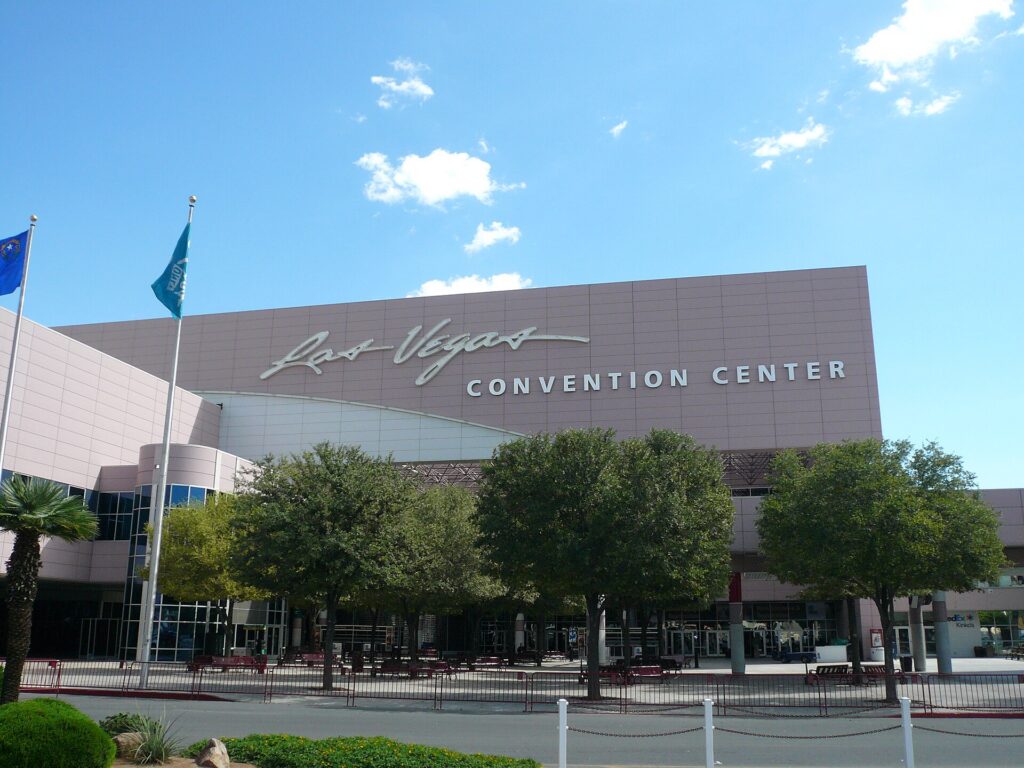
    The exterior of the Las Vegas Convention Center
    A big trade show can send hotel rates soaring, so check the calendar first (Photo: Michael Gray via Wikimedia Commons, CC BY-SA 2.0)

    Tips that save money, and myths that do not

    Worth doing

    • Search a whole month. A fare calendar shows the cheap days at a glance.
    • Set price alerts. Watch your route for a few weeks to learn what a normal fare is.
    • Watch for airline sales. Vegas is a staple of fare sales, including the late-November sales around Black Friday and Cyber Monday; our guide to Cyber Monday flight deal destinations explains how to judge whether a sale fare is really a deal.
    • Travel light. A carry-on-only trip avoids checked bag fees and the wait at baggage claim.
    • Use points where they are worth it. Compare the points price with the cash fare; on busy weekend flights, points can be good value.
    • Consider early and late flights. First flights of the morning and red-eyes are often cheaper, but price in the lost sleep and any extra hotel night.
    • Book the show and the hotel for the same dates. Check the events calendar before you fix dates so the trip is built around what you want to see.

    Not worth your time

    • Incognito mode. There is little evidence that airlines raise fares because you searched before. Prices change because seats sell.
    • Booking on a particular weekday. The day you fly matters; the day you buy mostly does not.
    • Waiting for last-minute deals on a weekend. Vegas weekends rarely get cheaper as they approach.

    Group trips and special occasions

    Las Vegas is a favorite for bachelor and bachelorette parties, milestone birthdays, reunions and weddings, and group trips have their own booking challenges. The more people involved, the more a small difference per person adds up, and the harder it is to find seats together at a good price.

    • Fix the dates early. Agree on dates before anyone books, and check the event calendar first so the group does not land on a convention week.
    • Let people book their own flights. Group members flying from different cities usually do better booking their own fares and meeting in Vegas, rather than trying to buy one block of tickets.
    • Agree on bag and seat expectations. One person on an ultra-low fare with no carry-on and another on a standard fare can end up paying very different totals for the same trip.
    • Book rooms early and flexibly. For weekend group trips, book refundable rooms as soon as the dates are set. Suites and connecting rooms go first.
    • Plan the airport runs. Arrivals spread across the day make a single shuttle impractical; taxis and ride-hailing are simpler for small groups.
    • Book shows and restaurants in advance. Popular shows and group dinners on Saturday night sell out; our Las Vegas events page shows what is on.

    For weddings and other fixed-date events, book flights as soon as the date is confirmed. Fares for a specific Saturday rarely get cheaper as it approaches.

    Planning the rest of the trip

    A cheap flight leaves more for the things you actually went for. Our guide to things to do in Las Vegas covers the Strip, downtown, shows, food and day trips, including Red Rock Canyon and the Hoover Dam. If you are planning a group trip, such as a bachelor or bachelorette weekend, the rules in this guide matter even more: book early for weekends, compare packages and check bag rules for everyone. And if you want to combine Vegas with other destinations, our guide to booking cheap local flights in the USA covers short-haul pricing across the country.

    Common mistakes to avoid

    • Booking flights before checking the event calendar. A cheap fare on a convention week is not a cheap trip.
    • Comparing hotel rates without resort fees. Compare totals.
    • Defaulting to Friday to Sunday. Shifting by a day can cut the cost significantly.
    • Choosing an ultra-low fare for a bag-heavy trip. Add the bag fees first.
    • Renting a car you will not use. Parking fees and traffic make a car a poor value for a Strip-only trip.
    • Cutting it close on the way home. Sunday security lines can be long.
    A Southwest Airlines jet climbing over Las Vegas
    Heavy airline competition is why cheap Vegas fares are possible (Photo: Aero Icarus from Zürich, Switzerland via Wikimedia Commons, CC BY-SA 2.0)

    Frequently asked questions

    What is the cheapest month to fly to Las Vegas?

    There is no single cheapest month, because big events move prices more than the season. Midweek dates in January outside the major trade show, parts of February, midsummer weekdays and early December are often good value. Check the event calendar and a fare calendar for your dates.

    How far in advance should I book a flight to Las Vegas?

    About one to three months ahead for ordinary domestic trips, two to four months from Canada, and earlier for holiday weekends, New Year’s Eve and major events.

    What is the cheapest day to fly to Las Vegas?

    Midweek days, especially Tuesday and Wednesday, are often cheaper than Thursday, Friday and Sunday. Hotels follow the same pattern, so a midweek trip usually saves on both.

    Are flight and hotel packages to Las Vegas worth it?

    They can be, especially midweek. Compare the package with the flight and hotel booked separately, including resort fees, and read the change rules before you pay.

    What is the airport in Las Vegas called now?

    Harry Reid International Airport, code LAS. It was renamed from McCarran International in 2021, and the airport code did not change.

    Do I need a car in Las Vegas?

    Not for a trip focused on the Strip. For day trips to Red Rock Canyon, the Hoover Dam or the national parks, a car is the easiest option.

    Are last-minute Las Vegas deals real?

    Sometimes, for midweek trips when nothing big is happening in town. On weekends and during events, prices usually rise as the date approaches.

    Is it cheaper to fly into Los Angeles and drive?

    Rarely, once you add the rental car, fuel and the hours on the road. It can make sense as part of a longer road trip or for a group driving together from Southern California.

    Ready to plan your trip? Search a whole month of fares on our Las Vegas flights page to find the cheapest days, check the events calendar for your dates, then compare total prices on our Las Vegas hotels page. For more on timing, read our guide to the best time to book cheap flights and hotels.