
Las Vegas is the easiest city in America to do badly. Plenty of visitors fly in, spend three nights between a casino floor and a pool, see one show and fly home without noticing that the city has changed completely in the last decade. The Strip is still the main event, but it now has a globe-shaped arena that glows from across the valley, a major-league hockey team that won the Stanley Cup, an NFL stadium, a Formula 1 race through the resorts, and some of the best restaurants in the country. Downtown, the old Las Vegas of Fremont Street has been reborn around a museum of the mob, a boneyard of restored neon and an arts district full of bars. And the desert around the city, from Red Rock Canyon to the Hoover Dam and the Grand Canyon, is some of the most spectacular landscape in the West. This guide covers the sights that earn your time, the neighborhoods beyond the casinos, the shows, the food, the day trips, and the practical details that turn a weekend into a trip.
If you are still comparing cheap flights to Las Vegas, read this alongside our guides to the best time to fly to Las Vegas and whether you need a rental car, and our guide to cheap flight tickets to Las Vegas. Between them you can plan the whole trip.
Las Vegas at a glance for first-timers
- Airport: Harry Reid International (LAS), which sits right beside the south end of the Strip, about 8 km (5 miles) from the center of it; a taxi, ride-hail or a rental gets you in within 15 to 25 minutes. See our LAS airport guide.
- Getting around: the Strip is walkable in pieces, the Monorail runs along its east side, and the Deuce double-decker bus runs its full length to downtown around the clock. For Red Rock, the Hoover Dam and anything farther, most visitors rent a car for a day or two.
- Money: U.S. dollars. Almost every Strip resort adds a nightly resort fee to the room rate, and most charge for parking, so compare total prices rather than headline rates. Tipping 18 to 20 percent in restaurants is standard, and dealers, bartenders and valets are tipped too.
- Weather: desert sun almost every day, mild winters, glorious springs and falls, and summers that regularly pass 40 °C (104 °F). Our month-by-month guide has the detail.
- Where to stay: the Strip for the big resorts, the shows and the pools; downtown and Fremont Street for lower rates, older casinos and the best bars; off-Strip resorts and Summerlin for quiet and easy parking. Our Las Vegas hotel search covers them all.
The Strip: fountains, gondolas and the big resorts
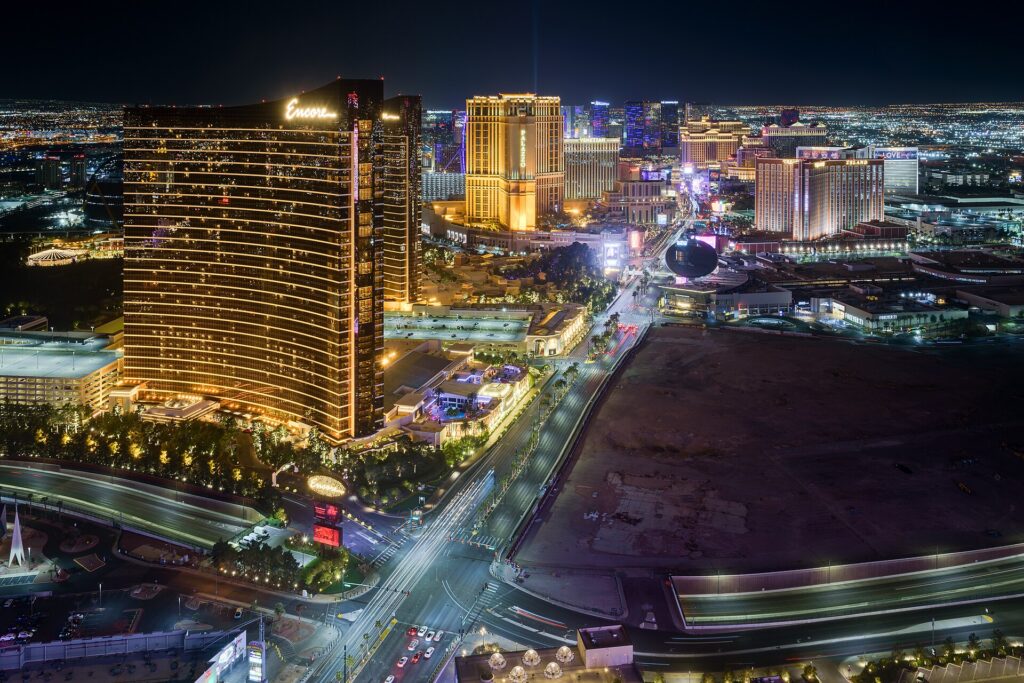
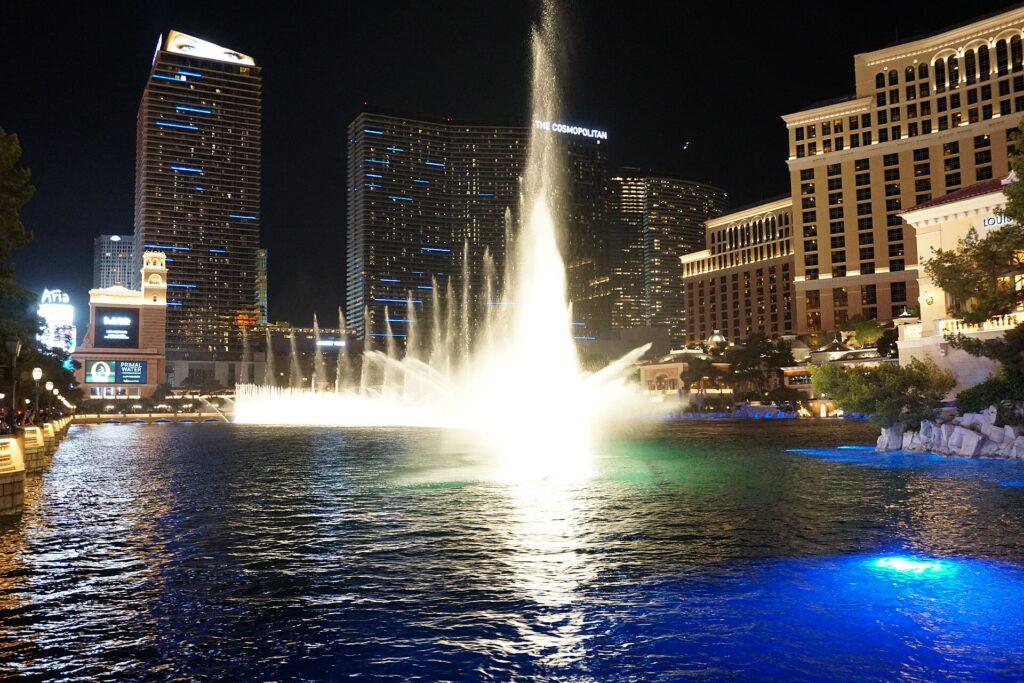
Las Vegas Boulevard South, the Strip, runs for about 6 km (4 miles) from Mandalay Bay in the south to the STRAT tower in the north, and walking a stretch of it is the essential first evening. Start at the Welcome to Fabulous Las Vegas sign, designed by Betty Willis in 1959 and planted in the median just south of Mandalay Bay, which now has its own small parking lot and a queue for photographs. Then head north. The fountains of Bellagio dance to music in the lake in front of the resort every half hour in the afternoon and every 15 minutes in the evening, and they are free; so is the Bellagio Conservatory inside, whose flower displays change with the seasons. Across the road, Paris has its half-scale Eiffel Tower with an observation deck, and farther north the Venetian and the Palazzo have indoor canals under a painted sky, with gondoliers who sing as they row. Caesars Palace, the grande dame of the Strip since 1966, has the Forum Shops and the Colosseum theater. The resorts themselves are the attractions: each one is a small city of casino floor, restaurants, shops, pools and theaters, and most visitors underestimate how long it takes to walk through one, let alone between two.
Sphere, the High Roller and the view from above
The newest landmark is Sphere, the enormous LED-covered globe behind the Venetian that opened in 2023. Its outer skin plays animations that you can see from the freeway and from hotel windows across the valley, which is free; inside, a wraparound screen and a seat-shaking sound system host immersive films and concert residencies, and a ticket is worth it at least once. The High Roller at the LINQ, a 167-meter (550-foot) observation wheel, takes about half an hour to turn and gives the best view of the whole Strip, especially at dusk; some cabins come with a bar. At the north end, the STRAT has the tallest freestanding observation tower in the United States, with an indoor and outdoor deck and, for the brave, thrill rides that hang over the edge of the roof and a controlled free-fall jump down the side. The Eiffel Tower deck at Paris gives a closer view of the Bellagio fountains from above. If you only do one, make it the High Roller at sunset, then walk back down the Strip as the lights come on.
Downtown: Fremont Street, the Mob Museum and the Neon Museum
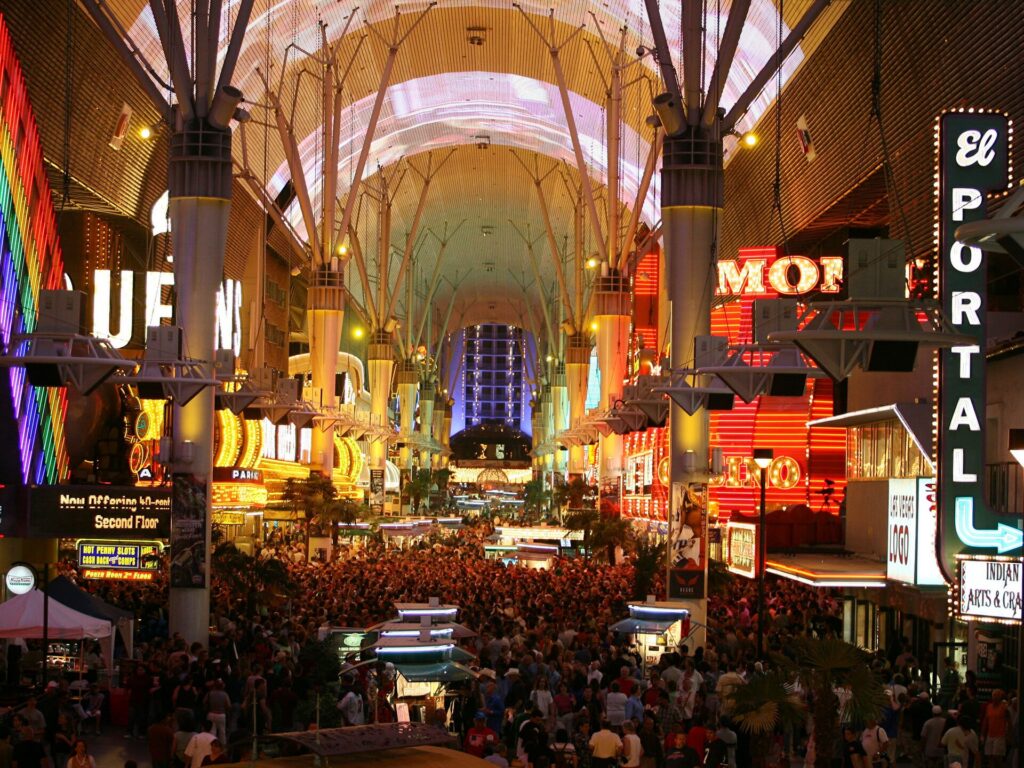
Downtown is where Las Vegas began, around the railroad depot in 1905, and it is where the city’s history is best told. The Fremont Street Experience is a five-block pedestrian mall covered by a giant LED canopy that plays light-and-music shows every evening, lined with the old casinos: the Golden Nugget, the Golden Gate, which opened in 1906 and is the oldest hotel in the city, and the El Cortez, still operating in its 1941 building. The SlotZilla zip line flies riders under the canopy. Two blocks away, The Mob Museum fills the 1933 federal courthouse where one of the Senate’s organized-crime hearings was held in 1950, and it is one of the best museums in the West, with a working speakeasy and distillery in the basement. A short ride north, the Neon Museum keeps the signs of demolished casinos in its Neon Boneyard, with a lobby in the shell-shaped former La Concha Motel; the guided tours after dark, when the restored signs are lit, are the ones to book, and they sell out. East of the canopy, Fremont East has the city’s best cocktail bars and the Downtown Container Park, built from shipping containers.
Neighborhoods worth a half-day
The Arts District
South of downtown, around Main Street and Charleston Boulevard, the Arts District, also called 18b, is the city’s most walkable neighborhood away from the casinos: galleries, vintage and antique stores, breweries and some of the most interesting independent restaurants in town. On the first Friday of every month it hosts an art walk that draws thousands of locals.
Chinatown and Spring Mountain Road
A few minutes west of the Strip, Spring Mountain Road is lined for several miles with strip malls full of Chinese, Japanese, Korean, Thai, Vietnamese and Filipino restaurants, many open late for casino workers. It is where the city’s chefs eat on their nights off, and it is the best-value dinner in Las Vegas.
Summerlin and the west side
The master-planned suburb at the foot of Red Rock Canyon has Downtown Summerlin, an open-air shopping district, the ballpark of the Las Vegas Aviators minor-league baseball team, and the Red Rock and other locals’ casinos, where the rooms and parking are cheaper and the canyon is fifteen minutes away.
Henderson
Southeast of the airport, Henderson has the Ethel M chocolate factory with its free cactus garden, which is lit up for the holidays each winter, the Clark County Wetlands Park, and the Green Valley Ranch and other locals’ resorts. It is also on the way to the Hoover Dam and Lake Mead.
The Strip’s east side and Paradise Road
Behind the Strip resorts, the neighborhood around the Convention Center and Paradise Road holds non-casino hotels, apartment towers and a strip of restaurants that serve the convention crowds, and it is where the Monorail and the Vegas Loop tunnels do their work.
Museums, culture and family attractions
The Springs Preserve, on the site of the natural springs that gave Las Vegas, “the meadows” in Spanish, its name, has botanical gardens, desert trails, a butterfly habitat and the Nevada State Museum, and it is the best place to understand how a city came to exist in the desert. The Shark Reef Aquarium at Mandalay Bay has sharks, rays and a walk-through tunnel. AREA15, just off the Strip to the west, is a warehouse of immersive art and entertainment anchored by Meow Wolf’s Omega Mart, a surreal supermarket whose freezer doors open into other worlds. The Discovery Children’s Museum and the Smith Center for the Performing Arts, home of touring Broadway shows and the city’s philharmonic, sit side by side in Symphony Park downtown. The Bellagio Gallery of Fine Art hosts rotating exhibitions, and the Pinball Hall of Fame, a nonprofit arcade of hundreds of working machines, now sits near the Welcome sign at the south end of the Strip. For what is playing in the arenas and theaters during your dates, our Las Vegas events page lists concerts, shows and games.
Shows, residencies and nightlife
Las Vegas is the entertainment capital of the country, and seeing a show is not optional. Cirque du Soleil has several permanent productions on the Strip, including O at Bellagio, performed in and above a pool, and Mystère at Treasure Island, which has run since 1993; they are the benchmark. Residencies by major singers and bands fill the Colosseum at Caesars Palace, Dolby Live at Park MGM, Sphere and other theaters, often for a few weekends at a time, and they sell out quickly when a big name is announced. Comedy clubs, magicians and adult revues fill the gaps, and the big resorts’ lounges have free live music every night. Nightlife runs in two shifts: the dayclubs, pool parties with DJs from roughly spring to early fall, and the nightclubs, which get going after 11 p.m. Dress codes apply at both. For something older and cheaper, the lounges and bars along Fremont East are where locals drink. Book the headline show before you book the flight if your dates are fixed; for everything else, same-week tickets are easy to find.
Sports
A decade ago Las Vegas had no major-league teams; now it is one of the busiest sports cities in the country. The Vegas Golden Knights play hockey at T-Mobile Arena, just off the Strip behind New York-New York, and the pregame show, a medieval spectacle with knights and swords, is worth arriving early for; the team won the Stanley Cup in 2023. The Las Vegas Raiders play NFL football at Allegiant Stadium, across I-15 from Mandalay Bay, from September to January, and the stadium also hosts college football, concerts and the occasional soccer match. The Las Vegas Aces, WNBA champions in 2022 and 2023, play at Mandalay Bay in summer. Major League Baseball’s Athletics are building a ballpark on the Strip. In November, the Las Vegas Grand Prix turns the Strip into a Formula 1 night circuit, and in December the National Finals Rodeo brings ten days of cowboys to town. The sportsbooks at every casino make any big game a party. Check what is on sale in Las Vegas for your dates before you book flights.
What to eat, and where
Las Vegas has become one of the great restaurant cities in America, and you can eat at almost every level. At the top, nearly every famous chef in the world has a restaurant on the Strip, and a splurge dinner at one of them is a reasonable use of a trip’s budget. The buffets, the old Las Vegas signature, have shrunk in number but grown in ambition; the big ones at Caesars Palace, the Cosmopolitan and the Wynn are feasts, priced accordingly, and best at weekend brunch. Below that, the best food in the city is off the Strip: the Asian restaurants along Spring Mountain Road, the Mexican taquerias on the east side, the independent kitchens in the Arts District, and the steakhouses and cocktail bars downtown. Old-school pleasures survive too: the shrimp cocktail at the Golden Gate, served there since the 1950s, the late-night diners in the casinos, and the classic Italian rooms with red booths. Reservations matter on the Strip on weekends and during conventions; book the special dinners when you book the hotel.
Las Vegas through the seasons
Las Vegas is open every hour of every day, but the season shapes what you do. Winter (December to February) is mild and sunny, cool enough in the evenings for a jacket, with snow on Mount Charleston 45 minutes away and the Golden Knights and the Raiders in season. It is the best time to hike Red Rock and the Valley of Fire, and the resorts dress up for the holidays. Spring (March to May) is the city at its best: warm, dry and bright, with the pools opening, the desert in flower, the Electric Daisy Carnival in May and the busiest weekends of the year. Summer (June to August) is brutally hot, often above 40 °C (104 °F), and the city moves indoors and into the pools; hotel rates drop, dayclubs peak, and any outdoor sightseeing should be done at dawn. Fall (September to November) is the second golden season: warm days, pool weather into October, football, the Grand Prix, and the big trade shows. Our month-by-month guide has the fare patterns that go with each season.
Las Vegas with kids
Las Vegas is an adult city, and in Nevada anyone under 21 cannot gamble or linger on casino floors, but it works for families who plan around that. The Shark Reef at Mandalay Bay, the Bellagio fountains and conservatory, the gondolas at the Venetian, the High Roller and the Welcome sign all please children. Circus Circus has the Adventuredome, an indoor theme park under a pink dome with a roller coaster, and the free circus acts that give the resort its name. The Discovery Children’s Museum downtown and the Springs Preserve are made for younger kids, and Meow Wolf’s Omega Mart at AREA15 fascinates teenagers. Several Cirque du Soleil shows are family-friendly. The best family days, though, are outside the city: the Hoover Dam, the red rocks and petroglyphs at the Valley of Fire, and a day at the Grand Canyon. Choose a resort with a big pool and no casino requirement to reach the rooms, and our family car rental guide covers the vehicle question for the day trips.
Las Vegas on a budget
A surprising amount of the best of Las Vegas is free: the Bellagio fountains and conservatory, the canals at the Venetian, the light shows on the Fremont Street canopy, Sphere’s exterior, the Welcome sign, the lounges with live music, the First Friday art walk and the Ethel M cactus garden. Downtown hotels are usually much cheaper than the Strip and often charge lower resort fees; Sunday-to-Thursday stays cost far less than Friday and Saturday nights on the Strip, unless a big convention is in town. Eat well for less in Chinatown and at happy hours, which many Strip restaurants run in the late afternoon. Buy show tickets directly from the box office and watch for weeknight discounts. The Deuce bus’s day pass covers the whole Strip and downtown, and walking between neighboring resorts costs nothing but time. Compare rates by neighborhood on our Las Vegas hotel search.
Day trips from Las Vegas
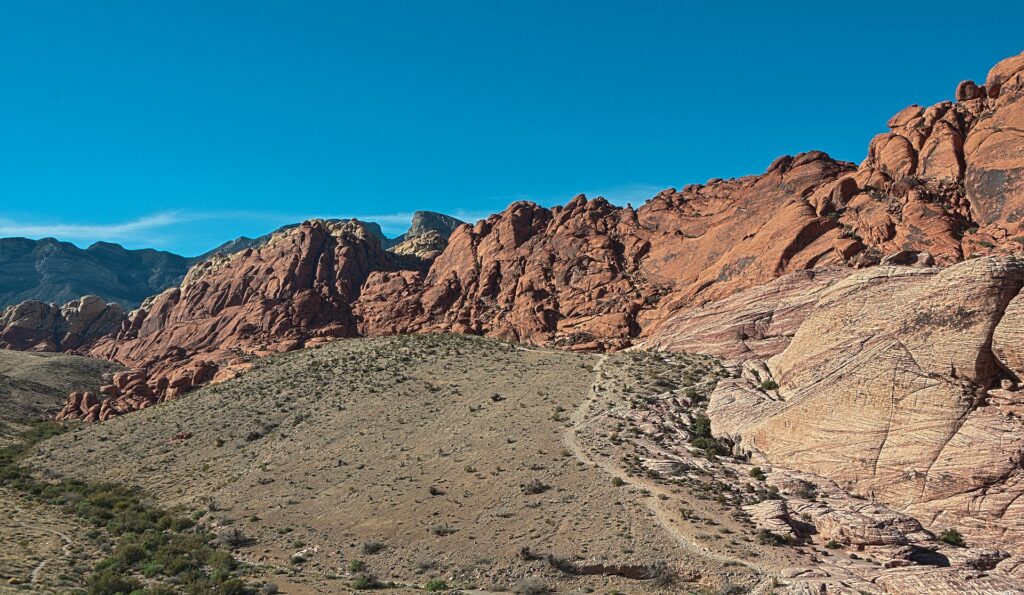
Red Rock Canyon National Conservation Area, about 30 minutes west, has a one-way scenic drive through red and cream sandstone, and some of the best short hikes and rock climbing in the country; for much of the year a timed-entry reservation is required for the scenic drive during the day. The Hoover Dam, about 45 minutes southeast, is one of the great engineering works of the 20th century, with tours inside and a pedestrian walkway on the bypass bridge that looks straight down on it; Lake Mead National Recreation Area surrounds it. The Valley of Fire, an hour northeast, is Nevada’s oldest state park, with fiery red rock and ancient petroglyphs. Mount Charleston, 45 minutes northwest, is much cooler than the city and has a ski area in winter. The Grand Canyon is the big one: the West Rim, run by the Hualapai Tribe and home of the glass Skywalk, is about two and a half hours away, while the South Rim of Grand Canyon National Park is about four and a half hours each way and better as an overnight trip. Zion National Park in Utah and Death Valley in California are each about two to three hours. All of these are car trips or organized tours; see our Las Vegas car rental page, and carry plenty of water in summer. Travel Nevada covers the wider state.
Two sample itineraries
Three days, no car
Day one: the Welcome sign and Mandalay Bay’s Shark Reef in the morning, a walk north past New York-New York and the Bellagio fountains, lunch in a resort food hall, the pool in the afternoon, and dinner and a Cirque show at night. Day two: the Venetian’s canals and Sphere by day, the High Roller at sunset, and a Golden Knights game or a residency show. Day three: the Deuce to downtown for the Mob Museum, lunch on Fremont East, the Neon Museum at dusk, and cocktails under the Fremont canopy.
Five days, with the desert
Add a morning at Red Rock Canyon and an afternoon at the Hoover Dam in a rental car picked up on the Strip, then a long day to the Grand Canyon’s West Rim or the Valley of Fire, returning the car at the airport’s rental center on the way home.
Practical details
- Transit: buy Deuce and RTC bus passes on the rideRTC app or at ticket machines at the Strip stops, and Monorail passes at its stations. RTC Southern Nevada has maps; our rental car guide goes into detail.
- From LAS: a taxi or ride-hail to the Strip in 15 to 25 minutes, a shuttle van, RTC buses, or a rental from the off-airport Rent-A-Car Center. The airport’s site covers ground transport.
- Weather: sun protection and water every day of the year, a jacket for winter evenings, and serious heat precautions from June to September. The National Weather Service’s Las Vegas office issues the heat warnings.
- Time zone: Pacific, three hours behind New York. Arizona does not observe daylight saving time, so in winter the Grand Canyon and Phoenix are an hour ahead.
- Entry requirements: Canadians need a valid passport; visitors from Visa Waiver Program countries need an approved ESTA before boarding, and everyone else needs a visa. U.S. Customs and Border Protection is the authoritative source.
- Safety: the Strip and Fremont Street are heavily policed and busy at all hours; keep an eye on your drink and your phone in crowds, use the pedestrian bridges to cross the Strip, and take the heat seriously on foot.
Frequently asked questions
How many days do you need in Las Vegas?
Three nights covers the Strip, a show and downtown; four or five lets you add Red Rock, the Hoover Dam and a day at the Grand Canyon.
What is the number one thing to do in Las Vegas?
Walk the Strip at night, from the Bellagio fountains to the Venetian, with a stop at the High Roller at sunset. Then see a Cirque du Soleil show.
Is Las Vegas walkable?
The Strip is, in stretches, though distances are longer than they look and summer heat is punishing. Fremont Street and the Arts District are walkable; the rest of the valley assumes a car.
Do I need a car in Las Vegas?
Not for the Strip and downtown. For Red Rock, the Hoover Dam, the Valley of Fire and the national parks, yes, or an organized tour.
Is Las Vegas expensive?
It can be either. Midweek rooms, Chinatown dinners and the free sights keep it cheap; weekend rates, resort fees, parking and a headline show add up fast.
What is Las Vegas known for?
Casinos, the neon of the Strip, world-class shows and restaurants, weddings, conventions, and, increasingly, major-league sports and the desert parks on its doorstep.
Ready to go? Compare flights to Las Vegas, find a place to stay with our Las Vegas hotel search, and if the desert is on the list, price a rental car for those days.
Keep planning with TicketScanner
- Cheap flights to Las Vegas
- Las Vegas hotels — on the Strip, downtown and off-Strip
- Las Vegas car rentals — for Red Rock, the Hoover Dam and the Grand Canyon
- Events in Las Vegas — Golden Knights, Raiders, residencies and shows on sale
- Best time to fly to Las Vegas: month by month
- Las Vegas: do you need a rental car?
- How to find cheap flight tickets to Las Vegas
- Harry Reid International (LAS) airport guide
- Where to stay: the Strip
- Things to do in Los Angeles
Leave a Reply