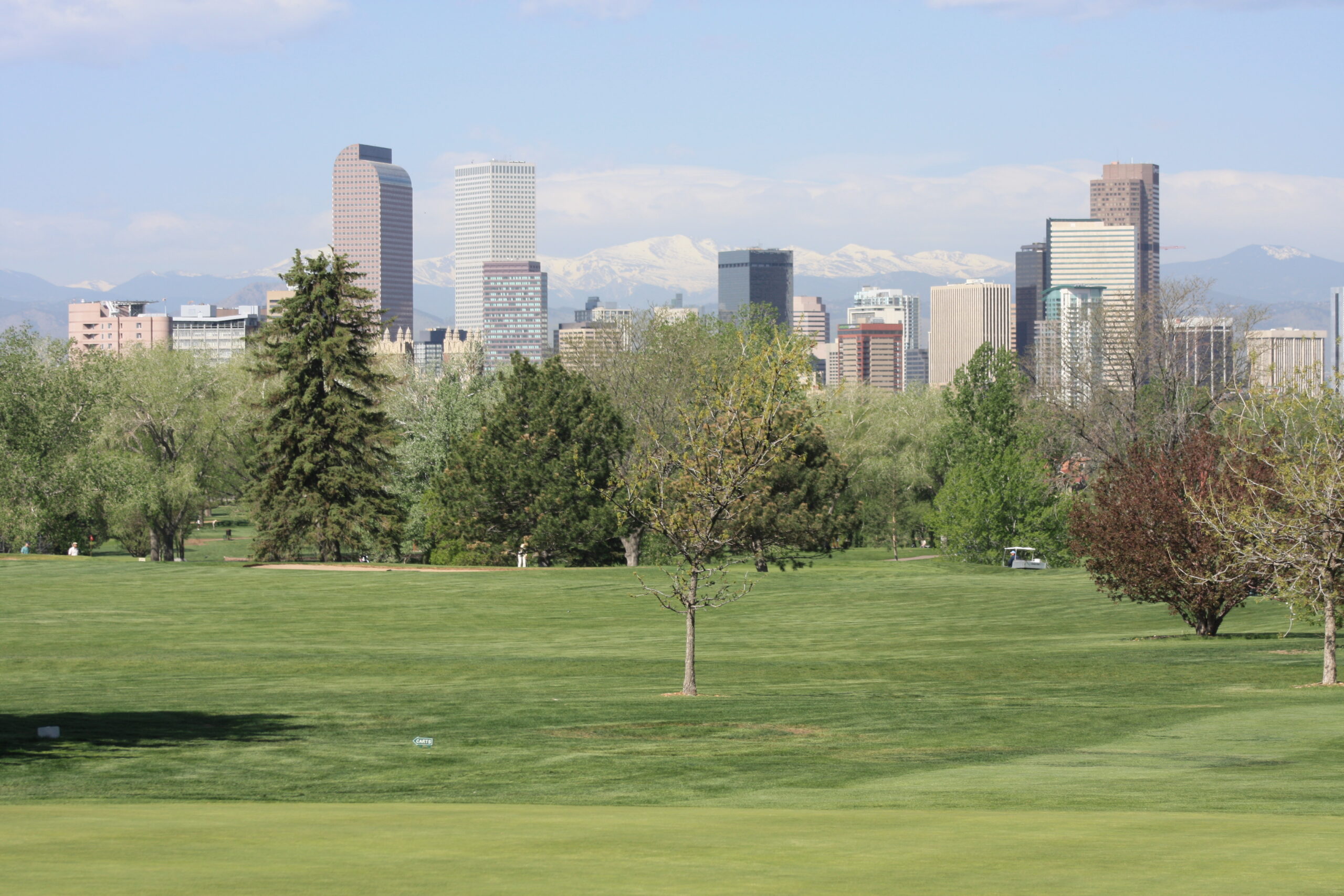
Denver is a city where the honest answer to “should I rent a car?” depends almost entirely on whether you are going into the mountains. The city itself is easier without one than most Western cities: a train runs straight from the airport to Union Station, downtown, LoDo, the Highlands and RiNo are walkable, a light-rail network reaches the suburbs and Golden, and anyone 19 or under rides RTD free. Downtown hotel parking is expensive, and you will not need a car to see the museums, the ballparks or the breweries. But many people who fly to Denver are on their way to the ski areas, Rocky Mountain National Park or Red Rocks, and for those trips a car is usually the simplest answer, as long as you understand what mountain driving involves at altitude and in winter. This guide explains how the city is laid out, how RTD and its fares work, what driving here and on I-70 is really like in every season, the bus and train options into the mountains, and gives you a straightforward way to decide.
The short answer
Rent a car if Rocky Mountain National Park, the I-70 ski areas and mountain towns, Mount Blue Sky, Colorado Springs or a Western road trip are on the itinerary, if you are staying in the suburbs or with family, or if you are skiing with children and gear. Skip the car if you are staying downtown, in LoDo or near the Convention Center for a city break, a conference, a concert or a game, and your plans are the museums, Union Station, RiNo, the Highlands, Cherry Creek and a Rockies or Broncos game; the A Line, the light rail, your feet and the occasional ride-hail will cover that, and you will not pay for hotel parking. And if you want the mountains without driving, the ski train, the state’s Bustang buses and private shuttles are a genuine third option for some trips. Compare rental rates for any of these plans on our Denver car rental page.
How Denver is laid out
Denver spreads across the high plains at the foot of the Front Range, and the mountains always mark west. The main city grid is aligned north-south, with Broadway dividing east from west addresses and Ellsworth Avenue dividing north from south; numbered avenues run east-west and named streets run north-south. Downtown is the exception. Its grid was laid out along the South Platte River and Cherry Creek, so it sits at an angle to everything else, and its numbered streets (15th Street, 16th Street, 17th Street) are not the same as the city’s numbered avenues (such as 17th Avenue), which trips up many first-time drivers. Union Station and LoDo sit at its northwest end, the Capitol at the southeast end, RiNo to the northeast and the Highlands across I-25. Cherry Creek is a few miles southeast, and the metro area then sprawls for many miles in every direction, with the airport far out on the plains to the northeast and the foothills, Red Rocks and Golden about half an hour west.
Hotels cluster in LoDo and around Union Station, downtown near the Convention Center and the 16th Street corridor, in Cherry Creek, in the Denver Tech Center to the south, and near the airport. Our Denver hotel search lets you compare them.
Getting in from the airport
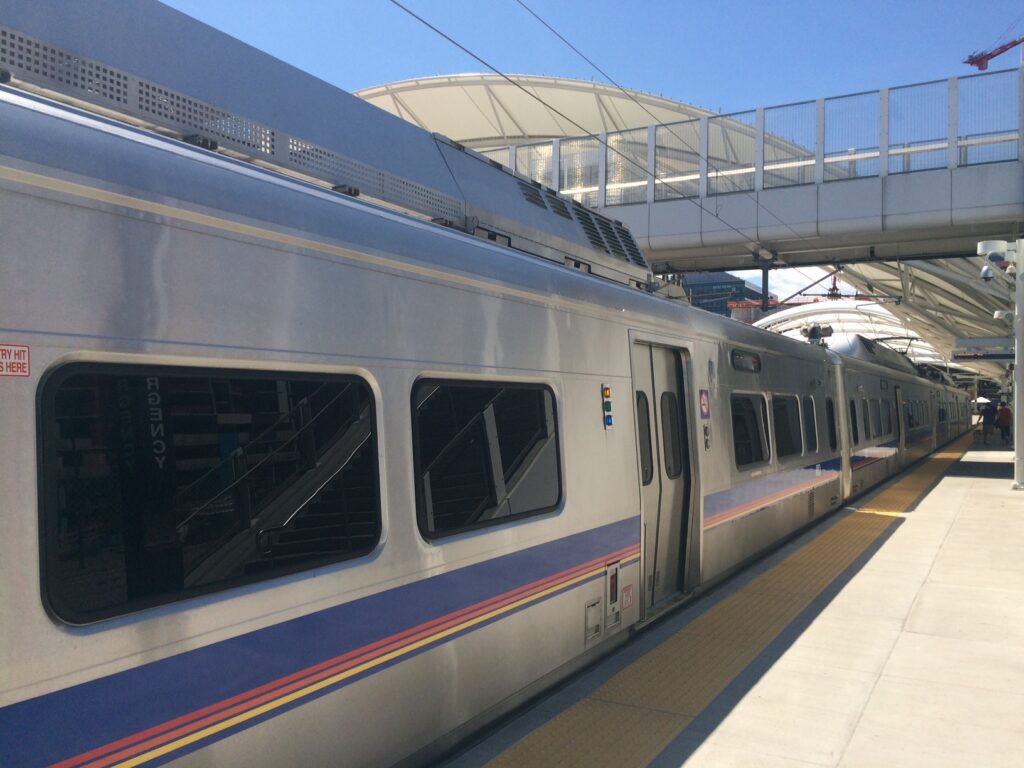
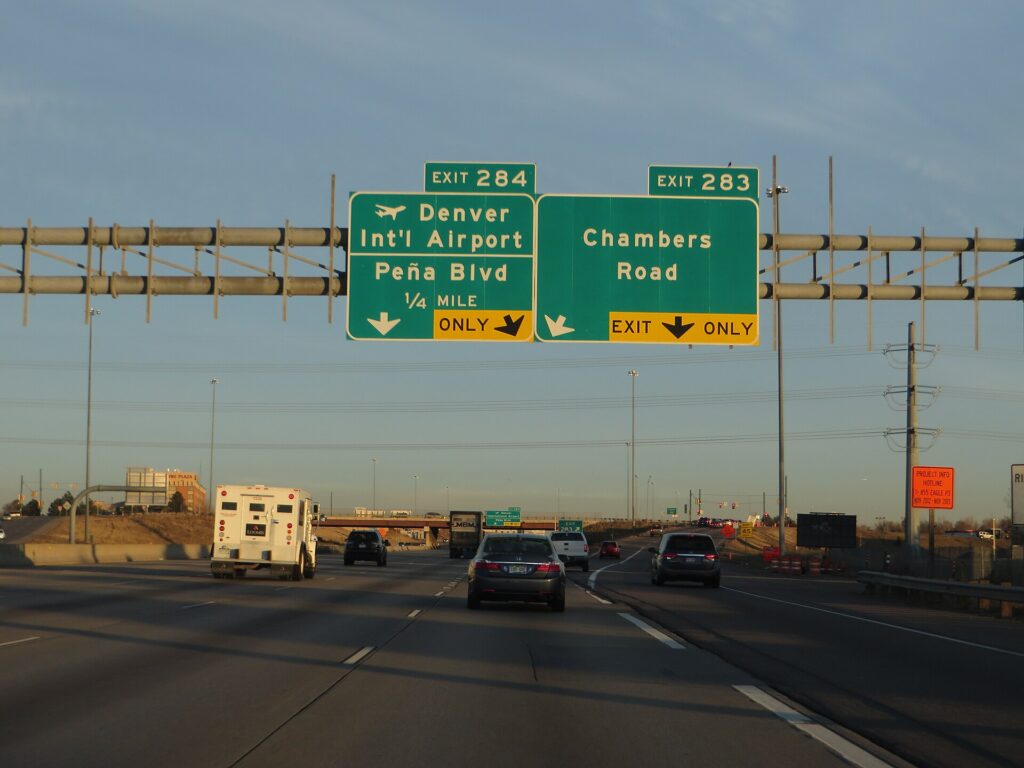
Denver International (DEN) is about 40 kilometers (25 miles) northeast of downtown, farther out than most big-city airports, but it has a direct rail link. RTD’s A Line commuter train leaves from a station at the south end of the main terminal and reaches Union Station in under 40 minutes, running every 15 minutes for most of the day. It carries a higher airport fare than a regular RTD ride but costs far less than a taxi. RTD also runs SkyRide buses from the airport to Boulder and some suburbs. Taxis and ride-hail pick up on the terminal’s ground-transport level, and the drive downtown via Peña Boulevard and I-70 takes 30 to 50 minutes depending on traffic. Most rental companies are off-airport, reached by shuttle bus, which adds time at both ends. If you are heading straight to the ski areas, several private shuttle companies run door-to-door vans from DEN to the mountain resorts, which is the option to compare against a rental. Check the airport’s site for current ground-transport details; our DEN airport guide covers the layout.
Denver’s transit, explained
The Regional Transportation District, RTD, runs the trains and buses across Denver and its suburbs. For a visit based downtown it is entirely adequate, and the rail network is extensive by the standards of Western cities; its limitation is frequency and coverage away from the rail lines, where buses can run every 30 minutes or less often, especially in the evenings and on weekends.
Commuter rail and light rail
Almost everything meets at Union Station. The commuter rail lines run from its train hall: the A Line to the airport, the B Line northwest toward Westminster, the G Line to Arvada and Wheat Ridge, and the N Line north toward Thornton. The light-rail network runs from Union Station and a loop through downtown out to the southern and western suburbs: lines serve the Denver Tech Center, Littleton and Lone Tree to the south, Aurora to the east, and the W Line runs west to Lakewood and Golden. For visitors, the most useful stops are Union Station, the downtown loop near the Convention Center and the Performing Arts Complex, the Ball Arena and Empower Field stops for games, and the A Line stops at 38th and Blake for RiNo. Check RTD’s map for current routes before you travel.
Buses and the MallRide
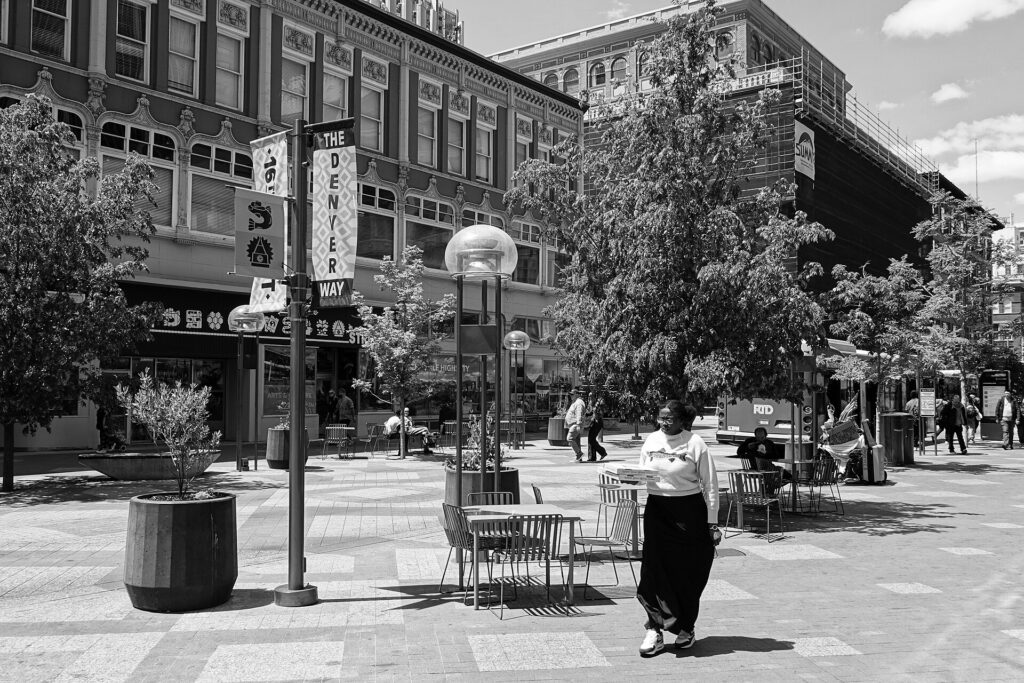
Buses fill in the rest of the city, including City Park and Cherry Creek. The free MallRide shuttle has traditionally run along the 16th Street pedestrian corridor between Union Station and Civic Center Station, which makes the length of downtown easy without a ticket; check its current routing, because the street has been through a long reconstruction. The Flatiron Flyer is a fast bus service along US-36 between Union Station and Boulder, and it is the easy way to reach Boulder without a car.
Fares and tickets
RTD simplified its fares in recent years into a standard local fare, which covers buses and trains across the system for a set period, and a separate higher fare for trips to or from the airport. Buy tickets through RTD’s mobile ticketing app or from the machines at rail stations, and check RTD’s site for day passes and the current payment options before you arrive. The biggest saving for families: riders 19 and under travel free on all RTD services under the youth zero-fare program. Seniors and riders with disabilities qualify for discounts.
Accessibility
RTD’s rail stations are step-free and its trains and buses are accessible, with ramps or lifts on buses and level or near-level boarding on the trains; RTD’s site lists elevator outages and paratransit details.
Beyond RTD
- Walking. Downtown, LoDo and the Highlands, linked by pedestrian bridges over I-25, are easy on foot, and RiNo is one train stop from Union Station.
- The trails. The paved Cherry Creek Trail and South Platte River Trail meet at Confluence Park, just below LoDo, and run for miles, away from traffic. Shared e-bikes and e-scooters are widely available, and a bike is often the quickest way between downtown and Cherry Creek or Washington Park.
- Taxis and ride-hail. Uber, Lyft and licensed taxis operate across the metro area; for a group, a short ride can beat transit on price and time.
- Red Rocks shuttles. The amphitheater is not on RTD, but private shuttle services run from downtown and other pickup points on many concert nights.
- The ski train. The Winter Park Express, run by Amtrak, has operated on winter weekends from Union Station through the Moffat Tunnel to a stop at the base of Winter Park Resort, a scenic ride of about two hours; check Amtrak for the current season.
- Bustang and mountain shuttles. The Colorado Department of Transportation’s Bustang intercity coaches run from Union Station along I-70 to the mountain towns and on to Glenwood Springs and Grand Junction, with a seasonal service to several ski areas on winter weekends. Private companies run shuttles from DEN and downtown to Vail, Breckenridge, Keystone and other resorts.
Driving in Denver and beyond: what it is really like
Within the city, Denver is a straightforward place to drive: wide roads, a logical grid outside downtown, and plentiful parking once you leave the core. I-25, the main north-south freeway past downtown, is congested every weekday morning and evening, and its interchange with I-70 north of downtown, known locally as the Mousetrap, is a daily bottleneck. Game days and concerts at Coors Field, Ball Arena and Empower Field back up the streets around LoDo and the I-25 exits, and parking near the venues becomes expensive. Toll roads are the other trap for visitors: E-470, the beltway on the east side that many drivers use to reach the airport, and several other express lanes are cashless and bill by license plate, and a rental company will pass the tolls on with its own fees, so ask about its toll program at the counter or set your navigation to avoid tolls. Peña Boulevard, the main road into the airport, is free.
Parking
Downtown Denver hotels charge a substantial nightly fee for parking, often valet only, and garages near Union Station, Larimer Square and the arenas are priced for commuters and event crowds. Street meters are paid by machine or app, and enforcement runs into the evening and on Saturdays on many blocks, so read the posted hours rather than assuming parking is free after six. Outside the core, parking is easy and often free. The mountain trailheads are a different story: the popular lots in Rocky Mountain National Park, at Hanging Lake and along the I-70 corridor fill early on summer weekends, and several now require reservations, which is one reason to start early.
Rules and conditions worth knowing
- Colorado’s traction law. On the I-70 mountain corridor west of Denver, a passenger-vehicle traction law applies during the colder months, generally from September through May, and CDOT can put it into effect on other mountain highways when conditions call for it. When it is in effect, cars need tires rated for mud and snow or winter tires with adequate tread, or four-wheel or all-wheel drive, or chains or an approved traction device. Fines are meaningful, and much higher if an unprepared car blocks the road. Ask the rental company for an all-wheel-drive car with suitable tires, and check that the rental agreement allows chains before you buy any.
- Road conditions. COtrip, the Colorado Department of Transportation‘s traveler site and app, shows closures, chain and traction-law status and live cameras for every mountain pass; check it before you leave Denver, not when you reach the foothills.
- Altitude and your car. Engines lose power in thin air, so expect slower climbs on the long grades up I-70, and on the way down, shift to a lower gear rather than riding the brakes; the signs warning truckers that they are “not down yet” apply to rental cars too. Fill up before the long mountain stretches.
- Altitude and you. The I-70 corridor climbs above 3,000 m (10,000 feet) at the Eisenhower-Johnson Memorial Tunnel and Vail Pass. Headaches and drowsiness are common on a first day up high, so drink water and avoid a long mountain drive straight off a flight.
- Hail and storms. The Denver area is one of the most hail-prone regions in the country, and summer afternoon storms can dent a car in minutes. Park under cover when storms are forecast, and understand what the rental’s damage waiver covers.
- Wildlife. Deer and elk cross the foothill and mountain highways at dawn and dusk, and bighorn sheep often graze beside I-70 near Georgetown. Slow down, and never stop in a travel lane to photograph them.
- Park reservations. Rocky Mountain National Park uses timed-entry reservations for much of the summer and early fall, and Mount Blue Sky requires a timed reservation for the summit road; book before you set off.
- Cameras and turns. Photo radar and red-light cameras operate in Denver, and the rental company will pass on any fines. Right turns on red are permitted after a full stop unless signed otherwise.
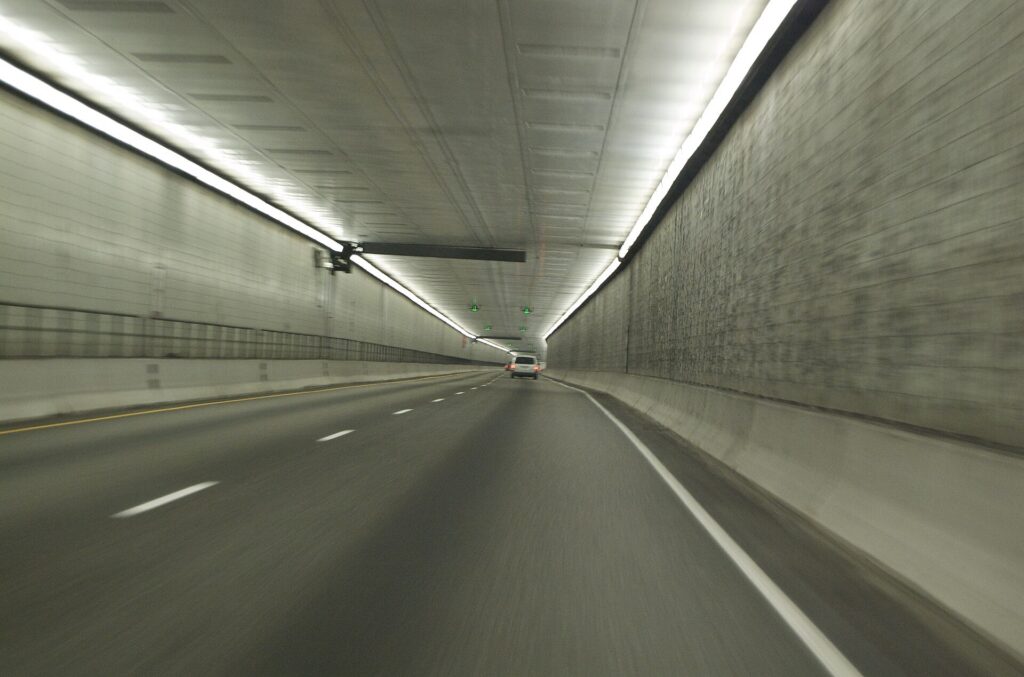
When renting a car makes sense
- Rocky Mountain National Park. There is no public transit from Denver, the drive via Boulder or Loveland takes about two hours, and Trail Ridge Road is best done at your own pace; the town of Estes Park runs free summer shuttles once you arrive.
- Skiing with a family. Gear, children and flexible timing all argue for a car, as long as it is all-wheel drive with suitable tires.
- Colorado Springs, Pikes Peak and the Garden of the Gods. About 110 kilometers (70 miles) south on I-25; a day trip that needs a car.
- Western road trips. Denver to Salt Lake City takes roughly eight hours, either over I-80 through southern Wyoming or along I-70 through Glenwood Canyon and eastern Utah; our Denver to Salt Lake City route guide covers the drive.
If any of those apply, our rental car booking tips cover insurance, deposits and the questions to ask at the counter, and our family car rental guide looks at vehicle choice.
When it does not
- You are staying downtown or in LoDo and your plans are the city.
- You are in town for a conference, a concert, a Rockies game or a Broncos game, when downtown and stadium parking are at their most expensive and the light rail stops at the gates.
- You are heading to Winter Park, or a resort served by Bustang or a door-to-door shuttle, and will stay put once you arrive; most ski towns have free local buses.
- You are traveling solo and the rental, fees, tolls and parking add up to more than the train and a few ride-hail trips.
The hybrid plan for a city-plus-mountains trip
Go car-free for the city days and rent for the mountain days, and think carefully about where you pick up. Renting at the airport makes sense if you are heading straight to the mountains on arrival, because E-470 and I-70 let you skirt most of the city, though the off-airport shuttle adds time and airport fees add cost. Renting from a city location makes sense if you are spending the first nights downtown, because you avoid the hotel parking on the nights you are not using the car. A pattern that works well: the A Line into Union Station, two or three car-free days in the city, a rental picked up from a city branch for the mountain days, and the car returned at the airport on the way to the flight home, which most companies allow for little or no extra charge. Book ahead for ski holidays and summer weekends, when all-wheel-drive cars run short, and confirm the tires if you are traveling between September and May. Compare the day rates on our Denver car rental page against a full-trip rental and the difference is usually obvious.
A worked cost comparison
Numbers change with the season and the booking window, so treat this as a method rather than a quote, and check current rates before deciding. For a four-night city break downtown for two people, the car-free version costs two return A Line fares, a few days of local transit and perhaps three or four ride-hail trips to Cherry Creek or the Highlands; the rental version adds four days of a compact car, four nights of hotel parking at downtown rates, fuel, toll fees if you take E-470, and airport concession charges, and buys you almost nothing you could not reach by train. The car-free option wins easily. For the same four nights with two days in the mountains, the car-free version adds return Bustang or shuttle tickets to a ski town for two; the hybrid version adds a two-day rental picked up in the city, fuel for the climb up I-70, and parking or resort fees. Priced honestly, the bus or shuttle is often cheaper for one or two people, the rental is usually cheaper for a family of four, and the rental wins on flexibility for Rocky Mountain National Park or an early trailhead. For a ski week at one resort, a door-to-door shuttle often beats a week’s rental plus resort parking. Run the rental rates for your dates on our Denver car rental page and put them beside the shuttle fares before you choose.
Driving the I-70 mountain corridor in each season
I-70 west of Denver is the only interstate route through the central Colorado Rockies, and it is both spectacular and demanding. From the foothills it climbs past Idaho Springs and Georgetown to the Eisenhower-Johnson Memorial Tunnel, which carries it under the Continental Divide at about 3,400 m (11,000 feet) and is among the highest vehicle tunnels in the world, then drops to the Summit County resorts and climbs again over Vail Pass. In summer, the problems are traffic and storms: westbound on Friday evening and Saturday morning and eastbound on Sunday afternoon, much of the metro area is on the road, and afternoon thunderstorms bring heavy rain, hail and occasional rockfall or debris-flow closures, most often in Glenwood Canyon farther west. In fall, the aspen weekends in September bring summer-style traffic back, and the first snow on the passes can arrive while Denver is still warm; the traction law starts applying from September. In winter, the highway is plowed and usually open, but storms can close the tunnel approaches or Vail Pass for hours, black ice forms in the shaded stretches even on sunny days, and ski traffic on weekend mornings and Sunday afternoons can turn a 90-minute drive into three hours or more. Leave early or travel mid-week, carry water, snacks and warm layers in case of a closure, and check COtrip before you set off. A peak-period express toll lane runs on part of the corridor near Idaho Springs and can save time on busy days. In spring, March and April bring some of the heaviest snowstorms of the year, so do not assume winter is over; by late May, the roads are usually clear but the high passes can still see snow.
Decision table
| Your trip | Recommendation | Why |
|---|---|---|
| City break downtown or in LoDo, couple or solo | No car | The A Line, light rail and walking cover it; hotel parking is expensive |
| Conference, concert or game | No car | Event parking is costly and the light rail stops at the venues |
| Rocky Mountain National Park | Rent for those days | No transit from Denver; the park and Trail Ridge Road need a car |
| City plus a mountain day or two | Hybrid: rent in the city for the mountain days, or take Bustang | Car-free city days, car or coach for the mountains |
| Ski week at a single resort | Door-to-door shuttle, Bustang or the ski train | Resorts have free local buses and parking costs extra |
| Family ski trip with gear | Rent at the airport, all-wheel drive with suitable tires | Gear, children, weather and the traction law all argue for a capable car |
| Family visit to the suburbs | Rent for the whole stay | Suburban distances make the car worthwhile daily |
| Western road trip | Rent (consider one-way to Salt Lake City) | Denver is the start, not the destination |
Money-saving tips for both options
- On transit: take the A Line rather than a taxi from the airport; buy a day pass for a heavy sightseeing day; riders 19 and under are free; use the free MallRide downtown when it is running.
- On a rental: compare airport and city pickup, book early for ski holidays and summer, ask for all-wheel drive and suitable tires between September and May, decline extras you already have through a credit card or home policy (check first), understand the toll program before you drive E-470, and park under cover in hail season.
- On the hotel: if you are renting, price the parking fee into the room rate.
- On timing: avoid I-25 in the weekday peaks and I-70 westbound on Saturday mornings and eastbound on Sunday afternoons; the best time to fly to Denver guide lists the busiest weekends.
- On the mountains: for one or two people staying in a single ski town, Bustang, the ski train or a shuttle usually costs less than a rental plus fuel and resort parking. Our car, transit or taxi guide covers the general trade-offs.
Frequently asked questions
Is it worth renting a car in Denver?
For Rocky Mountain National Park, a family ski trip, the suburbs or a road trip, yes. For a downtown city break, a conference, a concert or a game, no; the train, light rail and your feet are enough.
Is Denver public transit good for tourists?
Good for the core and better than most Western cities: a train from the airport, light rail to the suburbs and Golden, and a free downtown shuttle. It thins out away from the rail lines, and it does not reach the mountains.
How do I get from Denver airport to downtown?
The A Line train to Union Station in under 40 minutes, or a taxi or ride-hail in 30 to 50 minutes depending on traffic.
Can I get to the ski areas from Denver without a car?
Yes. Private shuttles run from DEN to the major resorts, Bustang runs along I-70 with seasonal ski service, and the Winter Park Express train has run on winter weekends.
Do I need four-wheel drive or snow tires to drive I-70 in winter?
Colorado’s traction law requires suitable tires, four-wheel or all-wheel drive, or chains when it is in effect on the mountain corridor, generally from September through May. Ask for an all-wheel-drive rental and check the tires.
Is parking expensive in downtown Denver?
At hotels and near the stadiums, yes. Meters are enforced into the evening on many blocks, so check the posted hours.
Does the altitude affect driving in the mountains?
Your car will have less power on the climbs and needs lower gears on the descents, and you may feel tired or light-headed on your first day up high. Hydrate and do not push a long drive straight after a flight.
Whichever way you go, start with the flight. Compare cheap flights to Denver, choose a neighborhood with our Denver hotel search, plan the city days with our first-timer’s guide to Denver, and if the mountains are on the list, price the rental for those dates on our Denver car rental page.
Keep planning with TicketScanner
- Denver car rentals — compare airport and city pickup
- Cheap flights to Denver
- Denver hotels — factor parking into the rate
- Things to do in Denver: a first-timer's guide
- Best time to fly to Denver: month by month
- Denver International (DEN) airport guide
- Driving Denver to Salt Lake City
- Where to stay: LoDo
- Rental car booking tips
- Car, transit or taxi in a new city?
Leave a Reply