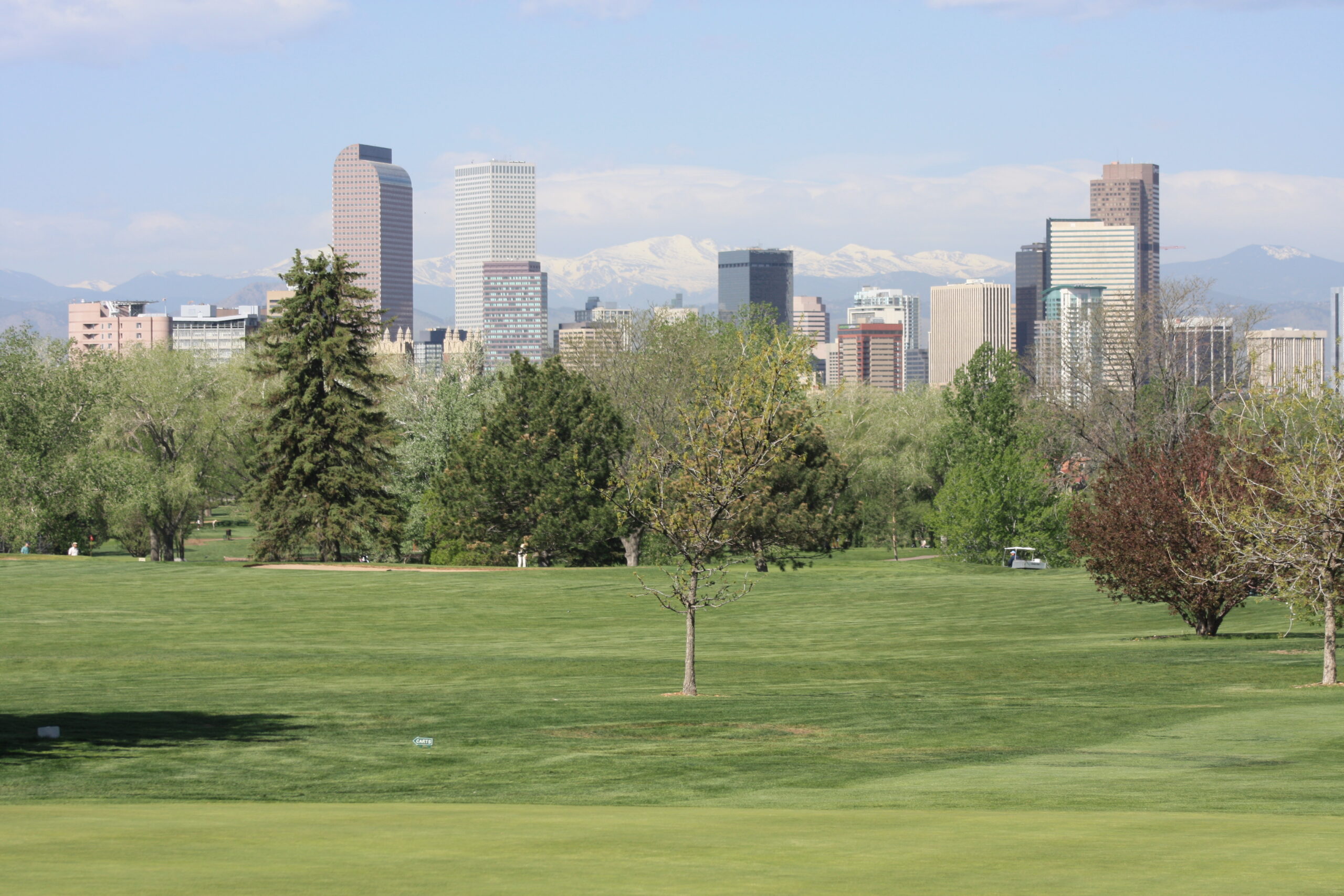
Tag: Denver

  • Best Time to Fly to Denver: Seasons, Weather & Prices

    Best Time to Fly to Denver: Seasons, Weather & Prices

    Denver is two destinations in one, and its airfares reflect both. It is a sunny, fast-growing city a mile above sea level, with a summer concert season at Red Rocks, four major-league teams, a January stock show that has run for more than a century, and a steady diet of conventions that can fill downtown hotels mid-week. It is also the gateway to the Colorado Rockies, with ski areas, Rocky Mountain National Park and the I-70 mountain towns within two hours, which means demand for seats into Denver tracks the ski calendar and the summer hiking season as much as the city’s own. Add a climate that can deliver a 20 °C (68 °F) afternoon in February and a snowstorm in May, and you have a place where the “best time” question has more than one right answer. The good news is that Denver International is one of the busiest airports in the world and a hub for three competing airlines, so fares are often lower than you would expect for a destination this popular. This guide walks through the weather month by month, the fare seasons, the events and mountain windows that move prices, and how to handle the airport.

    The short answer

    For the city alone, the best value-and-weather windows are September to mid-October, when the summer crowds have gone, the weather is often the most settled of the year and the aspens turn gold in the mountains, and late April to May, before the summer peak, as long as you accept the risk of a spring snowstorm. For the mountains in summer, late June to mid-September is the window when the high roads and trails are reliably open. For skiing, January and early February outside the holiday weekends give the best mix of snow and price. The cheapest fares tend to come in January after New Year, in early November before Thanksgiving, and in the spring shoulder once ski season winds down. The most expensive stretches are June to August, the Christmas and New Year ski weeks, Presidents’ Day weekend and the March spring-break weeks, when skiers from across the country converge on DEN. Whatever you choose, run a flexible-date search on our Denver flights page; with this much competition on most routes, a shift of a few days can change the fare band entirely.
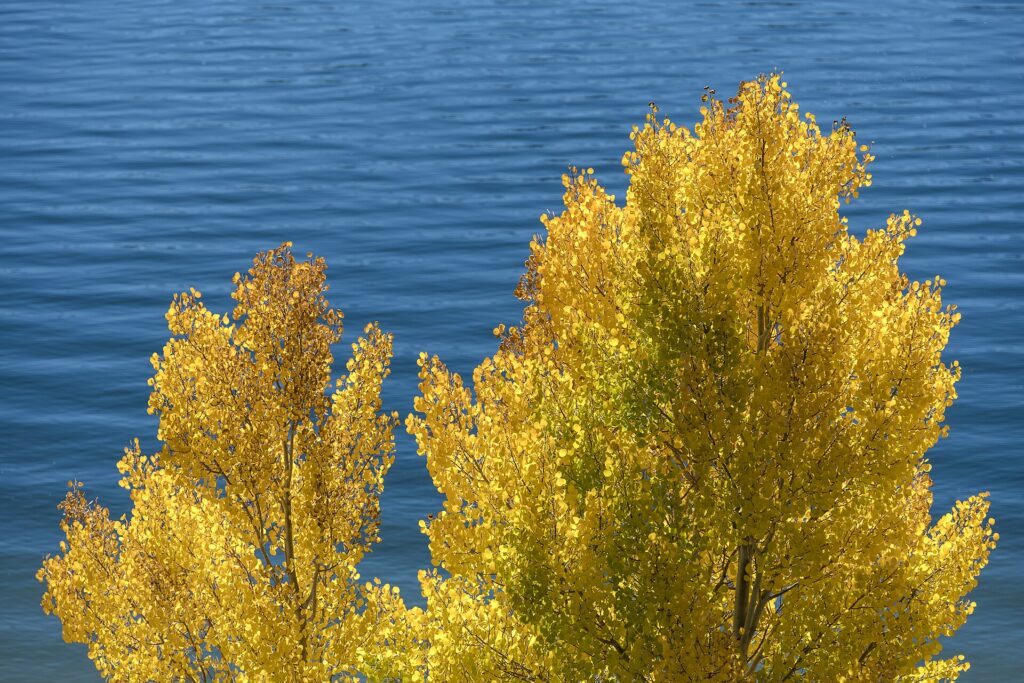
    Quaking aspens turning gold in autumn in Dillon, Colorado
    Aspens turning gold in Summit County, just off I-70 west of Denver, in the second half of September (Photo: Clyde Charles Brown via Wikimedia Commons, CC BY-SA 4.0)

    Denver’s weather, season by season

    Denver sits on the high plains at the foot of the Front Range, about 1,600 m (5,280 feet) above sea level, in the rain shadow of the mountains. That gives it thin, dry air, an enormous amount of sunshine, big swings between day and night, hot summers with afternoon thunderstorms, and winters where snow often melts within days. The figures below are approximate seasonal patterns based on the long-term climate normals from NOAA’s National Weather Service office for Denver and Boulder; check the current forecast before you pack, because Denver’s weather can change by 20 degrees in a day, and the mountains an hour away are always colder than the city.

    MonthTypical daytime highTypical overnight lowWhat it feels likeFare pressure
    Januaryaround 7 °C (44 °F)around -8 °C (17 °F)Sunny and cold; snow comes and melts; occasional Arctic snapsLow after New Year, rising for ski weekends
    Februaryaround 8 °C (46 °F)around -7 °C (19 °F)Similar; warm spells alternate with snowLow to moderate; Presidents’ Day spike
    Marcharound 13 °C (55 °F)around -3 °C (26 °F)Usually the snowiest month, with big spring storms between mild daysHigh during spring-break weeks
    Aprilaround 16 °C (61 °F)around 0 °C (32 °F)Changeable; sunny and warm one day, wet snow the nextModerate, falling as ski season ends
    Mayaround 22 °C (71 °F)around 6 °C (42 °F)Green and pleasant; storms and late snow still possibleModerate; rises for Memorial Day
    Junearound 28 °C (83 °F)around 11 °C (51 °F)Warm and dry, with afternoon thunderstorms and hailHigh
    Julyaround 32 °C (90 °F)around 14 °C (58 °F)Hot days, cool nights, daily storm risk in the mountainsPeak
    Augustaround 31 °C (87 °F)around 13 °C (56 °F)Hot and mostly dry; wildfire smoke possible in some yearsHigh, easing late in the month
    Septemberaround 26 °C (79 °F)around 8 °C (47 °F)Often the best month: warm, dry and clear; aspens turn goldModerate, falling after Labor Day
    Octoberaround 18 °C (65 °F)around 2 °C (35 °F)Crisp and sunny; the first snow usually arrivesLow to moderate
    Novemberaround 11 °C (52 °F)around -4 °C (24 °F)Cooling fast; ski areas open through the monthLow, then high for Thanksgiving
    Decemberaround 7 °C (44 °F)around -8 °C (17 °F)Cold, bright and festive; the mountains are in full winterModerate early, then peak for the holidays

    Three things the table cannot show. First, the sun: Denver’s boosters like to claim 300 days of sunshine a year, and while the real figure depends on how you count a sunny day, it is one of the brightest big cities in the country, and at this altitude the sun burns faster, even in January. Second, the swings: dry air means temperatures can drop 15 to 20 degrees between mid-afternoon and midnight, and a warm, dry downslope wind off the mountains can lift a winter day well above the average, while an Arctic front can do the opposite in a few hours. Third, the mountains: the ski towns and national park an hour or two away sit 900 to 1,800 m (3,000 to 6,000 feet) higher than the city, so they are 10 degrees or more colder, can see snow in any month, and in summer are hit by afternoon lightning storms that make an early start on any hike essential.

    How Denver’s fare seasons work

    Three calendars drive seats into Denver: the mountains, which pull skiers from December to early April and hikers and road-trippers from June to September; the city’s own events, from the Stock Show in January to the Red Rocks concert season and Broncos football in the fall; and conventions and business travel, which keep weekday flights busy year-round. Layered on top is the airport’s role as a connecting hub: United, Southwest and Frontier all run large operations at DEN, and many travelers pass through without ever leaving the terminal. That competition helps keep fares into Denver lower than into many smaller mountain airports, which is why skiers bound for Vail or Breckenridge often fly here and drive. The result is a summer peak, a winter that is busy around the holidays but soft in between, and two good-value shoulders.

    Peak season

    June to mid-August, plus roughly December 20 to January 2, Presidents’ Day weekend in February and the mid-March spring-break weeks. Summer is driven by vacations, national park trips and Red Rocks, and hotel rates in the city and the mountains climb together. The winter peaks are ski traffic: flights from Texas, the Midwest and the coasts fill with families carrying boot bags, and rental cars with four-wheel drive become scarce. If you must travel in peak, book early, fly mid-week, and reserve the rental car at the same time as the flight.

    Shoulder season

    Late April to May and September to October. The city is at its most pleasant, the summer and ski crowds are absent, and fares are moderate. The mountains are between seasons in the spring, when locals call it mud season: the ski areas are closing, the high trails are still under snow, and some mountain restaurants and hotels close for a few weeks. In the fall the aspen color in the second half of September draws weekend crowds to the mountain towns, but the city itself stays reasonably priced. Watch Memorial Day, Labor Day and home Broncos weekends.

    Low season

    Early January after the holidays, parts of early February outside the ski weekends, and November before Thanksgiving. Fares are at their lowest, the city is sunny and cold, and the ski areas are open, often with good snow in January. Build a weather buffer into connections, because snowstorms can briefly shut down the airport or I-70.

    As elsewhere, mid-week departures and early or late flights usually price below Friday and Sunday afternoons on the same route, and a search across a whole month reveals cheaper pairs of dates close to your first choice. Our guide to the best times to book explains how to read those patterns.

    Denver month by month

    January

    After New Year’s week, one of the cheapest months to fly. The city is sunny and cold, with snow that usually melts within a few days, and the ski areas are in prime condition. The National Western Stock Show, a rodeo, horse show and livestock exhibition that runs for about two weeks from early January, fills hotels near the grounds and brings a Western atmosphere to the city; the Stock Show’s site has dates. The Nuggets and Avalanche are at home, and Martin Luther King Jr. weekend is a busy ski weekend.

    February

    Similar weather, more daylight, and low fares outside Presidents’ Day weekend (the third Monday of February), one of the busiest ski weekends of the year. Warm spells are common, so pack for both a snowstorm and a sunny patio. A city-plus-skiing trip is strong value in the first half of the month.

    March

    Usually Denver’s snowiest month, with big, wet spring storms between mild days, and the mountains often at their deepest snowpack. It is also spring-break season: college students and families from Texas and the Midwest fill flights and ski lodges for most of the month, and fares and rental rates rise with them. The St. Patrick’s Day parade downtown is one of the largest in the West. Book around the spring-break weeks and March can still be good value.

    April

    Changeable: warm and sunny one day, wet snow the next. Most ski areas close during the month, though some high-elevation resorts run later; hotel rates in the city fall noticeably; baseball season opens at Coors Field, and the Nuggets and Avalanche playoffs can tighten downtown hotels on game nights in a good year. The first shows of the Red Rocks season begin.

    May

    Spring arrives properly. The parks turn green, patios open across LoHi and RiNo, and Red Rocks gets busy. The mountains are in mud season, with high trails still snowbound and some mountain businesses closed. Memorial Day weekend (the last Monday of May) is the one date to book around. Fares are moderate, and the first half of May is one of the better value windows for the city.

    June

    Warm, dry and long, with afternoon thunderstorms and the year’s highest hail risk; Denver sits in one of the most hail-prone parts of the country, so park a rental under cover when storms are forecast. Denver PrideFest and the Juneteenth Music Festival in Five Points fill the calendar, the high mountain roads start opening, and fares step up from the second week as school holidays begin.

    July

    Peak season. Days are hot, nights are cool, and the mountains are at their greenest, with wildflowers in the high meadows and Trail Ridge Road in Rocky Mountain National Park fully open. The park uses a timed-entry reservation system for much of the summer, so reserve a slot through the National Park Service before you travel. Red Rocks has shows most nights, the Rockies are at home, and hotel rates are at or near their annual high.

    August

    Hot and busy, with the last big family travel weeks of the summer. Wildfire smoke from fires elsewhere in the West can haze the skies for days in some years. The last week or two, once schools in Colorado and neighboring states restart, is slightly softer on prices, and the mountains are still at their summer best.

    September

    The month many locals would send you to: warm, dry afternoons, cool nights, clear skies and the city emptied of summer visitors after Labor Day. In the mountains, the aspens turn gold, usually peaking in the second half of the month, which fills the mountain towns and scenic byways on weekends. Fares are moderate and falling.

    October

    Crisp, sunny days, the first snow in the city usually by the end of the month, and steadily lower prices. The Great American Beer Festival, held in the fall at the Colorado Convention Center, draws brewers and drinkers from across the country and pushes downtown hotel rates up for its dates; check the festival’s site, because its exact timing has varied between September and October. Some high-elevation ski areas open late in the month.

    November

    Winter arrives, more ski areas open, and fares and hotel rates are low until the week of Thanksgiving (the fourth Thursday), when family travel pushes them up for a few days. The Nuggets, Avalanche and Broncos are all in season, and the Denver Film Festival fills the city’s screens in early November.

    December

    Two months in one. The first half is moderately priced, with the Parade of Lights downtown on the first weekend, the holiday market in Civic Center Park, and the mountains building their snowpack. From about December 20, fares, hotel rates and rental car prices jump for the Christmas and New Year ski weeks, which are among the most expensive of the year in the ski towns and at DEN.
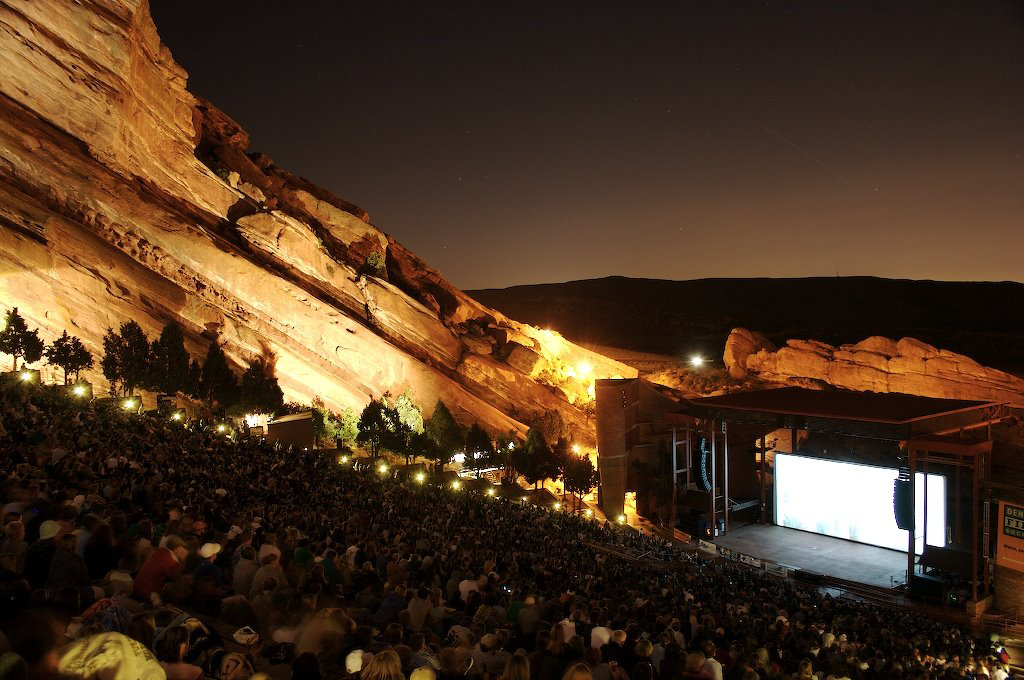
    Red Rocks Amphitheatre near Denver, carved into the red sandstone
    Red Rocks Amphitheatre, a short drive from downtown Denver (Photo: a Wikimedia Commons contributor via Wikimedia Commons, CC BY-SA 3.0)

    Events that move Denver flight and hotel prices

    Cross-check these against your dates before you book. Exact dates shift each year; Visit Denver keeps the current calendar.

    • National Western Stock Show (about two weeks from early January).
    • Martin Luther King Jr. and Presidents’ Day weekends (third Mondays of January and February): major ski weekends.
    • Spring break (most of March, varying by school and state): the biggest ski-travel spike outside the holidays.
    • Memorial Day, the Fourth of July and Labor Day: the summer’s busiest travel weekends.
    • Denver PrideFest (a weekend in late June) and the Juneteenth Music Festival in Five Points.
    • Red Rocks concerts (spring to fall), which fill hotels on the nights of the biggest shows. Our Denver events page shows what is on sale for your dates.
    • Broncos home games (September to January), plus Nuggets and Avalanche playoff runs in spring.
    • Great American Beer Festival (early fall).
    • Thanksgiving, Christmas and New Year, and the ski weeks around them.
    • Large conventions at the Colorado Convention Center, which can fill downtown hotels on weeknights; if mid-week rates look strangely high, that is usually why.

    Getting in from the airport

    Denver International Airport (DEN) sits on the open plains about 40 km (25 miles) northeast of downtown, and its white, peaked tent roof, designed to echo the snow-capped Rockies, is visible for miles. It is one of the largest airports in the world by land area and consistently one of the busiest by passengers, with a single main terminal and three concourses linked by an underground train. United runs a major hub here, Southwest has one of its largest operations, and Frontier is based in Denver; there are nonstop flights from almost every large U.S. city, from Canada and Mexico, and from several European and Asian hubs including London, Frankfurt, Munich, Reykjavik and Tokyo. Getting downtown: RTD’s A Line commuter train runs from a station at the south end of the terminal to Union Station in under 40 minutes, every 15 minutes for most of the day, and is by far the easiest option for a city stay. Taxis and ride-hail pick up on the terminal’s ground-transport level, and the drive downtown takes 30 to 50 minutes depending on traffic. Rental car companies are mostly off-airport, reached by shuttle buses from the terminal, so allow extra time both ways. Our Denver car-versus-transit guide works through whether you need a car, and our DEN airport guide covers the layout.
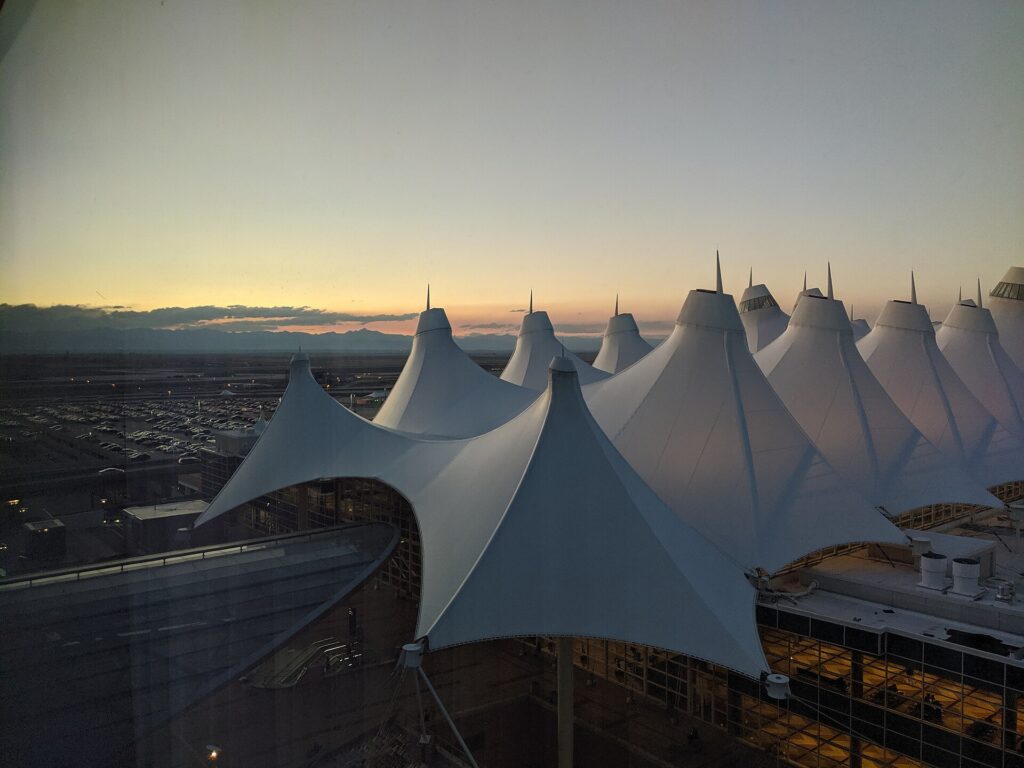
    The peaked white tent roof of the main terminal at Denver International Airport
    Denver International (DEN), whose tent roof echoes the snowy peaks of the Rockies (Photo: Peterquinn925 via Wikimedia Commons, CC BY-SA 4.0)

    Timing tricks that work for Denver

    • Search the whole month. Ski weekends, spring break and the big summer holidays create sharp edges in the fare calendar. A calendar search on TicketScanner shows them instantly, and the week after a holiday is often a bargain relative to the week of it.
    • Price the rental with the flight in ski season. Around Christmas, Presidents’ Day and spring break, all-wheel-drive rentals at DEN sell out and rates climb. Check our Denver car rental page for the same dates before you commit to the fare.
    • Book the hotel early for big weekends. A cheap fare is not cheap once a convention-week or concert-night room is added. Run a Denver hotel search for the same dates first.
    • Fly mid-week. Ski travelers leave on Friday and Saturday and return on Sunday, and business travelers fill Monday mornings and Thursday evenings; Tuesday and Wednesday in the middle of the day are usually the value.
    • Use the hub competition. With United, Southwest and Frontier all fighting for Denver traffic, compare all three, and remember that the cheapest fares may carry bag and seat fees that change the total.
    • Consider a road trip. Salt Lake City, about eight hours west by car, has its own big airport, and flights to Salt Lake City can make a one-way Rockies road trip work; our Denver to Salt Lake City route guide covers the drive.
    • Build a winter buffer. Spring snowstorms in March and April are more disruptive at DEN than midwinter cold, and summer thunderstorms cause afternoon delays. Avoid the tightest connections, and see our guide to how early to arrive for what to allow.
    • Flying out of Denver instead? The same seasonality applies in reverse; see cheap flights from Denver.
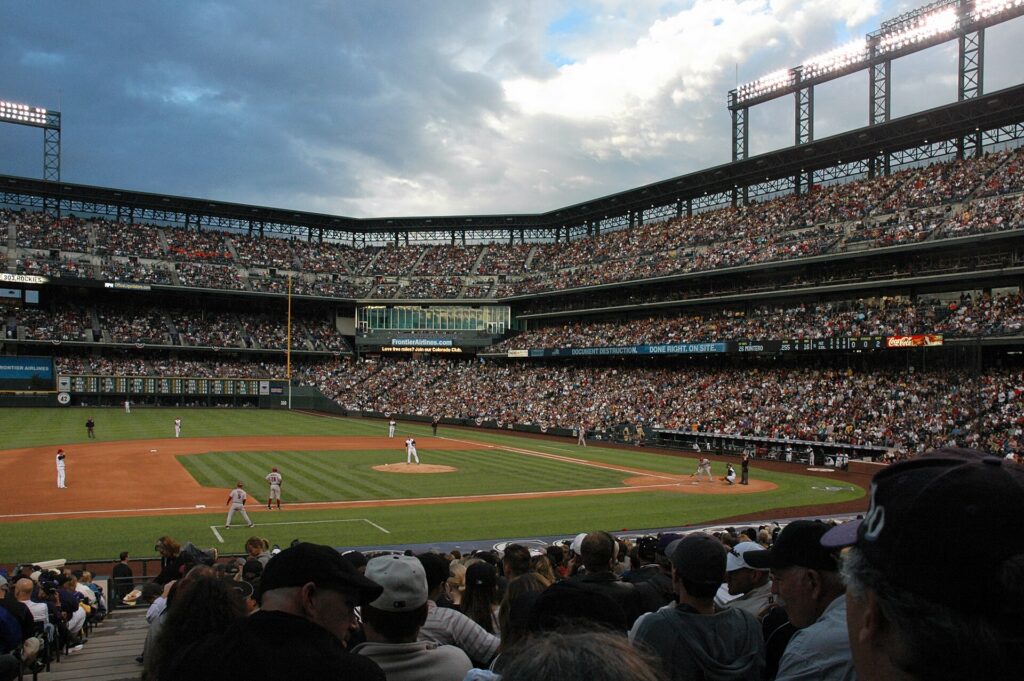
    A Colorado Rockies game at Coors Field in downtown Denver in summer
    A summer game at Coors Field in LoDo, part of the peak season that runs from June to August (Photo: DimiTalen via Wikimedia Commons, CC0)

    What to pack, by season

    Winter (December to February): a warm coat, a hat, gloves, boots with grip, and layers, because a 10 °C (50 °F) sunny afternoon can follow a frigid morning; for the mountains, full ski or snow gear. Spring (March to May): layers, a waterproof jacket and shoes that can handle slush, because a snowstorm is always possible. Summer (June to August): light clothing, a warm layer for cool evenings and for Red Rocks after dark, a rain shell for the afternoon storms, and serious sun protection. Fall (September to October): layers again, a warmer jacket by late October, and sunglasses year-round. In every season, bring a refillable water bottle and lip balm; the air is dry and the altitude makes you thirsty.

    The best time to fly to Denver for…

    Skiing

    January and early February for snow and value, March for deep snow and longer days if you avoid the spring-break weeks, with the Christmas weeks and Presidents’ Day the most expensive.

    Rocky Mountain National Park and summer hiking

    Late June to mid-September, when Trail Ridge Road and the high trails are open; reserve timed entry in advance and start hikes early to beat the afternoon storms.

    Fall color

    The second half of September, give or take a week depending on the year and the elevation; go mid-week to avoid the weekend crowds on the mountain roads.

    Red Rocks concerts

    June to September for the classic warm-evening experience; book tickets first, then the flight and the hotel.

    The lowest fares

    January after New Year, early November, and late April to mid-May.

    International visitors

    Visitors from Visa Waiver Program countries need an approved ESTA before boarding; most others need a visa. The State Department’s travel site explains what applies to you, and the TSA lists what you can carry through security. Rocky Mountain National Park charges an entrance fee and uses timed-entry permits in season.

    Frequently asked questions

    What is the cheapest month to fly to Denver?

    January after the holidays is consistently among the lowest, followed by early November and the spring shoulder from late April to mid-May.

    What is the best month to visit Denver for weather?

    September, with warm, dry days and cool nights, followed by June and early October. July is hot; March is snowy.

    When is ski season near Denver?

    Roughly mid-November to mid-April, with some high-elevation areas opening earlier and closing later. The busiest and priciest weeks are Christmas, Presidents’ Day and spring break.

    Does it snow a lot in Denver?

    The city gets regular snow from October to April, heaviest in March, but it usually melts within a few days under the strong sun. The mountains get far more and keep it.

    Will the altitude affect me when I land?

    Most visitors notice only thirst and faster tiredness in the city. Drink water, go easy on alcohol the first night, and give yourself a day before strenuous activity higher up in the mountains.

    How far ahead should I book?

    Earliest for the ski holidays, spring break and June to August, when fares tend only to rise; for the shoulder and low seasons, fares are stable enough that finding the right dates matters more than booking months out.

    Is Denver or Colorado Springs better to fly into?

    Denver, for most trips: far more routes and usually lower fares. Colorado Springs is worth checking only if your trip is based there.

    Ready to pick your dates? Compare fares across the whole month on our Denver flights page, then find a room with our Denver hotel search. For what to do when you land, start with our first-timer’s guide to Denver, and before you pick up a car, read whether you need one.

  • Denver: Should You Rent a Car or Rely on Public Transit?

    Denver: Should You Rent a Car or Rely on Public Transit?

    Denver is a city where the honest answer to “should I rent a car?” depends almost entirely on whether you are going into the mountains. The city itself is easier without one than most Western cities: a train runs straight from the airport to Union Station, downtown, LoDo, the Highlands and RiNo are walkable, a light-rail network reaches the suburbs and Golden, and anyone 19 or under rides RTD free. Downtown hotel parking is expensive, and you will not need a car to see the museums, the ballparks or the breweries. But many people who fly to Denver are on their way to the ski areas, Rocky Mountain National Park or Red Rocks, and for those trips a car is usually the simplest answer, as long as you understand what mountain driving involves at altitude and in winter. This guide explains how the city is laid out, how RTD and its fares work, what driving here and on I-70 is really like in every season, the bus and train options into the mountains, and gives you a straightforward way to decide.

    The short answer

    Rent a car if Rocky Mountain National Park, the I-70 ski areas and mountain towns, Mount Blue Sky, Colorado Springs or a Western road trip are on the itinerary, if you are staying in the suburbs or with family, or if you are skiing with children and gear. Skip the car if you are staying downtown, in LoDo or near the Convention Center for a city break, a conference, a concert or a game, and your plans are the museums, Union Station, RiNo, the Highlands, Cherry Creek and a Rockies or Broncos game; the A Line, the light rail, your feet and the occasional ride-hail will cover that, and you will not pay for hotel parking. And if you want the mountains without driving, the ski train, the state’s Bustang buses and private shuttles are a genuine third option for some trips. Compare rental rates for any of these plans on our Denver car rental page.

    How Denver is laid out

    Denver spreads across the high plains at the foot of the Front Range, and the mountains always mark west. The main city grid is aligned north-south, with Broadway dividing east from west addresses and Ellsworth Avenue dividing north from south; numbered avenues run east-west and named streets run north-south. Downtown is the exception. Its grid was laid out along the South Platte River and Cherry Creek, so it sits at an angle to everything else, and its numbered streets (15th Street, 16th Street, 17th Street) are not the same as the city’s numbered avenues (such as 17th Avenue), which trips up many first-time drivers. Union Station and LoDo sit at its northwest end, the Capitol at the southeast end, RiNo to the northeast and the Highlands across I-25. Cherry Creek is a few miles southeast, and the metro area then sprawls for many miles in every direction, with the airport far out on the plains to the northeast and the foothills, Red Rocks and Golden about half an hour west.

    Hotels cluster in LoDo and around Union Station, downtown near the Convention Center and the 16th Street corridor, in Cherry Creek, in the Denver Tech Center to the south, and near the airport. Our Denver hotel search lets you compare them.

    Getting in from the airport

    Denver International (DEN) is about 40 kilometers (25 miles) northeast of downtown, farther out than most big-city airports, but it has a direct rail link. RTD’s A Line commuter train leaves from a station at the south end of the main terminal and reaches Union Station in under 40 minutes, running every 15 minutes for most of the day. It carries a higher airport fare than a regular RTD ride but costs far less than a taxi. RTD also runs SkyRide buses from the airport to Boulder and some suburbs. Taxis and ride-hail pick up on the terminal’s ground-transport level, and the drive downtown via Peña Boulevard and I-70 takes 30 to 50 minutes depending on traffic. Most rental companies are off-airport, reached by shuttle bus, which adds time at both ends. If you are heading straight to the ski areas, several private shuttle companies run door-to-door vans from DEN to the mountain resorts, which is the option to compare against a rental. Check the airport’s site for current ground-transport details; our DEN airport guide covers the layout.

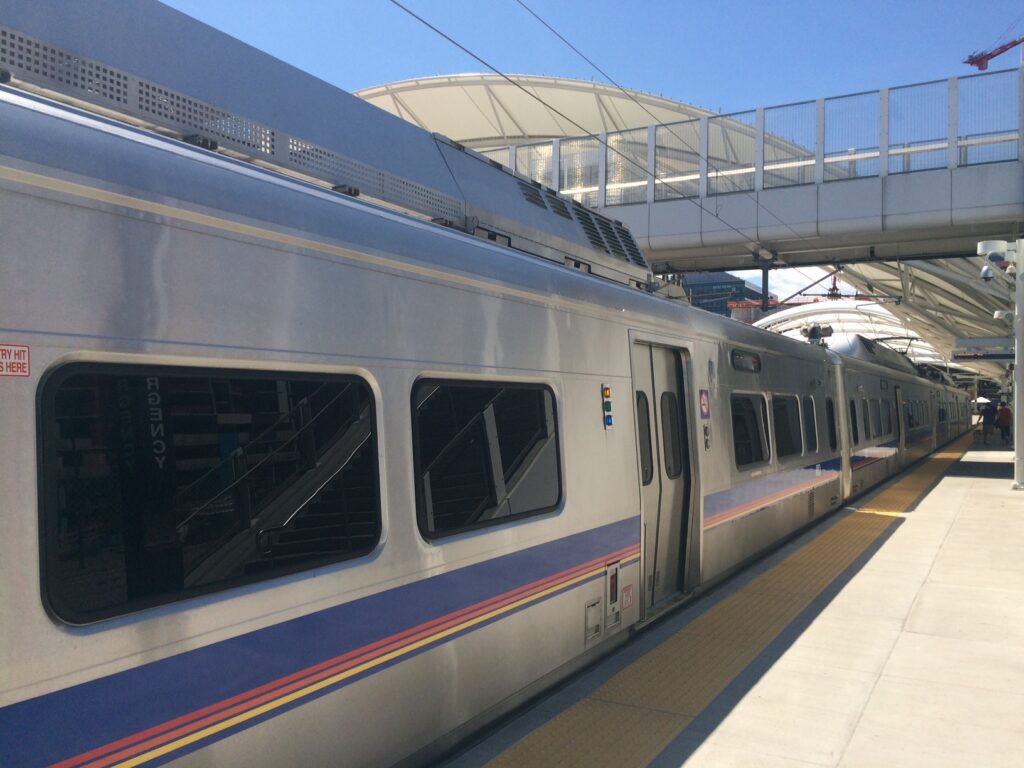
    An RTD A Line commuter train to Denver International Airport at Union Station
    The A Line at Union Station: the train that links downtown with DEN in under 40 minutes (Photo: Point00000 via Wikimedia Commons, CC BY-SA 4.0)

    Denver’s transit, explained

    The Regional Transportation District, RTD, runs the trains and buses across Denver and its suburbs. For a visit based downtown it is entirely adequate, and the rail network is extensive by the standards of Western cities; its limitation is frequency and coverage away from the rail lines, where buses can run every 30 minutes or less often, especially in the evenings and on weekends.

    Commuter rail and light rail

    Almost everything meets at Union Station. The commuter rail lines run from its train hall: the A Line to the airport, the B Line northwest toward Westminster, the G Line to Arvada and Wheat Ridge, and the N Line north toward Thornton. The light-rail network runs from Union Station and a loop through downtown out to the southern and western suburbs: lines serve the Denver Tech Center, Littleton and Lone Tree to the south, Aurora to the east, and the W Line runs west to Lakewood and Golden. For visitors, the most useful stops are Union Station, the downtown loop near the Convention Center and the Performing Arts Complex, the Ball Arena and Empower Field stops for games, and the A Line stops at 38th and Blake for RiNo. Check RTD’s map for current routes before you travel.

    Buses and the MallRide

    Buses fill in the rest of the city, including City Park and Cherry Creek. The free MallRide shuttle has traditionally run along the 16th Street pedestrian corridor between Union Station and Civic Center Station, which makes the length of downtown easy without a ticket; check its current routing, because the street has been through a long reconstruction. The Flatiron Flyer is a fast bus service along US-36 between Union Station and Boulder, and it is the easy way to reach Boulder without a car.

    Fares and tickets

    RTD simplified its fares in recent years into a standard local fare, which covers buses and trains across the system for a set period, and a separate higher fare for trips to or from the airport. Buy tickets through RTD’s mobile ticketing app or from the machines at rail stations, and check RTD’s site for day passes and the current payment options before you arrive. The biggest saving for families: riders 19 and under travel free on all RTD services under the youth zero-fare program. Seniors and riders with disabilities qualify for discounts.

    Accessibility

    RTD’s rail stations are step-free and its trains and buses are accessible, with ramps or lifts on buses and level or near-level boarding on the trains; RTD’s site lists elevator outages and paratransit details.

    Beyond RTD

    • Walking. Downtown, LoDo and the Highlands, linked by pedestrian bridges over I-25, are easy on foot, and RiNo is one train stop from Union Station.
    • The trails. The paved Cherry Creek Trail and South Platte River Trail meet at Confluence Park, just below LoDo, and run for miles, away from traffic. Shared e-bikes and e-scooters are widely available, and a bike is often the quickest way between downtown and Cherry Creek or Washington Park.
    • Taxis and ride-hail. Uber, Lyft and licensed taxis operate across the metro area; for a group, a short ride can beat transit on price and time.
    • Red Rocks shuttles. The amphitheater is not on RTD, but private shuttle services run from downtown and other pickup points on many concert nights.
    • The ski train. The Winter Park Express, run by Amtrak, has operated on winter weekends from Union Station through the Moffat Tunnel to a stop at the base of Winter Park Resort, a scenic ride of about two hours; check Amtrak for the current season.
    • Bustang and mountain shuttles. The Colorado Department of Transportation’s Bustang intercity coaches run from Union Station along I-70 to the mountain towns and on to Glenwood Springs and Grand Junction, with a seasonal service to several ski areas on winter weekends. Private companies run shuttles from DEN and downtown to Vail, Breckenridge, Keystone and other resorts.
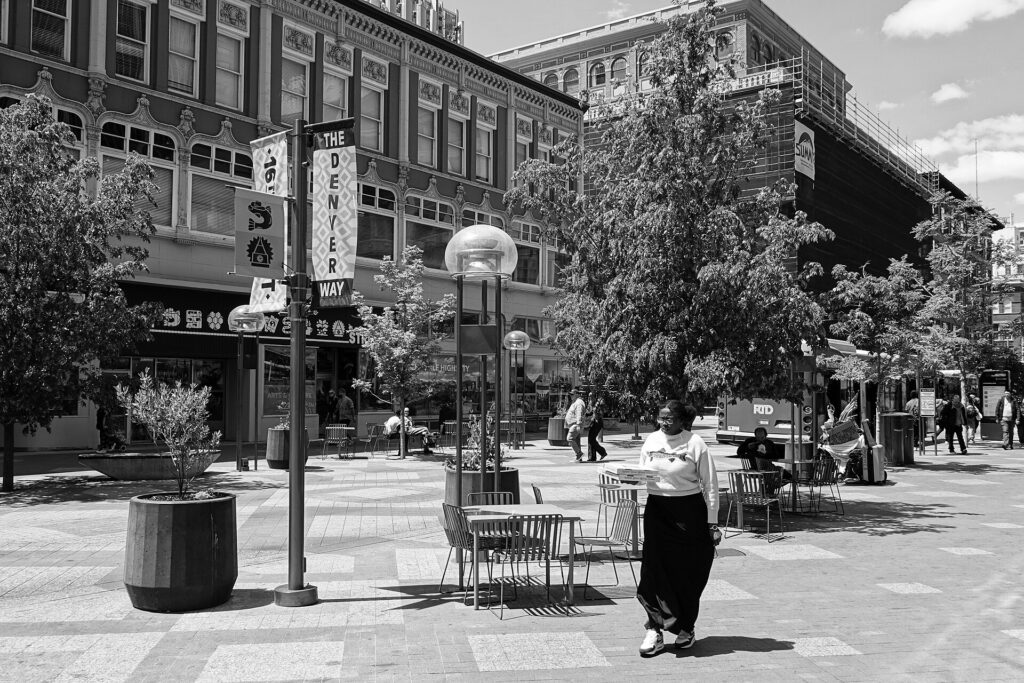
    The 16th Street pedestrian corridor through downtown Denver
    16th Street, the pedestrian spine of downtown Denver between Union Station and Civic Center (Photo: Scott McLeod via Wikimedia Commons, CC BY 4.0)

    Driving in Denver and beyond: what it is really like

    Within the city, Denver is a straightforward place to drive: wide roads, a logical grid outside downtown, and plentiful parking once you leave the core. I-25, the main north-south freeway past downtown, is congested every weekday morning and evening, and its interchange with I-70 north of downtown, known locally as the Mousetrap, is a daily bottleneck. Game days and concerts at Coors Field, Ball Arena and Empower Field back up the streets around LoDo and the I-25 exits, and parking near the venues becomes expensive. Toll roads are the other trap for visitors: E-470, the beltway on the east side that many drivers use to reach the airport, and several other express lanes are cashless and bill by license plate, and a rental company will pass the tolls on with its own fees, so ask about its toll program at the counter or set your navigation to avoid tolls. Peña Boulevard, the main road into the airport, is free.

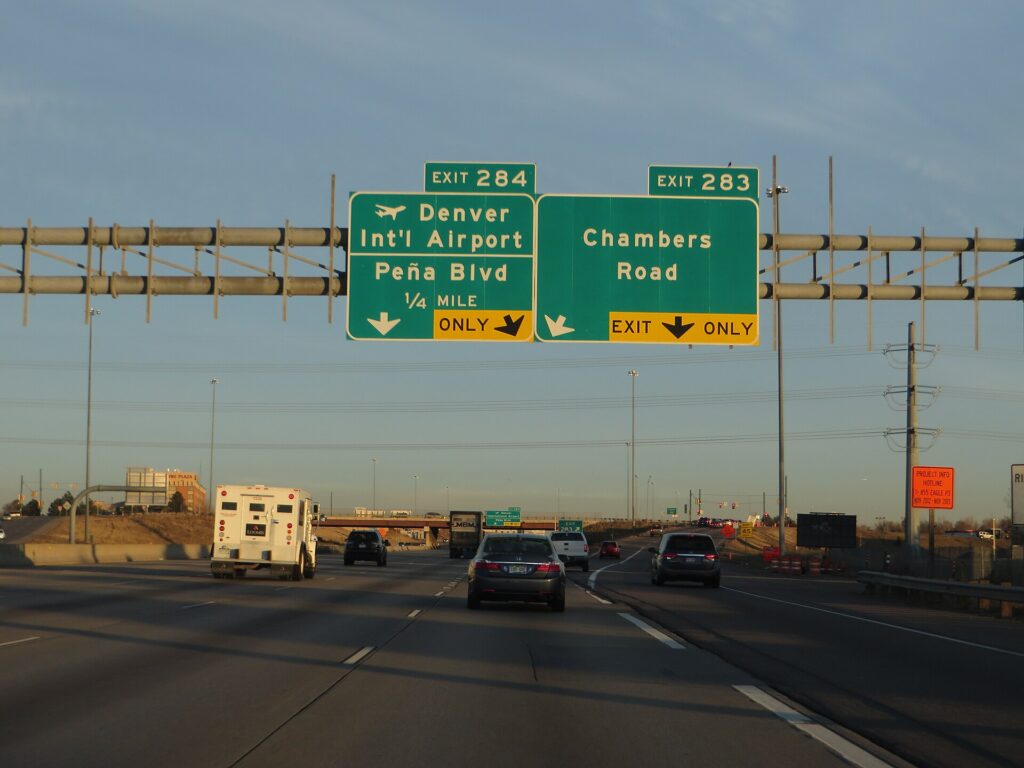
    Interstate 70 on the east side of Denver near the airport exit
    I-70 on Denver's east side, the same highway that carries weekend traffic into the mountains (Photo: Ken Lund from Reno, Nevada, USA via Wikimedia Commons, CC BY-SA 2.0)

    Parking

    Downtown Denver hotels charge a substantial nightly fee for parking, often valet only, and garages near Union Station, Larimer Square and the arenas are priced for commuters and event crowds. Street meters are paid by machine or app, and enforcement runs into the evening and on Saturdays on many blocks, so read the posted hours rather than assuming parking is free after six. Outside the core, parking is easy and often free. The mountain trailheads are a different story: the popular lots in Rocky Mountain National Park, at Hanging Lake and along the I-70 corridor fill early on summer weekends, and several now require reservations, which is one reason to start early.

    Rules and conditions worth knowing

    • Colorado’s traction law. On the I-70 mountain corridor west of Denver, a passenger-vehicle traction law applies during the colder months, generally from September through May, and CDOT can put it into effect on other mountain highways when conditions call for it. When it is in effect, cars need tires rated for mud and snow or winter tires with adequate tread, or four-wheel or all-wheel drive, or chains or an approved traction device. Fines are meaningful, and much higher if an unprepared car blocks the road. Ask the rental company for an all-wheel-drive car with suitable tires, and check that the rental agreement allows chains before you buy any.
    • Road conditions. COtrip, the Colorado Department of Transportation‘s traveler site and app, shows closures, chain and traction-law status and live cameras for every mountain pass; check it before you leave Denver, not when you reach the foothills.
    • Altitude and your car. Engines lose power in thin air, so expect slower climbs on the long grades up I-70, and on the way down, shift to a lower gear rather than riding the brakes; the signs warning truckers that they are “not down yet” apply to rental cars too. Fill up before the long mountain stretches.
    • Altitude and you. The I-70 corridor climbs above 3,000 m (10,000 feet) at the Eisenhower-Johnson Memorial Tunnel and Vail Pass. Headaches and drowsiness are common on a first day up high, so drink water and avoid a long mountain drive straight off a flight.
    • Hail and storms. The Denver area is one of the most hail-prone regions in the country, and summer afternoon storms can dent a car in minutes. Park under cover when storms are forecast, and understand what the rental’s damage waiver covers.
    • Wildlife. Deer and elk cross the foothill and mountain highways at dawn and dusk, and bighorn sheep often graze beside I-70 near Georgetown. Slow down, and never stop in a travel lane to photograph them.
    • Park reservations. Rocky Mountain National Park uses timed-entry reservations for much of the summer and early fall, and Mount Blue Sky requires a timed reservation for the summit road; book before you set off.
    • Cameras and turns. Photo radar and red-light cameras operate in Denver, and the rental company will pass on any fines. Right turns on red are permitted after a full stop unless signed otherwise.
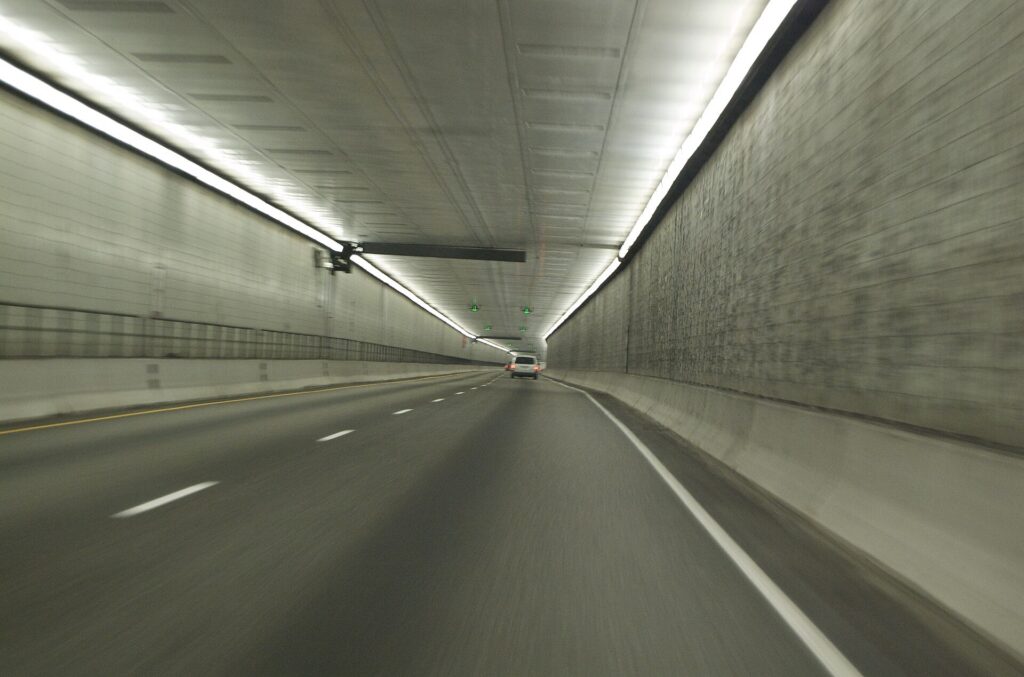
    The Eisenhower-Johnson Memorial Tunnel carrying I-70 under the Continental Divide
    The Eisenhower-Johnson Memorial Tunnel, where I-70 passes under the Continental Divide at about 3,400 meters (Photo: Benjamin Clark from Tallahassee, Florida, USA via Wikimedia Commons, CC BY 2.0)

    When renting a car makes sense

    • Rocky Mountain National Park. There is no public transit from Denver, the drive via Boulder or Loveland takes about two hours, and Trail Ridge Road is best done at your own pace; the town of Estes Park runs free summer shuttles once you arrive.
    • Skiing with a family. Gear, children and flexible timing all argue for a car, as long as it is all-wheel drive with suitable tires.
    • Colorado Springs, Pikes Peak and the Garden of the Gods. About 110 kilometers (70 miles) south on I-25; a day trip that needs a car.
    • Western road trips. Denver to Salt Lake City takes roughly eight hours, either over I-80 through southern Wyoming or along I-70 through Glenwood Canyon and eastern Utah; our Denver to Salt Lake City route guide covers the drive.

    If any of those apply, our rental car booking tips cover insurance, deposits and the questions to ask at the counter, and our family car rental guide looks at vehicle choice.

    When it does not

    • You are staying downtown or in LoDo and your plans are the city.
    • You are in town for a conference, a concert, a Rockies game or a Broncos game, when downtown and stadium parking are at their most expensive and the light rail stops at the gates.
    • You are heading to Winter Park, or a resort served by Bustang or a door-to-door shuttle, and will stay put once you arrive; most ski towns have free local buses.
    • You are traveling solo and the rental, fees, tolls and parking add up to more than the train and a few ride-hail trips.

    The hybrid plan for a city-plus-mountains trip

    Go car-free for the city days and rent for the mountain days, and think carefully about where you pick up. Renting at the airport makes sense if you are heading straight to the mountains on arrival, because E-470 and I-70 let you skirt most of the city, though the off-airport shuttle adds time and airport fees add cost. Renting from a city location makes sense if you are spending the first nights downtown, because you avoid the hotel parking on the nights you are not using the car. A pattern that works well: the A Line into Union Station, two or three car-free days in the city, a rental picked up from a city branch for the mountain days, and the car returned at the airport on the way to the flight home, which most companies allow for little or no extra charge. Book ahead for ski holidays and summer weekends, when all-wheel-drive cars run short, and confirm the tires if you are traveling between September and May. Compare the day rates on our Denver car rental page against a full-trip rental and the difference is usually obvious.

    A worked cost comparison

    Numbers change with the season and the booking window, so treat this as a method rather than a quote, and check current rates before deciding. For a four-night city break downtown for two people, the car-free version costs two return A Line fares, a few days of local transit and perhaps three or four ride-hail trips to Cherry Creek or the Highlands; the rental version adds four days of a compact car, four nights of hotel parking at downtown rates, fuel, toll fees if you take E-470, and airport concession charges, and buys you almost nothing you could not reach by train. The car-free option wins easily. For the same four nights with two days in the mountains, the car-free version adds return Bustang or shuttle tickets to a ski town for two; the hybrid version adds a two-day rental picked up in the city, fuel for the climb up I-70, and parking or resort fees. Priced honestly, the bus or shuttle is often cheaper for one or two people, the rental is usually cheaper for a family of four, and the rental wins on flexibility for Rocky Mountain National Park or an early trailhead. For a ski week at one resort, a door-to-door shuttle often beats a week’s rental plus resort parking. Run the rental rates for your dates on our Denver car rental page and put them beside the shuttle fares before you choose.

    Driving the I-70 mountain corridor in each season

    I-70 west of Denver is the only interstate route through the central Colorado Rockies, and it is both spectacular and demanding. From the foothills it climbs past Idaho Springs and Georgetown to the Eisenhower-Johnson Memorial Tunnel, which carries it under the Continental Divide at about 3,400 m (11,000 feet) and is among the highest vehicle tunnels in the world, then drops to the Summit County resorts and climbs again over Vail Pass. In summer, the problems are traffic and storms: westbound on Friday evening and Saturday morning and eastbound on Sunday afternoon, much of the metro area is on the road, and afternoon thunderstorms bring heavy rain, hail and occasional rockfall or debris-flow closures, most often in Glenwood Canyon farther west. In fall, the aspen weekends in September bring summer-style traffic back, and the first snow on the passes can arrive while Denver is still warm; the traction law starts applying from September. In winter, the highway is plowed and usually open, but storms can close the tunnel approaches or Vail Pass for hours, black ice forms in the shaded stretches even on sunny days, and ski traffic on weekend mornings and Sunday afternoons can turn a 90-minute drive into three hours or more. Leave early or travel mid-week, carry water, snacks and warm layers in case of a closure, and check COtrip before you set off. A peak-period express toll lane runs on part of the corridor near Idaho Springs and can save time on busy days. In spring, March and April bring some of the heaviest snowstorms of the year, so do not assume winter is over; by late May, the roads are usually clear but the high passes can still see snow.

    Decision table

    Your tripRecommendationWhy
    City break downtown or in LoDo, couple or soloNo carThe A Line, light rail and walking cover it; hotel parking is expensive
    Conference, concert or gameNo carEvent parking is costly and the light rail stops at the venues
    Rocky Mountain National ParkRent for those daysNo transit from Denver; the park and Trail Ridge Road need a car
    City plus a mountain day or twoHybrid: rent in the city for the mountain days, or take BustangCar-free city days, car or coach for the mountains
    Ski week at a single resortDoor-to-door shuttle, Bustang or the ski trainResorts have free local buses and parking costs extra
    Family ski trip with gearRent at the airport, all-wheel drive with suitable tiresGear, children, weather and the traction law all argue for a capable car
    Family visit to the suburbsRent for the whole staySuburban distances make the car worthwhile daily
    Western road tripRent (consider one-way to Salt Lake City)Denver is the start, not the destination

    Money-saving tips for both options

    • On transit: take the A Line rather than a taxi from the airport; buy a day pass for a heavy sightseeing day; riders 19 and under are free; use the free MallRide downtown when it is running.
    • On a rental: compare airport and city pickup, book early for ski holidays and summer, ask for all-wheel drive and suitable tires between September and May, decline extras you already have through a credit card or home policy (check first), understand the toll program before you drive E-470, and park under cover in hail season.
    • On the hotel: if you are renting, price the parking fee into the room rate.
    • On timing: avoid I-25 in the weekday peaks and I-70 westbound on Saturday mornings and eastbound on Sunday afternoons; the best time to fly to Denver guide lists the busiest weekends.
    • On the mountains: for one or two people staying in a single ski town, Bustang, the ski train or a shuttle usually costs less than a rental plus fuel and resort parking. Our car, transit or taxi guide covers the general trade-offs.

    Frequently asked questions

    Is it worth renting a car in Denver?

    For Rocky Mountain National Park, a family ski trip, the suburbs or a road trip, yes. For a downtown city break, a conference, a concert or a game, no; the train, light rail and your feet are enough.

    Is Denver public transit good for tourists?

    Good for the core and better than most Western cities: a train from the airport, light rail to the suburbs and Golden, and a free downtown shuttle. It thins out away from the rail lines, and it does not reach the mountains.

    How do I get from Denver airport to downtown?

    The A Line train to Union Station in under 40 minutes, or a taxi or ride-hail in 30 to 50 minutes depending on traffic.

    Can I get to the ski areas from Denver without a car?

    Yes. Private shuttles run from DEN to the major resorts, Bustang runs along I-70 with seasonal ski service, and the Winter Park Express train has run on winter weekends.

    Do I need four-wheel drive or snow tires to drive I-70 in winter?

    Colorado’s traction law requires suitable tires, four-wheel or all-wheel drive, or chains when it is in effect on the mountain corridor, generally from September through May. Ask for an all-wheel-drive rental and check the tires.

    Is parking expensive in downtown Denver?

    At hotels and near the stadiums, yes. Meters are enforced into the evening on many blocks, so check the posted hours.

    Does the altitude affect driving in the mountains?

    Your car will have less power on the climbs and needs lower gears on the descents, and you may feel tired or light-headed on your first day up high. Hydrate and do not push a long drive straight after a flight.

    Whichever way you go, start with the flight. Compare cheap flights to Denver, choose a neighborhood with our Denver hotel search, plan the city days with our first-timer’s guide to Denver, and if the mountains are on the list, price the rental for those dates on our Denver car rental page.

  • Things to Do in Denver: A First-Timer’s Guide

    Things to Do in Denver: A First-Timer’s Guide

    Denver gets treated as a runway to the mountains. Most visitors land at DEN, pick up a car and point it west on I-70, and they miss a city that has become one of the most enjoyable in the American West: a restored railroad station that doubles as the city’s living room, an art museum split between a titanium-clad Libeskind building and a Gio Ponti tower, mural-covered warehouse districts full of breweries and food halls, a concert venue carved out of red sandstone that musicians rank among the best on earth, and four major-league teams that all play within a few miles of downtown. And the Front Range is right there on the western horizon, with ski areas, hot springs and a national park within a couple of hours. This guide covers the sights that earn a day, the neighborhoods worth a half-day, the food and beer, the sports and the seasons, the day trips that make Denver a base as much as a destination, and the practical details, including the altitude, that turn a stopover into a trip.

    If you are still comparing cheap flights to Denver, read this alongside our guides to the best time to fly to Denver and whether you need a car (for the city itself, often not; for the mountains, usually yes). Between the three you can plan the whole trip.

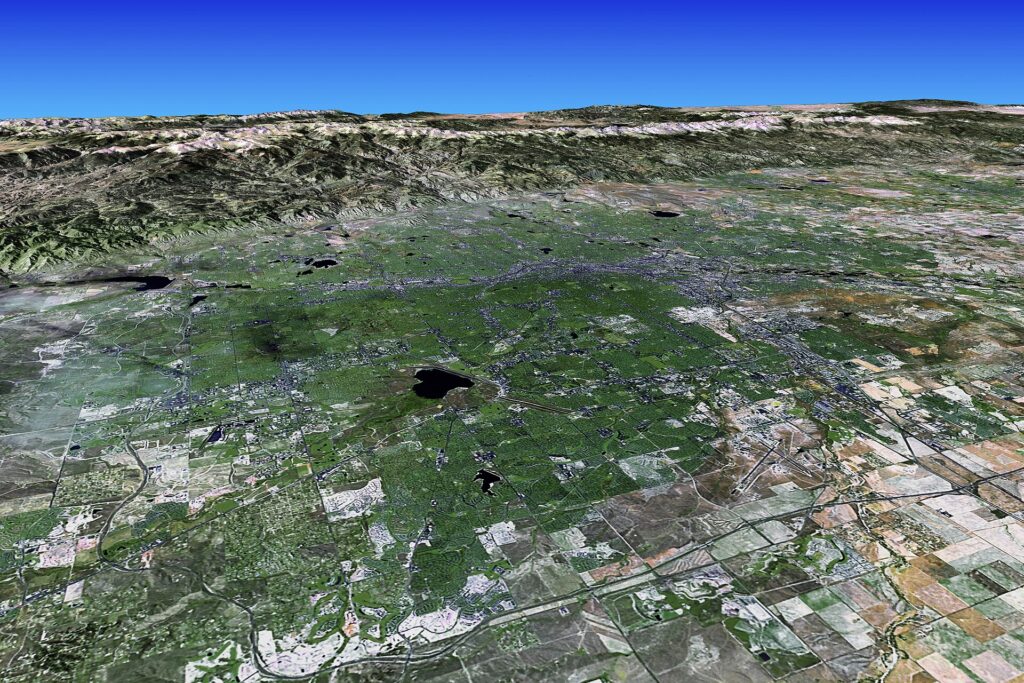
    The Denver skyline with the foothills of the Front Range beyond
    Downtown Denver on the high plains, with the Front Range on the western horizon (Photo: Thanks to Kevin Day for help in describing the image. Visualization by Earth Observatory. Landsat data and SRTM data coregistration provided by the Landsat Project Science Office at NASA’s Goddard Space Flight Center. via Wikimedia Commons, Public domain)

    Denver at a glance for first-timers

    • Airport: Denver International (DEN), on the plains about 40 km (25 miles) northeast of downtown, is one of the busiest airports in the world and a hub for United, Southwest and Frontier. The RTD A Line train runs from the terminal to Union Station in under 40 minutes. See our DEN airport guide.
    • Getting around: downtown, LoDo, the Highlands and RiNo are walkable, and RTD’s light rail and commuter trains link the center with the airport, the suburbs and Golden. For Red Rocks, Rocky Mountain National Park and the ski areas, most visitors rent a car. Our car-versus-transit guide explains when it helps.
    • Money: US dollars. Sales tax is added at the register rather than shown on the tag, and Denver’s combined rate is higher than the state figure you may have seen quoted; hotel taxes are higher again. Tipping 18 to 20 percent in restaurants is expected.
    • Altitude: the city sits about 1,600 m (5,280 feet) above sea level, and you will feel it more than you expect. Drink more water than usual, go easy on alcohol the first night, and wear sunscreen even in winter.
    • Weather: sunny, dry and changeable: hot summer days with afternoon thunderstorms, a long golden fall, winters milder than the mountains’ reputation suggests, and a snowy March. Our month-by-month guide has the detail.
    • Where to stay: LoDo for Union Station, Coors Field and the restaurants; downtown near the Convention Center for the 16th Street corridor and the theaters; Cherry Creek for shopping; the Highlands or RiNo for a neighborhood feel. Our Denver hotel search covers them all.

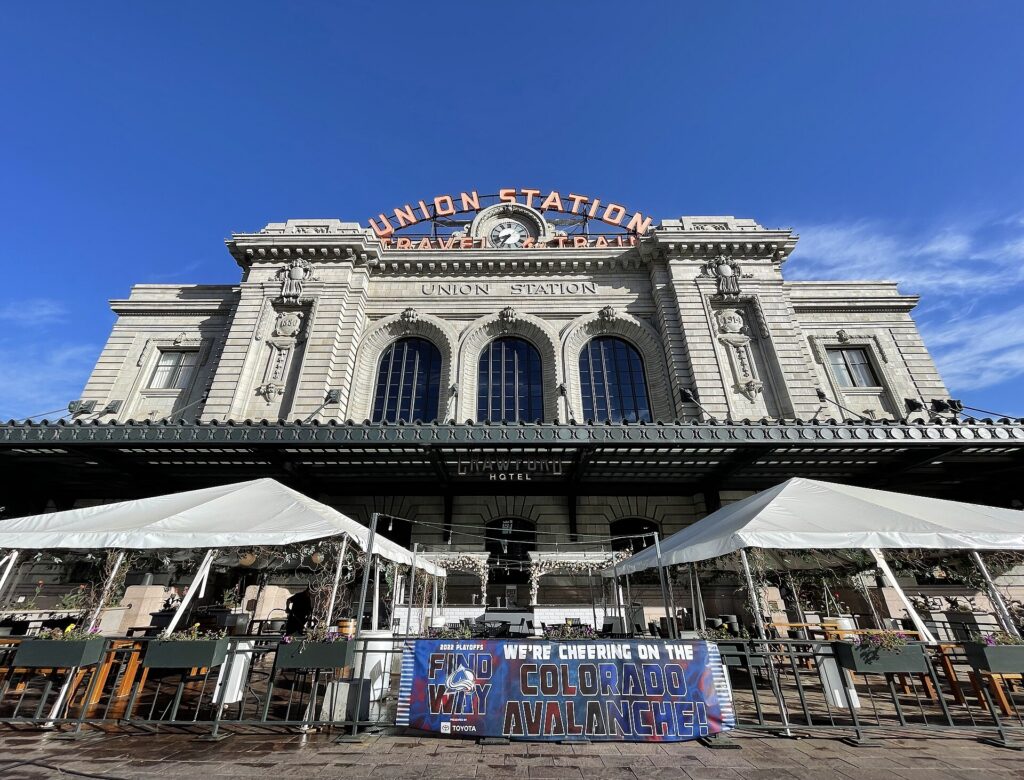
    Union Station, LoDo and Larimer Square

    Denver Union Station is where to start, and it is where many visitors arrive if they take the train from the airport. The Beaux-Arts building, opened in its current form in 1914, was restored in the 2010s into a hotel, a set of restaurants and bars, and a great hall with long communal tables and shuffleboard where locals meet after work; behind it, a white canopy covers the commuter rail platforms, and Amtrak’s California Zephyr still stops here on its run between Chicago and the Bay Area. Around it, LoDo, Lower Downtown, is the city’s historic warehouse district, now a grid of red-brick buildings filled with restaurants, rooftop bars and galleries, with the Dairy Block alley and its food hall a short walk away. Two blocks south, Larimer Square is Denver’s oldest block, a row of Victorian storefronts under strings of lights, with some of the city’s best-known restaurants and patios. Coors Field, home of the Colorado Rockies, anchors the northern edge of LoDo, and on game nights in summer the whole district fills with purple jerseys. It is the natural base for a first visit, and our LoDo hotel page lists what is available.

    The Beaux-Arts facade of Denver Union Station in LoDo
    Denver Union Station, restored as a hotel, food hall and the hub of the city's rail network (Photo: Missvain via Wikimedia Commons, CC BY 4.0)

    Downtown, the Capitol and the Golden Triangle

    From LoDo, the 16th Street pedestrian corridor runs southeast through downtown toward Civic Center Park; it has been through a long reconstruction, so check the city’s updates, but the free MallRide shuttle buses have traditionally run its length between Union Station and Civic Center Station. Along the way you pass the Daniels and Fisher clock tower and, a block off the mall, the Denver Performing Arts Complex, one of the largest performing arts centers in the country, with Broadway tours, the Colorado Symphony, Opera Colorado and the Denver Center Theatre Company under one glass roof. Nearby, a 12-meter (40-foot) blue bear sculpture presses its nose against the windows of the Colorado Convention Center and has become the city’s unofficial mascot. At the far end, the Colorado State Capitol faces the mountains from the top of Civic Center Park, with a dome covered in Colorado gold leaf; free tours run on weekdays, and a step on the west side is marked as one mile above sea level, which is where the Mile High City gets its name (later resurveys moved the exact mile a few steps higher, and both are marked). South of the park, the Golden Triangle holds the city’s densest cluster of museums and the Denver Public Library’s postmodern Central Library by Michael Graves.

    Museums: the Denver Art Museum and its neighbors

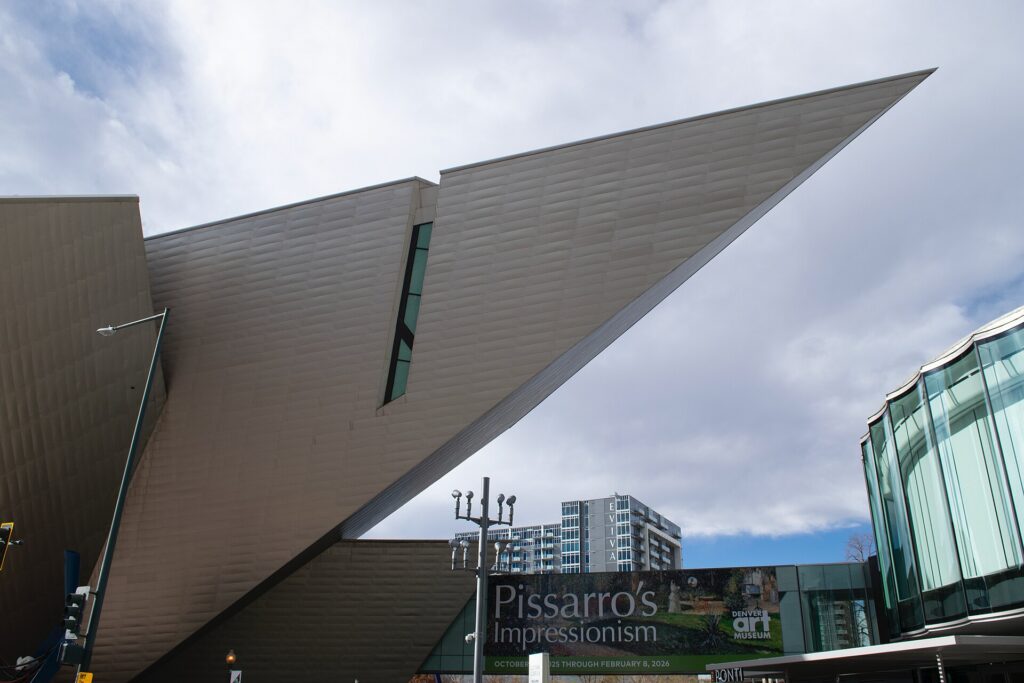
    The Denver Art Museum is the anchor, and its two buildings are reason enough to visit: the Hamilton Building, Daniel Libeskind’s sharp-angled titanium structure that looks like shards of rock, and the Martin Building, Gio Ponti’s castle-like tower clad in glass tiles, reopened after a major renovation. The collections are especially strong in Native American art, the art of the American West and pre-Columbian and Spanish colonial work, and the museum has long offered free general admission to visitors 18 and under. Next door, the Clyfford Still Museum is a quiet concrete building devoted entirely to one abstract expressionist painter, and it is one of the most affecting single-artist museums in the country. Across the street, the History Colorado Center tells the story of the state from Indigenous peoples and the gold rush to ski towns, with hands-on exhibits that suit children. A few blocks away, the U.S. Mint in Denver produces billions of coins a year and runs free guided tours that must be booked in advance.

    The angular titanium-clad Hamilton Building of the Denver Art Museum
    Daniel Libeskind's Hamilton Building, one half of the Denver Art Museum in the Golden Triangle (Photo: Daniel Hartwig via Wikimedia Commons, CC BY 4.0)

    City Park, the Botanic Gardens and the South Platte

    East of downtown, City Park is Denver’s biggest urban park, with lakes, a boathouse, and the view that sells the city: the downtown towers in the foreground and the whole Front Range behind them, best seen from the steps of the Denver Museum of Nature & Science late in the afternoon. The museum itself has excellent dinosaur and gems-and-minerals halls, a planetarium and an IMAX theater. The Denver Zoo shares the park and is one of the most visited in the country. A short drive or bus ride south, the Denver Botanic Gardens on York Street are among the best in the United States, with collections of plants from the world’s dry, high-altitude regions, a Japanese garden, a summer concert series, and Blossoms of Light over the winter holidays. Back toward downtown, Confluence Park marks the spot where Cherry Creek meets the South Platte River and where the city was founded during the 1858 gold rush; the paved Cherry Creek Trail and the South Platte River Trail start here and run for miles, and a bike ride along either is the easiest way to see how the city fits together. Washington Park, south of downtown, is the local favorite for running, paddleboarding and picnics.

    Neighborhoods worth a half-day

    RiNo, the River North Art District

    RiNo, just northeast of downtown along the rail lines, is Denver’s former industrial district turned into the city’s most energetic neighborhood. Almost every wall along Larimer Street and the side alleys carries a mural, many of them painted during the annual Crush Walls festival, and the old warehouses hold breweries, taprooms, galleries and restaurants. Denver Central Market, a food hall in a former warehouse, is a good place to start, and the district is a short walk, scooter ride or A Line stop from Union Station.

    The Highlands and LoHi

    Across the pedestrian bridges over I-25 from LoDo, the Highlands sit on a bluff with the best skyline views in the city. Lower Highlands, known as LoHi, is packed with restaurants, rooftop bars and Little Man Ice Cream, which serves from a building shaped like a giant milk can and draws lines on summer nights.

    Cherry Creek

    Denver’s upscale shopping district, a few miles southeast of downtown, has the Cherry Creek Shopping Center, a walkable grid of independent boutiques and galleries around it, and some of the city’s best hotels and restaurants. The Cherry Creek Trail links it with downtown by bike.

    South Broadway and Baker

    South Broadway is Denver’s vintage, record-store and dive-bar strip, with some of the best small music venues in the city and a steady supply of cheap, good food.

    Five Points and Colfax

    Five Points was once known as the Harlem of the West for its jazz clubs, and it remains the historic heart of Denver’s Black community, with the Blair-Caldwell African American Research Library, a revived restaurant scene and the Juneteenth Music Festival each June. East Colfax Avenue, one of the longest commercial streets in the country, runs past it through Capitol Hill, lined with theaters, diners and music venues including the Ogden and the Bluebird.

    Red Rocks Park and Amphitheatre

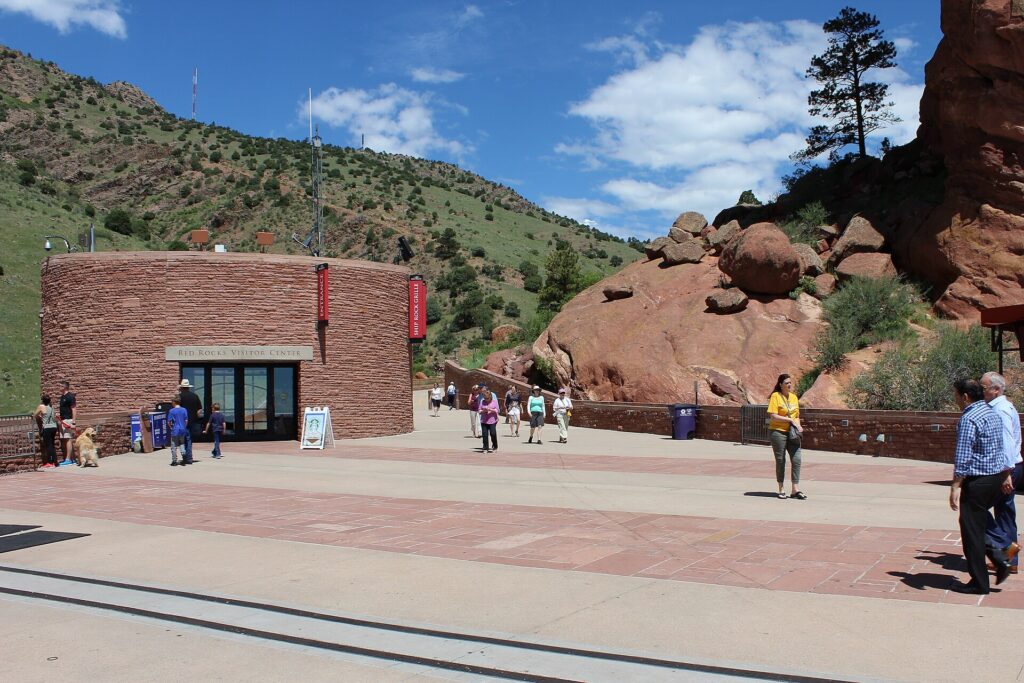
    If you do one thing outside the city, make it Red Rocks. About 25 km (15 miles) west of downtown in the foothills near Morrison, the amphitheater sits between two enormous tilted sandstone monoliths, with a stage framed by rock and a view back across the plains to the Denver skyline. It is owned by the City and County of Denver, it has hosted everyone from the Beatles to U2, and a concert there on a summer night is one of the great live-music experiences in America. The main concert season runs from spring to fall, and popular shows sell out quickly, so check our Denver events page as soon as your dates are set; the summer film series and the long-running Easter sunrise service are other ways in. On days without a show, the amphitheater and the surrounding park are open to the public: locals climb the stadium steps as a workout, the Trading Post Trail loops through the red rock formations, and the visitor center explains the geology and the venue’s history. Go early in summer and bring water. Without a car, shuttle services run from downtown on many concert nights.

    Red Rocks Amphitheatre set between sandstone monoliths in the foothills west of Denver
    Red Rocks Amphitheatre, about half an hour west of downtown and one of the great concert venues in America (Photo: Sarbjit Bahga via Wikimedia Commons, CC BY-SA 4.0)

    Sports

    Denver is one of the few American cities with teams in all four major leagues, and all of them play close to downtown. The Colorado Rockies play baseball at Coors Field in LoDo from spring to early fall; a row of purple seats in the upper deck marks exactly one mile above sea level, and the thin air helps fly balls carry, which is why the park stores its game balls in a humidor. The Denver Broncos play at Empower Field at Mile High, west of downtown across the South Platte, and Broncos Sundays in the fall are the city’s great shared ritual; tickets are hard to come by for big games. The Denver Nuggets (NBA) and the Colorado Avalanche (NHL), both recent champions, share Ball Arena, a short walk from Union Station. The Colorado Rapids play soccer in Commerce City, north of the city. For all of them, check what is on sale in Denver for your dates before you book flights.

    What to eat and drink, and where

    Three things define Denver’s food. The first is green chile: Colorado’s version is a pork-studded stew rather than a sauce, and it goes on burritos, eggs, burgers and fries, usually “smothered”. Every Mexican restaurant on Federal Boulevard and South Santa Fe Drive has an opinion about it, and you should try more than one. The second is beer: Denver is one of the great brewing cities in the country, the Great American Beer Festival takes over the Convention Center every fall, and RiNo, LoDo and the Highlands each have enough taprooms to fill an afternoon; Wynkoop, opposite Union Station, was the city’s first brewpub. The third is a restaurant scene that has grown fast enough that Colorado now has its own Michelin guide, with the most interesting kitchens concentrated in LoHi, RiNo, Larimer Square and along Tennyson Street. Beyond that: food halls, which Denver has more of than most cities its size, including Denver Central Market, Avanti in LoHi, the Milk Market in the Dairy Block and the Stanley Marketplace in a former aviation factory in Aurora; bison and Colorado lamb on steakhouse menus; Rocky Mountain oysters, the famous novelty that is not seafood, for the adventurous; and the Denver omelet, which the city claims as its own.

    Denver through the seasons

    Denver is a different city in each season, and what you do depends on when you come. Winter (December to February) is milder in the city than visitors expect: snow falls, then usually melts within a few days under the strong sun, and a sunny 10 °C (50 °F) afternoon in January is not unusual. It is ski season in the mountains, the Nuggets and Avalanche are at home, and the National Western Stock Show, a rodeo and livestock show that has run every January for more than a century, brings cowboys to the city for two weeks. Spring (March to May) is erratic: March is the snowiest month, and a warm, sunny week can end in a heavy snowstorm, but the parks green up by May and baseball starts. Summer (June to August) is hot, dry and bright, with afternoon thunderstorms; it is patio season in LoHi and RiNo, the best of the Red Rocks season, Denver PrideFest and the Juneteenth Music Festival, and the only reliable time for the high mountain roads and trails. Fall (September to October) is the local favorite: warm days, cool nights, clear skies, the aspens turning gold in the mountains in the second half of September, the Great American Beer Festival, and the Broncos. Our month-by-month guide has the fare patterns that go with each season.

    Denver with kids

    Denver is an easy city with children, helped by the fact that RTD’s buses and trains are free for riders 19 and under. The Denver Museum of Nature & Science, with its dinosaurs and planetarium, and the zoo, next door in City Park, make an obvious full day together. The Denver Art Museum’s free youth admission and hands-on family spaces, the History Colorado Center’s interactive galleries, and the Children’s Museum of Denver at Marsico Campus, near the Downtown Aquarium and the Elitch Gardens amusement park along the South Platte, fill another. In summer, the pedal boats on Ferril Lake in City Park and the playgrounds and lawns of Washington Park are cheap and easy, and a Rockies game, from the inexpensive Rockpile seats in center field, suits young children. Red Rocks on a non-concert morning, the bison herd at the Rocky Mountain Arsenal National Wildlife Refuge near the airport, and the Georgetown Loop Railroad in the mountains are the best short outings. For a family road trip into the mountains, our family car rental guide covers the vehicle question.

    Denver on a budget

    Much of the best of Denver is free or nearly so: the Capitol tour, Union Station’s great hall, the murals in RiNo, the U.S. Mint tour, the City Park view, the river trails, Red Rocks on a non-show day, and the free MallRide shuttle downtown when it is running. Several of the big museums and the Botanic Gardens offer free days for Colorado residents during the year, which also means busier galleries on those days, so check each site. Eat well for less on Federal Boulevard, in the food halls and on South Broadway, and at taprooms that host food trucks. Hotel rates in Denver swing widely with conventions, concerts and ski weekends, and mid-week stays outside summer are usually the best value; the A Line from the airport is much cheaper than a taxi. Compare rates by neighborhood on our Denver hotel search.

    Day trips from Denver

    Boulder, about 40 km (25 miles) northwest and reachable by RTD’s Flatiron Flyer bus, has the Flatirons, the hiking trails from Chautauqua Park and the Pearl Street pedestrian mall. Golden, at the end of RTD’s W Line, has the Coors brewery, the Colorado School of Mines and the road up Lookout Mountain to Buffalo Bill’s grave. Rocky Mountain National Park, about two hours northwest via Estes Park, is the headline trip: alpine lakes, elk herds and Trail Ridge Road, one of the highest continuous paved roads in the country, open roughly from late May to mid-October depending on snow; the park uses a timed-entry reservation system for much of the summer and early fall, so check the National Park Service site before you go. Along I-70, Idaho Springs has hot springs and a historic main street, Georgetown has the Georgetown Loop Railroad, and the ski towns of the Summit County area are about 90 minutes away in good conditions. Mount Blue Sky, formerly Mount Evans, has one of the highest paved roads in North America, open in summer with timed reservations. South on I-25, Colorado Springs, about 110 km (70 miles) away, has the red rock formations of the Garden of the Gods and the road and cog railway up Pikes Peak. Most of these are car trips; see our Denver car rental page, and read our car-versus-transit guide before you drive mountain roads in winter. For a longer road trip, our Denver to Salt Lake City route guide covers the drive west. Colorado’s official tourism site covers the wider state.

    Two sample itineraries

    Two days, no car

    Day one: the A Line into Union Station, a coffee in the great hall and a walk through LoDo and Larimer Square in the morning, the Denver Art Museum and the Clyfford Still Museum in the Golden Triangle, the Capitol and its mile-high step in the late afternoon, and dinner in LoHi after walking across the bridges. Day two: the murals and breweries of RiNo in the morning, lunch at Denver Central Market, City Park and the Museum of Nature & Science in the afternoon with the sunset view from the steps, and a Rockies, Nuggets or Avalanche game at night.

    Four days, with Red Rocks and the mountains

    Add a morning at Red Rocks and an afternoon in Golden, then pick up a car for a day in Rocky Mountain National Park via Boulder, or a day along I-70 to Georgetown and Idaho Springs, and finish with a Red Rocks concert if the calendar allows, returning the car at the airport on the way home.

    Practical details

    • Transit: buy tickets through RTD’s mobile ticketing app or at station machines; riders 19 and under travel free. RTD has maps, fares and service alerts; our transit-versus-car guide goes into detail.
    • From DEN: the A Line to Union Station, a taxi or ride-hail, or a rental from the off-airport lots by shuttle. The airport’s site covers ground transport.
    • Weather: layers in every season, sunscreen and sunglasses year-round, a rain shell for summer afternoons, and a warm coat from November to March. NOAA’s National Weather Service office for Denver and Boulder has the forecast.
    • Altitude: most visitors feel nothing worse than thirst and faster tiredness, but headaches and shortness of breath are common in the first day or two, and more so in the mountains above 2,500 m (8,000 feet). Hydrate, take it easy the first day, and see a doctor if symptoms are severe.
    • Time zone: Mountain, two hours behind New York and one ahead of Los Angeles.
    • Entry requirements: visitors from Visa Waiver Program countries need an approved ESTA before boarding; most others need a visa. The State Department’s travel site is the authoritative source.
    • Safety: the areas visitors spend their time in are busy and generally safe; use ordinary big-city awareness downtown late at night, and in the mountains, respect afternoon lightning and check conditions before hiking.

    Frequently asked questions

    How many days do you need in Denver?

    Two full days covers LoDo, the Golden Triangle museums, RiNo and City Park; add a day for Red Rocks and Golden, and one or two more for Rocky Mountain National Park or the ski areas.

    What is the number one thing to do in Denver?

    A concert at Red Rocks, if the calendar allows. Otherwise, the Denver Art Museum in the morning and the sunset view of the Front Range from City Park.

    Is Denver walkable?

    Downtown, LoDo, Larimer Square, the Highlands and RiNo are, and the light rail links them with the suburbs. The rest of the metro area assumes a car.

    Do I need a car in Denver?

    Not for the city. For Red Rocks outside concert shuttles, Rocky Mountain National Park and the mountains, yes; rent it for those days only.

    Does the altitude affect visitors?

    Mildly, for most people: expect to get thirsty and tired faster, and to feel alcohol more. Symptoms are more likely higher up in the mountains than in the city.

    What is Denver known for?

    The mile-high elevation, the Rocky Mountains on the horizon, Red Rocks, craft beer, green chile, the Broncos, and one of the sunniest, most outdoor-minded populations in the country.

    Ready to go? Compare flights to Denver, find a place to stay with our Denver hotel search, and if the mountains are on the list, price a rental car for those days.