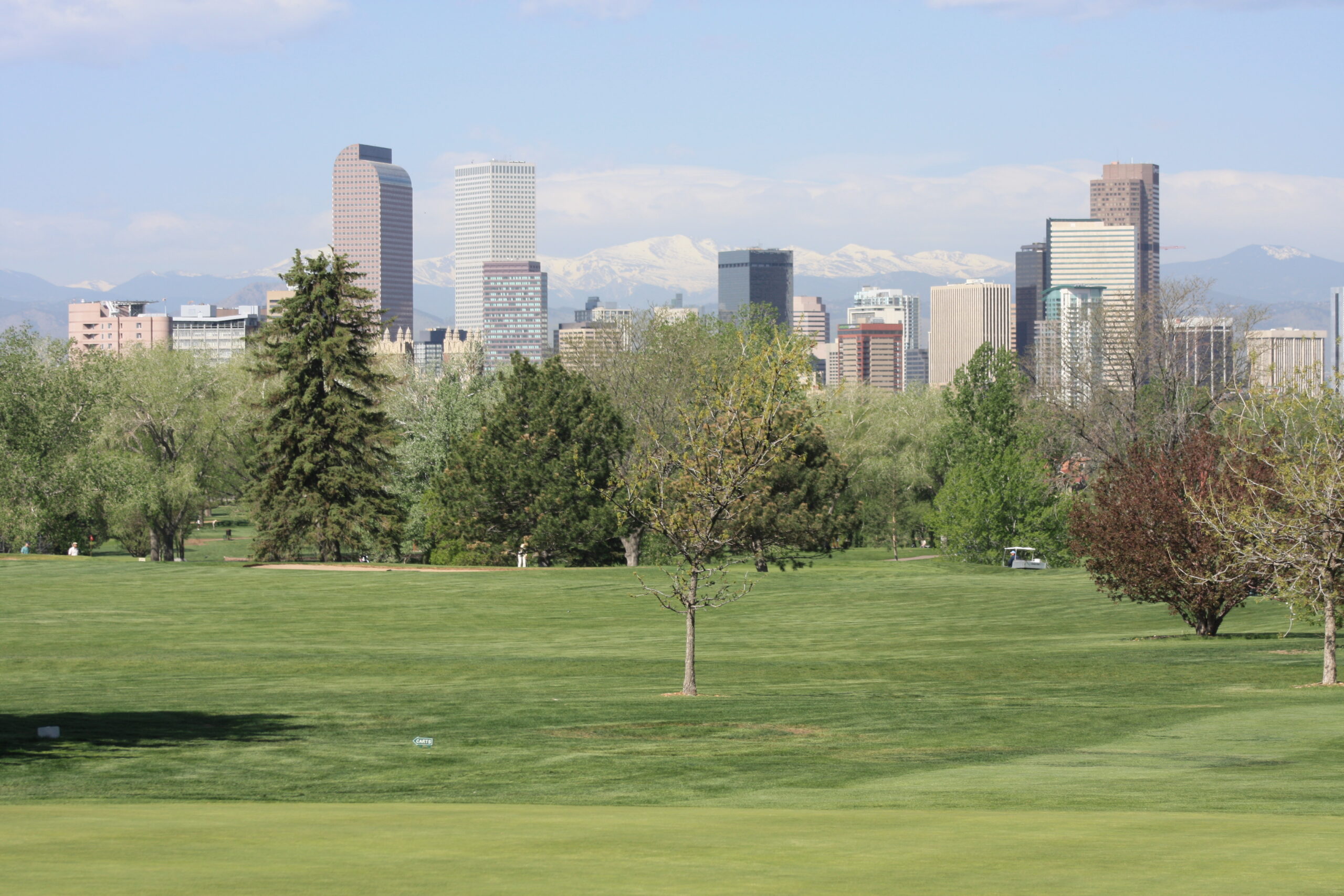
Denver is two destinations in one, and its airfares reflect both. It is a sunny, fast-growing city a mile above sea level, with a summer concert season at Red Rocks, four major-league teams, a January stock show that has run for more than a century, and a steady diet of conventions that can fill downtown hotels mid-week. It is also the gateway to the Colorado Rockies, with ski areas, Rocky Mountain National Park and the I-70 mountain towns within two hours, which means demand for seats into Denver tracks the ski calendar and the summer hiking season as much as the city’s own. Add a climate that can deliver a 20 °C (68 °F) afternoon in February and a snowstorm in May, and you have a place where the “best time” question has more than one right answer. The good news is that Denver International is one of the busiest airports in the world and a hub for three competing airlines, so fares are often lower than you would expect for a destination this popular. This guide walks through the weather month by month, the fare seasons, the events and mountain windows that move prices, and how to handle the airport.
The short answer
For the city alone, the best value-and-weather windows are September to mid-October, when the summer crowds have gone, the weather is often the most settled of the year and the aspens turn gold in the mountains, and late April to May, before the summer peak, as long as you accept the risk of a spring snowstorm. For the mountains in summer, late June to mid-September is the window when the high roads and trails are reliably open. For skiing, January and early February outside the holiday weekends give the best mix of snow and price. The cheapest fares tend to come in January after New Year, in early November before Thanksgiving, and in the spring shoulder once ski season winds down. The most expensive stretches are June to August, the Christmas and New Year ski weeks, Presidents’ Day weekend and the March spring-break weeks, when skiers from across the country converge on DEN. Whatever you choose, run a flexible-date search on our Denver flights page; with this much competition on most routes, a shift of a few days can change the fare band entirely.

Denver’s weather, season by season
Denver sits on the high plains at the foot of the Front Range, about 1,600 m (5,280 feet) above sea level, in the rain shadow of the mountains. That gives it thin, dry air, an enormous amount of sunshine, big swings between day and night, hot summers with afternoon thunderstorms, and winters where snow often melts within days. The figures below are approximate seasonal patterns based on the long-term climate normals from NOAA’s National Weather Service office for Denver and Boulder; check the current forecast before you pack, because Denver’s weather can change by 20 degrees in a day, and the mountains an hour away are always colder than the city.
| Month | Typical daytime high | Typical overnight low | What it feels like | Fare pressure |
|---|---|---|---|---|
| January | around 7 °C (44 °F) | around -8 °C (17 °F) | Sunny and cold; snow comes and melts; occasional Arctic snaps | Low after New Year, rising for ski weekends |
| February | around 8 °C (46 °F) | around -7 °C (19 °F) | Similar; warm spells alternate with snow | Low to moderate; Presidents’ Day spike |
| March | around 13 °C (55 °F) | around -3 °C (26 °F) | Usually the snowiest month, with big spring storms between mild days | High during spring-break weeks |
| April | around 16 °C (61 °F) | around 0 °C (32 °F) | Changeable; sunny and warm one day, wet snow the next | Moderate, falling as ski season ends |
| May | around 22 °C (71 °F) | around 6 °C (42 °F) | Green and pleasant; storms and late snow still possible | Moderate; rises for Memorial Day |
| June | around 28 °C (83 °F) | around 11 °C (51 °F) | Warm and dry, with afternoon thunderstorms and hail | High |
| July | around 32 °C (90 °F) | around 14 °C (58 °F) | Hot days, cool nights, daily storm risk in the mountains | Peak |
| August | around 31 °C (87 °F) | around 13 °C (56 °F) | Hot and mostly dry; wildfire smoke possible in some years | High, easing late in the month |
| September | around 26 °C (79 °F) | around 8 °C (47 °F) | Often the best month: warm, dry and clear; aspens turn gold | Moderate, falling after Labor Day |
| October | around 18 °C (65 °F) | around 2 °C (35 °F) | Crisp and sunny; the first snow usually arrives | Low to moderate |
| November | around 11 °C (52 °F) | around -4 °C (24 °F) | Cooling fast; ski areas open through the month | Low, then high for Thanksgiving |
| December | around 7 °C (44 °F) | around -8 °C (17 °F) | Cold, bright and festive; the mountains are in full winter | Moderate early, then peak for the holidays |
Three things the table cannot show. First, the sun: Denver’s boosters like to claim 300 days of sunshine a year, and while the real figure depends on how you count a sunny day, it is one of the brightest big cities in the country, and at this altitude the sun burns faster, even in January. Second, the swings: dry air means temperatures can drop 15 to 20 degrees between mid-afternoon and midnight, and a warm, dry downslope wind off the mountains can lift a winter day well above the average, while an Arctic front can do the opposite in a few hours. Third, the mountains: the ski towns and national park an hour or two away sit 900 to 1,800 m (3,000 to 6,000 feet) higher than the city, so they are 10 degrees or more colder, can see snow in any month, and in summer are hit by afternoon lightning storms that make an early start on any hike essential.
How Denver’s fare seasons work
Three calendars drive seats into Denver: the mountains, which pull skiers from December to early April and hikers and road-trippers from June to September; the city’s own events, from the Stock Show in January to the Red Rocks concert season and Broncos football in the fall; and conventions and business travel, which keep weekday flights busy year-round. Layered on top is the airport’s role as a connecting hub: United, Southwest and Frontier all run large operations at DEN, and many travelers pass through without ever leaving the terminal. That competition helps keep fares into Denver lower than into many smaller mountain airports, which is why skiers bound for Vail or Breckenridge often fly here and drive. The result is a summer peak, a winter that is busy around the holidays but soft in between, and two good-value shoulders.
Peak season
June to mid-August, plus roughly December 20 to January 2, Presidents’ Day weekend in February and the mid-March spring-break weeks. Summer is driven by vacations, national park trips and Red Rocks, and hotel rates in the city and the mountains climb together. The winter peaks are ski traffic: flights from Texas, the Midwest and the coasts fill with families carrying boot bags, and rental cars with four-wheel drive become scarce. If you must travel in peak, book early, fly mid-week, and reserve the rental car at the same time as the flight.
Shoulder season
Late April to May and September to October. The city is at its most pleasant, the summer and ski crowds are absent, and fares are moderate. The mountains are between seasons in the spring, when locals call it mud season: the ski areas are closing, the high trails are still under snow, and some mountain restaurants and hotels close for a few weeks. In the fall the aspen color in the second half of September draws weekend crowds to the mountain towns, but the city itself stays reasonably priced. Watch Memorial Day, Labor Day and home Broncos weekends.
Low season
Early January after the holidays, parts of early February outside the ski weekends, and November before Thanksgiving. Fares are at their lowest, the city is sunny and cold, and the ski areas are open, often with good snow in January. Build a weather buffer into connections, because snowstorms can briefly shut down the airport or I-70.
As elsewhere, mid-week departures and early or late flights usually price below Friday and Sunday afternoons on the same route, and a search across a whole month reveals cheaper pairs of dates close to your first choice. Our guide to the best times to book explains how to read those patterns.
Denver month by month
January
After New Year’s week, one of the cheapest months to fly. The city is sunny and cold, with snow that usually melts within a few days, and the ski areas are in prime condition. The National Western Stock Show, a rodeo, horse show and livestock exhibition that runs for about two weeks from early January, fills hotels near the grounds and brings a Western atmosphere to the city; the Stock Show’s site has dates. The Nuggets and Avalanche are at home, and Martin Luther King Jr. weekend is a busy ski weekend.
February
Similar weather, more daylight, and low fares outside Presidents’ Day weekend (the third Monday of February), one of the busiest ski weekends of the year. Warm spells are common, so pack for both a snowstorm and a sunny patio. A city-plus-skiing trip is strong value in the first half of the month.
March
Usually Denver’s snowiest month, with big, wet spring storms between mild days, and the mountains often at their deepest snowpack. It is also spring-break season: college students and families from Texas and the Midwest fill flights and ski lodges for most of the month, and fares and rental rates rise with them. The St. Patrick’s Day parade downtown is one of the largest in the West. Book around the spring-break weeks and March can still be good value.
April
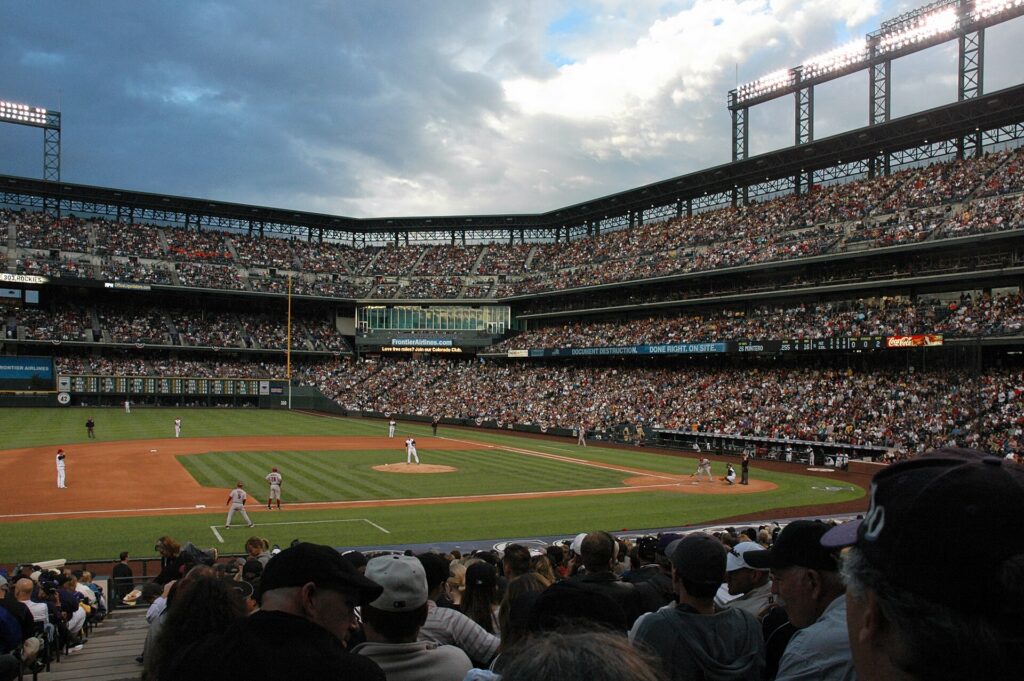
Changeable: warm and sunny one day, wet snow the next. Most ski areas close during the month, though some high-elevation resorts run later; hotel rates in the city fall noticeably; baseball season opens at Coors Field, and the Nuggets and Avalanche playoffs can tighten downtown hotels on game nights in a good year. The first shows of the Red Rocks season begin.
May
Spring arrives properly. The parks turn green, patios open across LoHi and RiNo, and Red Rocks gets busy. The mountains are in mud season, with high trails still snowbound and some mountain businesses closed. Memorial Day weekend (the last Monday of May) is the one date to book around. Fares are moderate, and the first half of May is one of the better value windows for the city.
June
Warm, dry and long, with afternoon thunderstorms and the year’s highest hail risk; Denver sits in one of the most hail-prone parts of the country, so park a rental under cover when storms are forecast. Denver PrideFest and the Juneteenth Music Festival in Five Points fill the calendar, the high mountain roads start opening, and fares step up from the second week as school holidays begin.
July
Peak season. Days are hot, nights are cool, and the mountains are at their greenest, with wildflowers in the high meadows and Trail Ridge Road in Rocky Mountain National Park fully open. The park uses a timed-entry reservation system for much of the summer, so reserve a slot through the National Park Service before you travel. Red Rocks has shows most nights, the Rockies are at home, and hotel rates are at or near their annual high.
August
Hot and busy, with the last big family travel weeks of the summer. Wildfire smoke from fires elsewhere in the West can haze the skies for days in some years. The last week or two, once schools in Colorado and neighboring states restart, is slightly softer on prices, and the mountains are still at their summer best.
September
The month many locals would send you to: warm, dry afternoons, cool nights, clear skies and the city emptied of summer visitors after Labor Day. In the mountains, the aspens turn gold, usually peaking in the second half of the month, which fills the mountain towns and scenic byways on weekends. Fares are moderate and falling.
October
Crisp, sunny days, the first snow in the city usually by the end of the month, and steadily lower prices. The Great American Beer Festival, held in the fall at the Colorado Convention Center, draws brewers and drinkers from across the country and pushes downtown hotel rates up for its dates; check the festival’s site, because its exact timing has varied between September and October. Some high-elevation ski areas open late in the month.
November
Winter arrives, more ski areas open, and fares and hotel rates are low until the week of Thanksgiving (the fourth Thursday), when family travel pushes them up for a few days. The Nuggets, Avalanche and Broncos are all in season, and the Denver Film Festival fills the city’s screens in early November.
December
Two months in one. The first half is moderately priced, with the Parade of Lights downtown on the first weekend, the holiday market in Civic Center Park, and the mountains building their snowpack. From about December 20, fares, hotel rates and rental car prices jump for the Christmas and New Year ski weeks, which are among the most expensive of the year in the ski towns and at DEN.
Events that move Denver flight and hotel prices
Cross-check these against your dates before you book. Exact dates shift each year; Visit Denver keeps the current calendar.
- National Western Stock Show (about two weeks from early January).
- Martin Luther King Jr. and Presidents’ Day weekends (third Mondays of January and February): major ski weekends.
- Spring break (most of March, varying by school and state): the biggest ski-travel spike outside the holidays.
- Memorial Day, the Fourth of July and Labor Day: the summer’s busiest travel weekends.
- Denver PrideFest (a weekend in late June) and the Juneteenth Music Festival in Five Points.
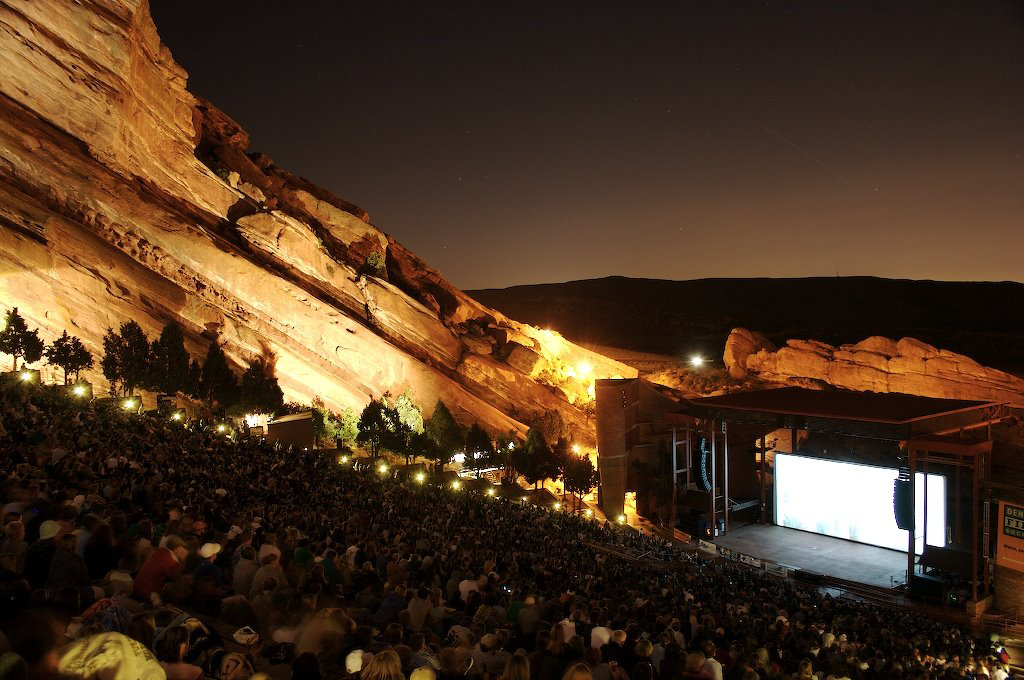
- Red Rocks concerts (spring to fall), which fill hotels on the nights of the biggest shows. Our Denver events page shows what is on sale for your dates.
- Broncos home games (September to January), plus Nuggets and Avalanche playoff runs in spring.
- Great American Beer Festival (early fall).
- Thanksgiving, Christmas and New Year, and the ski weeks around them.
- Large conventions at the Colorado Convention Center, which can fill downtown hotels on weeknights; if mid-week rates look strangely high, that is usually why.
Getting in from the airport
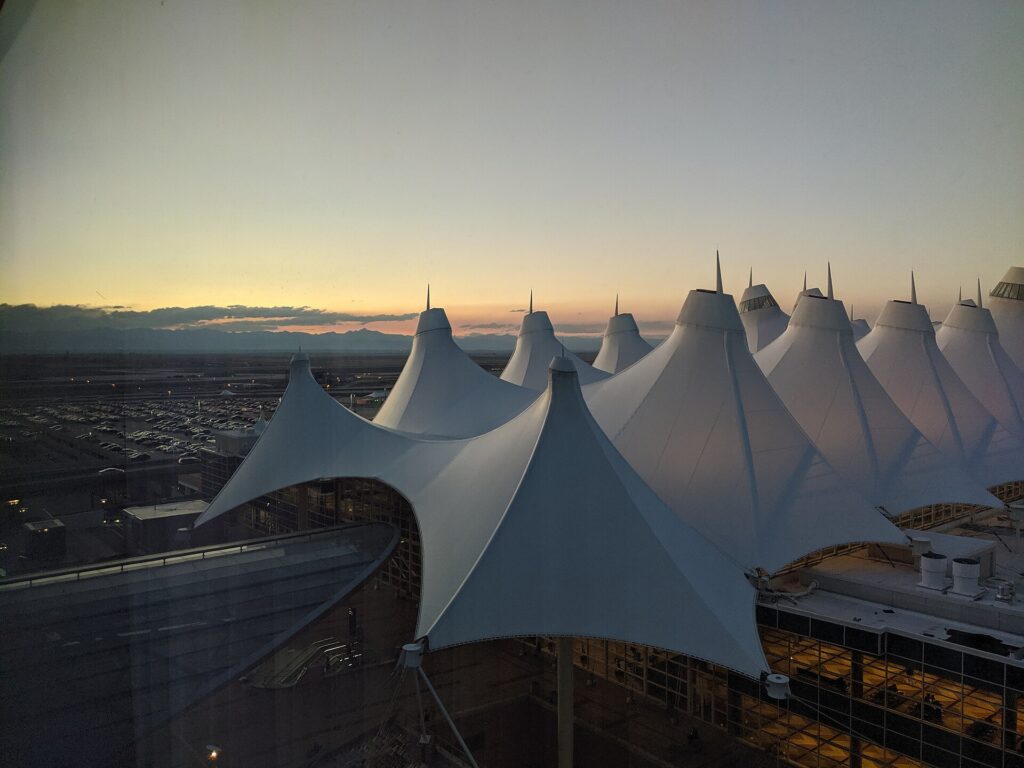
Denver International Airport (DEN) sits on the open plains about 40 km (25 miles) northeast of downtown, and its white, peaked tent roof, designed to echo the snow-capped Rockies, is visible for miles. It is one of the largest airports in the world by land area and consistently one of the busiest by passengers, with a single main terminal and three concourses linked by an underground train. United runs a major hub here, Southwest has one of its largest operations, and Frontier is based in Denver; there are nonstop flights from almost every large U.S. city, from Canada and Mexico, and from several European and Asian hubs including London, Frankfurt, Munich, Reykjavik and Tokyo. Getting downtown: RTD’s A Line commuter train runs from a station at the south end of the terminal to Union Station in under 40 minutes, every 15 minutes for most of the day, and is by far the easiest option for a city stay. Taxis and ride-hail pick up on the terminal’s ground-transport level, and the drive downtown takes 30 to 50 minutes depending on traffic. Rental car companies are mostly off-airport, reached by shuttle buses from the terminal, so allow extra time both ways. Our Denver car-versus-transit guide works through whether you need a car, and our DEN airport guide covers the layout.
Timing tricks that work for Denver
- Search the whole month. Ski weekends, spring break and the big summer holidays create sharp edges in the fare calendar. A calendar search on TicketScanner shows them instantly, and the week after a holiday is often a bargain relative to the week of it.
- Price the rental with the flight in ski season. Around Christmas, Presidents’ Day and spring break, all-wheel-drive rentals at DEN sell out and rates climb. Check our Denver car rental page for the same dates before you commit to the fare.
- Book the hotel early for big weekends. A cheap fare is not cheap once a convention-week or concert-night room is added. Run a Denver hotel search for the same dates first.
- Fly mid-week. Ski travelers leave on Friday and Saturday and return on Sunday, and business travelers fill Monday mornings and Thursday evenings; Tuesday and Wednesday in the middle of the day are usually the value.
- Use the hub competition. With United, Southwest and Frontier all fighting for Denver traffic, compare all three, and remember that the cheapest fares may carry bag and seat fees that change the total.
- Consider a road trip. Salt Lake City, about eight hours west by car, has its own big airport, and flights to Salt Lake City can make a one-way Rockies road trip work; our Denver to Salt Lake City route guide covers the drive.
- Build a winter buffer. Spring snowstorms in March and April are more disruptive at DEN than midwinter cold, and summer thunderstorms cause afternoon delays. Avoid the tightest connections, and see our guide to how early to arrive for what to allow.
- Flying out of Denver instead? The same seasonality applies in reverse; see cheap flights from Denver.
What to pack, by season
Winter (December to February): a warm coat, a hat, gloves, boots with grip, and layers, because a 10 °C (50 °F) sunny afternoon can follow a frigid morning; for the mountains, full ski or snow gear. Spring (March to May): layers, a waterproof jacket and shoes that can handle slush, because a snowstorm is always possible. Summer (June to August): light clothing, a warm layer for cool evenings and for Red Rocks after dark, a rain shell for the afternoon storms, and serious sun protection. Fall (September to October): layers again, a warmer jacket by late October, and sunglasses year-round. In every season, bring a refillable water bottle and lip balm; the air is dry and the altitude makes you thirsty.
The best time to fly to Denver for…
Skiing
January and early February for snow and value, March for deep snow and longer days if you avoid the spring-break weeks, with the Christmas weeks and Presidents’ Day the most expensive.
Rocky Mountain National Park and summer hiking
Late June to mid-September, when Trail Ridge Road and the high trails are open; reserve timed entry in advance and start hikes early to beat the afternoon storms.
Fall color
The second half of September, give or take a week depending on the year and the elevation; go mid-week to avoid the weekend crowds on the mountain roads.
Red Rocks concerts
June to September for the classic warm-evening experience; book tickets first, then the flight and the hotel.
The lowest fares
January after New Year, early November, and late April to mid-May.
International visitors
Visitors from Visa Waiver Program countries need an approved ESTA before boarding; most others need a visa. The State Department’s travel site explains what applies to you, and the TSA lists what you can carry through security. Rocky Mountain National Park charges an entrance fee and uses timed-entry permits in season.
Frequently asked questions
What is the cheapest month to fly to Denver?
January after the holidays is consistently among the lowest, followed by early November and the spring shoulder from late April to mid-May.
What is the best month to visit Denver for weather?
September, with warm, dry days and cool nights, followed by June and early October. July is hot; March is snowy.
When is ski season near Denver?
Roughly mid-November to mid-April, with some high-elevation areas opening earlier and closing later. The busiest and priciest weeks are Christmas, Presidents’ Day and spring break.
Does it snow a lot in Denver?
The city gets regular snow from October to April, heaviest in March, but it usually melts within a few days under the strong sun. The mountains get far more and keep it.
Will the altitude affect me when I land?
Most visitors notice only thirst and faster tiredness in the city. Drink water, go easy on alcohol the first night, and give yourself a day before strenuous activity higher up in the mountains.
How far ahead should I book?
Earliest for the ski holidays, spring break and June to August, when fares tend only to rise; for the shoulder and low seasons, fares are stable enough that finding the right dates matters more than booking months out.
Is Denver or Colorado Springs better to fly into?
Denver, for most trips: far more routes and usually lower fares. Colorado Springs is worth checking only if your trip is based there.
Ready to pick your dates? Compare fares across the whole month on our Denver flights page, then find a room with our Denver hotel search. For what to do when you land, start with our first-timer’s guide to Denver, and before you pick up a car, read whether you need one.
Keep planning with TicketScanner
- Cheap flights to Denver — compare fares across the whole month
- Denver hotels — book early for convention weeks and big concerts
- Denver car rentals — reserve early for ski season
- Events in Denver — Broncos, Nuggets, Avalanche, Rockies, Red Rocks concerts and shows on sale
- Things to do in Denver: a first-timer's guide
- Denver: rent a car or use public transit?
- Denver International (DEN) airport guide
- Where to stay: LoDo
- Cheap flights from Denver
- Best times to book flights and hotels
Leave a Reply