San Francisco packs more into its compact square, roughly 11 km (7 miles) on each side, than most cities manage in ten times the space. On a single walk you can climb from a row of Victorian houses to a hilltop view of the whole bay, drop into the oldest Chinatown in North America, and finish at a waterfront market hall with the Bay Bridge lit up across the water. The Golden Gate Bridge, the cable cars and Alcatraz are every bit as good as their reputation, but the city’s real pleasure is the texture between them: steep streets that open onto sudden views, neighborhoods with sharply different personalities, fog that rolls through the bridge towers on a summer afternoon, and a food culture that helped invent the way America eats now. This guide covers the sights that earn a day, the neighborhoods worth a half-day, the food, the sports and the festival year, the day trips to wine country, the redwoods and the coast, and the practical details that turn a short visit into a trip.
If you are still comparing cheap flights to San Francisco, read this alongside our guides to the best time to fly to San Francisco and whether you need a car. Between the three you can plan the whole trip.
San Francisco at a glance for first-timers
- Airport: San Francisco International (SFO), about 21 km (13 miles) south of downtown. BART trains run from the International Terminal to downtown in about 30 minutes, and the AirTrain links every terminal to the BART station and the rental car center. See our SFO airport guide.
- Getting around: the city is compact, hilly and best seen on foot and by transit: Muni buses, light rail, historic streetcars and the cable cars cover San Francisco itself, and BART runs under Market Street to the airport and the East Bay. A car is a burden in the city and useful only for day trips.
- Money: US dollars. Sales tax is added at the register, hotel taxes are high, and some restaurants add a disclosed surcharge to the bill to cover the city’s health-care mandate for employees. Tipping 18 to 20 percent in restaurants is expected.
- Weather: mild all year and rarely hot or freezing, with summer fog, a wet season from roughly November to March, and the warmest, clearest days in September and October. Pack layers in every month. Our month-by-month guide has the detail.
- Where to stay: Union Square for transit and shopping; Fisherman’s Wharf for families and the Alcatraz ferry; the Embarcadero and SoMa for business trips and the ballpark; Nob Hill, North Beach or Hayes Valley for character. Our San Francisco hotel search covers them all.
The Golden Gate Bridge, the Presidio and Crissy Field
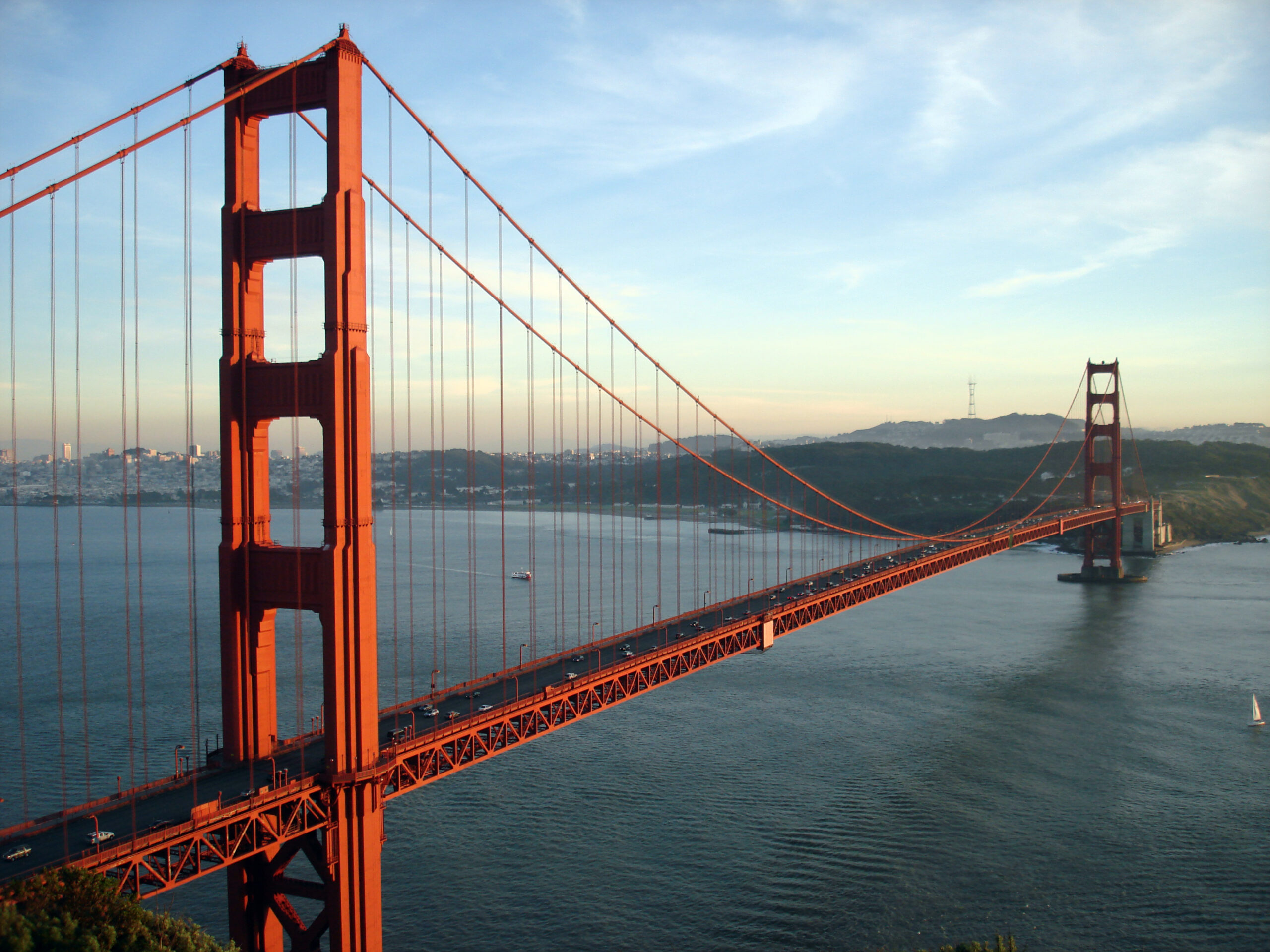
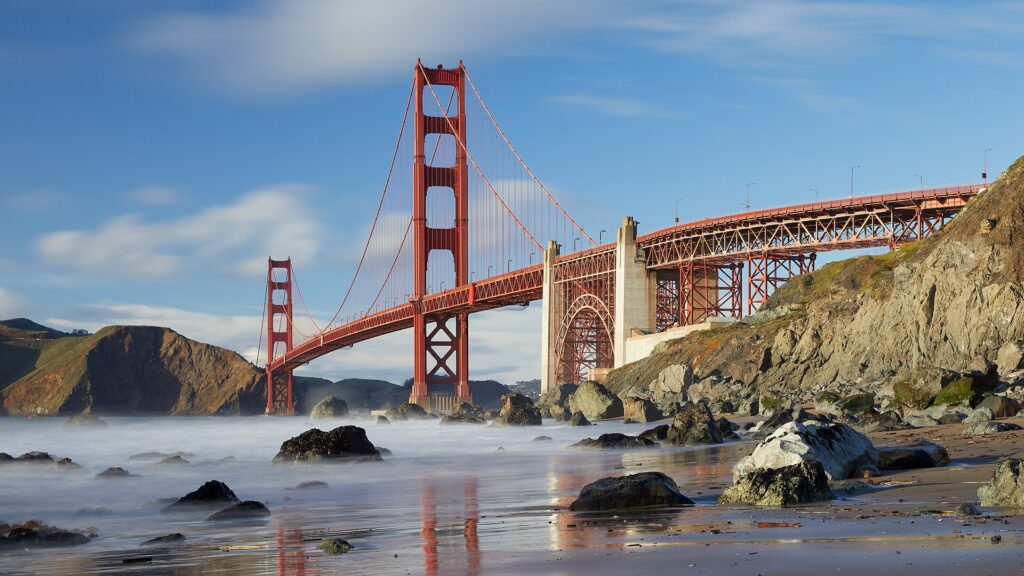
The Golden Gate Bridge opened in 1937, and it still stops people in their tracks: two Art Deco towers painted International Orange, a span of about 2.7 km (1.7 miles) across the mouth of the bay, and, on a summer afternoon, fog pouring through the cables like a slow waterfall. Walking at least part of the way across is the essential San Francisco experience: start at the Welcome Center on the city side, walk the east sidewalk to the first tower or all the way to Marin, and bring a warm layer, because the wind on the deck is fierce. Below the southern anchorage, Fort Point, a brick Civil War-era fort, sits right under the roadway and gives the most dramatic upward view of the span. The bridge sits inside the Golden Gate National Recreation Area, one of the most visited parks in the national system. East of the bridge, Crissy Field is a restored tidal marsh and beach with a flat waterfront path, the best place to photograph the bridge at water level. Behind it, the Presidio, a former Army post turned national park site, holds forested trails, historic barracks and Presidio Tunnel Tops, a park built over a freeway tunnel with one of the best free views in the city.
Alcatraz and the waterfront
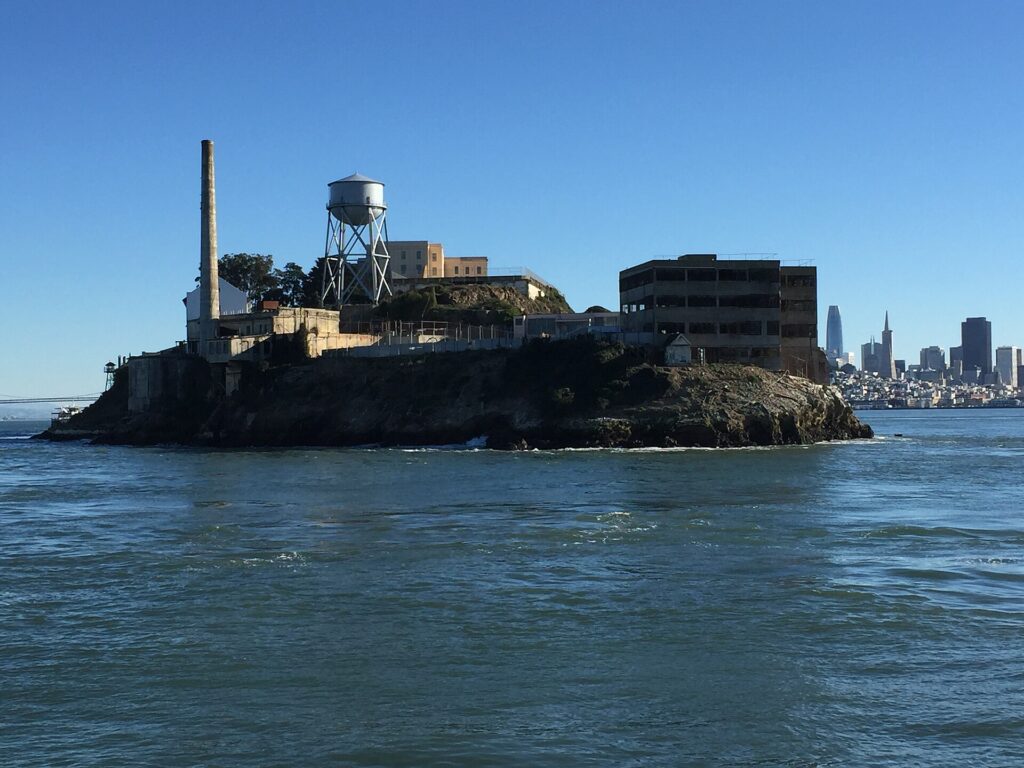
Alcatraz, the island prison in the middle of the bay, held federal inmates from 1934 to 1963 and was later occupied for nineteen months by Native American activists, and today it is run by the National Park Service as one of the best-interpreted historic sites in the country. The cellhouse audio tour, narrated in part by former guards and prisoners, is gripping. The only way to visit is on the official ferry from Pier 33, and tickets sell out days or weeks ahead in summer, so book as soon as your dates are firm. The park’s site links to the authorized ticket seller; resellers charge a premium for the same boat. Back on shore, the Embarcadero runs along the waterfront from the Bay Bridge to Fisherman’s Wharf, lined with palm trees, piers and the historic streetcars of the F line. Its anchor is the Ferry Building, the clock-towered terminal at the foot of Market Street, now a food hall of Bay Area producers with a superb Saturday farmers’ market. A short walk north, the Exploratorium on Pier 15 is a hands-on science museum that adults enjoy as much as children.
Fisherman’s Wharf and North Beach
Fisherman’s Wharf is unashamedly touristy, and still worth a morning. Pier 39 has the sea lions, who hauled out on its floating docks after the 1989 earthquake and never left, and whose numbers rise and fall with the seasons. Further west, the Musée Mécanique is a free-to-enter hall of antique arcade machines, and the Hyde Street Pier, part of the San Francisco Maritime National Historical Park, has historic ships you can board. Eat clam chowder in a sourdough bread bowl from the stands along Jefferson Street, then walk up to Ghirardelli Square, the old chocolate factory. From the Wharf, the Powell-Hyde cable car climbs past the top of Lombard Street, whose single block of eight hairpin bends between Hyde and Leavenworth is more fun to walk down than to drive. Over the hill, North Beach is the old Italian quarter and the home of the Beat writers: City Lights Bookstore, still publishing and selling poetry on Columbus Avenue, the cafés where people have been nursing espressos since the 1950s, Washington Square with the twin spires of Saints Peter and Paul Church, and a dozen places for pizza, focaccia and pasta. Climb the Filbert Steps or the streets above to Coit Tower on Telegraph Hill, whose lobby is covered in Depression-era murals of California life, and whose top has a 360-degree view of the bay.
Cable cars, Chinatown and Union Square
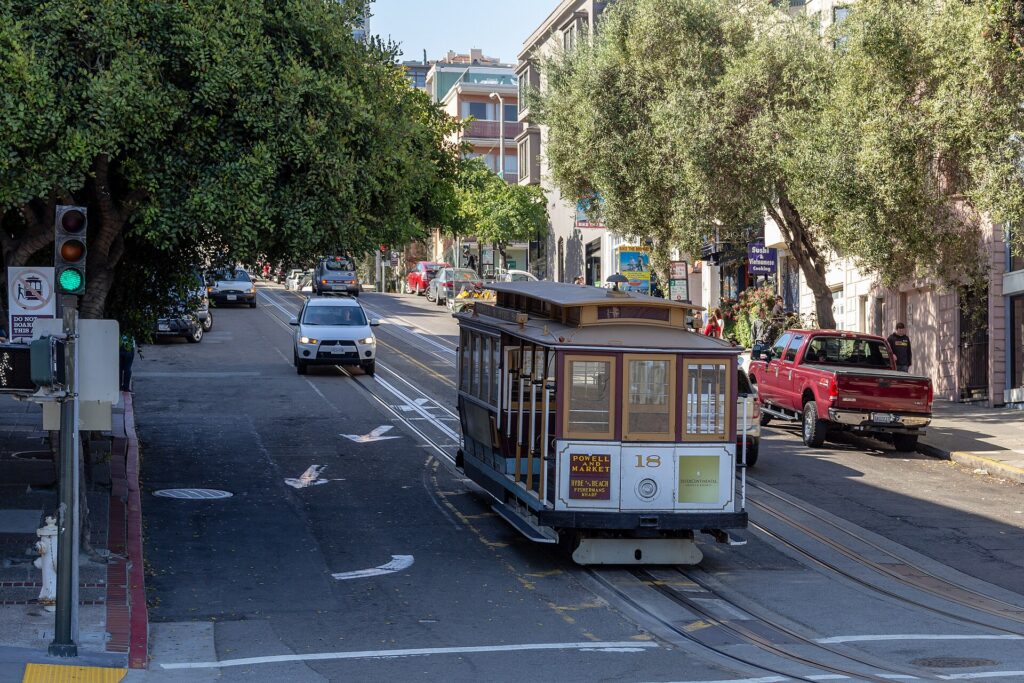
San Francisco’s cable cars are the last manually operated cable car system in the world, a National Historic Landmark that still runs on the same principle as the first line of 1873: a steel cable moving under the street, gripped and released by the operator. There are three lines. The Powell-Hyde and Powell-Mason lines start at the turntable at Powell and Market streets and climb over Nob Hill to the Wharf, and the Powell-Hyde has the better views; the California Street line runs from the Financial District up Nob Hill and is usually far less crowded. The Powell turntable queue can be an hour at midday in summer, so ride early or late. The free Cable Car Museum on Nob Hill lets you look down on the giant wheels that pull the cables. At the foot of the Powell lines, Union Square is the hotel and shopping district. A few blocks north, the Dragon Gate on Grant Avenue marks the entrance to Chinatown, the oldest in North America and one of the most densely packed neighborhoods in the country. Grant Avenue is the souvenir strip; Stockton Street, a block over, is where residents shop for produce and roast duck; and the alleys between them hold temples and a fortune cookie factory in Ross Alley. The Central Subway, which opened in 2022, links Chinatown to Union Square and SoMa by light rail.
Golden Gate Park and the Pacific coast
Golden Gate Park runs for about 5 km (3 miles) from the Haight to the ocean and is larger than Central Park in New York. Its museum core has two of the city’s best: the de Young, with American art, textiles and a copper-clad tower whose observation floor is free to visit, and the California Academy of Sciences, which fits an aquarium, a planetarium, a natural history museum and a four-story rainforest dome under a living roof planted with native wildflowers. Between them are the Japanese Tea Garden, the oldest public Japanese garden in the United States, and the Victorian glasshouse of the Conservatory of Flowers. The eastern stretch of the main drive is now a permanent car-free promenade, which makes the park perfect for a bike ride; keep going west past the bison paddock and the Dutch windmills and you reach Ocean Beach, a long, wild strand where the water is cold and the currents are dangerous, so it is for walking, not swimming. North along the coast, the Lands End trail follows the cliffs past the ruins of the Sutro Baths, a vast Victorian bathhouse, with views of the Golden Gate from the ocean side; at its end, the Legion of Honor, a sister museum to the de Young, holds European art, including a large Rodin collection, in a hilltop palace.
Neighborhoods worth a half-day
The Mission
The Mission is the city’s oldest neighborhood and its sunniest. It is the home of the Mission-style burrito, of the murals of Balmy Alley and Clarion Alley, of Mission Dolores, whose adobe chapel, completed in 1791, is the oldest intact building in the city, and of Dolores Park, a sloping lawn with a skyline view where half of San Francisco spends sunny weekend afternoons.
The Castro
The Castro has been the heart of LGBTQ San Francisco since the 1970s; the landmark Castro Theatre and the GLBT Historical Society Museum tell the story, including that of Harvey Milk.
Haight-Ashbury and Hayes Valley
The Haight, the center of the 1967 Summer of Love, still trades on the memory with vintage and record stores. Hayes Valley, a short walk east, is the boutique-and-restaurant district near the opera house and symphony hall, and Alamo Square, between the two, is where the row of Victorian houses known as the Painted Ladies lines up in front of the downtown skyline.
Japantown and the Richmond
Japantown is one of only three historic Japantowns left in the United States, with a Peace Pagoda, ramen counters and Japanese bookstores. Further west, Clement Street in the Inner Richmond is the city’s second Chinatown and the place for dim sum without the downtown crowds.
SoMa and Mission Bay
South of Market is the tech and convention district: Moscone Center, Yerba Buena Gardens, the ballpark, and the San Francisco Museum of Modern Art, one of the largest modern-art museums in the country, whose ground-floor galleries are free to enter.
Museums, culture and family attractions
Beyond SFMOMA, the de Young, the Legion of Honor, the Academy of Sciences and the Exploratorium, the city has a deep bench. The Asian Art Museum at Civic Center has one of the largest collections of Asian art in the West, across the plaza from a City Hall whose dome is taller than the U.S. Capitol’s. The Walt Disney Family Museum in the Presidio tells the story of the man rather than the brand. The Palace of Fine Arts, a Roman-style rotunda and lagoon left over from the 1915 world’s fair, is a free, photogenic stop near the Marina. The San Francisco Symphony, Opera and Ballet share the Civic Center, and the theaters around Union Square host touring Broadway shows. For what is on stage and in the arenas during your dates, our San Francisco events page lists concerts, shows and games.
Sports and the festival year
The San Francisco Giants play baseball at Oracle Park, one of the most beautiful ballparks in the country, set on the bay in SoMa, where home runs to right field splash into McCovey Cove among the waiting kayakers. The Golden State Warriors play basketball at Chase Center in Mission Bay, which they share with the Golden State Valkyries of the WNBA. The 49ers play at Levi’s Stadium in Santa Clara, about an hour south. The festival calendar is just as full: the Chinese New Year Parade in February or early March, one of the largest outside Asia; San Francisco Pride on the last weekend of June; Outside Lands in Golden Gate Park in August; and, in early October, Fleet Week with the Blue Angels over the bay and the free Hardly Strictly Bluegrass weekend in the park. Check what is on sale in San Francisco for your dates before you book flights.
What to eat, and where
San Francisco eats better than almost anywhere in the country, and at every price. Start with the classics. Sourdough bread, made here since the Gold Rush, is best eaten plain from a good bakery. The Mission burrito, a foil-wrapped monster of rice, beans, meat and salsa, is the defining cheap meal; argue with locals about the best taquería and you will get a dozen answers. Cioppino, the tomato-based fish stew invented by Italian fishermen in North Beach, and Dungeness crab, whose local season normally opens in late fall though openings have been delayed in some recent years, are the seafood dishes to seek out. Dim sum in Chinatown and on Clement Street, a coffee at one of the Beat-era cafés in North Beach, an Irish coffee at the Buena Vista near the Wharf, which popularized the drink in America, and a fortune cookie warm from the Ross Alley factory round out the list. Beyond those, the restaurant scene is built on the produce of the farms around the bay. Book popular restaurants ahead, especially on weekends.
San Francisco through the seasons
San Francisco’s seasons do not follow the calendar the way visitors expect. Winter (December to February) is the rainy season, but between storms it is often clear, green and mild, with highs around 14 °C (57 °F); hotel rates are low outside the big conventions. Spring (March to May) brings wildflowers on the hills and fewer crowds than summer. Summer (June to August) is the busiest season and, famously, the foggiest: the fog rolls in from the ocean most afternoons, and the bridge in July can feel like November, while the Mission and the eastern neighborhoods stay sunnier. Fall (September to October) is the local favorite and the true summer: the fog retreats, the days are the warmest of the year, and the festival season peaks with Fleet Week and Hardly Strictly Bluegrass. Our month-by-month guide has the fare patterns that go with each season.
San Francisco with kids
San Francisco is a surprisingly good city with children, as long as you plan for the hills and the weather. The California Academy of Sciences is the obvious full day, with the rainforest dome, the coral reef tank and the African penguins; the Exploratorium is the other. A cable car ride and the sea lions at Pier 39 are highlights for almost every child. The San Francisco Zoo, at the ocean end of the city, has a children’s zoo, and Golden Gate Park has playgrounds, paddle boats on Stow Lake and a carousel. Presidio Tunnel Tops has one of the best playgrounds in the city, with a view of the bridge. Bring layers for everyone, because a warm morning in the Mission can become a cold, windy afternoon at the bridge. For families heading beyond the city, our family car rental guide covers the vehicle question.
San Francisco on a budget
San Francisco is expensive, but a surprising amount of the best of it is free: walking the Golden Gate Bridge, Crissy Field, the Presidio and Tunnel Tops, Lands End and the Sutro Baths ruins, Golden Gate Park, the de Young’s observation tower, the ground-floor galleries at SFMOMA, the Cable Car Museum, the Musée Mécanique, Chinatown, the murals of the Mission, Dolores Park, and the view from Twin Peaks or the Filbert Steps. A Muni Visitor Passport, sold for one, three or seven days, covers buses, streetcars and cable cars and pays for itself quickly. Eat cheaply at the taquerías of the Mission and the dim sum shops of Chinatown and the Richmond. Hotel rates drop sharply in winter outside convention weeks and are highest in September and October; compare rates by neighborhood on our San Francisco hotel search, and remember that a hotel near a BART or Muni Metro station saves both time and money.
Day trips from San Francisco
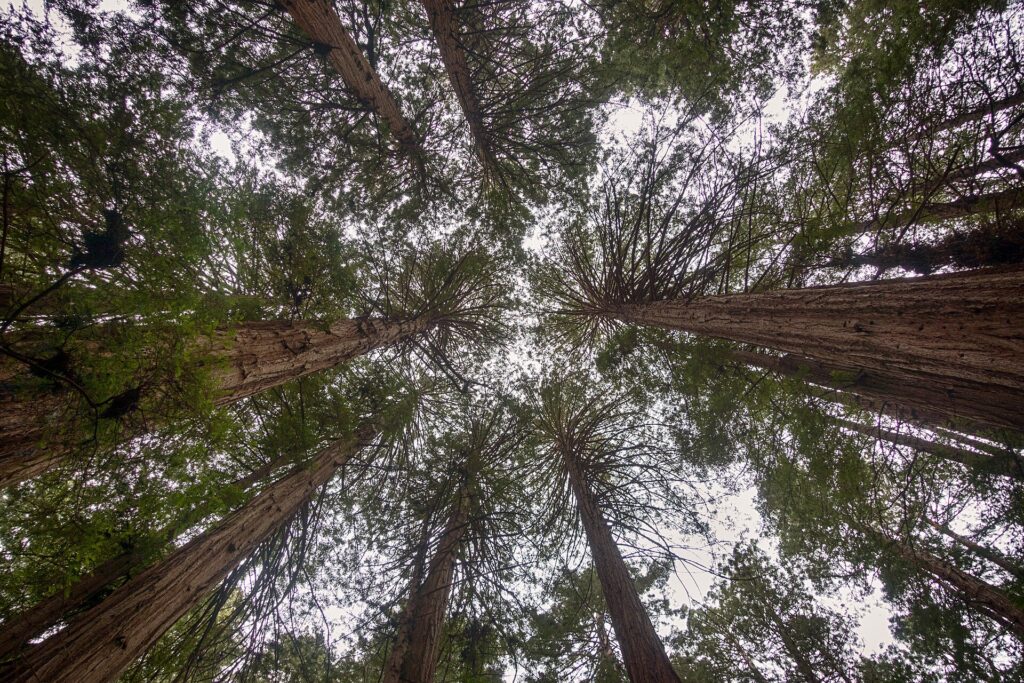
Sausalito, across the Golden Gate, is the easiest escape: take the ferry from the Ferry Building or Pier 41, or rent a bike, ride across the bridge and take the ferry back. Muir Woods, about 45 minutes north, is a grove of old-growth coast redwoods, some more than a thousand years old; reservations are required for both parking and the shuttle, so book ahead through the park’s site. Napa and Sonoma, the wine country, are an hour to ninety minutes north, with hundreds of wineries; a tour or a designated driver is essential. Point Reyes National Seashore, about ninety minutes northwest, has elk, a lighthouse and wild beaches. South, Half Moon Bay is an easy half-day, and Monterey and Carmel, two to three hours south, have the aquarium, the 17-Mile Drive and the start of Big Sur. Yosemite, about four hours east, needs at least one night. Berkeley and Oakland are a BART ride away. Most of these are car trips; see our San Francisco car rental page. If you are continuing south, the drive to Los Angeles is a California classic; our San Francisco to Los Angeles route guide covers it, and our first-timer’s guide to Los Angeles picks up where this one leaves off. San Francisco Travel covers the city and the wider Bay Area.
Two sample itineraries
Three days, no car
Day one: an early cable car on the Powell-Hyde line to Fisherman’s Wharf, the sea lions and the Hyde Street Pier, then the afternoon ferry to Alcatraz, and dinner in North Beach. Day two: the Ferry Building in the morning, the Embarcadero and Coit Tower, then Chinatown and Union Square in the afternoon, and a show or dinner in Hayes Valley. Day three: the Golden Gate Bridge on foot from the Welcome Center, Crissy Field and Tunnel Tops, then Golden Gate Park, the Academy of Sciences or the de Young, and a burrito and a sunset in the Mission.
Five days, with day trips
Add a day on a rented bike across the bridge to Sausalito, back by ferry, with Lands End on the way home; then pick up a car for Muir Woods and Point Reyes, or for a day in Napa or Sonoma, returning it before you head back into the city or on the way to the airport.
Practical details
- Transit: use a Clipper card, available as a physical card or in your phone’s wallet, or the MuniMobile app, on Muni, BART, Caltrain and the ferries. SFMTA runs Muni and has maps; our transit-versus-car guide goes into detail.
- From SFO: BART from the International Terminal to downtown, a taxi or ride-hail, or a rental from the AirTrain-linked rental car center. The airport’s site covers ground transport.
- Weather: layers in every month, a windproof jacket for the bridge and the waterfront, and sun protection when the fog lifts. The National Weather Service’s Bay Area office is the forecast to check.
- Time zone: Pacific, three hours behind New York.
- Entry requirements: Canadians need a valid passport; visitors from Visa Waiver Program countries need an approved ESTA before boarding, and everyone else needs a visa. U.S. Customs and Border Protection is the authoritative source.
- Safety: the main sights are as safe as any big American city’s, but parts of the Tenderloin and the stretch of Market Street around Civic Center are rough, especially after dark, and are best walked through with awareness rather than lingered in. Vehicle break-ins are a well-known problem at tourist stops: if you drive, leave nothing at all in the car, including in the trunk.
Frequently asked questions
How many days do you need in San Francisco?
Three full days covers the bridge, Alcatraz, the Wharf, Chinatown, North Beach, Golden Gate Park and the Mission. Five lets you add Sausalito, Muir Woods or wine country.
What is the number one thing to do in San Francisco?
Walk across the Golden Gate Bridge. If you only have time for one booked activity, make it Alcatraz, and reserve it as soon as your dates are set.
Is San Francisco walkable?
Very, if you do not mind hills. Most of the sights are within a few miles of each other, and the cable cars and Muni fill the gaps when the slopes get steep.
Do I need a car in San Francisco?
No, and a car is usually more trouble than it is worth in the city because of parking costs and break-ins. Rent one only for the days you leave town.
Why is San Francisco so cold in summer?
Cool ocean water and the heat of California’s interior pull fog through the Golden Gate on most summer afternoons. September and October are warmer and clearer.
What is San Francisco known for?
The Golden Gate Bridge, the cable cars, Alcatraz, the fog, the hills, sourdough and the Mission burrito, the counterculture of the 1960s, and its role as the gateway to Silicon Valley and wine country.
Ready to go? Compare flights to San Francisco, find a place to stay with our San Francisco hotel search, and if wine country or the coast is on the list, price a rental car for those days.
Keep planning with TicketScanner
- Cheap flights to San Francisco
- San Francisco hotels — by neighborhood
- San Francisco car rentals — for wine country, the coast and Yosemite
- Events in San Francisco — Giants, Warriors, concerts and shows on sale
- Best time to fly to San Francisco: month by month
- San Francisco: rent a car or use transit?
- San Francisco International (SFO) airport guide
- Where to stay: Fisherman's Wharf
- Driving San Francisco to Los Angeles
- Things to do in Los Angeles
Leave a Reply