Category: Travel

  • Top 10 Passport Holders to Safeguard Your Documents While Traveling

    Top 10 Passport Holders to Safeguard Your Documents While Traveling

    Your passport is the one thing in your bag that can end a trip if it goes missing. Flights, hotels and rental cars can all be rebooked; a lost passport means a police report, a trip to an embassy or consulate, and often missed connections while you wait for emergency documents. A passport holder will not make theft impossible, but the right one keeps your passport clean, flat and in one predictable place, keeps boarding passes and cards together at the airport, and makes it much harder to leave something behind on a tray at security. This guide explains the main types of passport holders, what to look for in materials, size and closures, how much RFID blocking really matters, which style suits solo travelers, families and people who want to carry documents under their clothes, and ten options from our original list. It also covers the habits that protect your passport more than any holder can.

    The short answer

    For most travelers, the best passport holder is a slim cover or wallet that holds your passport plus one or two cards and a boarding pass, closes securely and lets the passport slide out easily when an officer asks for it. If you travel as a family, a zippered document organizer that holds several passports, tickets and a pen saves a lot of fumbling at check-in. If you are going somewhere busy with pickpockets, or you want your passport on you all day, a neck pouch or hidden belt wallet worn under clothing is the more secure carry. RFID blocking is a harmless extra, not a reason to choose one holder over another. Whatever you buy, keep a photo of your passport’s data page somewhere separate, and leave the passport in the hotel safe on days you do not need it.
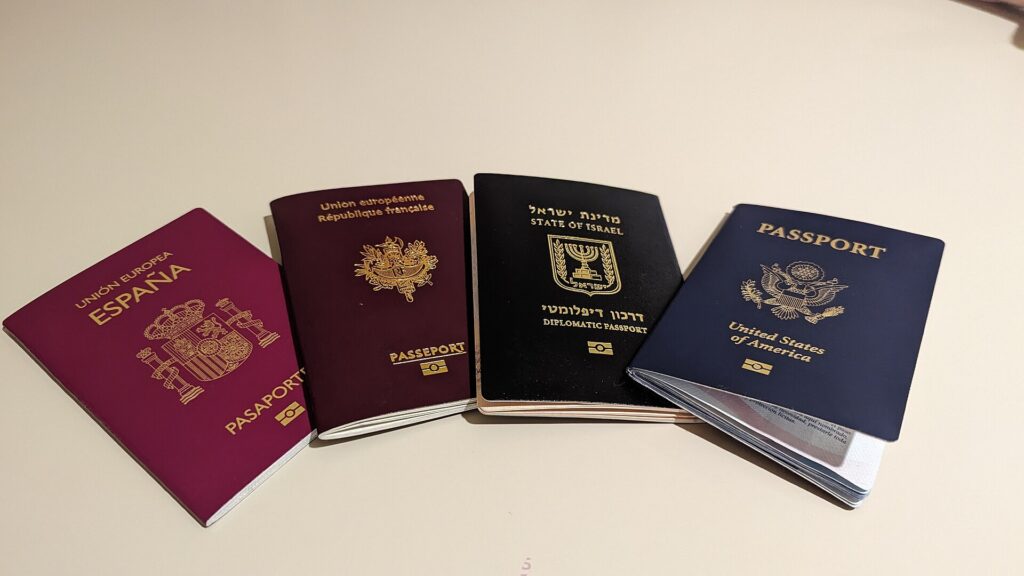
    Four different national passports laid side by side
    Passport booklets are a similar size, but thickness varies with pages and visas, so check a holder fits yours without bending it (Photo: Horizon206 via Wikimedia Commons, CC0)

    What a passport holder actually does

    It is easy to think of a passport holder as a fashion accessory, but its real jobs are practical:

    • Protection from wear. Passports get bent, wet and scuffed. A damaged passport can cause problems at a border or when you try to use it again, so a cover that keeps the booklet flat and dry has real value over the years you use the same passport.
    • Organization. At the airport you need your passport, boarding pass, sometimes a visa or arrival form, and a payment card within the space of a few minutes. A holder puts them all in one place.
    • A fixed home. Travelers most often lose passports by putting them down: on a check-in desk, a seat-back pocket, a security tray or a café table. A holder that always goes back into the same pocket makes that less likely.
    • Security, in some styles. Holders worn under clothing, in a neck pouch or on a belt, keep the passport out of reach of pickpockets. Ordinary covers do not add security on their own; they are only as safe as the pocket you put them in.

    The main types of passport holders

    Slim passport covers

    A simple cover wraps around the passport and adds a card slot or two. It keeps the booklet clean and adds almost no bulk, which makes it the best choice for travelers who carry their passport in an inside jacket pocket or a zipped bag pocket. The downside is that covers hold very little, and some are so snug that it is awkward to remove the passport at a border desk.

    Passport wallets

    A passport wallet is larger and usually closes with a zipper or snap. It holds the passport, several cards, some cash, a boarding pass and often a pen. It is the most useful all-in-one travel document holder for flying days, and it can double as your everyday wallet on the trip. Because it is larger, it belongs in a bag rather than a back pocket.

    Family document organizers

    Family organizers are zippered cases, often the size of a small tablet, with a slot for each passport and room for tickets, itineraries, vaccination records and a pen. One adult carries all the documents and hands them over together at check-in and passport control. They are bulky, but for families they remove a lot of stress.

    Neck pouches

    A neck pouch hangs on a cord around your neck and is worn under a shirt or jacket. It keeps your passport and backup cash against your body, which pickpockets cannot easily reach. It is less convenient to get into, so treat it as a secure store rather than your everyday wallet.

    Hidden belt wallets and money belts

    These sit flat around your waist under your clothes, or loop onto your belt and tuck inside your waistband. They are the most discreet way to carry a passport and backup money. Our guide to money belts for travel covers how to choose and wear one comfortably.

    Holders with a tracker slot

    Some passport holders include a small pocket designed to fit a Bluetooth tracker. A tracker can help you find a holder you left behind or dropped nearby. It does not stop theft and depends on the tracker network where you are, so think of it as a way to locate a misplaced holder, not as security.

    TypeBest forMain trade-off
    Slim coverLight packers, inside-pocket carryHolds little; some are tight to remove
    Passport walletAirport days, all-in-one carryBulkier; belongs in a bag
    Family organizerParents carrying several passportsLarge; easy to set down and forget
    Neck pouchBusy cities, long travel daysSlow to access; can be warm
    Hidden belt walletMaximum discretion for backupsMust undress slightly to reach
    Tracker-slot holderTravelers prone to misplacing thingsHelps locate, does not prevent theft

    What to look for

    Fit and size

    Passport booklets are a fairly standard size, but thickness varies with the number of pages and how many visas and stamps you have. Look for a holder that takes your passport without bending it and lets it slide in and out cleanly. Border officers often ask travelers to take the passport out of its cover so they can scan and stamp it, so avoid covers that grip so tightly you have to wrestle with them at the desk.

    Materials

    • Leather ages well, feels good and is durable, but it can be heavier and needs a little care if it gets wet.
    • Synthetic leather is lighter and usually cheaper; quality varies widely, and cheaper versions can peel at the edges over time.
    • Nylon and ripstop fabrics are light, quick to dry and common on neck pouches and belt wallets that sit against your body.
    • Water-resistant fabrics or liners are worth having if you travel in rain, near water or in hot climates where sweat can reach a passport worn under clothing.

    Closures

    Open covers are quick but let cards slip out. Snaps are a good middle ground. Zippers keep everything inside and are best for wallets and family organizers that carry cash and tickets. For neck pouches and belt wallets, a zipper is essential.

    Card slots and pockets

    Think about what you will actually carry on a flight day: passport, boarding pass, one or two payment cards, some cash and maybe a transit card. More slots are not always better; a holder stuffed with every card you own becomes thick and heavy, and you have more to lose in one go.

    Visibility and color

    A brightly colored holder is easier to spot in a dark bag and harder to leave on a gray security tray. Some families choose a different color for each person, which also helps when handing documents around.

    RFID blocking, honestly

    Many passport holders advertise RFID blocking: a lining that stops radio signals reaching the chip in an electronic passport or a contactless card. It does no harm, and some travelers like the reassurance. But the realistic risks to your passport are loss and physical theft, not someone reading its chip from a distance. Remote skimming of passports is not a common problem for travelers, and many holders without RFID lining do the job just as well. Treat RFID blocking as a small extra, never as the main reason to buy one holder over another.
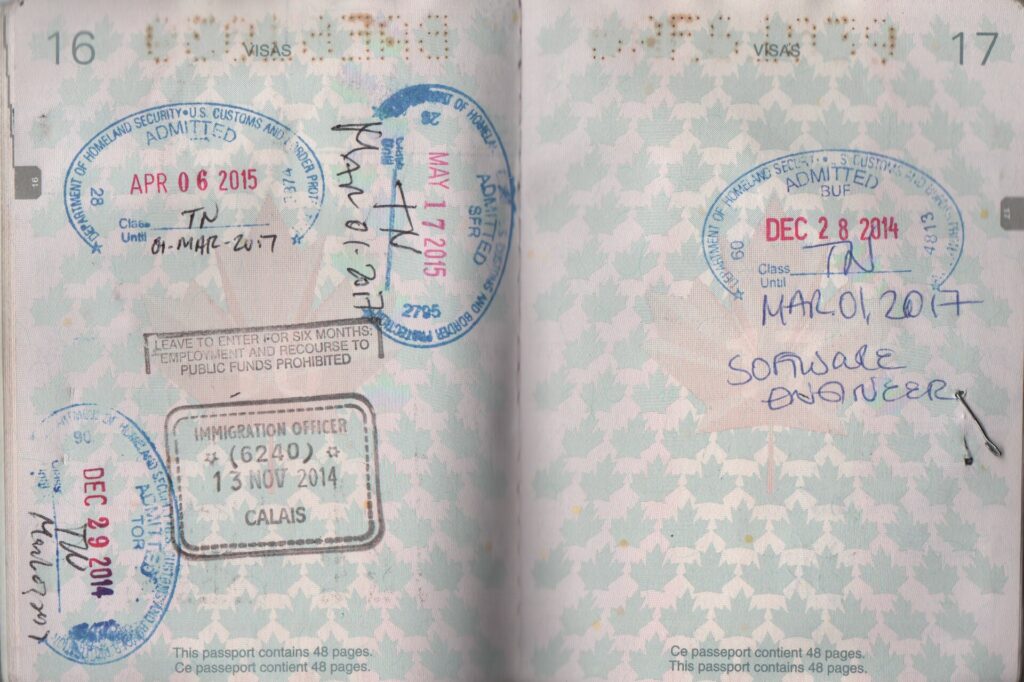
    Open passport pages with entry stamps from the United States and United Kingdom
    Officers need to open and stamp the passport, so choose a holder it slides out of easily (Photo: Jon Evans via Wikimedia Commons, CC BY 2.0)

    Choosing by the way you travel

    Solo travelers and couples

    A slim passport wallet with a zipper or snap is usually the best fit. It holds your passport, a boarding pass and a couple of cards, and goes into a zipped inside pocket of your daypack or jacket. If you carry an anti-theft backpack, its hidden back-panel pocket is an ideal home for the holder.

    Families

    A family organizer carried by one adult keeps every passport, ticket and printed itinerary in one place, which makes check-in and passport control much smoother. The risk is that you now have every passport in one bag, so never put that organizer down, and consider moving it to a secure bag as soon as you are through the airport.

    Business travelers

    A leather cover or slim wallet that fits an inside jacket pocket keeps you moving through security and lounges without digging through a bag. If you travel with a laptop bag, pick a dedicated pocket for the passport and use it every time.

    Backpackers and long trips

    On long trips through busy cities and on overnight buses and trains, a neck pouch or belt wallet worn under clothing is worth the minor discomfort. Carry your daily money in a separate small wallet so you never have to reach under your shirt in public.

    Cruises and resort stays

    On a cruise you may need your passport at embarkation and in some ports, and a ship card most of the rest of the time. A waterproof pouch or water-resistant holder is useful for beach days and tender boats, and the passport can stay in your cabin safe when you do not need it.

    Ten passport holders from our original list

    The holders below were featured in the original version of this guide. They cover different needs rather than a strict ranking. Designs, sizes, colors and features change between versions, and we have not tested them ourselves, so check the current details from the manufacturer or seller before you buy.

    1. Valante Premium Family Travel Document Organizer

    A family-sized zippered organizer meant to hold several passports together with tickets, cards and other travel documents. It suits parents who want every document in one case at check-in and passport control. As with any family organizer, it is bulky, so plan to carry it in a shoulder bag or backpack, not in a pocket.

    2. HERO Neck Wallet

    A neck wallet designed to be worn under clothing, with compartments for a passport, cards and cash, and RFID-blocking material. It suits travelers who want hands-free carry and their passport kept against their body in crowded places. Keep a separate small wallet for daily spending so the neck wallet stays hidden.

    3. Zero Grid Passport Wallet

    A compact passport wallet with space for a passport, boarding passes and cards, sold with RFID blocking. It suits travelers who want a single, tidy document wallet for airport days that slips into a bag or jacket pocket.

    4. WALNEW Passport Holder Neck Pouch

    A slim neck pouch on a lanyard strap with multiple compartments for passports, tickets and cards, designed to be worn under clothing. It is a simple, lightweight option for travelers who want a secure under-shirt carry without much bulk.

    5. Spigen Life Passport Card Cover Holder

    A passport cover with added slots for cards and cash, marketed with RFID blocking. It suits travelers who want a slim cover rather than a full wallet, and who carry the passport in an inside pocket or bag.

    6. Family neck-pouch passport organizers

    The original list included a family-sized travel pouch with a neck strap that holds several passports plus tickets and cards. This style keeps family documents on one adult’s body, which is handy at busy check-in desks and boarding gates, but it can get heavy and warm with several passports inside. Look for a wide, comfortable strap.

    7. Passport covers with a tracker pocket

    The original list included a leather passport cover with a pocket shaped for Apple’s AirTag. This style suits travelers who worry about leaving their passport behind in a taxi or at a café, since the tracker can help you locate it. Remember that the tracker is sold separately, and that it helps you find a lost holder rather than prevent theft.

    8. Lightweight family passport holders

    A lighter alternative to a full organizer: a slim zippered holder with room for several passports and a zipper pocket for cash. It suits families who want to keep passports together without carrying a tablet-sized case.

    9. Leather travel wallets with a passport slot

    A compact genuine leather wallet with card slots, a cash pocket and a dedicated space for the passport. It suits travelers who want a single, good-looking wallet that serves as both passport holder and everyday wallet on the trip.

    10. Shacke Hidden Travel Belt Wallet

    A slim belt wallet from Shacke, worn around the waist under clothing, with compartments for cash, cards and a passport, and an RFID-blocking layer. It suits travelers who want their passport and backup money out of sight all day. See our guide to money belts for tips on wearing one comfortably.

    How to carry your passport day to day

    On travel days

    From the curb to your seat, you may show your passport several times: at check-in or bag drop, at security, at passport control and at the gate. Keep the holder in one zipped pocket that you can reach without taking your bag off, and put it back in that pocket every single time. Before you leave a desk or a security tray, look at your hand and check you have the passport. If you are flying internationally, our guide to airport arrival times for international flights helps you allow enough time that you are not rushing and fumbling.

    At your destination

    On ordinary sightseeing days you often do not need your passport at all. Many travelers leave it in the hotel room safe and carry a photocopy or a photo of the data page instead. Some countries require visitors to carry identification, and you will usually need the passport to check into hotels, pick up a rental car or change money, so check your destination’s rules. Canada’s travel advice and advisories list local laws and entry requirements by country, and the US State Department’s traveler’s checklist covers what to prepare before you go.

    In hotels

    Use the room safe for your passport, spare cards and cash. If there is no safe, ask whether the front desk has one. Choosing a hotel with an in-room safe is an easy filter when you search on our hotel search.

    When driving

    If you rent a car, you will need your driver’s license and usually a credit card and ID at pickup. Do not leave passports in a parked car, even in the glove box. Our car rental search helps you compare pickup locations and vehicles.
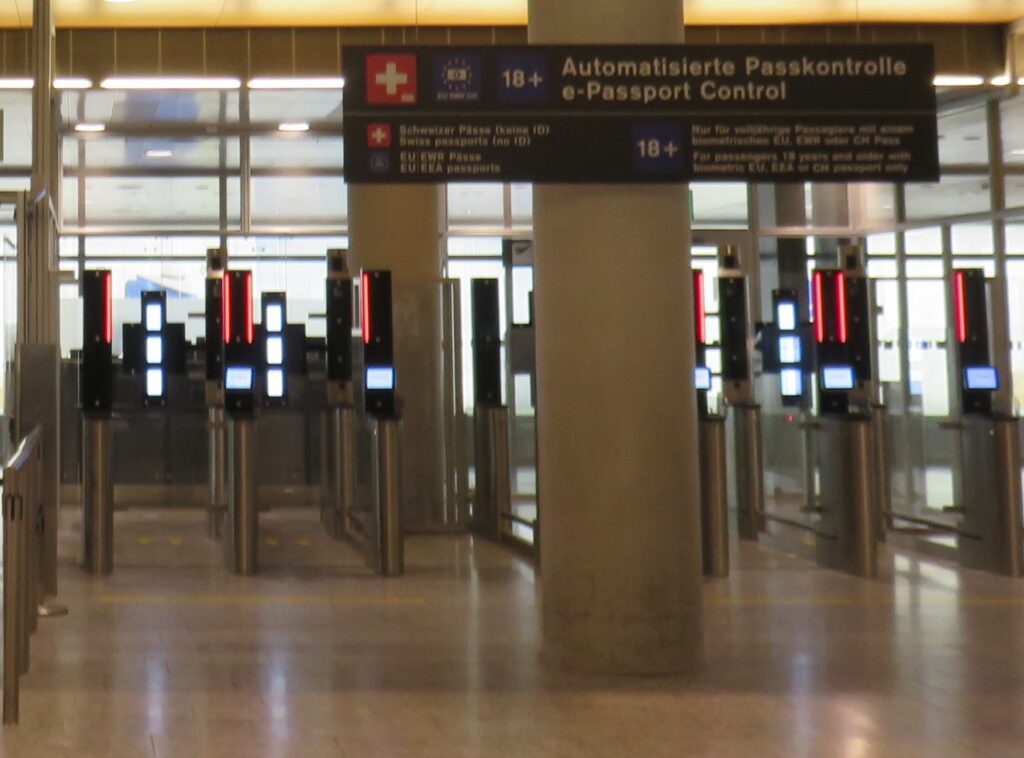
    Automated e-passport control gates in an airport arrivals area
    Automated gates need the photo page open and flat, which is easier with a holder that folds back or releases the passport quickly (Photo: Zurich International Airport – 2018-11-01 – IMG 1783.jpg: PESP/ Wikimedia
    derivative work: Bonus bon via Wikimedia Commons, CC BY-SA 4.0)

    Protect the passport itself

    • Keep it flat and dry. Water damage, torn pages and a peeling data page can make a passport unusable. A cover helps, and a zip bag inside the cover is a cheap extra layer on beach and boat days.
    • Check the expiry date early. Many countries require your passport to be valid for a set period beyond your stay, and airlines may refuse boarding if it is not. Check the entry requirements for your destination well before you book.
    • Check blank pages. Some countries need one or more blank pages for stamps or visas.
    • Do not write in it or add stickers. Keep notes and addresses on a separate card in the holder.
    • Know how to renew. Canadians can find renewal and application information on the Government of Canada’s Canadian passports page. Allow plenty of time before a trip.

    Backups that make a lost passport less painful

    Prepare these before every international trip:

    • A photo of your passport data page stored on your phone and in your email or a secure cloud folder.
    • A paper photocopy kept in a different bag from the passport.
    • Emergency contacts and your embassy or consulate details for each country you visit.
    • A backup payment card and some cash kept separately from your main wallet.
    • Your travel insurance policy number and the insurer’s emergency phone number.

    At airport security and border control

    Passport holders go through screening like any other item. You can usually keep the passport in its holder until you reach the officer, who may ask you to remove it from the cover. In the US, the TSA’s identification page explains which IDs are accepted at checkpoints, and in Canada CATSA’s what can I bring page covers screening rules for the items you carry. Take your holder out of any jacket or bag you put on the belt, or keep it on your body, so it does not ride through the scanner in a tray where it can be picked up by mistake. At automated passport gates, you will need to open the passport to the photo page, so a holder that folds back flat or releases the passport quickly helps.

    If your passport is lost or stolen

    • Report it. Report the loss or theft to local police and get a report number; insurers and consulates may ask for it.
    • Contact your government. Canadians abroad can find help through the Government of Canada’s emergency assistance page, which explains how to reach consular services. Travelers from other countries should contact their own embassy or consulate as early as possible.
    • Tell your airline if you have a flight coming up, and ask about rebooking options.
    • Freeze cards if your holder also carried payment cards, and contact your travel insurer.

    Common mistakes

    • Back-pocket carry. A passport wallet in a back pocket is easy to lose and easy to steal. Use a front or inside pocket, or a zipped bag pocket.
    • Carrying it every day for no reason. If you do not need it, leave it in the safe and carry a copy.
    • A holder so full it will not close. Carry only what you need for that day.
    • Putting every family passport in one unattended bag. One adult, one organizer, never out of hand.
    • Buying for RFID alone. Choose on fit, closure and how you will carry it; RFID is a small extra.
    • No backup copy. A photo of the data page takes seconds and saves hours if something goes wrong.
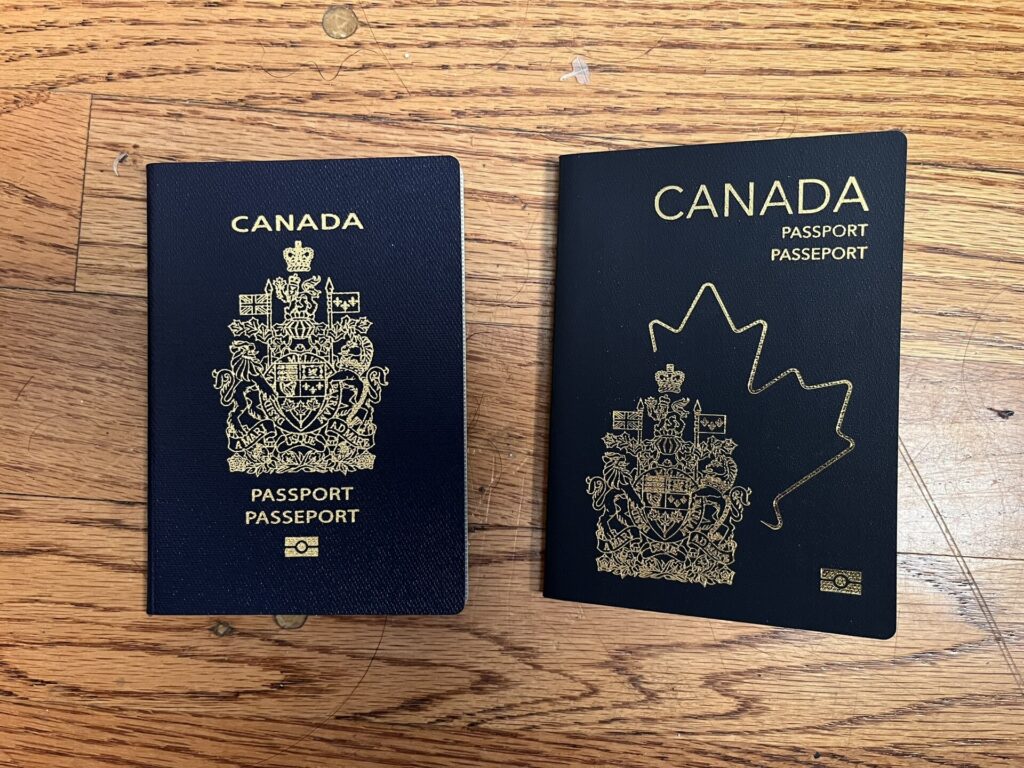
    Two Canadian passports from older and newer series
    Check your passport's expiry date and blank pages well before you book, not at the airport (Photo: Jusfiq via Wikimedia Commons, CC BY-SA 4.0)

    Pairing a passport holder with the rest of your kit

    A passport holder works best as part of a simple system. Your passport and one backup card live in the holder or a hidden pocket; your daily money lives in a small wallet; your phone lives in a front pocket or crossbody bag; and valuables you do not need stay in the hotel safe. Our guide to travel wallets for women covers everyday wallets that pair well with a passport holder, and if you are packing jewelry, a small travel jewelry case keeps pieces together and easy to lock away. A compact travel first aid kit belongs in the same daypack. For the bag that carries it all, start with our main guide to travel luggage.

    Frequently asked questions

    Do I need a passport holder?

    You do not strictly need one, but a holder protects your passport from wear, keeps travel documents together and gives your passport one predictable home, which makes it less likely you will leave it behind.

    Is an RFID-blocking passport holder necessary?

    No. It is a harmless extra. Loss and physical theft are far more common risks than someone reading a passport chip remotely, so choose a holder for its fit, closure and carry style first.

    Will border officers make me remove my passport from its cover?

    Often, yes. Officers and automated gates need to scan the data page, and many officers prefer the passport out of its cover. Choose a holder that releases the passport easily.

    What is the safest way to carry a passport?

    If you do not need it, in the hotel safe. If you do, in a neck pouch, belt wallet or hidden pocket against your body, not in an outside or back pocket.

    Can I fit several passports in one holder?

    Family organizers are designed for several passports plus tickets. Slim covers usually hold only one.

    Are leather passport holders worth it?

    Leather is durable and looks good for years, but it is heavier and less water-resistant than nylon. Choose based on how you travel, not on material alone.

    Should I carry a copy of my passport?

    Yes. Keep a photo on your phone and in email, and a paper copy in a separate bag. It speeds up replacement if the original is lost.

    How do I clean a passport holder?

    Follow the maker’s instructions. Leather is usually wiped with a slightly damp cloth and left to dry naturally; many fabric holders can be hand-washed. Always remove the passport first.

    With your documents organized, the rest is planning the trip itself. Compare fares across flexible dates on our flight search, choose a hotel with a room safe on our hotel search, and if your first stamp is going to be a European one, our guides to things to do in Paris and things to do in London are a good place to start. For the rest of your travel gear, head back to our main guide to travel luggage bags.

  • 10 Best Airplane Pillows for Neck: Your Ultimate Guide to Comfort

    10 Best Airplane Pillows for Neck: Your Ultimate Guide to Comfort

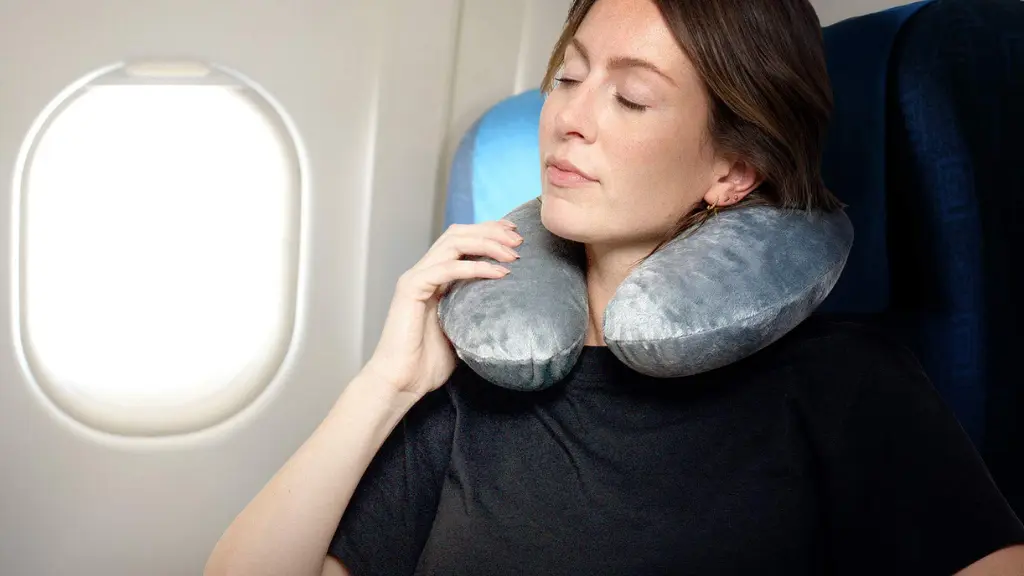
    Airplane seats are not designed for sleeping. Unless you are lying flat in a premium cabin, your head has nowhere good to go: it drops forward onto your chest, rolls sideways onto a stranger’s shoulder, or props awkwardly against a cold window. You wake up with a stiff neck, a dry mouth and the feeling that you barely slept. A good travel pillow does not turn an economy seat into a bed, but it gives your head something to rest on and keeps it from lolling around, and that can be the difference between arriving wrecked and arriving able to function. The catch is that travel pillows come in very different designs, and the one that works for a friend may be useless for you. This guide explains the main types, how to match one to the way you sleep, what to look for in materials, fit and packing, how to use a pillow well on a plane, and the pillows from our original list with who each one suits. It is part of our travel gear series, which starts with our main guide to choosing travel luggage.

    The short answer

    If you tend to nod forward when you fall asleep sitting up, choose a pillow with chin or front support, such as a 360-degree design or a memory foam pillow with an adjustable front clasp, ideally one that straps to the seat. If you lean sideways against the window or the wing of the headrest, a firm U-shaped memory foam pillow or a wrap-style support with a strong side works well. If space is tight, an inflatable pillow packs to almost nothing and lets you set the firmness. Whatever you choose, make sure it comes with a compression case or bag, has a removable washable cover, and does not push your head forward against the seat’s headrest. Try it sitting upright in a chair at home for twenty minutes before a long flight.

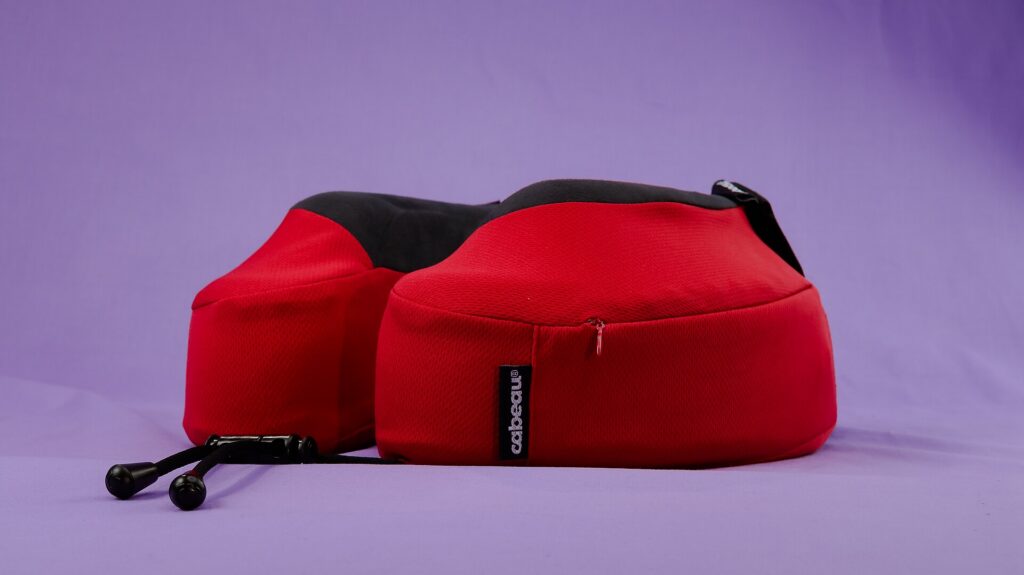
    A red memory foam travel neck pillow with seat straps on a purple background
    Firm memory foam with raised sides and a flatter back gives the head more support than a soft horseshoe (Photo: Cabeautravel via Wikimedia Commons, CC BY-SA 4.0)

    Why the classic horseshoe pillow often disappoints

    The soft, bead-filled horseshoe sold at every airport kiosk is the pillow most people picture, and it is the one most people give up on. There are three common reasons:

    • It is too soft. A squashy pillow compresses under the weight of your head, so your head still drops, just a little more slowly.
    • It does nothing at the front. The open end of the U sits under your chin, which is exactly where most people’s heads fall when they sleep upright.
    • It is too thick at the back. A fat back section pushes your head forward against the seat’s headrest, which can make your neck more uncomfortable, not less.

    Better designs address one or more of those problems: firmer materials, front or chin support, a flatter back, or a way to anchor the pillow to the seat. Knowing which problem you have is the key to choosing well.

    Types of travel pillows

    Memory foam U-shaped pillows

    Memory foam pillows keep their shape under your head better than fiber-filled ones, so they give firmer side support. Better designs have raised sides and a flatter back, so they do not push your head forward. Their drawback is bulk: even with a compression case, they take up noticeable room. They suit travelers who lean sideways and value support over packing size.

    Memory foam pillows with front support or seat straps

    Some memory foam pillows add an adjustable front clasp that closes the gap under the chin, and straps that wrap around the seat’s headrest to hold the pillow in place and stop your head falling forward. They are among the most effective options for people who nod forward, and they suit long-haul flyers who sleep sitting upright.

    360-degree and chin-support pillows

    These pillows wrap the whole way around the neck, with support at the front and sides. Some include a hood, and some come in kits with an eye mask and earplugs. They suit forward-nodders but can feel warm, and some people find that full wrap-around support feels restrictive.

    Inflatable pillows

    Inflatable pillows deflate to pocket size, which makes them the best choice when space is tight or you carry a small bag. You can adjust firmness by how much air you put in, and a soft cover, often velour, makes them more comfortable against the skin. The trade-offs are that they can feel less cozy than foam, can slowly lose air, and need blowing up on board. Some inflatable designs include eye masks and earplugs in the set.

    Microbead pillows

    Microbead pillows are filled with tiny beads that move to fit your neck, giving a soft, squishy feel. They are comfortable for resting and are easy to squeeze into a bag, but they usually give less firm support than memory foam.

    Twist and bendable pillows

    Twist pillows are long, flexible tubes of foam that you can bend into different shapes: around the neck, under the chin, behind the lower back or between the knees. They suit travelers who shift position a lot or want one pillow for several uses on a road trip or train.

    Wrap-style supports

    Wrap-style supports look like a soft scarf with a built-in support on one side. You wrap them around your neck, with the support on the side your head leans towards. The maker trtl is known for this design and describes an internal support system that keeps the head and neck in position. They pack flatter than a U-shaped pillow and suit side-leaners.

    Regular soft pillows

    Some travelers simply bring a small soft pillow to wedge against the window or to support their lower back. It is less structured than a neck pillow but versatile, and it is comfortable in hotels and on trains. It takes up space, so it works best if you clip it to your bag in a pillow bag or case.

    TypeSupportPacked sizeBest forWatch out for
    Memory foam U-shapeFirm side supportBulky, smaller in a compression caseSide-leaners, long flightsThick backs that push the head forward
    Memory foam with front clasp or seat strapsSide and front; anchored to seatBulky, smaller in a compression caseForward-noddersTakes a moment to set up
    360-degree or chin supportAll aroundMedium to bulkyForward-noddersCan feel warm or restrictive
    InflatableAdjustable firmnessPocket sizeLight packersSlow air loss, less cozy
    MicrobeadSoft, conformingSmall, squashableResting rather than deep sleepLess firm support
    Twist or bendableFlexible, multi-positionMediumRoad trips, people who shift positionLess support at the front
    Wrap-styleOne-sided supportFlatSide-leaners who pack lightLess help for forward-nodders

    Match the pillow to how you sleep

    Before you buy, think about what your head actually does when you doze off in a chair. If you are not sure, ask a travel companion or notice how you wake up on a train or in front of the television.

    You nod forward

    This is the most common pattern. You need front support: a 360-degree pillow, a pillow with an adjustable front clasp, or a design that straps to the seat’s headrest. A standard horseshoe will not help much.

    You lean sideways

    You need firm side support on the side you lean toward, plus something that stops your head sliding off. A firm U-shaped memory foam pillow, a wrap-style support, or a window seat with a soft pillow against the wall all work. The window seat is a big help here; the aisle seat gives you nothing to lean on.

    Your head tips backward

    Less common in economy, but it happens when the seat reclines. A flatter-backed pillow that fills the gap behind the neck without pushing the head forward is best, combined with the adjustable wings on the seat’s headrest if your aircraft has them.

    You shift around a lot

    A twist pillow or a soft pillow you can move around gives you options through a long flight. Some travelers carry a compact inflatable plus a small soft pillow for the lower back.

    What to look for

    Firmness

    Firmer is usually better for sleep, because a soft pillow compresses under your head. Memory foam and well-inflated air pillows are firmer than fiber or bead fills. If a pillow feels lovely and soft when you squeeze it in a shop, it may be too soft to hold your head.

    Back thickness

    Look for a flatter back section, so the pillow does not push your head forward against the seat’s headrest. This is the most common design flaw in cheap pillows.

    Height and adjustability

    People have different neck lengths and shoulder widths. Adjustable clasps, drawstrings or inflation let you tune the fit. If a pillow sits too low, your head drops anyway; too high and it pushes your chin up.

    Cover material and washability

    A removable, machine-washable cover is important for hygiene, since the pillow sits against your skin and hair for hours. Soft fabrics feel nice but can be warm; breathable or cooling fabrics suit hot climates and warm sleepers. Check the care instructions before washing.

    Packing size and a case

    A pillow you leave at home helps nobody. Many memory foam pillows come with a compression case that squeezes them down and clips to a bag. Inflatables pack smallest. If you carry only a backpack, packing size may decide everything. Our guide to bags and cases for travel pillows covers ways to carry a pillow without using up bag space.

    Accessories

    Some pillows come in kits with an eye mask, earplugs and a carry bag. That can be good value if you do not already own them. A contoured eye mask that does not press on your eyelids is worth having on any overnight flight.

    Pillows from our original list

    The pillows below were featured in the original version of this guide. They cover different sleep styles and budgets rather than a strict ranking. Designs and features change, so check the current details from the maker or seller before you buy. Where we have linked to a maker’s page, the details mentioned come from that page.

    Cabeau Evolution S3

    The Cabeau Evolution S3 is a memory foam pillow with raised side supports and a flat back, which addresses the “pushes my head forward” problem. Cabeau describes a sliding front support clasp for a customizable fit, a seat strap system that attaches the pillow to the seat, a removable washable cover, and a travel case that compresses the pillow to about a third of its size. It suits long-haul flyers who nod forward or sideways and want one of the more supportive designs.

    Cabeau The Neck’s Evolution

    Cabeau also makes The Neck’s Evolution S3, a memory foam pillow with an adjustable strap system designed to support the head in all directions, seat straps, a removable machine-washable cover and a compact travel case. It suits travelers who want support all around, including under the chin.

    SNUGL memory foam neck pillow

    The SNUGL pillow was featured as a memory foam neck pillow with a carry bag and clip. It suits travelers who want a straightforward memory foam pillow they can clip to their luggage.

    Dot&Dot Twist memory foam pillow

    The Dot&Dot Twist is a bendable memory foam pillow that can be shaped to support the neck, chin, lower back or legs. It suits road-trippers, train travelers and anyone who shifts position a lot.

    360-degree pillow kit with eye mask and earplugs

    The original list included a 360-degree neck pillow sold as a kit with a contoured eye mask, earplugs and a mesh carry bag. It suits forward-nodders who want a complete sleep kit in one purchase. Check the listing for cover washability and packed size.

    Soft microfiber travel pillow

    A soft microfiber pillow in charcoal was on the original list. It is light and easy to pack, and it suits travelers who want gentle comfort rather than firm support, for resting and short naps.

    Adjustable memory foam pillow

    The list also featured a memory foam airplane pillow with adjustable height and firmness. Adjustability helps if standard pillows sit too high or too low on your neck.

    Inflatable pillow with velour cover

    A basic inflatable pillow with a soft velour cover and drawstring bag was featured for travelers who want something light and compact that supports the head, neck and chin.

    Cloudz microbead neck pillow

    Cloudz was featured for its microbead pillow, which molds to the neck and has a soft cover. It suits travelers who like a squishy feel and mainly want to rest rather than sleep deeply.

    Sunany inflatable pillow

    The Sunany pillow was featured as an inflatable design sold with an eye mask and earplugs. It suits light packers who want an adjustable pillow and a small sleep kit.

    A view of clouds from the window seat of an airplane
    A window seat gives side-leaners something to rest against and means nobody climbs over you (Photo: Bizelburp123 via Wikimedia Commons, Public domain)

    How to use a travel pillow well

    • Choose your seat with the pillow in mind. A window seat gives side-leaners something to rest against and means nobody needs to climb over you. Aisle seats suit people who want to get up often.
    • Sit well back in the seat. Get your lower back against the seat back first. A small cushion or rolled sweater behind the lower back can help.
    • Put the thick part where your head falls. If you nod forward, turn a U-shaped pillow around so the thicker section is under your chin, or use the front clasp.
    • Use the seat straps if your pillow has them, and the adjustable headrest wings if the seat has them.
    • Adjust inflation during the flight. Air expands and contracts as cabin pressure changes, so an inflatable may need topping up or letting down a little.
    • Add an eye mask and earplugs or headphones. Light and noise wake you as much as a lolling head does. Our guide to noise-cancelling headphones for flying covers the noise side.
    • Dress for sleep. Layers you can add or remove help, since cabins swing between warm and cold. Our guide to what not to wear on a flight covers clothing that makes sleep harder.

    Sleep better on a long flight

    A pillow is one piece of a bigger routine. On overnight and long-haul flights:

    • Pick flight times that match your body clock where you can. Overnight departures make it easier to sleep on board.
    • Limit caffeine and alcohol before and during the flight; both tend to make sleep lighter.
    • Drink water regularly, since cabin air is dry.
    • Get up and move when you are awake. The CDC’s guidance on blood clots and travel recommends moving your legs frequently on long trips. Our guide to compression socks for long flights covers leg comfort in more detail.
    • Talk to a doctor or pharmacist before using any sleep aid. Our guide to sleeping on flights covers routines, light and seat choice.

    If you have an existing neck or back condition, a pillow is a comfort item, not a treatment. Ask your doctor or physiotherapist which kind of support suits you before a long flight.

    Carrying your pillow through the airport

    Travel pillows are generally allowed through security, and the TSA’s What Can I Bring? tool and CATSA’s What can I bring? page let you check items in the US and Canada. Whether a pillow counts toward your carry-on allowance depends on the airline. Many airlines are relaxed about a pillow carried alongside your bags, but on strict budget fares anything outside your personal item can be questioned. Check your airline’s carry-on page, such as WestJet’s carry-on baggage rules, before you fly, and clip the pillow to your bag or pack it inside if in doubt. Our luggage guide explains how carry-on and personal-item allowances work.

    A soft panda-shaped travel neck pillow resting on a fabric seat
    Smaller, softer pillows suit children, as long as they never get in the way of a seat belt (Photo: Teemeah via Wikimedia Commons, CC BY-SA 4.0)

    Pillows for children

    Children sleep on planes in all sorts of positions, and adult pillows are often too big for them. Smaller, softer pillows made for children, including novelty animal shapes, can make a pillow feel like a treat rather than a chore. Check that any pillow fits without pushing a child’s head forward, and follow the airline’s rules and the crew’s instructions on child seats and restraints, since a pillow must never get in the way of a seat belt.

    Keeping your pillow clean

    • Wash the cover regularly, following the care label, and let it dry fully before packing.
    • Use the case so the pillow does not touch airport floors and seat pockets.
    • Air out memory foam after a trip; do not put the foam core in the washing machine unless the maker says you can.
    • Carry a spare cover on long trips if your pillow has one available.
    • Replace a pillow when the foam loses its shape or an inflatable starts to leak.

    Common mistakes

    • Buying the softest pillow in the shop. Soft feels nice in the hand but gives little support.
    • Ignoring how you actually sleep. A side-support pillow will not help a forward-nodder.
    • Choosing a thick back section. It pushes your head forward.
    • Leaving the pillow at home because it is bulky. Get a compression case or an inflatable instead.
    • Relying on the pillow alone. Light, noise, temperature and caffeine matter as much.
    • Never washing the cover. It spends hours against your skin.

    Frequently asked questions

    What type of travel pillow is best for sleeping upright?

    For most people, a firm memory foam pillow with front support or seat straps works best, because most people’s heads fall forward when they sleep sitting up. Side-leaners do well with firm U-shaped or wrap-style supports.

    Are inflatable neck pillows comfortable?

    They can be, especially with a soft cover and the right amount of air. They are the best choice for packing small, though some people find them less cozy than foam.

    Why does my neck pillow push my head forward?

    The back section is probably too thick for the seat’s headrest. Look for a flatter-backed design, or turn the pillow around so the thick part sits under your chin.

    Does a travel pillow count as a carry-on item?

    It depends on the airline and the fare. Many airlines allow a pillow alongside your bags, but strict basic fares may not. Check the airline’s carry-on rules, or clip the pillow to your bag.

    Can I wash a memory foam travel pillow?

    Usually you wash the removable cover, not the foam core. Follow the maker’s care instructions.

    Is a window or aisle seat better for sleeping?

    A window seat usually, because it gives you something to lean against and nobody needs to climb over you. Choose an aisle if you want to get up and move often.

    Can a travel pillow help with neck pain?

    A pillow can make sitting upright more comfortable, but it is not a treatment. If you have neck or back pain or a medical condition, ask your doctor or physiotherapist what support suits you.

    With your sleep kit sorted, choose a flight that gives you the best chance to rest. Compare overnight departures and schedules on our flight search, book somewhere to recover on our hotel search, and if you are driving on arrival, make sure you have slept before you pick up a car from our car rental search. Planning a long flight to Europe? Flights to Rome and our guide to things to do in Rome are a good place to start.

  • Must-Have Travel Essentials for Indian Travelers (and Visitors to India)

    Must-Have Travel Essentials for Indian Travelers (and Visitors to India)

    Travel between India and the rest of the world is a constant flow in both directions: students heading to Canada, the UK and Australia, families visiting relatives in Toronto or New Jersey, professionals flying to conferences in Europe and Singapore, and millions of visitors arriving in India for weddings, business, festivals and some of the most varied travel on earth. Whichever direction you are going, the essentials are surprisingly similar. You need the right documents and a visa or electronic authorization where required, a way to charge your devices in a country with different plugs, a carry-on that gets you through a long-haul flight comfortably, and a few small items that make daily life easier when things work differently from home. This guide covers both journeys: packing and planning for Indian travelers going abroad, and practical preparation for travelers visiting India. We point to official government sources for every rule, because visa and entry requirements change and only the official source is authoritative.

    The short answer

    For any trip into or out of India, start with documents: a passport with plenty of validity, the visa or electronic authorization your destination requires (checked on that government’s official website) and printed or offline copies of bookings. Then sort power: India uses plug types C, D and M at 230 volts, so check the plug type and voltage at your destination and pack a suitable adapter. Carry a power bank in your carry-on, never in checked baggage. Build a long-haul comfort kit: neck pillow, eye mask, earplugs or headphones, a warm layer and a refillable bottle. Keep medicines in original packaging with a copy of any prescription. And add the small items that make you comfortable, whether that is a handheld bidet bottle, familiar snacks you have declared at customs or a light scarf for visiting places of worship.

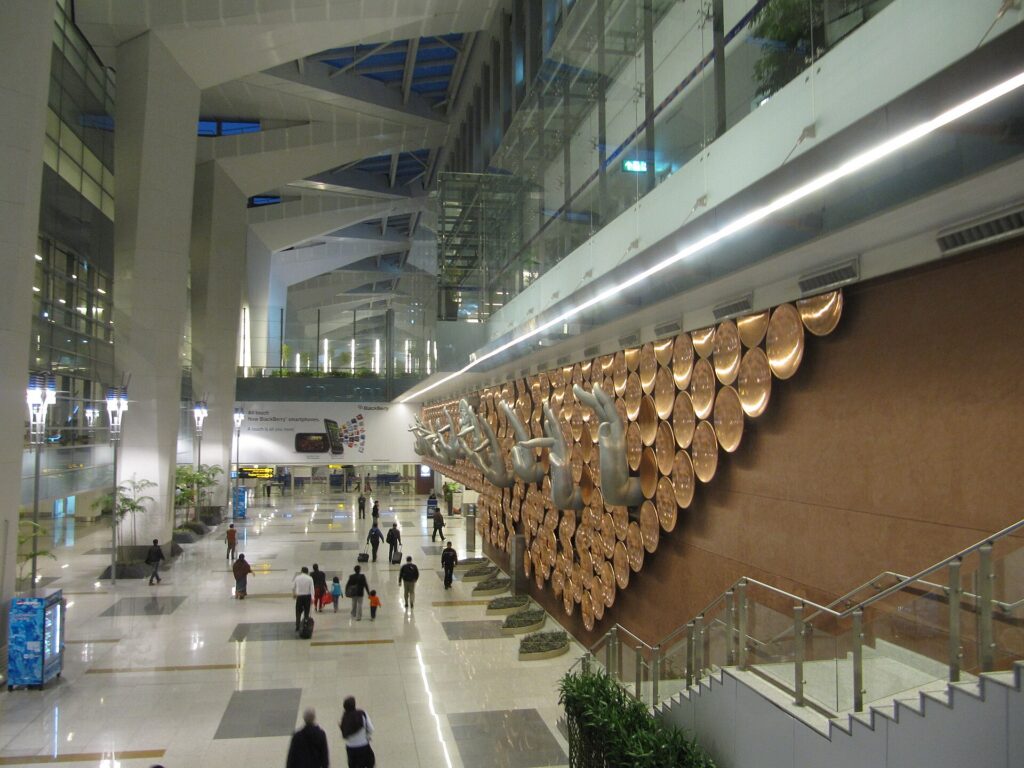
    The departures hall inside Terminal 3 at Indira Gandhi International Airport in New Delhi
    Delhi's Terminal 3 handles many of the long-haul flights between India and North America, Europe and the Gulf (Photo: PDXDUS via Wikimedia Commons, CC0)

    Documents and visas: the principles

    Entry rules are the one area where a mistake can end a trip before it starts, and they change often. We will not list country-by-country requirements here. Instead, here is how to check them properly.

    1. Your passport

    Many countries expect your passport to be valid for a period beyond your planned stay, and some require blank pages for stamps. Check your destination’s rule well before you book. Indian citizens apply for and renew passports through the Ministry of External Affairs’ Passport Seva portal; start early, since you may need an appointment at a Passport Seva Kendra.

    2. Visas and electronic travel authorizations

    Always use the destination government’s own website. For the most common routes from India:

    • Canada: Immigration, Refugees and Citizenship Canada’s tool to check if you need a visa or eTA asks about your citizenship, how you are traveling and why.
    • United States: the US State Department’s US visas section explains the types of US visas and how to apply.
    • Other destinations: go to the official immigration or foreign affairs website of the country you are visiting, not a third-party site.

    Two warnings. Unofficial sites that look like government portals often charge high “service fees” for applications you can make directly. And transit rules matter: some countries require a transit visa even if you never leave the airport, depending on your nationality and route.

    3. What your airline checks: IATA Timatic

    At check-in, airlines verify that you have the documents to enter your destination and any transit country. Most use IATA’s Timatic database for this. IATA describes its IATA Travel Centre as a source of passport, visa and health requirement information drawn from the same database used by virtually every airline. It is a useful cross-check, but the destination government’s own site is the final word, and the airline can deny boarding if your documents do not meet the requirements.

    4. Copies and backups

    Keep a photo of your passport data page, visa and bookings in your phone and in cloud storage, and a printed copy in a separate bag. If your passport is lost abroad, contact the nearest Indian embassy or consulate (or your own country’s embassy if you are visiting India) as soon as possible.

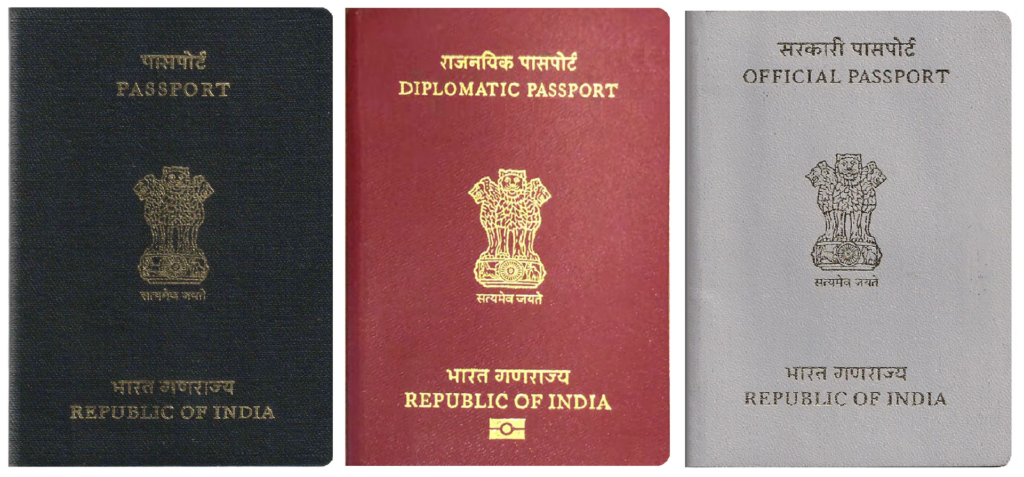
    Ordinary, official and diplomatic Indian passports side by side
    Check your passport's validity well before you book; many countries require it to extend beyond your stay (Photo: Vikassinghhhh via Wikimedia Commons, CC BY-SA 4.0)

    Visiting India: eVisa and arrival basics

    If you are traveling to India from abroad, the Government of India’s official portal is Indian Visa Online (eVisa). Here is what the portal itself sets out:

    • eVisa categories include e-Tourist, e-Business, e-Medical, e-Medical Attendant, e-Student, e-Transit and others. The e-Tourist visa comes in several durations; check the current options and conditions on the portal.
    • The process is to apply online and upload a photo and passport page, pay the fee online, receive an Electronic Travel Authorization (ETA) by email, then present the ETA at the immigration check post, where the eVisa is stamped in your passport.
    • Eligibility and entry points: the portal lists which nationalities can use the eVisa and the authorized airports and seaports through which eVisa holders can enter. Check both before you book, especially if you plan to arrive by land or sea.
    • No express fees: the portal advises that the Government of India makes no provision for charging emergency or express fees for an eVisa. Treat any site that charges one with suspicion.
    • e-Arrival card: the portal notes that foreigners and OCI cardholders can complete the e-Arrival card online within 72 hours before arrival, and that this is for arrival information, not a visa.

    The portal also advises travelers to read the instructions on the Bureau of Immigration website. Canadians should also read the Government of Canada’s travel advice for India, which covers entry requirements, safety, health and local laws from a Canadian perspective.

    Power: plugs, voltage and adapters

    India uses plug types C, D and M, at 230 volts and 50 hertz. Type D (three round pins in a triangle) is the most common for everyday sockets, type M is a larger three-pin version used for heavier appliances, and type C is the familiar two-pin plug. Many Indian hotels and homes have universal or multi-standard sockets, but you cannot count on it. The International Electrotechnical Commission’s World Plugs page shows the plug type and voltage for every country; check your destination before you pack.

    RegionPlug typesVoltageWhat an Indian traveler needs
    IndiaC, D, M230 VVisitors from North America need a C or D adapter and dual-voltage devices
    Canada and the United StatesA, B120 VA/B adapter; check that each device accepts 120 V
    United KingdomG230 VG adapter
    Most of continental EuropeC, F (plus E in some countries)230 VA two-pin C plug often fits; an adapter covers the rest
    AustraliaI230 VI adapter
    SingaporeG230 VG adapter

    Confirm the details for your exact destination on the IEC World Plugs page, since some countries use more than one type.

    Adapter or converter?

    An adapter only changes the shape of the plug. A converter changes the voltage. Most phone, tablet and laptop chargers are designed to accept a wide range of voltages; look for an input rating such as “100-240V” printed on the charger. If you see that, an adapter is all you need. High-power heating appliances such as hair dryers, straighteners and kettles are often single-voltage; a 230-volt Indian appliance should not be plugged into a 120-volt North American outlet through an adapter alone, and vice versa. Many travelers simply buy a dual-voltage appliance or leave it at home.

    What to pack

    • A universal travel adapter with USB ports, or two simple adapters for your destination.
    • A compact multi-port charger to charge several devices from one socket. Our guide to 3-in-1 chargers covers compact options for phone, watch and earbuds.
    • A short extension or travel power strip with the right plug, useful in hotel rooms with a single socket.
    • Cables for every device, plus one spare.
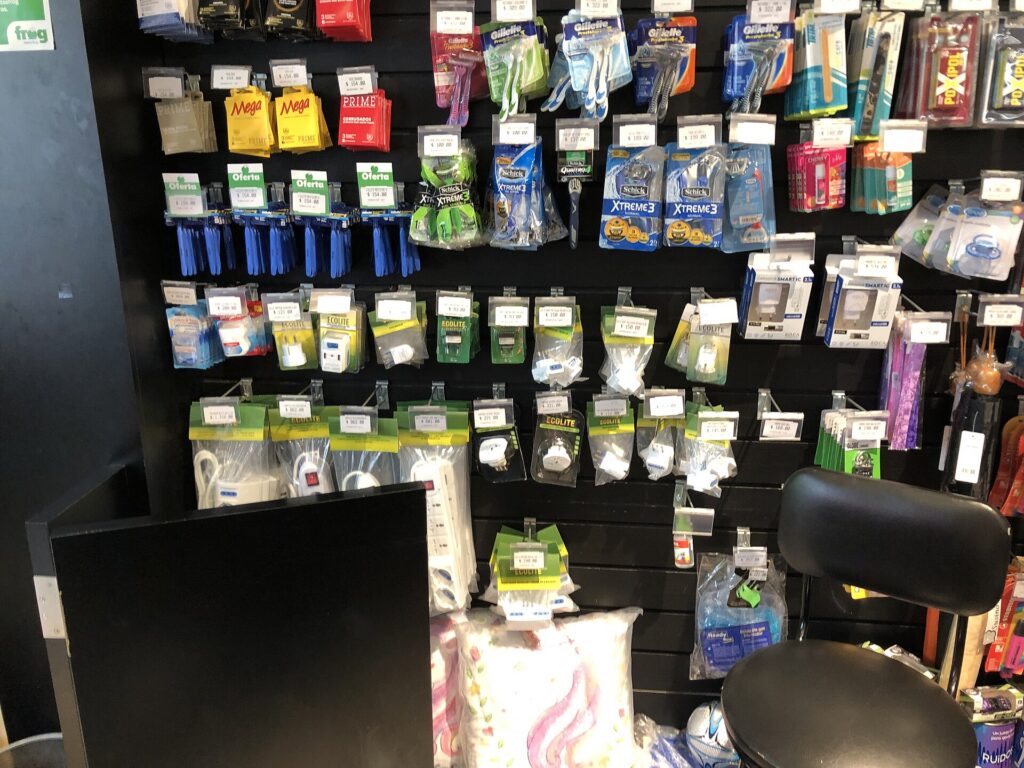
    Travel plug adapters and power strips hanging on a store display
    An adapter changes the plug shape, not the voltage; check each device's input rating before you plug in (Photo: Grandmaster Huon via Wikimedia Commons, CC0)

    Power banks and batteries

    A power bank is essential for long travel days, but it has to go in your carry-on. The US Federal Aviation Administration states that spare lithium batteries, including power banks and battery charging cases, must be carried in carry-on baggage only, and that many airlines have stricter limits on how many you can bring. Rules in India and other countries follow similar principles, and individual airlines may restrict using or charging power banks on board. Check your airline’s current policy before you fly, and if your cabin bag is checked at the gate, take the power bank out first.

    Essentials for Indian travelers going abroad

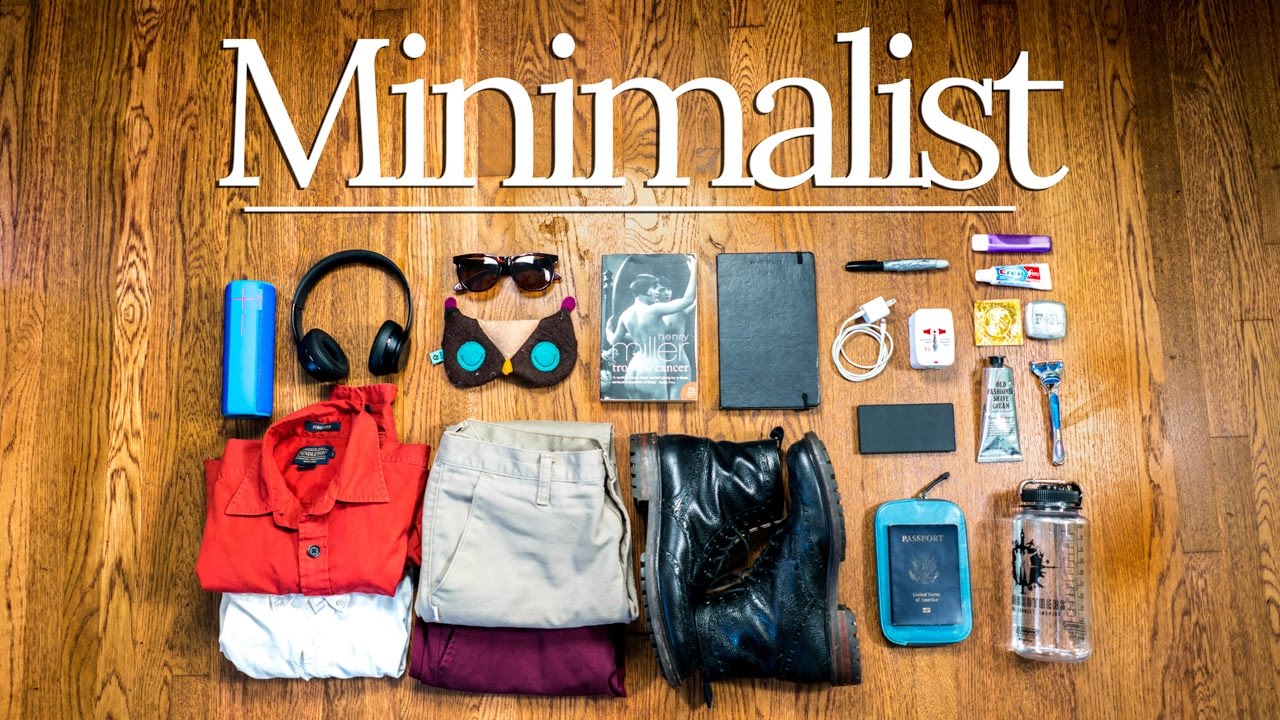
    A long-haul comfort kit

    Flights from India to North America are among the longest in the world, and even flights to Europe or with a Gulf connection make for a long day. A small kit makes a real difference:

    • A neck pillow that suits how you sleep; see our guide to airplane pillows
    • An eye mask and earplugs, or noise-cancelling headphones; see our guide to noise-cancelling headphones
    • A warm layer or shawl, since cabins get cold
    • Comfortable socks and slip-on shoes
    • A refillable water bottle, empty through security
    • A phone holder that clips to the seatback, if you like watching your own downloads
    • Toothbrush, lip balm and small toiletries within liquid limits

    Our guide to sleeping on flights covers seat choice, jet lag and drug-free ways to rest on a long-haul flight.

    Packing cubes and smart luggage

    Packing cubes keep clothes, gifts and electronics separate, make security checks faster and help you repack after a stopover. They are especially helpful for family trips and for students moving abroad with a lot of luggage. Check your airline’s baggage allowance carefully: some fares allow a number of pieces with a weight limit per bag, others a total weight, and allowances often differ between the international and domestic legs of a trip. A luggage scale saves arguments at the check-in counter. Our main guide to travel luggage explains carry-on vs checked bags, hardside vs softside and how airline size rules work.

    Documents wallet and security

    A passport holder or travel wallet keeps your passport, visa printouts, boarding passes and cards together. For busy cities and transit, a money belt or hidden pocket keeps backup cash and cards safe. See our guides to passport holders, money belts and anti-theft backpacks.

    Handheld bidet or peri bottle

    Washing with water after using the toilet is the everyday norm in India and in many other countries, while bathrooms in North America, the UK and much of Europe often provide only toilet paper. A collapsible peri bottle or a compact portable bidet sprayer solves this simply and discreetly. Pack it empty; it takes very little space. Travelers visiting India from abroad will often find a hand shower or tap next to the toilet and may want to carry some tissue as well.

    Clothing for a different climate

    If you are heading to Canada, the northern United States or northern Europe between late autumn and spring, a proper winter coat, gloves, a hat and waterproof shoes are essential, and they are often easier to buy after you arrive, where the range suits local conditions. Pack layers rather than one heavy item, and wear your bulkiest shoes and jacket on the plane to save space. For long walking days, see our guide to comfortable walking shoes.

    Food from home and customs

    Many travelers carry snacks, spices or sweets from home, and it is a lovely part of visiting family. But customs rules on food are strict in many countries, particularly for meat, dairy, fresh fruit, vegetables and seeds. The safe principle is to declare all food on your customs form or to the officer when you arrive; undeclared food can lead to fines, while declared food is either allowed or simply taken away. Check the destination’s customs agency website before you pack, and keep homemade items well sealed and labeled.

    Medicines

    Carry prescription medicines in their original labeled packaging in your carry-on, with a copy of the prescription and a letter from your doctor for anything unusual. Some medicines that are sold over the counter in one country are controlled in another, so check the destination’s rules. A small travel first aid kit covers minor needs on the road.

    Money and connectivity

    Tell your bank you are traveling, carry at least two cards from different networks and keep some local currency for your arrival. A forex card or a card without foreign transaction fees can reduce costs. For your phone, compare an international roaming pack with a local SIM or eSIM at your destination, and make sure your phone is unlocked if you plan to use a local SIM. Download offline maps and your airline’s app before you leave.

    Essentials for travelers visiting India

    Health preparation

    The CDC’s India travel health page recommends seeing your doctor at least a month before your trip for any vaccines or medicines you may need (source: CDC). It also advises choosing safe food and drinks and practicing good hand hygiene, and recommends protecting yourself from mosquito bites with insect repellent, long sleeves and pants, and air-conditioned or screened rooms, noting that several mosquito-borne diseases cannot be prevented by vaccines alone (source: CDC). Pack hand sanitizer, a refillable bottle for filtered or bottled water and insect repellent, and see a travel health clinic for advice specific to your itinerary.

    Clothing and respect for local customs

    India is vast and diverse, and dress norms range from very relaxed in big cities and beach areas to more conservative in rural areas and at religious sites. Light, breathable cotton and linen suit most of the country for much of the year. Bring a light scarf or shawl: it is useful for covering your head where that is expected, for example in gurdwaras, and for covering shoulders at temples and mosques. Shoes are removed at many places of worship, so slip-ons are practical, and a pair of socks helps on hot stone floors. When in doubt, watch what others do or ask; people are generally happy to explain.

    Weather and seasons

    Much of India has a hot season, a monsoon season roughly from early summer into early autumn, and a cooler dry season in winter, but the pattern varies widely between the south, the plains and the Himalayas. The mountains can be cold at any time of year. Check the forecast for each region on your itinerary and pack layers, a compact umbrella or rain jacket in the monsoon, and sun protection year-round.

    Power and devices

    Bring a type C or D adapter (or a universal adapter), and check that your devices accept 230 volts. Power cuts happen in some areas, so a power bank is useful, and a small flashlight or your phone light helps at night.

    Getting around

    India has an extensive domestic flight network and one of the world’s largest rail systems. Ride-hailing apps work in most big cities. Keep digital and printed copies of your ETA and hotel bookings, since you may be asked for them on arrival and at hotel check-in.

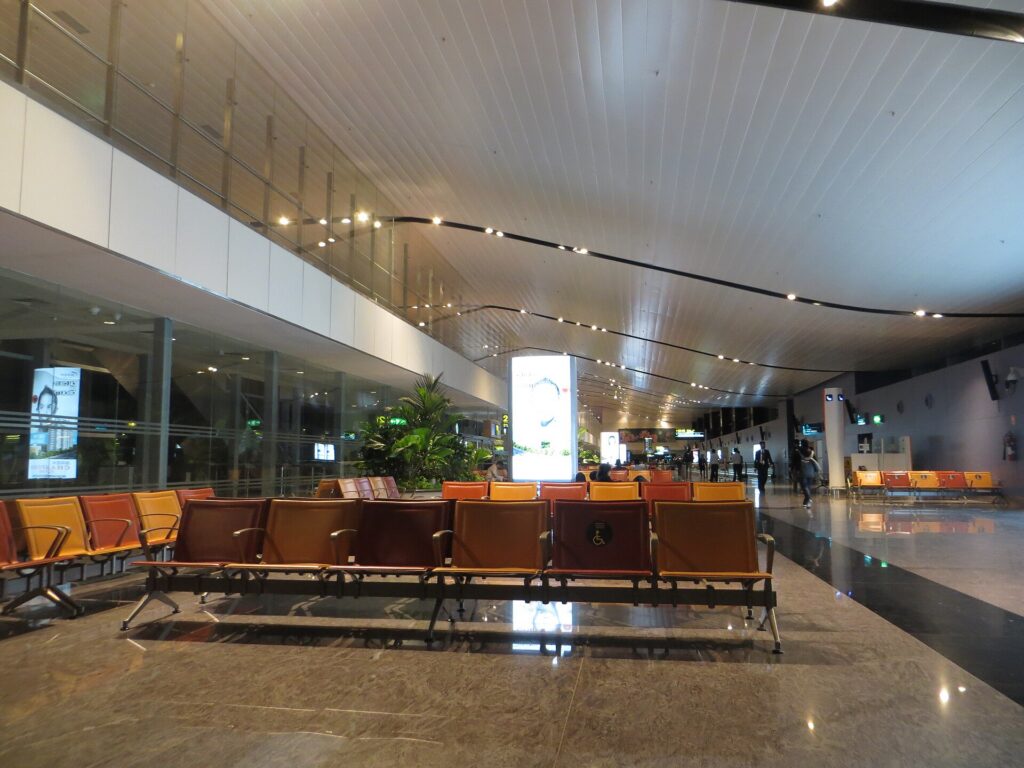
    The international departures area of Kempegowda International Airport in Bengaluru
    Airlines check your visa or travel authorization at check-in, so have documents ready before you reach the counter (Photo: Sunnya343 via Wikimedia Commons, CC BY-SA 4.0)

    Carry-on checklist for a long-haul flight to or from India

    • Passport, visa or ETA printout, boarding pass and a copy of your hotel or host address
    • Pen for arrival forms
    • Phone, charger, universal adapter and power bank
    • Medicines in original packaging, plus a copy of prescriptions
    • Neck pillow, eye mask, earplugs or headphones
    • Warm layer or shawl, socks
    • Empty refillable bottle
    • Toothbrush and toiletries within liquid limits
    • A change of clothes, in case your checked bag is delayed
    • Peri bottle or small pack of tissues and wipes
    • Some snacks, declared if you are crossing a border

    For women travelers, our guide to travel-friendly feminine hygiene products covers what to carry and how liquid rules apply. For laptop users, our list of laptop travel accessories helps keep work gear organized.

    Common mistakes

    • Using an unofficial visa website. Apply through the destination government’s official portal, such as India’s eVisa portal for visitors to India.
    • Forgetting transit requirements. A connection in a third country can need its own visa or authorization depending on your nationality.
    • Packing power banks in checked bags. They belong in your carry-on.
    • Plugging a single-voltage appliance into the wrong voltage. An adapter does not convert voltage.
    • Not declaring food. Declaring is almost always the safer choice.
    • Letting a passport get too close to expiry. Renew early if you have trips planned.
    • Relying on one card or one copy of documents. Keep backups in separate places.

    Frequently asked questions

    What plug type does India use?

    India uses types C, D and M at 230 volts and 50 hertz. Type D is the most common for everyday sockets. Check your destination on the IEC World Plugs page.

    Do I need a voltage converter for India or for travel abroad?

    For most phone and laptop chargers, no: check for an input rating like “100-240V”. High-power heating appliances are often single-voltage and need a dual-voltage model or a proper converter.

    Where do foreigners apply for an Indian eVisa?

    On the Government of India’s official Indian Visa Online portal, which lists eligible nationalities, visa categories, required documents and authorized entry points.

    What is the e-Arrival card for India?

    According to the official portal, foreigners and OCI cardholders can submit an e-Arrival card online within 72 hours before arriving in India. It provides arrival information and is not a visa.

    How do I check visa rules for my destination?

    Use the destination government’s official website, such as Canada’s visa and eTA checker, and cross-check with the IATA Travel Centre, which draws on the database airlines use at check-in.

    Can I carry a power bank on international flights?

    Yes, in your carry-on only, according to the FAA. Airlines may limit the number and capacity and may restrict use on board, so check your airline’s rules.

    Can I bring Indian snacks and spices abroad?

    Often yes, but rules vary by country and by type of food. Declare all food on arrival and check the destination’s customs website before you pack.

    What should visitors to India pack for health?

    See a doctor at least a month before your trip, as the CDC recommends, and pack insect repellent, hand sanitizer and a refillable bottle for safe water.

    Once your documents and bags are ready, compare fares across flexible dates on our flight search, including routes to Toronto and London, two of the busiest destinations for travelers from India. Our guide to international flight booking tips helps you choose connections and fares, and our guide to airport arrival times for international flights helps you plan the day of travel. If you are visiting family or studying in Canada, our guide to things to do in Toronto and our hotel search will help you plan the rest of the trip.

  • Best Places To Visit In Europe In Fall

    Best Places To Visit In Europe In Fall

    Fall is Europe’s best-kept open secret. The summer crowds thin out after the school holidays, room rates and transatlantic fares ease, the Mediterranean is still warm enough to swim in September, and the countryside turns gold just as the harvest brings wine, truffles and festivals to the table. City museums are quieter, restaurants are easier to book, and the light is kinder for photographs. The trade-offs are shorter days, more changeable weather in the north, and seasonal closures on some islands and in some mountain resorts as the season winds down. This guide explains how fall travel in Europe works month by month, profiles the destinations that are at their best between September and November, from Oktoberfest in Munich to truffle season in Piedmont, and shows how to plan the flights, rooms and routes so you get the benefits of the season without the pitfalls.

    The short answer

    In September, go south and to the coast: the Greek islands, Croatia’s Dalmatian coast and southern Italy still have summer weather with fewer people, and Munich hosts Oktoberfest late in the month. In October, go for food, color and culture: Piedmont’s truffle season, Portugal’s Douro Valley after the harvest, Prague and Transylvania in their autumn colors, and Rome and Andalusia in comfortable warmth. In November, choose cities: Paris, London, Vienna and Budapest are at their quietest and cheapest before the Christmas markets open late in the month. Book Oktoberfest and harvest-weekend stays early, keep everything else flexible, and compare fall fares into Europe’s gateways on our flight search.

    Fairground rides and show booths lit up at Oktoberfest in Munich
    Oktoberfest in Munich runs from late September to the first Sunday in October; book rooms early (Photo: Richard Bartz, Munich aka Makro Freak via Wikimedia Commons, CC BY-SA 2.5)

    How fall travel in Europe works

    Shoulder season pricing

    From mid-September, most of Europe moves out of peak season. The exact timing varies: the Mediterranean coast stays busy into early October, while northern cities quieten as soon as schools go back. Hotels drop their rates, and flights from North America usually become easier to find at reasonable prices once the summer rush has passed. The exceptions are the big events, such as Oktoberfest, major trade fairs and harvest-festival weekends, which can fill every room in town. Our guide to the best time to book cheap flights and hotels covers booking windows in detail.

    Weather north and south

    Europe is a big continent, and fall means very different things in Lisbon and Edinburgh. In the south, September is often still summer, October is warm and mostly dry, and November brings more rain but mild temperatures. In the north and center, September is pleasant, October is crisp with the best autumn colors, and November is gray, damp and short on daylight. Pack layers and a waterproof jacket wherever you go.

    Shorter days and a clock change

    Daylight shrinks quickly through the season, especially in the north. European countries end daylight saving time on the last Sunday of October, so evenings get dark noticeably earlier from that point. Plan outdoor sightseeing for the morning and early afternoon, and save museums, food and nightlife for the evenings.

    Seasonal closures

    On islands and in beach and mountain resorts, many hotels, restaurants and ferry routes run a reduced schedule or close as the season ends, often from late October or November. Great for quiet, not great if you arrive to find the only taverna shut. Check opening dates and ferry timetables before you commit to a remote destination late in the season.

    The best places to visit in Europe in fall

    1. Munich, Germany: Oktoberfest

    If beer halls, brass bands and Bavarian food are your idea of a good time, Munich in late September is the place to be. Oktoberfest, the world’s largest folk festival, traditionally starts on a Saturday in the second half of September and runs until the first Sunday in October, extended to October 3 when that date falls later. Entry to the grounds is free; you pay for what you eat and drink, and tables in the big tents can be reserved in advance.

    • Why go: the beer tents, traditional food, the opening parade and the costume and rifle marksmen’s parade on the first Sunday, and a city in full festival mode.
    • Plan ahead: hotel rates rise sharply during the festival and rooms sell out. Book as early as you can, or stay in a nearby town with a fast train link.
    • Beyond the festival: the Bavarian Alps, Neuschwanstein Castle and Salzburg are all popular day trips once the festival ends and prices settle.

    Dates, tent information and visitor rules are on the official Oktoberfest website.

    2. Transylvania, Romania: castles and autumn forests

    Transylvania’s medieval towns, fortified churches and Carpathian forests are at their most atmospheric in October, when the hills turn red and gold and Halloween brings a little extra theater to the region’s Dracula connections.

    • Why go: Bran Castle, long associated with the Dracula legend; the Saxon old town of Brașov; the hilltop citadel of Sighișoara; and hiking and scenic drives in the Carpathians.
    • Getting there: most visitors fly into Bucharest and take the train or drive to Brașov, which makes the best base. Brașov also has its own small airport.
    • Getting around: a rental car gives you the most freedom for the villages and fortified churches; trains and buses link the main towns.

    Opening hours and ticket information for the castle are on the official Bran Castle website. Romania is part of the Schengen area, and it offers very good value; our guide to budget travel destinations covers more places like it.

    3. Santorini and the Greek islands: summer’s afterglow

    Santorini in July and August is crowded and expensive. In September and early October, the sea is still warm, the sunsets over the caldera are just as spectacular, and the island is noticeably calmer, especially in the evenings once day-trippers leave.

    • Why go: sunsets from Oia and Fira, volcanic beaches, wineries, and the whitewashed villages without the peak-season crush.
    • Timing: the season winds down through October, and many hotels and restaurants close for winter from about November. Ferry schedules also thin out, so check them before planning an island hop.
    • Alternatives: Crete and Rhodes, larger islands with more year-round life, stay warm into late fall.

    The Greek National Tourism Organisation’s Visit Greece site covers the islands and the mainland.

    4. Piedmont, Italy: truffle and wine season

    Piedmont, in Italy’s northwest, is where fall becomes a feast. The grape harvest in the hills of the Langhe and Roero brings the region’s famous reds into the cellars, and the white truffle season begins, celebrated at the International White Truffle Fair in Alba on weekends from October into early December.

    • Why go: truffle markets and tasting menus, wine tasting in Barolo and Barbaresco country, hill towns wrapped in autumn fog, and Turin’s elegant cafés and museums.
    • Getting there: fly into Turin or Milan and rent a car; the wine villages are hard to reach by public transport.
    • Plan ahead: fair weekends are busy in Alba, and top restaurants book up. Consider staying in a smaller village nearby.

    Italy’s official tourism portal, Italia.it, has regional itineraries for Piedmont and beyond.

    Autumn-colored vineyards on the hills of the Langhe in Piedmont, Italy
    The Langhe hills in autumn, the heart of Piedmont's wine and white truffle season (Photo: Ida Astrid via Wikimedia Commons, CC BY-SA 4.0)

    5. Prague, Czech Republic: a fairytale city in autumn

    Prague’s spires, bridges and hillside gardens look their best with a backdrop of autumn color, and October and November bring much thinner crowds on Charles Bridge and in the Old Town than summer does.

    • Why go: Prague Castle, the Old Town Square and its astronomical clock, Charles Bridge at dawn, the gardens and viewpoints of Petřín Hill, and the city’s beer halls and cafés as the evenings cool.
    • Value: the Czech Republic uses the koruna rather than the euro, and everyday costs remain lower than in many western capitals.
    • Combine it: Vienna, Berlin and Budapest are all reachable by train, making Prague a natural stop on a longer route.

    The city’s official tourism site, Prague.eu, lists fall events and exhibitions.

    6. Rome, Italy: warm days, fewer crowds

    October is one of the best months of the year in Rome. The heat of summer has broken, evenings are pleasant for dining outdoors, and the lines at the Vatican Museums and Colosseum, while never short, are more manageable than in July.

    • Why go: the ancient sites in comfortable weather, fall food like artichokes and chestnuts, and day trips to the countryside for the grape and olive harvest.
    • Plan ahead: book timed entry for the Colosseum and the Vatican Museums, even in shoulder season.

    Our guides to things to do in Rome, the best time to fly to Rome and getting around Rome cover the details. Compare flights to Rome and rooms in neighborhoods like Trastevere.

    7. Paris, France: the city after the summer

    Parisians call September the rentrée, when the city comes back from its August holidays and cultural life restarts. Fall brings new exhibitions, the gardens turning color, and the European Heritage Days in September, when many normally closed buildings open to the public.

    • Why go: museums and galleries at their best, café terraces in mild weather, and more reasonable hotel rates than in summer outside trade fairs and fashion weeks.
    • November: one of the quietest months, and a good time for museum-focused trips at lower prices.

    See our guides to things to do in Paris and the best time to fly to Paris, then compare flights to Paris and Paris hotels.

    8. London, England: theater season and autumn parks

    London’s parks, from Hyde Park to Richmond Park, turn gold in October, and the city’s theater and concert calendar is in full swing. Weather is changeable, but many of the best things to do are indoors, and many of the major museums are free.

    • Why go: West End shows, free museums, autumn walks in the royal parks, and Bonfire Night fireworks around November 5.
    • Entry: visitors from Canada and the US need a UK Electronic Travel Authorisation before traveling.

    Our guides to things to do in London, the best time to fly to London and getting around London help you plan, and you can compare flights to London for your dates.

    9. Porto and the Douro Valley, Portugal: harvest time

    The terraced vineyards of the Douro Valley, where port wine comes from, are one of Europe’s most spectacular wine landscapes, and the harvest usually runs from September into early October. Afterward, the vines turn red and gold.

    • Why go: quinta visits and tastings, river cruises and the scenic Douro railway line, then Porto’s riverside, tiled churches and port lodges.
    • Getting around: trains run up the valley from Porto; a car or a guided tour reaches more of the quintas.
    • Combine it: Lisbon is about three hours south by train.

    The official site, Visit Portugal, has regional guides.

    10. Seville and Granada, Spain: Andalusia without the heat

    Andalusian summers are fierce. By October, the heat has eased into warm, sunny days that are perfect for exploring Seville’s cathedral and old quarters, and Granada’s Alhambra.

    • Why go: the Alhambra and the Albaicín in Granada, the Real Alcázar and tapas bars of Seville, and the white villages of the countryside.
    • Plan ahead: Alhambra tickets are limited and sell out well ahead, even in fall. Buy them from the official seller as soon as your dates are firm.

    11. Dubrovnik and the Croatian coast: September sea

    Croatia’s Dalmatian coast is packed in July and August. In September, the sea is still warm, the old towns of Dubrovnik and Split are calmer, and ferries and boat trips to the islands are still running.

    • Why go: Dubrovnik’s city walls, Split’s Roman palace, swimming off the rocks, and island trips to Hvar and Korčula.
    • Timing: as with the Greek islands, services thin out after October.

    12. Vienna and Budapest: coffeehouses, baths and the first markets

    Late fall is the season for Central Europe’s indoor pleasures: Vienna’s coffeehouses, concert halls and museums, and Budapest’s thermal baths, which feel best when the air outside is cold. The first Christmas markets usually open in mid to late November.

    • Why go: classical music and opera, grand cafés, the thermal baths, and lower prices before the holiday season starts.
    • Combine them: the two cities are connected by direct trains, and Prague is an easy extension.

    If you would rather see holiday lights closer to home, our guide to the best cities for Christmas in the USA covers the North American options.

    13. The Scottish Highlands: color and drama

    The Highlands in September and October are a study in rust and purple, with heather and bracken on the hills and stags rutting in the glens. It is also a quieter time on roads that are busy in summer.

    • Why go: dramatic landscapes around Glencoe, the Isle of Skye and the Cairngorms, whisky distilleries, and Edinburgh’s old town as a gateway.
    • Be ready for weather: it changes fast, and daylight shortens quickly. Drive in daylight on single-track roads.
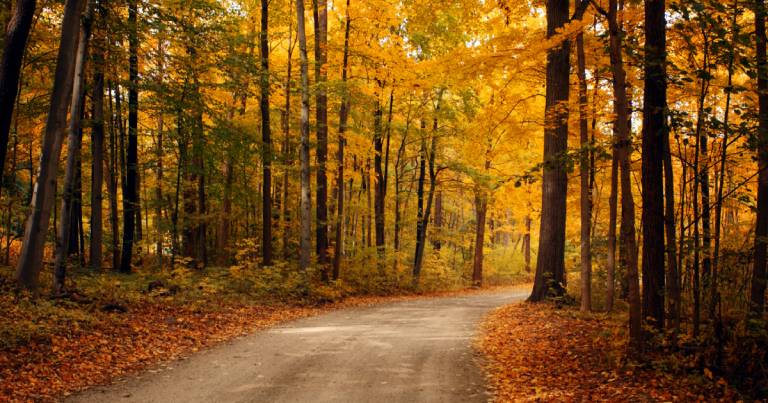
    Autumn leaves on the wooded slopes of Petřín Hill in Prague
    Petřín Hill in Prague, at its best in October's autumn color (Photo: I would appreciate being notified if you use my work outside Wikimedia.
    More of my work can be found in my personal gallery. via Wikimedia Commons, CC BY-SA 3.0)

    Fall in Europe at a glance

    DestinationBest fall windowWhy goBook ahead for
    MunichLate September to early OctoberOktoberfestHotels, tent reservations
    TransylvaniaOctoberCastles, forests, HalloweenRental car
    Santorini and the Greek islandsSeptember to early OctoberWarm sea, sunsets, fewer crowdsFerries, caldera-view rooms
    PiedmontOctober to NovemberWhite truffles, wineFair-weekend rooms, restaurants
    PragueOctoberAutumn color, valueLittle; flexible
    RomeOctoberWarm days, harvest foodColosseum and Vatican entry
    ParisSeptember to NovemberExhibitions, heritage daysRooms during trade fairs
    LondonOctober to NovemberTheater, parks, free museumsShow tickets, UK ETA
    Porto and the DouroSeptember to OctoberHarvest, vineyardsQuinta stays, river cruises
    Seville and GranadaOctober to NovemberPleasant warmthAlhambra tickets
    Dubrovnik and SplitSeptemberSwimming, old townsIsland ferries
    Vienna and BudapestNovemberCafés, baths, first marketsConcert tickets
    Scottish HighlandsSeptember to OctoberLandscapes, whiskyRental car, rural lodging

    How to plan a fall trip to Europe

    Flights

    Fall fares from North America are often lower than summer fares, but not always on every route, so compare a full month rather than fixed dates. Consider flying into one city and home from another, for example into Munich for Oktoberfest and out of Rome after a week in Italy, to avoid backtracking. Our guide to traveling Europe on a multi-city itinerary covers routes, rail and open-jaw tickets, and our international flight booking tips cover bags and connections.

    Where to stay

    Outside event dates, fall is a good time to upgrade: rooms that are out of reach in summer often become affordable. Keep rates refundable if your route might change, and compare total prices including city taxes. Search rooms on our hotel search and read our hotel booking tips before you book.

    Getting around

    Trains cover the cities well. For wine regions, rural Transylvania and the Highlands, a rental car makes a huge difference; compare rates on our car rental search, and read our rental car booking tips for insurance and cross-border rules.

    Entry rules

    Canadian and US visitors can usually spend up to 90 days in any 180-day period in the Schengen area without a visa. The EU’s Entry/Exit System now registers non-EU travelers electronically at the external border, so allow extra time on your first entry, and an ETIAS travel authorization is due to follow. The UK requires an Electronic Travel Authorisation. Check the official requirements for your passport before you book.

    Packing

    Layers are everything: a light waterproof jacket, a warm sweater or fleece, and shoes that can handle rain and cobblestones. Bring a swimsuit for the south in September and for thermal baths later in the season. Our guide to comfortable walking shoes for traveling helps with the most important item.

    Budget

    Fall is one of the best times to stretch a travel budget in Europe. Our guide on how to save money for a trip includes a cost worksheet and a savings timeline, and if you are torn between the classic three countries, our comparison of England, Italy and France helps you decide.

    The whitewashed village of Oia on the caldera cliffs of Santorini
    Oia on Santorini: still warm in September and early October, with far fewer crowds than summer (Photo: Norbert Nagel via Wikimedia Commons, CC BY-SA 3.0)

    Fall travel mistakes to avoid

    • Arriving in Munich during Oktoberfest without a room. Book early or stay out of town.
    • Assuming islands are open all season. Check hotel, restaurant and ferry schedules from late October.
    • Packing for summer everywhere. A warm September day in Rome can be a chilly evening in Prague.
    • Planning long drives after dark. Days shorten fast, especially after the clock change.
    • Leaving popular timed tickets to the last minute. The Alhambra, the Vatican Museums and the Colosseum sell out even in shoulder season.
    • Ignoring trade fairs and events. A big conference can push city hotel rates to summer levels for a week.

    Frequently asked questions

    Is fall a good time to visit Europe?

    For many travelers it is the best time: fewer crowds than summer, lower prices, warm weather in the south in September and October, harvest festivals and autumn colors. The trade-offs are shorter days and more rain in the north, especially in November.

    Where is it still warm in Europe in October?

    The south: southern Spain and Portugal, southern Italy and Sicily, Greece and its islands, Malta and Cyprus usually have warm days well into October.

    When is Oktoberfest?

    It traditionally begins on a Saturday in the second half of September and ends on the first Sunday of October, or on October 3 when that falls later. Check the official website for each year’s exact dates.

    Is Europe cheaper in the fall?

    Generally, yes. Hotel rates and transatlantic fares usually drop from mid-September, although major events, trade fairs and festival weekends can still push prices up in specific cities.

    What is the best European city to visit in November?

    Cities with great indoor life: Paris, London, Vienna, Budapest and Prague. November is one of the quietest and cheapest months, and the Christmas markets in Central Europe start to open late in the month.

    Where can I see fall foliage in Europe?

    Transylvania’s Carpathian forests, the Scottish Highlands, the Douro Valley’s vineyards, Piedmont’s hills, Bavaria and the parks of Prague and London all put on a strong show, usually peaking in October. If you are open to a longer trip, our guide to traveling to Japan covers another famous autumn-leaf destination.

    Do I need anything new to enter Europe?

    The EU’s Entry/Exit System registers non-EU visitors electronically at the border, an ETIAS travel authorization is due to follow, and the UK requires an ETA. Check the official requirements before you book.

    Ready to plan your fall escape? Compare fares into Munich, Rome, Paris, London and Europe’s other gateways on our flight search, then find rooms that are finally affordable after the summer on our hotel search. For more ideas on where your money goes furthest, see our guide to budget travel destinations.

  • 7 Relaxing Vacations For Doing Absolutely Nothing

    7 Relaxing Vacations For Doing Absolutely Nothing

    Most vacations are secretly work. There are museums to see, restaurants to book, trains to catch and a list of sights that somebody told you not to miss. Sometimes what you need is the opposite: a place where the most demanding decision of the day is whether to swim before or after lunch. A do-nothing vacation sounds easy to plan, but it is surprisingly easy to get wrong. Pick a destination with a punishing journey, a resort that is not quite right, or the wrong season, and you spend half the trip recovering from the travel and the other half fighting the weather. This guide covers seven destinations that are built for doing absolutely nothing, from the overwater villas of the Maldives to a quiet lakeside cabin at Lake Tahoe, and explains how to choose between them, when to go, how to get there from North America, and how to protect the one thing you are really paying for: rest.

    The short answer

    For pure, barefoot, nothing-to-do luxury, the Maldives, Bora Bora and the Seychelles are the classics: turquoise water, private villas and resorts designed so you never need to leave. For relaxation with culture and good value, Bali is hard to beat. For sunsets and slow days with a glass of wine, Santorini in late spring or early fall. For big scenery and fresh air, Queenstown in New Zealand. And if you want rest without a long-haul flight, Lake Tahoe delivers mountains, a clear lake and quiet cabins within reach of much of the West. Whichever you choose, the rules are the same: go in the right season, minimize connections and transfers, stay long enough to get over the journey, and book a place where you will not need a car. Start by comparing fares across a whole month on our flight search, then look at rooms on our hotel search.

    A row of overwater villas above a turquoise lagoon in the Maldives
    Overwater villas in the Maldives, where snorkeling means stepping off your deck (Photo: Martin Falbisoner via Wikimedia Commons, CC BY-SA 4.0)

    What makes a destination good for doing nothing

    Not every beautiful place is restful. The best do-nothing destinations share a few traits, and it is worth checking a shortlist against them before you book.

    1. The journey is manageable

    A trip that takes two days each way eats into your rest. For a week off, a destination with one connection is more relaxing than a cheaper option with three. For very long journeys, such as the Maldives, Bali or French Polynesia from North America, plan on at least ten nights so the travel days do not dominate the trip. Our guide to booking international flights covers choosing connections and layovers.

    2. You can stay put

    A do-nothing vacation works best when everything you need is within walking distance: the beach, a pool, a couple of good restaurants and somewhere to buy sunscreen. On a private-island resort, that happens automatically. In a town, choose your base carefully so you are not driving every day.

    3. The weather cooperates

    Tropical destinations have wet seasons and, in some regions, cyclone or hurricane seasons. Mountain and Mediterranean destinations have shoulder seasons when prices fall but the weather is still good. Travel in the wrong month and you may still have a lovely time, but you will not be lying in a hammock every day.

    4. There is nothing you “have to” see

    This is the underrated one. In Paris or Rome, guilt drags you out of bed to see the sights. In the Maldives, the sight is the view from your deck. Choose a place where rest is the point, and nobody will ask what you did all week.

    The seven destinations

    1. The Maldives

    The Maldives is the archetypal do-nothing destination: a chain of low coral atolls in the Indian Ocean, where many resorts occupy an entire island of their own. The classic stay is an overwater villa with steps down into the lagoon, where snorkeling means walking out your door and looking down.

    • Best time to go: the drier northeast monsoon season, roughly December to April, brings the calmest seas and most sunshine. May to November is wetter and windier, with lower prices; many travelers still find it worthwhile, especially for diving.
    • Getting there: international flights land at Velana International Airport near Malé, usually via hubs in the Middle East, Europe or Asia. From there, resorts are reached by speedboat, domestic flight or seaplane. Seaplanes fly only in daylight, so if you land late you may need a night near the airport before the transfer.
    • Budget reality: the Maldives is one of the most expensive destinations in the world, and on a private-island resort you pay resort prices for every meal and drink. Compare meal plans carefully; half-board, full-board or all-inclusive often works out cheaper than paying as you go. Transfers can also be a significant added cost.
    • Entry: the Maldives has historically granted visitors a free visa on arrival, and requires an online traveler declaration through its IMUGA portal before arrival. Confirm the current rules before you fly.

    The official tourism site, Visit Maldives, lists the atolls and resort types.

    2. Santorini, Greece

    Santorini’s white villages cling to the rim of a volcanic caldera, with views over the flooded crater and some of the most famous sunsets in Europe. It is a place for long breakfasts on a terrace, afternoon swims in a cave pool and a glass of the island’s Assyrtiko wine at dusk.

    • Best time to go: May, early June, September and early October. July and August are hot, crowded and at peak prices, and cruise-ship days pack the village of Oia. Many hotels close in winter.
    • Getting there: fly to Athens, then take a short domestic flight or a ferry. In summer, some European cities have direct seasonal flights to the island. Our guide to traveling Europe on a multi-city itinerary explains how to combine flights and ferries.
    • How to actually relax: stay in Imerovigli or Firostefani for the caldera views without the Oia crowds, or on the quieter beach side of the island at Kamari or Perissa, where rooms cost less. Book a room with its own terrace; it becomes your living room.

    The Greek National Tourism Organisation’s site, Visit Greece, covers Santorini and quieter islands such as Milos and Naxos. If you are also considering the mainland, our guide to the best places to visit in Europe in fall explains why September is so good in the Greek islands.

    3. Bali, Indonesia

    Bali offers a gentler, more affordable kind of relaxation: rice terraces, temples, yoga studios, spas and a food scene that ranges from roadside warungs to excellent restaurants. It is one of the few places on this list where a genuinely indulgent trip can be done on a moderate budget, since daily costs on the ground are low by North American standards.

    • Best time to go: the dry season, roughly April to October, is the most reliable. The wet season brings heavy tropical downpours, but often in short bursts, and fewer crowds.
    • Where to stay for rest: Ubud, in the hills, is the place for rice-field views, spas and yoga retreats. Sanur, on the east coast, is calm and family-friendly. Nusa Dua has large beach resorts. The busy southern areas, such as Kuta and Seminyak, are livelier and less restful.
    • Getting there: fly into Denpasar via an Asian hub. Traffic on the island can be slow, so pick a base and stay there, or split the trip between two bases rather than moving every couple of days.
    • Entry: Indonesia’s visa rules and Bali’s tourist levy apply to most international visitors and have changed in recent years; check the current requirements before you fly.

    The official tourism site, Wonderful Indonesia, has regional guides. Bali is also one of the long-haul bargains in our pillar guide to budget travel destinations.

    Green rice terraces stepping down a valley at Tegallalang near Ubud, Bali
    The rice terraces near Ubud, Bali's hill-country base for spas, yoga and slow days (Photo: Philip Nalangan via Wikimedia Commons, CC BY 4.0)

    4. Queenstown, New Zealand

    Queenstown is known as an adventure capital, with bungee jumping, jet boats and skiing, but it is also one of the most beautiful places in the world to sit still. The town sits on the shore of Lake Wakatipu beneath the Remarkables mountain range, and the surrounding region has vineyards, lakeside walks and some of New Zealand’s best scenery.

    • Best time to go: the Southern Hemisphere summer, December to February, brings long days and warm weather; March and April add autumn colors and calmer crowds. June to August is ski season.
    • How to do nothing here: skip the adrenaline. Stay in a lakeside apartment, take the gondola up for the view, have a long lunch at a winery in the Gibbston Valley, and take the short drive to the quieter towns of Arrowtown or Glenorchy.
    • Getting there: fly to Auckland or an Australian city, then connect to Queenstown. New Zealand requires most visitors, including Canadian and US citizens, to hold an electronic travel authority; see the official NZeTA page.

    5. Bora Bora, French Polynesia

    Bora Bora is the South Pacific of the postcards: a green volcanic peak surrounded by a turquoise lagoon and a ring of small islets, called motus, where most of the luxury resorts sit. Like the Maldives, it is a place for overwater bungalows, snorkeling and staying put.

    • Best time to go: the drier, cooler season runs roughly from May to October. November to April is warmer and more humid, with more rain.
    • Getting there: international flights land at Faa’a International Airport near Papeete, on Tahiti, with service from Los Angeles and San Francisco among other cities. From there, a domestic flight takes you to Bora Bora, followed by a boat transfer to your resort. See our LAX airport guide if you are connecting through Los Angeles.
    • Budget reality: Bora Bora is very expensive. To stretch the budget, consider splitting the trip with a less expensive island such as Moorea or Huahine, where you can have just as much quiet for less.

    The official tourism board, Tahiti Tourisme, covers all the islands. For a Caribbean alternative with a shorter flight, see our Cayman Islands honeymoon guide.

    6. The Seychelles

    The Seychelles, an archipelago in the Indian Ocean off East Africa, has beaches that look unreal: white sand, clear water and giant granite boulders shaped by the sea. Anse Source d’Argent on La Digue is one of the most photographed beaches in the world, and La Digue itself is a quiet island where most people get around by bicycle.

    • Best time to go: the transition months between the trade-wind seasons, roughly April to May and October to November, usually bring the calmest seas and clearest water. The islands are warm year-round.
    • Getting there: fly into Mahé via a hub in the Middle East, Europe or Africa. Ferries connect Mahé with Praslin and La Digue, which are the best islands for a slow trip.
    • How to relax: spend a few nights on Praslin or La Digue rather than only on Mahé, rent a bicycle, and let the day revolve around the tide and the beach.
    • Entry: visitors must apply for a travel authorization online before arrival through the official Seychelles travel authorization portal.
    Granite boulders and clear shallow water at Anse Source d'Argent beach on La Digue, Seychelles
    Anse Source d'Argent on La Digue, one of the Seychelles' famous granite-boulder beaches (Photo: NorbertNagel via Wikimedia Commons, CC BY-SA 4.0)

    7. Lake Tahoe, California and Nevada

    Lake Tahoe is proof that you do not need a passport to switch off. The lake is large, deep and famously clear, surrounded by pine forests and the peaks of the Sierra Nevada. In summer, it is a place for beaches, paddleboards and lakeside decks; in winter, cozy cabins, fireplaces and ski resorts.

    • Best time to go: June to September for lake days; December to March for snow; September and early October are quieter, with warm days and cool nights.
    • North shore or south shore: the north shore is generally quieter and more residential, with small beach towns. South Lake Tahoe is busier, with casinos just over the Nevada line and more nightlife. For a do-nothing trip, the north and west shores are usually the better fit.
    • Getting there: Reno-Tahoe International Airport is the closest major airport. Sacramento and San Francisco are longer drives but have more flights; compare flights to San Francisco and San Francisco car rentals. In winter, check road conditions and chain requirements before driving into the mountains.

    The regional tourism site, Visit Lake Tahoe, covers lodging and seasonal activities. If you are heading into the mountains, our guide to America’s most unique state parks includes other scenic escapes in the West.

    Emerald Bay and the clear blue water of Lake Tahoe surrounded by pine-covered mountains
    Emerald Bay on Lake Tahoe: mountain calm without a passport for US travelers (Photo: Eric Philbin via Wikimedia Commons, CC0)

    Compare the seven at a glance

    DestinationBest monthsJourney from North AmericaRelative costBest for
    MaldivesDecember to AprilVery long; one or two connections plus a resort transferVery highOverwater villas, snorkeling, total seclusion
    SantoriniMay to June, September to early OctoberLong; usually via Athens or another European cityHigh in summer, moderate in shoulder seasonSunsets, wine, terraces
    BaliApril to OctoberVery long; one or two connectionsLow to moderate on the groundSpas, yoga, rice fields, value
    QueenstownDecember to April; June to August for skiVery long; usually via Auckland or AustraliaModerate to highScenery, wine, fresh air
    Bora BoraMay to OctoberLong; via Papeete from the US West CoastVery highLagoon views, honeymoons
    SeychellesApril to May, October to NovemberVery long; one or two connectionsHighBeaches, island-hopping by ferry
    Lake TahoeJune to September; December to MarchShort from the West; drive from Reno or the Bay AreaModerate to high in peak seasonCabins, lake days, no passport needed

    Closer to home: easy do-nothing trips from Canada and the US

    If a week off does not justify a long-haul flight, look closer. From most of Canada and the eastern United States, the Caribbean and Mexico offer beaches and resorts within one flight. Cancún and the Riviera Maya are among the easiest: frequent nonstop flights, a huge range of all-inclusive resorts, and a hotel zone where you can walk to the beach. See our guide to things to do in Cancún, the best time to fly to Cancún, and hotels in the Hotel Zone. For Canadians, our pages for flights from Toronto and from Vancouver are the quickest way to see where nonstops go.

    Even a city can be restful if you plan it that way. A few quiet days in a spa hotel, with one museum and a long dinner, is its own kind of doing nothing, but for real rest, water and nature win.

    How to plan a trip where you really switch off

    Choose the right kind of stay

    Stay typeWhy it helps you relaxWatch out for
    All-inclusive resortNo decisions about meals or money; everything is on siteFood variety on longer stays; what is excluded (premium drinks, spa, some restaurants)
    Private-island resortTotal seclusion; the view is the entertainmentHigh meal and transfer costs; limited choice if you do not like the resort
    Villa or apartmentSpace, privacy and a kitchen; good for families and long staysYou may need a car; you do the shopping and some of the work
    Small boutique hotelPersonal service, character, often in walkable townsFewer facilities; check noise and stairs

    Our hotel booking tips explain how to compare what is included, cancellation terms and location, which matter more than star ratings for a restful stay.

    Protect the first and last days

    Book flights that land in daylight when you can, so you are not navigating a transfer at midnight. On the way home, leave a buffer day before going back to work. Nothing undoes a relaxing week faster than landing on Sunday night and walking into a Monday meeting.

    Make the flight easier

    Long-haul flights are the cost of admission for most of these places, so make them as comfortable as you can: choose your seat early, bring a good neck pillow and noise-canceling headphones, and stay hydrated. Our guides to sleeping well on flights, airplane neck pillows and compression socks for long flights cover the details. If you want to treat yourself on the longest leg, see our business class upgrade tips.

    Set up a real digital detox

    Turn on an out-of-office reply with a clear return date, remove work email from your phone for the week, and agree in advance on the one way people can reach you in an emergency. Many travelers find that the first two or three days are the hardest; after that, the habit of checking fades.

    Stay long enough

    For a long-haul destination, jet lag alone can take several days to shake off. Ten nights or more is ideal for the Maldives, Bali, the Seychelles, Bora Bora or Queenstown. For closer destinations like Lake Tahoe or the Caribbean, a long weekend can be enough, although a full week is better.

    Budgeting for a do-nothing trip

    A relaxing trip does not have to be a luxury trip, but several of these destinations are expensive, and the costs are not always obvious at first glance.

    • Price the whole trip, not the room. On island resorts, add meals, drinks, transfers and taxes. A cheaper room with an expensive seaplane transfer and pay-as-you-go meals can cost more than a pricier all-inclusive package.
    • Travel in the shoulder season. The weeks just before and after peak season bring lower prices with weather that is usually still good.
    • Mix a splurge with a saver. Spend a few nights in an overwater villa and the rest in a beach room, or pair Bora Bora with Moorea.
    • Be flexible with dates. A few days’ shift can change the fare significantly, especially on long-haul routes.
    • Save in advance. Our guide on how to save money for a trip helps turn a dream destination into a date on the calendar.

    Safety, health and entry rules

    • Check the official advisory for your destination before booking and again before departure. Canadians should use the Government of Canada travel advice and advisories; US citizens should check the State Department travel advisories.
    • Confirm entry requirements. Several destinations on this list require an online authorization, declaration or visa before arrival, and the rules change. The official government sites are the only reliable sources.
    • Buy travel insurance with medical and evacuation coverage. Remote islands may have limited medical facilities, and evacuation is expensive.
    • Respect the sun and the sea. Tropical sun is strong, and currents can be dangerous even on calm-looking beaches. Swim where locals and resort staff advise, and use reef-safe sunscreen where it is required or encouraged.

    Frequently asked questions

    What is the most relaxing vacation destination?

    For total seclusion, a private-island resort in the Maldives or Bora Bora is hard to beat, because there is nothing to do but rest. For a more affordable option with culture and spas, Bali is excellent. Closer to home, a cabin at Lake Tahoe or an all-inclusive resort in the Caribbean or Mexico can be just as restful.

    How long should a relaxing vacation be?

    For destinations with long flights and big time differences, aim for ten nights or more so you have time to recover from the journey. For closer destinations, a week works well, and a long weekend can help if that is all you have.

    Is an all-inclusive resort good for a do-nothing trip?

    Often, yes. Having meals and drinks included removes daily decisions and budgeting. Check what is excluded, such as premium drinks, à la carte restaurants or spa treatments, and read recent reviews for food quality.

    When is the best time to visit the Maldives?

    The drier season, roughly December to April, has the calmest seas and most sunshine. The wetter months, roughly May to November, bring lower prices and more rain, but many days are still sunny.

    What is a good relaxing vacation without a long flight?

    From Canada and the northern US, Cancún and the Caribbean offer beaches within one flight. In the West, Lake Tahoe is an easy drive from Reno or the Bay Area.

    How do I actually relax on vacation?

    Choose a destination where there is nothing you feel obligated to see, stay in one place, set up an out-of-office reply, and leave a buffer day before going back to work. Plan no more than one activity per day.

    Are relaxing vacations expensive?

    They can be, especially in the Maldives, Bora Bora and the Seychelles. Bali, Mexico and shoulder-season Santorini offer much better value, and traveling outside peak season lowers the cost almost everywhere.

    More guides in this series

    This article is part of our destinations and planning series. Start with the pillar guide to budget travel destinations, then see the best cities for Christmas in the USA if you want the opposite of a quiet holiday, our guide to traveling to Japan, New York on a budget, and our guide to planning and booking a trip on TicketScanner.

    Ready to do absolutely nothing? Compare fares across a whole month on our flight search to find the dates that work, then choose a room with a view on our hotel search. If you want a beach within one flight, start with our Cancún flights page.

  • Vacationing in New York: Your Complete Guide to Cheap Flights, Hotels, and Car Rentals

    Vacationing in New York: Your Complete Guide to Cheap Flights, Hotels, and Car Rentals

    New York has a reputation as one of the most expensive cities in the world, and some of that reputation is earned. Hotel rooms in Manhattan can cost more per night than a week of groceries, a cocktail in a rooftop bar can cost as much as a meal elsewhere, and a careless week of taxis and tourist-trap restaurants adds up fast. But New York is also full of things that cost very little or nothing at all: a free ferry past the Statue of Liberty, the best people-watching on the planet, some of the world’s great parks, a walk across the Brooklyn Bridge, and a subway that takes you almost anywhere for a single fare. The difference between an expensive New York trip and an affordable one is rarely luck. It comes down to when you go, where you sleep, how you get around and what you choose to pay for. This guide covers all four, from cheap flights to New York and cheap hotels to the free sights, the neighborhoods where food is good value, and the car question (the short answer is do not rent one).

    The short answer

    To do New York on a budget, travel in January or February after the New Year week, or in the shoulder weeks of late April to early June and early November, when rooms are cheaper than in the fall and holiday peaks. Compare all three airports: JFK, LaGuardia and Newark often price very differently. Stay a subway ride from Midtown, in places like Long Island City, Downtown Brooklyn or across the river in Jersey City, rather than steps from Times Square. Never rent a car for a city stay. Build the trip around free experiences, and spend on the one or two things that matter most to you, whether that is a Broadway show, a great restaurant or the view from an observation deck. Start by comparing a whole month of fares on our New York flights page, then compare neighborhoods on New York hotels.

    The Lower Manhattan skyline seen across the harbor from the Staten Island Ferry
    The free Staten Island Ferry gives one of the best skyline views in New York (Photo: Jakub Hałun via Wikimedia Commons, CC BY 4.0)

    Why New York is worth it, even on a budget

    There are cheaper cities, but very few give you as much for free. The Statue of Liberty from the water, the skyline from Brooklyn, the architecture of Midtown, the parks, the street life in dozens of distinct neighborhoods, the food of every culture on earth: most of what makes New York special costs nothing to experience. The expensive parts are optional, and with a little planning you can decide which ones are worth it. For a full list of sights and neighborhoods, see our guide to things to do in New York.

    When to go for the lowest prices

    In New York, the hotel is almost always the biggest part of the bill, and hotel prices follow the city’s calendar more than the weather. Timing your trip is the single biggest saving you can make.

    PeriodHotel pricesWeatherBudget verdict
    January to February (after New Year)Lowest of the yearCold, sometimes snowyBest value; Restaurant Week and Broadway Week discounts often run in this period
    MarchLow to moderateCool, changeableGood value, especially midweek
    Late April to early JuneModerateMild, parks at their bestBest balance of weather and price
    Late June to AugustModerate to highHot and humidBusy with international visitors; many free outdoor events
    September to OctoberHighest outside the holidaysThe best weather of the yearExpensive, especially during the UN General Assembly in late September
    Early NovemberModerateCool, crispA good-value window before the holidays
    Thanksgiving to New YearVery high, peaking in mid-DecemberColdMagical but pricey; go early in December for the best rates

    Our guide to the best time to fly to New York covers each month in more detail, including the events that push prices up. If you want the holiday experience anyway, our guide to the best cities for Christmas in the USA explains how to time it.

    How to find cheap flights to New York

    Compare all three airports

    New York has three major airports, and fares can differ significantly between them for the same dates:

    • John F. Kennedy International (JFK) in Queens handles most long-haul and many domestic flights. The AirTrain connects to the subway and the Long Island Rail Road. See our JFK airport guide.
    • LaGuardia (LGA), also in Queens, is the closest to Midtown and mostly domestic, with many flights from Canada. It has no rail link, but public buses connect it to the subway.
    • Newark Liberty (EWR), in New Jersey, is often competitive on price. The AirTrain connects to New Jersey Transit and Amtrak trains into Penn Station in Midtown.

    Search “New York” as a city rather than a single airport so you see all three at once, then compare the total cost including getting into the city. A cheaper fare into an airport with a long, expensive ride can end up costing more.

    Be flexible on dates

    Fares can change noticeably between neighboring days. Midweek flights are often cheaper than Friday and Sunday departures, and moving a trip by a day or two can make a real difference. Our guide to the best time to book cheap flights and hotels explains how far ahead to look.

    Watch the extras

    Low-cost fares often exclude a carry-on bag, a checked bag or seat selection. Add those up before choosing the cheapest headline fare. Our guide to booking cheap domestic flights in the US covers the common traps.

    Flying from Canada

    New York is one of the easiest international trips from Canada, with frequent flights from Toronto, Montreal and Ottawa. Our pages for flights from Toronto and from Montreal show the routes, and our guide to flights between New York and Toronto covers that corridor in detail. Remember that US border preclearance at several major Canadian airports means you clear US immigration before departure, so allow extra time at the airport.

    Consider the train or bus

    From Boston, Philadelphia and Washington, DC, trains and intercity buses can be cheaper and more convenient than flying, since they arrive in the middle of Manhattan. Compare them with the total cost of a flight plus airport transfers.

    How to find a cheap hotel in New York

    Accommodation is where most New York budgets break. These strategies help.

    Stay one subway stop outside the obvious

    Midtown and Times Square are convenient for first-timers, but you pay a premium for the location. The subway runs around the clock, so a hotel a few stops away can be just as practical at a lower price.

    AreaWhy it can save moneyTrade-offs
    Long Island City, QueensOne or two subway stops from Midtown, with newer hotels and skyline viewsQuieter at night; fewer sights on the doorstep
    Downtown BrooklynMany subway lines, easy access to Lower Manhattan and Brooklyn’s best neighborhoodsLonger ride to the Upper West Side and Upper East Side
    Jersey City and HobokenAcross the Hudson, with PATH trains to Manhattan and views of the skylinePATH is a separate system; check late-night service
    Upper ManhattanOften lower rates than Midtown; close to Central Park and museumsLonger ride downtown
    Midtown (Times Square area)Walk to theaters and many sights; saves on transitUsually the most expensive; busy and noisy

    If you do want to be in the middle of it, our guide to hotels around Times Square covers the trade-offs of staying there.

    Compare the full price

    New York hotels add sizable taxes to the nightly rate, and some add “destination” or “facility” fees. Compare the final total each provider shows at checkout, not the headline rate. Our hotel booking tips explain what to look for.

    Accept a small room

    New York hotel rooms are small by North American standards. If you will only be sleeping there, a compact room in a good location is often the smartest choice.

    Book refundable, then keep watching

    Reserve a refundable rate once your dates are fixed, then keep checking. Rates move with demand, and if a lower price appears, you can switch. If your plans are last minute, our guide to last-minute hotel booking helps.

    Be careful with short-term rentals

    New York strictly limits short-term apartment rentals, so options are much narrower than in many other cities. Check that a listing is legal and properly registered before you book.

    Getting around cheaply: skip the car

    New York is the one American city where a car is a liability for a visitor. Driving is slow, parking is scarce and expensive, and most of Manhattan south of Central Park sits inside a congestion toll zone. The subway, buses, ferries and your own feet are cheaper and usually faster.

    • Subway and buses: tap a contactless card or phone at the turnstile using the OMNY system. OMNY’s fare cap works in your favor: according to the official OMNY site, once you tap the same card or device for 12 trips within seven days, the rest of the week’s rides are free. Use one card or phone for all your rides to benefit.
    • Staten Island Ferry: the City of New York runs the Staten Island Ferry as a free service between Lower Manhattan and Staten Island, passing close to the Statue of Liberty with a superb view of the skyline.
    • Walking: Manhattan is a grid north of about 14th Street, and neighborhoods like the Village, SoHo and Chinatown are best explored on foot.
    • Bike share: Citi Bike can be convenient for short trips in good weather, particularly along the waterfront greenways.

    Our guide to car rental versus public transit in New York covers the whole system in detail, including when a car does make sense, such as for a day trip to the Hudson Valley or the beaches of Long Island. If you need one for a day or two, compare options on our car rental search and pick it up the morning you leave the city.

    A subway train pulling into a station platform in New York City
    The subway runs around the clock and is the cheapest way to get around New York (Photo: Martin David martindavid via Wikimedia Commons, CC0)

    The best free and cheap things to do

    Some of New York’s greatest experiences cost nothing. Build your days around these and save your money for a couple of splurges.

    Free

    • Ride the Staten Island Ferry for the classic harbor view of the Statue of Liberty and the skyline.
    • Walk the Brooklyn Bridge, ideally from Brooklyn toward Manhattan so the skyline is in front of you, then explore DUMBO and Brooklyn Bridge Park.
    • Explore Central Park: Bethesda Terrace, Bow Bridge, the Mall, Strawberry Fields and the Reservoir.
    • Walk the High Line, a public park built on an old elevated rail line on the West Side; the official High Line site lists hours and free events.
    • Visit the 9/11 Memorial: the memorial plaza and its reflecting pools are free to visit; the museum requires a ticket. See the official 9/11 Memorial site.
    • See Grand Central Terminal, the New York Public Library’s main branch on Fifth Avenue, and St. Patrick’s Cathedral.
    • People-watch in Times Square after dark, then walk down to Bryant Park.
    • Wander the neighborhoods: Greenwich Village, SoHo, Chinatown, the Lower East Side, Harlem and Williamsburg each feel like a different city.

    Cheap or worth paying for

    • Museums: several major museums offer free or pay-what-you-wish admission at certain times or for certain visitors, and the rules differ by museum and change occasionally. Check each museum’s official site before you go, and pick the one or two museums you care about most rather than trying to see them all.
    • Broadway on a budget: the TKTS booths run by the nonprofit Theatre Development Fund sell same-day discounted tickets for many shows; see TKTS by TDF. Many shows also run digital lotteries and rush tickets. Browse upcoming shows, games and concerts on events in New York.
    • The Statue of Liberty and Ellis Island: if you want to set foot on Liberty Island, book through the official concessionaire linked from the National Park Service’s Statue of Liberty page, and be wary of street sellers.
    • Observation decks: they are expensive, so choose one. Alternatively, get a free skyline view from the Brooklyn waterfront or the Staten Island Ferry.
    • Governors Island: a short ferry ride from Lower Manhattan, with lawns, hammocks and harbor views; check the season and ferry schedule on the official Governors Island site.
    Bow Bridge crossing the Lake in Central Park with trees and Manhattan buildings behind
    Bow Bridge in Central Park, one of the city's best free experiences (Photo: Jakub Hałun via Wikimedia Commons, CC BY 4.0)

    Eating well for less

    New York is one of the best cities in the world for cheap food, as long as you avoid the tourist traps around the major sights.

    • Go classic: a slice of pizza, a bagel, a hot dog from a cart and a halal platter from a street vendor are New York institutions that cost little.
    • Head to the neighborhoods: Chinatown, Flushing in Queens, Jackson Heights and Sunset Park in Brooklyn have outstanding food at neighborhood prices.
    • Use food halls and delis: good for quick meals, variety and groups with different tastes.
    • Make lunch your big meal: many restaurants offer lunch menus that cost less than dinner.
    • Watch for Restaurant Week: the city’s Restaurant Week promotions offer set menus at participating restaurants, typically in winter and summer.
    • Tip and tax: sales tax is added at the register, and tipping around 18 to 20 percent is expected in sit-down restaurants. Budget for both.

    A sample three-day budget itinerary

    Day 1: Lower Manhattan and Brooklyn

    Start with the Staten Island Ferry for the harbor view, then walk through the Financial District to the 9/11 Memorial. After lunch in Chinatown, walk across the Brooklyn Bridge to DUMBO and spend the late afternoon in Brooklyn Bridge Park as the skyline lights up.

    Day 2: Midtown and Central Park

    See Grand Central Terminal, the New York Public Library and Bryant Park, then walk up Fifth Avenue to Central Park. Spend the afternoon in the park or at one museum. In the evening, try the TKTS booth for a same-day show, or see Times Square lit up after dark.

    The Brooklyn Bridge and Lower Manhattan seen from the Brooklyn Heights Promenade
    Walking the Brooklyn Bridge and the Brooklyn waterfront costs nothing (Photo: Abzeronow via Wikimedia Commons, CC BY 4.0)

    Day 3: The West Side and the neighborhoods

    Walk the High Line from the Meatpacking District, explore Chelsea Market, then wander through Greenwich Village and SoHo. In the evening, take the subway to Queens or Brooklyn for dinner in a neighborhood known for its food.

    For a longer stay, add a day trip. The things to do in New York guide lists day trips that are easy by train.

    Getting from the airport for less

    The ride into the city is where many visitors overspend on day one. From JFK, the AirTrain connects to the subway at Jamaica and Howard Beach, and to the Long Island Rail Road at Jamaica for a faster ride to Penn Station or Grand Central Madison. From Newark, the AirTrain links to New Jersey Transit and Amtrak trains into Penn Station. From LaGuardia, public buses run to subway stations in Queens and Upper Manhattan. Official options and current details are on each airport’s site, including the JFK airport site. A taxi or ride-hail can make sense for a family with luggage arriving late at night, but for a solo traveler or couple, transit is far cheaper and often just as quick in rush-hour traffic.

    Your New York budget checklist

    • Pick dates in a low or shoulder period, and check for big events or conventions before you book.
    • Search all three airports and compare the total cost, including bags and the ride into the city.
    • Book a refundable room a subway ride from Midtown, comparing the final price with taxes and fees.
    • Use one contactless card or phone for every subway and bus ride so the weekly fare cap works for you.
    • Plan each day around free sights, and choose one or two paid experiences that matter most.
    • Eat your big meal at lunch, and head to neighborhoods like Chinatown or Flushing for dinner.
    • Buy show, ferry and statue tickets only from official sources.

    Budget traps to avoid

    • Renting a car for a city stay. Parking, tolls and traffic make it far more expensive than transit.
    • Eating right next to the big sights. Walk a few blocks away for better food at lower prices.
    • Buying “discount” tickets from street sellers. Buy ferry, statue and show tickets from official sources.
    • Taking taxis from the airport by default. Public transit from JFK and Newark is much cheaper, and buses link LaGuardia with the subway.
    • Visiting in peak weeks without checking prices. A trip in mid-December or late September can cost far more than the same trip in January or early November.
    • Ignoring taxes and fees. Hotel taxes and fees, sales tax and tips all add up; budget for them from the start.
    • Trying to see everything. Paying for five attractions in three days is expensive and exhausting. Choose one or two, and fill the rest with free experiences.

    Frequently asked questions

    What is the cheapest month to visit New York?

    January and February, after the New Year week, are usually the cheapest months for hotels and often for flights. It is cold, but the city’s museums, theaters and restaurants are all open, and seasonal promotions like Restaurant Week and Broadway Week often run in this period.

    Which New York airport is cheapest to fly into?

    It depends on your route and dates. JFK, LaGuardia and Newark often price differently, so search all three and compare the total cost including the trip into the city.

    Where should I stay in New York on a budget?

    Consider Long Island City, Downtown Brooklyn, Jersey City or Upper Manhattan, which are often cheaper than Midtown and have good transit links. Always compare the total price including taxes and fees.

    Do I need a car in New York?

    No. The subway, buses, ferries and walking cover everything a visitor needs, and driving and parking are expensive. Rent a car only for day trips outside the city.

    What can I do in New York for free?

    Ride the Staten Island Ferry, walk the Brooklyn Bridge and the High Line, explore Central Park, visit the 9/11 Memorial plaza, see Grand Central Terminal and wander neighborhoods like Greenwich Village, Chinatown and Williamsburg.

    How can I see a Broadway show cheaply?

    Try the TKTS booths for same-day discounted tickets, enter digital lotteries, or look for rush tickets. Weeknight performances and newer shows are often easier to get.

    How many days do I need in New York?

    Three full days cover the highlights; four or five let you explore Brooklyn, Queens and a museum or two without rushing. A longer stay also spreads the cost of the flight over more days.

    More guides in this series

    This article is part of our destinations and planning series. Start with the pillar guide to budget travel destinations for more places where your money goes further, then read our guide on how to save money for a trip, the best cities for Christmas in the USA, seven relaxing vacations for doing absolutely nothing, and our guide to planning and booking a trip on TicketScanner.

    Ready to plan an affordable New York trip? Compare fares into JFK, LaGuardia and Newark across a whole month on our New York flights page, then find a well-connected room on New York hotels. For the full list of sights, see our guide to things to do in New York.