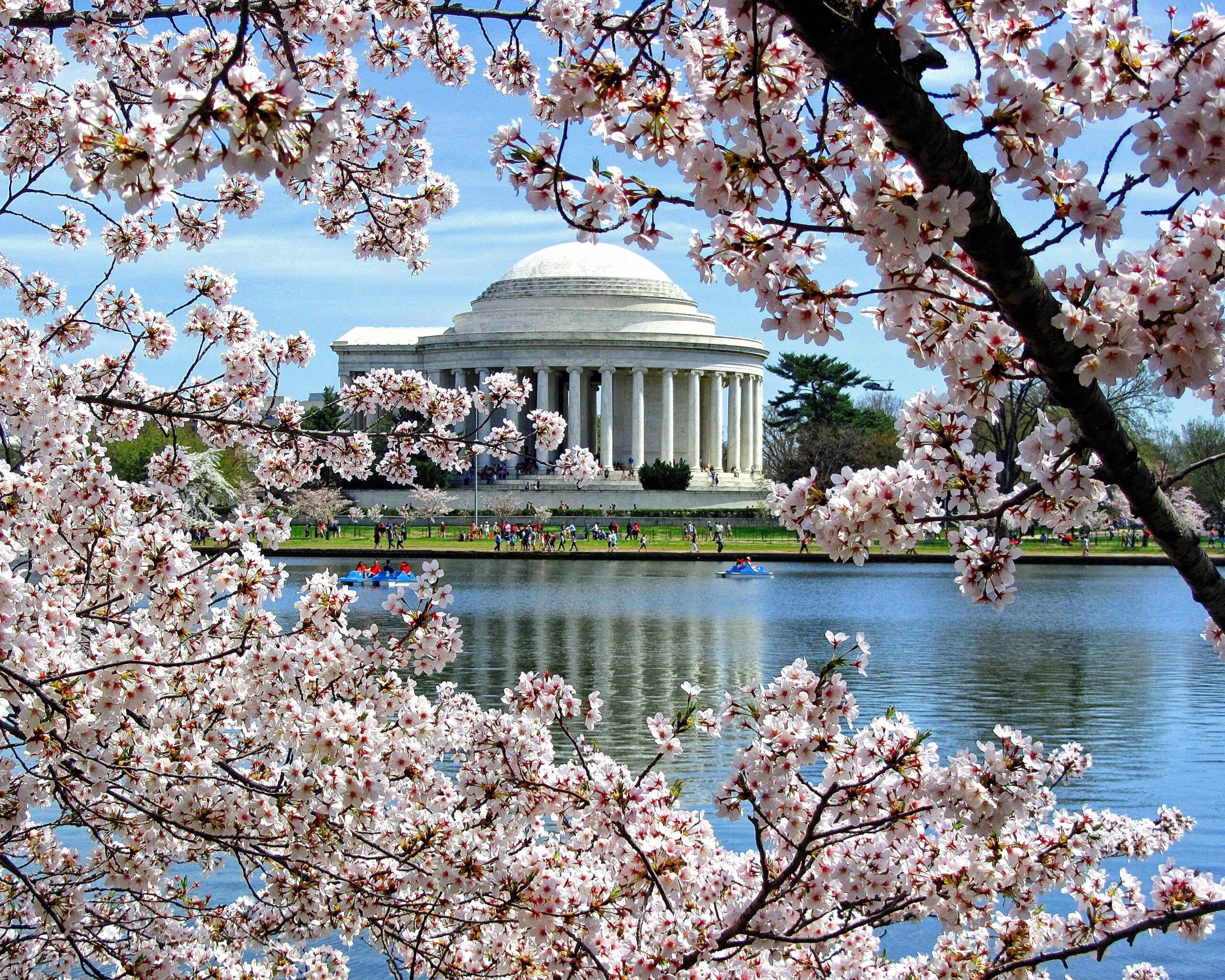
Washington, DC runs on two calendars at once, and its prices follow both. The first is the tourist calendar: the cherry blossoms in late March and early April, a spring school-trip season that puts busloads of eighth-graders on every museum step until June, a hot summer centered on the Fourth of July, and a golden fall. The second is the government calendar: Congress in session from Tuesday to Thursday, lobbyists and consultants and conventions filling downtown hotels on weeknights, and an August recess and a Christmas break when the city empties. The result is a place where a Saturday night can cost less than a Tuesday, where August is hot but cheap, and where the week between Christmas and New Year, expensive almost everywhere else, is one of the best-value hotel weeks of the year. Add three airports that compete for the same passengers and you have a city with more ways to save than most. This guide walks through the weather month by month, the fare and hotel seasons, the events that move prices, and how to choose between Reagan National, Dulles and BWI.
The short answer
For the best balance of weather and price, go in late April to mid-May, after the blossoms and before the heat, or in late October and the first half of November, when the weather is still pleasant and the fall conference peak is easing. The cheapest time for hotels is January and February, outside the long weekends and inauguration years, together with August, when Congress is away, and the week between Christmas and New Year, although holiday flights themselves are not cheap. The most expensive stretches are cherry blossom season from late March to mid-April, the spring school-trip months that follow it, the Fourth of July week, and September and October weekdays, when Congress, conventions and good weather all coincide. Wherever you land, run a flexible-date search on our Washington, DC flights page and compare all three airports; a shift of a few days, or a switch from Reagan National to BWI, can change the fare band entirely.
Washington’s weather, season by season
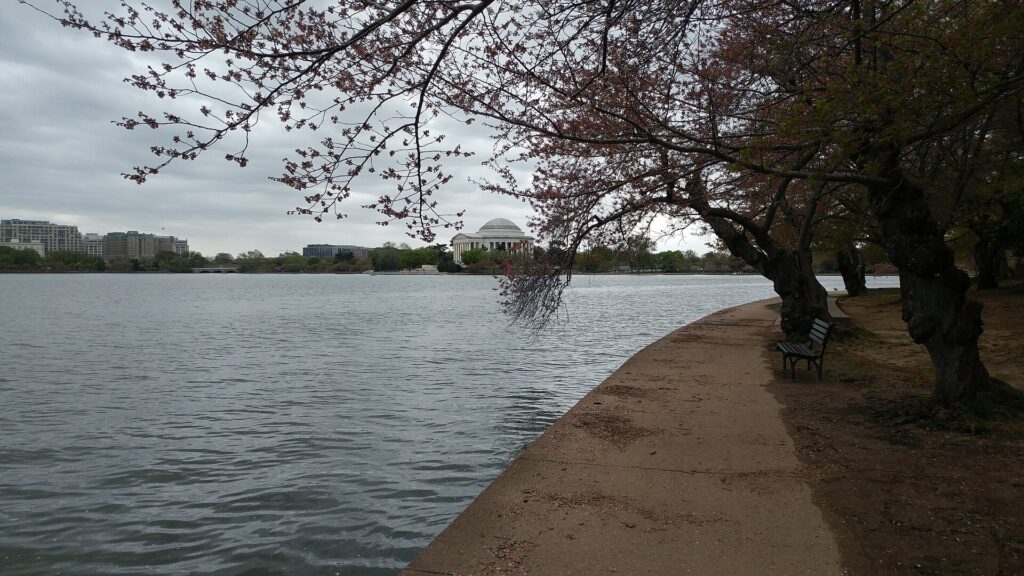
Washington sits on the Potomac at the edge of the South, with a humid subtropical climate that surprises visitors from the north. Summers are long, hot and sticky, with afternoon thunderstorms; winters are generally mild, with cold spells and an occasional heavy snowstorm that shuts the federal government for a day; and spring and fall are the seasons worth planning around. The figures below are approximate seasonal patterns based on the long-term climate normals for Reagan National Airport from NOAA’s National Weather Service; check the current forecast before you pack, because March and November can each hold a warm day and a freeze in the same week.
| Month | Typical daytime high | Typical overnight low | What it feels like | Fare pressure |
|---|---|---|---|---|
| January | around 7 °C (44 °F) | around -2 °C (29 °F) | Cold and gray; snow some years, mild spells others | Low, except inauguration years and MLK weekend |
| February | around 9 °C (48 °F) | around -1 °C (31 °F) | Still cold; the likeliest month for a big snowstorm | Low; rises for Presidents’ Day weekend |
| March | around 14 °C (57 °F) | around 3 °C (38 °F) | Changeable; the blossoms open late in the month | Moderate, then peak for the blossoms |
| April | around 20 °C (68 °F) | around 8 °C (47 °F) | Spring proper; blossoms, dogwoods, showers | Peak, especially hotels |
| May | around 25 °C (77 °F) | around 14 °C (57 °F) | Warm and green; humidity starts to build | High; graduation weekends fill hotels |
| June | around 29 °C (85 °F) | around 19 °C (66 °F) | Hot and humid; thunderstorms; long evenings | High |
| July | around 32 °C (89 °F) | around 22 °C (71 °F) | The hottest month; heat indexes far above the thermometer | High around the Fourth, then moderate |
| August | around 31 °C (87 °F) | around 21 °C (70 °F) | Hot and sticky; the city empties during the recess | Low to moderate for hotels |
| September | around 27 °C (81 °F) | around 17 °C (63 °F) | Warm; the humidity breaks later in the month | High on weekdays once Congress returns |
| October | around 21 °C (70 °F) | around 11 °C (52 °F) | Dry, sunny and mild; the best walking weather of the year | High, especially weekday hotels |
| November | around 15 °C (59 °F) | around 5 °C (41 °F) | Cool and clear; foliage lingers into the month | Moderate; flights spike at Thanksgiving |
| December | around 9 °C (49 °F) | around 1 °C (33 °F) | Cool to cold and festive; snow is unusual | Moderate; hotels soft after mid-month, flights high |
Three things the table cannot show. First, the humidity: a July afternoon at 32 °C in Washington, on an unshaded Mall with marble reflecting the sun, feels far hotter than the number, and heat advisories are routine. Plan the memorials for early morning and after dark, and the air-conditioned museums for the middle of the day. Second, the snow: Washington gets little of it in an average winter, but the city handles it badly, and a few inches can close schools, slow the Metro’s outdoor sections and cancel flights at all three airports. Third, the storms: summer thunderstorms build most afternoons from June to August and can ground departures for an hour or two, and the Atlantic hurricane season occasionally sends the remnants of a tropical storm up the coast between August and October.
How Washington’s fare seasons work
Three forces set prices for a Washington trip. The first is tourism, which peaks in spring, when the blossoms and the school groups arrive, and again in summer for families and international visitors. The second is government and business: when Congress is in session, weekday hotel demand is intense, trade associations and conventions fill the Walter E. Washington Convention Center, and the airports are full of consultants flying in on Monday and home on Thursday. The third is competition: three airports, a United hub at Dulles, a large American Airlines operation at Reagan National, and Southwest as the biggest carrier at BWI mean that fares into the Washington area are often lower than to smaller cities at similar distances, and that one airport frequently undercuts the others on the same day. Flights and hotels therefore follow slightly different curves: flights peak for the holidays and summer, while hotels peak in spring and on fall weekdays, and are soft on weekends and in August.
Peak season
Late March to June, with the cherry blossom weeks and Easter at the top, followed by the school-trip season and the university graduation weekends in May. The Fourth of July week is a short, sharp peak of its own. September and October are the second hotel peak, driven by Congress, conventions and perfect weather, though that peak is concentrated on weeknights; a Friday-to-Sunday stay in October can cost much less than Tuesday to Thursday. If you must travel in peak, book early, consider a weekend stay, and look at hotels across the river in Arlington.
Shoulder season
Late April to mid-May outside graduation weekends, late June, and November before Thanksgiving. These weeks give you pleasant weather, most of spring’s or fall’s color, and noticeably lower hotel rates. Watch Memorial Day weekend, Veterans Day and the weekend before Thanksgiving.
Low season
January and February outside the long weekends, and August for hotels. Winter rates are at their annual low, the museums are at their quietest, and Metropolitan Washington Restaurant Week, usually in January and again in August, offers set menus at fixed prices across the city. The exception is inauguration years, when the January 20 swearing-in fills hotels across the whole region. August is hot, but Congress is on recess, weekday business travel drops away, and the city’s hotels discount accordingly.
As elsewhere, mid-week departures and early or late flights usually price below Friday and Sunday afternoons on the same route, and a search across a whole month reveals cheaper pairs of dates close to your first choice. Our guide to the best times to book explains how to read those patterns.
Washington month by month
January
Cold, often gray, and after the New Year one of the cheapest months to stay. Congress returns early in the month, which keeps some weekday rates higher than the season suggests, and the Martin Luther King Jr. weekend on the third Monday brings a small bump. In inauguration years, which come every four years, the week around January 20 is the most expensive of the entire cycle and hotels sell out months ahead. Otherwise, the museums are quiet, Restaurant Week is on, and the Capitals and Wizards are at home.
February
The likeliest month for a real snowstorm and the last of the low season. Presidents’ Day weekend, on the third Monday, lifts fares and hotel rates modestly, and it is a popular weekend for families to visit the capital. The rest of the month is excellent value for a museum-heavy trip, and the National Portrait Gallery’s presidents’ hall is at its least crowded.
March
Two months in one. The first half is quiet, changeable and still cheap. From mid-month, spring break and the first school groups arrive, and when the cherry blossoms approach peak bloom, usually in the last week of March or the first days of April, hotel rates climb to their highest level of the spring. The National Cherry Blossom Festival runs for about four weeks and publishes its schedule early in the year; the Park Service’s bloom forecast comes out in early March.
April
Peak season. The blossoms usually finish by mid-April, but the dogwoods, azaleas and tulips follow, Easter adds a family spike, and the White House Easter Egg Roll brings its own crowd. The school-trip season is in full swing, which means long lines at the Capitol and the Air and Space Museum on weekdays. Book early, and consider a weekend stay to soften the rate.
May
Warm, green and busy. Passport DC opens the embassies to visitors on weekends in May, university graduations fill hotels on specific weekends in the middle of the month, and Memorial Day weekend brings a parade and a free concert on the Capitol’s West Lawn. The weeks between graduation weekends are a good value window.
June
The heat arrives and the school groups thin out. Capital Pride fills the city early in the month, Juneteenth brings events across the city, and the Smithsonian Folklife Festival sets up on the Mall toward the end of June and runs into July. Fares are high for summer travel; hotels are firm but not at spring levels.
July
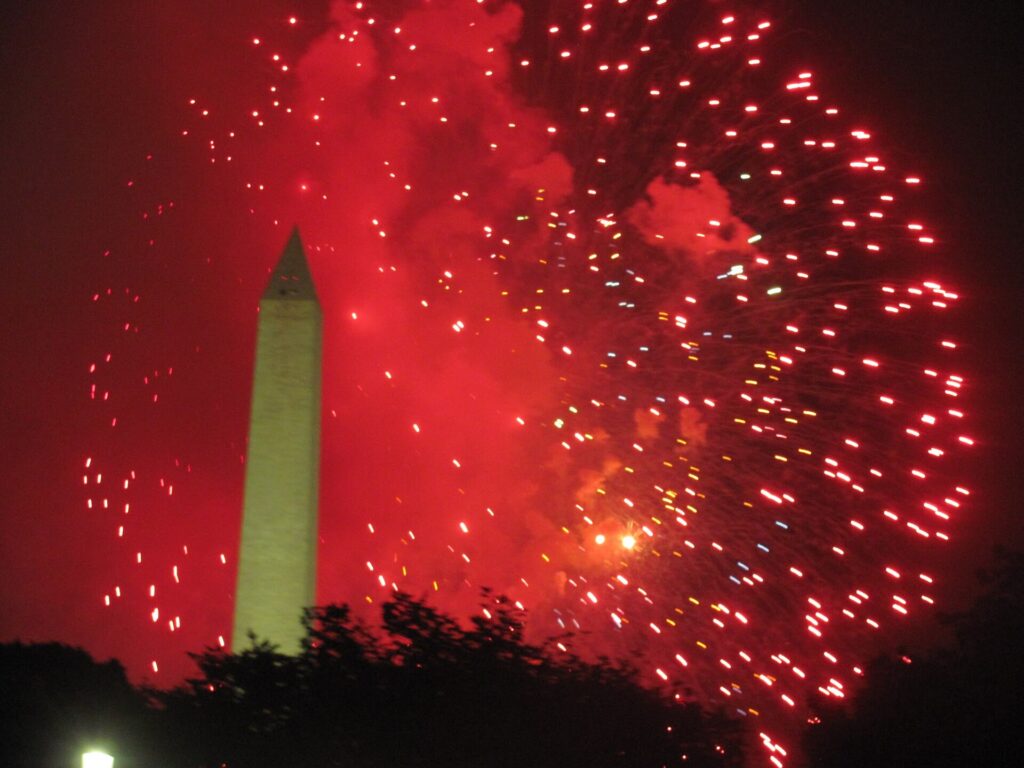
The hottest month, and the Fourth of July is the reason to come or to avoid it: a parade on Constitution Avenue, a concert on the West Lawn and fireworks over the Mall, watched by hundreds of thousands of people. Hotel rates spike for the holiday itself and ease afterward, and the rest of July is busy with families and international visitors but manageable. Plan every outdoor day around the heat.
August
Hot, humid and one of the best-value months for a hotel. Congress is on recess, the city’s professional population takes its vacations, and business hotels discount to fill rooms, especially on weekdays. Restaurant Week returns, the Nationals are at home, and the museums, although busy with families, are air-conditioned. If you can handle the heat, August is the capital at a discount.
September
Congress returns after Labor Day, conventions resume and weekday hotel rates climb sharply. The first half of the month is still hot; by the second half the humidity breaks and the weather turns lovely. Weekends are noticeably cheaper than weekdays, so a Friday-to-Monday trip is the smart play.
October
The best weather of the year: dry, sunny days, cool nights, and fall color that reaches its peak in Shenandoah around mid-month and in the city late in the month. It is also a busy conference month, the Marine Corps Marathon fills Arlington and the Mall late in the month, and weekday hotels are expensive. Book early and favor weekends.
November
Cool, clear and quieter, with the last of the foliage early in the month. Veterans Day brings ceremonies at Arlington National Cemetery. Thanksgiving week is a paradox: flights around the holiday are expensive, but Washington’s hotels are among the cheapest of the year because government and business travel stops. Before Thanksgiving, November is a shoulder-season sweet spot.
December
Festive and generally mild. The National Christmas Tree is lit on the Ellipse early in the month, the ice rink opens in the National Gallery’s sculpture garden, and holiday markets set up downtown. Congress often leaves by mid-December, and from then until New Year’s Day hotel rates drop to some of their lowest levels, even as holiday flights stay high. A late-December trip on a well-timed fare is one of the capital’s best deals.
Events that move Washington flight and hotel prices
Cross-check these against your dates before you book. Exact dates shift each year; the official Washington, DC visitor site keeps the current calendar.
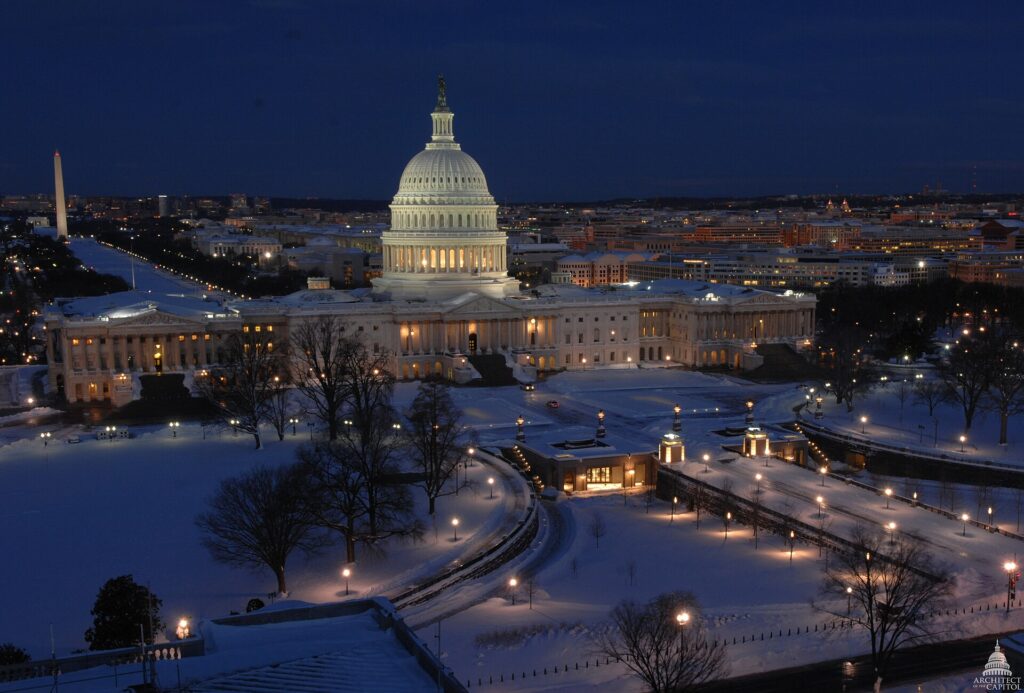
- Presidential inauguration (January 20, every four years, next in 2029): the single largest hotel spike in the city’s calendar.
- Martin Luther King Jr. weekend and Presidents’ Day weekend (third Mondays of January and February).
- National Cherry Blossom Festival (late March to mid-April), with the peak bloom weekend the most expensive of the spring.
- Spring school-trip season (March to early June), which fills hotels and museums on weekdays.
- University graduations (weekends in mid-May) and Memorial Day weekend.
- Capital Pride (June) and the Smithsonian Folklife Festival (late June into July).
- Fourth of July on the National Mall.
- Congressional sessions and large conventions, which fill downtown on weeknights; if mid-week rates look strangely high, that is usually why.
- Marine Corps Marathon (late October) and home games for the Nationals, Capitals, Wizards and Commanders. Our Washington, DC events page shows what is on sale for your dates.
Getting in from the airports
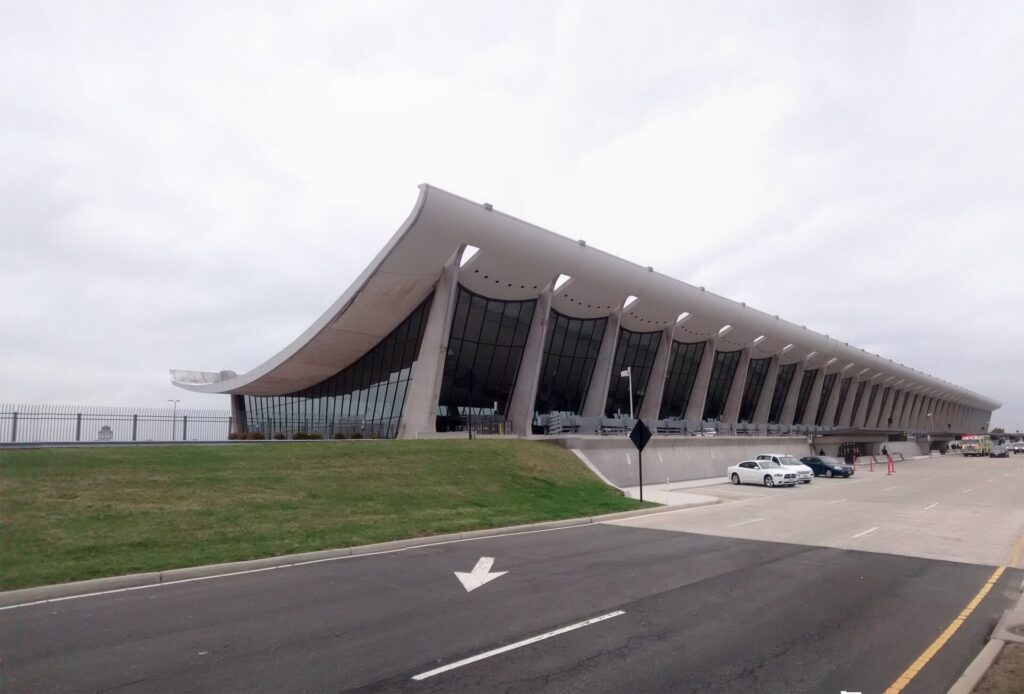
Washington has three airports, and choosing the right one can save more than choosing the right week. Reagan National (DCA), across the Potomac in Arlington, is the closest: the Metro’s Blue and Yellow lines stop at the terminal, and you can be on the Mall in about 20 minutes. A federal perimeter rule limits most of its nonstop flights to shorter domestic routes, with a limited number of exemptions, so long-haul and most international flights use the other two. Dulles (IAD), about 42 km (26 miles) west in Virginia, is United’s hub and the main international gateway, with Eero Saarinen’s swooping main terminal; the Metro’s Silver Line reaches it, and the ride downtown takes around 50 minutes to an hour, while a taxi takes 40 minutes to well over an hour depending on traffic. Baltimore/Washington (BWI), about 50 km (30 miles) northeast, is Southwest’s biggest operation in the region and often has the lowest fares; a free shuttle bus links the terminal to the BWI rail station, where MARC commuter trains and Amtrak reach Union Station in roughly half an hour to 40 minutes. When you search, include all three: a cheaper fare into BWI or Dulles usually beats a more expensive one into Reagan National even after the longer ride. Our guides to Reagan National, Dulles and BWI cover the layouts, and our car-versus-Metro guide explains the onward options.
Timing tricks that work for Washington
- Search all three airports. The same dates can price very differently into DCA, IAD and BWI. TicketScanner’s search compares them side by side.
- Stay on weekends. Washington’s hotel market is built around weekday government and business travel, so Friday and Saturday nights are often the cheapest of the week, the reverse of most leisure cities.
- Use the recess. August, Thanksgiving week and the last two weeks of December are when Congress is away and hotels discount. Run a Washington, DC hotel search for those dates before you decide.
- Book the blossoms early, or skip the peak. Rates in the peak bloom week can be far higher than those of two weeks later; the dogwoods and azaleas of late April are nearly as beautiful and far cheaper.
- Stay across the river. Arlington, Crystal City and Rosslyn are a few Metro stops from the Mall and usually cheaper than downtown.
- Combine cities. Philadelphia, Baltimore and New York are all on the Amtrak line; an open-jaw trip, flying into one and out of another, often costs no more than a round trip. See flights to Philadelphia for comparison.
- Build a buffer. Summer thunderstorms and winter snow can disrupt all three airports at once; avoid the tightest connections. Our guide to how early to arrive covers what to allow.
- Flying out of Washington instead? The same seasonality applies in reverse; see cheap flights from Washington, DC.
What to pack, by season
Winter (December to February): a warm coat, a hat and gloves, and waterproof shoes in case of slush; days vary from mild to properly cold. Spring (March to May): layers, a light rain jacket and an umbrella, with a warmer layer for cherry blossom sunrises. Summer (June to August): the lightest clothing you own, a hat, sunscreen, a refillable water bottle, and a sweater for the powerful air-conditioning in the museums. Fall (September to November): light clothing in September, layers and a jacket by late October. In every season, bring the most comfortable walking shoes you have; a day on the Mall is many kilometers on foot, and security lines move faster with a small bag.
The best time to fly to Washington for…
The cherry blossoms
The last week of March or the first week of April, but watch the Park Service’s bloom forecast before you book, and book as early as the forecast allows.
Museums without the crowds
January, February and the first half of March, when the school groups have not arrived and hotels are at their cheapest.
The best weather
Late April to mid-May, and October, with late September close behind.
The lowest hotel rates
August, Thanksgiving week and the second half of December, plus weekends in almost any month.
Families
Late June or August for school vacations, planning outdoor sightseeing for mornings and evenings, or Thanksgiving week for a cooler, quieter visit.
International visitors
Visitors from Visa Waiver Program countries need an approved ESTA before boarding, and most others need a visa; the State Department’s travel site explains what applies to you. Domestic travelers need a REAL ID-compliant license or a passport at airport security, and the TSA lists what you can carry.
Frequently asked questions
What is the cheapest month to fly to Washington, DC?
January and February are consistently the lowest for both flights and hotels outside the long weekends; August is also very cheap for hotels, and the late-December hotel lull is a bargain if you find a reasonable fare.
When is the best time to see the cherry blossoms?
Peak bloom usually falls in the last week of March or the first days of April and lasts only a few days. The National Park Service forecasts it in early March, and the festival runs for about four weeks around it.
Why are Washington hotels cheaper on weekends?
Because the city’s hotels depend on government, lobbying and convention travel from Monday to Thursday. On weekends and during congressional recesses, they discount to fill the rooms.
Which airport should I fly into for Washington, DC?
Reagan National is the most convenient, with the Metro at the terminal and the Mall 20 minutes away. Dulles has the international flights and the Silver Line; BWI often has the lowest fares and a train to Union Station. Compare all three.
Is Washington too hot to visit in summer?
It is hot and humid, but manageable if you see the memorials early and late and spend the afternoons in the air-conditioned museums, which are free.
How far ahead should I book?
Earlier for the cherry blossoms, the spring school season, the Fourth of July and inauguration years, when prices tend only to rise; for January, February and August, fares are stable enough that choosing the right dates matters more.
Does it snow in Washington, DC?
Some, in most winters, though average totals are modest. The occasional big storm can close the city and the airports for a day, so leave slack in a January or February itinerary.
Ready to pick your dates? Compare fares across the whole month and all three airports on our Washington, DC flights page, then find a room with our Washington, DC hotel search. For what to do when you land, start with our first-timer’s guide to Washington, DC.
Keep planning with TicketScanner
- Cheap flights to Washington, DC — compare DCA, IAD and BWI
- Washington, DC hotels — book early for the cherry blossoms
- Events in Washington, DC — Nationals, Capitals, concerts and shows on sale
- Things to do in Washington, DC: a first-timer's guide
- Washington, DC: rent a car or take the Metro?
- Washington Dulles (IAD) airport guide
- Baltimore/Washington (BWI) airport guide
- Where to stay: Dupont Circle
- Cheap flights from Washington, DC
- Best times to book flights and hotels
Leave a Reply