Tag: Washington DC

  • Best Time to Fly to Washington, DC: Seasons, Weather & Prices

    Best Time to Fly to Washington, DC: Seasons, Weather & Prices

    Washington, DC runs on two calendars at once, and its prices follow both. The first is the tourist calendar: the cherry blossoms in late March and early April, a spring school-trip season that puts busloads of eighth-graders on every museum step until June, a hot summer centered on the Fourth of July, and a golden fall. The second is the government calendar: Congress in session from Tuesday to Thursday, lobbyists and consultants and conventions filling downtown hotels on weeknights, and an August recess and a Christmas break when the city empties. The result is a place where a Saturday night can cost less than a Tuesday, where August is hot but cheap, and where the week between Christmas and New Year, expensive almost everywhere else, is one of the best-value hotel weeks of the year. Add three airports that compete for the same passengers and you have a city with more ways to save than most. This guide walks through the weather month by month, the fare and hotel seasons, the events that move prices, and how to choose between Reagan National, Dulles and BWI.

    The short answer

    For the best balance of weather and price, go in late April to mid-May, after the blossoms and before the heat, or in late October and the first half of November, when the weather is still pleasant and the fall conference peak is easing. The cheapest time for hotels is January and February, outside the long weekends and inauguration years, together with August, when Congress is away, and the week between Christmas and New Year, although holiday flights themselves are not cheap. The most expensive stretches are cherry blossom season from late March to mid-April, the spring school-trip months that follow it, the Fourth of July week, and September and October weekdays, when Congress, conventions and good weather all coincide. Wherever you land, run a flexible-date search on our Washington, DC flights page and compare all three airports; a shift of a few days, or a switch from Reagan National to BWI, can change the fare band entirely.
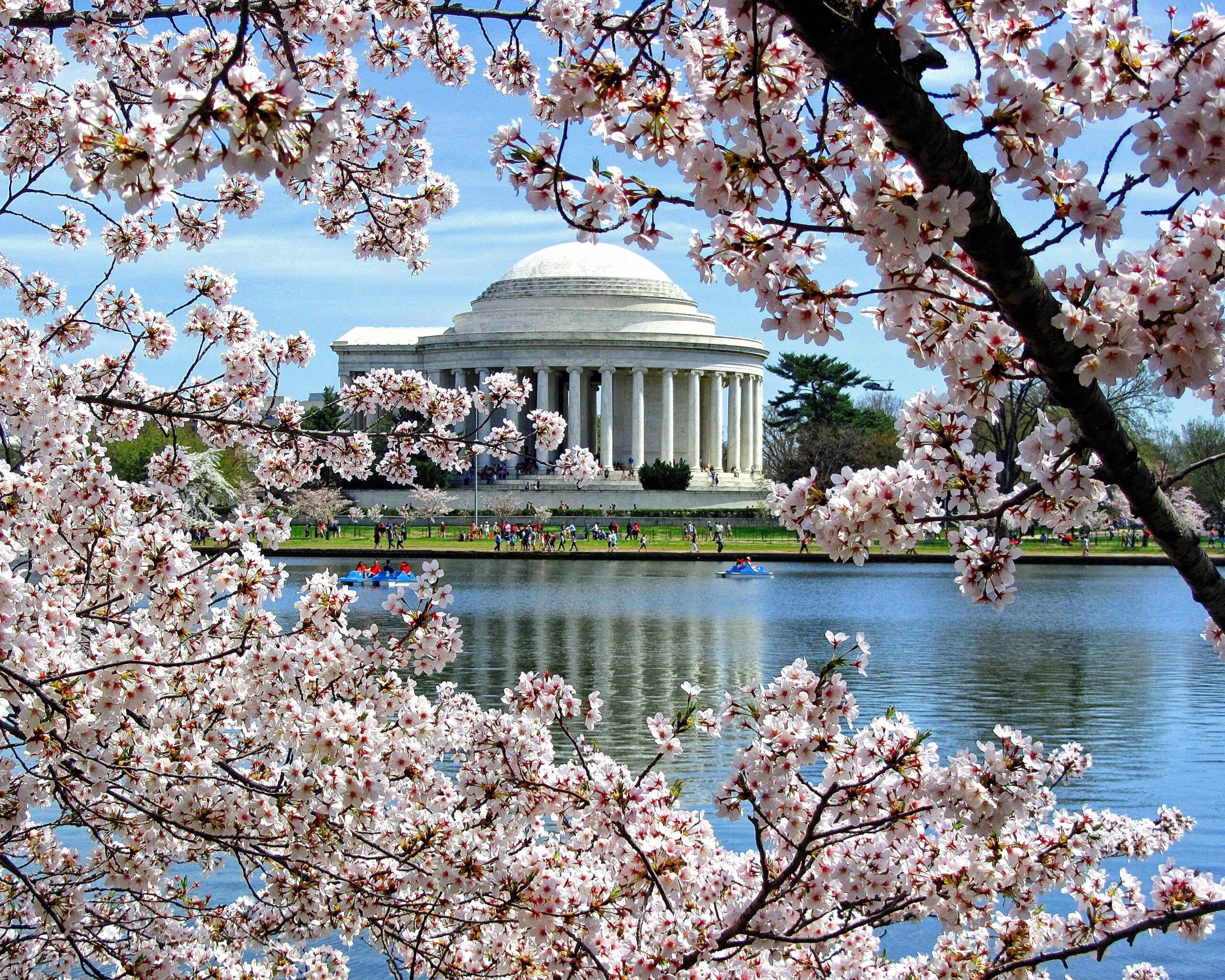
    Cherry blossoms around the Tidal Basin with the Jefferson Memorial behind
    Peak bloom at the Tidal Basin, the most expensive week of the Washington spring (Photo: Alpacaaviator via Wikimedia Commons, CC BY-SA 4.0)

    Washington’s weather, season by season

    Washington sits on the Potomac at the edge of the South, with a humid subtropical climate that surprises visitors from the north. Summers are long, hot and sticky, with afternoon thunderstorms; winters are generally mild, with cold spells and an occasional heavy snowstorm that shuts the federal government for a day; and spring and fall are the seasons worth planning around. The figures below are approximate seasonal patterns based on the long-term climate normals for Reagan National Airport from NOAA’s National Weather Service; check the current forecast before you pack, because March and November can each hold a warm day and a freeze in the same week.

    MonthTypical daytime highTypical overnight lowWhat it feels likeFare pressure
    Januaryaround 7 °C (44 °F)around -2 °C (29 °F)Cold and gray; snow some years, mild spells othersLow, except inauguration years and MLK weekend
    Februaryaround 9 °C (48 °F)around -1 °C (31 °F)Still cold; the likeliest month for a big snowstormLow; rises for Presidents’ Day weekend
    Marcharound 14 °C (57 °F)around 3 °C (38 °F)Changeable; the blossoms open late in the monthModerate, then peak for the blossoms
    Aprilaround 20 °C (68 °F)around 8 °C (47 °F)Spring proper; blossoms, dogwoods, showersPeak, especially hotels
    Mayaround 25 °C (77 °F)around 14 °C (57 °F)Warm and green; humidity starts to buildHigh; graduation weekends fill hotels
    Junearound 29 °C (85 °F)around 19 °C (66 °F)Hot and humid; thunderstorms; long eveningsHigh
    Julyaround 32 °C (89 °F)around 22 °C (71 °F)The hottest month; heat indexes far above the thermometerHigh around the Fourth, then moderate
    Augustaround 31 °C (87 °F)around 21 °C (70 °F)Hot and sticky; the city empties during the recessLow to moderate for hotels
    Septemberaround 27 °C (81 °F)around 17 °C (63 °F)Warm; the humidity breaks later in the monthHigh on weekdays once Congress returns
    Octoberaround 21 °C (70 °F)around 11 °C (52 °F)Dry, sunny and mild; the best walking weather of the yearHigh, especially weekday hotels
    Novemberaround 15 °C (59 °F)around 5 °C (41 °F)Cool and clear; foliage lingers into the monthModerate; flights spike at Thanksgiving
    Decemberaround 9 °C (49 °F)around 1 °C (33 °F)Cool to cold and festive; snow is unusualModerate; hotels soft after mid-month, flights high

    Three things the table cannot show. First, the humidity: a July afternoon at 32 °C in Washington, on an unshaded Mall with marble reflecting the sun, feels far hotter than the number, and heat advisories are routine. Plan the memorials for early morning and after dark, and the air-conditioned museums for the middle of the day. Second, the snow: Washington gets little of it in an average winter, but the city handles it badly, and a few inches can close schools, slow the Metro’s outdoor sections and cancel flights at all three airports. Third, the storms: summer thunderstorms build most afternoons from June to August and can ground departures for an hour or two, and the Atlantic hurricane season occasionally sends the remnants of a tropical storm up the coast between August and October.

    How Washington’s fare seasons work

    Three forces set prices for a Washington trip. The first is tourism, which peaks in spring, when the blossoms and the school groups arrive, and again in summer for families and international visitors. The second is government and business: when Congress is in session, weekday hotel demand is intense, trade associations and conventions fill the Walter E. Washington Convention Center, and the airports are full of consultants flying in on Monday and home on Thursday. The third is competition: three airports, a United hub at Dulles, a large American Airlines operation at Reagan National, and Southwest as the biggest carrier at BWI mean that fares into the Washington area are often lower than to smaller cities at similar distances, and that one airport frequently undercuts the others on the same day. Flights and hotels therefore follow slightly different curves: flights peak for the holidays and summer, while hotels peak in spring and on fall weekdays, and are soft on weekends and in August.

    Peak season

    Late March to June, with the cherry blossom weeks and Easter at the top, followed by the school-trip season and the university graduation weekends in May. The Fourth of July week is a short, sharp peak of its own. September and October are the second hotel peak, driven by Congress, conventions and perfect weather, though that peak is concentrated on weeknights; a Friday-to-Sunday stay in October can cost much less than Tuesday to Thursday. If you must travel in peak, book early, consider a weekend stay, and look at hotels across the river in Arlington.

    Shoulder season

    Late April to mid-May outside graduation weekends, late June, and November before Thanksgiving. These weeks give you pleasant weather, most of spring’s or fall’s color, and noticeably lower hotel rates. Watch Memorial Day weekend, Veterans Day and the weekend before Thanksgiving.

    Low season

    January and February outside the long weekends, and August for hotels. Winter rates are at their annual low, the museums are at their quietest, and Metropolitan Washington Restaurant Week, usually in January and again in August, offers set menus at fixed prices across the city. The exception is inauguration years, when the January 20 swearing-in fills hotels across the whole region. August is hot, but Congress is on recess, weekday business travel drops away, and the city’s hotels discount accordingly.

    As elsewhere, mid-week departures and early or late flights usually price below Friday and Sunday afternoons on the same route, and a search across a whole month reveals cheaper pairs of dates close to your first choice. Our guide to the best times to book explains how to read those patterns.

    Washington month by month

    January

    Cold, often gray, and after the New Year one of the cheapest months to stay. Congress returns early in the month, which keeps some weekday rates higher than the season suggests, and the Martin Luther King Jr. weekend on the third Monday brings a small bump. In inauguration years, which come every four years, the week around January 20 is the most expensive of the entire cycle and hotels sell out months ahead. Otherwise, the museums are quiet, Restaurant Week is on, and the Capitals and Wizards are at home.

    February

    The likeliest month for a real snowstorm and the last of the low season. Presidents’ Day weekend, on the third Monday, lifts fares and hotel rates modestly, and it is a popular weekend for families to visit the capital. The rest of the month is excellent value for a museum-heavy trip, and the National Portrait Gallery’s presidents’ hall is at its least crowded.

    March

    Two months in one. The first half is quiet, changeable and still cheap. From mid-month, spring break and the first school groups arrive, and when the cherry blossoms approach peak bloom, usually in the last week of March or the first days of April, hotel rates climb to their highest level of the spring. The National Cherry Blossom Festival runs for about four weeks and publishes its schedule early in the year; the Park Service’s bloom forecast comes out in early March.

    April

    Peak season. The blossoms usually finish by mid-April, but the dogwoods, azaleas and tulips follow, Easter adds a family spike, and the White House Easter Egg Roll brings its own crowd. The school-trip season is in full swing, which means long lines at the Capitol and the Air and Space Museum on weekdays. Book early, and consider a weekend stay to soften the rate.

    May

    Warm, green and busy. Passport DC opens the embassies to visitors on weekends in May, university graduations fill hotels on specific weekends in the middle of the month, and Memorial Day weekend brings a parade and a free concert on the Capitol’s West Lawn. The weeks between graduation weekends are a good value window.

    June

    The heat arrives and the school groups thin out. Capital Pride fills the city early in the month, Juneteenth brings events across the city, and the Smithsonian Folklife Festival sets up on the Mall toward the end of June and runs into July. Fares are high for summer travel; hotels are firm but not at spring levels.

    July

    The hottest month, and the Fourth of July is the reason to come or to avoid it: a parade on Constitution Avenue, a concert on the West Lawn and fireworks over the Mall, watched by hundreds of thousands of people. Hotel rates spike for the holiday itself and ease afterward, and the rest of July is busy with families and international visitors but manageable. Plan every outdoor day around the heat.

    August

    Hot, humid and one of the best-value months for a hotel. Congress is on recess, the city’s professional population takes its vacations, and business hotels discount to fill rooms, especially on weekdays. Restaurant Week returns, the Nationals are at home, and the museums, although busy with families, are air-conditioned. If you can handle the heat, August is the capital at a discount.

    September

    Congress returns after Labor Day, conventions resume and weekday hotel rates climb sharply. The first half of the month is still hot; by the second half the humidity breaks and the weather turns lovely. Weekends are noticeably cheaper than weekdays, so a Friday-to-Monday trip is the smart play.

    October

    The best weather of the year: dry, sunny days, cool nights, and fall color that reaches its peak in Shenandoah around mid-month and in the city late in the month. It is also a busy conference month, the Marine Corps Marathon fills Arlington and the Mall late in the month, and weekday hotels are expensive. Book early and favor weekends.

    November

    Cool, clear and quieter, with the last of the foliage early in the month. Veterans Day brings ceremonies at Arlington National Cemetery. Thanksgiving week is a paradox: flights around the holiday are expensive, but Washington’s hotels are among the cheapest of the year because government and business travel stops. Before Thanksgiving, November is a shoulder-season sweet spot.

    December

    Festive and generally mild. The National Christmas Tree is lit on the Ellipse early in the month, the ice rink opens in the National Gallery’s sculpture garden, and holiday markets set up downtown. Congress often leaves by mid-December, and from then until New Year’s Day hotel rates drop to some of their lowest levels, even as holiday flights stay high. A late-December trip on a well-timed fare is one of the capital’s best deals.
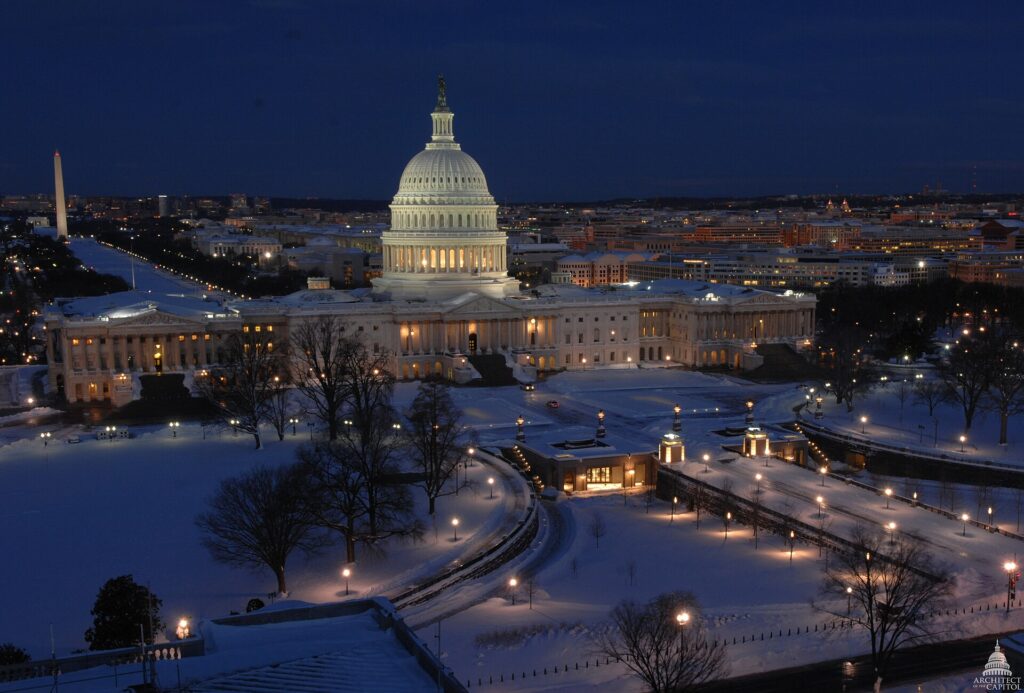
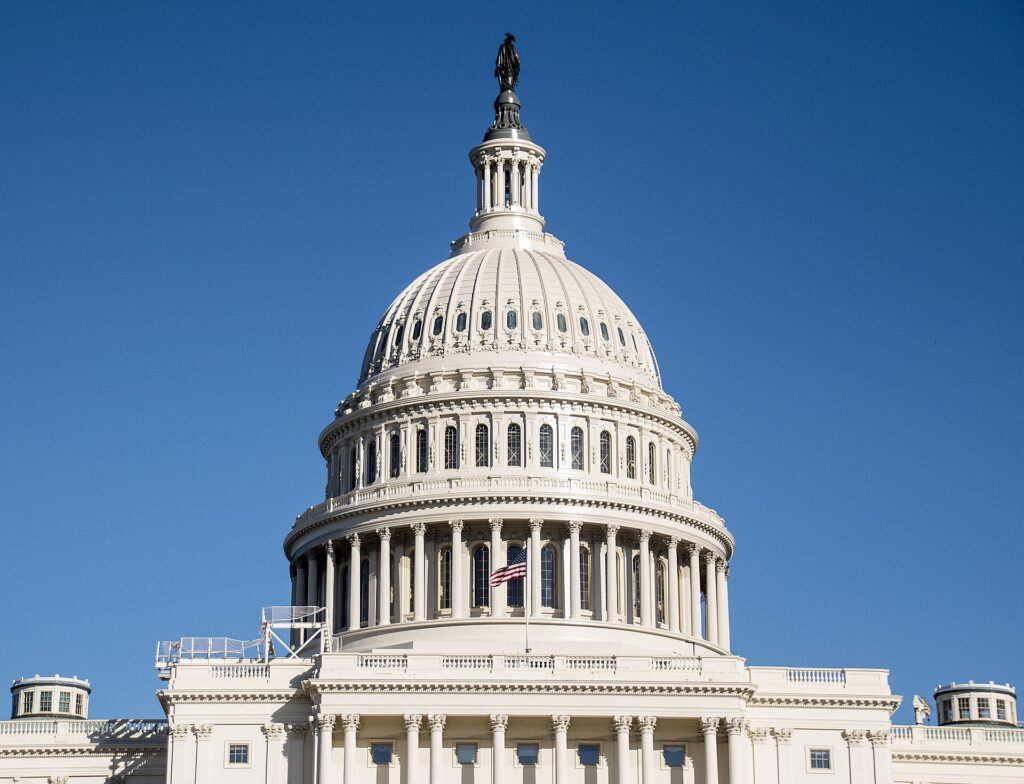
    The U.S. Capitol after a winter snowfall
    Washington in winter: quiet museums, the lowest hotel rates and the occasional snowstorm (Photo: USCapitol via Wikimedia Commons, Public domain)

    Events that move Washington flight and hotel prices

    Cross-check these against your dates before you book. Exact dates shift each year; the official Washington, DC visitor site keeps the current calendar.

    • Presidential inauguration (January 20, every four years, next in 2029): the single largest hotel spike in the city’s calendar.
    • Martin Luther King Jr. weekend and Presidents’ Day weekend (third Mondays of January and February).
    • National Cherry Blossom Festival (late March to mid-April), with the peak bloom weekend the most expensive of the spring.
    • Spring school-trip season (March to early June), which fills hotels and museums on weekdays.
    • University graduations (weekends in mid-May) and Memorial Day weekend.
    • Capital Pride (June) and the Smithsonian Folklife Festival (late June into July).
    • Fourth of July on the National Mall.
    • Congressional sessions and large conventions, which fill downtown on weeknights; if mid-week rates look strangely high, that is usually why.
    • Marine Corps Marathon (late October) and home games for the Nationals, Capitals, Wizards and Commanders. Our Washington, DC events page shows what is on sale for your dates.

    Getting in from the airports

    Washington has three airports, and choosing the right one can save more than choosing the right week. Reagan National (DCA), across the Potomac in Arlington, is the closest: the Metro’s Blue and Yellow lines stop at the terminal, and you can be on the Mall in about 20 minutes. A federal perimeter rule limits most of its nonstop flights to shorter domestic routes, with a limited number of exemptions, so long-haul and most international flights use the other two. Dulles (IAD), about 42 km (26 miles) west in Virginia, is United’s hub and the main international gateway, with Eero Saarinen’s swooping main terminal; the Metro’s Silver Line reaches it, and the ride downtown takes around 50 minutes to an hour, while a taxi takes 40 minutes to well over an hour depending on traffic. Baltimore/Washington (BWI), about 50 km (30 miles) northeast, is Southwest’s biggest operation in the region and often has the lowest fares; a free shuttle bus links the terminal to the BWI rail station, where MARC commuter trains and Amtrak reach Union Station in roughly half an hour to 40 minutes. When you search, include all three: a cheaper fare into BWI or Dulles usually beats a more expensive one into Reagan National even after the longer ride. Our guides to Reagan National, Dulles and BWI cover the layouts, and our car-versus-Metro guide explains the onward options.
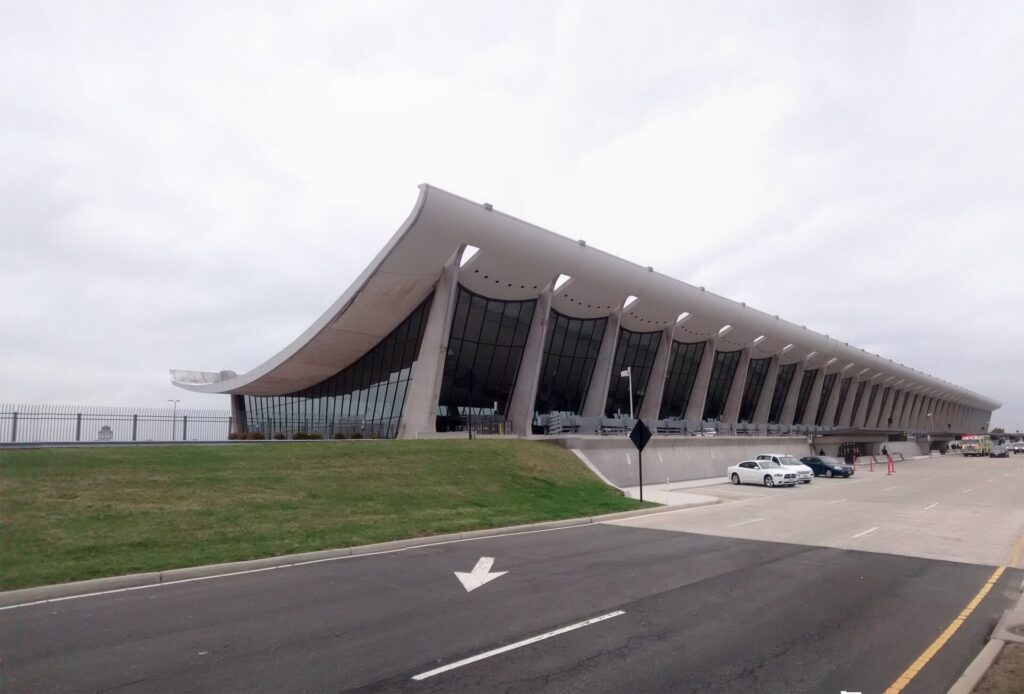
    Eero Saarinen's main terminal at Washington Dulles International Airport
    Dulles, the region's international gateway, now on the Metro's Silver Line (Photo: Gunnar Klack via Wikimedia Commons, CC BY-SA 4.0)

    Timing tricks that work for Washington

    • Search all three airports. The same dates can price very differently into DCA, IAD and BWI. TicketScanner’s search compares them side by side.
    • Stay on weekends. Washington’s hotel market is built around weekday government and business travel, so Friday and Saturday nights are often the cheapest of the week, the reverse of most leisure cities.
    • Use the recess. August, Thanksgiving week and the last two weeks of December are when Congress is away and hotels discount. Run a Washington, DC hotel search for those dates before you decide.
    • Book the blossoms early, or skip the peak. Rates in the peak bloom week can be far higher than those of two weeks later; the dogwoods and azaleas of late April are nearly as beautiful and far cheaper.
    • Stay across the river. Arlington, Crystal City and Rosslyn are a few Metro stops from the Mall and usually cheaper than downtown.
    • Combine cities. Philadelphia, Baltimore and New York are all on the Amtrak line; an open-jaw trip, flying into one and out of another, often costs no more than a round trip. See flights to Philadelphia for comparison.
    • Build a buffer. Summer thunderstorms and winter snow can disrupt all three airports at once; avoid the tightest connections. Our guide to how early to arrive covers what to allow.
    • Flying out of Washington instead? The same seasonality applies in reverse; see cheap flights from Washington, DC.
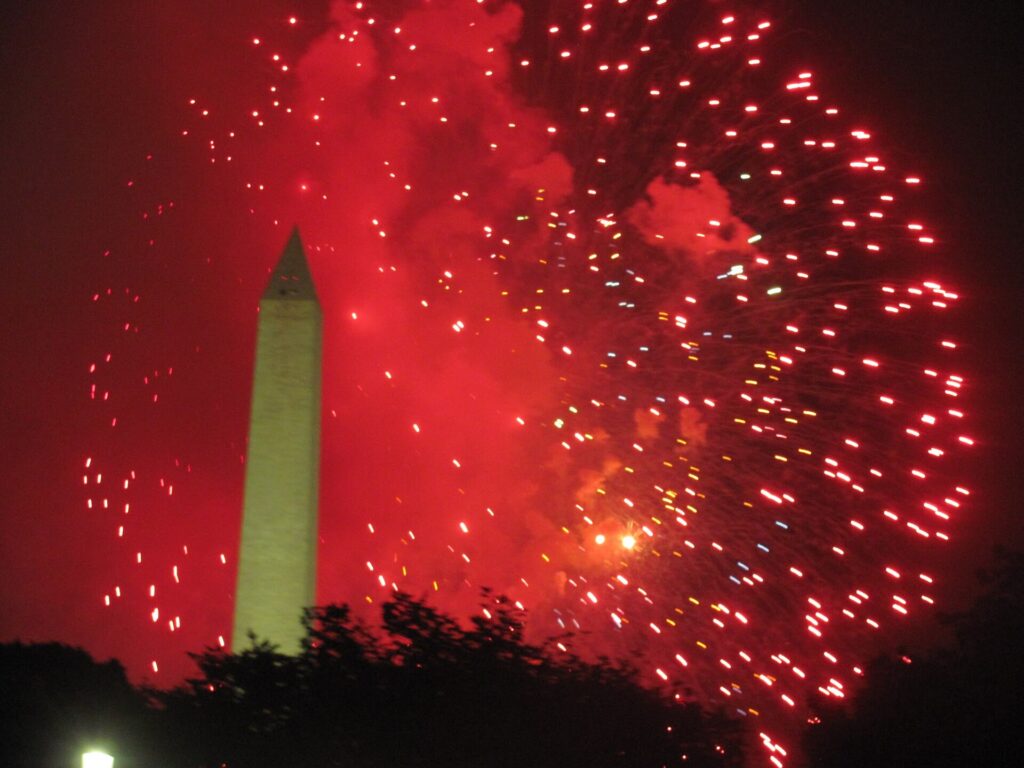
    Fourth of July fireworks beside the Washington Monument
    Independence Day on the National Mall, a short, sharp summer peak for hotels (Photo: Caballero1967 via Wikimedia Commons, CC BY-SA 4.0)

    What to pack, by season

    Winter (December to February): a warm coat, a hat and gloves, and waterproof shoes in case of slush; days vary from mild to properly cold. Spring (March to May): layers, a light rain jacket and an umbrella, with a warmer layer for cherry blossom sunrises. Summer (June to August): the lightest clothing you own, a hat, sunscreen, a refillable water bottle, and a sweater for the powerful air-conditioning in the museums. Fall (September to November): light clothing in September, layers and a jacket by late October. In every season, bring the most comfortable walking shoes you have; a day on the Mall is many kilometers on foot, and security lines move faster with a small bag.

    The best time to fly to Washington for…

    The cherry blossoms

    The last week of March or the first week of April, but watch the Park Service’s bloom forecast before you book, and book as early as the forecast allows.

    Museums without the crowds

    January, February and the first half of March, when the school groups have not arrived and hotels are at their cheapest.

    The best weather

    Late April to mid-May, and October, with late September close behind.

    The lowest hotel rates

    August, Thanksgiving week and the second half of December, plus weekends in almost any month.

    Families

    Late June or August for school vacations, planning outdoor sightseeing for mornings and evenings, or Thanksgiving week for a cooler, quieter visit.

    International visitors

    Visitors from Visa Waiver Program countries need an approved ESTA before boarding, and most others need a visa; the State Department’s travel site explains what applies to you. Domestic travelers need a REAL ID-compliant license or a passport at airport security, and the TSA lists what you can carry.

    Frequently asked questions

    What is the cheapest month to fly to Washington, DC?

    January and February are consistently the lowest for both flights and hotels outside the long weekends; August is also very cheap for hotels, and the late-December hotel lull is a bargain if you find a reasonable fare.

    When is the best time to see the cherry blossoms?

    Peak bloom usually falls in the last week of March or the first days of April and lasts only a few days. The National Park Service forecasts it in early March, and the festival runs for about four weeks around it.

    Why are Washington hotels cheaper on weekends?

    Because the city’s hotels depend on government, lobbying and convention travel from Monday to Thursday. On weekends and during congressional recesses, they discount to fill the rooms.

    Which airport should I fly into for Washington, DC?

    Reagan National is the most convenient, with the Metro at the terminal and the Mall 20 minutes away. Dulles has the international flights and the Silver Line; BWI often has the lowest fares and a train to Union Station. Compare all three.

    Is Washington too hot to visit in summer?

    It is hot and humid, but manageable if you see the memorials early and late and spend the afternoons in the air-conditioned museums, which are free.

    How far ahead should I book?

    Earlier for the cherry blossoms, the spring school season, the Fourth of July and inauguration years, when prices tend only to rise; for January, February and August, fares are stable enough that choosing the right dates matters more.

    Does it snow in Washington, DC?

    Some, in most winters, though average totals are modest. The occasional big storm can close the city and the airports for a day, so leave slack in a January or February itinerary.

    Ready to pick your dates? Compare fares across the whole month and all three airports on our Washington, DC flights page, then find a room with our Washington, DC hotel search. For what to do when you land, start with our first-timer’s guide to Washington, DC.

  • Washington, DC: Should You Rent a Car or Rely on Metro?

    Washington, DC: Should You Rent a Car or Rely on Metro?

    Washington, DC is one of the few American cities where a visitor can leave the car at home without a second thought. The Metro was built in the 1970s to move federal workers between the suburbs and the monuments, and it still does exactly that: nearly every sight on a first-timer’s list, from the Capitol to Arlington National Cemetery, is within a short walk of a station, and two of the region’s three airports are on the system. Driving, by contrast, means some of the heaviest traffic in the country, traffic circles that confuse even locals, a dense network of speed and red-light cameras, streets that close for motorcades without warning, and hotel parking that can cost as much as a modest dinner every night. But the car still has a job here. Mount Vernon, Shenandoah, Harpers Ferry, Gettysburg and the Chesapeake are all day trips, and the suburbs of Maryland and Virginia sprawl far beyond the rail lines. This guide explains how the city is laid out, how the Metro, buses and bikes work, what driving is really like, and gives you a straightforward way to decide.

    The short answer

    Skip the car for a city visit, which is what most first trips to Washington are: the Metro, your feet, Capital Bikeshare and the occasional taxi will cover the Mall, the museums, Capitol Hill, Dupont Circle, Georgetown, the Wharf and Arlington, and you will save the parking and the stress. Rent a car only for the days you leave the city, for Mount Vernon, Shenandoah National Park, Harpers Ferry, Gettysburg, Annapolis or the Delaware beaches, or if you are visiting family in the outer suburbs, traveling with small children and a lot of gear, or making Washington one stop on an East Coast road trip. For most visitors, the right answer is a car-free city stay plus a one- or two-day rental. Compare rental rates for those days on our Washington, DC car rental page.

    How Washington is laid out

    Washington was planned, and the plan helps. The city is divided into four quadrants (NW, NE, SW and SE) that meet at the Capitol, and every address carries its quadrant, so 700 G Street NW and 700 G Street SE are in different parts of town. Numbered streets run north-south, lettered streets run east-west (there is no J Street), and broad diagonal avenues named after the states cut across the grid, meeting at traffic circles and squares such as Dupont, Logan and Thomas circles. The National Mall runs west from the Capitol to the Lincoln Memorial along the Potomac; downtown and Penn Quarter lie just north of it, Capitol Hill east of it, and the Wharf and Navy Yard along the rivers to the south. Northwest Washington, where most visitors spend their evenings, holds Dupont Circle, Logan Circle, U Street, Adams Morgan and Georgetown. Across the Potomac, Arlington and Alexandria in Virginia are effectively part of the city, and the Capital Beltway, I-495, rings the whole region about 15 to 20 km out from the center.

    Hotels cluster downtown and in Penn Quarter, around Dupont Circle, in Georgetown and Foggy Bottom, on Capitol Hill, at the Wharf and Navy Yard, and across the river in Arlington, Rosslyn and Crystal City, which are usually cheaper and a few Metro stops from the Mall. Our Washington, DC hotel search lets you compare them.

    Getting in from the airports

    Washington has three airports, and the Metro serves two of them directly. From Reagan National (DCA), in Arlington just across the river, the Blue and Yellow lines leave from a station connected to the terminal by walkways, and the ride to the Mall or downtown takes 15 to 25 minutes; a taxi takes about the same outside rush hour. From Dulles (IAD), about 42 km (26 miles) west, the Silver Line leaves from a station linked to the main terminal by a pedestrian walkway, and reaches downtown in around 50 minutes to an hour; a taxi or ride-hail takes 40 minutes in light traffic and much longer at rush hour. From Baltimore/Washington (BWI), a free shuttle bus runs from the terminal to the BWI rail station, where MARC commuter trains and Amtrak run to Union Station in about half an hour to 40 minutes; the drive takes 45 minutes to well over an hour. Every airport has rental companies, and at Dulles and BWI they are reached by shuttle. Unless you are heading straight out of the city, there is no reason to pick up a car on arrival. The Reagan National, Dulles and BWI sites cover current ground transport, and our Reagan National airport guide covers the layout.

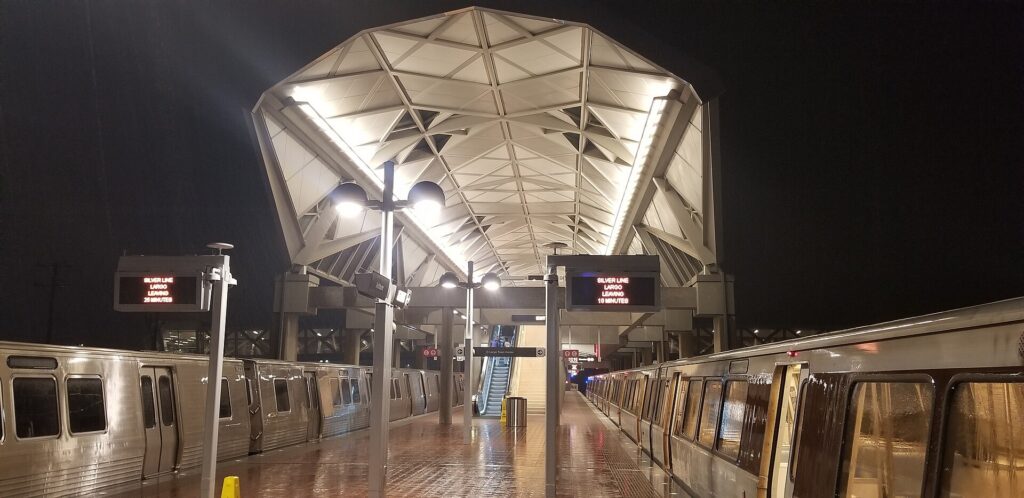
    An Orange Line train arriving at Farragut West, one of the Metro's vaulted concrete stations
    The Metro's vaulted stations: six lines, and nearly every sight within a short walk (Photo: Rainclaw7 via Wikimedia Commons, CC BY-SA 4.0)

    Washington’s transit, explained

    The Washington Metropolitan Area Transit Authority, WMATA, runs the Metrorail and Metrobus systems. The Metro is clean, generally reliable and, with its vaulted concrete stations, one of the most distinctive subway systems in the world. Its limitation is that it was designed as a commuter railway, with long lines reaching deep into the suburbs and a few gaps in the city itself.

    Metrorail

    Six color-coded lines, Red, Orange, Blue, Silver, Green and Yellow, serve nearly 100 stations in DC, Maryland and Virginia. The Red Line is a U-shaped line through downtown that reaches Union Station, Dupont Circle and the National Zoo at Woodley Park. The Orange, Blue and Silver lines share a tunnel under the Mall, with stations at the Smithsonian, Federal Triangle, Capitol South and Foggy Bottom, before splitting in Virginia; the Blue Line serves Arlington National Cemetery, the Pentagon and Reagan National, and the Silver Line runs out to Tysons and Dulles. The Green and Yellow lines run north-south through Penn Quarter, with the Green Line reaching Navy Yard for Nationals Park and U Street, and the Yellow Line crossing the Potomac to Reagan National and Old Town Alexandria. The main transfer stations are Metro Center, Gallery Place, L’Enfant Plaza and Fort Totten. The gaps are Georgetown, which never got a station (walk from Foggy Bottom or Dupont Circle), and H Street NE (walk from Union Station). Trains run from early morning until around midnight, later on Friday and Saturday nights; check WMATA for current hours and weekend track work, which can reduce service on individual lines. Stand on the right on the escalators and walk on the left, or you will hear about it.

    Metrobus

    Metrobus covers the areas the trains miss, including Georgetown, Adams Morgan and the neighborhoods off the rail lines, and local systems such as Arlington’s ART, Alexandria’s DASH and Fairfax Connector fill in the suburbs. The Metrobus network was redesigned in 2025, so route names in older guides may no longer apply; use WMATA’s trip planner or a maps app. The DC Circulator buses, which once looped around the Mall, were discontinued at the end of 2024.

    Fares and tickets

    Metrorail fares depend on the distance traveled and the time of day, with higher fares during weekday rush hours and lower fares on weekends and late at night. You pay with a SmarTrip card, sold at station vending machines, or with SmarTrip in your phone’s wallet, and WMATA has been rolling out tap-to-pay with contactless bank cards; check its site for current acceptance. You tap in and, importantly, tap out, because the fare is calculated when you exit. One-day, three-day and seven-day unlimited passes are available and are worth it for heavy sightseeing days. Metrobus charges a flat fare, and transfers between bus and rail within a set window are discounted or free. Up to two children aged four and under ride free with each paying adult.

    Accessibility

    Every Metro station has elevators, and every bus is low-floor and accessible; elevator outages are posted on WMATA’s site, and the system is one of the more accessible in the country.

    Beyond the Metro

    • Walking. The core is flat and compact, and walking between the Mall, Penn Quarter, the White House and Capitol Hill is often faster than taking a train. The distances along the Mall itself are longer than they look.
    • Capital Bikeshare. Capital Bikeshare has hundreds of docking stations across DC, Arlington, Alexandria and the Maryland suburbs, with classic bikes and e-bikes, single rides and day passes. Protected bike lanes run on Pennsylvania Avenue and several downtown streets, and the Mount Vernon Trail, the Capital Crescent Trail and the C&O Canal towpath make for superb rides out of the city. Dockless e-scooters and e-bikes from several operators fill in the rest.
    • Taxis and ride-hail. Uber, Lyft and metered taxis operate everywhere; they are the practical choice for Georgetown late at night or for a group of three or four going a short distance.
    • Water taxis. In the warmer months, a water taxi service links the Wharf, Georgetown, Old Town Alexandria and National Harbor, which is both transport and a scenic ride.
    • Commuter trains and Amtrak. From Union Station, Amtrak reaches Baltimore, Philadelphia, New York and Boston along the Northeast Corridor, and south to Richmond and beyond. MARC trains run to BWI and Baltimore, and on weekdays to Harpers Ferry; Virginia Railway Express runs weekday commuter trains to Fredericksburg and Manassas.
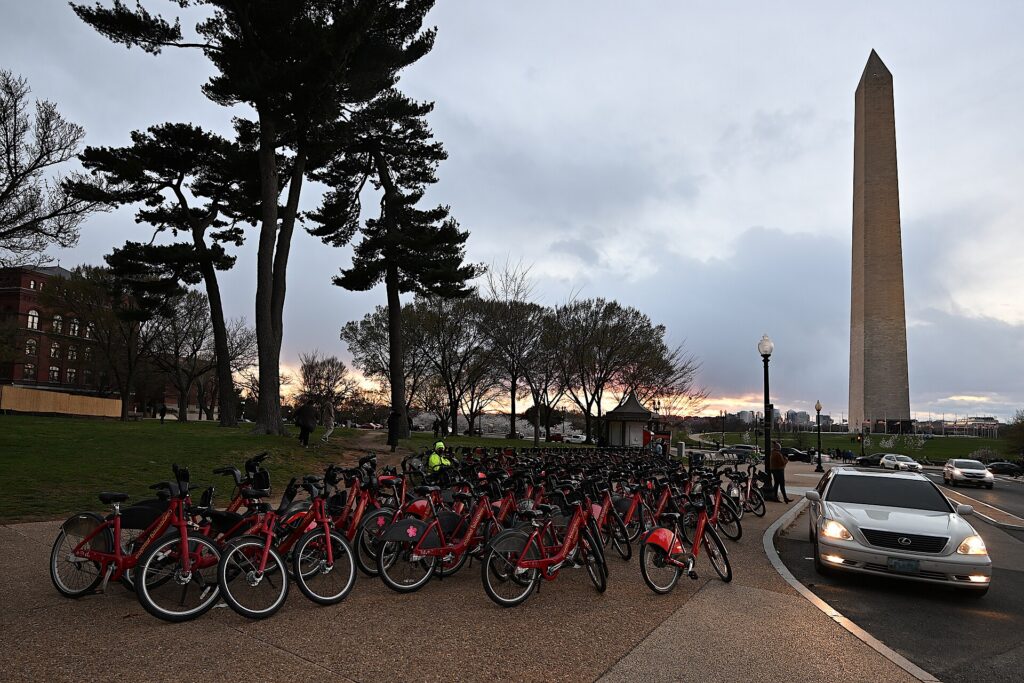
    A Capital Bikeshare station on the National Mall near the Washington Monument
    Capital Bikeshare docks cover DC, Arlington, Alexandria and the Maryland suburbs (Photo: G. Edward Johnson via Wikimedia Commons, CC BY 4.0)

    Driving in Washington: what it is really like

    Washington regularly ranks among the most congested regions in the United States, and the city itself adds a layer of complexity that visitors do not expect. The traffic circles, where several avenues meet with inner and outer lanes and underpasses, are genuinely confusing on a first attempt. Reversible and rush-hour rules change roads by the hour: Rock Creek Parkway runs one way inbound in the morning and outbound in the evening, parking lanes on major arteries become travel lanes at rush hour, and turns that are legal at noon are banned at 5 p.m. Security closures around the White House, the Capitol and embassies, for motorcades, demonstrations and state visits, can shut streets without notice. And the Capital Beltway, I-395 and I-66 are congested for long stretches of every weekday, with the evening rush often starting before 4 p.m.

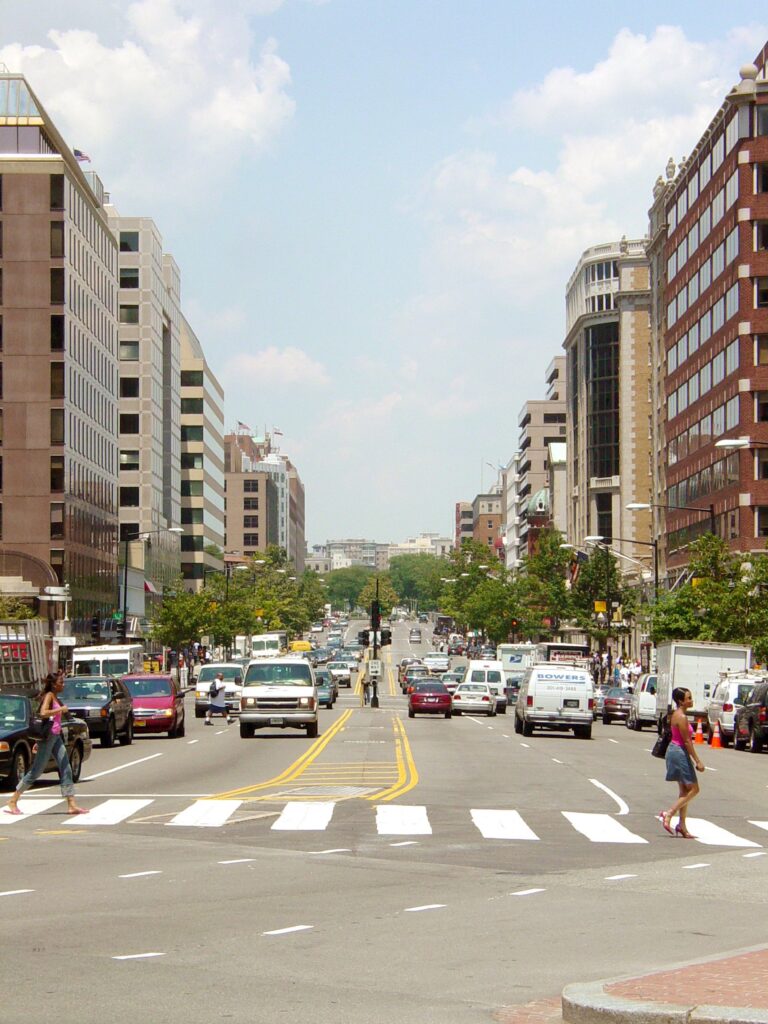
    Traffic around Dupont Circle in Washington, DC
    Dupont Circle, one of the traffic circles where several avenues meet and visitors lose their way (Photo: Ben Schumin via Wikimedia Commons, CC BY-SA 3.0)

    Parking

    Hotel parking downtown is expensive, usually valet only, and charged per night; commercial garages are cheaper, especially if booked through an app, but still add up over a few days. Street parking is metered in commercial areas, typically Monday to Saturday and into the evening in busy neighborhoods, and paid through the ParkMobile app or the meter; many meters are free on Sundays, but read every sign. Residential streets are largely restricted to two hours for non-residents, and rush-hour no-parking zones are enforced by tow truck, which is the costliest mistake a visitor can make. Around the Mall, the handful of metered spaces fill early, and there is effectively nowhere to park near the most popular museums on a spring weekday. Arlington National Cemetery and Mount Vernon have their own paid lots, and Old Town Alexandria has garages near King Street.

    Rules and conditions worth knowing

    • Cameras. DC has one of the densest networks of automated speed, red-light, stop-sign and bus-lane cameras in the country. Fines follow the car, and the rental company will bill you, with an administrative fee.
    • No turn on red. Right turns on red are prohibited at a large and growing number of DC intersections; obey the signs, which are everywhere.
    • Tolls and express lanes. I-66 inside the Beltway is tolled in the peak direction during rush hours, and the Express Lanes on I-495 and I-95 in Virginia charge dynamic tolls; all require an E-ZPass or the rental company’s toll program. The Dulles Toll Road charges tolls, while the Dulles Access Road beside it is free for airport traffic.
    • Parkways. The George Washington Memorial Parkway, the Baltimore-Washington Parkway and Rock Creek Parkway are scenic National Park Service roads with lower speed limits and no commercial vehicles.
    • Snow. A modest snowfall can bring the region to a standstill; if a storm is forecast, stay off the roads and take the Metro.
    • Conditions. The District Department of Transportation, DDOT, posts closures and work zones in the city, and 511 Virginia covers the Virginia highways and express lanes.
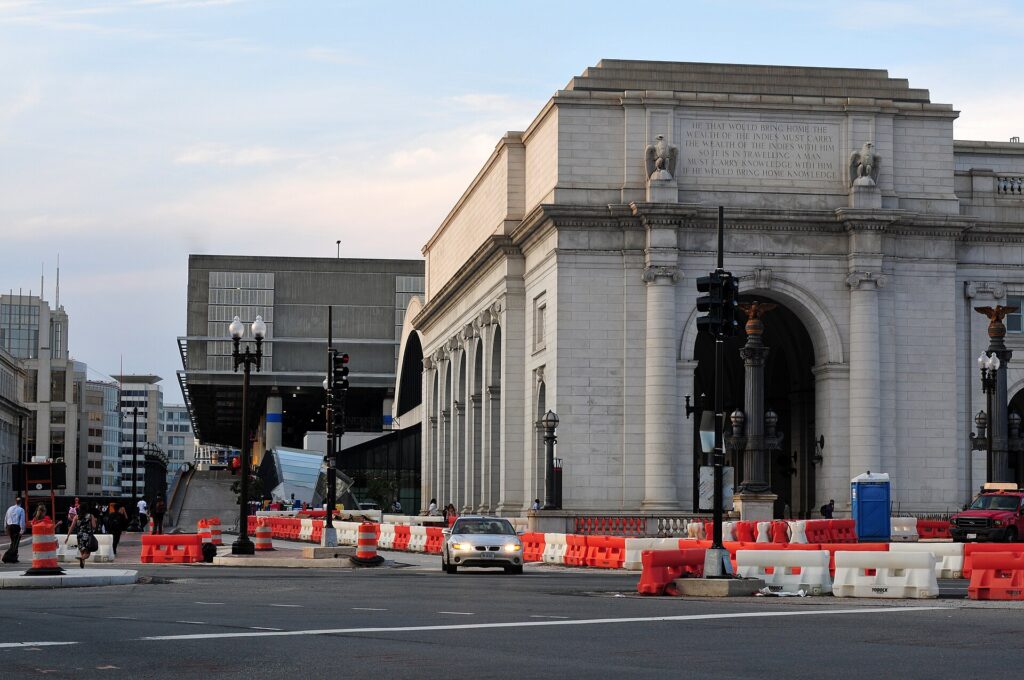
    The Beaux-Arts facade of Union Station in Washington, DC
    Union Station, for Amtrak to Philadelphia and New York and MARC trains to BWI and Baltimore (Photo: Ralf Roletschek (talk) – Infos über Fahrräder auf fahrradmonteur.de Wikis in der Ausbildung via Wikimedia Commons, CC BY-SA 3.0)

    When renting a car makes sense

    • Mount Vernon and the Potomac. The drive down the George Washington Memorial Parkway past Old Town Alexandria is one of the prettiest in the region, and it is the easiest way to see Mount Vernon and Great Falls in a day.
    • Shenandoah National Park and Skyline Drive, about 90 minutes west, are car-only, and October’s foliage is spectacular.
    • Harpers Ferry, Antietam and Gettysburg, the Civil War sites to the northwest and north, are easiest by car and combine well in one long day.
    • Annapolis, the Chesapeake and the Delaware beaches. The Eastern Shore and the Atlantic beaches are two to three hours east across the Chesapeake Bay Bridge.
    • The Udvar-Hazy Center near Dulles is reachable by the Silver Line and a connecting bus, but much easier by car.
    • Family in the suburbs beyond the Metro lines in Maryland and Northern Virginia.
    • East Coast road trips. Philadelphia is about 225 km (140 miles) up I-95; our Washington, DC to Philadelphia route guide covers the drive and its tolls.

    If any of those apply, our rental car booking tips cover insurance, deposits and the questions to ask at the counter, and our family car rental guide looks at vehicle choice.

    When it does not

    • Your plans are the Mall, the museums, the Capitol, Georgetown and the neighborhoods.
    • You are staying downtown, where overnight parking adds substantially to the room rate.
    • You are in town for a conference, a game at Nationals Park or Capital One Arena, or the Fourth of July, when the Metro is far faster than any road.
    • Your day trips are Baltimore, Philadelphia or New York, which are faster and more relaxing by train.

    The hybrid plan for a city-plus-countryside trip

    Go car-free for the city days and rent only for the days you leave, and think about where you pick up. Renting at Reagan National is a smart trick even if you arrived days earlier: ride the Metro back to the airport, pick up a car, and you are on the George Washington Memorial Parkway toward Mount Vernon or on I-66 toward Shenandoah in minutes, without driving through downtown. Neighborhood rental offices downtown and in Arlington avoid airport fees but mean driving out through city traffic. For a trip heading west to Shenandoah and Harpers Ferry, Dulles is well placed; for Annapolis or Baltimore, BWI. A common pattern: arrive by Metro or train, spend three car-free days in the city, rent at Reagan National for a day or two in Virginia, and return it at the airport before your flight, or drop it and take the Metro back to your hotel. Book ahead for spring, October and holiday weekends. Compare the day rates on our Washington, DC car rental page against a full-trip rental and the difference is usually obvious.

    A worked cost comparison

    Numbers change with the season and the booking window, so treat this as a method rather than a quote, and check current rates before deciding. For a four-night city break downtown for two people, the car-free version costs Metro rides from the airport, a couple of day passes or pay-as-you-go fares, and perhaps a few ride-hail trips back from Georgetown or Adams Morgan at night; the rental version adds four days of a compact car, four nights of valet parking at downtown rates, fuel, and the constant risk of camera fines and tow-away zones, and buys you nothing the Metro does not already provide. The car-free option wins by a wide margin. For the same four nights plus a day at Mount Vernon and a day in Shenandoah, the hybrid version adds a two-day rental picked up at Reagan National, fuel, the park entrance fee and parking at Mount Vernon, and it is clearly cheaper and more flexible than tours for two people. For a family of four visiting relatives in the suburbs for a week, a full-trip rental, picked up at whichever airport is closest to the relatives, usually beats a week of long Metro rides and ride-hail. Run the rental rates for your dates on our Washington, DC car rental page and put them beside the transit costs before you choose.

    Driving out of Washington in each season

    The day trips around Washington are some of the best in the East, but the roads out of the city change with the seasons. In spring, the parkways are at their loveliest, with redbuds and dogwoods along the Potomac, but cherry blossom weekends choke the roads around the Tidal Basin and the George Washington Memorial Parkway near the airport; leave early and go on a weekday. In summer, the beach traffic toward the Chesapeake Bay Bridge on Friday afternoons and back on Sunday afternoons is legendary, afternoon thunderstorms bring sudden downpours, and the Blue Ridge is a welcome escape from the heat of the city. In fall, Skyline Drive in Shenandoah is the region’s great foliage drive, peaking around mid-October, and weekend traffic at the park entrances can back up for long stretches, so arrive early or go mid-week; Gettysburg and Harpers Ferry are at their best in the same weeks. In winter, the highways are usually clear, but a snowstorm can close Skyline Drive and turn the Beltway into a parking lot, and rental cars come with all-season tires, not winter ones. In every season, avoid leaving or returning to the city between about 3:30 and 7 p.m. on weekdays, when the Beltway, I-66, I-95 and I-270 are all at their worst.

    Decision table

    Your tripRecommendationWhy
    City break, couple or soloNo carThe Metro, walking and Capital Bikeshare cover everything; parking is expensive
    Conference, game or the Fourth of JulyNo carStreets close, parking vanishes, and the Metro stops at the door
    City plus Mount Vernon or ShenandoahHybrid: rent at Reagan National for those daysCar-free city days, a quick escape to the parkways
    Baltimore, Philadelphia or New YorkTrainAmtrak and MARC from Union Station are faster than I-95
    Family visit to the suburbsRent for the whole staySuburban distances beyond the Metro make a car worthwhile daily
    Young children and lots of gearMetro in the city, rent for day tripsEvery station has elevators; a car helps only outside the core
    East Coast road tripRent (consider one-way)Washington is one stop, not the destination
    Staying in Arlington or AlexandriaNo car, or rent for day tripsThe Blue and Yellow lines reach the Mall in minutes

    Money-saving tips for both options

    • On transit: buy an unlimited pass for heavy sightseeing days, travel outside the weekday rush hours when fares are lower, remember to tap out, and use the free museums as air-conditioned rest stops between stations.
    • On a rental: rent only for the days you leave the city, compare airport and neighborhood pickup, use the rental company’s toll program or your own E-ZPass for the express lanes, and decline extras you already have through a credit card or home policy (check first).
    • On the hotel: if you are renting, price the parking fee into the room rate, or choose a hotel in Arlington or Alexandria where parking is cheaper and the Metro is close.
    • On timing: avoid the weekday rush hours and summer Friday afternoons toward the beaches; the best time to fly to Washington, DC guide lists the busiest weekends.
    • On fines: obey every speed limit and turn restriction, because the cameras are everywhere and the rental company adds a fee to each ticket.

    Frequently asked questions

    Is it worth renting a car in Washington, DC?

    Not for the city. The Metro reaches nearly every sight, parking is expensive and traffic is heavy. Rent only for day trips to Mount Vernon, Shenandoah, Harpers Ferry or Gettysburg.

    Is the Washington Metro good for tourists?

    Very. It serves the Mall, Capitol Hill, Arlington, Dupont Circle, Navy Yard and two of the three airports. The main gap is Georgetown, which is a short walk or bus ride from the nearest stations.

    How do I get from Reagan National Airport to downtown?

    Take the Blue or Yellow Line from the airport’s own Metro station; the Mall and downtown are 15 to 25 minutes away. A taxi takes about the same outside rush hour.

    How do I pay for the Metro?

    With a SmarTrip card from a station machine or SmarTrip in your phone’s wallet; contactless bank cards are being introduced. Tap in and tap out, because the fare is calculated at the exit.

    Can I get to Mount Vernon without a car?

    Yes, by a tour, by bike along the Mount Vernon Trail, or by seasonal boat from the Wharf or Old Town Alexandria. A car is simplest if you also want Great Falls or Old Town on the same day.

    Is parking expensive in Washington, DC?

    Downtown, yes: hotel valet parking is costly and street parking is limited, time-restricted and strictly enforced. It is cheaper across the river in Arlington and Alexandria.

    Is it hard to drive in Washington, DC?

    It is harder than most visitors expect, because of the traffic circles, rush-hour lane rules, security closures and automated cameras. Outside the city, the parkways and highways are straightforward, apart from the congestion.

    Whichever way you go, start with the flight. Compare cheap flights to Washington, DC across all three airports, choose a neighborhood with our Washington, DC hotel search, and if the countryside is on the list, price the rental for those days on our Washington, DC car rental page. For what to see once you are here, our first-timer’s guide to Washington, DC has the plan.

  • Things to Do in Washington, DC: A First-Timer’s Guide

    Things to Do in Washington, DC: A First-Timer’s Guide

    Washington, DC is the rare capital where the best things cost nothing. The Smithsonian’s museums on the National Mall are free, the memorials are open around the clock, the Capitol and the Library of Congress give free tours, and the National Gallery of Art, one of the great art museums in the country, charges no admission either. That changes how you plan a trip here: the question is not what you can afford but how many days you have and how to pace them, because it is easy to walk fifteen miles along the Mall in two days and see only half of it. Beyond the monuments is a city many visitors never find, of row-house neighborhoods, a waterfront reborn, Ethiopian and Salvadoran restaurants, jazz history on U Street and a canal towpath that runs from Georgetown to the Allegheny Mountains. This guide covers the sights that earn a day, the neighborhoods worth a half-day, the museums on and off the Mall, the big events, the food, the day trips, and the practical details that make a first visit work.

    If you are still comparing cheap flights to Washington, DC, read this alongside our guides to the best time to fly to Washington, DC and whether to rent a car or ride the Metro. Between the three you can plan the whole trip.

    The west front of the United States Capitol in Washington, DC
    The U.S. Capitol, where free tours start at the underground Visitor Center (Photo: Ron Cogswell from Arlington, Virginia, USA via Wikimedia Commons, CC BY 2.0)

    Washington, DC at a glance for first-timers

    • Airports: three. Reagan National (DCA), across the Potomac in Arlington, is about 6 km (4 miles) from the Mall and has its own Metro station; see our Reagan National guide. Dulles (IAD), about 42 km (26 miles) west in Virginia, is on the Metro’s Silver Line and handles most long-haul and international flights; see our Dulles guide. Baltimore/Washington (BWI), northeast toward Baltimore, is linked to Union Station by train; see our BWI guide.
    • Getting around: the Metro reaches almost everything a visitor needs except Georgetown, and the core is flat and walkable. Capital Bikeshare docks are everywhere. A car is a liability in the city and useful only for day trips.
    • Money: U.S. dollars. Sales tax is added at the till, and some restaurants add a service charge to the bill, so read it before tipping the customary 18 to 20 percent on top.
    • Weather: four real seasons, with a hot, humid summer, a mild and changeable winter, and a spring and fall that are the best times to walk the Mall. Our month-by-month guide has the detail.
    • Where to stay: Penn Quarter and downtown for walking to the Mall; Dupont Circle for restaurants and a residential feel; Capitol Hill, Georgetown, the Wharf or Navy Yard for character; Arlington and Crystal City across the river for lower rates on the Metro. Our Washington, DC hotel search covers them all.

    The National Mall and the memorials

    The National Mall is the three-kilometer lawn that runs from the Capitol to the Lincoln Memorial, and it is where almost every first visit begins. The National Park Service looks after it, and the memorials are open 24 hours a day, which is worth knowing because they are at their best early in the morning and after dark, when the crowds and the summer heat have gone. Start at the Washington Monument, the marble obelisk at the center; the elevator to the observation level runs on timed tickets, most of them reserved online in advance for a small booking fee, and the view along the axis of the Mall explains the city’s plan in a glance. West of it, the World War II Memorial frames the Reflecting Pool, and at the far end the Lincoln Memorial, with the seated Lincoln and the steps where Martin Luther King Jr. gave the “I Have a Dream” speech, looks back toward the Capitol. On either side of the Reflecting Pool are the Vietnam Veterans Memorial, the black granite wall with more than 58,000 names, and the Korean War Veterans Memorial, with its patrol of steel soldiers. South of the Mall, the Tidal Basin loop takes in the Martin Luther King Jr. Memorial, the long, open-air FDR Memorial and the domed Jefferson Memorial on the water. The full circuit from the Capitol to the Lincoln Memorial, around the Tidal Basin and back is around 10 km, so wear real shoes and carry water in summer.

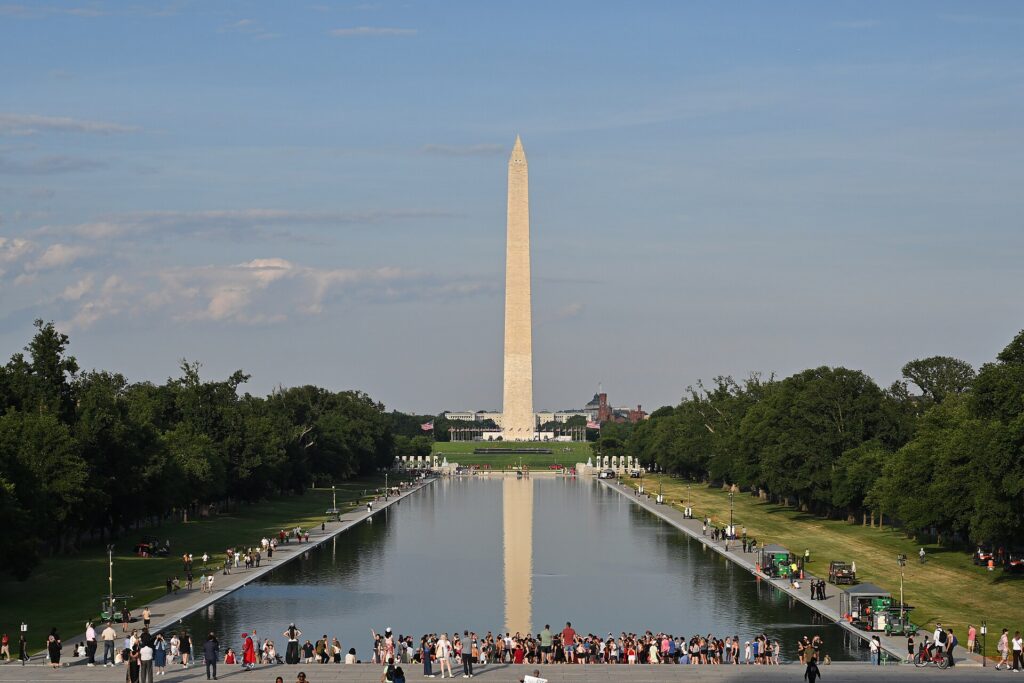
    The Lincoln Memorial Reflecting Pool with the Washington Monument beyond
    The Reflecting Pool between the Lincoln Memorial and the Washington Monument, best at dawn or after dark (Photo: G. Edward Johnson via Wikimedia Commons, CC BY 4.0)

    Capitol Hill: the Capitol, the Library of Congress and the Supreme Court

    At the east end of the Mall, the U.S. Capitol offers free guided tours from its underground Visitor Center, Monday to Saturday; reserve them through the Capitol Visitor Center or through your representative’s or senator’s office, which can also arrange gallery passes to watch the House or Senate in session. Across the street, the Thomas Jefferson Building of the Library of Congress is the most beautiful interior in the city, a gilded, painted and mosaic-covered hall built in the 1890s, with a Gutenberg Bible and a reconstruction of Jefferson’s own library; entry is free, with timed passes recommended. The Supreme Court, beside it, is open to visitors on weekdays, with courtroom lectures on days the court is not sitting. Behind the Capitol, the row-house streets of Capitol Hill lead to Eastern Market, a brick market hall from the 1870s where the weekend farmers’ and flea markets are the neighborhood’s social life. Allow a full morning for the Capitol, the library and the court together, and book the tours before you fly.

    The White House, the Archives and Penn Quarter

    You can see the White House from Lafayette Square on the north side and the Ellipse on the south, but a tour inside is a project: U.S. citizens request one through their member of Congress, and visitors from other countries through their embassy in Washington, weeks to months in advance. The White House Visitor Center on Pennsylvania Avenue is the fallback for everyone else. Six blocks east, the National Archives displays the Declaration of Independence, the Constitution and the Bill of Rights in its domed Rotunda; admission is free and the line moves quickly outside the spring school-trip season. North of the Archives, Penn Quarter is the downtown entertainment district: Ford’s Theatre, where Lincoln was shot and which is still a working theater with a museum below it, the shared building of the National Portrait Gallery and the Smithsonian American Art Museum with its glass-roofed courtyard, Capital One Arena, and the small Chinatown with its Friendship Archway. This is the most convenient place to stay for a first visit, and the restaurant density is high.

    The Smithsonian and the museums on the Mall

    The Smithsonian Institution runs the largest museum complex in the world, and most of its museums line the Mall; they are free and open every day of the year except December 25. The National Museum of Natural History has the Hope Diamond, the elephant in the rotunda and a spectacular fossil hall. The National Museum of American History has the flag that inspired the national anthem, the Greensboro lunch counter and Dorothy’s ruby slippers. The National Air and Space Museum has been through a multi-year renovation with galleries reopening in phases, and it is the most popular museum in the city; free timed-entry passes are the way in. The National Museum of African American History and Culture, the bronze-clad building beside the Washington Monument, is the most moving museum in Washington and needs at least three hours; start at the bottom, in the history galleries, and work up. The National Museum of the American Indian, the Hirshhorn for modern art in its round concrete drum, and the National Museum of Asian Art complete the row. Across the Mall, the National Gallery of Art, which is separate from the Smithsonian but just as free, has the only Leonardo da Vinci painting in the Americas in its West Building, I. M. Pei’s East Building for modern art, and a sculpture garden that becomes an ice rink in winter.

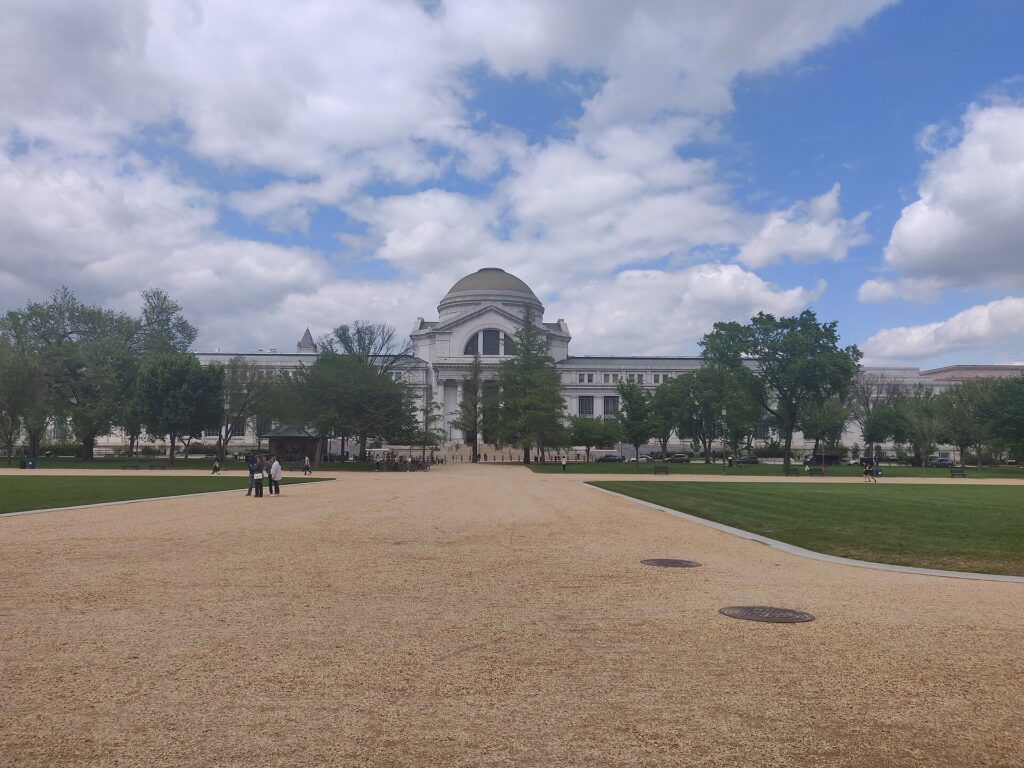
    The National Museum of Natural History on the National Mall
    The National Museum of Natural History, one of the free Smithsonian museums on the Mall (Photo: Kurt Kaiser via Wikimedia Commons, CC0)

    Neighborhoods worth a half-day

    Georgetown

    Older than the city itself, Georgetown is the cobbled, brick-and-federal-house neighborhood on the Potomac, with shopping along M Street and Wisconsin Avenue, the university on the hill, the gardens of Dumbarton Oaks and the Old Stone House, one of the oldest buildings in the city. The towpath of the C&O Canal starts here, and the waterfront park is the place for a sunset. There is no Metro stop; walk from Foggy Bottom or Dupont Circle.

    Dupont Circle and Embassy Row

    A traffic circle with a fountain at its center and a ring of grand mansions around it, many of them embassies along Massachusetts Avenue. The Phillips Collection, which opened in 1921 as America’s first museum of modern art, is here, with Renoir’s Luncheon of the Boating Party; the Sunday farmers’ market fills the circle year-round. It is one of the best neighborhoods to stay in.

    Logan Circle, 14th Street and U Street

    Fourteenth Street is the city’s restaurant row, running north from Logan Circle’s Victorian row houses to U Street, the historic center of Black Washington once known as Black Broadway, where Duke Ellington grew up and the Lincoln and Howard theaters still host shows. Ben’s Chili Bowl, open since 1958, serves the half-smoke that every visitor should try once.

    Adams Morgan and Columbia Heights

    Eighteenth Street in Adams Morgan is the nightlife strip, with bars, live music and late-night jumbo pizza slices; next door, Columbia Heights and Mount Pleasant have the Salvadoran pupuserias that reflect one of the city’s largest immigrant communities.

    The Wharf and Navy Yard

    The Southwest waterfront has been rebuilt as the Wharf, a mile of restaurants, piers, a concert hall and hotels, beside the Municipal Fish Market, the oldest continuously operating open-air fish market in the country. Navy Yard, along the Anacostia River to the east, has Nationals Park, the Yards Park and a riverwalk lined with breweries.

    Museums beyond the Mall, culture and family attractions

    The Smithsonian’s National Zoo, in Woodley Park on the Red Line, is free, set on a wooded hillside in Rock Creek Park, and has giant pandas again after a short absence. The United States Holocaust Memorial Museum, just off the Mall, is free but requires timed passes for the permanent exhibition in the busy months. The International Spy Museum at L’Enfant Plaza and the Museum of the Bible charge admission and draw big crowds. The Renwick Gallery, across from the White House, shows contemporary craft in a beautiful 1850s building. Across the river, Arlington National Cemetery, on the Blue Line, is the resting place of more than 400,000 service members and President Kennedy; the changing of the guard at the Tomb of the Unknown Soldier happens every half hour in summer and every hour in winter. Near Dulles Airport, the Smithsonian’s Udvar-Hazy Center holds the Space Shuttle Discovery, an SR-71 Blackbird and hundreds of other aircraft in two enormous hangars, and it is worth the trip for anyone who loved Air and Space. For live performance, the Shakespeare Theatre Company, Arena Stage and the Folger Shakespeare Library are the serious houses, the Anthem at the Wharf and the 9:30 Club are the best music venues, and Wolf Trap in Virginia is the summer outdoor stage. For concerts, shows and games during your dates, our Washington, DC events page lists what is on sale.

    The big events: cherry blossoms and the Fourth of July

    Two events define the Washington calendar. The National Cherry Blossom Festival runs for about four weeks from late March to mid-April, built around the peak bloom of the Yoshino cherry trees around the Tidal Basin, the descendants of a gift from Tokyo in 1912. Peak bloom usually falls in late March or the first days of April and lasts only a few days; the Park Service publishes a forecast in early March, and the official Washington, DC visitor site tracks the festival’s parade, kite festival and events. Go at sunrise if you want photographs without a crowd. The Fourth of July is the other: a parade along Constitution Avenue, a free concert on the Capitol’s West Lawn, and fireworks over the Reflecting Pool watched by hundreds of thousands of people on the Mall. Both are wonderful and both fill the city’s hotels; book the room before the flight. Every fourth January, the presidential inauguration takes over the city completely, and the next is in 2029.

    Sports

    The Washington Nationals play baseball at Nationals Park in Navy Yard from April to September, and a weeknight game there, with the Capitol dome visible from the upper deck, is one of the easiest nights out in the city. The Capitals (NHL) and the Wizards (NBA) share Capital One Arena in Penn Quarter, directly above the Gallery Place Metro station. D.C. United play soccer at Audi Field on the Anacostia waterfront, and the Mystics play WNBA basketball in Congress Heights. The Commanders play NFL football at their stadium in Landover, Maryland, a long trip out of the city on game days. Check what is on sale in Washington, DC for your dates before you book flights.

    What to eat, and where

    Washington’s food is shaped by its immigrant communities more than by any single local dish. The Washington area has one of the largest Ethiopian communities outside Africa, and injera with shared stews is a DC dinner in Shaw, on U Street, and increasingly in the Maryland and Virginia suburbs. The Salvadoran pupusa is the local comfort food in Columbia Heights and Mount Pleasant. The half-smoke, a coarse, smoky sausage served with chili, is the city’s own, and mumbo sauce, the sweet-sour sauce on wings from carry-outs across the city, is the other native flavor. Because Washington sits between Maryland and Virginia, Chesapeake blue crabs and crab cakes dominate summer menus, steamed and dusted with Old Bay. The Michelin Guide has covered the city for years, and the fine-dining scene around 14th Street, Penn Quarter and the Wharf rivals much larger cities. For grazing, Union Market in Northeast is the best food hall, Eastern Market has the weekend stalls, and the Municipal Fish Market sells steamed crabs and oysters from the barges at the Wharf. Brunch is a competitive sport on 14th Street and in Adams Morgan.

    Washington through the seasons

    What you do in Washington depends heavily on the season. Spring (March to May) is the peak: cherry blossoms in late March and early April, the dogwoods and azaleas after them, the embassies’ open houses in May, and school groups on every museum step from March to June. Summer (June to August) is hot and humid, so plan the monuments for early morning and evening, the museums for the afternoon heat, and the Smithsonian Folklife Festival on the Mall around the Fourth of July. Congress goes into recess in August, weekday hotel rates soften, and the city slows down. Fall (September to November) is the local favorite: warm, dry days in September, foliage along Rock Creek and the C&O Canal in late October, the Marine Corps Marathon, and baseball in the playoffs in a good year. Winter (December to February) is mild by northeastern standards but changeable, with occasional snowstorms that shut the city down for a day; the National Christmas Tree on the Ellipse and the ice rink in the National Gallery’s sculpture garden light up December, and the museums are at their quietest in January and February. Our month-by-month guide has the fare patterns that go with each season.

    Washington with kids

    Few cities are easier with children, because the biggest attractions are free and you can leave after an hour without feeling you have wasted a ticket. The Natural History museum, with its dinosaurs, insect zoo and gem hall, is the obvious first stop; Air and Space and the Udvar-Hazy Center are the second. The National Zoo, free and on the Metro, fills a morning, and the carousel on the Mall is a reward for good behavior between museums. The Spy Museum suits older children, and the Capitol tour and the Archives work best for kids who have studied American history at school. Paddle boats on the Tidal Basin in spring and summer and the fountains at the Yards Park win over reluctant teenagers. Children aged four and under ride the Metro free with a paying adult. If you are driving in from elsewhere, our family car rental guide covers the vehicle question.

    Washington on a budget

    This is the cheapest great city in the country to sightsee in. The Smithsonian museums, the National Gallery, the zoo, the memorials, the Capitol and Library of Congress tours, the Archives, Arlington National Cemetery and the Holocaust Museum are all free, and a Metro day pass covers the transport. Pack lunch for the Mall, because the museum cafés are expensive, and eat dinner in Columbia Heights, Adams Morgan or at the food halls. The expense is the hotel: Washington’s weekday rates are driven by government and business travel, so weekends, August and the weeks around Christmas are often much cheaper than a Tuesday in April. Staying across the river in Arlington or Crystal City, on the Blue and Yellow lines, saves money without costing much time. Compare rates by neighborhood on our Washington, DC hotel search.

    Day trips from Washington

    Mount Vernon, George Washington’s plantation estate on the Potomac, is about 25 km (16 miles) south along the George Washington Memorial Parkway; the Mount Vernon site has tickets and hours, and cyclists can ride the whole way on the Mount Vernon Trail. Old Town Alexandria, on the Blue and Yellow lines, is an 18th-century port town with a mile of shops and restaurants on King Street down to the river. Annapolis, an hour east, has the Naval Academy and a harbor full of sailboats; Baltimore, an hour north by train, has the Inner Harbor and Fort McHenry. Philadelphia is under two hours by Amtrak, and our guide to things to do in Philadelphia covers it; drivers can use our Washington, DC to Philadelphia route guide. West of the city, Great Falls on the Potomac is 30 minutes away, Harpers Ferry is about 90 minutes, and Shenandoah National Park and Skyline Drive are about 90 minutes to the Front Royal entrance, spectacular in October. Gettysburg is about two hours north. Most of these need a car; see our Washington, DC car rental page, and rent only for the days you leave the city.

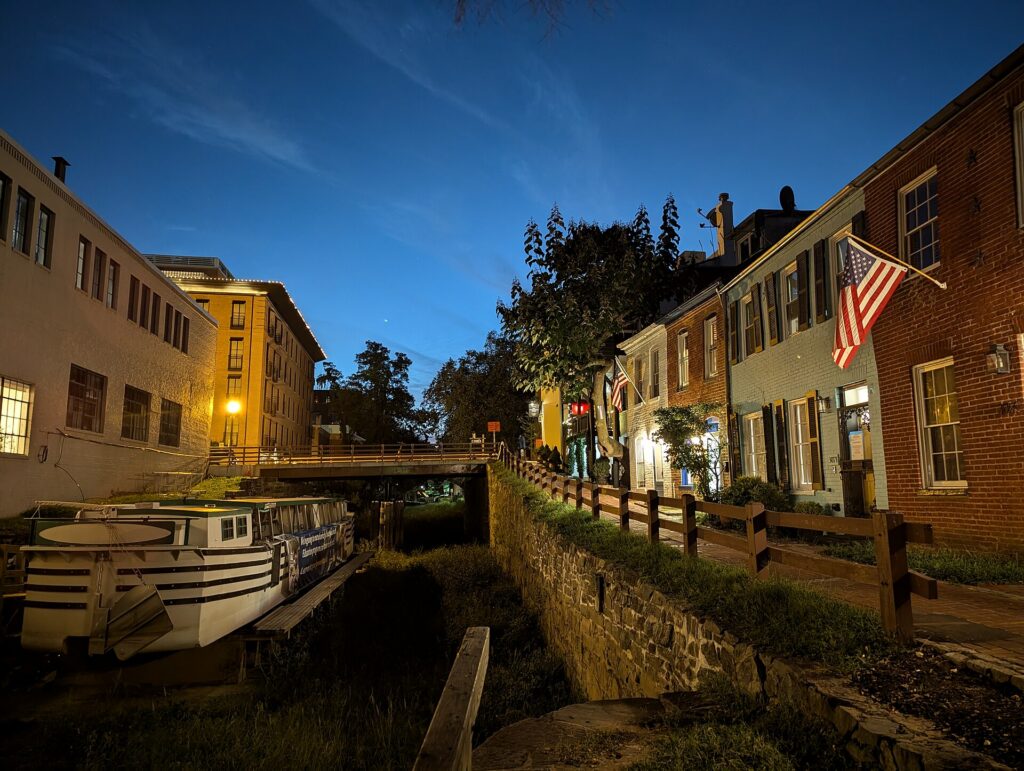
    Row houses along the C&O Canal in Georgetown, Washington, DC
    Georgetown, older than the city itself, where the C&O Canal towpath begins (Photo: Sdkb via Wikimedia Commons, CC BY-SA 4.0)

    Two sample itineraries

    Three days, no car

    Day one: the Capitol tour and the Library of Congress in the morning, lunch at Eastern Market, the National Gallery of Art in the afternoon, and dinner in Penn Quarter. Day two: the African American history museum at opening, the Washington Monument, then the Natural History museum after lunch; walk the memorials from the World War II Memorial to Lincoln at sunset, and eat on 14th Street. Day three: Arlington National Cemetery in the morning, Georgetown and the waterfront in the afternoon, and a Nationals game or dinner at the Wharf.

    Five days, with the region

    Add a day for Air and Space, the zoo and U Street, then rent a car for Mount Vernon and Old Town Alexandria, or for Shenandoah and Harpers Ferry, returning it before you head back into the city. Philadelphia or Baltimore by train is the car-free alternative.

    Practical details

    • Transit: tap a SmarTrip card, or SmarTrip in your phone’s wallet, at the fare gates; fares depend on distance and time of day, and one-day and multi-day passes are available. WMATA has maps and service alerts; our car-versus-Metro guide goes into detail.
    • From the airports: the Blue or Yellow Line from Reagan National, the Silver Line from Dulles, and MARC or Amtrak trains from the BWI rail station, reached by a free shuttle from the terminal.
    • Weather: light clothing, sunscreen and water in summer; layers in spring and fall; a warm coat from December to February. The National Weather Service’s Baltimore/Washington office has the forecast.
    • Time zone: Eastern, the same as New York, Philadelphia and Toronto.
    • Security: expect bag checks at every museum and federal building, leave pocketknives at the hotel, and allow extra time; streets around the White House and the Capitol close without warning for motorcades and demonstrations.
    • Entry requirements: visitors from Visa Waiver Program countries need an approved ESTA before boarding; most others need a visa. The State Department’s travel site is the authoritative source.

    Frequently asked questions

    How many days do you need in Washington, DC?

    Three full days covers the Mall, the Capitol, the main Smithsonian museums and one or two neighborhoods; add a day for Arlington and Georgetown, and another for Mount Vernon or a trip into Virginia.

    Are the museums in Washington really free?

    The Smithsonian museums, the National Gallery of Art, the National Zoo, the Archives and the Holocaust Museum are all free, though a few require free timed passes at busy times. The Spy Museum and the Museum of the Bible charge admission.

    What is the number one thing to do in Washington, DC?

    Walk the National Mall from the Capitol to the Lincoln Memorial, ideally in the evening, when the memorials are lit and the heat has gone.

    Is Washington, DC walkable?

    Very, in the core. The Mall, downtown, Capitol Hill, Dupont Circle and Georgetown are all walkable, and the Metro connects them; the distances along the Mall are longer than they look.

    Do I need a car in Washington, DC?

    No. Parking is expensive, traffic is heavy and the Metro covers almost everything. Rent for a day trip to Mount Vernon or Shenandoah if you want one.

    Can you tour the White House?

    Yes, but it must be requested well in advance through a member of Congress for U.S. citizens, or through your embassy for international visitors. Tours are free and not guaranteed.

    Ready to go? Compare flights to Washington, DC into all three airports, find a place to stay with our Washington, DC hotel search, and if Virginia or Maryland is on the list, price a rental car for those days.