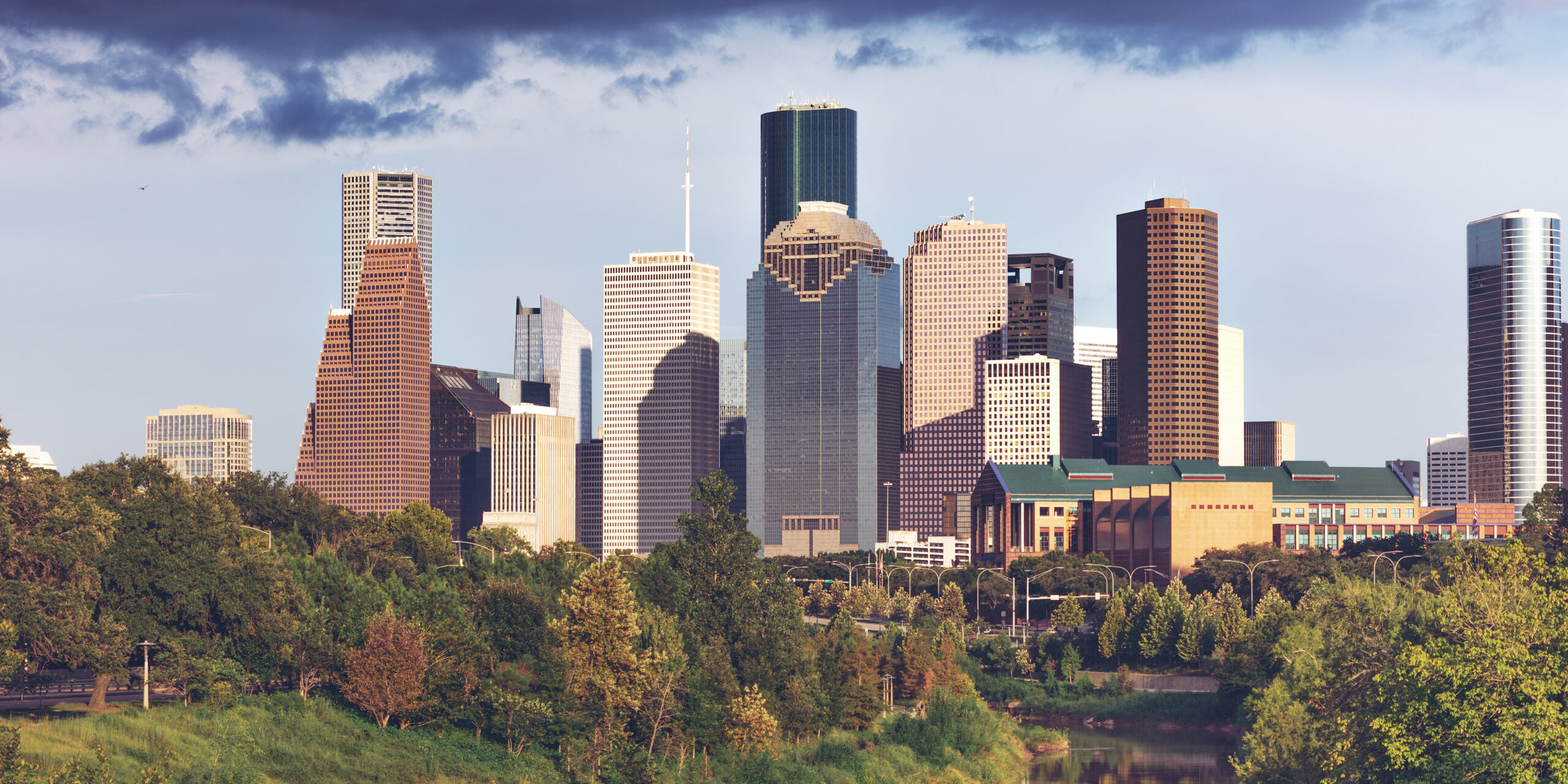
Houston has a reputation problem. People picture freeways, refineries and humidity, and many visitors fly in for a conference or a connection at IAH without ever seeing the city. The ones who stay find the fourth-largest city in the country and, by some measures, the most diverse: a museum district with around twenty institutions within walking distance of each other, the Menil Collection and the Rothko Chapel, NASA’s Mission Control, a bayou turned into one of the best urban parks in Texas, neighborhoods of bungalows, murals and taquerias, the biggest rodeo on earth every spring, and a food scene that runs from brisket and Tex-Mex to Viet-Cajun crawfish, Nigerian suya and Pakistani kebabs. The Gulf of Mexico is an hour away at Galveston. This guide covers the sights, the neighborhoods, the food, the rodeo and the sports, the day trips, and the practical details, including the heat, that turn a business trip into a proper visit.
If you are still comparing cheap flights to Houston, read this alongside our guides to the best time to fly to Houston and whether you need a car. Between the three you can plan the whole trip.
Houston at a glance for first-timers
- Airports: George Bush Intercontinental (IAH), about 37 km (23 miles) north of downtown, is the main international gateway and a major hub for United Airlines. William P. Hobby (HOU), about 11 km (7 miles) southeast of downtown, is a big Southwest Airlines base with domestic flights and some routes to Mexico and the Caribbean. See our guides to Bush Intercontinental (IAH) and Hobby (HOU).
- Getting around: the METRORail Red Line links downtown, Midtown, the Museum District, Hermann Park, the Texas Medical Center and NRG Park. The metro area is vast, though, and most visitors rent a car for Space Center Houston and Galveston.
- Money: US dollars. The combined sales tax in Houston is 8.25 percent, and hotel taxes add noticeably to a room rate. Tipping 18 to 20 percent in restaurants is expected.
- Weather: short, mild winters, a warm and green spring, a long, hot and humid summer, and a pleasant fall. Hurricane season runs from June to November. Our month-by-month guide has the detail.
- Where to stay: downtown for the Theater District, the ballpark and Discovery Green; the Museum District or Montrose for art, restaurants and the Red Line; the Galleria for shopping; the Heights for a neighborhood feel. Our Houston hotel search covers them all.
Downtown: Discovery Green, the tunnels and the Theater District
Discovery Green, a twelve-acre park opened in 2008 beside the George R. Brown Convention Center, gave the east side of downtown a front lawn, with a lake, splash fountains, free concerts and, in winter, an ice ribbon for skating. Below the streets runs the downtown tunnel system, roughly six miles of air-conditioned pedestrian passages lined with food courts and shops that link around 95 blocks of office towers; it is open on weekdays during business hours only. On the northwest side of downtown, the Theater District packs one of the largest concentrations of performing-arts seats in the country outside New York into a few blocks: Jones Hall for the Houston Symphony, the Wortham Theater Center for the Houston Grand Opera and the Houston Ballet, the Alley Theatre, and the Hobby Center for touring Broadway.
Buffalo Bayou Park, the Cistern and the bats
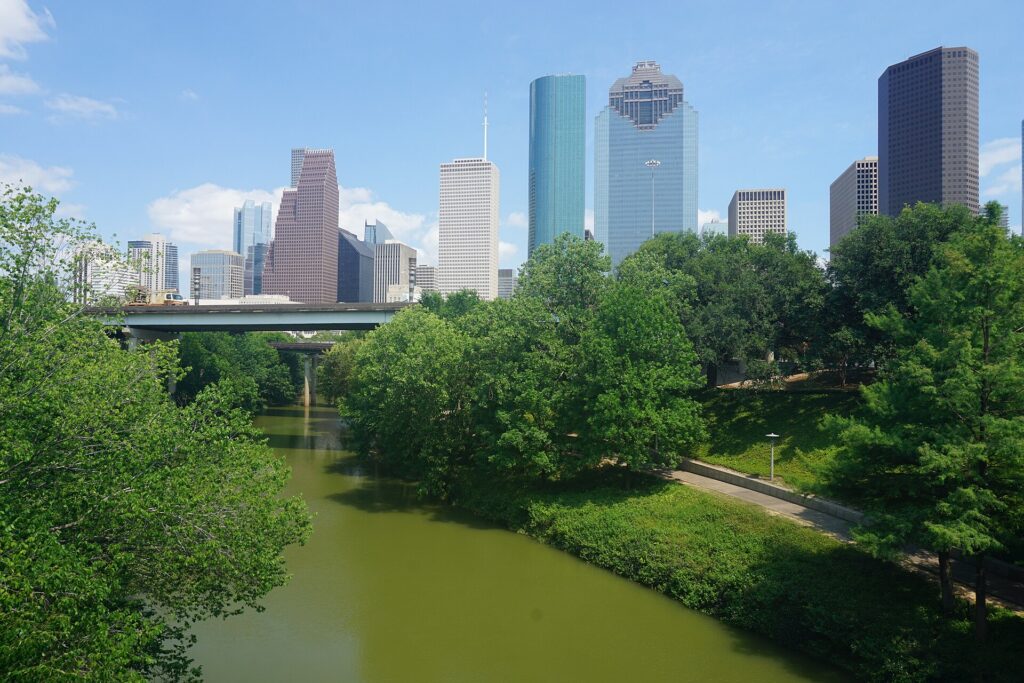
Houston was founded in 1836 on the banks of Buffalo Bayou, the slow river that winds through downtown to the Ship Channel, and after decades of neglect it is now the city’s best public space. Buffalo Bayou Park, about 160 acres along both banks between Shepherd Drive and downtown, has paved hike-and-bike trails, a skate park, a dog park, sculpture, gardens and some of the best skyline views in the city, especially at sunset from the Rosemont Bridge. Kayak rentals and boat tours run on the water. Inside the park, the Cistern, a 1926 underground drinking-water reservoir with a forest of more than two hundred concrete columns, has been reopened for guided tours and immersive art installations, and its echo is unforgettable; book ahead. At dusk from spring to fall, head to the Waugh Drive Bridge, where a colony of Mexican free-tailed bats, estimated at around a quarter of a million, pours out from under the bridge to feed.
The Museum District and Hermann Park
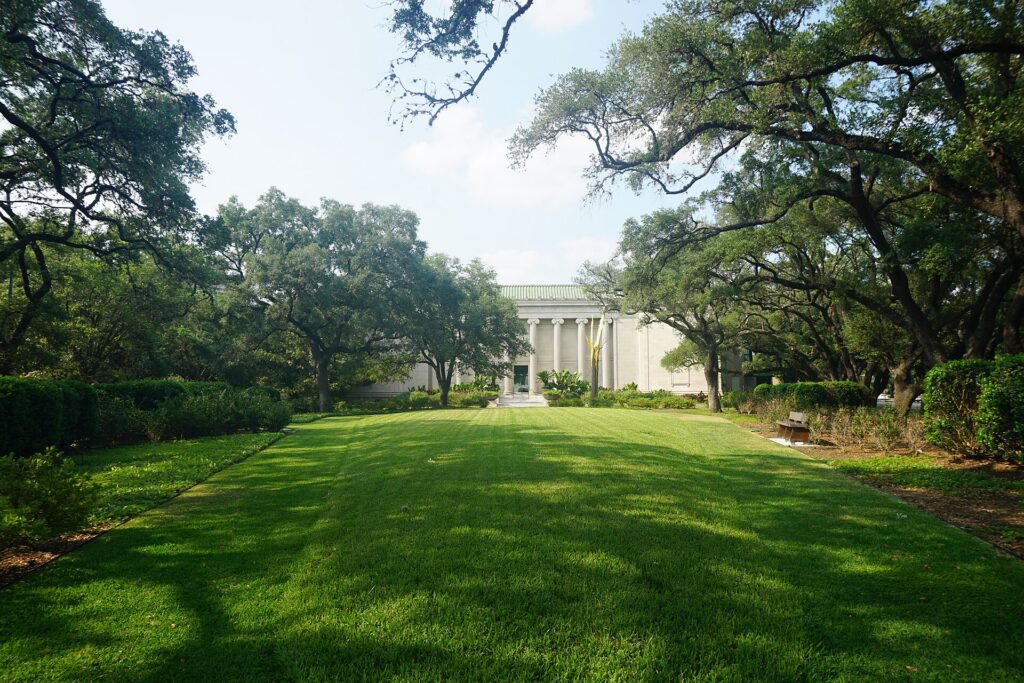
South of Midtown, the Museum District holds around twenty museums within about a mile and a half, most of them on or near the Red Line. The anchor is the Museum of Fine Arts, Houston, one of the largest art museums in the country, with three main gallery buildings, including a glass hall by Mies van der Rohe and the Kinder Building, opened in 2020 for modern and contemporary art. The Isamu Noguchi-designed Cullen Sculpture Garden across the street is free, and general admission to the museum is free one day a week; check the museum’s site for the current day. The Houston Museum of Natural Science is the other giant, with the Morian Hall of Paleontology, a dazzling hall of gems and minerals, a planetarium, and the Cockrell Butterfly Center, a three-story glass rainforest full of free-flying butterflies. Smaller stops include the free Contemporary Arts Museum Houston, the Holocaust Museum Houston and the Children’s Museum Houston.
Beside the museums, Hermann Park is Houston’s Central Park: 445 acres of lawns, lakes and oaks. The Houston Zoo, one of the most visited in the country, fills the middle; the Japanese Garden is peaceful; paddle boats run on McGovern Lake; and the Miller Outdoor Theatre stages free concerts, plays and dance performances on summer and fall evenings. The vast Texas Medical Center, the largest medical complex in the world, rises just south.
The Menil Collection and the Rothko Chapel
If you see one thing in Houston that you cannot see anywhere else, make it the Menil Collection. It is the private collection of Dominique and John de Menil, oil-industry philanthropists who gathered surrealist paintings by Magritte and Max Ernst, antiquities, Byzantine icons, and African and Pacific art, housed since 1987 in a low, light-filled building by Renzo Piano set among the gray bungalows of Montrose. Admission is free, and so is everything on the surrounding campus: the Cy Twombly Gallery, a Dan Flavin light installation at Richmond Hall, the Menil Drawing Institute, and lawns shaded by live oaks. Two blocks away, the Rothko Chapel, commissioned by the de Menils and opened in 1971, is an octagonal, nondenominational space holding fourteen dark canvases by Mark Rothko. For many visitors it is the most moving room in Texas. Outside, Barnett Newman’s steel Broken Obelisk stands in a reflecting pool, dedicated to Martin Luther King Jr. Allow a half-day for the whole campus.
Space Center Houston
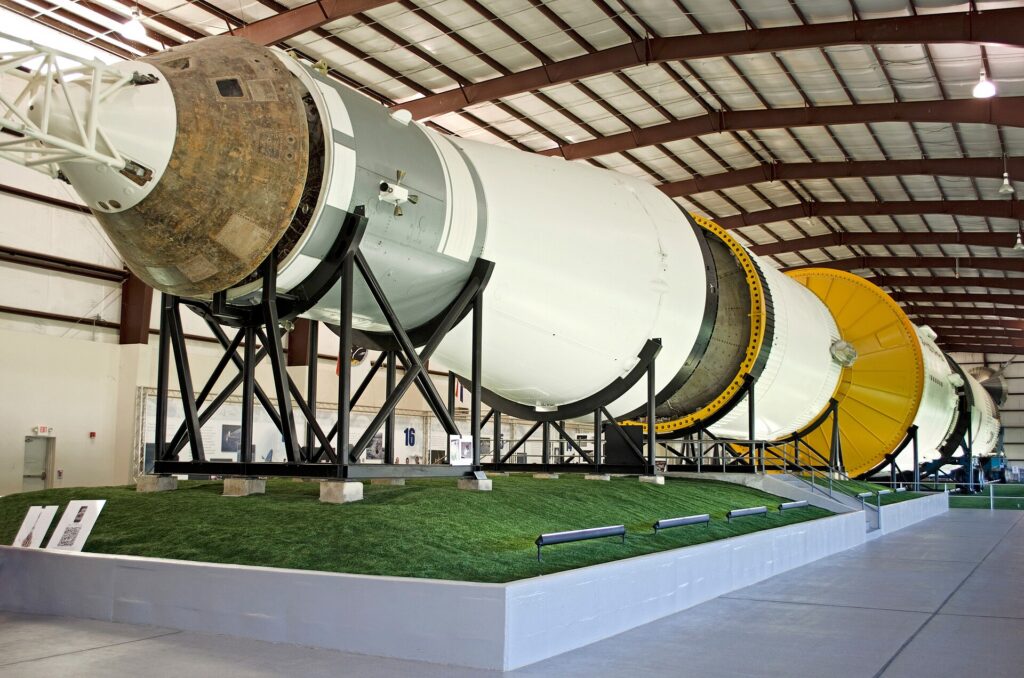
About 40 km (25 miles) southeast of downtown, beside NASA’s Johnson Space Center at Clear Lake, Space Center Houston is the official visitor center and the city’s most famous attraction. “Houston” was the first word Neil Armstrong radioed back after Apollo 11 touched down. The essential experience is the tram tour onto the working NASA campus: depending on the day, it visits the restored Apollo-era Historic Mission Control, set up as it was during the Moon landings, the astronaut training facility, and Rocket Park, where one of the three remaining Saturn V moon rockets lies on its side in a hangar, 363 feet (110 meters) of it. Back at the center, Independence Plaza lets you walk through a space shuttle replica mounted on top of the original Boeing 747 shuttle carrier aircraft, and the galleries hold flown capsules, spacesuits and moon rocks brought back by the Apollo astronauts. Allow most of a day, buy tickets online, and arrive early for the tram. There is no rail link, so you will need a car, a ride-hail or a tour.
Neighborhoods worth a half-day
Montrose
West of the Museum District, Montrose is the city’s bohemian heart and the historic center of LGBTQ life in Houston: tree-lined streets of bungalows, vintage shops, bars, coffee shops and some of the city’s best restaurants along Westheimer Road. The Menil campus sits at its eastern edge. It is walkable and a good base; see our Montrose hotel guide.
The Heights
Northwest of downtown, the Heights was laid out in the 1890s as a separate town, and its Victorian houses and Craftsman bungalows now surround a lively strip of boutiques, antiques stores and restaurants on 19th Street. Heights Boulevard has a walking trail down its grassy esplanade, and weekend brunch here is an institution.
EaDo and the East End
East of downtown, EaDo (East Downtown) has gone from warehouses to murals, breweries and apartments, with Shell Energy Stadium, home of the Houston Dynamo and Houston Dash soccer teams, at its center. Beyond it, the East End along Navigation Boulevard and Harrisburg is the historic heart of Mexican-American Houston, with taquerias, panaderías, colorful murals and the restaurant widely credited with bringing fajitas to a mainstream audience in the 1970s. The METRORail Green Line runs through both.
Third Ward
South of downtown, the Third Ward is one of the historic centers of Black Houston, home to Texas Southern University and the University of Houston. Emancipation Park was bought in 1872 by formerly enslaved people to hold Juneteenth celebrations, and it still hosts them. Project Row Houses, an art project in a row of shotgun houses, is nationally admired.
Uptown, the Galleria and River Oaks
West of the Loop, Uptown is Houston’s second downtown, built around The Galleria, the largest shopping mall in Texas, with an ice rink under its glass roof. The free Gerald D. Hines Waterwall Park, a sixty-four-foot horseshoe of falling water beneath Williams Tower, is the neighborhood’s great free sight. Next door, River Oaks is the city’s grandest residential enclave.
Chinatown and the Mahatma Gandhi District
In southwest Houston, miles of Bellaire Boulevard form one of the largest Asian dining districts in the country, with Vietnamese, Chinese, Taiwanese and Korean restaurants, bakeries and crawfish houses in strip malls. Nearby, the Mahatma Gandhi District along Hillcroft Avenue has Indian and Pakistani restaurants and sweet shops. You will need a car or a ride-hail.
More history and culture
East of the city, the San Jacinto Battleground State Historic Site marks the spot where Sam Houston’s army defeated Santa Anna on April 21, 1836, winning Texas its independence in a battle that lasted about eighteen minutes. Its star-topped column is taller than the Washington Monument, with an observation deck at the top. The Orange Show Monument, a folk-art maze built by a postman, and the Beer Can House, clad in flattened cans, are the most delightful oddities in the city; the same organization runs the Art Car Parade every spring. Bayou Bend, the Museum of Fine Arts’ American decorative arts in a River Oaks mansion and gardens, is a lovely morning. In the west, Memorial Park, nearly twice the size of New York’s Central Park, has forest trails and the Houston Arboretum. For concerts, shows and games during your dates, our Houston events page lists what is on.
The Houston Livestock Show and Rodeo
For about three weeks from late February into March, the Houston Livestock Show and Rodeo takes over NRG Park, and it is billed as the largest livestock exhibition and rodeo in the world. It opens with the World’s Championship Bar-B-Que Contest, when hundreds of teams smoke brisket on the grounds, and with trail riders who ride into the city on horseback from across Texas. Then come the livestock shows and auctions, a carnival, a vast shopping hall, a wine competition, and, every night in NRG Stadium, a professional rodeo followed by a concert from a major country, pop, Latin or hip-hop star. Locals dress in boots and hats all month, and the proceeds fund scholarships across Texas. Take the METRORail Red Line to the NRG Park stations rather than driving, buy concert tickets early for the big names, and book your hotel before your flight if your dates overlap with it.
Sports
The Houston Astros, World Series champions in 2017 and 2022, play at Daikin Park downtown, under a retractable roof that makes July baseball bearable. The Houston Rockets play basketball at the Toyota Center, a few blocks away. The Houston Texans play NFL football at NRG Stadium, also roofed, which hosted matches of the 2026 World Cup and has hosted two Super Bowls. The Dynamo in MLS and the Dash in the NWSL play at Shell Energy Stadium in EaDo. The Red Line serves NRG Park and downtown, so you rarely need to drive to a game. Check what is on sale in Houston for your dates before you book flights.
What to eat, and where
Houston is one of the great eating cities in America, thanks to immigrants from Mexico, Vietnam, China, India, Pakistan, Nigeria, El Salvador and dozens of other countries. Start with Tex-Mex and fajitas, which Houston helped put on menus nationwide, and with breakfast tacos and kolaches, the Czech-Texan pastries sold at shops across the city. Then barbecue: Houston’s pitmasters now rank among the best in the state, with lines out the door at weekends. Houston’s signature crossover is Viet-Cajun crawfish, boiled and tossed in garlic butter and spices, at its best from roughly February to May. Gulf oysters, shrimp and red snapper appear on menus everywhere. Beyond that, eat pho on Bellaire Boulevard, biryani on Hillcroft, suya in the southwest, and steak in the Galleria. Montrose, the Heights and Midtown have the chef-driven restaurants.
Houston through the seasons
Spring (March to May) is the favorite season: azaleas in River Oaks, bluebonnets along the highways outside the city, the rodeo, patio season, and warm, green days before the summer heat; it is also the start of the storm season, so watch the forecast. Summer (June to September) is long, hot and very humid, with the heat index regularly above 100 °F (38 °C) and afternoon thunderstorms; plan museums by day and the bayou at dawn or dusk. It is also hurricane season, which runs from June to November and peaks from mid-August to early October; most years pass without a direct hit, but travelers should keep an eye on forecasts from the National Hurricane Center. Fall (October to November) brings relief, with warm, clear days, football and patio season again. Winter (December to February) is short and mostly mild, with holiday lights, ice skating at Discovery Green and the Houston Marathon in January, though an occasional hard freeze can close roads for a day. Our month-by-month guide has the fare patterns that go with each season.
Houston with kids
Houston is an excellent city for children, partly because so much of it is air-conditioned. Space Center Houston is the obvious highlight. The Children’s Museum Houston, the Houston Museum of Natural Science with its dinosaurs and butterflies, and the Houston Zoo fill a day in the Museum District, and the Hermann Park railroad and paddle boats are next door. Discovery Green’s splash fountains and playground are free, and so are the Miller Outdoor Theatre’s summer shows. At Brazos Bend State Park, an hour southwest, children can watch alligators basking beside the lakes from a safe distance. For families renting a vehicle, our family car rental guide covers the choices.
Houston on a budget
A surprising amount of the best of Houston is free. The Menil Collection, the Rothko Chapel, the Cy Twombly Gallery, the Contemporary Arts Museum and the Museum of Fine Arts on its free day cost nothing, and neither do Buffalo Bayou Park, the bats, Hermann Park, the Waterwall, Discovery Green, the Miller Outdoor Theatre and the murals of EaDo. METRO’s local fare is one of the cheapest of any big American transit system, and transfers within a few hours are free. Space Center Houston and the zoo are the expensive days. Eat well for less on Bellaire Boulevard and Hillcroft, at the taquerias of the East End, and at the barbecue joints. Business-driven downtown and Galleria hotels often drop their rates on weekends. Compare rates by neighborhood on our Houston hotel search.
Day trips from Houston
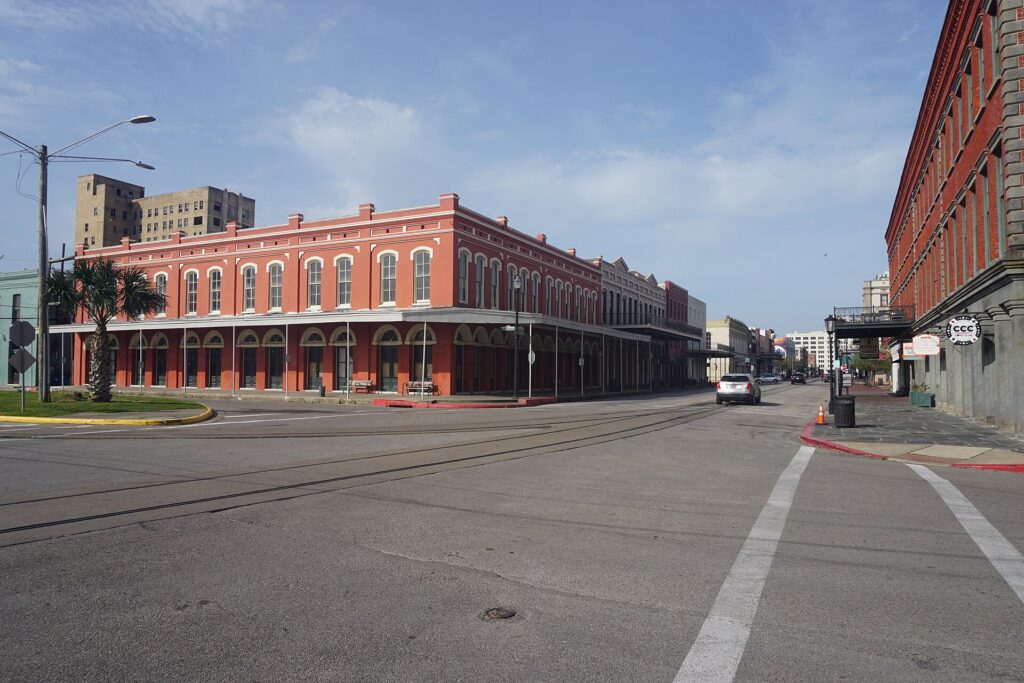
Galveston, about 80 km (50 miles) southeast on I-45, is the essential side trip: a barrier island with beaches along the long seawall built after the 1900 Storm, still the deadliest natural disaster in American history. The Strand Historic District has cast-iron Victorian storefronts, and the East End has some of the finest Victorian houses in Texas. Galveston is also where the Union Army read the order announcing the end of slavery in Texas on June 19, 1865, the origin of Juneteenth, and today it is one of the country’s busiest cruise ports. Visit Galveston has the details. Space Center Houston and the Kemah Boardwalk are on the way. Brazos Bend State Park, about an hour southwest, has alligators, wetland birds and an observatory. For longer trips, Austin is about three hours west and San Antonio a little farther, and Dallas is about four hours north on I-45; our Dallas to Houston driving guide covers the route, and our guide to things to do in Dallas covers the city. Most of these trips need a car; compare rates on our Houston car rental page.
Two sample itineraries
Two days, no car
Day one: the Museum of Fine Arts or the Museum of Natural Science in the morning, a walk through Hermann Park, lunch in Montrose, the Menil Collection and the Rothko Chapel in the afternoon, and dinner on Westheimer Road. Day two: Discovery Green and the Theater District in the morning, a walk or kayak along Buffalo Bayou Park and a tour of the Cistern, the bats at the Waugh Drive Bridge at dusk, and an Astros or Rockets game or a show at night.
Four days, with Space Center Houston and Galveston
Add a day for the Heights, the East End and dinner on Bellaire Boulevard, then pick up a car and spend a full day at Space Center Houston, then a final day in Galveston, returning the car at Hobby or IAH on the way home.
Practical details
- Transit: pay for METRO with a METRO Q fare card or the METRO Q Mobile Ticketing app; a single fare includes free transfers for a few hours. METRO has maps and service alerts; our transit-versus-car guide goes into detail.
- From the airports: taxis, ride-hail and rentals serve both; METRO buses also link each airport with downtown, slowly but cheaply. The Houston Airport System’s site covers ground transport at IAH and Hobby.
- Weather: light, breathable clothes, sun protection and water from May to October, an umbrella year-round, and a light jacket for air-conditioned interiors and winter cold fronts. The National Weather Service’s Houston/Galveston office issues the heat, flood and storm warnings worth heeding; never drive into floodwater.
- Time zone: Central, one hour behind New York and the same as Dallas and Chicago.
- Entry requirements: visitors from Visa Waiver Program countries need an approved ESTA before boarding; most others need a visa. The State Department’s travel site is the authoritative source.
- Tourist information: Visit Houston, the official tourism office, has current events and neighborhood guides.
Frequently asked questions
How many days do you need in Houston?
Two full days covers the Museum District, the Menil and the Rothko Chapel, Buffalo Bayou and downtown; add a third for Space Center Houston and a fourth for Galveston.
What is the number one thing to do in Houston?
Space Center Houston and its tram tour to Mission Control. For art lovers, the Menil Collection and the Rothko Chapel.
Is Houston walkable?
Downtown, Midtown, the Museum District, Montrose and the Heights are walkable in themselves, and the Red Line connects several of them. The city as a whole is built around the car, and summer heat makes long midday walks hard going.
Do I need a car in Houston?
Not for the Museum District, Montrose and downtown. For Space Center Houston, Galveston, Chinatown and most of the suburbs, yes; rent it only for the days you need it.
When is hurricane season in Houston?
June 1 to November 30, with the greatest risk from mid-August to early October. Most visits are unaffected, but watch the forecast in those months and consider flexible bookings.
What is Houston known for?
NASA and Mission Control, the energy industry, the Texas Medical Center, the rodeo, one of the most diverse populations in the country, and a food scene to match.
Ready to go? Compare flights to Houston, find a place to stay with our Houston hotel search, and if Space Center Houston or Galveston is on the list, price a rental car for those days.
Keep planning with TicketScanner
- Cheap flights to Houston
- Houston hotels — by neighborhood
- Houston car rentals — for Space Center Houston, Galveston and Texas road trips
- Events in Houston — Astros, Rockets, Texans, concerts and shows on sale
- Best time to fly to Houston: month by month
- Houston: rent a car or use public transit?
- George Bush Intercontinental (IAH) airport guide
- Where to stay: Montrose
- Driving Dallas to Houston
- Things to do in Dallas — about four hours north by car
Leave a Reply