Tag: Destinations & Planning

  • How to Save Money for a Trip While Still Enjoying Everyday Life

    How to Save Money for a Trip While Still Enjoying Everyday Life

    Most people who want to travel more are not short of ideas. They are short of a plan for paying for it that does not involve giving up everything they enjoy for a year. The good news is that saving for a trip works best when it is boring and steady rather than heroic: a clear number, a separate account, an automatic transfer, a few swaps in how you spend, and a trip designed to cost less in the first place. This guide walks through the whole process in order, from pricing the trip honestly to keeping the budget intact once you land, with a worksheet you can copy, a sample timeline and the mistakes that quietly drain travel funds. It is part of our destinations and planning series; if you have not chosen where to go yet, start with our guide to budget travel destinations, because the destination you pick is the biggest saving of all.

    The short answer

    Price the whole trip, not just the flight, and add a buffer. Divide that total by the number of months until you leave to get a monthly target. Open a separate savings account for the trip and set up an automatic transfer on payday, so the money moves before you can spend it. Make the trip itself cheaper by choosing the season, the destination and the number of stops carefully. Trim spending by swapping, not stopping: cheaper versions of the things you enjoy rather than cutting them out. Put windfalls and side income straight into the fund. And book the big pieces at the right time, watching fares on our flight search while you save so you know when the price is right.

    A glass-jar piggy bank holding coins saved for a trip
    A separate, clearly labeled travel fund is the single most effective saving habit (Photo: stevepb via Wikimedia Commons, CC0)

    Step 1: Put an honest number on the trip

    A vague goal like “go to Europe next year” is easy to postpone. A number is not. Before you save anything, price the trip as if you were booking it today, category by category. Search real flights for your likely dates on our flight search and real rooms on our hotel search, rather than guessing, since guesses are almost always too low.

    CostWhat to includeCommonly forgotten
    FlightsRound trip or open-jaw fare for every travelerChecked and carry-on bag fees, seat selection, getting to and from your home airport
    AccommodationTotal for every night, after taxesResort or destination fees, city tourist taxes, parking, deposits
    Food and drinkA realistic daily figure per personCoffee, snacks, water, tips where customary
    Local transportTransit passes, trains between cities, taxisAirport transfers at each end, fuel and tolls if you rent a car
    ActivitiesMuseums, tours, events, day tripsAdvance-booking fees, guide tips, equipment rental
    Documents and healthPassport renewal, visas or travel authorizationsVaccinations, prescriptions, travel insurance
    Before you goLuggage, adapters, clothing you genuinely needPet or house sitting, time off without pay
    BufferAround 10 to 15 percent of the totalCurrency swings and price rises between now and the trip

    If you are renting a car, add insurance, young-driver fees and one-way charges; our rental car booking tips list the extras that catch people out. For hotels, compare the total price, not the nightly rate, as our hotel booking tips explain.

    Step 2: Turn the total into a monthly target

    Once you have a total, divide it by the number of months until you need the money. That is your monthly target. Divide the monthly figure by four and a bit to get a weekly one, which some people find easier to picture.

    As a purely illustrative example, suppose the trip comes to $2,400 including the buffer, and you are leaving in eight months. That is $300 a month, or roughly $70 a week. If that feels impossible, you have three levers: save for longer, make the trip cheaper (Step 3), or find extra income (Step 8). What does not work is picking a target you cannot sustain and hoping. A smaller amount that you transfer every single month beats a heroic figure that collapses in month two.

    Remember that some costs come early

    You will not pay for everything on departure day. Flights are usually paid in full when you book, often months ahead. Many hotels charge only at check-in on refundable rates, but prepaid and nonrefundable rates are charged up front. Deposits for tours, rail passes and events come due at booking. Map out roughly when each large payment will fall, so you know the fund needs to reach, say, the price of the flights by the time fares look good, rather than the full total.

    Step 3: Make the trip cheaper before you save a cent

    Trimming your coffee budget helps. Choosing a cheaper version of the trip helps far more. Before you commit to a savings target, look hard at the decisions that set it.

    Choose the destination for daily costs, not just the fare

    A trip is the flight plus every day on the ground. A week in a city where rooms and meals are inexpensive can cost far less than a week somewhere with a cheaper flight but Western capital prices. Our budget travel destinations guide profiles ten places that give you a lot for your money, and our guide to New York on a budget shows how even an expensive city can be done cheaply.

    Travel in the shoulder season

    The weeks either side of a destination’s peak season usually bring lower fares and room rates with weather that is still good. For Europe, that often means late spring or early fall; our guide to the best places to visit in Europe in fall covers the autumn options, and our guide to the best time to book cheap flights and hotels explains booking windows.

    Fewer stops, longer stays

    Every extra city adds a train or flight, a first night of higher spending and time lost in transit. If you are planning a multi-country trip, our guide to traveling Europe on a multi-city itinerary shows how to route it efficiently, including open-jaw flights that avoid backtracking.

    Consider closer, cheaper alternatives

    A road trip or a short flight can deliver a great break for a fraction of a long-haul trip. Our list of America’s most unique state parks and our roundup of relaxing vacations for doing absolutely nothing both include options that are easy on the budget.

    Step 4: Give the trip its own account

    Money that sits in your everyday account gets spent. Money in a separate account with the trip’s name on it tends to stay put. This is the single most effective step in the whole process.

    • Open a separate savings account or a labeled savings “goal” inside your existing bank. Name it after the trip: “Lisbon, May” works better than “Savings 2”.
    • Choose an account that pays interest and does not charge monthly fees. Over a year of saving, interest will not pay for the trip, but it helps and it costs you nothing.
    • Keep it insured and accessible. For money you will need within a year or two, a deposit account covered by deposit insurance is the right home, not investments that can fall in value just before you book. In Canada, eligible deposits at member institutions are protected by the Canada Deposit Insurance Corporation; in the United States, by the FDIC at insured banks. Check that your institution is a member and what is covered.
    • Consider the tax wrapper, if you have room. Canadians can hold savings inside a Tax-Free Savings Account, where interest is not taxed; read the contribution and withdrawal rules before you use one for a short-term goal.

    Automate the transfer

    Set up an automatic transfer from your main account to the travel account on the day your pay arrives. If you are paid every two weeks, split the monthly target across both paydays. Automating removes the monthly decision, and the decision is where saving usually fails.

    Step 5: Find out where your money actually goes

    You do not need to become a spreadsheet obsessive. You do need a month of honest information. Most banking apps categorize spending automatically; if yours does not, a simple note on your phone works. Track these for one month:

    • Food: groceries, takeout, restaurants, coffee and snacks, listed separately.
    • Transport: fuel, parking, transit, taxis and ride-hailing.
    • Subscriptions: streaming, apps, gyms, memberships, software.
    • Small extras: impulse buys, convenience-store runs, delivery fees.

    The point is not to feel guilty. It is to find two or three categories where the money is not buying much happiness. Almost everyone finds at least one subscription they forgot about and one habit that costs more than they thought. The Financial Consumer Agency of Canada and the US Consumer Financial Protection Bureau both publish free budgeting tools and worksheets if you want more structure.

    Step 6: Swap, don’t stop

    The fastest way to abandon a savings plan is to cut out everything you enjoy. The better approach is to keep the experiences and choose cheaper versions of them. You still have a life; you just spend on it more deliberately.

    • Eating out three times a week? Make it once, and turn one of the others into a dinner you cook with friends.
    • Daily café coffee? Keep the weekend one as a treat and make it at home on weekdays.
    • Several streaming services? Keep one at a time and rotate every few months.
    • Nights out? Look for free events, happy hours and local festivals, or host at home.
    • Takeout lunches at work? Bring lunch three days out of five.
    • Shopping as entertainment? Replace it with something free: a hike, the library, a museum’s free evening.

    Every time you make a swap, move the difference into the travel account the same day. Many banking apps let you transfer small amounts in seconds. Seeing the balance grow because of a specific choice is what makes the habit stick.

    Step 7: Build small habits that add up

    Individual habits save little on any given day. Across months, they are the difference between reaching the target and falling short.

    • Plan meals for the week and shop with a list; food waste is money in the bin.
    • Carry a water bottle and snacks so you are not buying them on the go.
    • Walk or cycle short trips instead of driving or taking a cab.
    • Wait 48 hours before any non-essential purchase over a set amount. Most impulses fade.
    • Round up. Some banks round every card purchase up and move the change into savings automatically. Point that feature at the travel account.
    • Review bills once. A single afternoon spent calling your phone, internet and insurance providers to ask for a better rate can free up money every month for the rest of the year.

    Step 8: Add income, not just cuts

    Cutting spending has a floor. Earning a little more does not. You do not need a second full-time job; a few small streams directed straight into the travel account can shorten your timeline noticeably.

    • Sell what you do not use. Old electronics, sports gear, furniture, clothes and books can add up to a meaningful sum, and decluttering before a trip feels good.
    • Freelance or tutor in a skill you already have, such as design, writing, coding, music or languages.
    • Take occasional paid work like event staffing, pet sitting or seasonal shifts.
    • Redirect windfalls. Tax refunds, work bonuses, cash gifts and rebates go straight into the fund, or at least half of them do.

    Keep records of any side income, since it may be taxable where you live. And keep the rule simple: side money goes to the trip, the main salary covers life.

    Clothes and travel essentials being packed into an open suitcase
    Packing light is a saving in itself: it keeps you clear of bag fees on low fares (Photo: Angelina Litvin linalitvina via Wikimedia Commons, CC0)

    Step 9: Use rewards carefully, and never pay interest

    Credit card points, airline miles and hotel loyalty programs can cover a flight or a few nights, but only if you use them in a way that costs you nothing extra.

    • Pay the full balance every month. Card interest will wipe out the value of any rewards many times over. If you cannot pay in full, the rewards are not worth having.
    • Put everyday spending you would make anyway on one rewards card, rather than spreading it across several.
    • Join the free loyalty program of the airline or hotel group you use most. Member rates and small perks are free money.
    • Do not buy things to earn points. A purchase you did not need is not a saving.
    • Look for a card without foreign transaction fees if you will spend abroad; the fee applies to every purchase in another currency.

    Never put the trip itself on a card you cannot pay off. Travel on credit means paying interest on a vacation long after you are home.

    Step 10: Book the big pieces at the right moment

    Saving and booking run side by side. While the fund grows, watch prices so you know what a good fare looks like for your route.

    Flights first

    Fares are usually the most volatile part of the trip, so they are the first thing to lock in once the price is right and the fund can cover it. Search a whole month of dates to see where prices dip, check nearby airports, and read the fare rules before you pay. Our international flight booking tips cover connections, bags and layovers, and our guide to planning a trip with TicketScanner shows how to use flexible dates and fare calendars on this site.

    Rooms on flexible terms

    Once flights are booked, reserve accommodation on a refundable rate if the price difference is small. You hold the room without tying up the whole cost, and you can rebook if prices drop before your cancellation deadline.

    Everything else last

    Tours, rail tickets and event seats can often wait until closer to the date, unless they are known to sell out. Rail fares in parts of Europe do rise closer to departure, so book those once your route is firm.

    Step 11: Celebrate milestones and protect your sanity

    Saving for months with no reward is how people give up. Build in small wins.

    • At a quarter of the target: a modest treat, like a meal out.
    • At half: book one part of the trip, such as the flight, so it becomes real.
    • At three quarters: buy one useful item you will take, like a good daypack or a money belt.
    • At the target: finalize the plan and enjoy the anticipation, which for many people is half the fun.

    Keep a small, fixed “fun budget” each month that you spend without guilt. Do not compare your saving speed with anyone else’s. And remember that a trip is part of a good life, not a reason to put life on hold.

    Euro banknotes and coins spread on a table
    Pay in the local currency and use bank ATMs, not airport exchange desks (Photo: Avij (talk · contribs) via Wikimedia Commons, Public domain)

    Step 12: Keep the budget intact once you land

    All that saving is wasted if the money leaks away in the first three days. A few habits keep spending on track.

    • Set a daily budget from your plan and check it each evening; it is easier to adjust on day two than on day ten.
    • Pay in the local currency. When a card terminal offers to charge you in your home currency, decline; the conversion rate is usually worse.
    • Use bank ATMs rather than airport exchange desks for local cash.
    • Eat your big meal at lunch, when set menus are cheaper, and shop in markets.
    • Use transit passes and walk; taxis are where daily budgets break.
    • Buy travel insurance before you go. An emergency abroad can cost more than the whole trip. The Government of Canada explains what to look for in its guide to travel insurance.

    A sample savings timeline

    Time before the tripWhat to do
    9 to 12 monthsChoose the destination and season, price the trip, open the travel account, start the automatic transfer
    6 to 9 monthsTrack a month of spending, make your swaps, sell unused items, start watching fares
    3 to 6 monthsBook flights when the price is right, reserve refundable rooms, check passport validity and entry rules
    1 to 3 monthsBook rail, tours and events that sell out; buy insurance; set the daily budget
    Final weeksRecheck room prices and rebook if lower, get local currency or a no-fee card, pack light to avoid bag fees

    For a long-haul trip such as Japan, start at the top of that range. For a short city break, you can compress it into a few months.
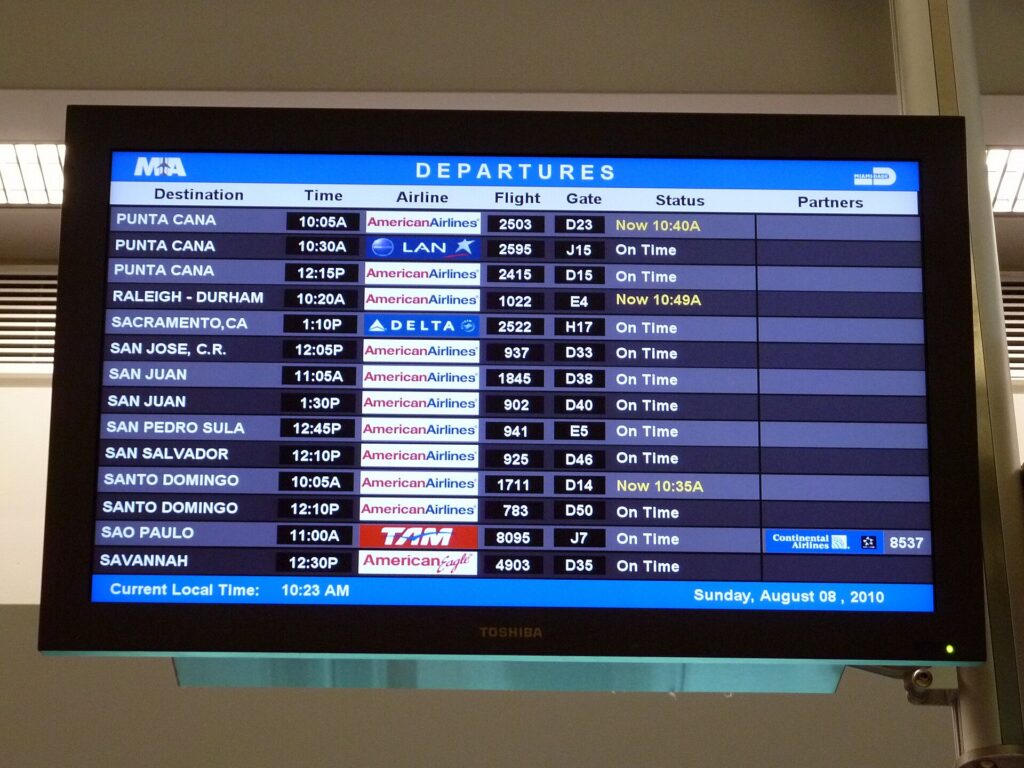
    A departures board listing flights at Miami International Airport
    Book the flight first once the fare is right and the fund can cover it (Photo: Bobby Hidy via Wikimedia Commons, CC BY-SA 2.0)

    Mistakes that drain a travel fund

    • Pricing only the flight. Accommodation, food and transport usually cost more in total.
    • No buffer. Prices rise, exchange rates move, and something always comes up.
    • Keeping the fund in your everyday account. It will be spent.
    • Dipping in for non-travel expenses. Keep a separate emergency fund, so the trip money is not your safety net.
    • Booking nonrefundable too early. Save the cheapest prepaid rates for plans that are fixed.
    • Ignoring bag fees. A low fare plus two checked bags each way can cost more than a higher fare that includes them.
    • Financing the trip. Buy-now-pay-later and card balances turn a vacation into a debt.

    Frequently asked questions

    How much should I save for a trip?

    Price your specific trip: flights, every night of accommodation after taxes, a daily figure for food and local transport, activities, insurance and documents. Then add a buffer of around 10 to 15 percent. That total, not a generic estimate, is your target.

    How far in advance should I start saving?

    For a long-haul trip, six to twelve months gives you time to save steadily and book flights at a good moment. For a short domestic break, two or three months can be enough.

    Where should I keep my travel savings?

    In a separate, fee-free savings account that pays interest and is covered by deposit insurance. Money you need within a year or two should not be in investments that can drop in value right before you book.

    Is it better to cut spending or earn more?

    Both, but spending cuts have a limit. Small, consistent swaps plus a little extra income, directed straight into the travel account, is usually the fastest route.

    Should I use a credit card to pay for travel?

    A card can offer purchase protection and rewards, which is useful, but only if you pay the balance in full. Never carry a travel balance at interest.

    What is the biggest single way to save on a trip?

    Choosing when and where you go. Traveling in the shoulder season to a destination with low daily costs saves more than any amount of coupon-clipping.

    Can I save for a trip on a low income?

    Yes, with a smaller target and a longer timeline. Choose a closer or cheaper destination, travel off-peak, and automate even a small weekly transfer. Consistency matters more than the size of each deposit.

    Ready to turn the plan into a trip? Price your flights on our flight search to set a realistic target, compare rooms on our hotel search, and if you are still choosing where to go, browse our budget travel destinations for places where your savings will stretch furthest.

  • 15 Best Guest Blogging Sites for Travel, Events, and Ticketing Enthusiasts

    15 Best Guest Blogging Sites for Travel, Events, and Ticketing Enthusiasts

    Search for “guest blogging sites for travel” and you will find long lists of websites that supposedly welcome contributors. Most of those lists are not really about writing. They exist to trade links: you supply an article, the site publishes it with a link back to you, and sometimes money changes hands along the way. That approach does little for a writer’s career, and search engines treat it as spam. If you love travel and want to write about it, there is a better path: pitching real publications, building a portfolio of work you are proud of, and learning how editors think. This guide explains how that works. It covers the difference between guest posting and genuine contributing, how editors evaluate pitches, what a strong travel story needs, how to handle rights, contracts and disclosure, how to build a portfolio from scratch, and the red flags that tell you an “opportunity” is really a link scheme.

    The short answer

    Skip the lists of “sites that accept guest posts”. Instead, choose a few publications you actually read, study what they publish, and find their official contributor or pitch guidelines. Pitch a specific story, not a destination, in a paragraph or two, with a working headline, your angle, your sources and a clear reason it matters now. Disclose any sponsored travel up front. Do not send finished drafts unless a publication asks for them. Read the contract so you know which rights you are selling. And build a portfolio on your own site with your best published clips. Two well-known travel publications that publish detailed pitch guidelines are AFAR and Condé Nast Traveler; reading both is a free education in what editors want.

    Close-up of hands typing on an old manual typewriter
    Good travel writing starts with a story, not a destination (Photo: Shixart1985 via Wikimedia Commons, CC BY 2.0)

    Guest posting, contributing and freelancing: what is the difference?

    These terms are often used interchangeably, but they describe very different arrangements.

    TypeWho pays whomWhat the editor wantsValue to your careerWatch out for
    Commissioned freelance storyThe publication pays youA reported, original story that fits a section and its readersHigh: paid clips, editor relationships, credibilityContract terms, rights, kill fees
    Unpaid contribution to a reputable outletNo payment either wayGenuine expertise or a personal perspective the outlet cannot get elsewhereModerate: a credible clip, exposure to real readersGiving away rights; working for free indefinitely
    Brand or company blog postSometimes the brand pays youUseful content that fits the brand’s audienceVaries: can be good paid work if clearly labeledUnclear disclosure; being asked to make claims you cannot support
    “Guest post for a backlink”Often you, or an agency, pay the siteA link, not a storyLow: few real readers, no editorial credibilitySearch engine penalties, pay-to-publish schemes

    The first two build a writing career. The third can be legitimate paid work. The fourth is a marketing tactic, and it is increasingly risky.

    Why link-driven guest blogging is a dead end

    Google’s own spam policies list large-scale guest posting campaigns with keyword-rich anchor text links as an example of link spam, alongside buying and selling links. Google also asks publishers to mark paid or sponsored links with the appropriate attributes, as explained in its guide to qualifying outbound links. In practice, that means:

    • Sites built to sell guest posts tend to have few genuine readers, so your work reaches almost nobody.
    • Editors notice. A portfolio full of thin, keyword-stuffed guest posts on low-quality sites can hurt your credibility with serious publications.
    • The links may be discounted or penalized, which defeats the purpose for anyone trying to promote a business.
    • Some arrangements are simply scams: pay-to-publish sites that disappear, or “editors” who ask for payment for a placement they never deliver.

    If your goal is to write, write for readers. The links, reputation and income follow from good work in credible places.

    How editors evaluate travel pitches

    A pitch is a short proposal for a story you have not yet written. Editors read a lot of them, and the ones that succeed tend to share the same qualities. The guidelines published by AFAR and Condé Nast Traveler are unusually explicit about this, and they echo what editors across the industry say.

    A story, not a place

    “I’m going to Lisbon next month; do you want anything?” is not a pitch. Condé Nast Traveler’s guidelines put it plainly: pitch stories and angles, not destinations. A story has a subject, a tension or a discovery, and a reason a reader would care. “How a new generation of chefs is reviving a nearly lost regional cuisine” is a story. “Lisbon” is a destination.

    A reason to run it now

    Editors look for timeliness: a news peg, an anniversary, a new opening, a trend, a seasonal hook or a change in how people travel. Without a reason to publish now, a good idea can sit in an inbox indefinitely.

    A fit with the publication

    Every publication has sections, formats and a voice. A pitch that shows you have read the publication, knows which section it belongs in and has checked that it has not already covered the story is far more likely to get a reply. If it has covered the topic before, explain what is new about your angle.

    Why you

    Editors want to know why you are the right person to write the piece: expertise, access to people or places, local knowledge, language skills or lived experience. Condé Nast Traveler also asks writers to consider whether they are the best person to tell a particular story, especially one about a community they do not belong to.

    Sources and substance

    Name the people you plan to interview, the places you will visit and the reporting you will do. Both AFAR and Condé Nast Traveler ask for specifics like characters, sources and news pegs, and Condé Nast Traveler says it is not looking for diary-like travelogues that simply follow the course of a trip.

    Brevity

    Condé Nast Traveler asks for pitches no longer than a paragraph or two. A long pitch suggests a writer who has not yet found the story.

    Transparency

    If your trip was sponsored in any way, say so. AFAR says it allows press trips but appreciates being told, and Condé Nast Traveler asks writers to disclose any sponsorship and notes that trips can be pitched after the fact with clear disclosure.

    No finished drafts

    Both publications say they do not accept completed stories on spec; send the pitch, not the draft. Many other outlets work the same way, although some smaller publications and personal essay sections do ask for complete pieces. Follow each publication’s guidelines.

    The anatomy of a strong pitch

    A pitch email usually contains the following, in this order.

    1. A clear subject line: “Pitch: [working headline]” plus the section, if you know it.
    2. A greeting to the right editor: check the masthead or the guidelines for who handles your section. Pitch one editor at a time; Condé Nast Traveler specifically asks writers not to send the same idea to several of its editors.
    3. The hook: one or two sentences that make the editor want to read on.
    4. The story: what you will report, who you will talk to, what the reader will learn, and why now.
    5. The format: proposed length and section, and any photo or video possibilities.
    6. Why you: a sentence or two about your relevant experience, with links to two or three of your best clips.
    7. Disclosure: any sponsored travel or relationships with the places or companies involved.

    Here is an example of the kind of structure that works. The details are illustrative, not a real assignment:

    Subject: Pitch: Quebec City in January, without a car. Hi [editor], most winter visitors to Quebec City see the old town for a weekend and leave. But the city’s ski hills, cross-country trails and ice canoeing are all reachable by public transit and shuttles, making it one of the few North American winter destinations you can do properly without driving. I would report a service-driven feature of around 1,500 words, with interviews with a local ski instructor, a transit planner and an ice canoe team captain, and practical sections on getting there, where to stay and what to pack. I have lived in the region for eight years and write regularly about winter travel; links to recent clips are below. My trip is self-funded.

    It is short, specific, timely for a winter issue, and makes clear what the reader gets.

    A person writing notes by hand in a notebook
    Keep detailed notes, names and sources: fact-checkers will ask for them (Photo: Kristin Hardwick via Wikimedia Commons, CC0)

    What a strong travel story needs

    Once you land the assignment, the work begins. Good travel writing combines storytelling with reliable information.

    A sense of place

    Readers should feel the texture of a place: its sounds, smells, people and rhythms. That comes from specific, observed detail, not from adjectives like “breathtaking” and “hidden gem”.

    Reporting, not just impressions

    Talk to people who live and work there. Get their names, their roles and their exact words. Their voices make a story credible and alive.

    Service information

    Many travel stories, especially online, include practical information: when to go, how to get there, where to stay, what it costs and what to watch out for. Readers use this to plan. Look at how service-driven guides are structured, such as our guides to things to do in Paris and the best time to fly to Paris, which combine context with decisions a reader can act on.

    Accuracy

    Travel details go out of date quickly. Check opening hours, prices, entry rules and transport links on official sources close to publication, and note when you visited. If you cannot confirm a detail, leave it out or flag it for your editor. Many publications have fact-checkers who will ask for your sources, so keep your notes, recordings, receipts and links organized.

    Structure and a point of view

    A strong travel story has a shape: an opening that pulls the reader in, a clear throughline and an ending that lands. It also has a point of view. Tell the reader what you think, and why.

    Rights, contracts and getting paid

    Before you write a word on assignment, understand what you are agreeing to.

    Know which rights you are selling

    • First rights give the publication the right to publish the piece first, after which you can often resell or republish it.
    • Exclusive rights for a set period prevent you from publishing the piece elsewhere for that time.
    • All rights or work-for-hire arrangements mean the publication owns the work outright, and you may not be able to reuse it.

    Copyright law differs by country. For the basics, see the US Copyright Office FAQ and the Canadian Intellectual Property Office’s copyright guide. If a contract is complex or the stakes are high, consider advice from a lawyer or a writers’ organization.

    Understand payment terms

    Check the rate, whether it is per word or per piece, when you will be paid (on acceptance or on publication), whether expenses are covered, and whether there is a kill fee if the story is canceled. Some publications publish their rates in their guidelines; others do not. Send a clear invoice with the agreed amount and keep track of payment dates.

    Photos and other media

    Only submit photos you took yourself or have the right to license. If your photos show identifiable people in private settings, consider whether you need their permission. Discuss image rights separately from text rights.

    Disclosure and ethics

    Trust is a travel writer’s most valuable asset. Protect it.

    • Disclose sponsored travel. Tell your editor up front if any part of your trip was paid for by a tourism board, hotel, airline or tour company, and follow the publication’s policy on disclosing it to readers.
    • Follow advertising rules on your own channels. If a brand gives you free travel, products or payment and you post about it on your blog or social media, advertising rules apply. In the US, see the FTC’s Endorsement Guides FAQ; Canada’s Competition Bureau has published similar guidance on influencer marketing.
    • Keep editorial and advertising separate. Never accept payment in exchange for favorable coverage in a piece presented as independent editorial.
    • Be fair to the people you write about. Quote accurately, give context and consider the impact of your story on communities, especially small or vulnerable ones.
    • Do not plagiarize. Attribute facts and quotes, and never copy another writer’s work, including from guidebooks or other websites.

    How to build a travel writing portfolio from scratch

    Editors want to see clips, but you need clips to get assignments. Here is how writers break that loop.

    1. Start where you live

    You are already an expert on your own city or region. Local newspapers, city magazines, community sites and regional travel publications often need stories about nearby places, and you have access nobody else has.

    2. Pick a focus

    Generalist travel writers compete with everyone. Specialists stand out: winter sports, rail travel, accessible travel, food, family travel, budget travel, hiking or a particular region. A focus also makes your pitches more credible.

    3. Publish your own work well

    A personal website or newsletter with a few carefully written, well-reported pieces shows editors how you write. Treat it like a publication: accurate, edited and useful. Quality beats quantity.

    4. Write for trade and niche publications

    Industry, hobby and alumni publications are often more open to new writers and pay attention to expertise. The clips count.

    5. Collect your best clips in one place

    Create a simple portfolio page with your three to six best pieces, a short bio and a way to contact you. Link to it in every pitch.

    6. Track your pitches

    Keep a simple spreadsheet of each pitch, the editor, the date sent and any response. AFAR, for example, asks writers to follow up only if they have not heard back within two weeks. Follow up once, politely, then move on and pitch the idea elsewhere if it is not picked up.

    7. Build relationships

    Once an editor accepts your work, deliver clean copy on time, respond quickly to edits and pitch them again. Many writers get most of their work from a small number of editors who trust them.

    Long wooden reading tables in a research room at the New York Public Library
    Research on official sources before you pitch and again before you file (Photo: Diliff via Wikimedia Commons, CC BY 2.5)
    A desk with an open notebook, pens and a pair of glasses
    Track every pitch, editor and follow-up in one place (Photo: Shixart1985 via Wikimedia Commons, CC BY 2.0)

    How to find publications to pitch

    • Start with what you read. You already know the voice, sections and readers of your favorite publications.
    • Look for official guidelines. Many publications have a contributor, pitch or “write for us” page, often linked from the footer, the About page or the masthead. Use that information rather than third-party lists, which go out of date quickly.
    • Read the masthead. It tells you which editors handle which sections.
    • Read recent issues and stories. Make sure the publication has not just run your idea, and note which formats appear regularly.
    • Check that it is a real publication. A credible outlet has named editors, a clear editorial focus, real readers and a history of original reporting.

    Red flags: when an “opportunity” is really a link scheme

    • You are asked to pay to be published. Legitimate editorial outlets do not charge writers.
    • The pitch is about links, not readers. Requests for “do-follow links”, specific anchor text or “domain metrics” are signs of a link-selling operation.
    • There is no named editor. Or the only contact is a generic sales email.
    • The site publishes on every topic. A “travel” site that also runs posts on loans, casinos and supplements is usually selling links.
    • Nobody edits your work. Real publications edit, fact-check and push back.
    • You are asked to hide sponsorship. Any request to disguise paid content as independent editorial is a reason to walk away.

    Planning research trips on a writer’s budget

    Few writers are fully funded for every trip, so traveling efficiently matters. Our pillar guide to budget travel destinations explains how to weigh the cost of getting there against the daily cost of being there, and our guide on how to save money for a trip helps you plan ahead. When you have a story in mind, compare a whole month of fares on our flight search, then find a well-located room on our hotel search. If your story involves a concert, game or festival, check event listings first and plan the trip around the date. Our guide to planning and booking a trip on TicketScanner walks through the process.

    Common mistakes new travel writers make

    • Pitching a destination instead of a story.
    • Sending the same pitch to many editors at the same publication.
    • Writing the whole piece before pitching, when the publication wants a pitch first.
    • Ignoring the publication’s guidelines, word counts and sections.
    • Relying on superlatives and clichés instead of specific detail and reporting.
    • Not disclosing sponsored travel.
    • Signing away all rights without realizing it.
    • Chasing links instead of readers.

    Frequently asked questions

    Is guest blogging still worth it for travel writers?

    Guest posting purely for backlinks is not a good use of a writer’s time, and search engines treat large-scale link-driven guest posting as spam. Contributing genuinely useful work to credible publications, paid or unpaid, can be worthwhile because it builds a portfolio and reaches real readers.

    How do I pitch a travel publication?

    Read the publication and its official pitch guidelines, identify the right section and editor, and send a short email with a working headline, your angle, your sources, why the story matters now and links to your best clips. Disclose any sponsored travel.

    Do I need published clips to pitch?

    Clips help, but a strong, specific pitch can get attention on its own, especially for local stories or topics where you have genuine expertise. Start with local and niche outlets and your own well-edited site.

    Should I send a finished article?

    Usually not. Many publications, including AFAR and Condé Nast Traveler, ask for pitches rather than completed stories. Follow each publication’s guidelines; some essay sections do want complete drafts.

    How long should I wait before following up on a pitch?

    Follow the publication’s guidance if it gives any; AFAR, for example, suggests following up if you have not heard back within two weeks. Otherwise, one polite follow-up after a couple of weeks is reasonable, then move on.

    Can I write about a press trip?

    Many publications accept stories from press trips if you disclose the sponsorship, but policies vary and some do not. Check before you travel and tell your editor up front.

    How do travel writers get paid?

    Publications pay per word or per piece, on acceptance or on publication, depending on the contract. Check the rate, payment terms, expenses policy and kill fee before you start.

    More guides in this series

    This article is part of our destinations and planning series. For destination ideas and story inspiration, start with the pillar guide to budget travel destinations, then explore the best places to visit in Europe in fall, traveling to Japan, America’s most unique state parks and relaxing vacations for doing absolutely nothing.

    Ready to research your next story? Compare fares across a whole month on our flight search, find a room in the right neighborhood on our hotel search, and, if you are starting with a classic, look at flights to Paris.

  • How to Travel Europe in 2025: The Complete Multi-City Itinerary Guide

    How to Travel Europe in 2025: The Complete Multi-City Itinerary Guide

    Europe is built for multi-city travel. Distances are short, high-speed trains link many of the great cities center to center, budget airlines cover the longer hops, and a border crossing inside the Schengen area can be as uneventful as changing trains. That ease is also the trap. It is tempting to squeeze eight cities into two weeks and come home having seen mostly station platforms and airport queues. A good multi-city trip is designed: a route that flows in one direction, the right number of bases for the time you have, transport chosen leg by leg, and flights into one city and out of another. This guide walks through each decision in order, with sample itineraries, a transport comparison, the entry rules North American travelers need to know, and the mistakes that cost the most time and money.

    The short answer

    Plan around bases, not cities: allow at least three nights in each place, and fewer bases than you think. Draw the route in one direction and book an open-jaw flight, into the first city and home from the last, so you never backtrack. Take the train for journeys up to around four or five hours, where it usually beats flying once airport time is counted, and fly for longer hops, checking bag fees and airport locations. Travel in May, June, September or October for the best balance of weather, crowds and prices. And check entry rules before you book: the Schengen 90-day limit, the EU’s new border systems and the UK’s electronic travel authorization all apply to Canadian and US visitors. Start by comparing fares into the major gateways on our flight search.

    Eurostar trains at the platforms of St Pancras International station in London
    The Eurostar links London with Paris, Brussels and Amsterdam, city center to city center (Photo: Oxyman via Wikimedia Commons, CC BY 2.5)

    Step 1: Decide what kind of trip you want

    Before you open a map, decide what the trip is for. It shapes which cities make the cut and how long you spend in each.

    • Art, history and landmarks: Rome, Paris, Florence, Athens, Vienna, London.
    • Scenery and the outdoors: the Swiss Alps, the Norwegian fjords, the Dolomites, the Cinque Terre, the Scottish Highlands.
    • Nightlife and city energy: Berlin, Budapest, Barcelona, Amsterdam.
    • Food and wine: Lyon, Bologna, San Sebastián, Porto, and the wine regions of France, Italy and Spain.
    • Value: Lisbon, Kraków, Budapest and Prague, where daily costs are lower than in the western capitals; our guide to budget travel destinations covers the best-value options in depth.

    Write down your top priorities, such as museums, food, beaches, hiking or architecture, and rank candidate cities against them. If you are torn between the classic three countries, our comparison of England, Italy and France helps you choose. And if part of the trip is about doing very little, our list of relaxing vacations for doing absolutely nothing includes slower European options.

    Step 2: Match the number of cities to the time you have

    This is where most itineraries go wrong. Every move costs you roughly half a day: checking out, getting to the station or airport, the journey, getting to the new hotel, and finding your feet. Three moves in a week means a day and a half of travel. The rule of thumb that works for most travelers is at least three nights per base, with day trips to see nearby places without changing hotels.

    Trip length (nights in Europe)Comfortable number of basesExample
    7 nights2Paris and London, or Rome and Florence
    10 nights3London, Paris and Amsterdam
    14 nights3 to 4London, Paris, a stop in between, and Rome
    21 nights5 to 6Berlin, Prague, Vienna, Budapest and one or two smaller towns

    Big cities deserve more time than small ones. Paris, London and Rome each justify four nights or more on a first visit; a smaller town can often be covered in two, or as a day trip from a larger base.

    Step 3: Build a route that flows

    A good route moves in one general direction and connects cities that are close together by fast, direct transport. A bad one zigzags, which wastes days and money.

    Classic routes by region

    • Western Europe: London to Paris to Brussels to Amsterdam. All four are linked by high-speed rail, including the Eurostar under the Channel.
    • Central Europe: Berlin to Prague to Vienna to Budapest. Trains connect each pair, and the cities are close enough that no single leg is long.
    • Italy: Venice to Florence to Rome, with high-speed trains between each, and Naples or the Amalfi Coast as an extension south.
    • Iberia and the Mediterranean: Lisbon to Madrid to Barcelona, then on to Nice or Rome. Use a flight for the longer hops, such as Lisbon to Madrid or Barcelona to Rome.
    • Eastern Europe: Kraków to Budapest and on to Bucharest or Sofia, using a mix of trains, buses and short flights, since rail connections in the region are slower.

    Use open-jaw flights

    An open-jaw ticket flies you into one city and home from another, for example into London and out of Rome. It saves you the time and cost of returning to your starting point, and on many routes it costs about the same as a round trip. When you search, use the multi-city option and compare it with a round trip plus a one-way budget flight back to your arrival city. The major gateways from North America include London, Paris, Rome, Amsterdam, Frankfurt, Lisbon and Madrid; compare fares to London, Paris and Rome to see which combination is cheapest for your dates.

    Consider arrival and departure airports

    Know what to expect when you land. Our airport guides for London Heathrow, Paris Charles de Gaulle and Rome Fiumicino cover terminals and transfers into the city, which matters when you land after an overnight flight.

    Charles Bridge crossing the Vltava River in Prague
    Prague, a natural stop on a Central Europe route between Berlin, Vienna and Budapest (Photo: DXR via Wikimedia Commons, CC BY-SA 4.0)

    Sample itineraries

    Ten days: London, Paris and Amsterdam

    Fly into London and spend three nights, then take the Eurostar to Paris for four nights, and continue by high-speed train to Amsterdam for three nights before flying home. Every leg is by rail from city center to city center. Our guides to things to do in London and things to do in Paris help you plan the days, and our guides to getting around London and Paris explain transit passes and airport transfers.

    Two weeks: London, Paris and Rome

    The classic first trip. Four nights in London, four in Paris, then a flight or an overnight train south to Rome for five nights, with a day trip to Florence or Naples by high-speed train. Fly home from Rome. Our guide to things to do in Rome covers the city, and our guide to getting around Rome explains why a car is rarely worth it in the city itself.

    Three weeks: Central Europe

    Fly into Berlin for four nights, take the train to Prague for four, continue to Vienna for four and Budapest for four, with a couple of nights in a smaller town such as Český Krumlov or Salzburg along the way. Fly home from Budapest or Vienna. Daily costs are generally lower in Prague and Budapest than in Berlin and Vienna, which balances the budget.

    Ten days in fall: wine and harvest

    Fly into Lisbon for three nights, take the train to Porto for three, then fly to Rome and finish with four nights in Rome with a day in the countryside. For more autumn ideas, see our guide to the best places to visit in Europe in fall.

    Step 4: Choose transport leg by leg

    There is no single best way to get around Europe. Pick the right mode for each leg.

    ModeBest forWatch out for
    High-speed trainTrips up to about four or five hours; city center to city centerFares that rise closer to departure; seat reservations on many routes
    Night trainLong legs where you save a hotel night and a daytimeLimited routes; book sleeper or couchette berths early
    Budget airlineLong distances and routes with no fast railBag fees, strict size limits, airports far from the city
    Long-distance busTight budgets and routes with poor railLonger journey times, traffic delays
    Rental carCountryside, wine regions, small villagesCity traffic zones, parking, cross-border and one-way fees

    Trains

    Rail is the most pleasant way to cross Europe and, on many routes, the fastest once you count airport security and transfers. High-speed lines link the major cities of France, Germany, Italy, Spain, Belgium and the Netherlands, and the Eurostar connects London with Paris, Brussels and Amsterdam. National operators such as Deutsche Bahn sell tickets across much of the network and are good for checking timetables. On many high-speed routes, the cheapest fares go early and prices climb as departure approaches, so book once your route is set.

    Night trains have made a comeback on several routes; the Austrian operator’s Nightjet network is one of the largest. A sleeper saves a night’s accommodation and a daytime spent traveling, though berths sell out early in summer.

    A German ICE high-speed train at the platform of Munich Central Station
    High-speed trains usually beat flying on trips of up to about four or five hours (Photo: 4300streetcar via Wikimedia Commons, CC BY 4.0)

    Rail passes

    A Eurail pass (for non-European residents; Europeans use Interrail) gives unlimited travel on a set number of days. It can be good value for trips with many long rail legs or for travelers who want to decide on the day. For a trip with only a few journeys booked in advance, individual tickets are often cheaper. Many high-speed and night trains also require a seat reservation on top of the pass, sometimes with a fee, so check before you rely on one.

    Budget airlines

    Carriers such as Ryanair, easyJet and Wizz Air cover huge networks at low base fares, and they are the sensible choice for long hops like Lisbon to Rome. The fare is only the start. Carry-on allowances are often limited to a small under-seat bag unless you pay more, checked bags cost extra, and some routes use secondary airports far from the city, adding transfer time and cost. Paris-Beauvais, for example, is well outside Paris. Price the whole journey, including bags and the airport transfer, before you compare with the train.

    Buses

    Companies such as FlixBus and BlaBlaCar Bus run extensive networks at low fares. Buses are slower than trains but can be the cheapest option, and on some routes in Eastern Europe and the Balkans they are more direct than rail.

    Rental cars

    A car is a liability in big cities and a gift in the countryside. Pick one up when you leave a city for Tuscany, Provence or the Scottish Highlands, and return it before the next city. Watch for restricted traffic zones in many Italian historic centers, where driving in without a permit brings automatic fines, and for steep fees when you drop a car in a different country. Some countries require an International Driving Permit alongside your license; Canadians can read the requirements on the Government of Canada’s International Driving Permit page. Compare rental rates on our Rome car rental page or on our main car rental search, and read our rental car booking tips before you book.

    Step 5: Set a realistic budget

    Costs vary more within Europe than many first-time visitors expect. London, Paris, Zurich, Amsterdam and the Nordic capitals are among the most expensive cities in the world for accommodation, while Lisbon, Kraków, Budapest and Prague offer more for less. A route that mixes both balances the total.

    Build the budget from real numbers: price your flights and a few candidate hotels for your dates, add a daily figure for food and local transit, then add intercity transport, attractions, insurance and a buffer of 10 to 15 percent. Our guide on how to save money for a trip includes a worksheet and a savings timeline. A few habits save the most:

    • Eat your main meal at lunch, when many restaurants offer a set menu.
    • Buy city transit passes rather than single tickets if you will ride often.
    • Look for free museum days and free permanent collections; many major London museums are free to enter.
    • Carry a refillable water bottle; many cities have public fountains.
    • Travel light to avoid bag fees on budget airlines.

    Step 6: Choose where to stay in each city

    On a multi-city trip, location matters twice: for sightseeing and for getting out on moving day. A hotel near the station you will leave from, or on a direct metro line to it, makes transfer days far easier.

    • Stay central or on a direct line. A cheaper room far out often costs more in time and transit.
    • Check the total price with city taxes. Many European cities add a per-person, per-night tourist tax.
    • Use refundable rates until your route is fixed, then decide whether to switch to cheaper prepaid rates.
    • Mix accommodation types: a hotel in one city, an apartment with a kitchen in another, a guesthouse in a small town.

    Compare rooms on our hotel search, including Paris hotels and Rome hotels, and neighborhoods like the Marais in Paris and Trastevere in Rome. Our hotel booking tips explain how to compare rates, fees and cancellation terms.

    Gabled canal houses along a quiet canal in Amsterdam
    Amsterdam is an easy high-speed train ride from Paris and Brussels (Photo: Kaci Baum kacibaum via Wikimedia Commons, CC0)

    Step 7: Know the entry rules

    Entry rules for Europe have been changing, and they matter more on a multi-country trip. Confirm the current requirements for your passport on official sites before you book and again before you fly.

    The Schengen area and the 90-day rule

    Most of continental Europe is part of the Schengen area, which has no routine passport checks between member countries. Canadian and US citizens can usually visit for up to 90 days in any 180-day period without a visa, and that limit counts all Schengen countries together, not each one separately. Your passport generally needs to have been issued within the last ten years and remain valid for at least three months after your planned departure from the area.

    The EU Entry/Exit System and ETIAS

    The EU has introduced the Entry/Exit System (EES), which registers non-EU travelers electronically, including fingerprints and a facial image, when they cross the external Schengen border, replacing passport stamps. Allow extra time at your first entry. The EU also plans to require visa-exempt visitors to obtain an ETIAS travel authorization before traveling; check the official site for its start date and apply only there.

    The United Kingdom and Ireland

    The UK is not in the Schengen area, and time there does not count toward your 90 days. Visitors from Canada, the US and many other countries now need an Electronic Travel Authorisation (ETA) before traveling to the UK, including when connecting through some UK airports. Ireland is also outside Schengen and has its own entry rules.

    Currencies

    The euro is used in most, but not all, of the countries on a typical route. The UK uses the pound, Switzerland the franc, and the Czech Republic, Hungary, Poland, Denmark, Sweden and Norway their own currencies. A card without foreign transaction fees and a bank ATM on arrival cover most needs; always pay in the local currency when a terminal offers to convert.

    Step 8: Pack for several climates and a lot of stairs

    Multi-city trips mean carrying your luggage through stations, up hotel stairs and over cobblestones. Pack less than you think.

    • Aim for a carry-on and a daypack. Moving is faster, and you avoid bag fees on budget flights.
    • Layers beat bulk. A light waterproof jacket and a warm mid-layer cover most shoulder-season weather.
    • Bring the right plug adapters. Most of continental Europe uses Type C and F plugs, the UK and Ireland use Type G, and Switzerland uses Type J, though Type C plugs usually fit there too.
    • Comfortable walking shoes matter more than anything else you pack; our guide to comfortable walking shoes for traveling helps you choose.
    • Keep documents in two places: originals on you, copies in a secure cloud folder.

    For staying connected, a European eSIM or a local SIM is usually far cheaper than your home carrier’s roaming plan. Download offline maps and a translation app before you leave. Pickpocketing is the most common problem in busy tourist areas and on crowded transit, so keep valuables in a zipped inner pocket, a money belt or an anti-theft backpack.

    Step 9: Pick the right season

    • Late spring (April to early June): mild weather, long days, gardens in bloom, and fewer crowds than summer.
    • Summer (late June to August): the warmest weather and the longest days, but also the biggest crowds and highest prices. Late July and August are peak, and some businesses in southern European cities close for part of August.
    • Early fall (September to October): warm seas in the south, harvest festivals, Oktoberfest in Munich, and falling prices; many travelers consider it the best time of all.
    • Winter (November to March): the cheapest months outside the holidays, with Christmas markets in December and short, cold days in the north.

    Our month-by-month guides to the best time to fly to Paris, London and Rome show how fares and weather change through the year.

    Mistakes that cost the most

    • Too many cities. The most common mistake by far. Cut one base and add a day trip.
    • Zigzag routes. Draw the route on a map before you book anything.
    • Round-trip tickets that force backtracking. Price an open jaw first.
    • Comparing budget fares without bags. A cheap flight plus a checked bag and a long airport bus can cost more than the train.
    • Buying a rail pass by default. Price your actual journeys as point-to-point tickets first.
    • Forgetting the 90-day rule. It counts across all Schengen countries combined.
    • Driving into historic centers. Traffic zone fines can arrive by mail months later.

    Frequently asked questions

    How many cities should I visit in two weeks?

    Three or four is the sweet spot for most travelers. That allows three to four nights in each, plus a day trip or two, without spending half the trip in transit.

    Is it cheaper to fly or take the train between European cities?

    It depends on the route and how early you book. Budget flights can have lower base fares, but once you add bags and airport transfers, the train is often competitive, and it is usually faster door to door on routes under about four or five hours.

    Do I need a rail pass?

    Not usually. Passes suit trips with many long journeys or travelers who want total flexibility. For a typical two-week trip with a handful of legs booked in advance, individual tickets are often cheaper.

    How far ahead should I book?

    Book transatlantic flights once your dates are firm and fares look reasonable, often a few months out. Book high-speed trains as soon as your route is fixed, since fares tend to rise. Reserve refundable hotels early for summer.

    Do Canadians and Americans need a visa for Europe?

    For short tourist visits to the Schengen area, usually not, within the 90-in-180-day limit. The UK requires an ETA, and the EU’s ETIAS authorization is due to follow. Always check the official requirements for your passport.

    Can I use one currency everywhere?

    No. The euro covers much of the continent, but the UK, Switzerland, the Czech Republic, Hungary, Poland and the Nordic countries outside Finland use their own currencies. A no-fee card handles most of this seamlessly.

    Can I book the whole trip in one place?

    You can compare flights, hotels and rental cars for each leg on TicketScanner; our guide to planning a trip with TicketScanner explains how to use flexible dates and combine the three. Rail tickets are booked with the operators.

    Ready to build your route? Start with the flights: compare open-jaw fares into and out of Europe’s gateways on our flight search, then line up rooms city by city on our hotel search. For more ideas on where to go, see our guide to budget travel destinations.

  • Top 10 Budget-Friendly Travel Destinations for 2025 with Affordable Flights & Stays

    Top 10 Budget-Friendly Travel Destinations for 2025 with Affordable Flights & Stays

    A cheap trip is made of two numbers, and most travelers only look at one of them. The first is the cost of getting there: the flight, plus the transfers at each end. The second is the cost of being there: a bed, three meals, getting around and the things you came to do, multiplied by every day you stay. A bargain fare to an expensive city can still mean an expensive week, and a pricier flight to a cheap place can work out cheaper overall. The best budget destinations do well on both numbers, or do so well on the second that a longer stay pays back the flight. This guide shows how to judge that, profiles ten destinations that consistently deliver, and links to every planning guide in this series.

    The short answer

    If you want the most trip for the least money, pick a destination where daily costs are low, then stay long enough to spread the flight over many days. Lisbon, Kraków, Sofia, Tbilisi and Istanbul are the value picks in and around Europe; Medellín, Antigua and Oaxaca stand out in Latin America; Ho Chi Minh City and Bali are the classic long-haul bargains in Asia. Travel in the shoulder season, the weeks either side of the local peak, when fares and room rates both soften. Be flexible on dates and airports. And check entry rules and travel advisories before you book, since visas, entry fees and safety conditions change. You can compare fares across whole months on our flight search, then line up rooms on our hotel search.

    A yellow Tram 28 climbing a narrow street in Lisbon's Alfama district
    Lisbon's historic trams: one of Western Europe's most affordable capitals, and easy to reach from North America (Photo: Sonse via Wikimedia Commons, CC BY 2.0)

    How to judge whether a destination is really cheap

    Before you commit to a place, run through these four questions.

    1. What will it cost to get there from your airport?

    The same destination can be a bargain from one departure city and a splurge from another. A traveler flying from Toronto, Montreal or New York has far more nonstop and one-stop options to Europe than someone starting from a smaller regional airport, and the West Coast has a natural advantage for Asia. Search your own home airport first, then a larger hub within reasonable driving distance; our pages for flights from Toronto, from Vancouver and from Montreal are a good starting point if you are in Canada. Count the cost of reaching that bigger airport.

    2. What does a normal day cost once you land?

    Price a typical day: a clean private room, three meals, local transit and one paid attraction. In the destinations below, that day costs noticeably less than in Paris, London or New York, and the gap grows the longer you stay. Our guide on how to save money for a trip shows how to turn a daily figure into a savings target.

    3. Is it the right season?

    Every destination has a peak season when rooms fill and fares climb, and a shoulder season just before and after it when the weather is still good and prices ease. For Europe, late spring and early fall are the sweet spots; our guide to the best places to visit in Europe in fall covers the autumn options in detail.

    4. How long will you stay, and what else will you pay?

    A long-haul flight is a fixed cost: spread over five days it dominates the budget, spread over three weeks in a cheap destination it shrinks. Add the smaller extras too, such as visa or entry fees, per-night tourist taxes, airport transfers and travel insurance. Together they can close the gap between a “cheap” destination and a mid-priced one.

    The ten best-value destinations

    These places consistently deliver a rich trip for a modest daily spend. Prices move with exchange rates and demand, so treat the descriptions as relative and check current rates when you plan.

    1. Lisbon, Portugal

    Lisbon remains one of the most affordable capitals in Western Europe, and one of the easiest to reach from North America, with direct flights from several cities on the East Coast and in Canada.

    • What to do: ride the historic trams through Alfama and Graça, climb to the viewpoints (miradouros) at sunset, visit the monastery and riverside monuments in Belém, and take the train to Sintra’s palaces or the beaches at Cascais.
    • How to keep it cheap: eat the set lunch at neighborhood tascas, buy a rechargeable transit card for the metro, trams and trains, and stay in residential areas like Arroios or Campo de Ourique rather than right in Baixa. Lisbon charges a municipal tourist tax per night, so include it when you compare rooms.

    Visit Portugal, the official tourism site, helps if you want to add Porto or the Algarve.

    2. Kraków, Poland

    Kraków has one of the best-preserved medieval centers in Europe and prices well below those of Western European capitals; Poland uses the złoty, not the euro.

    • What to see: the Main Market Square and Cloth Hall, Wawel Castle and Cathedral, the Kazimierz district, and the Wieliczka Salt Mine just outside the city.
    • A day trip that needs planning: the Auschwitz-Birkenau Memorial and Museum is about an hour and a half away. Entry must be reserved in advance through the memorial’s official system, and slots fill in busy months.
    • How to keep it cheap: milk bars (bar mleczny) serve simple Polish food at very low prices, the center is walkable, and trams cover the rest.

    The national tourism board, Poland.travel, helps with pairing Kraków with Warsaw or Gdańsk.

    The Renaissance Cloth Hall in the Main Market Square of Kraków's Old Town
    The Cloth Hall on Kraków's Main Market Square, the heart of a walkable, good-value Old Town (Photo: Igor123121 via Wikimedia Commons, CC BY 4.0)

    3. Sofia, Bulgaria

    Sofia is often overlooked, which is part of why it offers such good value. It has Roman ruins, Orthodox churches and a mountain on its doorstep.

    • What to see: Alexander Nevsky Cathedral, the ancient Serdica ruins, the pedestrian Vitosha Boulevard, and day hikes on Vitosha Mountain, which rises right behind the city.
    • Beyond the city: Rila Monastery is a popular day trip, and Plovdiv, one of Europe’s oldest continuously inhabited cities, is an easy bus or train ride away.

    4. Tbilisi, Georgia

    Tbilisi has balconied old houses, sulfur bathhouses, a hilltop fortress, a fast-growing food and wine scene, and prices that make long stays manageable. Georgia also allows long visa-free stays for many passports, including Canadian and US passports; confirm the current rules, including any insurance requirement, before you go.

    • What to do: soak in the domed sulfur baths of the Abanotubani district, ride the cable car up to Narikala Fortress, wander the Old Town, and eat khachapuri and khinkali until you cannot move.
    • Beyond the city: the Kakheti wine region and the mountain scenery around Kazbegi are popular trips of a day or more.

    The Georgian National Tourism Administration publishes regional guides and seasonal events.

    5. Istanbul, Turkey

    Istanbul is one of the great cities of the world, and by the standards of Europe’s other giants it is still gentle on the wallet, especially for food and transit.

    • What to see: Hagia Sophia and the Blue Mosque, Topkapı Palace, the Basilica Cistern, the Grand Bazaar and the Spice Bazaar, and a ferry ride on the Bosphorus, which doubles as the cheapest scenic cruise in the city.
    • Costs to know: some major sites charge foreign visitors significant entry fees, and prices at the top attractions have risen quickly, so budget for the ones that matter most to you.
    • How to keep it cheap: buy an Istanbulkart for the metro, trams, buses and ferries; eat where locals eat, away from the main squares.

    The official tourism portal, Go Türkiye, covers the city and the rest of the country.

    6. Medellín, Colombia

    Medellín has reinvented itself over the past few decades and is known for its spring-like climate, cable cars and street art.

    • What to do: ride the Metrocable lines that connect hillside neighborhoods to the metro, take a guided walk through the murals and outdoor escalators of Comuna 13, visit the Botanical Garden, and day-trip to the colorful town of Guatapé and its famous rock.
    • How to keep it cheap: the metro and cable cars are inexpensive and efficient, and a set lunch (menú del día) is one of the best-value meals anywhere.
    • Stay informed: conditions vary by neighborhood. Read the government advisory for Colombia, use registered taxis or ride-hailing apps, and follow local advice about where to go after dark.

    Colombia Travel, the national tourism site, has itineraries that add the coffee region and Cartagena.

    7. Antigua and Guatemala

    Antigua is a colonial town of cobbled streets and ruined churches ringed by volcanoes, and it is the base most travelers use for exploring Guatemala.

    • What to do: hike Pacaya Volcano, spend a few days in the villages around Lake Atitlán, and, if you have time, fly to Flores for the Maya ruins at Tikal in the northern jungle.
    • How to keep it cheap: Spanish schools with homestays make long stays very affordable, and shuttle buses link the main tourist points.
    • When to go: the dry season runs roughly from November to April. The shoulder months either side can bring lower prices, with afternoon rain as the trade-off.

    8. Oaxaca, Mexico

    Oaxaca is Mexico’s cultural and culinary heartland: markets piled with chilies and chocolate, mezcal distilleries, craft villages and some of the best food in the country, at prices well below the big beach resorts.

    • What to do: eat mole, tlayudas and tamales in the markets, visit the hilltop ruins of Monte Albán, see the petrified waterfalls of Hierve el Agua, and tour the weaving and pottery villages nearby.
    • Festivals: Día de Muertos around the start of November and the Guelaguetza in July are spectacular, and they are also the most expensive and crowded times of year. Book early if you want to be there.

    If you would rather have beaches on a budget, Mexico’s Caribbean coast can also be good value outside the winter peak; see our best time to fly to Cancun guide, then compare flights to Cancun and rooms in the Hotel Zone.

    9. Ho Chi Minh City, Vietnam

    Ho Chi Minh City is loud, energetic and full of history, with some of the best street food on earth and daily costs that let a modest budget stretch a long way.

    • What to see: the War Remnants Museum, the Reunification Palace, Ben Thanh Market, and a day trip to the Cu Chi Tunnels or the Mekong Delta.
    • How to keep it cheap: eat at street stalls and small family restaurants, and use ride-hailing apps for fixed, fair prices.
    • Entry: most North American travelers need an e-visa. Apply only through the official government portal, since look-alike sites charge extra fees.

    The official Vietnam tourism site has regional guides for planning a route from south to north.

    10. Bali, Indonesia

    Bali combines beaches, rice terraces, temples and a deep-rooted local culture. It is a long way from North America, but guesthouses and local warungs keep daily costs low once you arrive.

    • What to do: base yourself in Ubud for rice terraces, temples and craft villages, then head to the coast; visit the sea temples of Tanah Lot and Uluwatu, and hike Mount Batur for sunrise.
    • Costs to know: Bali charges international visitors a tourist levy on top of Indonesia’s visa requirements. Pay both only through official channels.
    • How to keep it cheap: eat at warungs, rent a scooter only if you are an experienced rider with the right license and insurance, and otherwise hire a driver for the day.
    Narikala Fortress above the rooftops of Tbilisi's Old Town
    Narikala Fortress over Old Tbilisi, where long stays are easy on the budget (Photo: Adam Jones from Kelowna, BC, Canada via Wikimedia Commons, CC BY-SA 2.0)

    At a glance: which budget destination suits you

    DestinationBest forBest-value seasonIdeal length
    LisbonFirst European trip, food, day tripsSpring and fall4 to 7 days
    KrakówHistory, architecture, low daily costsMay, June, September3 to 5 days
    SofiaValue, mountains, off-the-radar EuropeLate spring and early fall3 to 5 days
    TbilisiFood and wine, long staysSpring and fall5 to 10 days
    IstanbulWorld-class sights, foodApril to May, September to October4 to 6 days
    MedellínClimate, city life, nature nearbyYear-round mild5 to 10 days
    Antigua, GuatemalaVolcanoes, language schoolsEarly dry season7 to 14 days
    OaxacaFood, crafts, cultureOutside festival weeks5 to 7 days
    Ho Chi Minh CityStreet food, long trips through VietnamDry season2 weeks or more with the rest of Vietnam
    BaliBeaches, culture, slow travelShoulder months either side of the dry season10 days or more

    Budget travel closer to home

    For a short break, the best-value trip is often a short, inexpensive flight or a drive away.

    Making expensive favorites affordable

    If Paris, London or Rome is the trip you have always wanted, you can still bring the cost down a long way.

    Go in the shoulder season

    Summer and the Christmas holidays are the priciest times in all three cities. Late spring and the period from mid-September to early November bring lower hotel rates and better fare availability. Our month-by-month guides to the best time to fly to Paris, the best time to fly to London and the best time to fly to Rome show when the value windows open.

    Stay one ring out from the center

    A hotel two or three metro stops from the landmarks usually costs noticeably less than one within sight of them, and in all three cities the transit is good enough that you lose little time. In Rome, Trastevere has character and good-value dining; in Paris, the Marais is central, walkable and full of cheaper places to eat than the grand boulevards.

    Use transit, not taxis

    All three cities have excellent public transport, and a car is almost always a liability in the center. Our guides to getting around Paris, London and Rome explain passes, airport transfers and when a rental does make sense.

    Plan free days

    Many major London museums are free, and Paris and Rome have free-entry days at some state museums. Our guides to things to do in Paris, things to do in London and things to do in Rome mix the must-sees with cheaper options. If you are torn between the three countries, read our comparison of England, Italy and France for a vacation, and if you want to see more than one, our guide to traveling Europe on a multi-city itinerary shows how to connect them efficiently.

    How to find the cheap flight

    The flight is the one cost you cannot shrink by eating street food, so be methodical. Search a full month of fares before choosing dates, since midweek departures are often cheaper on leisure routes. Check nearby airports at both ends; arriving in a neighboring city and taking a train can save more than any other trick. Consider open-jaw tickets, flying into one city and home from another, which avoids backtracking. And read the fare rules, because the cheapest fares often exclude bags, seats or changes. Our guide to the best time to book cheap flights and hotels covers timing, our international flight booking tips cover connections and baggage, and our roundup of Cyber Monday flight deal destinations shows the kind of routes that tend to go on sale. For a walkthrough of fare calendars on this site, see our guide to planning a trip with TicketScanner.

    How to keep daily costs low anywhere

    Accommodation is usually the largest daily cost: compare the total price including taxes and fees, stay near transit rather than on the most famous square, and look at guesthouses and small family-run hotels as well as chains. Our hotel booking tips go through the process step by step. Eat your main meal at lunch, when many restaurants offer set menus at a fraction of the dinner price, and shop in markets. Buy the local transit card on day one and rent a car only when it opens up places transit cannot reach; our comparison of renting a car, public transport and taxis helps you decide. Use a card without foreign transaction fees, withdraw cash from bank ATMs rather than airport exchange desks, and always pay in the local currency when a terminal offers to convert. Carry cards and cash in more than one place; a money belt or an anti-theft backpack helps in crowded areas. Finally, slow down: every transfer costs money, so fewer bases and longer stays are cheaper and usually more enjoyable. If what you really want is rest, our list of relaxing vacations for doing absolutely nothing is built around that idea.

    A commuter ferry crossing the Bosphorus in Istanbul
    A public ferry on the Bosphorus doubles as the cheapest scenic cruise in Istanbul (Photo: Moonik via Wikimedia Commons, CC BY-SA 3.0)

    Safety, entry rules and insurance

    Budget destinations are not riskier by nature, but they are often less familiar.

    • Check the official advisory for every country on your route before you book and again before you fly. Canadians should use the Government of Canada travel advice and advisories; US citizens should check the State Department travel advisories.
    • Confirm entry requirements. Visas, e-visas, electronic travel authorizations, tourist levies and passport validity rules differ by country and by passport, and they change. The official government page for your nationality is the only reliable source.
    • Buy travel insurance with medical coverage. Provincial and many private health plans cover little abroad.
    • Arrive at the airport with time to spare on international departures; our guide to airport arrival times for international flights explains how early is early enough.

    Splurges on a plan

    Budget travel also means spending deliberately so the money goes where it matters. Our Cayman Islands honeymoon guide applies the same timing rules to a Caribbean escape, and our guide to traveling to Japan covers a destination that is more affordable on the ground than many people expect, thanks to efficient rail, good convenience-store food and good-value business hotels. If your travels turn into a passion for writing, our guide to travel writing and contributor programs explains how editors evaluate pitches.

    All the guides in this series

    This article is the hub for our destinations and planning guides. Each one goes deeper into a single part of the trip:

    Frequently asked questions

    What is the cheapest region to travel in?

    For daily costs, Southeast Asia, parts of Latin America, and Eastern Europe and the Caucasus are consistently among the best value for North American travelers. The overall cheapest trip depends on your departure airport, since the flight can outweigh the daily savings on a short stay.

    How much should I budget per day?

    It depends on your travel style, the destination and the exchange rate at the time, so any fixed figure goes out of date quickly. Build your own number: price a mid-range room for your dates, add meals, local transit and one or two paid attractions, then add a buffer of around 10 to 15 percent.

    When is the cheapest time to travel?

    The shoulder season for your chosen destination, which is usually just before and just after its peak. For much of Europe, that means May, early June, September and October. For tropical destinations, it is the edges of the dry season.

    Are budget destinations safe for solo travelers?

    Many are very popular with solo travelers, including Lisbon, Kraków and Tbilisi. Safety varies by neighborhood and changes over time, so read the official advisory for your destination, follow local advice, and take the usual precautions with valuables and late-night travel.

    Do I need a visa for these destinations?

    It depends on your passport and the country. Some destinations are visa-free for Canadian and US passport holders, some require an e-visa or charge a tourist levy, and rules change. Check the official government travel page for your nationality before you book.

    Ready to find your own budget destination? Start by searching a whole month of fares from your home airport on our flight search, pick the destination and dates where the numbers work, then compare rooms on our hotel search. If you are still saving up, begin with our guide on how to save money for a trip.

  • The Best Cities for Christmas in USA: Where to Spend the Holidays in Style

    The Best Cities for Christmas in USA: Where to Spend the Holidays in Style

    Some cities put up a tree and call it Christmas. Others turn the whole season into a reason to travel: German-style markets with mulled wine and wooden stalls, river walks strung with lights, candlelit historic districts, ice rinks under skyscrapers, and holiday shows that sell out months ahead. The United States has all of it, from snowy mountain towns to palm-lined boulevards where you can spend Christmas Day outdoors in a T-shirt. The hard part is not finding a festive city. It is choosing the one that matches the trip you actually want, and then booking it before the rest of the country does. This guide sorts the best American cities for Christmas by the kind of holiday they deliver, explains when to go and how to book around the busiest travel weeks of the year, and flags the planning mistakes that turn a festive getaway into a stressful one.

    The short answer

    For the classic big-city Christmas, New York is still the benchmark, with Chicago, Boston, Philadelphia and Washington, DC close behind and often cheaper. For Christmas markets and storybook small towns, look at Bethlehem, Pennsylvania, Leavenworth, Washington, Grapevine, Texas, Williamsburg, Virginia and Asheville, North Carolina. For a warm-weather holiday, San Antonio, Orlando, San Diego and Las Vegas deliver lights without the snow. For mountain scenery and a chance of a white Christmas, try Denver, Park City via Salt Lake City, or Santa Fe. The festive season generally runs from late November through December, and the sweet spot for most travelers is the first two weeks of December, when the decorations are up but fares and hotel rates have not yet hit their Christmas-week peak. Start by comparing a few weekends on our flight search, then lock in a refundable room on our hotel search.

    The Christmas tree and holiday decorations at Rockefeller Center in Midtown Manhattan
    The Rockefeller Center tree, lit around the start of December, anchors New York's holiday season (Photo: JJonahJackalope via Wikimedia Commons, CC BY-SA 4.0)

    How to choose the right Christmas city

    Before you look at a single fare, decide what kind of Christmas trip you are after. Four questions narrow the field quickly.

    1. Do you want snow, or do you want to be warm?

    Nobody can promise a white Christmas anywhere, but the odds are very different in Denver or Park City than in New York, where December snow is possible but far from guaranteed. If snow matters, go to the mountains. If you would rather stroll outdoors after dark without a parka, head south or west: San Antonio, Orlando, San Diego and Las Vegas all have mild December evenings, and they put just as much effort into their lights.

    2. Markets, lights, shows or history?

    Every city on this list has decorations, but each does one thing especially well. Chicago, Bethlehem and Denver are the places for European-style Christmas markets. San Antonio, Grapevine and Nashville are light-display destinations. New York is the capital of holiday shows and store windows. Williamsburg, Philadelphia and Boston lean on history, candlelight and old architecture. Pick the experience you care about most and plan the rest around it.

    3. Who is coming?

    Families with young children usually do best somewhere compact, with daytime activities and early-evening light shows: Orlando, Grapevine and San Antonio are strong picks. Couples looking for romance often prefer Williamsburg, Leavenworth or Santa Fe. Groups of friends tend to enjoy the energy of New York, Chicago or Las Vegas. Multigenerational trips work best in cities with good transit or short walking distances, so nobody spends the holiday in traffic.

    4. How much time and money do you have?

    A long weekend works for a city you can reach nonstop, especially from Canada or the Northeast. Small towns like Leavenworth and Bethlehem take extra travel time from the nearest major airport, so budget at least three nights. Hotel prices in big cities rise sharply in December, while some warm-weather destinations are relatively good value until Christmas week itself. Our guide on how to save money for a trip shows how to turn a holiday wish list into a savings plan, and the pillar guide to budget travel destinations explains how to weigh the flight against the daily cost of being there.

    When to go: the four phases of the holiday season

    The festive season is not one block of time. Prices, crowds and what is open change noticeably from week to week.

    PhaseRoughly whenWhat to expectWho it suits
    Opening weeksLate November, around US ThanksgivingTree lightings, market openings and parades; Thanksgiving weekend itself is one of the busiest travel periods of the yearTravelers who want the kickoff events and can avoid the holiday weekend
    Early DecemberFirst two weeks of DecemberEverything is decorated and open, weekdays are calm, fares and room rates are usually softer than later in the monthMost travelers; the best balance of atmosphere and value
    Christmas weekRoughly December 18 to 25Peak crowds, peak prices, school holidays; some attractions close or shorten hours on Christmas Eve and Christmas DayFamilies spending Christmas itself away from home
    Between the holidaysDecember 26 to New Year’s EveDecorations still up in most cities, sales in the shops, very busy leisure destinations, high New Year’s Eve hotel ratesTravelers with time off after Christmas

    Some attractions keep their lights up into early January, while many markets wind down just before or right after Christmas. Always check the official event page for the current season’s schedule, since dates shift from year to year.

    The big-city Christmas

    New York City

    New York sets the template that the rest of the country copies. The tree at Rockefeller Center, lit each year around the start of December, anchors a stretch of Midtown that also includes the decorated windows of the Fifth Avenue department stores, the ice rink below the tree and the Radio City Christmas Spectacular just across the street. Bryant Park turns into a winter village with a free-admission skating rink and dozens of market stalls, and there are more holiday markets at Union Square, Columbus Circle and Grand Central. In Brooklyn, the residential streets of Dyker Heights are famous for over-the-top home light displays; go on a weeknight to avoid the worst of the crowds.

    • Where to stay: Midtown puts you close to the tree, the windows and Broadway, although it is the busiest and priciest area in December. Our guide to hotels around Times Square covers the trade-offs, and New York hotels lets you compare neighborhoods for your dates.
    • How to keep it affordable: go in the first half of December, stay a subway ride from Midtown, and put the free experiences (windows, markets, the tree, Central Park) at the center of the plan. Our guide to New York on a budget goes deeper.
    • Getting around: do not rent a car. The subway and your feet are faster and far cheaper; our guide to car rental versus transit in New York explains why.

    For show tickets, games and concerts during your stay, browse events in New York, and for the full list of sights, see things to do in New York. The official visitor site, NYC Tourism, publishes a seasonal events guide each year.

    Chicago

    Chicago does the German Christmas market better than almost anywhere outside Germany. Christkindlmarket, a Chicago tradition for decades, fills Daley Plaza in the Loop with wooden huts selling ornaments, sausages, pretzels and hot spiced wine in collectible boot-shaped mugs, and the organizers have run additional locations in some seasons. The Magnificent Mile Lights Festival opens the season along Michigan Avenue in mid-to-late November, Millennium Park and Maggie Daley Park have seasonal skating, and Lincoln Park Zoo’s ZooLights is a free-spirited favorite with families.

    • Where to stay: the Loop and River North keep you walking distance from the market, the lakefront and the theaters. Browse hotels in the Loop or compare the city on Chicago hotels.
    • Weather: it is cold, often bitterly so by the lake. Pack a proper coat, hat and gloves, and plan indoor breaks at the Art Institute or the Field Museum.
    • Getting there: O’Hare has a huge range of nonstop routes, including from most Canadian cities; compare fares on our Chicago flights page.

    Our guide to things to do in Chicago covers the year-round highlights, and Choose Chicago, the city’s official tourism site, lists the season’s events.

    Wooden stalls and shoppers at the Christkindlmarket Christmas market in Chicago
    Chicago's Christkindlmarket brings a German-style Christmas market to the Loop (Photo: Daniel X. O'Neil from USA via Wikimedia Commons, CC BY 2.0)

    Boston

    Boston’s Christmas has a Canadian thread running through it. Each year, Nova Scotia sends a large tree to stand on Boston Common as a thank-you for the help Boston sent after the Halifax Explosion of 1917, and its lighting is one of the city’s favorite holiday traditions. Add skating on the Frog Pond, the decorated brick lanes of Beacon Hill, the tree and lights at Faneuil Hall Marketplace, and holiday concerts at Symphony Hall, and you have a compact, walkable Christmas city with real character.

    • Where to stay: Back Bay puts you between the Common, Newbury Street and Copley Square; see our guide to hotels in Back Bay.
    • Getting around: the T and walking cover almost everything a visitor needs. Our guide to renting a car versus transit in Boston explains when a car makes sense.

    For sights and neighborhoods, see things to do in Boston.

    Philadelphia

    Philadelphia combines European-style market stalls with American history. The Christmas Village in LOVE Park brings a German-style market to the heart of Center City, Dilworth Park beside City Hall runs a seasonal rink and light displays, and the historic streets around Independence Hall look their best on a crisp December evening. Hotel rates in Center City are often noticeably lower than in Manhattan, which makes Philadelphia a smart alternative for travelers who want a big-city Christmas on a smaller budget.

    Stay near Old City for cobblestones and history, and read our guide to things to do in Philadelphia for the rest.

    Washington, DC

    The capital’s centerpiece is the National Christmas Tree on the Ellipse, near the White House, surrounded by smaller trees representing each state and territory. The National Park Service manages the tree and the lighting ceremony, and publishes details on its President’s Park page. Beyond the tree, the city’s big museums are free, which makes DC one of the best-value holiday trips on this list: you can spend days indoors on cold afternoons without buying a single ticket. See our guide to things to do in Washington, DC, and compare rooms near Dupont Circle.

    Christmas markets and storybook towns

    Bethlehem, Pennsylvania

    The self-styled Christmas City earns its nickname. Named on Christmas Eve by its Moravian founders, Bethlehem decorates its historic Moravian district with candles in the windows and a large illuminated star above the city. Its Christkindlmarkt, run by the nonprofit arts organization ArtsQuest at the SteelStacks campus beside the old Bethlehem Steel blast furnaces, is one of the best-known Christmas markets in the country, with heated tents, artisans and food. Visit ArtsQuest’s Christmas City page for the current season’s schedule.

    • How to get there: Lehigh Valley International Airport is closest; many visitors fly into Philadelphia instead and drive about an hour and a half north. Compare flights to Philadelphia and car rentals in Philadelphia.
    • Tip: combine Bethlehem with a few nights in Philadelphia or New York for two very different Christmases in one trip.
    Christmas decorations on the Hill to Hill Bridge looking toward the Moravian Church in Bethlehem, Pennsylvania
    Bethlehem, Pennsylvania, has called itself the Christmas City for generations (Photo: The Mebane Greeting Card Co., Wilkes-Barre, PA. via Wikimedia Commons, Public domain)

    Leavenworth, Washington

    Leavenworth rebuilt itself decades ago as a Bavarian-style alpine village in the Cascade Mountains, and in December it becomes one of the most photographed Christmas towns in the country. Its Village of Lights season covers the whole town in lights, with carolers, roasted chestnuts and snow on the peaks behind Front Street. The official tourism site, Leavenworth.org, posts the season’s events and parking information, which matters: weekends are extremely busy.

    • How to get there: fly into Seattle, then drive roughly two and a half hours over Stevens Pass. Winter mountain driving requires care; check the WSDOT mountain pass reports before you set out, and carry chains if the rules require them. Compare flights to Seattle and car rentals in Seattle.
    • Where to stay: rooms in town sell out early for December weekends. Book as soon as your dates are fixed, or stay midweek.

    Spending a night or two in the city first? See things to do in Seattle.

    Grapevine, Texas

    Grapevine, between Dallas and Fort Worth, markets itself as the Christmas Capital of Texas and backs it up with a packed season of events from mid-November through early January. The historic Main Street is lit up, the Grapevine Vintage Railroad runs holiday-themed trips, and local wineries add seasonal tastings. The town’s official site has a dedicated Christmas Capital of Texas page with the current calendar.

    Grapevine sits right next to Dallas/Fort Worth International Airport, one of the easiest airports in the country to reach, so this is an excellent short-break choice. See our DFW airport guide, compare flights to Dallas, and read things to do in Dallas if you want to add a city day.

    Williamsburg, Virginia

    Colonial Williamsburg’s restored eighteenth-century town is decorated with natural materials in the colonial style: wreaths of greenery, fruit and dried flowers on the doors, candlelit windows and fifes and drums in the streets. Its Grand Illumination, traditionally held in early December, opens the season with music and lights. It is a quieter, more thoughtful Christmas than the big cities offer, and ideal for couples and history-minded families. Pair it with a few days in Washington, DC, about three hours north by car.

    Asheville, North Carolina

    Asheville’s star attraction in December is Christmas at Biltmore, when the enormous Vanderbilt mansion is decorated room by room with trees, garland and ornaments. The estate’s evening Candlelight Christmas Evenings run from early November into January and require timed tickets; details are on the official Biltmore Christmas page. Downtown Asheville adds craft galleries, breweries and a strong restaurant scene. Asheville has its own regional airport; Charlotte, about two hours away, has many more flights, so compare flights to Charlotte and Charlotte car rentals if the direct fares look high.

    A warm-weather Christmas

    San Antonio, Texas

    The River Walk is San Antonio’s great holiday stage. Lights hang from the cypress trees along the river, a lighted river parade usually opens the season around Thanksgiving weekend, and on select December evenings the Fiesta de las Luminarias lines the paths with thousands of candle-lit paper bags, a tradition rooted in the region’s Mexican heritage. Mild December evenings make it easy to linger over Tex-Mex on a patio after dark. Visit San Antonio, the official tourism site, lists each season’s events.

    Christmas lights strung through the trees along the San Antonio River Walk at night
    San Antonio's River Walk: holiday lights and mild December evenings (Photo: Nan Palmero from San Antonio, TX, USA via Wikimedia Commons, CC BY 2.0)

    Orlando, Florida

    Orlando’s theme parks treat Christmas as one of their biggest seasons. Walt Disney World and Universal Orlando both decorate their parks and run holiday entertainment, and some of the most popular experiences are separately ticketed evening events that sell out. Holiday weeks are among the busiest of the year at the parks, so buy park tickets and any special-event tickets early, and expect crowds between Christmas and New Year’s. Compare Orlando hotels, including rooms along International Drive, and look at Orlando car rentals, since the parks are spread out and a car is often the simplest option.

    San Diego, California

    San Diego offers the rare combination of a genuine holiday atmosphere and beach weather. Balboa Park hosts December Nights, a long-running free festival with lights, food and performances, usually held over a weekend early in the month, and the harbor has boat parades with decorated vessels. Stay in the Gaslamp Quarter for walkable restaurants, and see things to do in San Diego for the rest.

    Las Vegas, Nevada

    Las Vegas goes all in on spectacle at Christmas too. The Bellagio Conservatory and Botanical Garden installs an elaborate seasonal display, the big resorts decorate their lobbies, and the shows run through the holidays. Early and mid-December can be surprisingly good value for rooms, apart from weekends with big conventions or events, while the days around New Year’s Eve are among the most expensive of the year. See hotels on the Strip and things to do in Las Vegas.

    Mountains, snow and music

    Denver, Colorado

    Denver has a German-style Christmas market of its own in Skyline Park downtown, a lit-up Union Station, the Blossoms of Light display at Denver Botanic Gardens, and the Rocky Mountains an hour or two away for skiing or a snowy cabin. Stay in LoDo, near Union Station and the market, and read things to do in Denver. If you plan to head into the mountains, our guide on renting a car in Denver covers winter tires and I-70 traffic.

    Park City and Salt Lake City, Utah

    Park City combines a snowy historic Main Street with two major ski areas, all about forty minutes from Salt Lake City International Airport. It is one of the most reliable places in the country for a white Christmas. The trade-off is price: Christmas week is peak ski season, and lodging books up early. Staying in Salt Lake City and driving up for the day can save money. Compare flights to Salt Lake City, see our SLC airport guide, and read things to do in Salt Lake City.

    Santa Fe, New Mexico

    Santa Fe’s Christmas is unlike anywhere else in the country. Adobe buildings are outlined with farolitos, the small paper-bag lanterns also called luminarias, and on Christmas Eve crowds stroll the galleries of Canyon Road among bonfires and lanterns. Add red and green chile, Pueblo and Spanish colonial traditions, and a high-desert setting that can bring snow, and you have one of the most atmospheric holiday trips in the Southwest. Tourism Santa Fe, the official visitor bureau, lists each season’s events.

    Nashville and Branson

    For Christmas with a soundtrack, Nashville delivers holiday concerts, honky-tonks and the huge light and decoration displays at the Gaylord Opryland Resort. Branson, in Missouri’s Ozarks, is built around live entertainment, and Silver Dollar City’s long-running An Old Time Christmas festival adds millions of lights to the theme park. Both are strong family options, and both are driving destinations for much of the Midwest and South.

    Also worth a look

    Charleston and Savannah decorate their historic squares and host candlelight tours of historic homes, with mild weather for walking. Minneapolis and Saint Paul embrace winter properly, with a European-style holiday market and lots of indoor escapes; see things to do in Minneapolis. If snow is less important than scenery, our guide to America’s most unique state parks includes winter-friendly options.

    Compare the cities at a glance

    CityStyleDecember weatherBest forNearest major airport
    New YorkTree, windows, shows, marketsCold, snow possibleFirst-timers, couples, friendsJFK, LaGuardia, Newark
    ChicagoGerman market, lights, skatingVery cold, windyMarket lovers, food loversO’Hare, Midway
    BostonHistory, tree, concertsCold, snow possibleWalkers, history fansLogan
    PhiladelphiaMarket, history, rinkColdBig city on a smaller budgetPHL
    Washington, DCNational tree, free museumsCool to coldFamilies, value seekersDCA, IAD, BWI
    BethlehemMarket, Moravian candlelightColdMarket lovers, add-on to Philly or NYCABE or PHL
    LeavenworthAlpine village lightsSnowyCouples, photographersSeattle-Tacoma
    GrapevineLights, railroad, eventsMild to coolFamilies, short breaksDFW
    WilliamsburgColonial decorationsCoolHistory lovers, couplesRichmond or Norfolk; DC by car
    AshevilleBiltmore, mountainsCool to coldCouples, architecture fansAVL or Charlotte
    San AntonioRiver lights, luminariasMildWarm-weather strollingSAT
    OrlandoTheme park holidaysWarmFamilies with kidsMCO
    San DiegoPark festival, boat paradesMild, sunnyBeach plus lightsSAN
    Las VegasResort displays, showsCool, dryFriends, show-goersLAS
    DenverMarket, gardens, mountainsCold, sunny, snow possibleCity plus skiDEN
    Park CitySki town Main StreetSnowyWhite Christmas seekersSLC
    Santa FeFarolitos, adobe, chileCold, dry, snow possibleCulture lovers, couplesSAF or Albuquerque

    How to book flights and hotels for the holidays

    Christmas is the toughest booking season of the year. Planes are full, many travelers are flying to visit family rather than for fun, and the most popular dates are the same for everyone. A few rules make a real difference.

    Book the peak dates early

    If you must fly on the weekend before Christmas, the days right after it, or around New Year’s Eve, search early and book once you see a fare you can live with. Waiting for a last-minute deal on Christmas-week dates rarely pays off. Our guide to the best time to book cheap flights and hotels explains how booking windows work.

    Fly on the quiet days

    Christmas Day itself, Christmas Eve morning and New Year’s Day are often among the calmer days to fly, because most people want to be somewhere by then. Tuesdays and Wednesdays in early December are usually easier than Fridays and Sundays. A flexible-date search shows the difference quickly.

    Choose refundable rooms, then keep checking

    Book a refundable hotel rate as soon as your dates are set, especially for small towns with limited rooms, then keep comparing. If a better rate appears, you can switch. Our hotel booking tips cover cancellation terms, resort fees and location, and our guide to last-minute hotel booking helps if you are planning late.

    Look at nearby airports

    Many Christmas destinations can be reached through more than one airport. Newark or LaGuardia can beat JFK for New York, Midway can beat O’Hare for Chicago, and Philadelphia often beats the small airport near Bethlehem. Compare the total cost, including the drive or train from each airport.

    Watch the weather and leave buffer time

    Winter storms can delay flights anywhere in the northern half of the country. Avoid the last flight of the day on your outbound trip, leave a full day’s buffer before anything you cannot miss, and pack medication and a change of clothes in your carry-on.

    Getting around once you arrive

    Whether you need a car depends entirely on the destination. In New York, Chicago, Boston, Philadelphia and Washington, DC, transit and walking beat driving, and parking near the holiday attractions is expensive and scarce. In Orlando, San Antonio, Asheville, Grapevine and anywhere in the mountains, a car is usually the practical choice. For mountain destinations, reserve a vehicle suitable for snow and learn the local chain and tire rules. Our rental car booking tips cover insurance, fuel and airport fees, and each city guide in our series has a dedicated car-or-transit breakdown.

    Tips for Canadian travelers

    Many of these destinations are an easy hop from Canada. New York, Boston, Chicago and Philadelphia have frequent flights from Toronto, Montreal and Ottawa, while Seattle for Leavenworth is a short trip from Vancouver. Start with our pages for flights from Toronto, from Montreal and from Vancouver. Remember that the exchange rate affects every hotel night and meal, bring a passport that is valid for your whole trip, and check current entry requirements on the Government of Canada’s United States travel page before you go. Buy travel medical insurance, since provincial health plans cover very little in the United States.

    Common mistakes to avoid

    • Assuming everything is open on Christmas Day. Many museums, restaurants and shops close or run reduced hours on December 24 and 25. Book Christmas dinner early and confirm hours for anything you plan to visit.
    • Going on the busiest weekends. The weekend after Thanksgiving and the weekend before Christmas are the most crowded times at markets and light shows. Weeknights are calmer and often cheaper.
    • Leaving show tickets to the last minute. Holiday shows, ballets and special events sell out, especially on weekends.
    • Underestimating the cold. An evening at an outdoor market in Chicago or Bethlehem is much colder than a quick walk between buildings. Layers, warm boots and gloves make the difference.
    • Ignoring the drive. Small towns like Leavenworth and Bethlehem need extra travel time, and winter roads can slow you down.
    • Relying on last year’s dates. Markets, tree lightings and festivals shift slightly each year. Always check the official site for the current season.

    Frequently asked questions

    What is the best city in the USA to spend Christmas?

    For the classic experience, New York is hard to beat: the Rockefeller Center tree, the store windows, holiday shows and markets. For a cozier, more traditional feel, Bethlehem, Leavenworth and Williamsburg are excellent. For warm weather, try San Antonio, San Diego or Orlando.

    When do Christmas markets open in the US?

    Most open in mid-to-late November, around US Thanksgiving, and run through December; some close before Christmas Eve and a few continue into early January. Check the official site for each market’s current schedule.

    Where can I get a white Christmas in the United States?

    Snow is never guaranteed, but mountain destinations such as Park City, Colorado’s ski towns and Leavenworth have the best odds. Denver, Minneapolis, Chicago and New England are possible but less reliable.

    What is the cheapest time to travel for Christmas?

    The first two weeks of December, on weekdays, usually offer the best combination of decorations and prices. Christmas Day and New Year’s Day can be cheaper days to fly, while the weekend before Christmas and the days around New Year’s Eve are typically the most expensive.

    Which Christmas cities are best for families?

    Orlando, Grapevine, San Antonio and Washington, DC stand out for families: plenty of daytime activities, early-evening lights and easy logistics. New York is magical for children but tiring, so plan shorter days.

    Do I need a car for a Christmas trip?

    Not in New York, Chicago, Boston, Philadelphia or Washington, DC. You probably will in Orlando, Asheville, Grapevine, Leavenworth and the mountains.

    How far ahead should I book a Christmas trip?

    For Christmas week and New Year’s, the earlier the better: book flights as soon as you see an acceptable fare and reserve a refundable room. For early December, you have a little more flexibility, but small towns still fill up on weekends.

    More guides in this series

    This article is part of our destinations and planning series. Start with the pillar guide to budget travel destinations, then explore relaxing vacations for doing absolutely nothing if you would rather escape the holidays entirely, the best places to visit in Europe in fall for an autumn trip, and our guide to planning and booking a trip on TicketScanner.

    Ready to plan a festive getaway? Compare a few December weekends on our flight search, then find a refundable room near the markets and lights on our hotel search. If New York is calling, start with our New York flights page and our guide to the best time to fly to New York.

  • America’s Most Unique State Parks: Adventure Awaits

    America’s Most Unique State Parks: Adventure Awaits

    America’s national parks get the headlines, but some of the country’s strangest and most beautiful landscapes are protected as state parks. Red sandstone that seems to burn at sunset, stone spires named after a color film, a cypress swamp draped in Spanish moss, a river gorge with three great waterfalls, a volcanic field where you can dig for diamonds and keep what you find: these places are often less crowded than the big national parks, easier to fit into a long weekend, and close to cities with good flight connections. This guide profiles the state parks that stand out as genuinely unique, from the four in the original version of this article to seven more that deserve a place on the list. For each one, you will find what makes it special, when to go, how to get there and what to know before you set off, followed by advice on fees, reservations, safety and building a fly-and-drive trip around them.

    The short answer

    If you want desert color, start with Valley of Fire in Nevada, an hour from Las Vegas, and the Utah trio of Kodachrome Basin, Goblin Valley and Dead Horse Point. For water and forest, go to Letchworth in New York for its waterfalls and Caddo Lake in Texas for its cypress bayous. For wildlife, Custer State Park in South Dakota has free-roaming bison. For something completely different, dig for diamonds at Crater of Diamonds in Arkansas. Visit desert parks from fall to spring, not in midsummer; check each park’s official site for closures and reservations before you go; and plan to fly into a nearby city and rent a car, since almost none of these parks can be reached by public transport. Compare fares on our flight search and rental rates on our car rental search.

    Swirling red and white sandstone stripes on the Fire Wave Trail in Valley of Fire State Park, Nevada
    The Fire Wave in Valley of Fire State Park, about an hour from Las Vegas (Photo: Fabio Achilli from Milano, Italy via Wikimedia Commons, CC BY 2.0)

    State parks versus national parks

    State parks are run by individual states rather than the federal government, and that affects how you plan a visit.

    • Fees and passes are set by each state. A federal national parks pass does not cover state parks. Most charge a day-use fee per vehicle or per person, and some charge more for vehicles registered out of state. If you plan several visits in one state, check whether a state annual pass is available.
    • Reservations work differently. Campgrounds and cabins are booked through each state’s own reservation system, and popular parks fill up months ahead for weekends and holidays. Some parks also limit day-use entry at busy times.
    • They are often less crowded. Many state parks see far fewer visitors than nearby national parks, especially midweek, although the most famous ones can still be busy on weekends and holidays.
    • They pair well with national parks. Several of the parks below sit close to famous national parks, which makes them easy to add to a road trip.

    America’s most unique state parks

    1. Valley of Fire State Park, Nevada

    Valley of Fire earned its name from the red sandstone that seems to glow at sunrise and sunset. The park covers some 40,000 acres of bright red Aztec sandstone set among gray and tan limestone, with petrified trees and petroglyphs more than 2,000 years old. It is Nevada’s oldest state park and one of its most visited.

    • Don’t miss: the swirling stripes of the Fire Wave, the pastel rocks of the White Domes, the petroglyphs at Atlatl Rock and along the Mouse’s Tank trail, and Elephant Rock near the east entrance.
    • When to go: fall through spring. Summer temperatures are extreme, and some trails close during the hottest months for safety. The park also closes completely for maintenance for the first two weeks of December each year.
    • Getting there: about an hour’s drive northeast of Las Vegas, which makes it an easy day trip. Fly into Harry Reid International Airport, compare flights to Las Vegas, and pick up a rental car in Las Vegas.

    Hours, fees, closures and trail information are on the official Valley of Fire page from Nevada State Parks. Our guides on whether you need a rental car in Las Vegas and things to do in Las Vegas help you build a trip that combines the Strip with the desert.

    2. Kodachrome Basin State Park, Utah

    The color and beauty of this basin in southern Utah led a National Geographic Society expedition to name it after Kodachrome color film in 1948. Its signature features are 67 monolithic stone spires called sedimentary pipes, rising from multi-hued sandstone layers that reveal around 180 million years of geologic history.

    • Don’t miss: the easy nature trail, the Panorama Trail for a longer loop past the spires, and the colors at sunrise and sunset.
    • When to go: spring and fall are ideal. Summers are hot, and winters can bring snow and cold nights at this elevation.
    • Stay: the park has campgrounds and cabins, which are popular, so reserve early.
    • Combine it: it sits a short drive from Bryce Canyon National Park, so many visitors pair the two, and it fits naturally into a southern Utah loop from Las Vegas or Salt Lake City.

    See the official Kodachrome Basin page from Utah State Parks for camping and trail details.

    Colorful sandstone cliffs and rock spires in Kodachrome Basin State Park, Utah
    Kodachrome Basin in southern Utah, named after the color film in 1948 (Photo: Nhartmannphotos via Wikimedia Commons, CC BY 4.0)

    3. Goblin Valley State Park, Utah

    Goblin Valley looks like another planet. Thousands of mushroom-shaped rock formations, known as hoodoos or goblins, crowd a valley in the desert of east-central Utah, and unlike many parks, visitors are free to wander among them off trail. The park is also known for its dark night skies, making it a great place to stargaze.

    • When to go: spring and fall. Summer days are very hot, and there is little shade.
    • Combine it: it sits between Capitol Reef National Park and the Moab area, so it slots easily into a longer Utah road trip.

    4. Dead Horse Point State Park, Utah

    Dead Horse Point is famous for one view: a sheer overlook high above a dramatic gooseneck bend in the Colorado River, with the canyons of Canyonlands stretching away beyond. It is close to Moab and to both Arches and Canyonlands national parks, and it is popular for sunrise, sunset and stargazing.

    5. Caddo Lake State Park, Texas

    The original list described Caddo Lake as a labyrinth of waterways and swamps, and that still captures it. Towering bald cypress trees draped with Spanish moss rise out of Big Cypress Bayou, and paddling the channels feels closer to the Louisiana bayou country next door than to the Texas of most people’s imagination. The fishing is excellent, with more than 70 species recorded.

    • Don’t miss: a canoe or kayak trip along the paddling trails, a guided boat tour from one of the nearby marinas, and a night in one of the historic cabins built by the Civilian Conservation Corps more than 80 years ago.
    • When to go: spring and fall are the most comfortable. Summer is hot and humid, and the mosquitoes are out in force.
    • Getting there: the park is in East Texas, close to the Louisiana line, a few hours’ drive east of Dallas. Compare flights to Dallas and a rental car in Dallas; our guide on whether to rent a car or use transit in Dallas explains the options.

    Reservations, alerts and paddling maps are on the official Caddo Lake State Park page from Texas Parks and Wildlife.

    6. Palo Duro Canyon State Park, Texas

    Texas Parks and Wildlife describes Palo Duro Canyon as the second largest canyon in the country. It cuts through the flat Texas Panhandle in layers of red, orange and white rock, and it is a surprise to anyone who expects nothing but plains.

    • Don’t miss: the hike to the Lighthouse, the canyon’s best-known rock formation; the scenic drive to the canyon floor; and, in summer, the outdoor musical performances held in the canyon amphitheater.
    • When to go: spring and fall. Summer is very hot on the canyon floor, so hike early and carry plenty of water.
    • Getting there: the park is near Amarillo, which is reached by domestic flights or a long drive from Dallas.

    Visit the official Palo Duro Canyon State Park page for trail conditions and reservations.

    7. Letchworth State Park, New York

    Known as the “Grand Canyon of the East”, Letchworth is one of the most scenic places in the eastern United States. The Genesee River roars through a gorge over three major waterfalls, between cliffs as high as 600 feet in some places, surrounded by forest. There are 66 miles of hiking trails, as well as routes for horseback riding, biking and winter sports.

    • Don’t miss: the Upper, Middle and Lower Falls, the Gorge Trail along the rim, and the views from the park’s many overlooks.
    • When to go: summer for long days and full facilities; October for spectacular fall color, which makes it one of the park’s busiest times. Campgrounds and cabins operate seasonally and are booked through the state’s reservation system.
    • Getting there: the park is in western New York, within easy driving distance of Rochester and Buffalo, and it makes a good road trip from Toronto via one of the Niagara crossings; bring your passport and check border requirements. Compare car rentals in Toronto and confirm that your rental company allows cross-border travel.

    Opening dates and camping information are on the official Letchworth State Park page from New York State Parks. If you would rather combine New York’s outdoors with the city, our guide to New York on a budget covers the other end of the state.

    The Middle Falls of the Genesee River plunging into the gorge at Letchworth State Park, New York
    Middle Falls at Letchworth State Park, the "Grand Canyon of the East" (Photo: Andre Carrotflower via Wikimedia Commons, CC BY-SA 4.0)

    8. Custer State Park, South Dakota

    Custer State Park, in the Black Hills, is one of the best places in the country to see bison roaming free. Its Wildlife Loop Road passes through grasslands where you may also see pronghorn, elk, deer and the park’s famous begging burros, and its winding scenic roads squeeze between granite spires and through narrow tunnels.

    • Safety: the animals are used to cars, but they are wild. Stay in your vehicle or keep at least 100 yards from bison and elk, as the park advises.
    • When to go: late spring to early fall. The park’s annual bison roundup in the fall is a major event.
    • Combine it: Mount Rushmore, Wind Cave National Park and Badlands National Park are all within reach, making the Black Hills a great road-trip region.

    See the official Custer State Park page from South Dakota Game, Fish and Parks for lodging, campgrounds and visitor centers.

    9. Anza-Borrego Desert State Park, California

    Anza-Borrego is the largest state park in California, a vast desert of badlands, palm oases and canyons with hundreds of miles of dirt roads and twelve wilderness areas. In a good year, spring rains trigger spectacular wildflower displays, and patient visitors may spot bighorn sheep.

    • Don’t miss: the visitor center near Borrego Springs, the badlands views from Font’s Point, and the giant metal sculptures scattered around Borrego Springs.
    • When to go: late fall through spring. Wildflower season depends entirely on winter rainfall, so check the park’s updates. Summers are dangerously hot.
    • Check before you go: some trails can be closed after fire or flood damage; the park’s page lists current closures.
    • Getting there: a scenic drive inland from San Diego. Compare flights to San Diego and car rentals in San Diego, and see our guide to things to do in San Diego.

    The official Anza-Borrego Desert State Park page from California State Parks has closures, campground information and seasonal updates.

    10. Crater of Diamonds State Park, Arkansas

    This is the only place in the world where the public can search for natural diamonds in their original volcanic source. Visitors search a 37-acre plowed field on the eroded surface of an ancient volcanic crater, and any rock, mineral or gem you find is yours to keep. The largest diamond ever unearthed in the United States, the 40.23-carat Uncle Sam, was found here before it became a state park.

    • How it works: bring your own hand tools or rent them at the park. Battery-operated and motorized tools are not allowed.
    • Tips: searching after rain can make diamonds easier to spot on the surface, and the park staff can help identify finds.
    • When to go: spring and fall are most comfortable; summer in the open field is hot.

    The official Crater of Diamonds page from Arkansas State Parks explains the rules and has tips for first-time searchers.

    11. Starved Rock State Park, Illinois

    Starved Rock surprises visitors who think of Illinois as flat. Sandstone canyons carved by glacial meltwater cut into the bluffs along the Illinois River, and after spring rains or snowmelt, waterfalls pour into many of them. In winter, eagles gather along the river.

    At a glance

    ParkStateWhy it is uniqueBest seasonNearest major airport
    Valley of FireNevadaRed sandstone, petroglyphsOctober to AprilLas Vegas
    Kodachrome BasinUtahSedimentary pipes, colorSpring and fallLas Vegas or Salt Lake City
    Goblin ValleyUtahThousands of hoodoos, dark skiesSpring and fallSalt Lake City
    Dead Horse PointUtahColorado River gooseneck overlookSpring and fallSalt Lake City
    Caddo LakeTexasCypress bayou paddlingSpring and fallDallas
    Palo Duro CanyonTexasSecond largest canyon in the countrySpring and fallAmarillo or Dallas
    LetchworthNew YorkGorge with three major waterfallsSummer and OctoberBuffalo, Rochester or Toronto
    CusterSouth DakotaFree-roaming bisonLate spring to early fallRapid City
    Anza-BorregoCaliforniaDesert wilderness, wildflowersLate fall to springSan Diego
    Crater of DiamondsArkansasDig for diamonds and keep themSpring and fallLittle Rock
    Starved RockIllinoisCanyons and seasonal waterfallsSpring, fall and winterChicago

    Road trips that link several parks

    The Southwest loop

    Fly into Las Vegas and spend a day at Valley of Fire. Continue into southern Utah for Kodachrome Basin and Bryce Canyon, then head north and east through Capitol Reef to Goblin Valley and on to Moab for Dead Horse Point, Arches and Canyonlands. Finish in Salt Lake City and fly home from there. A one-way rental usually costs more than a round trip, so compare it with looping back to Las Vegas; our guide to car rental return timing explains how pickup and drop-off times affect the price.

    Texas two ways

    From Dallas, Caddo Lake makes a relaxed weekend of paddling and cabin life in East Texas. Palo Duro Canyon is a separate trip to the Panhandle, best combined with a stay in Amarillo.

    Great Lakes and New York

    Letchworth pairs naturally with Niagara Falls and the Finger Lakes wine region, and it is an easy drive from Toronto, Buffalo or Rochester. Starved Rock is a separate day trip from Chicago.

    The Black Hills

    Fly into Rapid City and spend three or four days combining Custer State Park with Mount Rushmore, Wind Cave and the Badlands.

    Planning your trip

    Flights

    These parks are spread across the country, so start by finding the nearest major airport with good fares from your home city. Our guide to cheap domestic flights in the USA explains how to find them, and our guide to the best time to book cheap flights and hotels covers timing. Canadian travelers should compare flights from Toronto and other gateways into Las Vegas, Salt Lake City, Dallas, San Diego or Chicago.

    Rental cars

    A car is essential for almost every park on this list. Reserve early for peak seasons, check mileage limits for long road trips, and choose a vehicle suited to the roads; most park roads are paved, but some scenic drives and backcountry routes are gravel or dirt and may be off limits under your rental agreement. Our rental car booking tips cover insurance and fees, and our guide to car rentals for family vacations helps if you are traveling with children.

    Where to stay

    State park campgrounds and cabins are the most atmospheric option and often the best value, but they book up quickly. Reserve through each state’s official system as soon as your dates are set. Otherwise, stay in the nearest gateway town or city; in Las Vegas, for example, rooms on the Strip are often much cheaper midweek than at weekends, which suits a desert day trip. Compare options on our hotel search.

    Fees, reservations and passes

    Every state sets its own fees, and some charge more for out-of-state vehicles. Check the official park page for current day-use fees, hours and any timed-entry or reservation system before you drive out, and consider a state annual pass if you plan several visits. Parks are one of the best-value trips there is, and our guide on how to save money for a trip shows how to fund the flights and car.

    Safety and park etiquette

    • Respect the heat. Desert parks can be dangerously hot from late spring to early fall. Hike early, carry more water than you think you need, and turn back if you feel unwell. Some parks close trails in summer for this reason.
    • Keep your distance from wildlife. Bison, elk and other large animals can injure people who get too close. Follow each park’s distance guidance.
    • Stay on marked trails where required and leave rocks, plants and artifacts where you find them, except at Crater of Diamonds, where keeping your finds is the point.
    • Never touch petroglyphs. Oils from skin damage them, and defacing them is illegal.
    • Check conditions before you go. Flash floods, fire damage, maintenance closures and seasonal road closures all happen. The official park page is the most reliable source.
    • Leave no trace. Pack out all trash, respect quiet hours in campgrounds and keep pets leashed where they are allowed.

    What to pack

    Bring sturdy walking shoes or hiking boots, a sun hat, sunscreen and sunglasses, layers for cool desert mornings and evenings, a refillable water bottle or hydration pack, snacks, a headlamp for stargazing, and a paper map, since cell coverage is patchy in many parks. A comfortable daypack makes a big difference on longer hikes; our guide to the best hiking backpacks can help you choose one. For paddling at Caddo Lake, add insect repellent and quick-drying clothes; for Crater of Diamonds, a bucket, a small trowel and a change of shoes.

    Bald cypress trees rising from the calm water of Caddo Lake in East Texas
    Bald cypress on Caddo Lake, best explored by canoe or kayak (Photo: Maciej Kraus via Wikimedia Commons, CC BY 2.0)

    Common mistakes to avoid

    • Visiting desert parks in midsummer without planning for extreme heat.
    • Assuming a national parks pass covers state parks. It does not.
    • Arriving without a reservation for popular campgrounds and cabins on holiday weekends.
    • Underestimating distances. Parks that look close on a map can be hours apart, especially in Utah and Texas.
    • Not checking closures. Valley of Fire, for example, closes for two weeks every December, and trails anywhere can close after storms or fires.
    • Relying on your phone for navigation. Download offline maps before you lose signal.

    Frequently asked questions

    What is the most unique state park in the US?

    It depends on what you are looking for, but Crater of Diamonds stands out because it is the only place in the world where the public can dig for diamonds in their original volcanic source. For scenery, Valley of Fire, Kodachrome Basin and Goblin Valley are hard to beat.

    Do I need a reservation to visit a state park?

    For day visits, usually not, though some popular parks limit entry at busy times. Campgrounds and cabins almost always need reservations, often months ahead for weekends and holidays. Check the official park page before you go.

    Does the America the Beautiful pass work at state parks?

    No. That pass covers federal lands such as national parks. State parks set their own fees, and many states sell their own annual passes.

    When is the best time to visit desert state parks?

    Fall through spring. Summer temperatures in parks like Valley of Fire, Anza-Borrego and Goblin Valley can be dangerous, and some trails close in the hottest months.

    Can I visit these parks without a car?

    Generally not. A few offer guided tours from nearby cities, such as Valley of Fire from Las Vegas, but a rental car gives you far more flexibility.

    Which state park is best for families?

    Crater of Diamonds is a hit with children, Custer State Park’s wildlife is thrilling for all ages, and Starved Rock and Letchworth have plenty of shorter trails and overlooks.

    Can Canadians easily visit these parks?

    Yes. Letchworth and Starved Rock are within reach of the Great Lakes region, and the western parks are an easy fly-and-drive trip via Las Vegas, Salt Lake City or San Diego. Carry your passport and check US entry requirements before you travel.

    Ready to explore? Find flights to the nearest gateway city on our flight search, book a rental car for the drive, and compare rooms near the park on our hotel search. For more ways to travel well without overspending, read our guide to budget travel destinations, and for a very different kind of escape, see our relaxing vacations for doing absolutely nothing or our guide to the best cities for Christmas in the USA.

  • Plan a Perfect Honeymoon in the Cayman Islands: Your Ultimate Guide

    Plan a Perfect Honeymoon in the Cayman Islands: Your Ultimate Guide

    The Cayman Islands are made for honeymoons. Grand Cayman’s Seven Mile Beach is one of the most famous stretches of sand in the Caribbean, the water is famously clear, and the islands combine polished resorts and excellent restaurants with quiet corners where you will barely see another couple. It is also easy to reach: a short flight from Miami and a direct flight from several other North American cities. What makes the difference between a nice week and a perfect one is planning: choosing the right island and the right part of it, picking dates that balance weather and price, understanding the entry rules, and booking the handful of experiences that really are worth it, from swimming with stingrays to night kayaking in glowing water. This guide covers all of it, step by step, so you can spend the trip itself doing as little planning as possible.

    The short answer

    For most couples, the best plan is five to seven nights on Grand Cayman, split between a resort or condo on or near Seven Mile Beach and, if you want more seclusion, a few nights on the quieter East End or North Side. Divers and couples who want real solitude should add two to four nights on Little Cayman or Cayman Brac, reached by a short inter-island flight. The dry season from December to April has the most reliable weather and the highest prices; May and early June and late November to mid-December are the value windows. The Atlantic hurricane season runs from June through November, so buy travel insurance if you book then. Rent a car for at least part of the stay, and remember that Cayman drives on the left. Compare fares to Grand Cayman on our flight search and book as soon as your wedding date is set.

    White sand and turquoise water along Seven Mile Beach on Grand Cayman
    Seven Mile Beach on Grand Cayman: calm water, soft sand and sunsets over the sea (Photo: Coolcaesar via Wikimedia Commons, CC BY 4.0)

    Choosing your island

    The Cayman Islands are three islands with very different personalities.

    IslandBest forWhere you stayHow you get there
    Grand CaymanBeaches, dining, variety, first-time visitorsBeachfront resorts, condos and villasInternational flights to Owen Roberts International Airport
    Cayman BracDiving, hiking, caves, quietSmall resorts, dive lodges, rental homesInter-island flight from Grand Cayman
    Little CaymanWall diving, snorkeling, total seclusionA handful of small resorts and lodgesInter-island flight from Grand Cayman

    Grand Cayman

    Grand Cayman is the largest and most developed island and where almost every honeymoon starts. The west coast is home to Seven Mile Beach, the capital George Town, the Camana Bay waterfront with its shops and restaurants, and most of the big resorts. The north side and the East End are much quieter, with smaller resorts, villas and long empty stretches of coast. Grand Cayman gives you the widest choice of restaurants, spas and activities, and it is the easiest island to reach.

    Cayman Brac

    Cayman Brac is named for the Bluff, a limestone ridge that rises along the island and ends in dramatic cliffs at the eastern end. It appeals to couples who like to be active: diving and snorkeling, hiking the Bluff, exploring caves and watching for birds. Accommodation is low-key, and evenings are quiet.

    Little Cayman

    The smallest of the three is the most secluded. Little Cayman is famous among divers for Bloody Bay Wall, where the reef drops away into deep blue water, and for the Booby Pond Nature Reserve, home to a large colony of seabirds. Beaches like Point of Sand are often empty. There is very little nightlife and only a few places to stay, which is exactly the point.

    The official Visit Cayman Islands site has guides to each island, and its pages on Little Cayman and Cayman Brac are useful if you are considering a two-island trip.

    When to go

    Peak season: December to April

    This is the dry season, with warm, sunny days, lower humidity and calm seas on the west coast. It is also the busiest and most expensive time, especially over Christmas, New Year and US and Canadian spring breaks. If you are marrying in winter and want to travel right away, book flights and rooms as early as possible.

    Shoulder seasons: May to early June, late November to mid-December

    These are the sweet spots for many honeymooners. The weather is usually still good, crowds thin out, and room rates generally ease compared with the winter peak. May and June can be hotter and more humid, and late November sits at the tail end of hurricane season.

    Hurricane season: June to November

    The Atlantic hurricane season officially runs from June 1 to November 30, with the greatest activity usually from August to October. Most days in this period are fine, and prices are at their lowest, but a storm can disrupt flights and plans. If you travel in these months, buy travel insurance that covers weather disruption, choose flexible bookings, and follow forecasts from the US National Hurricane Center in the days before departure.

    Festivals

    Cayman’s calendar includes Pirates Week, the national festival, usually held in November, and Batabano, the islands’ carnival, usually in spring. Both are fun, but they also bring crowds, so check dates before you book if you want to join in or avoid them.

    Entry rules and what to bring

    Rules change and depend on your nationality, so confirm everything on the official government pages before you travel.

    • Passport and return ticket. Visitors must show a passport or other valid travel document that is valid beyond the date of their return ticket, together with a return or onward ticket, and may be asked to show they have enough funds for their stay. See the Cayman Islands Customs and Border Control entry requirements for the details.
    • Visas. Some nationalities need a visitor visa; many, including Canadian and US citizens, do not for a normal vacation. Check the official list for your passport.
    • Newlywed names. Book your flights in the names shown on your passports. If you plan to change your name after the wedding, travel on your existing passport and change it after the trip.
    • Zero tolerance for drugs. The Cayman Islands strictly enforce their drug laws. Cannabis in all forms is illegal, including THC and CBD products such as gummies, vapes and edibles, even if they are legal where you live. Leave them at home.
    • Travel advice. Canadians can read the Government of Canada’s travel advice for the Cayman Islands; US citizens should check the State Department’s page.

    If you are thinking of marrying in the Cayman Islands rather than just honeymooning there, the legal requirements for a marriage license are set by the Cayman Islands Government. Start early and confirm them through official sources before you book.

    Booking your flights

    All international flights arrive at Owen Roberts International Airport on Grand Cayman. Cayman Airways, the national carrier, flies from several US cities, including Miami, Tampa and New York, and other airlines add service from further US hubs and from Toronto. Some routes run only seasonally, so check current schedules on the Cayman Airways website and the Cayman Islands Airports Authority site.

    • From Canada: compare nonstop options from Toronto with one-stop routings through US hubs. From other Canadian cities, a connection is usually needed.
    • From the US: Miami is the busiest gateway, with a short flight across to Grand Cayman. Compare fares from Miami, from New York and your nearest hub.
    • Consider a stopover. If you are connecting through Miami anyway, a night or two there can add a city break to the honeymoon; our guide to things to do in Miami has ideas, and our best time to fly to Miami guide covers the seasons.
    • Book early for peak dates. Winter holiday and spring break flights fill up. Our guide to the best time to book cheap flights and hotels explains booking windows, and our international flight booking tips cover connections and baggage.
    • Inter-island flights. Cayman Airways operates the short flights from Grand Cayman to Cayman Brac and Little Cayman. The small aircraft have tight baggage limits, so check the rules and pack accordingly, especially if you are bringing dive gear.

    Where to stay

    Accommodation shapes a honeymoon more than anything else, so choose the setting first and the specific property second.

    Seven Mile Beach

    The classic choice. The beach faces west, so you get sunsets over the water, the sea is usually calm and good for swimming, and restaurants, bars and shops are close at hand. Options range from large full-service resorts to smaller condo complexes with kitchens. The beach is public, so it is lively around the big hotels and quieter at the northern and southern ends.

    East End and North Side

    If you want quiet, stay here. The pace is slower, the reefs are close to shore, and many places have a real sense of seclusion. You will want a rental car, because restaurants and sights are more spread out. Villas and smaller resorts are common, and some couples split the stay: a few nights of seclusion here, then a few near Seven Mile Beach for dining and nightlife.

    Villas and condos

    A private villa or condo gives you space, a kitchen and often a pool of your own. It can also help the budget: Cayman is expensive to eat out in, and cooking some breakfasts and lunches makes a noticeable difference over a week.

    Cayman Brac and Little Cayman

    Expect small resorts and dive lodges, often with meal plans and dive packages. They are relaxed rather than luxurious, but the setting is extraordinary. Book early, since there are only a few properties.

    Wherever you stay, tell the property it is your honeymoon when you book; some offer small extras. Compare total prices including taxes and service charges, and read the cancellation terms carefully, especially for hurricane-season dates. Our hotel booking tips explain what to check, and you can compare rooms on our hotel search.

    Getting around

    A rental car is the easiest way to explore Grand Cayman beyond Seven Mile Beach. Cayman drives on the left, roundabouts are common, and the roads around George Town can be congested at rush hour. Your rental company will explain what you need to drive legally as a visitor, so ask when you book. Taxis are widely available but can add up; there is also a public bus network on Grand Cayman. On Cayman Brac and Little Cayman, many visitors rent a car, scooter or bicycle. Our rental car booking tips cover insurance and pickup, and our comparison of renting a car, public transport and taxis can help you decide how much driving you need.

    What to do on your honeymoon

    Beach days on Seven Mile Beach

    The original version of this guide started with the beach, and so should you. Seven Mile Beach is soft, wide and calm, with clear water for swimming and snorkeling right off the sand. Despite the name, it is a little shorter than seven miles. Pick a quiet stretch, bring snorkel gear and plan to watch the sunset.

    Stingray City and Starfish Point

    Stingray City is a series of shallow sandbars in the North Sound where southern stingrays gather, and standing in waist-deep water as they glide around you is one of the Caribbean’s great experiences. Boat trips usually combine it with snorkeling on a nearby reef, and some stop at Starfish Point on the north coast, where starfish sit in the shallows. Follow your guide’s instructions, never lift starfish out of the water, and treat the rays gently. The official Stingray City page explains how visits work.

    Snorkelers standing in shallow water with southern stingrays at Stingray City, Grand Cayman
    Stingray City, a sandbar in Grand Cayman's North Sound where wild southern stingrays gather (Photo: Kfulgham84 via Wikimedia Commons, CC BY-SA 3.0)

    Snorkeling and diving

    Cayman is one of the Caribbean’s best-known diving destinations, with walls, reefs and wrecks close to shore. Highlights include the Kittiwake, a former US Navy ship sunk off Seven Mile Beach as an artificial reef, which snorkelers can see from the surface; the reefs of the East End; and, for experienced divers, the walls of Little Cayman and Cayman Brac. If you have never dived, a resort course with a reputable operator is a good way to try it together. Much of the coastline is protected in marine parks with rules on fishing, anchoring and touching marine life; the Department of Environment’s marine parks page explains them.

    Bioluminescent bay

    Night tours by kayak or boat take you into waters where tiny organisms light up with every paddle stroke. The effect is strongest on dark nights, so check the moon phase and book for a night near the new moon if you can.

    Rum Point and the north coast

    Rum Point, on Grand Cayman’s north side, is a relaxed beach with hammocks under the trees and calm, shallow water. Drive around, or take a boat across the North Sound, and spend a lazy afternoon there.

    Nature and history

    The Queen Elizabeth II Botanic Park on the north side has gardens, woodland trails and a conservation program for the endangered blue iguana, found only on Grand Cayman. Pedro St. James, a restored historic great house on the south coast, tells the story of the islands’ early history, and the Mastic Trail follows an old footpath through native forest. In West Bay, the jagged black rock formations of Hell make a quirky short stop.

    An endangered Grand Cayman blue iguana resting on rocks
    The blue iguana is found only on Grand Cayman; see it at the Queen Elizabeth II Botanic Park (Photo: Charles J. Sharp via Wikimedia Commons, CC BY-SA 4.0)

    Island tours

    The original guide suggested exploring all three islands, and it is a good idea if you have the time. A day trip to Little Cayman or Cayman Brac is possible by air, but two or more nights are far more rewarding.

    Fine dining and local food

    Grand Cayman has a remarkable restaurant scene for an island of its size, from beachfront fine dining to casual fish shacks. Try the local catch prepared Cayman-style with peppers and onions, conch fritters and ceviche, and fish fry nights at local spots. Book popular restaurants ahead, especially for special-occasion dinners, and ask for a table at sunset.

    Sunset sails and spa days

    A sunset catamaran sail, a private boat charter or a couples’ spa day at one of the resorts are classic honeymoon splurges. They are worth booking in advance in peak season.

    Sample honeymoon itineraries

    Five days on Grand Cayman: arrive and settle in on Seven Mile Beach; spend day two on a boat trip to Stingray City and Starfish Point; day three is a beach and spa day; on day four, drive to the East End and the Botanic Park, then Rum Point for the afternoon; finish with a sunset sail and a special dinner.

    Seven days, two settings: three nights near Seven Mile Beach for restaurants, snorkeling and Stingray City, then four nights in a villa on the East End or North Side for quiet days, reef snorkeling, a bioluminescence tour and slow evenings.

    Ten days, two islands: five nights on Grand Cayman, then fly to Little Cayman or Cayman Brac for four or five nights of diving, hiking and empty beaches.

    Planning timeline

    • Six to twelve months before: set your dates, choose the island and the area, and book flights and accommodation, especially for December to April.
    • Three to six months before: check passports and entry rules, buy travel insurance, and book the experiences that sell out, such as dive packages, private charters and special dinners.
    • One month before: reserve your rental car, confirm inter-island flights and baggage limits, and plan a rough outline for each day.
    • The week before: check the weather forecast, confirm bookings, save documents offline and pack reef-safe sunscreen.

    Keeping costs under control

    The Cayman Islands are one of the more expensive destinations in the Caribbean, particularly for dining and groceries, so it pays to be deliberate.

    • Travel in the shoulder season, when room rates are generally lower than in winter.
    • Choose a condo or villa with a kitchen and cook breakfasts and some lunches.
    • Splurge selectively on the two or three experiences that matter most, and enjoy the free ones: public beaches, snorkeling from shore and sunsets.
    • Understand the currency. The Cayman Islands dollar is pegged to the US dollar, and US dollars are widely accepted, but change is often given in local currency. Check whether prices are quoted in Cayman or US dollars.
    • Check for service charges on restaurant bills before adding a tip.

    Our guide on how to save money for a trip shows how to set up a honeymoon fund, and our pillar guide to budget travel destinations explains how to time a splurge trip for the best value.

    Calm shallow water and palm-shaded sand at Rum Point on Grand Cayman's north side
    Rum Point on the north side of Grand Cayman, made for a slow afternoon in a hammock (Photo: Lhb1239 via Wikimedia Commons, CC BY-SA 3.0)

    Safety and practical tips

    • Sun and sea: the tropical sun is strong. Use reef-safe sunscreen, wear a rash guard for long snorkels and drink plenty of water. Watch the currents and swim where others do.
    • Marine life: never touch coral, and do not stand on reefs. Follow your guide’s instructions at Stingray City.
    • Driving: stay on the left, take roundabouts slowly and do not drink and drive.
    • Valuables: Cayman is generally considered safe, but do not leave belongings unattended on beaches or visible in parked cars.
    • Health: buy travel insurance with medical coverage, since provincial and many US plans cover little abroad.

    Common mistakes to avoid

    • Booking too late for winter. The best rooms and fares for December to April go early.
    • Skipping travel insurance in hurricane season. Most trips go ahead, but you want cover if one does not.
    • Staying in one place without a car. The quieter parts of Grand Cayman are what many couples remember most.
    • Packing CBD products. They are illegal in the Cayman Islands.
    • Overpacking for the small inter-island planes. Check the baggage limits first.
    • Over-scheduling. Leave at least a couple of days with nothing planned. If that is the whole idea, our list of relaxing vacations for doing absolutely nothing has more inspiration.

    Frequently asked questions

    What is the best month for a Cayman honeymoon?

    For weather, December to April. For the best balance of weather, price and crowds, consider May or early December. Late summer and early fall are the cheapest but carry the highest hurricane risk.

    Which Cayman island is best for a honeymoon?

    Grand Cayman for beaches, dining and variety; Little Cayman for seclusion and world-class diving; Cayman Brac for active couples who like hiking and caves. Many couples combine Grand Cayman with one of the smaller islands.

    How many days do we need?

    Five to seven nights on Grand Cayman is ideal. Add three to five nights if you want to include Little Cayman or Cayman Brac.

    Do we need a passport to visit the Cayman Islands?

    Yes. Visitors must have a passport or other valid travel document that is valid beyond their return date, plus a return or onward ticket. Some nationalities also need a visa, so check the official Customs and Border Control page.

    Do we need to rent a car?

    Not if you stay on Seven Mile Beach and join organized tours, but a car makes it much easier to explore the East End, the north coast and the Botanic Park. Remember that Cayman drives on the left.

    Is the Cayman Islands expensive?

    Yes, compared with many Caribbean destinations, especially for food and drink. A condo with a kitchen, shoulder-season dates and selective splurges keep costs under control.

    Can we swim with stingrays?

    Yes. Boat tours to Stingray City in the North Sound let you stand in shallow water with wild southern stingrays. Book with an established operator and follow the guide’s instructions.

    Ready to plan your Cayman honeymoon? Compare flights to Grand Cayman from your nearest airport on our flight search, then find the right beachfront hotel or villa on our hotel search. If you are still deciding between a beach honeymoon and a city adventure, see our guides to England, Italy and France and traveling to Japan.

  • Best Places To Visit In Europe In Fall

    Best Places To Visit In Europe In Fall

    Fall is Europe’s best-kept open secret. The summer crowds thin out after the school holidays, room rates and transatlantic fares ease, the Mediterranean is still warm enough to swim in September, and the countryside turns gold just as the harvest brings wine, truffles and festivals to the table. City museums are quieter, restaurants are easier to book, and the light is kinder for photographs. The trade-offs are shorter days, more changeable weather in the north, and seasonal closures on some islands and in some mountain resorts as the season winds down. This guide explains how fall travel in Europe works month by month, profiles the destinations that are at their best between September and November, from Oktoberfest in Munich to truffle season in Piedmont, and shows how to plan the flights, rooms and routes so you get the benefits of the season without the pitfalls.

    The short answer

    In September, go south and to the coast: the Greek islands, Croatia’s Dalmatian coast and southern Italy still have summer weather with fewer people, and Munich hosts Oktoberfest late in the month. In October, go for food, color and culture: Piedmont’s truffle season, Portugal’s Douro Valley after the harvest, Prague and Transylvania in their autumn colors, and Rome and Andalusia in comfortable warmth. In November, choose cities: Paris, London, Vienna and Budapest are at their quietest and cheapest before the Christmas markets open late in the month. Book Oktoberfest and harvest-weekend stays early, keep everything else flexible, and compare fall fares into Europe’s gateways on our flight search.

    Fairground rides and show booths lit up at Oktoberfest in Munich
    Oktoberfest in Munich runs from late September to the first Sunday in October; book rooms early (Photo: Richard Bartz, Munich aka Makro Freak via Wikimedia Commons, CC BY-SA 2.5)

    How fall travel in Europe works

    Shoulder season pricing

    From mid-September, most of Europe moves out of peak season. The exact timing varies: the Mediterranean coast stays busy into early October, while northern cities quieten as soon as schools go back. Hotels drop their rates, and flights from North America usually become easier to find at reasonable prices once the summer rush has passed. The exceptions are the big events, such as Oktoberfest, major trade fairs and harvest-festival weekends, which can fill every room in town. Our guide to the best time to book cheap flights and hotels covers booking windows in detail.

    Weather north and south

    Europe is a big continent, and fall means very different things in Lisbon and Edinburgh. In the south, September is often still summer, October is warm and mostly dry, and November brings more rain but mild temperatures. In the north and center, September is pleasant, October is crisp with the best autumn colors, and November is gray, damp and short on daylight. Pack layers and a waterproof jacket wherever you go.

    Shorter days and a clock change

    Daylight shrinks quickly through the season, especially in the north. European countries end daylight saving time on the last Sunday of October, so evenings get dark noticeably earlier from that point. Plan outdoor sightseeing for the morning and early afternoon, and save museums, food and nightlife for the evenings.

    Seasonal closures

    On islands and in beach and mountain resorts, many hotels, restaurants and ferry routes run a reduced schedule or close as the season ends, often from late October or November. Great for quiet, not great if you arrive to find the only taverna shut. Check opening dates and ferry timetables before you commit to a remote destination late in the season.

    The best places to visit in Europe in fall

    1. Munich, Germany: Oktoberfest

    If beer halls, brass bands and Bavarian food are your idea of a good time, Munich in late September is the place to be. Oktoberfest, the world’s largest folk festival, traditionally starts on a Saturday in the second half of September and runs until the first Sunday in October, extended to October 3 when that date falls later. Entry to the grounds is free; you pay for what you eat and drink, and tables in the big tents can be reserved in advance.

    • Why go: the beer tents, traditional food, the opening parade and the costume and rifle marksmen’s parade on the first Sunday, and a city in full festival mode.
    • Plan ahead: hotel rates rise sharply during the festival and rooms sell out. Book as early as you can, or stay in a nearby town with a fast train link.
    • Beyond the festival: the Bavarian Alps, Neuschwanstein Castle and Salzburg are all popular day trips once the festival ends and prices settle.

    Dates, tent information and visitor rules are on the official Oktoberfest website.

    2. Transylvania, Romania: castles and autumn forests

    Transylvania’s medieval towns, fortified churches and Carpathian forests are at their most atmospheric in October, when the hills turn red and gold and Halloween brings a little extra theater to the region’s Dracula connections.

    • Why go: Bran Castle, long associated with the Dracula legend; the Saxon old town of Brașov; the hilltop citadel of Sighișoara; and hiking and scenic drives in the Carpathians.
    • Getting there: most visitors fly into Bucharest and take the train or drive to Brașov, which makes the best base. Brașov also has its own small airport.
    • Getting around: a rental car gives you the most freedom for the villages and fortified churches; trains and buses link the main towns.

    Opening hours and ticket information for the castle are on the official Bran Castle website. Romania is part of the Schengen area, and it offers very good value; our guide to budget travel destinations covers more places like it.

    3. Santorini and the Greek islands: summer’s afterglow

    Santorini in July and August is crowded and expensive. In September and early October, the sea is still warm, the sunsets over the caldera are just as spectacular, and the island is noticeably calmer, especially in the evenings once day-trippers leave.

    • Why go: sunsets from Oia and Fira, volcanic beaches, wineries, and the whitewashed villages without the peak-season crush.
    • Timing: the season winds down through October, and many hotels and restaurants close for winter from about November. Ferry schedules also thin out, so check them before planning an island hop.
    • Alternatives: Crete and Rhodes, larger islands with more year-round life, stay warm into late fall.

    The Greek National Tourism Organisation’s Visit Greece site covers the islands and the mainland.

    4. Piedmont, Italy: truffle and wine season

    Piedmont, in Italy’s northwest, is where fall becomes a feast. The grape harvest in the hills of the Langhe and Roero brings the region’s famous reds into the cellars, and the white truffle season begins, celebrated at the International White Truffle Fair in Alba on weekends from October into early December.

    • Why go: truffle markets and tasting menus, wine tasting in Barolo and Barbaresco country, hill towns wrapped in autumn fog, and Turin’s elegant cafés and museums.
    • Getting there: fly into Turin or Milan and rent a car; the wine villages are hard to reach by public transport.
    • Plan ahead: fair weekends are busy in Alba, and top restaurants book up. Consider staying in a smaller village nearby.

    Italy’s official tourism portal, Italia.it, has regional itineraries for Piedmont and beyond.

    Autumn-colored vineyards on the hills of the Langhe in Piedmont, Italy
    The Langhe hills in autumn, the heart of Piedmont's wine and white truffle season (Photo: Ida Astrid via Wikimedia Commons, CC BY-SA 4.0)

    5. Prague, Czech Republic: a fairytale city in autumn

    Prague’s spires, bridges and hillside gardens look their best with a backdrop of autumn color, and October and November bring much thinner crowds on Charles Bridge and in the Old Town than summer does.

    • Why go: Prague Castle, the Old Town Square and its astronomical clock, Charles Bridge at dawn, the gardens and viewpoints of Petřín Hill, and the city’s beer halls and cafés as the evenings cool.
    • Value: the Czech Republic uses the koruna rather than the euro, and everyday costs remain lower than in many western capitals.
    • Combine it: Vienna, Berlin and Budapest are all reachable by train, making Prague a natural stop on a longer route.

    The city’s official tourism site, Prague.eu, lists fall events and exhibitions.

    6. Rome, Italy: warm days, fewer crowds

    October is one of the best months of the year in Rome. The heat of summer has broken, evenings are pleasant for dining outdoors, and the lines at the Vatican Museums and Colosseum, while never short, are more manageable than in July.

    • Why go: the ancient sites in comfortable weather, fall food like artichokes and chestnuts, and day trips to the countryside for the grape and olive harvest.
    • Plan ahead: book timed entry for the Colosseum and the Vatican Museums, even in shoulder season.

    Our guides to things to do in Rome, the best time to fly to Rome and getting around Rome cover the details. Compare flights to Rome and rooms in neighborhoods like Trastevere.

    7. Paris, France: the city after the summer

    Parisians call September the rentrée, when the city comes back from its August holidays and cultural life restarts. Fall brings new exhibitions, the gardens turning color, and the European Heritage Days in September, when many normally closed buildings open to the public.

    • Why go: museums and galleries at their best, café terraces in mild weather, and more reasonable hotel rates than in summer outside trade fairs and fashion weeks.
    • November: one of the quietest months, and a good time for museum-focused trips at lower prices.

    See our guides to things to do in Paris and the best time to fly to Paris, then compare flights to Paris and Paris hotels.

    8. London, England: theater season and autumn parks

    London’s parks, from Hyde Park to Richmond Park, turn gold in October, and the city’s theater and concert calendar is in full swing. Weather is changeable, but many of the best things to do are indoors, and many of the major museums are free.

    • Why go: West End shows, free museums, autumn walks in the royal parks, and Bonfire Night fireworks around November 5.
    • Entry: visitors from Canada and the US need a UK Electronic Travel Authorisation before traveling.

    Our guides to things to do in London, the best time to fly to London and getting around London help you plan, and you can compare flights to London for your dates.

    9. Porto and the Douro Valley, Portugal: harvest time

    The terraced vineyards of the Douro Valley, where port wine comes from, are one of Europe’s most spectacular wine landscapes, and the harvest usually runs from September into early October. Afterward, the vines turn red and gold.

    • Why go: quinta visits and tastings, river cruises and the scenic Douro railway line, then Porto’s riverside, tiled churches and port lodges.
    • Getting around: trains run up the valley from Porto; a car or a guided tour reaches more of the quintas.
    • Combine it: Lisbon is about three hours south by train.

    The official site, Visit Portugal, has regional guides.

    10. Seville and Granada, Spain: Andalusia without the heat

    Andalusian summers are fierce. By October, the heat has eased into warm, sunny days that are perfect for exploring Seville’s cathedral and old quarters, and Granada’s Alhambra.

    • Why go: the Alhambra and the Albaicín in Granada, the Real Alcázar and tapas bars of Seville, and the white villages of the countryside.
    • Plan ahead: Alhambra tickets are limited and sell out well ahead, even in fall. Buy them from the official seller as soon as your dates are firm.

    11. Dubrovnik and the Croatian coast: September sea

    Croatia’s Dalmatian coast is packed in July and August. In September, the sea is still warm, the old towns of Dubrovnik and Split are calmer, and ferries and boat trips to the islands are still running.

    • Why go: Dubrovnik’s city walls, Split’s Roman palace, swimming off the rocks, and island trips to Hvar and Korčula.
    • Timing: as with the Greek islands, services thin out after October.

    12. Vienna and Budapest: coffeehouses, baths and the first markets

    Late fall is the season for Central Europe’s indoor pleasures: Vienna’s coffeehouses, concert halls and museums, and Budapest’s thermal baths, which feel best when the air outside is cold. The first Christmas markets usually open in mid to late November.

    • Why go: classical music and opera, grand cafés, the thermal baths, and lower prices before the holiday season starts.
    • Combine them: the two cities are connected by direct trains, and Prague is an easy extension.

    If you would rather see holiday lights closer to home, our guide to the best cities for Christmas in the USA covers the North American options.

    13. The Scottish Highlands: color and drama

    The Highlands in September and October are a study in rust and purple, with heather and bracken on the hills and stags rutting in the glens. It is also a quieter time on roads that are busy in summer.

    • Why go: dramatic landscapes around Glencoe, the Isle of Skye and the Cairngorms, whisky distilleries, and Edinburgh’s old town as a gateway.
    • Be ready for weather: it changes fast, and daylight shortens quickly. Drive in daylight on single-track roads.
    Autumn leaves on the wooded slopes of Petřín Hill in Prague
    Petřín Hill in Prague, at its best in October's autumn color (Photo: I would appreciate being notified if you use my work outside Wikimedia.
    More of my work can be found in my personal gallery. via Wikimedia Commons, CC BY-SA 3.0)

    Fall in Europe at a glance

    DestinationBest fall windowWhy goBook ahead for
    MunichLate September to early OctoberOktoberfestHotels, tent reservations
    TransylvaniaOctoberCastles, forests, HalloweenRental car
    Santorini and the Greek islandsSeptember to early OctoberWarm sea, sunsets, fewer crowdsFerries, caldera-view rooms
    PiedmontOctober to NovemberWhite truffles, wineFair-weekend rooms, restaurants
    PragueOctoberAutumn color, valueLittle; flexible
    RomeOctoberWarm days, harvest foodColosseum and Vatican entry
    ParisSeptember to NovemberExhibitions, heritage daysRooms during trade fairs
    LondonOctober to NovemberTheater, parks, free museumsShow tickets, UK ETA
    Porto and the DouroSeptember to OctoberHarvest, vineyardsQuinta stays, river cruises
    Seville and GranadaOctober to NovemberPleasant warmthAlhambra tickets
    Dubrovnik and SplitSeptemberSwimming, old townsIsland ferries
    Vienna and BudapestNovemberCafés, baths, first marketsConcert tickets
    Scottish HighlandsSeptember to OctoberLandscapes, whiskyRental car, rural lodging

    How to plan a fall trip to Europe

    Flights

    Fall fares from North America are often lower than summer fares, but not always on every route, so compare a full month rather than fixed dates. Consider flying into one city and home from another, for example into Munich for Oktoberfest and out of Rome after a week in Italy, to avoid backtracking. Our guide to traveling Europe on a multi-city itinerary covers routes, rail and open-jaw tickets, and our international flight booking tips cover bags and connections.

    Where to stay

    Outside event dates, fall is a good time to upgrade: rooms that are out of reach in summer often become affordable. Keep rates refundable if your route might change, and compare total prices including city taxes. Search rooms on our hotel search and read our hotel booking tips before you book.

    Getting around

    Trains cover the cities well. For wine regions, rural Transylvania and the Highlands, a rental car makes a huge difference; compare rates on our car rental search, and read our rental car booking tips for insurance and cross-border rules.

    Entry rules

    Canadian and US visitors can usually spend up to 90 days in any 180-day period in the Schengen area without a visa. The EU’s Entry/Exit System now registers non-EU travelers electronically at the external border, so allow extra time on your first entry, and an ETIAS travel authorization is due to follow. The UK requires an Electronic Travel Authorisation. Check the official requirements for your passport before you book.

    Packing

    Layers are everything: a light waterproof jacket, a warm sweater or fleece, and shoes that can handle rain and cobblestones. Bring a swimsuit for the south in September and for thermal baths later in the season. Our guide to comfortable walking shoes for traveling helps with the most important item.

    Budget

    Fall is one of the best times to stretch a travel budget in Europe. Our guide on how to save money for a trip includes a cost worksheet and a savings timeline, and if you are torn between the classic three countries, our comparison of England, Italy and France helps you decide.

    The whitewashed village of Oia on the caldera cliffs of Santorini
    Oia on Santorini: still warm in September and early October, with far fewer crowds than summer (Photo: Norbert Nagel via Wikimedia Commons, CC BY-SA 3.0)

    Fall travel mistakes to avoid

    • Arriving in Munich during Oktoberfest without a room. Book early or stay out of town.
    • Assuming islands are open all season. Check hotel, restaurant and ferry schedules from late October.
    • Packing for summer everywhere. A warm September day in Rome can be a chilly evening in Prague.
    • Planning long drives after dark. Days shorten fast, especially after the clock change.
    • Leaving popular timed tickets to the last minute. The Alhambra, the Vatican Museums and the Colosseum sell out even in shoulder season.
    • Ignoring trade fairs and events. A big conference can push city hotel rates to summer levels for a week.

    Frequently asked questions

    Is fall a good time to visit Europe?

    For many travelers it is the best time: fewer crowds than summer, lower prices, warm weather in the south in September and October, harvest festivals and autumn colors. The trade-offs are shorter days and more rain in the north, especially in November.

    Where is it still warm in Europe in October?

    The south: southern Spain and Portugal, southern Italy and Sicily, Greece and its islands, Malta and Cyprus usually have warm days well into October.

    When is Oktoberfest?

    It traditionally begins on a Saturday in the second half of September and ends on the first Sunday of October, or on October 3 when that falls later. Check the official website for each year’s exact dates.

    Is Europe cheaper in the fall?

    Generally, yes. Hotel rates and transatlantic fares usually drop from mid-September, although major events, trade fairs and festival weekends can still push prices up in specific cities.

    What is the best European city to visit in November?

    Cities with great indoor life: Paris, London, Vienna, Budapest and Prague. November is one of the quietest and cheapest months, and the Christmas markets in Central Europe start to open late in the month.

    Where can I see fall foliage in Europe?

    Transylvania’s Carpathian forests, the Scottish Highlands, the Douro Valley’s vineyards, Piedmont’s hills, Bavaria and the parks of Prague and London all put on a strong show, usually peaking in October. If you are open to a longer trip, our guide to traveling to Japan covers another famous autumn-leaf destination.

    Do I need anything new to enter Europe?

    The EU’s Entry/Exit System registers non-EU visitors electronically at the border, an ETIAS travel authorization is due to follow, and the UK requires an ETA. Check the official requirements before you book.

    Ready to plan your fall escape? Compare fares into Munich, Rome, Paris, London and Europe’s other gateways on our flight search, then find rooms that are finally affordable after the summer on our hotel search. For more ideas on where your money goes furthest, see our guide to budget travel destinations.

  • 7 Relaxing Vacations For Doing Absolutely Nothing

    7 Relaxing Vacations For Doing Absolutely Nothing

    Most vacations are secretly work. There are museums to see, restaurants to book, trains to catch and a list of sights that somebody told you not to miss. Sometimes what you need is the opposite: a place where the most demanding decision of the day is whether to swim before or after lunch. A do-nothing vacation sounds easy to plan, but it is surprisingly easy to get wrong. Pick a destination with a punishing journey, a resort that is not quite right, or the wrong season, and you spend half the trip recovering from the travel and the other half fighting the weather. This guide covers seven destinations that are built for doing absolutely nothing, from the overwater villas of the Maldives to a quiet lakeside cabin at Lake Tahoe, and explains how to choose between them, when to go, how to get there from North America, and how to protect the one thing you are really paying for: rest.

    The short answer

    For pure, barefoot, nothing-to-do luxury, the Maldives, Bora Bora and the Seychelles are the classics: turquoise water, private villas and resorts designed so you never need to leave. For relaxation with culture and good value, Bali is hard to beat. For sunsets and slow days with a glass of wine, Santorini in late spring or early fall. For big scenery and fresh air, Queenstown in New Zealand. And if you want rest without a long-haul flight, Lake Tahoe delivers mountains, a clear lake and quiet cabins within reach of much of the West. Whichever you choose, the rules are the same: go in the right season, minimize connections and transfers, stay long enough to get over the journey, and book a place where you will not need a car. Start by comparing fares across a whole month on our flight search, then look at rooms on our hotel search.

    A row of overwater villas above a turquoise lagoon in the Maldives
    Overwater villas in the Maldives, where snorkeling means stepping off your deck (Photo: Martin Falbisoner via Wikimedia Commons, CC BY-SA 4.0)

    What makes a destination good for doing nothing

    Not every beautiful place is restful. The best do-nothing destinations share a few traits, and it is worth checking a shortlist against them before you book.

    1. The journey is manageable

    A trip that takes two days each way eats into your rest. For a week off, a destination with one connection is more relaxing than a cheaper option with three. For very long journeys, such as the Maldives, Bali or French Polynesia from North America, plan on at least ten nights so the travel days do not dominate the trip. Our guide to booking international flights covers choosing connections and layovers.

    2. You can stay put

    A do-nothing vacation works best when everything you need is within walking distance: the beach, a pool, a couple of good restaurants and somewhere to buy sunscreen. On a private-island resort, that happens automatically. In a town, choose your base carefully so you are not driving every day.

    3. The weather cooperates

    Tropical destinations have wet seasons and, in some regions, cyclone or hurricane seasons. Mountain and Mediterranean destinations have shoulder seasons when prices fall but the weather is still good. Travel in the wrong month and you may still have a lovely time, but you will not be lying in a hammock every day.

    4. There is nothing you “have to” see

    This is the underrated one. In Paris or Rome, guilt drags you out of bed to see the sights. In the Maldives, the sight is the view from your deck. Choose a place where rest is the point, and nobody will ask what you did all week.

    The seven destinations

    1. The Maldives

    The Maldives is the archetypal do-nothing destination: a chain of low coral atolls in the Indian Ocean, where many resorts occupy an entire island of their own. The classic stay is an overwater villa with steps down into the lagoon, where snorkeling means walking out your door and looking down.

    • Best time to go: the drier northeast monsoon season, roughly December to April, brings the calmest seas and most sunshine. May to November is wetter and windier, with lower prices; many travelers still find it worthwhile, especially for diving.
    • Getting there: international flights land at Velana International Airport near Malé, usually via hubs in the Middle East, Europe or Asia. From there, resorts are reached by speedboat, domestic flight or seaplane. Seaplanes fly only in daylight, so if you land late you may need a night near the airport before the transfer.
    • Budget reality: the Maldives is one of the most expensive destinations in the world, and on a private-island resort you pay resort prices for every meal and drink. Compare meal plans carefully; half-board, full-board or all-inclusive often works out cheaper than paying as you go. Transfers can also be a significant added cost.
    • Entry: the Maldives has historically granted visitors a free visa on arrival, and requires an online traveler declaration through its IMUGA portal before arrival. Confirm the current rules before you fly.

    The official tourism site, Visit Maldives, lists the atolls and resort types.

    2. Santorini, Greece

    Santorini’s white villages cling to the rim of a volcanic caldera, with views over the flooded crater and some of the most famous sunsets in Europe. It is a place for long breakfasts on a terrace, afternoon swims in a cave pool and a glass of the island’s Assyrtiko wine at dusk.

    • Best time to go: May, early June, September and early October. July and August are hot, crowded and at peak prices, and cruise-ship days pack the village of Oia. Many hotels close in winter.
    • Getting there: fly to Athens, then take a short domestic flight or a ferry. In summer, some European cities have direct seasonal flights to the island. Our guide to traveling Europe on a multi-city itinerary explains how to combine flights and ferries.
    • How to actually relax: stay in Imerovigli or Firostefani for the caldera views without the Oia crowds, or on the quieter beach side of the island at Kamari or Perissa, where rooms cost less. Book a room with its own terrace; it becomes your living room.

    The Greek National Tourism Organisation’s site, Visit Greece, covers Santorini and quieter islands such as Milos and Naxos. If you are also considering the mainland, our guide to the best places to visit in Europe in fall explains why September is so good in the Greek islands.

    3. Bali, Indonesia

    Bali offers a gentler, more affordable kind of relaxation: rice terraces, temples, yoga studios, spas and a food scene that ranges from roadside warungs to excellent restaurants. It is one of the few places on this list where a genuinely indulgent trip can be done on a moderate budget, since daily costs on the ground are low by North American standards.

    • Best time to go: the dry season, roughly April to October, is the most reliable. The wet season brings heavy tropical downpours, but often in short bursts, and fewer crowds.
    • Where to stay for rest: Ubud, in the hills, is the place for rice-field views, spas and yoga retreats. Sanur, on the east coast, is calm and family-friendly. Nusa Dua has large beach resorts. The busy southern areas, such as Kuta and Seminyak, are livelier and less restful.
    • Getting there: fly into Denpasar via an Asian hub. Traffic on the island can be slow, so pick a base and stay there, or split the trip between two bases rather than moving every couple of days.
    • Entry: Indonesia’s visa rules and Bali’s tourist levy apply to most international visitors and have changed in recent years; check the current requirements before you fly.

    The official tourism site, Wonderful Indonesia, has regional guides. Bali is also one of the long-haul bargains in our pillar guide to budget travel destinations.

    Green rice terraces stepping down a valley at Tegallalang near Ubud, Bali
    The rice terraces near Ubud, Bali's hill-country base for spas, yoga and slow days (Photo: Philip Nalangan via Wikimedia Commons, CC BY 4.0)

    4. Queenstown, New Zealand

    Queenstown is known as an adventure capital, with bungee jumping, jet boats and skiing, but it is also one of the most beautiful places in the world to sit still. The town sits on the shore of Lake Wakatipu beneath the Remarkables mountain range, and the surrounding region has vineyards, lakeside walks and some of New Zealand’s best scenery.

    • Best time to go: the Southern Hemisphere summer, December to February, brings long days and warm weather; March and April add autumn colors and calmer crowds. June to August is ski season.
    • How to do nothing here: skip the adrenaline. Stay in a lakeside apartment, take the gondola up for the view, have a long lunch at a winery in the Gibbston Valley, and take the short drive to the quieter towns of Arrowtown or Glenorchy.
    • Getting there: fly to Auckland or an Australian city, then connect to Queenstown. New Zealand requires most visitors, including Canadian and US citizens, to hold an electronic travel authority; see the official NZeTA page.

    5. Bora Bora, French Polynesia

    Bora Bora is the South Pacific of the postcards: a green volcanic peak surrounded by a turquoise lagoon and a ring of small islets, called motus, where most of the luxury resorts sit. Like the Maldives, it is a place for overwater bungalows, snorkeling and staying put.

    • Best time to go: the drier, cooler season runs roughly from May to October. November to April is warmer and more humid, with more rain.
    • Getting there: international flights land at Faa’a International Airport near Papeete, on Tahiti, with service from Los Angeles and San Francisco among other cities. From there, a domestic flight takes you to Bora Bora, followed by a boat transfer to your resort. See our LAX airport guide if you are connecting through Los Angeles.
    • Budget reality: Bora Bora is very expensive. To stretch the budget, consider splitting the trip with a less expensive island such as Moorea or Huahine, where you can have just as much quiet for less.

    The official tourism board, Tahiti Tourisme, covers all the islands. For a Caribbean alternative with a shorter flight, see our Cayman Islands honeymoon guide.

    6. The Seychelles

    The Seychelles, an archipelago in the Indian Ocean off East Africa, has beaches that look unreal: white sand, clear water and giant granite boulders shaped by the sea. Anse Source d’Argent on La Digue is one of the most photographed beaches in the world, and La Digue itself is a quiet island where most people get around by bicycle.

    • Best time to go: the transition months between the trade-wind seasons, roughly April to May and October to November, usually bring the calmest seas and clearest water. The islands are warm year-round.
    • Getting there: fly into Mahé via a hub in the Middle East, Europe or Africa. Ferries connect Mahé with Praslin and La Digue, which are the best islands for a slow trip.
    • How to relax: spend a few nights on Praslin or La Digue rather than only on Mahé, rent a bicycle, and let the day revolve around the tide and the beach.
    • Entry: visitors must apply for a travel authorization online before arrival through the official Seychelles travel authorization portal.
    Granite boulders and clear shallow water at Anse Source d'Argent beach on La Digue, Seychelles
    Anse Source d'Argent on La Digue, one of the Seychelles' famous granite-boulder beaches (Photo: NorbertNagel via Wikimedia Commons, CC BY-SA 4.0)

    7. Lake Tahoe, California and Nevada

    Lake Tahoe is proof that you do not need a passport to switch off. The lake is large, deep and famously clear, surrounded by pine forests and the peaks of the Sierra Nevada. In summer, it is a place for beaches, paddleboards and lakeside decks; in winter, cozy cabins, fireplaces and ski resorts.

    • Best time to go: June to September for lake days; December to March for snow; September and early October are quieter, with warm days and cool nights.
    • North shore or south shore: the north shore is generally quieter and more residential, with small beach towns. South Lake Tahoe is busier, with casinos just over the Nevada line and more nightlife. For a do-nothing trip, the north and west shores are usually the better fit.
    • Getting there: Reno-Tahoe International Airport is the closest major airport. Sacramento and San Francisco are longer drives but have more flights; compare flights to San Francisco and San Francisco car rentals. In winter, check road conditions and chain requirements before driving into the mountains.

    The regional tourism site, Visit Lake Tahoe, covers lodging and seasonal activities. If you are heading into the mountains, our guide to America’s most unique state parks includes other scenic escapes in the West.

    Emerald Bay and the clear blue water of Lake Tahoe surrounded by pine-covered mountains
    Emerald Bay on Lake Tahoe: mountain calm without a passport for US travelers (Photo: Eric Philbin via Wikimedia Commons, CC0)

    Compare the seven at a glance

    DestinationBest monthsJourney from North AmericaRelative costBest for
    MaldivesDecember to AprilVery long; one or two connections plus a resort transferVery highOverwater villas, snorkeling, total seclusion
    SantoriniMay to June, September to early OctoberLong; usually via Athens or another European cityHigh in summer, moderate in shoulder seasonSunsets, wine, terraces
    BaliApril to OctoberVery long; one or two connectionsLow to moderate on the groundSpas, yoga, rice fields, value
    QueenstownDecember to April; June to August for skiVery long; usually via Auckland or AustraliaModerate to highScenery, wine, fresh air
    Bora BoraMay to OctoberLong; via Papeete from the US West CoastVery highLagoon views, honeymoons
    SeychellesApril to May, October to NovemberVery long; one or two connectionsHighBeaches, island-hopping by ferry
    Lake TahoeJune to September; December to MarchShort from the West; drive from Reno or the Bay AreaModerate to high in peak seasonCabins, lake days, no passport needed

    Closer to home: easy do-nothing trips from Canada and the US

    If a week off does not justify a long-haul flight, look closer. From most of Canada and the eastern United States, the Caribbean and Mexico offer beaches and resorts within one flight. Cancún and the Riviera Maya are among the easiest: frequent nonstop flights, a huge range of all-inclusive resorts, and a hotel zone where you can walk to the beach. See our guide to things to do in Cancún, the best time to fly to Cancún, and hotels in the Hotel Zone. For Canadians, our pages for flights from Toronto and from Vancouver are the quickest way to see where nonstops go.

    Even a city can be restful if you plan it that way. A few quiet days in a spa hotel, with one museum and a long dinner, is its own kind of doing nothing, but for real rest, water and nature win.

    How to plan a trip where you really switch off

    Choose the right kind of stay

    Stay typeWhy it helps you relaxWatch out for
    All-inclusive resortNo decisions about meals or money; everything is on siteFood variety on longer stays; what is excluded (premium drinks, spa, some restaurants)
    Private-island resortTotal seclusion; the view is the entertainmentHigh meal and transfer costs; limited choice if you do not like the resort
    Villa or apartmentSpace, privacy and a kitchen; good for families and long staysYou may need a car; you do the shopping and some of the work
    Small boutique hotelPersonal service, character, often in walkable townsFewer facilities; check noise and stairs

    Our hotel booking tips explain how to compare what is included, cancellation terms and location, which matter more than star ratings for a restful stay.

    Protect the first and last days

    Book flights that land in daylight when you can, so you are not navigating a transfer at midnight. On the way home, leave a buffer day before going back to work. Nothing undoes a relaxing week faster than landing on Sunday night and walking into a Monday meeting.

    Make the flight easier

    Long-haul flights are the cost of admission for most of these places, so make them as comfortable as you can: choose your seat early, bring a good neck pillow and noise-canceling headphones, and stay hydrated. Our guides to sleeping well on flights, airplane neck pillows and compression socks for long flights cover the details. If you want to treat yourself on the longest leg, see our business class upgrade tips.

    Set up a real digital detox

    Turn on an out-of-office reply with a clear return date, remove work email from your phone for the week, and agree in advance on the one way people can reach you in an emergency. Many travelers find that the first two or three days are the hardest; after that, the habit of checking fades.

    Stay long enough

    For a long-haul destination, jet lag alone can take several days to shake off. Ten nights or more is ideal for the Maldives, Bali, the Seychelles, Bora Bora or Queenstown. For closer destinations like Lake Tahoe or the Caribbean, a long weekend can be enough, although a full week is better.

    Budgeting for a do-nothing trip

    A relaxing trip does not have to be a luxury trip, but several of these destinations are expensive, and the costs are not always obvious at first glance.

    • Price the whole trip, not the room. On island resorts, add meals, drinks, transfers and taxes. A cheaper room with an expensive seaplane transfer and pay-as-you-go meals can cost more than a pricier all-inclusive package.
    • Travel in the shoulder season. The weeks just before and after peak season bring lower prices with weather that is usually still good.
    • Mix a splurge with a saver. Spend a few nights in an overwater villa and the rest in a beach room, or pair Bora Bora with Moorea.
    • Be flexible with dates. A few days’ shift can change the fare significantly, especially on long-haul routes.
    • Save in advance. Our guide on how to save money for a trip helps turn a dream destination into a date on the calendar.

    Safety, health and entry rules

    • Check the official advisory for your destination before booking and again before departure. Canadians should use the Government of Canada travel advice and advisories; US citizens should check the State Department travel advisories.
    • Confirm entry requirements. Several destinations on this list require an online authorization, declaration or visa before arrival, and the rules change. The official government sites are the only reliable sources.
    • Buy travel insurance with medical and evacuation coverage. Remote islands may have limited medical facilities, and evacuation is expensive.
    • Respect the sun and the sea. Tropical sun is strong, and currents can be dangerous even on calm-looking beaches. Swim where locals and resort staff advise, and use reef-safe sunscreen where it is required or encouraged.

    Frequently asked questions

    What is the most relaxing vacation destination?

    For total seclusion, a private-island resort in the Maldives or Bora Bora is hard to beat, because there is nothing to do but rest. For a more affordable option with culture and spas, Bali is excellent. Closer to home, a cabin at Lake Tahoe or an all-inclusive resort in the Caribbean or Mexico can be just as restful.

    How long should a relaxing vacation be?

    For destinations with long flights and big time differences, aim for ten nights or more so you have time to recover from the journey. For closer destinations, a week works well, and a long weekend can help if that is all you have.

    Is an all-inclusive resort good for a do-nothing trip?

    Often, yes. Having meals and drinks included removes daily decisions and budgeting. Check what is excluded, such as premium drinks, à la carte restaurants or spa treatments, and read recent reviews for food quality.

    When is the best time to visit the Maldives?

    The drier season, roughly December to April, has the calmest seas and most sunshine. The wetter months, roughly May to November, bring lower prices and more rain, but many days are still sunny.

    What is a good relaxing vacation without a long flight?

    From Canada and the northern US, Cancún and the Caribbean offer beaches within one flight. In the West, Lake Tahoe is an easy drive from Reno or the Bay Area.

    How do I actually relax on vacation?

    Choose a destination where there is nothing you feel obligated to see, stay in one place, set up an out-of-office reply, and leave a buffer day before going back to work. Plan no more than one activity per day.

    Are relaxing vacations expensive?

    They can be, especially in the Maldives, Bora Bora and the Seychelles. Bali, Mexico and shoulder-season Santorini offer much better value, and traveling outside peak season lowers the cost almost everywhere.

    More guides in this series

    This article is part of our destinations and planning series. Start with the pillar guide to budget travel destinations, then see the best cities for Christmas in the USA if you want the opposite of a quiet holiday, our guide to traveling to Japan, New York on a budget, and our guide to planning and booking a trip on TicketScanner.

    Ready to do absolutely nothing? Compare fares across a whole month on our flight search to find the dates that work, then choose a room with a view on our hotel search. If you want a beach within one flight, start with our Cancún flights page.

  • Vacationing in New York: Your Complete Guide to Cheap Flights, Hotels, and Car Rentals

    Vacationing in New York: Your Complete Guide to Cheap Flights, Hotels, and Car Rentals

    New York has a reputation as one of the most expensive cities in the world, and some of that reputation is earned. Hotel rooms in Manhattan can cost more per night than a week of groceries, a cocktail in a rooftop bar can cost as much as a meal elsewhere, and a careless week of taxis and tourist-trap restaurants adds up fast. But New York is also full of things that cost very little or nothing at all: a free ferry past the Statue of Liberty, the best people-watching on the planet, some of the world’s great parks, a walk across the Brooklyn Bridge, and a subway that takes you almost anywhere for a single fare. The difference between an expensive New York trip and an affordable one is rarely luck. It comes down to when you go, where you sleep, how you get around and what you choose to pay for. This guide covers all four, from cheap flights to New York and cheap hotels to the free sights, the neighborhoods where food is good value, and the car question (the short answer is do not rent one).

    The short answer

    To do New York on a budget, travel in January or February after the New Year week, or in the shoulder weeks of late April to early June and early November, when rooms are cheaper than in the fall and holiday peaks. Compare all three airports: JFK, LaGuardia and Newark often price very differently. Stay a subway ride from Midtown, in places like Long Island City, Downtown Brooklyn or across the river in Jersey City, rather than steps from Times Square. Never rent a car for a city stay. Build the trip around free experiences, and spend on the one or two things that matter most to you, whether that is a Broadway show, a great restaurant or the view from an observation deck. Start by comparing a whole month of fares on our New York flights page, then compare neighborhoods on New York hotels.

    The Lower Manhattan skyline seen across the harbor from the Staten Island Ferry
    The free Staten Island Ferry gives one of the best skyline views in New York (Photo: Jakub Hałun via Wikimedia Commons, CC BY 4.0)

    Why New York is worth it, even on a budget

    There are cheaper cities, but very few give you as much for free. The Statue of Liberty from the water, the skyline from Brooklyn, the architecture of Midtown, the parks, the street life in dozens of distinct neighborhoods, the food of every culture on earth: most of what makes New York special costs nothing to experience. The expensive parts are optional, and with a little planning you can decide which ones are worth it. For a full list of sights and neighborhoods, see our guide to things to do in New York.

    When to go for the lowest prices

    In New York, the hotel is almost always the biggest part of the bill, and hotel prices follow the city’s calendar more than the weather. Timing your trip is the single biggest saving you can make.

    PeriodHotel pricesWeatherBudget verdict
    January to February (after New Year)Lowest of the yearCold, sometimes snowyBest value; Restaurant Week and Broadway Week discounts often run in this period
    MarchLow to moderateCool, changeableGood value, especially midweek
    Late April to early JuneModerateMild, parks at their bestBest balance of weather and price
    Late June to AugustModerate to highHot and humidBusy with international visitors; many free outdoor events
    September to OctoberHighest outside the holidaysThe best weather of the yearExpensive, especially during the UN General Assembly in late September
    Early NovemberModerateCool, crispA good-value window before the holidays
    Thanksgiving to New YearVery high, peaking in mid-DecemberColdMagical but pricey; go early in December for the best rates

    Our guide to the best time to fly to New York covers each month in more detail, including the events that push prices up. If you want the holiday experience anyway, our guide to the best cities for Christmas in the USA explains how to time it.

    How to find cheap flights to New York

    Compare all three airports

    New York has three major airports, and fares can differ significantly between them for the same dates:

    • John F. Kennedy International (JFK) in Queens handles most long-haul and many domestic flights. The AirTrain connects to the subway and the Long Island Rail Road. See our JFK airport guide.
    • LaGuardia (LGA), also in Queens, is the closest to Midtown and mostly domestic, with many flights from Canada. It has no rail link, but public buses connect it to the subway.
    • Newark Liberty (EWR), in New Jersey, is often competitive on price. The AirTrain connects to New Jersey Transit and Amtrak trains into Penn Station in Midtown.

    Search “New York” as a city rather than a single airport so you see all three at once, then compare the total cost including getting into the city. A cheaper fare into an airport with a long, expensive ride can end up costing more.

    Be flexible on dates

    Fares can change noticeably between neighboring days. Midweek flights are often cheaper than Friday and Sunday departures, and moving a trip by a day or two can make a real difference. Our guide to the best time to book cheap flights and hotels explains how far ahead to look.

    Watch the extras

    Low-cost fares often exclude a carry-on bag, a checked bag or seat selection. Add those up before choosing the cheapest headline fare. Our guide to booking cheap domestic flights in the US covers the common traps.

    Flying from Canada

    New York is one of the easiest international trips from Canada, with frequent flights from Toronto, Montreal and Ottawa. Our pages for flights from Toronto and from Montreal show the routes, and our guide to flights between New York and Toronto covers that corridor in detail. Remember that US border preclearance at several major Canadian airports means you clear US immigration before departure, so allow extra time at the airport.

    Consider the train or bus

    From Boston, Philadelphia and Washington, DC, trains and intercity buses can be cheaper and more convenient than flying, since they arrive in the middle of Manhattan. Compare them with the total cost of a flight plus airport transfers.

    How to find a cheap hotel in New York

    Accommodation is where most New York budgets break. These strategies help.

    Stay one subway stop outside the obvious

    Midtown and Times Square are convenient for first-timers, but you pay a premium for the location. The subway runs around the clock, so a hotel a few stops away can be just as practical at a lower price.

    AreaWhy it can save moneyTrade-offs
    Long Island City, QueensOne or two subway stops from Midtown, with newer hotels and skyline viewsQuieter at night; fewer sights on the doorstep
    Downtown BrooklynMany subway lines, easy access to Lower Manhattan and Brooklyn’s best neighborhoodsLonger ride to the Upper West Side and Upper East Side
    Jersey City and HobokenAcross the Hudson, with PATH trains to Manhattan and views of the skylinePATH is a separate system; check late-night service
    Upper ManhattanOften lower rates than Midtown; close to Central Park and museumsLonger ride downtown
    Midtown (Times Square area)Walk to theaters and many sights; saves on transitUsually the most expensive; busy and noisy

    If you do want to be in the middle of it, our guide to hotels around Times Square covers the trade-offs of staying there.

    Compare the full price

    New York hotels add sizable taxes to the nightly rate, and some add “destination” or “facility” fees. Compare the final total each provider shows at checkout, not the headline rate. Our hotel booking tips explain what to look for.

    Accept a small room

    New York hotel rooms are small by North American standards. If you will only be sleeping there, a compact room in a good location is often the smartest choice.

    Book refundable, then keep watching

    Reserve a refundable rate once your dates are fixed, then keep checking. Rates move with demand, and if a lower price appears, you can switch. If your plans are last minute, our guide to last-minute hotel booking helps.

    Be careful with short-term rentals

    New York strictly limits short-term apartment rentals, so options are much narrower than in many other cities. Check that a listing is legal and properly registered before you book.

    Getting around cheaply: skip the car

    New York is the one American city where a car is a liability for a visitor. Driving is slow, parking is scarce and expensive, and most of Manhattan south of Central Park sits inside a congestion toll zone. The subway, buses, ferries and your own feet are cheaper and usually faster.

    • Subway and buses: tap a contactless card or phone at the turnstile using the OMNY system. OMNY’s fare cap works in your favor: according to the official OMNY site, once you tap the same card or device for 12 trips within seven days, the rest of the week’s rides are free. Use one card or phone for all your rides to benefit.
    • Staten Island Ferry: the City of New York runs the Staten Island Ferry as a free service between Lower Manhattan and Staten Island, passing close to the Statue of Liberty with a superb view of the skyline.
    • Walking: Manhattan is a grid north of about 14th Street, and neighborhoods like the Village, SoHo and Chinatown are best explored on foot.
    • Bike share: Citi Bike can be convenient for short trips in good weather, particularly along the waterfront greenways.

    Our guide to car rental versus public transit in New York covers the whole system in detail, including when a car does make sense, such as for a day trip to the Hudson Valley or the beaches of Long Island. If you need one for a day or two, compare options on our car rental search and pick it up the morning you leave the city.

    A subway train pulling into a station platform in New York City
    The subway runs around the clock and is the cheapest way to get around New York (Photo: Martin David martindavid via Wikimedia Commons, CC0)

    The best free and cheap things to do

    Some of New York’s greatest experiences cost nothing. Build your days around these and save your money for a couple of splurges.

    Free

    • Ride the Staten Island Ferry for the classic harbor view of the Statue of Liberty and the skyline.
    • Walk the Brooklyn Bridge, ideally from Brooklyn toward Manhattan so the skyline is in front of you, then explore DUMBO and Brooklyn Bridge Park.
    • Explore Central Park: Bethesda Terrace, Bow Bridge, the Mall, Strawberry Fields and the Reservoir.
    • Walk the High Line, a public park built on an old elevated rail line on the West Side; the official High Line site lists hours and free events.
    • Visit the 9/11 Memorial: the memorial plaza and its reflecting pools are free to visit; the museum requires a ticket. See the official 9/11 Memorial site.
    • See Grand Central Terminal, the New York Public Library’s main branch on Fifth Avenue, and St. Patrick’s Cathedral.
    • People-watch in Times Square after dark, then walk down to Bryant Park.
    • Wander the neighborhoods: Greenwich Village, SoHo, Chinatown, the Lower East Side, Harlem and Williamsburg each feel like a different city.

    Cheap or worth paying for

    • Museums: several major museums offer free or pay-what-you-wish admission at certain times or for certain visitors, and the rules differ by museum and change occasionally. Check each museum’s official site before you go, and pick the one or two museums you care about most rather than trying to see them all.
    • Broadway on a budget: the TKTS booths run by the nonprofit Theatre Development Fund sell same-day discounted tickets for many shows; see TKTS by TDF. Many shows also run digital lotteries and rush tickets. Browse upcoming shows, games and concerts on events in New York.
    • The Statue of Liberty and Ellis Island: if you want to set foot on Liberty Island, book through the official concessionaire linked from the National Park Service’s Statue of Liberty page, and be wary of street sellers.
    • Observation decks: they are expensive, so choose one. Alternatively, get a free skyline view from the Brooklyn waterfront or the Staten Island Ferry.
    • Governors Island: a short ferry ride from Lower Manhattan, with lawns, hammocks and harbor views; check the season and ferry schedule on the official Governors Island site.
    Bow Bridge crossing the Lake in Central Park with trees and Manhattan buildings behind
    Bow Bridge in Central Park, one of the city's best free experiences (Photo: Jakub Hałun via Wikimedia Commons, CC BY 4.0)

    Eating well for less

    New York is one of the best cities in the world for cheap food, as long as you avoid the tourist traps around the major sights.

    • Go classic: a slice of pizza, a bagel, a hot dog from a cart and a halal platter from a street vendor are New York institutions that cost little.
    • Head to the neighborhoods: Chinatown, Flushing in Queens, Jackson Heights and Sunset Park in Brooklyn have outstanding food at neighborhood prices.
    • Use food halls and delis: good for quick meals, variety and groups with different tastes.
    • Make lunch your big meal: many restaurants offer lunch menus that cost less than dinner.
    • Watch for Restaurant Week: the city’s Restaurant Week promotions offer set menus at participating restaurants, typically in winter and summer.
    • Tip and tax: sales tax is added at the register, and tipping around 18 to 20 percent is expected in sit-down restaurants. Budget for both.

    A sample three-day budget itinerary

    Day 1: Lower Manhattan and Brooklyn

    Start with the Staten Island Ferry for the harbor view, then walk through the Financial District to the 9/11 Memorial. After lunch in Chinatown, walk across the Brooklyn Bridge to DUMBO and spend the late afternoon in Brooklyn Bridge Park as the skyline lights up.

    Day 2: Midtown and Central Park

    See Grand Central Terminal, the New York Public Library and Bryant Park, then walk up Fifth Avenue to Central Park. Spend the afternoon in the park or at one museum. In the evening, try the TKTS booth for a same-day show, or see Times Square lit up after dark.

    The Brooklyn Bridge and Lower Manhattan seen from the Brooklyn Heights Promenade
    Walking the Brooklyn Bridge and the Brooklyn waterfront costs nothing (Photo: Abzeronow via Wikimedia Commons, CC BY 4.0)

    Day 3: The West Side and the neighborhoods

    Walk the High Line from the Meatpacking District, explore Chelsea Market, then wander through Greenwich Village and SoHo. In the evening, take the subway to Queens or Brooklyn for dinner in a neighborhood known for its food.

    For a longer stay, add a day trip. The things to do in New York guide lists day trips that are easy by train.
    Getting from the airport for less

    The ride into the city is where many visitors overspend on day one. From JFK, the AirTrain connects to the subway at Jamaica and Howard Beach, and to the Long Island Rail Road at Jamaica for a faster ride to Penn Station or Grand Central Madison. From Newark, the AirTrain links to New Jersey Transit and Amtrak trains into Penn Station. From LaGuardia, public buses run to subway stations in Queens and Upper Manhattan. Official options and current details are on each airport’s site, including the JFK airport site. A taxi or ride-hail can make sense for a family with luggage arriving late at night, but for a solo traveler or couple, transit is far cheaper and often just as quick in rush-hour traffic.

    Your New York budget checklist

    • Pick dates in a low or shoulder period, and check for big events or conventions before you book.
    • Search all three airports and compare the total cost, including bags and the ride into the city.
    • Book a refundable room a subway ride from Midtown, comparing the final price with taxes and fees.
    • Use one contactless card or phone for every subway and bus ride so the weekly fare cap works for you.
    • Plan each day around free sights, and choose one or two paid experiences that matter most.
    • Eat your big meal at lunch, and head to neighborhoods like Chinatown or Flushing for dinner.
    • Buy show, ferry and statue tickets only from official sources.

    Budget traps to avoid

    • Renting a car for a city stay. Parking, tolls and traffic make it far more expensive than transit.
    • Eating right next to the big sights. Walk a few blocks away for better food at lower prices.
    • Buying “discount” tickets from street sellers. Buy ferry, statue and show tickets from official sources.
    • Taking taxis from the airport by default. Public transit from JFK and Newark is much cheaper, and buses link LaGuardia with the subway.
    • Visiting in peak weeks without checking prices. A trip in mid-December or late September can cost far more than the same trip in January or early November.
    • Ignoring taxes and fees. Hotel taxes and fees, sales tax and tips all add up; budget for them from the start.
    • Trying to see everything. Paying for five attractions in three days is expensive and exhausting. Choose one or two, and fill the rest with free experiences.

    Frequently asked questions

    What is the cheapest month to visit New York?

    January and February, after the New Year week, are usually the cheapest months for hotels and often for flights. It is cold, but the city’s museums, theaters and restaurants are all open, and seasonal promotions like Restaurant Week and Broadway Week often run in this period.

    Which New York airport is cheapest to fly into?

    It depends on your route and dates. JFK, LaGuardia and Newark often price differently, so search all three and compare the total cost including the trip into the city.

    Where should I stay in New York on a budget?

    Consider Long Island City, Downtown Brooklyn, Jersey City or Upper Manhattan, which are often cheaper than Midtown and have good transit links. Always compare the total price including taxes and fees.

    Do I need a car in New York?

    No. The subway, buses, ferries and walking cover everything a visitor needs, and driving and parking are expensive. Rent a car only for day trips outside the city.

    What can I do in New York for free?
    Ride the Staten Island Ferry, walk the Brooklyn Bridge and the High Line, explore Central Park, visit the 9/11 Memorial plaza, see Grand Central Terminal and wander neighborhoods like Greenwich Village, Chinatown and Williamsburg.

    How can I see a Broadway show cheaply?

    Try the TKTS booths for same-day discounted tickets, enter digital lotteries, or look for rush tickets. Weeknight performances and newer shows are often easier to get.

    How many days do I need in New York?

    Three full days cover the highlights; four or five let you explore Brooklyn, Queens and a museum or two without rushing. A longer stay also spreads the cost of the flight over more days.

    More guides in this series

    This article is part of our destinations and planning series. Start with the pillar guide to budget travel destinations for more places where your money goes further, then read our guide on how to save money for a trip, the best cities for Christmas in the USA, seven relaxing vacations for doing absolutely nothing, and our guide to planning and booking a trip on TicketScanner.

    Ready to plan an affordable New York trip? Compare fares into JFK, LaGuardia and Newark across a whole month on our New York flights page, then find a well-connected room on New York hotels. For the full list of sights, see our guide to things to do in New York.