Category: Travel Tips

  • Travel Keyboard: 7 Best Portable Foldable Keyboards for Work & Travel in 2026

    Travel Keyboard: 7 Best Portable Foldable Keyboards for Work & Travel in 2026

    Typing a long email on a phone screen is slow. Writing a report on a tablet’s on-screen keyboard is worse. And a laptop keyboard, perched on a hotel desk that is too high or a tray table that is too small, can leave your neck and wrists complaining by the end of a trip. A travel keyboard fixes a surprising amount of that for very little weight. It can turn a phone or a tablet into something close to a laptop for writing, and it can turn a laptop on a stand into a proper workstation. This guide explains the different kinds of travel keyboards, what actually matters when you choose one, how to set it up and use it on planes, trains and in hotel rooms, the options from our original list and who each one suits, and the few rules that apply when you fly with small battery-powered gadgets. It is part of our travel gear series, which starts with our main guide to choosing travel luggage.

    The short answer

    If you want to write on a phone or tablet, a slim Bluetooth keyboard with a built-in cover or a folding keyboard that packs to pocket size is the most practical. If you use a laptop on a stand, a compact Bluetooth keyboard with a normal key layout and a small mouse will serve you better than a tiny folding one. If you type all day, prioritize full-size key spacing and a layout without an awkward split, or choose an ergonomic split design deliberately. Whatever you pick, choose multi-device pairing so you can switch between phone, tablet and laptop, a rechargeable battery with USB-C so it shares a cable with your other gear, and a layout that matches your operating system. Try typing a paragraph on it at home before you rely on it for a deadline on the road.
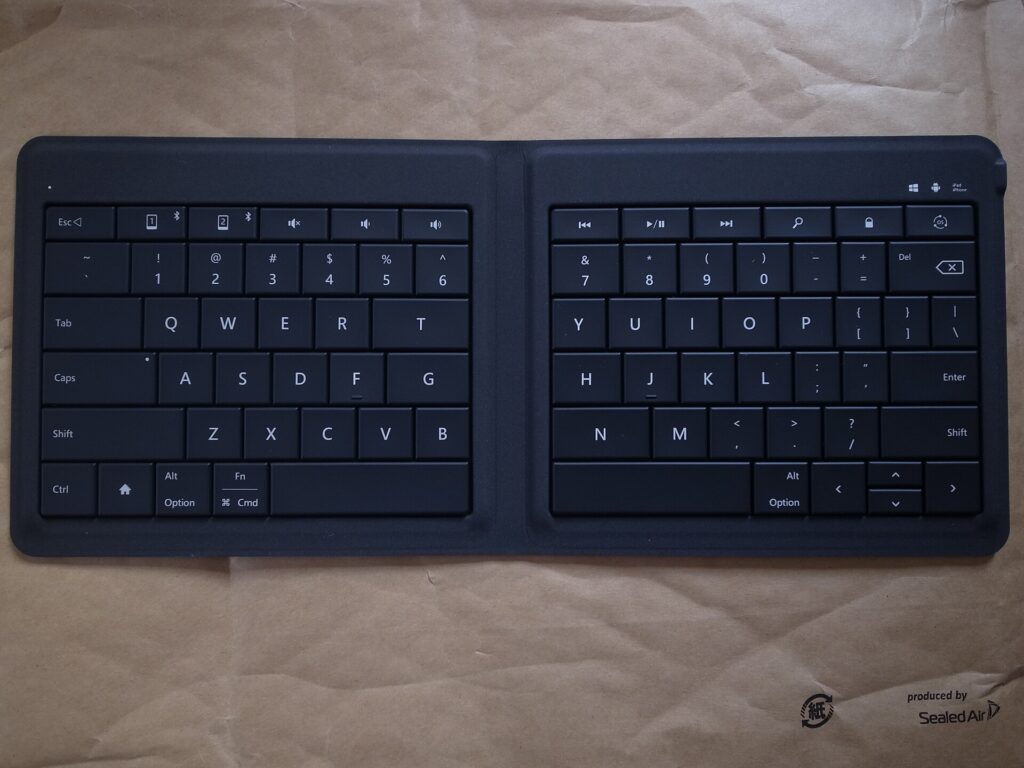
    A folding Bluetooth keyboard opened flat, showing its two halves
    Folding keyboards open to near full-size keys and close to about the size of a large phone (Photo: Toshiyuki IMAI via Wikimedia Commons, CC BY-SA 2.0)

    Why carry a travel keyboard at all?

    A keyboard is not essential for everyone. It earns its place if any of these sound familiar:

    • You want to leave the laptop at home. For writing, email and messaging, a tablet or even a phone plus a keyboard can handle a lot of work, and the combination is lighter than most laptops.
    • You work long hours from hotels. Raising the laptop screen on a stand improves your posture, but then you need a separate keyboard to type comfortably.
    • You write on the move. Journalists, students, novelists and bloggers often find that writing on trains and in cafés goes faster with real keys.
    • You switch devices a lot. A multi-device keyboard lets you answer a message on your phone and go straight back to a document on your tablet without changing keyboards.

    If you only write the occasional short message on a trip, you probably do not need one. If you plan to work on the road, it is one of the lightest upgrades you can pack, alongside the other items in our guide to laptop travel accessories.

    Types of travel keyboards

    Folding keyboards

    Folding keyboards hinge in the middle, or in two places for a tri-fold design, and close to roughly the size of a large phone or a paperback. Open, they give you something close to full-size keys. The trade-off is the fold itself: keys near the hinge can be split between halves or pushed slightly apart, which takes some getting used to, and the hinge is the part most likely to wear out. Many folding keyboards include a small stand for a phone.

    Slim non-folding keyboards

    These are thin, light keyboards with compact layouts that do not fold. Some include a cover that protects the keys in your bag and flips round to act as a surface or stand. They avoid the hinge problem and usually feel more solid to type on, but they are longer when packed, roughly the width of a small tablet.

    Split ergonomic folding keyboards

    Some folding keyboards turn the fold into a feature: the two halves angle apart so your hands sit in a more natural position. They take a few days to adjust to if you are used to a standard layout, and they suit people who type a lot and already like ergonomic keyboards at home.

    Tablet keyboard cases

    A keyboard case attaches to a specific tablet and doubles as protection. It is the tidiest option if you only ever type on one tablet, but it ties you to that device, adds weight to the tablet all the time and usually cannot be used with a phone or laptop.

    Keyboard and mouse combos

    Some folding keyboards are sold with a small wireless mouse. The pair gives you a complete setup for a laptop on a stand or a tablet that supports a mouse, useful for spreadsheets and editing work.

    Roll-up silicone keyboards

    Flexible silicone keyboards roll up and resist spills, but most people find their soft, mushy keys slow and tiring for real typing. They are a niche choice rather than a general recommendation.

    TypePacked sizeTyping feelBest forWatch out for
    Folding (bi-fold or tri-fold)Pocket or phone sizeGood once used to the splitPhone and tablet users who pack lightKeys near the hinge, hinge wear
    Slim non-folding with coverSmall-tablet widthSolid, familiarTablet writers, laptop-on-stand setupsLonger to pack
    Split ergonomic foldingPocket or phone sizeComfortable after adjustingHeavy typists who like ergonomic layoutsLearning curve
    Tablet keyboard caseAttached to tabletVaries by modelOne-tablet usersTied to one device, adds weight
    Keyboard and mouse comboPocket plus mouseSimilar to foldingLaptop on a stand, spreadsheet workTwo items to charge
    Roll-up siliconeRolled tubeSoft and slowSpill-prone environmentsPoor for long typing

    What matters when you choose

    Key size and spacing

    The single biggest factor in typing comfort is whether the keys are close to full size and spaced like a normal keyboard. Your fingers are trained on standard spacing, and a keyboard that shrinks it by even a little slows you down and adds typos. Check that the letter keys are full width and that important keys such as Shift, Enter, Backspace and the arrow keys are not squeezed into odd positions.

    Key feel

    Scissor-switch keys, similar to many laptop keyboards, feel crisp and stable. Softer membrane keys are quieter but can feel vague. Very short key travel is common on slim keyboards; some people like it and some find it tiring. If you can, try a keyboard in a store or buy from a seller with an easy return policy.

    Layout and operating system

    Windows, macOS, iPadOS, Android and ChromeOS use different modifier keys and shortcuts. Many travel keyboards support several systems and switch layouts automatically or with a key combination, and some brands sell separate versions for Apple devices. Choose one whose modifier keys match what you use most, or you will be fighting muscle memory every time you copy and paste.

    Multi-device pairing

    Many travel keyboards remember two or three devices and switch between them with a button. For travelers who use a phone, a tablet and a laptop, this is one of the most useful features, since it saves re-pairing every time you change device.

    Battery and charging

    Rechargeable keyboards with a USB-C port share a cable with the rest of your gear, which means one fewer thing to pack. Keyboards that use replaceable coin cells or AAA batteries can run a long time, but you need spares for a long trip. Whatever the type, look for an automatic sleep mode or a power switch, so the keyboard does not drain in your bag.

    Connection type

    Bluetooth connects directly to phones, tablets and most laptops without an extra part. Some keyboards also offer a small USB receiver or a wired USB-C connection, which can be steadier in places crowded with wireless signals and useful for devices without Bluetooth. A receiver is small and easy to lose, so keep it in a pocket of your cable pouch.

    Size, weight and protection

    A keyboard you leave at home helps nobody. Weigh the packed size against how much you type. A cover or case protects the keys in a packed bag and stops keys being pressed accidentally, which can wake your devices or drain the battery.

    Stand for a phone or tablet

    Some keyboards include a fold-out stand or a slot for a phone or tablet. Without one, you need a separate stand or a tablet case that props the screen up. A small, light stand is worth carrying if your keyboard does not include one.

    Close-up of a slim Bluetooth keyboard attached to a tablet
    Paired with a tablet, a slim keyboard handles email and writing for far less weight than a laptop (Photo: Maurizio Pesce from Milan, Italia via Wikimedia Commons, CC BY 2.0)

    Options from our original list

    The keyboards below were featured in the original version of this guide. They cover different needs rather than a strict ranking. Models, layouts and features change, so check the current specifications from the maker or seller before you buy.

    TECKNET wireless foldable Bluetooth keyboard

    TECKNET’s foldable Bluetooth keyboard is a full-size folding design that includes a numeric keypad, which is unusual in a folding keyboard. It suits travelers who work with numbers, such as accountants, analysts and anyone who lives in spreadsheets, and who want a number pad without carrying a full desk keyboard. A keyboard with a number pad is wider when open, so check that it fits the tray tables and café tables you use.

    Logitech Keys-To-Go 2

    The Logitech Keys-To-Go 2 is a slim, non-folding keyboard with a built-in cover that protects the keys in your bag. Logitech describes it as using low-profile scissor keys, connecting to up to three devices and working with Android, ChromeOS, Windows, iPadOS, iOS and macOS, and it offers a universal version and a version with an Apple layout. It suits tablet users and anyone who wants a thin keyboard that slides into a sleeve or a handbag and feels more solid than a folding design.

    Targus Ergonomic Foldable Bluetooth Antimicrobial Keyboard

    The Targus Ergonomic Foldable Bluetooth Antimicrobial Keyboard uses a split layout that angles the two halves for a more natural hand position. Targus says it folds to about the size of a smartphone, pairs with up to three devices over Bluetooth, recharges over USB-C and is treated with its DefenseGuard antimicrobial additive. It suits travelers who already prefer ergonomic keyboards and do a lot of typing. The antimicrobial treatment is a surface feature, not a reason to skip cleaning, and the split layout takes a few days to get used to.

    Portable foldable keyboard and mouse combo

    The original list included an unbranded folding keyboard sold with a wireless mouse, listed with Bluetooth as well as USB-A and USB-C connection options. A combo like this suits travelers who want a complete, inexpensive setup for a laptop on a stand or a tablet that supports a mouse. With unbranded products, check the seller’s return policy and read the listing carefully for the connection types and operating systems it supports.

    Samsers foldable keyboard and mouse combo

    Samsers sells a folding keyboard with a rechargeable wireless mouse, and the original list featured it in more than one color. It is a budget-friendly way to put together a portable workstation for hotel rooms and coworking spaces. Check the listing for the exact connection options and which devices it supports before you buy.

    Samsers full-size foldable Bluetooth keyboard (KF08S)

    The Samsers KF08S is a folding Bluetooth keyboard without a mouse, sold with a protective cover. It suits travelers who want a full-size folding layout for a phone or tablet and do not need a mouse. As with any folding keyboard, pay attention to the keys near the fold when you first try it.

    Setting up a travel keyboard

    • Charge it fully at home and pair it with every device you plan to use, assigning each to a channel if it supports multi-device switching.
    • Set the layout on each device, especially the language and the operating-system mode, so symbols and shortcuts are where you expect.
    • Learn the switch keys for changing devices and for special functions like brightness, volume and the home screen on a tablet.
    • Practice for a few days. Write something real at home. It is much better to discover that you hate the split in your living room than on deadline in an airport.
    • Pack the charging cable in your cable pouch, or confirm that the keyboard charges from a cable you already carry.

    Using a keyboard on planes, trains and in hotels

    On a plane

    Economy tray tables are small, and the seat in front may recline into your space. A tablet in a stand plus a folding keyboard often fits better than a laptop, because the screen and keyboard can be arranged separately. Put the tablet at the back of the tray and the keyboard in front, or rest the keyboard on your lap. Bluetooth accessories are generally allowed during flights with the device in airplane mode and Bluetooth switched back on, but crew instructions and airline policies come first, especially during takeoff and landing. If the flight is long, a pair of noise-cancelling headphones makes focused work much easier.

    On a train

    Trains are often better than planes for working: bigger tables, more legroom and sometimes power outlets. A folding keyboard and a phone or tablet stand make good use of a small table seat. Keep the keyboard close when the train brakes, and put the whole setup away before your stop so nothing slides off the table.

    In a hotel room

    Hotel desks are often too high for comfortable laptop typing. Raise the laptop screen on a stand or a stack of books and put the keyboard lower on the desk, or on your lap in a chair, so your elbows are near a right angle. If you are choosing a hotel for a work trip, our business travel hotels guide explains what to look for in a room you will work from.

    In cafés and coworking spaces

    Café tables are small and crowded, and a keyboard plus a phone or tablet takes up less space than a laptop. Keep your bag at your feet with a strap around your leg, and never leave devices on the table when you go to order. Our guide to anti-theft backpacks covers habits and bag features that help in busy places.
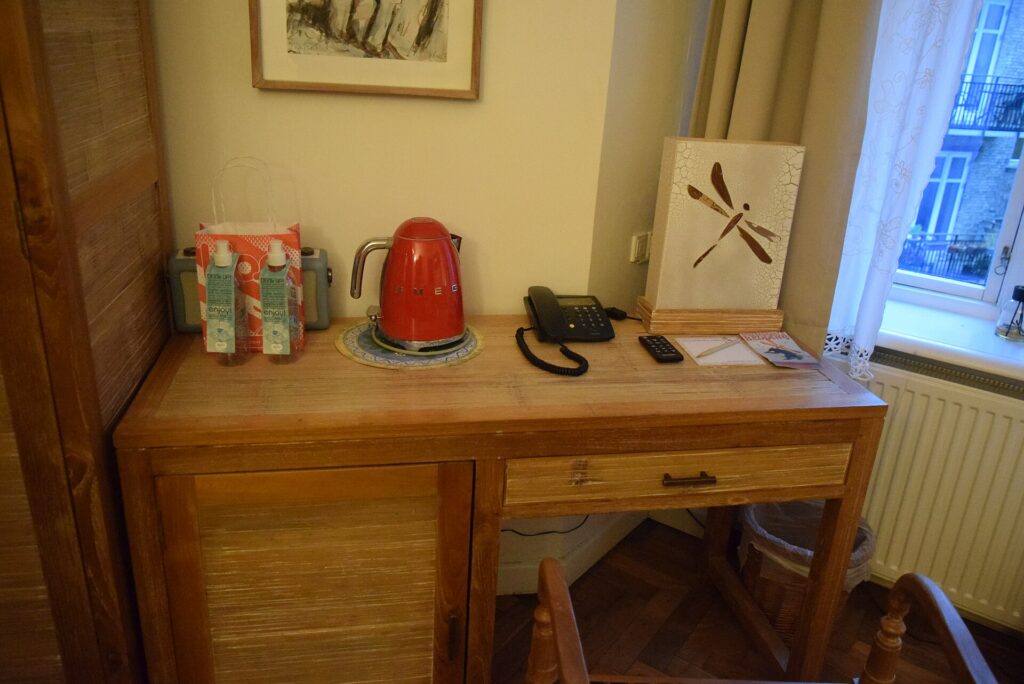
    A wooden writing desk with a phone and kettle in a hotel room
    Hotel desks are often too high for laptop typing; a stand and a separate keyboard fix the posture (Photo: Haydn Blackey from Cardiff, Wales via Wikimedia Commons, CC BY-SA 2.0)

    Tablet plus keyboard or laptop?

    For some trips, a tablet with a keyboard can replace a laptop entirely. It works well when your work is mainly writing, email, messaging, video calls and web-based tools, and when you value a light bag. It works less well when you need desktop software, many windows side by side, complex file management or a company laptop with its own security tools. Many travelers take both on long work trips and leave the laptop behind on short ones. Try a full working day on the tablet at home before you commit.
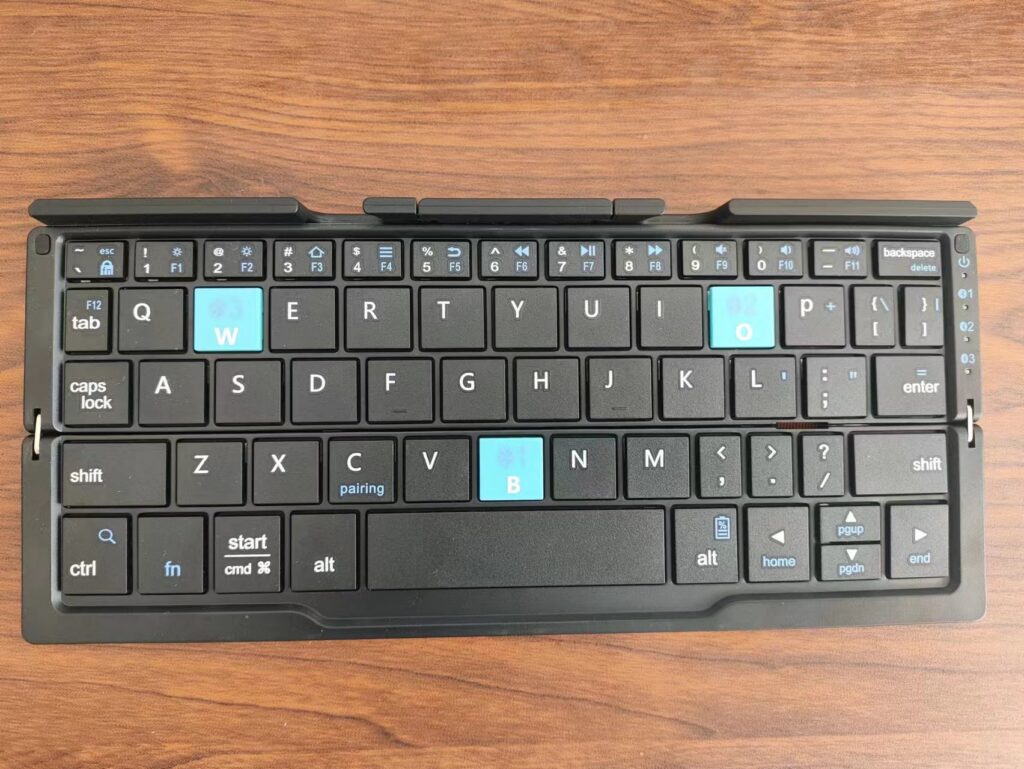
    A compact folding Bluetooth keyboard opened on a wooden table
    Keys near the fold take a little practice, so try a new keyboard at home before a work trip (Photo: Cartonfox via Wikimedia Commons, CC0)

    Flying with keyboards and small gadgets

    Keyboards, mice and other small accessories with built-in rechargeable batteries are generally fine in carry-on bags. The stricter rules apply to spare lithium batteries and power banks, which must travel in the cabin rather than in checked baggage. As principles:

    • Keep battery-powered gadgets in your carry-on where possible, where you can reach them and they are safe from rough handling.
    • Spare lithium batteries and power banks are cabin only, and should be protected from short circuits in their packaging, a case or a separate bag.
    • Switch keyboards off or use the cover so keys are not pressed in your bag.
    • Check the official rules before you fly: the FAA’s PackSafe lithium battery guidance, the TSA’s What Can I Bring? tool and CATSA’s guidelines for batteries. Airlines can add their own rules.

    If you are trying to carry fewer chargers overall, our guide to 3-in-1 Apple chargers covers one way to consolidate them.

    Packing a keyboard setup

    A complete mobile workstation can be surprisingly small: a folding or slim keyboard, a compact mouse, a folding stand for a laptop or tablet, and one USB-C cable that charges all of them. Keep the keyboard in a padded pocket of your bag or in a sleeve so the hinge and keys are protected, and keep small parts like a USB receiver in a zip pocket. If you carry a heavy tech bag through big airports, a rolling laptop bag can take the weight off your shoulders. For the bag the rest of your trip goes into, see our main travel luggage guide.

    Care and longevity

    The hinge on a folding keyboard and the charging port are the parts most likely to fail. Open and close the keyboard gently, do not force it past its natural angle, and avoid carrying it loose where it can be bent. Wipe the keys with a slightly damp cloth and let it dry fully before closing; avoid soaking it or spraying liquid directly onto the keys. Charge the battery every few weeks if you store the keyboard between trips, since leaving a lithium battery fully empty for a long time is hard on it.

    Common mistakes

    • Choosing the smallest keyboard possible. Tiny keyboards are easy to pack and hard to type on. Size for comfort first.
    • Ignoring the operating system. A keyboard laid out for a different system makes every shortcut awkward.
    • Not testing before the trip. Folding layouts take practice.
    • Forgetting a stand. A keyboard without a way to prop up the screen is only half a setup.
    • Leaving it switched on in a bag. Keys get pressed, devices wake up and batteries drain.
    • Losing the receiver or the cable. Keep small parts in one pouch.

    Frequently asked questions

    Are folding keyboards good for typing?

    Good ones are comfortable for most people once they adjust to the fold. Check that the letter keys are full size and try typing a real paragraph before a trip. If you type all day, a slim non-folding keyboard can feel more solid.

    Can I use a Bluetooth keyboard on a plane?

    Generally yes, with your device in airplane mode and Bluetooth switched back on, but crew instructions and airline policy always come first, particularly during takeoff and landing.

    Will a travel keyboard work with both my iPhone and my Windows laptop?

    Many do. Look for multi-device pairing and support for both operating systems, and check how the keyboard handles the different modifier keys.

    Can a tablet and keyboard replace a laptop for travel?

    For writing, email and web-based work, often yes. For desktop software, heavy multitasking or a company-managed laptop, usually not. Test a full day at home first.

    Is a keyboard with a built-in battery allowed in checked luggage?

    Small devices with installed batteries are treated differently from spare batteries, but it is safest to keep them in your carry-on. Spare lithium batteries and power banks are not allowed in checked bags.

    Rechargeable or replaceable batteries?

    Rechargeable keyboards with USB-C share a cable with your other gear. Replaceable batteries can last a long time but mean carrying spares on long trips.

    Do I need a mouse as well?

    For writing, usually not. For spreadsheets, editing and design work on a laptop on a stand, a compact mouse makes a big difference.

    Once your mobile office is packed, plan where you will use it. Compare fares on our flight search, find a hotel with a proper desk and good Wi-Fi on our hotel search, and if your trip needs a car, check our car rental search. Working from a new city for a week? Flights to Vancouver and our guide to things to do in Vancouver make a fine start, with plenty of cafés to test your new keyboard in.

  • Carry-On Luggage Size Delta: 7 Best Bags for 2026

    Carry-On Luggage Size Delta: 7 Best Bags for 2026

    Few things sour the start of a trip faster than being told at the gate that your bag is too big. Carry-on rules look simple, a few numbers on an airline’s website, but the details trip people up: whether wheels and handles count, what happens on small regional jets, how a personal item differs from a carry-on, why a bag labeled “carry-on” in a store can still be too long, and how the rules change when your trip involves more than one airline. This guide explains Delta’s carry-on size rules as published on its official website, how they compare with Air Canada and WestJet, how to measure your bag properly, what to look for when you buy carry-on luggage, and how to pack so that one bag and one personal item really are enough. Airline rules change, so treat the figures here as a starting point and check the airline’s own page before you fly. This guide is part of our flight booking series, which starts with our guide to the best time to book cheap flights and hotels.

    The short answer

    At the time of writing, Delta’s carry-on baggage page says that each passenger can bring one carry-on bag and one personal item free of charge. The carry-on must not exceed 22 x 14 x 9 inches (56 x 35 x 23 cm), and its combined length, width and height must not exceed 45 linear inches (114 cm). Those measurements include handles and wheels. The personal item, such as a purse, laptop bag or small backpack, must fit under the seat in front of you. On Delta Connection flights with 50 seats or fewer, only personal items can be carried on board, and larger bags are tagged and loaded in the hold, then returned to you as you leave the aircraft. Delta also notes that its SkyTeam and codeshare partners may have different rules. Check before you fly, measure your bag at home including the wheels, and if you are booking now, compare fares and total costs on our flight search.

    A Delta Air Lines Boeing 737 parked at a gate in Minneapolis
    Delta's published carry-on limit includes wheels and handles; check it before you fly (Photo: Saskjays via Wikimedia Commons, CC BY-SA 4.0)

    Delta’s carry-on rules in detail

    Here is what Delta’s carry-on page says, in plain terms. Rules can change at any time, so confirm on the official page before each trip.

    The allowance

    Each passenger can bring one carry-on bag for the overhead bin and one personal item for under the seat. Delta gives examples of personal items: a purse, briefcase, small backpack, belt bag, camera bag, diaper bag or laptop bag, or another item of similar or smaller size. Laptops should stay in the cabin; Delta notes that computers cannot be checked unless security directs otherwise. Exceptions apply for passengers traveling with an infant in arms or with a pet in the cabin.

    The size limit

    The carry-on bag must not exceed 22 inches long, 14 inches wide and 9 inches deep (56 x 35 x 23 cm), and the three measurements added together must not exceed 45 inches (114 cm). The limits include handles and wheels. Delta says that size check displays are available at ticket counters and gates if you want to confirm that your bag fits.

    Items that do not count toward your allowance

    Delta lists several things you can bring in addition to your carry-on and personal item: a jacket or umbrella, food or drink bought after security, a bag of duty-free purchases, and special items such as strollers, wheelchairs, child safety seats and assistive devices.

    Weight

    Delta’s carry-on page sets out dimensions rather than a weight limit for the carry-on. It does, however, say that flight attendants are unable to proactively help customers place bags in overhead bins, with certain exceptions. In practice, that means you should be able to lift your bag above your head yourself. Rules can differ on partner airlines and in some countries, so check if your trip includes another carrier.

    Full flights and gate checking

    If your bag does not fit, or a very full flight runs short of bin space, Delta says a flight attendant or gate agent can check your bag at the gate. On crowded flights, some carry-on bags may be gate checked free of charge during boarding and returned when you leave the aircraft, with a pink Gate Claim or Planeside tag attached.

    Regional flights

    On Delta Connection flights with 50 seats or fewer, overhead space is limited, so Delta permits only personal items on board. Larger items get a pink Gate Claim or Planeside tag, are loaded in the hold and are returned to you when you leave the aircraft. If your trip includes a small regional aircraft, pack your carry-on so it can be handed over at the door without stress, which means keeping valuables, medication and spare batteries in your personal item.

    Comfort devices

    Delta also lists comfort items that are not allowed on its flights, including inflatable seat devices, knee defenders and seat recline blockers, foot hammocks, window and tray table organizers, pods and tents. Check the list before you pack travel gadgets.

    How Delta compares with Air Canada and WestJet

    Many trips involve more than one airline, especially between Canada and the United States. The table shows the carry-on and personal item sizes each airline published on its official site when we checked. Rules change, and fare type can matter, so confirm on each airline’s page before you fly.

    AirlineCarry-on bagPersonal itemBasic fare notes
    Delta22 x 14 x 9 in (56 x 35 x 23 cm), 45 linear in (114 cm), including handles and wheelsMust fit under the seat in front; examples given, no dimensions listed on the pagePersonal items only on Delta Connection flights with 50 seats or fewer
    Air Canada23 x 40 x 55 cm (9 x 15.5 x 21.5 in), including wheels and handles33 x 43 x 16 cm (13 x 17 x 6 in)Economy Basic fares bought on or after January 3, 2025 allow only a personal item on some itineraries
    WestJet56 x 23 x 36 cm (22 x 9 x 14 in)41 x 15 x 33 cm (16 x 6 x 13 in)UltraBasic allows a personal item only, with exceptions such as flights to and from Europe and Asia

    Two practical lessons come out of this comparison. First, the numbers are close but not identical. Air Canada’s limit is slightly shorter than Delta’s (55 cm against 56 cm) but wider (40 cm against 35 cm). A bag that fits both needs to respect the smaller figure in each direction: roughly 55 x 35 x 23 cm. Second, the fare can matter as much as the airline. Basic fares on some airlines and routes allow only a personal item, so always check what your ticket includes before you plan to travel carry-on only. Air Canada also states that no weight limit applies to carry-on bags, but that you must be able to lift yours into the bin without help.

    If you are comparing fares, add the cost of a checked bag, or of a fare that includes a carry-on, to the cheapest price before deciding. Our international flights booking tips explain how to compare fare brands, and our guide to reading your flight details shows where the baggage allowance appears on a booking.

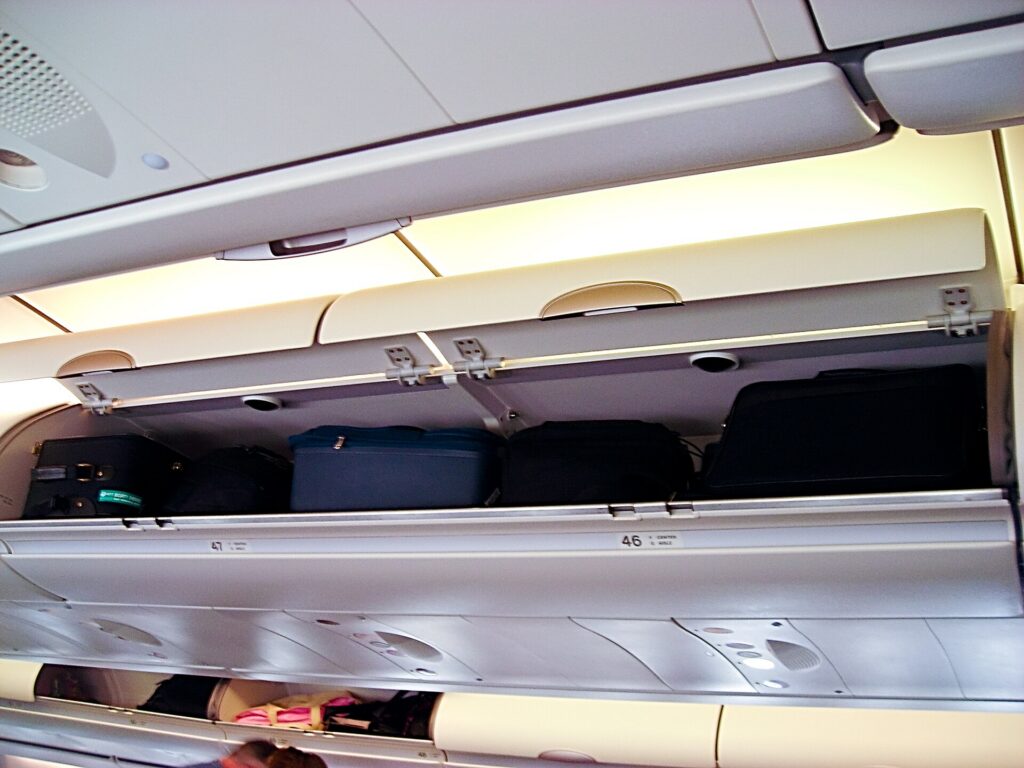
    Open overhead luggage compartments above economy seats on an Airbus
    A bag that fits the sizer still needs bin space, so board with your group (Photo: User:Mattes via Wikimedia Commons, Public domain)

    How to measure your bag properly

    Most carry-on problems come from measuring the wrong thing. Retail listings often quote the size of the main compartment or round the numbers, and they may leave out the wheels and handles that airlines include.

    1. Pack the bag as you will travel with it. An empty softside bag measures smaller than a full one, and outside pockets bulge.
    2. Measure the height from the floor to the top of the handle, with the telescoping handle fully retracted and the bag standing on its wheels.
    3. Measure the width across the widest point, including side handles and any feet.
    4. Measure the depth from the front of the fullest pocket to the back, including wheel housings.
    5. Add the three numbers and check them against the airline’s linear limit as well as each individual limit.
    6. Check the expansion zipper. Many bags meet carry-on limits only when unexpanded. If you expand it to fit souvenirs on the way home, measure again.
    7. Compare with the airline’s page, not the product label. If you fly several airlines, use the smallest figure in each direction.

    A simple check: a bag sold as a “22.75-inch” carry-on is, by its own description, longer than 22 inches unless that figure excludes the wheels. Some bags labeled “carry-on plus” or “large carry-on” are designed for airlines with bigger limits. The label is marketing; the tape measure is the rule.

    Buying carry-on luggage: what to look for

    The original version of this guide listed several popular carry-on suitcases from brands such as SWISSGEAR, Delsey, Travelers Club and Wrangler. All of these brands sell bags marketed as carry-ons, but product listings change often and are not always clear about whether wheels are included in the dimensions, so rather than repeat a list we cannot vouch for, here is how to judge any bag yourself.

    External dimensions, including wheels

    This is the first and most important check. Look for a manufacturer’s page that states the overall dimensions including wheels and handles, then compare with the airline limit. If the listing is unclear, measure the bag in the store or when it arrives, and keep the packaging until you are sure.

    Hardside or softside

    Hardside bags protect fragile contents and resist rain, and they hold their shape, which makes the size predictable. Softside bags usually have outside pockets for quick access and can squeeze into a tight bin or sizer, but they bulge when overpacked. Frequent carry-on travelers are split between the two; choose based on how you pack and what you carry.

    Spinner or two-wheel

    Four spinner wheels make a bag easy to roll down a narrow aircraft aisle and through crowded terminals. Two inline wheels are recessed into the bag, which often leaves more packing space for the same external size and survives rough pavement better. If you want every centimeter of space within the limit, a two-wheel bag often has the edge.

    The bag’s own weight

    A lighter bag leaves more of your strength, and any weight limit on other airlines, for your belongings. Since Delta expects you to lift your own bag into the bin, a light bag also makes boarding easier.

    Handles, zippers and wheels

    These are the parts that fail. Look for a handle that locks firmly at more than one height without wobbling, sturdy zippers, and wheels that can be replaced. A good warranty from the manufacturer is worth paying for.

    Locks

    Many bags include locks designed so that security officers can open them for inspection without breaking them. They are useful for checked bags; for a carry-on that stays with you, they matter less.

    Organization

    Compression straps, a divided interior and a laptop sleeve make it easier to live out of one bag. A front pocket for your liquids bag and documents speeds up security.

    Other types of carry-on bag

    • Travel backpacks. A structured travel backpack is easier on stairs, cobblestones and trains than a roller, and often fits carry-on limits well. Our review of the Peak Design Travel Backpack 45L looks at one popular option, and our guide to anti-theft backpacks covers security features.
    • Duffels. Soft duffels squeeze into tight spaces, but can be hard on the shoulders over long walks.
    • Underseat bags. A small roller or tote designed to fit under the seat can work as your personal item or, on basic fares, as your only bag. Our guide to rolling laptop bags covers options for work travelers.
    • Suitcase sets. A matching set can be good value, but check the carry-on piece’s overall dimensions separately, since set pieces are not always sized for strict airline limits.

    For a wider look at choosing luggage, see our travel luggage guide.

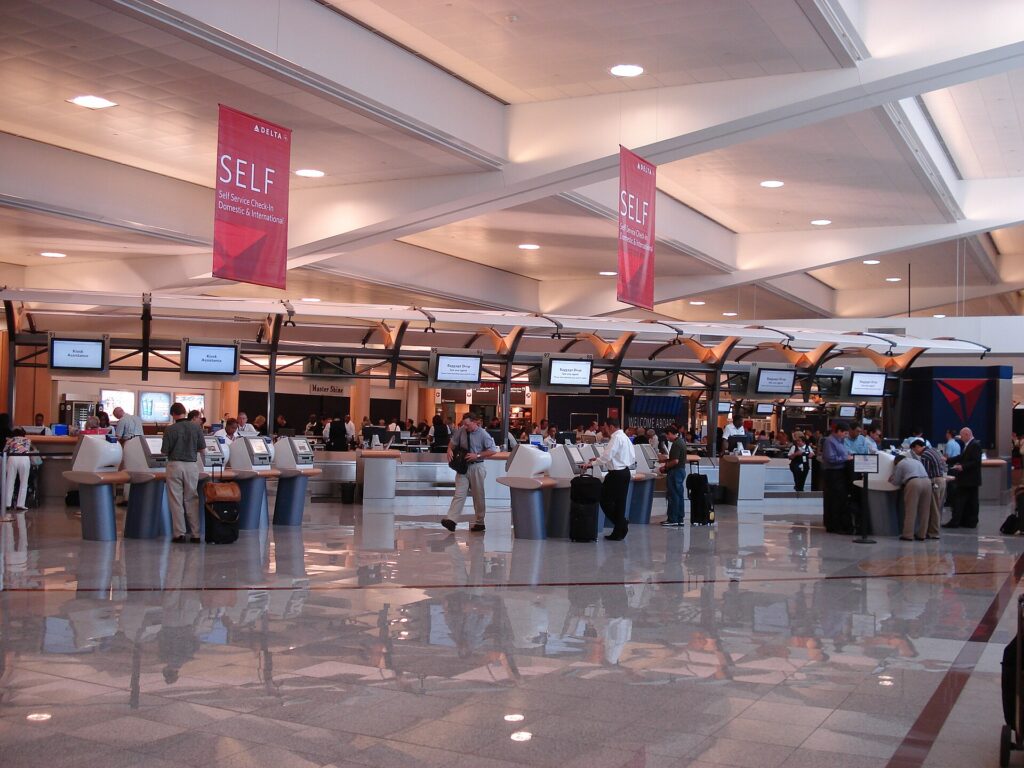
    Delta check-in counters and kiosks at Atlanta airport
    Size check displays are available at Delta ticket counters and gates (Photo: Atlantacitizen via Wikimedia Commons, Public domain)

    Liquids, batteries and what goes in your carry-on

    Size is only half the carry-on story. What you pack inside also has rules.

    Liquids

    Delta’s page summarizes the common rule: liquids, gels, aerosols and pastes in containers of up to 3.4 ounces or 100 milliliters, all in a single quart-size clear, resealable bag, which you may need to take out at security. In Canada, CATSA describes the same principle as containers of 100 mL or less in one clear 1 L bag, and notes that at CT-equipped screening lines, liquids and large electronics may stay in your bag. Medication, baby formula and breast milk usually have exemptions with extra screening. Check the rules for the country you are departing from: TSA in the United States and CATSA in Canada.

    Batteries and electronics

    Spare lithium batteries and power banks generally must travel in the cabin, not in checked baggage. The FAA’s PackSafe pages explain the rules for U.S. flights. This matters if your carry-on is gate checked: take power banks and spare batteries out and keep them in your personal item.

    Things to keep with you

    Whatever happens to your carry-on, your personal item should hold what you cannot be without: passport and documents, medication, phone, chargers, keys, valuables and a change of clothes. Our guide to what not to wear on a flight includes a short list of backup items worth carrying.

    How to pack a carry-on for a week

    Traveling with only a carry-on saves time at the airport and removes the risk of a lost bag. It takes a little discipline.

    • Build a small capsule wardrobe. Choose a few tops and bottoms that all go together in two or three colors.
    • Wear your bulkiest items. Heavy shoes and your warmest layer go on your body, not in the bag.
    • Roll or use packing cubes. Cubes compress clothing and keep the bag organized when you open it in a hotel room.
    • Limit shoes. Two pairs, including the pair you wear, cover most trips.
    • Decant toiletries. Travel-size containers fit the liquid rules, and hotels often provide basics.
    • Plan to do laundry. A sink wash or hotel laundry halfway through a trip halves what you need to pack.
    • Leave space. A bag packed to bursting will not fit a sizer and has no room for anything you buy.

    Boarding tips to keep your bag with you

    Even a perfectly sized bag can end up gate checked if the bins fill before you board. A few habits improve your chances.

    • Board with your group, and be ready. Bins fill from the front, and passengers in later boarding groups are the most likely to be asked to check bags.
    • Consider a seat that boards earlier or comes with bin space. Delta’s Delta Comfort page, for example, lists earlier boarding and dedicated overhead bin space among its benefits.
    • Put your bag in wheels first. On most aircraft, that uses the bin most efficiently; follow crew instructions where they differ.
    • Keep your personal item under the seat. Placing it in the overhead bin takes space from someone else’s carry-on.
    • Volunteer when it suits you. If the crew asks for volunteers to check bags free at the gate and you have no tight connection, it can save you the stress of hunting for space.

    When to check a bag instead

    Carry-on only is not always the best choice. Consider checking a bag if:

    • You are traveling for more than a week to somewhere cold, with bulky clothing.
    • You need liquids in larger quantities, such as specific skincare or medication that does not fit the liquid rules and is not exempt.
    • You are carrying sports equipment, gifts or anything you cannot lift easily.
    • Your fare includes a checked bag anyway, as many premium and some standard fares do.
    • Your route includes small regional aircraft where carry-ons are handled at the door anyway.

    If you check a bag, allow time to drop it before the deadline. Our guide to how early to arrive for an international flight explains why bag drop cut-offs matter. Travelers in premium cabins usually get a larger allowance; our guide to the difference between first class and business class covers what each cabin includes, and our guide to business class upgrade hacks explains how to get there for less.

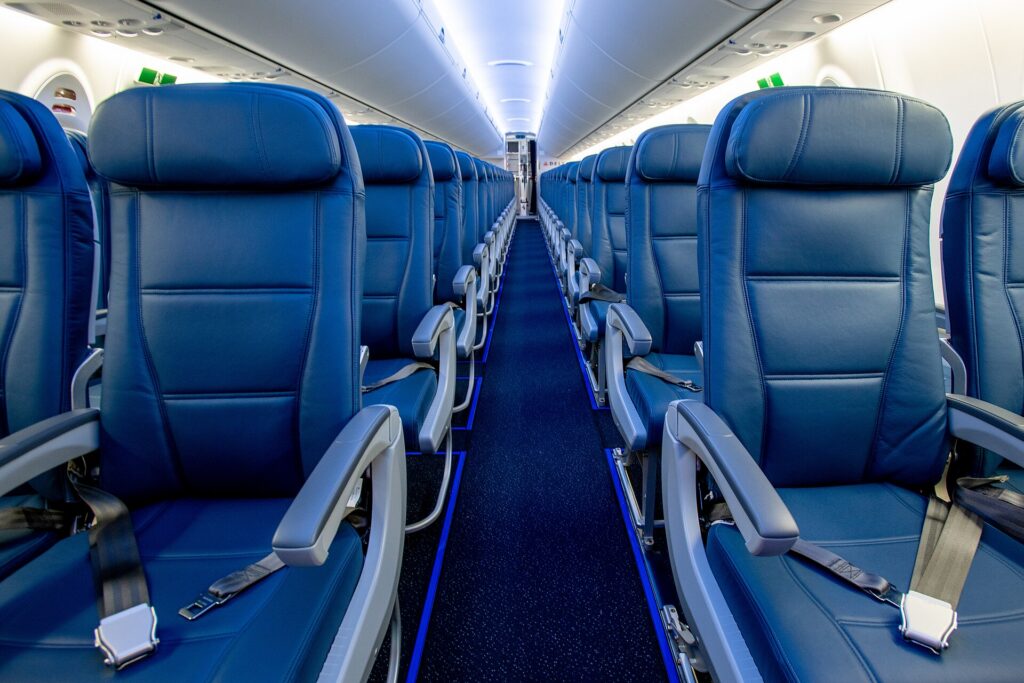
    The main cabin of a Delta Air Lines Airbus A220 with overhead bins
    Pack a bag you can lift into the bin yourself (Photo: Delta News Hub via Wikimedia Commons, CC BY 2.0)

    Common carry-on mistakes

    • Trusting the label. “Carry-on” on a tag does not mean the bag meets your airline’s limits including wheels.
    • Measuring an empty bag. A full softside bag is bigger than an empty one.
    • Expanding on the way home. An expanded bag often exceeds the depth limit.
    • Assuming every airline is the same. Delta, Air Canada and WestJet all publish slightly different numbers.
    • Ignoring your fare. Some basic fares allow only a personal item.
    • Forgetting regional jets. On small Delta Connection aircraft, carry-ons go in the hold.
    • Leaving batteries in a bag that gets gate checked. Move them to your personal item.
    • Packing a bag you cannot lift. Crew may not be able to help you put it in the bin.

    Frequently asked questions

    What is Delta’s carry-on size limit?

    According to Delta’s carry-on page at the time of writing, 22 x 14 x 9 inches (56 x 35 x 23 cm), with a combined total of no more than 45 inches (114 cm), including handles and wheels. Check the page before you fly, as rules can change.

    Does Delta weigh carry-on bags?

    Delta’s carry-on page lists size limits rather than a weight limit for the carry-on, but notes that flight attendants cannot proactively help lift bags into bins. Pack a bag you can lift yourself, and check partner airline rules if another carrier operates part of your trip.

    Do wheels and handles count toward Delta’s carry-on size?

    Yes. Delta says the measurements include any handles or wheels.

    What counts as a personal item on Delta?

    Delta gives examples such as a purse, briefcase, small backpack, belt bag, camera bag, diaper bag or laptop bag, or an item of similar size that fits under the seat in front of you.

    Can I bring a carry-on on a Delta Connection flight?

    On Delta Connection flights with 50 seats or fewer, Delta permits only personal items on board. Larger bags are tagged, loaded in the hold and returned to you when you leave the aircraft.

    Will a bag that fits Delta also fit Air Canada?

    Not necessarily. Air Canada’s published limit is 55 cm long, slightly shorter than Delta’s 56 cm, but allows 40 cm of width against Delta’s 35 cm. A bag of about 55 x 35 x 23 cm fits both.

    What happens if my carry-on is too big?

    Delta says a gate agent or flight attendant can check it at the gate. Depending on the airline and fare, a bag that should have been checked may carry a fee, so measure before you leave home.

    Is a 22-inch suitcase a carry-on?

    Only if the 22 inches includes the wheels and handle and the other dimensions also fit. Many bags described as 22-inch measure more once wheels are included, so measure the bag itself.

    Bag measured and packed? Compare fares and baggage costs across flexible dates on our flight search, then find a place to stay with our hotel search. Flying through Delta’s biggest hub? Our Atlanta airport guide helps you find your way around, and our guide to the best time to fly to New York will help you choose your dates.

  • Local Flights in the USA: How to Book Cheap, Fast and Smart

    Local Flights in the USA: How to Book Cheap, Fast and Smart

    Short domestic flights are some of the most useful trips you can buy in the United States. A one-hour hop can replace a full day of driving, turn a long weekend into a real getaway and get you to a meeting and home again before dinner. They are also some of the easiest flights to overpay for, because short routes are priced aggressively by demand, the cheapest fares strip out bags and seats, and the difference between a smart and a careless booking often comes down to one airport or one day of the week. This guide explains how short-haul domestic pricing works, when to book, how to pick the right airport and airline, how to compare the real cost of a fare, when driving or the train makes more sense, and how to get through the airport quickly on a short trip. It is part of our flight booking series, which starts with our guide to the best time to book cheap flights and hotels.

    The short answer

    If you only have a minute: search a range of dates rather than one day, because the day you fly moves the price more than anything else. Book roughly one to three months ahead for ordinary dates and earlier for holidays and long weekends. Check every airport within a reasonable drive at both ends of the trip, including secondary airports that big-city travelers forget. Compare the total cost, with bags and seats added, not the headline fare, because a basic fare that looks cheap can end up costing more than a standard one. Use the 24-hour cancellation window that applies to most U.S. bookings made at least seven days out to double-check everything. And make sure your ID is ready: TSA now requires a REAL ID-compliant license or another accepted document such as a passport to fly within the country. You can compare fares across a whole month on our flight search.

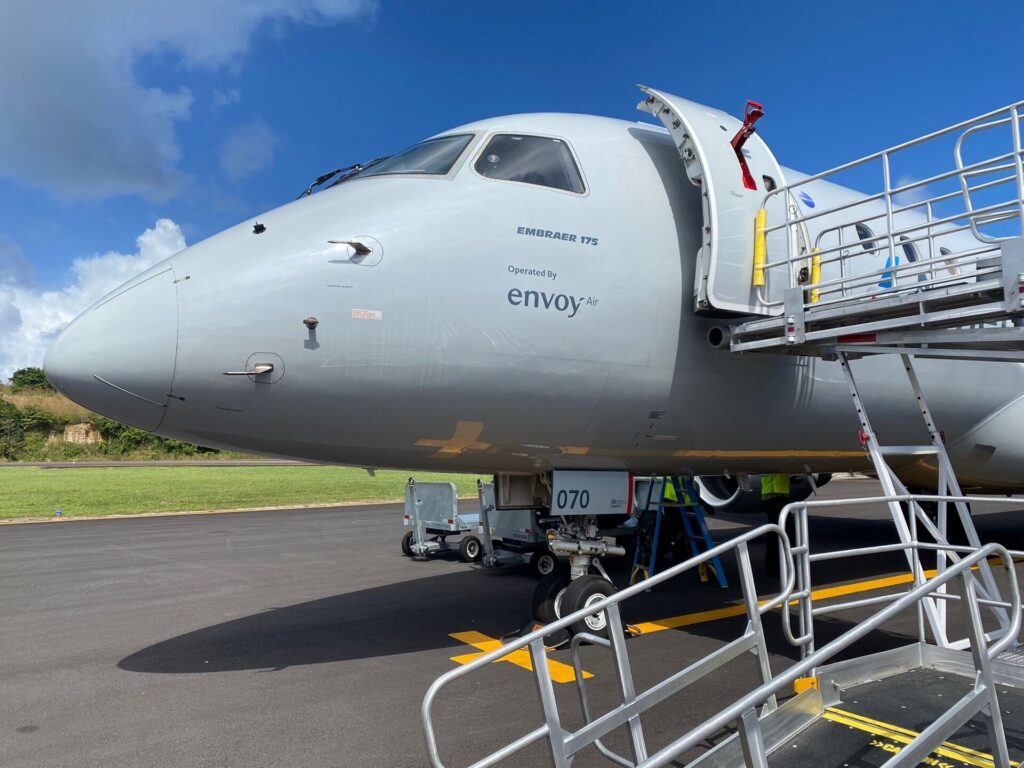
    An American Eagle Embraer 175 regional jet on approach to land
    Many short domestic routes are flown by regional jets with smaller overhead bins (Photo: DOMDCF via Wikimedia Commons, CC BY-SA 4.0)

    What counts as a local flight, and why they are priced the way they are

    There is no official definition of a “local” flight. Most travelers mean a short domestic trip, often under two hours in the air, within a region: New York to Boston, Chicago to Minneapolis, Dallas to Houston, Los Angeles to Las Vegas, Seattle to the Bay Area, Atlanta to Charlotte. Airlines call these short-haul routes, and they share a few traits that shape how you should book them.

    • They carry a lot of business travelers. Weekday morning and evening flights on busy corridors fill with people traveling for work, whose employers pay higher fares for flexibility. That pushes up prices at peak times and leaves cheaper seats at off-peak times.
    • They compete with the car and sometimes the train. On a route of a few hundred miles, the airline is competing with driving, so fares on quiet days can be surprisingly low. On the busiest days, when everyone wants to fly, the competition matters much less.
    • They are often served by regional jets. Many short routes are flown by smaller aircraft operated by regional partners under the big airlines’ brands. That affects cabin size, overhead bin space and whether your carry-on has to be checked at the aircraft door.
    • Taxes and fees are a larger share of the total. Government taxes and airport charges are added to every ticket, so on a short, cheap flight they make up a bigger slice of what you pay. That is one reason a fare that looks tiny in an advertisement grows at checkout.

    Airline prices follow the same basic logic on every route. Each flight is divided into fare levels, the cheapest sell first, and revenue management systems open and close levels as the flight fills. Our pillar guide explains the mechanics in detail; for short trips, the practical point is that busy flights get more expensive as they fill, while quiet ones can stay flat for weeks.

    When to book a domestic flight

    There is no magic number of days, but there are sensible windows. Use them as a guide for when to start paying close attention, then book when you see a fare at or below the normal level for your route.

    TripSensible windowWhy
    Ordinary weekday or weekend tripAbout 1 to 3 months aheadEnough time for fares to settle and for you to spot a good one; waiting longer rarely helps on busy routes
    Holiday weekends (Memorial Day, July 4, Labor Day)About 2 to 4 months aheadFriday departures and Monday returns sell out first
    Thanksgiving, Christmas and New YearAs early as 3 to 6 months aheadThe most popular dates rarely get cheaper as they approach
    Spring break and summer trips to beach and theme park citiesAbout 2 to 4 months aheadFamily demand concentrates on the same weeks
    Short-notice tripsOnly as neededOccasionally cheap on quiet routes, but usually the most expensive time to buy

    The simplest method is to start searching as soon as you know roughly when you want to go. Look at a month view to see which days are cheap, note what a normal fare looks like, and set a price alert. When a fare lands at or below that level, book. Trying to catch the absolute lowest price usually means waiting too long.

    The day you fly matters more than the day you book

    On most domestic routes, Tuesday, Wednesday and often Saturday departures are cheaper than Friday and Sunday, because business travelers fill Monday mornings and Thursday and Friday evenings and leisure travelers crowd the weekend edges. The first flight of the morning and late-evening departures are often cheaper than midday. Patterns differ by route, so let the fare calendar show you the cheap days instead of assuming. The old advice to buy on a particular weekday, or late at night, does not hold up: fares change when seats sell, not on a timetable.

    Your 24-hour safety net

    For flights within, to or from the United States, the U.S. Department of Transportation requires airlines to either hold a reservation at the quoted fare for 24 hours without payment or let you cancel within 24 hours of booking without penalty, as long as you book at least seven days before departure. Most large airlines offer free cancellation. Use that day to check names, dates and connections, and to confirm the fare still looks right. If your flight is later canceled or significantly changed by the airline and you choose not to travel, DOT’s refund rules explain when you are owed your money back rather than a travel credit. The wider set of passenger protections is on the DOT Aviation Consumer Protection site.

    Choose the right airport, at both ends

    Airport choice is the most underused way to save on short flights. Big metro areas often have two or more commercial airports, and they can differ in price, airlines, traffic and how long it takes to get through security.

    Metro areaAirports to compareWhat to weigh
    New YorkJFK, LaGuardia (LGA), Newark (EWR); sometimes Long Island MacArthur, WestchesterLaGuardia is closest to Manhattan for many trips; Newark suits New Jersey and west-side Manhattan; compare transfer times
    ChicagoO’Hare (ORD), Midway (MDW)Midway is closer to downtown and the South Side; O’Hare has more airlines and routes
    DallasDallas Fort Worth (DFW), Dallas Love Field (DAL)Love Field is close to central Dallas; DFW is the big hub with the widest choice
    HoustonGeorge Bush Intercontinental (IAH), Hobby (HOU)Hobby is closer to downtown and the south side
    Los AngelesLAX, Burbank (BUR), Long Beach (LGB), Ontario (ONT), Orange County (SNA)The smaller airports can save a long drive across the region and are usually quicker to get through
    San Francisco Bay AreaSFO, Oakland (OAK), San Jose (SJC)Choose by where you are actually going in the Bay Area
    Washington, D.C.Reagan National (DCA), Dulles (IAD), Baltimore/Washington (BWI)DCA is on the Metro and close to the city; BWI often has different airline options
    South FloridaMiami (MIA), Fort Lauderdale (FLL), Palm Beach (PBI)Fort Lauderdale can be convenient for northern Miami-Dade and Broward

    A cheaper fare from a more distant airport is only a saving if the total holds up. Add parking or the ride to the airport, the time it takes and the ride at the other end. For a short trip, an extra hour of driving each way can wipe out the benefit. Our airport guides, such as Chicago O’Hare, Dallas Fort Worth, Los Angeles International and New York JFK, cover terminals and ground transportation.

    Smaller airports have real advantages

    Secondary and regional airports are often quicker to get through, with shorter walks, simpler parking and less congestion at the curb. For a day trip or a tight schedule, those minutes matter. The trade-off is fewer flights, so a cancellation can mean a longer wait for the next departure. If you must be somewhere at a set time, an earlier flight from a smaller airport or a later one from a hub with frequent backup options are both reasonable strategies; choose knowingly.

    Concourse A at Chicago Midway International Airport
    Secondary airports like Chicago Midway can be closer to downtown and quicker to get through (Photo via Wikimedia Commons, CC BY-SA 3.0)

    Choose the airline and fare, not just the price

    Domestic airlines in the United States fall roughly into three groups, and the same headline price can buy very different trips.

    • Network airlines such as American, Delta, United and Alaska fly from large hubs to almost everywhere, with regional partners on smaller routes. They sell several fare types on every flight, from basic economy to flexible and premium fares, and their loyalty programs and credit cards are built around frequent domestic flying.
    • Point-to-point and value airlines such as Southwest and JetBlue connect many city pairs directly, often from secondary airports. Their fare structures and bag policies have been changing, so check what is included on each booking rather than relying on what you remember.
    • Ultra-low-cost carriers sell very low base fares and charge separately for nearly everything else: carry-on bags, checked bags, seat assignments and sometimes printing a boarding pass at the airport. They can be excellent value for a traveler with just a small personal item and flexible plans, and poor value for a family with luggage.

    Basic economy: what you give up

    Basic economy fares exist to compete with the ultra-low-cost carriers, and the restrictions vary by airline. Common trade-offs include boarding last, no seat selection until check-in or a fee to choose, no changes or no refunds of the fare, and, on some airlines, no full-size carry-on bag. Last to board also means last to find bin space, so a carry-on can end up checked at the gate on a full flight. Before you choose a basic fare, read exactly what it excludes on the airline’s own site and compare the price to the next fare up with the things you need added.

    Compare the total cost

    CostWhere it hidesHow to handle it
    Carry-on bagExcluded on some basic and ultra-low-cost faresCheck the fare rules and size limits; our carry-on size guide explains how to measure
    Checked bagUsually charged per bag, per direction on domestic faresPaying online in advance is often cheaper than at the airport
    Seat selectionCharged on basic fares and sometimes on standard onesDecide whether you need to sit together; families should read the airline’s seating policy
    ChangesThe cheapest fares may be unchangeableIf your plans might move, a changeable fare can be cheaper overall
    Airport transfer and parkingNot in the fare at allAdd them when comparing airports

    A fare that includes a bag and a seat can easily beat one that looks much cheaper. Our flight details guide explains fare brands, baggage allowances and what the codes on your itinerary mean.

    Nonstop, connecting and the hidden-city trap

    On a short trip, a nonstop flight is almost always worth a modest premium. A connection can double the travel time on a one-hour route and adds a second chance for delays, missed connections and misrouted bags. Connections make sense when there is no nonstop at a reasonable time, or when the saving is large enough to justify the extra hours.

    If you do connect, leave a realistic cushion. Airlines sell connections that meet their minimum connection time, but a tight connection at a large hub in bad weather is a gamble. On a single ticket, the airline is responsible for rebooking you if you miss a connection because of a delay; on two separate tickets, you usually are not protected, so leave much more time or avoid it.

    You may also hear about “hidden-city” ticketing, where a traveler books a flight to a farther city with a connection in the city they actually want and simply leaves at the connection. Airlines generally prohibit this in their contracts of carriage. It only works with carry-on bags, the rest of the itinerary is canceled if you skip a segment, and airlines can penalize accounts. It is not a strategy we recommend.

    Is flying really faster? Fly, drive or take the train

    For short distances, the honest comparison is door to door. A one-hour flight involves getting to the airport, parking or a ride, security, waiting at the gate, boarding, the flight itself, deplaning and getting into the city at the other end. On routes of a couple of hundred miles, driving or taking the train can be just as fast and far less stressful.

    SituationUsually betterWhy
    Solo traveler, 300 miles or moreFlyingThe time saved in the air outweighs the airport overhead
    Family or group of three or more, under about 300 milesDrivingOne car costs the same however many people are inside, and there are no bag fees
    Downtown to downtown on the Northeast CorridorOften the trainAmtrak runs between city centers from Washington through New York to Boston, with no airport transfers
    Day trip for a meetingFlying, on an early nonstopProtects the schedule if you pick the first flight of the day
    You need a car at the destination anywayOften drivingSaves a rental and gives you flexibility

    If you do fly and need a car at the other end, our rental car booking tips explain when to reserve and how airport and city locations differ in price.

    Getting through the airport quickly on a short trip

    Have the right ID

    TSA began enforcing the REAL ID requirement on May 7, 2025. To fly within the United States, adult travelers need a REAL ID-compliant driver’s license or state ID, usually marked with a star, or another accepted document such as a U.S. passport, a passport card or a trusted traveler card. TSA explains the options, and what happens if you arrive without an acceptable ID, on its REAL ID page. Check your wallet well before your trip, because getting a new license can take time.

    Pack for security, not just for the trip

    A carry-on-only trip is the fastest way through a domestic airport: no bag drop, no waiting at the carousel. Keep liquids within TSA’s 3-1-1 liquids rule, keep electronics and your liquids bag easy to reach, and wear shoes you can slip off if your lane requires it. Our guide on what not to wear on a flight covers clothes that slow screening down.

    Consider TSA PreCheck

    If you fly domestically more than a few times a year, TSA PreCheck lets approved travelers use dedicated lanes at participating airports, usually without removing shoes, belts, laptops or small liquids. It involves an application, a fee and an in-person appointment, and membership lasts several years. Some credit cards and loyalty programs reimburse the application fee.

    Know the check-in deadline

    Every airline sets a minimum check-in time and a bag-drop deadline before departure, and boarding doors close before the scheduled departure time too. For domestic flights these deadlines are commonly somewhere between 30 and 60 minutes, but they vary by airline and airport, so look them up for your flight. How early you should arrive depends on the airport, the time of day and whether you are checking a bag; a big hub at the Monday morning rush needs more time than a small regional airport midafternoon. Check in online, download the airline’s app for gate changes and boarding passes, and allow more time on holiday weekends.

    The ticketing and check-in hall in Terminal B at LaGuardia Airport
    Check in online and know your airline's bag-drop deadline (Photo: Silver Dovelet via Wikimedia Commons, CC BY-SA 4.0)

    A step-by-step booking routine for short flights

    • Define the trip loosely. Decide on a range of dates and all the airports you would realistically use at both ends.
    • Search a month view. Find the cheap days before fixing your plans. Our flight search shows prices across the month.
    • Check the event calendar. A big game, a convention or a festival can make both flights and hotels expensive for a specific weekend.
    • Shortlist two or three flights and price each with the bags and seats you actually need.
    • Weigh the schedule. A nonstop at a sensible hour often beats a slightly cheaper option that costs you an evening.
    • Book, then use the 24-hour window to double-check names and details.
    • Add the hotel and car. Book a refundable room on our hotel search and add a rental car only if you will use it.
    • Keep watching. If the airline cuts the fare on a ticket that allows changes, you may be able to rebook and keep the difference as a credit; rules vary, so check yours.

    Popular short routes and what to know

    A few examples of how the principles play out on real corridors. Use them as patterns, not as a list of deals.

    • Los Angeles to Las Vegas: one of the busiest short leisure routes in the country, with heavy Friday and Sunday demand. The drive is a real alternative for groups; our Los Angeles to Las Vegas road trip page covers it. If you fly, our guide to cheap flights to Las Vegas explains how the event calendar moves fares.
    • New York to Boston or Washington: flights compete directly with Amtrak and buses. Compare door-to-door time before assuming the plane is faster.
    • Chicago to Minneapolis or Detroit: frequent flights, and a straightforward drive for groups. Compare O’Hare and Midway.
    • Dallas to Houston: multiple flights a day between four airports. Love Field and Hobby are the downtown-friendly pair.
    • Seattle to Portland or Vancouver: short enough that driving or the train can win; flying makes sense on tight schedules.
    • Atlanta to regional cities: Atlanta is the hub for the Southeast, so many short routes connect there. See our Atlanta airport guide before a tight connection.

    Planning a longer domestic trip? Our month-by-month guides, such as the best time to fly to Chicago and the best time to fly to New York, explain when each city is cheapest and busiest.

    Loyalty points and credit cards on short flights

    Short flights can be good value for points, because some programs price award seats by distance or by the cash fare, and the cash fare on a short route at a busy time can be high. Compare the points price with the cash price before you redeem, and remember that taxes and fees still apply to award tickets. On the other side, a cheap short flight earns few miles, so do not choose a worse schedule just to stay loyal to one airline. For frequent short-haul flyers, the most valuable perks are usually free checked bags, earlier boarding and better seats, which some airline credit cards include. Whether that is worth an annual fee depends on how often you fly; do the arithmetic for your own travel. Upgrades on short domestic flights are covered in our guide to business class upgrade hacks.

    Common mistakes that cost money

    • Searching one date and one airport. The cheapest option is often a day or an airport away.
    • Buying basic economy without reading it. A carry-on fee at the gate can wipe out the saving.
    • Booking two separate tickets with a tight connection. If the first flight is late, you may lose the second.
    • Ignoring the drive. For groups on short routes, the car is often cheaper and just as fast.
    • Arriving with the wrong ID. Check REAL ID compliance before the trip, not at the checkpoint.
    • Forgetting the return. Sunday evening flights home are often the most expensive; a Monday morning or Saturday return can be much cheaper.
    • Waiting for last-minute deals. On popular domestic routes, prices usually rise close to departure.
    A Southwest Airlines Boeing 737 taking off from San Jose
    Compare every airport within reach, including smaller ones like San Jose (Photo: en:user:DonFB via Wikimedia Commons, CC BY-SA 4.0)

    Frequently asked questions

    How far in advance should I book a domestic flight?

    For ordinary dates, about one to three months ahead is a good window. For holiday weekends, Thanksgiving and Christmas, book earlier. Set a price alert and book when the fare drops to or below the normal level for your route.

    What is the cheapest day to fly within the U.S.?

    Tuesdays, Wednesdays and often Saturdays are cheaper on many routes, and early-morning and late-evening flights can be cheaper than midday. Check a fare calendar for your route, because patterns vary.

    Are ultra-low-cost airlines worth it?

    They can be, if you travel light and your plans are firm. Add the carry-on, checked bag and seat fees you would pay, then compare the total with a standard fare on another airline.

    Do I need a REAL ID to fly domestically?

    Yes, or another accepted document. TSA began enforcing REAL ID on May 7, 2025, so adults need a compliant license or state ID, or an alternative such as a passport. Check TSA’s REAL ID page for the full list.

    Can I cancel a domestic flight for free?

    Within 24 hours of booking, usually yes, if you booked at least seven days before departure. After that, it depends on the fare: the cheapest fares may be nonrefundable. If the airline cancels or significantly changes your flight and you decline the alternative, DOT rules say you are owed a refund.

    Is it cheaper to book a round trip or two one-ways?

    On many U.S. domestic routes, round-trip and one-way fares are priced similarly, so two one-ways, even on different airlines, can give you more flexibility at little or no extra cost. Compare both ways.

    How early should I get to the airport for a domestic flight?

    It depends on the airport, the time of day and whether you are checking a bag. Look up your airline’s check-in and bag-drop deadlines and allow extra time at busy hubs and on holidays.

    Does searching in private mode get cheaper fares?

    There is little evidence that it does. Fares change because seats sell and fare levels close. Private browsing does no harm, but it will not unlock lower prices.

    Ready to book your next short trip? Search a whole month of fares on our flight search to find the cheapest days and airports, then compare rooms on our hotel search and add a rental car if you need one. For the bigger picture on timing, read our guide to the best time to book cheap flights and hotels.

  • Best Times to Travel for Cheap Hotel and Flight Deals

    Best Times to Travel for Cheap Hotel and Flight Deals

    Flights and hotels are the two biggest costs of almost any trip, and both are priced the same way: by demand. Airlines and hotels change their prices constantly as seats and rooms sell, as competitors move, and as the date gets closer. That can feel random from the outside, but it follows patterns you can use. The biggest savings rarely come from a trick or a secret day of the week. They come from choosing the right season, flying and staying on the right days, booking inside a sensible window for the kind of trip you are taking, and protecting yourself so you can rebook if the price drops. This guide explains how pricing works, when to travel, when to book flights and when to book hotels, how the timing differs for domestic, international and holiday trips, and which popular tips are worth ignoring. It is also the hub of our flight booking series, so each section points to the more detailed guide on that topic.

    The short answer

    If you only remember a handful of things, make it these. When you travel matters more than when you book: flying in the shoulder season or midweek usually saves more than any booking trick. Book domestic flights roughly one to three months out and international flights roughly two to six months out, earlier for peak holidays and school breaks. Book hotels for peak dates and events as soon as your plans are firm, on a refundable rate, and recheck the price before your cancellation deadline. Search flexible dates and nearby airports, because a one-day shift or a different airport often beats the cheapest fare you found on your first try. Compare the total price, with bags, seats, taxes and hotel fees included, not the headline number. And ignore the myths about incognito windows and booking at 2 a.m. on a Tuesday. You can compare fares across a whole month on our flight search and rooms across your dates on our hotel search.

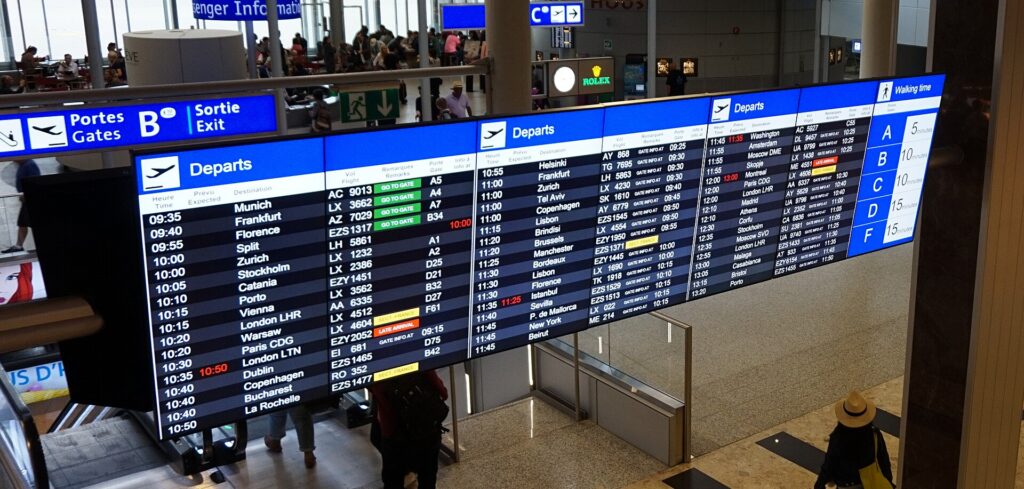
    An airport departures board listing flights, times and gates
    The day you fly usually matters more than the day you book (Photo: Stinger20 via Wikimedia Commons, CC BY-SA 4.0)

    How flight and hotel pricing actually works

    Understanding the mechanics makes every other tip in this guide make sense.

    Airfares: fare buckets and demand

    An airline does not sell every seat in economy at one price. It divides the cabin into a series of fare levels, sometimes called fare buckets or booking classes, each with its own price and rules. The cheapest levels are released in limited numbers. As they sell out, the next level up becomes the lowest available price. Revenue management systems watch how fast a flight is selling compared with how it usually sells, and open or close fare levels accordingly. That is why a fare can jump overnight when a few seats sell, and occasionally drop when a flight is selling more slowly than expected.

    Two things follow from this. First, the cheapest fares on popular flights go early, so waiting for a busy date to get cheaper is usually a losing bet. Second, on quiet routes and dates, fares can stay flat or even fall, so there is no single “right” number of days ahead that works for every trip.

    Hotel rates: occupancy and events

    Hotels price rooms against expected occupancy. When a city is busy, because of a convention, a festival, a big game or a holiday weekend, rates climb and cheaper room types disappear. When a hotel expects empty rooms, it lowers rates, opens discounts or releases rooms to last-minute channels. Unlike an airline seat, though, most hotel bookings can be made on a refundable rate, which changes the strategy completely: you can book early for protection and still benefit if prices fall.

    When to travel: the cheapest and priciest times of year

    Choosing your travel dates well saves more money than any booking trick. Every destination has a high season, a low season and the shoulder months in between, and the shoulder months are where value usually lives.

    Season by season, in general terms

    PeriodWhat drives pricesTypical value
    Early January to early MarchPost-holiday lull; strong demand only for ski and sun destinations and school breaksOften the cheapest time of year for city trips and Europe
    Spring break weeks (March)School holidays send families and students southExpensive for beaches, Florida, Mexico and the Caribbean
    April to MayShoulder season in much of the Northern Hemisphere; Easter and long weekends spikeGood value outside holiday weekends
    Mid-June to late AugustSummer holidays in North America and EuropePeak prices almost everywhere popular
    September to early NovemberKids back at school, summer crowds gone, weather often still goodOne of the best windows for value
    Late NovemberU.S. Thanksgiving travel; fall sales such as Black Friday and Cyber MondayExpensive to travel on Thanksgiving dates; good time to buy fares for later
    Early DecemberQuiet stretch before the holidaysOften cheap, especially for city breaks
    Mid-December to early JanuaryChristmas and New Year travelAmong the most expensive dates of the year

    Destination patterns that break the general rule

    • Europe: July and August are peak, and many Europeans take their own holidays then. April to early June and September to October combine decent weather with lower prices. Our guide to the best places to visit in Europe in fall is a good place to start.
    • Beach and sun destinations: Mexico, the Caribbean and Florida peak in winter and around spring break, and get cheaper in late spring and summer. The Atlantic hurricane season runs from June through November, which is part of why late summer and fall fares are lower.
    • Las Vegas: prices follow the convention and event calendar more than the weather. A big trade show or fight weekend can double hotel rates on the Strip; midweek outside those dates is usually far cheaper. Our guide to cheap flights to Las Vegas covers the patterns.
    • Canadian cities: summer and major festivals are busiest, winter is cheapest outside the holidays and ski weeks. Our Toronto flight deals guide walks through the city’s seasons.
    • Southern Hemisphere: seasons are reversed. December and January are summer peak in Australia, New Zealand and South America; May and June are their quieter autumn.
    • Asia: Lunar New Year and national holiday weeks drive huge regional travel demand, and monsoon seasons vary by country, so check the destination rather than the continent. Planning Japan? Our Japan travel guide covers the seasons.

    For city-specific timing, our month-by-month guides go deeper, such as the best time to fly to New York and the best time to fly to Paris.

    The best days of the week to fly and to stay

    Flying

    The day you fly matters far more than the day you book. On most leisure and mixed routes, Tuesdays, Wednesdays and often Saturdays are cheaper to fly, because business travelers fill Monday mornings and Thursday and Friday evenings, and leisure travelers pile onto Friday departures and Sunday returns. The first flight of the morning and late-evening departures are frequently cheaper than midday flights too. The pattern is not universal, so the best approach is to search a flexible range of dates and let the fare calendar show you the cheap days for your route.

    Staying

    Hotels follow the opposite logic depending on where they are. In business-heavy downtowns, Friday and Saturday nights are often the cheapest, because the weekday corporate guests have gone home. In resort towns, beach areas and weekend-getaway destinations, weekends cost more and Sunday through Thursday is cheaper. If a hotel price seems high, try moving your arrival a day in either direction and compare the total.

    An airplane wing above the clouds seen from a passenger window
    Cheap seats on popular flights sell first, so waiting on a busy date rarely pays (Photo: Tobias1984 via Wikimedia Commons, CC BY-SA 3.0)

    When to book flights

    There is no single perfect booking date, but there are sensible windows. Think of them as the period when fares are usually at or near their lowest for that kind of trip, not as guarantees.

    Trip typeSensible booking windowNotes
    Domestic, off-peak datesAbout 1 to 3 months aheadFares on quiet dates can stay flat for weeks; watch and book when a good fare appears
    Domestic, peak dates (holidays, long weekends)About 2 to 4 months aheadCheap seats on the most popular flights go first
    Short-haul international and transborderAbout 1 to 4 months aheadCanada to U.S. routes behave much like domestic ones
    Long-haul internationalAbout 2 to 6 months aheadEarlier for summer in Europe and for Christmas
    Christmas, New Year, spring break, summer peakAs early as 4 to 8 months aheadFares on these dates rarely fall as departure approaches
    Last minute (under 2 weeks)Only if you mustOccasionally cheap on quiet routes; usually expensive

    Within the window, the practical method is simple. Start searching early to learn what a normal fare looks like for your route, set a price alert, and book when a fare lands at or below that normal level. Waiting for the absolute bottom is how people end up paying more. For domestic trips inside the United States, our guide to booking cheap local flights in the USA goes deeper into short-haul pricing, and for trips abroad, our international flights booking tips cover routing, layovers, entry rules and hidden costs.

    Use sales, but know what you are buying

    Airlines run fare sales throughout the year, and the late-November sale season around Black Friday and Cyber Monday has become one of the most reliable. Sale fares can be excellent value for trips in the following winter and spring, but they usually come with the most restrictive conditions: travel date limits, blackout periods and no changes. Our roundup of Cyber Monday flight deal destinations explains how to judge whether a sale fare is really a deal.

    The 24-hour safety net

    For flights to, from or within the United States, the U.S. Department of Transportation requires airlines either to hold a reservation at the quoted fare for 24 hours without payment, or to let you cancel within 24 hours of booking without penalty, as long as you book at least seven days before departure. Most large airlines choose the free cancellation option. That gives you a day to double-check dates, names and prices. The rules for refunds and schedule changes are explained on the DOT Aviation Consumer Protection site. Canada has its own framework, the Air Passenger Protection Regulations, which sets out airline obligations for delays, cancellations and denied boarding; policies on voluntary cancellations still vary by airline and fare, so read the fare rules before you pay.

    When to book hotels

    Hotels reward a different strategy, because most rooms can be booked on a refundable rate.

    • Peak dates, holidays and events: book as soon as your plans are firm, on a refundable rate. The best-located rooms and the cheaper room types sell first, and rates rarely fall when a city is full.
    • Normal dates in a big city: a few weeks ahead is usually comfortable. Book a refundable rate and recheck the price later.
    • Quiet periods and low season: waiting can work. Hotels with empty rooms often cut rates close to the date, which is the premise of our last-minute hotel booking guide.
    • Small towns, national parks and islands: book early regardless of season. There are only a handful of properties and they fill.
    • Family trips: book early for school holidays, when family rooms and suites go first. Our guide to the best time to book hotels for family vacations covers it in detail.

    The strategy that works for most trips is to reserve a refundable room early and set a reminder a few days before the free cancellation deadline. If the price has dropped, book the cheaper rate first, then cancel the original. If it has risen, you are already protected. Our core hotel booking tips guide walks through the full process, from choosing the neighborhood to what to check at the front desk.

    Compare total prices

    Nightly rates hide a lot. Taxes, resort or destination fees, parking and breakfast can move one hotel from cheapest to most expensive. In the United States, the Federal Trade Commission has adopted a rule requiring hotels and booking sites to show total prices including mandatory fees. In Canada, the Competition Bureau treats advertised prices that leave out mandatory fees as drip pricing. Optional charges like parking are still yours to add, so build a real total for your finalists before choosing.

    A standard hotel room with a bed and desk in downtown Ottawa
    Book a refundable room early, then recheck the price before the cancellation deadline (Photo: Tony Webster from Portland, Oregon, United States via Wikimedia Commons, CC BY 2.0)

    Booking flights and hotels together

    For most trips, the flight is the more volatile half, so book it first and fit the hotel around it. The order matters because fares on popular dates tend to rise steadily, while a refundable hotel room can be adjusted later. A sensible sequence:

    • Pick a date range, not fixed dates. Search flights across a week or a month to find the cheap days.
    • Check the event calendar for those dates. A big concert, a conference or a playoff game can make hotels expensive even when flights are cheap. Our events pages, such as Las Vegas events or Toronto events, show what is on.
    • Book the flight, using the 24-hour cancellation window where it applies to confirm everything is right.
    • Book a refundable hotel for the exact nights, remembering that an overnight flight lands a day later than it departs.
    • Add a car if you need one. Our rental car booking tips explain when to reserve and what to watch for.
    • Recheck the hotel price before the free cancellation deadline.

    Flight-plus-hotel packages can be cheaper than booking separately, especially for beach resorts and Las Vegas, but they bundle the conditions too. Compare the package price against the flight and hotel booked separately, and read how changes and cancellations work before you pay.

    Flexibility is the biggest lever

    Every extra bit of flexibility widens the pool of cheap options.

    • Flexible dates: moving a trip by a day or two often changes the fare level entirely. A fare calendar shows the whole month at a glance.
    • Nearby airports: many cities have more than one airport. New York has JFK, LaGuardia and Newark; London has Heathrow, Gatwick, Stansted and others; the San Francisco Bay Area has SFO, Oakland and San Jose; Toronto has Pearson and Billy Bishop downtown. Price the ground transfer before choosing a cheaper airport. Our guide to cheap flights between New York and Toronto is a good example of how airport choice changes the fare.
    • Flexible destinations: if you just want a warm week or a city break, searching several destinations for the same dates can reveal a much cheaper option. Our budget travel destinations list is a good starting point, and cheap flights to Mexico City shows how a big, well-served hub can be cheaper than a smaller resort airport.
    • Flexible times of day: first flights of the morning and late departures are often cheaper, and early flights are less likely to be delayed by knock-on problems.
    • Flexible cabin: a premium cabin is sometimes cheaper than you expect on quiet routes. Our guides to business class upgrade strategies and the difference between first class and business class explain when paying up is worth it.

    Know the real price before you book

    The cheapest fare on a search screen is not always the cheapest trip. Basic economy fares often exclude a full-size carry-on on some airlines, seat selection, changes and sometimes even a checked bag. Ultra-low-cost airlines charge separately for almost everything. Before choosing, add up what you will actually pay.

    CostWhy it mattersWhat to check
    Carry-on bagSome basic fares allow only a small personal itemThe fare rules and the airline’s size limits; see our carry-on size guide
    Checked bagsFees often apply per bag, per directionWhether the fare includes a bag, and whether paying in advance is cheaper than at the airport
    Seat selectionFamilies and groups who want to sit together may need to payThe airline’s seating policy for your fare
    Changes and cancellationsThe cheapest fares are often nonrefundable and unchangeableChange fees, fare differences and whether you get a credit or a refund
    Ground transportA cheaper distant airport can cost more once you add the transferTrain, bus, taxi or parking costs to and from both airports
    Hotel feesResort fees, parking and breakfast add upThe total price for the whole stay

    A slightly higher fare that includes a bag and a seat can easily beat a bare-bones fare once extras are added. Our guide to understanding your flight details explains fare brands, baggage allowances and the fine print on your itinerary.

    Myths worth ignoring

    • “Search in incognito mode or prices go up.” There is little evidence that airlines raise fares because you searched before. Prices change because seats sell and fare levels close. Private browsing does no harm, but do not expect it to unlock lower fares.
    • “Flights get cheaper late at night.” Fares change whenever inventory changes, not on a nightly schedule.
    • “Always book on a Tuesday.” The day you fly matters; the day you buy mostly does not.
    • “Last minute is always cheaper.” For hotels in a quiet period, sometimes. For flights, it is usually the most expensive time to buy.
    • “Book as early as possible.” Booking very far ahead can mean paying before airlines release their sale fares. The sensible windows above are a better guide.

    Before you fly: the rest of the series

    Booking is only half of a smooth trip. Once your flight is confirmed, these guides cover the rest:

    If you are flying internationally, also check your government’s advice for your destination, such as Canada’s travel advice and advisories or the U.S. State Department’s travel advisories, before you book.

    Montreal-Trudeau International Airport (YUL)
    Pricing a nearby airport, and the transfer, is one of the easiest ways to save (Photo: Wilfredor via Wikimedia Commons, CC0)

    Common mistakes that cost money

    • Fixing dates before checking prices. Look at a fare calendar first, then decide.
    • Waiting for a busy date to get cheaper. On peak dates, fares usually only go up.
    • Comparing headline fares instead of totals. Bags, seats and fees change the ranking.
    • Booking a nonrefundable hotel for uncertain plans. The savings vanish the moment you need to change.
    • Ignoring the event calendar. One big event can double hotel rates for a weekend.
    • Forgetting entry requirements. A passport that expires too soon or a missing electronic travel authorization can cost you the whole trip.
    • Not rechecking refundable bookings. A quick search before the deadline can save real money.

    Frequently asked questions

    How far in advance should I book a flight?

    As a guide, about one to three months ahead for domestic trips and two to six months ahead for long-haul international trips, earlier for peak holidays and summer. The best signal is a price alert: book when the fare drops to or below the normal level for your route.

    What is the cheapest month to travel?

    For many city and European trips, January, February and early December outside the holidays, followed by September and October. Beach destinations are cheaper in late spring and summer. The destination’s own seasons matter more than any general rule.

    Is it cheaper to book flights on a particular day of the week?

    The day you fly matters more than the day you book. Midweek and Saturday flights are often cheaper; there is little reason to wait for a particular weekday to buy.

    Do flight prices go down closer to the date?

    Occasionally on quiet routes, but on popular flights and dates, the cheapest seats sell first and fares usually rise as departure approaches.

    When should I book a hotel?

    For peak dates and events, as soon as your plans are firm, on a refundable rate. For normal dates, a few weeks ahead is usually fine. For quiet periods, waiting can pay. Either way, recheck the price before your cancellation deadline.

    Are flight and hotel packages cheaper?

    Sometimes, especially for resorts and Las Vegas. Compare the package against separate bookings and check the change and cancellation terms before you pay.

    Does searching in incognito mode get cheaper fares?

    There is little evidence that it does. Fares change because seats sell and fare levels close, not because you searched before.

    Should I book the flight or the hotel first?

    Usually the flight, because fares are more volatile and less often refundable. Then book a refundable hotel for the exact nights.

    Ready to put this into practice? Start with a flexible date range on our flight search to find the cheapest days, then compare rooms and total prices for the same dates on our hotel search. If you need wheels at the other end, add a rental car once the flight is set.

  • How to Travel Europe in 2025: The Complete Multi-City Itinerary Guide

    How to Travel Europe in 2025: The Complete Multi-City Itinerary Guide

    Europe is built for multi-city travel. Distances are short, high-speed trains link many of the great cities center to center, budget airlines cover the longer hops, and a border crossing inside the Schengen area can be as uneventful as changing trains. That ease is also the trap. It is tempting to squeeze eight cities into two weeks and come home having seen mostly station platforms and airport queues. A good multi-city trip is designed: a route that flows in one direction, the right number of bases for the time you have, transport chosen leg by leg, and flights into one city and out of another. This guide walks through each decision in order, with sample itineraries, a transport comparison, the entry rules North American travelers need to know, and the mistakes that cost the most time and money.

    The short answer

    Plan around bases, not cities: allow at least three nights in each place, and fewer bases than you think. Draw the route in one direction and book an open-jaw flight, into the first city and home from the last, so you never backtrack. Take the train for journeys up to around four or five hours, where it usually beats flying once airport time is counted, and fly for longer hops, checking bag fees and airport locations. Travel in May, June, September or October for the best balance of weather, crowds and prices. And check entry rules before you book: the Schengen 90-day limit, the EU’s new border systems and the UK’s electronic travel authorization all apply to Canadian and US visitors. Start by comparing fares into the major gateways on our flight search.

    Eurostar trains at the platforms of St Pancras International station in London
    The Eurostar links London with Paris, Brussels and Amsterdam, city center to city center (Photo: Oxyman via Wikimedia Commons, CC BY 2.5)

    Step 1: Decide what kind of trip you want

    Before you open a map, decide what the trip is for. It shapes which cities make the cut and how long you spend in each.

    • Art, history and landmarks: Rome, Paris, Florence, Athens, Vienna, London.
    • Scenery and the outdoors: the Swiss Alps, the Norwegian fjords, the Dolomites, the Cinque Terre, the Scottish Highlands.
    • Nightlife and city energy: Berlin, Budapest, Barcelona, Amsterdam.
    • Food and wine: Lyon, Bologna, San Sebastián, Porto, and the wine regions of France, Italy and Spain.
    • Value: Lisbon, Kraków, Budapest and Prague, where daily costs are lower than in the western capitals; our guide to budget travel destinations covers the best-value options in depth.

    Write down your top priorities, such as museums, food, beaches, hiking or architecture, and rank candidate cities against them. If you are torn between the classic three countries, our comparison of England, Italy and France helps you choose. And if part of the trip is about doing very little, our list of relaxing vacations for doing absolutely nothing includes slower European options.

    Step 2: Match the number of cities to the time you have

    This is where most itineraries go wrong. Every move costs you roughly half a day: checking out, getting to the station or airport, the journey, getting to the new hotel, and finding your feet. Three moves in a week means a day and a half of travel. The rule of thumb that works for most travelers is at least three nights per base, with day trips to see nearby places without changing hotels.

    Trip length (nights in Europe)Comfortable number of basesExample
    7 nights2Paris and London, or Rome and Florence
    10 nights3London, Paris and Amsterdam
    14 nights3 to 4London, Paris, a stop in between, and Rome
    21 nights5 to 6Berlin, Prague, Vienna, Budapest and one or two smaller towns

    Big cities deserve more time than small ones. Paris, London and Rome each justify four nights or more on a first visit; a smaller town can often be covered in two, or as a day trip from a larger base.

    Step 3: Build a route that flows

    A good route moves in one general direction and connects cities that are close together by fast, direct transport. A bad one zigzags, which wastes days and money.

    Classic routes by region

    • Western Europe: London to Paris to Brussels to Amsterdam. All four are linked by high-speed rail, including the Eurostar under the Channel.
    • Central Europe: Berlin to Prague to Vienna to Budapest. Trains connect each pair, and the cities are close enough that no single leg is long.
    • Italy: Venice to Florence to Rome, with high-speed trains between each, and Naples or the Amalfi Coast as an extension south.
    • Iberia and the Mediterranean: Lisbon to Madrid to Barcelona, then on to Nice or Rome. Use a flight for the longer hops, such as Lisbon to Madrid or Barcelona to Rome.
    • Eastern Europe: Kraków to Budapest and on to Bucharest or Sofia, using a mix of trains, buses and short flights, since rail connections in the region are slower.

    Use open-jaw flights

    An open-jaw ticket flies you into one city and home from another, for example into London and out of Rome. It saves you the time and cost of returning to your starting point, and on many routes it costs about the same as a round trip. When you search, use the multi-city option and compare it with a round trip plus a one-way budget flight back to your arrival city. The major gateways from North America include London, Paris, Rome, Amsterdam, Frankfurt, Lisbon and Madrid; compare fares to London, Paris and Rome to see which combination is cheapest for your dates.

    Consider arrival and departure airports

    Know what to expect when you land. Our airport guides for London Heathrow, Paris Charles de Gaulle and Rome Fiumicino cover terminals and transfers into the city, which matters when you land after an overnight flight.

    Charles Bridge crossing the Vltava River in Prague
    Prague, a natural stop on a Central Europe route between Berlin, Vienna and Budapest (Photo: DXR via Wikimedia Commons, CC BY-SA 4.0)

    Sample itineraries

    Ten days: London, Paris and Amsterdam

    Fly into London and spend three nights, then take the Eurostar to Paris for four nights, and continue by high-speed train to Amsterdam for three nights before flying home. Every leg is by rail from city center to city center. Our guides to things to do in London and things to do in Paris help you plan the days, and our guides to getting around London and Paris explain transit passes and airport transfers.

    Two weeks: London, Paris and Rome

    The classic first trip. Four nights in London, four in Paris, then a flight or an overnight train south to Rome for five nights, with a day trip to Florence or Naples by high-speed train. Fly home from Rome. Our guide to things to do in Rome covers the city, and our guide to getting around Rome explains why a car is rarely worth it in the city itself.

    Three weeks: Central Europe

    Fly into Berlin for four nights, take the train to Prague for four, continue to Vienna for four and Budapest for four, with a couple of nights in a smaller town such as Český Krumlov or Salzburg along the way. Fly home from Budapest or Vienna. Daily costs are generally lower in Prague and Budapest than in Berlin and Vienna, which balances the budget.

    Ten days in fall: wine and harvest

    Fly into Lisbon for three nights, take the train to Porto for three, then fly to Rome and finish with four nights in Rome with a day in the countryside. For more autumn ideas, see our guide to the best places to visit in Europe in fall.

    Step 4: Choose transport leg by leg

    There is no single best way to get around Europe. Pick the right mode for each leg.

    ModeBest forWatch out for
    High-speed trainTrips up to about four or five hours; city center to city centerFares that rise closer to departure; seat reservations on many routes
    Night trainLong legs where you save a hotel night and a daytimeLimited routes; book sleeper or couchette berths early
    Budget airlineLong distances and routes with no fast railBag fees, strict size limits, airports far from the city
    Long-distance busTight budgets and routes with poor railLonger journey times, traffic delays
    Rental carCountryside, wine regions, small villagesCity traffic zones, parking, cross-border and one-way fees

    Trains

    Rail is the most pleasant way to cross Europe and, on many routes, the fastest once you count airport security and transfers. High-speed lines link the major cities of France, Germany, Italy, Spain, Belgium and the Netherlands, and the Eurostar connects London with Paris, Brussels and Amsterdam. National operators such as Deutsche Bahn sell tickets across much of the network and are good for checking timetables. On many high-speed routes, the cheapest fares go early and prices climb as departure approaches, so book once your route is set.

    Night trains have made a comeback on several routes; the Austrian operator’s Nightjet network is one of the largest. A sleeper saves a night’s accommodation and a daytime spent traveling, though berths sell out early in summer.

    A German ICE high-speed train at the platform of Munich Central Station
    High-speed trains usually beat flying on trips of up to about four or five hours (Photo: 4300streetcar via Wikimedia Commons, CC BY 4.0)

    Rail passes

    A Eurail pass (for non-European residents; Europeans use Interrail) gives unlimited travel on a set number of days. It can be good value for trips with many long rail legs or for travelers who want to decide on the day. For a trip with only a few journeys booked in advance, individual tickets are often cheaper. Many high-speed and night trains also require a seat reservation on top of the pass, sometimes with a fee, so check before you rely on one.

    Budget airlines

    Carriers such as Ryanair, easyJet and Wizz Air cover huge networks at low base fares, and they are the sensible choice for long hops like Lisbon to Rome. The fare is only the start. Carry-on allowances are often limited to a small under-seat bag unless you pay more, checked bags cost extra, and some routes use secondary airports far from the city, adding transfer time and cost. Paris-Beauvais, for example, is well outside Paris. Price the whole journey, including bags and the airport transfer, before you compare with the train.

    Buses

    Companies such as FlixBus and BlaBlaCar Bus run extensive networks at low fares. Buses are slower than trains but can be the cheapest option, and on some routes in Eastern Europe and the Balkans they are more direct than rail.

    Rental cars

    A car is a liability in big cities and a gift in the countryside. Pick one up when you leave a city for Tuscany, Provence or the Scottish Highlands, and return it before the next city. Watch for restricted traffic zones in many Italian historic centers, where driving in without a permit brings automatic fines, and for steep fees when you drop a car in a different country. Some countries require an International Driving Permit alongside your license; Canadians can read the requirements on the Government of Canada’s International Driving Permit page. Compare rental rates on our Rome car rental page or on our main car rental search, and read our rental car booking tips before you book.

    Step 5: Set a realistic budget

    Costs vary more within Europe than many first-time visitors expect. London, Paris, Zurich, Amsterdam and the Nordic capitals are among the most expensive cities in the world for accommodation, while Lisbon, Kraków, Budapest and Prague offer more for less. A route that mixes both balances the total.

    Build the budget from real numbers: price your flights and a few candidate hotels for your dates, add a daily figure for food and local transit, then add intercity transport, attractions, insurance and a buffer of 10 to 15 percent. Our guide on how to save money for a trip includes a worksheet and a savings timeline. A few habits save the most:

    • Eat your main meal at lunch, when many restaurants offer a set menu.
    • Buy city transit passes rather than single tickets if you will ride often.
    • Look for free museum days and free permanent collections; many major London museums are free to enter.
    • Carry a refillable water bottle; many cities have public fountains.
    • Travel light to avoid bag fees on budget airlines.

    Step 6: Choose where to stay in each city

    On a multi-city trip, location matters twice: for sightseeing and for getting out on moving day. A hotel near the station you will leave from, or on a direct metro line to it, makes transfer days far easier.

    • Stay central or on a direct line. A cheaper room far out often costs more in time and transit.
    • Check the total price with city taxes. Many European cities add a per-person, per-night tourist tax.
    • Use refundable rates until your route is fixed, then decide whether to switch to cheaper prepaid rates.
    • Mix accommodation types: a hotel in one city, an apartment with a kitchen in another, a guesthouse in a small town.

    Compare rooms on our hotel search, including Paris hotels and Rome hotels, and neighborhoods like the Marais in Paris and Trastevere in Rome. Our hotel booking tips explain how to compare rates, fees and cancellation terms.

    Gabled canal houses along a quiet canal in Amsterdam
    Amsterdam is an easy high-speed train ride from Paris and Brussels (Photo: Kaci Baum kacibaum via Wikimedia Commons, CC0)

    Step 7: Know the entry rules

    Entry rules for Europe have been changing, and they matter more on a multi-country trip. Confirm the current requirements for your passport on official sites before you book and again before you fly.

    The Schengen area and the 90-day rule

    Most of continental Europe is part of the Schengen area, which has no routine passport checks between member countries. Canadian and US citizens can usually visit for up to 90 days in any 180-day period without a visa, and that limit counts all Schengen countries together, not each one separately. Your passport generally needs to have been issued within the last ten years and remain valid for at least three months after your planned departure from the area.

    The EU Entry/Exit System and ETIAS

    The EU has introduced the Entry/Exit System (EES), which registers non-EU travelers electronically, including fingerprints and a facial image, when they cross the external Schengen border, replacing passport stamps. Allow extra time at your first entry. The EU also plans to require visa-exempt visitors to obtain an ETIAS travel authorization before traveling; check the official site for its start date and apply only there.

    The United Kingdom and Ireland

    The UK is not in the Schengen area, and time there does not count toward your 90 days. Visitors from Canada, the US and many other countries now need an Electronic Travel Authorisation (ETA) before traveling to the UK, including when connecting through some UK airports. Ireland is also outside Schengen and has its own entry rules.

    Currencies

    The euro is used in most, but not all, of the countries on a typical route. The UK uses the pound, Switzerland the franc, and the Czech Republic, Hungary, Poland, Denmark, Sweden and Norway their own currencies. A card without foreign transaction fees and a bank ATM on arrival cover most needs; always pay in the local currency when a terminal offers to convert.

    Step 8: Pack for several climates and a lot of stairs

    Multi-city trips mean carrying your luggage through stations, up hotel stairs and over cobblestones. Pack less than you think.

    • Aim for a carry-on and a daypack. Moving is faster, and you avoid bag fees on budget flights.
    • Layers beat bulk. A light waterproof jacket and a warm mid-layer cover most shoulder-season weather.
    • Bring the right plug adapters. Most of continental Europe uses Type C and F plugs, the UK and Ireland use Type G, and Switzerland uses Type J, though Type C plugs usually fit there too.
    • Comfortable walking shoes matter more than anything else you pack; our guide to comfortable walking shoes for traveling helps you choose.
    • Keep documents in two places: originals on you, copies in a secure cloud folder.

    For staying connected, a European eSIM or a local SIM is usually far cheaper than your home carrier’s roaming plan. Download offline maps and a translation app before you leave. Pickpocketing is the most common problem in busy tourist areas and on crowded transit, so keep valuables in a zipped inner pocket, a money belt or an anti-theft backpack.

    Step 9: Pick the right season

    • Late spring (April to early June): mild weather, long days, gardens in bloom, and fewer crowds than summer.
    • Summer (late June to August): the warmest weather and the longest days, but also the biggest crowds and highest prices. Late July and August are peak, and some businesses in southern European cities close for part of August.
    • Early fall (September to October): warm seas in the south, harvest festivals, Oktoberfest in Munich, and falling prices; many travelers consider it the best time of all.
    • Winter (November to March): the cheapest months outside the holidays, with Christmas markets in December and short, cold days in the north.

    Our month-by-month guides to the best time to fly to Paris, London and Rome show how fares and weather change through the year.

    Mistakes that cost the most

    • Too many cities. The most common mistake by far. Cut one base and add a day trip.
    • Zigzag routes. Draw the route on a map before you book anything.
    • Round-trip tickets that force backtracking. Price an open jaw first.
    • Comparing budget fares without bags. A cheap flight plus a checked bag and a long airport bus can cost more than the train.
    • Buying a rail pass by default. Price your actual journeys as point-to-point tickets first.
    • Forgetting the 90-day rule. It counts across all Schengen countries combined.
    • Driving into historic centers. Traffic zone fines can arrive by mail months later.

    Frequently asked questions

    How many cities should I visit in two weeks?

    Three or four is the sweet spot for most travelers. That allows three to four nights in each, plus a day trip or two, without spending half the trip in transit.

    Is it cheaper to fly or take the train between European cities?

    It depends on the route and how early you book. Budget flights can have lower base fares, but once you add bags and airport transfers, the train is often competitive, and it is usually faster door to door on routes under about four or five hours.

    Do I need a rail pass?

    Not usually. Passes suit trips with many long journeys or travelers who want total flexibility. For a typical two-week trip with a handful of legs booked in advance, individual tickets are often cheaper.

    How far ahead should I book?

    Book transatlantic flights once your dates are firm and fares look reasonable, often a few months out. Book high-speed trains as soon as your route is fixed, since fares tend to rise. Reserve refundable hotels early for summer.

    Do Canadians and Americans need a visa for Europe?

    For short tourist visits to the Schengen area, usually not, within the 90-in-180-day limit. The UK requires an ETA, and the EU’s ETIAS authorization is due to follow. Always check the official requirements for your passport.

    Can I use one currency everywhere?

    No. The euro covers much of the continent, but the UK, Switzerland, the Czech Republic, Hungary, Poland and the Nordic countries outside Finland use their own currencies. A no-fee card handles most of this seamlessly.

    Can I book the whole trip in one place?

    You can compare flights, hotels and rental cars for each leg on TicketScanner; our guide to planning a trip with TicketScanner explains how to use flexible dates and combine the three. Rail tickets are booked with the operators.

    Ready to build your route? Start with the flights: compare open-jaw fares into and out of Europe’s gateways on our flight search, then line up rooms city by city on our hotel search. For more ideas on where to go, see our guide to budget travel destinations.

  • Top 10 Budget-Friendly Travel Destinations for 2025 with Affordable Flights & Stays

    Top 10 Budget-Friendly Travel Destinations for 2025 with Affordable Flights & Stays

    A cheap trip is made of two numbers, and most travelers only look at one of them. The first is the cost of getting there: the flight, plus the transfers at each end. The second is the cost of being there: a bed, three meals, getting around and the things you came to do, multiplied by every day you stay. A bargain fare to an expensive city can still mean an expensive week, and a pricier flight to a cheap place can work out cheaper overall. The best budget destinations do well on both numbers, or do so well on the second that a longer stay pays back the flight. This guide shows how to judge that, profiles ten destinations that consistently deliver, and links to every planning guide in this series.

    The short answer

    If you want the most trip for the least money, pick a destination where daily costs are low, then stay long enough to spread the flight over many days. Lisbon, Kraków, Sofia, Tbilisi and Istanbul are the value picks in and around Europe; Medellín, Antigua and Oaxaca stand out in Latin America; Ho Chi Minh City and Bali are the classic long-haul bargains in Asia. Travel in the shoulder season, the weeks either side of the local peak, when fares and room rates both soften. Be flexible on dates and airports. And check entry rules and travel advisories before you book, since visas, entry fees and safety conditions change. You can compare fares across whole months on our flight search, then line up rooms on our hotel search.

    A yellow Tram 28 climbing a narrow street in Lisbon's Alfama district
    Lisbon's historic trams: one of Western Europe's most affordable capitals, and easy to reach from North America (Photo: Sonse via Wikimedia Commons, CC BY 2.0)

    How to judge whether a destination is really cheap

    Before you commit to a place, run through these four questions.

    1. What will it cost to get there from your airport?

    The same destination can be a bargain from one departure city and a splurge from another. A traveler flying from Toronto, Montreal or New York has far more nonstop and one-stop options to Europe than someone starting from a smaller regional airport, and the West Coast has a natural advantage for Asia. Search your own home airport first, then a larger hub within reasonable driving distance; our pages for flights from Toronto, from Vancouver and from Montreal are a good starting point if you are in Canada. Count the cost of reaching that bigger airport.

    2. What does a normal day cost once you land?

    Price a typical day: a clean private room, three meals, local transit and one paid attraction. In the destinations below, that day costs noticeably less than in Paris, London or New York, and the gap grows the longer you stay. Our guide on how to save money for a trip shows how to turn a daily figure into a savings target.

    3. Is it the right season?

    Every destination has a peak season when rooms fill and fares climb, and a shoulder season just before and after it when the weather is still good and prices ease. For Europe, late spring and early fall are the sweet spots; our guide to the best places to visit in Europe in fall covers the autumn options in detail.

    4. How long will you stay, and what else will you pay?

    A long-haul flight is a fixed cost: spread over five days it dominates the budget, spread over three weeks in a cheap destination it shrinks. Add the smaller extras too, such as visa or entry fees, per-night tourist taxes, airport transfers and travel insurance. Together they can close the gap between a “cheap” destination and a mid-priced one.

    The ten best-value destinations

    These places consistently deliver a rich trip for a modest daily spend. Prices move with exchange rates and demand, so treat the descriptions as relative and check current rates when you plan.

    1. Lisbon, Portugal

    Lisbon remains one of the most affordable capitals in Western Europe, and one of the easiest to reach from North America, with direct flights from several cities on the East Coast and in Canada.

    • What to do: ride the historic trams through Alfama and Graça, climb to the viewpoints (miradouros) at sunset, visit the monastery and riverside monuments in Belém, and take the train to Sintra’s palaces or the beaches at Cascais.
    • How to keep it cheap: eat the set lunch at neighborhood tascas, buy a rechargeable transit card for the metro, trams and trains, and stay in residential areas like Arroios or Campo de Ourique rather than right in Baixa. Lisbon charges a municipal tourist tax per night, so include it when you compare rooms.

    Visit Portugal, the official tourism site, helps if you want to add Porto or the Algarve.

    2. Kraków, Poland

    Kraków has one of the best-preserved medieval centers in Europe and prices well below those of Western European capitals; Poland uses the złoty, not the euro.

    • What to see: the Main Market Square and Cloth Hall, Wawel Castle and Cathedral, the Kazimierz district, and the Wieliczka Salt Mine just outside the city.
    • A day trip that needs planning: the Auschwitz-Birkenau Memorial and Museum is about an hour and a half away. Entry must be reserved in advance through the memorial’s official system, and slots fill in busy months.
    • How to keep it cheap: milk bars (bar mleczny) serve simple Polish food at very low prices, the center is walkable, and trams cover the rest.

    The national tourism board, Poland.travel, helps with pairing Kraków with Warsaw or Gdańsk.

    The Renaissance Cloth Hall in the Main Market Square of Kraków's Old Town
    The Cloth Hall on Kraków's Main Market Square, the heart of a walkable, good-value Old Town (Photo: Igor123121 via Wikimedia Commons, CC BY 4.0)

    3. Sofia, Bulgaria

    Sofia is often overlooked, which is part of why it offers such good value. It has Roman ruins, Orthodox churches and a mountain on its doorstep.

    • What to see: Alexander Nevsky Cathedral, the ancient Serdica ruins, the pedestrian Vitosha Boulevard, and day hikes on Vitosha Mountain, which rises right behind the city.
    • Beyond the city: Rila Monastery is a popular day trip, and Plovdiv, one of Europe’s oldest continuously inhabited cities, is an easy bus or train ride away.

    4. Tbilisi, Georgia

    Tbilisi has balconied old houses, sulfur bathhouses, a hilltop fortress, a fast-growing food and wine scene, and prices that make long stays manageable. Georgia also allows long visa-free stays for many passports, including Canadian and US passports; confirm the current rules, including any insurance requirement, before you go.

    • What to do: soak in the domed sulfur baths of the Abanotubani district, ride the cable car up to Narikala Fortress, wander the Old Town, and eat khachapuri and khinkali until you cannot move.
    • Beyond the city: the Kakheti wine region and the mountain scenery around Kazbegi are popular trips of a day or more.

    The Georgian National Tourism Administration publishes regional guides and seasonal events.

    5. Istanbul, Turkey

    Istanbul is one of the great cities of the world, and by the standards of Europe’s other giants it is still gentle on the wallet, especially for food and transit.

    • What to see: Hagia Sophia and the Blue Mosque, Topkapı Palace, the Basilica Cistern, the Grand Bazaar and the Spice Bazaar, and a ferry ride on the Bosphorus, which doubles as the cheapest scenic cruise in the city.
    • Costs to know: some major sites charge foreign visitors significant entry fees, and prices at the top attractions have risen quickly, so budget for the ones that matter most to you.
    • How to keep it cheap: buy an Istanbulkart for the metro, trams, buses and ferries; eat where locals eat, away from the main squares.

    The official tourism portal, Go Türkiye, covers the city and the rest of the country.

    6. Medellín, Colombia

    Medellín has reinvented itself over the past few decades and is known for its spring-like climate, cable cars and street art.

    • What to do: ride the Metrocable lines that connect hillside neighborhoods to the metro, take a guided walk through the murals and outdoor escalators of Comuna 13, visit the Botanical Garden, and day-trip to the colorful town of Guatapé and its famous rock.
    • How to keep it cheap: the metro and cable cars are inexpensive and efficient, and a set lunch (menú del día) is one of the best-value meals anywhere.
    • Stay informed: conditions vary by neighborhood. Read the government advisory for Colombia, use registered taxis or ride-hailing apps, and follow local advice about where to go after dark.

    Colombia Travel, the national tourism site, has itineraries that add the coffee region and Cartagena.

    7. Antigua and Guatemala

    Antigua is a colonial town of cobbled streets and ruined churches ringed by volcanoes, and it is the base most travelers use for exploring Guatemala.

    • What to do: hike Pacaya Volcano, spend a few days in the villages around Lake Atitlán, and, if you have time, fly to Flores for the Maya ruins at Tikal in the northern jungle.
    • How to keep it cheap: Spanish schools with homestays make long stays very affordable, and shuttle buses link the main tourist points.
    • When to go: the dry season runs roughly from November to April. The shoulder months either side can bring lower prices, with afternoon rain as the trade-off.

    8. Oaxaca, Mexico

    Oaxaca is Mexico’s cultural and culinary heartland: markets piled with chilies and chocolate, mezcal distilleries, craft villages and some of the best food in the country, at prices well below the big beach resorts.

    • What to do: eat mole, tlayudas and tamales in the markets, visit the hilltop ruins of Monte Albán, see the petrified waterfalls of Hierve el Agua, and tour the weaving and pottery villages nearby.
    • Festivals: Día de Muertos around the start of November and the Guelaguetza in July are spectacular, and they are also the most expensive and crowded times of year. Book early if you want to be there.

    If you would rather have beaches on a budget, Mexico’s Caribbean coast can also be good value outside the winter peak; see our best time to fly to Cancun guide, then compare flights to Cancun and rooms in the Hotel Zone.

    9. Ho Chi Minh City, Vietnam

    Ho Chi Minh City is loud, energetic and full of history, with some of the best street food on earth and daily costs that let a modest budget stretch a long way.

    • What to see: the War Remnants Museum, the Reunification Palace, Ben Thanh Market, and a day trip to the Cu Chi Tunnels or the Mekong Delta.
    • How to keep it cheap: eat at street stalls and small family restaurants, and use ride-hailing apps for fixed, fair prices.
    • Entry: most North American travelers need an e-visa. Apply only through the official government portal, since look-alike sites charge extra fees.

    The official Vietnam tourism site has regional guides for planning a route from south to north.

    10. Bali, Indonesia

    Bali combines beaches, rice terraces, temples and a deep-rooted local culture. It is a long way from North America, but guesthouses and local warungs keep daily costs low once you arrive.

    • What to do: base yourself in Ubud for rice terraces, temples and craft villages, then head to the coast; visit the sea temples of Tanah Lot and Uluwatu, and hike Mount Batur for sunrise.
    • Costs to know: Bali charges international visitors a tourist levy on top of Indonesia’s visa requirements. Pay both only through official channels.
    • How to keep it cheap: eat at warungs, rent a scooter only if you are an experienced rider with the right license and insurance, and otherwise hire a driver for the day.
    Narikala Fortress above the rooftops of Tbilisi's Old Town
    Narikala Fortress over Old Tbilisi, where long stays are easy on the budget (Photo: Adam Jones from Kelowna, BC, Canada via Wikimedia Commons, CC BY-SA 2.0)

    At a glance: which budget destination suits you

    DestinationBest forBest-value seasonIdeal length
    LisbonFirst European trip, food, day tripsSpring and fall4 to 7 days
    KrakówHistory, architecture, low daily costsMay, June, September3 to 5 days
    SofiaValue, mountains, off-the-radar EuropeLate spring and early fall3 to 5 days
    TbilisiFood and wine, long staysSpring and fall5 to 10 days
    IstanbulWorld-class sights, foodApril to May, September to October4 to 6 days
    MedellínClimate, city life, nature nearbyYear-round mild5 to 10 days
    Antigua, GuatemalaVolcanoes, language schoolsEarly dry season7 to 14 days
    OaxacaFood, crafts, cultureOutside festival weeks5 to 7 days
    Ho Chi Minh CityStreet food, long trips through VietnamDry season2 weeks or more with the rest of Vietnam
    BaliBeaches, culture, slow travelShoulder months either side of the dry season10 days or more

    Budget travel closer to home

    For a short break, the best-value trip is often a short, inexpensive flight or a drive away.

    Making expensive favorites affordable

    If Paris, London or Rome is the trip you have always wanted, you can still bring the cost down a long way.

    Go in the shoulder season

    Summer and the Christmas holidays are the priciest times in all three cities. Late spring and the period from mid-September to early November bring lower hotel rates and better fare availability. Our month-by-month guides to the best time to fly to Paris, the best time to fly to London and the best time to fly to Rome show when the value windows open.

    Stay one ring out from the center

    A hotel two or three metro stops from the landmarks usually costs noticeably less than one within sight of them, and in all three cities the transit is good enough that you lose little time. In Rome, Trastevere has character and good-value dining; in Paris, the Marais is central, walkable and full of cheaper places to eat than the grand boulevards.

    Use transit, not taxis

    All three cities have excellent public transport, and a car is almost always a liability in the center. Our guides to getting around Paris, London and Rome explain passes, airport transfers and when a rental does make sense.

    Plan free days

    Many major London museums are free, and Paris and Rome have free-entry days at some state museums. Our guides to things to do in Paris, things to do in London and things to do in Rome mix the must-sees with cheaper options. If you are torn between the three countries, read our comparison of England, Italy and France for a vacation, and if you want to see more than one, our guide to traveling Europe on a multi-city itinerary shows how to connect them efficiently.

    How to find the cheap flight

    The flight is the one cost you cannot shrink by eating street food, so be methodical. Search a full month of fares before choosing dates, since midweek departures are often cheaper on leisure routes. Check nearby airports at both ends; arriving in a neighboring city and taking a train can save more than any other trick. Consider open-jaw tickets, flying into one city and home from another, which avoids backtracking. And read the fare rules, because the cheapest fares often exclude bags, seats or changes. Our guide to the best time to book cheap flights and hotels covers timing, our international flight booking tips cover connections and baggage, and our roundup of Cyber Monday flight deal destinations shows the kind of routes that tend to go on sale. For a walkthrough of fare calendars on this site, see our guide to planning a trip with TicketScanner.

    How to keep daily costs low anywhere

    Accommodation is usually the largest daily cost: compare the total price including taxes and fees, stay near transit rather than on the most famous square, and look at guesthouses and small family-run hotels as well as chains. Our hotel booking tips go through the process step by step. Eat your main meal at lunch, when many restaurants offer set menus at a fraction of the dinner price, and shop in markets. Buy the local transit card on day one and rent a car only when it opens up places transit cannot reach; our comparison of renting a car, public transport and taxis helps you decide. Use a card without foreign transaction fees, withdraw cash from bank ATMs rather than airport exchange desks, and always pay in the local currency when a terminal offers to convert. Carry cards and cash in more than one place; a money belt or an anti-theft backpack helps in crowded areas. Finally, slow down: every transfer costs money, so fewer bases and longer stays are cheaper and usually more enjoyable. If what you really want is rest, our list of relaxing vacations for doing absolutely nothing is built around that idea.

    A commuter ferry crossing the Bosphorus in Istanbul
    A public ferry on the Bosphorus doubles as the cheapest scenic cruise in Istanbul (Photo: Moonik via Wikimedia Commons, CC BY-SA 3.0)

    Safety, entry rules and insurance

    Budget destinations are not riskier by nature, but they are often less familiar.

    • Check the official advisory for every country on your route before you book and again before you fly. Canadians should use the Government of Canada travel advice and advisories; US citizens should check the State Department travel advisories.
    • Confirm entry requirements. Visas, e-visas, electronic travel authorizations, tourist levies and passport validity rules differ by country and by passport, and they change. The official government page for your nationality is the only reliable source.
    • Buy travel insurance with medical coverage. Provincial and many private health plans cover little abroad.
    • Arrive at the airport with time to spare on international departures; our guide to airport arrival times for international flights explains how early is early enough.

    Splurges on a plan

    Budget travel also means spending deliberately so the money goes where it matters. Our Cayman Islands honeymoon guide applies the same timing rules to a Caribbean escape, and our guide to traveling to Japan covers a destination that is more affordable on the ground than many people expect, thanks to efficient rail, good convenience-store food and good-value business hotels. If your travels turn into a passion for writing, our guide to travel writing and contributor programs explains how editors evaluate pitches.

    All the guides in this series

    This article is the hub for our destinations and planning guides. Each one goes deeper into a single part of the trip:

    Frequently asked questions

    What is the cheapest region to travel in?

    For daily costs, Southeast Asia, parts of Latin America, and Eastern Europe and the Caucasus are consistently among the best value for North American travelers. The overall cheapest trip depends on your departure airport, since the flight can outweigh the daily savings on a short stay.

    How much should I budget per day?

    It depends on your travel style, the destination and the exchange rate at the time, so any fixed figure goes out of date quickly. Build your own number: price a mid-range room for your dates, add meals, local transit and one or two paid attractions, then add a buffer of around 10 to 15 percent.

    When is the cheapest time to travel?

    The shoulder season for your chosen destination, which is usually just before and just after its peak. For much of Europe, that means May, early June, September and October. For tropical destinations, it is the edges of the dry season.

    Are budget destinations safe for solo travelers?

    Many are very popular with solo travelers, including Lisbon, Kraków and Tbilisi. Safety varies by neighborhood and changes over time, so read the official advisory for your destination, follow local advice, and take the usual precautions with valuables and late-night travel.

    Do I need a visa for these destinations?

    It depends on your passport and the country. Some destinations are visa-free for Canadian and US passport holders, some require an e-visa or charge a tourist levy, and rules change. Check the official government travel page for your nationality before you book.

    Ready to find your own budget destination? Start by searching a whole month of fares from your home airport on our flight search, pick the destination and dates where the numbers work, then compare rooms on our hotel search. If you are still saving up, begin with our guide on how to save money for a trip.

  • Hacks for Scoring a Cheap Airline Business Class Upgrade

    Hacks for Scoring a Cheap Airline Business Class Upgrade

    A lie-flat seat on an overnight flight can turn a trip you survive into a trip you enjoy, and it is natural to wonder whether there is a clever way to get one without paying the full business class fare. There is, but it rarely looks like the tricks that circulate online. Nobody reliably talks their way into the front cabin at the gate, and a nice jacket is not a boarding pass. What actually works is understanding how airlines sell and give away premium seats, then putting yourself in the right place at the right moment: on the right fare, on the right flight, with the right offer in front of you or the right points in your account. This guide explains how upgrades really work, the five genuine routes to a better seat, when each one pays off, how to judge whether an upgrade is worth the money, and which popular “hacks” to stop worrying about. It is part of our flight booking series, which starts with our guide to the best time to book cheap flights and hotels.

    The short answer

    If you only remember a handful of things, make it these. Do not buy the cheapest basic fare if you want any chance of an upgrade, because many airlines exclude those fares from both paid and complimentary upgrades. Price the premium cabin outright before you book economy, because a discounted business fare sometimes costs less than economy plus an upgrade. Watch for paid upgrade offers after you book, in the airline’s app, at online check-in and at the airport, since prices often fall as departure approaches and seats remain empty. Use miles for upgrades only when the numbers make sense, and check which fares are eligible first. Concentrate your flying with one airline or alliance if you fly often enough for elite status to matter, because status is what drives complimentary upgrades. And choose flights where premium seats are likely to go unsold: off-peak days, leisure routes and less popular departure times. Start by comparing fares, cabins and dates on our flight search.

    A lie-flat business class suite in a Delta One cabin
    A lie-flat business class seat: most valuable on an overnight flight (Photo: Delta News Hub via Wikimedia Commons, CC BY 2.0)

    How airline upgrades actually work

    Every premium seat an airline flies empty is revenue it will never get back, so airlines work hard to fill those seats. They do it in a predictable order, and knowing that order explains almost every upgrade tip worth following.

    First, they try to sell the seat

    The airline’s first choice is to sell a business class seat at a business class fare. Revenue management systems release premium seats at several price levels and watch how quickly they sell. On routes with strong corporate demand, such as weekday flights between major business centers, the front cabin often sells out at high fares. On leisure routes and off-peak days, it may not, and that is where discounted premium fares and cheap upgrade offers come from.

    Then they sell it to someone already booked

    As departure approaches and seats remain unsold, the airline starts offering them to passengers who have already bought economy or premium economy tickets. These offers appear during booking, in the airline’s app or website after you book, at online check-in, at airport kiosks and sometimes at the gate. Some airlines run an auction instead, inviting passengers to bid for the seat. The price of these offers is set by the airline’s systems and changes with demand, so two passengers on the same flight may be offered different prices on different days.

    Then they give it to their best customers

    Whatever remains is typically used for complimentary upgrades for elite members of the airline’s loyalty program, and for upgrades booked with miles or upgrade certificates. Airlines rank the list by rules that usually weigh elite tier first, then the fare you paid, then when you requested the upgrade, though each airline sets its own order. Delta, for example, publishes its complimentary upgrade windows by Medallion tier on its Medallion benefits page: higher tiers become eligible earlier before departure. Because programs change, check your airline’s current rules before you count on any of this.

    Finally, operational upgrades

    Very occasionally, when economy is oversold and premium seats are empty, an airline moves passengers forward to make room. These are rare and usually go to elite members first, so treat one as a pleasant surprise, not a strategy.

    The five real routes to a premium seat

    Almost every legitimate upgrade comes through one of these five doors. The table compares them before we look at each in detail.

    RouteWhat it costsBest forWatch out for
    Buy a discounted premium fareCash, sometimes surprisingly close to economy plus extrasAnyone with flexible dates on leisure routesFare rules, and whether the “business” seat is actually lie-flat
    Paid upgrade offer after bookingCash, priced by demandTravelers who want certainty before the flightFare eligibility and whether the offer covers every flight
    Upgrade bid or auctionCash, only if your bid is acceptedFlexible travelers on flights with empty premium seatsBidding more than the seat is worth to you
    Miles or points upgradeMiles, sometimes plus a cash co-payMembers with a healthy balance and an eligible fareLimited availability and poor value per mile
    Elite status or certificatesYour loyalty over a year of flyingFrequent flyers concentrated on one airline or allianceLong upgrade lists on busy routes

    1. Buy a discounted premium fare outright

    The most overlooked upgrade is not an upgrade at all. Premium cabins go on sale, especially on routes where the airline has more business seats than business travelers, and during quieter seasons. Before you buy economy and hope, run the same search in business and premium economy across a range of dates. Flexibility matters here even more than in economy: the same route can carry very different premium fares on different days of the week. Our guide to the best time to book flights and hotels explains the seasons and booking windows, and the same patterns apply to the front of the plane.

    When you compare, count everything. A premium fare usually includes checked bags, seat selection, priority check-in and boarding, better food and often lounge access. If you would have paid for bags, a seat and airport food anyway, the true gap between economy and business is smaller than the headline fares suggest.

    2. Paid upgrade offers after booking

    Once you hold a ticket, keep an eye on the airline’s app and your booking page. Many airlines show a price to move up to the next cabin, and that price is not fixed. On flights where premium seats are selling slowly, offers often become cheaper in the days before departure, and they reappear at online check-in and at the airport kiosk. Delta, for instance, explains on its upgrades page that eligible travelers can upgrade after booking through its website or app, for cash or miles, when a seat is available.

    Two cautions. First, read what the offer covers: an upgrade may apply to one flight of a connecting itinerary rather than the whole journey. Second, check how it interacts with changes. If you voluntarily change your flight after upgrading, some airlines do not carry the upgrade over. Delta’s own page says exactly that, so assume the same until your airline tells you otherwise.

    3. Upgrade bids and auctions

    Several airlines let economy passengers bid for a premium seat, usually by invitation by email or through the booking page after purchase. You name an amount within a range the airline sets, provide payment details, and are charged only if your bid is accepted, typically a day or two before departure or at check-in. Whether you win depends on how many seats are empty, how many other passengers bid and what the airline decides to accept, none of which you can see.

    The right way to bid is to decide what the upgrade is worth to you before you look at the range. Ask yourself what you would pay for a lie-flat seat on this particular flight if it were on sale at booking. Bid that, and no more. If your bid fails, you have lost nothing but a little hope. Avoid the temptation to bid near the top of the range out of fear of missing out: at that level you may be paying close to a premium fare while taking the risk of not getting the seat at all, and you could have bought the seat outright with certainty.

    Bidding programs come and go, and their rules differ, so look for the offer in your booking and read the terms rather than assuming your airline runs one.

    4. Miles and points

    Most loyalty programs let you use miles to move up a cabin, either through the website and app or by calling the airline. Some add a cash co-pay, and many restrict upgrades to certain fare classes, which is why the cheapest economy tickets usually cannot be upgraded with miles. Delta’s upgrade page, for example, excludes its basic fares from upgrades with miles and notes that upgrading yourself online requires the whole reservation to be marketed and operated by Delta, while some partner flights can be upgraded by calling reservations.

    To judge whether a miles upgrade is good value, compare it with two alternatives: the cash price of the same upgrade, and what those miles would buy as an award ticket. If the miles would otherwise cover a whole economy ticket for another trip, spending them on a short daytime upgrade is usually poor value. On an overnight long-haul flight, where a flat bed can decide whether you are functional the next day, it may be the best use of your balance.

    Points from bank and credit card programs can often be transferred to airline programs. That flexibility is useful, but transfers are usually one-way, so never move points until you have confirmed that the upgrade or award seat is actually available.

    5. Elite status and upgrade certificates

    Complimentary upgrades are the classic perk of airline elite status. They are real, but they are earned through a lot of flying or spending with one airline, and on busy routes the upgrade list can be long. Delta’s Medallion program is a good illustration of how structured these benefits are: its benefits page lists complimentary upgrades to Delta First and Delta Comfort for Medallion members on eligible tickets, excluding its basic fares, with the upgrade window opening earlier for higher tiers, and some top-tier benefits include upgrade certificates that can be requested in advance. The details change from year to year, so read the current page rather than relying on a summary.

    Status is worth pursuing only if you already fly enough for it to happen naturally. Buying extra flights just to reach a tier rarely pays off for an occasional traveler, and the money is usually better spent buying a premium fare on the one trip that matters.

    Wide recliner seats in the domestic first class cabin of a Boeing 737
    On short flights in North America, the upgrade is usually a wider recliner, not a bed (Photo: LuccaV via Wikimedia Commons, CC BY-SA 4.0)

    Timing: which flights are most likely to have cheap upgrades

    Upgrade prices follow the same demand patterns as fares. You cannot see how full a cabin is in every case, but you can make sensible bets.

    • Off-peak days and seasons. Midweek flights outside holidays, and the shoulder and low seasons for your destination, tend to have more empty premium seats. The fare seasons in our booking timing guide apply here too.
    • Leisure-heavy routes. Flights to beach and holiday destinations often carry few full-fare business travelers, so airlines are more willing to sell the front cabin cheaply.
    • Weekends on business routes. A route packed with corporate travelers on Monday morning may have plenty of premium space on Saturday.
    • Less popular departure times. Very early and late flights sometimes carry fewer premium passengers than the mid-morning and early-evening banks.
    • Close to departure. Paid offers often get cheaper in the final days if seats remain empty, but on popular flights they can also disappear entirely. If a price is one you are happy to pay, taking it is better than gambling.

    Avoid counting on upgrades at the busiest times of year. During major holidays, school breaks and big events, premium cabins often sell out at full price, and elite upgrade lists are at their longest.

    Fares matter more than any trick

    The single most important upgrade decision happens when you choose your fare. Basic economy products have become common, and they are designed for travelers who want the lowest price and accept strict limits. Upgrades are one of the things they usually give up. Delta’s page for Delta Main Basic, its basic economy product, lists paid or complimentary upgrades among the benefits the fare is not eligible for. Other airlines have similar rules.

    If there is any chance you will want to upgrade, whether with cash, miles or status, the standard economy fare is often worth the difference. The same logic applies to premium economy: on a long flight, it can be both a worthwhile product in its own right and a stepping stone, since the price to move from premium economy to business is sometimes lower than from economy.

    Understanding what you are buying helps here. Our guide to reading your flight details explains fare brands, fare classes and the codes on your booking, and our international flights booking tips cover how to compare fare brands on long-haul routes.

    The popular hacks, honestly assessed

    A lot of upgrade advice has been repeated so often that it sounds true. Here is how the common suggestions hold up.

    Travel solo

    There is a sound logic to this one. When a single premium seat is left, it can only go to one person, and a couple or family on one booking may not be moved forward unless there is room for everyone, depending on the airline’s rules. Traveling alone does not make you more deserving; it simply means you need one seat rather than several. If you are traveling with others and only one of you is offered an upgrade, decide in advance whether you would split up.

    Dress the part

    Looking neat is a good idea, but modern upgrades are mostly decided by software using status, fare and timing, not by an agent scanning the line for good tailoring. Dressing well will not create an upgrade that the system has not assigned. It may help at the margins if an agent is choosing between otherwise equal passengers, but there is no reliable evidence that it moves the odds much. Wear what is comfortable and practical, and if you want ideas, our guide to what not to wear on a flight covers the balance between comfort and looking put together.

    Be polite

    Always, but not as a tactic. Courtesy makes seat changes and rebooking go more smoothly; it will not override the upgrade list.

    Check in early and ask at the gate

    Checking in as soon as your window opens has real benefits: you see any paid upgrade offer early, you get a better choice of seats, and on some airlines the time you requested or checked in can play a role in tie-breaking. Asking at the gate costs nothing, and some airlines do sell remaining premium seats there. Keep your request short: ask whether there are any paid upgrades available, accept the answer gracefully, and step aside. If an offer is made, confirm the price before you hand over a card.

    Book a premium economy or flexible fare

    The original version of this guide suggested that premium or flexible fares can come with upgrade options. That is broadly right: higher fares tend to rank ahead of cheaper ones on upgrade lists, are more often eligible for miles upgrades, and sometimes come with cheaper paid upgrade offers. The exact benefits depend on the airline, so check the fare rules at booking.

    Passengers seated at a departure gate waiting to board a flight
    Asking once at the gate about paid upgrades costs nothing (Photo: Wolfmann via Wikimedia Commons, CC BY-SA 4.0)

    Is an upgrade actually worth it?

    A premium seat is a luxury on some flights and nearly a necessity on others. A simple framework helps you decide how much to pay.

    Price it by the hour of useful sleep

    On an overnight transatlantic or transpacific flight, business class buys you a flat bed and the chance to arrive rested. Divide the upgrade price by the hours of sleep it gives you and compare it with what a hotel night costs at your destination. If you would otherwise lose most of your first day to exhaustion, the value can be high. On a two-hour daytime hop, the same money buys a wider seat, a snack and priority boarding, which is pleasant but rarely life-changing.

    Count what comes included

    Premium tickets often include checked bags, lounge access, priority security at some airports and better meals. If you were going to pay for two checked bags and eat at the airport, subtract those costs from the upgrade price. Delta’s page for Delta First lists up to two free checked bags among its benefits, for example, and its Delta One page describes lie-flat seats on international and select long-haul domestic routes. Check the current inclusions for your fare, because airlines increasingly sell stripped-back versions of premium cabins too.

    Know what seat you are buying

    “Business class” covers a huge range of products. On a long-haul widebody, it usually means a lie-flat seat; on a short-haul flight in North America, the premium cabin is usually a wider recliner branded as first class; on many European short-haul flights, business class can mean an economy seat with the middle seat kept empty. Before you pay for an upgrade, look at the seat map and the aircraft type. Our guide to the difference between first class and business class explains how to tell what you are really getting.

    Consider the alternatives

    Sometimes a smaller spend solves the real problem. An extra-legroom economy seat, a premium economy seat or even a well-chosen standard seat can make a long flight far more bearable for a fraction of the price. Delta’s Delta Comfort, for instance, adds extra legroom, earlier boarding and dedicated overhead bin space without the cost of a premium cabin.

    Lounges: the upgrade you can sometimes buy separately

    For many travelers, the best part of business class happens before the flight. A quiet lounge with food, showers and reliable Wi-Fi can transform a long connection. Premium tickets usually include lounge access on international flights, but you do not always need the ticket to get the lounge. Depending on the airline, you may be able to buy a day pass, access lounges through an airline membership, or get entry through certain credit cards or elite status. Rules differ widely and change often, including exclusions for basic versions of premium fares; Delta’s Delta One page, for example, notes that some lounge access excludes its basic business fare. If lounge access is the main thing you want, price it on its own before paying for a full upgrade.

    Seating and windows in an airline lounge at Seattle-Tacoma International Airport
    Lounge access is sometimes available without buying a premium ticket (Photo: Zheng Zhou via Wikimedia Commons, CC BY-SA 4.0)

    A step-by-step plan for your next long flight

    1. Search economy, premium economy and business together. Compare the full prices across flexible dates on our flight search, and note how much the premium cabins cost on different days.
    2. Look at the aircraft and seat map. Confirm that the business seat on your flight is actually lie-flat if that is what you are paying for.
    3. Choose an upgrade-friendly fare. If you are buying economy, avoid the basic fare so that paid, miles and status upgrades remain possible.
    4. Credit the flight to one program. Put your frequent flyer number on the booking so you earn miles, receive offers and appear on any upgrade list you qualify for.
    5. Watch for offers. Check the airline’s app and your booking page periodically, especially in the week before departure and when online check-in opens.
    6. Bid sensibly if invited. Decide what the seat is worth to you and bid that, not the maximum.
    7. Check in as soon as the window opens. Review any offer, choose the best available seat and confirm your upgrade status.
    8. Enjoy whatever seat you end up in. Pack for comfort either way: layers, a good pillow and headphones make economy much better. Our guide to airplane pillows and our pick of noise-cancelling headphones for flying are good places to start.

    Upgrades on connecting and partner flights

    Each flight on a connecting journey is usually handled separately, so you might be upgraded on the long-haul flight but not the short connection. The operating airline controls the seat, which means upgrades on partner-operated flights are often more limited; Delta’s upgrade page draws exactly this distinction. Keep connections on one ticket so delays are protected and your requests stay attached to the whole journey, and leave extra time if you hope to sort out an upgrade at check-in. Our guide to how early to arrive for an international flight gives realistic timings.

    Common upgrade mistakes

    • Buying basic economy and hoping. Most basic fares are excluded from upgrades entirely.
    • Paying for an upgrade on a short flight that you would not buy at booking. Decide your price first so the moment does not decide for you.
    • Bidding the maximum. At that level, buying the premium fare outright may have been cheaper and certain.
    • Spending miles at poor value. Compare the miles cost with the cash price and with what the miles would buy as an award.
    • Transferring points before confirming availability. Transfers are usually irreversible.
    • Not checking the seat. Paying for “business” and getting an economy seat with an empty middle is a common disappointment on short routes.
    • Changing your flight after upgrading. Some airlines do not carry an upgrade over to a new flight.

    Frequently asked questions

    What is the cheapest way to fly business class?

    Usually a discounted business fare on a leisure route or an off-peak date, found by searching flexible dates in the premium cabin from the start. Paid upgrade offers and bids can also be good value on flights with empty premium seats, and miles upgrades can work well on overnight flights if your fare is eligible.

    Can you still get a free upgrade just by asking?

    Rarely. Complimentary upgrades mostly go to elite members according to published rules. Asking at check-in or the gate about paid upgrades is reasonable and costs nothing, but a free upgrade for a polite request is not something to plan around.

    Does dressing well get you upgraded?

    There is no reliable evidence that it does. Upgrades are mainly decided by status, fare and timing. Dress neatly and comfortably because it makes travel pleasant, not because it will move you forward.

    Can I upgrade a basic economy ticket?

    Often not. Many airlines exclude basic economy from paid, miles and complimentary upgrades. Delta, for example, lists upgrades among the benefits its basic fare does not include. Check your airline’s fare rules before you buy.

    When do upgrade offers appear?

    At booking, in your booking page or the airline’s app afterward, at online check-in and sometimes at airport kiosks or the gate. Prices can drop as departure approaches if seats remain unsold, but on busy flights they can also disappear.

    Are upgrade bids worth it?

    They can be, if you bid what the seat is genuinely worth to you and treat a rejection as no loss. Bidding near the maximum rarely makes sense, because you might have bought the seat outright for a similar price.

    Is it better to use miles for an upgrade or a free flight?

    It depends on the value. Compare the miles price of the upgrade with the cash price of the same upgrade and with what an award ticket would cost in miles. Upgrades tend to be the better use on long overnight flights, where a flat bed makes the most difference.

    Do elite members always get upgraded?

    No. Even elite members depend on seat availability, their tier relative to others on the list and their fare. On busy routes and at peak times, many elites do not clear.

    Ready to see what a premium seat really costs on your route? Compare economy, premium economy and business fares across flexible dates on our flight search, then find somewhere to recover in comfort with our hotel search. For the timing that makes every fare cheaper, start with our guide to the best time to book cheap flights and hotels.

  • How Early Should You Arrive at the Airport Before Your International Flight

    How Early Should You Arrive at the Airport Before Your International Flight

    “Get there three hours early” is the standard advice for international flights, and for many trips it is about right. But it is a rule of thumb, not a law. The time you actually need depends on the airport, the season, the time of day, whether you are checking bags, which border controls you pass through before boarding and who you are traveling with. Arrive too late and you can miss a check-in deadline you did not know existed, even with the plane still at the gate. Arrive far too early and you spend hours in a terminal you did not need to be in. This guide explains what the three hours is actually for, the deadlines that matter, the factors that add or remove time, how U.S. preclearance at Canadian airports changes the math, what happens when you land, and how to build a timeline for your own flight.

    The short answer

    For most international flights, plan to arrive about three hours before departure, which is what many airlines and large airports recommend. Allow more at peak holiday periods, at very large or unfamiliar airports, when you are checking bags, traveling with children or needing assistance, and when you clear U.S. customs and immigration before boarding at a Canadian airport. You can cut it closer at a smaller airport, off-peak, with no checked bags and a trusted traveler membership, but never plan to arrive after the airline’s check-in and bag drop deadlines. The three numbers to look up for every flight are the check-in cutoff, the bag drop cutoff and the boarding gate closing time. Your airline’s website lists them, and your airport’s website usually lists its own recommended arrival times.

    Travelers lined up for security screening at Toronto Pearson International Airport
    A security line at Toronto Pearson: the least predictable step in any airport timeline (Photo: Mike from Vancouver, Canada via Wikimedia Commons, CC BY-SA 2.0)

    What the three hours is actually for

    The recommendation is built from a sequence of steps, each of which can take a few minutes or a long time depending on the day. Here is a typical international departure, working backward from the departure time.

    StepTypical time neededWhat can slow it down
    Getting to the airport and into the terminalVaries; add a buffer to your normal travel timeTraffic, parking shuttles, rental car returns, weather
    Check-in and bag dropA few minutes to more than an hourPeak times, document checks, oversize items, overweight bags
    Security screeningA few minutes to more than an hourTime of day, holidays, bags pulled for extra screening
    Exit controls or U.S. preclearance (some airports)A few minutes to an hour or moreSeveral departures at once, secondary inspection
    Walking or taking a train to the gate5 to 30 minutes at large airportsRemote gates, terminal transfers
    BoardingOften begins 30 to 60 minutes before departure on long-haul flightsDocument checks at the gate on international flights

    On a quiet day, all of this can take well under an hour. On a busy day, each step can stack. The three-hour guideline gives you enough margin for a bad day at most large airports, and on a good day, time for a meal before you board.

    The deadlines that actually matter

    Airlines set hard cutoffs, and missing them can cost you your seat even if the aircraft has not left. These vary by airline, airport and route, so check the details for your flight; the principles are the same everywhere.

    Check-in cutoff

    This is the latest time you can check in for your flight, online or at the airport. For international flights, it is commonly around 60 minutes before departure and can be earlier at some airports and on some routes. After the cutoff, the system may close and the airline can give your seat away. Checking in online, often from 24 hours before departure, protects you from missing this one, but international passengers sometimes must still have documents verified at the counter before a boarding pass is issued.

    Bag drop cutoff

    If you are checking a bag, there is usually a separate, and sometimes earlier, deadline for dropping it off. Bags need time to be screened and loaded. Arrive after the bag drop closes and you may be told you can fly without the bag or not at all.

    Boarding gate closing time

    Gates typically close somewhere from 10 to 30 minutes before departure, often earlier on international and wide-body flights, so the airline can finalize the passenger list and close the doors on time. “Departure time” means the time the aircraft door closes and it pushes back, not the time you need to reach the gate.

    Put all three times in your calendar the day before, and plan to be at the gate well before boarding begins. Our flight details guide explains where to find these times on your booking and boarding pass.

    What adds time, and what saves it

    FactorEffectWhat to do
    Peak holidays and school breaksLonger lines at every stepAdd an hour to your usual buffer
    Early morning departure bankMany flights leave at once; security can be busy right after openingCheck when security opens and arrive with margin
    Checked bagsAdds the bag drop step and its cutoffUse online check-in and bag tags where offered
    Children, strollers, car seatsSlower at security and check-inAdd 30 minutes or more; see family lanes where available
    Wheelchair or mobility assistanceAssistance must be arranged and can take timeRequest assistance in advance through the airline and arrive early
    Pets, sports equipment, oversized itemsSpecial handling counters and documentsConfirm airline procedures and add time
    U.S. preclearance or exit passport controlAn extra border control before the gateAdd time; use trusted traveler programs if eligible
    Returning a rental carReturn, inspection and shuttle to the terminalAdd 30 minutes or more; see our car rental return timing guide
    Trusted traveler membershipFaster security or border lanesCan cut time significantly, but lanes are not always open
    Carry-on only, checked in onlineSkips the counter entirely at many airportsGo straight to security if no document check is required

    Trusted traveler programs

    If you fly internationally more than once or twice a year, a trusted traveler program is the most effective way to shorten your airport time.

    • NEXUS is a joint Canada and U.S. program for pre-approved travelers. It provides expedited border processing when entering Canada and the United States, and members can use dedicated security lines at many Canadian airports.
    • Global Entry is the U.S. program for expedited entry into the United States for pre-approved travelers.
    • TSA PreCheck provides expedited security screening at participating U.S. airports, on participating airlines.

    Applications take time and include an interview or in-person step, so apply well before a trip. Eligibility and benefits change, so check the official page before relying on a program for a specific flight.

    Rows of airline check-in counters in an international departure hall
    Check-in and bag drop close well before departure, even when the plane is still at the gate (Photo: Cheng-en Cheng via Wikimedia Commons, CC BY-SA 2.0)

    Flying from Canada to the U.S.: preclearance

    Several large Canadian airports, including Toronto Pearson, Vancouver, Montreal, Calgary, Edmonton, Ottawa, Winnipeg and Halifax, have U.S. preclearance. That means you go through U.S. customs and immigration in Canada, before you board, and arrive in the United States as if on a domestic flight.

    Preclearance makes arrival easy, but it moves a border control to the start of your trip. After check-in and security, you queue for U.S. Customs and Border Protection, and the time this takes varies with how many U.S.-bound flights are leaving at once. For that reason, transborder flights often need as much time as long-haul international flights. Many airports and airlines recommend arriving around the same time as for international departures. Checked bags travel through the preclearance process too, so bag drop deadlines can be earlier.

    If you are traveling between Canada and the U.S., our guide to cheap flights between New York and Toronto covers the route, and our Toronto Pearson airport guide explains the terminals.

    Departing from the U.S., the UK and Europe

    From the United States

    The U.S. does not have exit passport control in the way many countries do. After check-in, you go through TSA screening, and your airline checks your passport and any required visa or authorization for your destination at check-in or the gate. The liquids rule for carry-on bags is explained on the TSA liquids page, and the full list of what you can bring is on TSA’s What Can I Bring page.

    From Canada

    Canada does not have exit immigration either. Screening is carried out by CATSA, whose site lists what you can pack. For flights to the United States from a preclearance airport, add the U.S. border step described above.

    From the UK and the Schengen area

    Leaving the Schengen area involves exit passport control after security, and the EU’s digital Entry/Exit System, which records non-EU travelers’ biometrics, can add time, particularly during rollout and at busy times. Large hubs such as London Heathrow and Paris Charles de Gaulle also have long walks and transit trains between areas, so allow extra time when returning home too.

    Security rules that slow people down

    Most delays at screening come from avoidable items in carry-on bags. The main principles are similar at most airports, though details differ and change, so check before you fly.

    • Liquids: in Canada and the U.S., carry-on liquids, gels and aerosols generally must be in containers of 100 ml (3.4 oz) or less, together in one clear, resealable bag of about one liter. Some airports with newer scanners have relaxed these rules, but assume the limit applies unless your departure airport says otherwise, and remember the return airport may have different rules.
    • Electronics: have laptops and larger electronics easy to reach in case you are asked to remove them.
    • Sharp items and tools: check the rules for knives, scissors, tools and sporting goods before packing.
    • Batteries: spare lithium batteries and power banks typically must be in carry-on, not checked bags.
    • Clothing: belts with big buckles, heavy jewelry and complicated footwear slow things down. Our guide to what not to wear on a flight covers what makes screening easier.
    • Bag size: an oversized carry-on can be sent back to check-in at the gate. Check your airline’s limits; our carry-on size guide explains how.

    Getting to the airport

    Your airport timeline starts at home. Build a buffer into the journey itself, especially at rush hour and in winter.

    • Public transit and airport trains: often the most predictable option at rush hour. Toronto has the UP Express from Union Station to Pearson, and Vancouver’s Canada Line runs to YVR. Check the first and last trains for early or late flights.
    • Driving and parking: allow time to park and take a shuttle from long-term lots, which can add 20 to 30 minutes. Reserve airport parking ahead at busy times.
    • Rental car returns: returning a car, having it inspected and taking a shuttle to the terminal can take longer than expected.
    • Staying near the airport: for very early departures, a hotel near the airport can remove the biggest source of uncertainty. Our hotel search can show properties near major airports.
    The gate areas along the concourse of Terminal 1 at Toronto Pearson
    At large airports the walk to the gate can take 20 minutes or more; gates close 10 to 30 minutes before departure (Photo: Daniel Case via Wikimedia Commons, CC BY-SA 3.0)

    How to build your own timeline

    Instead of guessing, work backward from your flight.

    • Start with departure time and look up the gate closing time for your airline. Aim to be at the gate at least 15 minutes before boarding begins.
    • Add the walk to the gate, which can be 20 minutes or more at large airports.
    • Add security and any border control. Many airports show estimated wait times online. At busy times, allow at least 30 to 60 minutes for each.
    • Add check-in and bag drop if you need them, and make sure the result is well before the cutoffs.
    • Add your journey to the airport plus a buffer for traffic or transit delays.

    For most international trips, this works out close to the three-hour guideline. At a small airport off-peak, with no bags and a trusted traveler card, it may be less. At a major hub during the holidays, it may be more.

    Examples

    ScenarioSuggested arrivalWhy
    Long-haul flight from a major hub, checked bags, summer3 hours or a little moreBusy counters, security and long walks
    Transborder flight from a Canadian preclearance airportAbout 3 hours, especially at peak timesSecurity plus U.S. customs and immigration before boarding
    International flight from a small regional airport, carry-on onlyAbout 2 hoursShorter lines, but deadlines still apply
    Family with young children and a stroller, holiday period3.5 hours or moreEvery step takes longer, and you want time for a break
    Traveler needing wheelchair assistanceAt least the airline’s recommended time, plus a bufferAssistance is coordinated across check-in, security and the gate

    These are planning examples, not guarantees. Always check your airline’s and airport’s current recommendations for your flight.

    Notes on some major airports

    Every airport publishes its own advice, and it is worth reading before you go. A few patterns at airports our readers use most:

    • Toronto Pearson (YYZ): Canada’s busiest airport, with two terminals connected by a free automated train. Know which terminal your airline uses before you set out, and allow time for U.S. preclearance on transborder flights. The Toronto Pearson website shows current guidance and security wait estimates.
    • Vancouver (YVR): the main gateway to Asia and a preclearance airport for U.S. flights. Domestic, U.S. and international departures use different areas of the terminal, so follow signs for your flight type.
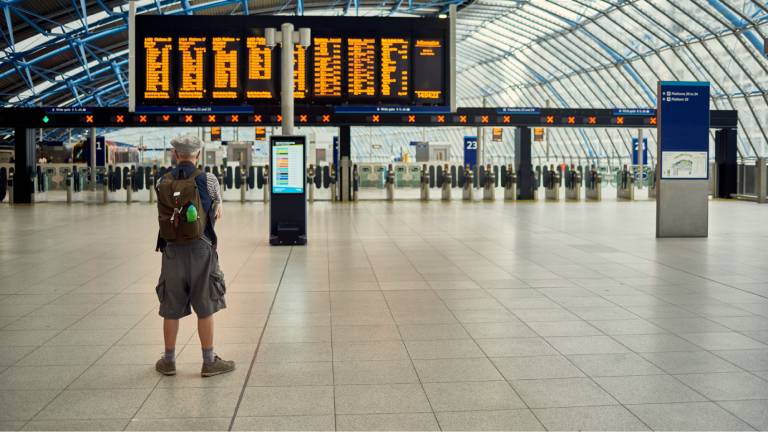
    • Montreal-Trudeau (YUL): handles domestic, transborder and international flights in one terminal building with separate zones, and has U.S. preclearance.
    • Calgary (YYC): has U.S. preclearance and a busy international area in summer and during the ski season.
    • New York JFK: several separate terminals linked by the AirTrain. Road traffic to the airport can be slow, so many travelers use rail connections to the AirTrain instead of a taxi at rush hour.
    • London Heathrow (LHR): multiple terminals that are not all walkable from each other; check your terminal, and allow for long walks and transit to remote gates.
    • Paris Charles de Gaulle (CDG): a very large airport where terminals can be far apart. Leave time for exit passport control on flights leaving the Schengen area.

    Whatever the airport, check your terminal the day before. Going to the wrong one is among the most common ways people lose half an hour they did not have.

    Using the extra time well

    Arriving early is less painful if you plan to use the time. International terminals often have better food and more seating than domestic ones. If you have lounge access through your ticket, status or a card, check its hours and location beforehand. If you are flying in a premium cabin, our guides to business class upgrade strategies and the difference between first and business class explain the lounge and priority lane benefits that come with them. Otherwise, a refillable water bottle, a snack and a charged phone make the wait easier.
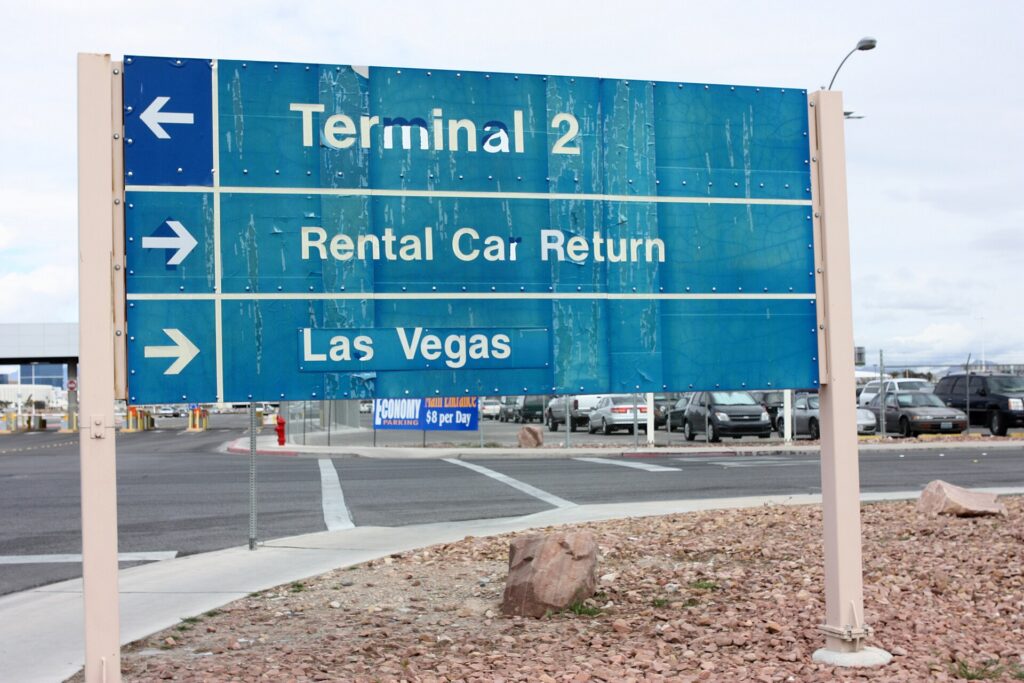
    Passport control desks in an airport arrivals hall
    On arrival, immigration queues depend on how many flights land at once (Photo: Vasyatka1 via Wikimedia Commons, CC BY-SA 4.0)

    When you land: immigration and customs

    The other half of the airport experience is arriving. Plan for it when you book connections and ground transport.

    • Immigration: present your passport and any visa or authorization. Many airports use automated kiosks or e-gates for eligible passengers. Queues vary widely with how many flights arrive together.
    • Baggage claim: if you checked bags, collect them before customs.
    • Customs: declare goods as required. Entering Canada, the Canada Border Services Agency explains what to declare; entering the U.S., U.S. Customs and Border Protection does the same.
    • Connections: if you connect after arriving in a new country, you may need to clear immigration, collect and recheck bags and go through security again. This is why international connections need more time; our international flights booking tips cover how much to allow.

    If you are running late

    • Check in online as soon as you can, so you are inside the check-in deadline.
    • Contact your airline through its app or phone line; it may be able to rebook you before you miss the flight.
    • Tell staff in line if your flight is close to closing; many airports have procedures to help passengers on imminent flights.
    • Do not abandon a checked bag plan at the last minute without asking; a bag that misses the cutoff may need to travel on a later flight.
    • Know the rules if you miss it: policies vary by airline and fare. Some airlines have a same-day rebooking policy for passengers who arrive shortly after departure; others treat a missed flight as a no-show, which can cancel the rest of your itinerary.

    The day before your flight

    • Check in online when it opens and download or print boarding passes.
    • Check the flight status and the terminal.
    • Look up check-in, bag drop and gate closing times.
    • Confirm your passport, visa or electronic authorization.
    • Pack liquids and electronics where you can reach them.
    • Weigh checked bags.
    • Plan your journey to the airport, including a backup.
    • Set two alarms for early departures.

    Frequently asked questions

    Is three hours really necessary for an international flight?

    Often, yes, at large airports and busy times. At a smaller airport off-peak, with no checked bags, two hours may be enough. Always stay well ahead of the check-in, bag drop and gate closing deadlines.

    How early should I arrive for a flight from Canada to the U.S.?

    At airports with U.S. preclearance, plan for roughly the same time as an international flight, because you clear U.S. customs and immigration before boarding. Check your airport’s current guidance.

    What happens if I arrive after check-in closes?

    The airline can refuse to check you in, and you may need to rebook. Policies vary; contact the airline immediately.

    Does online check-in mean I can arrive later?

    It helps, especially with carry-on only. International passengers may still need a document check at the counter, and security and border lines take the same time either way.

    How long does security usually take?

    From a few minutes to an hour or more depending on the airport, time of day and season. Many airports publish live wait times on their websites.

    Should I arrive earlier during holidays?

    Yes. Add at least an hour around major holidays, school breaks and long weekends.

    Can I arrive too early?

    Yes. Check-in counters for a specific flight often open only a few hours before departure, so arriving much earlier with bags may mean waiting landside. If you have a very early arrival, check when your airline’s counter opens and whether the airport offers bag storage.

    How long does it take to clear immigration when I land?

    It varies widely by airport and time of arrival. Trusted traveler programs and automated kiosks can shorten it considerably.

    Ready to book? Compare departure times as well as fares on our flight search, since an early-morning flight changes your airport timeline, and read our guide to the best time to book cheap flights and hotels before you choose dates. If you need a room near the airport for an early start, check our hotel search.

  • Does It Matter If You Return Your Car Rental a Few Hours Early or Late

    Does It Matter If You Return Your Car Rental a Few Hours Early or Late

    Does it matter if you return a rental car a few hours early or a few hours late? Yes, and more than most travelers expect. The return time on your agreement is not a rough guide; it is the point at which the price you agreed to ends. Bring the car back a couple of hours late and you can pay for a whole extra day, often at a higher rate than the one you booked. Bring it back a day or two early and, depending on the rate and the company, you may get nothing back, or even pay more. This guide explains how rental companies count time, how grace periods and late charges typically work, why early returns can backfire, how to extend properly, what happens with after-hours drop-offs, and how much time to allow when you are returning a car at the airport before a flight.

    Policies differ between companies, locations and countries, and they change, so treat this as a guide to the questions to ask. Your rental agreement and the company’s own terms are what count. If you are still at the booking stage, our car rental search shows the pickup and return times for every offer, and it is worth playing with them before you commit.

    The short answer

    • Late: expect a short grace period at best, then hourly charges, then a full extra day once you are a few hours over. Extra days of add-ons such as coverage, child seats and toll programs are usually charged too.
    • Early: on a prepaid rate, unused days are often not refunded. On a pay-later rate, the company may recalculate your price at a different rate for the shorter rental, which can wipe out the saving or even raise the total. Some companies charge an early-return fee.
    • Either way: call or use the app before your return time. Changes agreed in advance almost always cost less than surprises.

    How rental companies count time

    Most car rentals in North America, and many elsewhere, are priced in 24-hour periods starting from the pickup time, not in calendar days. If you pick up at 10 am on Monday and return at 10 am on Thursday, that is three rental days. Return at 1 pm on Thursday and you have started a fourth period, and after any grace period you will be charged for part or all of it.

    This has two practical consequences. First, the pickup time you choose sets the return time for the whole rental, so choosing sensibly at booking is the cheapest decision you will make. Second, the clock is indifferent to your reasons: a slow breakfast, a traffic jam or a detour to fill the tank all count.

    A few details vary:

    • Weekly and weekend rates. Many companies offer weekly rates that are cheaper per day than daily rates, and some price weekend rentals differently. The rate you are charged depends on the length of the rental and sometimes on the days it spans, which is why changing the length, in either direction, can change the rate itself.
    • Some local and international rentals count calendar days or have their own rules. Read the agreement.
    • The recorded return time is normally when the car is checked in, by an agent with a handheld device or by the location’s system. For after-hours drop-offs this can be different, as explained below.
    Rental car return signage at Toronto Pearson International Airport
    The return time on your agreement is when the price you agreed to ends, so plan to arrive early (Photo: formulanone from Huntsville, United States via Wikimedia Commons, CC BY-SA 2.0)

    Grace periods: what to expect, and why not to rely on one

    Many major companies allow a short grace period before late charges begin, commonly around half an hour at US locations, but it is not universal, it is not always written in the same way, and it can differ between corporate and franchise locations and between countries. Some locations have none. Some apply a grace period to the time charges but not to add-ons. And a grace period is not an extension; it is a tolerance for small delays.

    The safe assumption is that there is no grace period. If you want to know for certain, ask at the counter when you pick up, and check the terms on the company’s own site, such as Hertz, Avis, Budget or National. Write down what you are told and who told you.

    Returning late: what typically happens

    The first few hours

    After any grace period, many companies charge an hourly rate for each hour, or part of an hour, that you are late. Once the hourly charges reach a threshold, commonly after a few hours, they stop charging hourly and charge a full extra day instead. So returning three or four hours late often costs the same as returning twenty hours late.

    The rate you pay for the extra time

    The extra day may not be charged at the discounted rate you booked. Agreements often allow the company to charge its standard or current rate for additional time, which can be higher, especially at busy periods. If you booked a weekly rate and go over the week, the extra time may be charged at the daily rate.

    Add-ons are charged too

    Anything priced per day, such as a collision damage waiver, supplemental liability, a child seat, a GPS unit or a toll program with a daily fee, is usually charged for the extra day as well. On a family rental with coverage and two car seats, the add-ons can cost more than the car.

    Late fees and knock-on effects

    Some companies add a separate late-return fee. If the car was due for another customer, the location may not be pleased, but that is their problem to solve, not a charge you should see. What you do need to watch is coverage: if your rental agreement has ended and you have not extended, the company’s waiver may no longer apply, and your credit card’s rental benefit may only cover the rental period you agreed. Keeping the car without authorization for a long time can eventually lead a company to treat it as overdue or unreturned, with far more serious consequences. That is rare and avoidable: just call.

    How to avoid late charges

    1. Set the return time with a buffer. If your flight leaves at 3 pm, do not book a 2 pm return at an airport where the rental center is a shuttle ride away.
    2. Plan the fuel stop and allow for it in your timing.
    3. Check traffic for the drive back, especially on a Friday or a Sunday afternoon near a big city.
    4. Call before your return time if you will be late, and ask whether it is cheaper to extend formally.

    Returning early: why it does not always save money

    It seems logical that returning a car early should cost less. Sometimes it does. Often it does not, for three reasons.

    Prepaid rates

    If you paid in advance, many companies and booking platforms do not refund unused days, or refund them only minus fees. The terms of prepaid rates are usually stricter than pay-later rates for exactly this reason.

    Rate recalculation

    Your price was calculated for the rental you booked. If you shorten it, the company may recalculate at the rate for the new length. The classic example is a weekly rental returned after four or five days: the weekly rate no longer applies, the daily rate does, and four or five days at the daily rate can cost as much as, or more than, the full week. Pay-later rentals are usually recalculated this way.

    Early-return fees

    Some companies charge a flat fee for returning a car significantly earlier than agreed, and some count an early return as a change to the reservation. The terms, and whether a location applies them, vary.

    When early returns make sense

    • A few hours early on the last day, within the same 24-hour period: usually no effect on price, and it gives you a buffer.
    • A day or more early on a pay-later daily rate, where no weekly or special rate applies: often a genuine saving.
    • When your plans have changed and the car would cost you parking, tolls or a hotel garage fee for days you do not need it.

    Before you return early, call or check the reservation online and ask exactly what the new total will be. If it is higher, keep the car, or at least keep the reservation, and simply return at the original time.

    Scenarios at a glance

    SituationWhat typically happensWhat to do
    Return 15 minutes lateOften within a grace period, but not guaranteedDo not rely on it; call if you are running behind
    Return one to three hours lateHourly charges, plus per-day add-ons, possibly a late feeCall before the return time; compare an extension
    Return more than a few hours lateA full extra day, possibly at a higher rateExtend formally before the return time
    Return a few hours early, same dayUsually no changeFine; use the buffer
    Return a day or more early, pay-later rateRate may be recalculated; may or may not save moneyAsk for the new total before deciding
    Return early on a prepaid rateUnused days often not refundedCheck the prepaid terms; there may be nothing to gain
    After-hours drop-offYou remain responsible until check-inPhotograph everything; ask how the time is recorded
    Return to a different locationDrop fee or a recalculated one-way rateChange the reservation before, not after
    Flight delayed at pickupCar may be released if you are a no-showAdd your flight number; call if very late
    A road sign directing drivers to rental car return at the Las Vegas airport
    Return entrances are often signposted separately from departures, and easy to miss on the last morning (Photo: Michael Dorausch from Venice, USA via Wikimedia Commons, CC BY-SA 2.0)

    Extending a rental the right way

    If you need the car longer, extend before your return time. Most companies let you do it by phone, in their app or at any branch. Ask for:

    • The new rate and the new total, including taxes and add-ons for the extra days.
    • A new return time recorded on the agreement, and a confirmation by email or in the app.
    • Whether your coverage continues. If you bought the company’s waiver, confirm it is extended. If you rely on a credit card benefit, check the maximum rental length it covers; many cards cap coverage at a set number of consecutive days, and a long extension can push you past it.
    • Whether a longer rental unlocks a cheaper rate. Extending a five-day rental to seven can sometimes trigger a weekly rate and cost little more.

    If the location cannot extend, for example because the car is reserved for someone else, they may ask you to swap it at a branch. That is inconvenient but far better than an unauthorized overrun.

    After-hours drop-offs

    Many airport locations are open late or around the clock, but many neighborhood branches are not, and most offer a key drop box. Returning after hours is convenient, but it shifts some risk to you:

    • You are usually responsible for the car until staff check it in, often the next morning. Damage, vandalism or theft overnight can become your problem.
    • The return time may be recorded at check-in, not when you dropped it, depending on the company. Ask at pickup how after-hours returns are timed.
    • Fuel and mileage will be recorded when they check it in, so your own record matters.

    Protect yourself: park in the designated return area, take a time-stamped video walkaround and dashboard photos showing fuel and mileage, photograph the car in its spot with the branch sign visible, photograph the key going into the drop box, remove all your belongings and keep the fuel receipt. If the branch has a return app or a self-service check-in, use it.

    Returning at the airport before a flight

    This is where timing problems are most costly, because a late return can mean a missed flight as well as extra charges.

    Know where the return is

    At some airports the rental return is in a garage next to the terminal. At many large US airports it is a consolidated rental car center reached by a shuttle bus or an automated train, which adds time. San Francisco International, for example, connects its Rental Car Center to the terminals by AirTrain, and Miami International links its Rental Car Center to the terminal by the MIA Mover, as the airport’s site explains. At other airports, individual companies run their own shuttle buses from off-site lots. Check the airport’s own website, or our airport guides such as SFO, Miami and Denver, before your last day.

    A rental car shuttle bus at Detroit Metropolitan Airport
    Where the rental return is a shuttle ride from the terminal, add that time to your airport buffer (Photo: Dwight Burdette via Wikimedia Commons, CC BY 3.0)

    How much time to allow

    Start with the time your airline and airport recommend you arrive for your flight; our guide to how early to get to the airport covers domestic and international flights. Then add time for:

    • The fuel stop, which can take longer than expected if the stations nearest the airport are busy.
    • Finding the return entrance, which is often signposted separately from departures and easy to miss.
    • The check-in, which is usually quick but can queue at peak times.
    • The shuttle or train to the terminal, including waiting for it.
    • Unloading children, car seats and luggage, which always takes longer than you think; our guide to car rentals for family vacations has more on traveling with kids.

    As a rule of thumb, add at least 30 minutes on top of the normal recommendation at an airport where the return is next to the terminal, and more where a shuttle is involved or you are traveling with a family. Set the rental return time on your agreement with that in mind, so that you are early for the car and on time for the flight.

    Don’t forget the pickup side

    Return timing starts with pickup timing:

    • Add your flight number to the reservation. If your flight is delayed, many locations will hold the car; without it, a late arrival can be treated as a no-show and the car released.
    • Know the location’s hours. If your flight lands after the counter closes, you may not be able to collect the car until morning.
    • Choose times that fit the whole trip. If you land at 11 pm and fly home at 8 am a week later, a 10 am pickup the morning after you land might save you a day and a night of hotel parking.

    Use timing to lower the price

    • Keep pickup and return at the same time of day to avoid starting an extra 24-hour period.
    • Test slightly longer rentals. Five or six days sometimes cost as much as, or more than, seven if a weekly rate applies.
    • Test weekend pickup and return days, which some locations price differently.
    • Rent only for the days you need the car. In a transit-friendly city, start the rental on the day you leave town. Our guide to car versus transit versus taxi helps decide.
    • Book on a free-cancellation rate and rebook if you find a better combination of times or a lower price.

    Fuel, charging and tolls around the return

    On a full-to-full rental, the car must come back full, and the refueling charge for a car returned short is usually far above the pump price. Plan a fuel stop within a few miles of the return location, and keep the receipt. Some companies ask for it if the needle sits just below full.

    For an electric car, ask what charge level is required at return and plan charging time into your last day; a fast charger can still take a meaningful amount of time, and chargers near airports can be busy. The US Department of Energy’s Alternative Fuels Data Center has a station locator.

    If you accepted the company’s toll program, remember that its daily fee often applies to each day of the rental, so an extension extends that charge too. Toll-by-plate charges can arrive weeks after the trip; keep your agreement until they have settled.

    A car fuel gauge reading close to empty
    A car returned short of full on a full-to-full rental is refueled at a rate well above the pump price (Photo: Icomparioimages via Wikimedia Commons, CC BY-SA 4.0)

    What to do at the return

    1. Remove everything: glove box, door pockets, under the seats, the trunk, the charging cable and any toll transponder you brought.
    2. Record the car: a video walkaround and dashboard photos showing fuel or charge and mileage.
    3. Wait for check-in if an agent is present, and ask for a closed receipt showing the final charges. If the location uses an emailed receipt, check it arrives before you leave the airport or city.
    4. Query anything unexpected immediately, while you are still there with the car.
    5. Watch your card statement for the following weeks for fuel, damage, toll or ticket charges, and dispute anything you cannot match to your records.

    When things go wrong

    • Your flight home is canceled or delayed: call the rental company as soon as you know and extend, rather than returning the car and then needing another one.
    • The car breaks down: call the roadside assistance number on the key tag or agreement. A breakdown that is not your fault should not lead to late charges, but document the call and the time.
    • Bad weather closes roads: call, explain, and ask them to note it on the agreement. Keep screenshots of road closure notices.
    • You have an accident: make sure everyone is safe, follow local rules on reporting, photograph everything and notify the rental company. Timing charges are the least of your concerns, but still tell them if you cannot return on time.

    Our complete guide to rental car booking tips covers insurance, fuel policies, inspections and fees in more detail.

    Frequently asked questions

    Is there a grace period for returning a rental car late?

    Many companies allow a short one, commonly around half an hour at US locations, but it varies by company, location and country, and some have none. Ask at pickup and do not rely on it.

    How much does it cost to return a rental car late?

    Typically an hourly charge for the first few hours, then a full extra day, plus per-day add-ons and sometimes a late fee. The extra day may be charged at a higher rate than the one you booked.

    Do I get money back if I return a rental car early?

    Not always. Prepaid rates often do not refund unused days, and pay-later rentals may be recalculated at a different rate, which can make a shorter rental cost as much as or more than the original.

    Can I return a rental car after hours?

    Often, using a key drop box. You usually remain responsible for the car until staff check it in, so photograph the car, the dashboard and the drop, and ask how the return time is recorded.

    How early should I return a rental car before a flight?

    Take the airport’s recommended arrival time for your flight and add at least 30 minutes, more if the return is a shuttle ride from the terminal or you are traveling with children.

    Can I extend my rental without going back to the counter?

    Usually, yes, by phone or in the company’s app. Do it before the return time, get the new total and return time confirmed in writing, and check that your coverage extends too.

    What if my flight is delayed and I pick up the car late?

    If your flight number is on the reservation, many locations will hold the car. The agreement is usually opened when you collect the car, but check the return time printed on it before you drive away, because it may still reflect your original booking.

    The simplest way to avoid timing charges is to choose the right times at the start. Compare rates and pickup windows on our car rental search, match them to your flight times, and if you land late, consider a night near the airport with our hotel search and a fresh start at the counter in the morning.

  • Everything You Need to Know About Flight Details

    Everything You Need to Know About Flight Details

    A flight booking packs a surprising amount of information into a few lines: a six-character code, a thirteen-digit number, a flight number that may belong to a different airline than the one you fly, times in two time zones, a fare brand, a baggage code, a seat, and a set of rules you probably never opened. Most of the time none of it matters. When something changes, though, knowing how to read those details is what separates a quick fix from hours on hold or a missed flight. This guide explains every part of a typical flight itinerary and boarding pass, what to check right after you book, how to handle schedule changes, and what happens on the day, from check-in to customs at the other end. It is written for anyone who wants to understand exactly what they have bought.

    The short answer

    Right after booking, check five things: the names match your passport or ID exactly, the dates and airports are the ones you meant (including arrival dates on overnight flights), which airline actually operates each flight, what your fare includes in bags, seats and changes, and that any connections are on one ticket with enough time. Save your booking reference and e-ticket number, add the flights to your calendar, and turn on notifications in the airline’s app so you hear about schedule changes first. On the day, the details that matter most are the check-in cutoff, the terminal and the time the boarding gate closes. You can compare flights by time, connection and airline on our flight search before you book.

    A flight departure board at Geneva Airport listing destinations, times and gates
    Flight numbers, times and gates: the details worth checking again on the day (Photo: Tiia Monto via Wikimedia Commons, CC BY-SA 3.0)

    Anatomy of a flight booking

    Here is what the main items on a confirmation mean and why each one matters.

    DetailWhat it looks likeWhy it matters
    Booking referenceSix letters and numbers, also called a confirmation code, record locator or PNRUsed to manage the booking, check in and contact the airline
    E-ticket numberUsually 13 digits; the first three identify the airline that issued the ticketProof that the ticket is paid for; needed for refunds and some changes
    Passenger namesSurname and given names as entered at bookingMust match the passport or ID you travel with
    Flight numberTwo-character airline code plus a number, such as AC 123Identifies the flight; codeshares have more than one number
    Operated byThe airline that flies the aircraftDetermines where you check in, which terminal and often which bag rules
    AirportsThree-letter codes such as YYZ, YVR, JFK, LHR, CDGMany cities have more than one airport
    TimesLocal times at each airport; a “+1” means the next dayArrival dates on overnight flights affect hotel bookings
    Cabin and fare brandEconomy, premium economy, business; basic, standard, flexible and similarControls bags, seat selection, changes and refunds
    Booking classA single letter, sometimes shown next to the cabinAffects miles earned and upgrade eligibility
    Baggage allowancePieces (1PC, 2PC, 0PC) or weight (23 kg)Shows whether a checked bag is included
    SeatRow number and letter, or “assigned at check-in”Whether you are seated together and where

    A ten-minute routine right after you book

    The best time to catch a problem is the moment the confirmation arrives, when changes are cheapest or free. Work through this list before you close the email.

    • Open the confirmation and the e-ticket receipt. A booking without a ticket number may not be fully ticketed yet. If no ticket number appears within a day, contact whoever you booked with.
    • Read every name letter by letter against the passports.
    • Check every date and airport code. Look for “+1” arrivals and any change of airport at a connection.
    • Look up the booking on the airline’s website, and on the operating airline’s website for codeshare flights. Seeing the same reservation there confirms it is active.
    • Add your frequent flyer number so the flights earn miles and any status benefits apply.
    • Choose seats if your fare allows it, especially if you are traveling with children or want to sit together.
    • Note the baggage allowance for each traveler and decide whether to prepay for a bag.
    • Save the fare rules or a screenshot of the conditions shown when you bought the ticket.
    • Add the flights to your calendar and turn on notifications in the airline app.
    • Check entry requirements for every country on the trip, including connections.

    If anything is wrong and you booked a flight to, from or within the United States at least seven days before departure, you usually have 24 hours to cancel without penalty. Other markets have different rules, so act quickly either way.

    Names: the detail that causes the most trouble

    Airlines check that the name on your ticket matches the name on your government ID, and on international flights, the name in your passport. Small differences can cause problems at check-in or at the border, and some airlines charge to correct a name after ticketing.

    • Use your full legal name as it appears on your passport, not a nickname.
    • Middle names are usually fine to include or leave out, but follow the airline’s instructions and be consistent.
    • Hyphenated and multiple surnames can be displayed differently by different systems; enter them exactly as on your passport.
    • Titles such as Mr or Ms are sometimes appended to the first name on tickets; that is normal.
    • Fix mistakes immediately. For flights to, from or within the U.S. booked at least seven days ahead, the Department of Transportation’s 24-hour rule lets you cancel without penalty within a day of booking, explained on the DOT Aviation Consumer Protection site. Otherwise, call the airline as soon as you notice an error.

    Flight numbers and codeshares

    A codeshare is a flight sold by one airline but operated by another. You might buy a ticket from one airline with its flight number, but the aircraft, crew and service belong to its partner. Your itinerary will say “operated by” followed by the partner’s name.

    This matters in several practical ways:

    • Check-in and terminal: you usually check in with the operating airline, and at airports with several terminals, you go to the operating airline’s terminal.
    • Bags: baggage rules can follow the operating or marketing carrier depending on the itinerary. Check your booking, and ask if unsure.
    • Seats: seat selection may only be possible through the operating airline’s website, using its own booking reference, which can differ from the one you received.
    • Service: the cabin, food and entertainment are those of the operating airline.

    If a codeshare is involved, look up the booking on the operating airline’s website as well, so you can see its version of your reservation and seat.

    Airports, terminals and times

    Airport codes

    Every commercial airport has a three-letter code. Some cities also have a city code covering several airports, such as NYC for New York or LON for London, which search engines use to show all airports at once. When you book, check which airport each flight actually uses: arriving at London Gatwick when your hotel is near Heathrow, or at Newark instead of JFK, changes your ground transport. Our airport guides, such as JFK, London Heathrow and Toronto Pearson, explain terminals and transfers.

    Terminals

    Terminals are sometimes shown on the booking and sometimes only on the day. Check the airline app or the airport website the day before, especially at large airports where terminals are far apart.

    Times and dates

    All times on an itinerary are local to the airport. A flight from Toronto to London that leaves at 9 p.m. arrives the next morning, shown with a “+1”. Flights west across the Pacific can arrive two calendar days later, while some eastbound flights across the Pacific appear to arrive before they left. The flight duration shown is the real time in the air plus taxiing, which is the easiest way to sanity-check an itinerary. When you book the hotel, match the arrival date, not the departure date.

    Passengers boarding a Boeing 737 at an airport gate
    Boarding time is when the line starts, not when the door closes (Photo: Infrastorian via Wikimedia Commons, CC0)

    Fare brands, cabins and booking classes

    Most airlines now sell each cabin in several fare brands. The names differ, but they usually run from a basic fare with the fewest inclusions to a flexible fare with the most.

    Typical fare brandOften includesOften excludes
    BasicA seat, and a personal itemAdvance seat selection, changes, refunds; on some airlines a full-size carry-on or checked bag
    StandardCarry-on, free or low-cost seat selection, changes with a fare differenceRefunds; sometimes checked bags
    FlexibleChanges without fees, often refunds, more milesPremium cabin benefits
    Premium cabinsMore space, checked bags, priority servicesVaries by airline and route

    The single letter shown next to your cabin is the booking class, a code for the fare level within the cabin. You rarely need it, but it determines how many miles you earn and whether you can use certain upgrade options. Our guides to business class upgrade strategies and the difference between first and business class explain how cabins and upgrades work.

    The fare rules

    Every fare has rules, usually behind a link near the price. They cover changes, cancellations, refunds or credits, and what happens if you miss a flight. One rule surprises many travelers: on many airlines, if you do not show up for one flight on your itinerary, the remaining flights may be cancelled. If you need to skip a leg, contact the airline first.

    Baggage allowance, decoded

    Baggage allowances are usually shown in one of two ways. The piece concept lists a number of bags, such as 1PC or 2PC, each with a weight and size limit, and is common on flights to and from North America. The weight concept gives a total weight, such as 23 kg, across all your checked bags. “0PC” or “no free bags” means you will pay for any checked bag.

    • Carry-on: most airlines allow one carry-on and one personal item in economy, with size limits, and some fares allow only the personal item. Our carry-on size guide explains how to check your airline’s current limits.
    • Checked bags: fees are often per bag, per direction, and can be cheaper when paid in advance.
    • Multiple airlines: when more than one airline is on your ticket, the rules of one carrier generally apply to the whole journey; your booking should say which.
    • Separate tickets: each ticket has its own allowance, and bags are not transferred between separate tickets automatically.

    Seats

    Seat maps use row numbers and letters. On a typical single-aisle aircraft with three seats on each side, A and F are windows and C and D are aisles. Wide-body aircraft add more letters, and the pattern varies, so look at the seat map rather than guessing. Exit rows have extra legroom but come with age and ability requirements. Bulkhead rows often have bassinet positions for infants but may have fixed armrests.

    If your fare does not include seat selection, seats are usually assigned at check-in. Families traveling with young children should check the airline’s seating policy for keeping children with an adult; many airlines have one, and the U.S. DOT tracks which airlines commit to family seating.

    Connections and layovers

    Connections are where itineraries break, so check them carefully.

    • Connection time: every airport has a minimum connection time, and tickets sold as one itinerary meet it. On international connections, especially where you must clear immigration or change terminals, more time is more comfortable.
    • Change of airport: some itineraries connect between two airports in the same city, such as arriving at one London airport and leaving from another. The booking will flag it; it requires a ground transfer and much more time.
    • Overnight connections: a long layover overnight may require a hotel and, in some countries, a visa to leave the airport.
    • Stops versus connections: a “direct” flight with one stop keeps the same flight number but lands on the way. A nonstop does not land.
    • One ticket versus several: on one ticket, the airline must rebook you if a delay causes a missed connection. On separate tickets, it does not.

    Our international flights booking tips cover how to choose routings and how much connection time to allow.

    Schedule changes and flight status

    Airlines adjust schedules regularly, especially in the months before a flight. A change of a few minutes is routine. A change of hours, a new connection or a cancelled flight gives you options.

    • Watch for notifications. Keep your contact details in the booking and turn on app notifications.
    • Check the new itinerary. Is the connection still long enough? Does the new arrival still work for your hotel and plans?
    • Know your options. In the U.S., the DOT requires a refund when an airline cancels or significantly changes a flight and you choose not to travel. In Canada, the Air Passenger Protection Regulations set out airline obligations for schedule disruptions. In the EU, EU air passenger rights apply to many flights.
    • Ask for alternatives. If the new time does not work, airlines can often move you to another flight on the same day or nearby dates.

    For flight status on the day, the airline’s app is the most accurate source. The U.S. DOT’s FlightRights.gov dashboard summarizes what major U.S. airlines commit to when flights are delayed or cancelled for reasons within their control.

    Check-in

    Online check-in typically opens 24 hours before departure on many airlines, sometimes earlier. It confirms you will travel, lets you choose or confirm a seat and issues a boarding pass. On international flights you may need to enter passport details, known as advance passenger information, and some passengers must still have documents verified at the airport before boarding.

    Know the airline’s check-in and bag drop deadlines for your flight. For international departures they are often around an hour before departure and can be earlier. Our guide to how early to arrive for an international flight explains how to plan your airport timeline.

    A mobile boarding pass with a 2D barcode on a phone screen
    The barcode holds your booking reference, so keep boarding passes off social media (Photo: Mtcv via Wikimedia Commons, CC BY-SA 3.0)

    Your boarding pass, decoded

    FieldMeaning
    NameMust match your ID
    Flight and dateFlight number and the local departure date
    GateMay be blank or change; check airport screens
    Boarding timeWhen boarding begins, not when the door closes
    Group or zoneYour boarding order
    SeatYour assigned seat, or a note to see an agent
    Sequence numberThe order in which you checked in
    Security indicatorsOn U.S. flights, “TSA PreCheck” if eligible; “SSSS” means selected for additional screening
    Barcode or QR codeContains your name and booking reference

    Do not post a photo of your boarding pass online. The barcode contains your booking reference, which someone could use to access or change your reservation.

    Security and boarding

    Security screening rules are set by each country. In the U.S., the TSA’s What Can I Bring page lists what is allowed, and the liquids rule limits carry-on liquids to small containers in one bag. In Canada, CATSA publishes the equivalent guidance. Pack liquids and electronics where you can reach them, and dress for easy screening; our guide to what not to wear on a flight covers what slows people down.

    Boarding usually begins 30 to 60 minutes before departure on larger aircraft, in groups or zones. Have your boarding pass and ID ready. On international flights, staff often check passports again at the gate. Gates close before departure, so do not wander too far once boarding is near.

    The economy cabin of an Austrian Airlines long-haul aircraft
    Seat letters vary by aircraft; check the seat map rather than guessing (Photo: Austrian Airlines via Wikimedia Commons, CC BY-SA 2.0)

    On board

    For comfort on longer flights, a few things help: wear layers, drink water, move around when it is safe, and keep essentials such as your passport, medications, chargers and a change of clothes in your carry-on, not in a checked bag. On long-haul flights, entertainment is usually provided, but downloading shows to your own device is a good backup. Our guides to airplane neck pillows and noise-cancelling headphones cover gear worth packing.

    Arrival, immigration and customs

    On an international arrival, follow signs to immigration, present your passport and any visa or authorization, collect your bags and then clear customs. Customs rules vary by country; entering Canada, the Canada Border Services Agency explains what to declare. If you are connecting, you may need to recheck bags and go through security again. Before you travel, check your destination’s entry rules through your government’s travel advice, such as Canada’s travel advice and advisories.

    Special situations to flag on your booking

    Some details are not part of the ticket itself but need to be added to the reservation, ideally at the time of booking.

    • Infants and children: a lap infant usually needs to be added to the booking and may need their own ticket on international flights. Request a bassinet early if the aircraft offers them.
    • Young travelers flying alone: airlines have their own age limits and procedures, and some charge for the service. Arrange it directly with the airline.
    • Accessibility and assistance: request wheelchair assistance or other support when you book, and confirm it before the flight. Mobility aids and medical devices have specific handling rules.
    • Special meals: dietary meals on full-service flights generally need to be requested in advance, often at least a day or two before departure.
    • Pets: pets in the cabin or hold must be booked with the airline, have limited spaces and require documents for international travel.
    • Sports equipment and musical instruments: check size limits and fees, and add them to the booking where the airline allows.

    Keeping your flight details organized

    • Save the essentials in one place: booking reference, e-ticket number, airline contact details and your frequent flyer number.
    • Add every flight to your calendar in the local time of departure, and check that your calendar handles time zones correctly.
    • Take a screenshot of your boarding pass in case the app fails, and keep a paper copy for important trips.
    • Share your itinerary with someone at home.
    • Add your frequent flyer number to each booking, including codeshares.
    • Keep receipts for bags and seats in case of refunds or disputes.

    Common mistakes

    • Name mismatches between the ticket and the passport.
    • Booking the wrong airport in a multi-airport city.
    • Missing the “+1” and booking the hotel for the wrong night.
    • Going to the wrong terminal on a codeshare flight.
    • Assuming a bag is included on a basic fare.
    • Skipping a flight and losing the rest of the itinerary.
    • Ignoring schedule change notices that break a connection.
    • Posting a boarding pass photo online.

    Frequently asked questions

    What is the difference between a booking reference and a ticket number?

    The booking reference is a six-character code that identifies your reservation. The ticket number, usually 13 digits, proves the ticket has been paid for. You typically use the booking reference to manage your trip and the ticket number for refunds and some changes.

    What does “operated by” mean on my ticket?

    It means the flight is a codeshare: another airline flies the aircraft. You usually check in with that airline and go to its terminal.

    Why does my arrival say “+1”?

    The flight lands the next calendar day, local time. Book your hotel for that date.

    How do I know if my fare includes a checked bag?

    Look for the baggage allowance on your booking, often shown as 1PC, 2PC, 0PC or a weight. If unsure, check the airline’s website with your booking reference.

    What should I do if the airline changes my flight time?

    Check whether the new schedule still works, including connections. If it does not, contact the airline about alternatives or a refund, depending on the rules that apply.

    Can I skip one flight on my itinerary?

    Be careful. Many airlines cancel the rest of your itinerary if you miss a flight without telling them. Contact the airline first.

    What does SSSS on my boarding pass mean?

    On U.S. flights, it means you have been selected for additional security screening. Allow extra time at security.

    Ready to book with confidence? Compare flights by time, connection and operating airline on our flight search, and read our guide to the best time to book cheap flights and hotels to pick the right dates. Once your flight is set, find a room for the right night on our hotel search.