Category: Travel Tips

  • Flying in Comfort: 8 Things You Should Never Wear on a Flight

    Flying in Comfort: 8 Things You Should Never Wear on a Flight

    What you wear on a plane decides how you feel for the next several hours, and sometimes for the first day of your trip. A cabin is a strange environment: you sit still for a long time in a narrow seat, the temperature swings from stuffy on the ground to chilly at altitude, the air is dry, and you have to pass through security, sprint to a connection and perhaps sleep upright before you arrive. The wrong outfit makes all of that harder. The right one is almost invisible: you stop thinking about your clothes and get on with the trip. This guide covers the things that are best left at home on flight day, why each one causes trouble, what to wear instead, and how to adjust for long-haul flights, short hops, business trips, hot and cold destinations and flying with children. It is part of our flight booking series, which starts with our guide to the best time to book cheap flights and hotels.

    The short answer

    Dress in soft, breathable layers that you can add or remove in your seat, and choose clothes that let you sit, bend and sleep without anything digging in. Wear closed, comfortable shoes that are easy to take off and put back on, not high heels, brand-new shoes or flip-flops. Keep metal, jewelry and complicated accessories to a minimum to get through security quickly. Skip strong perfume in a shared, sealed cabin. Carry a warm layer even on a hot-weather flight, because cabins get cold. And pack a spare top and essentials in your carry-on in case your checked bag goes missing or someone spills a drink. If you have not booked yet, compare fares across flexible dates on our flight search.
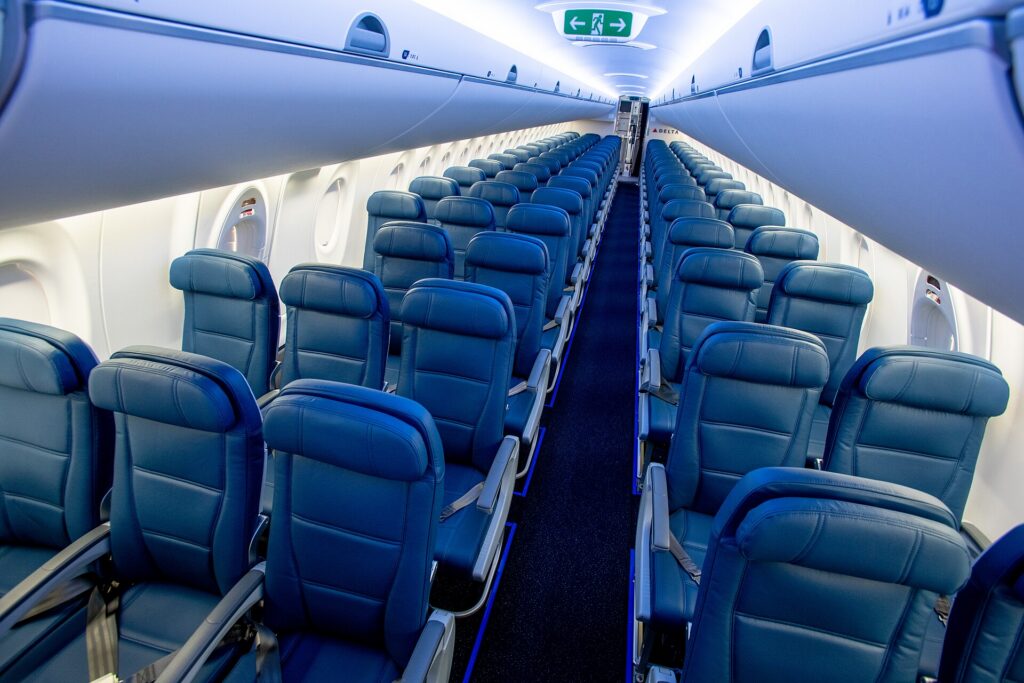
    Rows of economy seats in the main cabin of a narrowbody airliner
    Hours in a narrow seat: the reason comfort beats style on flight day (Photo: Delta News Hub via Wikimedia Commons, CC BY 2.0)

    What makes flight clothing different

    A few features of air travel explain nearly every piece of advice below.

    • You sit still for a long time. Clothes that feel fine for an hour at a desk can pinch at the waist, knees or ankles after several hours in a seat with limited room to move.
    • The temperature changes. A cabin can be warm during boarding on a hot day and cool at cruising altitude, especially at night and near the windows.
    • The air is dry. Many travelers notice dry skin, eyes and lips on long flights, which affects fabric and contact lens choices.
    • Security screening is part of the journey. At checkpoints you may be asked to put outerwear, metal items and certain belongings in bins. The Canadian Air Transport Security Authority lists what goes in the bins, including jackets, coats and bulky sweaters worn over your clothes, plus loose change, keys and small metal items.
    • Space is tight. You will reach into overhead bins, squeeze past neighbors and use a very small lavatory.
    • Safety matters. In the rare event of an evacuation, you need to move quickly in whatever you are wearing. The Federal Aviation Administration’s passenger safety advice specifically tells passengers to remove high-heeled shoes before using an evacuation slide.

    Ten things to avoid wearing on a flight

    The table gives the quick version. The sections after it explain each one and suggest better choices.

    AvoidWhy it causes troubleWear instead
    High heelsHard to walk long terminals in; must come off for an evacuation slideSupportive sneakers, flats or loafers
    Tight or restrictive clothingPinches at the waist and knees after hours of sittingStretch fabrics and relaxed cuts
    Heavy or lots of jewelrySlows security; snags and gets lostOne or two simple pieces; pack the rest
    Strong perfume or cologneTrapped in a sealed cabin; can bother neighborsUnscented or very light products
    Complicated outfitsAwkward in a tiny lavatory and at securitySimple separates you can manage in seconds
    Very revealing or beachwearCold at altitude; may breach airline rulesLight layers you can remove after landing
    Noisy fabricsRustle every time you move, especially at nightQuiet cotton, jersey and soft knits
    Stiff or scratchy fabricsIrritate skin over a long flightSoft, breathable natural or technical fabrics
    Flip-flops or brand-new shoesPoor protection and support; blistersClosed, broken-in shoes
    A heavy coat you cannot stowTakes up bin space and must go through screeningA packable jacket or warm layer

    1. High heels

    Heels look sharp but work badly at every stage of a flight. Airports involve long walks, moving walkways, stairs and occasional sprints for connections. Your feet may also feel tighter after hours of sitting, which makes structured shoes less comfortable by the end of the flight. And in an emergency, the FAA’s safety guidance tells passengers to remove high-heeled shoes before going down a slide, which costs precious seconds. Choose supportive sneakers, flats or loafers, and pack heels for your destination if you need them. If you spend a lot of time on your feet when you travel, our guide to comfortable walking shoes for traveling goes into more detail.

    2. Tight or restrictive clothing

    Skinny jeans, tight waistbands, shapewear and fitted dresses can feel fine when you are standing and become miserable after hours in an economy seat. Anything that digs in at the waist, behind the knees or around the ankles gets worse the longer you sit. Choose stretch fabrics, relaxed or tapered trousers, joggers that look neat, knit dresses with room to move or leggings with a long top. Travel trousers with stretch and useful pockets are a good compromise between comfort and a put-together look; our guide to travel pants for men covers what to look for.

    3. Heavy or a lot of jewelry

    Large metal jewelry can slow you down at security and may need to go through screening separately. Rings and bracelets snag on seat belts and blankets, necklaces tangle when you sleep, and small pieces are easy to lose in a seat pocket or security bin. Wear one or two simple pieces, and pack anything valuable or sentimental in a small case inside your carry-on rather than in checked baggage. Our pick of travel jewelry cases can help keep it organized.

    4. Strong perfume or cologne

    Cabin air circulates, but you are still sitting inches from your neighbors for hours. A scent that is pleasant at a party can be overwhelming in a row of three, and some people are sensitive to fragrance. Skip perfume on flight day, or use a very light, unscented moisturizer and deodorant. You can freshen up after landing. If you pack fragrance or toiletries in your carry-on, remember the liquid limits covered in our carry-on guide.

    5. Complicated outfits

    Jumpsuits, outfits with many buttons, lace-up boots, multiple belts and accessories all look good and all become a problem in a lavatory the size of a closet, at a security checkpoint or during a quick connection. Choose separates you can manage in seconds, shoes you can slip on and off, and a belt with minimal metal, or none at all.

    6. Very revealing clothing or beachwear

    This is less about modesty than practicality. Short shorts, tank tops and swimwear leave you cold once the cabin cools down, expose skin to seats and armrests, and offer no protection against spilled hot drinks. Airlines also include rules on passenger conduct and attire in their conditions of carriage, and crews can ask passengers to change or cover up if something is considered inappropriate or offensive; the same applies to clothing with offensive slogans or images. Wear light layers you can shed after landing and change into beach clothes at your destination.

    7. Noisy fabrics

    Some synthetic shells and stiff technical fabrics rustle every time you move. That is irritating in a quiet cabin at night, both for you and for your neighbors trying to sleep. Save your crinkly rain jacket for the destination, or keep it in the overhead bin, and wear quieter fabrics such as cotton, jersey, fleece and soft knits in your seat.

    8. Stiff or scratchy fabrics

    Rough wool, stiff denim, heavily starched shirts and scratchy seams become more irritating over a long flight, especially in dry cabin air. Soft cotton, merino, modal, bamboo blends and brushed technical fabrics are all comfortable against the skin. If a garment bothers you after an hour at home, it will bother you more at 35,000 feet.

    9. Flip-flops and brand-new shoes

    Flip-flops and loose sandals offer little support for long walks, little protection if something heavy falls from a bin or a bag rolls over your foot, and poor grip if you ever need to move quickly. Brand-new shoes carry a different risk: blisters, discovered halfway through a connection. Wear closed shoes you have already broken in, with socks. Socks also keep your feet warm and clean when you slip your shoes off in the cabin or at security.

    10. A heavy coat you cannot stow

    A bulky winter coat has to go through screening, takes up precious overhead bin space and is too hot to wear on board. If you are flying to or from somewhere cold, choose a packable insulated jacket or a fleece and a shell that you can compress into your bag. Many airlines allow a coat in addition to your carry-on allowance, but it still has to fit somewhere. Delta’s carry-on page, for example, lists a jacket among the items you can bring in addition to your carry-on and personal item.
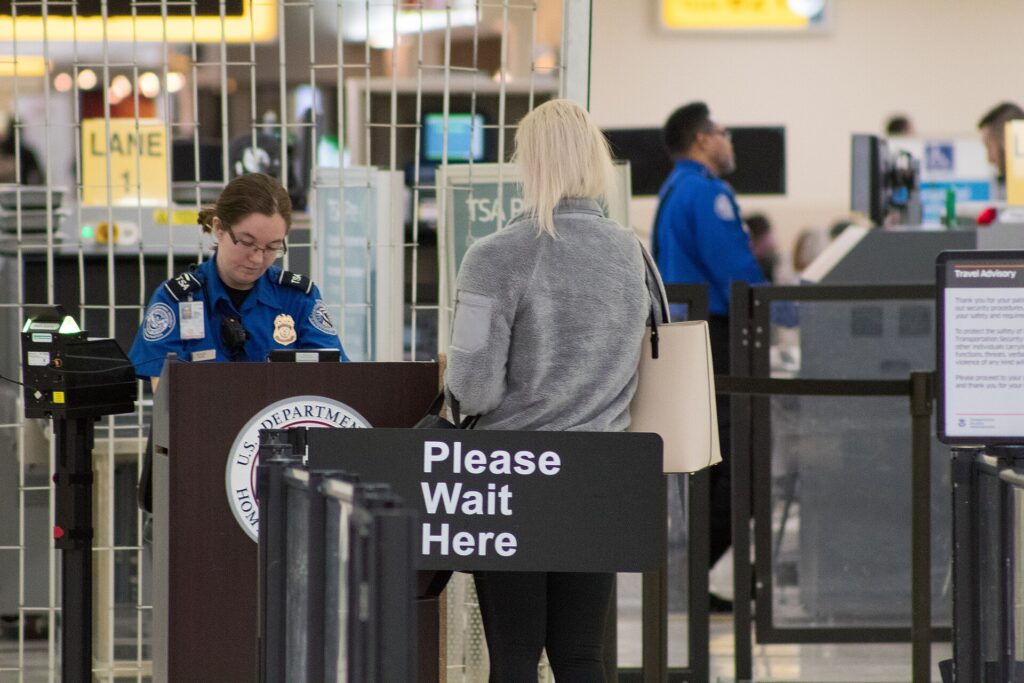
    A security officer at an airport screening checkpoint
    Less metal and easy-off layers mean a faster trip through security (Photo: Michael Ball via Wikimedia Commons, CC0)

    What to wear instead: the comfortable flight outfit

    A good flight outfit works on three levels: a comfortable base, a warm middle layer and practical shoes and accessories.

    Base layer

    Start with a soft, breathable top in cotton, merino or a quality technical fabric, and comfortable trousers with stretch: joggers, travel trousers, soft chinos, leggings or a relaxed knit dress with leggings underneath. Dark colors hide spills and wrinkles, which matters on long trips when you head straight from the airport to a meeting or dinner.

    Warm layer

    Add a cardigan, zip fleece, light sweater or hoodie that you can take off in seconds. Cabins can be warm while you board and cool once you are in the air, and a layer you control beats relying on a thin airline blanket. A large scarf or wrap doubles as a blanket, a pillow or a sunshade for your eyes.

    Shoes and socks

    Wear supportive, closed shoes that slip on and off easily, such as sneakers or loafers, with comfortable socks. Screening rules for footwear vary between countries and checkpoints, so easy-off shoes save time wherever you fly. Some travelers bring a spare pair of warm socks to change into on long flights.

    Accessories

    • A small personal item with your essentials that fits under the seat in front of you.
    • A neck pillow and eye mask for sleep. Our guide to airplane pillows compares styles.
    • Headphones, ideally noise-cancelling, to cut engine noise. See our pick of noise-cancelling headphones for flying.
    • Glasses rather than contact lenses if dry air bothers your eyes on long flights.
    • A refillable water bottle, emptied before security and filled afterward, to stay hydrated.

    Staying comfortable on long flights

    Clothing is only part of a comfortable long flight. Moving regularly matters too.

    Get up and walk the aisle when the seat belt sign is off, stretch your legs and flex your ankles in your seat, and drink water. Keep your seat belt loosely fastened while seated, though: the FAA’s turbulence guidance recommends keeping it buckled at all times, because turbulence can happen without warning, even in clear skies.

    Some travelers wear compression socks on long flights. If you have a history of blood clots, a recent surgery, pregnancy, a medical condition or any other risk factor, talk to your doctor before a long flight about what is right for you, rather than relying on general advice. The Government of Canada’s travel health and safety pages are a good starting point for health planning before any trip. Our guide to compression socks for long flights explains the options if your doctor recommends them.

    For sleep, dress as though you are going to bed on a slightly cold night: soft layers, warm socks and something to cover your eyes. Our guide to sleeping better on flights covers routines, seat choice and light.
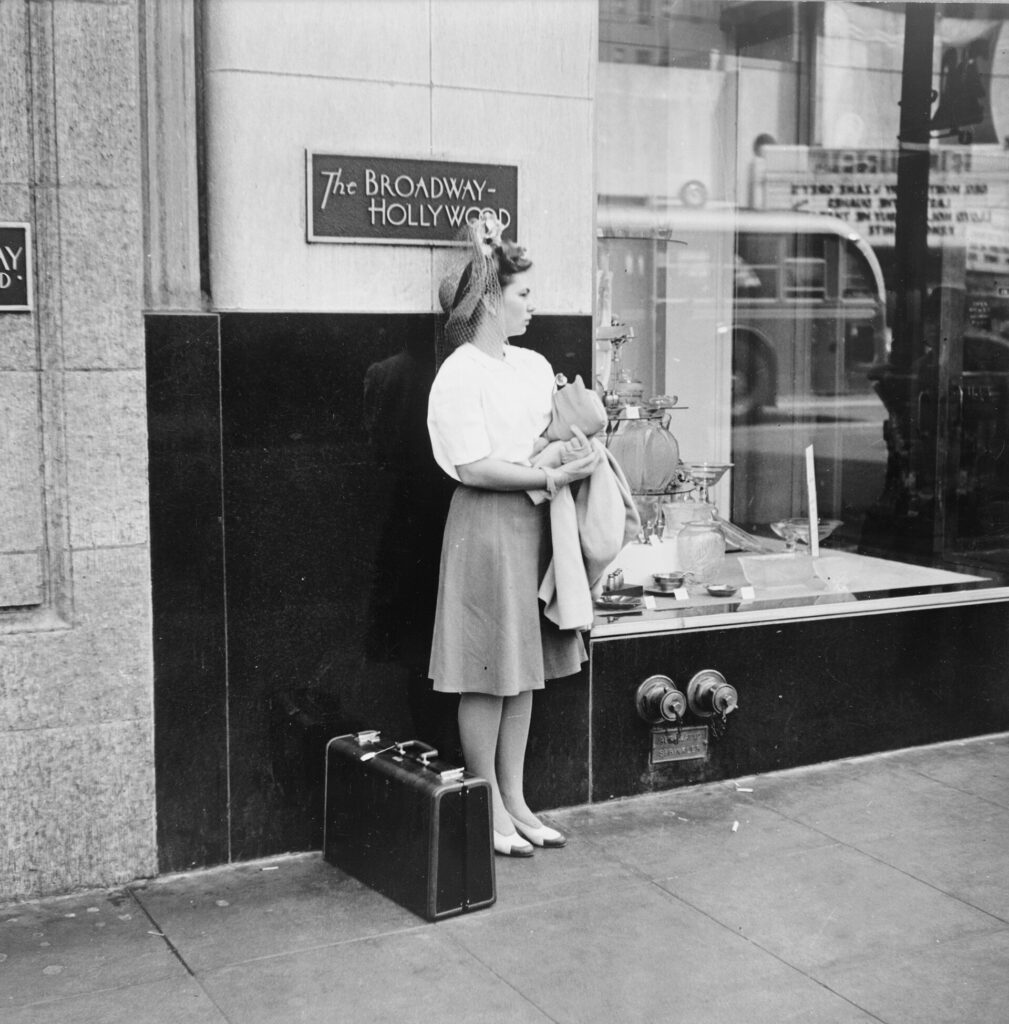
    A traveler in comfortable clothes standing with a suitcase
    Soft layers and broken-in shoes: the outfit you stop thinking about (Photo: Russell Lee via Wikimedia Commons, Public domain)

    Dressing for your trip: situational advice

    Long-haul and overnight flights

    Prioritize sleep and temperature control. Soft trousers, a breathable top, a warm layer, warm socks and slip-on shoes are ideal. If you want to look fresh on arrival, pack a clean top, a toothbrush and deodorant in your carry-on and change before landing. Premium cabins on some airlines hand out pajamas; if you are hoping for a flat bed, our guide to the difference between first class and business class explains what each cabin includes.

    Short domestic flights

    Comfort still matters, but you can dress closer to your normal clothes. The priorities are easy security, comfortable shoes for the terminal and a layer for the cabin.

    Business trips

    If you are going straight to a meeting, wear comfortable, wrinkle-resistant clothing on the plane and carry your jacket, or change at the airport or your hotel. Dark, stretchy tailoring, knit blazers and travel trousers look professional without the discomfort of a full suit in an economy seat. Keep your meeting outfit in your carry-on, never in checked baggage.

    Flying from cold to hot

    Wear layers that end in something suitable for the destination: a T-shirt under a sweater under a packable jacket. Stow the heavy layers once you are through security. Leave the parka in the car or at home if someone is driving you to the airport.

    Flying from hot to cold

    Pack your warm jacket, hat and gloves in your carry-on, not your checked bag, so you are not stuck at a chilly arrivals curb or car rental lot waiting for your luggage. Change into warm socks and closed shoes before landing.

    Flying with children

    Dress children in soft, comfortable layers that are easy to change, and pack at least one complete spare outfit per child in your carry-on, plus a spare top for yourself. Avoid outfits with many fastenings that make lavatory visits slow. Slip-on shoes help at security for everyone.

    Red-eye flights

    Treat it as bedtime: comfortable clothes, warm socks, an eye mask and earplugs or headphones. Pack a clean top and toiletries so you can freshen up before a morning arrival.

    Getting through security smoothly

    Many flight clothing choices come down to security. A few habits save time and stress:

    • Put metal items in your bag before the line. Keys, coins, a watch and a phone can go into a jacket pocket or your carry-on while you wait.
    • Wear outerwear you can remove quickly. CATSA asks passengers to place jackets, coats and bulky sweaters worn over their clothes in a bin.
    • Keep your liquids bag accessible. At some checkpoints with newer scanners you may not need to take it out, but have it ready. CATSA explains when CT-equipped lines let items stay in your bag.
    • Choose a belt with little or no metal. Or skip the belt on travel day.
    • Check the rules for where you are flying from. Screening procedures differ by country and change over time. Check CATSA for flights from Canada and the TSA for flights from the United States before you fly.

    Security lines are only one part of airport timing. Our guide to how early to arrive for an international flight helps you plan the whole journey to the gate.

    What to pack in your carry-on, just in case

    Even the perfect outfit cannot stop a spilled coffee or a delayed bag. A small backup kit in your carry-on protects the first day of your trip:

    • A clean top and underwear, and a full change of clothes for children.
    • Any medication you need, in its original packaging.
    • Toothbrush, toothpaste and deodorant, within liquid limits.
    • A warm layer and socks.
    • Chargers and any spare batteries, which generally have to travel in the cabin; the FAA’s PackSafe pages explain the rules for U.S. flights.
    • Your meeting outfit or anything you cannot replace quickly at the destination.

    Fitting all of this into your allowance takes a little planning. Our guide to carry-on luggage sizes explains dimensions and packing strategies, and our travel luggage guide helps you choose the right bag.
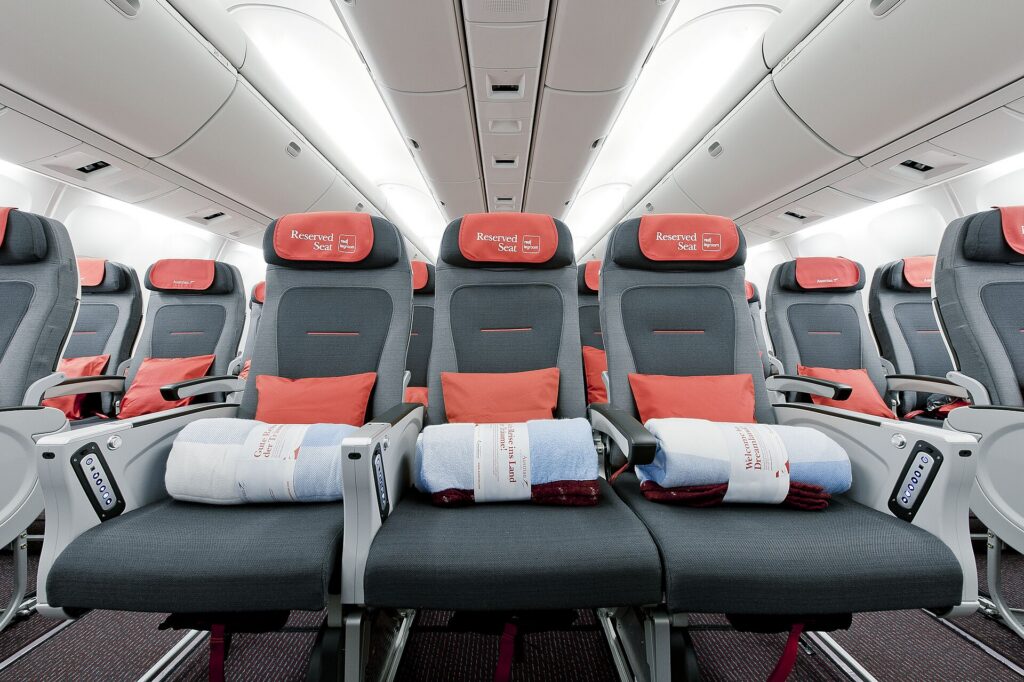
    The economy cabin of an Austrian Airlines long-haul aircraft
    On an overnight flight, dress as if you are going to bed on a slightly cold night (Photo: Austrian Airlines via Wikimedia Commons, CC BY-SA 2.0)

    Common flight clothing mistakes

    • Dressing for the destination, not the journey. Beach clothes are cold on a plane; a winter coat is hot in a terminal.
    • Trying new clothes or shoes on flight day. Discover the scratchy seam or the blister at home, not on board.
    • Putting your warm layer in checked baggage. Keep it with you.
    • Forgetting the lavatory test. If an outfit takes a minute to manage at home, it will take three in a turbulent lavatory.
    • Wearing heavy metal accessories. They slow security and are easily lost in bins.
    • Packing no spare clothes. One spill or one lost bag can ruin the first day.
    • Ignoring health advice. If you have risk factors for circulation problems, speak to a doctor before a long flight.

    Frequently asked questions

    What is the most comfortable thing to wear on a plane?

    Soft, breathable layers: a comfortable top, stretch trousers or leggings, a warm layer you can remove easily, comfortable socks and closed, slip-on shoes you have already broken in.

    Can I wear leggings or sweatpants on a flight?

    Yes. They are comfortable and widely worn. Neat joggers or leggings with a longer top look put-together, and they are far more comfortable than tight jeans on a long flight.

    Is it okay to wear shorts on a plane?

    You can, but cabins often get cold, especially on long or overnight flights. If you wear shorts, bring a warm layer and consider long trousers in your carry-on.

    Why shouldn’t you wear high heels on a plane?

    They are uncomfortable for long walks through airports, and the FAA’s passenger safety guidance tells passengers to remove high-heeled shoes before using an evacuation slide. Wear flats or sneakers and pack heels.

    Should I wear jeans on a flight?

    Stretch jeans with a relaxed fit can be fine on a short flight. Stiff or tight jeans become uncomfortable on long flights, when softer trousers are usually the better choice.

    Can airlines refuse to let you fly because of your clothes?

    Airlines set conduct and attire rules in their conditions of carriage, and crews can ask passengers to change or cover up if clothing is considered offensive or inappropriate. Dressing practically and neutrally avoids any issue.

    What should I avoid wearing through airport security?

    Lots of metal jewelry, heavy belts, bulky outerwear and shoes that are hard to remove all slow screening. Put metal items in your bag before the line and wear layers you can take off quickly.

    Should I wear compression socks on a long flight?

    Some travelers find them comfortable, but whether they are right for you is a question for your doctor, especially if you have risk factors for blood clots or other health conditions.

    Outfit sorted? Find the best fare for your dates on our flight search, then compare places to stay at your destination with our hotel search. If you are heading somewhere cold this winter, our guide to the best time to fly to Montreal explains what to expect when you land.

  • Should You Rent a Car, Use Public Transport, or Take a Taxi to Explore a New Place?

    Should You Rent a Car, Use Public Transport, or Take a Taxi to Explore a New Place?

    How you get around once you land shapes a trip more than most people expect. It decides how much of your day goes to logistics, what you can realistically see, where it makes sense to stay, and a surprisingly large share of the budget. The choice is usually framed as three options, rent a car, use public transport or take taxis and ride-hail, but the best answer for most trips is a mix, chosen deliberately rather than by default. This guide explains how to make that call for any destination: the factors that actually decide it, what each option really costs and demands, how to learn an unfamiliar transit system quickly, how to use taxis and ride-hail without overpaying, and a table that matches the right approach to the kind of trip you are taking.

    The short answer

    Rent a car when the places you want to see are spread out, when transit is thin, when you are traveling as a family or group with luggage, or when the trip is about national parks, coastlines, small towns or a road trip. Use public transport when you are staying in a dense city with a real rail or metro network, when parking is scarce and expensive, and when most of your plans are within the city. Use taxis and ride-hail for the gaps: airport runs with bags, late nights, short hops where transit is awkward, and days when time matters more than money. And for many trips, the winning combination is transit and walking for the city days, a rental for the day trips, and an occasional taxi when it is late or raining. You can compare rental rates for just the days you need on our car rental search.

    The seven factors that decide it

    1. The shape of the destination

    This matters more than anything else. Cities built before the car, or rebuilt around rail, such as New York, London, Paris, Rome, Toronto, Montreal and Washington, reward going car-free; their attractions are close together, their transit is frequent, and driving and parking are slow and costly. Cities that grew up around the freeway, such as Los Angeles, Phoenix, Houston, Dallas and Orlando, spread attractions across huge distances and run transit that works for commuters more than visitors. Rural areas and national parks often have no useful transit at all.

    2. Where you are staying

    The same city can be a car trip or a transit trip depending on the hotel. A downtown hotel near a metro station makes a car unnecessary; a resort, a suburban rental or a relative’s house can make one essential. If you are flexible, it is often cheaper overall to pay a little more for a central, well-connected hotel than to pay for a car and parking to reach a cheaper one. Our hotel search lets you compare by neighborhood.

    3. What is on the itinerary

    List the places you want to go and ask how you would reach each one without a car. If most are in the center, transit wins. If two or three are an hour or more outside the city, consider renting only for those days. If most are spread out, rent for the trip.

    4. Who is traveling

    A solo traveler or couple with carry-ons can use any system. A family with a stroller, car seats and four suitcases, a group of five, or a traveler with limited mobility may find a car or taxis far easier, and the cost per person of a rental falls as the group grows.

    5. The real budget

    Transit is almost always the cheapest option per trip. A rental can be good value for a group, but its cost is more than the daily rate, as the next section shows. Taxis and ride-hail are the most expensive per mile and the cheapest overall only when you take very few trips.

    6. Your comfort with driving there

    Driving on the other side of the road, in a manual car, through narrow historic streets, in snow or in heavy city traffic is a real cost in stress and risk. Be honest about it. If you would not enjoy it, the trip will be better without it.

    7. Time

    On a short trip, time is the scarcest resource. A car can save hours when destinations are far apart; transit can save hours in a city where driving means traffic and parking hunts; a taxi can save the last hour before a flight.

    What each option really costs

    People tend to compare the rental rate with a transit fare and a taxi quote, which misleads in both directions. A fair comparison adds up everything for your actual plans.

    A rental car costs the daily rate, plus taxes and airport fees, plus any young-driver or additional-driver fees, plus insurance you need to buy, plus fuel or charging, plus tolls and the rental company’s toll-program fees, plus parking at the hotel each night and at each stop during the day. In a big downtown, overnight hotel parking alone can rival the daily rate. Our rental car booking tips explain how to read the full price.

    Public transport costs the fares, or a day or weekly pass, plus the airport link if it charges a premium, plus the occasional taxi for the trips transit does not cover. Many systems cap what you pay in a day or week when you tap with the same card, which makes it hard to overspend.

    Taxis and ride-hail cost the fare, which rises with distance, time in traffic and demand, plus tips where customary, plus airport or event surcharges. A few rides a day across a big city add up fast.

    To compare, sketch your days, estimate how many trips you would take and how far, and total each option. For a couple spending four days in a transit-rich city, transit plus two or three taxis will usually come out well ahead. For a family of five spending a week touring a spread-out region, the rental usually wins.

    London Underground platforms at Whitechapel station
    In a transit-rich city such as London, the train is usually faster and far cheaper than a car (Photo: TheFrog001 via Wikimedia Commons, CC0)

    Renting a car: freedom, with overhead

    Where it shines

    • Flexibility. Leave when you want, stop where you want, change the plan halfway through the day.
    • Reach. Trailheads, beaches, wineries, small towns and viewpoints that no bus serves.
    • Luggage and gear. Strollers, skis, coolers and beach chairs travel with you, and you can leave things in the trunk between stops (out of sight).
    • Families and groups. One vehicle carries everyone, and the per-person cost drops with each passenger.
    • Privacy and comfort. Your own climate control, music and schedule, which matters on long days with children.

    Where it hurts

    • Parking in dense cities is expensive, scarce and time-consuming, and hotels often charge for it nightly.
    • Traffic in large cities can make a car slower than the train at the times you want to travel.
    • Unfamiliar rules: right turns on red (legal in most of the US and Canada, but not on the island of Montreal), camera-enforced restricted zones in European historic centers, toll roads that only take transponders, and roundabout etiquette.
    • One designated driver means one person who cannot relax, drink at dinner or watch the scenery.
    • Responsibility: damage, tickets, fuel, return times and insurance are all yours to manage.

    Make a rental work better

    Rent only for the days you need it, from a neighborhood branch if you are starting in the city. Choose a hotel with reasonable parking, or one on the edge of the center with easy transit in. Download offline maps. Learn how tolls are charged before you drive. And read our guide to car rental return timing so an extra hour does not turn into an extra day.

    A winding road through the mountains on the Icefields Parkway in Alberta
    Scenic drives and national parks are where a rental car earns its keep (Photo: m01229 from USA via Wikimedia Commons, CC BY-SA 2.0)

    Public transport: cheap, fast in the right places, and easier than it looks

    Where it shines

    • Cost. Usually the cheapest way to move around, often dramatically so.
    • Speed in dense cities. A metro line under a congested downtown beats any car at rush hour.
    • No parking, no driving stress. You arrive, walk out of the station and start exploring.
    • A view of local life, and in some cities, such as the ferries in Vancouver or Halifax, genuinely scenic rides.
    • Lower emissions per traveler than a car or a taxi.

    Where it falls short

    • Coverage. Fixed routes and timetables do not reach everything, and service thins out at night, on weekends and away from the center.
    • Luggage. Stairs, crowded trains and turnstiles are hard with big suitcases and strollers.
    • Crowding at rush hour, and a learning curve in an unfamiliar language.
    • Accessibility varies. Some older systems have many stations without elevators; check before you rely on them.

    How to learn a new system in 20 minutes

    1. Look at the official map before you travel. Identify the lines near your hotel and the main sights, and note the line colors or numbers.
    2. Find out how to pay. Many large systems now take contactless bank cards and phones at the gate or on the bus, including London, New York, Toronto, Vancouver and Chicago, and many cap daily or weekly spending when you tap with the same card. Others use their own card or an app. The operator’s site, such as Transport for London, the MTA in New York or the TTC in Toronto, explains fares and passes.
    3. Check the airport link. Many airports have a direct rail connection, such as the Elizabeth line and Piccadilly line at Heathrow, the RER B at Paris Charles de Gaulle, the UP Express at Toronto Pearson, the Canada Line at Vancouver and the Blue Line at Chicago O’Hare, but some charge a premium fare. Our airport guides, such as Heathrow and Toronto Pearson, cover the options.
    4. Use a journey planner. The operator’s own app or a general map app will give live times; download the offline map in case you lose signal underground.
    5. Learn the late-night picture. Know when the last train runs and whether night buses replace it, so you are not stranded after dinner.

    Taxis and ride-hail: convenience on demand

    Where they shine

    • Door to door, with no transfers and no parking.
    • Airport runs with luggage, children or an early flight.
    • Late nights, bad weather, and neighborhoods transit does not reach.
    • Short trips across awkward gaps, where the transit route would take three times as long.

    Where they fall short

    • Cost adds up quickly, especially over longer distances or several trips a day.
    • Surge pricing on ride-hail apps at peak times, after concerts and games, and in bad weather.
    • Traffic slows them as much as a rental.
    • Waits can be long at busy times or in less populated areas, and in some rural places there are simply no drivers.

    Taxi or ride-hail?

    In most US and Canadian cities, Uber and Lyft operate alongside licensed taxis, and outside North America you will find Uber in many countries alongside strong local apps. Ride-hail shows the price before you book, which helps in a new city; taxis can be quicker to find at a rank and are sometimes cheaper during surges. Some airports set flat taxi fares into the city, including JFK to Manhattan and the Paris airports into central Paris; check the current amount on the official airport or city site, such as the NYC Taxi and Limousine Commission, before you get in.

    Using them safely and fairly

    • At airports, use the official taxi rank or the designated ride-hail pickup zone, and decline offers from people approaching you in the arrivals hall.
    • For ride-hail, match the plate and driver in the app before getting in.
    • For taxis, make sure the meter is running or agree the fare first where fares are fixed.
    • Know the tipping norm: customary in the US and Canada, less so in much of Europe.
    • If you have children who need car seats, know that rules for taxis vary by place and that most taxis and ride-hail cars will not have one; bring your own or plan around it.
    A yellow New York City medallion taxi
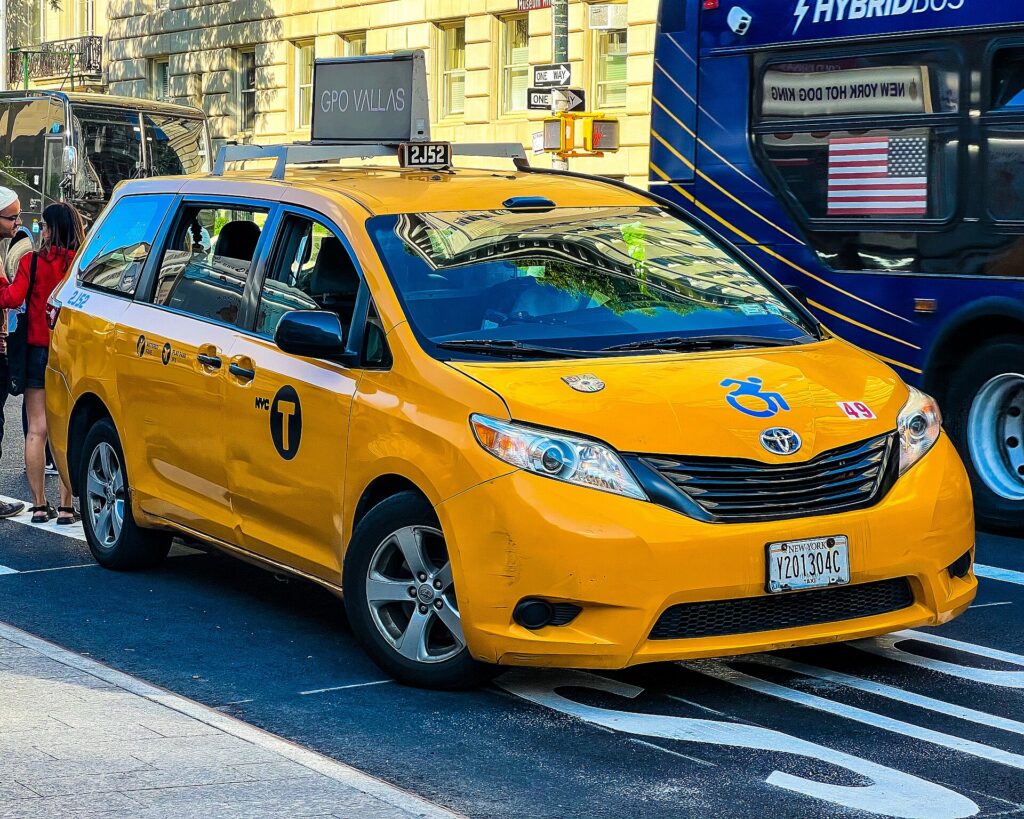
    Taxis and ride-hail fill the gaps: airport runs with bags, late nights and awkward cross-town trips (Photo: S5A-0043 via Wikimedia Commons, CC BY 4.0)

    The options people forget

    • Walking. In compact centers, the best way to see a city is on foot, and it costs nothing.
    • Bike share and scooters. Most large cities have docked bike share; they are ideal for short hops along waterfronts and park paths. Check the local rules on helmets and where you may ride.
    • Car share by the hour. In some cities, members can book a car for a few hours, which can beat a full-day rental for a single errand or excursion; sign-up usually takes time, so arrange it before the trip.
    • Airport and park shuttles. Scheduled coaches from airports to resort towns and national parks, and in-park shuttle systems, can replace a car for the part of the trip where it would be hardest to park.
    • Intercity trains and buses. For city-to-city legs, a train can be faster than driving once you count traffic and parking at both ends.
    • Day tours. For one remote sight, a tour with transport included can cost less than a day’s rental with fuel and parking.
    A row of Citi Bikes docked on 42nd Street in Manhattan
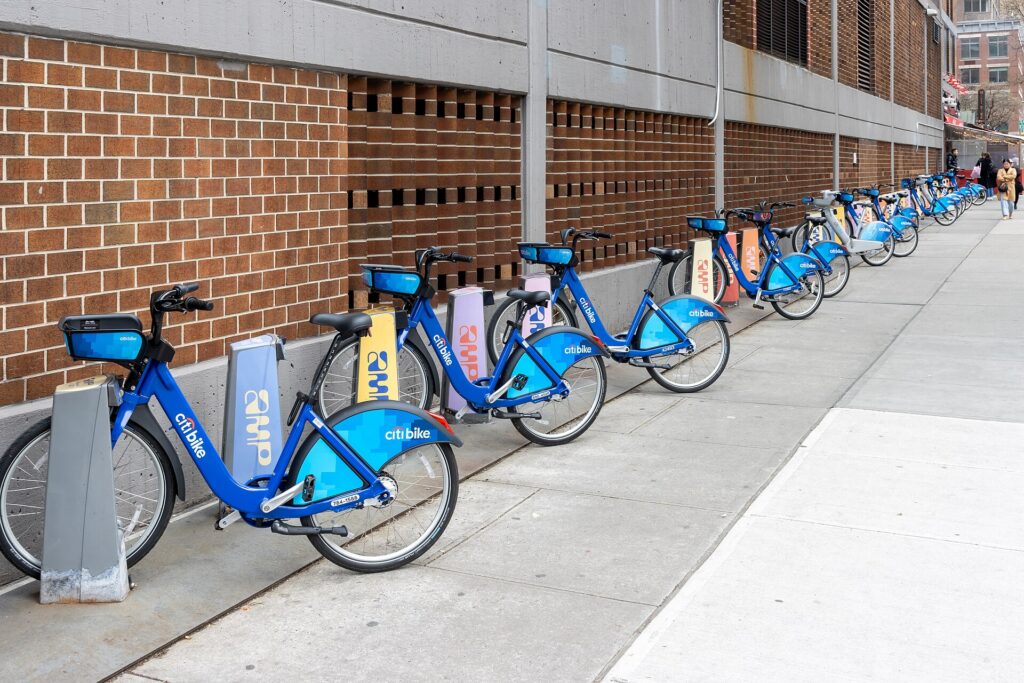
    Bike share is the option visitors forget, and often the quickest way to cover a short hop (Photo: Photograph by Mike Peel (www.mikepeel.net). via Wikimedia Commons, CC BY-SA 4.0)

    Match the approach to the trip

    Trip typeUsually bestWhy
    City break in a transit-rich cityTransit and walking, taxis at nightFrequent service, expensive parking, sights close together
    City break in a spread-out cityRental car, or ride-hail if staying centralLong distances, thin transit away from the core
    City plus day tripsTransit in the city, rent for the day-trip daysPay for the car only when it earns its keep
    Road trip or national parksRental carNo practical alternative for most routes
    Beach or theme-park resortDepends on the resort; a car for spread-out areas, shuttles where providedSome resorts are self-contained, others spread over many miles
    Family with young childrenRental car in most places; transit and taxis in the densest citiesCar seats, luggage, naps and flexibility
    Solo traveler on a budgetTransit and walkingCheapest per trip; a rental does not divide
    Group of four to six adultsRental or a large ride-hail carCost per person falls sharply
    Business trip, downtown hotelTaxis or ride-hail, airport rail linkTime matters, parking is costly, trips are short
    Traveler with limited mobilityTaxis or accessible ride-hail; transit where fully accessibleDoor to door, fewer stairs and transfers

    City examples

    A few illustrations of how the balance shifts:

    • New York: the subway and your feet cover almost everything; a car in Manhattan is a burden. See our New York guide.
    • Toronto: transit and walking work well downtown, and a rental earns its keep for Niagara, cottage country or a drive to Montreal. See our Toronto guide.
    • Washington, DC: Metro and walking cover the Mall and the main neighborhoods. See rent a car or take the Metro.
    • Los Angeles and Phoenix: distances are large and a car is the default for most visitors. See our guides to Los Angeles and Phoenix.
    • Las Vegas: the Strip is walkable and served by taxis and ride-hail, while a car makes sense for Red Rock, Hoover Dam or the Grand Canyon. See do you need a rental car in Las Vegas.
    • Calgary: transit covers the core, but most visitors are headed for Banff and the Rockies. See our Calgary guide.
    • Rome and Paris: historic centers restrict traffic, and a car is only worth it for countryside days. See our guides to Rome and Paris.

    Mix and match: three sample plans

    Four days in a big transit city

    Take the airport train or a taxi to a central hotel. Use a contactless card or a multi-day pass for the metro and buses, walk as much as possible, and budget for a taxi or two at night. No rental.

    A week split between a city and the countryside

    Spend the first days in the city on transit. On the morning you leave, pick up a rental from a neighborhood branch near your hotel, drive out for the countryside days, and return it at the airport before your flight, pricing the one-way fee first.

    A family week in a spread-out destination

    Rent at the airport so the car seats go in once, choose a hotel or vacation rental with free parking, and plan each day around one or two areas to limit driving. Use ride-hail for a night out if the drivers want to relax. Our guide to car rentals for family vacations covers the vehicle and seat questions.

    Common mistakes

    • Renting for the whole trip by default, then paying for a car that sits in a garage for three days.
    • Ignoring parking when comparing hotels and rentals.
    • Relying on ride-hail in remote areas, where drivers are scarce and you can be stranded after a hike or a late dinner.
    • Taking unofficial taxis offered inside airport terminals.
    • Not checking the last train, and paying a surge fare at midnight.
    • Underestimating the airport journey, whether by traffic, a rental return shuttle or a transfer; our guide to how early to get to the airport helps plan the buffer.

    Frequently asked questions

    Is it cheaper to rent a car or use taxis?

    It depends on how many trips you take. For a few short rides a day in a city, taxis are often cheaper once you count parking, fuel and fees on a rental. For long distances, many stops or a group, a rental usually wins.

    Is public transport safe for tourists?

    In most major cities, yes, and it is used by millions of residents daily. Use normal city sense: keep valuables secure, stay aware late at night, and prefer busier cars and stations.

    Should I rent a car at the airport or later?

    If your first days are in a transit-friendly city, rent later from a neighborhood branch. If you are heading straight out of town or traveling with kids and luggage, rent at the airport.

    Are Uber and Lyft available everywhere?

    They are widely available in US and Canadian cities, and Uber operates in many other countries, but coverage is thin in rural areas and some countries favor local apps or licensed taxis. Check before you rely on them.

    Can I use my credit card to pay for transit?

    In many large cities, yes, by tapping a contactless card or phone at the gate or farebox. Check the operator’s site before you go.

    What is the best option for a family?

    In most destinations, a rental car, because of car seats, luggage and flexibility. In the densest cities, transit, walking and the occasional taxi are often easier.

    Do I need a car to visit national parks?

    Usually, yes, though some parks run shuttles and some gateway towns have coaches from the nearest airport. Check the park’s own site for current options and any vehicle reservation rules.

    Once you have picked your approach, build the trip around it: compare cheap flights, choose a well-connected base with our hotel search, and price a rental for only the days you need on our car rental page.

  • Plan a Perfect Honeymoon in the Cayman Islands: Your Ultimate Guide

    Plan a Perfect Honeymoon in the Cayman Islands: Your Ultimate Guide

    The Cayman Islands are made for honeymoons. Grand Cayman’s Seven Mile Beach is one of the most famous stretches of sand in the Caribbean, the water is famously clear, and the islands combine polished resorts and excellent restaurants with quiet corners where you will barely see another couple. It is also easy to reach: a short flight from Miami and a direct flight from several other North American cities. What makes the difference between a nice week and a perfect one is planning: choosing the right island and the right part of it, picking dates that balance weather and price, understanding the entry rules, and booking the handful of experiences that really are worth it, from swimming with stingrays to night kayaking in glowing water. This guide covers all of it, step by step, so you can spend the trip itself doing as little planning as possible.

    The short answer

    For most couples, the best plan is five to seven nights on Grand Cayman, split between a resort or condo on or near Seven Mile Beach and, if you want more seclusion, a few nights on the quieter East End or North Side. Divers and couples who want real solitude should add two to four nights on Little Cayman or Cayman Brac, reached by a short inter-island flight. The dry season from December to April has the most reliable weather and the highest prices; May and early June and late November to mid-December are the value windows. The Atlantic hurricane season runs from June through November, so buy travel insurance if you book then. Rent a car for at least part of the stay, and remember that Cayman drives on the left. Compare fares to Grand Cayman on our flight search and book as soon as your wedding date is set.

    White sand and turquoise water along Seven Mile Beach on Grand Cayman
    Seven Mile Beach on Grand Cayman: calm water, soft sand and sunsets over the sea (Photo: Coolcaesar via Wikimedia Commons, CC BY 4.0)

    Choosing your island

    The Cayman Islands are three islands with very different personalities.

    IslandBest forWhere you stayHow you get there
    Grand CaymanBeaches, dining, variety, first-time visitorsBeachfront resorts, condos and villasInternational flights to Owen Roberts International Airport
    Cayman BracDiving, hiking, caves, quietSmall resorts, dive lodges, rental homesInter-island flight from Grand Cayman
    Little CaymanWall diving, snorkeling, total seclusionA handful of small resorts and lodgesInter-island flight from Grand Cayman

    Grand Cayman

    Grand Cayman is the largest and most developed island and where almost every honeymoon starts. The west coast is home to Seven Mile Beach, the capital George Town, the Camana Bay waterfront with its shops and restaurants, and most of the big resorts. The north side and the East End are much quieter, with smaller resorts, villas and long empty stretches of coast. Grand Cayman gives you the widest choice of restaurants, spas and activities, and it is the easiest island to reach.

    Cayman Brac

    Cayman Brac is named for the Bluff, a limestone ridge that rises along the island and ends in dramatic cliffs at the eastern end. It appeals to couples who like to be active: diving and snorkeling, hiking the Bluff, exploring caves and watching for birds. Accommodation is low-key, and evenings are quiet.

    Little Cayman

    The smallest of the three is the most secluded. Little Cayman is famous among divers for Bloody Bay Wall, where the reef drops away into deep blue water, and for the Booby Pond Nature Reserve, home to a large colony of seabirds. Beaches like Point of Sand are often empty. There is very little nightlife and only a few places to stay, which is exactly the point.

    The official Visit Cayman Islands site has guides to each island, and its pages on Little Cayman and Cayman Brac are useful if you are considering a two-island trip.

    When to go

    Peak season: December to April

    This is the dry season, with warm, sunny days, lower humidity and calm seas on the west coast. It is also the busiest and most expensive time, especially over Christmas, New Year and US and Canadian spring breaks. If you are marrying in winter and want to travel right away, book flights and rooms as early as possible.

    Shoulder seasons: May to early June, late November to mid-December

    These are the sweet spots for many honeymooners. The weather is usually still good, crowds thin out, and room rates generally ease compared with the winter peak. May and June can be hotter and more humid, and late November sits at the tail end of hurricane season.

    Hurricane season: June to November

    The Atlantic hurricane season officially runs from June 1 to November 30, with the greatest activity usually from August to October. Most days in this period are fine, and prices are at their lowest, but a storm can disrupt flights and plans. If you travel in these months, buy travel insurance that covers weather disruption, choose flexible bookings, and follow forecasts from the US National Hurricane Center in the days before departure.

    Festivals

    Cayman’s calendar includes Pirates Week, the national festival, usually held in November, and Batabano, the islands’ carnival, usually in spring. Both are fun, but they also bring crowds, so check dates before you book if you want to join in or avoid them.

    Entry rules and what to bring

    Rules change and depend on your nationality, so confirm everything on the official government pages before you travel.

    • Passport and return ticket. Visitors must show a passport or other valid travel document that is valid beyond the date of their return ticket, together with a return or onward ticket, and may be asked to show they have enough funds for their stay. See the Cayman Islands Customs and Border Control entry requirements for the details.
    • Visas. Some nationalities need a visitor visa; many, including Canadian and US citizens, do not for a normal vacation. Check the official list for your passport.
    • Newlywed names. Book your flights in the names shown on your passports. If you plan to change your name after the wedding, travel on your existing passport and change it after the trip.
    • Zero tolerance for drugs. The Cayman Islands strictly enforce their drug laws. Cannabis in all forms is illegal, including THC and CBD products such as gummies, vapes and edibles, even if they are legal where you live. Leave them at home.
    • Travel advice. Canadians can read the Government of Canada’s travel advice for the Cayman Islands; US citizens should check the State Department’s page.

    If you are thinking of marrying in the Cayman Islands rather than just honeymooning there, the legal requirements for a marriage license are set by the Cayman Islands Government. Start early and confirm them through official sources before you book.

    Booking your flights

    All international flights arrive at Owen Roberts International Airport on Grand Cayman. Cayman Airways, the national carrier, flies from several US cities, including Miami, Tampa and New York, and other airlines add service from further US hubs and from Toronto. Some routes run only seasonally, so check current schedules on the Cayman Airways website and the Cayman Islands Airports Authority site.

    • From Canada: compare nonstop options from Toronto with one-stop routings through US hubs. From other Canadian cities, a connection is usually needed.
    • From the US: Miami is the busiest gateway, with a short flight across to Grand Cayman. Compare fares from Miami, from New York and your nearest hub.
    • Consider a stopover. If you are connecting through Miami anyway, a night or two there can add a city break to the honeymoon; our guide to things to do in Miami has ideas, and our best time to fly to Miami guide covers the seasons.
    • Book early for peak dates. Winter holiday and spring break flights fill up. Our guide to the best time to book cheap flights and hotels explains booking windows, and our international flight booking tips cover connections and baggage.
    • Inter-island flights. Cayman Airways operates the short flights from Grand Cayman to Cayman Brac and Little Cayman. The small aircraft have tight baggage limits, so check the rules and pack accordingly, especially if you are bringing dive gear.

    Where to stay

    Accommodation shapes a honeymoon more than anything else, so choose the setting first and the specific property second.

    Seven Mile Beach

    The classic choice. The beach faces west, so you get sunsets over the water, the sea is usually calm and good for swimming, and restaurants, bars and shops are close at hand. Options range from large full-service resorts to smaller condo complexes with kitchens. The beach is public, so it is lively around the big hotels and quieter at the northern and southern ends.

    East End and North Side

    If you want quiet, stay here. The pace is slower, the reefs are close to shore, and many places have a real sense of seclusion. You will want a rental car, because restaurants and sights are more spread out. Villas and smaller resorts are common, and some couples split the stay: a few nights of seclusion here, then a few near Seven Mile Beach for dining and nightlife.

    Villas and condos

    A private villa or condo gives you space, a kitchen and often a pool of your own. It can also help the budget: Cayman is expensive to eat out in, and cooking some breakfasts and lunches makes a noticeable difference over a week.

    Cayman Brac and Little Cayman

    Expect small resorts and dive lodges, often with meal plans and dive packages. They are relaxed rather than luxurious, but the setting is extraordinary. Book early, since there are only a few properties.

    Wherever you stay, tell the property it is your honeymoon when you book; some offer small extras. Compare total prices including taxes and service charges, and read the cancellation terms carefully, especially for hurricane-season dates. Our hotel booking tips explain what to check, and you can compare rooms on our hotel search.

    Getting around

    A rental car is the easiest way to explore Grand Cayman beyond Seven Mile Beach. Cayman drives on the left, roundabouts are common, and the roads around George Town can be congested at rush hour. Your rental company will explain what you need to drive legally as a visitor, so ask when you book. Taxis are widely available but can add up; there is also a public bus network on Grand Cayman. On Cayman Brac and Little Cayman, many visitors rent a car, scooter or bicycle. Our rental car booking tips cover insurance and pickup, and our comparison of renting a car, public transport and taxis can help you decide how much driving you need.

    What to do on your honeymoon

    Beach days on Seven Mile Beach

    The original version of this guide started with the beach, and so should you. Seven Mile Beach is soft, wide and calm, with clear water for swimming and snorkeling right off the sand. Despite the name, it is a little shorter than seven miles. Pick a quiet stretch, bring snorkel gear and plan to watch the sunset.

    Stingray City and Starfish Point

    Stingray City is a series of shallow sandbars in the North Sound where southern stingrays gather, and standing in waist-deep water as they glide around you is one of the Caribbean’s great experiences. Boat trips usually combine it with snorkeling on a nearby reef, and some stop at Starfish Point on the north coast, where starfish sit in the shallows. Follow your guide’s instructions, never lift starfish out of the water, and treat the rays gently. The official Stingray City page explains how visits work.

    Snorkelers standing in shallow water with southern stingrays at Stingray City, Grand Cayman
    Stingray City, a sandbar in Grand Cayman's North Sound where wild southern stingrays gather (Photo: Kfulgham84 via Wikimedia Commons, CC BY-SA 3.0)

    Snorkeling and diving

    Cayman is one of the Caribbean’s best-known diving destinations, with walls, reefs and wrecks close to shore. Highlights include the Kittiwake, a former US Navy ship sunk off Seven Mile Beach as an artificial reef, which snorkelers can see from the surface; the reefs of the East End; and, for experienced divers, the walls of Little Cayman and Cayman Brac. If you have never dived, a resort course with a reputable operator is a good way to try it together. Much of the coastline is protected in marine parks with rules on fishing, anchoring and touching marine life; the Department of Environment’s marine parks page explains them.

    Bioluminescent bay

    Night tours by kayak or boat take you into waters where tiny organisms light up with every paddle stroke. The effect is strongest on dark nights, so check the moon phase and book for a night near the new moon if you can.

    Rum Point and the north coast

    Rum Point, on Grand Cayman’s north side, is a relaxed beach with hammocks under the trees and calm, shallow water. Drive around, or take a boat across the North Sound, and spend a lazy afternoon there.

    Nature and history

    The Queen Elizabeth II Botanic Park on the north side has gardens, woodland trails and a conservation program for the endangered blue iguana, found only on Grand Cayman. Pedro St. James, a restored historic great house on the south coast, tells the story of the islands’ early history, and the Mastic Trail follows an old footpath through native forest. In West Bay, the jagged black rock formations of Hell make a quirky short stop.

    An endangered Grand Cayman blue iguana resting on rocks
    The blue iguana is found only on Grand Cayman; see it at the Queen Elizabeth II Botanic Park (Photo: Charles J. Sharp via Wikimedia Commons, CC BY-SA 4.0)

    Island tours

    The original guide suggested exploring all three islands, and it is a good idea if you have the time. A day trip to Little Cayman or Cayman Brac is possible by air, but two or more nights are far more rewarding.

    Fine dining and local food

    Grand Cayman has a remarkable restaurant scene for an island of its size, from beachfront fine dining to casual fish shacks. Try the local catch prepared Cayman-style with peppers and onions, conch fritters and ceviche, and fish fry nights at local spots. Book popular restaurants ahead, especially for special-occasion dinners, and ask for a table at sunset.

    Sunset sails and spa days

    A sunset catamaran sail, a private boat charter or a couples’ spa day at one of the resorts are classic honeymoon splurges. They are worth booking in advance in peak season.

    Sample honeymoon itineraries

    Five days on Grand Cayman: arrive and settle in on Seven Mile Beach; spend day two on a boat trip to Stingray City and Starfish Point; day three is a beach and spa day; on day four, drive to the East End and the Botanic Park, then Rum Point for the afternoon; finish with a sunset sail and a special dinner.

    Seven days, two settings: three nights near Seven Mile Beach for restaurants, snorkeling and Stingray City, then four nights in a villa on the East End or North Side for quiet days, reef snorkeling, a bioluminescence tour and slow evenings.

    Ten days, two islands: five nights on Grand Cayman, then fly to Little Cayman or Cayman Brac for four or five nights of diving, hiking and empty beaches.

    Planning timeline

    • Six to twelve months before: set your dates, choose the island and the area, and book flights and accommodation, especially for December to April.
    • Three to six months before: check passports and entry rules, buy travel insurance, and book the experiences that sell out, such as dive packages, private charters and special dinners.
    • One month before: reserve your rental car, confirm inter-island flights and baggage limits, and plan a rough outline for each day.
    • The week before: check the weather forecast, confirm bookings, save documents offline and pack reef-safe sunscreen.

    Keeping costs under control

    The Cayman Islands are one of the more expensive destinations in the Caribbean, particularly for dining and groceries, so it pays to be deliberate.

    • Travel in the shoulder season, when room rates are generally lower than in winter.
    • Choose a condo or villa with a kitchen and cook breakfasts and some lunches.
    • Splurge selectively on the two or three experiences that matter most, and enjoy the free ones: public beaches, snorkeling from shore and sunsets.
    • Understand the currency. The Cayman Islands dollar is pegged to the US dollar, and US dollars are widely accepted, but change is often given in local currency. Check whether prices are quoted in Cayman or US dollars.
    • Check for service charges on restaurant bills before adding a tip.

    Our guide on how to save money for a trip shows how to set up a honeymoon fund, and our pillar guide to budget travel destinations explains how to time a splurge trip for the best value.

    Calm shallow water and palm-shaded sand at Rum Point on Grand Cayman's north side
    Rum Point on the north side of Grand Cayman, made for a slow afternoon in a hammock (Photo: Lhb1239 via Wikimedia Commons, CC BY-SA 3.0)

    Safety and practical tips

    • Sun and sea: the tropical sun is strong. Use reef-safe sunscreen, wear a rash guard for long snorkels and drink plenty of water. Watch the currents and swim where others do.
    • Marine life: never touch coral, and do not stand on reefs. Follow your guide’s instructions at Stingray City.
    • Driving: stay on the left, take roundabouts slowly and do not drink and drive.
    • Valuables: Cayman is generally considered safe, but do not leave belongings unattended on beaches or visible in parked cars.
    • Health: buy travel insurance with medical coverage, since provincial and many US plans cover little abroad.

    Common mistakes to avoid

    • Booking too late for winter. The best rooms and fares for December to April go early.
    • Skipping travel insurance in hurricane season. Most trips go ahead, but you want cover if one does not.
    • Staying in one place without a car. The quieter parts of Grand Cayman are what many couples remember most.
    • Packing CBD products. They are illegal in the Cayman Islands.
    • Overpacking for the small inter-island planes. Check the baggage limits first.
    • Over-scheduling. Leave at least a couple of days with nothing planned. If that is the whole idea, our list of relaxing vacations for doing absolutely nothing has more inspiration.

    Frequently asked questions

    What is the best month for a Cayman honeymoon?

    For weather, December to April. For the best balance of weather, price and crowds, consider May or early December. Late summer and early fall are the cheapest but carry the highest hurricane risk.

    Which Cayman island is best for a honeymoon?

    Grand Cayman for beaches, dining and variety; Little Cayman for seclusion and world-class diving; Cayman Brac for active couples who like hiking and caves. Many couples combine Grand Cayman with one of the smaller islands.

    How many days do we need?

    Five to seven nights on Grand Cayman is ideal. Add three to five nights if you want to include Little Cayman or Cayman Brac.

    Do we need a passport to visit the Cayman Islands?

    Yes. Visitors must have a passport or other valid travel document that is valid beyond their return date, plus a return or onward ticket. Some nationalities also need a visa, so check the official Customs and Border Control page.

    Do we need to rent a car?

    Not if you stay on Seven Mile Beach and join organized tours, but a car makes it much easier to explore the East End, the north coast and the Botanic Park. Remember that Cayman drives on the left.

    Is the Cayman Islands expensive?

    Yes, compared with many Caribbean destinations, especially for food and drink. A condo with a kitchen, shoulder-season dates and selective splurges keep costs under control.

    Can we swim with stingrays?

    Yes. Boat tours to Stingray City in the North Sound let you stand in shallow water with wild southern stingrays. Book with an established operator and follow the guide’s instructions.

    Ready to plan your Cayman honeymoon? Compare flights to Grand Cayman from your nearest airport on our flight search, then find the right beachfront hotel or villa on our hotel search. If you are still deciding between a beach honeymoon and a city adventure, see our guides to England, Italy and France and traveling to Japan.