Tag: Cheap Flights

  • Best Time to Fly to Denver: Seasons, Weather & Prices

    Best Time to Fly to Denver: Seasons, Weather & Prices

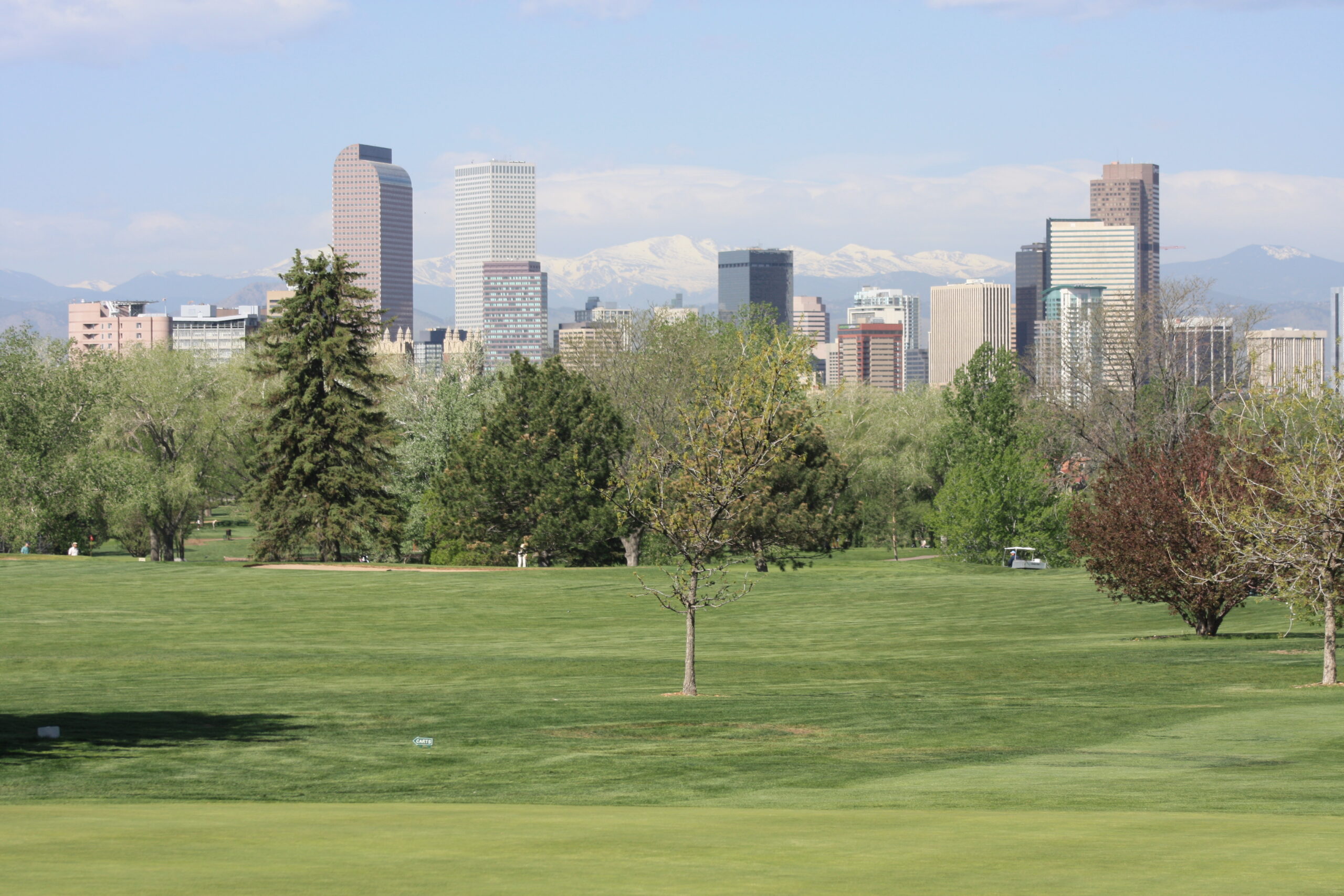
    Denver is two destinations in one, and its airfares reflect both. It is a sunny, fast-growing city a mile above sea level, with a summer concert season at Red Rocks, four major-league teams, a January stock show that has run for more than a century, and a steady diet of conventions that can fill downtown hotels mid-week. It is also the gateway to the Colorado Rockies, with ski areas, Rocky Mountain National Park and the I-70 mountain towns within two hours, which means demand for seats into Denver tracks the ski calendar and the summer hiking season as much as the city’s own. Add a climate that can deliver a 20 °C (68 °F) afternoon in February and a snowstorm in May, and you have a place where the “best time” question has more than one right answer. The good news is that Denver International is one of the busiest airports in the world and a hub for three competing airlines, so fares are often lower than you would expect for a destination this popular. This guide walks through the weather month by month, the fare seasons, the events and mountain windows that move prices, and how to handle the airport.

    The short answer

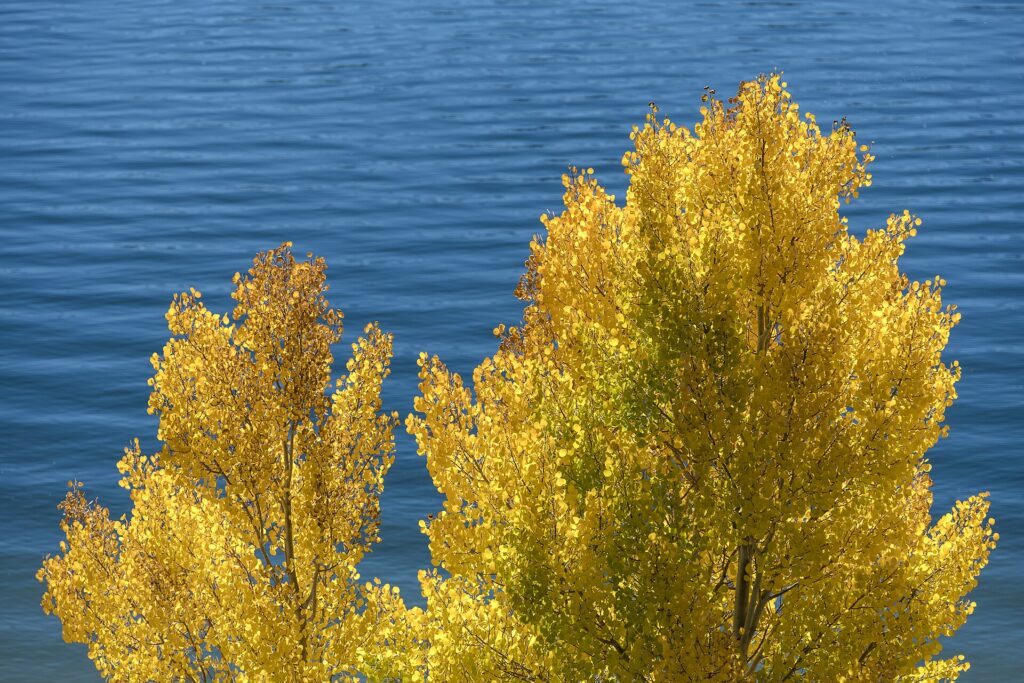
    For the city alone, the best value-and-weather windows are September to mid-October, when the summer crowds have gone, the weather is often the most settled of the year and the aspens turn gold in the mountains, and late April to May, before the summer peak, as long as you accept the risk of a spring snowstorm. For the mountains in summer, late June to mid-September is the window when the high roads and trails are reliably open. For skiing, January and early February outside the holiday weekends give the best mix of snow and price. The cheapest fares tend to come in January after New Year, in early November before Thanksgiving, and in the spring shoulder once ski season winds down. The most expensive stretches are June to August, the Christmas and New Year ski weeks, Presidents’ Day weekend and the March spring-break weeks, when skiers from across the country converge on DEN. Whatever you choose, run a flexible-date search on our Denver flights page; with this much competition on most routes, a shift of a few days can change the fare band entirely.
    Quaking aspens turning gold in autumn in Dillon, Colorado
    Aspens turning gold in Summit County, just off I-70 west of Denver, in the second half of September (Photo: Clyde Charles Brown via Wikimedia Commons, CC BY-SA 4.0)

    Denver’s weather, season by season

    Denver sits on the high plains at the foot of the Front Range, about 1,600 m (5,280 feet) above sea level, in the rain shadow of the mountains. That gives it thin, dry air, an enormous amount of sunshine, big swings between day and night, hot summers with afternoon thunderstorms, and winters where snow often melts within days. The figures below are approximate seasonal patterns based on the long-term climate normals from NOAA’s National Weather Service office for Denver and Boulder; check the current forecast before you pack, because Denver’s weather can change by 20 degrees in a day, and the mountains an hour away are always colder than the city.

    MonthTypical daytime highTypical overnight lowWhat it feels likeFare pressure
    Januaryaround 7 °C (44 °F)around -8 °C (17 °F)Sunny and cold; snow comes and melts; occasional Arctic snapsLow after New Year, rising for ski weekends
    Februaryaround 8 °C (46 °F)around -7 °C (19 °F)Similar; warm spells alternate with snowLow to moderate; Presidents’ Day spike
    Marcharound 13 °C (55 °F)around -3 °C (26 °F)Usually the snowiest month, with big spring storms between mild daysHigh during spring-break weeks
    Aprilaround 16 °C (61 °F)around 0 °C (32 °F)Changeable; sunny and warm one day, wet snow the nextModerate, falling as ski season ends
    Mayaround 22 °C (71 °F)around 6 °C (42 °F)Green and pleasant; storms and late snow still possibleModerate; rises for Memorial Day
    Junearound 28 °C (83 °F)around 11 °C (51 °F)Warm and dry, with afternoon thunderstorms and hailHigh
    Julyaround 32 °C (90 °F)around 14 °C (58 °F)Hot days, cool nights, daily storm risk in the mountainsPeak
    Augustaround 31 °C (87 °F)around 13 °C (56 °F)Hot and mostly dry; wildfire smoke possible in some yearsHigh, easing late in the month
    Septemberaround 26 °C (79 °F)around 8 °C (47 °F)Often the best month: warm, dry and clear; aspens turn goldModerate, falling after Labor Day
    Octoberaround 18 °C (65 °F)around 2 °C (35 °F)Crisp and sunny; the first snow usually arrivesLow to moderate
    Novemberaround 11 °C (52 °F)around -4 °C (24 °F)Cooling fast; ski areas open through the monthLow, then high for Thanksgiving
    Decemberaround 7 °C (44 °F)around -8 °C (17 °F)Cold, bright and festive; the mountains are in full winterModerate early, then peak for the holidays

    Three things the table cannot show. First, the sun: Denver’s boosters like to claim 300 days of sunshine a year, and while the real figure depends on how you count a sunny day, it is one of the brightest big cities in the country, and at this altitude the sun burns faster, even in January. Second, the swings: dry air means temperatures can drop 15 to 20 degrees between mid-afternoon and midnight, and a warm, dry downslope wind off the mountains can lift a winter day well above the average, while an Arctic front can do the opposite in a few hours. Third, the mountains: the ski towns and national park an hour or two away sit 900 to 1,800 m (3,000 to 6,000 feet) higher than the city, so they are 10 degrees or more colder, can see snow in any month, and in summer are hit by afternoon lightning storms that make an early start on any hike essential.

    How Denver’s fare seasons work

    Three calendars drive seats into Denver: the mountains, which pull skiers from December to early April and hikers and road-trippers from June to September; the city’s own events, from the Stock Show in January to the Red Rocks concert season and Broncos football in the fall; and conventions and business travel, which keep weekday flights busy year-round. Layered on top is the airport’s role as a connecting hub: United, Southwest and Frontier all run large operations at DEN, and many travelers pass through without ever leaving the terminal. That competition helps keep fares into Denver lower than into many smaller mountain airports, which is why skiers bound for Vail or Breckenridge often fly here and drive. The result is a summer peak, a winter that is busy around the holidays but soft in between, and two good-value shoulders.

    Peak season

    June to mid-August, plus roughly December 20 to January 2, Presidents’ Day weekend in February and the mid-March spring-break weeks. Summer is driven by vacations, national park trips and Red Rocks, and hotel rates in the city and the mountains climb together. The winter peaks are ski traffic: flights from Texas, the Midwest and the coasts fill with families carrying boot bags, and rental cars with four-wheel drive become scarce. If you must travel in peak, book early, fly mid-week, and reserve the rental car at the same time as the flight.

    Shoulder season

    Late April to May and September to October. The city is at its most pleasant, the summer and ski crowds are absent, and fares are moderate. The mountains are between seasons in the spring, when locals call it mud season: the ski areas are closing, the high trails are still under snow, and some mountain restaurants and hotels close for a few weeks. In the fall the aspen color in the second half of September draws weekend crowds to the mountain towns, but the city itself stays reasonably priced. Watch Memorial Day, Labor Day and home Broncos weekends.

    Low season

    Early January after the holidays, parts of early February outside the ski weekends, and November before Thanksgiving. Fares are at their lowest, the city is sunny and cold, and the ski areas are open, often with good snow in January. Build a weather buffer into connections, because snowstorms can briefly shut down the airport or I-70.

    As elsewhere, mid-week departures and early or late flights usually price below Friday and Sunday afternoons on the same route, and a search across a whole month reveals cheaper pairs of dates close to your first choice. Our guide to the best times to book explains how to read those patterns.

    Denver month by month

    January

    After New Year’s week, one of the cheapest months to fly. The city is sunny and cold, with snow that usually melts within a few days, and the ski areas are in prime condition. The National Western Stock Show, a rodeo, horse show and livestock exhibition that runs for about two weeks from early January, fills hotels near the grounds and brings a Western atmosphere to the city; the Stock Show’s site has dates. The Nuggets and Avalanche are at home, and Martin Luther King Jr. weekend is a busy ski weekend.

    February

    Similar weather, more daylight, and low fares outside Presidents’ Day weekend (the third Monday of February), one of the busiest ski weekends of the year. Warm spells are common, so pack for both a snowstorm and a sunny patio. A city-plus-skiing trip is strong value in the first half of the month.

    March

    Usually Denver’s snowiest month, with big, wet spring storms between mild days, and the mountains often at their deepest snowpack. It is also spring-break season: college students and families from Texas and the Midwest fill flights and ski lodges for most of the month, and fares and rental rates rise with them. The St. Patrick’s Day parade downtown is one of the largest in the West. Book around the spring-break weeks and March can still be good value.

    April

    Changeable: warm and sunny one day, wet snow the next. Most ski areas close during the month, though some high-elevation resorts run later; hotel rates in the city fall noticeably; baseball season opens at Coors Field, and the Nuggets and Avalanche playoffs can tighten downtown hotels on game nights in a good year. The first shows of the Red Rocks season begin.

    May

    Spring arrives properly. The parks turn green, patios open across LoHi and RiNo, and Red Rocks gets busy. The mountains are in mud season, with high trails still snowbound and some mountain businesses closed. Memorial Day weekend (the last Monday of May) is the one date to book around. Fares are moderate, and the first half of May is one of the better value windows for the city.

    June

    Warm, dry and long, with afternoon thunderstorms and the year’s highest hail risk; Denver sits in one of the most hail-prone parts of the country, so park a rental under cover when storms are forecast. Denver PrideFest and the Juneteenth Music Festival in Five Points fill the calendar, the high mountain roads start opening, and fares step up from the second week as school holidays begin.

    July

    Peak season. Days are hot, nights are cool, and the mountains are at their greenest, with wildflowers in the high meadows and Trail Ridge Road in Rocky Mountain National Park fully open. The park uses a timed-entry reservation system for much of the summer, so reserve a slot through the National Park Service before you travel. Red Rocks has shows most nights, the Rockies are at home, and hotel rates are at or near their annual high.

    August

    Hot and busy, with the last big family travel weeks of the summer. Wildfire smoke from fires elsewhere in the West can haze the skies for days in some years. The last week or two, once schools in Colorado and neighboring states restart, is slightly softer on prices, and the mountains are still at their summer best.

    September

    The month many locals would send you to: warm, dry afternoons, cool nights, clear skies and the city emptied of summer visitors after Labor Day. In the mountains, the aspens turn gold, usually peaking in the second half of the month, which fills the mountain towns and scenic byways on weekends. Fares are moderate and falling.

    October

    Crisp, sunny days, the first snow in the city usually by the end of the month, and steadily lower prices. The Great American Beer Festival, held in the fall at the Colorado Convention Center, draws brewers and drinkers from across the country and pushes downtown hotel rates up for its dates; check the festival’s site, because its exact timing has varied between September and October. Some high-elevation ski areas open late in the month.

    November

    Winter arrives, more ski areas open, and fares and hotel rates are low until the week of Thanksgiving (the fourth Thursday), when family travel pushes them up for a few days. The Nuggets, Avalanche and Broncos are all in season, and the Denver Film Festival fills the city’s screens in early November.

    December

    Two months in one. The first half is moderately priced, with the Parade of Lights downtown on the first weekend, the holiday market in Civic Center Park, and the mountains building their snowpack. From about December 20, fares, hotel rates and rental car prices jump for the Christmas and New Year ski weeks, which are among the most expensive of the year in the ski towns and at DEN.
    Red Rocks Amphitheatre near Denver, carved into the red sandstone
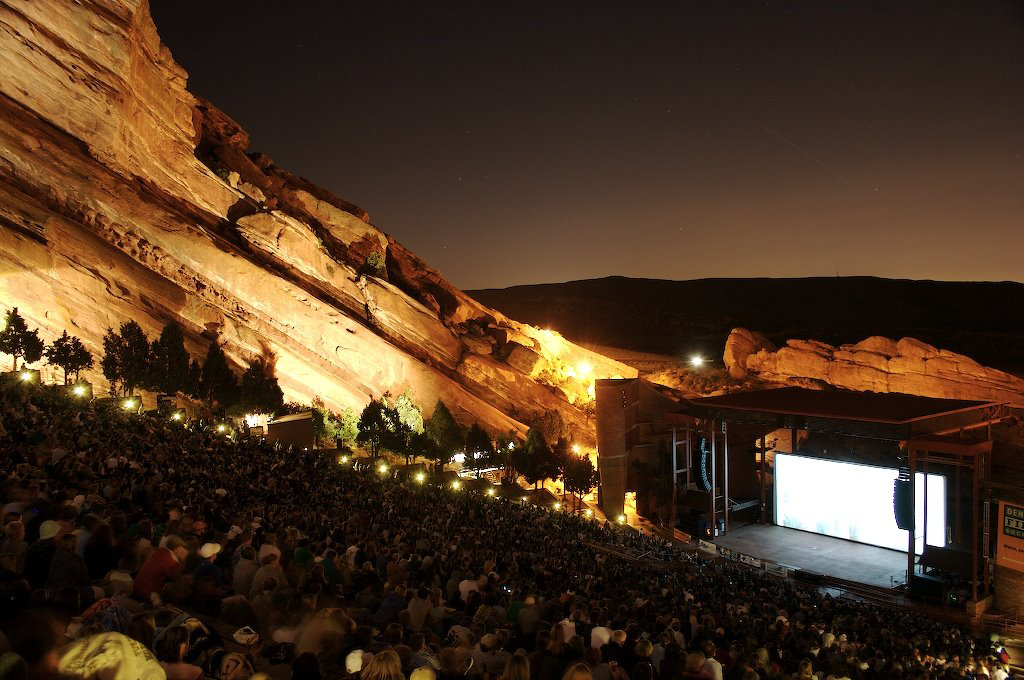
    Red Rocks Amphitheatre, a short drive from downtown Denver (Photo: a Wikimedia Commons contributor via Wikimedia Commons, CC BY-SA 3.0)

    Events that move Denver flight and hotel prices

    Cross-check these against your dates before you book. Exact dates shift each year; Visit Denver keeps the current calendar.

    • National Western Stock Show (about two weeks from early January).
    • Martin Luther King Jr. and Presidents’ Day weekends (third Mondays of January and February): major ski weekends.
    • Spring break (most of March, varying by school and state): the biggest ski-travel spike outside the holidays.
    • Memorial Day, the Fourth of July and Labor Day: the summer’s busiest travel weekends.
    • Denver PrideFest (a weekend in late June) and the Juneteenth Music Festival in Five Points.
    • Red Rocks concerts (spring to fall), which fill hotels on the nights of the biggest shows. Our Denver events page shows what is on sale for your dates.
    • Broncos home games (September to January), plus Nuggets and Avalanche playoff runs in spring.
    • Great American Beer Festival (early fall).
    • Thanksgiving, Christmas and New Year, and the ski weeks around them.
    • Large conventions at the Colorado Convention Center, which can fill downtown hotels on weeknights; if mid-week rates look strangely high, that is usually why.

    Getting in from the airport

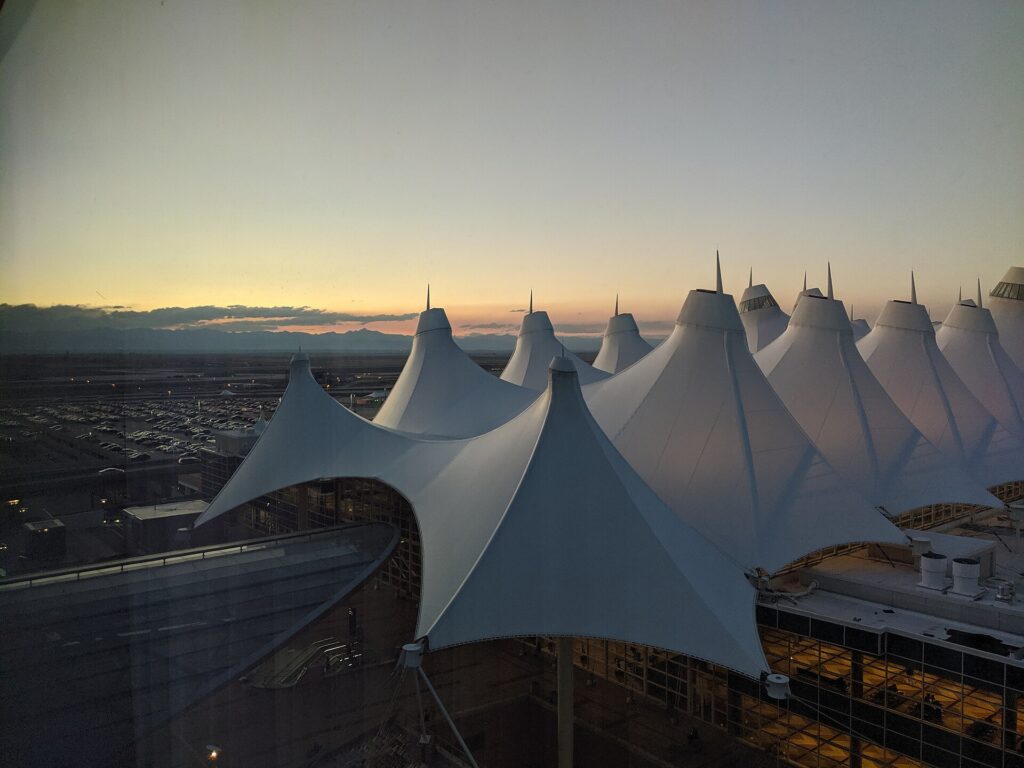
    Denver International Airport (DEN) sits on the open plains about 40 km (25 miles) northeast of downtown, and its white, peaked tent roof, designed to echo the snow-capped Rockies, is visible for miles. It is one of the largest airports in the world by land area and consistently one of the busiest by passengers, with a single main terminal and three concourses linked by an underground train. United runs a major hub here, Southwest has one of its largest operations, and Frontier is based in Denver; there are nonstop flights from almost every large U.S. city, from Canada and Mexico, and from several European and Asian hubs including London, Frankfurt, Munich, Reykjavik and Tokyo. Getting downtown: RTD’s A Line commuter train runs from a station at the south end of the terminal to Union Station in under 40 minutes, every 15 minutes for most of the day, and is by far the easiest option for a city stay. Taxis and ride-hail pick up on the terminal’s ground-transport level, and the drive downtown takes 30 to 50 minutes depending on traffic. Rental car companies are mostly off-airport, reached by shuttle buses from the terminal, so allow extra time both ways. Our Denver car-versus-transit guide works through whether you need a car, and our DEN airport guide covers the layout.
    The peaked white tent roof of the main terminal at Denver International Airport
    Denver International (DEN), whose tent roof echoes the snowy peaks of the Rockies (Photo: Peterquinn925 via Wikimedia Commons, CC BY-SA 4.0)

    Timing tricks that work for Denver

    • Search the whole month. Ski weekends, spring break and the big summer holidays create sharp edges in the fare calendar. A calendar search on TicketScanner shows them instantly, and the week after a holiday is often a bargain relative to the week of it.
    • Price the rental with the flight in ski season. Around Christmas, Presidents’ Day and spring break, all-wheel-drive rentals at DEN sell out and rates climb. Check our Denver car rental page for the same dates before you commit to the fare.
    • Book the hotel early for big weekends. A cheap fare is not cheap once a convention-week or concert-night room is added. Run a Denver hotel search for the same dates first.
    • Fly mid-week. Ski travelers leave on Friday and Saturday and return on Sunday, and business travelers fill Monday mornings and Thursday evenings; Tuesday and Wednesday in the middle of the day are usually the value.
    • Use the hub competition. With United, Southwest and Frontier all fighting for Denver traffic, compare all three, and remember that the cheapest fares may carry bag and seat fees that change the total.
    • Consider a road trip. Salt Lake City, about eight hours west by car, has its own big airport, and flights to Salt Lake City can make a one-way Rockies road trip work; our Denver to Salt Lake City route guide covers the drive.
    • Build a winter buffer. Spring snowstorms in March and April are more disruptive at DEN than midwinter cold, and summer thunderstorms cause afternoon delays. Avoid the tightest connections, and see our guide to how early to arrive for what to allow.
    • Flying out of Denver instead? The same seasonality applies in reverse; see cheap flights from Denver.
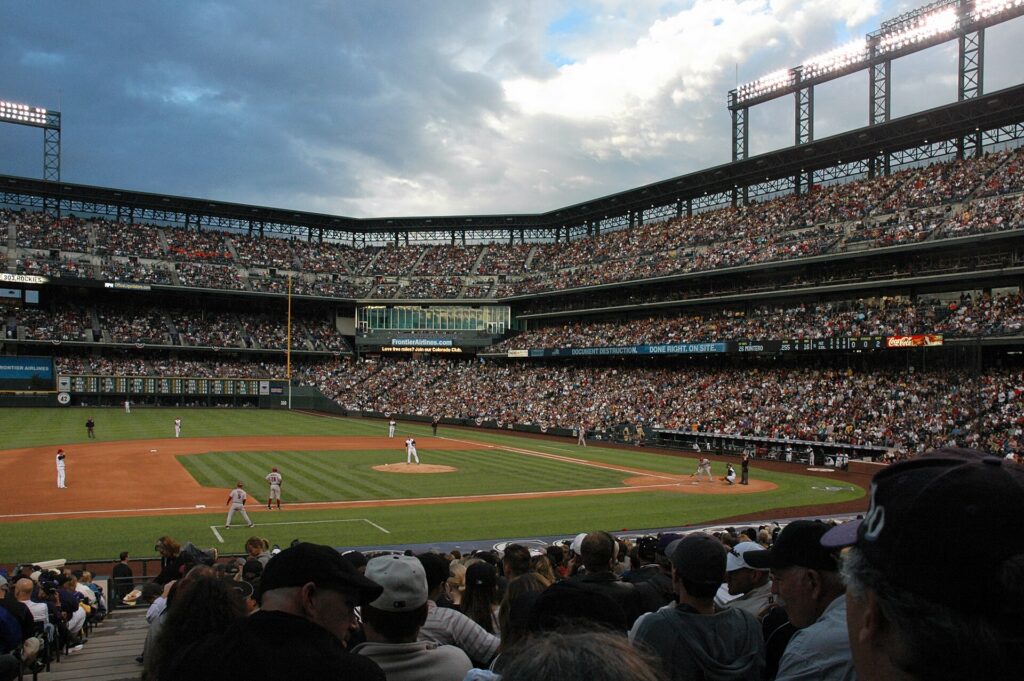
    A Colorado Rockies game at Coors Field in downtown Denver in summer
    A summer game at Coors Field in LoDo, part of the peak season that runs from June to August (Photo: DimiTalen via Wikimedia Commons, CC0)

    What to pack, by season

    Winter (December to February): a warm coat, a hat, gloves, boots with grip, and layers, because a 10 °C (50 °F) sunny afternoon can follow a frigid morning; for the mountains, full ski or snow gear. Spring (March to May): layers, a waterproof jacket and shoes that can handle slush, because a snowstorm is always possible. Summer (June to August): light clothing, a warm layer for cool evenings and for Red Rocks after dark, a rain shell for the afternoon storms, and serious sun protection. Fall (September to October): layers again, a warmer jacket by late October, and sunglasses year-round. In every season, bring a refillable water bottle and lip balm; the air is dry and the altitude makes you thirsty.

    The best time to fly to Denver for…

    Skiing

    January and early February for snow and value, March for deep snow and longer days if you avoid the spring-break weeks, with the Christmas weeks and Presidents’ Day the most expensive.

    Rocky Mountain National Park and summer hiking

    Late June to mid-September, when Trail Ridge Road and the high trails are open; reserve timed entry in advance and start hikes early to beat the afternoon storms.

    Fall color

    The second half of September, give or take a week depending on the year and the elevation; go mid-week to avoid the weekend crowds on the mountain roads.

    Red Rocks concerts

    June to September for the classic warm-evening experience; book tickets first, then the flight and the hotel.

    The lowest fares

    January after New Year, early November, and late April to mid-May.

    International visitors

    Visitors from Visa Waiver Program countries need an approved ESTA before boarding; most others need a visa. The State Department’s travel site explains what applies to you, and the TSA lists what you can carry through security. Rocky Mountain National Park charges an entrance fee and uses timed-entry permits in season.

    Frequently asked questions

    What is the cheapest month to fly to Denver?

    January after the holidays is consistently among the lowest, followed by early November and the spring shoulder from late April to mid-May.

    What is the best month to visit Denver for weather?

    September, with warm, dry days and cool nights, followed by June and early October. July is hot; March is snowy.

    When is ski season near Denver?

    Roughly mid-November to mid-April, with some high-elevation areas opening earlier and closing later. The busiest and priciest weeks are Christmas, Presidents’ Day and spring break.

    Does it snow a lot in Denver?

    The city gets regular snow from October to April, heaviest in March, but it usually melts within a few days under the strong sun. The mountains get far more and keep it.

    Will the altitude affect me when I land?

    Most visitors notice only thirst and faster tiredness in the city. Drink water, go easy on alcohol the first night, and give yourself a day before strenuous activity higher up in the mountains.

    How far ahead should I book?

    Earliest for the ski holidays, spring break and June to August, when fares tend only to rise; for the shoulder and low seasons, fares are stable enough that finding the right dates matters more than booking months out.

    Is Denver or Colorado Springs better to fly into?

    Denver, for most trips: far more routes and usually lower fares. Colorado Springs is worth checking only if your trip is based there.

    Ready to pick your dates? Compare fares across the whole month on our Denver flights page, then find a room with our Denver hotel search. For what to do when you land, start with our first-timer’s guide to Denver, and before you pick up a car, read whether you need one.

  • Best Time to Fly to Dallas: Seasons, Weather & Prices

    Best Time to Fly to Dallas: Seasons, Weather & Prices

    Dallas does not have a single tourist season the way a beach town or a ski resort does, and that makes its airfares more interesting than most. It is one of the largest business-travel markets in the country, with corporate headquarters, conventions and trade shows filling planes and hotels on weekdays all year. It has two major airports, one of them the biggest hub of the world’s largest airline, which keeps seat supply enormous and competition real. And its leisure calendar is shaped by a climate of mild winters, stormy springs, fierce summers and golden falls, with a three-week state fair and a college football rivalry that fill the city every October. The result is a place where the “best time” depends on whether you care most about weather, price or a particular event, and where the answer is often different for flights and for hotels. This guide walks through the weather month by month, the fare seasons, the events that move prices, and how to choose between DFW and Love Field.
    The short answer

    For weather and things to do, the best windows are mid-March to early May, when spring is green, the Arboretum is in bloom and patios are full, and October to early November, when the heat breaks, the State Fair is on and football fills every weekend. The cheapest fares tend to come in January and early February, after the holidays, and in late August and September before the fair, when the heat keeps leisure travelers away. For hotels, summer is the bargain season and Friday and Saturday nights downtown are often cheaper than weeknights. The most expensive stretches are spring break in mid-March, State Fair weekends and Texas-OU weekend in October, Thanksgiving, and the Christmas and New Year holidays. Whatever you choose, run a flexible-date search on our Dallas flights page; with two airports and hundreds of daily flights, a shift of a day or two often changes the fare band entirely.

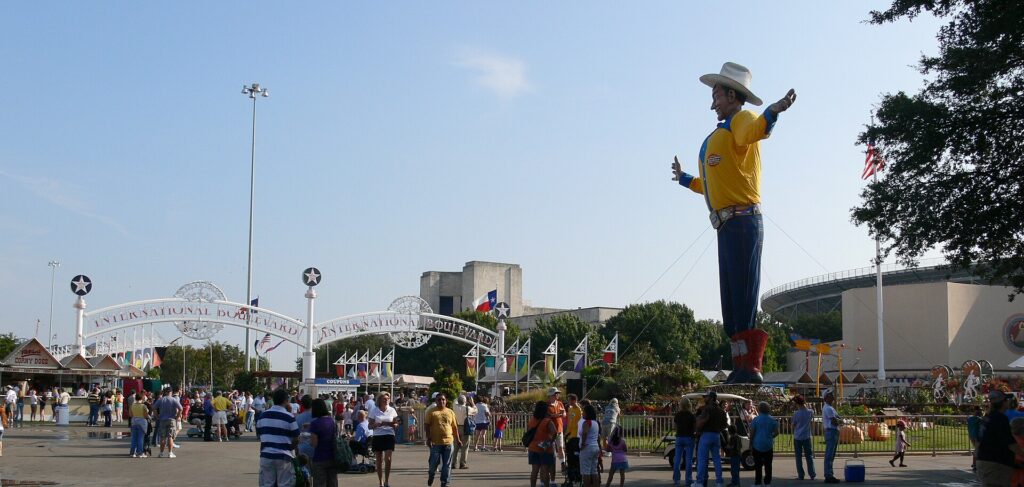
    Big Tex, the giant cowboy that greets visitors to the State Fair of Texas in Fair Park
    Big Tex at the State Fair of Texas, three and a half weeks every fall that lift hotel rates across Dallas (Photo: Photo: Andreas Praefcke via Wikimedia Commons, CC BY 3.0)

    Dallas’s weather, season by season

    Dallas sits on the North Texas prairie, far from any ocean or mountain range, and that exposure defines its climate: hot, humid air from the Gulf of Mexico in summer, cold fronts sweeping down from the Great Plains in winter, and the collision of the two in spring, which produces some of the most violent thunderstorms in the country. The figures below are approximate seasonal patterns based on the long-term DFW Airport climate normals from NOAA’s National Weather Service; check the current forecast before you pack, because a North Texas cold front can drop the temperature by 20 degrees in an hour.

    MonthTypical daytime highTypical overnight lowWhat it feels likeFare pressure
    Januaryaround 14 °C (57 °F)around 3 °C (37 °F)Mild and often sunny; hard freezes and the odd ice stormLow after New Year’s week
    Februaryaround 16 °C (61 °F)around 5 °C (41 °F)Changeable; warm days and sharp cold snapsLow; rises for Presidents’ Day weekend
    Marcharound 21 °C (69 °F)around 9 °C (49 °F)Spring arrives; windy, with the first stormsHigh for spring break
    Aprilaround 25 °C (77 °F)around 13 °C (56 °F)Warm and green; bluebonnets; severe storms possibleModerate to high
    Mayaround 29 °C (85 °F)around 18 °C (65 °F)The wettest month; humid, with thunderstorms and hailModerate; graduations and Memorial Day
    Junearound 34 °C (93 °F)around 23 °C (73 °F)Hot and humid; storms fade as summer settles inModerate
    Julyaround 36 °C (97 °F)around 25 °C (77 °F)Very hot; 100 °F afternoons are routineModerate for flights; low for hotels
    Augustaround 36 °C (97 °F)around 24 °C (76 °F)The hottest stretch; warm even at midnightLow to moderate
    Septemberaround 32 °C (89 °F)around 21 °C (69 °F)Still summer for most of the month; relief arrives lateLow, rising as the State Fair opens
    Octoberaround 26 °C (79 °F)around 14 °C (58 °F)Warm, dry and bright; the best month for manyHigh, with a Texas-OU spike
    Novemberaround 19 °C (67 °F)around 8 °C (47 °F)Pleasant and mild; the first cold frontsModerate, peak at Thanksgiving
    Decemberaround 14 °C (58 °F)around 4 °C (39 °F)Cool and mostly dry; festive lightsLow until mid-month, then peak

    Three things the table cannot show. First, the spring storms: from March to June, North Texas sits in the path of supercell thunderstorms that can bring large hail, damaging wind, flash flooding and, occasionally, tornadoes. They usually pass in an hour or two, but they can halt operations at DFW and Love Field, delaying flights across the country. Second, the heat: the averages understate a Dallas summer, when a run of 100 °F days with warm, humid nights is normal, pavement radiates heat long after sunset, and a midday walk between museums feels much longer than it looks on the map. Third, the ice: Dallas winters are mild on average, but most years bring a day or two of freezing rain or sleet, and because the city has little equipment for it, an ice storm can close roads, schools and airport runways far more readily than snow does in the North.

    How Dallas’s fare seasons work

    Three calendars drive seats into Dallas. The first is business travel: the metro area is home to a long list of corporate headquarters, including both American Airlines and Southwest Airlines, and its convention center and hotels host trade shows year-round, which keeps Monday-morning and Thursday-evening flights full and weekday hotel rates high. The second is events: the State Fair, college and professional football, big concerts at AT&T Stadium and the holidays create sharp, predictable spikes. The third is leisure, which follows the weather: strong in spring and fall, weak in the heat of summer. On top of all that, the sheer volume of flights through DFW and Love Field keeps fares from most U.S. cities competitive, so Dallas rarely has the sustained price plateaus of a destination like Hawaii or the Rockies.
    Peak season

    Mid-March for spring break, October for the State Fair and football, Thanksgiving week, and roughly December 18 to January 2. Texas-OU weekend, usually the second Saturday of October, is the single biggest hotel squeeze of the fall, and the Christmas holidays push up fares because so many Texans fly out while visitors fly in. If you must travel in peak, book early, fly mid-week, and compare both airports.

    Shoulder season

    April to early June and early November. Spring is lovely and busy with conventions and graduations, and May’s storms bring the occasional disruption; early November, after the fair has closed, offers some of the best weather of the year at noticeably lower hotel rates, until Thanksgiving week.

    Low season

    Early January to early March outside the holiday weekends, and July through September. Winter is the value play for flights, with mild weather most days, and summer is the value play for hotels, which discount heavily when the leisure market disappears into the heat. Pack for 100 °F and plan your days around air conditioning and the result can be a very good-value trip.

    As elsewhere, mid-week departures and early or late flights usually price below Friday and Sunday afternoons on the same route, and a search across a whole month reveals cheaper pairs of dates close to your first choice. Our guide to the best times to book explains how to read those patterns.

    Dallas month by month

    January

    Mild, usually sunny and, after the first week, one of the cheapest months to fly in. The Cotton Bowl Classic at AT&T Stadium around New Year brings a burst of college football fans; after that, the city settles into a quiet stretch of conventions, Mavericks and Stars games at the American Airlines Center, and uncrowded museums. Watch the forecast for ice, which can close the airports for a day.

    February

    Changeable, with springlike afternoons interrupted by sharp cold fronts, and low fares outside Presidents’ Day weekend. Dallas Blooms usually opens at the Arboretum in late February, and it is a good month for museums, restaurants and a basketball or hockey game.

    March

    Spring arrives with wind, warmth and the first thunderstorms. Texas school districts take spring break in mid-March, which fills flights out of Dallas and hotels at family destinations nearby, and the week around it is one of the priciest of the spring. The Lower Greenville St. Patrick’s Day parade and the Arboretum’s tulips are the highlights; book around spring break and late March is excellent.
    April

    The best month for many visitors: warm, green, and with bluebonnets and other wildflowers along the highways outside the city. The Deep Ellum Arts Festival and the Dallas International Film Festival usually fall in spring, the Rangers open their season, and the Mavericks and Stars may begin playoff runs. Severe storms are possible on any afternoon, so keep an eye on warnings.

    May

    Warm, humid and usually the wettest month, with big thunderstorms, hail and the occasional flash flood. Graduations and Memorial Day weekend lift demand, and convention calendars stay busy. Early May is a solid shoulder-season option; build a buffer into connections in case storms delay flights.

    June

    Summer settles in, the storms fade and the heat builds, with highs in the 90s °F by midmonth. Families fly out for vacations, which can make outbound flights busier than inbound ones. Hotel rates begin their summer slide, and evenings at Klyde Warren Park and on the patios are pleasant after dark.

    July

    Very hot, with 100 °F afternoons routine. Fourth of July fireworks draw crowds across the metro, and the Rangers play under their retractable roof. Flights are priced for summer demand from across the country, but hotel rates are among the lowest of the year; this is a good month for a museum-and-restaurant city break if you plan around the heat.

    August

    The hottest stretch, with warm nights and little rain. Leisure demand is at its lowest, school starts early in Texas, and both fares and hotel rates tend to soften in the second half of the month. Come for the value and the indoor attractions, not for walking tours.

    September

    Summer hangs on for most of the month, with relief arriving only in the last week or two. Fares are low early on, college and NFL football begin, and the State Fair of Texas opens in late September, which lifts hotel demand on weekends from then until mid-October.

    October

    The heat breaks, the air dries out, and Dallas is at its best. The State Fair runs through most of the month, with Big Tex, fried everything and free concerts at Fair Park, and the Red River Showdown between Texas and Oklahoma at the Cotton Bowl brings the biggest hotel squeeze of the fall. Add Cowboys home games and busy convention calendars and October is a peak month; book early.

    November

    Mild, often sunny and quieter once the fair has closed, with pleasant weather and softer hotel rates in the first three weeks. Autumn at the Arboretum continues, and holiday lights come on late in the month. Thanksgiving is the exception, with a peak in fares around the holiday and the Cowboys’ traditional home game on the day itself.

    December

    Two months in one. The first half is quiet and good value, with cool weather, holiday lights in Highland Park and the Dallas Marathon. From about December 18, fares jump for the Christmas and New Year holidays as millions of Texans fly out to family and visitors fly in, and the Cotton Bowl brings college football crowds at the turn of the year.

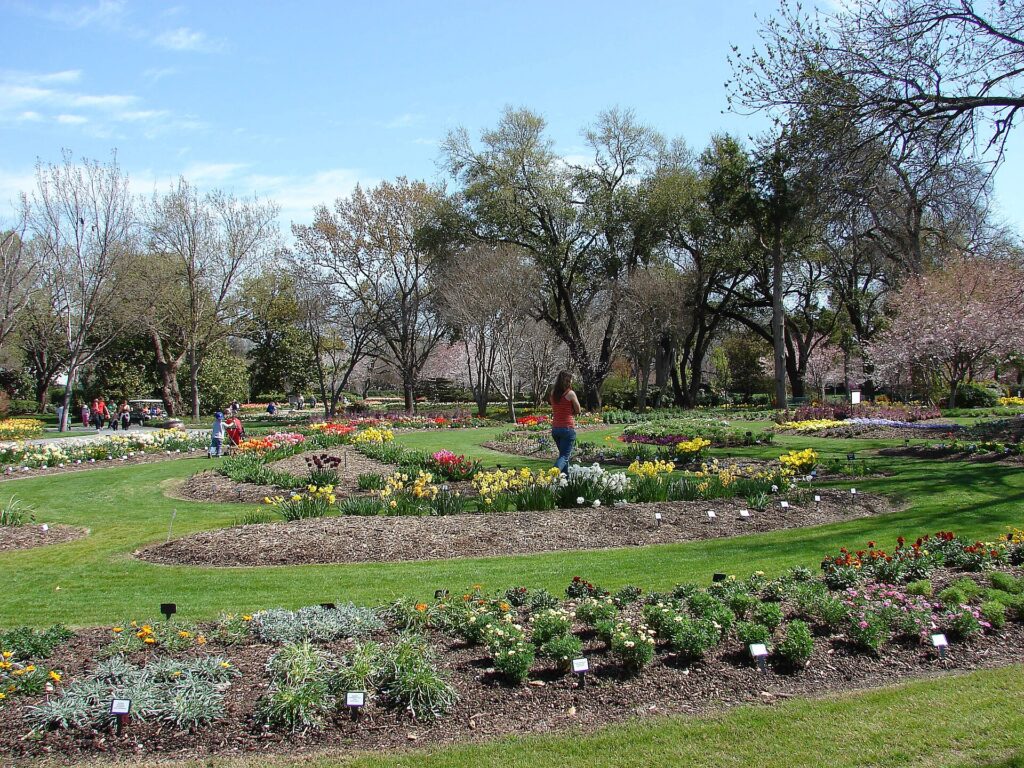
    Flower beds in bloom at the Dallas Arboretum and Botanical Garden
    The Dallas Arboretum in spring, when Dallas Blooms fills the gardens beside White Rock Lake (Photo: Loadmaster (David R. Tribble)

    This image was made by Loadmaster (David R. Tribble).
    Email the author: David R. Tribble
    Also see my personal gallery at Google Photos via Wikimedia Commons, CC BY-SA 3.0)

    Events that move Dallas flight and hotel prices

    Cross-check these against your dates before you book. Exact dates shift each year; Visit Dallas keeps the current calendar.

    • Cotton Bowl Classic (around New Year at AT&T Stadium): a college football crowd on top of the holiday peak.
    • Presidents’ Day weekend (third Monday of February).
    • Texas spring break (mid-March): the biggest family-travel week of the spring.
    • Dallas Blooms (late February to early April): a draw for weekend visitors to the Arboretum.
    • Graduation season and Memorial Day (May).
    • State Fair of Texas (about three and a half weeks from late September into October): weekend hotel rates rise across the city.
    • Texas-OU weekend (usually the second Saturday of October): the single largest hotel spike of the fall.
    • Thanksgiving and the Cowboys’ home game, then Christmas to New Year.
    • Big concerts, playoff runs and major conventions, which can fill downtown hotels on short notice. Our Dallas events page shows what is on sale for your dates.

    Getting in from the airport

    Dallas has two commercial airports, and choosing between them is part of finding the best fare. Dallas Fort Worth International (DFW), halfway between the two cities and about 32 kilometers (20 miles) from downtown Dallas, is one of the busiest airports in the world and the largest hub of American Airlines, with nonstop flights to most of the country and to Europe, Asia and Latin America. Its five terminals are linked airside by the Skylink train, and the airport covers more land than Manhattan. The DART Orange Line runs from Terminal B to downtown Dallas in about 50 minutes, TEXRail runs to downtown Fort Worth, and taxis, ride-hail and the shuttle buses to the consolidated Rental Car Center leave from every terminal. Dallas Love Field (DAL), only about 10 kilometers (6 miles) northwest of downtown, is a smaller single-terminal airport dominated by Southwest Airlines, which has its headquarters there; it serves mainly domestic routes and is by far the quicker ride into the city, about 15 to 20 minutes by car, with a DART shuttle bus to the light rail. Compare both for your dates: the cheapest option often alternates between them. Our DFW airport guide covers the terminals, and our Dallas car-versus-transit guide covers the ride in.

    The Skylink train running past Terminal E at Dallas Fort Worth International Airport
    The Skylink train at DFW, which links all five terminals of one of the busiest airports in the world (Photo: Lars Plougmann from United States via Wikimedia Commons, CC BY-SA 2.0)

    Timing tricks that work for Dallas

    • Search both airports. DFW and Love Field serve different mixes of airlines, and the cheaper one changes from week to week. A flexible-date search on TicketScanner shows both at once.
    • Book the hotel first in October. A cheap fare into Texas-OU weekend is not cheap once the room is added. Run a Dallas hotel search for the same dates before you commit to either.
    • Stay over the weekend. Business travel makes downtown and Uptown hotels busiest Monday to Thursday; Friday and Saturday nights are often much cheaper, and so are Saturday flights.
    • Use the heat to your advantage. July and August bring the lowest hotel rates of the year; plan museums, the aquarium and a Rangers game under the roof, and save outdoor time for mornings and evenings.
    • Fly early in storm season. From March to June, thunderstorms tend to build in the afternoon and evening; morning departures and connections through Dallas are less likely to be caught in ground stops. Our guide to how early to arrive covers what to allow.
    • Consider a Texas road trip. Fares into Houston sometimes undercut Dallas, and a one-way rental between the two cities is a classic four-hour drive on I-45.
    • Flying out of Dallas instead? The same seasonality applies in reverse, with spring break and the holidays the tightest; see cheap flights from Dallas.
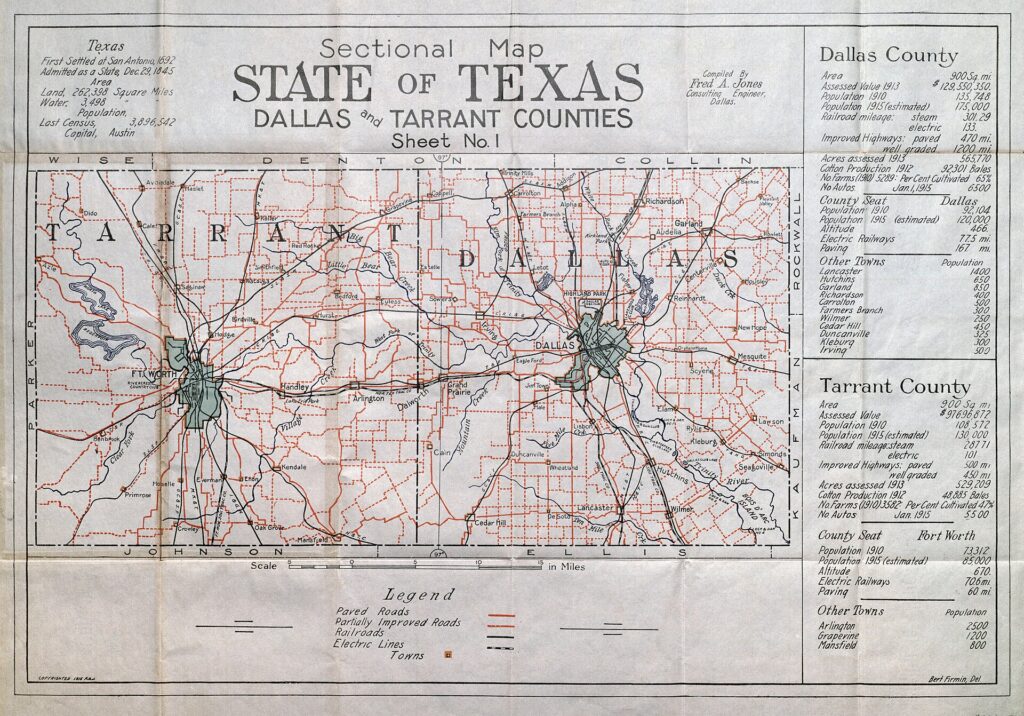
    The north side of White Rock Lake in east Dallas
    White Rock Lake, where Dallas walks, cycles and paddles in the cooler hours (Photo: Fred A. Jones Bert Firmin via Wikimedia Commons, Public domain)

    What to pack, by season

    Winter (December to February): a medium jacket, layers and something warmer for the cold snaps and ice days, when the wind makes it feel much colder than the number. Spring (March to May): light layers, a rain jacket and an umbrella for the storms, and sunscreen for the bright afternoons. Summer (June to September): the lightest clothing you own, a hat, sunscreen and a refillable water bottle, plus a light layer for aggressively air-conditioned museums, restaurants and planes. Fall (October to November): summer clothes for the afternoons and a sweater for the evenings, with a jacket by late November. Dallas dresses up more than many American cities, so bring something smart for the steakhouses and the Arts District, and boots if you plan to two-step in Fort Worth.

    The best time to fly to Dallas for…

    The State Fair

    A weekday in the first or third week of the fair, when crowds are smaller and hotels cheaper than on the weekends; book the room first if Texas-OU weekend is the goal.
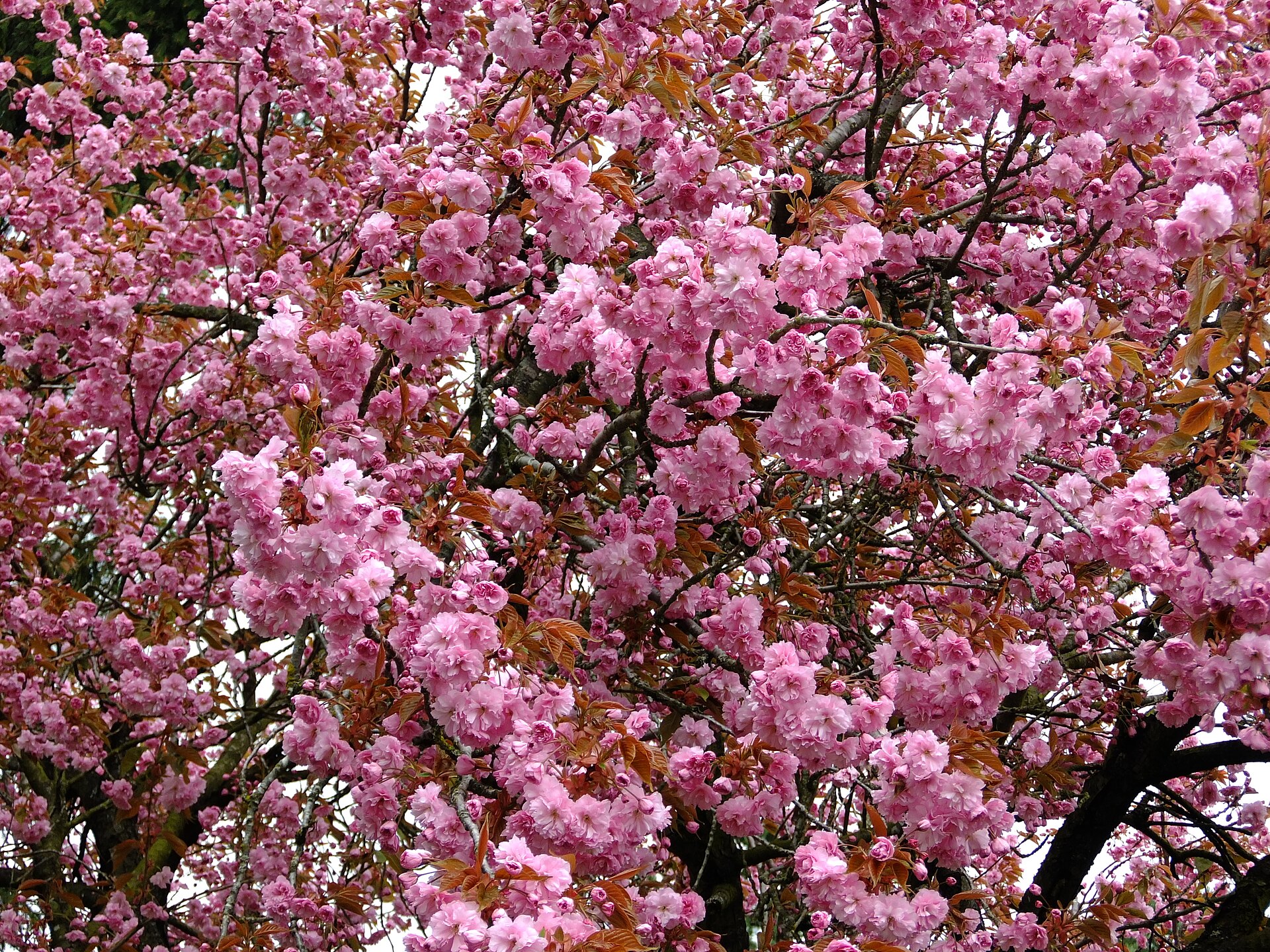
    A Cowboys game

    September to December, with Thanksgiving Day the most famous home game of the season. Arlington is not on rail, so plan transport to AT&T Stadium in advance.

    Spring flowers and patios

    Late March to April, avoiding spring break week, for Dallas Blooms, wildflowers along the highways and the best patio weather of the year.

    The lowest fares

    January after the first week, early February, and late August into September. Pair winter with museums and basketball, and summer with a pool.

    Families

    Early June, before the peak heat, or the fall weekends outside Texas-OU, when the fair, the zoo and the Perot Museum are all at their best.

    International visitors

    Travelers from Visa Waiver Program countries need an approved ESTA before boarding; most others need a visa. The State Department’s travel site explains what applies to you, and the TSA lists what you can carry through security.

    Frequently asked questions

    What is the cheapest month to fly to Dallas?

    January after New Year’s week is consistently among the lowest, followed by early February and late August into September. Hotels are cheapest in July and August.

    What is the best month to visit Dallas for weather?

    October, with April and early November close behind. Summer is very hot, and May is warm but stormy.

    Should I fly into DFW or Love Field?

    Compare both. DFW has far more airlines and international flights and a direct train to downtown; Love Field is much closer to the city and is Southwest’s home base. The cheaper option changes with your dates.

    How hot does Dallas get in summer?

    Afternoon highs in July and August are typically in the upper 90s °F, around 36 °C, and 100 °F days are routine, with warm, humid nights.

    When is tornado season in Dallas?

    Severe weather peaks from March to June. Storms are usually brief and well forecast; follow local warnings, and expect possible flight delays on stormy afternoons.

    How far ahead should I book?

    Earlier for spring break, October, Thanksgiving and the Christmas holidays, when fares tend only to rise; for January, February and late summer, fares are stable enough that picking the right dates matters more.

    Does it snow in Dallas?

    Rarely, and usually not much. Freezing rain and ice are the bigger winter hazard, and even a thin layer can close roads and delay flights for a day or two.

    Ready to pick your dates? Compare fares across the whole month on our Dallas flights page, then find a room with our Dallas hotel search. For what to do when you land, start with our first-timer’s guide to Dallas.

  • Best Time to Fly to Chicago: Seasons, Weather & Prices

    Best Time to Fly to Chicago: Seasons, Weather & Prices

    Chicago is one of the easiest cities in America to fly to, and one of the trickiest to time. O’Hare is a hub for both United and American, Midway is one of Southwest’s biggest bases, and between them there are nonstop flights from almost every city in North America and from dozens abroad, which keeps fares competitive for most of the year. What moves the price of a Chicago trip is less the flight than the city’s calendar: a summer so good that the whole Midwest wants to be on the lakefront, a festival season that fills Grant Park most weekends, a marathon in October, a holiday season on the Magnificent Mile, and above all the convention center, McCormick Place, the largest in North America, whose trade shows can fill every downtown hotel room on a random Tuesday in spring. Then there is winter, which is cold enough to make January the cheapest month of the year. This guide walks through the weather month by month, the fare and hotel seasons, the events that move prices, and how to handle the two airports.

    The short answer

    For the best balance of weather and price, go in late May to mid-June, when the lakefront comes alive before the summer peak, or in September to mid-October, when the weather is often the best of the year and the summer crowds have gone. The cheapest fares and hotel rates come in January and February, after the New Year week, and in the first half of March, when the city is cold, the museums are quiet and the hotels are hungry. The most expensive stretches are June to August, especially festival weekends like Lollapalooza, marathon weekend in October, the holiday weeks from Thanksgiving to New Year, and any week when a major convention is in town, which can happen in almost any month. Whatever you choose, run a flexible-date search on our Chicago flights page; a shift of a few days, or a switch between O’Hare and Midway, can change the fare band entirely.

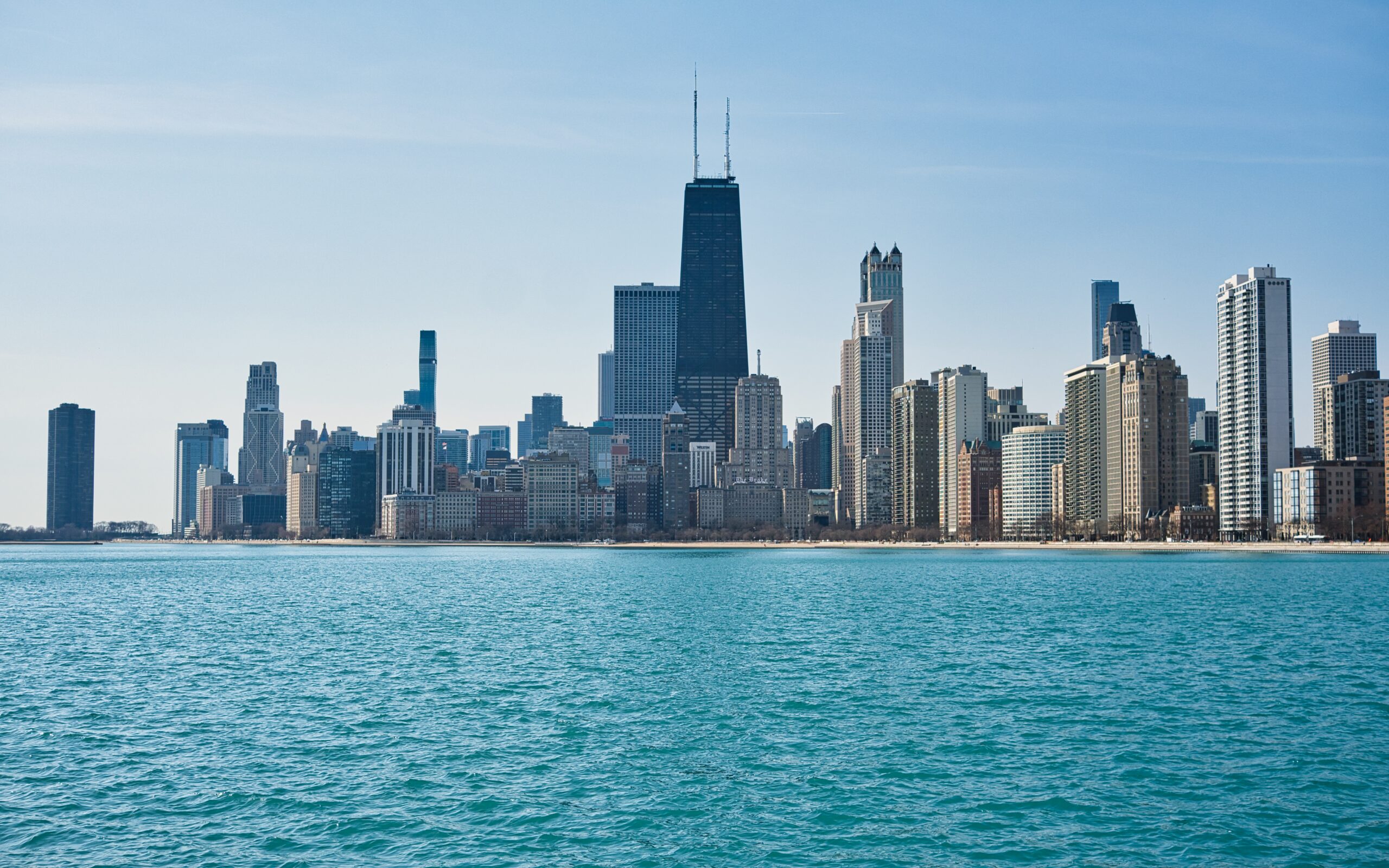
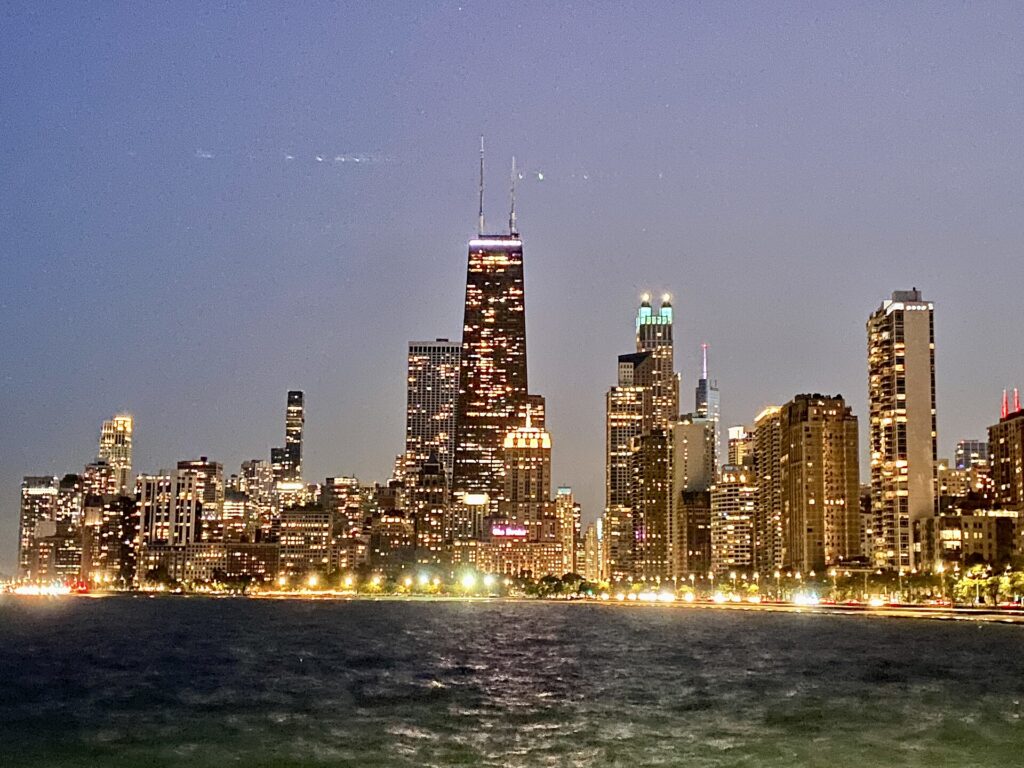
    The Chicago skyline from North Avenue Beach on Lake Michigan
    North Avenue Beach, where Chicago spends its summer, and the reason June to August is peak season (Photo: w_lemay via Wikimedia Commons, CC BY-SA 2.0)

    Chicago’s weather, season by season

    Chicago has a continental climate moderated, sometimes, by Lake Michigan. Winters are cold and windy, with snow from December to March and occasional Arctic outbreaks that push wind chills far below zero; spring comes late, and the lake keeps the shore cool into June; summers are warm to hot and humid, with thunderstorms; and fall is long, dry and clear. The figures below are approximate seasonal patterns based on the long-term climate normals from NOAA’s National Weather Service office for Chicago; check the current forecast before you pack, because a spring day by the lake can be 10 degrees cooler than the same day at O’Hare.

    MonthTypical daytime highTypical overnight lowWhat it feels likeFare pressure
    Januaryaround 0 °C (32 °F)around -8 °C (18 °F)Cold, gray and windy; Arctic snaps bring bitter wind chillsLow after New Year’s week
    Februaryaround 2 °C (36 °F)around -6 °C (21 °F)Still deep winter; the snowiest month in some yearsLow; rises for the Auto Show and Presidents’ Day
    Marcharound 8 °C (47 °F)around -1 °C (30 °F)Raw and changeable; a warm day, then snowLow to moderate; spring break and St. Patrick’s weekend
    Aprilaround 15 °C (59 °F)around 4 °C (40 °F)Spring in fits and starts; cool by the lake, rain showersModerate
    Mayaround 21 °C (70 °F)around 10 °C (50 °F)Green and pleasant, but the lakefront can stay chillyModerate; conventions and Memorial Day push it up
    Junearound 27 °C (80 °F)around 16 °C (60 °F)Warm, long days; beaches open; thunderstormsHigh
    Julyaround 29 °C (84 °F)around 19 °C (66 °F)Hot and humid, with heat waves; the lake breeze helpsPeak
    Augustaround 28 °C (82 °F)around 18 °C (64 °F)Hot and humid; the warmest lake swimming of the yearHigh, easing late in the month
    Septemberaround 24 °C (75 °F)around 13 °C (56 °F)Often the best month: warm, dry and sunnyModerate to high
    Octoberaround 17 °C (62 °F)around 7 °C (44 °F)Crisp and clear; fall color in the parksModerate, with a marathon spike
    Novemberaround 9 °C (48 °F)around 1 °C (33 °F)Gray and cooling fast; first snow possibleLow, then high for Thanksgiving
    Decemberaround 2 °C (36 °F)around -5 °C (23 °F)Cold and festive; snow likely by the holidaysModerate early, then peak for the holidays

    Three things the table cannot show. First, the wind chill: Chicago’s nickname has nothing to do with the weather, but the wind off the lake and down the canyons of the Loop makes a -5 °C (23 °F) day feel much colder, and an Arctic outbreak in January or February can push the wind chill to levels where exposed skin is at risk within minutes. Second, the lake effect: in spring and early summer, an onshore breeze can drop the temperature along the shore by 10 degrees or more in an hour, which is why forecasts say “cooler by the lake”, and in winter the lake can add bands of snow. Third, the thunderstorms: summer storms roll in fast from the west, and they are the main cause of delays at O’Hare between June and August, not the snow.

    How Chicago’s fare seasons work

    Three calendars drive demand for Chicago. The first is the leisure season, which is heavily weighted to summer, when the lakefront, the festivals and the ballparks draw visitors from across the Midwest and the country. The second is the convention calendar: McCormick Place and the big downtown hotels host trade shows and medical and industry conferences through most of the year, and a single large show can fill the city’s hotels and lift weekday fares in any month except the depth of winter. The third is the hub effect: because O’Hare and Midway are major connecting airports with heavy competition among United, American and Southwest, airfares to Chicago are often lower than the city’s popularity would suggest, and the hotel is usually the bigger variable in the trip.

    Peak season

    June to August, marathon weekend in October, and roughly the week of Thanksgiving through New Year’s Day. Summer brings the highest hotel rates of the year, with the festival weekends, the Fourth of July and Lollapalooza at the top; the holidays bring demand for the Magnificent Mile lights, the Christkindlmarket and family visits. If you must travel in peak, book early, fly mid-week, and compare hotels across neighborhoods rather than only downtown.

    Shoulder season

    April to May and September to early November. Late May and early June give you long days and blooming parks before the summer surge; September and October give you the city’s most reliable weather. These are also the busiest months for conventions, so check for a large show before you book: a week that looks cheap in the airfare calendar can still carry a hotel spike.

    Low season

    January to mid-March, outside the New Year week and the big February events. Fares and hotel rates are at their lowest, the theaters, museums and restaurants are quiet, and the Bulls and Blackhawks are in season. The trade-off is real cold. Build a buffer into connections, because snowstorms can ground flights at O’Hare for a day, and pack for wind chills below freezing even on a “mild” day.

    As elsewhere, mid-week departures and early or late flights usually price below Friday and Sunday afternoons on the same route, and a search across a whole month reveals cheaper pairs of dates close to your first choice. Our guide to the best times to book explains how to read those patterns.

    Chicago month by month

    January

    The cheapest month of the year to fly and to stay, after the first week. It is also the coldest, with gray skies, regular snow and the possibility of a polar blast. The upside is a city to yourself: no lines at the Art Institute or the Field Museum, easy restaurant reservations, the ice rink in Millennium Park, Bulls and Blackhawks games at the United Center, and the underground Pedway to get around the Loop without a coat. Chicago Restaurant Week, a multi-week run of set-price menus across the city, usually starts in late January or early February.

    February

    Similar weather and low fares, with two exceptions: the Chicago Auto Show at McCormick Place, one of the largest in the country, which fills downtown hotels for about ten days, and the Presidents’ Day weekend. Otherwise February is excellent value for a museum, theater and food trip.

    March

    Raw and changeable, with snow and sixty-degree days in the same week. The river turns green for the St. Patrick’s Day parade weekend, which draws huge crowds downtown, and college spring breaks lift fares in the second half of the month. The first half of March remains one of the cheapest windows of the year.

    April

    Spring arrives, unevenly: the tulips on Michigan Avenue bloom, the Cubs and White Sox open their seasons in weather that can include snow, and the lake keeps the shore cool. Fares are moderate and hotel rates begin to climb, and the first large conventions of the year appear. A good month for the city if you pack layers and do not plan on the beach.

    May

    Green, pleasant and busy. The National Restaurant Association Show and other large conventions at McCormick Place fill hotels for parts of the month, and Memorial Day weekend, when the beaches officially open, is the start of summer. The Riverwalk and the patios come back to life. Book around the big shows and late May is a lovely time to visit.

    June

    Long days, warm weather and the start of the festival season: the Chicago Blues Festival in Millennium Park, the free Grant Park Music Festival concerts, street festivals in the neighborhoods nearly every weekend, and the Pride Parade on the last Sunday of the month. Fares and hotel rates climb through the month; early June is the value play.

    July

    Peak summer. The Fourth of July fireworks, the beaches, the rooftop bars, the ballparks and the architecture cruises are all at full capacity, and the weather is hot and humid with the occasional heat wave. Hotel rates are near their annual high, and Lollapalooza, which can start at the end of July, pushes them higher still.

    August

    Lollapalooza fills Grant Park for four days in late July or early August, and the Chicago Air and Water Show takes over the lakefront sky later in the month. The lake is at its warmest for swimming, the city is at its liveliest, and the last week, once schools start, brings slightly softer prices. Thunderstorms are the main travel hazard.

    September

    The month many Chicagoans would pick: warm and dry, with the beach still usable for the first few weeks and the humidity gone. The Chicago Jazz Festival fills Labor Day weekend, and the Bears’ season begins at Soldier Field. It is also a heavy convention month, so hotel rates can be higher than the weather-and-crowds picture suggests.

    October

    Crisp, clear and colorful in Lincoln Park and along the lakefront. The Chicago Marathon, on a Sunday in early-to-mid October, is one of the world’s major marathons, and that weekend is among the most expensive of the year for hotels. Open House Chicago, when buildings across the city open their doors for free, is a highlight for architecture lovers. Outside marathon weekend, October is excellent value.

    November

    Gray and cooling, with the first snow possible late in the month. The first half is quiet and cheap. The Magnificent Mile Lights Festival on the weekend before Thanksgiving opens the holiday season, the Christkindlmarket opens in Daley Plaza, and Thanksgiving week brings a sharp spike in fares as the whole country travels.

    December

    Two months in one. The first half is festive and moderately priced: the lights, the tree in Millennium Park, the markets, the windows on State Street, holiday shows at the theaters. From about December 18, fares rise sharply for Christmas and New Year, and New Year’s Eve hotel rates downtown are among the highest of the winter.

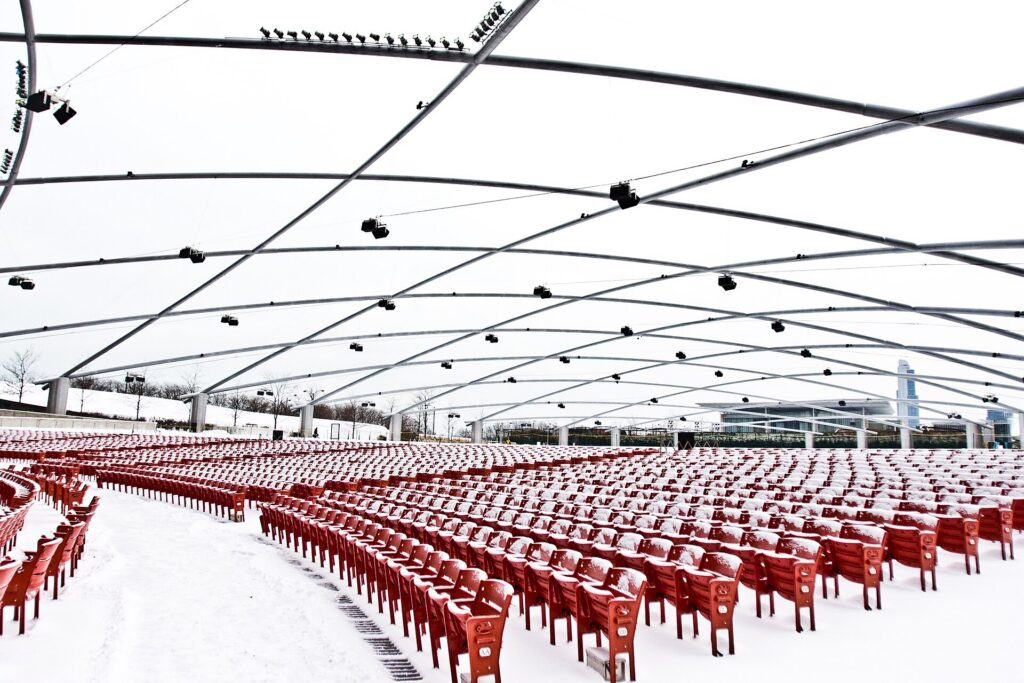
    Millennium Park in downtown Chicago under snow in winter
    Chicago in winter: cold, windy and the cheapest time of year to visit (Photo: Tony Webster via Wikimedia Commons, CC BY-SA 3.0)

    Events that move Chicago flight and hotel prices

    Cross-check these against your dates before you book. Exact dates shift each year; Choose Chicago, the city’s official tourism site, keeps the current calendar.

    • Chicago Auto Show (February, about ten days at McCormick Place).
    • St. Patrick’s Day parade weekend (usually the Saturday before March 17), when the river is dyed green.
    • Major conventions at McCormick Place, which can fill downtown hotels in any month but cluster in spring and fall; if weekday rates look strangely high, that is usually why.
    • Memorial Day weekend (last Monday of May): the start of beach season.
    • Blues Festival and Pride (June), and the Fourth of July.
    • Lollapalooza (four days in late July or early August): the single biggest summer hotel spike.
    • Air and Water Show (August) and the Jazz Festival (Labor Day weekend).
    • Chicago Marathon (a Sunday in early-to-mid October).
    • Thanksgiving through New Year’s Day, with the Lights Festival the weekend before Thanksgiving.
    • Home games and concerts: Cubs and White Sox from April to September, Bears from September, Bulls and Blackhawks from October. Our Chicago events page shows what is on sale for your dates.

    Getting in from the airports

    Chicago has two commercial airports, both run by the city’s Department of Aviation. O’Hare International (ORD), about 27 km (17 miles) northwest of the Loop, is one of the busiest airports in the world, a hub for United and American, and the city’s main international gateway, with Terminal 5 as its international terminal. The CTA Blue Line runs from beneath the terminal core to the Loop 24 hours a day, in about 45 minutes, and it is often faster than a taxi at rush hour on the Kennedy Expressway, where the drive can take anywhere from 30 minutes to well over an hour. Midway (MDW), about 16 km (10 miles) southwest of the Loop, is smaller and easier, dominated by Southwest, with the CTA Orange Line reaching the Loop in about 25 minutes. Taxis, ride-hail and rental cars are available at both; at O’Hare, the rental companies share a multi-modal facility reached by the airport transit system. Our Chicago car-versus-transit guide works through the ground-transport decision, and our O’Hare airport guide covers the terminals.

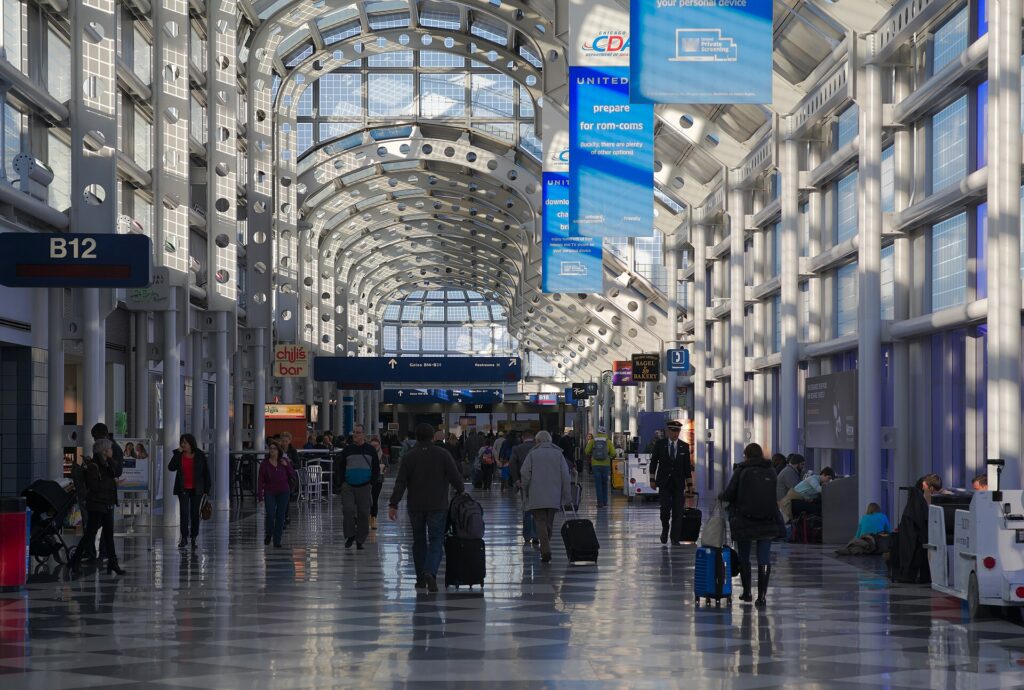
    Concourse B in Terminal 1 at Chicago O'Hare International Airport
    O'Hare's Terminal 1, the United hub and one of the busiest airport complexes in the world (Photo: Dllu via Wikimedia Commons, CC BY-SA 4.0)

    Timing tricks that work for Chicago

    • Search both airports. O’Hare and Midway compete on many routes, and Southwest’s big schedule at Midway often undercuts the O’Hare fare on domestic flights; compare both before you book.
    • Check the convention calendar. A cheap weekday fare in May or September can come with a hotel rate that doubles the trip. Run a Chicago hotel search for the same dates before you commit to either.
    • Fly mid-week, stay the weekend. Chicago’s business travel makes Monday morning and Thursday evening flights the busiest, while downtown hotels, full of conventioneers on weekdays, are sometimes cheaper on Friday and Saturday nights outside summer.
    • Go in winter for value. January to early March has the lowest prices of the year and the museums, theaters and restaurants at their most relaxed; just pack for the cold.
    • Consider Milwaukee. Milwaukee’s airport, about 145 km (90 miles) north, has its own Amtrak station on the line to downtown Chicago, and occasionally has better fares.
    • Build a weather buffer. Snow in winter and thunderstorms in summer both cause ground stops at O’Hare; avoid the tightest connections. Our guide to how early to arrive covers what to allow.
    • Flying out of Chicago instead? O’Hare’s route network makes it one of the best departure airports in the country; see cheap flights from Chicago.
    Runners on the streets of Chicago during the Chicago Marathon
    The Chicago Marathon in October, one of the most expensive hotel weekends of the fall (Photo: bradhoc from USA via Wikimedia Commons, CC BY 2.0)

    What to pack, by season

    Winter (December to March): a properly warm, windproof coat, a hat that covers your ears, gloves, a scarf, waterproof boots with grip, and thermal layers for the coldest days; Chicagoans dress for the wind chill, not the thermometer. Spring (April to May): layers, a rain jacket and a warm sweater for the lakefront, which can be much cooler than inland. Summer (June to August): light, breathable clothing, a swimsuit for the beaches, sunscreen, and a light layer for air-conditioned museums and evening boat tours. Fall (September to November): layers again, a medium jacket by October and a warm coat by November. In every season, bring comfortable walking shoes; this is a city best seen on foot.

    The best time to fly to Chicago for…

    Summer on the lakefront

    Mid-June to mid-July for long days and warm beaches, or late August for the warmest water with slightly fewer crowds. Book early and check for festival weekends.

    Good weather without the crowds

    September, avoiding the big convention weeks, or the first half of June.

    The lowest fares

    Mid-January to early March, outside the Auto Show and the long weekends, with Restaurant Week as a bonus.

    Baseball

    Any time from April to September, but May, June and September for comfortable day games at Wrigley without July’s heat.

    Families

    June or August, when the beaches, Navy Pier and the Museum Campus are all in full swing; December for the holiday lights if the budget allows.

    International visitors

    Travelers from Visa Waiver Program countries need an approved ESTA before they board; most others need a visa. The State Department’s travel site explains what applies to you, U.S. Customs and Border Protection covers arrival, and the TSA lists what you can carry through security.

    Frequently asked questions

    What is the cheapest month to fly to Chicago?

    January, after the New Year week, followed by February outside the Auto Show and early March.

    What is the best month to visit Chicago for weather?

    September, with late May, June and early October close behind. July and August are hot and humid; January and February are very cold.

    Should I fly into O’Hare or Midway?

    Whichever is cheaper for your route. O’Hare has far more flights and all long-haul international service; Midway is closer to the Loop and quicker to get through, and it is Southwest’s base.

    How expensive is Chicago during Lollapalooza?

    Very, for hotels: it is one of the most expensive weekends of the summer, and downtown sells out. Flights rise too, though less sharply. Book well ahead or pick another weekend.

    How cold does Chicago get in winter?

    Daytime highs around freezing are typical in January, but Arctic outbreaks can bring temperatures well below -18 °C (0 °F) and dangerous wind chills for a few days most winters.

    How far ahead should I book?

    Earlier for summer, marathon weekend, the holidays and convention weeks, when fares and rates tend only to rise; for January to early March, fares are stable enough that finding the right dates matters more than booking early.

    Why is it called the Windy City?

    Nobody is entirely sure. One popular theory credits the city’s boastful nineteenth-century boosters and politicians, another simply the weather; either way, the wind off Lake Michigan makes the name feel earned in January.

    Ready to pick your dates? Compare fares across the whole month on our Chicago flights page, then find a room with our Chicago hotel search. For what to do when you land, start with our first-timer’s guide to Chicago.

  • Best Time to Fly to Minneapolis: Seasons, Weather & Prices

    Best Time to Fly to Minneapolis: Seasons, Weather & Prices

    Minneapolis is a city of extremes, and its airfares follow the thermometer more closely than almost anywhere in America. It has the coldest winters of any major U.S. metro, with snow on the ground from December into March and cold snaps that push temperatures far below zero Fahrenheit, and summers that are warm, green and so good that the whole Upper Midwest heads for the lakes. Between them sit a short spring and a long, golden fall. On top of the weather comes a calendar with a few very sharp peaks: the Minnesota State Fair, twelve days at the end of summer that draw close to two million people; the Christmas and New Year weeks; and the stadium concerts, Vikings games and conventions that can fill downtown hotels on a given weekend. The airport adds its own twist: MSP is a major Delta hub and the home base of Sun Country, which means excellent nonstop coverage but fares that respond sharply to competition. This guide walks through the weather month by month, the fare seasons, the events that move prices, and how to handle the airport.

    The short answer

    For the best balance of weather and price, go in late May to mid-June, when the lakes and patios open before the summer peak, or in September to mid-October, when the weather is often the most settled of the year and the fall color arrives. The cheapest fares and hotel rates come in January and February, after the New Year week, and in November before Thanksgiving; this is when the city is cold, bright and quiet, and hotels are hungry. March and April are also good value for a city break, if you can live with the slush. The most expensive stretches are July and August, especially the State Fair fortnight that ends on Labor Day, the Christmas and New Year weeks, and any weekend with a big stadium concert or convention downtown. Whatever you choose, run a flexible-date search on our Minneapolis flights page; a shift of a few days can change the fare band entirely.
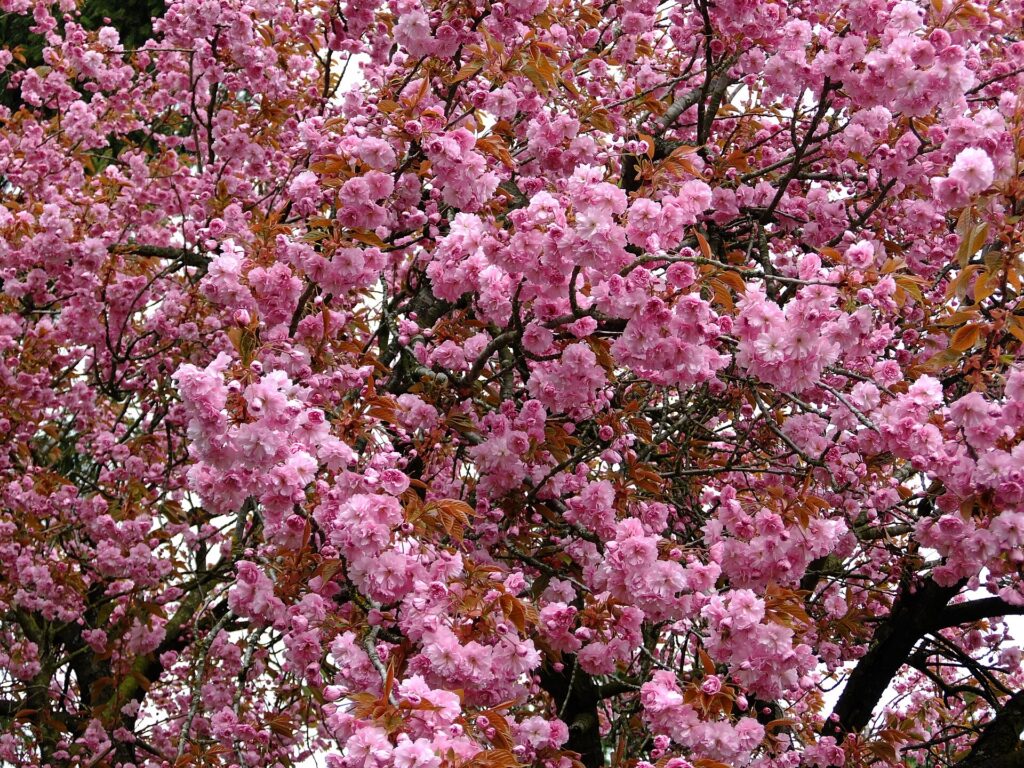
    Rides on the midway at the Minnesota State Fair
    The Minnesota State Fair, twelve days ending on Labor Day that fill hotels across the metro (Photo: Xopher Smith from minneapolis, mn, usa via Wikimedia Commons, CC BY 2.0)
    Minneapolis weather, season by season

    Minneapolis sits in the middle of the continent, far from any ocean, and it gets the full force of both the Arctic air that pours south in winter and the warm, humid air that flows up from the Gulf in summer. Winters are long and cold, with around 130 cm (50 inches) of snow in a typical season and Arctic outbreaks that bring wind chills of -34 °C (-30 °F) or lower; spring comes late and fast; summers are warm to hot, with thunderstorms; and fall is crisp and clear. The figures below are approximate seasonal patterns based on the long-term climate normals from NOAA’s National Weather Service office for the Twin Cities; check the current forecast before you pack, because a winter week can swing between a thaw and a deep freeze.

    MonthTypical daytime highTypical overnight lowWhat it feels likeFare pressure
    Januaryaround -5 °C (23 °F)around -13 °C (8 °F)The coldest month; snow cover, bright sun, and Arctic cold snaps well below 0 °FLow, except the first days of the month
    Februaryaround -2 °C (28 °F)around -11 °C (13 °F)Still deep winter, with longer days; the Winter Carnival and pond hockey seasonLow
    Marcharound 5 °C (41 °F)around -4 °C (25 °F)Thaw and refreeze; big snowstorms are still possibleLow to moderate
    Aprilaround 13 °C (56 °F)around 3 °C (37 °F)Unpredictable; the lake ice goes out, snow is possible early in the monthModerate
    Mayaround 21 °C (69 °F)around 9 °C (49 °F)Spring in a rush; trees leaf out and the patios openModerate; rises for Memorial Day
    Junearound 26 °C (78 °F)around 15 °C (60 °F)Long, green days; the wettest month, with thunderstormsModerate to high
    Julyaround 28 °C (83 °F)around 18 °C (64 °F)Warm to hot and sometimes humid; lake season at its peakHigh
    Augustaround 27 °C (80 °F)around 17 °C (62 °F)Warm; the State Fair closes out the summerHigh, peaking for the State Fair
    Septemberaround 22 °C (72 °F)around 12 °C (53 °F)Often the most pleasant month; warm days, cool nightsModerate, falling after Labor Day
    Octoberaround 15 °C (58 °F)around 4 °C (40 °F)Crisp; fall color peaks early in the month; first frostModerate
    Novemberaround 6 °C (42 °F)around -3 °C (27 °F)Gray and cooling fast; first lasting snow usually arrivesLow, except Thanksgiving
    Decemberaround -2 °C (28 °F)around -10 °C (14 °F)Winter proper, with snow cover and holiday lightsLow until mid-month, then peak

    Three things the table cannot show. First, the cold snaps: most winters bring a spell of several days when the temperature stays below 0 °F (-18 °C) around the clock and the wind chill falls far lower, and the National Weather Service issues cold warnings; exposed skin can freeze in minutes. This is when the skyways earn their keep. Second, the sun: Minneapolis winters are cold but often bright, and a still, sunny day at -10 °C feels far better than the number suggests. Third, summer storms: June and July thunderstorms can be severe, with heavy rain, hail and the occasional tornado warning, and they can ground flights at MSP for an hour or two in the afternoon or evening.

    How Minneapolis fare seasons work

    Three calendars drive seats into Minneapolis: the weather, which makes summer the city’s high season and winter its low one; the events calendar, with the State Fair, the stadiums and the Minneapolis Convention Center filling hotels on particular dates; and the local travel pattern, because in winter the planes out of MSP are full of Minnesotans heading for Florida, Arizona and Mexico, which pushes up fares on those routes but leaves the flights into the city relatively quiet. The result is a warm-season plateau from June to early September with a State Fair spike at the end, a cheap and quiet winter with a Christmas spike in the middle, and two shoulder seasons where the weather is good and the prices are not.
    Peak season

    June to Labor Day, plus roughly December 18 to January 3. July and August are the busiest months for leisure visitors, with the lakes, the ballpark and the festivals at their best, and families from across the region filling the downtown hotels on weekends. The State Fair, the twelve days ending on Labor Day, is the sharpest spike of the year for hotel rates across the metro. If you must travel in peak, book early, fly mid-week, and price the hotel before the flight.
    Shoulder season

    Mid-April to May and September to October. Late May and early June give you the city waking up after winter, with lakes, patios and ball games; September and early October give you the most reliable weather of the year and the fall color. Watch Memorial Day weekend, Labor Day, the Twin Cities Marathon weekend in early October, and home Vikings weekends, which can lift downtown hotel rates.

    Low season

    November before Thanksgiving, early December, and January to March outside the holiday weeks. Fares into MSP are at their lowest, the city is cold, bright and uncrowded, and the museums, theaters and arenas are in full swing. Pack for real cold and build a weather buffer into connections through other hubs.

    As elsewhere, mid-week departures and early or late flights usually price below Friday and Sunday afternoons on the same route, and a search across a whole month reveals cheaper pairs of dates close to your first choice. Our guide to the best times to book explains how to read those patterns.

    Minneapolis month by month

    January

    The coldest month and, after the first few days, one of the cheapest to fly in. Highs usually sit well below freezing, and at least one Arctic outbreak is normal. The city carries on regardless: the skyways connect downtown, the frozen lakes fill with skaters, pond hockey players and ice-fishing houses, Theodore Wirth Park has cross-country skiing and tubing, and the Saint Paul Winter Carnival begins in late January. The Timberwolves and the Wild are in season, and theater tickets are easier to find than at any other time.

    February

    Similar weather with noticeably more daylight, and low fares throughout. The Winter Carnival runs into early February, the Loppet ski festival fills Theodore Wirth Park around the same time, and it is an excellent month for a museum-theater-and-food trip with a few hours on the ice for good measure.

    March

    Thaw and refreeze, with at least one big snowstorm in many years. Fares into the city stay low, although Minnesota’s school spring breaks push up the price of flights from MSP to warm-weather destinations. The high-school hockey and basketball tournaments fill arenas and some hotels in March, and the end of the month usually brings the first real sign of spring.
    April

    The most changeable month: 20 °C (68 °F) one day and snow the next. The ice goes out on the lakes, the Twins open at Target Field in hats and gloves, and hotel rates are still well below summer levels. Good for a city break; not ideal for the lakes.

    May

    Spring in a rush. Trees leaf out, the paths around the lakes fill, the patios in the North Loop and Northeast open, and Art-A-Whirl brings open studios to Northeast. Fares are moderate, and the first three weeks of May are one of the best value windows of the year before Memorial Day lifts prices.

    June

    Long, green days, the wettest month, and the start of peak season. Twin Cities Pride fills Loring Park in late June, the Lake Harriet bandshell concerts begin, and fares step up from mid-month as schools finish. Early June is the value play.

    July

    Peak summer: warm to hot, occasionally humid, and the lakes at their best. The Aquatennial, with fireworks over the river, fills the downtown calendar; the Fourth of July brings more fireworks; and outdoor concerts and Twins games fill the evenings. Hotel rates are high on weekends and fares are at their summer level.

    August

    Warm, with the Minnesota Fringe Festival early in the month and the Minnesota State Fair from late August through Labor Day. The fair is one of the largest in the country, drawing close to two million visitors, and it fills hotel rooms across the whole metro; the State Fair’s site has dates. Book the hotel first, and early.

    September

    The month many locals would send you to: warm afternoons, cool nights, lower humidity, and the summer crowds gone after Labor Day. Fall color begins up north late in the month, the Vikings season starts, and fares are moderate and falling.

    October

    Crisp days and fall color along the Mississippi and the lakes, usually peaking in the metro in early-to-mid October. The Twin Cities Marathon in early October fills hotels for one weekend, and the MEA break, when most Minnesota schools close for a long weekend in mid-to-late October, is a busy family travel weekend. Otherwise, prices are moderate and the weather is often excellent until the end of the month.
    November

    Gray, cooling fast, and cheap. The first lasting snow usually arrives, the holiday lights switch on late in the month, and fares and hotel rates are at their annual low apart from the Thanksgiving weekend, when fares on the busiest days rise sharply.

    December

    Two months in one. The first half continues November’s pricing, with snow on the ground, holiday markets and lights, and theaters staging seasonal shows. From about December 18, fares jump for the Christmas and New Year weeks, when the city fills with people coming home.

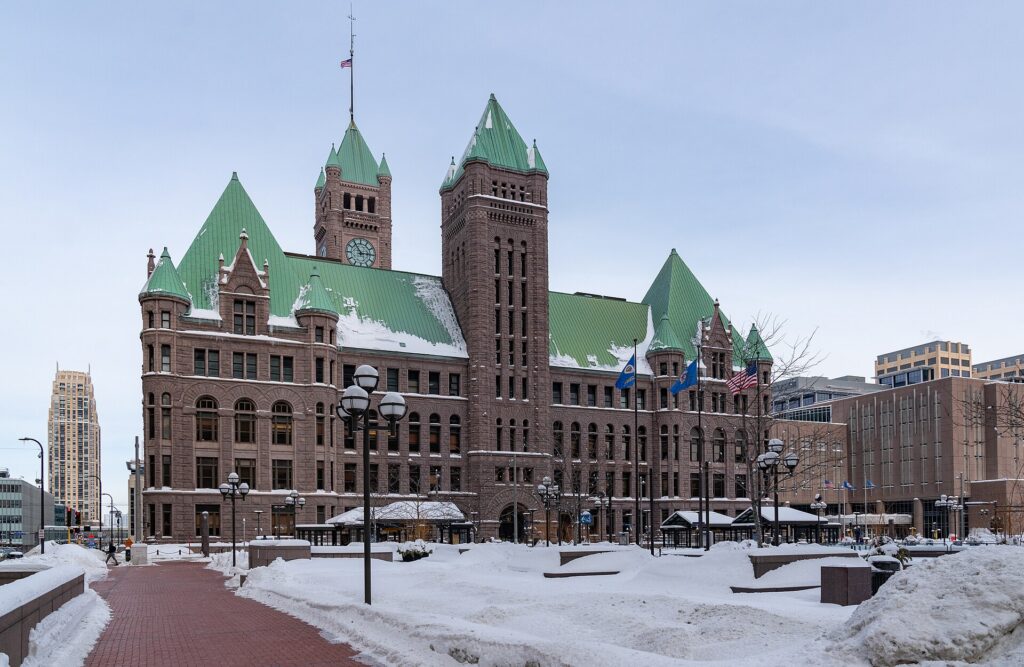
    Minneapolis City Hall and a snow-covered Government Plaza in winter
    Minneapolis in winter: the coldest big city in the country, and the cheapest months to fly (Photo: Tony Webster from Minneapolis, Minnesota, United States via Wikimedia Commons, CC BY-SA 2.0)

    Events that move Minneapolis flight and hotel prices

    Cross-check these against your dates before you book. Exact dates shift each year; Meet Minneapolis, the city’s tourism office, keeps the current calendar.

    • Saint Paul Winter Carnival (late January to early February): a local draw that lifts Saint Paul hotels on the big weekends.
    • High-school state tournaments (March): hockey and basketball tournaments that fill arenas and some downtown hotels.
    • Memorial Day weekend (last Monday of May): the unofficial start of lake season.
    • Twin Cities Pride (late June) and the Fourth of July.
    • Aquatennial (July): fireworks over the Mississippi and a busy downtown.
    • Minnesota State Fair (twelve days ending on Labor Day): the single largest hotel spike of the year.
    • Twin Cities Marathon (early October) and the MEA school break (mid-to-late October).
    • Thanksgiving and Christmas to New Year.
    • Stadium concerts, Vikings home games and major conventions, which can fill downtown on any weekend. Our Minneapolis events page shows what is on sale for your dates.

    Getting in from the airport

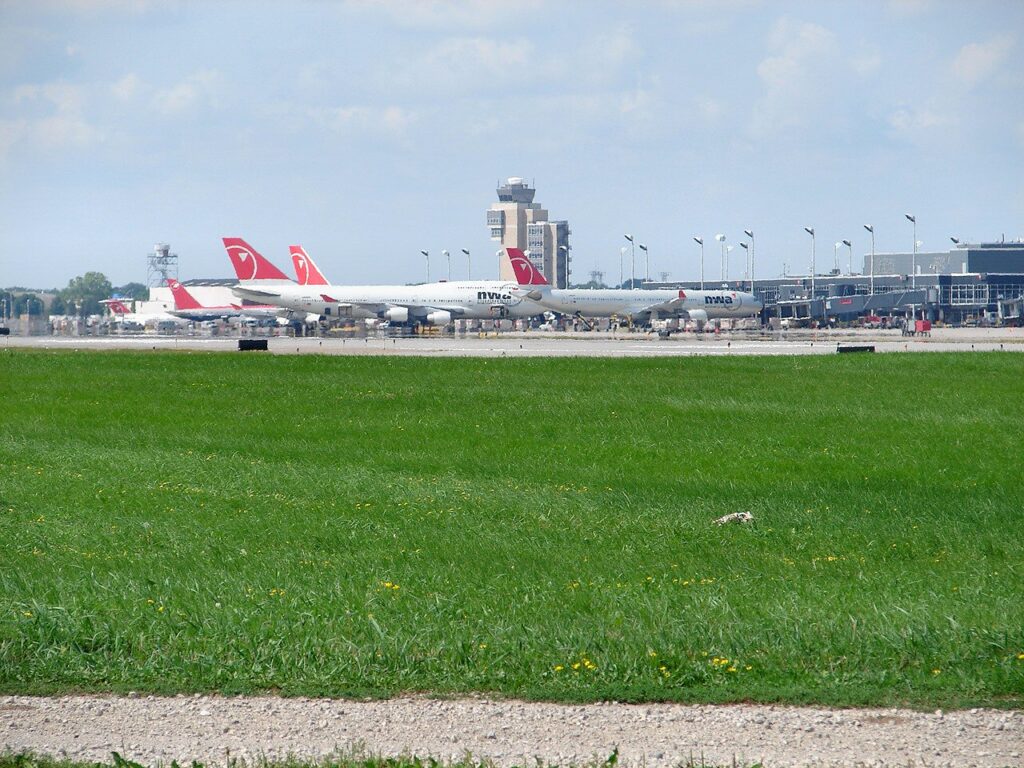
    Minneapolis-Saint Paul International (MSP) sits between the two cities, about 16 km (10 miles) south of downtown Minneapolis and a similar distance from downtown Saint Paul, and it is regularly rated among the best airports in North America in passenger surveys. It is a major hub for Delta and the home base of Sun Country, with nonstop flights to most large U.S. cities and to Amsterdam, Paris, London, Reykjavik and several other international destinations. There are two terminals: Terminal 1 handles Delta and most other airlines, and Terminal 2 handles Sun Country, Southwest and a few others; check which one your airline uses, because they are not walking distance apart, although the light rail connects them for free. Getting downtown is easy: the METRO Blue Line light rail runs from stations at both terminals to downtown Minneapolis in about 25 minutes, for a standard transit fare, and continues to Target Field in the North Loop. For Saint Paul, a Metro Transit bus runs from Terminal 1 to downtown Saint Paul, or you can change to the Green Line downtown. Taxis and ride-hail take about 20 minutes to either downtown outside rush hour, and the rental counters are in the parking ramps at each terminal. Our Minneapolis car-versus-transit guide works through whether you need a car, and our MSP airport guide covers the layout.

    The departures area at Minneapolis-Saint Paul International Airport (MSP)
    Minneapolis-Saint Paul International (MSP), a Delta hub and the home of Sun Country (Photo: Cory W. Watts from Madison, Wisconsin, United States of America via Wikimedia Commons, CC BY-SA 2.0)

    Timing tricks that work for Minneapolis

    • Search the whole month. The State Fair, the holiday weeks and the big stadium weekends create sharp edges in the fare calendar. A calendar search on TicketScanner shows them instantly, and the week after Labor Day is often a bargain relative to the week before.
    • Book the hotel first in late August. A cheap fare into State Fair week is not cheap once the room is added. Run a Minneapolis hotel search for the same dates before you commit to either.
    • Compare carriers, not just dates. MSP is a Delta hub, so nonstops on some routes are dominated by one airline; Sun Country, Southwest and the other carriers can undercut it on particular routes and days. A search across all of them is where the savings are.
    • Fly mid-week. Business travel makes Monday morning and Thursday and Friday evening the busiest flights on many routes; Tuesday and Wednesday are usually the value.
    • Use the winter. If you do not mind the cold, January and February offer the lowest fares and hotel rates of the year, and the city’s indoor attractions are at their best.
    • Consider Chicago for a road trip. Flights to Chicago are sometimes cheaper, and the drive or the train north through Wisconsin is a classic Midwest trip; our Chicago to Minneapolis route guide covers the drive, and our guide to the best time to fly to Chicago covers that end.
    • Build a winter buffer. MSP’s snow crews are very good and the airport rarely closes, but connecting hubs elsewhere can be disrupted; avoid the tightest connections from December to March. Our guide to how early to arrive covers what to allow.
    • Flying out of Minneapolis instead? Winter fares to warm destinations rise sharply around the school breaks; see cheap flights from Minneapolis.
    Lake Harriet in Minneapolis in summer
    Lake Harriet in summer, the short high season that drives fares (Photo: Sharon Mollerus via Wikimedia Commons, CC BY 2.0)

    What to pack, by season

    Winter (December to March): a properly insulated coat, a warm hat that covers your ears, insulated gloves or mittens, a scarf, and waterproof boots with grip; add thermal layers for anything outdoors, and do not underestimate the wind chill. Spring (April to May): layers, a waterproof jacket and shoes that can handle slush early and rain later. Summer (June to August): light clothing, sunscreen, a rain layer for the thunderstorms, insect repellent for evenings by the lakes, and a light sweater for air-conditioned theaters. Fall (September to October): layers again, and a warmer jacket by late October. The skyways and the light rail mean you can spend a winter day downtown in indoor clothes, but you will still need the coat to get to and from them.

    The best time to fly to Minneapolis for…

    The State Fair

    The last week of August or the days before Labor Day, booked as early as you can manage, with the hotel first.

    The lakes and summer weather

    Mid-June to early September for warmth, or early June and the first half of September for the best balance of weather and price.

    Fall color

    Late September for the North Shore and northern Minnesota, early-to-mid October for the Twin Cities and the Mississippi bluffs. Explore Minnesota publishes a fall color report each season.

    A real Minnesota winter

    Late January to mid-February, for the Winter Carnival, the frozen lakes and the lowest prices of the year.

    The lowest fares

    January and February after the New Year week, and November before Thanksgiving.

    International visitors

    Visitors from Visa Waiver Program countries need an approved ESTA before boarding; most others need a visa. The State Department’s travel site explains what applies to you, and the TSA lists what you can carry through security.

    Frequently asked questions

    What is the cheapest month to fly to Minneapolis?

    January and February are consistently the lowest for fares and hotel rates, followed by November outside Thanksgiving and early December.

    What is the best month to visit Minneapolis for weather?

    September, with June, July and August close behind for warmth. May and October are lovely in a good year.

    How cold is Minneapolis in winter?

    Daytime highs in January average around -5 °C (23 °F), with nights well below that, and most winters bring a cold snap when temperatures stay below 0 °F (-18 °C) for days. With proper clothing and the skyways, it is very manageable.

    How expensive is Minneapolis during the State Fair?

    Hotel rates across the metro climb steeply for the fair’s twelve days, and rooms near the fairgrounds sell out. Flights rise too, though less sharply. The week after Labor Day is much cheaper.

    Does MSP close for snow?

    Rarely. The airport handles heavy snow as a matter of routine, although major storms can cause delays and cancellations, especially on connections through other hubs.

    How far ahead should I book?

    Earlier for the State Fair, the holiday weeks and summer weekends, when fares tend only to rise; for January through March and November, fares are stable enough that finding the right dates matters more.

    Is Minneapolis worth visiting in winter?

    Yes, if you dress for it. Fares and hotel rates are at their lowest, the theaters and museums are in full season, and the frozen lakes and winter festivals are a genuine attraction.

    Ready to pick your dates? Compare fares across the whole month on our Minneapolis flights page, then find a room with our Minneapolis hotel search. For what to do when you land, start with our first-timer’s guide to Minneapolis.

  • Best Time to Fly to Phoenix: Seasons, Weather & Prices

    Best Time to Fly to Phoenix: Seasons, Weather & Prices

    Phoenix turns the usual travel calendar upside down, and its prices follow. It is one of the sunniest large cities in the United States, with winters so mild that it fills with visitors escaping snow from Canada and the Midwest, a spring that brings half of Major League Baseball to town for training camp, and a summer so hot that locals leave and resorts cut their rates to a fraction of the winter price. Sky Harbor is also a major airline hub, which keeps fares competitive year-round, so the real swings are in the hotel rooms and resort rates rather than the seats. Add the monsoon, the season of dust storms and sudden downpours from midsummer, and you have a place where the right time to go depends on whether you want golf and hiking, baseball, a pool, or the lowest possible total price. This guide walks through the weather month by month, the fare seasons, the events that move prices, how to handle the heat, and how to get into the city from the airport.

    The short answer

    For the best weather, come from late October to early December or from late February to April, when days are warm, nights are cool, and the trails, patios and golf courses are at their best. For the lowest prices, look at June to mid-September, when resort and hotel rates fall steeply because of the heat; if you can handle spending the middle of the day indoors or in a pool, summer is extraordinary value. The most expensive stretches are mid-February to late March, when spring training, spring break and the peak of the winter-visitor season overlap, the week of the WM Phoenix Open in early February, and the Christmas and New Year holidays around the Fiesta Bowl. Whatever you choose, run a flexible-date search on our Phoenix flights page, and price the hotel for the same dates before you commit; in Phoenix, the room usually moves the total more than the fare.

    The view from the lawn seats at Scottsdale Stadium during spring training
    Cactus League spring training, the busiest and most expensive weeks of the Phoenix year (Photo: Cygnusloop99 via Wikimedia Commons, CC BY-SA 3.0)

    Phoenix weather, season by season

    Phoenix sits in a broad desert basin, the Valley of the Sun, a little over 300 meters (about 1,100 feet) above sea level in the Sonoran Desert. It receives only about 180 mm (7 inches) of rain a year, sunshine on the great majority of days, very low humidity for most of the year, mild winters and some of the hottest summers of any large city in the country. The figures below are approximate seasonal patterns at Sky Harbor, based on the long-term climate normals published by NOAA and the National Weather Service’s Phoenix office; check the current forecast before you pack, especially for heat warnings in summer and dust-storm warnings during the monsoon.

    MonthTypical daytime highTypical overnight lowWhat it feels likeFare pressure
    Januaryaround 19 °C (67 °F)around 8 °C (46 °F)Sunny, mild afternoons and chilly nights; occasional winter rainHigh; peak for resorts, Barrett-Jackson week
    Februaryaround 22 °C (71 °F)around 9 °C (48 °F)Warm, bright days; wildflowers start in wet yearsPeak; Phoenix Open, then spring training
    Marcharound 25 °C (77 °F)around 12 °C (54 °F)Near perfect; the desert in bloomPeak; spring training and spring break
    Aprilaround 29 °C (85 °F)around 16 °C (61 °F)Warm to hot afternoons, pleasant evenings; saguaros begin to bloomHigh, easing through the month
    Mayaround 35 °C (95 °F)around 21 °C (70 °F)Hot and very dry; pool season in full swingModerate, falling
    Junearound 40 °C (104 °F)around 26 °C (79 °F)Extreme dry heat; the hottest days often come nowLow
    Julyaround 41 °C (106 °F)around 29 °C (84 °F)Extreme heat with rising humidity; monsoon storms and dust stormsLow, except the Fourth of July
    Augustaround 41 °C (105 °F)around 28 °C (83 °F)Hot, humid by desert standards; flash floods possibleLow
    Septemberaround 38 °C (100 °F)around 25 °C (77 °F)Still very hot; the monsoon fades by the end of the monthLow to moderate, rising after Labor Day
    Octoberaround 32 °C (89 °F)around 18 °C (65 °F)Warm and dry; the first comfortable evenings in monthsModerate
    Novemberaround 24 °C (76 °F)around 12 °C (53 °F)Ideal: warm, sunny afternoons and cool nightsModerate to high; Thanksgiving spike
    Decemberaround 19 °C (66 °F)around 7 °C (45 °F)Mild days, cold nights, occasional rainModerate until mid-month, then peak

    Three things the table cannot show. First, the heat is relentless in summer: an average July high around 41 °C (106 °F) means plenty of afternoons well above that, and in recent summers the city has recorded long runs of days at or above 43 °C (110 °F). The low humidity makes it feel manageable in the shade, but you lose water faster than you notice, and outdoor exertion in the afternoon is dangerous. Second, the nights stay hot: the pavement and buildings of a metro area of several million people hold the day’s heat, so summer lows are often near 29 °C (84 °F) and there is little relief after dark. Third, the monsoon: officially from mid-June to the end of September, and most active in July and August, it brings moisture from the south, sudden thunderstorms, lightning, flash floods in normally dry washes and towering walls of dust known as haboobs that can drop visibility on the freeways to almost nothing in minutes.

    How Phoenix fare seasons work

    Sky Harbor is one of the busiest airports in the country, a hub for American Airlines and one of Southwest’s largest operations, with other U.S. carriers and several low-cost airlines adding capacity. That competition keeps airfares into Phoenix reasonable in most months, and it means the sharp price swings are usually in the rooms. Three calendars drive them: the winter-visitor season, from roughly January to April, when Canadians and Midwesterners fill the resorts and golf courses; the event calendar, led by spring training, the Phoenix Open and major college and pro sporting events; and the heat, which empties the resorts from June to September. The result is a long, expensive high season in late winter and spring, a deep summer trough, and a pleasant, moderately priced fall.

    Peak season

    January to mid-April, with the highest prices from the Phoenix Open in early February through the end of spring training in late March, plus the Christmas and New Year holidays. In those weeks the famous resorts in Scottsdale and Paradise Valley can charge several times their summer rates, golf tee times are booked weeks out, and spring break adds families and college students in March. If you must travel in peak, book the hotel as early as possible, fly midweek, and consider Tempe, Mesa or the West Valley near the ballparks rather than Scottsdale for better rates.

    Shoulder season

    Mid-April to May, and October to mid-December outside Thanksgiving. Late April and early May give you pool weather and lower resort rates before the real heat; October is warm and dry, and November is arguably the best month of the year for weather, with rates that have not yet reached their winter levels. Watch Thanksgiving week, the Arizona State Fair weekends and Cardinals home games.

    Low season

    June to mid-September. Resort and hotel rates drop to their lowest of the year, many resorts run summer packages aimed at Arizona residents that visitors can often book too, and restaurants offer summer deals. The trade-off is the heat. Airfares into Phoenix are usually good value in summer, though flights out of Phoenix on summer weekends can be busy with locals heading for the California coast and the mountains, which sometimes lifts round-trip prices for the return leg.

    As elsewhere, midweek departures and early or late flights usually price below Friday and Sunday afternoons on the same route, and a search across a whole month reveals cheaper pairs of dates close to your first choice. Our guide to the best times to book explains how to read those patterns.

    Phoenix month by month

    January

    Sunny, mild and firmly in high season. Afternoons are pleasant for hiking and golf, nights are cold enough for a jacket, and a winter storm occasionally brings a day of rain and dusts the mountains to the north with snow. The Barrett-Jackson collector car auction fills Scottsdale for a week in the second half of the month, and the resorts are busy with winter visitors. Fares from colder cities rise after the first week of the year.

    February

    The start of the very top of the season. The WM Phoenix Open at TPC Scottsdale, usually in the first half of the month, is one of the best-attended golf tournaments in the world and sends Scottsdale hotel rates soaring; the Scottsdale Arabian Horse Show follows. Pitchers and catchers report for spring training in mid-February, and the first Cactus League games start in the last week of the month. In a wet winter, the wildflowers begin.

    March

    The most expensive month for hotels and one of the best for weather. Spring training fills ten ballparks across the Valley, spring break brings families and students, and the Heard Museum’s Guild Indian Fair and Market takes over its grounds in early March. The desert is at its greenest, the trails are busy from dawn, and every patio is full. Book early, and expect the rates to stay high until the last spring training game.

    April

    Warm to hot, with afternoons that climb toward 30 °C (86 °F) and beyond, and a noticeable drop in hotel rates once spring training ends. The saguaros begin to bloom late in the month, the Diamondbacks open their season at Chase Field, and the pools are open everywhere. It is one of the better value windows for a resort stay with weather that still suits hiking at dawn.

    May

    Hot and dry, with highs around 35 °C (95 °F) and rising. Resort rates fall steadily through the month, Memorial Day weekend is busy with locals by the pool, and the saguaro blossoms peak. Hike early and treat the afternoons as pool time.

    June

    The start of the real heat and of the low season, and often the month with the hottest, driest days of the year before the monsoon moisture arrives. Hotel rates are near their annual low. Do everything outdoors at sunrise, and plan air-conditioned afternoons in museums such as the Heard or the Musical Instrument Museum, or at a resort pool.

    July

    The hottest month on average, with the monsoon adding humidity, evening thunderstorms and dust storms. The Fourth of July weekend brings some demand, but otherwise July is one of the cheapest months of the year. Many locals escape to Flagstaff and the pine country two hours north, which is a good plan for visitors too. Take the heat and the storms seriously; see the safety section below.

    August

    Much like July, with a little more humidity and the strongest monsoon storms. Schools in Arizona go back early in the month, which empties the resort pools of local families on weekdays. Prices stay low throughout, and the Mercury and the Diamondbacks give you air-conditioned evenings.

    September

    Still very hot, but the monsoon fades and the heat starts to ease by the end of the month. Labor Day weekend is busy with locals, the Cardinals and ASU football start their seasons, and rates begin to rise slowly as the first winter visitors book. Late September is a good compromise of lower prices and slightly kinder weather.

    October

    The heat breaks, usually during the first half of the month, and evenings become pleasant for the first time since spring. The Arizona State Fair runs for several weekends in the fall, patio season restarts, and hotel rates climb but stay well below winter levels. A strong month for a city break with some hiking.

    November

    Many locals’ favorite month: warm afternoons, cool nights, clear skies, and the winter visitors not yet at full strength. Rates are moderate apart from Thanksgiving week, when fares from across the country rise. Golf courses reopen after their fall reseeding, and the holiday light displays begin at the zoo late in the month.

    December

    Two months in one. The first half is mild and moderately priced, with the Desert Botanical Garden’s luminaria nights and holiday events across the Valley. From the week before Christmas, fares and hotel rates jump for the holidays, and the Fiesta Bowl and its associated events around New Year bring college football fans to town.

    A monsoon lightning strike over the desert north of Phoenix
    The summer monsoon brings lightning, dust storms and sudden downpours, mostly in July and August (Photo: Shredex via Wikimedia Commons, CC BY-SA 3.0)

    Events that move Phoenix flight and hotel prices

    Cross-check these against your dates before you book. Exact dates shift each year; Visit Phoenix keeps the current calendar.

    • Barrett-Jackson (second half of January, Scottsdale): collectors and car enthusiasts fill the resorts.
    • WM Phoenix Open (early February, TPC Scottsdale): the biggest single hotel spike in Scottsdale.
    • Cactus League spring training (late February to late March): the peak of the year across the Valley.
    • Spring break (March, varying by school district and university).
    • Memorial Day, Fourth of July and Labor Day weekends: busy with locals, but rarely expensive for visitors.
    • Arizona State Fair (several weekends in the fall).
    • Thanksgiving week and the Christmas and New Year holidays, including the Fiesta Bowl.
    • Super Bowls, college football championship games and the NCAA Final Four, which the region hosts every few years and which send prices through the roof.
    • Big conventions at the Phoenix Convention Center, and Suns, Cardinals and Diamondbacks home games. Our Phoenix events page shows what is on sale for your dates.

    Getting in from the airport

    Phoenix’s main airport, Phoenix Sky Harbor International (PHX), is only about 5 kilometers (3 miles) east of downtown, and it serves the whole Valley. Its passenger terminals, currently 3 and 4, are connected by the PHX Sky Train, a free automated train that also runs to the 44th Street station on the Valley Metro light rail and to the Rental Car Center. American Airlines and Southwest are the largest operators, and there are nonstop flights from almost every large U.S. city, from several Canadian and Mexican cities, and from London. Getting downtown is easy: ride the Sky Train to 44th Street and take the light rail, which runs through downtown Phoenix, Tempe and Mesa; take a taxi or ride-hail from the curb, about a 10-to-15-minute drive to downtown; or pick up a car from the consolidated Rental Car Center, which every major company uses. Phoenix-Mesa Gateway Airport (AZA), about 50 kilometers (30 miles) southeast, is served mainly by low-cost carriers and can be worth checking if you are staying in the East Valley. Our Phoenix car-versus-transit guide works through whether to rent, and our PHX airport guide covers the layout.

    American Airlines jets at the gates at Phoenix Sky Harbor International Airport
    Phoenix Sky Harbor (PHX), a hub for American Airlines about 5 km from downtown (Photo: Robert693 via Wikimedia Commons, CC BY-SA 4.0)

    Timing tricks that work for Phoenix

    • Price the room first. Airline competition at Sky Harbor keeps fares fairly steady, while resort rates can triple between August and March. Run a Phoenix hotel search for your dates before you commit to the flight.
    • Search the whole month. The Phoenix Open, spring training and holiday weekends create sharp edges in the calendar; a calendar search on TicketScanner shows them instantly, and the week after spring training ends is often dramatically cheaper than the week before.
    • Fly midweek. Friday and Sunday afternoons are the busiest times at Sky Harbor on most routes; Tuesday to Thursday is usually the value.
    • Use the shoulders. Late October to early December offers weather as good as March for a fraction of the price, and late April is pool season before the summer heat.
    • Consider a road trip. Las Vegas is about five hours away; compare fares into both cities with our Las Vegas flights page and our guide to the best time to fly to Las Vegas, and see the Las Vegas to Phoenix route guide.
    • Build a monsoon buffer. Summer thunderstorms and dust storms can delay flights at Sky Harbor, mostly in the afternoons and evenings of July and August; morning flights are the safer bet, and our guide to how early to arrive covers what to allow.
    • Flying out of Phoenix instead? The same seasonality applies in reverse; see cheap flights from Phoenix.
    Saguaro cactus in the Sonoran Desert southwest of Phoenix
    Saguaros in the Sonoran Desert, at their best in the mild months from November to April (Photo: BLMArizona via Wikimedia Commons, Public domain)

    Staying safe in the heat

    If you travel between May and September, plan the trip around the heat rather than in spite of it. Schedule outdoor sightseeing and hiking for the first hours after sunrise, and spend the early afternoon indoors, in the water or resting. Drink water steadily through the day rather than waiting until you are thirsty, add electrolytes if you are active, and wear a hat, loose light clothing and sunscreen. On any desert trail, carry more water than you think you need and turn around well before you run low; the City of Phoenix closes some of its most popular summit trails during the hottest hours when a heat warning is in effect. Never leave a child or a pet in a parked car, even for a moment, and be careful with metal seat-belt buckles and dark pavement, which can burn skin. During the monsoon, never drive or walk into a flooded wash, and if a dust storm reaches the freeway, pull off the road as far as you safely can and wait it out. The National Weather Service in Phoenix publishes daily heat and storm forecasts; make checking them part of your morning.

    What to pack, by season

    Winter (December to February): layers for mild days, a warm jacket for evenings that can drop close to freezing, and sunglasses; add a proper coat if you are heading north to Sedona, Flagstaff or the Grand Canyon, where it snows. Spring (March to May): light clothing, swimwear, a layer for the evenings, and high-factor sunscreen, because the sun is already intense. Summer (June to September): the lightest, loosest clothing you own, a wide-brimmed hat, sunscreen, a large refillable water bottle, and a sweater for the aggressively air-conditioned restaurants and theaters. Fall (October to November): summer clothing into October, with a light jacket for November nights. In every season, bring sturdy shoes with grip for the rocky desert trails, and something smarter for the resort restaurants.

    The best time to fly to Phoenix for…

    Spring training

    The first three weeks of March, booked as early as you can manage, with the hotel first; late February has lower rates and fewer crowds but not every team is playing yet.

    Golf and resorts

    November and early December for excellent weather at moderate rates, or January to April for the full high-season experience at high-season prices.

    Hiking and the desert

    November to March, starting early on the trails; late February to April for wildflowers and cactus blooms.

    Sedona and the Grand Canyon

    April to May and September to October, when Phoenix is warm, and Sedona and the Grand Canyon’s South Rim, which sits at about 2,100 meters (7,000 feet), are comfortable; in winter the rim can be snowy and very cold. See Grand Canyon National Park for conditions.

    The lowest prices

    June to mid-September, when resort rates are at their lowest of the year, provided you plan around the heat.

    Families

    Fall break in October or the week after Thanksgiving for comfortable weather and moderate rates; summer is cheap and the resort pools are superb, but outdoor sightseeing with children is limited to the early mornings.

    Cross-border and international visitors

    Canadians need a valid passport; travelers from Visa Waiver Program countries need an approved ESTA before boarding, and everyone else needs a visa. U.S. Customs and Border Protection explains what applies to you, and the TSA lists what you can carry through security. Remember that Arizona stays on Mountain Standard Time all year.

    Frequently asked questions

    What is the cheapest month to fly to Phoenix?

    For the total trip, July and August, when resort and hotel rates are at their lowest; airfares are usually reasonable too. June and early September are close behind.

    What is the best month to visit Phoenix for weather?

    November and March, with late October, early December, February and April close behind.

    How hot does Phoenix get in summer?

    Average highs are around 40 to 41 °C (104 to 106 °F) from June to August, and many days go higher. Nights often stay near 29 °C (84 °F). Plan outdoor time for early morning and check the National Weather Service forecast daily.

    When is monsoon season in Phoenix?

    Officially from mid-June to the end of September, with the most storms in July and August. Expect afternoon and evening thunderstorms, dust storms and occasional flash flooding.

    How expensive is Phoenix during spring training?

    It is the most expensive stretch of the year for hotels, especially in Scottsdale. Flights rise less sharply. The week after spring training ends is much cheaper.

    How far ahead should I book?

    Well ahead for February and March, the Phoenix Open and the holidays; for the summer and fall, rates are stable enough that choosing the right dates matters more than booking early.

    Does Phoenix change its clocks?

    No. Arizona stays on Mountain Standard Time all year, so it matches Pacific time in summer and Mountain time in winter; check your connection times carefully.

    Ready to pick your dates? Compare fares across the whole month on our Phoenix flights page, then find a room with our Phoenix hotel search. For what to do when you land, start with our first-timer’s guide to Phoenix.

  • Best Time to Fly to Cancun: Seasons, Weather & Prices

    Best Time to Fly to Cancun: Seasons, Weather & Prices

    Cancun’s travel calendar is set by other people’s winters. When Toronto, Chicago and Calgary are frozen, demand for seats into Cancun International climbs, every resort in the Hotel Zone fills, and fares from almost every city in Canada and the United States reach their peak. When summer arrives up north, Cancun gets hotter, wetter and cheaper, except for the weeks when Mexican and European families take their own holidays. On top of that sit spring break, Easter week, the U.S. and Canadian long weekends, and two natural hazards that no other North American beach destination faces in quite the same way: the Atlantic hurricane season, which runs for half the year, and the sargassum seaweed that can wash up on the Caribbean-facing beaches in the warmer months. Add the fact that Cancun is the second-busiest airport in Mexico, with nonstop service from dozens of cities and a huge charter and package market, and the “best time” question has several right answers. This guide walks through the weather month by month, the fare seasons, the events that move prices, and how to handle the airport.

    The short answer

    For the best mix of weather and value, aim for late April to early June, after spring break and Easter but before the rainy season sets in, and mid-November to mid-December, when the rains have ended and the high-season crowds have not yet arrived. For pure weather, December to April is ideal, dry and sunny with comfortable nights, but it is also the most expensive stretch of the year. The cheapest fares and hotel rates usually come in September and October, the heart of hurricane season, with late August and early November not far behind. The most expensive stretches are Christmas to New Year, February and March with Presidents’ Day, Family Day and spring break, Easter week, and the peak of Mexican summer holidays in late July and early August. Whatever you choose, run a flexible-date search on our Cancun flights page; a shift of a few days around a holiday week can change the fare band entirely.

    An aerial view of the Cancun Hotel Zone beach and turquoise water
    The Cancun Hotel Zone from the air (Photo: dronepicr via Wikimedia Commons, CC BY 2.0)

    Cancun’s weather, season by season

    Cancun has a tropical savanna climate: hot every day of the year, with a dry season from roughly November to April and a wet season from May or June to October. The Caribbean keeps things steady, so it rarely goes much above the low 30s °C (low 90s °F) and rarely falls below the high teens °C (mid-60s °F) even on a winter night. The figures below are approximate seasonal patterns based on the long-term climate normals from Mexico’s national weather service, the Servicio Meteorológico Nacional (SMN), part of the national water commission, Conagua; check the current forecast before you pack, and in hurricane season, keep an eye on the tropics.

    MonthTypical daytime highTypical overnight lowWhat it feels likeFare pressure
    Januaryaround 28 °C (82 °F)around 19 °C (66 °F)Dry, sunny and breezy; the occasional norte brings a cool, windy day with rough seasHigh, peak in the first week
    Februaryaround 28 °C (82 °F)around 19 °C (66 °F)Similar, with the driest, most reliable weather of the yearHigh; peaks for Presidents’ Day and Family Day
    Marcharound 30 °C (86 °F)around 21 °C (70 °F)Warmer and still dry; ideal beach weatherPeak for spring break
    Aprilaround 31 °C (88 °F)around 22 °C (72 °F)Hot and mostly dry; the sea warms upHigh around Easter, then falling
    Mayaround 32 °C (90 °F)around 23 °C (73 °F)Hot and increasingly humid; the first rains and often the start of the seaweed seasonLow to moderate
    Junearound 32 °C (90 °F)around 24 °C (75 °F)Humid, with short, heavy afternoon showers; hurricane season beginsModerate, rising late in the month
    Julyaround 33 °C (91 °F)around 24 °C (75 °F)Hot and sticky; a drier spell mid-summer is commonHigh for summer holidays
    Augustaround 33 °C (91 °F)around 24 °C (75 °F)The hottest weeks; the tropics become more activeHigh early, falling later
    Septemberaround 32 °C (90 °F)around 24 °C (75 °F)Among the wettest months and the peak of hurricane seasonLowest of the year
    Octoberaround 31 °C (88 °F)around 23 °C (73 °F)Still wet and stormy, with drier spells toward the endLow
    Novemberaround 29 °C (84 °F)around 21 °C (70 °F)The rains taper off and the air freshensLow early, rising for U.S. Thanksgiving
    Decemberaround 28 °C (82 °F)around 20 °C (68 °F)Dry, sunny and pleasant; nortes beginModerate until mid-month, then peak

    Three things the table cannot show. First, hurricanes: the Atlantic season runs from June 1 to November 30, with the greatest risk from August to October. A direct hit on Cancun is rare in any given year, and most weeks even in September are simply hot, humid and punctuated by afternoon storms, but a tropical storm can close the airport and the beaches for a few days; buy travel insurance that covers weather, and follow the U.S. National Hurricane Center and the SMN when you travel. Second, sargassum: since the early 2010s, large mats of floating brown seaweed have drifted onto the Mexican Caribbean coast in the warmer months, typically from spring into late summer. The amount varies enormously from year to year and even week to week; the east-facing beaches of the Hotel Zone, Playa del Carmen and Tulum are the most exposed, while the north-facing beaches of the Hotel Zone, Costa Mujeres and Isla Mujeres’ Playa Norte are usually far less affected. The state and several independent monitoring networks publish seaweed forecast maps, and it is worth looking at them before you choose a hotel. Third, the nortes: in winter, cold fronts from the north can bring two or three days of wind, clouds, cooler air and rough, murky water, which briefly cancels snorkel trips and ferries.

    How Cancun’s fare seasons work

    Three calendars drive seats into Cancun: the winter escape from Canada and the northern United States, which fills planes from December to April; the school holidays of the United States, Canada and Mexico, which create sharp spikes at Christmas, spring break, Easter and in summer; and the weather, which empties the resorts in the rainiest and most storm-prone weeks of the fall. Package and charter airlines add capacity in winter and pull it back in summer, which is one reason fares from smaller Canadian cities can swing more than those from big U.S. hubs. The result is a long winter plateau with holiday spikes, a soft late spring, a summer bump, and a deep autumn trough.

    Peak season

    Mid-December to mid-April, with the most expensive weeks from roughly December 20 to January 3, around Presidents’ Day and Family Day in February, through the whole of March for spring break, and during Easter week, whether it falls in March or April. Resorts sell out, all-inclusive rates reach their annual maximum, and the flights from Canada and the Northeast fill early. If you must travel in peak, book early, fly mid-week, and compare packages against booking flight and hotel separately.

    Shoulder season

    Late April to early June, and mid-November to mid-December, plus the Mexican summer holiday peak in July and early August, which lifts hotel rates more than international fares. Late spring gives you hot, mostly dry days and warm water at a clear discount, with the caveat that the seaweed season often begins in May. Late fall gives you the start of the dry season before the holiday rush, with U.S. Thanksgiving the one week to watch.

    Low season

    Late August through early November, and to a lesser degree June. Fares and hotel rates are at their lowest, the beaches and ruins are uncrowded, and the weather is hot, humid and wet, with a real if modest chance of a tropical storm. Build flexibility into the trip, choose a refundable rate or good insurance, and you can have a Caribbean beach for a fraction of the winter price.

    As with most routes, mid-week departures and early or late flights usually price below Saturday departures on the same route, and a search across a whole month reveals cheaper pairs of dates close to your first choice. Our guide to the best times to book explains how to read those patterns.

    Cancun month by month

    January

    Dry, sunny and warm, with comfortable nights and the occasional windy norte. The first week is among the most expensive of the year as the holidays end; after that, fares ease a little but remain high as the winter escape from Canada and the northern U.S. gets into its stride. Visibility is often excellent for snorkeling between fronts, and this is a strong month for Chichén Itzá and the ruins, when walking in the midday sun is bearable.

    February

    Often the most reliable weather of the year and one of the busiest months. The Presidents’ Day weekend in the U.S. and Family Day in several Canadian provinces, both on the third Monday, push fares up, and Carnival, the week before Lent, brings parades to downtown and Isla Mujeres in some years. Book early.

    March

    Spring break runs through the whole month, with U.S. colleges and schools, Ontario’s March Break and other Canadian school breaks landing on different weeks, and the Hotel Zone’s Party Center is at its loudest. The spring equinox draws big crowds to Chichén Itzá for the serpent shadow on the pyramid. Weather is excellent; prices are at their peak. If you want calm, choose a resort away from Punta Cancún or look north to Costa Mujeres.

    April

    Hot and dry. Easter week, Semana Santa, is the biggest domestic holiday in Mexico, and beaches, ferries and ruins are packed with Mexican families as well as foreign visitors. Once Easter has passed, rates fall noticeably, and the last two weeks of April are one of the best-value windows of the year for good weather.

    May

    Hot and increasingly humid, with the first rains toward the end of the month. It is one of the best-value months of the year, the sea is warm and clear, and turtle nesting season begins on the beaches. It is also, in many years, when sargassum starts to arrive on the Caribbean-facing beaches, so check the seaweed maps and favor a north-facing beach if the forecasts look heavy.

    June

    Hurricane season opens, but June storms tend to be weaker, and the month is more often humid with short, heavy afternoon showers than genuinely stormy. The whale shark season off Isla Mujeres and Holbox usually starts in late May or June. Fares are moderate, climbing late in the month as North American schools finish.

    July

    Hot and busy. Mexican school holidays begin in July, and European and North American families arrive, which keeps hotel rates high. A drier mid-summer spell is common, whale sharks are at their most reliable, and sargassum can be heavy. Fares are high, especially for the U.S. Independence Day and Canada Day weeks.

    August

    The hottest weeks and the start of the most active part of hurricane season. The first half is still busy with Mexican and European families; the second half, once schools return, gets steadily quieter and cheaper. Plan outdoor sightseeing for early morning and evening.

    September

    The cheapest month of the year, and among the wettest, with the statistical peak of hurricane season. Resorts run their deepest discounts, some restaurants and smaller hotels close for renovations, and the beaches are nearly empty. The autumn equinox brings another serpent shadow to Chichén Itzá. Travel with flexibility and good insurance, and it can be excellent value.

    October

    Still wet and stormy for much of the month, with drier spells arriving toward the end. Fares remain low apart from Canadian Thanksgiving, on the second Monday, which brings a small bump from Canada. The sea is warm, the seaweed has usually eased, and crowds are thin.

    November

    The rains taper off and the dry season returns. Día de Muertos on November 1 and 2 brings altars and celebrations to the region, and fares are low in the first half of the month. The week of U.S. Thanksgiving, the fourth Thursday, is the first real spike of the winter, and prices climb steadily into December.

    December

    Two months in one. The first half is one of the best-kept secrets in the Caribbean: dry, sunny, warm and comparatively affordable. From around December 18, fares and resort rates jump for the Christmas and New Year holidays, which are the most expensive weeks of the year and sell out months ahead.

    The Nichupté lagoon and the Cancun Hotel Zone
    The Nichupté lagoon, on the quiet side of the Hotel Zone (Photo: Manuel Canela from Cancun, Mexico via Wikimedia Commons, CC BY 2.0)

    Events that move Cancun flight and hotel prices

    Cross-check these against your dates before you book. Exact dates shift each year, and Mexican holidays and school calendars are published by the Mexican government each year.

    • Christmas to New Year: the most expensive two weeks of the year.
    • Presidents’ Day and Family Day (third Monday of February): a big winter-escape weekend from the U.S. and Canada.
    • Spring break (the whole of March, varying by school and college): the Hotel Zone’s busiest and loudest weeks.
    • Easter week (Semana Santa, March or April): Mexico’s biggest domestic travel week.
    • The spring and autumn equinoxes at Chichén Itzá (around March 21 and September 22): big crowds at the site.
    • Mexican summer holidays (July to mid-August): high hotel rates, especially at weekends.
    • U.S. Thanksgiving (fourth Thursday of November): the start of the winter season.
    • Large conventions, weddings and concerts in the Hotel Zone, which can fill resorts at short notice. Our Cancun events page shows what is on sale for your dates.

    Getting in from the airport

    Cancun International (CUN), operated by the airport group ASUR, sits about 20 kilometers (12 miles) south of downtown and roughly 15 to 25 minutes by road from most Hotel Zone resorts. It is the gateway for the entire Mexican Caribbean, from Costa Mujeres to Tulum, and has nonstop flights from most large Canadian and U.S. cities and from Mexico City, Europe and Latin America, with Mexican carriers such as Aeroméxico, Volaris and Viva Aerobus serving domestic routes. The airport has several terminals, well apart from one another and linked by a shuttle, so check which one your airline uses, especially when returning. Getting to your hotel: ADO buses run from the terminals to the downtown bus station and to Playa del Carmen; pre-booked shared and private shuttles are the most common option for the Hotel Zone and Riviera Maya; licensed airport taxis operate from the terminals at set fares; and every major rental company has counters or a shuttle to its lot. In the arrivals halls, walk past the eager people offering transport, free tours or “information”; many are selling timeshares. Our Cancun car-versus-transit guide works through the transport decision, and our CUN airport guide covers the layout.

    A terminal at Cancun International Airport (CUN)
    Cancun International (CUN), the second-busiest airport in Mexico and the gateway to the whole Mexican Caribbean (Photo: Antony-22 via Wikimedia Commons, CC BY-SA 4.0)

    Timing tricks that work for Cancun

    • Search the whole month. The holiday weeks create sharp edges in the fare calendar. A calendar search on TicketScanner shows them instantly, and the week after Easter is often dramatically cheaper than the week of it.
    • Price the package and the pieces. Cancun is one of the biggest package markets in North America, and a flight-plus-all-inclusive bundle can undercut booking separately in winter. Run a Cancun hotel search for the same dates and compare.
    • Fly mid-week. Saturday is the classic changeover day for package travelers and resorts; Tuesday and Wednesday departures are often cheaper.
    • Choose your beach by season. In the sargassum months, a north-facing hotel in the Hotel Zone or Costa Mujeres, or a day trip to Isla Mujeres, protects the beach part of your trip.
    • Consider the whole coast. Tulum now has its own international airport, and for a Tulum-focused trip it can be worth comparing fares; for Cancun, Playa del Carmen and Puerto Morelos, CUN is the obvious choice.
    • Build in flexibility in hurricane season. Refundable rates and insurance that covers weather are worth the modest extra from August to October. Our guide to how early to arrive for an international flight covers the return leg.
    • Flying out of Cancun instead? The same seasonality applies in reverse; see cheap flights from Cancun.
    The Maya ruins of Tulum above a Caribbean beach
    The ruins at Tulum, two hours south of Cancun and busiest in the winter high season (Photo: Erik Cleves Kristensen via Wikimedia Commons, CC BY 2.0)

    What to pack, by season

    Dry season (November to April): light summer clothing, swimwear, a light sweater or jacket for breezy evenings and the occasional norte, and comfortable walking shoes for the ruins. Wet season (May to October): the lightest, most breathable clothing you own, a compact umbrella or rain jacket for the afternoon storms, and plenty of insect repellent. Year-round: high-factor, reef-safe sunscreen, a hat, sunglasses, a rash guard for long snorkel sessions, water shoes for the cenotes and rocky entries, and a smart-casual outfit, because some resort restaurants have a dress code at dinner. Bring your passport, of course, and a photocopy or photo of it kept separately.

    The best time to fly to Cancun for…

    The best weather

    February to April, with January and March close behind. It is dry and sunny, but also the most expensive season.

    The lowest fares

    September and October, followed by late August, early November, and late April to early June outside the holiday weeks.

    Beaches without seaweed

    November to April, when sargassum is least likely. In the warmer months, choose a north-facing beach and check the seaweed maps.

    Snorkeling, diving and whale sharks

    Late spring and summer for warm, calm water and the whale shark season from roughly June to September; winter for dry weather between nortes.

    Families

    The weeks just after Easter, late June, or the first half of December, when the weather is good and the holiday crowds are thinner.

    Canadian and American visitors

    U.S. and Canadian citizens flying to Mexico need a valid passport and, at the time of writing, no visa for a tourist stay; the immigration officer decides the length of stay granted on arrival. Requirements can change, so check the U.S. State Department or the Government of Canada’s travel site before you book, and Mexico’s National Migration Institute for the Mexican rules. Quintana Roo also charges foreign visitors a small state tourism fee, known as Visitax; check the current requirement before you travel.

    Frequently asked questions

    What is the cheapest month to fly to Cancun?

    September is usually the cheapest, followed by October, late August and early November. Late April to early June is the cheapest window with reliably good weather.

    What is the best month to visit Cancun for weather?

    February to April is dry and sunny, with March and April the warmest of the dry months. December and January are also excellent, with slightly cooler nights.

    When is hurricane season in Cancun?

    June 1 to November 30, with the greatest risk from August to October. A direct hit is rare in any given year, but a storm can disrupt a trip, so travel with flexibility and insurance.

    When is sargassum season in Cancun?

    Seaweed usually arrives in spring and peaks in summer, easing in the fall, but it varies greatly by year. North-facing beaches and Isla Mujeres are usually the least affected.

    Is it worth going to Cancun in the rainy season?

    Often, yes. Rain usually comes in short afternoon bursts, the prices are far lower and the crowds thinner. Just avoid rigid plans in September and October.

    How far ahead should I book?

    Well ahead for Christmas, spring break and Easter, when fares tend only to rise. For May, June and the fall, fares are softer, and finding the right dates matters more than booking early.

    Is Cancun crowded during spring break?

    The Party Center and some Hotel Zone resorts are very crowded through March. Families and couples who want quiet should look at Costa Mujeres, Puerto Morelos or adult-focused resorts away from Punta Cancún.

    Ready to pick your dates? Compare fares across the whole month on our Cancun flights page, then find a room with our Cancun hotel search. For what to do when you land, start with our first-timer’s guide to Cancun.

  • Best Time to Fly to Miami: Seasons, Weather & Prices

    Best Time to Fly to Miami: Seasons, Weather & Prices

    Miami turns the usual travel calendar upside down. In most of the United States, summer is peak season and winter is cheap; in Miami, the months when the rest of North America is cold are the ones that fill every hotel on Miami Beach, and the long, hot, stormy summer is when prices fall. On top of that seasonal swing sit some of the biggest events in the country, from Art Basel in December to spring break, Ultra and the Formula 1 Grand Prix, a cruise port that sends hundreds of thousands of passengers through the airport every winter weekend, and one of the busiest international gateways in the country, with flights to almost every capital in Latin America and the Caribbean. Add hurricane season, which runs for half the year, and the “best time” question has several right answers depending on what you want. This guide walks through the weather month by month, the fare seasons, the events that move prices, and how to handle the airport.

    The short answer

    For the best mix of weather and value, aim for late April to mid-May, after spring break and before the rainy season, and November to mid-December, when the humidity has broken but the winter crowds and holiday prices have not yet arrived. For pure weather, January to April is ideal, but it is also the most expensive stretch of the year. The cheapest fares and hotel rates usually come from late August to October, the heart of hurricane season, with June and early July not far behind. The most expensive stretches are Christmas to New Year, Art Basel week in early December, February and March with Presidents’ Day and spring break, and the weekends of Ultra and the Grand Prix. Whatever you choose, run a flexible-date search on our Miami flights page; a shift of a few days around a festival or a holiday weekend can change the fare band entirely.

    A colorful lifeguard tower on South Beach in Miami Beach
    South Beach in the dry season, when the winter escape fills every hotel on Miami Beach (Photo: Radomianin via Wikimedia Commons, CC BY-SA 4.0)

    Miami’s weather, season by season

    Miami has a tropical monsoon climate: warm every day of the year, with a dry, sunny winter and a hot, humid, rainy summer. The ocean keeps the extremes in check, so it rarely goes much above the low 30s °C (low 90s °F) even in August, and it almost never freezes. The figures below are approximate seasonal patterns based on the long-term climate normals from NOAA and the National Weather Service’s Miami office; check the current forecast before you pack, and in hurricane season, keep an eye on the tropics.

    MonthTypical daytime highTypical overnight lowWhat it feels likeFare pressure
    Januaryaround 24 °C (76 °F)around 16 °C (61 °F)Dry, sunny and pleasant; occasional cool fronts bring a few chilly nightsHigh, especially holiday weekends
    Februaryaround 26 °C (78 °F)around 17 °C (63 °F)The classic winter escape; low humidity, blue skiesPeak; Presidents’ Day and festivals
    Marcharound 27 °C (80 °F)around 19 °C (66 °F)Warm and dry; the beach is busyPeak; spring break, Ultra, Miami Open
    Aprilaround 28 °C (83 °F)around 21 °C (70 °F)Warm and still mostly dry; one of the nicest monthsHigh early, easing after Easter
    Mayaround 30 °C (87 °F)around 23 °C (74 °F)Hot; the rainy season usually starts in the second halfModerate; Grand Prix and Memorial Day spikes
    Junearound 32 °C (89 °F)around 25 °C (77 °F)Hot and humid, with afternoon storms most days; hurricane season beginsLow to moderate
    Julyaround 33 °C (91 °F)around 26 °C (78 °F)Steamy mornings, thunderstorms in the afternoon, warm seaModerate; July 4 weekend busier
    Augustaround 33 °C (91 °F)around 26 °C (79 °F)The hottest, most humid month; hurricane risk risingLow
    Septemberaround 32 °C (89 °F)around 25 °C (78 °F)Peak of hurricane season; hot, wet and quietLowest of the year
    Octoberaround 30 °C (86 °F)around 24 °C (75 °F)Still humid and stormy early, drier by the end of the monthLow
    Novemberaround 27 °C (81 °F)around 21 °C (69 °F)The dry season arrives; warm and comfortableModerate; Thanksgiving spike
    Decemberaround 26 °C (78 °F)around 18 °C (64 °F)Dry, sunny and mild; perfect beach weather for northernersHigh for Art Basel, peak from mid-month

    Three things the table cannot show. First, the rain pattern: summer rain in Miami usually arrives as a short, intense thunderstorm in the afternoon, often with lightning, and then clears; a forecast of rain every day in July rarely means a washed-out day, only a planned indoor hour. Second, the humidity: the heat index from June to September often feels far hotter than the thermometer reads, and walking tours are best done early. Third, hurricane season: it officially runs from June 1 to November 30, with the greatest activity from mid-August to mid-October. A direct hit on Miami in any given year is unlikely, but storms do cause cancellations and evacuations; the National Hurricane Center is the source to watch, and travel insurance is worth considering for trips in those months.

    How Miami’s fare seasons work

    Four forces drive seats into Miami: the winter escape, when travelers from the northern US, Canada and Europe head south between December and April; the events calendar, which piles some of the biggest festivals in the country into the same winter and spring months; the cruise port, which makes Friday to Sunday the busiest days at the airport from November to April; and Miami’s role as the gateway to Latin America and the Caribbean, which keeps international traffic high all year and adds holiday peaks of its own at Christmas and in the summer. The result is a long, expensive winter, a spring punctuated by event spikes, and a summer and fall where fares and hotel rates drop to their lowest of the year.

    Peak season

    Mid-December to April. The Christmas and New Year fortnight is the most expensive, followed closely by February and March, when the weather, Presidents’ Day, the festivals and spring break overlap. Art Basel week in early December is a separate spike, driven by hotels rather than seats; Miami Beach rates can multiply for that week alone. If you must travel in peak, book early, fly mid-week, avoid the cruise weekends if you can, and consider staying in Brickell, downtown or Mid-Beach rather than South Beach itself.

    Shoulder season

    Late April to May, and November to mid-December. These are the value windows: the weather is warm and mostly dry, the beach is less crowded, and hotels drop well below their February rates. Watch Easter weekend, the Grand Prix weekend in early May, Memorial Day at the end of May, and Thanksgiving in November, which each bring short spikes.

    Low season

    June to October, deepest from late August to early October. Fares and hotel rates are at their lowest, the ocean is at its warmest, and restaurants run the Miami Spice fixed-price menus in August and September. The trade-offs are heat, humidity, afternoon storms and the risk of a hurricane disrupting plans; book flexible rates, and watch the tropics in the week before you fly. The July 4 weekend and the Latin American summer holidays keep July busier than August.

    As elsewhere, mid-week departures and early or late flights usually price below Friday and Sunday afternoons on the same route, and a search across a whole month reveals cheaper pairs of dates close to your first choice. Our guide to the best times to book explains how to read those patterns.

    Miami month by month

    January

    Dry, sunny and warm by day, with the occasional cool front that sends locals into jackets and leaves visitors on the beach. After New Year’s Day, fares ease briefly before the winter peak builds; the Martin Luther King Jr. Day weekend (the third Monday of January) is busy. Art Deco Weekend on Ocean Drive, usually in mid-January, celebrates the district’s architecture with tours and street events, and the cruise season is in full swing, filling the airport on weekends.

    February

    The classic Miami month and one of the most expensive. The weather is close to perfect, the Presidents’ Day weekend (the third Monday of February) and the Canadian and European winter holidays bring crowds, and the calendar is full: the Miami International Boat Show, the Coconut Grove Arts Festival and the South Beach Wine and Food Festival all fall in February. Book early.

    March

    Warm, dry and busy. Spring break brings college students to South Beach for most of the month, and Miami Beach has in recent years imposed curfews, parking restrictions and extra security on the busiest weekends. The Calle Ocho festival in Little Havana, Miami Music Week and the Ultra Music Festival in late March, and the Miami Open tennis tournament into early April all push hotel rates up. It is a great month for weather and a hard one for value.

    April

    One of the best months. It is warm and still mostly dry, spring break is over, and fares and hotel rates fall steadily after Easter weekend. The sea is warming up, the evenings are long, and the beach is noticeably quieter by the end of the month. The second half of April is one of the strongest value-and-weather windows of the year.

    May

    Hot, with the rainy season typically beginning in the second half of the month. The Formula 1 Miami Grand Prix at Hard Rock Stadium in early May fills hotels across the county for its weekend, and Memorial Day weekend at the end of the month is busy on Miami Beach. Outside those dates, May is shoulder season with good prices.

    June

    Hurricane season officially begins on June 1, but early-season storms are usually weaker and less frequent. Afternoon thunderstorms become a daily rhythm, the humidity climbs, and hotel rates fall. Early June is a good time for a beach-and-food trip if you can handle the heat: the ocean is warm, the hotel pools are quiet, and restaurant reservations are easy again.

    July

    Hot, humid and stormy in the afternoons, with a warm ocean that feels like bath water. The July 4 weekend brings fireworks and crowds, and summer holidays in Latin America and Europe keep international traffic busy, so July is not as cheap as August. Plan outdoor sights for the mornings and museums, lunch and a siesta for the afternoons.

    August

    The hottest and most humid month, with hurricane risk rising through the month. Fares and hotel rates fall toward their annual low, and Miami Spice brings fixed-price menus at many of the city’s best restaurants, which makes August a genuinely good month for food lovers. Keep your plans flexible and watch the tropics.

    September

    The peak of hurricane season and the quietest, cheapest month of the year. The weather is hot and wet, and most days still include sunshine; hotel rates on Miami Beach are at their lowest, and Miami Spice continues. Labor Day weekend is the only real spike. If you are flexible and willing to rebook if a storm threatens, September offers the best value.

    October

    Still humid and stormy early in the month, with hurricane risk continuing, then noticeably drier and more comfortable by the end. Stone crab season opens in mid-October, fares remain low, and the Dolphins, Heat and Hurricanes seasons are under way. Late October is a good bet for value with improving weather.

    November

    The dry season arrives, the humidity drops, and Miami becomes very pleasant again. Hurricane season officially ends on November 30, the cruise season ramps up, and prices rise steadily through the month. Thanksgiving week (the fourth Thursday of November) is busy and expensive, but the first half of the month is one of the best value windows of the year.

    December

    Two months in one. Art Basel Miami Beach in early December makes that week one of the most expensive of the year for hotels, but the weeks either side are good value, with dry weather and holiday lights. From about December 18, fares and hotel rates jump for Christmas and New Year, which are the most expensive weeks of the year, with the Orange Bowl and New Year’s Eve fireworks over Biscayne Bay adding to the demand.

    The Cape Florida Lighthouse on Key Biscayne
    The Cape Florida Lighthouse on Key Biscayne, a quiet beach day in any season (Photo: Paolo Bernabei via Wikimedia Commons, CC BY-SA 3.0)

    Events that move Miami flight and hotel prices

    Cross-check these against your dates before you book. Exact dates shift each year; Greater Miami and the Beaches, the official tourism board, keeps the current calendar.

    • Christmas to New Year, with the Orange Bowl and New Year’s Eve: the most expensive fortnight of the year.
    • Presidents’ Day weekend (third Monday of February) and the February festivals: the Boat Show, the Coconut Grove Arts Festival and the South Beach Wine and Food Festival.
    • Spring break (most of March, varying by college and school district).
    • Miami Music Week, Ultra and the Miami Open (late March into early April).
    • Formula 1 Miami Grand Prix (early May): a single weekend spike across the county.
    • Memorial Day, July 4 and Labor Day weekends: short, sharp peaks on Miami Beach.
    • Thanksgiving (fourth Thursday of November).
    • Art Basel Miami Beach (early December): the biggest hotel spike of the year outside the holidays.
    • Heat, Dolphins and Marlins home games, stadium concerts and playoff runs. Our Miami events page shows what is on sale for your dates.
    • Cruise weekends from November to April, when Saturday and Sunday departures fill flights and airport-area hotels on Friday nights.

    Getting in from the airport

    Miami International (MIA) is about 13 kilometers (8 miles) west of downtown and is one of the busiest international airports in the country. It is a major hub for American Airlines and the leading gateway between the US and Latin America, with nonstop flights to most large US and Canadian cities and to London, Madrid, Frankfurt and many other European hubs. The terminal is a single long building divided into North, Central and South sections. Getting into the city: the MIA Mover train links the terminal to the Miami Intermodal Center, where you can board Metrorail’s Orange Line to downtown and Brickell, pick up a car at the Rental Car Center, or connect to Tri-Rail for Fort Lauderdale and Palm Beach. The Airport Flyer bus runs directly to Miami Beach, taxis charge flat fares to zones on Miami Beach, and ride-hail pickups are on the arrivals level. Two other airports are worth checking: Fort Lauderdale-Hollywood, about 45 minutes north, often has lower fares from budget airlines, and Palm Beach, about 90 minutes north, is smaller and quieter. Our Miami car-versus-transit guide works through the ground options, and our MIA airport guide covers the layout.

    Miami International Airport (MIA)
    Miami International (MIA), the leading gateway between the US and Latin America (Photo: Dough4872 via Wikimedia Commons, CC BY-SA 4.0)

    Timing tricks that work for Miami

    • Search the whole month. Art Basel, spring break, Ultra and the holiday weekends create sharp edges in the fare calendar. A calendar search on TicketScanner shows them instantly, and the week after a big event is often a bargain compared with the week of it.
    • Book the hotel first in winter. A cheap fare into Art Basel week or the February festivals is not cheap once the room is added. Check South Beach hotel rates for the same dates before you commit to either.
    • Avoid the cruise rush. If you are not sailing, skip Friday arrivals and Sunday afternoon departures in winter, when cruise passengers fill flights and the airport.
    • Cruising? Fly in the day before. Ships do not wait for delayed flights, and a night in Miami is cheaper than missing the boat, especially in winter weather up north.
    • Compare Fort Lauderdale. Budget airlines serve Fort Lauderdale heavily, and the fare difference can easily cover the extra drive or a Brightline ticket. If you are combining Miami with the theme parks, check flights to Orlando and consider driving or taking the train south.
    • Use the hurricane season, carefully. Late August to October is the cheapest time of year; book flexible fares and refundable hotels, and watch the National Hurricane Center’s outlook the week before you fly.
    • Build a winter buffer. Snow in the northern US and Canada disrupts connections into Miami in winter, and summer thunderstorms can delay afternoon flights; avoid the tightest connections. Our guide to how early to arrive covers what to allow.
    • Flying out of Miami instead? The seasons shape outbound fares too; see cheap flights from Miami.
    High-rise towers in Brickell, Miami's financial district
    Brickell, a good alternative base when Miami Beach hotels are full (Photo: Phillip Pessar via Wikimedia Commons, CC BY 2.0)

    What to pack, by season

    Winter (December to February): summer clothes for the day, a light sweater or jacket for cool fronts and air-conditioned restaurants, and a swimsuit for the beach. Spring (March to May): light clothing, sunglasses, a hat and strong sunscreen, because the sun is intense even when the air is not. Summer (June to August): the lightest breathable clothes you own, a compact umbrella or rain jacket for the afternoon storms, sandals that can handle a downpour, and plenty of sunscreen. Fall (September to November): the same as summer until October, with a light layer by November. In every season, bring something a little smarter for dinner in Miami Beach or Brickell, and a layer for the air conditioning, which is set cold everywhere.

    The best time to fly to Miami for…

    Beach weather

    January to April for dry, sunny days and comfortable evenings, or late April and early May for warmer water with fewer crowds.

    Art Basel

    Early December, booked months in advance, with the hotel first and a stay in Wynwood, Brickell or downtown if Miami Beach is full.

    The lowest fares

    Late August to October, with flexible bookings and an eye on the tropics. Early June and the first half of November are good compromises.

    Food lovers

    August and September for Miami Spice, or mid-October to early May for stone crab season.

    Cruises

    November to April is the main season; fly in the day before, and check airport and PortMiami transfers in advance.

    International visitors

    Canadians need a valid passport; visitors from Visa Waiver Program countries need an approved ESTA before boarding, and everyone else needs a visa. U.S. Customs and Border Protection explains what applies to you, and the TSA lists what you can carry through security.

    Frequently asked questions

    What is the cheapest month to fly to Miami?

    September is usually the cheapest, followed by late August, October and early June. Hotel rates on Miami Beach follow the same pattern.

    What is the best month to visit Miami for weather?

    March and April for warm, dry days, with January, February and November close behind. Summer is hot, humid and stormy.

    Is it safe to visit Miami during hurricane season?

    Most days of hurricane season are simply hot and humid, and a direct hit in any given year is unlikely. Book flexible rates, consider travel insurance, and follow the National Hurricane Center if a storm develops.

    How expensive is Miami during Art Basel?

    Very: hotel rates on Miami Beach and in Wynwood climb steeply and restaurants book out. Flights rise less. The weeks either side of Art Basel are much better value.

    Should I fly into Miami or Fort Lauderdale?

    Miami for the most nonstop and international options and the easiest transit into the city; Fort Lauderdale for lower fares on many domestic routes. Compare both before you book.

    How far ahead should I book?

    Well ahead for the holidays, Art Basel, February, spring break and the big festival weekends, when fares tend only to rise. For summer and fall, flexibility on dates matters more than booking early.

    Does it rain every day in Miami in summer?

    Often, but usually as a short afternoon thunderstorm rather than an all-day downpour. Plan the beach for the morning and keep an indoor option for mid-afternoon.

    Ready to pick your dates? Compare fares across the whole month on our Miami flights page, then find a room with our South Beach hotel search. For what to do when you land, start with our first-timer’s guide to Miami, and if the Everglades or the Keys are on the list, price a rental car for those days.

  • Best Time to Fly to Vancouver: Seasons, Weather & Prices

    Best Time to Fly to Vancouver: Seasons, Weather & Prices

    Vancouver’s weather has a reputation, and the reputation is only half right. Yes, it rains, and from November to February it rains a great deal. But the same Pacific air that brings the rain also gives Vancouver the mildest winters of any major Canadian city, the earliest spring, and a summer that is warm, dry and almost absurdly pleasant. Airfares follow that pattern closely: the city is busiest and most expensive from June to September, when the cruise ships are in and the mountains are green, and quietest in the wet months, with a twist that Toronto does not have, because Whistler’s ski season keeps winter demand higher than you might expect. This guide walks through Vancouver month by month, the fare seasons, the events that push prices up, and which of the region’s airports to fly into.

    The short answer

    For weather and value together, aim for late April to early June or mid-September to mid-October. Spring brings cherry blossoms, long days and dry spells before the summer crowds; early fall keeps most of the summer’s warmth and loses most of its prices. The cheapest fares are usually in November, January and the first half of February, when the rain is heaviest and the days are shortest. The most expensive stretches are July and August, the Christmas and New Year period, and the mid-February and mid-March school breaks, when families fly in for the mountains. Whatever you choose, run a flexible-date search on our Vancouver flights page; on the west coast, shifting a trip by a week can move it from one fare season into another.

    Cherry blossoms lining a Vancouver street in spring
    Cherry blossoms in Metro Vancouver, a late-March to mid-April spectacle across the region (Photo: Reg Natarajan from Vancouver, Bogotá via Wikimedia Commons, CC BY 2.0)

    Vancouver’s weather, season by season

    Vancouver sits between the Pacific and the Coast Mountains, and both shape the weather. The ocean keeps temperatures in a narrow band year-round; the mountains wring the moisture out of incoming Pacific systems, which is why the North Shore is wetter than the airport and why it can be raining downtown while the sun is out in Richmond. The figures below are approximate seasonal patterns based on the long-term climate normals from Environment and Climate Change Canada; check the current forecast before you pack.

    MonthTypical daytime highTypical overnight lowWhat it feels likeFare pressure
    Januaryaround 7 °Caround 1 °CMild but very wet; snow downtown is rare, snow on the local mountains is notLow, except the first week
    Februaryaround 8 °Caround 2 °CStill wet; the first blossoms appear late in the monthLow to moderate; rises for Family Day and ski weekends
    Marcharound 10 °Caround 3 °CRain eases, cherry blossoms begin, mountains still skiingModerate; spring break spike
    Aprilaround 14 °Caround 6 °CBlossoms at their peak, dry spells lengthenModerate
    Mayaround 18 °Caround 9 °CSpring proper; patios and beaches wake up; cruise season startsModerate, rising
    Junearound 20 °Caround 12 °CWarm, long evenings, occasional grey spells locals call JuneuaryModerate to high
    Julyaround 23 °Caround 14 °CDry, sunny, rarely humid; the best weather of the yearHigh
    Augustaround 23 °Caround 14 °CDry and warm; wildfire smoke from the interior is possible in some yearsHigh
    Septemberaround 19 °Caround 11 °COften the driest, clearest month; cool eveningsModerate, falling after Labour Day
    Octoberaround 14 °Caround 7 °CFall colour, then the rains return late in the monthModerate to low
    Novemberaround 9 °Caround 4 °CThe wettest month; grey and short daysLow
    Decemberaround 6 °Caround 1 °CWet and mild; festive lights and markets; ski season opensLow until mid-month, then peak

    Two things the table does not show. First, the rain is seasonal, not constant: Vancouver gets most of its annual rainfall between October and March, and a July visitor may not see a drop. Second, daylight swings hard: around sixteen hours at the June solstice and barely eight in late December, which matters more here than in most cities because so much of what Vancouver offers is outdoors.

    How Vancouver’s fare seasons work

    Three things drive demand for seats into Vancouver: the summer, when the city is at its best and the Alaska cruise ships turn Canada Place into a revolving door; the mountains, which pull skiers in from December to April; and the Asia-Pacific and transborder business traffic that runs year-round. The result is a fare curve with a high summer plateau, a real but softer winter bump, and two shoulder windows where the weather is often good and the prices are not.

    Peak season

    Late June to early September, plus roughly December 18 to January 3. Summer is when Vancouver’s weather is reliably excellent and when Whistler, Victoria and the Rockies are all in season, so the city becomes the gateway for the whole region. Hotel rates downtown climb sharply on cruise turnaround days, which fall on weekends through the summer. If you must travel in peak, book early, fly mid-week, and price your hotel before you price your flight.

    Shoulder season

    April to mid-June and mid-September to October. The cherry blossoms, the Sun Run and the marathon give spring a festive feel without the summer fares; September is frequently the clearest month of the year and comes with a distinct drop in hotel rates once the cruise season winds down. Watch for the Victoria Day and Thanksgiving long weekends, which behave briefly like peak.

    Low season

    November, January and the first half of February, with a caveat: ski weekends and the February Family Day long weekend can lift fares from Canadian cities, and the mid-March spring break does the same for family travel. Outside those dates, low season is genuinely low. The trade-off is rain and short days, offset by a city that does the indoor things well: museums, Asian food that is among the best in North America, and Whistler an easy day away.

    As elsewhere, mid-week departures and early or late flights often price below Friday and Sunday afternoons on the same route, and a calendar search usually reveals a cheaper pair of dates within a few days of your first choice. Our guide to the best times to book explains how to read those patterns.

    Vancouver month by month

    January

    Mild, wet and quiet. Downtown rarely sees snow that lasts, but Grouse, Cypress and Seymour, the three ski hills you can see from the city, are in full operation, and Whistler is two hours up the Sea to Sky Highway. After the first week, January is one of the two cheapest months to fly in. The Dine Out Vancouver restaurant festival runs from mid-January into February and is a genuine reason to visit; the Vancouver Canucks are at home at Rogers Arena.

    February

    Similar weather, with a difference: the first cherry and plum blossoms appear in the last week, and the light noticeably returns. Fares are low outside the Family Day long weekend (the third Monday of February) and the ski weekends around it. The Lunar New Year parade in Chinatown is one of the largest outside Asia, and the Vancouver International Wine Festival usually lands in late February or March.

    March

    The rain begins to ease and the blossoms take over. Vancouver has tens of thousands of ornamental cherry trees, and from mid-March through April whole streets turn pink; the Vancouver Cherry Blossom Festival celebrates it. The mid-March spring break creates a two-week spike in family travel, especially for the mountains. Book around it and March is a good-value month.

    April

    Peak blossom season, longer dry spells, and a city that suddenly looks like its postcards. The Vancouver Sun Run, one of the largest 10-kilometre races in the world, fills downtown one Sunday in April. Fares are moderate, hotel rates are still well below summer, and the mountains are usually still skiing. April is an underrated month for a first visit.

    May

    Spring proper. The Victoria Day long weekend (the Monday before May 25) marks the unofficial start of summer, cruise season begins at Canada Place, and the Vancouver Marathon runs in early May. Fares rise through the month but stay below June; the first half of May is the value window.

    June

    Long evenings, warm days, and the occasional grey week locals have nicknamed Juneuary. Schools finish at the end of the month and fares step up with them. The Vancouver International Jazz Festival runs around the last week of June into early July, and the Dragon Boat Festival takes over False Creek. If June is your month, travel in the first half.

    July

    The best weather of the year, and the highest prices. Canada Day on July 1 opens the month with fireworks; the beaches at English Bay, Kitsilano and Jericho fill every evening; and the Celebration of Light fireworks competition brings hundreds of thousands of people to the waterfront on three evenings across late July and early August. Book early and expect downtown hotels to be full on weekends.

    English Bay Beach in Vancouver on a summer day
    English Bay, the downtown beach where the Celebration of Light fireworks are watched from the sand (Photo: Robbie Vize via Wikimedia Commons, CC BY 3.0)

    August

    Still peak, and still dry and warm. The Pride parade fills the West End on the first Sunday of the month, the Pacific National Exhibition (the PNE) runs from the third week of August to Labour Day, and the cruise season is at its busiest. In some years, wildfire smoke from the interior can settle over the city for days at a time; check the air quality forecast if you have respiratory concerns. The last week of August is slightly softer on prices as families head home.

    September

    Many Vancouverites will tell you this is the best month, and the weather often agrees: dry, clear, warm afternoons and cool evenings, with the mountains sharp on the skyline. Fares and hotel rates fall after Labour Day and the cruise season tails off through the month. The Vancouver Fringe Festival and the start of the Vancouver International Film Festival, which runs from late September into October, are the cultural bookends.

    October

    Fall colour in Stanley Park and along the Seawall, mild days, and a steady slide toward low-season pricing, apart from the Thanksgiving long weekend on the second Monday. The rains usually return in the second half of the month. Early October is one of the best value-for-weather windows of the year.

    November

    The wettest month and, with January, the cheapest. The city is grey and the days short, but it is also when the Vancouver Christmas Market opens downtown in the second half of the month, the local ski hills begin to open, and hotel rates are at their annual low. If you are coming for Whistler’s early season or for a food-and-museums weekend, November delivers it for the least money.

    December

    Two months in one, again. The first half continues November’s pricing with the holiday lights and markets in full swing and the mountains open. From about December 18, fares and hotel rates jump for Christmas and New Year, and Whistler’s holiday weeks drive some of the highest airfares of the whole year into Vancouver. Winter is mild downtown; bring rain gear, not a parka.

    Inside the terminal at Vancouver International Airport (YVR)
    Inside the terminal at Vancouver International Airport (YVR), 25 minutes from downtown by Canada Line (Photo: Sunnya343 via Wikimedia Commons, CC BY-SA 4.0)

    Events that move Vancouver flight and hotel prices

    Cross-check these against your dates before you book. Exact dates shift each year; Destination Vancouver keeps the current calendar.

    • Family Day weekend (third Monday of February) and the surrounding ski weekends.
    • Spring break (mid-March, two weeks in most BC districts).
    • Victoria Day weekend (Monday before May 25) and the start of cruise season.
    • Cruise turnaround weekends (May to October): tens of thousands of passengers pass through downtown hotels on the busiest Saturdays and Sundays.
    • Canada Day (July 1).
    • Celebration of Light (late July into early August).
    • Vancouver Pride (first weekend of August) and the PNE (late August to Labour Day).
    • Vancouver International Film Festival (late September into October).
    • Thanksgiving weekend (second Monday of October).
    • Christmas to New Year, including Whistler’s holiday weeks.
    • Major games and concerts at Rogers Arena and BC Place: Canucks playoff runs in spring, Whitecaps and BC Lions home dates, and stadium tours. Our Vancouver events page shows what is on sale for your dates.

    Which airport should you fly into?

    Vancouver International (YVR)

    YVR sits on Sea Island in Richmond, about 12 kilometres from downtown, and handles nearly every flight into the region, including the trans-Pacific routes that make Vancouver Canada’s gateway to Asia. Getting downtown is as easy as it gets in North America: the Canada Line SkyTrain runs from a station inside the terminal to Waterfront Station in about 25 minutes, with a modest airport surcharge added to the fare when you board at YVR. Taxis and ride-hail pick up outside arrivals, and the rental counters are in the parkade across from the terminal. TransLink has the transit details; our YVR airport guide covers the layout, and our Vancouver car-versus-transit guide will help you decide whether to book a car at all.

    Abbotsford (YXX)

    About 70 kilometres east of the city in the Fraser Valley, Abbotsford has periodically hosted low-cost carriers on domestic and sun routes. A very low fare can be worth it with a rental car or if you are heading to the Okanagan or the eastern suburbs; without a car, the trip into downtown is slow. Price the whole journey, not the fare.

    Bellingham, Washington (BLI)

    Ninety kilometres south, across the border, Bellingham’s airport is a long-standing option for Canadians chasing cheaper U.S. domestic fares. It only makes sense with a car and a passport, and border wait times can erase the savings on a busy day. If you are a visitor rather than a resident, ignore it.

    Seaplanes and the ferry

    If your trip continues to Victoria or Vancouver Island, Harbour Air flies seaplanes from the downtown waterfront and from YVR’s south terminal, and BC Ferries sails from Tsawwassen, south of the airport. Both are worth factoring into which airport and which side of the city you choose.

    Timing tricks that work for Vancouver

    • Search the whole month. Vancouver’s fare curve has sharp steps around spring break, the long weekends, and the cruise weekends. A calendar view on TicketScanner shows them instantly.
    • Fly mid-week in summer. Saturday and Sunday are cruise turnaround days; Tuesday and Wednesday arrivals avoid both the fare bump and the hotel crush.
    • Book the ski weeks early. Christmas, Family Day and spring break fares from Canadian cities rarely fall as the date approaches. November and January fares, by contrast, are stable enough to wait for the right dates.
    • Price the hotel first in May through September. A cheap fare into a cruise weekend is not cheap once the room is added. Run a Vancouver hotel search for the same dates before you commit to either.
    • Coming from the east? Vancouver is three hours behind Toronto and Montreal. A morning departure eastbound lands mid-afternoon; a red-eye westbound is the classic value flight and worth the tired first day for many travellers. Our note on what to wear on a long flight applies.
    • Build a winter buffer. Fog and the occasional Pacific storm can disrupt YVR between November and February; avoid the tightest connections. Our guide to how early to arrive for an international flight covers what to allow.
    • Flying out of Vancouver instead? The same seasonality applies in reverse; see cheap flights from Vancouver.
    Granville Island seen from the Granville Bridge in Vancouver
    Granville Island Public Market is a favourite stop on a Vancouver visit (Photo: Joe Mabel via Wikimedia Commons, CC BY-SA 3.0)

    What to pack, by season

    Winter (November to February): a waterproof shell with a hood, waterproof shoes, and layers; an umbrella is optional and locals will judge you for it, but it works. A parka is overkill downtown and essential on the mountains. Spring (March to May): a rain shell, a light sweater, and sunglasses; the weather changes by the hour. Summer (June to September): light clothing, a warm layer for the evenings, which cool quickly by the water, and swimwear. Fall (October): the rain shell again, a warmer jacket by late in the month. Year-round, Vancouver is a walking, cycling and hiking city; bring shoes you can cover kilometres in.

    The best time to fly to Vancouver for…

    Families

    The first half of July for guaranteed beach weather with the least peak-price exposure, or the last week of August into Labour Day for the PNE. Spring break works for a ski-and-city split if you book early.

    The lowest fares

    November, and mid-January to early February outside the Family Day weekend. Pair with Dine Out Vancouver and a day at Whistler or on the local mountains.

    Skiing

    January and February for snow reliability, March for longer days and softer prices once spring break has passed, with Whistler’s holiday weeks the most expensive of all.

    Cherry blossoms and spring

    Late March to mid-April. Book a hotel in the West End or Kitsilano and walk.

    Food and festivals

    Late June to early August for the jazz festival, Celebration of Light and Pride; late January for Dine Out Vancouver at a fraction of the price.

    Cruise passengers

    Arrive a day or two before the ship, mid-week if you can, and stay downtown; the Canada Place cruise terminal is a short taxi ride or a walk from most central hotels.

    Cross-border and international visitors

    U.S. citizens need a valid passport; most other visa-exempt travellers arriving by air need an Electronic Travel Authorization. The Government of Canada’s visitor page explains what applies to you, and CATSA lists what you can carry through security.

    Frequently asked questions

    What is the cheapest month to fly to Vancouver?

    November and January are consistently the lowest, followed by early February and early December. The Christmas weeks and the February and March school breaks are the exceptions in winter.

    What is the best month to visit Vancouver for weather?

    July and August for warmth and dry days, with September a close third and often the clearest. April and May are lovely if you can accept some showers.

    Does it really rain all the time in Vancouver?

    No. Most of the year’s rain falls from October to March. Summer is dry, and September is often the driest month of all.

    Is Vancouver expensive in summer?

    Yes: July and August are the most expensive months for flights and especially for downtown hotels, driven by cruise season and the region’s short, perfect summer. Mid-week travel and early booking help.

    How far ahead should I book?

    Earlier for summer, the holidays and the school breaks, when fares tend only to rise; for November through early February, fares are stable enough that finding the right dates matters more than booking months out.

    Should I fly into Vancouver or Seattle?

    If Vancouver is the destination, fly into YVR: the Canada Line makes the airport-to-downtown trip trivial, and the border crossing from Seattle can take hours on a busy day. Seattle only makes sense as part of a two-city trip with a car.

    When do Vancouver’s cherry blossoms bloom?

    From late March into April, depending on the variety and the year, with the peak usually in the first half of April.

    Ready to pick your dates? Compare fares across the whole month on our Vancouver flights page, then find a room with our Vancouver hotel search. For what to do when you land, start with our first-timer’s guide to Vancouver.

  • Best Time to Fly to Rome: Seasons, Weather & Prices

    Best Time to Fly to Rome: Seasons, Weather & Prices

    Rome has no true off-season, only quieter months and busier ones, and its airfares follow a calendar that is part climate, part Church and part European holiday habit. It is one of the most visited cities in the world, the seat of the Catholic Church, and the capital of a country that takes the whole of August off, which means that seats and hotel rooms are pulled in different directions at different times of year: pilgrims at Easter, tour groups in spring and autumn, North American families in July, Italians leaving the city in August, and Christmas visitors in December. Add a Mediterranean climate that is mild and wet in winter and genuinely hot in high summer, and the “best time” question has several right answers depending on what you want from the trip. This guide walks through the weather month by month, the fare seasons, the holidays and events that move prices, and how to handle the two airports.

    The short answer

    For the best balance of weather, prices and crowds, aim for late April to early June, avoiding Easter week itself, and late September to the end of October, when the heat has broken, the light turns golden and the city is at its most comfortable for walking. The cheapest fares come in January and February, after the Epiphany holiday on 6 January, and in November, when rain and short days keep demand low and hotel rates reach their annual floor. The most expensive stretches are Easter and Holy Week, when pilgrims fill every room near the Vatican, June to August for transatlantic fares, when North American summer travel peaks, and the Christmas and New Year fortnight. August is its own case: flights stay expensive, but the heat and the Roman exodus can soften hotel rates in the city. Whatever you choose, run a flexible-date search on our Rome flights page; a shift of a few days around Easter or a long weekend can change the fare band entirely.

    St Peter's Square in Vatican City seen from the dome of St Peter's Basilica
    St Peter's Square, which fills with pilgrims at Easter, the busiest week of the Roman year (Photo: valyag via Wikimedia Commons, CC BY-SA 3.0)

    Rome’s weather, season by season

    Rome sits about 25 kilometres inland from the Tyrrhenian Sea, in a basin of low hills, and it has a classic Mediterranean climate: hot, dry summers, mild winters with most of the year’s rain, and long, warm shoulders in spring and autumn. Snow is rare enough to make the national news when it happens. The figures below are approximate seasonal patterns based on the long-term climate normals of Italy’s national weather service, the Servizio Meteorologico dell’Aeronautica Militare; check its current forecast before you pack, because a summer heatwave or an autumn storm can move the numbers a long way from the average.

    MonthTypical daytime highTypical overnight lowWhat it feels likeFare pressure
    Januaryaround 12 °Caround 3 °CCool, often sunny, damp in the evenings; occasional frostLow after 6 January
    Februaryaround 13 °Caround 4 °CSimilar, with the first mild days by the end of the monthLow; small rise for Carnival and half-term weeks
    Marcharound 16 °Caround 6 °CChangeable; bright, warm afternoons and showersModerate; high if Easter falls in March
    Aprilaround 19 °Caround 8 °CSpring proper; wisteria and azaleas, some rainy daysHigh, with an Easter spike
    Mayaround 24 °Caround 12 °CWarm and mostly dry; many people’s ideal monthHigh
    Junearound 28 °Caround 16 °CSummer arrives; hot afternoons, long eveningsHigh to peak
    Julyaround 31 °Caround 18 °CHot and dry; heatwaves push well above 35 °CPeak for flights
    Augustaround 31 °Caround 19 °CThe hottest month; Romans leave around FerragostoPeak for flights; city hotels can soften
    Septemberaround 27 °Caround 15 °CStill summer for the first half; the first storms laterHigh
    Octoberaround 22 °Caround 11 °CWarm, golden days between heavy downpoursHigh to moderate
    Novemberaround 16 °Caround 7 °CThe wettest month; mild between the rainLow
    Decemberaround 13 °Caround 4 °CCool, damp and festiveLow until mid-month, then peak

    Three things the table cannot show. First, the summer heat is harder than the numbers suggest: stone streets, little shade in the Forum and the Palatine, and warm nights mean that a 33 °C day in Rome feels more punishing than the same figure at home, and the city now has heatwaves most summers that push the afternoon well past 35 °C. Second, the rain comes in bursts: autumn and winter rain in Rome tends to arrive as heavy downpours that clear within hours rather than steady drizzle, so a wet forecast rarely writes off a whole day. Third, the light: the low, warm light of October and the long evenings of May and June are a large part of why people fall for the city, and they do not show up in any average.

    How Rome’s fare seasons work

    Three calendars drive seats into Rome: the Church, which fills the city at Easter, for major papal ceremonies and for jubilee years; the tourist seasons of spring and autumn, when tour groups, cruise passengers and independent travellers from every continent arrive for the ideal walking weather; and the school and work holidays of North America and Europe, which push transatlantic fares to their annual high in June, July and August. Hotel rates and airfares do not always move together here. Hotels are most expensive in April, May, June, September and October; flights from North America are usually most expensive from mid-June to mid-August; and August can combine high fares with softer hotel rates as the heat keeps some visitors away and Romans head for the coast.

    Peak season

    Easter and Holy Week, late April to the end of June, September and most of October for hotels, plus mid-June to mid-August for transatlantic fares, and roughly 20 December to 6 January. Easter moves each year between late March and late April, and the week before it, with the papal ceremonies in St Peter’s Square, is the single busiest week of the Roman year for hotels near the Vatican and across the centre. Spring weekends when an Italian public holiday creates a long weekend, such as 25 April or 1 May, are also tight. If you must travel in peak, book early, book the Vatican Museums and the Borghese Gallery the moment your dates are fixed, and consider staying in Prati, Testaccio or near Termini rather than the Centro Storico.

    Shoulder season

    March outside Easter, early to mid-November, and the second half of October in most years. March gives you spring flowers and mild afternoons with the risk of showers; late October and early November give you warm days, fewer groups and the new season’s produce in the markets, at the cost of some heavy rain. For many travellers these are the smartest windows of all, since the Vatican queues are shorter and the weather is still good for walking all day.

    Low season

    From 7 January to the end of February, and late November to mid-December. Fares and hotel rates are at their lowest, the museums are at their emptiest, and the weather is cool rather than cold, with plenty of bright days between the rain. The exceptions are the Six Nations rugby weekends in February and March, when Italy’s home matches at the Stadio Olimpico fill hotels with visiting fans, and the European school half-term weeks in February. Pack a warm layer and an umbrella and you will have the Sistine Chapel with a fraction of the summer crowd.

    As elsewhere, mid-week departures and early or late flights usually price below Friday and Sunday afternoons on the same route, and a search across a whole month reveals cheaper pairs of dates close to your first choice. Our guide to the best times to book explains how to read those patterns.

    Rome month by month

    January

    The first week is still holiday season, ending with the Epiphany on 6 January, when the Befana market fills Piazza Navona and families return from the mountains. After that, January is one of the two cheapest months of the year to fly and stay. Days are cool and often clear, nights are chilly, and the queues at the Colosseum and the Vatican Museums are as short as they ever get. The winter sales begin in early January and run for several weeks, which makes it a good month for shopping as well as sightseeing.

    February

    Similar weather with more daylight, and low fares apart from the Six Nations weekends and Carnival, which in Rome is a modest affair of children in costume and confetti in the piazzas rather than the spectacle of Venice. Late-winter produce, including the first Roman artichokes and puntarelle, the bitter chicory salad dressed with anchovy, is in the markets. This is the best value month for a museum-heavy trip.

    March

    Changeable: bright, warm afternoons, cool mornings and a few days of rain. The Rome Marathon closes central streets on a Sunday in March, the Six Nations continues, and fares climb through the month, sharply so if Easter falls early. The artichoke season is at its height, and outdoor tables reappear in the piazzas on sunny days.

    April

    Spring proper, and usually the month of Easter, which brings the Holy Week ceremonies at St Peter’s, the Good Friday Way of the Cross at the Colosseum, and the Easter Sunday blessing in the piazza. The Natale di Roma, the city’s birthday on 21 April, is marked with parades of costumed legionaries near the Circus Maximus, and the Spanish Steps are traditionally decked with azaleas in the second half of the month. Liberation Day on 25 April is a national holiday, and in some years it combines with 1 May to create a long break for Italians. Fares and hotels are high all month.

    May

    For many visitors the ideal month: warm, mostly dry and long. Labour Day on 1 May brings a huge free concert in the piazza in front of St John Lateran, and the Internazionali d’Italia, one of the most important clay-court tennis tournaments in the world, fills the Foro Italico for two weeks. The rose garden on the Aventine opens to the public for the season. Demand is high throughout, especially at weekends.

    June

    Summer arrives, with long evenings and hot afternoons. Republic Day on 2 June brings a military parade along Via dei Fori Imperiali, and the feast of Saints Peter and Paul on 29 June, the patrons of Rome, is a city holiday with a papal Mass. The summer opera season at the Baths of Caracalla begins, open-air cinema and concerts start in the parks, and transatlantic fares move into peak once North American schools finish.

    July

    Hot and dry, with heatwaves most years, and peak season for fares from North America. The city adapts: sightseeing starts at opening time, the afternoon is for a long lunch and a rest, and life resumes in the evening, when the stalls and bars along the Tiber embankments, the Caracalla opera and the outdoor film screenings are in full swing. Book early-morning slots at the Colosseum and the Vatican, carry water and refill it at the nasoni street fountains, and plan indoor visits for the hottest hours.

    August

    The hottest month, and the month Rome empties of Romans. Around Ferragosto, the 15 August holiday, many family-run restaurants, bars and shops close for one to three weeks, and the city takes on a quiet, slightly surreal air, with tourists outnumbering residents in the centre. Flights remain expensive, but hotel rates in the city can ease compared with June and September. Traffic, by contrast, is light, and the museums keep their usual hours. If you come, stay somewhere with good air conditioning and plan a day at the beach at Ostia or a trip to the hills.

    September

    The first half is still summer, with warm evenings and the return of the Romans after the holidays; the second half brings the first autumn storms and the start of the cultural season, with the Romaeuropa festival of music, dance and theatre beginning. Tour groups return in force, and hotel rates climb back to spring levels. Transatlantic fares begin to ease after the first week.

    October

    The Romans’ favourite month, known for the ottobrata, the run of fine, warm days that the city celebrates by eating outside. Heavy rain arrives in bursts, the Rome Film Fest brings premieres and red carpets to the Auditorium Parco della Musica, and the new olive oil and chestnuts appear in the markets. Hotels are still busy, especially at weekends, but fares are lower than in summer.

    November

    The wettest month and, outside the first few days, one of the cheapest. All Saints’ Day on 1 November is a national holiday. The museums are quiet, the rain comes and goes, and mild days between the storms are perfect for walking. Hotel rates reach their annual low in the second half of the month.

    December

    Two months in one. The first half is quiet and good value, with nativity scenes appearing in the churches and the Christmas market opening in Piazza Navona; the Immaculate Conception on 8 December is a public holiday, when the Pope traditionally visits the column in Piazza di Spagna. From about 20 December, fares and hotel rates jump for Christmas, with midnight Mass at St Peter’s and the Pope’s Christmas Day blessing, and they stay high through New Year’s Eve and the Epiphany.

    The Colosseum in Rome with a light covering of snow
    Snow on the Colosseum in February 2012: rare enough in Rome to make the national news (Photo: Barbaking via Wikimedia Commons, CC BY-SA 3.0)

    Events that move Rome flight and hotel prices

    Cross-check these against your dates before you book. Exact dates shift each year; Turismo Roma, the city’s official tourism site, keeps the current calendar, and the Holy See’s site publishes the papal liturgical calendar.

    • Easter and Holy Week (late March to late April): the biggest hotel spike of the year, especially near the Vatican.
    • Six Nations rugby (February and March): Italy’s home weekends at the Stadio Olimpico.
    • Rome Marathon (a Sunday in March).
    • Natale di Roma, Liberation Day and Labour Day (21 April, 25 April, 1 May): a run of holidays that can create long weekends for Italians.
    • Internazionali d’Italia (two weeks in May) at the Foro Italico.
    • Republic Day and Saints Peter and Paul (2 June and 29 June).
    • Ferragosto (15 August): quieter city, busier coast and roads.
    • Rome Film Fest (October) and the autumn trade fairs and congresses, which can fill hotels mid-week.
    • Christmas to Epiphany (roughly 20 December to 6 January).
    • Serie A football, especially the Roma-Lazio derby, and stadium concerts. Our Rome events page shows what is on sale for your dates.

    Getting in from the airport

    Rome has two airports, both run by Aeroporti di Roma. Leonardo da Vinci, known to everyone as Fiumicino (FCO), about 30 kilometres southwest of the centre near the coast, is Italy’s largest airport and the hub of ITA Airways, with nonstop flights from several North American gateways, including New York, Toronto and Montreal, and from nearly every European capital. Ciampino (CIA), about 15 kilometres southeast, is smaller and handles mostly low-cost European airlines. From Fiumicino, the Leonardo Express train runs nonstop to Termini station in around half an hour, and the slower, cheaper FL1 regional line stops at Trastevere, Ostiense and Tiburtina, which suits many hotels better; tickets for both are sold by Trenitalia at the station and online. Licensed white taxis charge a fixed fare from Fiumicino to anywhere inside the Aurelian Walls, and several coach companies run cheaper, slower buses to Termini. From Ciampino, buses run to Termini and to the nearest metro and rail stations. Rental desks are at both airports, though for a city stay you will not want a car. Our Rome car-versus-transit guide covers that decision, and our Fiumicino airport guide covers the layout.

    Aircraft at the gates of Rome Fiumicino airport seen from the terminal
    Rome Fiumicino (FCO), Italy's largest airport, half an hour from Termini by train (Photo: Air fans via Wikimedia Commons, CC0)

    Timing tricks that work for Rome

    • Search the whole month. Easter, the spring holidays and Christmas create sharp edges in the fare calendar. A calendar search on TicketScanner shows them instantly, and the week after Easter is often far cheaper than the week before it.
    • Book the hotel first around Easter. A cheap fare into Holy Week is not cheap once the room is added. Run a Rome hotel search for the same dates before you commit to either.
    • Fly mid-week. Tuesday to Thursday departures are usually the value on transatlantic routes, and Saturday nights in Rome rarely cost more than weekday ones outside the peaks.
    • Consider an open jaw. Many travellers combine Rome with another European city. Flying into Rome and home from Paris or London, or the reverse, can price close to a return and saves a backtrack; our guide to choosing between England, Italy and France helps with the itinerary.
    • Check Ciampino for European hops. If you are arriving from elsewhere in Europe on a low-cost airline, Ciampino may be cheaper, though the transfer into the city is slower.
    • Watch for strikes. Italian transport strikes are announced in advance, and air strikes protect certain morning and evening time bands, but a strike day can still disrupt connections and trains. Allow a buffer, and read our guide to how early to arrive for international departures.
    • Flying out of Rome instead? The same seasonality applies in reverse; see cheap flights from Rome.
    The Spanish Steps in Rome at dusk seen from the Barcaccia fountain
    The Spanish Steps at dusk: in summer, Rome comes alive after the heat of the afternoon (Photo: Eebyrne via Wikimedia Commons, CC BY 3.0)

    What to pack, by season

    Winter (December to February): a warm coat or a padded jacket, layers for heated interiors, a compact umbrella and waterproof shoes for the cobbles, which turn slippery in the rain. Spring (March to May): layers, a light jacket for the evenings and an umbrella for March and April showers. Summer (June to August): light, breathable clothing, a hat, sunscreen and a refillable water bottle, plus a scarf or light layer to cover shoulders in churches, since the dress code at St Peter’s and the major basilicas applies whatever the temperature. Autumn (September to November): summer clothes for September, layers and a rain jacket for October and November. In every season, the single most important item is a pair of comfortable, broken-in walking shoes; a typical day in Rome is fifteen to twenty thousand steps on stone.

    The best time to fly to Rome for…

    Easter and the Vatican

    Holy Week, booked as early as possible, with the hotel first and papal ceremony tickets requested well ahead. For the Vatican without the crowds, January, February and November.

    Walking weather

    Late April to early June and the last week of September through October: warm enough to eat outside, cool enough to walk all day.

    The lowest fares

    Mid-January to the end of February and the second half of November, outside the rugby weekends.

    Food

    February to April for Roman artichokes and spring lamb; October and November for new olive oil, chestnuts and mushrooms.

    Families

    Late June, before the worst of the heat, or the October half-term weeks, when the weather is still warm and the queues are shorter than in summer.

    International visitors

    Canadian, American and British citizens can spend up to 90 days in any 180 in the Schengen area without a visa, on a passport valid for at least three months beyond the planned departure. The EU’s Entry/Exit System now records non-EU travellers’ fingerprints and photo at the border, and the ETIAS travel authorisation is due to follow; the official EU travel page explains what applies to you.

    Frequently asked questions

    What is the cheapest month to fly to Rome?

    January after the Epiphany and February are consistently the lowest, followed by November and the first half of December.

    What is the best month to visit Rome for weather?

    May and October, with late April, early June and late September close behind. July and August are hot; November is the wettest month.

    Is August a bad time to visit Rome?

    It is hot, and many family restaurants close around Ferragosto, but the city is quieter, traffic is light and hotel rates can be lower than in June. Plan early mornings and late evenings and it works.

    How expensive is Rome at Easter?

    Very: Holy Week is the most expensive week of the year for hotels near the Vatican and in the centre, and flights rise too. The week after Easter is noticeably cheaper.

    Should I fly into Fiumicino or Ciampino?

    Fiumicino for flights from North America and most full-service airlines, with the train to Termini. Ciampino only if a low-cost European fare is much cheaper, since the transfer is by bus.

    How far ahead should I book flights to Rome?

    Earlier for Easter, June to August and Christmas, when fares tend only to rise; for January, February and November, fares are stable enough that finding the right dates matters more.

    Does it snow in Rome?

    Rarely. A light snowfall happens every few years and is a news event when it settles; most winter days are cool and bright, or cool and wet.

    Ready to pick your dates? Compare fares across the whole month on our Rome flights page, then find a room with our Rome hotel search. For what to do when you land, start with our first-timer’s guide to Rome.

  • Best Time to Fly to Los Angeles: Seasons, Weather & Prices

    Best Time to Fly to Los Angeles: Seasons, Weather & Prices

    Los Angeles has the kind of climate that makes “best time to visit” sound like a trick question. It is mild and mostly dry in every month, and there is no season when the city shuts down. But the airfares and hotel rates tell a different story. Los Angeles International is one of the busiest airports in the world, and demand for its seats follows the school calendar, the holidays, the award shows, the theme parks, the festivals in the desert and the conventions downtown far more than it follows the weather. Add a coastal climate where June can be gray at the beach while the Valley bakes, and timing matters more than the postcard suggests. This guide walks through the weather month by month, the fare seasons, the events that move prices, the airports, and the timing tricks that work for Los Angeles.

    The short answer

    For weather and value together, the best windows are mid-September to early November, when the ocean is at its warmest, the summer crowds have gone home and the skies are often the clearest of the year, and late April to mid-May, before the coastal gray and the summer fares set in. The cheapest fares usually come in late January and February, outside the Presidents’ Day weekend, and in the first two weeks of December. The most expensive stretches are mid-June to mid-August, when families fill the theme parks and the beaches, Thanksgiving week, the Christmas and New Year holidays, and the spring break weeks of March and early April. Competition among the many airlines serving Los Angeles keeps fares lower than demand alone would suggest, but the gap between a good week and a bad one is large. Whatever you choose, run a flexible-date search on our Los Angeles flights page; moving a trip by three or four days around a holiday weekend often changes the price band entirely.

    Venice Beach on a sunny day in Los Angeles
    Venice Beach in late summer, when the ocean is at its warmest and the fares start to fall (Photo: Giuseppe Milo via Wikimedia Commons, CC BY 3.0)

    Los Angeles weather, season by season

    Los Angeles has a Mediterranean climate: warm, dry summers, mild winters with a short rainy season, and sunshine for most of the year. What complicates it is geography. The city runs from the Pacific to the mountains, and the temperature can differ by 10 °C (20 °F) between Santa Monica and the San Fernando Valley on the same summer afternoon. The figures below are approximate seasonal patterns for downtown, based on the long-term climate normals published by NOAA and the National Weather Service’s Los Angeles office; the beach cities run cooler in summer and the Valley and inland areas run hotter, so check the forecast for the part of the city where you will be staying.

    MonthTypical daytime highTypical overnight lowWhat it feels likeFare pressure
    Januaryaround 20 °C (68 °F)around 9 °C (49 °F)Mild, clear days between storms; snow on the mountains behind the cityHigh for New Year, then low
    Februaryaround 20 °C (68 °F)around 10 °C (50 °F)The wettest month on average, though most days are dry and brightLow, except Presidents’ Day weekend
    Marcharound 21 °C (70 °F)around 11 °C (52 °F)Green hills, the last rain of the season, wildflowers inlandModerate to high; spring break
    Aprilaround 23 °C (73 °F)around 13 °C (55 °F)Pleasant and settled; cool eveningsModerate; Easter and festival weekends busy
    Mayaround 24 °C (75 °F)around 14 °C (58 °F)“May Gray”: overcast mornings at the coast, sun inland by noonModerate; rises for Memorial Day
    Junearound 26 °C (79 °F)around 17 °C (62 °F)“June Gloom” at the beach, warm inland, long eveningsHigh from mid-month
    Julyaround 29 °C (84 °F)around 18 °C (65 °F)Sunny and warm; hot in the Valley and the desertPeak
    Augustaround 29 °C (85 °F)around 19 °C (66 °F)The warmest month on average; heat waves inlandPeak until the last week
    Septemberaround 29 °C (84 °F)around 18 °C (65 °F)Hot spells, warm ocean, empty beaches after Labor DayModerate, falling after Labor Day
    Octoberaround 26 °C (79 °F)around 16 °C (60 °F)Clear and dry; Santa Ana winds can bring heat and fire weatherLow to moderate
    Novemberaround 23 °C (73 °F)around 12 °C (53 °F)Warm days, cool nights, the first rain in some yearsLow, except Thanksgiving week
    Decemberaround 19 °C (67 °F)around 9 °C (48 °F)Mild and often sunny; storms possibleLow until mid-month, then peak

    Three things the table cannot show. First, the marine layer: in late spring and early summer, a bank of low cloud forms over the cool Pacific overnight and sits over the coast until late morning or, on some days, all day. Locals call it May Gray and June Gloom, and it means that a June beach day in Santa Monica can be 20 °C (68 °F) and overcast while Burbank, fifteen miles inland, is sunny and ten degrees warmer. Second, the ocean: the water off Los Angeles is cold by subtropical standards, around 14 to 16 °C (the upper 50s to about 60 °F) in winter and spring, and only reaching the upper teens to around 21 °C (the upper 60s to around 70 °F) in August and September, which is why the best swimming comes late in the summer. Third, the Santa Ana winds: hot, dry winds from the desert that blow toward the coast mostly between October and early spring, bringing the clearest air and the highest temperatures of the year to the beach and, with them, the serious wildfire risk that the region lives with.

    How Los Angeles fare seasons work

    Three forces drive seats into Los Angeles. The first is leisure travel, which follows the American school calendar: summer, spring break, Thanksgiving and the winter holidays are when families fly in for Disneyland, Universal and the beach. The second is the entertainment and business calendar, with the award season from January to March, the big conventions downtown, and the film, music and tech industries keeping weekday flights busy year-round. The third is the airport itself. LAX is a hub for several major airlines and a gateway to Asia, Australia and Latin America, and with Burbank, Long Beach, Orange County and Ontario also in the region, few cities in the world have more competition on more routes. The result is a strong summer peak, sharp holiday spikes, and long stretches of the year when fares into Los Angeles are among the best value in the country for the distance flown.

    Peak season

    Mid-June to mid-August, the week of Thanksgiving, roughly December 18 to January 2, and the spring break weeks in March and early April. Summer is the longest and most expensive: school is out across the country, the theme parks run extended hours, and international visitors from Europe and Asia add to the domestic crowds. If you must travel in summer, book early, fly mid-week, and consider staying downtown or inland rather than on the coast, where rates climb fastest.

    Shoulder season

    Late April to early June and mid-September to early November. Late spring gives you green hills, settled weather and moderate prices, with May Gray the main drawback for a beach trip. Early fall is the local favorite: the ocean is warm, the days are long enough and the kids are back in school. Watch the long weekends, Memorial Day, Labor Day and Columbus Day or Indigenous Peoples’ Day, and the weekends of big festivals and conventions.

    Low season

    Early to mid-January after the holidays, February outside Presidents’ Day weekend, and the first half of December. Fares and hotel rates are at their lowest, the air is at its clearest after the winter rains, and the snow on the San Gabriel Mountains makes the skyline views the best of the year. The trade-off is a chance of a few days of heavy rain and cooler evenings.

    As elsewhere, mid-week departures and early morning or late evening flights usually price below Friday and Sunday afternoons on the same route, and a search across a whole month reveals cheaper pairs of dates close to your first choice. Our guide to the best times to book explains how to read those patterns.

    Los Angeles month by month

    January

    The year opens with the Rose Parade and the Rose Bowl game in Pasadena on New Year’s Day, which fills hotels across the San Gabriel Valley and keeps fares high through the first weekend. After that, January is one of the best-value months of the year. Days are mild and often brilliantly clear after a storm, the mountains are white, and museums and the Getty are at their least crowded. Award season begins with the Golden Globes in Beverly Hills.

    February

    Statistically the wettest month, but rain comes in a handful of storms rather than every day, and the rest of the month is bright and green. The Grammys are held downtown, Lunar New Year brings the Golden Dragon Parade to Chinatown and celebrations to the San Gabriel Valley, and the Presidents’ Day weekend (the third Monday) is a busy family travel weekend. Outside it, February has some of the lowest fares of the year.

    March

    The hills are at their greenest, wildflowers bloom in the deserts and the Antelope Valley, and the gray whale migration passes Palos Verdes. The Oscars are held at the Dolby Theatre in Hollywood in late winter or early spring, closing streets around Hollywood and Highland for days. The LA Marathon runs from Dodger Stadium to Santa Monica. Spring break starts mid-month for many schools, and fares climb through the second half.

    April

    Settled, pleasant weather, and a busy month for the region because of the Coachella and Stagecoach festivals, held on consecutive weekends in Indio in the desert east of the city. Most festival-goers fly into Los Angeles or Palm Springs, which lifts fares into LAX on those Thursdays and Fridays. Easter and the tail of spring break add to the demand.

    May

    One of the most comfortable months for sightseeing, with warm afternoons and cool evenings, and one of the better value windows before summer. The catch is May Gray at the coast: beach mornings are often overcast, although the sun usually breaks through inland. Memorial Day weekend (the last Monday) is the unofficial start of summer and the one date to book around.

    June

    Summer arrives in stages. The marine layer, now called June Gloom, keeps the beaches cool and cloudy on many mornings, while the Valley and Pasadena warm up quickly. Schools finish across the country in the first half of the month, and fares rise steadily from about the third week. LA Pride fills West Hollywood, and the Hollywood Bowl season begins.

    July

    Peak season. The marine layer burns off earlier, the beaches are at their busiest, the theme parks are packed, and the Dodgers are in full swing. The Fourth of July brings fireworks at the Rose Bowl, the beaches and across the county, and Anime Expo fills the convention center downtown around the holiday. Comic-Con, in San Diego later in the month, pulls visitors through Los Angeles too. Hotel rates are at their annual high, especially at the beach and in Anaheim.

    August

    The warmest month on average, and often the most humid, with heat waves in the Valley and inland. Demand stays high until the last week, when schools in California and much of the country go back and prices soften noticeably.

    September

    The local secret. After Labor Day (the first Monday), the crowds disappear, fares fall and the beaches empty on weekdays, but the weather stays summery, and heat waves in September are common; some of the hottest days of the year arrive now. The Emmys are held in Los Angeles, NFL season starts at SoFi Stadium, and the ocean is at its warmest.

    October

    Clear, dry and warm, with low fares outside the long weekend in the middle of the month. The Santa Ana winds can arrive now, bringing heat, very dry air and a red-flag fire risk; check the forecast and any warnings before you plan a hike. Halloween is huge, with the West Hollywood carnival, haunted attractions at the theme parks, and Día de los Muertos celebrations running into early November.

    November

    Warm days, cool evenings and, in some years, the first rain of the season. Fares are low until Thanksgiving week (the fourth Thursday), one of the busiest travel periods of the year in the United States. The LA Auto Show opens downtown late in the month, and the theme parks switch to their holiday decorations.

    December

    Two months in one. The first half is quiet and cheap, with holiday lights, the Hollywood Christmas Parade and festive seasons at Disneyland and the Grove. From about December 18, fares and hotel rates jump for the Christmas and New Year holidays, when Los Angeles fills with domestic and international visitors and the theme parks hit capacity.

    Downtown Los Angeles at sunset with snow-capped Mount Baldy behind
    Winter in Los Angeles: clear air after the rain, snow on the mountains, and the lowest fares of the year (Photo: Alek Leckszas via Wikimedia Commons, CC BY-SA 4.0)

    Events that move Los Angeles flight and hotel prices

    Cross-check these against your dates before you book. Exact dates shift each year; Discover Los Angeles, the official tourism board, keeps the current calendar.

    • The Rose Parade and Rose Bowl (New Year’s Day, or January 2 when the first falls on a Sunday): Pasadena’s hotels sell out; the Tournament of Roses publishes the details.
    • Award season (January to March): the Golden Globes, the Grammys and the Oscars tighten hotels in Hollywood, Beverly Hills and downtown around their dates.
    • Presidents’ Day weekend (third Monday of February) and spring break (mid-March to mid-April, varying by school district).
    • Coachella and Stagecoach (consecutive weekends in April): fares into LAX and Palm Springs rise for each festival weekend.
    • Memorial Day (last Monday of May), the Fourth of July and Labor Day (first Monday of September): the three biggest summer travel weekends.
    • Anime Expo (around the Fourth of July) and other large conventions at the LA Convention Center, which fill downtown hotels; check the convention calendar if downtown rates look unusually high.
    • Thanksgiving week and Christmas to New Year: the busiest holiday travel of the year.
    • Home games, playoffs and stadium concerts: Dodgers postseason runs, Rams and Chargers games at SoFi, and stadium tours can fill hotels near the venues. Our Los Angeles events page shows what is on sale for your dates.
    • The 2028 Olympic and Paralympic Games, which Los Angeles hosts in the summer of 2028, will make that July and August the most in-demand weeks the city has seen in decades; book very early if you plan to be there.

    Getting in from the airport

    Most visitors arrive at Los Angeles International (LAX), on the coast in Westchester, about 30 kilometers (18 miles) southwest of downtown. It is a horseshoe of terminals around a single loop road, with the Tom Bradley International Terminal at the far end. The loop is notoriously congested, and the airport has been in the middle of a long modernization program: taxis and ride-hail pickups operate from the LAX-it lot, reached by a free shuttle or a short walk from the terminals; the FlyAway bus runs to Union Station downtown and to Van Nuys in the Valley; and the LAX/Metro Transit Center station, linked to the terminals by shuttle and, when complete, by the new automated people mover train, connects the airport to the Metro rail network. Rental companies are reached by shuttle from the terminals. Check the airport’s site for the current state of the people mover and the rental car center before you land.

    Los Angeles also has four other commercial airports, and they are often worth checking. Hollywood Burbank (BUR) is small, quick and closest to Hollywood, Universal and the Valley. Long Beach (LGB) is convenient for the South Bay, Long Beach and the cruise terminals. John Wayne (SNA) in Orange County is the closest to Disneyland, and Ontario (ONT), in the Inland Empire, sometimes has the lowest fares for travelers heading east toward Palm Springs or Joshua Tree. A search that includes all five can turn up a better fare or a shorter drive; our Los Angeles car-versus-transit guide covers the ground transport from each, and our LAX airport guide covers the layout.

    The Theme Building at Los Angeles International Airport (LAX)
    LAX, one of the busiest airports in the world, with the 1961 Theme Building at its center (Photo: Junkyardsparkle via Wikimedia Commons, CC0)

    Timing tricks that work for Los Angeles

    • Search the whole month. Holiday weekends, festivals and school breaks create sharp edges in the fare calendar; a calendar search on TicketScanner shows them instantly.
    • Check all five airports. Burbank, Long Beach, Orange County and Ontario compete with LAX on many routes; the cheapest fare is not always into the biggest airport, and the shortest drive rarely is.
    • Price the hotel before the flight in summer. A cheap fare into July is not cheap once a beach hotel is added. Run a Los Angeles hotel search for the same dates, and compare the beach with Hollywood and downtown.
    • Fly mid-week and avoid the loop at rush hour. Tuesday, Wednesday and Saturday flights are often the cheapest, and an arrival outside the weekday afternoon peak saves an hour on the freeway.
    • Go in September for summer without the summer prices. The weather is as warm as August, the ocean warmer, and fares and hotel rates drop the day after Labor Day.
    • Pair Los Angeles with a road trip. San Diego, Las Vegas and San Francisco are all classic drives, and an open-jaw ticket, flying into one city and out of another, can cost little more than a return; see our Los Angeles to San Diego and Los Angeles to Las Vegas route guides.
    • Allow time at LAX. Security lines and the loop road are unpredictable; our guide to how early to arrive covers what to allow, and if you are flying out of Los Angeles instead, see cheap flights from Los Angeles.
    The Hollywood Bowl amphitheater in the Hollywood Hills
    The Hollywood Bowl, whose summer season runs from June to September (Photo: Royalsafira via Wikimedia Commons, CC BY-SA 4.0)

    What to pack, by season

    Winter (December to February): layers for mild days and chilly evenings, a light jacket or sweater for nights that can drop below 10 °C (50 °F), and a rain jacket and shoes that can handle a downpour. Spring (March to May): layers again, a light jacket for the gray coastal mornings, and sunscreen for the afternoons. Summer (June to August): light clothing, a hat and serious sun protection, swimwear, and a sweater for the beach in the evening, when the ocean breeze makes it cooler than you expect. Fall (September to November): summer clothing into October, with a layer for the evenings, and plenty of water on hot, dry Santa Ana days. In any season, bring comfortable walking shoes.

    The best time to fly to Los Angeles for…

    The beach

    Late July to early October, when the marine layer has cleared and the ocean is at its warmest; September after Labor Day is the sweet spot.

    Theme parks

    Mid-week in January, February, early May, September and early December, avoiding school holidays; lines are shortest and tickets are often cheaper outside the peak dates.

    Sightseeing and museums

    Late winter and spring, from late January to May, for clear air, comfortable temperatures and the lowest crowds at the Getty and Griffith Observatory.

    The lowest fares

    Late January and February, outside Presidents’ Day weekend, and the first half of December.

    Families

    The last two weeks of August, once many schools are back, or the week after spring break in April, when the weather is good and the parks are calmer.

    International visitors

    Canadians need a valid passport; travelers from Visa Waiver Program countries need an approved ESTA before boarding, and everyone else needs a visa. U.S. Customs and Border Protection explains what applies to you, and the TSA lists what you can carry through security. For desert day trips, Joshua Tree National Park is best visited from October to April, when the heat is bearable.

    Frequently asked questions

    What is the cheapest month to fly to Los Angeles?

    February is usually the cheapest, followed by January after the New Year holiday and the first half of December. September and October, outside long weekends, are the best-value months for good weather.

    What is the best month to visit Los Angeles for weather?

    September and October, for warm days, a warm ocean and clear skies. April and May are also excellent, apart from gray mornings at the coast.

    Does it rain much in Los Angeles?

    Not much. Downtown averages around 14 inches (355 mm) a year, almost all of it between November and March, usually in a few heavy storms. Summer is almost completely dry.

    What are May Gray and June Gloom?

    A layer of low cloud that forms over the cool Pacific and covers the coast in late spring and early summer, often burning off by midday. The beaches are cooler and grayer than inland neighborhoods during those weeks.

    Should I fly into LAX or Burbank?

    LAX has far more flights and is closer to the beaches and the Westside; Burbank is quicker to get through and closer to Hollywood, Universal and the Valley. Compare both, along with Long Beach and Orange County, for your dates.

    How far ahead should I book?

    Earlier for summer, spring break, Thanksgiving and the winter holidays, when fares tend only to rise. For January, February, the fall and early December, finding the right dates matters more than booking months ahead.

    When are the Santa Ana winds?

    Mostly between October and March, with the strongest events often in the fall. They bring hot, very dry weather and high fire danger; the National Weather Service issues warnings when they are expected.

    Ready to pick your dates? Compare fares across the whole month on our Los Angeles flights page, then find a room with our Los Angeles hotel search. For what to do when you land, start with our first-timer’s guide to Los Angeles.