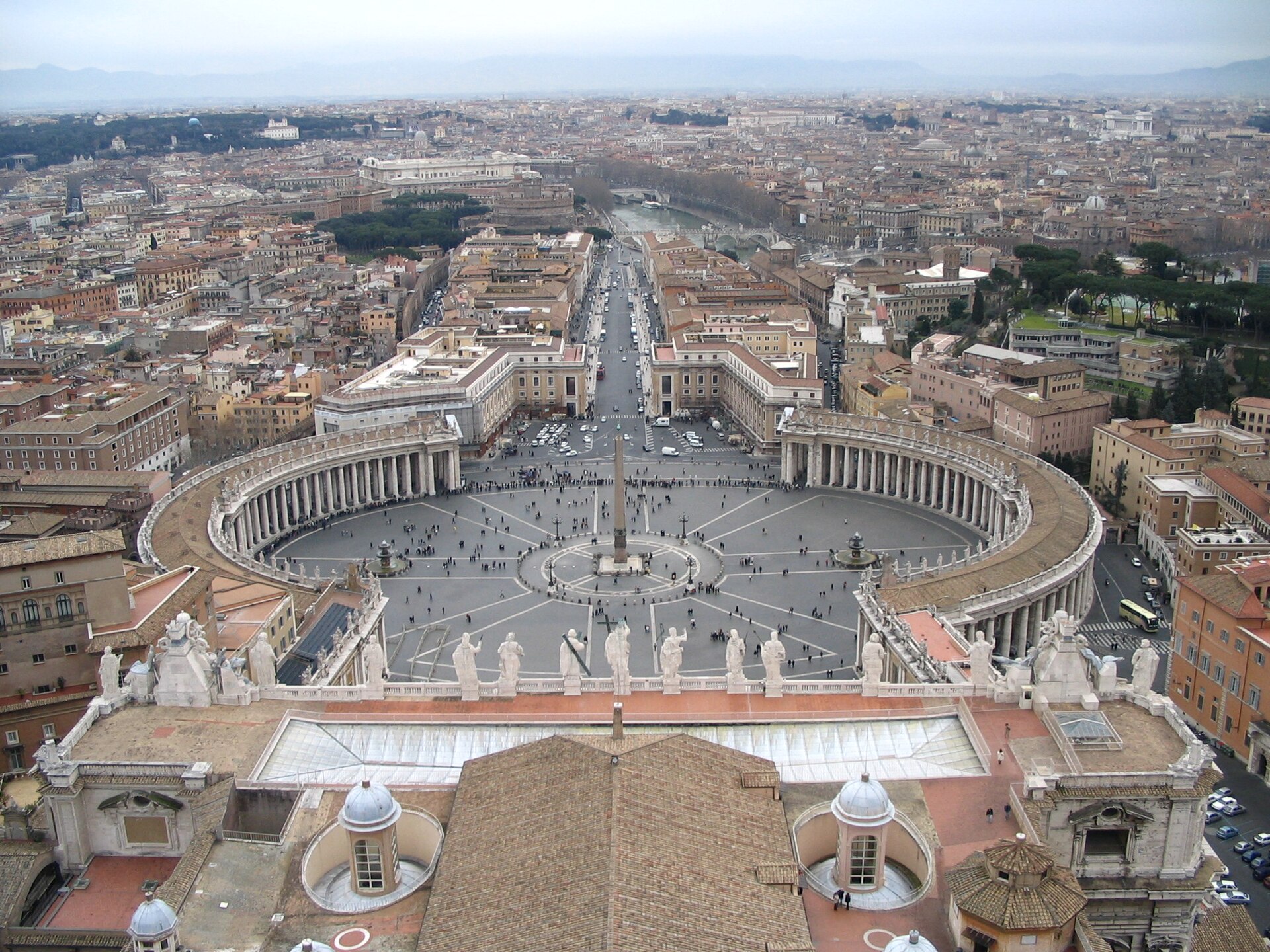
Rome has no true off-season, only quieter months and busier ones, and its airfares follow a calendar that is part climate, part Church and part European holiday habit. It is one of the most visited cities in the world, the seat of the Catholic Church, and the capital of a country that takes the whole of August off, which means that seats and hotel rooms are pulled in different directions at different times of year: pilgrims at Easter, tour groups in spring and autumn, North American families in July, Italians leaving the city in August, and Christmas visitors in December. Add a Mediterranean climate that is mild and wet in winter and genuinely hot in high summer, and the “best time” question has several right answers depending on what you want from the trip. This guide walks through the weather month by month, the fare seasons, the holidays and events that move prices, and how to handle the two airports.
The short answer
For the best balance of weather, prices and crowds, aim for late April to early June, avoiding Easter week itself, and late September to the end of October, when the heat has broken, the light turns golden and the city is at its most comfortable for walking. The cheapest fares come in January and February, after the Epiphany holiday on 6 January, and in November, when rain and short days keep demand low and hotel rates reach their annual floor. The most expensive stretches are Easter and Holy Week, when pilgrims fill every room near the Vatican, June to August for transatlantic fares, when North American summer travel peaks, and the Christmas and New Year fortnight. August is its own case: flights stay expensive, but the heat and the Roman exodus can soften hotel rates in the city. Whatever you choose, run a flexible-date search on our Rome flights page; a shift of a few days around Easter or a long weekend can change the fare band entirely.
Rome’s weather, season by season
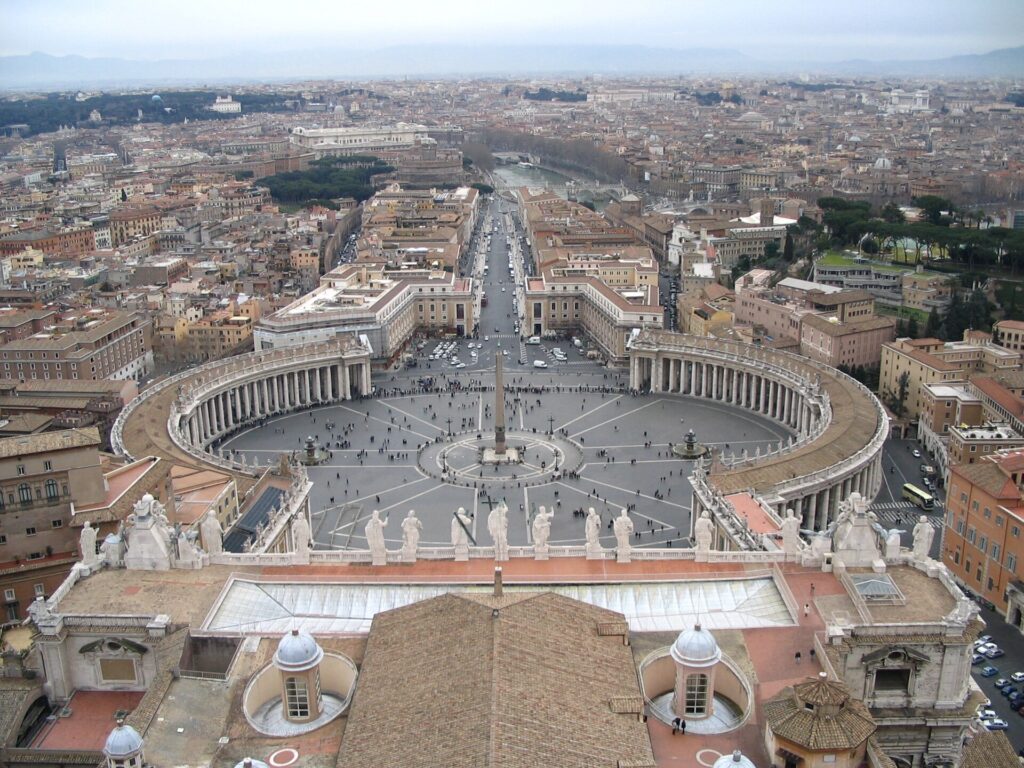
Rome sits about 25 kilometres inland from the Tyrrhenian Sea, in a basin of low hills, and it has a classic Mediterranean climate: hot, dry summers, mild winters with most of the year’s rain, and long, warm shoulders in spring and autumn. Snow is rare enough to make the national news when it happens. The figures below are approximate seasonal patterns based on the long-term climate normals of Italy’s national weather service, the Servizio Meteorologico dell’Aeronautica Militare; check its current forecast before you pack, because a summer heatwave or an autumn storm can move the numbers a long way from the average.
| Month | Typical daytime high | Typical overnight low | What it feels like | Fare pressure |
|---|---|---|---|---|
| January | around 12 °C | around 3 °C | Cool, often sunny, damp in the evenings; occasional frost | Low after 6 January |
| February | around 13 °C | around 4 °C | Similar, with the first mild days by the end of the month | Low; small rise for Carnival and half-term weeks |
| March | around 16 °C | around 6 °C | Changeable; bright, warm afternoons and showers | Moderate; high if Easter falls in March |
| April | around 19 °C | around 8 °C | Spring proper; wisteria and azaleas, some rainy days | High, with an Easter spike |
| May | around 24 °C | around 12 °C | Warm and mostly dry; many people’s ideal month | High |
| June | around 28 °C | around 16 °C | Summer arrives; hot afternoons, long evenings | High to peak |
| July | around 31 °C | around 18 °C | Hot and dry; heatwaves push well above 35 °C | Peak for flights |
| August | around 31 °C | around 19 °C | The hottest month; Romans leave around Ferragosto | Peak for flights; city hotels can soften |
| September | around 27 °C | around 15 °C | Still summer for the first half; the first storms later | High |
| October | around 22 °C | around 11 °C | Warm, golden days between heavy downpours | High to moderate |
| November | around 16 °C | around 7 °C | The wettest month; mild between the rain | Low |
| December | around 13 °C | around 4 °C | Cool, damp and festive | Low until mid-month, then peak |
Three things the table cannot show. First, the summer heat is harder than the numbers suggest: stone streets, little shade in the Forum and the Palatine, and warm nights mean that a 33 °C day in Rome feels more punishing than the same figure at home, and the city now has heatwaves most summers that push the afternoon well past 35 °C. Second, the rain comes in bursts: autumn and winter rain in Rome tends to arrive as heavy downpours that clear within hours rather than steady drizzle, so a wet forecast rarely writes off a whole day. Third, the light: the low, warm light of October and the long evenings of May and June are a large part of why people fall for the city, and they do not show up in any average.
How Rome’s fare seasons work
Three calendars drive seats into Rome: the Church, which fills the city at Easter, for major papal ceremonies and for jubilee years; the tourist seasons of spring and autumn, when tour groups, cruise passengers and independent travellers from every continent arrive for the ideal walking weather; and the school and work holidays of North America and Europe, which push transatlantic fares to their annual high in June, July and August. Hotel rates and airfares do not always move together here. Hotels are most expensive in April, May, June, September and October; flights from North America are usually most expensive from mid-June to mid-August; and August can combine high fares with softer hotel rates as the heat keeps some visitors away and Romans head for the coast.
Peak season
Easter and Holy Week, late April to the end of June, September and most of October for hotels, plus mid-June to mid-August for transatlantic fares, and roughly 20 December to 6 January. Easter moves each year between late March and late April, and the week before it, with the papal ceremonies in St Peter’s Square, is the single busiest week of the Roman year for hotels near the Vatican and across the centre. Spring weekends when an Italian public holiday creates a long weekend, such as 25 April or 1 May, are also tight. If you must travel in peak, book early, book the Vatican Museums and the Borghese Gallery the moment your dates are fixed, and consider staying in Prati, Testaccio or near Termini rather than the Centro Storico.
Shoulder season
March outside Easter, early to mid-November, and the second half of October in most years. March gives you spring flowers and mild afternoons with the risk of showers; late October and early November give you warm days, fewer groups and the new season’s produce in the markets, at the cost of some heavy rain. For many travellers these are the smartest windows of all, since the Vatican queues are shorter and the weather is still good for walking all day.
Low season
From 7 January to the end of February, and late November to mid-December. Fares and hotel rates are at their lowest, the museums are at their emptiest, and the weather is cool rather than cold, with plenty of bright days between the rain. The exceptions are the Six Nations rugby weekends in February and March, when Italy’s home matches at the Stadio Olimpico fill hotels with visiting fans, and the European school half-term weeks in February. Pack a warm layer and an umbrella and you will have the Sistine Chapel with a fraction of the summer crowd.
As elsewhere, mid-week departures and early or late flights usually price below Friday and Sunday afternoons on the same route, and a search across a whole month reveals cheaper pairs of dates close to your first choice. Our guide to the best times to book explains how to read those patterns.
Rome month by month
January
The first week is still holiday season, ending with the Epiphany on 6 January, when the Befana market fills Piazza Navona and families return from the mountains. After that, January is one of the two cheapest months of the year to fly and stay. Days are cool and often clear, nights are chilly, and the queues at the Colosseum and the Vatican Museums are as short as they ever get. The winter sales begin in early January and run for several weeks, which makes it a good month for shopping as well as sightseeing.
February
Similar weather with more daylight, and low fares apart from the Six Nations weekends and Carnival, which in Rome is a modest affair of children in costume and confetti in the piazzas rather than the spectacle of Venice. Late-winter produce, including the first Roman artichokes and puntarelle, the bitter chicory salad dressed with anchovy, is in the markets. This is the best value month for a museum-heavy trip.
March
Changeable: bright, warm afternoons, cool mornings and a few days of rain. The Rome Marathon closes central streets on a Sunday in March, the Six Nations continues, and fares climb through the month, sharply so if Easter falls early. The artichoke season is at its height, and outdoor tables reappear in the piazzas on sunny days.
April
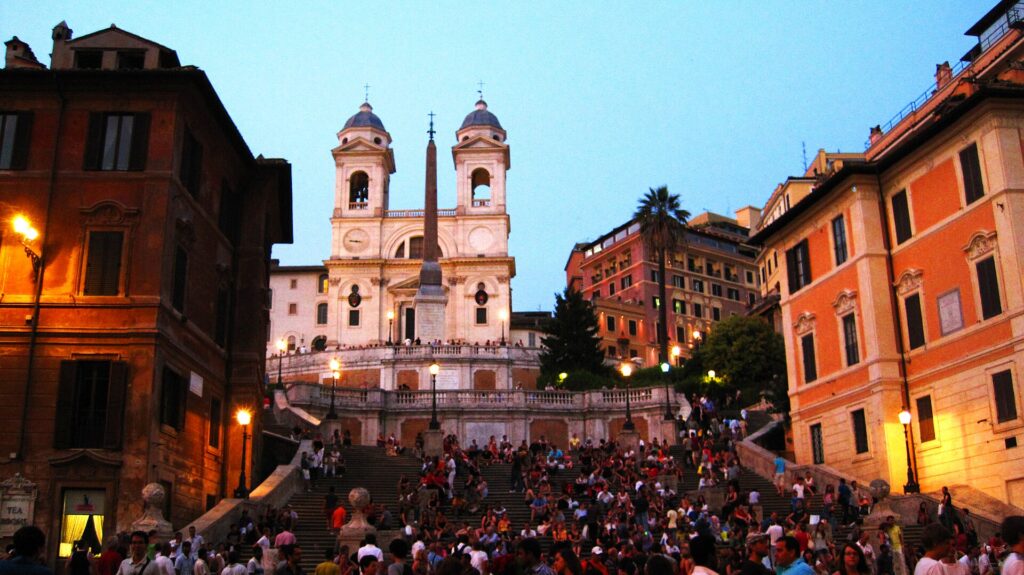
Spring proper, and usually the month of Easter, which brings the Holy Week ceremonies at St Peter’s, the Good Friday Way of the Cross at the Colosseum, and the Easter Sunday blessing in the piazza. The Natale di Roma, the city’s birthday on 21 April, is marked with parades of costumed legionaries near the Circus Maximus, and the Spanish Steps are traditionally decked with azaleas in the second half of the month. Liberation Day on 25 April is a national holiday, and in some years it combines with 1 May to create a long break for Italians. Fares and hotels are high all month.
May
For many visitors the ideal month: warm, mostly dry and long. Labour Day on 1 May brings a huge free concert in the piazza in front of St John Lateran, and the Internazionali d’Italia, one of the most important clay-court tennis tournaments in the world, fills the Foro Italico for two weeks. The rose garden on the Aventine opens to the public for the season. Demand is high throughout, especially at weekends.
June
Summer arrives, with long evenings and hot afternoons. Republic Day on 2 June brings a military parade along Via dei Fori Imperiali, and the feast of Saints Peter and Paul on 29 June, the patrons of Rome, is a city holiday with a papal Mass. The summer opera season at the Baths of Caracalla begins, open-air cinema and concerts start in the parks, and transatlantic fares move into peak once North American schools finish.
July
Hot and dry, with heatwaves most years, and peak season for fares from North America. The city adapts: sightseeing starts at opening time, the afternoon is for a long lunch and a rest, and life resumes in the evening, when the stalls and bars along the Tiber embankments, the Caracalla opera and the outdoor film screenings are in full swing. Book early-morning slots at the Colosseum and the Vatican, carry water and refill it at the nasoni street fountains, and plan indoor visits for the hottest hours.
August
The hottest month, and the month Rome empties of Romans. Around Ferragosto, the 15 August holiday, many family-run restaurants, bars and shops close for one to three weeks, and the city takes on a quiet, slightly surreal air, with tourists outnumbering residents in the centre. Flights remain expensive, but hotel rates in the city can ease compared with June and September. Traffic, by contrast, is light, and the museums keep their usual hours. If you come, stay somewhere with good air conditioning and plan a day at the beach at Ostia or a trip to the hills.
September
The first half is still summer, with warm evenings and the return of the Romans after the holidays; the second half brings the first autumn storms and the start of the cultural season, with the Romaeuropa festival of music, dance and theatre beginning. Tour groups return in force, and hotel rates climb back to spring levels. Transatlantic fares begin to ease after the first week.
October
The Romans’ favourite month, known for the ottobrata, the run of fine, warm days that the city celebrates by eating outside. Heavy rain arrives in bursts, the Rome Film Fest brings premieres and red carpets to the Auditorium Parco della Musica, and the new olive oil and chestnuts appear in the markets. Hotels are still busy, especially at weekends, but fares are lower than in summer.
November
The wettest month and, outside the first few days, one of the cheapest. All Saints’ Day on 1 November is a national holiday. The museums are quiet, the rain comes and goes, and mild days between the storms are perfect for walking. Hotel rates reach their annual low in the second half of the month.
December
Two months in one. The first half is quiet and good value, with nativity scenes appearing in the churches and the Christmas market opening in Piazza Navona; the Immaculate Conception on 8 December is a public holiday, when the Pope traditionally visits the column in Piazza di Spagna. From about 20 December, fares and hotel rates jump for Christmas, with midnight Mass at St Peter’s and the Pope’s Christmas Day blessing, and they stay high through New Year’s Eve and the Epiphany.
Events that move Rome flight and hotel prices
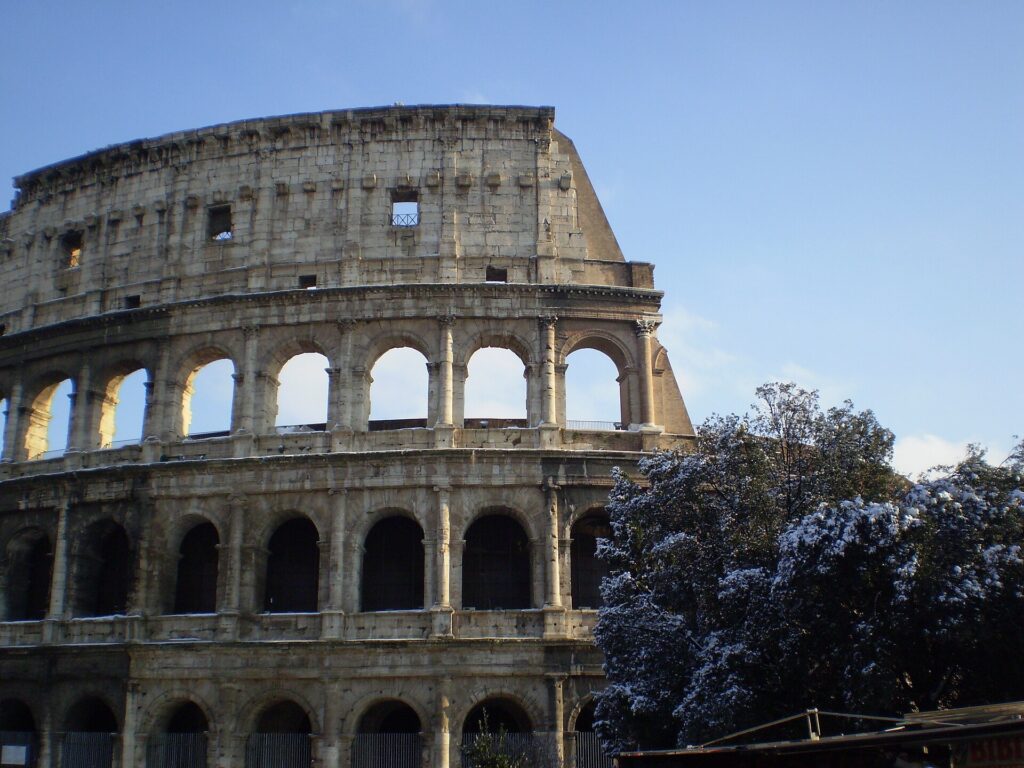
Cross-check these against your dates before you book. Exact dates shift each year; Turismo Roma, the city’s official tourism site, keeps the current calendar, and the Holy See’s site publishes the papal liturgical calendar.
- Easter and Holy Week (late March to late April): the biggest hotel spike of the year, especially near the Vatican.
- Six Nations rugby (February and March): Italy’s home weekends at the Stadio Olimpico.
- Rome Marathon (a Sunday in March).
- Natale di Roma, Liberation Day and Labour Day (21 April, 25 April, 1 May): a run of holidays that can create long weekends for Italians.
- Internazionali d’Italia (two weeks in May) at the Foro Italico.
- Republic Day and Saints Peter and Paul (2 June and 29 June).
- Ferragosto (15 August): quieter city, busier coast and roads.
- Rome Film Fest (October) and the autumn trade fairs and congresses, which can fill hotels mid-week.
- Christmas to Epiphany (roughly 20 December to 6 January).
- Serie A football, especially the Roma-Lazio derby, and stadium concerts. Our Rome events page shows what is on sale for your dates.
Getting in from the airport
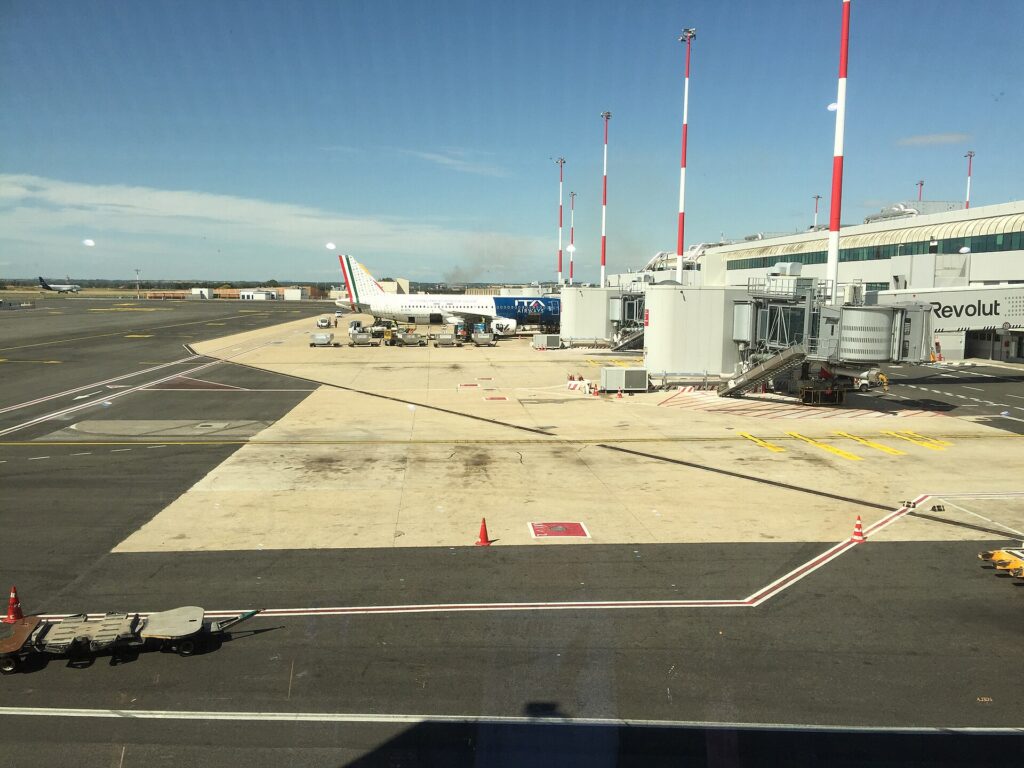
Rome has two airports, both run by Aeroporti di Roma. Leonardo da Vinci, known to everyone as Fiumicino (FCO), about 30 kilometres southwest of the centre near the coast, is Italy’s largest airport and the hub of ITA Airways, with nonstop flights from several North American gateways, including New York, Toronto and Montreal, and from nearly every European capital. Ciampino (CIA), about 15 kilometres southeast, is smaller and handles mostly low-cost European airlines. From Fiumicino, the Leonardo Express train runs nonstop to Termini station in around half an hour, and the slower, cheaper FL1 regional line stops at Trastevere, Ostiense and Tiburtina, which suits many hotels better; tickets for both are sold by Trenitalia at the station and online. Licensed white taxis charge a fixed fare from Fiumicino to anywhere inside the Aurelian Walls, and several coach companies run cheaper, slower buses to Termini. From Ciampino, buses run to Termini and to the nearest metro and rail stations. Rental desks are at both airports, though for a city stay you will not want a car. Our Rome car-versus-transit guide covers that decision, and our Fiumicino airport guide covers the layout.
Timing tricks that work for Rome
- Search the whole month. Easter, the spring holidays and Christmas create sharp edges in the fare calendar. A calendar search on TicketScanner shows them instantly, and the week after Easter is often far cheaper than the week before it.
- Book the hotel first around Easter. A cheap fare into Holy Week is not cheap once the room is added. Run a Rome hotel search for the same dates before you commit to either.
- Fly mid-week. Tuesday to Thursday departures are usually the value on transatlantic routes, and Saturday nights in Rome rarely cost more than weekday ones outside the peaks.
- Consider an open jaw. Many travellers combine Rome with another European city. Flying into Rome and home from Paris or London, or the reverse, can price close to a return and saves a backtrack; our guide to choosing between England, Italy and France helps with the itinerary.
- Check Ciampino for European hops. If you are arriving from elsewhere in Europe on a low-cost airline, Ciampino may be cheaper, though the transfer into the city is slower.
- Watch for strikes. Italian transport strikes are announced in advance, and air strikes protect certain morning and evening time bands, but a strike day can still disrupt connections and trains. Allow a buffer, and read our guide to how early to arrive for international departures.
- Flying out of Rome instead? The same seasonality applies in reverse; see cheap flights from Rome.
What to pack, by season
Winter (December to February): a warm coat or a padded jacket, layers for heated interiors, a compact umbrella and waterproof shoes for the cobbles, which turn slippery in the rain. Spring (March to May): layers, a light jacket for the evenings and an umbrella for March and April showers. Summer (June to August): light, breathable clothing, a hat, sunscreen and a refillable water bottle, plus a scarf or light layer to cover shoulders in churches, since the dress code at St Peter’s and the major basilicas applies whatever the temperature. Autumn (September to November): summer clothes for September, layers and a rain jacket for October and November. In every season, the single most important item is a pair of comfortable, broken-in walking shoes; a typical day in Rome is fifteen to twenty thousand steps on stone.
The best time to fly to Rome for…
Easter and the Vatican
Holy Week, booked as early as possible, with the hotel first and papal ceremony tickets requested well ahead. For the Vatican without the crowds, January, February and November.
Walking weather
Late April to early June and the last week of September through October: warm enough to eat outside, cool enough to walk all day.
The lowest fares
Mid-January to the end of February and the second half of November, outside the rugby weekends.
Food
February to April for Roman artichokes and spring lamb; October and November for new olive oil, chestnuts and mushrooms.
Families
Late June, before the worst of the heat, or the October half-term weeks, when the weather is still warm and the queues are shorter than in summer.
International visitors
Canadian, American and British citizens can spend up to 90 days in any 180 in the Schengen area without a visa, on a passport valid for at least three months beyond the planned departure. The EU’s Entry/Exit System now records non-EU travellers’ fingerprints and photo at the border, and the ETIAS travel authorisation is due to follow; the official EU travel page explains what applies to you.
Frequently asked questions
What is the cheapest month to fly to Rome?
January after the Epiphany and February are consistently the lowest, followed by November and the first half of December.
What is the best month to visit Rome for weather?
May and October, with late April, early June and late September close behind. July and August are hot; November is the wettest month.
Is August a bad time to visit Rome?
It is hot, and many family restaurants close around Ferragosto, but the city is quieter, traffic is light and hotel rates can be lower than in June. Plan early mornings and late evenings and it works.
How expensive is Rome at Easter?
Very: Holy Week is the most expensive week of the year for hotels near the Vatican and in the centre, and flights rise too. The week after Easter is noticeably cheaper.
Should I fly into Fiumicino or Ciampino?
Fiumicino for flights from North America and most full-service airlines, with the train to Termini. Ciampino only if a low-cost European fare is much cheaper, since the transfer is by bus.
How far ahead should I book flights to Rome?
Earlier for Easter, June to August and Christmas, when fares tend only to rise; for January, February and November, fares are stable enough that finding the right dates matters more.
Does it snow in Rome?
Rarely. A light snowfall happens every few years and is a news event when it settles; most winter days are cool and bright, or cool and wet.
Ready to pick your dates? Compare fares across the whole month on our Rome flights page, then find a room with our Rome hotel search. For what to do when you land, start with our first-timer’s guide to Rome.
Keep planning with TicketScanner
- Cheap flights to Rome — compare fares across the whole month
- Rome hotels — book early for Easter
- Rome car rentals — for Tuscany and the countryside
- Events in Rome — football, concerts and shows on sale
- Things to do in Rome: a first-timer's guide
- Rome: rent a car or use public transit?
- Rome Fiumicino (FCO) airport guide
- Where to stay: Trastevere
- Best times to book flights and hotels
Leave a Reply