Rome is the easiest decision in this series: for a stay in the city itself, do not rent a car. The historic centre is a camera-enforced limited-traffic zone that will fine a rental car automatically, parking is scarce and confusing, the traffic is a sport the locals have been practising since childhood, and the sights are closer together than most visitors expect, so walking is not only possible but the best way to see the place. What Rome does have is cheap if imperfect transit, licensed taxis with fixed airport fares, and one of Europe’s best rail hubs for day trips. The car question only becomes real when your plans leave the city: a road trip through Tuscany or Umbria, a few days in a farmhouse in the hills, or the small towns of the countryside north of Rome that the trains do not reach. This guide explains how the city is laid out, how transit and tickets work, what driving here is really like, how the limited-traffic zones catch visitors out, and gives you a straightforward way to decide.
The short answer
Skip the car for any stay in Rome itself: the Colosseum, the Vatican, the Pantheon, Trastevere, Monti and the Borghese are all walkable from each other, and the metro, buses, trams and taxis cover the rest. Take the train for the classic day trips, Florence, Naples, Pompeii, Orvieto, Tivoli, Ostia Antica and the Castelli Romani, all of which are well served by rail. Rent a car only for the days when you are leaving Rome for the countryside: a Tuscany or Umbria road trip, the hill towns and lakes of Tuscia to the north, the beaches and villages along the southern coast, or a rural stay where the nearest station is miles away. Even then, pick it up on the day you leave the city, not the day you arrive. Compare rental rates for those days on our Rome car rental page.
How Rome is laid out
The Rome that visitors come to see is small. The historic centre sits in a bend of the Tiber, mostly inside the Aurelian Walls that the emperors built in the third century, and a brisk walk across it from the Vatican in the west to Termini station in the east takes about an hour. The Centro Storico, with the Pantheon, Piazza Navona and the Trevi Fountain, fills the bend of the river; the ancient centre, with the Colosseum, the Forum and the Palatine, lies to its southeast; Monti sits between the Forum and Termini; and Trastevere, the Vatican and the orderly grid of Prati are across the river on the west bank. Testaccio and the Aventine are to the south. Beyond the walls, the city sprawls for kilometres to the Grande Raccordo Anulare, the motorway ring road known as the GRA, and the airports lie outside it, Fiumicino to the southwest near the coast and Ciampino to the southeast.
Hotels cluster in the Centro Storico, around Termini for budget and trains, in Trastevere for the evenings, in Monti near the Forum, and in Prati for the Vatican and a calmer residential feel. Our Rome hotel search lets you compare them.
Getting in from the airport
Fiumicino (FCO), Rome’s main airport, is about 30 kilometres from the centre and has its own railway station a short walk from arrivals. The Leonardo Express runs nonstop to Termini in around half an hour, every 15 to 30 minutes through the day; the FL1 regional train is cheaper and slower and stops at Trastevere, Ostiense and Tiburtina, which can leave you closer to your hotel. Buy tickets from the machines or the Trenitalia app, and if you have a paper ticket for the FL1, validate it before boarding. Licensed white taxis charge a fixed fare from Fiumicino to any address inside the Aurelian Walls, displayed on the taxi door and at the rank; use only the official rank outside arrivals and ignore anyone offering a ride inside the terminal. Coach companies run cheaper buses to Termini. Ciampino (CIA), about 15 kilometres southeast, has no rail link of its own; buses run to Termini and to the nearest metro and train stations, and taxis charge a fixed fare into the centre. The rental companies have counters at both airports. Aeroporti di Roma has current ground-transport details, and our Fiumicino airport guide covers the layout.
Rome’s transit, explained
ATAC, the city transport company, runs the metro, buses and trams. Romans complain about it, and it is sometimes crowded, late or on strike, but for a visitor it is cheap and covers every sight you are likely to want. Its main limitation is that the metro skirts the historic centre rather than crossing it, because every attempt to dig a tunnel through Rome runs into archaeology.
The metro
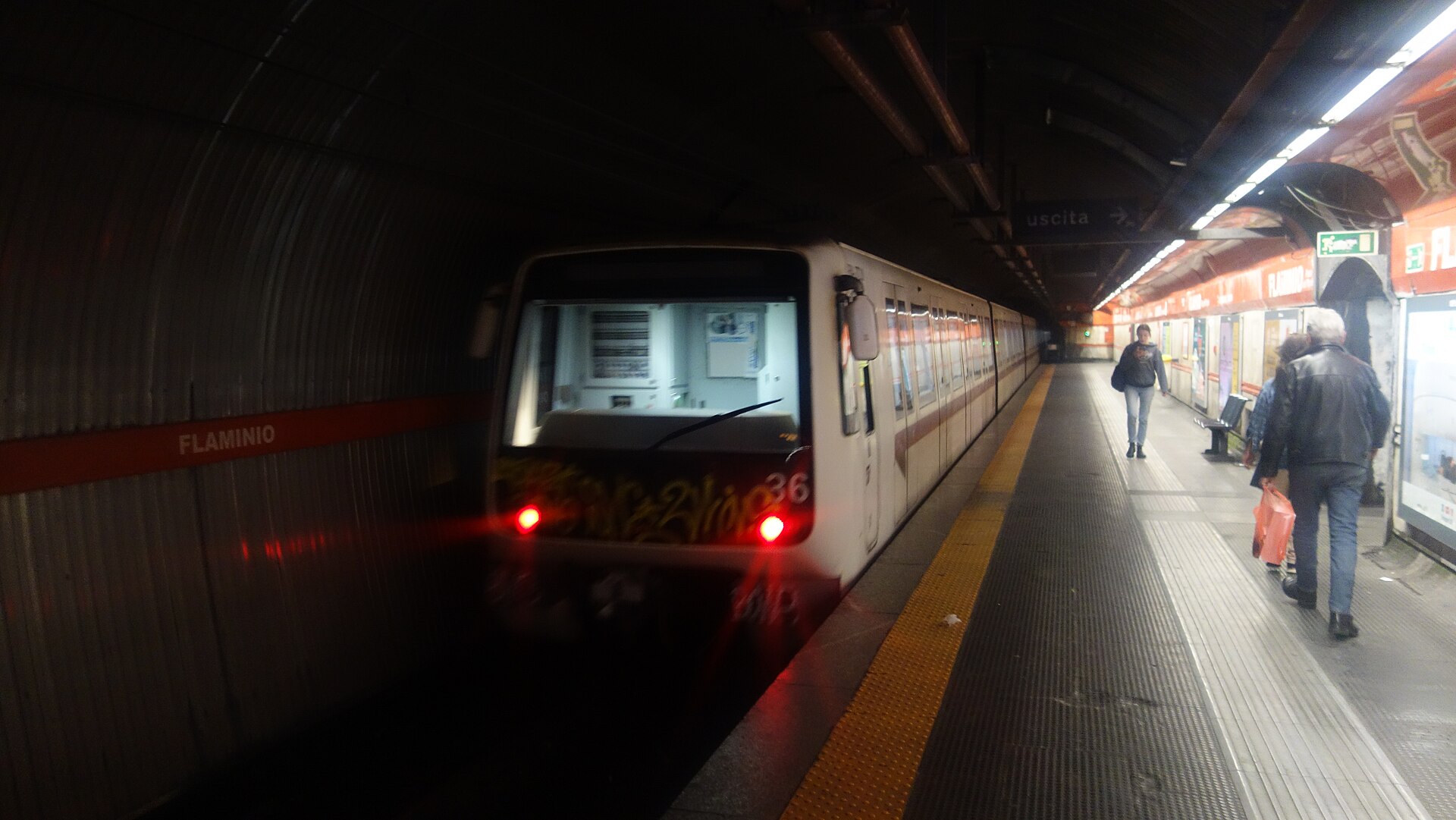
Three lines. Line A runs from the northwest to the southeast and is the one visitors use most: Ottaviano for the Vatican, Flaminio for Piazza del Popolo, Spagna for the Spanish Steps, Barberini for the Trevi Fountain, Repubblica, Termini and San Giovanni. Line B crosses it at Termini and runs south past Cavour for Monti, Colosseo, Circo Massimo and Piramide for Testaccio and the Ostia trains, to EUR; a branch, B1, splits off to the northeast. Line C runs in from the eastern suburbs to San Giovanni, where it meets Line A, and is being extended through the centre toward the Colosseum and beyond; check ATAC’s map for which of the new stations have opened when you travel. Trains run from early morning until about 11.30 pm, later on Friday and Saturday nights.
Buses and trams
Buses fill the gaps the metro leaves, and several routes are essentially tourist lines. The 40 and the 64 run from Termini along Via Nazionale to Piazza Venezia, Largo Argentina and the Vatican; the 64 is famously crowded and famously worked by pickpockets. The H bus links Termini with Trastevere. The number 8 tram runs from near Piazza Venezia across the river through Trastevere and is the easiest way into that neighbourhood from the centre when it is running normally; trams 2, 3 and 19 serve Flaminio, the Aventine and the Villa Borghese area. Night buses, marked with an N, run on the main corridors after the metro closes. At rush hour, walking is often faster.
Fares and tickets
A standard ticket, the BIT, is valid for 100 minutes on buses and trams, with one metro journey included, and there are 24-hour, 48-hour and 72-hour passes and a weekly ticket. The simplest option for most visitors is to tap a contactless bank card or phone at the metro gates and on the readers aboard buses and trams, using the same card each time. Paper tickets are sold at tobacconists, newsstands and station machines and must be validated on first use, in the gate or in the machine on board; inspectors do check, and the on-the-spot fine is far more than a week of tickets. Check ATAC’s site for current fares before you go.
Accessibility
Accessibility is improving but uneven: newer stations have lifts, several older Line A stations do not, and most buses and trams are low-floor. The bigger obstacle is the city itself: cobbles, narrow pavements and steps make the historic centre hard going for wheelchairs and strollers, and taxis are often the practical answer.
Beyond ATAC
- Walking. The best way to see Rome, by a long way. The Pantheon is within a 40-minute walk of the Colosseum, the Vatican, Trastevere and the Spanish Steps, and the walks between them are where you find the city. Bring shoes that can handle fifteen kilometres of stone a day.
- Taxis. Licensed Rome taxis are white, with a roof sign and a licence number on the door. Find them at ranks in the main piazzas and at the stations, or book through an app such as itTaxi or FreeNow; hailing one in the street rarely works. Uber operates mainly as a booking app for licensed taxis and private-hire cars rather than as a cheap alternative.
- Bikes and e-scooters. Shared e-bikes and e-scooters are available across much of the city through the usual apps. They are handy along the Tiber cycle path and in Villa Borghese and the flatter neighbourhoods; on the cobbles, the hills and in the traffic around Piazza Venezia they take nerve. Italy has tightened its e-scooter rules, and helmets are now compulsory.
- Regional trains. Trenitalia’s regional lines run from Termini, Tiburtina and Ostiense to Tivoli, Frascati and the Castelli Romani, Orvieto and the coast; the Metromare line runs from next to Piramide to Ostia Antica and the beach at Ostia.
- High-speed trains. Trenitalia and Italo run fast trains from Termini to Florence in about an hour and a half and Naples in just over an hour, which makes both, and Pompeii beyond Naples, practical day trips. Book ahead for the best fares.
Driving in Rome: what it is really like
Driving in Rome is not dangerous so much as demanding. Lanes are suggestions, scooters fill every gap on both sides of you, horns are a means of communication rather than an insult, and the large piazzas, Piazza Venezia above all, are roundabouts without markings where confidence counts for more than right of way. The locals are skilled and fast and expect you to be the same. The GRA and the roads into the centre jam every weekday morning and evening. None of that is impossible for a confident driver, but two further features make it a genuinely bad idea for visitors: the limited-traffic zones and the parking.
The ZTL: the fine you will not see coming
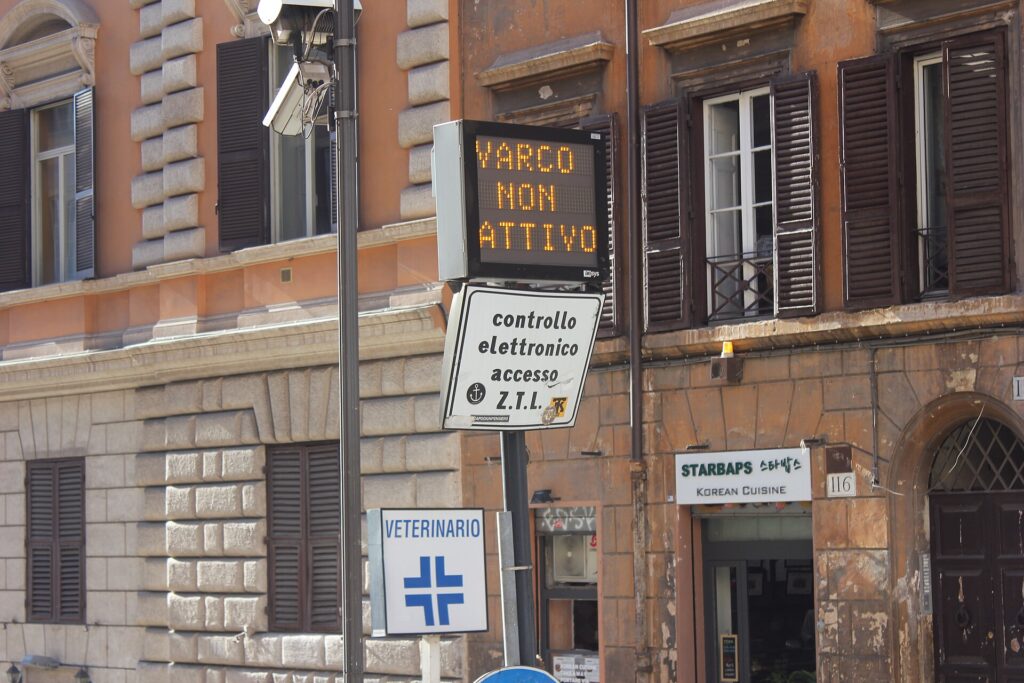
Most of the historic centre is a Zona a Traffico Limitato, or ZTL, where only residents and permit holders may drive during enforcement hours. The entry points, called varchi, have cameras and an electronic sign that reads “varco attivo” when the zone is being enforced. The main Centro Storico zone is active through the day on weekdays and for much of Saturday, and there are night zones in Trastevere, Testaccio, San Lorenzo and Monti on weekend nights. Drive through an active gate in a rental car and the camera records the plate; months later, the fine arrives through the rental company, which adds its own administration fee for passing on your details, and it is not unusual for a visitor to receive several fines for one confused afternoon. Some hotels inside the zone can register a guest’s plate for access to unload; ask before you arrive, and never assume a satellite navigation app will route you around the zone. Roma Servizi per la Mobilità, the city’s mobility agency, publishes the zones and their hours.
Parking
Street parking in Rome follows a colour code. Blue lines mean paid parking, at meters or through parking apps; white lines are free but almost always full; yellow lines are reserved for residents, disabled permit holders or loading, and parking in them risks a fine or a tow. A car left in the wrong place can be towed with impressive speed. There are a few large garages, including under Villa Borghese, and hotel parking in a nearby garage can cost nearly as much per night as the rental itself. In the countryside parking is easier, though usually outside the walls, since most medieval centres have their own ZTL too.
Rules and conditions worth knowing
- International Driving Permit. Drivers with a non-EU licence, including Canadian, American and British licence holders, should carry an International Driving Permit alongside their home licence; it is required by Italian law, and you get it at home before you leave.
- Tolls. The motorways, or autostrade, are tolled. Take a ticket on entry and pay on exit by card or cash, and avoid the yellow Telepass lanes, which are for electronic transponders only. Autostrade per l’Italia publishes routes, tolls and traffic.
- Speed cameras. Fixed cameras are common, and many motorways use Tutor average-speed cameras over long sections. The motorway limit is 130 km/h, lower in rain.
- Headlights must be on at all times on motorways and main roads outside built-up areas.
- No right turn on red. Unlike in North America, a red light means stop, whatever the direction.
- Drink-driving limits are lower than in most of North America, and zero for drivers with less than three years’ experience.
- Winter equipment. From 15 November to 15 April, many roads, especially in the Apennines, require winter tyres or snow chains on board where signed; ask the rental company whether the car is equipped if you are heading into the mountains.
- Fuel. Petrol is benzina and diesel is gasolio; many stations have a cheaper self-service side and a pricier attended side.
When renting a car makes sense
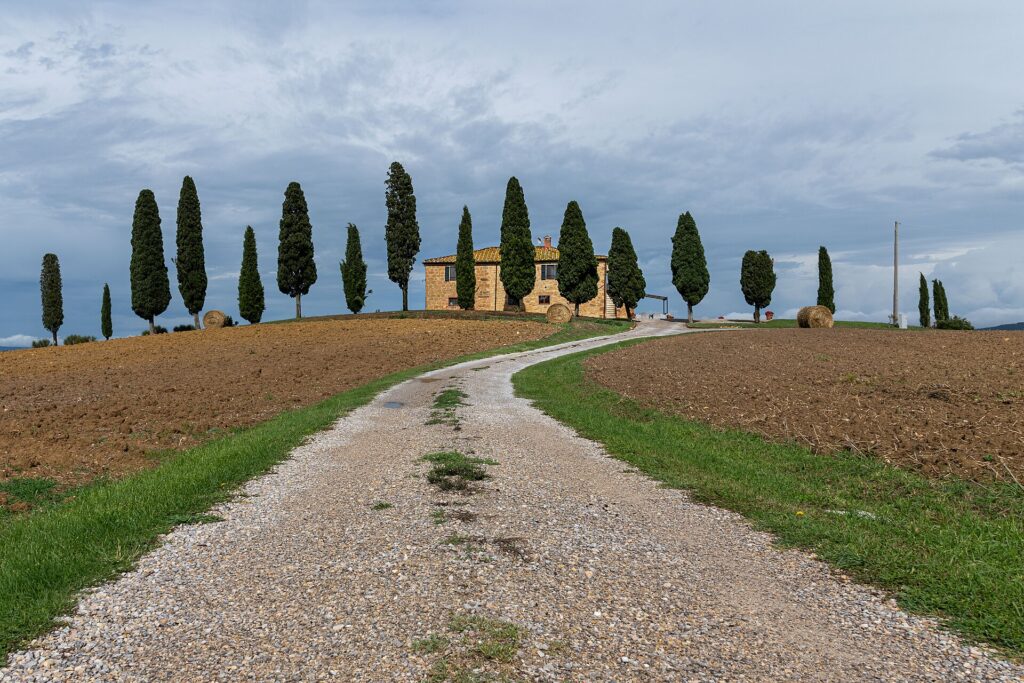
- A Tuscany or Umbria road trip. The hill towns, vineyards and farmhouse stays of southern Tuscany and Umbria are the classic reason to rent; the A1 motorway puts Orvieto about an hour and a half north and the Val d’Orcia a little over two hours.
- Tuscia and the lakes. The countryside north of Rome, with Viterbo, Lake Bolsena, Lake Bracciano and the cliff-top village of Civita di Bagnoregio, is poorly served by public transport and rewarding by car.
- The southern coast. Sperlonga, Sabaudia and the Circeo national park are summer escapes that a car makes simple.
- Rural stays. An agriturismo in the hills is a wonderful base and almost always car-dependent.
- Families with luggage leaving Rome. Once you are out of the city, a car solves the logistics of children, bags and small towns.
If any of those apply, our rental car booking tips cover insurance, deposits and the questions to ask at the counter, and our family car rental guide looks at vehicle choice. Book an automatic well ahead if you need one, since manual transmission is still the default in Italy, and choose the smallest car that fits, because village streets and parking spaces are narrow.
When it does not
- You are staying in Rome and your plans are the city: a car will cost you parking and fines and save you nothing.
- Your day trips are Florence, Naples, Pompeii, Orvieto, Tivoli or Ostia Antica, all easier by train.
- You are visiting the Amalfi Coast, where the roads are narrow, parking is scarce and the train to Naples or Salerno plus the ferries and buses is the better plan.
- You are in town for Easter, a papal event or a big match, when traffic and closures around the Vatican and the Stadio Olimpico make driving pointless.
The hybrid plan for a city-plus-countryside trip
Go car-free for the Rome days and rent only for the countryside, and think carefully about where you pick up. The best place to collect a car for a road trip is usually Fiumicino airport, even if you are not flying that day: it sits outside the city with direct access to the motorway network, so you never have to drive through the centre or near a ZTL gate, and the Leonardo Express or the FL1 gets you there from Termini or Trastevere in half an hour. The rental offices around Termini are closer to most hotels, but driving out of the station area means navigating some of the busiest streets in Rome. A pattern that works well: arrive at Fiumicino, take the train into the city, spend three or four car-free days in Rome, take the train back out to the airport to collect a car, drive north into Tuscany or Umbria, and either return to Fiumicino for the flight home or drop the car in Florence and continue by train, if the one-way fee is reasonable. Compare the day rates on our Rome car rental page against a full-trip rental and the difference is usually obvious.
A worked cost comparison
Numbers change with the season and the booking window, so treat this as a method rather than a quote, and check current rates before deciding. For a four-night city break for two people, the car-free version costs two train tickets each way to the airport or one fixed-fare taxi, a couple of 72-hour transit passes or a few days of contactless fares, and perhaps two or three taxi rides at night; the rental version adds four days of a compact car, four nights of garage parking at central rates, fuel, and the very real risk of a ZTL fine arriving months later with an administration fee on top. The transit option wins by a wide margin. For the same four nights plus a day trip to Florence, the high-speed train, booked ahead, gets two people there and back faster and with less stress than the three-hour drive each way, and avoids Florence’s ZTL too. For a week split between Rome and a Tuscan farmhouse, the hybrid plan is the clear winner: four car-free days in Rome, then a rental collected at Fiumicino for the countryside days only. Run the rental rates for your dates on our Rome car rental page and put them beside the train fares before you choose.
Driving out of Rome in each season
Once you are past the GRA, driving in central Italy is a pleasure: good motorways, beautiful secondary roads and towns worth stopping in every half hour. The seasons still shape the experience. In summer, the problem is the exodus: on the weekends of late July and early August, and around Ferragosto on 15 August, the motorways out of Rome and the coast roads to the beaches carry what Italians call the esodo, and the Sunday evening return can double journey times. Leave early, travel mid-week, and never leave anything visible in a parked car. In autumn, the heavy rains of October and November can flood underpasses and turn the GRA into a crawl, but the countryside is at its best for the harvest and the vineyards. In winter, the lowlands are mild, but the Apennines east of Rome get real snow, and the winter-equipment rule from 15 November to 15 April applies on the mountain roads. In spring, the roads are at their most pleasant, with the exception of Easter and the long weekends around 25 April and 1 May, when Romans head for the country in large numbers. In every season, the last few kilometres into a hill town are the ones to watch: the old centres are almost always ZTLs, so park outside the walls and walk in.
Decision table
| Your trip | Recommendation | Why |
|---|---|---|
| City break in Rome, couple or solo | No car | Walking, the metro and taxis cover it; parking and ZTL fines are real costs |
| Easter, papal events or a big match | No car | Closures and crowds around the Vatican and the Olimpico |
| Day trips to Florence, Naples or Pompeii | Train | High-speed rail is faster than driving and avoids city-centre parking |
| Tivoli, Ostia Antica, Orvieto, Frascati | Train | Regional trains and the Metromare serve them directly |
| Rome plus a Tuscany or Umbria road trip | Hybrid: rent at Fiumicino for the countryside days | Car-free city days, easy motorway access from the airport |
| Tuscia, the lakes, Civita di Bagnoregio | One or two days’ rental | Poor public transport, easy driving |
| Farmhouse or villa stay | Rent for the rural days | Most agriturismi are car-dependent |
| Amalfi Coast from Rome | Train to Naples or Salerno, then ferry or bus | Narrow roads and scarce parking on the coast |
Money-saving tips for both options
- On transit: tap the same contactless card every time, buy a 48-hour or 72-hour pass for heavy sightseeing days, and walk whenever the distance is under two kilometres, which in the centre is most of the time.
- At the airport: the FL1 is much cheaper than the Leonardo Express for one or two people; for three or four with luggage, the fixed-fare taxi can be the better deal.
- On a rental: pick up at Fiumicino on the day you leave Rome, book an automatic early if you need one, carry your International Driving Permit, decline extras you already have through a credit card or home policy (check first), and photograph the car at pickup and return.
- On fines: learn to recognise the ZTL signs and the “varco attivo” display, and keep to the speed limits on Tutor-monitored motorways; either mistake can cost more than the rental.
- On timing: avoid the GRA at rush hour and the motorways on summer Saturdays and Sunday evenings; the best time to fly to Rome guide lists the busiest holidays, and our guide to car, transit or taxi in a new city covers the wider trade-offs.
Frequently asked questions
Is it worth renting a car in Rome?
Not for the city. Rent only for the days you spend in the countryside, and pick the car up at Fiumicino on the way out.
Is Rome public transport good for tourists?
Good enough, and cheap. The metro, the 40 and 64 buses, the H bus and the 8 tram reach every major sight, although the metro skirts the historic centre and walking is often quicker.
How do I get from Fiumicino airport to the centre of Rome?
The Leonardo Express to Termini in around half an hour, the cheaper FL1 regional train to Trastevere, Ostiense and Tiburtina, a fixed-fare white taxi, or an airport coach.
What is a ZTL in Rome?
A limited-traffic zone covering most of the historic centre and several neighbourhoods, enforced by cameras at the entry points. Driving through an active gate in a rental car produces a fine, passed on months later with an administration fee.
Do I need an International Driving Permit in Italy?
Yes, if your licence was issued outside the EU. Carry it with your home licence.
Is it easy to find parking in Rome?
No. Blue lines are paid, white lines are free and nearly always full, and yellow lines are reserved.
Can I get to Florence or Pompeii from Rome without a car?
Yes, easily. High-speed trains reach Florence in about an hour and a half and Naples in just over an hour, with the local train from Naples continuing to Pompeii.
Whichever way you go, start with the flight. Compare cheap flights to Rome, choose a neighbourhood with our Rome hotel search, and if the countryside is on the list, price the rental for those days only on our Rome car rental page. For what to see once you are there, start with our first-timer’s guide to Rome.
Keep planning with TicketScanner
- Rome car rentals — compare Fiumicino and city pickup
- Cheap flights to Rome
- Rome hotels — check parking and ZTL access before you book
- Things to do in Rome: a first-timer's guide
- Best time to fly to Rome: month by month
- Rome Fiumicino (FCO) airport guide
- Where to stay: Trastevere
- Rental car booking tips
- Car, transit or taxi in a new city?
Leave a Reply