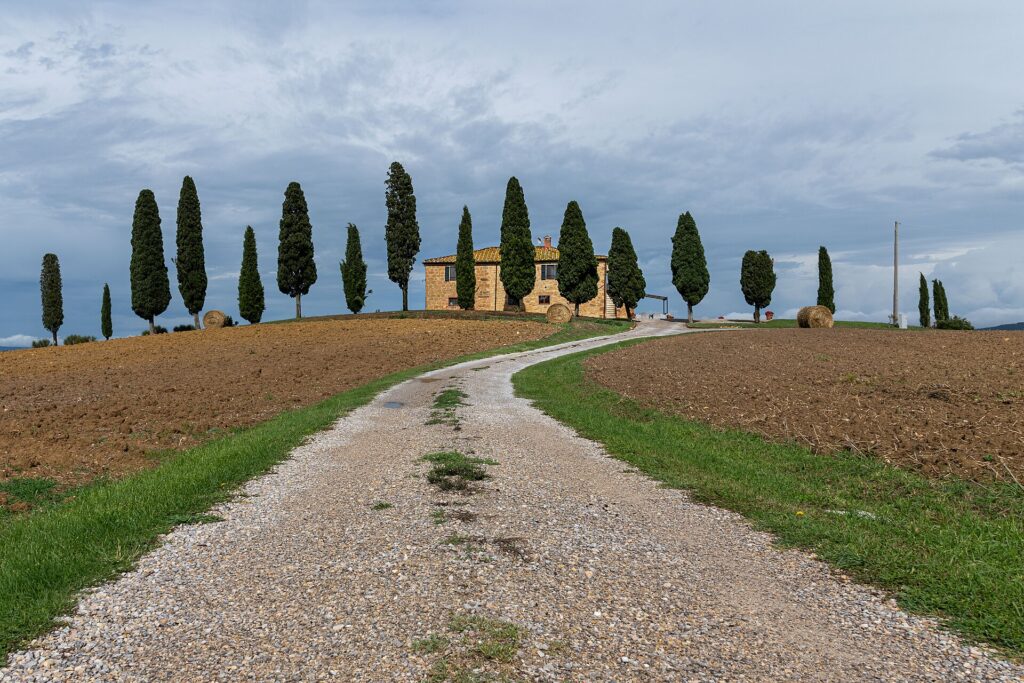
Rome is the one city where the guidebook cliché is simply true: you cannot see it all, and you should stop trying on the first afternoon. Two and a half thousand years of building sit on top of each other in the bend of the Tiber, and the street you take to dinner may follow a road the legions marched on. The trick for a first visit is to pick the handful of things that genuinely earn a whole morning, book the three that need booking, and leave the rest of the time for the neighbourhoods, the food and the long evenings in piazzas, which is where Rome actually happens. This guide covers the ancient centre, the Vatican, the piazzas, the neighbourhoods, the museums, the food, day trips by train, and the practical details that separate a good trip from a hot, queue-heavy one.
If you are still comparing cheap flights to Rome, read this alongside our guides to the best time to fly to Rome and whether you need a car, which for most visitors here is a firm no. Between the three you can plan the whole trip.
Rome at a glance for first-timers
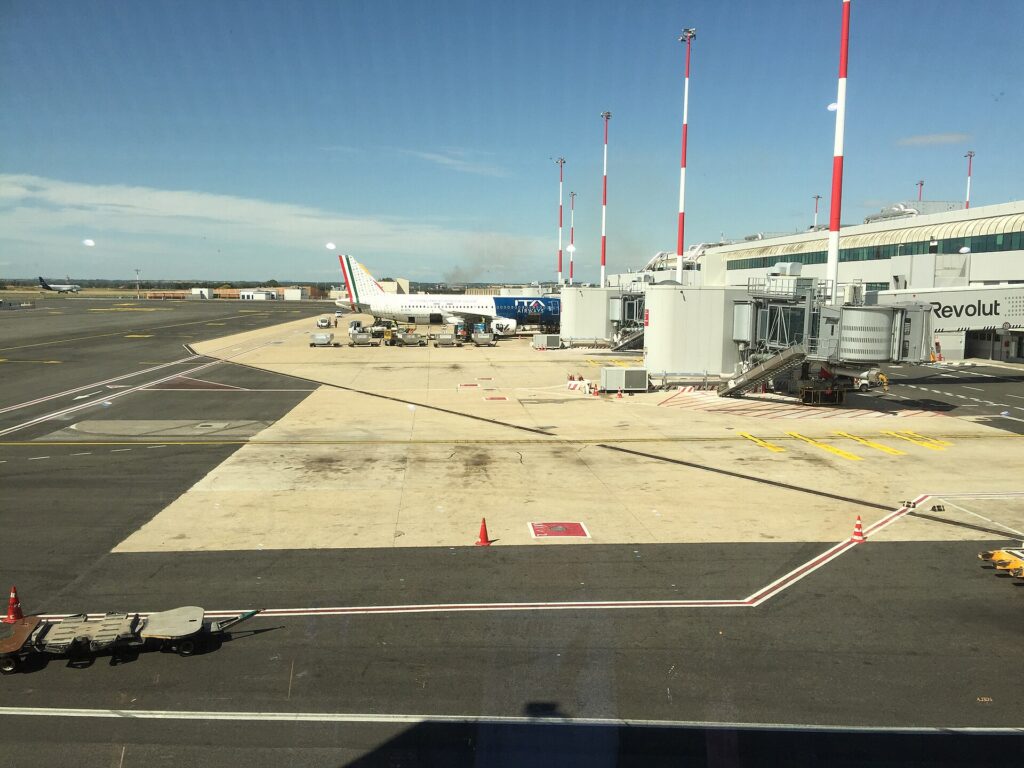
- Airport: Leonardo da Vinci, always called Fiumicino (FCO), about 30 km southwest of the centre; the Leonardo Express train reaches Termini station in around half an hour, and official white taxis charge a fixed fare into the centre. Ciampino (CIA), southeast of the city, handles the low-cost carriers. See our Fiumicino airport guide.
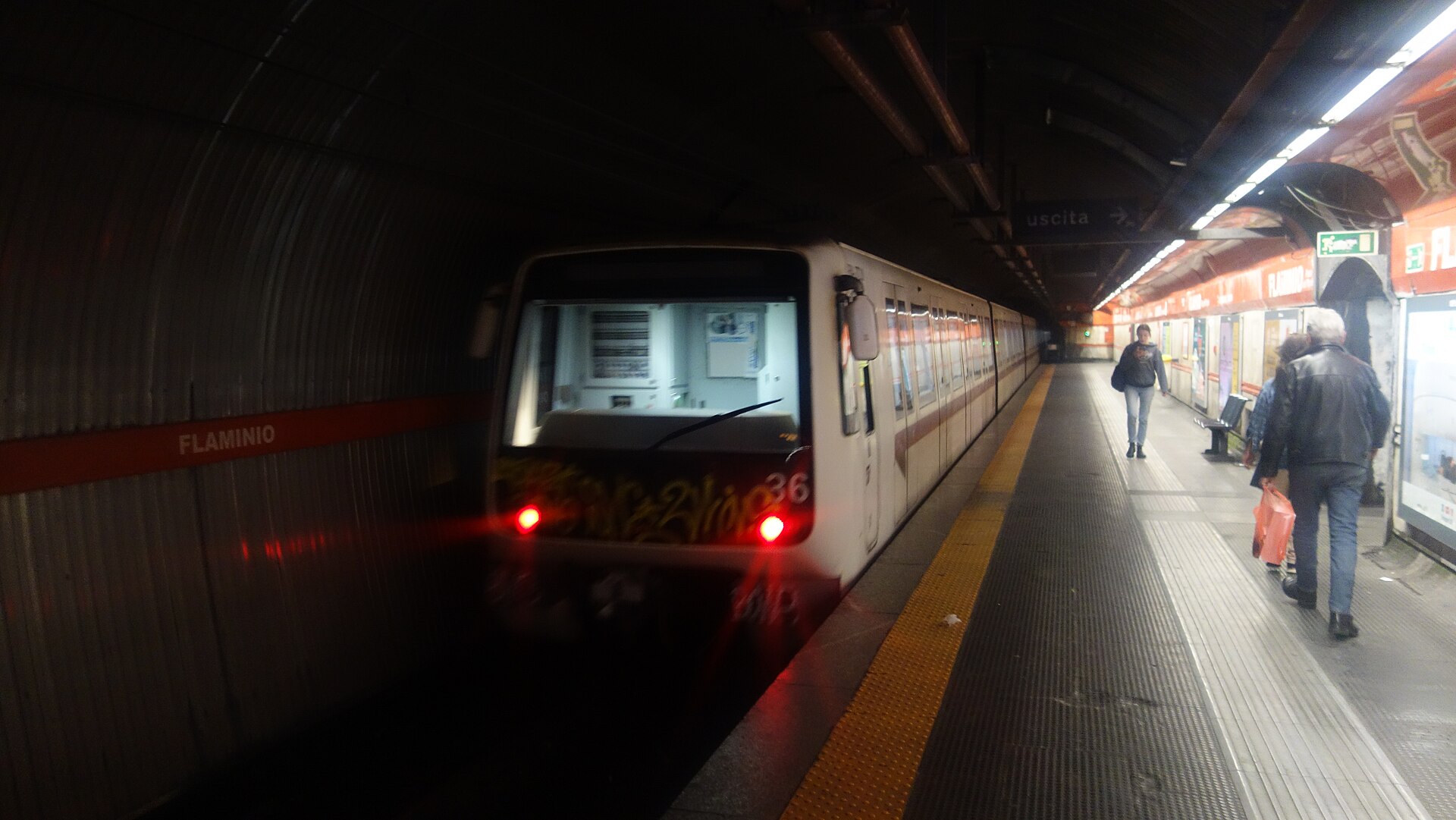
- Getting around: on foot, above all; the historic centre is compact and most of the famous sights are within a 40-minute walk of each other. The metro skirts the centre, so buses and the number 8 tram fill the gaps.
- Money: euros. Cards are accepted nearly everywhere, though small bars prefer cash. Tipping is not expected; rounding up is plenty, and the per-person cover charge, the coperto, is normal.
- Weather: mild, wet winters, long hot summers with July and August well above 30 °C, and two glorious shoulders in spring and autumn. Our month-by-month guide has the detail.
- Where to stay: the Centro Storico for walking everywhere; Monti for a village feel two minutes from the Forum; Trastevere for the evenings; Prati for the Vatican and calmer streets; around Termini for the budget and the trains. Our Rome hotel search covers them all.
Ancient Rome: the Colosseum, the Forum and the Palatine
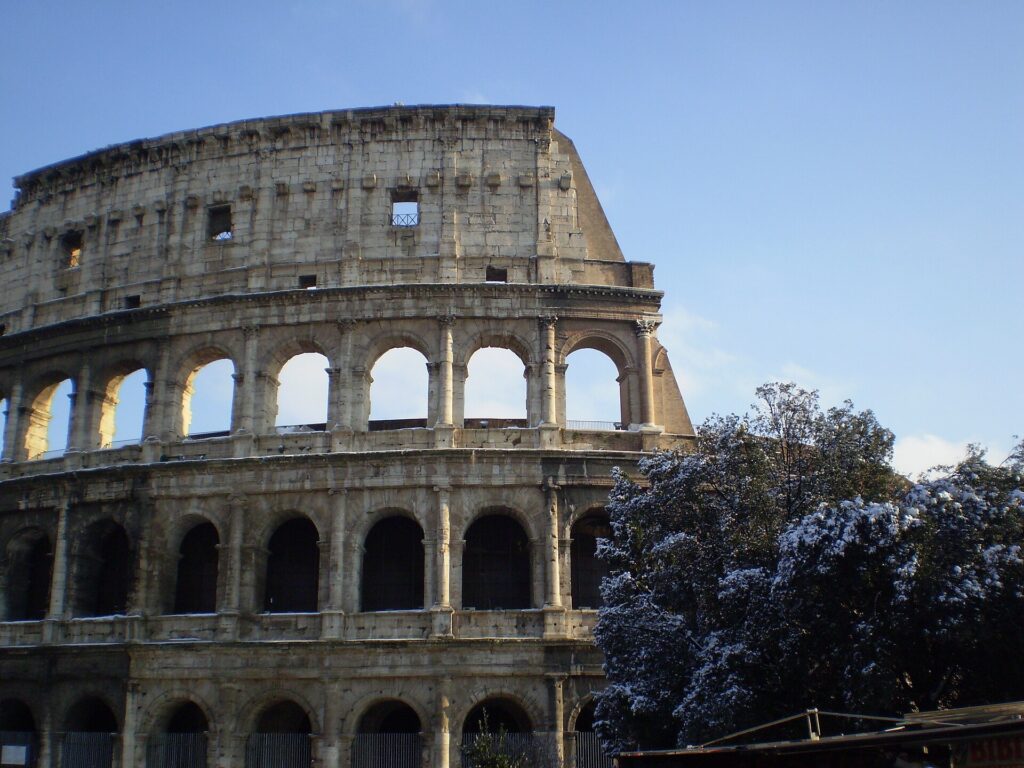
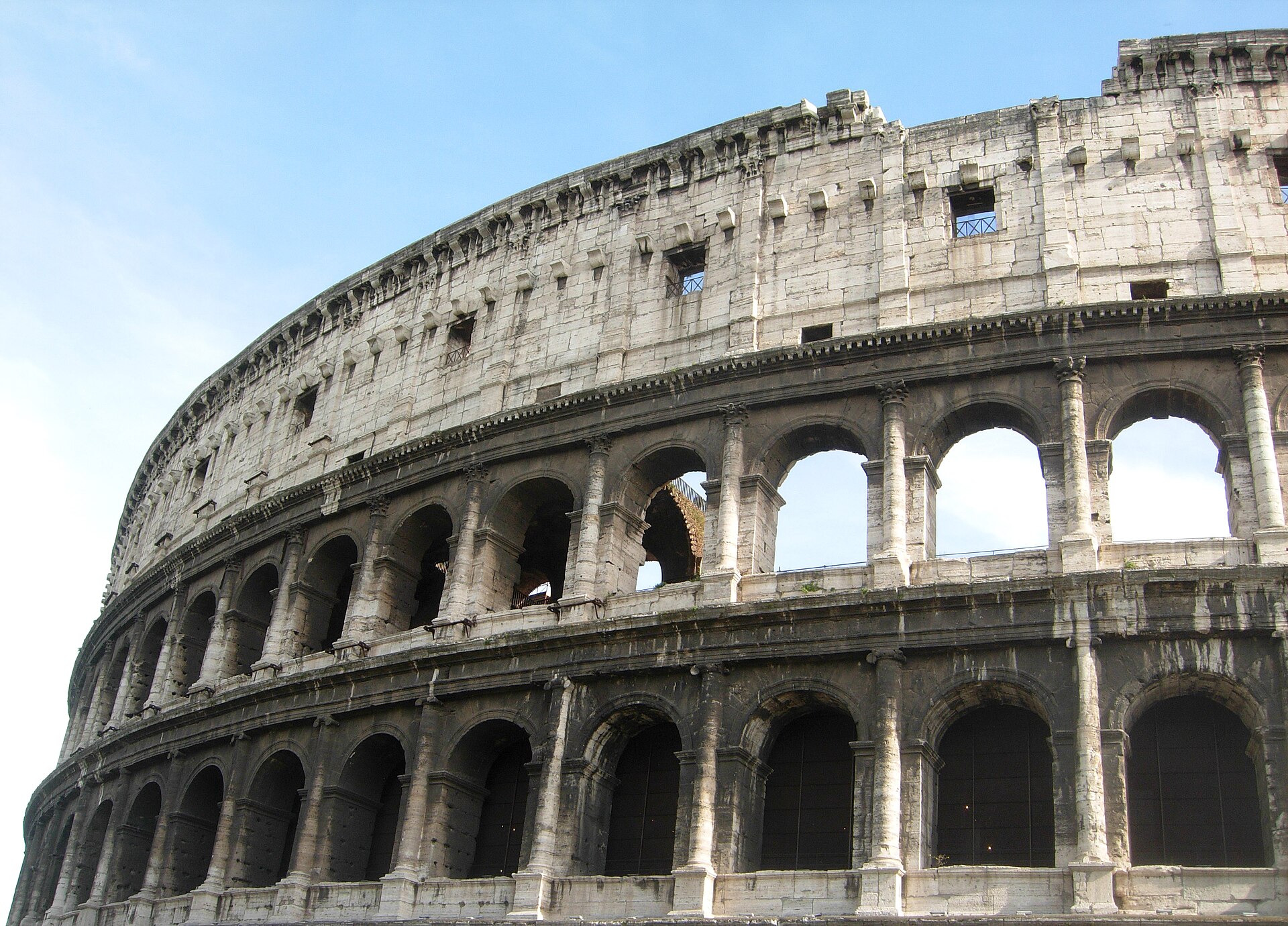
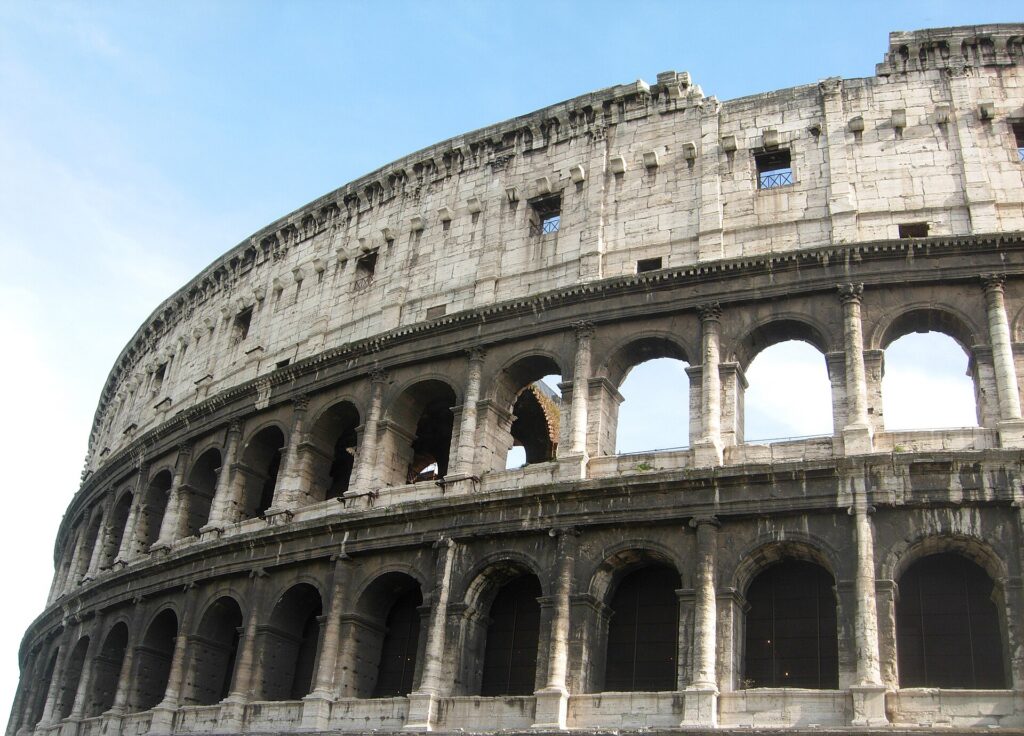
Start with the Colosseum, because it is the building everyone has already seen and it is still astonishing in person: the largest amphitheatre the Romans ever built, inaugurated in 80 AD, with the exposed hypogeum where animals and gladiators waited beneath the arena floor. It is managed together with the Roman Forum and the Palatine Hill as a single archaeological park, and one ticket covers all three; buy it online from the park’s own site for a timed entry, because the walk-up queue in summer can run to hours and the ticket touts outside are best ignored. Do the Colosseum first thing or late in the day, then cross to the Forum, where the Senate house, the Arch of Titus and the Via Sacra are still legible with a map or a guide. Finish on the Palatine, the hill where Rome was founded and the emperors built their palaces; it is quieter and greener, with views over the Circus Maximus. Allow half a day for the three together and bring water, because the Forum has almost no shade.
Two more ancient sites deserve a place on a first visit. The Pantheon, the best-preserved building of the ancient world, has a concrete dome that was the largest on earth for more than a thousand years and an open oculus at its centre through which rain falls onto the marble floor; it now charges a small admission for tourists, and the queue moves quickly. The Baths of Caracalla, south of the Circus Maximus, are vast, rarely crowded, and give a better sense of the scale of imperial Rome than anything in the Forum; in summer the opera stages performances among the ruins.
The historic centre: piazzas, fountains and the Spanish Steps
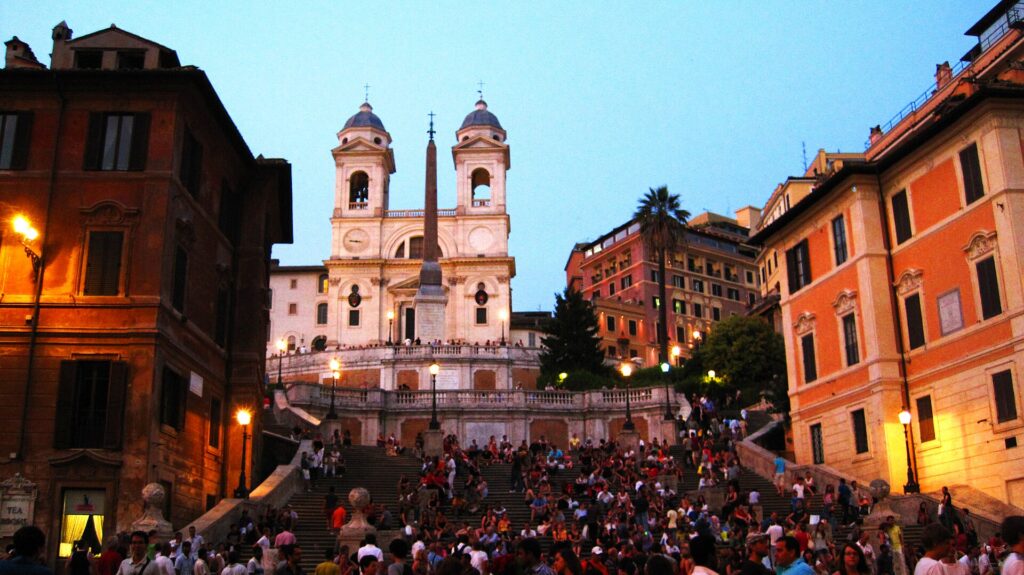
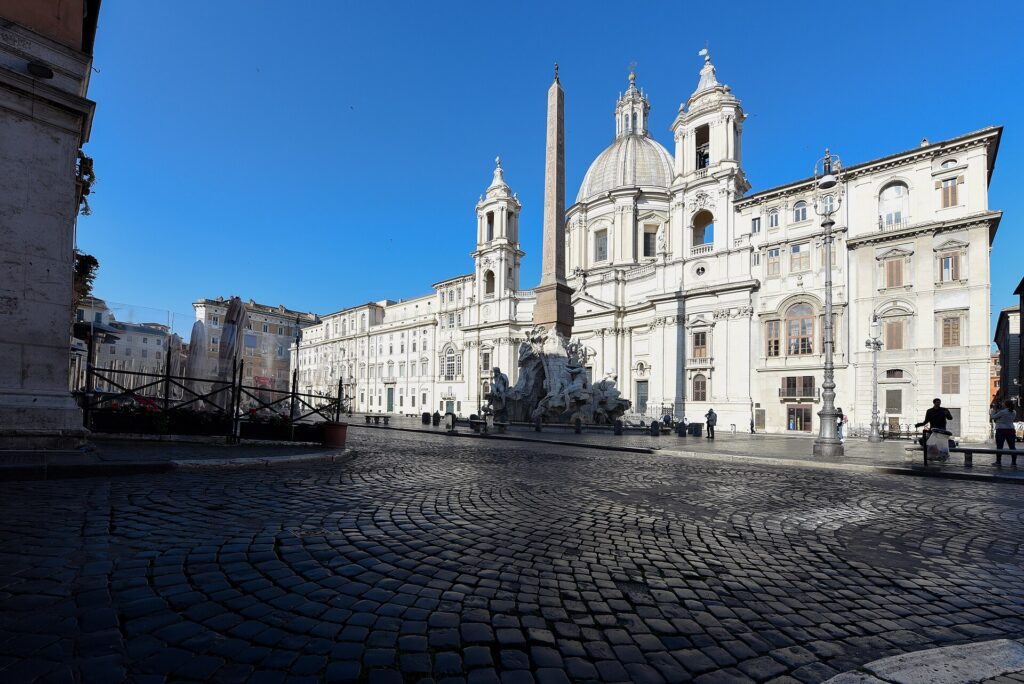
The Centro Storico is the medieval and Baroque city packed into the bend of the Tiber, and it is meant to be walked without much of a plan. Piazza Navona, built on the outline of a Roman stadium, holds Bernini’s Fountain of the Four Rivers and Borromini’s church of Sant’Agnese, and is the most theatrical square in the city. The Trevi Fountain, a few streets east, is grander in person than in the photographs and permanently crowded; go before eight in the morning or after eleven at night, and expect the city to manage access to the basin during busy periods after its recent restoration. The Spanish Steps climb from the designer shops of Via Condotti to the church of Trinità dei Monti, and sitting on them is now forbidden, which the police do enforce. Campo de’ Fiori has a morning market; the Jewish Ghetto beside it, one of the oldest Jewish communities in Europe, has the Portico d’Ottavia and the Turtle Fountain. The churches most visitors walk past hold Caravaggios: San Luigi dei Francesi and Sant’Agostino near Navona, and Santa Maria del Popolo at the top of the Tridente, all free to enter.
The Vatican: St Peter’s, the Museums and the Sistine Chapel
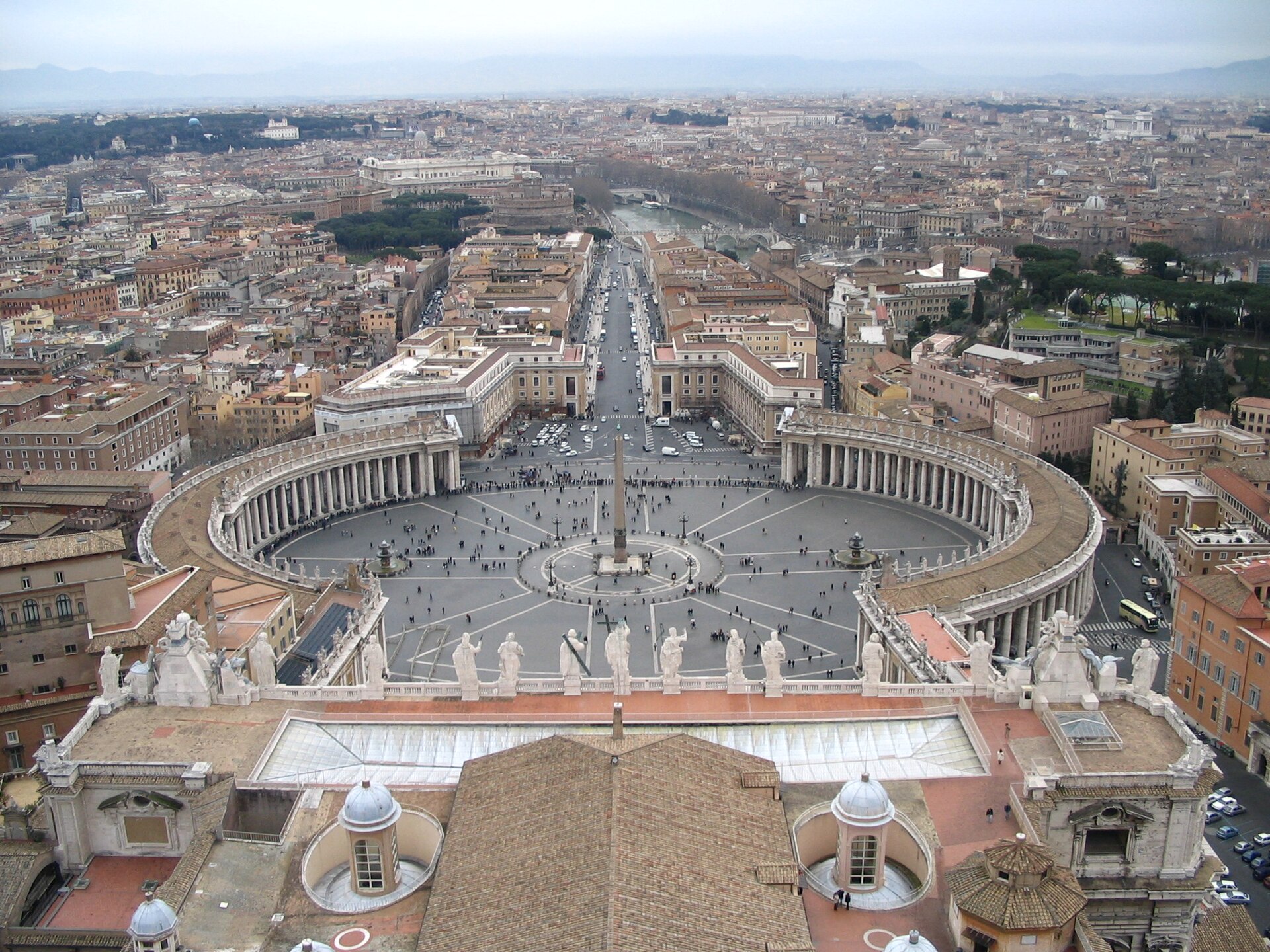
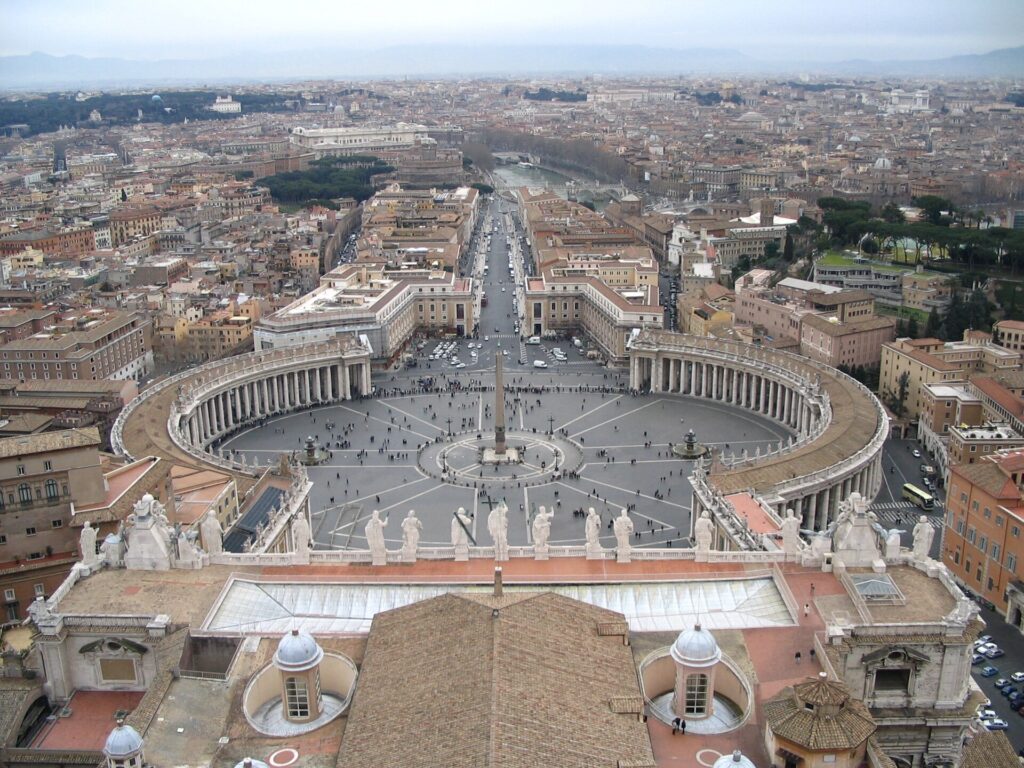
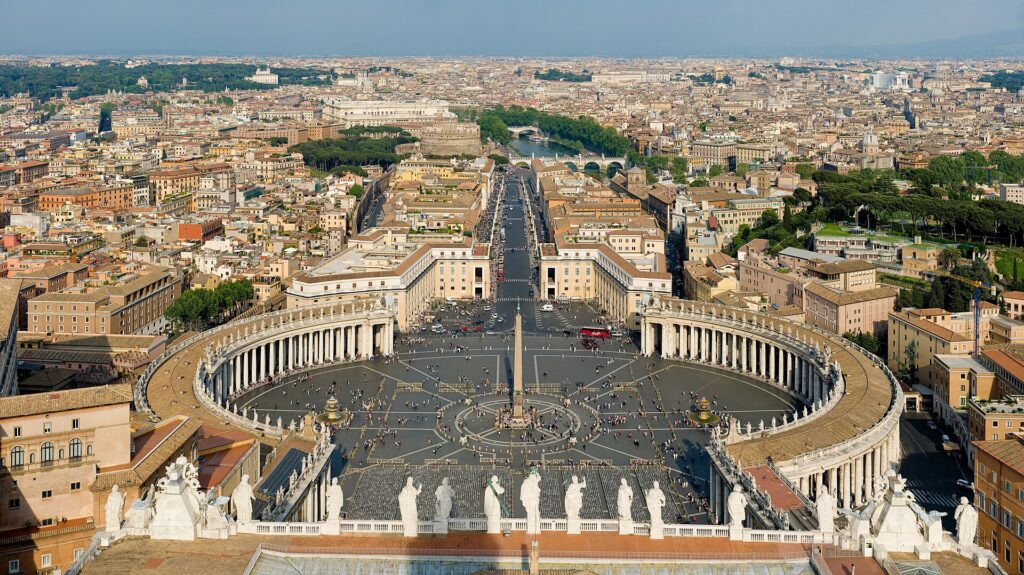
Vatican City is a separate state, but it is a twenty-minute walk or a short metro ride from the centre, and it is a full day. St Peter’s Basilica is free to enter, which is why the security queue in the piazza can be long; arrive when it opens in the morning, dress with shoulders and knees covered, and inside, see Michelangelo’s Pietà and Bernini’s baldachin, then climb the dome for the finest view in Rome. The Vatican Museums are the other half of the day: kilometres of galleries that end in the Raphael Rooms and the Sistine Chapel, where Michelangelo’s ceiling and Last Judgment need no introduction. Book a timed ticket on the museums’ own site weeks ahead in high season; the museums are closed on Sundays except the last Sunday of the month, when entry is free and the queue is enormous. Across the river, Castel Sant’Angelo, Hadrian’s mausoleum turned papal fortress, has a spiral ramp, frescoed apartments and a rooftop terrace facing the dome. Papal audiences are held most Wednesday mornings when the Pope is in Rome, and tickets are free through the Prefecture of the Papal Household.
Neighbourhoods worth a half-day
Trastevere
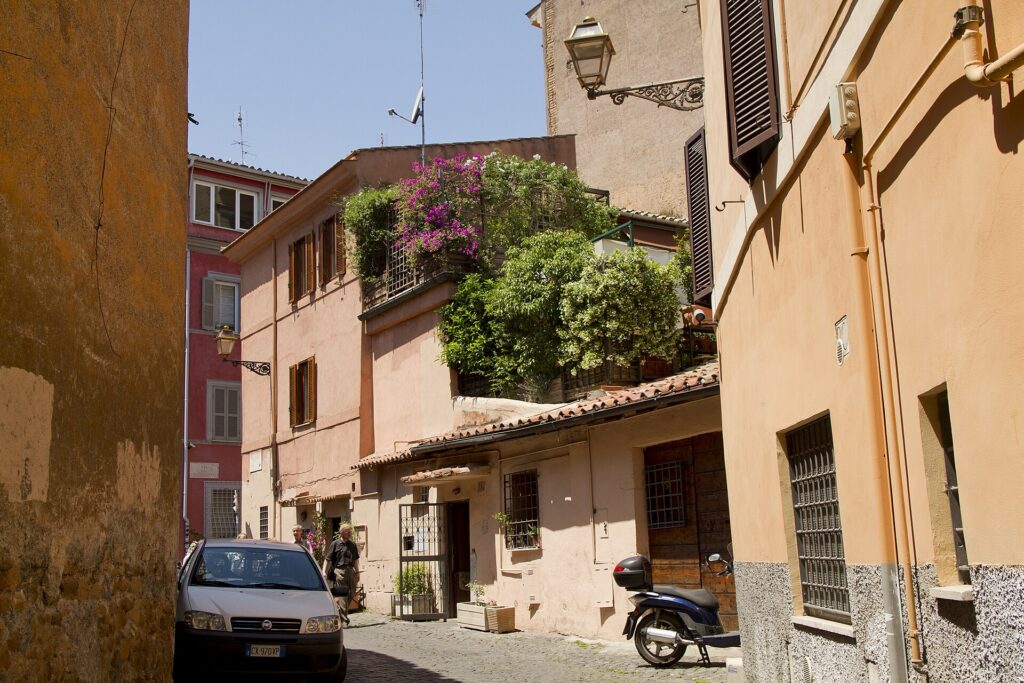
Across the river from the Ghetto, Trastevere is the neighbourhood people picture when they imagine Rome: cobbled lanes, washing lines, ivy on ochre walls, and the piazza in front of Santa Maria in Trastevere, whose golden mosaics are among the finest in the city. It is quiet in the morning and very lively at night, when the restaurants and bars spill into the streets. Climb the Janiculum hill behind it for the panorama and the noon cannon, and cross the Ponte Sisto footbridge back to the centre.
Monti
Tucked between the Forum and Via Nazionale, Monti is the oldest residential quarter in Rome and now its most fashionable small neighbourhood, with wine bars, vintage shops and trattorias around Piazza della Madonna dei Monti. It is two minutes from the Colosseum and feels a world away, and the churches of San Pietro in Vincoli, with Michelangelo’s Moses, and Santa Prassede, with its Byzantine mosaics, are both here.
Testaccio
South of the Aventine, working-class Testaccio is the birthplace of Roman cooking: the covered market, the trattorias that built their reputations on the quinto quarto, or fifth quarter, of the animal, the hill of broken amphorae called Monte Testaccio, the Pyramid of Cestius and, beside it, the Non-Catholic Cemetery where Keats and Shelley are buried. It is the best neighbourhood in the city for eating.
The Aventine
The hill above Testaccio is residential and calm, and it holds three small pleasures within a hundred metres of each other: the Orange Garden with its view across the river to St Peter’s, the early Christian basilica of Santa Sabina with its carved wooden doors, and the keyhole in the gate of the Knights of Malta, through which the dome is perfectly framed at the end of an avenue of hedges.
Prati
The orderly nineteenth-century grid north of the Vatican is where Romans shop on Via Cola di Rienzo, eat at the Mercato Trionfale, one of the city’s largest food markets, and stay away from the crowds. It is the natural base for a Vatican-heavy visit.
Museums, galleries and culture
Rome’s museums are as good as any in Europe and, outside the Vatican, far less crowded. The Borghese Gallery, in the park of Villa Borghese, holds Bernini’s Apollo and Daphne and his David, six Caravaggios and a Titian in a villa built to show them off; entry is by timed two-hour slot and must be reserved in advance, and it is the one museum in the city that visitors most regret missing. The Capitoline Museums on the Campidoglio, in the piazza Michelangelo designed, are the oldest public museums in the world, with the bronze she-wolf, the colossal head of Constantine and a window over the Forum. Palazzo Massimo, the main site of the National Roman Museum beside Termini, has the frescoed garden room from the villa of Livia. For the modern city, MAXXI, Zaha Hadid’s museum of twenty-first-century art in Flaminio, and the Auditorium Parco della Musica next to it, Renzo Piano’s three-hall concert complex, are the reasons to leave the centre. For what is on stage during your dates, our Rome events page lists concerts, shows and matches.
Sports
Football is the city’s other religion. AS Roma and Lazio share the Stadio Olimpico in the Foro Italico, north of the centre beside the Tiber, and the derby between them, played twice a season, is one of the most intense fixtures in European football. Tickets for Serie A matches are named and sold through the clubs’ own channels, with the buyer’s passport details required, so buy ahead rather than at the turnstile and carry the same ID to the match. The same stadium hosts Italy’s home games in the Six Nations rugby championship in February and March, when the city fills with visiting fans. In May, the Internazionali d’Italia brings the world’s best tennis players to the clay courts of the Foro Italico, and the ring of marble athletes around the Stadio dei Marmi next door is worth a look even without a ticket. Check what is on sale in Rome for your dates before you book flights.
What to eat, and where
Roman cooking is simple, specific and fiercely local. The four pastas are cacio e pepe, carbonara, amatriciana and gricia, all built on pecorino, black pepper and, in three of the four, cured pork jowl; order at least two over the trip and you will understand why Romans argue about them. Carciofi alla giudia, artichokes fried until the leaves crisp like petals, are the dish of the Ghetto and are in season from late winter to spring. Supplì, fried rice croquettes with a heart of mozzarella, are the city’s street snack, and pizza al taglio, sold by the slice and weighed, is the lunch; Roman round pizza, thin and crisp, is a dinner dish and most pizzerias only fire their ovens in the evening. Testaccio is the place for offal and oxtail, Trastevere and Monti for a classic trattoria dinner, the Ghetto for Roman-Jewish cooking. Coffee is drunk standing at the bar, quickly, and costs a fraction of the table price; a maritozzo, a sweet bun split and filled with whipped cream, is the proper breakfast pastry. For gelato, trust the shops with covered metal tubs over the fluorescent mountains. Dinner starts late, rarely before half past seven, and a Roman evening is properly begun with an aperitivo in a piazza.
Rome through the seasons
Rome is a different city in each season, and what you do depends on when you come. Spring (March to May) is the classic season: wisteria on the walls, azaleas on the Spanish Steps in late April, the Forum green, Holy Week and Easter drawing pilgrims to the Vatican, and the city’s birthday on 21 April. It is also the most crowded, and the most expensive for hotels. Summer (June to August) is hot, often above 35 °C in July and August, but the city adapts: open-air cinema and concerts fill the parks, the opera moves to the Baths of Caracalla, and Romans leave town around Ferragosto on 15 August, when many family restaurants close. Sightsee early, siesta through the afternoon, and eat late. Autumn (September to November) is the Romans’ favourite: warm, golden light, the ottobrata, the run of fine October days the city is known for, the Rome Film Fest, and, by November, rain and the year’s lowest hotel rates. Winter (December to February) is mild by northern standards, damp, and quiet outside the holidays: nativity scenes in every church, the Christmas market in Piazza Navona, the Pope’s Christmas blessing, the Befana on 6 January, then six weeks of the emptiest museums of the year. Our month-by-month guide has the fare patterns that go with each season.
Parks, views and the Appian Way
Villa Borghese is the city’s central park, a landscaped estate above the Spanish Steps with rowing boats, bikes for hire, the Bioparco zoo and the Pincio terrace at its western edge, which gives the classic sunset view over Piazza del Popolo to the dome of St Peter’s. The Janiculum above Trastevere is the other great viewpoint, and the Vittoriano, the enormous white monument on Piazza Venezia, has a lift to a rooftop terrace that puts you in the middle of the skyline. South of the walls, the Appia Antica regional park preserves the first miles of the Roman road that ran to the heel of Italy: basalt paving, cypresses, the catacombs of San Callisto and San Sebastiano, and the tomb of Cecilia Metella. The road is closed to traffic on Sundays and holidays, when hiring a bike at the park’s visitor centre and riding out along the stones is one of the best half-days in Rome. The 118 bus runs out along it from the Circus Maximus.
Rome with kids
Rome is easier with children than its reputation suggests, provided you keep the museum hours short. The Colosseum is the obvious hit, and the underground and arena-floor tours are worth the extra for older kids; the Bocca della Verità, the stone face that supposedly bites liars’ hands, takes ten minutes. Villa Borghese, with its boats, bikes, zoo and puppet theatre, is the full afternoon; Explora, the children’s museum near Piazza del Popolo, suits the under-tens. The catacombs on the Appia Antica are agreeably spooky, Castel Sant’Angelo is a real castle with cannons, and the Vatican dome climb is a genuine adventure for anyone over about eight. Gelato solves most disputes. In summer, the beach at Ostia is half an hour away on the train from Piramide. Strollers cope badly with the cobbles; bring a carrier.
Rome on a budget
An extraordinary amount of Rome is free: every church, including St Peter’s; the Pantheon for children and residents and for a small fee for everyone else; the Forum from the pavement of Via dei Fori Imperiali; the fountains, the piazzas, the Spanish Steps, the Pincio, the Janiculum and the Orange Garden; and the nasoni, the cast-iron street fountains that pour cold drinking water on nearly every block, so nobody needs to buy a bottle. State museums, including the Colosseum park, the Borghese and Palazzo Massimo, are free on the first Sunday of each month, and the Vatican Museums on the last Sunday; both come with queues to match. The Roma Pass bundles transit with museum entries and can pay off on a short, busy stay. Drink coffee at the bar, lunch on pizza al taglio, and order the house wine. The hotel tourist tax, charged per person per night, is unavoidable. Compare rates by neighbourhood on our Rome hotel search, and remember that Prati, Testaccio and the streets around Termini are consistently cheaper than the Centro Storico for the same standard of room.
Day trips from Rome
Rome’s rail hub makes it the easiest base in Italy for day trips, and almost none of them need a car. Ostia Antica, the excavated port city at the mouth of the Tiber, is a Pompeii without the crowds, half an hour from Piramide on the Metromare line. Tivoli, an hour east, has two UNESCO sites: the fountains and terraces of Villa d’Este and the sprawling ruins of Hadrian’s Villa. The Castelli Romani, the hill towns south of the city, are the Romans’ own escape, with Frascati’s white wine and porchetta stalls half an hour away by regional train. Orvieto, on its volcanic plug in Umbria, has the finest Gothic cathedral façade in Italy and is just over an hour by train. High-speed trains run by Trenitalia and Italo put Florence about an hour and a half away and Naples just over an hour, and from Naples the local train continues to Pompeii; both are long but entirely feasible days. A car earns its keep only for the countryside of Tuscia north of Rome and the cliff village of Civita di Bagnoregio; if that is the plan, see our Rome car rental page and pick the car up at the airport or Termini on the day you leave the city. Turismo Roma, the city’s official tourism site, covers the wider region and current events.
Two sample itineraries
Three days, on foot
Day one: the Colosseum at opening, the Forum and the Palatine, lunch in Monti, the Capitoline Museums and the view from the Vittoriano, dinner in Trastevere. Day two: the Vatican Museums on the first slot, St Peter’s and the dome, lunch in Prati, Castel Sant’Angelo, an evening walk from Piazza Navona to the Pantheon and the Trevi Fountain after dark. Day three: the Borghese Gallery on a reserved slot, a wander through Villa Borghese to the Pincio, the Spanish Steps and the Caravaggios in Santa Maria del Popolo, an afternoon in Testaccio or the Ghetto, and a final dinner of cacio e pepe.
Five days, with the region
Add a day for the Appia Antica by bike and the Baths of Caracalla, and a day trip by train to Tivoli, Ostia Antica or Florence, returning to Rome for dinner. Nobody needs a car for any of it.
Practical details
- Transit: one ticket covers metro, buses and trams for 100 minutes, with day and multi-day passes available; tap a contactless card at the metro gates or on board. ATAC, the city transit operator, has maps; our transit-versus-car guide goes into detail.
- From Fiumicino: the Leonardo Express to Termini, the slower FL1 regional train to Trastevere and Ostiense, a fixed-fare white taxi, or an airport bus. Aeroporti di Roma covers both airports.
- Weather: comfortable shoes for the cobbles, a hat and water in summer, an umbrella from October to March. The Servizio Meteorologico forecast is the official one.
- Time zone: Central European Time, six hours ahead of Toronto and New York.
- Entry requirements: Canadian, American, British and most other visa-exempt travellers can spend up to 90 days in any 180 in the Schengen area without a visa, on a passport valid for at least three months beyond the planned departure. The EU’s Entry/Exit System now records non-EU travellers’ fingerprints and photo at the border, and the ETIAS travel authorisation is due to follow; check the official EU travel page for what applies to you before you travel.
- Safety: violent crime is rare; pickpocketing on the 64 bus, on Metro line A and around Termini is not. Keep bags closed and in front of you in crowds.
- Dress: shoulders and knees covered inside St Peter’s and the major basilicas, for everyone.
Frequently asked questions
How many days do you need in Rome?
Three full days covers the ancient centre, the Vatican, the Borghese and two neighbourhoods without rushing; five lets you add the Appia Antica, Ostia Antica or Tivoli and a slow afternoon or two.
What is the number one thing to do in Rome?
The Colosseum and the Forum on a first morning, then the Pantheon. If you can only book one thing, book the Borghese Gallery.
Is Rome walkable?
Entirely, within the historic centre. The Vatican, the Colosseum and Trastevere are all within a 40-minute walk of the Pantheon, and the cobbles reward good shoes.
Do I need a car in Rome?
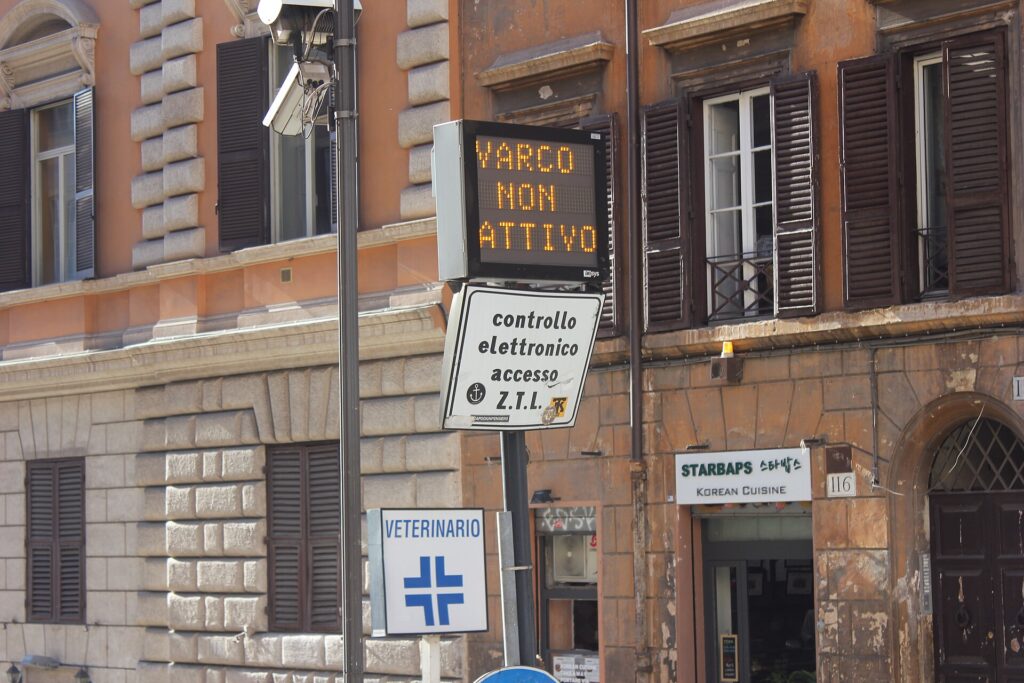
No, and inside the walls it is actively a problem: the historic centre is a camera-enforced limited-traffic zone and parking is scarce. Trains handle nearly every day trip.
Is Rome expensive?
Hotels in the centre in spring and autumn are, and the tourist tax adds to every night. Food, coffee, transit and the free churches and piazzas keep the rest of the trip reasonable.
What is Rome known for?
The Colosseum, the Vatican, the Pantheon, the fountains and piazzas of the Baroque centre, the four Roman pastas, and two and a half thousand years of history stacked in one walkable city.
Ready to go? Compare flights to Rome, find a place to stay with our Rome hotel search, and if the countryside is on the list, price a rental car for those days only.
Keep planning with TicketScanner
- Cheap flights to Rome
- Rome hotels — by neighbourhood
- Rome car rentals — for Tuscia and the countryside only
- Events in Rome — football, concerts and shows on sale
- Best time to fly to Rome: month by month
- Rome: rent a car or use public transit?
- Rome Fiumicino (FCO) airport guide
- Where to stay: Trastevere
- Things to do in Paris