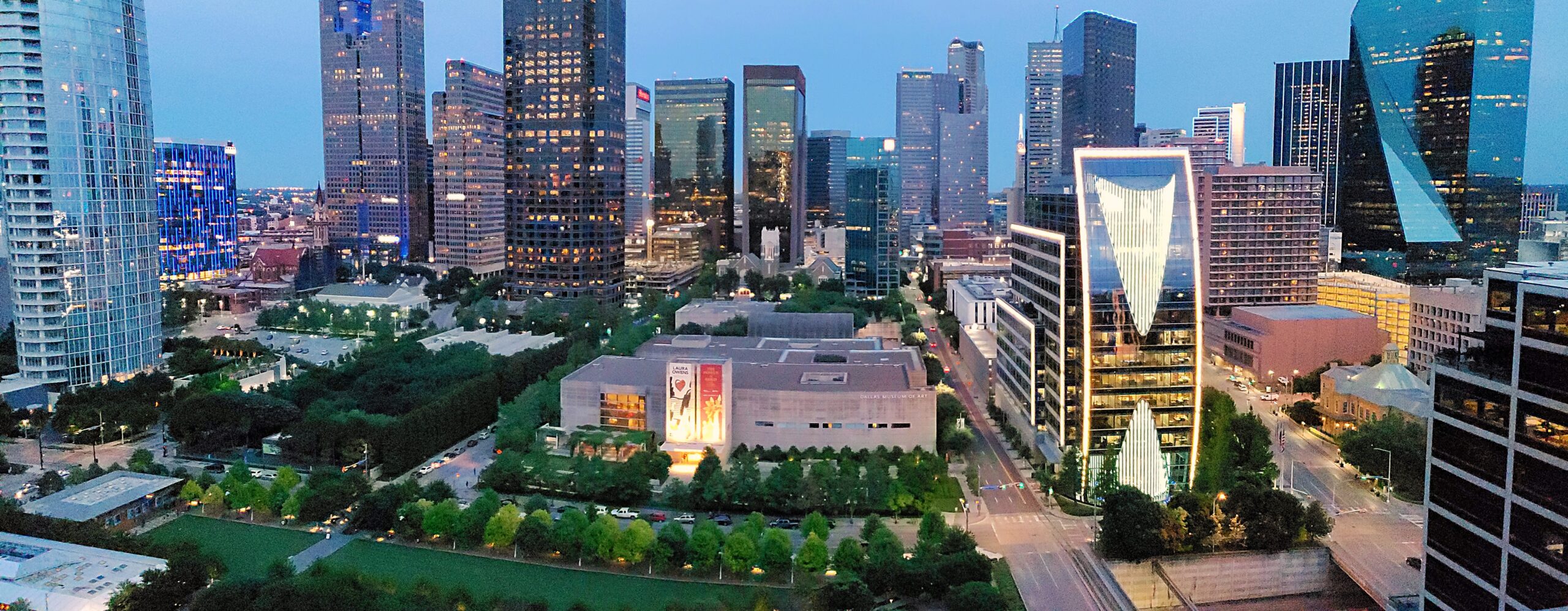
Dallas does not have a single tourist season the way a beach town or a ski resort does, and that makes its airfares more interesting than most. It is one of the largest business-travel markets in the country, with corporate headquarters, conventions and trade shows filling planes and hotels on weekdays all year. It has two major airports, one of them the biggest hub of the world’s largest airline, which keeps seat supply enormous and competition real. And its leisure calendar is shaped by a climate of mild winters, stormy springs, fierce summers and golden falls, with a three-week state fair and a college football rivalry that fill the city every October. The result is a place where the “best time” depends on whether you care most about weather, price or a particular event, and where the answer is often different for flights and for hotels. This guide walks through the weather month by month, the fare seasons, the events that move prices, and how to choose between DFW and Love Field.
The short answer
For weather and things to do, the best windows are mid-March to early May, when spring is green, the Arboretum is in bloom and patios are full, and October to early November, when the heat breaks, the State Fair is on and football fills every weekend. The cheapest fares tend to come in January and early February, after the holidays, and in late August and September before the fair, when the heat keeps leisure travelers away. For hotels, summer is the bargain season and Friday and Saturday nights downtown are often cheaper than weeknights. The most expensive stretches are spring break in mid-March, State Fair weekends and Texas-OU weekend in October, Thanksgiving, and the Christmas and New Year holidays. Whatever you choose, run a flexible-date search on our Dallas flights page; with two airports and hundreds of daily flights, a shift of a day or two often changes the fare band entirely.

Dallas’s weather, season by season
Dallas sits on the North Texas prairie, far from any ocean or mountain range, and that exposure defines its climate: hot, humid air from the Gulf of Mexico in summer, cold fronts sweeping down from the Great Plains in winter, and the collision of the two in spring, which produces some of the most violent thunderstorms in the country. The figures below are approximate seasonal patterns based on the long-term DFW Airport climate normals from NOAA’s National Weather Service; check the current forecast before you pack, because a North Texas cold front can drop the temperature by 20 degrees in an hour.
| Month | Typical daytime high | Typical overnight low | What it feels like | Fare pressure |
|---|---|---|---|---|
| January | around 14 °C (57 °F) | around 3 °C (37 °F) | Mild and often sunny; hard freezes and the odd ice storm | Low after New Year’s week |
| February | around 16 °C (61 °F) | around 5 °C (41 °F) | Changeable; warm days and sharp cold snaps | Low; rises for Presidents’ Day weekend |
| March | around 21 °C (69 °F) | around 9 °C (49 °F) | Spring arrives; windy, with the first storms | High for spring break |
| April | around 25 °C (77 °F) | around 13 °C (56 °F) | Warm and green; bluebonnets; severe storms possible | Moderate to high |
| May | around 29 °C (85 °F) | around 18 °C (65 °F) | The wettest month; humid, with thunderstorms and hail | Moderate; graduations and Memorial Day |
| June | around 34 °C (93 °F) | around 23 °C (73 °F) | Hot and humid; storms fade as summer settles in | Moderate |
| July | around 36 °C (97 °F) | around 25 °C (77 °F) | Very hot; 100 °F afternoons are routine | Moderate for flights; low for hotels |
| August | around 36 °C (97 °F) | around 24 °C (76 °F) | The hottest stretch; warm even at midnight | Low to moderate |
| September | around 32 °C (89 °F) | around 21 °C (69 °F) | Still summer for most of the month; relief arrives late | Low, rising as the State Fair opens |
| October | around 26 °C (79 °F) | around 14 °C (58 °F) | Warm, dry and bright; the best month for many | High, with a Texas-OU spike |
| November | around 19 °C (67 °F) | around 8 °C (47 °F) | Pleasant and mild; the first cold fronts | Moderate, peak at Thanksgiving |
| December | around 14 °C (58 °F) | around 4 °C (39 °F) | Cool and mostly dry; festive lights | Low until mid-month, then peak |
Three things the table cannot show. First, the spring storms: from March to June, North Texas sits in the path of supercell thunderstorms that can bring large hail, damaging wind, flash flooding and, occasionally, tornadoes. They usually pass in an hour or two, but they can halt operations at DFW and Love Field, delaying flights across the country. Second, the heat: the averages understate a Dallas summer, when a run of 100 °F days with warm, humid nights is normal, pavement radiates heat long after sunset, and a midday walk between museums feels much longer than it looks on the map. Third, the ice: Dallas winters are mild on average, but most years bring a day or two of freezing rain or sleet, and because the city has little equipment for it, an ice storm can close roads, schools and airport runways far more readily than snow does in the North.
How Dallas’s fare seasons work
Three calendars drive seats into Dallas. The first is business travel: the metro area is home to a long list of corporate headquarters, including both American Airlines and Southwest Airlines, and its convention center and hotels host trade shows year-round, which keeps Monday-morning and Thursday-evening flights full and weekday hotel rates high. The second is events: the State Fair, college and professional football, big concerts at AT&T Stadium and the holidays create sharp, predictable spikes. The third is leisure, which follows the weather: strong in spring and fall, weak in the heat of summer. On top of all that, the sheer volume of flights through DFW and Love Field keeps fares from most U.S. cities competitive, so Dallas rarely has the sustained price plateaus of a destination like Hawaii or the Rockies.
Peak season
Mid-March for spring break, October for the State Fair and football, Thanksgiving week, and roughly December 18 to January 2. Texas-OU weekend, usually the second Saturday of October, is the single biggest hotel squeeze of the fall, and the Christmas holidays push up fares because so many Texans fly out while visitors fly in. If you must travel in peak, book early, fly mid-week, and compare both airports.
Shoulder season
April to early June and early November. Spring is lovely and busy with conventions and graduations, and May’s storms bring the occasional disruption; early November, after the fair has closed, offers some of the best weather of the year at noticeably lower hotel rates, until Thanksgiving week.
Low season
Early January to early March outside the holiday weekends, and July through September. Winter is the value play for flights, with mild weather most days, and summer is the value play for hotels, which discount heavily when the leisure market disappears into the heat. Pack for 100 °F and plan your days around air conditioning and the result can be a very good-value trip.
As elsewhere, mid-week departures and early or late flights usually price below Friday and Sunday afternoons on the same route, and a search across a whole month reveals cheaper pairs of dates close to your first choice. Our guide to the best times to book explains how to read those patterns.
Dallas month by month
January
Mild, usually sunny and, after the first week, one of the cheapest months to fly in. The Cotton Bowl Classic at AT&T Stadium around New Year brings a burst of college football fans; after that, the city settles into a quiet stretch of conventions, Mavericks and Stars games at the American Airlines Center, and uncrowded museums. Watch the forecast for ice, which can close the airports for a day.
February
Changeable, with springlike afternoons interrupted by sharp cold fronts, and low fares outside Presidents’ Day weekend. Dallas Blooms usually opens at the Arboretum in late February, and it is a good month for museums, restaurants and a basketball or hockey game.
March
Spring arrives with wind, warmth and the first thunderstorms. Texas school districts take spring break in mid-March, which fills flights out of Dallas and hotels at family destinations nearby, and the week around it is one of the priciest of the spring. The Lower Greenville St. Patrick’s Day parade and the Arboretum’s tulips are the highlights; book around spring break and late March is excellent.
April
The best month for many visitors: warm, green, and with bluebonnets and other wildflowers along the highways outside the city. The Deep Ellum Arts Festival and the Dallas International Film Festival usually fall in spring, the Rangers open their season, and the Mavericks and Stars may begin playoff runs. Severe storms are possible on any afternoon, so keep an eye on warnings.
May
Warm, humid and usually the wettest month, with big thunderstorms, hail and the occasional flash flood. Graduations and Memorial Day weekend lift demand, and convention calendars stay busy. Early May is a solid shoulder-season option; build a buffer into connections in case storms delay flights.
June
Summer settles in, the storms fade and the heat builds, with highs in the 90s °F by midmonth. Families fly out for vacations, which can make outbound flights busier than inbound ones. Hotel rates begin their summer slide, and evenings at Klyde Warren Park and on the patios are pleasant after dark.
July
Very hot, with 100 °F afternoons routine. Fourth of July fireworks draw crowds across the metro, and the Rangers play under their retractable roof. Flights are priced for summer demand from across the country, but hotel rates are among the lowest of the year; this is a good month for a museum-and-restaurant city break if you plan around the heat.
August
The hottest stretch, with warm nights and little rain. Leisure demand is at its lowest, school starts early in Texas, and both fares and hotel rates tend to soften in the second half of the month. Come for the value and the indoor attractions, not for walking tours.
September
Summer hangs on for most of the month, with relief arriving only in the last week or two. Fares are low early on, college and NFL football begin, and the State Fair of Texas opens in late September, which lifts hotel demand on weekends from then until mid-October.
October
The heat breaks, the air dries out, and Dallas is at its best. The State Fair runs through most of the month, with Big Tex, fried everything and free concerts at Fair Park, and the Red River Showdown between Texas and Oklahoma at the Cotton Bowl brings the biggest hotel squeeze of the fall. Add Cowboys home games and busy convention calendars and October is a peak month; book early.
November
Mild, often sunny and quieter once the fair has closed, with pleasant weather and softer hotel rates in the first three weeks. Autumn at the Arboretum continues, and holiday lights come on late in the month. Thanksgiving is the exception, with a peak in fares around the holiday and the Cowboys’ traditional home game on the day itself.
December
Two months in one. The first half is quiet and good value, with cool weather, holiday lights in Highland Park and the Dallas Marathon. From about December 18, fares jump for the Christmas and New Year holidays as millions of Texans fly out to family and visitors fly in, and the Cotton Bowl brings college football crowds at the turn of the year.
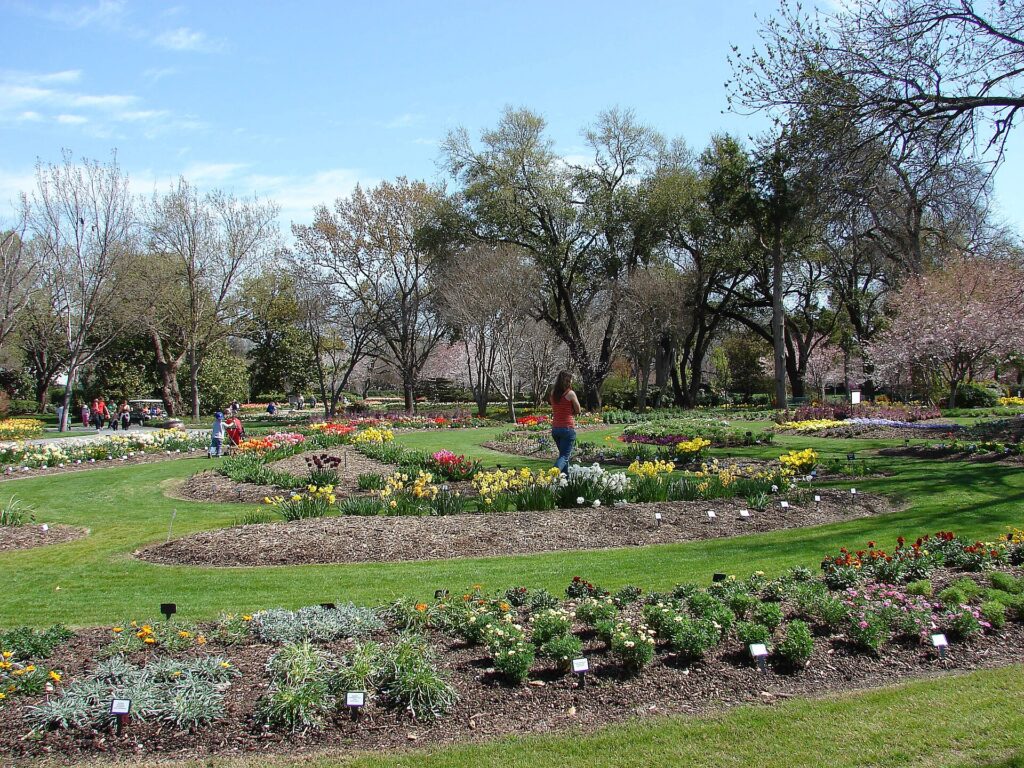
This image was made by Loadmaster (David R. Tribble).
Email the author: David R. Tribble
Also see my personal gallery at Google Photos via Wikimedia Commons, CC BY-SA 3.0)
Events that move Dallas flight and hotel prices
Cross-check these against your dates before you book. Exact dates shift each year; Visit Dallas keeps the current calendar.
- Cotton Bowl Classic (around New Year at AT&T Stadium): a college football crowd on top of the holiday peak.
- Presidents’ Day weekend (third Monday of February).
- Texas spring break (mid-March): the biggest family-travel week of the spring.
- Dallas Blooms (late February to early April): a draw for weekend visitors to the Arboretum.
- Graduation season and Memorial Day (May).
- State Fair of Texas (about three and a half weeks from late September into October): weekend hotel rates rise across the city.
- Texas-OU weekend (usually the second Saturday of October): the single largest hotel spike of the fall.
- Thanksgiving and the Cowboys’ home game, then Christmas to New Year.
- Big concerts, playoff runs and major conventions, which can fill downtown hotels on short notice. Our Dallas events page shows what is on sale for your dates.
Getting in from the airport
Dallas has two commercial airports, and choosing between them is part of finding the best fare. Dallas Fort Worth International (DFW), halfway between the two cities and about 32 kilometers (20 miles) from downtown Dallas, is one of the busiest airports in the world and the largest hub of American Airlines, with nonstop flights to most of the country and to Europe, Asia and Latin America. Its five terminals are linked airside by the Skylink train, and the airport covers more land than Manhattan. The DART Orange Line runs from Terminal B to downtown Dallas in about 50 minutes, TEXRail runs to downtown Fort Worth, and taxis, ride-hail and the shuttle buses to the consolidated Rental Car Center leave from every terminal. Dallas Love Field (DAL), only about 10 kilometers (6 miles) northwest of downtown, is a smaller single-terminal airport dominated by Southwest Airlines, which has its headquarters there; it serves mainly domestic routes and is by far the quicker ride into the city, about 15 to 20 minutes by car, with a DART shuttle bus to the light rail. Compare both for your dates: the cheapest option often alternates between them. Our DFW airport guide covers the terminals, and our Dallas car-versus-transit guide covers the ride in.

Timing tricks that work for Dallas
- Search both airports. DFW and Love Field serve different mixes of airlines, and the cheaper one changes from week to week. A flexible-date search on TicketScanner shows both at once.
- Book the hotel first in October. A cheap fare into Texas-OU weekend is not cheap once the room is added. Run a Dallas hotel search for the same dates before you commit to either.
- Stay over the weekend. Business travel makes downtown and Uptown hotels busiest Monday to Thursday; Friday and Saturday nights are often much cheaper, and so are Saturday flights.
- Use the heat to your advantage. July and August bring the lowest hotel rates of the year; plan museums, the aquarium and a Rangers game under the roof, and save outdoor time for mornings and evenings.
- Fly early in storm season. From March to June, thunderstorms tend to build in the afternoon and evening; morning departures and connections through Dallas are less likely to be caught in ground stops. Our guide to how early to arrive covers what to allow.
- Consider a Texas road trip. Fares into Houston sometimes undercut Dallas, and a one-way rental between the two cities is a classic four-hour drive on I-45.
- Flying out of Dallas instead? The same seasonality applies in reverse, with spring break and the holidays the tightest; see cheap flights from Dallas.
What to pack, by season
Winter (December to February): a medium jacket, layers and something warmer for the cold snaps and ice days, when the wind makes it feel much colder than the number. Spring (March to May): light layers, a rain jacket and an umbrella for the storms, and sunscreen for the bright afternoons. Summer (June to September): the lightest clothing you own, a hat, sunscreen and a refillable water bottle, plus a light layer for aggressively air-conditioned museums, restaurants and planes. Fall (October to November): summer clothes for the afternoons and a sweater for the evenings, with a jacket by late November. Dallas dresses up more than many American cities, so bring something smart for the steakhouses and the Arts District, and boots if you plan to two-step in Fort Worth.
The best time to fly to Dallas for…
The State Fair
A weekday in the first or third week of the fair, when crowds are smaller and hotels cheaper than on the weekends; book the room first if Texas-OU weekend is the goal.
A Cowboys game
September to December, with Thanksgiving Day the most famous home game of the season. Arlington is not on rail, so plan transport to AT&T Stadium in advance.
Spring flowers and patios
Late March to April, avoiding spring break week, for Dallas Blooms, wildflowers along the highways and the best patio weather of the year.
The lowest fares
January after the first week, early February, and late August into September. Pair winter with museums and basketball, and summer with a pool.
Families
Early June, before the peak heat, or the fall weekends outside Texas-OU, when the fair, the zoo and the Perot Museum are all at their best.
International visitors
Travelers from Visa Waiver Program countries need an approved ESTA before boarding; most others need a visa. The State Department’s travel site explains what applies to you, and the TSA lists what you can carry through security.
Frequently asked questions
What is the cheapest month to fly to Dallas?
January after New Year’s week is consistently among the lowest, followed by early February and late August into September. Hotels are cheapest in July and August.
What is the best month to visit Dallas for weather?
October, with April and early November close behind. Summer is very hot, and May is warm but stormy.
Should I fly into DFW or Love Field?
Compare both. DFW has far more airlines and international flights and a direct train to downtown; Love Field is much closer to the city and is Southwest’s home base. The cheaper option changes with your dates.
How hot does Dallas get in summer?
Afternoon highs in July and August are typically in the upper 90s °F, around 36 °C, and 100 °F days are routine, with warm, humid nights.
When is tornado season in Dallas?
Severe weather peaks from March to June. Storms are usually brief and well forecast; follow local warnings, and expect possible flight delays on stormy afternoons.
How far ahead should I book?
Earlier for spring break, October, Thanksgiving and the Christmas holidays, when fares tend only to rise; for January, February and late summer, fares are stable enough that picking the right dates matters more.
Does it snow in Dallas?
Rarely, and usually not much. Freezing rain and ice are the bigger winter hazard, and even a thin layer can close roads and delay flights for a day or two.
Ready to pick your dates? Compare fares across the whole month on our Dallas flights page, then find a room with our Dallas hotel search. For what to do when you land, start with our first-timer’s guide to Dallas.
Keep planning with TicketScanner
- Cheap flights to Dallas — compare DFW and Love Field across the whole month
- Dallas hotels — book early for State Fair and Texas-OU weekends
- Dallas car rentals — for Fort Worth, Arlington and Texas road trips
- Events in Dallas — Cowboys, Mavericks, Stars, concerts and shows on sale
- Things to do in Dallas: a first-timer's guide
- Dallas: rent a car or use public transit?
- Dallas Fort Worth International (DFW) airport guide
- Where to stay: the Arts District
- Best times to book flights and hotels
Leave a Reply