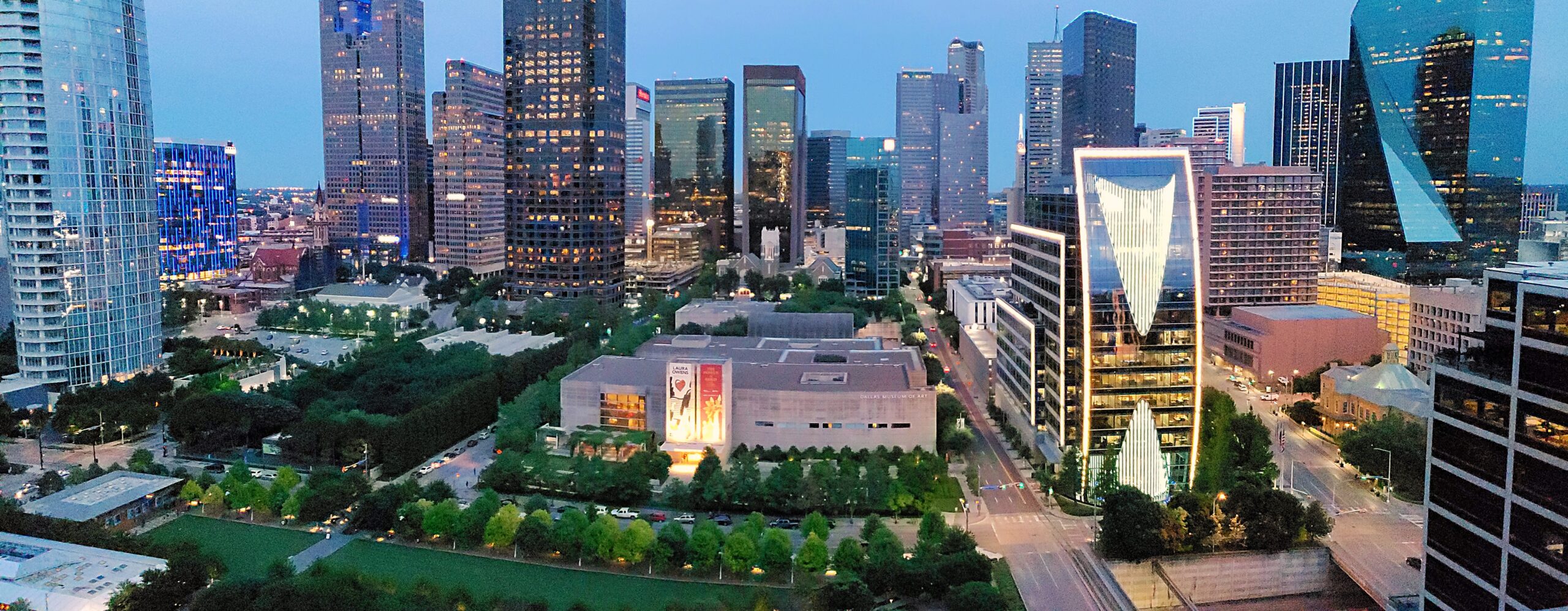
Dallas has a reputation as a place where nobody walks and everybody drives, and for much of the metro that reputation is earned. The Dallas-Fort Worth area sprawls across more than a dozen counties, its freeways are among the widest in the country, and its two big cities, its stadiums and its suburbs sit tens of miles apart. It is also incomplete. Dallas also runs one of the longest light-rail networks in the United States, a train goes straight from DFW Airport to downtown, a free vintage trolley covers Uptown, and the neighborhoods most visitors actually spend their time in, downtown, the Arts District, Uptown, Deep Ellum and Bishop Arts, are compact and connected. The right answer depends almost entirely on where you are going beyond the center. This guide explains how the city is laid out, how DART and the regional trains work, what driving here is really like, including the tolls, the heat and the storms, and gives you a straightforward way to decide.
The short answer
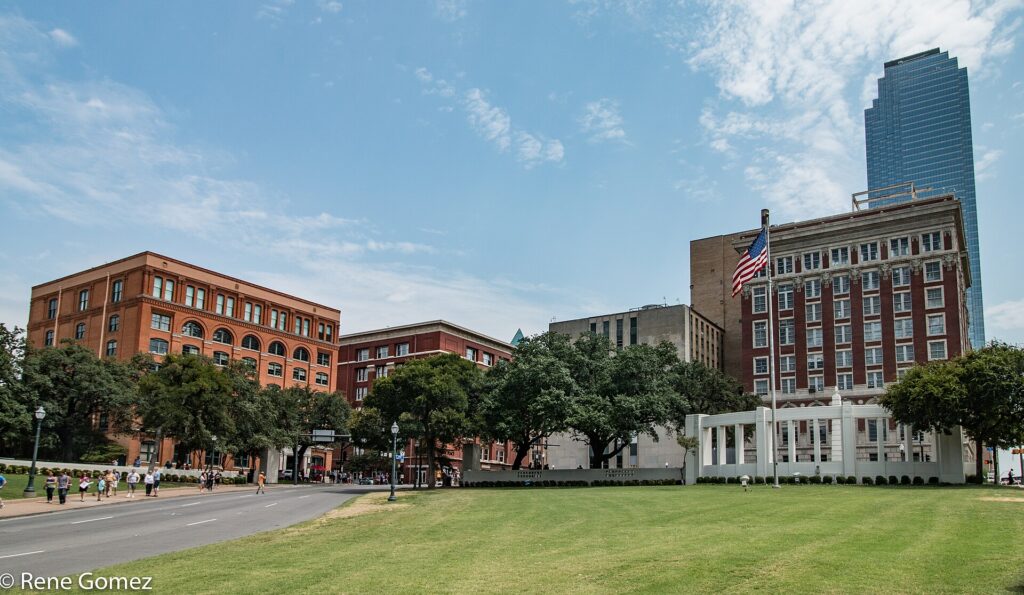
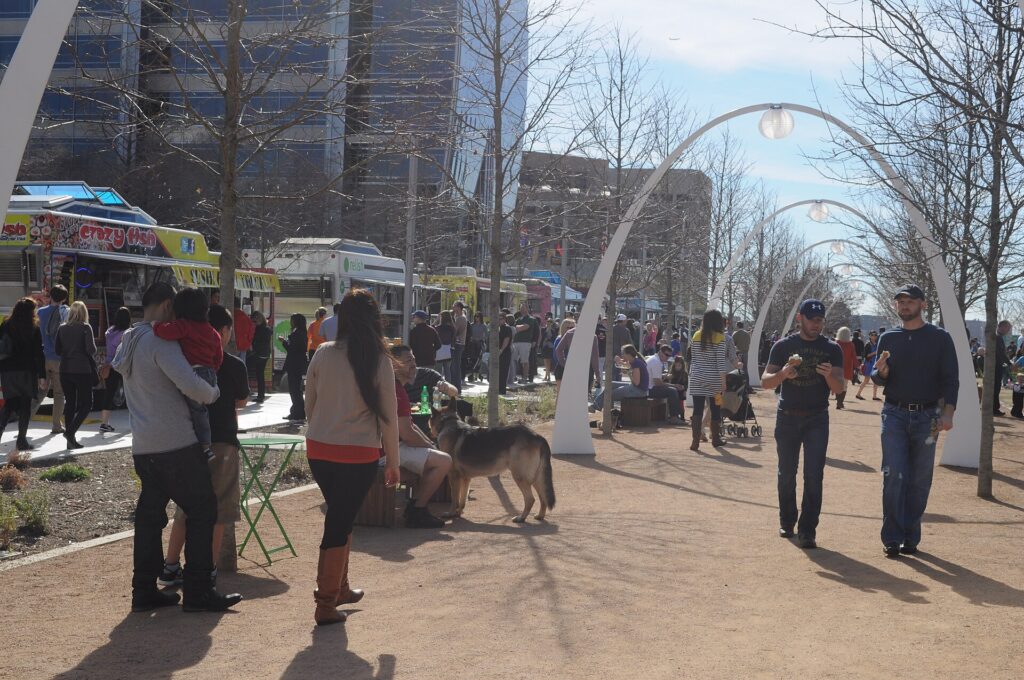
Skip the car if you are staying downtown, in the Arts District or in Uptown for a city break, a convention or the State Fair, and your plans are the museums, Klyde Warren Park, Dealey Plaza, Deep Ellum, Bishop Arts and a Mavericks game; DART, the M-Line trolley, your feet and the occasional ride-hail will cover it, and you will not pay for hotel parking. Rent a car if you are going to a Cowboys or Rangers game in Arlington, visiting family in the suburbs, spending serious time in Fort Worth, or driving on to Houston, Austin or Waco. For many visitors the hybrid works best: car-free city days and a one- or two-day rental for everything else. Compare rates for any of these plans on our Dallas car rental page.
How Dallas is laid out
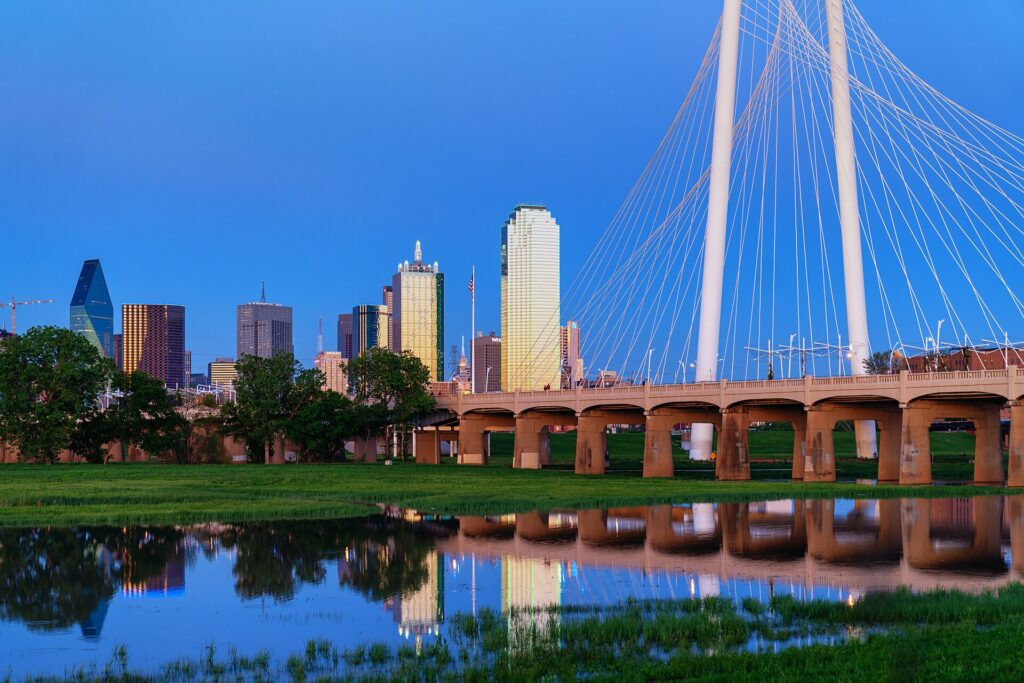
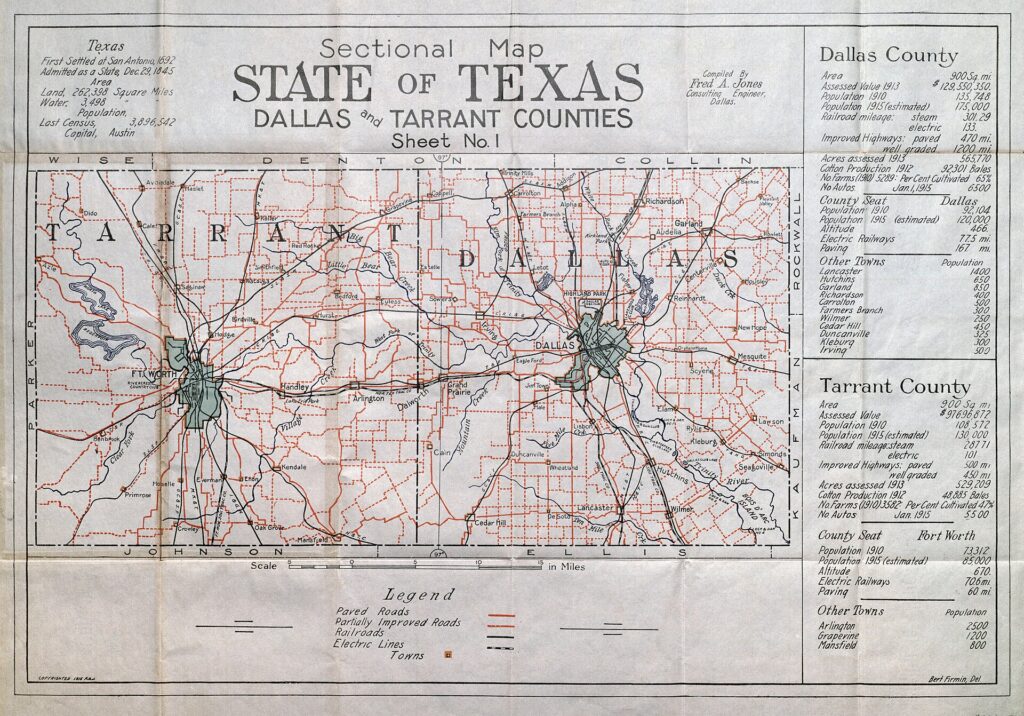
Downtown Dallas sits inside a tight ring of freeways on the east bank of the Trinity River: I-35E on the west, I-30 on the south, I-345 on the east and Woodall Rodgers, now partly covered by Klyde Warren Park, on the north. The Arts District fills the northern edge of downtown, with Uptown and Victory Park just beyond it; Deep Ellum is directly east; the Cedars and Fair Park are to the southeast; and Oak Cliff, with the Bishop Arts District, is across the river to the southwest. The vast northern suburbs of Richardson, Plano and Frisco lie beyond Uptown and the Park Cities. DFW Airport lies about 32 km (20 miles) to the northwest, halfway to Fort Worth, with Irving and Las Colinas between it and the city, and Arlington, home of the Cowboys and Rangers, sits south of the airport between the two big downtowns. The center is walkable in cooler months; everything beyond it was built around the car.
Hotels cluster downtown and in the Arts District, in Uptown, around the airport and Las Colinas, and in the northern suburbs along the tollways, where many corporate campuses are. Our Dallas hotel search lets you compare them.
Getting in from the airport
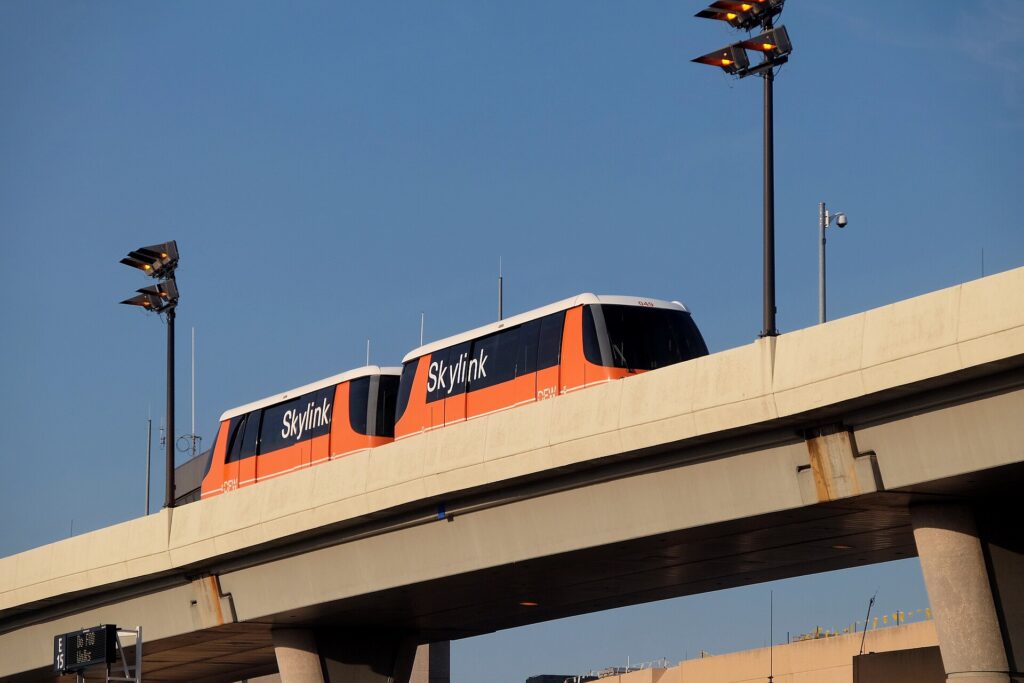
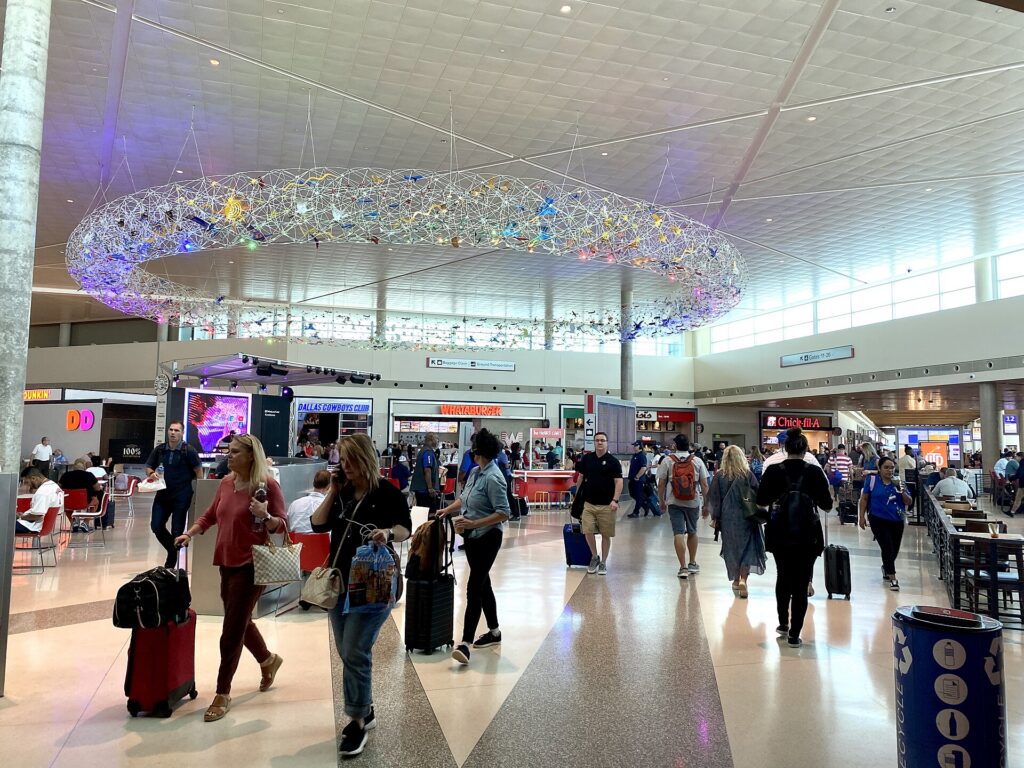
Dallas has two airports, and the answer is different for each. At DFW, the DART Orange Line leaves from DFW Airport Station at Terminal B and reaches downtown Dallas in about 50 minutes for a standard local fare; from other terminals, ride the Skylink train or the landside Terminal Link shuttle to Terminal B. TEXRail runs from the same station to downtown Fort Worth in under an hour, stopping in Grapevine. Taxis and ride-hail pick up at every terminal, and the drive to downtown Dallas takes 25 to 45 minutes depending on traffic. Every major rental company operates from the consolidated Rental Car Center south of the terminals, reached by dedicated shuttle buses from each terminal. At Love Field, the smaller airport where Southwest is based, downtown is only about 10 km (6 miles) away, a 15- to 20-minute taxi or ride-hail, and a DART shuttle bus connects the terminal to Inwood/Love Field station on the light rail; the rental counters are in the garage across from the terminal. Check the DFW site and the Love Field site for current ground-transport details, and our DFW airport guide for the layout.
Dallas’s transit, explained
Dallas Area Rapid Transit, known as DART, runs the light rail, the buses and the streetcar across Dallas and a dozen surrounding cities. It is clean, air-conditioned and, on the rail lines, frequent enough for visitors, and it covers more of the places you want to go than its reputation suggests. Its limitation is the metro’s scale: the rail lines radiate from downtown along the main corridors, and the buses that fill the gaps run less often than a visitor from New York or Chicago would expect.
DART light rail
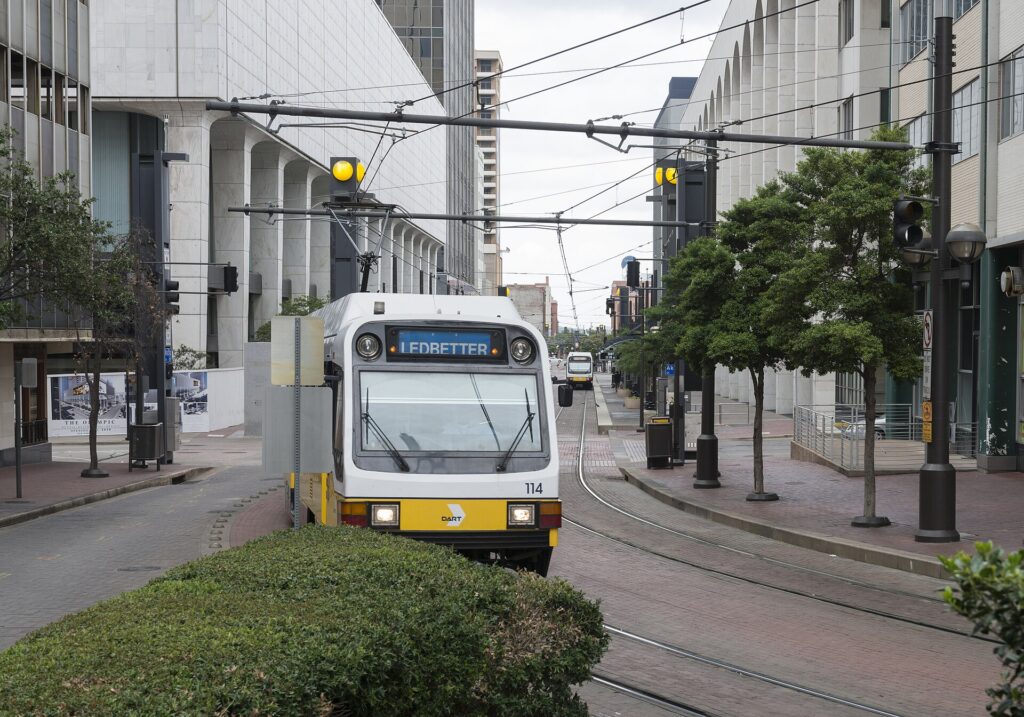
Four lines, all of which run through the downtown transit mall. The Red and Blue lines run north through Uptown’s Cityplace station toward Richardson, Plano and Garland, and south past Union Station and the Cedars into Oak Cliff, with the Red Line stopping at the Dallas Zoo. The Green Line runs from the northwest past the Market Center and Victory station at the American Airlines Center, through downtown to Deep Ellum and Fair Park, which makes it the State Fair line. The Orange Line shares the Green Line’s tracks in the city, then heads west through Irving and Las Colinas to DFW Airport. DART’s newer Silver Line commuter rail, running across the northern suburbs from DFW to Plano, has been coming into service; check DART’s map for its status when you travel. Trains run from early morning until around midnight.
Streetcars and the trolley
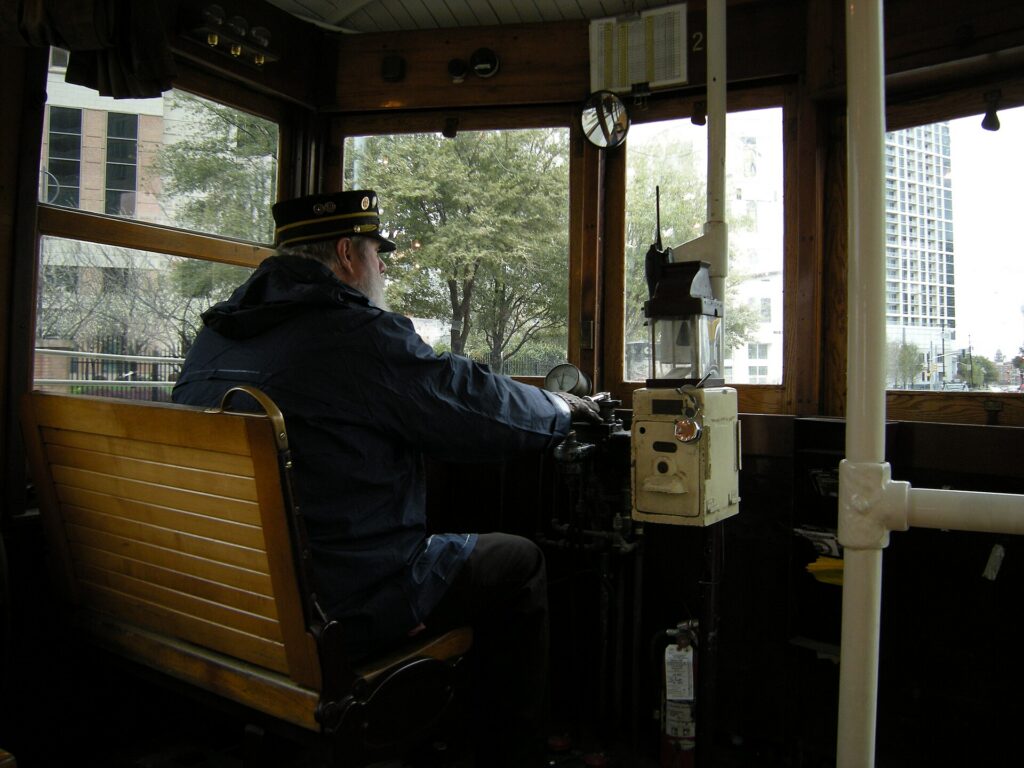
The Dallas Streetcar runs from Union Station across the Trinity to the Bishop Arts District in Oak Cliff, which is the easiest car-free way to reach it. The M-Line trolley, run by the McKinney Avenue Transit Authority with restored vintage streetcars, is free and runs every day from the Arts District up McKinney Avenue through Uptown to Cityplace, connecting with DART; the M-Line’s site has the route.
Buses
Buses fill in the rest, including routes to White Rock Lake, the Arboretum and the neighborhoods off the rail lines, and on-demand GoLink minibuses serve some suburban zones. Frequencies drop in the evenings and on weekends.
Fares and tickets
Buy tickets in the GoPass app or from the machines on every rail platform. Single rides, a midday pass and a day pass are valid across trains, buses and the streetcar, and a regular local pass covers the Orange Line to DFW; continuing into Fort Worth on the TRE or TEXRail needs a regional pass. Reduced fares are available for children, seniors and students. Check DART’s site for current prices before you go.
Accessibility
All DART rail stations are accessible, with level boarding from the platforms, and the bus fleet is low-floor with ramps.
Beyond DART
- Walking. Downtown, the Arts District, Klyde Warren Park, Uptown and Deep Ellum are pleasant on foot from October to May. From June to September, save walking for mornings and evenings.
- The Katy Trail and bikes. The Katy Trail runs about 3.5 miles through Uptown on a former railroad line, and the loop around White Rock Lake is about 9 miles; both are best by bike in the cooler hours.
- Taxis and ride-hail. Uber, Lyft and taxis operate across the metro and are quick for short hops between Uptown, Deep Ellum and Bishop Arts.
- Regional trains. The Trinity Railway Express commuter line runs between Dallas Union Station and downtown Fort Worth, with a stop at CentrePort that connects by shuttle bus to DFW, on a reduced weekend schedule. TEXRail links DFW to Grapevine and Fort Worth.
- Amtrak. The Texas Eagle stops daily at Union Station on its way between Chicago and San Antonio via Fort Worth and Austin; Amtrak has the schedule. There is no passenger train to Houston.
- Intercity buses connect Dallas with Houston, Austin and San Antonio several times a day, a reasonable alternative to a one-way rental for solo travelers.
Driving in Dallas: what it is really like
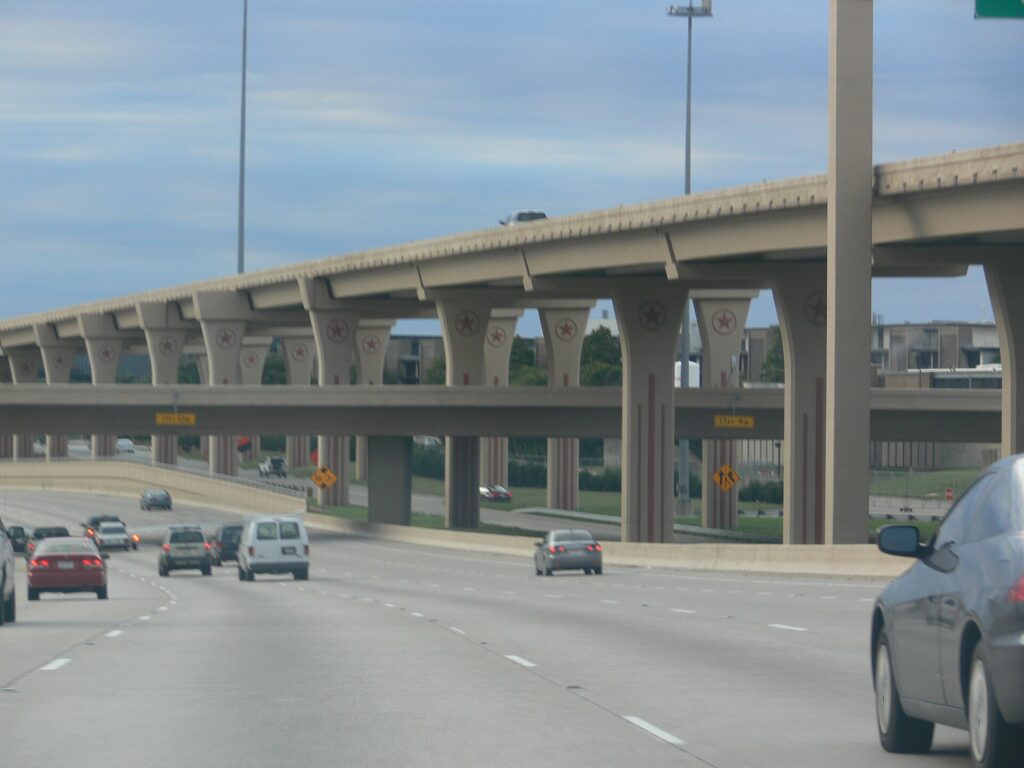
Dallas is built for driving, and in many ways it is easy: wide freeways, plentiful signage, free parking almost everywhere outside the core, and fuel prices below the national average. The frustrations are specific. Rush hour jams I-35E, US 75, I-635 and the Dallas North Tollway every weekday morning and evening, and a single crash can back up a freeway for miles. Construction is permanent on some corridor or other, and lane shifts and closures change weekly. The interchanges are huge, among them the five-level High Five where US 75 meets I-635, and the frontage roads that run beside every Texas freeway, with their one-way flow and U-turn lanes under the overpasses, take a day to get used to. And game days in Arlington, when the Cowboys or Rangers are at home, clog I-30 and the roads around the stadiums for hours before and after.
Tolls
The Dallas North Tollway, the President George Bush Turnpike, the Sam Rayburn Tollway and several other roads are run by the North Texas Tollway Authority, and all of them are cashless: tolls are charged to a TollTag or billed by mail from a photo of the plate, at a higher rate. Express lanes on LBJ Freeway and parts of I-35E use variable pricing. Rental companies handle this through toll programs, usually a flat daily fee plus the tolls, charged on every day of the rental once you use one tolled road. Read the policy at the counter, or set your navigation app to avoid tolls; most city trips add only a few minutes.
Parking
Downtown has garages and metered street parking, and most downtown and Uptown hotels charge a nightly fee, often valet-only. Uptown restaurants lean heavily on valet, which is quick and inexpensive by big-city standards. Deep Ellum and Bishop Arts have paid lots and limited street parking, and towing is strictly enforced, so read the signs. Parking at AT&T Stadium and Globe Life Field on game days is expensive and fills early, and some lots are a long walk from the gates. Outside the core, at the Arboretum, the zoo, the malls and the suburbs, parking is plentiful and usually free.
Rules and conditions worth knowing
- Heat. A parked car in a Dallas summer becomes dangerously hot in minutes; never leave a child or a pet inside, and use a sunshade.
- Storms and flash floods. Spring thunderstorms bring hail that can dent a car in minutes and downpours that flood underpasses quickly. Park under cover when storms are forecast, and never drive into water over the road; the National Weather Service’s “Turn Around, Don’t Drown” advice exists for a reason.
- Ice. On the few days a year when freezing rain hits, bridges and overpasses ice first and the city largely stops. Stay put if you can. DriveTexas publishes road conditions and closures statewide.
- Phones. Texting while driving is illegal statewide, and handheld phone use is banned in school zones.
- Right turns on red are permitted after a full stop unless signed otherwise.
- Move over. Texas law requires you to move over or slow down for stopped emergency, police and road-maintenance vehicles.
- Speed limits run 60 to 70 mph on urban freeways and up to 75 mph on rural interstates such as I-45 toward Houston.
When renting a car makes sense
- Cowboys and Rangers games. AT&T Stadium and Globe Life Field are in Arlington, which has no rail link and very limited public transit; a car, a game-day shuttle or a ride-hail is the practical way in.
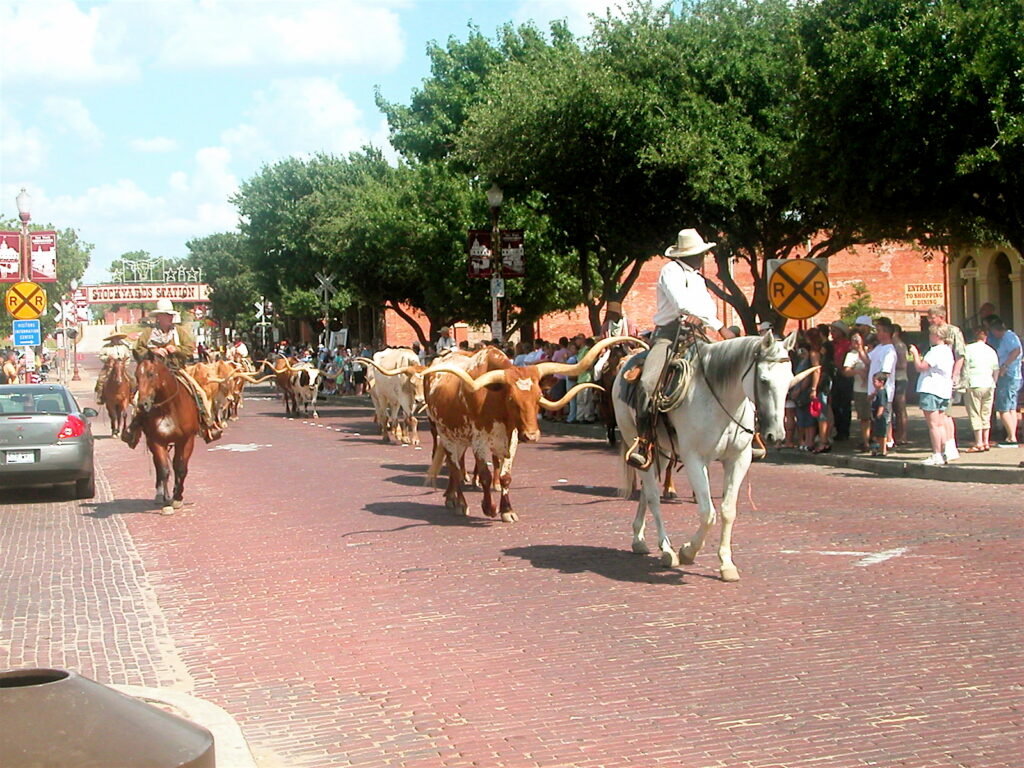
- Fort Worth, properly. The TRE reaches downtown Fort Worth, but the Stockyards and the Cultural District are spread out; a car makes a full day easy.
- The suburbs. Family in Plano, Frisco or McKinney, or business on a corporate campus along the tollways,.
- Day trips. Grapevine, Waco, Glen Rose and the lakes are car trips.
- Texas road trips. Houston, Austin and San Antonio are three to five hours away; our Dallas to Houston route guide covers the most popular drive.
- Families with young children, for whom a car, a cooler and air conditioning simplify every summer day.
If any of those apply, our rental car booking tips cover insurance, deposits and the questions to ask at the counter, and our family car rental guide looks at vehicle choice.
When it does not
- You are staying downtown, in the Arts District or in Uptown, and your plans are the center.
- You are in town for a convention, a Mavericks or Stars game, or a concert at the American Airlines Center, all on DART.
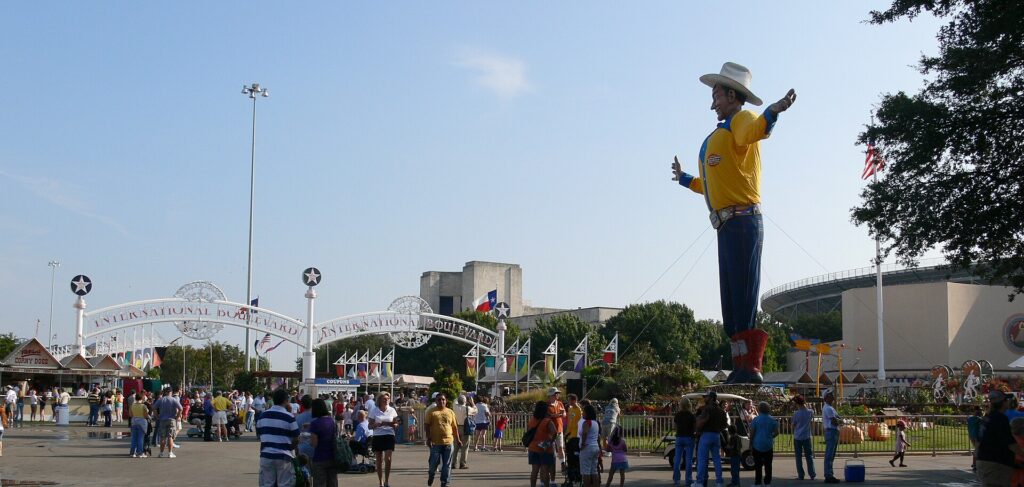
- You are going to the State Fair, where the Green Line stops at the gate and parking is expensive and slow.
- You flew into Love Field for a short city break; the taxi downtown costs less than a day of hotel parking.
The hybrid plan for a city-plus-Texas trip
Go car-free for the city days and rent for the rest, and think carefully about where you pick up. Renting at DFW makes sense if you are heading straight to Arlington, Fort Worth or the suburbs, because the airport sits between them and you avoid downtown traffic entirely. Renting at a neighborhood branch downtown or in Uptown makes sense if you are spending the first nights in the city, because you avoid the airport’s concession fees and several nights of hotel parking. A pattern that works well: the Orange Line or a taxi into the city, two or three car-free days, a rental picked up in town for Fort Worth and a game in Arlington, and the car returned at DFW on the way to the flight home. If you are continuing to Houston, a one-way rental is usually available, though it may carry a drop fee; compare the day rates on our Dallas car rental page against a full-trip rental and the difference is usually clear.
A worked cost comparison
Numbers change with the season and the booking window, so treat this as a method rather than a quote, and check current rates before deciding. For a four-night city break downtown for two people, the car-free version costs two Orange Line fares from DFW or one taxi from Love Field, a few DART day passes, and perhaps three or four ride-hail trips to Bishop Arts, Lower Greenville and back; the rental version adds four days of a compact car, four nights of hotel parking, fuel, the airport concession fees and probably a toll-program charge. The transit option wins easily. For the same four nights with a day in Fort Worth and a Rangers game, the car-free version adds TRE regional passes and ride-hail to and from Arlington, which surges on game nights; the hybrid version adds a two-day rental picked up in town, stadium parking and fuel. For two people the costs are often close, and the car wins on convenience; for a family of four, the rental is usually cheaper. For a week split between Dallas and Houston, a one-way rental is the practical answer for most travelers; compare the drop fee against a bus plus a second rental in Houston. Run the rental rates for your dates on our Dallas car rental page and put them beside the transit costs before you choose.
Driving Dallas to Houston and beyond in each season
The drive to Houston is the most common road trip out of Dallas: about 385 km (240 miles) south on I-45, three and a half to four hours without traffic, across flat farmland and piney woods. The landmarks are the giant Buc-ee’s travel center at Madisonville, roughly halfway, and the towering statue of Sam Houston beside the highway at Huntsville. In summer, the challenge is heat and holiday traffic; leave early, keep the tank above a quarter, and expect Friday afternoons southbound and Sunday afternoons northbound to be slow. In spring, thunderstorms can bring blinding rain and hail to the open stretches, and flash flooding closes low roads; check the forecast and the National Weather Service before you set out. In fall, the weather is ideal, but football weekends, the State Fair and Texas-OU weekend fill the highways around Dallas. In winter, the road is usually clear, but on the rare ice days the interstate can close entirely, and the right call is to wait a day. In every season, the last hour into Houston, where I-45 meets that city’s traffic, is usually the slowest part of the trip.
Decision table
| Your trip | Recommendation | Why |
|---|---|---|
| City break downtown or Uptown, couple or solo | No car | DART, the free trolley and short ride-hail trips cover it; hotel parking is expensive |
| Convention or business downtown | No car | The Orange Line runs from DFW to downtown, and the center is compact |
| State Fair | No car | The Green Line stops at Fair Park; fair parking is slow and costly |
| Cowboys or Rangers game | Rent for the day, or ride-hail | Arlington has no rail link and very limited transit |
| City plus Fort Worth | Hybrid: rent in town for the Fort Worth day, or take the TRE | Car-free city days, car or train for Cowtown |
| Family visit to the suburbs | Rent for the whole stay | Suburban distances make the car worthwhile daily |
| Short trip via Love Field | No car | Downtown is a 15- to 20-minute ride away |
| Texas road trip | Rent (consider one-way to Houston) | Dallas is the start, not the destination |
Money-saving tips for both options
- On transit: ride the free M-Line through Uptown; buy a day pass for a heavy sightseeing day, which also covers the train to DFW; and use the Orange Line rather than a taxi from the airport if you are traveling light.
- On a rental: compare airport and in-town pickup, book early for October and the holidays, understand the toll program before you drive off, decline extras you already have through a credit card or home policy (check first), and park under cover in hail season.
- On the hotel: if you are renting, price the nightly parking into the room rate, and consider a hotel near DFW or in the suburbs with free parking for the car days.
- On timing: avoid the freeways in the weekday peaks and I-30 on game days, and look at the best time to fly to Dallas guide for the busiest weekends.
- On the big picture: for one or two people staying central, transit plus the occasional ride-hail almost always costs less than a rental; our guide to car, transit or taxi explains how to run the numbers.
Frequently asked questions
Is it worth renting a car in Dallas?
For Arlington, Fort Worth, the suburbs or a road trip, yes. For a city break or a convention based downtown or in Uptown, no; DART, the trolley and ride-hail are enough.
Is Dallas public transit good for tourists?
Better than its reputation. The light rail reaches downtown, the Arts District, Deep Ellum, Fair Park, the zoo and DFW, and the free trolley covers Uptown. It thins out quickly in the suburbs and does not reach Arlington.
How do I get from DFW Airport to downtown Dallas?
The DART Orange Line from Terminal B in about 50 minutes, or a taxi or ride-hail in 25 to 45 minutes depending on traffic.
How do I get from Love Field to downtown?
A taxi or ride-hail in 15 to 20 minutes, or the DART shuttle bus to Inwood/Love Field station and the light rail into downtown.
Do I need a toll tag to drive in Dallas?
No, but many major roads are cashless toll roads. A rental car’s toll program covers them for a fee, or you can set your navigation app to avoid tolls.
Can I get to Fort Worth without a car?
Yes. The Trinity Railway Express runs between the two downtowns, and TEXRail links DFW with Fort Worth. For the Stockyards and the museums, add a ride-hail or local bus at the Fort Worth end.
How do I get to a Cowboys game without a car?
Ride-hail, a game-day shuttle, or a rental; Arlington has no train service. Plan the trip home in advance.
Whichever way you go, start with the flight. Compare cheap flights to Dallas, choose a neighborhood with our Dallas hotel search, and if Arlington, Fort Worth or a road trip is on the list, price the rental for those dates on our Dallas car rental page. For what to do once you are there, see our first-timer’s guide to Dallas.
Keep planning with TicketScanner
- Dallas car rentals — compare DFW, Love Field and in-town pickup
- Cheap flights to Dallas
- Dallas hotels — factor parking into the rate
- Things to do in Dallas: a first-timer's guide
- Best time to fly to Dallas: month by month
- Dallas Fort Worth International (DFW) airport guide
- Driving Dallas to Houston
- Where to stay: the Arts District
- Rental car booking tips
- Car, transit or taxi in a new city?