Tag: Travel

  • Top 10 Destinations to Book with Cyber Monday Flight Deals

    Top 10 Destinations to Book with Cyber Monday Flight Deals

    Every year, the Monday after U.S. Thanksgiving turns into one of the busiest days on the travel calendar. Airlines, hotels and booking sites stretch their Black Friday promotions into Cyber Monday, and plenty of travelers use the moment to lock in trips for the winter, spring and even the following summer. Some of those sale fares are genuinely good. Others are ordinary prices with a countdown clock attached. The difference between the two is preparation: knowing where you want to go, what a normal fare looks like for your route, and what the sale fare actually includes. This guide explains how travel sales around Cyber Monday work, how to get ready before the sales start, how to judge whether a fare is really a deal, and ten destinations that make especially good use of a sale fare, with the seasons, airports and practical details for each. It is part of our flight booking series, which starts with our guide to the best time to book cheap flights and hotels.

    The short answer

    Cyber Monday is a good time to buy travel, not necessarily a good time to travel. The best sale fares are usually for trips in the quieter months that follow, so think about late winter, spring and early fall rather than the holidays. Decide on two or three destinations and a range of dates before the sales begin, and check normal fares for those routes in the weeks before, so you can recognize a real discount. Read the fare rules before paying, because sale fares are often the most restrictive. Book hotels on refundable rates so you can rebook if a better price appears. And remember that for flights to, from or within the United States booked at least seven days out, most airlines let you cancel within 24 hours without penalty. The destinations below all have strong airline competition and plenty of seats, which is what makes sale fares likely. Compare fares across a whole month on our flight search.
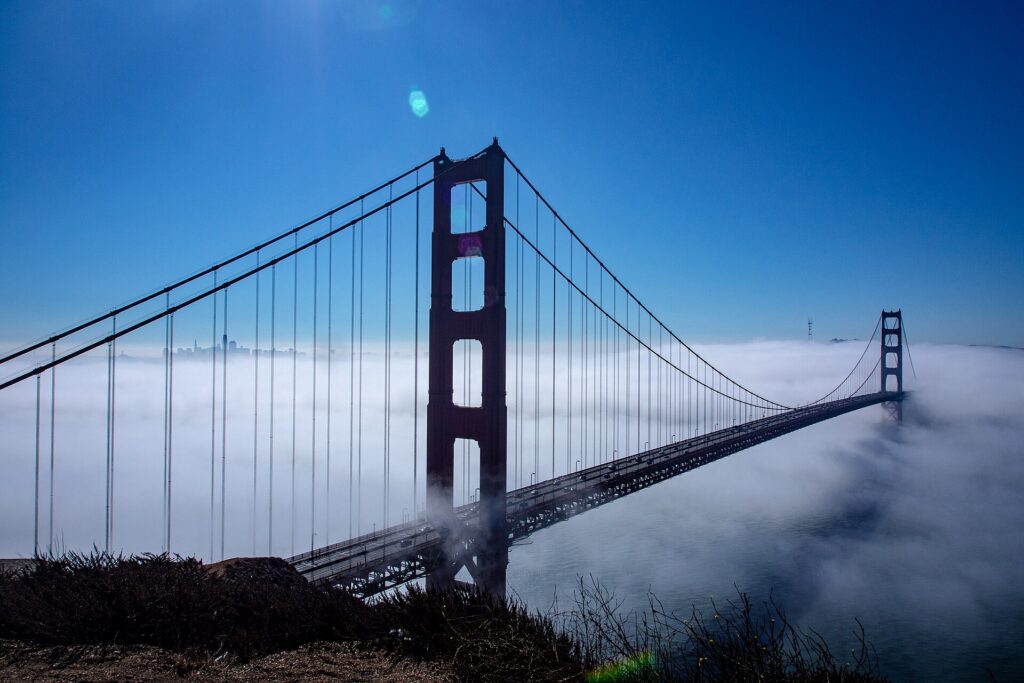
    The Golden Gate Bridge rising above the fog, seen from Battery Spencer
    The best sale fares are usually for trips in the quieter months that follow (Photo: Dongmin03 via Wikimedia Commons, CC BY 4.0)

    How Black Friday and Cyber Monday travel sales work

    Airline sales are not random generosity. They are a tool for filling seats that revenue management systems expect to go empty. That tells you a lot about what a sale will and will not include.

    • Travel windows favor quiet periods. Sale fares typically apply to flights in the airline’s slow months: early in the new year after the holidays, parts of late winter, and sometimes spring and fall. Peak dates such as Christmas, spring break weeks and midsummer are usually excluded or have very few sale seats.
    • Seats at the sale price are limited. An airline might offer the sale fare on only a portion of seats on each flight. When those are gone, the price reverts to the normal fare level, even while the sale is still advertised.
    • Days of the week are restricted. Many sales apply only to certain departure days, often Tuesdays, Wednesdays and Saturdays, when flights are least full.
    • Conditions are strict. Sale fares are often nonrefundable, may not allow changes, and are frequently in the basic economy family with no seat selection and limited carry-on allowance.
    • Sales are not only on one day. Many travel companies run promotions from before Black Friday through Cyber Monday and sometimes beyond, and airlines hold sales at other points in the year too. Missing Cyber Monday does not mean missing your chance to buy a good fare.

    Hotels behave a little differently. Hotel sales around Cyber Monday often take the form of discounted prepaid rates, extra nights free, or credits for food and drink. The discount on a prepaid, nonrefundable rate can be real, but so is the risk if your plans change. A flexible rate booked now and rechecked later is often almost as good with none of the risk.

    How to prepare before the sales start

    The travelers who get the best value out of Cyber Monday do their homework in October and early November.

    • Shortlist destinations. Pick two or three places you would genuinely like to visit, using the list below as a starting point.
    • Set a date range, not fixed dates. Decide which months or weeks work for you, and how long a trip you want.
    • Build a price baseline. Search your routes a few times in the weeks before the sales. Note the typical fare for your dates, including the fare type you would actually buy. Set price alerts. Without a baseline, you cannot tell a discount from a normal price.
    • Check the calendar at the destination. A big convention, festival or sporting event can make hotels expensive even if flights are cheap. Our events pages, such as New York events and Las Vegas events, show what is on.
    • Get your details ready. Traveler names exactly as they appear on ID, loyalty numbers, passport details for international trips and the payment card you want to use. Sale seats go quickly, and a fumbled checkout can cost you the fare.
    • Check your documents. For international trips, make sure passports are valid well beyond your travel dates and check entry requirements. Canadians should read the Government of Canada’s travel advice and advisories; for U.S. domestic flights, adults need a REAL ID-compliant license or another accepted document, as explained on TSA’s REAL ID page.

    How to tell whether a sale fare is really a deal

    A red banner and a countdown clock are not evidence of savings. Run every sale fare through these checks.

    CheckWhat to look forRed flag
    Compared with your baselineA meaningful drop from the fare you saw for the same dates before the saleThe “sale” price matches what you saw a month ago
    Fare typeThe same fare type you would normally buy, or a clear saving after adding what the basic fare excludesA basic fare compared against a standard one
    Travel datesYour actual dates are available at the advertised priceThe advertised price only exists on dates you cannot use
    Total priceTaxes, fees, bags and seats includedA low base fare that grows at checkout
    Change and cancellation rulesRules you can live with if plans moveNo changes, no refunds, on a trip that is not yet certain
    ScheduleReasonable departure times and connectionsA cheap fare with a very early departure, an overnight layover or two separate tickets

    Price rules help with the total. In Canada, the Canadian Transportation Agency’s all-inclusive air price advertising rules require advertised air prices to include all mandatory taxes, fees and charges. In the United States, the Federal Trade Commission’s rule on junk fees for hotels and short-term rentals requires the total price, including mandatory fees, to be shown up front. Optional extras like bags, seats and parking are still yours to add. Our flight details guide explains how to read fare brands and baggage allowances.

    Ten destinations that make the most of a sale fare

    These ten cities share what makes sale fares likely: large airports with many airlines competing, lots of seats, and clear quiet seasons when airlines need to fill planes. For each, we note when a sale fare is most useful, which airports to compare and where to read more. None of this is a list of current prices; check live fares on our flight search.

    1. New York City

    New York rewards almost any length of trip: Broadway, the big museums, Central Park, food from every corner of the world and neighborhoods that feel like different cities. It is also one of the best-served air markets in North America, with three major airports, JFK, LaGuardia and Newark, which keeps competition high. The sale sweet spot is January through early March, when the holiday crowds have gone and hotel rates are at their lowest, with a second window in late spring before summer peak. Winter in New York is cold, but museums, shows and restaurants are indoors, and hotel savings can be substantial. Our guides to the best time to fly to New York and things to do in New York go deeper; compare flights on New York flights and rooms near the theaters on Times Square hotels.

    2. Los Angeles

    Los Angeles is a mild-weather escape when the rest of the continent is cold, which makes winter and early spring sale fares especially attractive. LAX is one of the busiest airports in the world, and the region also has Burbank, Long Beach, Ontario and Orange County airports, so compare by where you will actually stay. Plan for a city that is spread out: most visitors base themselves in one or two areas and use a car or rideshare for the rest. Read our best time to fly to Los Angeles and Los Angeles car rental or public transit guides, and compare fares on Los Angeles flights.

    3. Miami

    Miami’s high season is winter, when northern travelers head south, so sale fares for January and February can be valuable if you can find them, while late spring usually brings lower prices and warm water. Summer and early fall are the cheapest but hottest months and fall inside the Atlantic hurricane season, which runs June through November; travel insurance and flexible bookings make sense then. Compare Miami International with Fort Lauderdale, depending on where you are staying. Our guides to the best time to fly to Miami and things to do in Miami help you choose, and you can compare flights on Miami flights and hotels on South Beach hotels.

    4. Las Vegas

    Las Vegas is built for sale fares: huge airline capacity, many carriers and dense competition from across North America. What moves the price is not the season so much as the event calendar. Big conventions, fight nights, major races and holiday weekends can push hotel rates sharply higher, while ordinary midweek dates are often very reasonable. Check the calendar before you buy a sale fare, and compare the total with resort fees included. Our dedicated guide to cheap flights to Las Vegas covers the patterns, along with our best time to fly to Las Vegas and things to do in Las Vegas guides. Compare fares on Las Vegas flights.

    5. Chicago

    Chicago has world-class architecture, museums, a lakefront and a food scene well beyond deep-dish pizza. Winter is cold and windy, which is exactly why January and February fares and hotel rates can be low. Late spring and early fall are the sweet spots for weather and value; summer is lively and priced accordingly. Compare O’Hare and Midway: Midway is closer to downtown for many visitors, O’Hare has more airlines. Our best time to fly to Chicago and things to do in Chicago guides help you plan, and you can compare fares on Chicago flights.
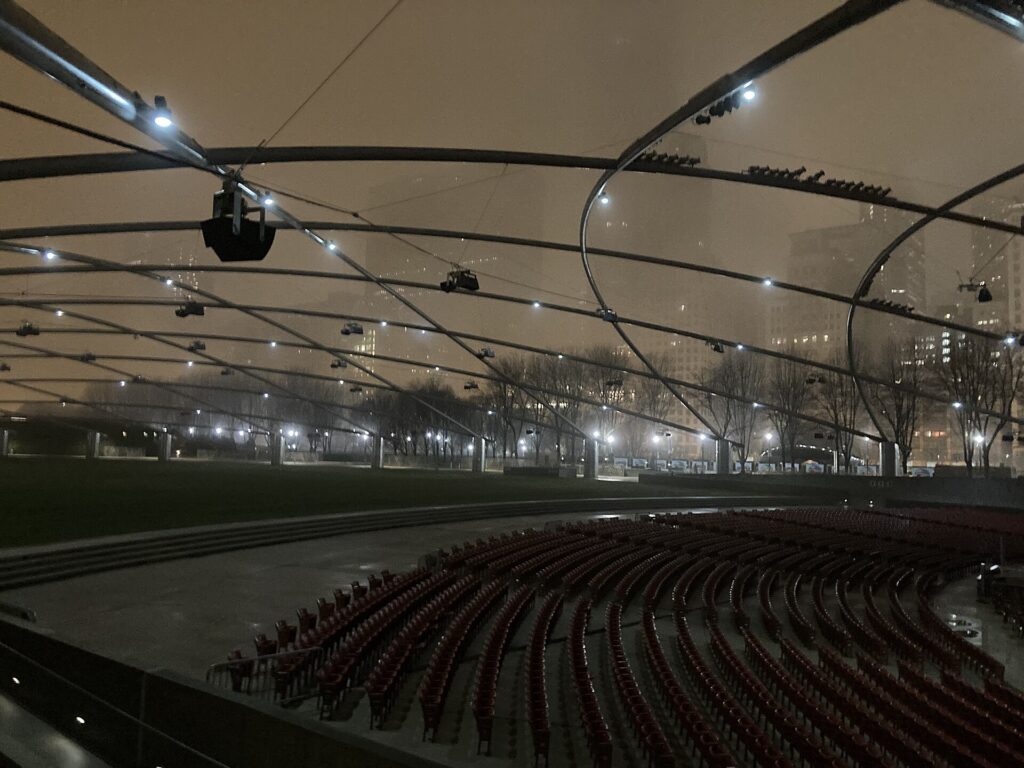
    The Chicago skyline seen from the Nichols Bridgeway in Millennium Park
    Chicago's cold months are often its cheapest (Photo: Michael Barera via Wikimedia Commons, CC BY-SA 4.0)

    6. San Francisco

    San Francisco’s weather is famously unpredictable, with cool, foggy summers and often clear, pleasant falls, so September and October are some of its best months. Conference weeks can push hotel rates very high, so check the convention calendar before buying a sale fare. Compare SFO, Oakland and San Jose by where you will spend your time. The city is compact and well served by transit, so many visitors skip the rental car. Read our best time to fly to San Francisco and things to do in San Francisco guides and compare fares on San Francisco flights.

    7. Orlando

    Orlando is the family destination of choice, which means the most expensive weeks follow the school calendar: spring break, summer and the holidays. Sale fares are most valuable for the quieter periods, such as parts of January and February, late April and May outside holidays, and early fall. Orlando International is the main airport, with Orlando Sanford as an alternative on some routes. Theme park tickets and hotel stays add up quickly, so compare packages with separate bookings and read the change rules carefully. Compare fares on Orlando flights and hotels on Orlando hotels.

    8. Seattle

    Seattle’s summers are dry and beautiful and its winters are gray and damp, and fares follow the weather: July and August are the peak, while the rainy season is usually cheaper. Pike Place Market, the waterfront, the Space Needle, ferries across Puget Sound and day trips into the mountains all work year-round, but spring and early fall offer the best balance. Seattle-Tacoma International is the main airport; our Sea-Tac airport guide covers terminals and getting into the city. See our best time to fly to Seattle and things to do in Seattle guides, and compare fares on Seattle flights.
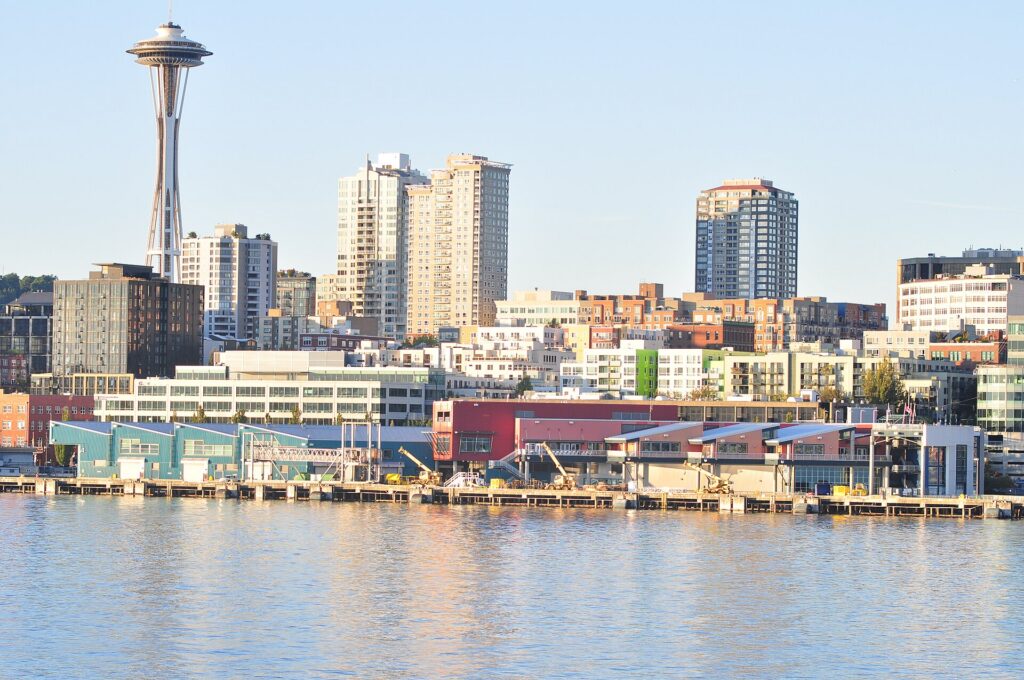
    Bell Street Pier and the Space Needle seen from Elliott Bay in Seattle
    Seattle fares follow the weather, with summer the peak (Photo: Joe Mabel via Wikimedia Commons, CC BY-SA 4.0)

    9. Austin

    Austin is known for live music, barbecue, Tex-Mex, swimming holes and a busy festival calendar. That calendar is the key to prices: major festival and conference weeks fill the city and send hotel rates soaring, while ordinary weeks are much calmer. Summers are very hot, so spring and fall are the most comfortable seasons. Austin-Bergstrom International is the airport, a short drive from downtown. Search for Austin on our main flight search and compare dates across the month so you can see which weeks the festivals push up. If you are combining Austin with another Texas city, our Houston and Dallas guides can help.

    10. Washington, D.C.

    Washington is one of the best-value major cities in North America for sightseeing, because the Smithsonian museums and the monuments on the National Mall are free. Spring brings cherry blossom season and big crowds; late fall and winter outside the holidays are quieter and cheaper. Compare Reagan National, which is on the Metro close to the city, with Dulles and Baltimore/Washington. Read our best time to fly to Washington, D.C., things to do in Washington, D.C. and rent a car or take the Metro guides, and compare fares on Washington, D.C. flights.

    The ten destinations at a glance

    DestinationAirports to compareWhen a sale fare helps mostWatch out for
    New York CityJFK, LaGuardia, NewarkJanuary to early March; late springHoliday season and big event weekends
    Los AngelesLAX, Burbank, Long Beach, Ontario, Orange CountyWinter and early springLong drives between areas; pick your base
    MiamiMiami, Fort LauderdaleLate spring; winter if you find a real dealWinter peak; hurricane season June to November
    Las VegasHarry Reid InternationalMidweek dates without big eventsConvention and event weekends; resort fees
    ChicagoO’Hare, MidwayLate winter; late spring and early fallCold January weather; summer peak
    San FranciscoSFO, Oakland, San JoseSeptember and October; winter weekdaysConference weeks
    OrlandoOrlando International, SanfordQuiet weeks outside school holidaysSpring break, summer, holidays
    SeattleSeattle-TacomaSpring and early fallSummer peak; rainy winters
    AustinAustin-BergstromOrdinary spring and fall weeksFestival weeks; summer heat
    Washington, D.C.Reagan National, Dulles, BWILate fall and winter outside holidaysCherry blossom season crowds

    Flying from Canada? What changes

    Many of our readers fly from Canadian cities, and a few things differ for cross-border trips. Transborder fares from Toronto, Montreal, Vancouver and Calgary can be competitive during sales, but also compare driving to a nearby U.S. airport, including the cost of parking, fuel, tolls and time. Several major Canadian airports, including Toronto Pearson, offer U.S. preclearance, so you clear U.S. border formalities before you leave and arrive as a domestic passenger. Check the exchange rate when comparing fares priced in different currencies, and see the Government of Canada’s advice on travel to the United States for entry requirements. For a close look at one of the busiest cross-border routes, read our guide to cheap flights between New York and Toronto; for the reverse direction, our Toronto flight deals guide covers flying in.

    The west front of the United States Capitol in Washington, D.C.
    Washington's free museums make it strong value outside cherry blossom season (Photo: Architect of the Capitol via Wikimedia Commons, Public domain)

    Book the hotel and the car too

    A cheap flight is only half a cheap trip. Once your sale fare is booked, move quickly on the rest, because hotel rates on your dates can rise as other sale shoppers book.

    • Book a refundable room first. Reserve on a flexible rate for your exact nights on our hotel search, then keep checking for better rates before the cancellation deadline. Our hotel booking tips guide explains how to compare total prices and neighborhoods.
    • Only prepay if you are certain. A prepaid hotel sale rate is worth it if your trip is fixed and the discount is real.
    • Decide whether you need a car. In New York, Chicago, San Francisco and Washington you probably do not; in Los Angeles, Orlando and Austin you probably do. Compare on our car rental search.
    • Consider timing for the holidays. If you are planning a festive trip, our guide to the best cities for Christmas in the USA shows which cities are worth it, and why booking early matters.

    Common mistakes during travel sales

    • Buying a trip you had not planned. A cheap fare to somewhere you did not want to go is not a saving.
    • Not checking the fare type. A basic fare with no carry-on and no seat selection can cost more than a standard fare once you add what you need.
    • Ignoring the hotel side. A cheap flight on a weekend when the city is full of conventioneers is not a cheap trip.
    • Forgetting the return. Check both directions of a round trip; the sale may only apply to one.
    • Booking nonrefundable everything. Keep at least the hotel flexible if you can.
    • Waiting for the last hour of the sale. Sale seats are limited. If your fare meets your target price, book it.
    • Assuming Cyber Monday is the only chance. Airlines run sales throughout the year; a fare that meets your baseline in any month is worth taking.

    Frequently asked questions

    Are Cyber Monday flight deals really cheaper?

    Sometimes. Sale fares can be genuinely lower for travel in quieter months, but some “deals” are ordinary prices. Compare against the fare you saw for the same dates before the sale, with the same fare type and extras included.

    What dates do Cyber Monday sale fares usually cover?

    Each airline sets its own terms, but sale fares commonly apply to travel in the slower months that follow, with blackout dates around major holidays. Always check the travel window and day-of-week restrictions in the fare rules.

    Is Black Friday or Cyber Monday better for flights?

    Neither is reliably better. Many promotions run across the whole period. Prepare in advance and book when a fare meets your target.

    Can I cancel a sale fare?

    For flights to, from or within the United States booked at least seven days before departure, most airlines let you cancel within 24 hours without penalty. After that, sale fares are often nonrefundable, so read the rules before you pay.

    Should I book the hotel during the sale too?

    Book a refundable room as soon as your flight is set, then recheck the price. Only choose a prepaid sale rate if your plans are certain and the discount is meaningful.

    Which destinations usually have the best sale fares?

    Big airports with lots of airline competition and clear quiet seasons, such as the ten cities above, are where sale fares appear most often. Smaller airports with one or two airlines see fewer and shallower sales.

    Are sale fares refundable if the airline changes my flight?

    If an airline cancels or significantly changes your flight and you choose not to travel, U.S. Department of Transportation rules say you are entitled to a refund, even on a nonrefundable fare. Canadian passengers have rights under the Air Passenger Protection Regulations. The details depend on the situation, so check the rules for your trip.

    Ready for the next sale? Build your price baseline now on our flight search by checking your routes across a whole month, shortlist hotels for the same dates on our hotel search, and you will know a real deal the moment you see one. For more on timing, read our guide to the best time to book cheap flights and hotels.

  • Should You Rent a Car, Use Public Transport, or Take a Taxi to Explore a New Place?

    Should You Rent a Car, Use Public Transport, or Take a Taxi to Explore a New Place?

    How you get around once you land shapes a trip more than most people expect. It decides how much of your day goes to logistics, what you can realistically see, where it makes sense to stay, and a surprisingly large share of the budget. The choice is usually framed as three options, rent a car, use public transport or take taxis and ride-hail, but the best answer for most trips is a mix, chosen deliberately rather than by default. This guide explains how to make that call for any destination: the factors that actually decide it, what each option really costs and demands, how to learn an unfamiliar transit system quickly, how to use taxis and ride-hail without overpaying, and a table that matches the right approach to the kind of trip you are taking.

    The short answer

    Rent a car when the places you want to see are spread out, when transit is thin, when you are traveling as a family or group with luggage, or when the trip is about national parks, coastlines, small towns or a road trip. Use public transport when you are staying in a dense city with a real rail or metro network, when parking is scarce and expensive, and when most of your plans are within the city. Use taxis and ride-hail for the gaps: airport runs with bags, late nights, short hops where transit is awkward, and days when time matters more than money. And for many trips, the winning combination is transit and walking for the city days, a rental for the day trips, and an occasional taxi when it is late or raining. You can compare rental rates for just the days you need on our car rental search.

    The seven factors that decide it

    1. The shape of the destination

    This matters more than anything else. Cities built before the car, or rebuilt around rail, such as New York, London, Paris, Rome, Toronto, Montreal and Washington, reward going car-free; their attractions are close together, their transit is frequent, and driving and parking are slow and costly. Cities that grew up around the freeway, such as Los Angeles, Phoenix, Houston, Dallas and Orlando, spread attractions across huge distances and run transit that works for commuters more than visitors. Rural areas and national parks often have no useful transit at all.

    2. Where you are staying

    The same city can be a car trip or a transit trip depending on the hotel. A downtown hotel near a metro station makes a car unnecessary; a resort, a suburban rental or a relative’s house can make one essential. If you are flexible, it is often cheaper overall to pay a little more for a central, well-connected hotel than to pay for a car and parking to reach a cheaper one. Our hotel search lets you compare by neighborhood.

    3. What is on the itinerary

    List the places you want to go and ask how you would reach each one without a car. If most are in the center, transit wins. If two or three are an hour or more outside the city, consider renting only for those days. If most are spread out, rent for the trip.

    4. Who is traveling

    A solo traveler or couple with carry-ons can use any system. A family with a stroller, car seats and four suitcases, a group of five, or a traveler with limited mobility may find a car or taxis far easier, and the cost per person of a rental falls as the group grows.

    5. The real budget

    Transit is almost always the cheapest option per trip. A rental can be good value for a group, but its cost is more than the daily rate, as the next section shows. Taxis and ride-hail are the most expensive per mile and the cheapest overall only when you take very few trips.

    6. Your comfort with driving there

    Driving on the other side of the road, in a manual car, through narrow historic streets, in snow or in heavy city traffic is a real cost in stress and risk. Be honest about it. If you would not enjoy it, the trip will be better without it.

    7. Time

    On a short trip, time is the scarcest resource. A car can save hours when destinations are far apart; transit can save hours in a city where driving means traffic and parking hunts; a taxi can save the last hour before a flight.

    What each option really costs

    People tend to compare the rental rate with a transit fare and a taxi quote, which misleads in both directions. A fair comparison adds up everything for your actual plans.

    A rental car costs the daily rate, plus taxes and airport fees, plus any young-driver or additional-driver fees, plus insurance you need to buy, plus fuel or charging, plus tolls and the rental company’s toll-program fees, plus parking at the hotel each night and at each stop during the day. In a big downtown, overnight hotel parking alone can rival the daily rate. Our rental car booking tips explain how to read the full price.

    Public transport costs the fares, or a day or weekly pass, plus the airport link if it charges a premium, plus the occasional taxi for the trips transit does not cover. Many systems cap what you pay in a day or week when you tap with the same card, which makes it hard to overspend.

    Taxis and ride-hail cost the fare, which rises with distance, time in traffic and demand, plus tips where customary, plus airport or event surcharges. A few rides a day across a big city add up fast.

    To compare, sketch your days, estimate how many trips you would take and how far, and total each option. For a couple spending four days in a transit-rich city, transit plus two or three taxis will usually come out well ahead. For a family of five spending a week touring a spread-out region, the rental usually wins.

    London Underground platforms at Whitechapel station
    In a transit-rich city such as London, the train is usually faster and far cheaper than a car (Photo: TheFrog001 via Wikimedia Commons, CC0)

    Renting a car: freedom, with overhead

    Where it shines

    • Flexibility. Leave when you want, stop where you want, change the plan halfway through the day.
    • Reach. Trailheads, beaches, wineries, small towns and viewpoints that no bus serves.
    • Luggage and gear. Strollers, skis, coolers and beach chairs travel with you, and you can leave things in the trunk between stops (out of sight).
    • Families and groups. One vehicle carries everyone, and the per-person cost drops with each passenger.
    • Privacy and comfort. Your own climate control, music and schedule, which matters on long days with children.

    Where it hurts

    • Parking in dense cities is expensive, scarce and time-consuming, and hotels often charge for it nightly.
    • Traffic in large cities can make a car slower than the train at the times you want to travel.
    • Unfamiliar rules: right turns on red (legal in most of the US and Canada, but not on the island of Montreal), camera-enforced restricted zones in European historic centers, toll roads that only take transponders, and roundabout etiquette.
    • One designated driver means one person who cannot relax, drink at dinner or watch the scenery.
    • Responsibility: damage, tickets, fuel, return times and insurance are all yours to manage.

    Make a rental work better

    Rent only for the days you need it, from a neighborhood branch if you are starting in the city. Choose a hotel with reasonable parking, or one on the edge of the center with easy transit in. Download offline maps. Learn how tolls are charged before you drive. And read our guide to car rental return timing so an extra hour does not turn into an extra day.

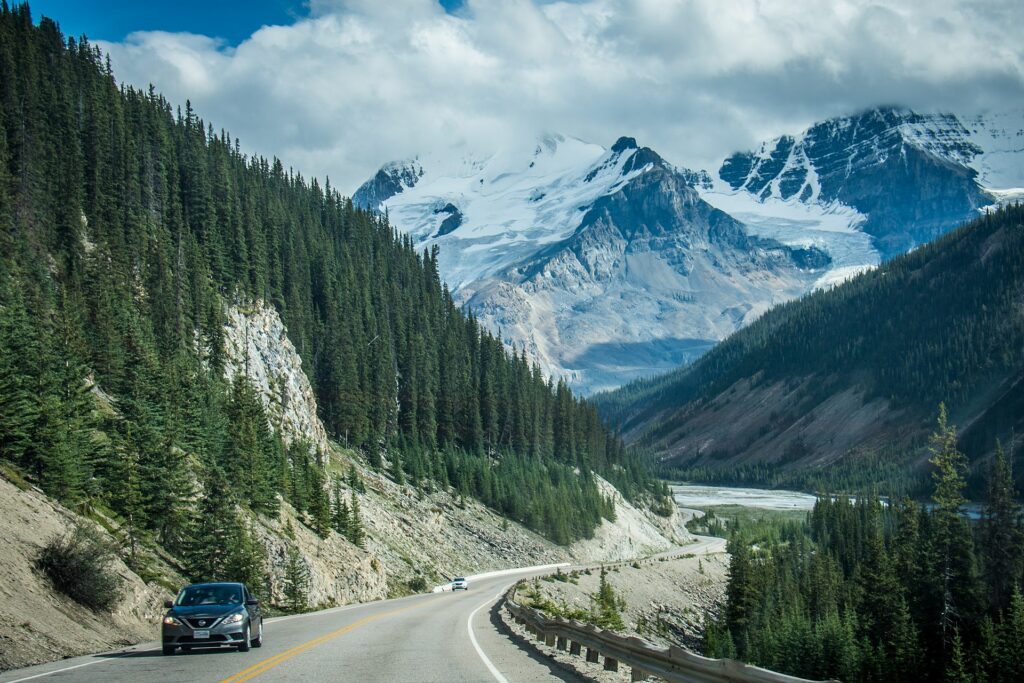
    A winding road through the mountains on the Icefields Parkway in Alberta
    Scenic drives and national parks are where a rental car earns its keep (Photo: m01229 from USA via Wikimedia Commons, CC BY-SA 2.0)

    Public transport: cheap, fast in the right places, and easier than it looks

    Where it shines

    • Cost. Usually the cheapest way to move around, often dramatically so.
    • Speed in dense cities. A metro line under a congested downtown beats any car at rush hour.
    • No parking, no driving stress. You arrive, walk out of the station and start exploring.
    • A view of local life, and in some cities, such as the ferries in Vancouver or Halifax, genuinely scenic rides.
    • Lower emissions per traveler than a car or a taxi.

    Where it falls short

    • Coverage. Fixed routes and timetables do not reach everything, and service thins out at night, on weekends and away from the center.
    • Luggage. Stairs, crowded trains and turnstiles are hard with big suitcases and strollers.
    • Crowding at rush hour, and a learning curve in an unfamiliar language.
    • Accessibility varies. Some older systems have many stations without elevators; check before you rely on them.

    How to learn a new system in 20 minutes

    1. Look at the official map before you travel. Identify the lines near your hotel and the main sights, and note the line colors or numbers.
    2. Find out how to pay. Many large systems now take contactless bank cards and phones at the gate or on the bus, including London, New York, Toronto, Vancouver and Chicago, and many cap daily or weekly spending when you tap with the same card. Others use their own card or an app. The operator’s site, such as Transport for London, the MTA in New York or the TTC in Toronto, explains fares and passes.
    3. Check the airport link. Many airports have a direct rail connection, such as the Elizabeth line and Piccadilly line at Heathrow, the RER B at Paris Charles de Gaulle, the UP Express at Toronto Pearson, the Canada Line at Vancouver and the Blue Line at Chicago O’Hare, but some charge a premium fare. Our airport guides, such as Heathrow and Toronto Pearson, cover the options.
    4. Use a journey planner. The operator’s own app or a general map app will give live times; download the offline map in case you lose signal underground.
    5. Learn the late-night picture. Know when the last train runs and whether night buses replace it, so you are not stranded after dinner.

    Taxis and ride-hail: convenience on demand

    Where they shine

    • Door to door, with no transfers and no parking.
    • Airport runs with luggage, children or an early flight.
    • Late nights, bad weather, and neighborhoods transit does not reach.
    • Short trips across awkward gaps, where the transit route would take three times as long.

    Where they fall short

    • Cost adds up quickly, especially over longer distances or several trips a day.
    • Surge pricing on ride-hail apps at peak times, after concerts and games, and in bad weather.
    • Traffic slows them as much as a rental.
    • Waits can be long at busy times or in less populated areas, and in some rural places there are simply no drivers.

    Taxi or ride-hail?

    In most US and Canadian cities, Uber and Lyft operate alongside licensed taxis, and outside North America you will find Uber in many countries alongside strong local apps. Ride-hail shows the price before you book, which helps in a new city; taxis can be quicker to find at a rank and are sometimes cheaper during surges. Some airports set flat taxi fares into the city, including JFK to Manhattan and the Paris airports into central Paris; check the current amount on the official airport or city site, such as the NYC Taxi and Limousine Commission, before you get in.

    Using them safely and fairly

    • At airports, use the official taxi rank or the designated ride-hail pickup zone, and decline offers from people approaching you in the arrivals hall.
    • For ride-hail, match the plate and driver in the app before getting in.
    • For taxis, make sure the meter is running or agree the fare first where fares are fixed.
    • Know the tipping norm: customary in the US and Canada, less so in much of Europe.
    • If you have children who need car seats, know that rules for taxis vary by place and that most taxis and ride-hail cars will not have one; bring your own or plan around it.
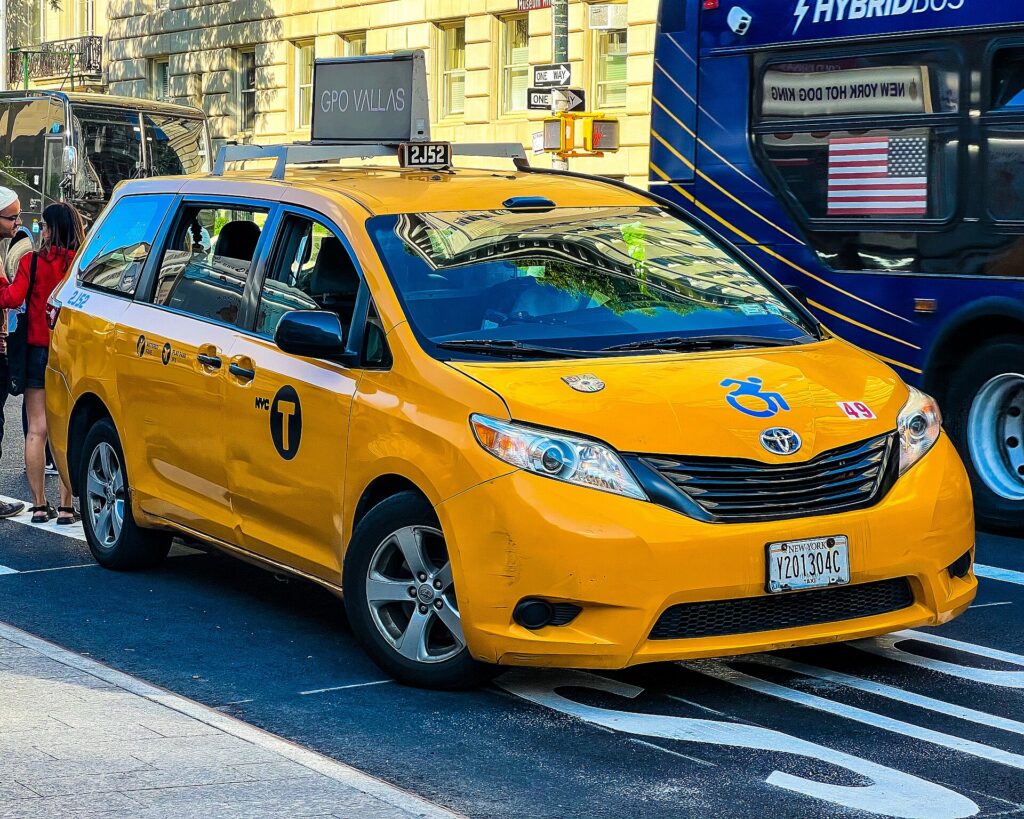
    A yellow New York City medallion taxi
    Taxis and ride-hail fill the gaps: airport runs with bags, late nights and awkward cross-town trips (Photo: S5A-0043 via Wikimedia Commons, CC BY 4.0)

    The options people forget

    • Walking. In compact centers, the best way to see a city is on foot, and it costs nothing.
    • Bike share and scooters. Most large cities have docked bike share; they are ideal for short hops along waterfronts and park paths. Check the local rules on helmets and where you may ride.
    • Car share by the hour. In some cities, members can book a car for a few hours, which can beat a full-day rental for a single errand or excursion; sign-up usually takes time, so arrange it before the trip.
    • Airport and park shuttles. Scheduled coaches from airports to resort towns and national parks, and in-park shuttle systems, can replace a car for the part of the trip where it would be hardest to park.
    • Intercity trains and buses. For city-to-city legs, a train can be faster than driving once you count traffic and parking at both ends.
    • Day tours. For one remote sight, a tour with transport included can cost less than a day’s rental with fuel and parking.
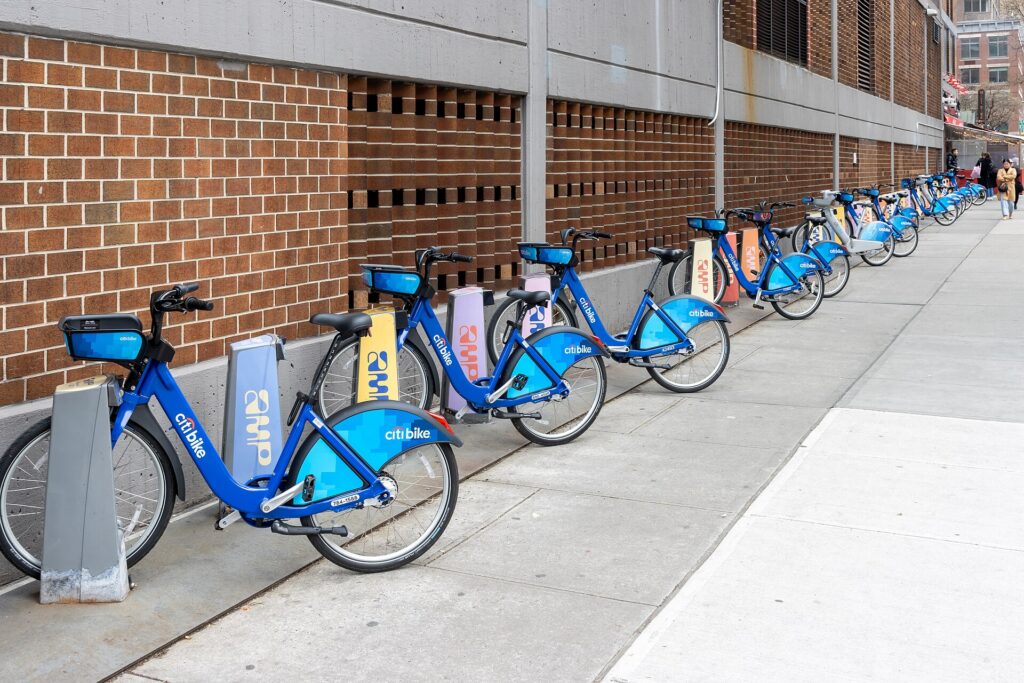
    A row of Citi Bikes docked on 42nd Street in Manhattan
    Bike share is the option visitors forget, and often the quickest way to cover a short hop (Photo: Photograph by Mike Peel (www.mikepeel.net). via Wikimedia Commons, CC BY-SA 4.0)

    Match the approach to the trip

    Trip typeUsually bestWhy
    City break in a transit-rich cityTransit and walking, taxis at nightFrequent service, expensive parking, sights close together
    City break in a spread-out cityRental car, or ride-hail if staying centralLong distances, thin transit away from the core
    City plus day tripsTransit in the city, rent for the day-trip daysPay for the car only when it earns its keep
    Road trip or national parksRental carNo practical alternative for most routes
    Beach or theme-park resortDepends on the resort; a car for spread-out areas, shuttles where providedSome resorts are self-contained, others spread over many miles
    Family with young childrenRental car in most places; transit and taxis in the densest citiesCar seats, luggage, naps and flexibility
    Solo traveler on a budgetTransit and walkingCheapest per trip; a rental does not divide
    Group of four to six adultsRental or a large ride-hail carCost per person falls sharply
    Business trip, downtown hotelTaxis or ride-hail, airport rail linkTime matters, parking is costly, trips are short
    Traveler with limited mobilityTaxis or accessible ride-hail; transit where fully accessibleDoor to door, fewer stairs and transfers

    City examples

    A few illustrations of how the balance shifts:

    • New York: the subway and your feet cover almost everything; a car in Manhattan is a burden. See our New York guide.
    • Toronto: transit and walking work well downtown, and a rental earns its keep for Niagara, cottage country or a drive to Montreal. See our Toronto guide.
    • Washington, DC: Metro and walking cover the Mall and the main neighborhoods. See rent a car or take the Metro.
    • Los Angeles and Phoenix: distances are large and a car is the default for most visitors. See our guides to Los Angeles and Phoenix.
    • Las Vegas: the Strip is walkable and served by taxis and ride-hail, while a car makes sense for Red Rock, Hoover Dam or the Grand Canyon. See do you need a rental car in Las Vegas.
    • Calgary: transit covers the core, but most visitors are headed for Banff and the Rockies. See our Calgary guide.
    • Rome and Paris: historic centers restrict traffic, and a car is only worth it for countryside days. See our guides to Rome and Paris.

    Mix and match: three sample plans

    Four days in a big transit city

    Take the airport train or a taxi to a central hotel. Use a contactless card or a multi-day pass for the metro and buses, walk as much as possible, and budget for a taxi or two at night. No rental.

    A week split between a city and the countryside

    Spend the first days in the city on transit. On the morning you leave, pick up a rental from a neighborhood branch near your hotel, drive out for the countryside days, and return it at the airport before your flight, pricing the one-way fee first.

    A family week in a spread-out destination

    Rent at the airport so the car seats go in once, choose a hotel or vacation rental with free parking, and plan each day around one or two areas to limit driving. Use ride-hail for a night out if the drivers want to relax. Our guide to car rentals for family vacations covers the vehicle and seat questions.

    Common mistakes

    • Renting for the whole trip by default, then paying for a car that sits in a garage for three days.
    • Ignoring parking when comparing hotels and rentals.
    • Relying on ride-hail in remote areas, where drivers are scarce and you can be stranded after a hike or a late dinner.
    • Taking unofficial taxis offered inside airport terminals.
    • Not checking the last train, and paying a surge fare at midnight.
    • Underestimating the airport journey, whether by traffic, a rental return shuttle or a transfer; our guide to how early to get to the airport helps plan the buffer.

    Frequently asked questions

    Is it cheaper to rent a car or use taxis?

    It depends on how many trips you take. For a few short rides a day in a city, taxis are often cheaper once you count parking, fuel and fees on a rental. For long distances, many stops or a group, a rental usually wins.

    Is public transport safe for tourists?

    In most major cities, yes, and it is used by millions of residents daily. Use normal city sense: keep valuables secure, stay aware late at night, and prefer busier cars and stations.

    Should I rent a car at the airport or later?

    If your first days are in a transit-friendly city, rent later from a neighborhood branch. If you are heading straight out of town or traveling with kids and luggage, rent at the airport.

    Are Uber and Lyft available everywhere?

    They are widely available in US and Canadian cities, and Uber operates in many other countries, but coverage is thin in rural areas and some countries favor local apps or licensed taxis. Check before you rely on them.

    Can I use my credit card to pay for transit?

    In many large cities, yes, by tapping a contactless card or phone at the gate or farebox. Check the operator’s site before you go.

    What is the best option for a family?

    In most destinations, a rental car, because of car seats, luggage and flexibility. In the densest cities, transit, walking and the occasional taxi are often easier.

    Do I need a car to visit national parks?

    Usually, yes, though some parks run shuttles and some gateway towns have coaches from the nearest airport. Check the park’s own site for current options and any vehicle reservation rules.

    Once you have picked your approach, build the trip around it: compare cheap flights, choose a well-connected base with our hotel search, and price a rental for only the days you need on our car rental page.

  • Best Places To Visit In Europe In Fall

    Best Places To Visit In Europe In Fall

    Fall is Europe’s best-kept open secret. The summer crowds thin out after the school holidays, room rates and transatlantic fares ease, the Mediterranean is still warm enough to swim in September, and the countryside turns gold just as the harvest brings wine, truffles and festivals to the table. City museums are quieter, restaurants are easier to book, and the light is kinder for photographs. The trade-offs are shorter days, more changeable weather in the north, and seasonal closures on some islands and in some mountain resorts as the season winds down. This guide explains how fall travel in Europe works month by month, profiles the destinations that are at their best between September and November, from Oktoberfest in Munich to truffle season in Piedmont, and shows how to plan the flights, rooms and routes so you get the benefits of the season without the pitfalls.

    The short answer

    In September, go south and to the coast: the Greek islands, Croatia’s Dalmatian coast and southern Italy still have summer weather with fewer people, and Munich hosts Oktoberfest late in the month. In October, go for food, color and culture: Piedmont’s truffle season, Portugal’s Douro Valley after the harvest, Prague and Transylvania in their autumn colors, and Rome and Andalusia in comfortable warmth. In November, choose cities: Paris, London, Vienna and Budapest are at their quietest and cheapest before the Christmas markets open late in the month. Book Oktoberfest and harvest-weekend stays early, keep everything else flexible, and compare fall fares into Europe’s gateways on our flight search.

    Fairground rides and show booths lit up at Oktoberfest in Munich
    Oktoberfest in Munich runs from late September to the first Sunday in October; book rooms early (Photo: Richard Bartz, Munich aka Makro Freak via Wikimedia Commons, CC BY-SA 2.5)

    How fall travel in Europe works

    Shoulder season pricing

    From mid-September, most of Europe moves out of peak season. The exact timing varies: the Mediterranean coast stays busy into early October, while northern cities quieten as soon as schools go back. Hotels drop their rates, and flights from North America usually become easier to find at reasonable prices once the summer rush has passed. The exceptions are the big events, such as Oktoberfest, major trade fairs and harvest-festival weekends, which can fill every room in town. Our guide to the best time to book cheap flights and hotels covers booking windows in detail.

    Weather north and south

    Europe is a big continent, and fall means very different things in Lisbon and Edinburgh. In the south, September is often still summer, October is warm and mostly dry, and November brings more rain but mild temperatures. In the north and center, September is pleasant, October is crisp with the best autumn colors, and November is gray, damp and short on daylight. Pack layers and a waterproof jacket wherever you go.

    Shorter days and a clock change

    Daylight shrinks quickly through the season, especially in the north. European countries end daylight saving time on the last Sunday of October, so evenings get dark noticeably earlier from that point. Plan outdoor sightseeing for the morning and early afternoon, and save museums, food and nightlife for the evenings.

    Seasonal closures

    On islands and in beach and mountain resorts, many hotels, restaurants and ferry routes run a reduced schedule or close as the season ends, often from late October or November. Great for quiet, not great if you arrive to find the only taverna shut. Check opening dates and ferry timetables before you commit to a remote destination late in the season.

    The best places to visit in Europe in fall

    1. Munich, Germany: Oktoberfest

    If beer halls, brass bands and Bavarian food are your idea of a good time, Munich in late September is the place to be. Oktoberfest, the world’s largest folk festival, traditionally starts on a Saturday in the second half of September and runs until the first Sunday in October, extended to October 3 when that date falls later. Entry to the grounds is free; you pay for what you eat and drink, and tables in the big tents can be reserved in advance.

    • Why go: the beer tents, traditional food, the opening parade and the costume and rifle marksmen’s parade on the first Sunday, and a city in full festival mode.
    • Plan ahead: hotel rates rise sharply during the festival and rooms sell out. Book as early as you can, or stay in a nearby town with a fast train link.
    • Beyond the festival: the Bavarian Alps, Neuschwanstein Castle and Salzburg are all popular day trips once the festival ends and prices settle.

    Dates, tent information and visitor rules are on the official Oktoberfest website.

    2. Transylvania, Romania: castles and autumn forests

    Transylvania’s medieval towns, fortified churches and Carpathian forests are at their most atmospheric in October, when the hills turn red and gold and Halloween brings a little extra theater to the region’s Dracula connections.

    • Why go: Bran Castle, long associated with the Dracula legend; the Saxon old town of Brașov; the hilltop citadel of Sighișoara; and hiking and scenic drives in the Carpathians.
    • Getting there: most visitors fly into Bucharest and take the train or drive to Brașov, which makes the best base. Brașov also has its own small airport.
    • Getting around: a rental car gives you the most freedom for the villages and fortified churches; trains and buses link the main towns.

    Opening hours and ticket information for the castle are on the official Bran Castle website. Romania is part of the Schengen area, and it offers very good value; our guide to budget travel destinations covers more places like it.

    3. Santorini and the Greek islands: summer’s afterglow

    Santorini in July and August is crowded and expensive. In September and early October, the sea is still warm, the sunsets over the caldera are just as spectacular, and the island is noticeably calmer, especially in the evenings once day-trippers leave.

    • Why go: sunsets from Oia and Fira, volcanic beaches, wineries, and the whitewashed villages without the peak-season crush.
    • Timing: the season winds down through October, and many hotels and restaurants close for winter from about November. Ferry schedules also thin out, so check them before planning an island hop.
    • Alternatives: Crete and Rhodes, larger islands with more year-round life, stay warm into late fall.

    The Greek National Tourism Organisation’s Visit Greece site covers the islands and the mainland.

    4. Piedmont, Italy: truffle and wine season

    Piedmont, in Italy’s northwest, is where fall becomes a feast. The grape harvest in the hills of the Langhe and Roero brings the region’s famous reds into the cellars, and the white truffle season begins, celebrated at the International White Truffle Fair in Alba on weekends from October into early December.

    • Why go: truffle markets and tasting menus, wine tasting in Barolo and Barbaresco country, hill towns wrapped in autumn fog, and Turin’s elegant cafés and museums.
    • Getting there: fly into Turin or Milan and rent a car; the wine villages are hard to reach by public transport.
    • Plan ahead: fair weekends are busy in Alba, and top restaurants book up. Consider staying in a smaller village nearby.

    Italy’s official tourism portal, Italia.it, has regional itineraries for Piedmont and beyond.

    Autumn-colored vineyards on the hills of the Langhe in Piedmont, Italy
    The Langhe hills in autumn, the heart of Piedmont's wine and white truffle season (Photo: Ida Astrid via Wikimedia Commons, CC BY-SA 4.0)

    5. Prague, Czech Republic: a fairytale city in autumn

    Prague’s spires, bridges and hillside gardens look their best with a backdrop of autumn color, and October and November bring much thinner crowds on Charles Bridge and in the Old Town than summer does.

    • Why go: Prague Castle, the Old Town Square and its astronomical clock, Charles Bridge at dawn, the gardens and viewpoints of Petřín Hill, and the city’s beer halls and cafés as the evenings cool.
    • Value: the Czech Republic uses the koruna rather than the euro, and everyday costs remain lower than in many western capitals.
    • Combine it: Vienna, Berlin and Budapest are all reachable by train, making Prague a natural stop on a longer route.

    The city’s official tourism site, Prague.eu, lists fall events and exhibitions.

    6. Rome, Italy: warm days, fewer crowds

    October is one of the best months of the year in Rome. The heat of summer has broken, evenings are pleasant for dining outdoors, and the lines at the Vatican Museums and Colosseum, while never short, are more manageable than in July.

    • Why go: the ancient sites in comfortable weather, fall food like artichokes and chestnuts, and day trips to the countryside for the grape and olive harvest.
    • Plan ahead: book timed entry for the Colosseum and the Vatican Museums, even in shoulder season.

    Our guides to things to do in Rome, the best time to fly to Rome and getting around Rome cover the details. Compare flights to Rome and rooms in neighborhoods like Trastevere.

    7. Paris, France: the city after the summer

    Parisians call September the rentrée, when the city comes back from its August holidays and cultural life restarts. Fall brings new exhibitions, the gardens turning color, and the European Heritage Days in September, when many normally closed buildings open to the public.

    • Why go: museums and galleries at their best, café terraces in mild weather, and more reasonable hotel rates than in summer outside trade fairs and fashion weeks.
    • November: one of the quietest months, and a good time for museum-focused trips at lower prices.

    See our guides to things to do in Paris and the best time to fly to Paris, then compare flights to Paris and Paris hotels.

    8. London, England: theater season and autumn parks

    London’s parks, from Hyde Park to Richmond Park, turn gold in October, and the city’s theater and concert calendar is in full swing. Weather is changeable, but many of the best things to do are indoors, and many of the major museums are free.

    • Why go: West End shows, free museums, autumn walks in the royal parks, and Bonfire Night fireworks around November 5.
    • Entry: visitors from Canada and the US need a UK Electronic Travel Authorisation before traveling.

    Our guides to things to do in London, the best time to fly to London and getting around London help you plan, and you can compare flights to London for your dates.

    9. Porto and the Douro Valley, Portugal: harvest time

    The terraced vineyards of the Douro Valley, where port wine comes from, are one of Europe’s most spectacular wine landscapes, and the harvest usually runs from September into early October. Afterward, the vines turn red and gold.

    • Why go: quinta visits and tastings, river cruises and the scenic Douro railway line, then Porto’s riverside, tiled churches and port lodges.
    • Getting around: trains run up the valley from Porto; a car or a guided tour reaches more of the quintas.
    • Combine it: Lisbon is about three hours south by train.

    The official site, Visit Portugal, has regional guides.

    10. Seville and Granada, Spain: Andalusia without the heat

    Andalusian summers are fierce. By October, the heat has eased into warm, sunny days that are perfect for exploring Seville’s cathedral and old quarters, and Granada’s Alhambra.

    • Why go: the Alhambra and the Albaicín in Granada, the Real Alcázar and tapas bars of Seville, and the white villages of the countryside.
    • Plan ahead: Alhambra tickets are limited and sell out well ahead, even in fall. Buy them from the official seller as soon as your dates are firm.

    11. Dubrovnik and the Croatian coast: September sea

    Croatia’s Dalmatian coast is packed in July and August. In September, the sea is still warm, the old towns of Dubrovnik and Split are calmer, and ferries and boat trips to the islands are still running.

    • Why go: Dubrovnik’s city walls, Split’s Roman palace, swimming off the rocks, and island trips to Hvar and Korčula.
    • Timing: as with the Greek islands, services thin out after October.

    12. Vienna and Budapest: coffeehouses, baths and the first markets

    Late fall is the season for Central Europe’s indoor pleasures: Vienna’s coffeehouses, concert halls and museums, and Budapest’s thermal baths, which feel best when the air outside is cold. The first Christmas markets usually open in mid to late November.

    • Why go: classical music and opera, grand cafés, the thermal baths, and lower prices before the holiday season starts.
    • Combine them: the two cities are connected by direct trains, and Prague is an easy extension.

    If you would rather see holiday lights closer to home, our guide to the best cities for Christmas in the USA covers the North American options.

    13. The Scottish Highlands: color and drama

    The Highlands in September and October are a study in rust and purple, with heather and bracken on the hills and stags rutting in the glens. It is also a quieter time on roads that are busy in summer.

    • Why go: dramatic landscapes around Glencoe, the Isle of Skye and the Cairngorms, whisky distilleries, and Edinburgh’s old town as a gateway.
    • Be ready for weather: it changes fast, and daylight shortens quickly. Drive in daylight on single-track roads.
    Autumn leaves on the wooded slopes of Petřín Hill in Prague
    Petřín Hill in Prague, at its best in October's autumn color (Photo: I would appreciate being notified if you use my work outside Wikimedia.
    More of my work can be found in my personal gallery. via Wikimedia Commons, CC BY-SA 3.0)

    Fall in Europe at a glance

    DestinationBest fall windowWhy goBook ahead for
    MunichLate September to early OctoberOktoberfestHotels, tent reservations
    TransylvaniaOctoberCastles, forests, HalloweenRental car
    Santorini and the Greek islandsSeptember to early OctoberWarm sea, sunsets, fewer crowdsFerries, caldera-view rooms
    PiedmontOctober to NovemberWhite truffles, wineFair-weekend rooms, restaurants
    PragueOctoberAutumn color, valueLittle; flexible
    RomeOctoberWarm days, harvest foodColosseum and Vatican entry
    ParisSeptember to NovemberExhibitions, heritage daysRooms during trade fairs
    LondonOctober to NovemberTheater, parks, free museumsShow tickets, UK ETA
    Porto and the DouroSeptember to OctoberHarvest, vineyardsQuinta stays, river cruises
    Seville and GranadaOctober to NovemberPleasant warmthAlhambra tickets
    Dubrovnik and SplitSeptemberSwimming, old townsIsland ferries
    Vienna and BudapestNovemberCafés, baths, first marketsConcert tickets
    Scottish HighlandsSeptember to OctoberLandscapes, whiskyRental car, rural lodging

    How to plan a fall trip to Europe

    Flights

    Fall fares from North America are often lower than summer fares, but not always on every route, so compare a full month rather than fixed dates. Consider flying into one city and home from another, for example into Munich for Oktoberfest and out of Rome after a week in Italy, to avoid backtracking. Our guide to traveling Europe on a multi-city itinerary covers routes, rail and open-jaw tickets, and our international flight booking tips cover bags and connections.

    Where to stay

    Outside event dates, fall is a good time to upgrade: rooms that are out of reach in summer often become affordable. Keep rates refundable if your route might change, and compare total prices including city taxes. Search rooms on our hotel search and read our hotel booking tips before you book.

    Getting around

    Trains cover the cities well. For wine regions, rural Transylvania and the Highlands, a rental car makes a huge difference; compare rates on our car rental search, and read our rental car booking tips for insurance and cross-border rules.

    Entry rules

    Canadian and US visitors can usually spend up to 90 days in any 180-day period in the Schengen area without a visa. The EU’s Entry/Exit System now registers non-EU travelers electronically at the external border, so allow extra time on your first entry, and an ETIAS travel authorization is due to follow. The UK requires an Electronic Travel Authorisation. Check the official requirements for your passport before you book.

    Packing

    Layers are everything: a light waterproof jacket, a warm sweater or fleece, and shoes that can handle rain and cobblestones. Bring a swimsuit for the south in September and for thermal baths later in the season. Our guide to comfortable walking shoes for traveling helps with the most important item.

    Budget

    Fall is one of the best times to stretch a travel budget in Europe. Our guide on how to save money for a trip includes a cost worksheet and a savings timeline, and if you are torn between the classic three countries, our comparison of England, Italy and France helps you decide.

    The whitewashed village of Oia on the caldera cliffs of Santorini
    Oia on Santorini: still warm in September and early October, with far fewer crowds than summer (Photo: Norbert Nagel via Wikimedia Commons, CC BY-SA 3.0)

    Fall travel mistakes to avoid

    • Arriving in Munich during Oktoberfest without a room. Book early or stay out of town.
    • Assuming islands are open all season. Check hotel, restaurant and ferry schedules from late October.
    • Packing for summer everywhere. A warm September day in Rome can be a chilly evening in Prague.
    • Planning long drives after dark. Days shorten fast, especially after the clock change.
    • Leaving popular timed tickets to the last minute. The Alhambra, the Vatican Museums and the Colosseum sell out even in shoulder season.
    • Ignoring trade fairs and events. A big conference can push city hotel rates to summer levels for a week.

    Frequently asked questions

    Is fall a good time to visit Europe?

    For many travelers it is the best time: fewer crowds than summer, lower prices, warm weather in the south in September and October, harvest festivals and autumn colors. The trade-offs are shorter days and more rain in the north, especially in November.

    Where is it still warm in Europe in October?

    The south: southern Spain and Portugal, southern Italy and Sicily, Greece and its islands, Malta and Cyprus usually have warm days well into October.

    When is Oktoberfest?

    It traditionally begins on a Saturday in the second half of September and ends on the first Sunday of October, or on October 3 when that falls later. Check the official website for each year’s exact dates.

    Is Europe cheaper in the fall?

    Generally, yes. Hotel rates and transatlantic fares usually drop from mid-September, although major events, trade fairs and festival weekends can still push prices up in specific cities.

    What is the best European city to visit in November?

    Cities with great indoor life: Paris, London, Vienna, Budapest and Prague. November is one of the quietest and cheapest months, and the Christmas markets in Central Europe start to open late in the month.

    Where can I see fall foliage in Europe?

    Transylvania’s Carpathian forests, the Scottish Highlands, the Douro Valley’s vineyards, Piedmont’s hills, Bavaria and the parks of Prague and London all put on a strong show, usually peaking in October. If you are open to a longer trip, our guide to traveling to Japan covers another famous autumn-leaf destination.

    Do I need anything new to enter Europe?

    The EU’s Entry/Exit System registers non-EU visitors electronically at the border, an ETIAS travel authorization is due to follow, and the UK requires an ETA. Check the official requirements before you book.

    Ready to plan your fall escape? Compare fares into Munich, Rome, Paris, London and Europe’s other gateways on our flight search, then find rooms that are finally affordable after the summer on our hotel search. For more ideas on where your money goes furthest, see our guide to budget travel destinations.