Tag: Budget Travel

  • Hotel Booking Tips For Saving Money On Your Next Trip

    Hotel Booking Tips For Saving Money On Your Next Trip

    For most trips, the hotel is the biggest single cost after the flight, and on a longer stay it is often bigger. It is also the part of a trip where small decisions compound: a room that looks cheap but sits forty minutes from everything you came to see, a nonrefundable rate booked before your dates were firm, a parking charge nobody mentioned, a resort fee that shows up at checkout. Saving money on a hotel is rarely about finding a secret discount. It is about knowing what a room will really cost you, choosing the right location and the right rate for your situation, and booking at a sensible moment. This guide walks through the whole process in order, from deciding what you need to what to check at the front desk, and links to the more detailed guides in this series for deal hunting, last-minute stays, family trips, business travel and hotels in Canada.

    The short answer

    If you only remember a handful of things, make it these. Choose the neighborhood before the hotel, because location drives both your daily costs and how much you enjoy the trip. Compare the total price, including taxes, mandatory fees, parking and breakfast, not the nightly rate on the search results. Match the rate to your certainty: pay the premium for free cancellation when your plans might move, and take the cheaper prepaid rate only when they will not. Book early for peak dates and big events, and stay flexible for quiet periods, when waiting can pay. Read recent reviews for patterns, not for the single angry post. And once you have found a property you like, check the hotel’s own site before you pay, since the same room sometimes comes with better terms there. You can start comparing properties and prices across your dates on our hotel search.

    A spacious hotel lobby with couches, rugs and a chandelier
    A great lobby is nice; the total price, the location and the cancellation terms matter more (Photo: Basile Morin via Wikimedia Commons, CC BY-SA 4.0)

    Step 1: Decide what you actually need

    The fastest way to overspend is to start scrolling before you know what you are looking for. Every filter you set in advance removes rooms you would never have booked.

    Who is traveling, and why

    A couple on a city break, a family of five, a solo business traveler and a group of friends going to a concert need different things. Families usually care about room size, bed configuration, a pool and breakfast; our guide to the best time to book hotels for family vacations covers timing around school holidays in detail. Business travelers care about location relative to meetings, a reliable desk and Wi-Fi, early breakfast and a smooth late check-in, which is the focus of the business travel hotels guide.

    Your must-haves and your nice-to-haves

    Write down the three or four things you will not compromise on, then everything else. Typical must-haves are a maximum total budget, a specific area, two beds or a separate sleeping space for children, parking if you are driving, an accessible room, or a quiet room if you are a light sleeper. Nice-to-haves are the gym, the rooftop bar and the view. Nice-to-haves break ties; they should never push you over budget.

    Your real budget

    Set the budget as a total for the stay, including taxes and fees, not as a nightly rate. A single figure for the whole trip forces you to account for costs that do not appear on the first page of results.

    Step 2: Pick the neighborhood before the hotel

    Location is the decision that most affects both cost and experience, and it is the one people rush. A cheaper hotel on the edge of the city is only a deal if the savings survive the taxis, transit fares, parking and time it costs you to get to the places you came for. A slightly more expensive room near a subway stop, in a walkable district, or next to the conference center can be the cheaper option once the whole trip is counted.

    A practical way to choose:

    • List the three or four places you will go most. Attractions, a conference venue, a relative’s house, a stadium.
    • Look at them on a map together. The area in the middle, or along a direct transit line between them, is usually where to stay.
    • Check the walk to the nearest station, not just the distance to downtown. A hotel described as “near the center” might be close in a straight line and awkward in practice.
    • Look at the street, not just the building. Street View and reviews that mention the area show whether it is lively, quiet or empty at night.
    • Price in parking if you are driving. Downtown hotels in large cities often charge a daily parking fee, sometimes steep, while suburban and airport properties frequently include it.

    Each city has a handful of areas that suit most visitors. Our neighborhood pages show hotels in the districts people ask about most, such as the Entertainment District in Toronto, Old Montreal, Times Square in New York and the Las Vegas Strip. If you are weighing whether you will need a car at all, our comparison of renting a car, public transit and taxis helps you decide how central you need to be.

    Step 3: Choose your dates with demand in mind

    Hotel prices follow demand closely, and demand follows a few predictable patterns. Understanding them lets you shift a trip by a day or two and pay noticeably less for the same room.

    Weekdays versus weekends

    In business-heavy downtowns, rooms are often busiest from Monday to Thursday and quieter on Friday and Saturday nights, when those hotels chase leisure guests. In resort towns, beach areas and weekend-getaway destinations it tends to work the other way around. Run the same search across a few arrival days and compare the totals.

    Seasons, holidays and school breaks

    Every destination has a high season, a low season and the shoulder months in between. Summer and the December holidays are peak almost everywhere in North America, ski areas peak in winter, and shoulder months often combine decent weather with much better availability. Our guide to the best time to book cheap flights and hotels goes through the seasonal patterns and booking windows in more depth.

    Events and conventions

    The biggest price swings come from events: a major concert, a playoff game, a marathon, a trade show, a festival. Before you book, check event listings for your dates; if something big is on, book early or shift your trip. Our Toronto events and Las Vegas events pages are good examples of the calendars worth checking.

    The reception desk in a city-center hotel lobby
    Check-in is the moment to confirm your rate, what is included and the room you want (Photo: JIP via Wikimedia Commons, CC BY-SA 4.0)

    Step 4: Compare the total price, not the nightly rate

    This is the single most important habit. Two hotels showing the same nightly rate can end up far apart once taxes, fees and extras are added.

    The rules on how prices must be displayed have tightened. In the United States, the Federal Trade Commission has adopted a rule requiring hotels and booking sites to show the total price, including mandatory fees, up front. In Canada, the Competition Bureau treats advertising a price that cannot be attained because of added mandatory fees as drip pricing, a deceptive marketing practice. These rules cover mandatory charges; optional ones like parking and breakfast are still yours to add, so check the rate details before you compare.

    Charges to look for before you book

    ChargeWhat it isHow to handle it
    TaxesSales, lodging and tourism taxes, which vary by city and province or stateCompare totals after tax; some sites show pre-tax prices by default
    Resort or destination feeA mandatory daily charge for amenities such as Wi-Fi, pool or gym accessCheck the rate details; it must be in the total where display rules apply
    ParkingDaily self-parking or valet charge, often high downtownAdd it for every night you will have a car; compare with nearby public lots
    BreakfastIncluded in some rates, a separate charge in othersValue it at what you would otherwise spend; families save the most
    Extra guestsA charge for additional adults, or for children above a certain ageEnter every traveler correctly so the price you see is the price you pay
    Early check-in or late checkoutGuaranteed early arrival or late departure, sometimes chargedAsk at booking; often free on request if the hotel is not full
    Pet feePer-night or per-stay charge, sometimes a cleaning depositConfirm the policy and any size limits before booking
    Deposit or incidentals holdA temporary hold on your card at check-inNot a charge, but it reduces available credit; see the payment section below

    Build a quick total for your two or three finalists that includes every night, taxes, fees, parking and breakfast if it matters to you. The ranking often changes.

    Step 5: Choose the right rate type

    The same room is usually sold at several prices with different conditions attached. Picking the right one is about matching flexibility to how certain your plans are.

    Rate typeTypical conditionsBest for
    Flexible, pay at the hotelFree cancellation until a deadline, often a day or two before arrival; card held as a guaranteePlans that might change; trips booked well in advance
    Advance purchase, nonrefundableLower price, paid in full at booking, no refund if you cancelFixed dates, such as a wedding or a conference you are sure to attend
    Member rateA discount for signing in to the hotel’s free loyalty programAlmost everyone who books directly; joining is usually free
    Package (flight plus hotel)Bundled price; changes and cancellations follow the package’s own termsResort and beach trips where the bundle genuinely beats separate prices
    Discount rates (auto club, senior, government, corporate)Eligibility required; ID or proof is often checked at check-inTravelers who genuinely qualify

    The flexible rate is effectively insurance. If the nonrefundable rate is only slightly cheaper, the flexibility is almost always worth paying for. If the gap is large and your dates are fixed, take the savings. Read the cancellation deadline carefully: “free cancellation” sometimes ends several days before arrival, not the evening before.

    A flexible booking also lets you take advantage of price drops. If you book a refundable rate early and prices fall closer to your dates, you can book the cheaper rate and cancel the first one, as long as you are still inside the free cancellation window. Always make the new reservation before canceling the old one.

    Step 6: Read reviews like an investigator

    Reviews are the best free information you have, but they reward a careful reading. Star ratings tell you the category of a hotel; recent reviews tell you what it is actually like to stay there now.

    • Sort by most recent. Hotels renovate, change management and sometimes decline. Reviews from the last few months matter far more than a high average built years ago.
    • Look for patterns. One complaint about noise is a light sleeper; ten complaints about noise from the bar downstairs is a fact about the building.
    • Search reviews for your must-haves. “Parking”, “crib”, “elevator”, “air conditioning”, “walls” or “Wi-Fi”, whatever matters to you.
    • Compare guest photos with the hotel’s photos. Professional photos use wide lenses and good light; guest photos show the real room.
    • Read how management responds. A thoughtful reply to a complaint is a good sign about how they will treat you if something goes wrong.

    Step 7: Compare where you book

    The smart approach is usually to use a comparison search to find the property and the price, then check the terms on the hotel’s own site before paying.

    ChannelStrengthsWatch for
    Comparison searchShows many properties and sites side by side; quick to see price ranges across dates and areasThe final price and conditions are set by the site you book with; check them there
    Online travel agencyWide choice, one account for many bookings, sometimes package or member discountsChanges and problems may need to go through the agency rather than the hotel; loyalty points may not apply
    Hotel directlyLoyalty points and elite benefits, member rates, easier special requests and changesNot always the lowest price; compare like for like, including cancellation terms

    When you compare, make sure you are comparing the same thing: the same room type, the same bed configuration, the same cancellation policy, and the same inclusions such as breakfast. The companion guide to finding the best hotel deals online goes deeper into comparison tactics, member pricing, bundles and how to avoid fake booking sites.

    A double bed with bedside lamps in a hotel room
    Room names vary by brand; check the bed configuration and room size, not just the label (Photo: JIP via Wikimedia Commons, CC BY-SA 4.0)

    Loyalty programs, briefly

    Every major hotel group runs a free loyalty program, and joining the one for the hotel you are booking is nearly always worthwhile, even for a single stay. Members typically get a lower rate when booking directly, free Wi-Fi at many brands, and the chance of perks such as late checkout.

    Loyalty becomes genuinely valuable when you travel often enough to concentrate your stays with one or two groups, which is where elite status, upgrades and breakfast benefits begin. If you travel once or twice a year, take the best total price and collect points where it costs nothing. Note that stays booked through third-party sites often do not earn points or recognize status, so check the program’s terms if that matters to you.

    Room types, beds and alternatives to hotels

    Room names vary wildly between brands, so read what is actually included. A “double” in one country is a single double bed; in another it means two beds. “Queen”, “king”, “two queens” and “double-double” are clearer. If you need two beds, choose a room type that guarantees them, because a “bed type requested” note is a request, not a promise. The listed room size tells you more than the name.

    For families and longer stays, consider suites and apartment-style hotels, which often include a kitchenette and a separate sleeping area. Solo travelers on a budget can look at hostels with private rooms. Vacation rentals can suit groups, but compare the full price including cleaning and service fees, and remember you give up a front desk.

    If you need an accessible room, book a room type that is specifically designated as accessible rather than adding a note, and call the hotel to confirm the features you need, such as a roll-in shower or visual alarms. In the United States, hotels are covered by the Americans with Disabilities Act, which includes requirements for how accessible rooms are described and reserved.

    When to book: a practical timeline

    • Peak dates and events: book as soon as your plans are firm, on a refundable rate. The best-located rooms go first.
    • Normal dates in a big city: booking a few weeks ahead is usually comfortable. Use a refundable rate and keep an eye on the price.
    • Quiet periods and low season: waiting can work, because hotels with empty rooms may lower rates close to the date. This is where last-minute booking shines, as explained in our last-minute hotel booking guide.
    • Small towns, national parks and island destinations: book early regardless of season, since there are only a few properties and they fill.

    The best strategy for most trips is to reserve a refundable room early, then check again a week or two before arrival. If the price has fallen, rebook. If it has risen, you are already protected.

    Paying: deposits, holds and currency

    Most hotels place a temporary hold on your card at check-in to cover incidentals, and sometimes the room total as well. The hold is released after checkout, but it can take several business days to disappear, and it reduces your available credit in the meantime. If you use a debit card, the hold may tie up money in your bank account, which is one reason many travelers prefer a credit card for hotels.

    When paying abroad, you may be offered the choice of paying in your home currency rather than the local one. This convenience usually comes with a less favorable exchange rate than your card would apply, so choosing the local currency is typically the cheaper option. If you are traveling internationally, also check your government’s advice for your destination before you book, such as Canada’s travel advice and advisories, for entry rules and local safety information.

    After you book, and at check-in

    Save your confirmation and check the dates, names, room type and number of guests. If you booked through a third party, contact the hotel a few days before arrival to confirm they have your reservation, and tell them if you will arrive late or have a special request such as a crib or a quiet room. Put your cancellation deadline in your calendar so you can recheck prices before it passes.

    At the desk, confirm the rate, the total and what is included, and ask politely about the room if anything matters to you; staff can often move you away from the elevator or to a higher floor when the hotel is not full. If something is wrong with the room, report it the first evening, when it is easiest to fix, and check the final bill before you leave.

    Common mistakes that cost money

    • Comparing nightly rates instead of totals. Taxes, mandatory fees and parking change the ranking.
    • Booking a nonrefundable rate for uncertain plans. The savings disappear the moment you need to change.
    • Choosing the cheapest area without costing the commute. Transit, taxis and lost time add up quickly.
    • Ignoring event calendars. A concert or convention can double the price of a normal weekend.
    • Booking through an unfamiliar site that looks like the hotel’s. Use known sites or the hotel’s official website, and be careful with phone numbers found in search ads; the FTC’s travel advice covers common booking scams.
    • Forgetting to recheck prices on a refundable booking. A quick search before your deadline can save real money.

    A carpeted guest-room corridor in a downtown Toronto hotel
    Ask for a room away from the elevators and ice machine if you are a light sleeper (Photo: Chris Woodrich via Wikimedia Commons, CC BY-SA 4.0)

    Tips for specific situations

    Family trips

    Prioritize space and sleep, check that the rate covers every child, and book early for school holidays. The family vacation hotel booking guide covers timing, room choices and what to check with children in tow.

    Business travel

    Proximity to meetings is worth paying for. Check your employer’s policy and negotiated rates first, and confirm the hotel issues an itemized invoice. Our business travel hotels guide covers what to look for and how to handle expenses.

    Spontaneous trips

    If you are booking days or hours ahead, flexibility on area and room type is your biggest advantage, and checking whether there is an event in town is essential. The last-minute hotel booking guide explains when waiting pays and when it backfires.

    Traveling in Canada

    Big Canadian cities are busiest in summer and during major events, and national-park towns fill early. Our guide to hotel booking in Canada covers taxes, seasons and where to stay in the main cities, and you can browse options in Toronto, Vancouver, Montreal and Calgary.

    Combining hotel, flight and car

    If you are also flying, book the flight first when fares are the more volatile part of the trip, then fit the hotel around it, using a refundable rate so a schedule change does not strand you with a room for the wrong nights. If you are renting a car, factor hotel parking into your choice of property; our rental car booking tips cover the other half of that decision. You can compare flights and rental cars for the same dates on TicketScanner.

    Frequently asked questions

    Is it cheaper to book a hotel directly or through a booking site?

    It depends on the hotel and the date. Booking sites are best for finding and comparing options; the hotel’s own site often matches the price and may add a member discount, loyalty points or better cancellation terms. Check both for the same room and conditions before you pay.

    How far in advance should I book a hotel?

    For peak seasons, holidays and major events, as soon as your plans are firm. For ordinary dates in a large city, a few weeks ahead is usually fine. For quiet periods, waiting can sometimes pay. Reserving a refundable rate early and rechecking later gives you the best of both.

    What day of the week is cheapest for a hotel stay?

    In business districts, Friday and Saturday nights are often cheaper; in resort and leisure destinations, weeknights usually are. Search a few arrival days to see the pattern.

    Are resort fees mandatory?

    Where a hotel charges one, it is typically mandatory for every night of the stay. In the United States, federal rules now require the total price including mandatory fees to be shown up front, and in Canada, advertising prices that leave out mandatory fees is treated as drip pricing.

    Should I pay for a refundable rate?

    If there is any real chance your plans will change, yes, especially when the price difference is small. A refundable rate also lets you rebook if prices fall before your cancellation deadline.

    Why did my card get charged more than the room price at check-in?

    Most likely it is a temporary hold for incidentals, not a charge. It is released after checkout, though it can take several business days to clear. Ask the front desk how much it will be.

    Ready to put this into practice? Start with the neighborhood and your dates, then compare properties, prices and totals side by side on our hotel search. If you still need to get there, check cheap flights for the same dates, and read the guide to the best hotel deals online before you book.

  • How To Find Cheap Flights To Mexico City For Your Next Trip

    How To Find Cheap Flights To Mexico City For Your Next Trip

    Mexico City is one of the great cities of the Americas: a historic center built on the ruins of Tenochtitlan, museums that rank with any in the world, leafy neighborhoods full of cafés, and some of the best food you will eat anywhere, from street tacos to tasting menus. It is also a major airline hub, which is good news for anyone hunting for a fair price. Big hubs attract competition, and competition keeps fares honest. Finding a genuinely cheap flight still takes a method, though: choosing the right season, comparing airports and routings, understanding what each fare includes and knowing how the city’s two main airports differ. This guide walks through when to go, when to book, how to compare nonstop and connecting options from Canada and the United States, what the entry process looks like, how to get from the airport into the city, and how to keep the rest of the trip affordable. It is part of our flight booking series, which starts with our guide to the best time to book cheap flights and hotels.

    The short answer

    Travel outside the big holiday weeks, especially Christmas and New Year, Semana Santa (Holy Week) and the Día de Muertos period around the start of November, and you will usually find better fares and hotel rates. Book roughly two to four months ahead for ordinary dates and earlier for holidays. Search a range of dates and compare nonstop and one-stop options, because a sensible connection can be much cheaper. Check which airport your flight uses: Mexico City International (AICM, code MEX) is close to the city, while Felipe Ángeles International (AIFA, code NLU) is well to the north. Price the whole trip, with bags and seats included. And read the official entry requirements for your passport before you book. You can compare fares across a whole month on our flight search.

    The Palacio de Bellas Artes in Mexico City at dusk
    Mexico City's historic center is one of the great sights of the Americas (Photo: Daniel Case via Wikimedia Commons, CC BY-SA 3.0)

    When to visit Mexico City

    Mexico City sits in a high valley at about 2,240 meters, which gives it a mild climate year-round. It rarely gets very hot, and evenings can be cool at any time of year. The seasons that matter are wet and dry, not summer and winter.

    PeriodWeatherCrowds and prices
    November to FebruaryDry, sunny days and cool nights; the coolest monthsPopular with visitors from the north; Christmas and New Year are peak
    March to MayDry and the warmest time of year; spring can be hazySemana Santa is very busy and many locals travel; otherwise good value
    June to SeptemberRainy season, usually with afternoon or evening showers and sunny morningsOften the lowest prices outside summer school holidays
    OctoberRains tapering off, pleasant temperaturesBuilds toward Día de Muertos at the start of November, when demand rises

    For value, the rainy season can be surprisingly good: showers usually come later in the day, mornings are often clear, and the city is green. Pack a light rain jacket and plan museum visits for the afternoon. Visitors with respiratory conditions should note the Government of Canada’s advice that air pollution in Mexico City peaks between December and March.

    Holidays and events that move prices

    • Christmas and New Year: the busiest and most expensive period for flights from Canada and the United States.
    • Semana Santa: Holy Week, the week before Easter, when many Mexicans travel. Flights and hotels across the country get expensive.
    • Independence Day: celebrations on the night of September 15 and on September 16 bring big crowds to the historic center.
    • Día de Muertos: the Day of the Dead celebrations around November 1 and 2 are a major draw, with events and decorations throughout the city in the days before. Book early if you want to be there.
    • Summer school holidays: July and August bring family travel from the north and within Mexico.

    If you want the best balance of weather and price, look at late January and February outside long weekends, late April and May after Semana Santa, and the quieter weeks of the rainy season.

    When to book

    Flights from Canada and the United States to Mexico City behave like other medium-haul international routes. Use these windows as a guide, then book when a fare lands at or below the normal level for your route.

    TripSensible booking window
    Ordinary dates from the U.S.About 1 to 3 months ahead
    Ordinary dates from CanadaAbout 2 to 4 months ahead
    Christmas, New Year, Semana Santa, Día de MuertosAbout 4 to 6 months ahead, or as soon as your plans are firm
    Short noticePossible on a busy hub route, but rarely cheap on peak dates

    Start watching fares as soon as you know roughly when you want to go. Look at a month view to spot the cheap days, set a price alert, and book once you see a fare that matches or beats what you have been seeing. For flights to or from the United States booked at least seven days before departure, most airlines let you cancel within 24 hours without penalty, which gives you a day to double-check. Our international flights booking tips explain the wider strategy for trips abroad.

    Choosing your airports

    At the Mexico City end

    Mexico City now has two main airports, and it matters which one your ticket uses.

    • Mexico City International Airport (AICM, code MEX), officially Benito Juárez International, sits inside the city, east of the center. It has two terminals, Terminal 1 and Terminal 2, and handles most international flights. Being so close to neighborhoods like the Centro Histórico, Roma and Condesa, it is usually the most convenient choice. Check your terminal on your booking and on the airport’s official site.
    • Felipe Ángeles International Airport (AIFA, code NLU) opened in 2022 north of the city in the State of Mexico. Some domestic and a smaller number of international flights use it. It can be a good option if the fare is much lower, but the ground transfer to central Mexico City is much longer, and in traffic can take well over an hour.
    • Toluca International (TLC), west of the city, handles a small number of flights. It is rarely the right choice for a visitor unless the fare saving is large.

    When you compare fares, look at the airport code on each option. A cheaper flight into AIFA may cost you more in time and transport than it saves.

    At your end

    From Canada, Toronto, Montreal and Vancouver have typically had nonstop service to Mexico City; from other Canadian cities, you will usually connect, either through one of those airports or through a U.S. or Mexican hub. From the United States, many large hubs have nonstops, including cities such as Chicago, Dallas, Houston, Los Angeles, New York and Atlanta, and connections are easy from almost everywhere. Search from every airport you could realistically use, and remember to include the cost of getting there. Our flights from Toronto, flights from Montreal and flights from Vancouver pages are a good place to start from Canada.

    Terminal 2 at Mexico City International Airport
    Check the airport code: AICM is inside the city, AIFA is well to the north (Photo: Sharon Hahn Darlin via Wikimedia Commons, CC BY 2.0)

    Nonstop or connecting?

    A nonstop flight is the easy choice when the price difference is small. A connection can make sense when the saving is significant or when nonstop times do not suit you. Weigh these points:

    • Total travel time. A connection can add several hours. Compare door-to-door time, not just the fare.
    • Connection length. Very short connections are risky, especially if you need to change terminals or clear immigration. Very long ones eat into the value of the saving.
    • Connecting through the United States. The U.S. has no international transit zone, so travelers connecting through a U.S. airport go through U.S. border formalities even if they never leave the airport. Canadians generally need only a valid passport, but travelers of other nationalities may need U.S. travel authorization. Allow extra time for the process.
    • One ticket or two. On a single ticket, the airline rebooks you if a delay makes you miss your connection. On two separate tickets, you are usually on your own. Avoid self-connecting on a tight schedule.
    • Checked bags. On a single ticket, bags are normally checked through to Mexico City, although you may need to collect and recheck them at your first point of entry in some countries. Ask at check-in.

    Comparing airlines and fares

    Mexico City is the main hub of Aeroméxico, Mexico’s flag carrier, and an important base for Mexican low-cost airlines such as Volaris and Viva Aerobus. Major U.S. and Canadian airlines also fly in from their hubs. That variety is the reason prices can be competitive, but it also means fares are structured very differently.

    Airline typeTypical strengthsWhat to check
    Full-service airlinesMore included, easier connections, loyalty benefitsWhether your fare type includes a checked bag and seat selection
    Low-cost airlinesLow base fares, especially on nonstop routesCarry-on and checked bag fees, seat fees and size limits
    Basic economy fares on any airlineThe lowest price on that flightNo changes, last boarding, possible carry-on restrictions

    Compare the total with the bags and seats you actually need. A slightly higher fare that includes a checked bag can easily beat a bare-bones one. Our carry-on size guide explains how to check limits, and our flight details guide explains fare brands and baggage allowances.

    Entry requirements: check before you book

    Entry rules change, and they depend on your passport, so always read the official page for your nationality before booking.

    • Canadians: the Government of Canada’s travel advice for Mexico says Canadian tourists do not need a visa for stays of up to 180 days, and that your passport must be valid for the expected duration of your stay. It also explains how arrival works: an officer may stamp your passport with your permitted stay, or you may be directed to an e-gate kiosk, and you may need to complete a digital migration form. Keep proof of your entry with you.
    • U.S. citizens: read the U.S. State Department’s Mexico country information page for passport and entry requirements.
    • Other nationalities: check Mexico’s requirements for your passport, and U.S. transit rules if you connect through the United States.

    The same government pages carry safety and health advice, including regional advisories within Mexico, so read them as part of your planning. The Canadian page notes that Mexico City’s altitude can affect some visitors; take it easy on your first day, drink water and talk to a doctor before you go if you have heart or lung conditions.

    Getting from the airport into the city

    From AICM, the main options are:

    • Authorized airport taxis. Buy a ticket at an official taxi booth inside the terminal, with the price based on your destination zone, then take it to the taxi rank. This is the simplest option for most first-time visitors, especially at night.
    • Ride-hailing apps. App-based rides operate in Mexico City; follow the airport signs to the designated pickup areas.
    • Metrobús and Metro. Metrobús Line 4 serves the airport terminals and runs toward the historic center, and the Metro has a station near Terminal 1. Public transit is very cheap but can be crowded, and it is awkward with large suitcases.
    • Hotel transfers. Some hotels arrange pickups; compare the price with an authorized taxi.

    From AIFA, allow much more time. Check the current transport options on the airport’s information before you fly, and weigh the cost of the transfer against the fare saving. Most visitors do not need a rental car in Mexico City itself: traffic is heavy, parking is limited, and taxis, apps and transit cover the areas you will want to see. A car can make sense for road trips beyond the city.

    The Zocalo and Metropolitan Cathedral in Mexico City
    The Centro Historico is a convenient base for first-time visitors (Photo: Jeff Kramer via Wikimedia Commons, CC BY 2.0)

    Where to stay, and how it affects your budget

    Hotel prices vary widely by neighborhood. Choosing the right base can save both money and hours in traffic.

    NeighborhoodWhy stay thereGood for
    Centro HistóricoWalking distance to the Zócalo, the cathedral, Templo Mayor and Bellas ArtesFirst-time visitors and sightseeing
    Roma Norte and CondesaTree-lined streets, parks, cafés, restaurants and nightlifeFood lovers and longer stays
    JuárezCentral, between the historic center and Roma, near Paseo de la ReformaEasy access to several areas
    PolancoUpscale hotels, shopping, fine dining, near Chapultepec Park and major museumsComfort and business travelers
    CoyoacánColonial streets, a relaxed pace, near the Frida Kahlo MuseumA quieter base, farther from the center

    Book a refundable room on our hotel search once your flight is set, then recheck the price before your cancellation deadline. Our hotel booking tips explain how to compare total prices.

    What to do once you are there

    You can fill a week in Mexico City without leaving the city limits. The highlights most visitors build a trip around:

    • The historic center: the Zócalo, one of the largest public squares in the world, the Metropolitan Cathedral, the ruins of the Templo Mayor and the Palacio de Bellas Artes.
    • Chapultepec: a vast park with Chapultepec Castle and the National Museum of Anthropology, one of the most important museums in the Americas. Give it at least half a day.
    • Coyoacán: the Frida Kahlo Museum, the Casa Azul, is hugely popular; buy timed tickets in advance.
    • Xochimilco: the canals in the south of the city, where colorful boats called trajineras carry groups along the water.
    • Teotihuacan: the pyramids of the Sun and Moon, an easy and very popular day trip northeast of the city. Start early to beat the heat and the crowds.
    • Food: markets, taco stands, bakeries and some of the most celebrated restaurants in Latin America. Eating well here does not have to be expensive.

    The city’s official tourism site, CDMX Travel from the Mexico City tourism ministry, lists attractions, neighborhoods and events.

    Keeping the rest of the trip affordable

    • Eat where locals eat. Markets, fondas serving set lunches and street stands offer excellent food for very little.
    • Use the free and low-cost sights. Walking the historic center, Chapultepec Park and many churches and public buildings costs nothing; some museums have free days for residents, so check.
    • Use transit or taxis wisely. Metro and Metrobús fares are very low; apps and authorized taxis are reasonably priced for longer trips.
    • Carry some pesos. Cards are widely accepted in hotels and restaurants, but markets and small vendors often prefer cash. Use bank ATMs inside branches or shopping centers.
    • Drink bottled or filtered water. Tap water is not recommended for drinking; most hotels provide bottled water.

    Mexico City or the beach?

    Many travelers from Canada and the United States think of Mexico as the beach. If you are deciding between a city trip and a resort, Mexico City often offers more to do for the money, with lower hotel prices outside the luxury end and a cooler climate. A beach resort offers rest and sun. Some travelers combine both, flying into Mexico City and continuing to the coast on a domestic flight. If the beach is calling, our guides to the best time to fly to Cancun and things to do in Cancun cover the Caribbean side, and you can compare fares on Cancun flights. For more ideas on stretching your budget, see our list of budget travel destinations.

    Use alerts, points and flexibility together

    The travelers who find the best fares to Mexico City usually combine several small habits rather than relying on one trick.

    • Set alerts on more than one route. If you could fly from two or three airports, watch all of them. A fare drop from a nearby city might beat your home airport.
    • Consider one-way fares. Flying out on one airline and back on another can sometimes give better times or a lower total, especially when low-cost airlines are involved. Compare with a round trip before booking.
    • Price points against cash. Loyalty points can be good value on routes where cash fares are high, such as holiday dates. Compare the points price and taxes with the cash fare before redeeming.
    • Stay flexible by a day or two. Moving your departure by a single day can drop the fare to a cheaper level.
    • Book the hotel on a refundable rate. Once the flight is set, a flexible room lets you rebook if prices fall.

    Common mistakes to avoid

    • Not checking the airport code. A flight into AIFA instead of AICM can mean a much longer transfer.
    • Booking during Semana Santa or Día de Muertos without meaning to. Check the calendar before choosing dates.
    • Comparing base fares instead of totals. Add bags and seats, especially on low-cost airlines.
    • Tight connections through a U.S. airport. Border formalities take time.
    • Ignoring the altitude. Plan a lighter first day.
    • Skipping the travel advice. Read your government’s page for Mexico before you book and again before you fly.
    • Arriving too late for check-in. International check-in deadlines are earlier than domestic ones; our guide on how early to arrive for an international flight explains why.
    An aerial view of Chapultepec Castle on its hill in Chapultepec Park, Mexico City
    Chapultepec Park holds the castle and the National Museum of Anthropology (Photo: ProtoplasmaKid via Wikimedia Commons, CC BY 4.0)

    Frequently asked questions

    What is the cheapest time to fly to Mexico City?

    Outside the major holiday periods: late January and February outside long weekends, late April and May after Semana Santa, and the quieter weeks of the rainy season often have better fares. Check a fare calendar for your route.

    How far ahead should I book a flight to Mexico City?

    About one to three months ahead from the United States and two to four months ahead from Canada for ordinary dates, and earlier for Christmas, Semana Santa and Día de Muertos.

    Which airport should I fly into?

    For most visitors, Mexico City International (AICM, MEX) is the most convenient because it is inside the city. Felipe Ángeles (AIFA, NLU) is much farther north, so only choose it if the saving justifies the longer transfer.

    Do Canadians need a visa for Mexico?

    According to the Government of Canada, Canadian tourists do not need a visa for stays of up to 180 days. Entry rules can change, so check the official travel advice before you book and before you fly.

    Is it cheaper to connect through the United States?

    Sometimes. A connection through a U.S. hub can be cheaper than a nonstop, but you will go through U.S. border formalities during the connection, so allow enough time and check any travel authorization your passport requires.

    Is the rainy season a bad time to visit?

    Not necessarily. Rain usually comes in the afternoon or evening, mornings are often clear, and prices can be lower. Pack a rain jacket and plan indoor visits for later in the day.

    Do I need a rental car in Mexico City?

    Usually not. Traffic is heavy and parking is limited, while taxis, ride-hailing apps, the Metro and Metrobús cover the main areas. A car can be useful for trips outside the city.

    How do I get from the airport to my hotel?

    From AICM, an authorized taxi bought at an official booth inside the terminal is the simplest option. Ride-hailing apps, Metrobús Line 4 and the Metro are alternatives.

    Ready to plan your trip? Search a whole month of fares to Mexico City on our flight search to find the cheapest days and routings, then compare rooms in the neighborhood that suits you on our hotel search. For the bigger picture on timing, read our guide to the best time to book cheap flights and hotels.

  • How to Save Money for a Trip While Still Enjoying Everyday Life

    How to Save Money for a Trip While Still Enjoying Everyday Life

    Most people who want to travel more are not short of ideas. They are short of a plan for paying for it that does not involve giving up everything they enjoy for a year. The good news is that saving for a trip works best when it is boring and steady rather than heroic: a clear number, a separate account, an automatic transfer, a few swaps in how you spend, and a trip designed to cost less in the first place. This guide walks through the whole process in order, from pricing the trip honestly to keeping the budget intact once you land, with a worksheet you can copy, a sample timeline and the mistakes that quietly drain travel funds. It is part of our destinations and planning series; if you have not chosen where to go yet, start with our guide to budget travel destinations, because the destination you pick is the biggest saving of all.

    The short answer

    Price the whole trip, not just the flight, and add a buffer. Divide that total by the number of months until you leave to get a monthly target. Open a separate savings account for the trip and set up an automatic transfer on payday, so the money moves before you can spend it. Make the trip itself cheaper by choosing the season, the destination and the number of stops carefully. Trim spending by swapping, not stopping: cheaper versions of the things you enjoy rather than cutting them out. Put windfalls and side income straight into the fund. And book the big pieces at the right time, watching fares on our flight search while you save so you know when the price is right.

    A glass-jar piggy bank holding coins saved for a trip
    A separate, clearly labeled travel fund is the single most effective saving habit (Photo: stevepb via Wikimedia Commons, CC0)

    Step 1: Put an honest number on the trip

    A vague goal like “go to Europe next year” is easy to postpone. A number is not. Before you save anything, price the trip as if you were booking it today, category by category. Search real flights for your likely dates on our flight search and real rooms on our hotel search, rather than guessing, since guesses are almost always too low.

    CostWhat to includeCommonly forgotten
    FlightsRound trip or open-jaw fare for every travelerChecked and carry-on bag fees, seat selection, getting to and from your home airport
    AccommodationTotal for every night, after taxesResort or destination fees, city tourist taxes, parking, deposits
    Food and drinkA realistic daily figure per personCoffee, snacks, water, tips where customary
    Local transportTransit passes, trains between cities, taxisAirport transfers at each end, fuel and tolls if you rent a car
    ActivitiesMuseums, tours, events, day tripsAdvance-booking fees, guide tips, equipment rental
    Documents and healthPassport renewal, visas or travel authorizationsVaccinations, prescriptions, travel insurance
    Before you goLuggage, adapters, clothing you genuinely needPet or house sitting, time off without pay
    BufferAround 10 to 15 percent of the totalCurrency swings and price rises between now and the trip

    If you are renting a car, add insurance, young-driver fees and one-way charges; our rental car booking tips list the extras that catch people out. For hotels, compare the total price, not the nightly rate, as our hotel booking tips explain.

    Step 2: Turn the total into a monthly target

    Once you have a total, divide it by the number of months until you need the money. That is your monthly target. Divide the monthly figure by four and a bit to get a weekly one, which some people find easier to picture.

    As a purely illustrative example, suppose the trip comes to $2,400 including the buffer, and you are leaving in eight months. That is $300 a month, or roughly $70 a week. If that feels impossible, you have three levers: save for longer, make the trip cheaper (Step 3), or find extra income (Step 8). What does not work is picking a target you cannot sustain and hoping. A smaller amount that you transfer every single month beats a heroic figure that collapses in month two.

    Remember that some costs come early

    You will not pay for everything on departure day. Flights are usually paid in full when you book, often months ahead. Many hotels charge only at check-in on refundable rates, but prepaid and nonrefundable rates are charged up front. Deposits for tours, rail passes and events come due at booking. Map out roughly when each large payment will fall, so you know the fund needs to reach, say, the price of the flights by the time fares look good, rather than the full total.

    Step 3: Make the trip cheaper before you save a cent

    Trimming your coffee budget helps. Choosing a cheaper version of the trip helps far more. Before you commit to a savings target, look hard at the decisions that set it.

    Choose the destination for daily costs, not just the fare

    A trip is the flight plus every day on the ground. A week in a city where rooms and meals are inexpensive can cost far less than a week somewhere with a cheaper flight but Western capital prices. Our budget travel destinations guide profiles ten places that give you a lot for your money, and our guide to New York on a budget shows how even an expensive city can be done cheaply.

    Travel in the shoulder season

    The weeks either side of a destination’s peak season usually bring lower fares and room rates with weather that is still good. For Europe, that often means late spring or early fall; our guide to the best places to visit in Europe in fall covers the autumn options, and our guide to the best time to book cheap flights and hotels explains booking windows.

    Fewer stops, longer stays

    Every extra city adds a train or flight, a first night of higher spending and time lost in transit. If you are planning a multi-country trip, our guide to traveling Europe on a multi-city itinerary shows how to route it efficiently, including open-jaw flights that avoid backtracking.

    Consider closer, cheaper alternatives

    A road trip or a short flight can deliver a great break for a fraction of a long-haul trip. Our list of America’s most unique state parks and our roundup of relaxing vacations for doing absolutely nothing both include options that are easy on the budget.

    Step 4: Give the trip its own account

    Money that sits in your everyday account gets spent. Money in a separate account with the trip’s name on it tends to stay put. This is the single most effective step in the whole process.

    • Open a separate savings account or a labeled savings “goal” inside your existing bank. Name it after the trip: “Lisbon, May” works better than “Savings 2”.
    • Choose an account that pays interest and does not charge monthly fees. Over a year of saving, interest will not pay for the trip, but it helps and it costs you nothing.
    • Keep it insured and accessible. For money you will need within a year or two, a deposit account covered by deposit insurance is the right home, not investments that can fall in value just before you book. In Canada, eligible deposits at member institutions are protected by the Canada Deposit Insurance Corporation; in the United States, by the FDIC at insured banks. Check that your institution is a member and what is covered.
    • Consider the tax wrapper, if you have room. Canadians can hold savings inside a Tax-Free Savings Account, where interest is not taxed; read the contribution and withdrawal rules before you use one for a short-term goal.

    Automate the transfer

    Set up an automatic transfer from your main account to the travel account on the day your pay arrives. If you are paid every two weeks, split the monthly target across both paydays. Automating removes the monthly decision, and the decision is where saving usually fails.

    Step 5: Find out where your money actually goes

    You do not need to become a spreadsheet obsessive. You do need a month of honest information. Most banking apps categorize spending automatically; if yours does not, a simple note on your phone works. Track these for one month:

    • Food: groceries, takeout, restaurants, coffee and snacks, listed separately.
    • Transport: fuel, parking, transit, taxis and ride-hailing.
    • Subscriptions: streaming, apps, gyms, memberships, software.
    • Small extras: impulse buys, convenience-store runs, delivery fees.

    The point is not to feel guilty. It is to find two or three categories where the money is not buying much happiness. Almost everyone finds at least one subscription they forgot about and one habit that costs more than they thought. The Financial Consumer Agency of Canada and the US Consumer Financial Protection Bureau both publish free budgeting tools and worksheets if you want more structure.

    Step 6: Swap, don’t stop

    The fastest way to abandon a savings plan is to cut out everything you enjoy. The better approach is to keep the experiences and choose cheaper versions of them. You still have a life; you just spend on it more deliberately.

    • Eating out three times a week? Make it once, and turn one of the others into a dinner you cook with friends.
    • Daily café coffee? Keep the weekend one as a treat and make it at home on weekdays.
    • Several streaming services? Keep one at a time and rotate every few months.
    • Nights out? Look for free events, happy hours and local festivals, or host at home.
    • Takeout lunches at work? Bring lunch three days out of five.
    • Shopping as entertainment? Replace it with something free: a hike, the library, a museum’s free evening.

    Every time you make a swap, move the difference into the travel account the same day. Many banking apps let you transfer small amounts in seconds. Seeing the balance grow because of a specific choice is what makes the habit stick.

    Step 7: Build small habits that add up

    Individual habits save little on any given day. Across months, they are the difference between reaching the target and falling short.

    • Plan meals for the week and shop with a list; food waste is money in the bin.
    • Carry a water bottle and snacks so you are not buying them on the go.
    • Walk or cycle short trips instead of driving or taking a cab.
    • Wait 48 hours before any non-essential purchase over a set amount. Most impulses fade.
    • Round up. Some banks round every card purchase up and move the change into savings automatically. Point that feature at the travel account.
    • Review bills once. A single afternoon spent calling your phone, internet and insurance providers to ask for a better rate can free up money every month for the rest of the year.

    Step 8: Add income, not just cuts

    Cutting spending has a floor. Earning a little more does not. You do not need a second full-time job; a few small streams directed straight into the travel account can shorten your timeline noticeably.

    • Sell what you do not use. Old electronics, sports gear, furniture, clothes and books can add up to a meaningful sum, and decluttering before a trip feels good.
    • Freelance or tutor in a skill you already have, such as design, writing, coding, music or languages.
    • Take occasional paid work like event staffing, pet sitting or seasonal shifts.
    • Redirect windfalls. Tax refunds, work bonuses, cash gifts and rebates go straight into the fund, or at least half of them do.

    Keep records of any side income, since it may be taxable where you live. And keep the rule simple: side money goes to the trip, the main salary covers life.

    Clothes and travel essentials being packed into an open suitcase
    Packing light is a saving in itself: it keeps you clear of bag fees on low fares (Photo: Angelina Litvin linalitvina via Wikimedia Commons, CC0)

    Step 9: Use rewards carefully, and never pay interest

    Credit card points, airline miles and hotel loyalty programs can cover a flight or a few nights, but only if you use them in a way that costs you nothing extra.

    • Pay the full balance every month. Card interest will wipe out the value of any rewards many times over. If you cannot pay in full, the rewards are not worth having.
    • Put everyday spending you would make anyway on one rewards card, rather than spreading it across several.
    • Join the free loyalty program of the airline or hotel group you use most. Member rates and small perks are free money.
    • Do not buy things to earn points. A purchase you did not need is not a saving.
    • Look for a card without foreign transaction fees if you will spend abroad; the fee applies to every purchase in another currency.

    Never put the trip itself on a card you cannot pay off. Travel on credit means paying interest on a vacation long after you are home.

    Step 10: Book the big pieces at the right moment

    Saving and booking run side by side. While the fund grows, watch prices so you know what a good fare looks like for your route.

    Flights first

    Fares are usually the most volatile part of the trip, so they are the first thing to lock in once the price is right and the fund can cover it. Search a whole month of dates to see where prices dip, check nearby airports, and read the fare rules before you pay. Our international flight booking tips cover connections, bags and layovers, and our guide to planning a trip with TicketScanner shows how to use flexible dates and fare calendars on this site.

    Rooms on flexible terms

    Once flights are booked, reserve accommodation on a refundable rate if the price difference is small. You hold the room without tying up the whole cost, and you can rebook if prices drop before your cancellation deadline.

    Everything else last

    Tours, rail tickets and event seats can often wait until closer to the date, unless they are known to sell out. Rail fares in parts of Europe do rise closer to departure, so book those once your route is firm.

    Step 11: Celebrate milestones and protect your sanity

    Saving for months with no reward is how people give up. Build in small wins.

    • At a quarter of the target: a modest treat, like a meal out.
    • At half: book one part of the trip, such as the flight, so it becomes real.
    • At three quarters: buy one useful item you will take, like a good daypack or a money belt.
    • At the target: finalize the plan and enjoy the anticipation, which for many people is half the fun.

    Keep a small, fixed “fun budget” each month that you spend without guilt. Do not compare your saving speed with anyone else’s. And remember that a trip is part of a good life, not a reason to put life on hold.

    Euro banknotes and coins spread on a table
    Pay in the local currency and use bank ATMs, not airport exchange desks (Photo: Avij (talk · contribs) via Wikimedia Commons, Public domain)

    Step 12: Keep the budget intact once you land

    All that saving is wasted if the money leaks away in the first three days. A few habits keep spending on track.

    • Set a daily budget from your plan and check it each evening; it is easier to adjust on day two than on day ten.
    • Pay in the local currency. When a card terminal offers to charge you in your home currency, decline; the conversion rate is usually worse.
    • Use bank ATMs rather than airport exchange desks for local cash.
    • Eat your big meal at lunch, when set menus are cheaper, and shop in markets.
    • Use transit passes and walk; taxis are where daily budgets break.
    • Buy travel insurance before you go. An emergency abroad can cost more than the whole trip. The Government of Canada explains what to look for in its guide to travel insurance.

    A sample savings timeline

    Time before the tripWhat to do
    9 to 12 monthsChoose the destination and season, price the trip, open the travel account, start the automatic transfer
    6 to 9 monthsTrack a month of spending, make your swaps, sell unused items, start watching fares
    3 to 6 monthsBook flights when the price is right, reserve refundable rooms, check passport validity and entry rules
    1 to 3 monthsBook rail, tours and events that sell out; buy insurance; set the daily budget
    Final weeksRecheck room prices and rebook if lower, get local currency or a no-fee card, pack light to avoid bag fees

    For a long-haul trip such as Japan, start at the top of that range. For a short city break, you can compress it into a few months.

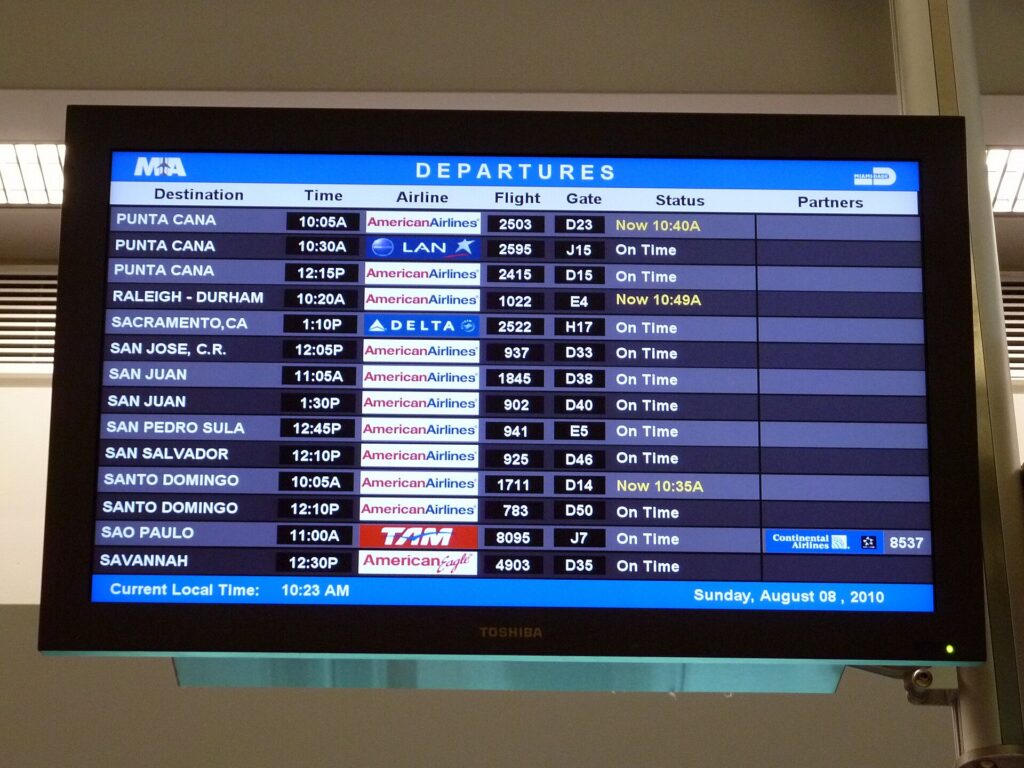
    A departures board listing flights at Miami International Airport
    Book the flight first once the fare is right and the fund can cover it (Photo: Bobby Hidy via Wikimedia Commons, CC BY-SA 2.0)

    Mistakes that drain a travel fund

    • Pricing only the flight. Accommodation, food and transport usually cost more in total.
    • No buffer. Prices rise, exchange rates move, and something always comes up.
    • Keeping the fund in your everyday account. It will be spent.
    • Dipping in for non-travel expenses. Keep a separate emergency fund, so the trip money is not your safety net.
    • Booking nonrefundable too early. Save the cheapest prepaid rates for plans that are fixed.
    • Ignoring bag fees. A low fare plus two checked bags each way can cost more than a higher fare that includes them.
    • Financing the trip. Buy-now-pay-later and card balances turn a vacation into a debt.

    Frequently asked questions

    How much should I save for a trip?

    Price your specific trip: flights, every night of accommodation after taxes, a daily figure for food and local transport, activities, insurance and documents. Then add a buffer of around 10 to 15 percent. That total, not a generic estimate, is your target.

    How far in advance should I start saving?

    For a long-haul trip, six to twelve months gives you time to save steadily and book flights at a good moment. For a short domestic break, two or three months can be enough.

    Where should I keep my travel savings?

    In a separate, fee-free savings account that pays interest and is covered by deposit insurance. Money you need within a year or two should not be in investments that can drop in value right before you book.

    Is it better to cut spending or earn more?

    Both, but spending cuts have a limit. Small, consistent swaps plus a little extra income, directed straight into the travel account, is usually the fastest route.

    Should I use a credit card to pay for travel?

    A card can offer purchase protection and rewards, which is useful, but only if you pay the balance in full. Never carry a travel balance at interest.

    What is the biggest single way to save on a trip?

    Choosing when and where you go. Traveling in the shoulder season to a destination with low daily costs saves more than any amount of coupon-clipping.

    Can I save for a trip on a low income?

    Yes, with a smaller target and a longer timeline. Choose a closer or cheaper destination, travel off-peak, and automate even a small weekly transfer. Consistency matters more than the size of each deposit.

    Ready to turn the plan into a trip? Price your flights on our flight search to set a realistic target, compare rooms on our hotel search, and if you are still choosing where to go, browse our budget travel destinations for places where your savings will stretch furthest.

  • Best Time to Book Hotels for Family Vacations

    Best Time to Book Hotels for Family Vacations

    Booking a hotel for a family trip is a different problem from booking one for yourself. You need a room that legally and comfortably holds everyone, in a location that keeps the daily logistics short, at a price that still makes sense once parking, breakfast and the resort fee are added. And you usually need it during the exact weeks every other family wants it, because school calendars decide when you can travel. That is why timing matters more for families than for almost anyone else. Book a family room at the right moment and you get the layout you want at a fair rate; leave it too late in a busy week and you are choosing between two rooms, a sofa bed, or a hotel forty minutes from where you want to be. This guide explains when to book for each kind of family trip, why those windows work, how to protect yourself if prices drop after you book, what to look for in the room itself, and the mistakes that cost families the most.

    The short answer

    For most family trips, book the hotel as soon as your dates are fixed, on a refundable rate, and then keep watching the price. As a rule of thumb: one to three months ahead for a domestic trip outside the school holidays, three to six months ahead for an international trip, and four to eight months ahead for school holidays such as Christmas, March Break or spring break, and the peak of summer, especially if you need a suite, connecting rooms or a specific resort. Those ranges are not magic numbers; they are the point at which, in most destinations, the supply of family-sized rooms starts to run out faster than the price rises. Family rooms are the scarce part of any hotel’s inventory, and scarcity, more than the calendar, is what you are racing. Start comparing on our hotel search, and read our pillar guide to hotel booking tips for the fundamentals that apply to every stay.

    Why timing matters more for families

    Hotel pricing responds to demand. When a hotel expects to fill, its rates rise and its cheaper room types sell out first; when it expects empty rooms, it discounts. For a family, the bigger risk is that the room types that fit you disappear.

    • Family inventory is small. A typical city hotel might have hundreds of rooms with one king or two queens, and only a handful of suites, family rooms or connecting pairs. Those go first in any busy week.
    • Occupancy limits are real. Most standard rooms are rated for a maximum number of guests, often four, set by fire codes and the hotel’s own policy. A family of five cannot simply squeeze into a double queen at many hotels, and you may be refused a rollaway bed or a crib if the room is already at its limit.
    • Your dates are not flexible. Families travel when school is out, which means everyone travels at once. The best tool most travelers have for saving money, shifting the dates, is the one you have least of.
    • Location matters more. A cheap hotel far from the attractions costs a single traveler a longer ride. It costs a family a daily car, parking, extra meals out, and tired children at the end of every day.

    The practical consequence is that the family traveler’s goal is to lock in the right room early, at a price you can cancel, rather than to gamble on a last-minute bargain. Our guide to last-minute hotel booking explains when waiting can work; it rarely works for a family of five in July.

    When to book, by type of family trip

    Domestic trips outside school holidays

    A long weekend in a nearby city, a trip to visit relatives in October, a few days at a lake in late spring: for these, one to three months ahead is usually plenty. Demand is moderate, hotels have family rooms to spare, and prices tend to be stable. The exception is any weekend with a big local event, such as a marathon, a major concert, a hockey playoff run or a university graduation, which can fill a mid-size city’s hotels months ahead. Before you settle on dates, check the destination’s event calendar; our Toronto events page and the other city event listings show what is on sale.

    International trips

    For an overseas trip, book the hotel three to six months ahead, and at the same time as, or shortly after, the flights. International family trips have more moving parts: flights that set your arrival and departure days, passports and entry documents, and hotels in cities where family rooms are genuinely rare. In much of Europe, for example, older hotels have small rooms and few that sleep more than three, so a family of four or five may need connecting rooms, an apartment-hotel or two separate rooms, all of which are limited. Our guide to booking international flights covers the flight side of the plan.

    School holidays and peak weeks

    Christmas and New Year, March Break in Canada, spring break in the United States, the Easter weekend, the long summer holiday, and US Thanksgiving are the weeks when family demand concentrates. For these, four to eight months ahead is the safer window, and further ahead still if you need something specific: a two-bedroom suite at a beach resort, a family room at a hotel inside a theme park, a ski-in lodge at Christmas, or a cabin-style hotel in a national park. These are the stays where the right room, not the price, is the real constraint.

    Theme parks, beaches and national parks

    Destinations built around families behave differently from ordinary cities. In Orlando, hotels near the parks and along International Drive price around school calendars on both sides of the border, so the weeks when Canadian and American breaks overlap are the busiest of all. Beach resorts in places like the Cancun Hotel Zone peak from Christmas to Easter, when northern families escape the winter. National park lodges, including those in and around Banff, Jasper and the big American parks, have limited rooms and a short summer season, and the best-located ones can sell out close to a year ahead. For any of these, book as early as your plans allow.

    A hotel room with two beds, the standard family layout
    Two beds in one room: fine for four, but check the maximum occupancy before booking for five (Photo: Kurt Kaiser via Wikimedia Commons, CC0)

    Booking-window cheat sheet

    Trip typeBook the hotelWhy
    Domestic city trip, off-peak1 to 3 months aheadPlenty of family rooms; prices usually stable
    Domestic trip on a big-event weekendAs soon as dates are setConcerts, marathons and playoff games fill hotels early
    International trip3 to 6 months aheadFamily rooms are scarcer abroad; flights set the dates
    Christmas, March Break, spring break, summer peak4 to 8 months aheadEvery family travels at once; suites and connecting rooms go first
    Theme-park or beach resort in peak season6 to 10 months aheadFamily-oriented inventory sells out around school calendars
    National park lodge in summerAs early as bookings openFew rooms, short season, high demand
    Shoulder season, flexible dates2 to 6 weeks ahead can workLower demand leaves room to wait, if you have a backup

    The strategy that beats timing: book refundable, then watch

    No one can reliably predict the lowest price for a given hotel on a given night. What you can do is take the price risk off the table. The approach that works best for families is simple:

    • Book early on a refundable rate. As soon as your dates are firm, reserve the room type you actually need on a rate with free cancellation. You have now secured the inventory, which is the scarce thing.
    • Note the cancellation deadline. Free cancellation usually ends a set number of days or hours before arrival. Put that date in your calendar, along with the time zone of the hotel.
    • Keep checking the price. Every couple of weeks, and more often in the last month, search the same dates, same room type and same terms. If the rate drops meaningfully, book the cheaper rate first, confirm it, and then cancel the original.
    • Consider switching to prepaid only close to the trip. Non-refundable rates are cheaper for a reason. They make sense once your plans are truly fixed, such as a week or two out, if the saving is worth the risk. For a family, where a sick child can cancel a trip overnight, the flexibility is often worth the premium all the way to arrival.

    This approach turns timing into a one-way bet: if prices rise, you are protected; if they fall, you rebook. The only way to lose is to miss the cancellation deadline. Our guide to finding the best hotel deals online goes deeper on comparing rates and reading rate conditions.

    Choosing the right room for your family

    Price is only half the booking. The other half is making sure the room works for your family on the third night, when everyone is tired.

    Room types, from smallest to largest

    • Two queens or two doubles. The standard family room in North America. Fine for two adults and two young children. Check the maximum occupancy before booking for a family of five.
    • King with a sofa bed. Common in newer hotels. Works for one child, less well for two, and sofa beds vary enormously in comfort.
    • Family room or quad. Some hotels, especially in Europe and at resorts, offer rooms with a double plus bunks or singles. Search specifically for them.
    • Connecting rooms. Two rooms with an internal door between them. Connecting rooms share a door; adjoining rooms may only mean next to each other, so use the word “connecting” when you ask. Most hotels treat connecting rooms as a request rather than a guarantee unless you book a specific connecting-room product, so call the hotel after booking.
    • Suites. A separate bedroom, often with a sofa bed in the living area and a door that lets parents stay up after the children are asleep. Worth paying for on longer stays.
    • Apartment-hotels and extended-stay hotels. Rooms with a kitchen or kitchenette, often a separate bedroom and sometimes laundry. For a week or more, being able to make breakfast and pack lunches can offset a higher nightly rate.

    Questions to answer before you book

    • What is the maximum occupancy, and do children count? Policies differ; some count infants, some do not.
    • Do kids stay free? Many chains let children under a certain age share their parents’ room at no extra charge, but the age cut-off varies by brand and hotel, and it may not include breakfast.
    • Is a crib or rollaway available, and is there a charge? Request it at booking and confirm it a few days before arrival; hotels have a limited number.
    • Is breakfast included? For a family of four eating out every morning, an included breakfast can be worth far more than a small difference in the nightly rate.
    • Is there a pool, and when is it open? Indoor pools matter in winter; outdoor pools may close for the season or have limited hours. Some pools close for maintenance, so check recent guest reviews.
    • Is parking included, and is it on site? Downtown hotels often charge a nightly parking fee, sometimes valet-only, that can change the total significantly.
    An indoor hotel swimming pool
    An indoor pool is worth filtering for on winter trips with children (Photo: Kgbo via Wikimedia Commons, CC BY-SA 4.0)

    Where to stay: location beats a lower rate

    Families feel distance more than anyone. A hotel a short walk from the aquarium, the beach or the park entrance means naps can happen in the room, forgotten items can be retrieved, and a tired four-year-old is ten minutes from bed, not forty. When you compare hotels, compare the whole cost of the location, not just the nightly rate:

    • Transport. A cheaper hotel that requires a rental car, parking at the attractions and fuel every day may cost more overall. If you do need a car, our family car rental guide covers car seats and vehicle size, and our car rental search compares pickup locations.
    • Time. An extra hour of driving each day is an hour less at the destination, and families have fewer productive hours to begin with.
    • Food. A hotel near supermarkets and family restaurants, or with a kitchenette, saves money over a week. A resort with only on-site restaurants can be convenient but expensive.

    Traveling within Canada? Our guide to hotel booking in Canada covers provincial taxes, seasons and city-by-city advice. Use the map view when you search and plot the three or four places you will visit most. The best-value hotel is often the one in the middle of them, not the cheapest one on the list. Our city guides, such as things to do in Toronto, explain which neighborhoods suit families.

    A themed family suite with beds for children
    Family suites and connecting rooms are the scarcest rooms in any hotel (Photo: Caseyrtjh via Wikimedia Commons, CC BY-SA 4.0)

    The real cost: fees, taxes and extras

    The advertised nightly rate is rarely what a family pays. Before you compare two hotels, bring both to the same basis: the total for your dates, for your number of guests, including everything that is mandatory.

    • Taxes. Accommodation taxes vary by country, province, state and city, and some are added only at checkout. The total at the final booking step is the figure to compare.
    • Resort and destination fees. Common in resort areas, Las Vegas, Orlando and many beach destinations. They are charged per room, per night, and may cover things like pool access, Wi-Fi or a shuttle whether you use them or not. Regulators in both the United States and Canada have moved against hiding mandatory fees from the advertised price, so the total should be shown before you pay; if it is not, treat that as a warning sign.
    • Parking. Nightly parking at a downtown hotel can be a meaningful share of the room rate.
    • Extra-person charges. Some hotels charge per additional adult, and some count teenagers as adults.
    • Breakfast. If it is not included, price four breakfasts a day into the comparison.
    • Deposits and holds. Hotels usually place a hold on a card for incidentals at check-in. It is released after checkout, but it reduces your available credit during the trip.

    Travel off-peak when you can

    The single biggest saving available to families is traveling just outside the peak. Hotels in family destinations price their busiest weeks at a premium and discount the weeks on either side. If your children’s schools and your work allow any flexibility at all, these are the windows to look at:

    • The first week or two after school ends, or the last week of August, rather than the middle of summer, in many destinations.
    • The week after a major holiday. Early January after New Year is traditionally quiet in cities and at many resorts.
    • Shoulder seasons. Late spring and early fall are often the sweet spot for weather and prices in North America and Europe.
    • Sunday to Thursday in leisure destinations. Beach towns, theme-park areas and lake resorts are busiest on weekends.
    • Weekends in business districts. Downtown hotels that fill with business travelers during the week often drop their rates on Friday and Saturday nights, which suits a family city break; our business travel hotels guide explains why.

    Your destination’s school calendar matters as well as your own. March Break in Ontario, spring break in the US states, and school holidays in Europe fall on different dates, and a destination is at its busiest when several of them overlap. For flights, our guide to the best time to book cheap flights and hotels covers fare timing, and city guides like the best time to fly to Toronto explain each destination’s seasons.

    A young child in a sun hat standing beside a resort swimming pool
    Resort pools and family rooms sell out first in school-holiday weeks (Photo: Shixart1985 via Wikimedia Commons, CC BY 2.0)

    Plan the whole trip together

    A family hotel booking does not exist on its own. The flight sets the arrival and departure days, the arrival time decides whether you need an early check-in or a late checkout, and your transport plan decides whether you need hotel parking. Book in this order:

    • Fix the dates around school calendars, work and any event you are traveling for.
    • Price the flights for those dates and a day or two either side; a cheaper flight a day earlier may be worth an extra hotel night. Search on our flight search.
    • Reserve the hotel on a refundable rate for the dates the flights support.
    • Decide on ground transport. If you need a car, compare it on our car rental search and make sure the hotel’s parking works. If not, check the hotel’s distance from transit and the airport.
    • Book the tickets for anything that sells out, such as theme parks, timed-entry attractions and shows.
    • Revisit the hotel price periodically until the cancellation deadline.

    Standard check-in is usually mid-afternoon, so a family landing on a morning flight faces hours in a lobby. Ask about early check-in when you book, or, after an overnight flight, book the previous night so the room is ready when you arrive.

    Documents and practical details for traveling with children

    Hotels do not usually ask about the relationship between adults and children, but borders and airlines can. If one parent is traveling alone with a child, or grandparents are traveling with grandchildren, carry a consent letter from the absent parent or parents; the Government of Canada provides a recommended consent letter for children traveling abroad and general guidance on traveling with children. Every child needs their own passport for international travel. Visitors flying to Canada from visa-exempt countries other than the United States generally need an Electronic Travel Authorization, and Americans traveling abroad should check the State Department’s travel pages. Entry rules change, so confirm the current requirements for every traveler before you book non-refundable elements.

    Common mistakes families make

    Booking a room that does not fit

    Booking a standard room for five and hoping the hotel will add a bed is a gamble; many will refuse. Check the maximum occupancy and book the room type that officially fits everyone.

    Waiting for a last-minute deal in peak season

    Last-minute discounts exist when hotels have empty rooms. In a school-holiday week, family rooms rarely go empty. The wait is more likely to cost you the room than save you money.

    Locking into a non-refundable rate too early

    A non-refundable rate booked eight months out removes your ability to rebook if the price falls and leaves you exposed if plans change. For families, flexibility is usually worth paying for until close to the trip.

    Comparing nightly rates instead of totals

    A hotel with a lower headline rate and a nightly resort fee, parking charge and no breakfast can easily cost more than a slightly higher rate with those things included.

    Not confirming requests

    Cribs, connecting rooms, early check-in and accessible rooms are requests until the hotel confirms them. Call or message the hotel directly a few days before arrival.

    Frequently asked questions

    How far in advance should I book a hotel for a family vacation?

    As a rule of thumb, one to three months ahead for a domestic off-peak trip, three to six months for an international trip, and four to eight months for school holidays and peak summer. Book as soon as your dates are firm if you need a suite, connecting rooms or a specific resort.

    Is it cheaper to book a hotel early or at the last minute?

    It depends on demand. Last-minute rates can be lower when a hotel has empty rooms, but in the weeks families travel, family rooms rarely go unsold. Booking early on a refundable rate and rebooking if the price drops gives you most of the upside with little risk.

    Can five people stay in one hotel room?

    Sometimes. Many standard rooms are limited to four guests, and some hotels count infants. Look for family rooms, suites or apartment-style hotels, or book connecting rooms.

    How do I make sure we get connecting rooms?

    Book both rooms in one reservation if the hotel allows it, choose a connecting-room product where offered, and call the hotel after booking to confirm. Otherwise, treat connecting rooms as a request rather than a guarantee.

    Should I book a refundable or non-refundable rate?

    For most families, refundable until close to the trip. Children get sick and plans change, and a refundable rate also lets you rebook if the price falls.

    Are suites worth it for families?

    On stays of three nights or more, often yes. A separate bedroom lets parents stay up after children sleep, and many suites include a sofa bed, a fridge and more space for luggage.

    Ready to plan? Compare family-friendly stays on our hotel search, check fares for your school-holiday dates on our flight search, and if you need wheels, price them on our car rental search. For a family favorite, start with hotels in Orlando or hotels in Toronto.

  • The Complete Guide to Rental Car Booking Tips for Every Traveler

    The Complete Guide to Rental Car Booking Tips for Every Traveler

    A rental car can be the best money you spend on a trip or the most frustrating line item on your credit card statement, and the difference is rarely luck. It comes down to a handful of decisions made before you ever reach the counter: whether you need a car at all, which class to book, when and where to pick it up, how the insurance and fuel rules work, and what you agree to when you sign. This guide walks through every one of those decisions in the order you will face them, explains what the jargon on the rental agreement actually means, and flags the mistakes that cost travelers the most. It is written for North American travelers renting at home or abroad, whether you are picking up a compact for a weekend in Chicago, a minivan in Orlando or a manual hatchback in Rome.

    If you already know you need a car, you can compare rates from the major companies side by side on our car rental search. If you are still deciding, start with the first section.

    The short version

    If you read nothing else, these are the habits that save the most money and trouble:

    • Decide whether you need a car for the whole trip. Many city trips need a car for one or two days, not seven.
    • Book early on a free-cancellation rate, then keep checking. If the price drops, rebook and cancel the original.
    • Compare the total price, not the daily rate. Taxes, airport fees and add-ons can change the ranking completely.
    • Know your insurance before you arrive. Call your auto insurer and your card issuer, and write down exactly what each covers.
    • Choose full-to-full fuel and refill close to the return location.
    • Photograph and video the car at pickup and at return, including the fuel gauge and odometer.
    • Return on time. Rental days are usually counted in 24-hour blocks from pickup, and a short delay can cost a full day.

    Step 1: Decide whether you need a car, and for how long

    The cheapest rental is the one you do not take. In dense cities with good transit, such as New York, London, Paris, Toronto or Montreal, a car is often a liability: parking is scarce and expensive, hotels charge nightly for it, and traffic eats the time you saved. In spread-out places such as Los Angeles, Phoenix, Orlando, Dallas or Calgary, or anywhere your plans include national parks, small towns or a coastline, a car is often the only practical way to get around.

    The smartest answer is frequently a split: go without a car for the city days, then rent for the day trips or the road-trip leg. Neighborhood branches often open later and close earlier than airport counters, but their rates can be lower and they save you paying for a car that sits in a hotel garage. Our guide to renting a car versus public transport versus taxis works through the decision in detail, and our city guides answer it for specific places, for example New York, Los Angeles and Las Vegas.

    Step 2: Choose the right car class

    Rental companies sell car classes, not specific models. The listing will show one model with the words “or similar”, and you are guaranteed the class, not the car in the picture. Book the smallest class that genuinely fits your people and your luggage; bigger cars cost more per day, burn more fuel and are harder to park in old city centers. But do not squeeze four adults and four suitcases into a compact to save a little, because you will pay for it in comfort on every drive.

    ClassRealistic fitBest forWatch out for
    Economy / compactTwo adults, two carry-ons and one checked bagCity driving, tight parking, short tripsSmall trunk; can feel underpowered on mountain roads or highways
    Intermediate / standard sedanTwo to four adults, two large bagsMost couples and small familiesRear seats get tight for three adults on long drives
    Full-size sedanFour adults, three or four bagsLong highway drives, business travelParking in older European and downtown garages
    Compact or midsize SUVFour people, luggage plus a strollerFamilies, winter trips, gravel roadsHigher fuel use; “SUV” does not always mean all-wheel drive
    Full-size or three-row SUVFive to seven people with limited luggage when all rows are upLarger families, ski tripsLuggage space disappears with the third row in use
    MinivanSeven or eight people, or five with plenty of luggageFamilies with car seats, groupsLimited supply at peak times; book early
    Premium / luxuryAs a sedan, with more comfort and featuresBusiness travel, special occasionsOften excluded from credit card rental coverage

    Two class details trip travelers up regularly. First, if you need all-wheel or four-wheel drive, for a ski trip or a mountain road in winter, check whether the class guarantees it; many listings do not. Second, if you are renting in Europe, Latin America or much of Asia, the default is often a manual transmission. If you cannot drive stick confidently, filter for automatic and book early, because automatics are the smaller part of many fleets outside North America.

    A car rental counter in the arrivals area at Vancouver International Airport
    Airport rental counters are the most convenient place to pick up, and usually the most expensive (Photo: GoToVan from Vancouver, Canada via Wikimedia Commons, CC BY 2.0)

    Step 3: When to book

    Car rental prices move with supply and demand, and unlike airline seats, the fleet at a given location is fixed in the short term. When every car on the lot is spoken for, prices climb sharply and the minivans and SUVs go first. The periods that reliably tighten supply are summer, the Christmas and New Year weeks, spring break and school holidays, long weekends, and big local events such as a major conference, a championship game or a festival.

    The practical strategy is simple:

    1. Book as soon as your dates are firm, on a “pay later” or free-cancellation rate. For peak periods and larger vehicles, that means weeks or months ahead.
    2. Check the price again a few weeks out and a few days out. Rental rates do fall as well as rise, especially when a location has more cars than expected.
    3. If it drops, book the cheaper rate first, then cancel the original. Never cancel first; the lower price may disappear.

    Prepaid rates can be cheaper, but they usually carry cancellation fees or no refund at all, and some companies do not refund unused days if you return early. Use them only when your plans cannot change. It also pays to test slightly different pickup and return times: because rentals are priced in 24-hour periods, and weekly rates sometimes undercut five or six daily rates, a small shift can change the price noticeably.

    Step 4: Airport or neighborhood pickup?

    Airport locations are the most convenient and usually the most expensive. Many airports allow rental companies to pass on concession fees and facility charges, which appear on your bill as separate line items, and some add a customer facility charge that pays for a consolidated rental car center. Off-airport and neighborhood branches avoid some of those charges, but they add a shuttle ride or a taxi, and their opening hours are shorter; an office that closes at 6 pm on Saturday and reopens Monday is not much use for a Sunday afternoon return.

    A few rules of thumb:

    • Arriving late at night, with kids or with lots of luggage: pay for the airport location.
    • Spending the first days in a transit-friendly city: take the train or a taxi to your hotel and rent from a neighborhood branch on the day you leave town.
    • Flying in with a flight that might be delayed: add your flight number to the reservation, so the counter knows to hold the car rather than marking you a no-show.

    Our airport guides, such as Toronto Pearson, LAX and Denver International, explain where the rental counters are and how to reach them.

    The entrance to the consolidated Rental Car Center at Miami International Airport
    Many large airports group every company in one rental car center, often paid for through a facility charge on your bill (Photo: Xnatedawgx via Wikimedia Commons, CC BY-SA 4.0)

    Step 5: Read the whole price

    The daily rate in large type is the start of the price, not the end. Before you compare two offers, open the full breakdown and look for:

    • Taxes and airport fees, which vary widely by city and state or province.
    • Young driver surcharges, typically for drivers under 25.
    • Additional driver fees, charged per day at many companies.
    • One-way or drop fees if you return to a different location.
    • Equipment: child seats, GPS, ski racks, snow chains, each usually charged per day, often with a cap per rental.
    • Mileage limits, rare on North American leisure rentals but common on some specialty vehicles and international rentals.
    • Toll programs and their daily service fees.
    • Coverage products you may or may not need, covered in the next step.

    A rate that looks cheaper per day can end up costing more once these are added. Compare like for like: the same class, the same pickup and return times, the same drivers, the same coverage.

    Step 6: Understand rental car insurance

    Insurance is where most counter arguments happen and where most travelers either overpay or leave themselves exposed. There are four products you are likely to be offered, under slightly different names depending on the company and country.

    Collision damage waiver (CDW) or loss damage waiver (LDW)

    Strictly speaking, not insurance but a waiver: if you buy it, the company agrees not to charge you for damage to, or theft of, its car, subject to exclusions. Without it, you are responsible for the car’s damage, and sometimes also for “loss of use” while it is being repaired and for administrative fees. In Europe and many other regions a basic waiver is often included in the price but comes with a high deductible (called an “excess”), and the counter will offer a second product to reduce that deductible.

    Liability coverage

    Liability covers damage you cause to other people and their property. Rules differ sharply by country, state and province: some rentals include a legal minimum, some include very little, and in some countries, Mexico being the best-known example for North Americans, locally issued liability insurance is mandatory and your home policy is not accepted. Rental companies sell supplemental liability to top up the minimum.

    Personal accident and personal effects coverage

    These cover medical costs for you and your passengers and theft of belongings from the car. Many travelers already have this through health insurance, travel insurance or a home or renter’s policy.

    Where you may already be covered

    • Your own auto policy. In the US and Canada, many personal policies extend some coverage to rental cars for personal use, but often only within your home country, and not always collision.
    • Your credit card. Many cards include a rental collision benefit if you pay for the whole rental with that card and decline the company’s waiver. Some are primary, some are secondary to your own policy, and most have exclusions: certain countries, luxury and exotic cars, large vans and trucks, and rentals longer than a set number of days. Liability is almost never included.
    • Travel insurance. Some policies include rental car damage coverage as an option.

    Do this before the trip, not at the counter: call your insurer and your card issuer, ask exactly what is covered, in which countries, for which vehicle types and for how long, and ask them to send the benefit terms in writing. Then decide which of the counter products you actually need. Declining coverage you do not have is the expensive mistake; buying coverage you already have is the common one.

    Step 7: Drivers, age, license and payment

    • Minimum age. At most major companies in the US and Canada, the minimum is 21 (sometimes 20), with a daily surcharge for drivers under 25 and restrictions on premium classes. A few US states require companies to rent to younger drivers, with fees. Outside North America the rules vary, and some countries also have upper age limits or extra requirements for older drivers.
    • Additional drivers. Anyone who will drive must be on the agreement, present at pickup with a valid license. Some companies, and some jurisdictions, waive the fee for a spouse or domestic partner; ask. An unlisted driver in an accident can void your coverage.
    • Credit versus debit. Nearly every company prefers a credit card in the main driver’s name and places a hold for the estimated total plus a deposit. Debit cards are accepted at some locations with extra conditions, such as proof of a return flight or a credit check, and the hold ties up real money in your account for days after the return.
    • Your license. Bring the physical card. A digital license is not accepted everywhere, and an expired or temporary paper license can be refused.
    • International Driving Permit. An IDP is a translation of your license recognized under international conventions. Some countries require it, others recommend it, and rental companies sometimes ask for it even where the law does not. Canadians get one from CAA, as explained on the Government of Canada’s IDP page; Americans get one from the issuers listed by the US State Department. Get it before you leave; it cannot be issued abroad.

    Step 8: Fuel policies and electric cars

    PolicyHow it worksWhen it makes sense
    Full-to-fullPick up full, return full; you pay only for fuel you use, at pump pricesAlmost always the best value
    Prepaid fuel (full-to-empty)Pay for a full tank at pickup, return at any level, no refund for fuel leftOnly if you will genuinely return near empty and have no time to refuel
    Refuel on returnReturn below full and the company refills it at its own per-unit rate plus a service feeRarely; this is usually the most expensive way to buy fuel
    Same-to-sameReturn at the level you received itFine, but photograph the gauge at pickup

    Fill up within a few miles of the return location and keep the receipt; some companies ask for it if the gauge reads just below full. If you rent an electric vehicle, ask about the return charge requirement (many companies set a minimum percentage), where the nearest fast chargers are, which charging networks work with the car, and whether charging cables are included. EVs are excellent in cities with good charging and less relaxing on long rural drives where chargers are sparse. The US Department of Energy’s Alternative Fuels Data Center has a station locator that is useful for planning.

    A car dashboard fuel gauge showing a full tank
    On a full-to-full rental, photograph the gauge at pickup and bring the car back showing the same (Photo: Tony Webster via Wikimedia Commons, CC BY 2.0)

    Step 9: Mileage, one-way trips and borders

    Most leisure rentals in the US and Canada include unlimited mileage, but check, especially for specialty vehicles, local-renter rates and some international rentals. If you plan to drop the car somewhere else, price the one-way fee early; it can be large, but some popular routes are cheap in one direction when companies need to rebalance fleets. Our drive guides, such as Toronto to Montreal and Los Angeles to Las Vegas, are a good place to compare.

    Crossing a border needs to be declared at booking. Driving between the US and Canada is routine with the major companies, though some restrict certain vehicle classes; taking a US rental into Mexico, or driving between some European countries, can be restricted or require extra coverage and fees. Ask at booking and make sure the permission is written on the agreement.

    Step 10: Tolls

    Toll roads have increasingly gone cashless, charging by transponder or by photographing the license plate. Rental companies handle this through their own toll programs, which typically add a daily service fee on top of the tolls, sometimes for every day of the rental rather than only the days you use a toll road. Your options are to accept the program, use your own transponder where it is compatible and allowed, pay the toll operator directly online where that is possible, or plan routes that avoid tolls. Highway 407 ETR north of Toronto, for example, is fully electronic, and its operator’s site explains how unregistered vehicles are billed. Ask at the counter how tolls will be charged and read the program terms before you drive off.

    At the counter: handling the upsell

    Counter staff are often paid partly on what they sell, so expect offers of an upgrade, prepaid fuel, coverage and a toll package. None of that is a scam; some of it is useful. But decide in advance. A calm “no thank you, I have coverage through my card and my policy” is enough. Before you sign, check that the agreement matches your reservation: the class, the total estimate, the return date and time, the fuel policy, the drivers, and that nothing you declined has been added. If the class you booked is not available, the usual practice is a free upgrade to a larger class, not a paid one; ask for it.

    Loyalty programs are free to join at most companies and are worth it even if you rent once a year: members at many large airports skip the counter and go straight to the car, which saves time and removes the sales pitch entirely.

    Inspect the car before you leave the lot

    1. Walk around the car with your phone recording video. Get every panel, the bumpers, the wheels and the windshield, then close-ups of anything scratched, dented or chipped.
    2. Photograph the dashboard showing the fuel level, the odometer and any warning lights.
    3. Check the interior for stains, burns, damage and smells, and confirm the spare tire or inflation kit is present.
    4. Test the basics: lights, wipers, air conditioning, mirrors, seat adjustment and any child seat you rented.
    5. Get damage noted. Make sure anything you find is recorded on the checkout sheet or in the app, and ask an agent to initial it if possible.

    It is also worth entering the license plate or VIN into the recall lookup on the NHTSA recalls page if you are renting in the US; it takes a minute.

    While you have the car

    • Breakdowns: the roadside assistance number is usually on the key tag, the windshield sticker or the agreement. Call it before you call a tow truck yourself, or you may not be reimbursed.
    • Accidents: make sure everyone is safe, call the police if required locally, photograph everything, exchange details, and notify the rental company as soon as you can. Do not sign anything admitting fault.
    • Parking tickets and traffic cameras: fines follow the car. The company pays the authority, bills your card and usually adds an administrative fee, sometimes months later.
    • Changing plans: if you need the car longer, call and extend before your return time rather than just keeping it; the rate can be very different.
    Rows of rental cars parked in an airport rental lot
    Before you drive off, record a video walkaround of the car and photograph the dashboard (Photo: User:Mattes via Wikimedia Commons, Public domain)

    Returning the car

    Return timing matters more than most travelers expect. Rental days are usually counted in 24-hour blocks from pickup, grace periods are short, and being a few hours late can add a full day at a higher rate. Returning early is not always cheaper either, because rates may be recalculated. Allow extra time at airports, where the return garage can be a shuttle ride from the terminal, refill nearby, and do another video walkaround and dashboard photo. If you drop after hours, you normally remain responsible for the car until staff check it in, so your photos matter even more. Our guide to car rental return timing covers grace periods, late fees, early returns and after-hours drop-offs in detail. Check your final receipt before you leave and your card statement for the following weeks.

    Renting with kids

    Families have extra choices to make: vehicle size once car seats go in, whether to rent seats or bring your own, and which companies make pickup easiest with tired children. Child seats rented at the counter are charged per day, availability is not guaranteed unless reserved, and staff are generally not permitted to install them for you. Car seat laws vary by state, province and country; Transport Canada’s child car seat safety page is a good starting point for the principles. Our guide to the best car rental services for family vacations covers all of this, including seat math for three-across rows.

    Renting abroad

    • Check the license rules for each country, including whether you need an IDP.
    • Learn the road basics: which side of the road, how roundabouts work, speed units, and local rules such as low-emission zones and restricted historic centers, which are enforced by camera in many European cities and generate fines that reach you long after the trip.
    • Confirm what “included” means. Quoted rates abroad may or may not include basic collision cover, theft protection and liability, and deductibles can be large.
    • Expect smaller cars and manual gearboxes, and narrow streets and parking spaces to match.
    • Keep your passport with your license; many counters ask for both.

    Our city guides for Rome, London, Paris and Cancun go into local specifics.

    The mistakes that cost the most

    • Booking late for peak dates and paying whatever is left, often for a car that is too big or too small.
    • Comparing daily rates instead of totals, then discovering the fees at the counter.
    • Assuming a credit card covers everything, including liability, luxury cars or a country it excludes.
    • Letting an unlisted friend drive.
    • Skipping the pickup video, then having no proof about a scratch that was already there.
    • Accepting prepaid fuel and returning with half a tank.
    • Keeping the car an extra few hours without calling, and paying for an extra day at a walk-up rate.
    • Renting for the entire trip when you only needed a car for two days of it.

    Book the trip, not just the car

    A rental works best when it fits the rest of the itinerary. Match pickup to your flight’s arrival time, leaving a buffer for delays; choose a hotel with parking if you will keep the car overnight, and factor the parking fee into the room rate; and time the return so you are not racing for a flight. Our guide to the best time to book flights and hotels covers timing for the other two pieces, and our hotel booking tips explain how to read the fees on a room rate the same way you now read a rental agreement.

    Frequently asked questions

    How far in advance should I book a rental car?

    As soon as your dates are firm, on a free-cancellation rate. For summer, holidays, spring break and large vehicles, that means weeks to months ahead. Then keep checking and rebook if the price drops.

    Is it cheaper to rent a car at the airport or in town?

    Often in town, because airport locations pass on concession and facility fees. But neighborhood branches have shorter hours and require getting there, so the saving is only worth it when the timing works.

    Do I need the rental company’s insurance?

    It depends on what you already have. Check your own auto policy and your credit card’s rental benefit before the trip, get the terms in writing, and buy only what fills a real gap, especially liability and any coverage abroad.

    Can I rent a car with a debit card?

    At some locations, with conditions such as proof of travel or a credit check, and a hold on your funds. A credit card in the main driver’s name is far simpler.

    What happens if I return the car late?

    After a short grace period, most companies charge hourly and then a full extra day once you pass a threshold of a few hours. Call before your return time if you know you will be late.

    Which fuel option is best?

    Full-to-full in almost every case. Prepaid fuel only makes sense if you will return nearly empty.

    Do I need an International Driving Permit?

    For some countries, yes, and rental counters may ask for one even where it is only recommended. Check the official government guidance for your destination and get the permit before you leave home.

    Can I add a second driver?

    Yes, at pickup, with their license present. There is often a daily fee, sometimes waived for a spouse or partner. Never let an unlisted person drive.

    Ready to price it out? Compare rates from the major companies on our car rental search, or go straight to a destination such as Orlando, Calgary or Phoenix, and line up the rest of the trip with cheap flights and hotels.

  • Hotel Booking Tips to Find the Best Deals Online

    Hotel Booking Tips to Find the Best Deals Online

    Online, the same hotel room can be listed at several different prices on the same afternoon. The differences come from the site you look at, the rate conditions attached, whether you are signed in to a loyalty program, whether the room is bundled with a flight, and which taxes and fees are included in the number you see. None of that is a trick you need insider knowledge to beat. It is a set of rules you can learn in an hour. This guide explains how online hotel pricing works, how to compare offers properly, where the genuine discounts are (member rates, memberships, bundles, flexible dates and neighborhoods), which popular “hacks” are overstated, and how to book safely so the deal you found is the deal you get. For the full booking process from choosing a neighborhood to checkout, start with our pillar guide to hotel booking tips.

    The short answer

    Use a comparison search to see the market for your dates, shortlist two or three properties, and compare them on the total price for the whole stay, including taxes and fees, with the same room type and cancellation terms. Then open each hotel’s own website, sign in to its free loyalty program, and see whether the member rate or the terms are better. Check whether you qualify for a membership rate such as an auto club discount. If you are also flying, price a flight-and-hotel bundle against booking separately. Book a refundable rate if there is any doubt, and check again before your cancellation deadline in case the price drops. You can run the first step on our hotel comparison search.

    Hands typing on a laptop keyboard while comparing options online
    Use comparison tools to find the hotel, then compare the total price and terms for that exact room (Photo: Simon Hattinga Verschure webmarbles via Wikimedia Commons, CC0)

    How online hotel prices work

    Hotels price rooms dynamically. The rate for a given night moves with demand: how many rooms are already sold, what competing hotels are charging, whether there is an event in town, and how close the date is. That is why the same room can cost very different amounts on a Tuesday in February and a Saturday in July, and why the price you saw yesterday may have changed today.

    The same room is also sold through several channels at once. The hotel sells it on its own website and through its phone reservations team. Online travel agencies sell it, sometimes under their own terms. Comparison sites and metasearch engines do not usually sell rooms themselves; they collect prices from many sellers and show them side by side, then send you to the seller to book. Most of the time, the prices across channels are similar, because hotels generally try to keep their public rates consistent. The differences tend to show up in the details: member-only prices, package rates, different cancellation terms, or whether breakfast is included.

    Understanding this changes how you shop. Instead of hunting for one site that is always cheapest, which does not exist, you use comparison tools to find the right hotel at the right price range, and then look for the best combination of price and conditions for that specific room.

    Step by step: comparing offers properly

    1. Search with your real details

    Enter your exact dates, the correct number of adults and children, and the number of rooms. Prices change with occupancy, and a price for two adults may not cover a third guest or an older child. If your dates are flexible, check a flexible-date or calendar view first to see which nights are cheaper before you commit.

    2. Filter hard before you browse

    Set your must-haves as filters: price range, neighborhood or distance, guest rating, free cancellation, parking, breakfast, pool, accessibility features. Sorting by “lowest price” without filters tends to surface properties that are cheap for a reason, in the wrong place, or with conditions you will not want.

    3. Use the map

    The map view is the most underused tool on any hotel search. It shows at a glance which areas are expensive and which are cheaper but still close to transit or the places you want to be. Often the best value is a few blocks outside the most famous district, or one or two stops along a subway line. In Paris, for example, you can compare hotels in Le Marais with the rest of the city on our Paris hotel page, and weigh them against the sights you plan to see in our guide to things to do in Paris.

    4. Compare totals, not headline rates

    Open the rate details for each finalist and note the total for the stay, including taxes and any mandatory fees. The rules are on your side here: in the United States, a Federal Trade Commission rule requires hotels and booking sites to show the total price, including mandatory fees such as resort fees, up front; in Canada, the Competition Bureau treats advertising a price that leaves out unavoidable fees as drip pricing. Optional costs are still yours to add, so include parking if you are driving and breakfast if you would otherwise buy it.

    5. Compare like with like

    A price is only cheaper if it buys the same thing. Check that you are comparing the same room category and bed configuration, the same cancellation policy, and the same inclusions. A nonrefundable room with no breakfast at a slightly lower price is not a better deal than a flexible rate with breakfast, unless you are certain of your dates and do not eat breakfast.

    6. Check the hotel’s own site

    Once you have a favorite, open the hotel’s official website, sign in or join its loyalty program, and search the same dates. You may find a member rate below the public price, an added perk, or more generous cancellation terms. You may also find it is the same or higher, in which case book wherever the total and terms are best.

    7. Book, then keep watching

    If you booked a refundable rate, check the price again a week or two before arrival. If it has fallen, make a new reservation at the lower price and then cancel the original, while you are still inside the free cancellation window. Some sites offer price alerts that do this watching for you.

    Where the genuine discounts are

    Loyalty program member rates

    This is the most reliable discount in hotels, and it is free. Every major hotel group, such as Marriott Bonvoy and Wyndham Rewards, runs a loyalty program you can join online in a couple of minutes, and members usually see a lower rate when booking directly than the general public does. Members may also get free Wi-Fi at some brands, points toward future free nights, and, with status, perks like late checkout or upgrades. Joining the program for the hotel you are booking is worth it even for a single stay. Note that bookings made through third-party sites often do not earn points or recognize status.

    Membership and affiliation rates

    Many hotels offer discounted rates for members of certain organizations. Auto club members through CAA in Canada or AAA in the United States often qualify for discounts at participating hotels, and seniors, military members, government employees and some students can find specific rates too. The catch is eligibility: hotels may ask to see a membership card or ID at check-in, and if you cannot show it, the rate can be changed. Book these rates only if you genuinely qualify.

    App-only and mobile rates

    Some hotel chains and booking sites offer lower prices or extra points for booking in their app. It is worth checking when you already have the app, but compare the total and the cancellation terms as you would anywhere else. A mobile rate that is nonrefundable is not automatically a deal.

    Newsletters and promotions

    Hotel groups run seasonal promotions for their members, such as bonus points, a free night after a certain number of stays, or discounted weekend rates. Signing up for the emails of the one or two groups you use most keeps you aware of them without much effort. Combining a promotion with points you have already earned can make a stay much cheaper.

    Advance-purchase rates

    If your dates are completely fixed, a prepaid, nonrefundable rate is often noticeably cheaper than the flexible one. It is a genuine saving, but the trade-off is real: if you cannot travel, you usually lose the money. Use it for trips you are certain about, such as a wedding or a conference you have already registered for.

    A hand holding a smartphone
    App-only rates can be worth a look, but compare the total and the cancellation terms like any other offer (Photo: Dennis Cortés cortes via Wikimedia Commons, CC0)

    Bundles: flight plus hotel

    Many booking sites sell flight-and-hotel packages, and bundled prices can be lower than buying the same flight and hotel separately, because hotels and airlines sometimes offer discounted rates that are only available when the price of the individual components is hidden inside a package. Bundles are most often worth checking for resort and beach destinations and for city breaks where you would book a standard room anyway.

    They are not automatically cheaper, though, and they come with trade-offs:

    • Compare against the separate prices. Price the same flight and the same hotel on their own. Sometimes the bundle wins clearly; sometimes it does not.
    • Read the change and cancellation terms. A package is often governed by one set of rules, and changing one part can affect the other. Refund terms can be stricter than those of a flexible hotel rate booked on its own.
    • Check the flight details. Make sure the times, number of stops and baggage allowance are what you would choose if you were booking the flight alone.
    • Know who to call. With a package, changes usually go through the site that sold it, not the hotel or airline directly.

    If you prefer to book separately, pick the flight first when fares are the more volatile part of the trip, then fit a refundable hotel around it. You can compare fares on our flight search, including flights to Paris if that is where you are headed.

    Flexibility: the discount anyone can use

    Flexible dates

    Moving your stay by a day or two can change the price considerably, especially if you move away from a weekend, a holiday or an event. In business-heavy downtowns, weekend nights are often cheaper because the weekday corporate travelers have left; in leisure and resort areas, weeknights usually are. A calendar view shows the pattern for your destination in seconds.

    Flexible seasons

    Peak season (summer, the December holidays, school breaks, ski season in the mountains) is when rates are highest and the best rooms go first. If you must travel then, book early on a refundable rate. Shoulder seasons, the months either side of peak, often combine decent weather with much better prices and availability, and the low season can be very cheap in exchange for less reliable weather or shorter opening hours. Our guide to the best time to book cheap flights and hotels explains the booking windows in more detail, and our budget travel destinations guide suggests places where your money goes further.

    Flexible neighborhoods

    Being open to a neighborhood just outside the most famous area is one of the most effective ways to save. The key is transit: a hotel two subway stops from the center can be just as convenient as one in the middle, while a hotel that needs a taxi every day will eat its own savings. Check the walk to the nearest station and the journey time to the places you will visit most.

    Flexible timing: last-minute deals

    Unlike flights, hotel rooms sometimes get cheaper close to the date, because a hotel with empty rooms tonight would rather sell them at a discount than not at all. That can work well in quiet periods and in places with lots of hotels. It works badly around events, holidays and in small destinations where there are few rooms. Our last-minute hotel booking guide explains when waiting pays and when it backfires.

    Hacks that are overstated

    Travel advice is full of tricks that sound clever. A few deserve a more measured look.

    • “Always clear your cookies or use incognito mode.” It is often claimed that sites raise prices when they see you searching repeatedly. There is little solid evidence that this is common for hotels, and prices move for plenty of other reasons, such as rooms selling out. Browsing privately does no harm and can stop you from seeing results tailored to past searches, but it is not a reliable way to get a lower rate. Comparing carefully and signing in for member rates will save you far more.
    • “Booking direct is always cheapest.” Sometimes it is, especially with a member rate; sometimes a booking site or package is lower. Check both.
    • “Booking sites are always cheapest.” The same logic applies in reverse. The lowest headline price may come with stricter terms.
    • “Call the hotel and they will beat the online price.” Occasionally, especially at independent hotels on quiet nights, a polite request helps. At large chains, reservation agents often have little room to change rates. It is worth a try, but do not count on it.
    • “There is one best day of the week to book.” Prices depend on demand for the nights you are staying, not the day you happen to search. Focus on your stay dates and booking early for peak periods.

    Best-rate guarantees and price matching

    Many hotel groups offer a best-rate guarantee on their own websites: if you book directly and then find a lower publicly available price for the same room and conditions elsewhere, they will match it and sometimes add a further discount or bonus. These programs can be useful, but the terms are specific. They usually require the same hotel, room type, dates, number of guests and cancellation conditions, a claim within a short window after booking, and a price that anyone can book (not a member-only rate or a package price elsewhere). Read the program’s terms on the hotel group’s own site before relying on it.

    The Château Frontenac hotel lit up at dusk in Quebec City
    Big-name hotels often reserve their best member rates for guests who book directly and sign in (Photo: Wilfredor via Wikimedia Commons, CC0)

    Choosing where to book: a comparison

    Where you bookUsually good forWatch for
    Comparison searchSeeing many hotels and sellers side by side; spotting cheaper dates and areasFinal price and terms are set by the seller you click through to
    Online travel agencyWide choice; one account for many trips; package pricesChanges may go through the agency; loyalty points often not earned
    Hotel website, signed inMember rates, points, status benefits, easier special requestsNot always the lowest price; compare like for like
    Hotel appOccasional app-only rates or bonus points; mobile check-in at some brandsSame caution on nonrefundable rates
    Flight-and-hotel packageResort and city breaks where the bundle beats separate pricesCombined terms; changes can affect both parts
    Phone or walk-inSpecial needs, accessible rooms, independent hotels, same-day requestsRarely the lowest published rate at big chains

    Reading reviews and policies before you pay

    A low price is not a deal if the room is noisy, dirty or far from what the photos suggested. Before booking, read a handful of recent reviews, looking for patterns rather than single complaints. If several guests mention thin walls, slow elevators, weak Wi-Fi or unexpected charges, believe them. Check guest photos against the hotel’s own, and read how management responds to criticism.

    Then read the policies, which is where a lot of disappointment starts:

    • Cancellation deadline: “free cancellation” may end days before arrival, not the evening before.
    • Payment timing: “pay now” means the money leaves your account at booking; “pay at the property” means a card guarantee now and payment later.
    • Deposits and holds: most hotels place a temporary hold on your card at check-in for incidentals, which can take several days to be released.
    • Occupancy rules: check the maximum number of guests and whether children stay free and up to what age.
    • Check-in and checkout times: and whether early check-in or late checkout carries a fee.
    • Parking, pets and resort fees: confirm the amounts and whether they are per night or per stay.
    A resort hotel swimming pool surrounded by loungers and palm trees
    Resort amenities are often paid for through a mandatory daily fee; compare totals, not nightly rates (Photo: This Photo was taken by Timothy A. Gonsalves. Feel free to use my photos, but please mention me as the author. I would much appreciate if you send me an email tagooty@yahoo.com or write on my talk page, for my information. Please contact me before commercial use.

    Please do not upload an edited image here without consulting me. I would like to make corrections only at my own source to ensure that the changes improve the image and are preserved.Otherwise you may upload an edited image with a new name. Please use one of the templates derivative or extract. via Wikimedia Commons, CC BY-SA 4.0)

    Booking safely online

    A good deal is worthless if the booking does not exist. A few habits protect you.

    • Book through sites you know or the hotel’s official website. Some scam sites imitate hotel websites closely; check the web address carefully before entering card details.
    • Be careful with phone numbers from search ads. Some lead to third-party resellers or scammers rather than the hotel. Take the number from the hotel’s official site or your confirmation.
    • Pay by credit card where you can. Credit cards generally offer stronger protection if something goes wrong than debit cards or bank transfers. Never pay a hotel booking by wire transfer, gift card or cryptocurrency at someone’s request.
    • Get a confirmation number and, for bookings made through a third party, consider contacting the hotel a few days ahead to confirm it has your reservation.
    • Pay in the local currency when offered a choice abroad; converting at the point of sale often comes with a worse exchange rate than your card applies.

    The Federal Trade Commission’s consumer travel advice covers common travel scams and how to report them.

    Deal-hunting by trip type

    Family vacations

    For families, the best deal is often a room with more space rather than the lowest rate: suites, connecting rooms and apartment-style hotels with a kitchenette, plus included breakfast. School holidays push prices up early, so book as soon as dates are set. Our guide to the best time to book hotels for family vacations covers timing in detail.

    Business trips

    Check your employer’s negotiated rates first; they often include perks like free Wi-Fi or breakfast and flexible cancellation. Location near meetings is usually worth more than a small saving. Our business travel hotels guide covers what matters on a work trip.

    Canada trips

    Canadian city hotels are busiest in summer and around major events, and national-park towns fill early. Taxes vary by province and city and may be shown separately from the room rate, so compare totals. Our guide to hotel booking in Canada goes city by city.

    Tight budgets

    Combine the tactics: shoulder season, weeknights (or weekends in business districts), a well-connected neighborhood just outside the center, a member rate, and breakfast included. Our guide on how to save money for a trip covers the rest of the budget.

    Common mistakes when booking online

    • Comparing nightly rates instead of totals with taxes and fees.
    • Comparing a nonrefundable offer with a flexible one as if they were the same product.
    • Entering fewer guests than are traveling, then paying extra at check-in.
    • Booking a membership rate without being eligible, then losing it at the desk.
    • Forgetting to sign in to the loyalty program before booking directly.
    • Assuming a bundle is cheaper without pricing the parts.
    • Missing the cancellation deadline on a refundable booking that could have been rebooked cheaper.

    Frequently asked questions

    What is the best website to find cheap hotels?

    No single site is always cheapest. Use a comparison search to see many sellers at once, then check the hotel’s own site with a member login. Book where the total price and the conditions are best for you.

    Do hotel prices go up if I search repeatedly?

    There is little solid evidence that this is common for hotels. Prices change mostly because of demand and rooms selling out. Private browsing does no harm, but careful comparison and member rates save more.

    Are flight and hotel bundles really cheaper?

    Sometimes, especially for resort and city-break trips. Price the same flight and hotel separately to check, and read the package’s change and cancellation terms before booking.

    Is it worth joining a hotel loyalty program for one stay?

    Usually yes. Joining is free, and members often get a lower rate when booking directly, plus small perks such as free Wi-Fi at some brands.

    Can I get a refund if the price drops after I book?

    If you booked a refundable rate, you can often book the lower price and cancel the original before your deadline. Some hotel groups also have best-rate guarantees with specific terms.

    Why is the price higher at checkout than in search results?

    Usually taxes, optional extras you selected, or a different room or rate. Mandatory fees should be included in the total where current display rules apply; if the final price is higher than advertised, check the breakdown before paying.

    Is it safe to book hotels through third-party sites?

    Well-known sites are generally safe. Check the web address, pay by credit card, keep your confirmation, and contact the hotel before arrival if you want to be sure your reservation is in its system.

    The best online hotel deal is the right room in the right place at the lowest total price with terms that fit your plans. Start by comparing properties and totals for your dates on our hotel search, add a flight on our flight search, and read the full hotel booking tips guide for everything from choosing a neighborhood to what to check at the front desk.

  • Top 10 Budget-Friendly Travel Destinations for 2025 with Affordable Flights & Stays

    Top 10 Budget-Friendly Travel Destinations for 2025 with Affordable Flights & Stays

    A cheap trip is made of two numbers, and most travelers only look at one of them. The first is the cost of getting there: the flight, plus the transfers at each end. The second is the cost of being there: a bed, three meals, getting around and the things you came to do, multiplied by every day you stay. A bargain fare to an expensive city can still mean an expensive week, and a pricier flight to a cheap place can work out cheaper overall. The best budget destinations do well on both numbers, or do so well on the second that a longer stay pays back the flight. This guide shows how to judge that, profiles ten destinations that consistently deliver, and links to every planning guide in this series.

    The short answer

    If you want the most trip for the least money, pick a destination where daily costs are low, then stay long enough to spread the flight over many days. Lisbon, Kraków, Sofia, Tbilisi and Istanbul are the value picks in and around Europe; Medellín, Antigua and Oaxaca stand out in Latin America; Ho Chi Minh City and Bali are the classic long-haul bargains in Asia. Travel in the shoulder season, the weeks either side of the local peak, when fares and room rates both soften. Be flexible on dates and airports. And check entry rules and travel advisories before you book, since visas, entry fees and safety conditions change. You can compare fares across whole months on our flight search, then line up rooms on our hotel search.

    A yellow Tram 28 climbing a narrow street in Lisbon's Alfama district
    Lisbon's historic trams: one of Western Europe's most affordable capitals, and easy to reach from North America (Photo: Sonse via Wikimedia Commons, CC BY 2.0)

    How to judge whether a destination is really cheap

    Before you commit to a place, run through these four questions.

    1. What will it cost to get there from your airport?

    The same destination can be a bargain from one departure city and a splurge from another. A traveler flying from Toronto, Montreal or New York has far more nonstop and one-stop options to Europe than someone starting from a smaller regional airport, and the West Coast has a natural advantage for Asia. Search your own home airport first, then a larger hub within reasonable driving distance; our pages for flights from Toronto, from Vancouver and from Montreal are a good starting point if you are in Canada. Count the cost of reaching that bigger airport.

    2. What does a normal day cost once you land?

    Price a typical day: a clean private room, three meals, local transit and one paid attraction. In the destinations below, that day costs noticeably less than in Paris, London or New York, and the gap grows the longer you stay. Our guide on how to save money for a trip shows how to turn a daily figure into a savings target.

    3. Is it the right season?

    Every destination has a peak season when rooms fill and fares climb, and a shoulder season just before and after it when the weather is still good and prices ease. For Europe, late spring and early fall are the sweet spots; our guide to the best places to visit in Europe in fall covers the autumn options in detail.

    4. How long will you stay, and what else will you pay?

    A long-haul flight is a fixed cost: spread over five days it dominates the budget, spread over three weeks in a cheap destination it shrinks. Add the smaller extras too, such as visa or entry fees, per-night tourist taxes, airport transfers and travel insurance. Together they can close the gap between a “cheap” destination and a mid-priced one.

    The ten best-value destinations

    These places consistently deliver a rich trip for a modest daily spend. Prices move with exchange rates and demand, so treat the descriptions as relative and check current rates when you plan.

    1. Lisbon, Portugal

    Lisbon remains one of the most affordable capitals in Western Europe, and one of the easiest to reach from North America, with direct flights from several cities on the East Coast and in Canada.

    • What to do: ride the historic trams through Alfama and Graça, climb to the viewpoints (miradouros) at sunset, visit the monastery and riverside monuments in Belém, and take the train to Sintra’s palaces or the beaches at Cascais.
    • How to keep it cheap: eat the set lunch at neighborhood tascas, buy a rechargeable transit card for the metro, trams and trains, and stay in residential areas like Arroios or Campo de Ourique rather than right in Baixa. Lisbon charges a municipal tourist tax per night, so include it when you compare rooms.

    Visit Portugal, the official tourism site, helps if you want to add Porto or the Algarve.

    2. Kraków, Poland

    Kraków has one of the best-preserved medieval centers in Europe and prices well below those of Western European capitals; Poland uses the złoty, not the euro.

    • What to see: the Main Market Square and Cloth Hall, Wawel Castle and Cathedral, the Kazimierz district, and the Wieliczka Salt Mine just outside the city.
    • A day trip that needs planning: the Auschwitz-Birkenau Memorial and Museum is about an hour and a half away. Entry must be reserved in advance through the memorial’s official system, and slots fill in busy months.
    • How to keep it cheap: milk bars (bar mleczny) serve simple Polish food at very low prices, the center is walkable, and trams cover the rest.

    The national tourism board, Poland.travel, helps with pairing Kraków with Warsaw or Gdańsk.

    The Renaissance Cloth Hall in the Main Market Square of Kraków's Old Town
    The Cloth Hall on Kraków's Main Market Square, the heart of a walkable, good-value Old Town (Photo: Igor123121 via Wikimedia Commons, CC BY 4.0)

    3. Sofia, Bulgaria

    Sofia is often overlooked, which is part of why it offers such good value. It has Roman ruins, Orthodox churches and a mountain on its doorstep.

    • What to see: Alexander Nevsky Cathedral, the ancient Serdica ruins, the pedestrian Vitosha Boulevard, and day hikes on Vitosha Mountain, which rises right behind the city.
    • Beyond the city: Rila Monastery is a popular day trip, and Plovdiv, one of Europe’s oldest continuously inhabited cities, is an easy bus or train ride away.

    4. Tbilisi, Georgia

    Tbilisi has balconied old houses, sulfur bathhouses, a hilltop fortress, a fast-growing food and wine scene, and prices that make long stays manageable. Georgia also allows long visa-free stays for many passports, including Canadian and US passports; confirm the current rules, including any insurance requirement, before you go.

    • What to do: soak in the domed sulfur baths of the Abanotubani district, ride the cable car up to Narikala Fortress, wander the Old Town, and eat khachapuri and khinkali until you cannot move.
    • Beyond the city: the Kakheti wine region and the mountain scenery around Kazbegi are popular trips of a day or more.

    The Georgian National Tourism Administration publishes regional guides and seasonal events.

    5. Istanbul, Turkey

    Istanbul is one of the great cities of the world, and by the standards of Europe’s other giants it is still gentle on the wallet, especially for food and transit.

    • What to see: Hagia Sophia and the Blue Mosque, Topkapı Palace, the Basilica Cistern, the Grand Bazaar and the Spice Bazaar, and a ferry ride on the Bosphorus, which doubles as the cheapest scenic cruise in the city.
    • Costs to know: some major sites charge foreign visitors significant entry fees, and prices at the top attractions have risen quickly, so budget for the ones that matter most to you.
    • How to keep it cheap: buy an Istanbulkart for the metro, trams, buses and ferries; eat where locals eat, away from the main squares.

    The official tourism portal, Go Türkiye, covers the city and the rest of the country.

    6. Medellín, Colombia

    Medellín has reinvented itself over the past few decades and is known for its spring-like climate, cable cars and street art.

    • What to do: ride the Metrocable lines that connect hillside neighborhoods to the metro, take a guided walk through the murals and outdoor escalators of Comuna 13, visit the Botanical Garden, and day-trip to the colorful town of Guatapé and its famous rock.
    • How to keep it cheap: the metro and cable cars are inexpensive and efficient, and a set lunch (menú del día) is one of the best-value meals anywhere.
    • Stay informed: conditions vary by neighborhood. Read the government advisory for Colombia, use registered taxis or ride-hailing apps, and follow local advice about where to go after dark.

    Colombia Travel, the national tourism site, has itineraries that add the coffee region and Cartagena.

    7. Antigua and Guatemala

    Antigua is a colonial town of cobbled streets and ruined churches ringed by volcanoes, and it is the base most travelers use for exploring Guatemala.

    • What to do: hike Pacaya Volcano, spend a few days in the villages around Lake Atitlán, and, if you have time, fly to Flores for the Maya ruins at Tikal in the northern jungle.
    • How to keep it cheap: Spanish schools with homestays make long stays very affordable, and shuttle buses link the main tourist points.
    • When to go: the dry season runs roughly from November to April. The shoulder months either side can bring lower prices, with afternoon rain as the trade-off.

    8. Oaxaca, Mexico

    Oaxaca is Mexico’s cultural and culinary heartland: markets piled with chilies and chocolate, mezcal distilleries, craft villages and some of the best food in the country, at prices well below the big beach resorts.

    • What to do: eat mole, tlayudas and tamales in the markets, visit the hilltop ruins of Monte Albán, see the petrified waterfalls of Hierve el Agua, and tour the weaving and pottery villages nearby.
    • Festivals: Día de Muertos around the start of November and the Guelaguetza in July are spectacular, and they are also the most expensive and crowded times of year. Book early if you want to be there.

    If you would rather have beaches on a budget, Mexico’s Caribbean coast can also be good value outside the winter peak; see our best time to fly to Cancun guide, then compare flights to Cancun and rooms in the Hotel Zone.

    9. Ho Chi Minh City, Vietnam

    Ho Chi Minh City is loud, energetic and full of history, with some of the best street food on earth and daily costs that let a modest budget stretch a long way.

    • What to see: the War Remnants Museum, the Reunification Palace, Ben Thanh Market, and a day trip to the Cu Chi Tunnels or the Mekong Delta.
    • How to keep it cheap: eat at street stalls and small family restaurants, and use ride-hailing apps for fixed, fair prices.
    • Entry: most North American travelers need an e-visa. Apply only through the official government portal, since look-alike sites charge extra fees.

    The official Vietnam tourism site has regional guides for planning a route from south to north.

    10. Bali, Indonesia

    Bali combines beaches, rice terraces, temples and a deep-rooted local culture. It is a long way from North America, but guesthouses and local warungs keep daily costs low once you arrive.

    • What to do: base yourself in Ubud for rice terraces, temples and craft villages, then head to the coast; visit the sea temples of Tanah Lot and Uluwatu, and hike Mount Batur for sunrise.
    • Costs to know: Bali charges international visitors a tourist levy on top of Indonesia’s visa requirements. Pay both only through official channels.
    • How to keep it cheap: eat at warungs, rent a scooter only if you are an experienced rider with the right license and insurance, and otherwise hire a driver for the day.
    Narikala Fortress above the rooftops of Tbilisi's Old Town
    Narikala Fortress over Old Tbilisi, where long stays are easy on the budget (Photo: Adam Jones from Kelowna, BC, Canada via Wikimedia Commons, CC BY-SA 2.0)

    At a glance: which budget destination suits you

    DestinationBest forBest-value seasonIdeal length
    LisbonFirst European trip, food, day tripsSpring and fall4 to 7 days
    KrakówHistory, architecture, low daily costsMay, June, September3 to 5 days
    SofiaValue, mountains, off-the-radar EuropeLate spring and early fall3 to 5 days
    TbilisiFood and wine, long staysSpring and fall5 to 10 days
    IstanbulWorld-class sights, foodApril to May, September to October4 to 6 days
    MedellínClimate, city life, nature nearbyYear-round mild5 to 10 days
    Antigua, GuatemalaVolcanoes, language schoolsEarly dry season7 to 14 days
    OaxacaFood, crafts, cultureOutside festival weeks5 to 7 days
    Ho Chi Minh CityStreet food, long trips through VietnamDry season2 weeks or more with the rest of Vietnam
    BaliBeaches, culture, slow travelShoulder months either side of the dry season10 days or more

    Budget travel closer to home

    For a short break, the best-value trip is often a short, inexpensive flight or a drive away.

    Making expensive favorites affordable

    If Paris, London or Rome is the trip you have always wanted, you can still bring the cost down a long way.

    Go in the shoulder season

    Summer and the Christmas holidays are the priciest times in all three cities. Late spring and the period from mid-September to early November bring lower hotel rates and better fare availability. Our month-by-month guides to the best time to fly to Paris, the best time to fly to London and the best time to fly to Rome show when the value windows open.

    Stay one ring out from the center

    A hotel two or three metro stops from the landmarks usually costs noticeably less than one within sight of them, and in all three cities the transit is good enough that you lose little time. In Rome, Trastevere has character and good-value dining; in Paris, the Marais is central, walkable and full of cheaper places to eat than the grand boulevards.

    Use transit, not taxis

    All three cities have excellent public transport, and a car is almost always a liability in the center. Our guides to getting around Paris, London and Rome explain passes, airport transfers and when a rental does make sense.

    Plan free days

    Many major London museums are free, and Paris and Rome have free-entry days at some state museums. Our guides to things to do in Paris, things to do in London and things to do in Rome mix the must-sees with cheaper options. If you are torn between the three countries, read our comparison of England, Italy and France for a vacation, and if you want to see more than one, our guide to traveling Europe on a multi-city itinerary shows how to connect them efficiently.

    How to find the cheap flight

    The flight is the one cost you cannot shrink by eating street food, so be methodical. Search a full month of fares before choosing dates, since midweek departures are often cheaper on leisure routes. Check nearby airports at both ends; arriving in a neighboring city and taking a train can save more than any other trick. Consider open-jaw tickets, flying into one city and home from another, which avoids backtracking. And read the fare rules, because the cheapest fares often exclude bags, seats or changes. Our guide to the best time to book cheap flights and hotels covers timing, our international flight booking tips cover connections and baggage, and our roundup of Cyber Monday flight deal destinations shows the kind of routes that tend to go on sale. For a walkthrough of fare calendars on this site, see our guide to planning a trip with TicketScanner.

    How to keep daily costs low anywhere

    Accommodation is usually the largest daily cost: compare the total price including taxes and fees, stay near transit rather than on the most famous square, and look at guesthouses and small family-run hotels as well as chains. Our hotel booking tips go through the process step by step. Eat your main meal at lunch, when many restaurants offer set menus at a fraction of the dinner price, and shop in markets. Buy the local transit card on day one and rent a car only when it opens up places transit cannot reach; our comparison of renting a car, public transport and taxis helps you decide. Use a card without foreign transaction fees, withdraw cash from bank ATMs rather than airport exchange desks, and always pay in the local currency when a terminal offers to convert. Carry cards and cash in more than one place; a money belt or an anti-theft backpack helps in crowded areas. Finally, slow down: every transfer costs money, so fewer bases and longer stays are cheaper and usually more enjoyable. If what you really want is rest, our list of relaxing vacations for doing absolutely nothing is built around that idea.

    A commuter ferry crossing the Bosphorus in Istanbul
    A public ferry on the Bosphorus doubles as the cheapest scenic cruise in Istanbul (Photo: Moonik via Wikimedia Commons, CC BY-SA 3.0)

    Safety, entry rules and insurance

    Budget destinations are not riskier by nature, but they are often less familiar.

    • Check the official advisory for every country on your route before you book and again before you fly. Canadians should use the Government of Canada travel advice and advisories; US citizens should check the State Department travel advisories.
    • Confirm entry requirements. Visas, e-visas, electronic travel authorizations, tourist levies and passport validity rules differ by country and by passport, and they change. The official government page for your nationality is the only reliable source.
    • Buy travel insurance with medical coverage. Provincial and many private health plans cover little abroad.
    • Arrive at the airport with time to spare on international departures; our guide to airport arrival times for international flights explains how early is early enough.

    Splurges on a plan

    Budget travel also means spending deliberately so the money goes where it matters. Our Cayman Islands honeymoon guide applies the same timing rules to a Caribbean escape, and our guide to traveling to Japan covers a destination that is more affordable on the ground than many people expect, thanks to efficient rail, good convenience-store food and good-value business hotels. If your travels turn into a passion for writing, our guide to travel writing and contributor programs explains how editors evaluate pitches.

    All the guides in this series

    This article is the hub for our destinations and planning guides. Each one goes deeper into a single part of the trip:

    Frequently asked questions

    What is the cheapest region to travel in?

    For daily costs, Southeast Asia, parts of Latin America, and Eastern Europe and the Caucasus are consistently among the best value for North American travelers. The overall cheapest trip depends on your departure airport, since the flight can outweigh the daily savings on a short stay.

    How much should I budget per day?

    It depends on your travel style, the destination and the exchange rate at the time, so any fixed figure goes out of date quickly. Build your own number: price a mid-range room for your dates, add meals, local transit and one or two paid attractions, then add a buffer of around 10 to 15 percent.

    When is the cheapest time to travel?

    The shoulder season for your chosen destination, which is usually just before and just after its peak. For much of Europe, that means May, early June, September and October. For tropical destinations, it is the edges of the dry season.

    Are budget destinations safe for solo travelers?

    Many are very popular with solo travelers, including Lisbon, Kraków and Tbilisi. Safety varies by neighborhood and changes over time, so read the official advisory for your destination, follow local advice, and take the usual precautions with valuables and late-night travel.

    Do I need a visa for these destinations?

    It depends on your passport and the country. Some destinations are visa-free for Canadian and US passport holders, some require an e-visa or charge a tourist levy, and rules change. Check the official government travel page for your nationality before you book.

    Ready to find your own budget destination? Start by searching a whole month of fares from your home airport on our flight search, pick the destination and dates where the numbers work, then compare rooms on our hotel search. If you are still saving up, begin with our guide on how to save money for a trip.

  • Cheap Flight Deals to Toronto: Your Gateway to the Marvels of Canada’s Cultural Hub

    Cheap Flight Deals to Toronto: Your Gateway to the Marvels of Canada’s Cultural Hub

    Toronto, the capital of Ontario and Canada’s largest city, is one of the most rewarding city breaks in North America. It has a skyline anchored by the CN Tower, a string of car-free islands a short ferry ride from downtown, major museums and galleries, big-league sports, a film festival that draws stars every September and neighborhoods where you can eat your way around the world in a weekend. It is also one of the best-connected cities on the continent. Toronto Pearson is Canada’s busiest airport, and the downtown island airport, Billy Bishop, puts some flights a short walk from the Financial District. That volume of flights is what makes good fares possible, but only if you know how the city’s seasons, events and airports affect the price. This guide explains when to go, when to book, which airport to use, how fares from within Canada, from the United States and from overseas differ, how to get downtown, and how to keep the whole trip affordable. It is part of our flight booking series, which starts with our guide to the best time to book cheap flights and hotels.

    The short answer

    Winter and the quieter shoulder weeks are cheapest, while summer, the September film festival and major holiday weekends are the most expensive. Book about one to three months ahead for domestic and U.S. trips and two to six months ahead from overseas, earlier for peak dates. Compare both Toronto airports: Pearson has by far the most flights, while Billy Bishop is right next to downtown. Search a whole month, because shifting by a day often changes the fare. Compare the total price with bags and seats included. And if you are not Canadian, check your entry requirements, including whether you need an eTA, before you book. Compare fares across the month on our Toronto flights page.

    The Toronto skyline and CN Tower seen across the water from the Toronto Islands
    Toronto has two airports close to the city, and Billy Bishop is right by downtown (Photo: Jchmrt via Wikimedia Commons, CC BY-SA 4.0)

    Why Toronto is worth the trip

    Toronto works for almost any kind of traveler, which is part of why so many flights go there.

    • Landmarks and views: the CN Tower, the waterfront and the view of the skyline from the Toronto Islands.
    • Museums and culture: the Royal Ontario Museum, the Art Gallery of Ontario, a large theater district and a busy live music scene.
    • Neighborhoods and food: Kensington Market, Chinatown, Little Italy, the Distillery District and the St. Lawrence Market, with food from nearly every culture in one of the most diverse cities in the world.
    • Sports: the Maple Leafs and Raptors in winter, the Blue Jays in summer, and soccer and football too.
    • Easy day trips: Niagara Falls and the Niagara wine region are a manageable drive or tour away.

    Our guide to things to do in Toronto covers the highlights in detail, and the official tourism site, Destination Toronto, lists events and attractions.
    When to visit, and what it does to the price

    Toronto has four real seasons, and flight and hotel prices follow them closely.

    PeriodWeatherCrowds and prices
    January to MarchCold, with snow; a real Canadian winterUsually the cheapest months for flights and hotels, outside holiday weekends and school breaks in March
    April and MayCool to mild spring; parks turn greenGood value; the Victoria Day long weekend in May is busier
    June to AugustWarm to hot and humid; long eveningsPeak season, with Pride in June, big summer festivals, the Caribbean Carnival and the Canadian National Exhibition in late summer
    September and OctoberWarm early, crisp later; fall colorThe Toronto International Film Festival in September and conference season push hotel rates up; October is often excellent value
    November and DecemberCold, first snow possibleQuiet in November; holiday markets and Christmas travel make late December busy

    For the best mix of weather and price, look at May, early June, late September and October outside the film festival and Thanksgiving weekend. For the lowest prices, a winter weekend can be remarkably cheap if you do not mind the cold, and much of Toronto’s appeal, from museums to theater to restaurants, is indoors. Our month-by-month guide to the best time to fly to Toronto goes deeper.

    Events that move prices

    Big events fill hotels and flights on specific dates. Before you fix your trip, check what is on during your dates on our Toronto events page. A major concert run, a playoff series or a festival weekend can make hotels expensive even when flights look reasonable. If you are coming for the event, book as early as you can; if not, consider a different weekend.

    Which airport: Pearson, Billy Bishop or somewhere else?

    AirportWhat it offersChoose it when
    Toronto Pearson (YYZ)Canada’s busiest airport; flights from across Canada, the U.S. and around the world; two terminalsYou want the widest choice of flights and fares, or you are flying from overseas
    Billy Bishop Toronto City (YTZ)A small island airport next to downtown with flights to cities in Canada and the U.S.You are staying downtown and there is a flight from your city
    Hamilton (YHM)A smaller airport southwest of Toronto, sometimes served by low-cost airlinesThe fare saving outweighs a longer transfer, especially if you are going to Hamilton or Niagara
    Buffalo Niagara (BUF)A U.S. airport across the border from the Niagara regionYou are a U.S. traveler willing to drive and cross the border, and the saving is large

    For most visitors, the choice is between Pearson and Billy Bishop. Toronto Pearson is in Mississauga, northwest of downtown, with Terminal 1 and Terminal 3; check which one your airline uses before you travel, and see our Toronto Pearson airport guide. Billy Bishop sits on the Toronto Islands, connected to the mainland by a pedestrian tunnel and a short ferry, with a shuttle to Union Station. A slightly higher fare into Billy Bishop can easily be the cheaper trip once you count the transfer from Pearson, if you are staying downtown.

    Using a distant airport only makes sense when the numbers really work. Add the cost of the transfer, parking or a rental car, the time involved and, for Buffalo, the border crossing, before you decide.

    Border inspection kiosks in the Terminal 3 arrivals hall at Toronto Pearson
    Pearson has the widest choice of flights, and international arrivals clear the border here (Photo: Silver Dovelet via Wikimedia Commons, CC BY-SA 4.0)

    Flying from within Canada

    Toronto is the biggest domestic hub in the country, with frequent flights from every major Canadian city. Air Canada, WestJet and Porter all fly to Toronto, and low-cost airlines serve some routes. A few things are worth knowing:

    • Busy business corridors. Routes such as Montreal, Ottawa, Calgary and Vancouver to Toronto carry many business travelers, so weekday peak flights are pricier. Midday, Saturday and midweek flights are often cheaper.
    • Compare airports on both ends. From Montreal or Ottawa, both Pearson and Billy Bishop are often options; from Vancouver or Calgary, you will almost always land at Pearson.
    • Check the train and the car for short trips. From Montreal and Ottawa, the train or a drive can compete with flying door to door. Our Toronto to Montreal and Toronto to Ottawa road trip pages cover those routes.
    • Know your protections. Canada’s Air Passenger Protection Regulations set out what airlines owe you for delays, cancellations and denied boarding.

    Canadian air fares are advertised with all mandatory taxes and fees included, but optional extras such as checked bags and seat selection are not, so compare totals with the extras you need. Our guide to carry-on size rules compares Canadian and U.S. airline limits.

    Flying from the United States

    Transborder flights to Toronto arrive from dozens of U.S. cities, with the heaviest traffic from the Northeast, Chicago, Florida and major hubs. The route from New York is one of the busiest in North America; our guide to cheap flights from New York to Toronto covers it in detail, including all six airport combinations.

    • Documents: the Government of Canada says U.S. citizens do not need an eTA but must carry proper identification such as a valid U.S. passport. U.S. lawful permanent residents are also eTA-exempt but need a valid passport and a valid green card. Check the official eTA page before you travel.
    • On arrival: you clear Canadian border formalities in Toronto. The Canada Border Services Agency explains what to bring and declare on its travel documents page.
    • On the way home: Toronto Pearson has U.S. preclearance, and Billy Bishop now offers it too, so you clear U.S. border formalities before departure. Arrive earlier than you would for a domestic flight.
    • Currency: fares may be shown in U.S. or Canadian dollars depending on where you book; compare in the same currency.

    Flying from overseas

    Toronto Pearson has nonstop flights from Europe, Asia, Latin America, the Caribbean and beyond, and many one-stop options through other hubs. For long-haul trips:

    • Book earlier. Two to six months ahead is a sensible window, and earlier still for summer and Christmas.
    • Compare nonstop and one-stop. A connection through a European or U.S. hub can be cheaper, but check transit rules; connecting through the United States means going through U.S. border formalities even in transit.
    • Check entry requirements. Most visa-exempt travelers need an eTA to fly to Canada, and some nationalities need a visitor visa. Apply well before you book nonrefundable travel.
    • Consider an open-jaw trip. Flying into Toronto and home from Montreal or Vancouver can be a smart way to see more of Canada.

    Our international flights booking tips cover routings, layovers and hidden costs in more depth, and our guide on how early to arrive for an international flight explains check-in deadlines.

    When to book

    TripSensible booking window
    Domestic Canada, ordinary datesAbout 1 to 3 months ahead
    From the U.S., ordinary datesAbout 1 to 3 months ahead
    Summer, long weekends, the film festival, holidaysAbout 2 to 4 months ahead, or as soon as plans are firm
    From overseasAbout 2 to 6 months ahead
    Last minuteSometimes fine on busy domestic routes midweek; rarely cheap on peak dates

    The method is the same everywhere: start searching early to learn what a normal fare looks like, set a price alert, and book when the fare meets that level. Our fare calendar on the flight search shows prices across the whole month so you can see the cheap days at a glance. Waiting for a last-minute deal on a popular date usually costs more, not less.

    A ferry crossing Toronto harbor to the Toronto Islands
    A ferry ticket buys the best skyline view in the city (Photo: Jason Zhang via Wikimedia Commons, CC BY-SA 3.0)

    Getting from the airport to downtown

    • UP Express from Pearson: the UP Express train runs between Pearson and Union Station downtown. The operator describes the trip as 28 minutes, with trains every 15 minutes. It is the fastest and most predictable way downtown.
    • TTC from Pearson: public buses connect Pearson with the subway. It is the cheapest option and slower, but useful if you are staying outside downtown. Routes and fares are on the TTC website.
    • Taxis and ride-hailing from Pearson: convenient with luggage or a group, but traffic on the highways into the city can be heavy at rush hour.
    • From Billy Bishop: walk through the pedestrian tunnel or take the short ferry to the mainland, then walk, take a streetcar, use the airport shuttle to Union Station or grab a taxi.

    Do you need a car? For a downtown trip, usually not: transit, walking and taxis cover most of what visitors want, and hotel parking is expensive. For day trips to Niagara or cottage country, a car helps. Our guide to renting a car or using transit in Toronto weighs it up, and you can compare prices on Toronto car rentals.

    Stopovers and connections in Toronto

    Many travelers pass through Toronto Pearson on the way somewhere else: between Europe and the Americas, between the Caribbean and Western Canada, or between smaller Canadian cities. If your itinerary includes a long connection, it can be worth turning it into a short stopover. The UP Express makes downtown easy to reach, so even a single night lets you see the waterfront, eat well and see the skyline from the CN Tower or the islands.

    • Check whether a stopover changes the fare. Sometimes adding a night or two in Toronto costs little or nothing extra; sometimes it prices the trip as two separate journeys. Search it both ways.

    • Know the entry rules. Leaving the airport means entering Canada, so you need the right documents, such as an eTA or visa where required. Some travelers in transit also need an eTA or transit visa even if they stay airside, so check the official rules for your passport.
    • Allow enough time on a tight connection. Pearson is large, and connections between international, transborder and domestic flights can involve border formalities and security. The airport’s connections page explains the process.
    • Stay near the airport for very early departures. Airport hotels make sense before a dawn flight; for anything longer, downtown is the better base.

    Traveling to Toronto with kids

    Toronto is an easy family city, with the aquarium at the foot of the CN Tower, the Royal Ontario Museum’s dinosaur galleries, the islands’ beaches and a children’s amusement area, and a zoo on the east side of the city. For families, timing matters even more than usual: flights and hotels are most expensive during summer holidays, March break and the Christmas period. If your children are young enough to travel outside school holidays, the savings can be substantial. Book family rooms early, because they sell first, and check seat selection rules on your fare so you can sit together. Our guide to the best time to book hotels for family vacations has more on timing.
    Where to stay

    AreaWhy stay there
    Entertainment DistrictClose to the CN Tower, theaters, Union Station and the waterfront; easy from both airports
    Financial District and waterfrontCentral, close to the island ferry and Billy Bishop; busy on weekdays, quieter at weekends
    Yorkville and the AnnexUpscale shopping, the Royal Ontario Museum, leafy streets
    Old Town and the Distillery DistrictHistoric streets, the St. Lawrence Market, restaurants
    Near PearsonConvenient for early flights and short stopovers, far from downtown sights

    Downtown business hotels are often cheaper on Friday and Saturday nights, when the weekday corporate guests have gone home, which makes Toronto a good weekend destination. Compare prices on our Entertainment District hotels page or all Toronto hotels, and book a refundable rate so you can rebook if the price drops. Our guide to booking hotels in Canada has more tips.


    A simple plan for a first long weekend

    If you are flying in for three or four days, a loose plan helps you choose the right hotel and the right flight times. Arrive early on the first day if you can, so you have an afternoon for the waterfront and the CN Tower area. Spend a day on culture, with the Royal Ontario Museum or the Art Gallery of Ontario in the morning and Kensington Market and Chinatown for lunch and a wander. Give another day to the Toronto Islands in warm weather, or to the Distillery District and the St. Lawrence Market in the colder months, and finish with a game, a show or dinner in one of the city’s many neighborhoods. Save Niagara Falls for a longer trip, or for a day when you have a car or a tour booked. Booking a late-afternoon or evening flight home gives you one more morning in the city, but on the way to the United States, leave time for preclearance.

    Keeping the whole trip affordable

    • Use transit. The TTC covers downtown and beyond; a day of subway and streetcars costs far less than taxis.
    • Take the ferry to the islands. The islands offer beaches, bike paths and the best skyline view in the city for the price of a ferry ticket.
    • Eat in the markets and neighborhoods. The St. Lawrence Market, Kensington Market and the city’s many neighborhood restaurants are good value.
    • Check free and discounted museum times. Some museums and galleries offer free or reduced admission at set times; check their websites.
    • Stay over a weekend. Downtown hotels are often cheaper on Friday and Saturday nights.
    • Travel light. A carry-on-only trip avoids checked bag fees on the cheapest fares.

    Common mistakes to avoid

    • Booking during the film festival or a festival weekend by accident. Check the events calendar first.
    • Ignoring Billy Bishop. For a downtown stay, it can save time and taxi fares.
    • Choosing a distant airport without doing the math. Hamilton and Buffalo only make sense with a large saving.
    • Forgetting the eTA. Most visa-exempt travelers who are not U.S. citizens need one to fly to Canada.
    • Underestimating the return. U.S.-bound travelers clear preclearance before departure; arrive early.
    • Renting a car for a downtown trip. Parking and traffic make it poor value.
    • Comparing base fares instead of totals. Add bags and seats before choosing.
    Brick streets and Victorian industrial buildings in Toronto's Distillery District
    Neighborhoods like the Distillery District make Toronto an easy weekend trip (Photo: Alonso Inostrosa Psijas from Santiago, Chile via Wikimedia Commons, CC BY-SA 2.0)

    Frequently asked questions

    What is the cheapest month to fly to Toronto?


    Winter months such as January and February are usually the cheapest, outside holiday weekends and school breaks. Late spring and October are good value with better weather.

    Which Toronto airport is cheaper to fly into?

    Pearson usually has the most flights and the widest range of fares, but Billy Bishop can be the cheaper trip overall if you are staying downtown, because the transfer is so short.

    How far in advance should I book a flight to Toronto?

    About one to three months ahead from within Canada or the U.S., and two to six months ahead from overseas. Book earlier for summer, holidays and the film festival.

    Do I need an eTA to fly to Toronto?

    U.S. citizens do not need an eTA, but they must carry proper identification such as a valid passport. Most other visa-exempt travelers do need an eTA, and some nationalities need a visa. Check the Government of Canada’s eTA page before you book.

    How do I get from Pearson to downtown Toronto?

    The UP Express train runs to Union Station in about 28 minutes, according to the operator, with trains every 15 minutes. TTC buses, taxis and ride-hailing are alternatives.

    Is Toronto expensive to visit?

    Hotels in peak season and during big events can be pricey, but winter and shoulder-season trips, weekend hotel rates, good transit and affordable neighborhood food make a budget trip very achievable.

    Are last-minute flights to Toronto ever cheap?

    Occasionally on busy domestic routes midweek, when airlines have seats to fill. On peak dates and weekends, prices usually rise as departure approaches.

    Can I combine Toronto with other Canadian cities?

    Yes. Montreal and Ottawa are close enough for a train or drive, and flights connect Toronto with every major Canadian city. See our guides to flying to Montreal and things to do in Ottawa.

    Ready to plan your Toronto trip? Search a whole month of fares on our Toronto flights page to find the cheapest days, check what is on with our Toronto events listings, and compare rooms for the same dates on our Toronto hotels page. For more on timing, read our guide to the best time to book cheap flights and hotels.

  • Vacationing in New York: Your Complete Guide to Cheap Flights, Hotels, and Car Rentals

    Vacationing in New York: Your Complete Guide to Cheap Flights, Hotels, and Car Rentals

    New York has a reputation as one of the most expensive cities in the world, and some of that reputation is earned. Hotel rooms in Manhattan can cost more per night than a week of groceries, a cocktail in a rooftop bar can cost as much as a meal elsewhere, and a careless week of taxis and tourist-trap restaurants adds up fast. But New York is also full of things that cost very little or nothing at all: a free ferry past the Statue of Liberty, the best people-watching on the planet, some of the world’s great parks, a walk across the Brooklyn Bridge, and a subway that takes you almost anywhere for a single fare. The difference between an expensive New York trip and an affordable one is rarely luck. It comes down to when you go, where you sleep, how you get around and what you choose to pay for. This guide covers all four, from cheap flights to New York and cheap hotels to the free sights, the neighborhoods where food is good value, and the car question (the short answer is do not rent one).

    The short answer

    To do New York on a budget, travel in January or February after the New Year week, or in the shoulder weeks of late April to early June and early November, when rooms are cheaper than in the fall and holiday peaks. Compare all three airports: JFK, LaGuardia and Newark often price very differently. Stay a subway ride from Midtown, in places like Long Island City, Downtown Brooklyn or across the river in Jersey City, rather than steps from Times Square. Never rent a car for a city stay. Build the trip around free experiences, and spend on the one or two things that matter most to you, whether that is a Broadway show, a great restaurant or the view from an observation deck. Start by comparing a whole month of fares on our New York flights page, then compare neighborhoods on New York hotels.

    The Lower Manhattan skyline seen across the harbor from the Staten Island Ferry
    The free Staten Island Ferry gives one of the best skyline views in New York (Photo: Jakub Hałun via Wikimedia Commons, CC BY 4.0)

    Why New York is worth it, even on a budget

    There are cheaper cities, but very few give you as much for free. The Statue of Liberty from the water, the skyline from Brooklyn, the architecture of Midtown, the parks, the street life in dozens of distinct neighborhoods, the food of every culture on earth: most of what makes New York special costs nothing to experience. The expensive parts are optional, and with a little planning you can decide which ones are worth it. For a full list of sights and neighborhoods, see our guide to things to do in New York.

    When to go for the lowest prices

    In New York, the hotel is almost always the biggest part of the bill, and hotel prices follow the city’s calendar more than the weather. Timing your trip is the single biggest saving you can make.

    PeriodHotel pricesWeatherBudget verdict
    January to February (after New Year)Lowest of the yearCold, sometimes snowyBest value; Restaurant Week and Broadway Week discounts often run in this period
    MarchLow to moderateCool, changeableGood value, especially midweek
    Late April to early JuneModerateMild, parks at their bestBest balance of weather and price
    Late June to AugustModerate to highHot and humidBusy with international visitors; many free outdoor events
    September to OctoberHighest outside the holidaysThe best weather of the yearExpensive, especially during the UN General Assembly in late September
    Early NovemberModerateCool, crispA good-value window before the holidays
    Thanksgiving to New YearVery high, peaking in mid-DecemberColdMagical but pricey; go early in December for the best rates

    Our guide to the best time to fly to New York covers each month in more detail, including the events that push prices up. If you want the holiday experience anyway, our guide to the best cities for Christmas in the USA explains how to time it.

    How to find cheap flights to New York

    Compare all three airports

    New York has three major airports, and fares can differ significantly between them for the same dates:

    • John F. Kennedy International (JFK) in Queens handles most long-haul and many domestic flights. The AirTrain connects to the subway and the Long Island Rail Road. See our JFK airport guide.
    • LaGuardia (LGA), also in Queens, is the closest to Midtown and mostly domestic, with many flights from Canada. It has no rail link, but public buses connect it to the subway.
    • Newark Liberty (EWR), in New Jersey, is often competitive on price. The AirTrain connects to New Jersey Transit and Amtrak trains into Penn Station in Midtown.

    Search “New York” as a city rather than a single airport so you see all three at once, then compare the total cost including getting into the city. A cheaper fare into an airport with a long, expensive ride can end up costing more.

    Be flexible on dates

    Fares can change noticeably between neighboring days. Midweek flights are often cheaper than Friday and Sunday departures, and moving a trip by a day or two can make a real difference. Our guide to the best time to book cheap flights and hotels explains how far ahead to look.

    Watch the extras

    Low-cost fares often exclude a carry-on bag, a checked bag or seat selection. Add those up before choosing the cheapest headline fare. Our guide to booking cheap domestic flights in the US covers the common traps.

    Flying from Canada

    New York is one of the easiest international trips from Canada, with frequent flights from Toronto, Montreal and Ottawa. Our pages for flights from Toronto and from Montreal show the routes, and our guide to flights between New York and Toronto covers that corridor in detail. Remember that US border preclearance at several major Canadian airports means you clear US immigration before departure, so allow extra time at the airport.

    Consider the train or bus

    From Boston, Philadelphia and Washington, DC, trains and intercity buses can be cheaper and more convenient than flying, since they arrive in the middle of Manhattan. Compare them with the total cost of a flight plus airport transfers.

    How to find a cheap hotel in New York

    Accommodation is where most New York budgets break. These strategies help.

    Stay one subway stop outside the obvious

    Midtown and Times Square are convenient for first-timers, but you pay a premium for the location. The subway runs around the clock, so a hotel a few stops away can be just as practical at a lower price.

    AreaWhy it can save moneyTrade-offs
    Long Island City, QueensOne or two subway stops from Midtown, with newer hotels and skyline viewsQuieter at night; fewer sights on the doorstep
    Downtown BrooklynMany subway lines, easy access to Lower Manhattan and Brooklyn’s best neighborhoodsLonger ride to the Upper West Side and Upper East Side
    Jersey City and HobokenAcross the Hudson, with PATH trains to Manhattan and views of the skylinePATH is a separate system; check late-night service
    Upper ManhattanOften lower rates than Midtown; close to Central Park and museumsLonger ride downtown
    Midtown (Times Square area)Walk to theaters and many sights; saves on transitUsually the most expensive; busy and noisy

    If you do want to be in the middle of it, our guide to hotels around Times Square covers the trade-offs of staying there.

    Compare the full price

    New York hotels add sizable taxes to the nightly rate, and some add “destination” or “facility” fees. Compare the final total each provider shows at checkout, not the headline rate. Our hotel booking tips explain what to look for.

    Accept a small room

    New York hotel rooms are small by North American standards. If you will only be sleeping there, a compact room in a good location is often the smartest choice.

    Book refundable, then keep watching

    Reserve a refundable rate once your dates are fixed, then keep checking. Rates move with demand, and if a lower price appears, you can switch. If your plans are last minute, our guide to last-minute hotel booking helps.

    Be careful with short-term rentals

    New York strictly limits short-term apartment rentals, so options are much narrower than in many other cities. Check that a listing is legal and properly registered before you book.

    Getting around cheaply: skip the car

    New York is the one American city where a car is a liability for a visitor. Driving is slow, parking is scarce and expensive, and most of Manhattan south of Central Park sits inside a congestion toll zone. The subway, buses, ferries and your own feet are cheaper and usually faster.

    • Subway and buses: tap a contactless card or phone at the turnstile using the OMNY system. OMNY’s fare cap works in your favor: according to the official OMNY site, once you tap the same card or device for 12 trips within seven days, the rest of the week’s rides are free. Use one card or phone for all your rides to benefit.
    • Staten Island Ferry: the City of New York runs the Staten Island Ferry as a free service between Lower Manhattan and Staten Island, passing close to the Statue of Liberty with a superb view of the skyline.
    • Walking: Manhattan is a grid north of about 14th Street, and neighborhoods like the Village, SoHo and Chinatown are best explored on foot.
    • Bike share: Citi Bike can be convenient for short trips in good weather, particularly along the waterfront greenways.

    Our guide to car rental versus public transit in New York covers the whole system in detail, including when a car does make sense, such as for a day trip to the Hudson Valley or the beaches of Long Island. If you need one for a day or two, compare options on our car rental search and pick it up the morning you leave the city.

    A subway train pulling into a station platform in New York City
    The subway runs around the clock and is the cheapest way to get around New York (Photo: Martin David martindavid via Wikimedia Commons, CC0)

    The best free and cheap things to do

    Some of New York’s greatest experiences cost nothing. Build your days around these and save your money for a couple of splurges.

    Free

    • Ride the Staten Island Ferry for the classic harbor view of the Statue of Liberty and the skyline.
    • Walk the Brooklyn Bridge, ideally from Brooklyn toward Manhattan so the skyline is in front of you, then explore DUMBO and Brooklyn Bridge Park.
    • Explore Central Park: Bethesda Terrace, Bow Bridge, the Mall, Strawberry Fields and the Reservoir.
    • Walk the High Line, a public park built on an old elevated rail line on the West Side; the official High Line site lists hours and free events.
    • Visit the 9/11 Memorial: the memorial plaza and its reflecting pools are free to visit; the museum requires a ticket. See the official 9/11 Memorial site.
    • See Grand Central Terminal, the New York Public Library’s main branch on Fifth Avenue, and St. Patrick’s Cathedral.
    • People-watch in Times Square after dark, then walk down to Bryant Park.
    • Wander the neighborhoods: Greenwich Village, SoHo, Chinatown, the Lower East Side, Harlem and Williamsburg each feel like a different city.

    Cheap or worth paying for

    • Museums: several major museums offer free or pay-what-you-wish admission at certain times or for certain visitors, and the rules differ by museum and change occasionally. Check each museum’s official site before you go, and pick the one or two museums you care about most rather than trying to see them all.
    • Broadway on a budget: the TKTS booths run by the nonprofit Theatre Development Fund sell same-day discounted tickets for many shows; see TKTS by TDF. Many shows also run digital lotteries and rush tickets. Browse upcoming shows, games and concerts on events in New York.
    • The Statue of Liberty and Ellis Island: if you want to set foot on Liberty Island, book through the official concessionaire linked from the National Park Service’s Statue of Liberty page, and be wary of street sellers.
    • Observation decks: they are expensive, so choose one. Alternatively, get a free skyline view from the Brooklyn waterfront or the Staten Island Ferry.
    • Governors Island: a short ferry ride from Lower Manhattan, with lawns, hammocks and harbor views; check the season and ferry schedule on the official Governors Island site.
    Bow Bridge crossing the Lake in Central Park with trees and Manhattan buildings behind
    Bow Bridge in Central Park, one of the city's best free experiences (Photo: Jakub Hałun via Wikimedia Commons, CC BY 4.0)

    Eating well for less

    New York is one of the best cities in the world for cheap food, as long as you avoid the tourist traps around the major sights.

    • Go classic: a slice of pizza, a bagel, a hot dog from a cart and a halal platter from a street vendor are New York institutions that cost little.
    • Head to the neighborhoods: Chinatown, Flushing in Queens, Jackson Heights and Sunset Park in Brooklyn have outstanding food at neighborhood prices.
    • Use food halls and delis: good for quick meals, variety and groups with different tastes.
    • Make lunch your big meal: many restaurants offer lunch menus that cost less than dinner.
    • Watch for Restaurant Week: the city’s Restaurant Week promotions offer set menus at participating restaurants, typically in winter and summer.
    • Tip and tax: sales tax is added at the register, and tipping around 18 to 20 percent is expected in sit-down restaurants. Budget for both.

    A sample three-day budget itinerary

    Day 1: Lower Manhattan and Brooklyn

    Start with the Staten Island Ferry for the harbor view, then walk through the Financial District to the 9/11 Memorial. After lunch in Chinatown, walk across the Brooklyn Bridge to DUMBO and spend the late afternoon in Brooklyn Bridge Park as the skyline lights up.

    Day 2: Midtown and Central Park

    See Grand Central Terminal, the New York Public Library and Bryant Park, then walk up Fifth Avenue to Central Park. Spend the afternoon in the park or at one museum. In the evening, try the TKTS booth for a same-day show, or see Times Square lit up after dark.

    The Brooklyn Bridge and Lower Manhattan seen from the Brooklyn Heights Promenade
    Walking the Brooklyn Bridge and the Brooklyn waterfront costs nothing (Photo: Abzeronow via Wikimedia Commons, CC BY 4.0)

    Day 3: The West Side and the neighborhoods

    Walk the High Line from the Meatpacking District, explore Chelsea Market, then wander through Greenwich Village and SoHo. In the evening, take the subway to Queens or Brooklyn for dinner in a neighborhood known for its food.

    For a longer stay, add a day trip. The things to do in New York guide lists day trips that are easy by train.

    Getting from the airport for less

    The ride into the city is where many visitors overspend on day one. From JFK, the AirTrain connects to the subway at Jamaica and Howard Beach, and to the Long Island Rail Road at Jamaica for a faster ride to Penn Station or Grand Central Madison. From Newark, the AirTrain links to New Jersey Transit and Amtrak trains into Penn Station. From LaGuardia, public buses run to subway stations in Queens and Upper Manhattan. Official options and current details are on each airport’s site, including the JFK airport site. A taxi or ride-hail can make sense for a family with luggage arriving late at night, but for a solo traveler or couple, transit is far cheaper and often just as quick in rush-hour traffic.

    Your New York budget checklist

    • Pick dates in a low or shoulder period, and check for big events or conventions before you book.
    • Search all three airports and compare the total cost, including bags and the ride into the city.
    • Book a refundable room a subway ride from Midtown, comparing the final price with taxes and fees.
    • Use one contactless card or phone for every subway and bus ride so the weekly fare cap works for you.
    • Plan each day around free sights, and choose one or two paid experiences that matter most.
    • Eat your big meal at lunch, and head to neighborhoods like Chinatown or Flushing for dinner.
    • Buy show, ferry and statue tickets only from official sources.

    Budget traps to avoid

    • Renting a car for a city stay. Parking, tolls and traffic make it far more expensive than transit.
    • Eating right next to the big sights. Walk a few blocks away for better food at lower prices.
    • Buying “discount” tickets from street sellers. Buy ferry, statue and show tickets from official sources.
    • Taking taxis from the airport by default. Public transit from JFK and Newark is much cheaper, and buses link LaGuardia with the subway.
    • Visiting in peak weeks without checking prices. A trip in mid-December or late September can cost far more than the same trip in January or early November.
    • Ignoring taxes and fees. Hotel taxes and fees, sales tax and tips all add up; budget for them from the start.
    • Trying to see everything. Paying for five attractions in three days is expensive and exhausting. Choose one or two, and fill the rest with free experiences.

    Frequently asked questions

    What is the cheapest month to visit New York?

    January and February, after the New Year week, are usually the cheapest months for hotels and often for flights. It is cold, but the city’s museums, theaters and restaurants are all open, and seasonal promotions like Restaurant Week and Broadway Week often run in this period.

    Which New York airport is cheapest to fly into?

    It depends on your route and dates. JFK, LaGuardia and Newark often price differently, so search all three and compare the total cost including the trip into the city.

    Where should I stay in New York on a budget?

    Consider Long Island City, Downtown Brooklyn, Jersey City or Upper Manhattan, which are often cheaper than Midtown and have good transit links. Always compare the total price including taxes and fees.

    Do I need a car in New York?

    No. The subway, buses, ferries and walking cover everything a visitor needs, and driving and parking are expensive. Rent a car only for day trips outside the city.

    What can I do in New York for free?

    Ride the Staten Island Ferry, walk the Brooklyn Bridge and the High Line, explore Central Park, visit the 9/11 Memorial plaza, see Grand Central Terminal and wander neighborhoods like Greenwich Village, Chinatown and Williamsburg.

    How can I see a Broadway show cheaply?

    Try the TKTS booths for same-day discounted tickets, enter digital lotteries, or look for rush tickets. Weeknight performances and newer shows are often easier to get.

    How many days do I need in New York?

    Three full days cover the highlights; four or five let you explore Brooklyn, Queens and a museum or two without rushing. A longer stay also spreads the cost of the flight over more days.

    More guides in this series

    This article is part of our destinations and planning series. Start with the pillar guide to budget travel destinations for more places where your money goes further, then read our guide on how to save money for a trip, the best cities for Christmas in the USA, seven relaxing vacations for doing absolutely nothing, and our guide to planning and booking a trip on TicketScanner.

    Ready to plan an affordable New York trip? Compare fares into JFK, LaGuardia and Newark across a whole month on our New York flights page, then find a well-connected room on New York hotels. For the full list of sights, see our guide to things to do in New York.