
Toronto is a four-season city in the truest sense: the same downtown that sits under a foot of snow in February fills its patios in July, and the price of a seat to Toronto Pearson moves with that calendar. If you are flexible on dates, the difference between a good week and a bad week to fly can be larger than the difference between two airlines. This guide walks through Toronto’s weather month by month, the periods when fares and hotel rates climb, the festivals and long weekends that quietly drive those spikes, and which of the city’s three airports makes sense for your trip.
The short answer
For most first-time visitors, the sweet spot is late May through June and again from early September to mid-October. Both windows bring comfortable temperatures, long days in spring and warm lake evenings in fall, and demand that sits below the summer peak. The cheapest fares of the year usually appear from mid-January to early March, when the city is cold, the days are short, and business travel is the main thing filling planes. The most expensive stretches are the summer school holidays (July and August), the Christmas and New Year period, and a handful of event weeks covered below, TIFF in September being the one that surprises people most.
Whichever window you choose, run a Toronto flight search on TicketScanner with flexible dates before you commit. The calendar view makes it obvious when a mid-week departure or a shift of two or three days changes the price band entirely.

Toronto’s weather, season by season
Toronto sits on the northwest shore of Lake Ontario, and the lake matters. It softens the worst of the winter cold compared with cities further inland, keeps spring slightly cooler than you would expect from the calendar, and holds warmth into October. The figures below are approximate seasonal patterns drawn from the long-term climate normals published by Environment and Climate Change Canada; always check the current forecast a few days before you fly, because Toronto can swing ten degrees in a day when a front moves through.
| Month | Typical daytime high | Typical overnight low | What it feels like | Fare pressure |
|---|---|---|---|---|
| January | around -1 °C | around -7 °C | Cold, grey, snow on the ground most weeks; wind off the lake bites downtown | Low (after the first week) |
| February | around 0 °C | around -6 °C | Still deep winter; the coldest snaps of the year often land here | Low, except Family Day weekend |
| March | around 4 °C | around -2 °C | Thaw and freeze; slush, then the first mild afternoons | Low to moderate (March Break) |
| April | around 12 °C | around 3 °C | Unpredictable; a warm week can be followed by a late snowfall | Moderate |
| May | around 19 °C | around 9 °C | Spring proper; cherry blossoms, patios open, cool evenings | Moderate; rises around the long weekend |
| June | around 24 °C | around 14 °C | Warm, long days, occasional thunderstorms | Moderate to high |
| July | around 27 °C | around 18 °C | Hot and humid; humidex values well above the thermometer | High |
| August | around 26 °C | around 17 °C | Hot and humid, cooling slightly in the last week | High |
| September | around 22 °C | around 13 °C | Warm days, crisp evenings; the lake is at its warmest | Moderate, with a TIFF spike |
| October | around 14 °C | around 7 °C | Fall colour in the ravines and High Park; jacket weather | Moderate to low |
| November | around 7 °C | around 1 °C | Grey and damp; first snow is common late in the month | Low |
| December | around 1 °C | around -4 °C | Winter arrives; festive lights and markets downtown | Low until mid-month, then peak |
Two things the table cannot show. First, humidity: a 27 °C July afternoon downtown routinely carries a humidex reading in the mid-30s, so plan indoor breaks if you are not used to it. Second, daylight: Toronto gets roughly fifteen and a half hours of daylight around the June solstice and under nine hours in late December. A winter visit is not shorter in days, but it is much shorter in usable sightseeing light.
How Toronto’s fare seasons work
Airfares to Toronto follow a pattern that is more predictable than most travellers assume, because the city’s demand is driven by three overlapping calendars: the school year in Ontario and in the American and European markets that feed it, the business-travel week, and a festival schedule that is heavily concentrated between June and September.
Peak season
Late June to the end of August, plus the two weeks around Christmas and New Year. Schools are out across Canada, the United States and the United Kingdom, families travel, and Toronto’s summer festival season is in full swing. Expect the highest fares and the tightest hotel availability, especially on weekends. If you must travel in peak, book early and fly mid-week; a Tuesday or Wednesday departure frequently sits in a lower fare band than the Friday of the same week.
Shoulder season
April to mid-June and September to October. This is where value and weather overlap. Demand is real but not frantic, hotels have inventory, and the city is either waking up (spring) or at its most photogenic (fall). Watch for the long weekends, Victoria Day in late May and Thanksgiving in early October, and for the September TIFF window, all of which temporarily behave like peak.
Low season
Mid-January to early March, and most of November. Fares are at their lowest, and Toronto’s winter has its own appeal: skating at Nathan Phillips Square, museums without queues, restaurant weeks, and hockey. The trade-off is weather risk. Build a buffer into connections, and if you are flying in from a warm climate, read our note on what to wear on the plane and pack a real coat in your carry-on rather than checking it.
Fares also move with the day of the week and the time of day. Early-morning and late-evening departures are often priced below mid-day flights on the same route, and a search that spans the whole month will usually reveal a cheaper pair of dates within a few days of your first choice. Our guide to the best times to book flights and hotels goes deeper on how to read those patterns.
Toronto month by month
January
The first week is still holiday-priced; after that, January is reliably the cheapest month to fly into Toronto. It is also genuinely cold. Highs hover around freezing, lows drop below -10 °C on the colder days, and the wind on the waterfront makes it feel colder still. What January does well: hockey at Scotiabank Arena, the winter restaurant festival (Winterlicious usually runs from late January into February), the PATH network of underground walkways that lets you cross much of the financial district without stepping outside, and museum days at the ROM and the AGO with no crowds. Fly in with a checked-bag-free strategy if you can; winter storms occasionally disrupt Pearson, and being able to walk off with everything you own is worth a lot.
February
Similar to January in temperature and price, with one exception: Family Day, an Ontario statutory holiday on the third Monday of February, creates a mini long weekend that lifts fares and hotel rates for a few days. Outside that weekend, February is a strong value month. The Toronto Light Festival at the Distillery District has run in recent winters, and the city’s skating rinks, including the one at Nathan Phillips Square, are at their best. Check the City of Toronto’s festivals and events listings for what is scheduled in the year you travel.
March
March is a transition month, and the weather is honest about it: slush, sudden thaws, and the odd late snowstorm. Prices stay low except around March Break, the Ontario school holiday in the middle of the month, when family demand rises and flights from sun destinations back into Toronto get busy. If you are visiting rather than returning, aim for the first or last week of the month.
April
Spring arrives unevenly. Early April can still be cold; by the end of the month the patios are cautiously opening and the city is greening up. The Blue Jays’ home season begins at Rogers Centre, which puts a few thousand extra visitors in downtown hotels on game nights. Fares sit in the moderate band, and hotel rates are noticeably lower than they will be in six weeks. April is an underrated month for a museum-and-food trip.
May
The best-kept secret in the Toronto calendar. The cherry blossoms in High Park usually peak in late April or the first week of May, drawing big local crowds on the weekend but few overnight visitors. Doors Open Toronto, which lets you inside dozens of buildings normally closed to the public, typically falls in late May. The Victoria Day long weekend (the Monday before May 25) is the one date to book around. Otherwise, May offers spring weather, opening-season energy, and prices well below June.
June
Warm, long, and busy. Pride Toronto culminates in one of the largest Pride parades in North America at the end of the month, Luminato brings arts programming across the city, and the summer patio season is fully open. Fares step up from mid-month as schools finish. If June is your month, the first two weeks are the value play.
July
Peak season proper. Canada Day on July 1 opens the month with fireworks and a long weekend; the Honda Indy runs at Exhibition Place; Summerlicious brings prix-fixe menus to restaurants across the city; and the humidity settles in. Fares and hotel rates are at their annual high. The Toronto Islands, with their beaches and car-free lanes, are the local escape valve, and the ferry line at Jack Layton Ferry Terminal on a hot Saturday tells you everything about demand.
August
Still peak, with two big demand events: the Toronto Caribbean Carnival (often called Caribana), whose grand parade takes place on the Saturday of the first weekend in August, a civic long weekend in Ontario; and the Canadian National Exhibition, the CNE, which runs from mid-August to Labour Day at Exhibition Place. The last week of August, after most families have flown home but before the CNE closes, is a small pocket of slightly softer pricing.
September
Many locals will tell you September is the best month in Toronto, and the weather agrees: warm days, cool nights, and a lake that has finally warmed up. The catch is the Toronto International Film Festival, which runs for roughly ten days in early-to-mid September and fills downtown hotels with the film industry. TIFF week fares and room rates behave like peak season. Fly in after the festival closes and you get September weather at shoulder prices. Check TIFF’s official site for the exact dates before you book.
October
Fall colour in the ravines, High Park and the Don Valley; crisp days that still reach the mid-teens; and, apart from the Thanksgiving long weekend on the second Monday of the month, steadily falling prices. Nuit Blanche, the all-night contemporary art event, has landed in late September or October in recent years. Late October is one of the best value-for-weather windows of the whole year.
November
Grey, damp and quiet, which is exactly why fares and hotel rates are low. The Royal Agricultural Winter Fair fills Exhibition Place for ten days in early November, the Santa Claus Parade runs in the middle of the month, the Cavalcade of Lights switches on the holiday lights at Nathan Phillips Square, and the Distillery Winter Village (formerly the Toronto Christmas Market) opens at the Distillery District in the second half of the month. If you like a city at its festive best without paying festive prices, the last ten days of November are the target.
December
Two months in one. The first half continues November’s value pricing with the added bonus of the holiday markets and lights in full swing. From about December 18 onward, fares and hotel rates jump for the Christmas and New Year period and stay high into the first days of January. Winter is fully here: expect snow, short days, and the occasional weather delay at Pearson.

Events that move Toronto flight and hotel prices
The following dates are worth cross-checking against your travel plans before you book. Some are worth planning a trip around; all of them are worth knowing about if your dates happen to overlap. Exact dates shift each year, so confirm with Destination Toronto or the event organizers.
- Family Day weekend (third Monday of February): short domestic spike.
- March Break (mid-March): family travel, especially inbound from sun destinations.
- Victoria Day weekend (Monday before May 25): the unofficial start of summer.
- Pride Toronto (late June): major weekend demand downtown.
- Canada Day (July 1) and the surrounding long weekend.
- Toronto Caribbean Carnival (civic long weekend, early August): one of the busiest weekends of the year for hotels.
- Canadian National Exhibition (mid-August to Labour Day): steady demand, plus the air show on Labour Day weekend.
- TIFF (early-to-mid September): the single biggest hotel-rate spike outside the holidays.
- Thanksgiving weekend (second Monday of October).
- Christmas to New Year (roughly December 18 to January 3).
- Major sporting events: Blue Jays playoff games, Raptors and Maple Leafs playoff runs in April through June, and international matches at BMO Field can all tighten hotel availability on short notice. Our Toronto events page lists what is on sale for the dates you are considering.
Which Toronto airport should you fly into?
Toronto has two airports inside the city region and a third an hour away that budget carriers have used. The right choice depends on where you are coming from and where you are staying.
Toronto Pearson International (YYZ)
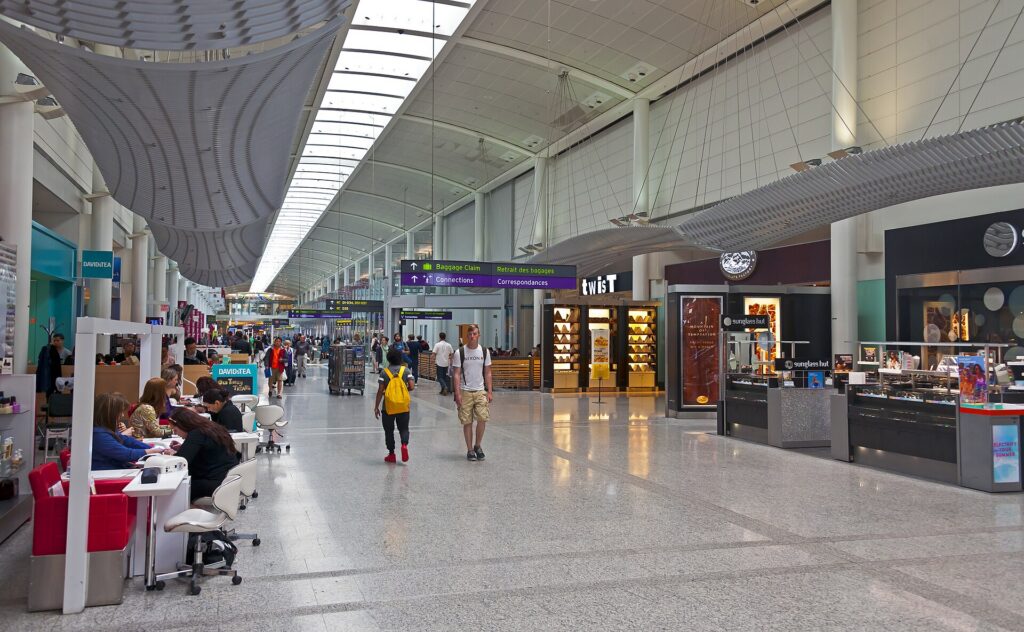
Canada’s busiest airport, in Mississauga about 25 kilometres northwest of downtown. Virtually every international flight and most domestic and transborder flights land here. There are two terminals: Terminal 1 is the Air Canada and Star Alliance home, and Terminal 3 hosts most other carriers, including WestJet and the major American airlines. Getting downtown is straightforward: the UP Express train runs from Terminal 1 to Union Station in about 25 minutes, the TTC’s 900 Airport Express bus connects to Kipling subway station, and taxis and ride-hail pick up outside both terminals. Check the official Pearson site for terminal maps and current ground-transport options, and see our Toronto car-rental-versus-transit guide before you reserve a car at the airport.
Billy Bishop Toronto City Airport (YTZ)
On an island a few hundred metres from the downtown waterfront, Billy Bishop is one of the most convenient city airports anywhere. Porter Airlines is the main operator, with Air Canada also flying select routes; destinations are mostly short-haul, covering eastern Canada and the northeastern United States, including Newark, Boston, Chicago and Washington. A free pedestrian tunnel and a short ferry connect the terminal to the mainland, and from there it is a walk, a streetcar or a five-minute taxi to most downtown hotels. If you are travelling from a city Billy Bishop serves and staying downtown, it is often worth a slightly higher fare for the hour it saves at each end.
John C. Munro Hamilton International (YHM)
About 75 kilometres southwest of Toronto, Hamilton’s airport has periodically hosted low-cost carriers on domestic and sun routes. A very low fare into Hamilton can be worth it if you are renting a car, heading to Niagara, or have time to spare; it is a poor choice if you are staying downtown without a car and arriving late, because the ground-transport options are thin. Compare the total trip cost, not just the fare.
Timing tricks that actually work for Toronto
- Search a whole month, not a date. Toronto’s demand curve has sharp edges around long weekends and TIFF. A calendar search on TicketScanner shows those edges instantly; shifting a Friday arrival to Thursday, or leaving on the Tuesday after a long weekend, is often the single cheapest change you can make.
- Fly mid-week in peak season. July and August weekends are where the highest fares live. Tuesday and Wednesday departures on the same route are frequently in a lower band.
- Book the event weeks early and the low-season weeks late. TIFF, Caribbean Carnival and Christmas fares rarely fall as departure approaches; January and November fares, by contrast, are stable enough that waiting for the right dates costs little.
- Price the flight and the hotel together. A cheap fare into a TIFF week is not cheap once you have paid the hotel. Run a Toronto hotel search for the same dates before you commit to either.
- Consider Billy Bishop for short-haul. From cities it serves, the door-to-door time saving is real, and the fare gap is often smaller than expected.
- Build a winter buffer. If you are connecting through Pearson between December and March, avoid the tightest connection times. Our guide on how early to arrive for an international flight covers what to allow.
- Coming from the US Northeast? The New York to Toronto route has its own rhythms, with multiple airports on both ends worth comparing.
- Flying out of Toronto instead? The same seasonality applies in reverse; see cheap flights from Toronto for outbound routes.
What to pack, by season
Winter (December to March): an insulated, wind-resistant coat, a hat that covers your ears, waterproof boots with grip, and layers for overheated indoor spaces. Spring (April to May): a rain shell, a mid-weight jacket, and shoes you do not mind getting wet; mornings can be near freezing and afternoons mild. Summer (June to August): light, breathable clothing, sun protection, and something for aggressively air-conditioned restaurants and subway cars. Fall (September to November): layers again, a warm jacket by mid-October, and an umbrella in November. Whatever the season, Toronto is a walking city; comfortable shoes matter more than anything else on this list.
The best time to fly to Toronto for…
Families
Late June (before peak fares fully set in) or the last week of August into Labour Day, when the CNE is on and the Toronto Islands, the zoo and Ripley’s Aquarium are all in full summer operation. March Break works well if you are content with indoor attractions.
The lowest fares
Mid-January through the first week of March, avoiding Family Day weekend, and the first half of November. Pair with a downtown hotel and lean into the indoor city: the PATH, the museums, the theatre district and the hockey.
Food and festivals
July for Summerlicious, patios and the Caribbean Carnival; late January and February for Winterlicious at a fraction of the price. Kensington Market’s pedestrian Sundays run through the summer months.
Sports
April to June for hockey and basketball playoff atmosphere; April to September for baseball; the fall for Toronto FC and the Argonauts at BMO Field. Ticket availability, not the fare, is usually the constraint; check what is on sale in Toronto before you book flights.
Business travel
Any month, but note that downtown hotels price sharply around TIFF and the big convention weeks. Mid-week arrivals in the shoulder months are the most predictable.
Cross-border and visiting family
If you are a U.S. citizen flying in, a valid passport is required, and travellers from visa-exempt countries other than the United States generally need an Electronic Travel Authorization; the Government of Canada’s visitor page explains what applies to you. Canadians returning from abroad should review the current travel advice and entry requirements. Security screening at Canadian airports is run by CATSA, whose site lists what you can carry on.
Frequently asked questions
What is the cheapest month to fly to Toronto?
January and February are consistently the lowest-fare months, followed by November and early December. The first week of January is the exception, as it is still priced with the holidays.
What is the best month to visit Toronto for weather?
September for warm days and cool nights, with June a close second. Both are far more comfortable than the humid heart of July and August.
Is Toronto expensive to visit in summer?
July and August are the most expensive months for both flights and hotels, driven by school holidays and a dense festival calendar. Mid-week travel and booking well ahead take some of the edge off.
Should I fly into Pearson or Billy Bishop?
Pearson for almost all international and long-haul flights and the widest choice of fares; Billy Bishop if you are coming from eastern Canada or the U.S. Northeast and staying downtown, where the convenience is hard to beat.
How far ahead should I book a flight to Toronto?
Earlier for peak periods and event weeks, when fares tend only to rise; for low-season dates the fares are stable enough that finding the right pair of days matters more than booking months out. Use flexible-date search and compare across a full month.
Does it snow in Toronto in April?
Occasionally, yes, usually early in the month and rarely lasting. By late April the city is firmly in spring, and the High Park cherry blossoms follow soon after.
When do the High Park cherry blossoms bloom?
Typically late April to early May, for roughly a week to ten days depending on the year’s weather. The City of Toronto’s parks pages post bloom updates each spring.
Ready to pick your dates? Compare fares across the whole month on our Toronto flights page, then line up a place to stay with our Toronto hotel search. If you are planning what to do once you land, start with our first-timer’s guide to Toronto.
Keep planning with TicketScanner
- Cheap flights to Toronto — compare fares across the whole month
- Toronto hotels — price the room and the flight together
- Toronto car rentals — for Niagara and day trips
- Events in Toronto — concerts, hockey, baseball and shows on sale
- Things to do in Toronto: a first-timer's guide
- Toronto: rent a car or use transit?
- New York to Toronto cheap flights
- Best times to book flights and hotels
Leave a Reply