Tag: TicketScanner

  • The Ultimate Guide to Business Travel Hotels in 2026

    The Ultimate Guide to Business Travel Hotels in 2026

    On a work trip, the hotel is your office, your bedroom and your base of operations, and it is chosen under constraints a leisure traveler never faces: a meeting at a fixed address, a travel policy with a nightly cap, a flight home that leaves before breakfast, and a need to be sharp on camera or in a boardroom the next morning. The right business hotel is not necessarily the most expensive one or the one with the grandest lobby. It is the one that removes friction: a short, predictable commute, a quiet room, reliable Wi-Fi, a desk you can actually work at, breakfast that opens early enough, and a receipt your finance team will accept without questions. This guide explains how to choose one, which amenities really matter and which are marketing, how to handle conference room blocks, airport stays and extended trips, how loyalty programs and corporate rates work, and the mistakes that cost business travelers the most time and money.

    The short answer

    Choose on location first: the shortest reliable door-to-door time to where you need to be, at the time you need to be there. Then check the work essentials: recent reviews that mention the Wi-Fi, a real desk, a quiet room and breakfast hours that suit your schedule. Book a flexible rate, because business plans change, and book through a channel that produces an itemized folio in your or your company’s name. Join the chain’s loyalty program even if you only travel a few times a year. For conferences, book inside the official room block through the organizer’s link. For early flights, stay at the airport. Compare options on our hotel search, and see our pillar guide to hotel booking tips for the fundamentals.

    What makes a hotel good for business travel

    Hotels market themselves to business travelers with business centers, meeting rooms and executive lounges. Some of that matters; much of it does not, because most professionals now travel with a laptop and a phone and never touch a business center. What actually decides whether a work trip goes smoothly is more basic.

    • Commute time. The hours you spend getting between the hotel and your meetings are the single largest variable in a business trip. Fifteen minutes on foot beats forty in a taxi at rush hour, every day.
    • Sleep. A quiet, dark room with a good bed and working climate control is the amenity that most affects your performance. It rarely appears in the marketing.
    • Connectivity. Wi-Fi that handles video calls from the room, not just email in the lobby.
    • A place to work. A desk at the right height, a chair you can sit in for an hour, and power outlets where you need them.
    • Timing. Breakfast that opens before your first meeting, a gym that opens before breakfast, a front desk that can store luggage after checkout, and late checkout when your flight is in the evening.
    • Clean billing. An accurate, itemized receipt with the right name and company on it.

    Everything else, from the lobby design to the rooftop bar, is secondary. When you compare two hotels, compare them on those six things.

    Location: how to choose it properly

    “Near the meeting” is not the same as “a short commute”. A hotel two kilometers away across a river with one congested bridge can take longer to reach than one five kilometers away on a direct subway line. Before booking, check the route at the actual time you will travel, on the actual day of the week, using a map app’s departure-time setting. Consider:

    • Walkability. If you can walk to your meetings, you remove traffic, taxi queues and ride-hail surge pricing from the equation, and you arrive with a clear head.
    • Transit. In cities with good rail systems, a hotel on the same line as your office, the airport train or the convention center is often better than one closer by distance. Our city transport guides, such as Toronto: car rental or public transit, explain how each system works.
    • Multiple meeting locations. If you are visiting several clients across a city, stay near the best transit hub or the center of gravity of your appointments, not next to any single one.
    • Evening plans. A hotel in an empty office district may be ideal at 8 a.m. and bleak at 8 p.m. If you are entertaining clients, a location near restaurants matters.
    • Parking and driving. If you are driving or renting, factor in hotel parking, which in downtown cores can be a significant nightly charge, often valet-only. Our car rental search compares airport and downtown pickups.

    A slightly more expensive hotel with a ten-minute walk frequently costs less in total than a cheaper one that requires two taxis a day, and it gives you back the time. Most travel policies care about total trip cost, and a short explanation of the saving will usually justify a higher room rate.

    A hotel lobby with a small business center
    Most business travelers now work from the room, not the business center (Photo: Opera Cadet from PARIS, FRANCE via Wikimedia Commons, CC BY-SA 2.0)

    The work essentials, and how to check them before you book

    Wi-Fi

    Almost every hotel advertises free Wi-Fi. What varies is whether it can handle a video call from your room at 9 a.m. when half the building is doing the same. The listing will not tell you; recent guest reviews will. Search the reviews for “Wi-Fi”, “internet” and “video call”, and weight comments from the last few months most heavily. Some hotels offer a faster paid tier or a faster tier for loyalty members. If a call or presentation matters, bring a backup: your phone’s hotspot, a travel eSIM with data, or a portable router. Public Wi-Fi, including hotel networks, should be treated as untrusted; use your company’s VPN, keep devices updated, and follow the guidance from the Canadian Centre for Cyber Security on connecting safely away from the office.

    The desk and the chair

    Room photos show whether there is a desk. They do not show whether it is a proper work surface or a narrow shelf beside the television. Look for photos taken by guests, and for rooms described as having a work desk or an ergonomic chair. Some newer select-service hotels have replaced desks with lounge seating and communal work areas; that suits some people and not others. If you need to take calls privately, check that the room, not only the lobby, is a usable work space.

    A quiet room

    Request a room away from the elevators, ice machines, the street side and any rooftop bar or event space, and on a higher floor. You can add this as a request at booking and repeat it at check-in. Loyalty members are more likely to have requests honored. If the room is noisy, ask to move on the first night rather than enduring it; it is much easier for the front desk to reassign a room before the hotel fills.

    Breakfast, gym and hours

    Check when breakfast opens. A hotel restaurant that starts serving at 7 a.m. is no use for a 7:30 meeting across town. Many select-service hotels offer a grab-and-go option from early morning. If you exercise, check the gym’s hours and equipment in recent photos. A 24-hour gym with two treadmills is different from a proper fitness center.

    Check-in and checkout

    Mobile check-in and digital room keys, now offered by the major chains through their apps, let you go straight to your room after a late arrival. Late checkout is often available on request, especially for elite members, and is invaluable when your flight is in the evening. If you cannot get it, ask the front desk to store your bags and find out whether the gym or lounge has showers you can use before the flight.

    A neatly made hotel room with a king bed and bedside lamps
    A quiet, dark room with a good bed matters more on a work trip than any lobby (Photo: PattayaPatrol via Wikimedia Commons, CC BY-SA 4.0)

    Types of business hotel, and when each makes sense

    Hotel typeBest forWatch for
    Downtown full-service hotelClient meetings, entertaining, trips with evening eventsHigher rates on weekdays, paid parking, paid breakfast
    Select-service hotelSolo trips with a tight budget cap; practical rooms and included breakfast at many brandsLimited dining, smaller desks at some brands, no room service
    Airport hotelEarly departures, late arrivals, meetings held at the airportIsolation from the city; shuttle schedules; noise on some sides
    Convention or attached hotelMulti-day conferences and trade showsRates rise sharply outside the official block; lines at peak times
    Extended-stay or apartment-hotelProjects of a week or more; relocations; training coursesFewer staff and services; housekeeping may be weekly
    Boutique or independent hotelCharacter, neighborhood locations, shorter tripsVariable Wi-Fi and desks; may not earn chain points or accept corporate rates

    Airport hotels: when they are the right call

    For a 6 a.m. departure, an airport hotel can be the difference between a normal night’s sleep and a 3:30 alarm and a taxi in the dark. They also work for late arrivals, for one-day trips where the meeting is near the airport, and as a fallback when a flight is cancelled. Several major Canadian airports have hotels connected to the terminal: at Toronto Pearson the Sheraton Gateway is linked to Terminal 3, Vancouver International has the Fairmont Vancouver Airport inside the terminal, Montreal-Trudeau has an in-terminal Marriott, and Calgary International has one as well. Elsewhere, airport hotels are usually a short shuttle ride away; check the shuttle’s hours, because some stop overnight or start after the first flights leave.

    Before booking, compare the total trip. An airport hotel plus a quick walk to security may cost less than a downtown hotel plus a pre-dawn taxi, and it buys you sleep. Our airport arrival time guide explains how early you need to be at the airport for different kinds of flight.

    Conferences, trade shows and room blocks

    Large events negotiate a block of rooms at one or more hotels near the venue, at an agreed group rate, and publish a booking link or housing service to attendees. Book inside that block when you can:

    • The block rate is often lower than what the same hotel charges the public during a big event, and it sometimes includes Wi-Fi or other extras.
    • The block has a cut-off date, usually weeks before the event, after which unsold rooms return to general inventory at regular prices. Book early.
    • Organizers rely on the block. Events often commit to filling a certain number of rooms, and attendees booking inside the block help keep registration prices and future venues viable.
    • Beware of unofficial housing offers. Exhibitors and attendees at large events are sometimes contacted by companies claiming to be the official housing provider. Book only through the link on the event’s own website or in the organizer’s official communications, and be suspicious of anyone who calls or emails you offering rooms.

    If the block is full, look at hotels one transit stop away rather than paying peak rates next door, and remember that during a citywide convention, rates across the whole city rise. Canada’s major convention centers, including the Metro Toronto Convention Centre, the Vancouver Convention Centre, the Palais des congrès de Montréal and the Shaw Centre in Ottawa, all have hotels within walking distance; our neighborhood pages for the Toronto Entertainment District, Old Montreal and the ByWard Market show nearby options.

    The Fairmont Vancouver Airport hotel inside the YVR terminal
    The Fairmont Vancouver Airport sits inside the terminal at YVR, ideal before an early flight (Photo: BriYYZ from Toronto, Canada via Wikimedia Commons, CC BY-SA 2.0)

    Rates, policies and paying for the room

    Corporate and negotiated rates

    Many companies negotiate rates with specific hotels or chains in the cities their staff visit most, often through a travel management company. If your employer has negotiated rates, use them: they are usually flexible, sometimes include breakfast or Wi-Fi, and keep you inside policy. Some chains also offer a general corporate rate to anyone traveling for business; it is not always cheaper than the best public rate, so compare. Government employees and contractors have their own rate programs.

    Per diems and policy caps

    If your employer sets a nightly cap, check it against the destination before you book; a cap that works in a mid-size city may not cover a downtown hotel in a major city during a busy week. Government per diem tables are a useful public benchmark for what lodging reasonably costs in a given place: the US General Services Administration publishes per diem rates by city, and the Government of Canada’s National Joint Council publishes its Travel Directive for public servants. If you have to exceed your policy, document why, such as a citywide event, before you book.

    Flexible rates

    Business plans change: meetings move, projects slip, a client cancels. For most work trips, a flexible rate with free cancellation until a day or two before arrival is worth the small premium over a prepaid rate. Note the deadline and time zone. If your trip is truly fixed and your company accepts the risk, prepaid rates can save money, but a no-show on a non-refundable rate is a cost nobody wants to explain.

    Fees, deposits and receipts

    Compare totals, not nightly rates: taxes, destination or resort fees, parking and paid Wi-Fi can change the ranking. At check-in, hotels usually place a hold on a card for incidentals. If you use a corporate card, make sure it is the card on file for the room and incidentals, and ask the front desk to email you an itemized folio at checkout. Expense teams generally need the folio, not just a credit card slip or a booking confirmation, and in Canada, a business registered for GST/HST may be able to recover the tax paid on accommodation; ask your finance team what documentation they need.

    Loyalty programs: worth it even for occasional travelers

    Joining a hotel chain’s loyalty program is free and pays off even at a few stays a year. Members typically get the best available rates on the chain’s own site, free or faster Wi-Fi at many brands, mobile check-in and digital keys, and a better chance of having room requests honored. Frequent travelers who reach elite status add late checkout, upgrades, lounge access and breakfast at some brands, depending on the program and tier. The largest programs include Marriott Bonvoy, Hilton Honors, World of Hyatt and IHG One Rewards; check each program’s current terms, because benefits change.

    Two practical points. First, if you want points and elite credit, book in a way that the program recognizes: usually directly with the hotel or through your company’s approved channel. Stays booked through some third parties may not earn. Second, do not let points override judgment. A hotel of your preferred chain that adds thirty minutes of commuting each way is not a good trade for the points it earns.

    Extended stays and project work

    For a week or more in one place, the math changes. An extended-stay hotel or apartment-hotel with a kitchen, a proper table and in-room laundry can cost less per night than a standard hotel and makes long trips far more livable. Ask about weekly or monthly rates, which are often not shown in standard searches, and about how often housekeeping comes. For very long stays, check whether your company has a preferred provider, and whether there are tax implications for stays beyond a certain length in the destination.

    Extending a work trip into the weekend

    Downtown hotels that are full of business travelers from Monday to Thursday often drop their rates on Friday and Saturday nights, when the business crowd leaves. That makes adding a weekend to a work trip, with a partner or family joining you, better value than it looks. Check your company’s policy on mixing personal and business travel: usually the employer pays for the business nights and you pay for the rest, and the flight change must not cost the company more. If your family is joining, our guide to booking hotels for family vacations covers room sizes and occupancy.

    Crossing the Canada-US border for work

    Business travel between Canada and the United States is routine, but the entry requirements are not the hotel’s problem, they are yours. Frequent cross-border travelers should look at NEXUS, the joint trusted-traveler program, and US citizens who travel internationally should consider Global Entry. Visa-exempt visitors flying to Canada from countries other than the US generally need an Electronic Travel Authorization. Rules about what counts as permitted business activity differ by country and change over time, so confirm on the official pages before you travel. For hotel advice specific to Canada, see our guide to hotel booking in Canada.

    The Metro Toronto Convention Centre in downtown Toronto
    The Metro Toronto Convention Centre: book inside the official room block before the cut-off (Photo: Raysonho @ Open Grid Scheduler / Grid Engine via Wikimedia Commons, Public domain)

    Safety and security on the road

    • Protect your room number. A good front desk writes it down rather than announcing it. If yours says it aloud in a busy lobby, ask for a different room.
    • Use the door’s secondary lock and check that connecting doors are locked.
    • Use the room safe or keep your laptop with you; do not leave devices unlocked.
    • Treat unexpected calls to your room with caution, especially ones asking you to confirm card details. Go to the front desk in person instead.
    • Know your exits. Take thirty seconds on arrival to find the nearest stairwell.
    • Share your itinerary with your company’s travel team if it has one; many employers have a duty-of-care process that relies on knowing where staff are staying.

    Common mistakes business travelers make

    Booking on price alone

    The cheapest hotel that meets policy can cost more once taxis, parking and lost time are counted. Compare the whole trip.

    Trusting “free Wi-Fi” without checking

    Free and usable are different things. Read recent reviews and bring a backup connection for anything important.

    Missing the conference block

    Booking after the cut-off, or outside the official link, often means paying more for a worse location.

    Forgetting the folio

    Ask for an itemized receipt at checkout, check it for errors before you leave, and file it with your expenses right away.

    A pre-trip checklist

    • Map the commute from each shortlisted hotel at the time you will travel.
    • Read recent reviews for Wi-Fi, noise and the desk.
    • Check breakfast and gym hours against your schedule.
    • Book a flexible rate within policy, under your loyalty number, with the right name and company.
    • For a conference, book through the organizer’s official link before the cut-off date.
    • Add requests: quiet room, high floor, late checkout if needed.
    • Book the flight on our flight search and, if needed, a car on our car rental search.
    • Save the hotel’s direct phone number and the cancellation deadline.

    Frequently asked questions

    What should I look for in a business travel hotel?

    A short, reliable commute to your meetings, a quiet room, Wi-Fi that handles video calls, a real desk, breakfast that opens early enough, flexible cancellation and an itemized receipt.

    Is it better to stay near the airport or downtown for a business trip?

    Downtown if your meetings are there and you have daytime flights. At the airport if you have a very early departure or a late arrival, or if your meeting is near the airport.

    How far ahead should I book a hotel for a work trip?

    As soon as the trip is confirmed, on a flexible rate. For conferences, book inside the official block well before its cut-off date. During citywide events, book as early as you can.

    Are hotel loyalty programs worth joining for occasional business travel?

    Yes. They are free, member rates are often the best available on the chain’s site, and members typically get better Wi-Fi and are more likely to have requests honored.

    Should I book the conference hotel or somewhere nearby?

    The official block is usually the best value and the most convenient. If it is full or over budget, look one transit stop away rather than paying peak public rates next to the venue.

    What receipt do I need for expenses?

    Usually the hotel’s itemized folio showing each night, taxes and any extras, in your name. Ask for it at checkout and check it before you leave.

    Why are downtown hotels cheaper on weekends?

    Because their weekday guests are business travelers who go home on Friday. With fewer guests on Friday and Saturday nights, many downtown hotels lower their rates.

    Ready to book your next work trip? Compare downtown, airport and convention-area options on our hotel search, find the right flight on our flight search, and price a rental on our car rental search. Headed to Canada’s biggest business city? Start with hotels in Toronto, and see our tips on finding the best hotel deals online and last-minute hotel booking for trips that come up at short notice.

  • The Complete Guide to Rental Car Booking Tips for Every Traveler

    The Complete Guide to Rental Car Booking Tips for Every Traveler

    A rental car can be the best money you spend on a trip or the most frustrating line item on your credit card statement, and the difference is rarely luck. It comes down to a handful of decisions made before you ever reach the counter: whether you need a car at all, which class to book, when and where to pick it up, how the insurance and fuel rules work, and what you agree to when you sign. This guide walks through every one of those decisions in the order you will face them, explains what the jargon on the rental agreement actually means, and flags the mistakes that cost travelers the most. It is written for North American travelers renting at home or abroad, whether you are picking up a compact for a weekend in Chicago, a minivan in Orlando or a manual hatchback in Rome.

    If you already know you need a car, you can compare rates from the major companies side by side on our car rental search. If you are still deciding, start with the first section.

    The short version

    If you read nothing else, these are the habits that save the most money and trouble:

    • Decide whether you need a car for the whole trip. Many city trips need a car for one or two days, not seven.
    • Book early on a free-cancellation rate, then keep checking. If the price drops, rebook and cancel the original.
    • Compare the total price, not the daily rate. Taxes, airport fees and add-ons can change the ranking completely.
    • Know your insurance before you arrive. Call your auto insurer and your card issuer, and write down exactly what each covers.
    • Choose full-to-full fuel and refill close to the return location.
    • Photograph and video the car at pickup and at return, including the fuel gauge and odometer.
    • Return on time. Rental days are usually counted in 24-hour blocks from pickup, and a short delay can cost a full day.

    Step 1: Decide whether you need a car, and for how long

    The cheapest rental is the one you do not take. In dense cities with good transit, such as New York, London, Paris, Toronto or Montreal, a car is often a liability: parking is scarce and expensive, hotels charge nightly for it, and traffic eats the time you saved. In spread-out places such as Los Angeles, Phoenix, Orlando, Dallas or Calgary, or anywhere your plans include national parks, small towns or a coastline, a car is often the only practical way to get around.

    The smartest answer is frequently a split: go without a car for the city days, then rent for the day trips or the road-trip leg. Neighborhood branches often open later and close earlier than airport counters, but their rates can be lower and they save you paying for a car that sits in a hotel garage. Our guide to renting a car versus public transport versus taxis works through the decision in detail, and our city guides answer it for specific places, for example New York, Los Angeles and Las Vegas.

    Step 2: Choose the right car class

    Rental companies sell car classes, not specific models. The listing will show one model with the words “or similar”, and you are guaranteed the class, not the car in the picture. Book the smallest class that genuinely fits your people and your luggage; bigger cars cost more per day, burn more fuel and are harder to park in old city centers. But do not squeeze four adults and four suitcases into a compact to save a little, because you will pay for it in comfort on every drive.

    ClassRealistic fitBest forWatch out for
    Economy / compactTwo adults, two carry-ons and one checked bagCity driving, tight parking, short tripsSmall trunk; can feel underpowered on mountain roads or highways
    Intermediate / standard sedanTwo to four adults, two large bagsMost couples and small familiesRear seats get tight for three adults on long drives
    Full-size sedanFour adults, three or four bagsLong highway drives, business travelParking in older European and downtown garages
    Compact or midsize SUVFour people, luggage plus a strollerFamilies, winter trips, gravel roadsHigher fuel use; “SUV” does not always mean all-wheel drive
    Full-size or three-row SUVFive to seven people with limited luggage when all rows are upLarger families, ski tripsLuggage space disappears with the third row in use
    MinivanSeven or eight people, or five with plenty of luggageFamilies with car seats, groupsLimited supply at peak times; book early
    Premium / luxuryAs a sedan, with more comfort and featuresBusiness travel, special occasionsOften excluded from credit card rental coverage

    Two class details trip travelers up regularly. First, if you need all-wheel or four-wheel drive, for a ski trip or a mountain road in winter, check whether the class guarantees it; many listings do not. Second, if you are renting in Europe, Latin America or much of Asia, the default is often a manual transmission. If you cannot drive stick confidently, filter for automatic and book early, because automatics are the smaller part of many fleets outside North America.

    A car rental counter in the arrivals area at Vancouver International Airport
    Airport rental counters are the most convenient place to pick up, and usually the most expensive (Photo: GoToVan from Vancouver, Canada via Wikimedia Commons, CC BY 2.0)

    Step 3: When to book

    Car rental prices move with supply and demand, and unlike airline seats, the fleet at a given location is fixed in the short term. When every car on the lot is spoken for, prices climb sharply and the minivans and SUVs go first. The periods that reliably tighten supply are summer, the Christmas and New Year weeks, spring break and school holidays, long weekends, and big local events such as a major conference, a championship game or a festival.

    The practical strategy is simple:

    1. Book as soon as your dates are firm, on a “pay later” or free-cancellation rate. For peak periods and larger vehicles, that means weeks or months ahead.
    2. Check the price again a few weeks out and a few days out. Rental rates do fall as well as rise, especially when a location has more cars than expected.
    3. If it drops, book the cheaper rate first, then cancel the original. Never cancel first; the lower price may disappear.

    Prepaid rates can be cheaper, but they usually carry cancellation fees or no refund at all, and some companies do not refund unused days if you return early. Use them only when your plans cannot change. It also pays to test slightly different pickup and return times: because rentals are priced in 24-hour periods, and weekly rates sometimes undercut five or six daily rates, a small shift can change the price noticeably.

    Step 4: Airport or neighborhood pickup?

    Airport locations are the most convenient and usually the most expensive. Many airports allow rental companies to pass on concession fees and facility charges, which appear on your bill as separate line items, and some add a customer facility charge that pays for a consolidated rental car center. Off-airport and neighborhood branches avoid some of those charges, but they add a shuttle ride or a taxi, and their opening hours are shorter; an office that closes at 6 pm on Saturday and reopens Monday is not much use for a Sunday afternoon return.

    A few rules of thumb:

    • Arriving late at night, with kids or with lots of luggage: pay for the airport location.
    • Spending the first days in a transit-friendly city: take the train or a taxi to your hotel and rent from a neighborhood branch on the day you leave town.
    • Flying in with a flight that might be delayed: add your flight number to the reservation, so the counter knows to hold the car rather than marking you a no-show.

    Our airport guides, such as Toronto Pearson, LAX and Denver International, explain where the rental counters are and how to reach them.

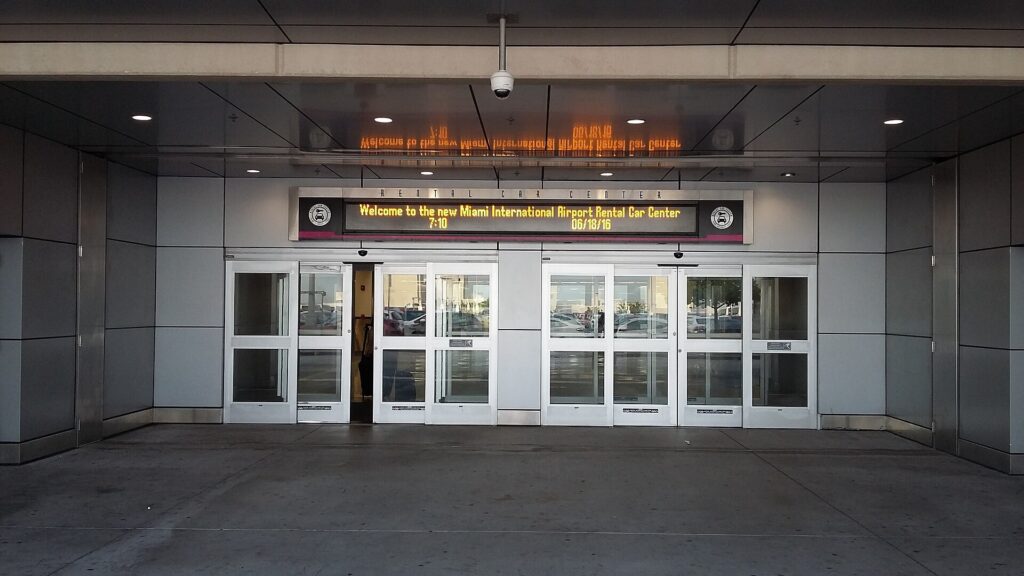
    The entrance to the consolidated Rental Car Center at Miami International Airport
    Many large airports group every company in one rental car center, often paid for through a facility charge on your bill (Photo: Xnatedawgx via Wikimedia Commons, CC BY-SA 4.0)

    Step 5: Read the whole price

    The daily rate in large type is the start of the price, not the end. Before you compare two offers, open the full breakdown and look for:

    • Taxes and airport fees, which vary widely by city and state or province.
    • Young driver surcharges, typically for drivers under 25.
    • Additional driver fees, charged per day at many companies.
    • One-way or drop fees if you return to a different location.
    • Equipment: child seats, GPS, ski racks, snow chains, each usually charged per day, often with a cap per rental.
    • Mileage limits, rare on North American leisure rentals but common on some specialty vehicles and international rentals.
    • Toll programs and their daily service fees.
    • Coverage products you may or may not need, covered in the next step.

    A rate that looks cheaper per day can end up costing more once these are added. Compare like for like: the same class, the same pickup and return times, the same drivers, the same coverage.

    Step 6: Understand rental car insurance

    Insurance is where most counter arguments happen and where most travelers either overpay or leave themselves exposed. There are four products you are likely to be offered, under slightly different names depending on the company and country.

    Collision damage waiver (CDW) or loss damage waiver (LDW)

    Strictly speaking, not insurance but a waiver: if you buy it, the company agrees not to charge you for damage to, or theft of, its car, subject to exclusions. Without it, you are responsible for the car’s damage, and sometimes also for “loss of use” while it is being repaired and for administrative fees. In Europe and many other regions a basic waiver is often included in the price but comes with a high deductible (called an “excess”), and the counter will offer a second product to reduce that deductible.

    Liability coverage

    Liability covers damage you cause to other people and their property. Rules differ sharply by country, state and province: some rentals include a legal minimum, some include very little, and in some countries, Mexico being the best-known example for North Americans, locally issued liability insurance is mandatory and your home policy is not accepted. Rental companies sell supplemental liability to top up the minimum.

    Personal accident and personal effects coverage

    These cover medical costs for you and your passengers and theft of belongings from the car. Many travelers already have this through health insurance, travel insurance or a home or renter’s policy.

    Where you may already be covered

    • Your own auto policy. In the US and Canada, many personal policies extend some coverage to rental cars for personal use, but often only within your home country, and not always collision.
    • Your credit card. Many cards include a rental collision benefit if you pay for the whole rental with that card and decline the company’s waiver. Some are primary, some are secondary to your own policy, and most have exclusions: certain countries, luxury and exotic cars, large vans and trucks, and rentals longer than a set number of days. Liability is almost never included.
    • Travel insurance. Some policies include rental car damage coverage as an option.

    Do this before the trip, not at the counter: call your insurer and your card issuer, ask exactly what is covered, in which countries, for which vehicle types and for how long, and ask them to send the benefit terms in writing. Then decide which of the counter products you actually need. Declining coverage you do not have is the expensive mistake; buying coverage you already have is the common one.

    Step 7: Drivers, age, license and payment

    • Minimum age. At most major companies in the US and Canada, the minimum is 21 (sometimes 20), with a daily surcharge for drivers under 25 and restrictions on premium classes. A few US states require companies to rent to younger drivers, with fees. Outside North America the rules vary, and some countries also have upper age limits or extra requirements for older drivers.
    • Additional drivers. Anyone who will drive must be on the agreement, present at pickup with a valid license. Some companies, and some jurisdictions, waive the fee for a spouse or domestic partner; ask. An unlisted driver in an accident can void your coverage.
    • Credit versus debit. Nearly every company prefers a credit card in the main driver’s name and places a hold for the estimated total plus a deposit. Debit cards are accepted at some locations with extra conditions, such as proof of a return flight or a credit check, and the hold ties up real money in your account for days after the return.
    • Your license. Bring the physical card. A digital license is not accepted everywhere, and an expired or temporary paper license can be refused.
    • International Driving Permit. An IDP is a translation of your license recognized under international conventions. Some countries require it, others recommend it, and rental companies sometimes ask for it even where the law does not. Canadians get one from CAA, as explained on the Government of Canada’s IDP page; Americans get one from the issuers listed by the US State Department. Get it before you leave; it cannot be issued abroad.

    Step 8: Fuel policies and electric cars

    PolicyHow it worksWhen it makes sense
    Full-to-fullPick up full, return full; you pay only for fuel you use, at pump pricesAlmost always the best value
    Prepaid fuel (full-to-empty)Pay for a full tank at pickup, return at any level, no refund for fuel leftOnly if you will genuinely return near empty and have no time to refuel
    Refuel on returnReturn below full and the company refills it at its own per-unit rate plus a service feeRarely; this is usually the most expensive way to buy fuel
    Same-to-sameReturn at the level you received itFine, but photograph the gauge at pickup

    Fill up within a few miles of the return location and keep the receipt; some companies ask for it if the gauge reads just below full. If you rent an electric vehicle, ask about the return charge requirement (many companies set a minimum percentage), where the nearest fast chargers are, which charging networks work with the car, and whether charging cables are included. EVs are excellent in cities with good charging and less relaxing on long rural drives where chargers are sparse. The US Department of Energy’s Alternative Fuels Data Center has a station locator that is useful for planning.

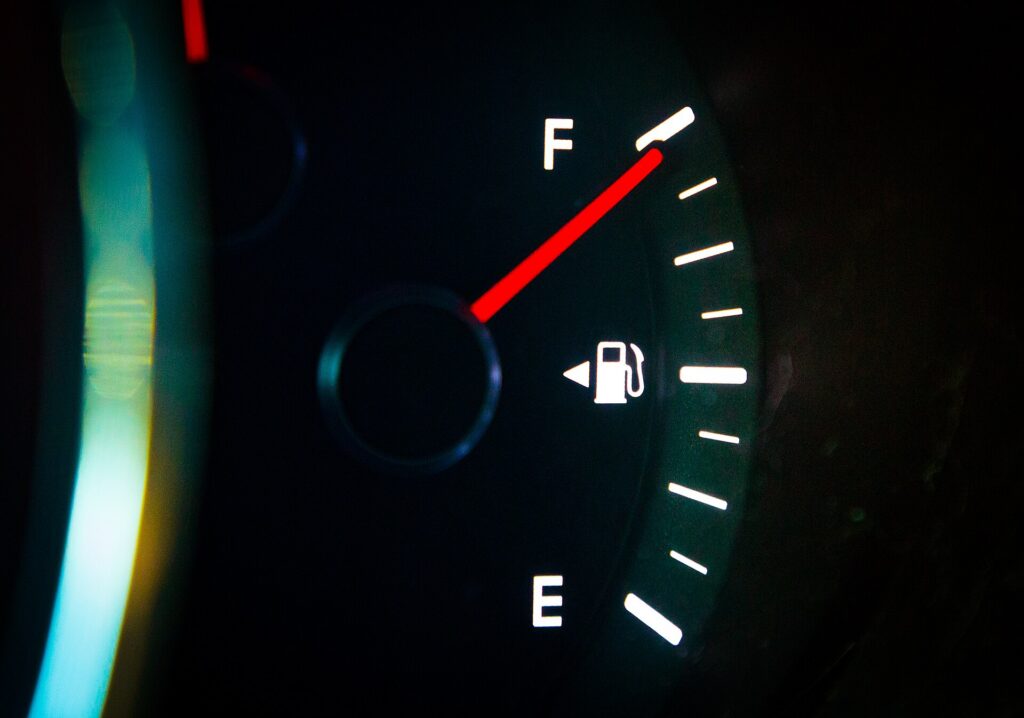
    A car dashboard fuel gauge showing a full tank
    On a full-to-full rental, photograph the gauge at pickup and bring the car back showing the same (Photo: Tony Webster via Wikimedia Commons, CC BY 2.0)

    Step 9: Mileage, one-way trips and borders

    Most leisure rentals in the US and Canada include unlimited mileage, but check, especially for specialty vehicles, local-renter rates and some international rentals. If you plan to drop the car somewhere else, price the one-way fee early; it can be large, but some popular routes are cheap in one direction when companies need to rebalance fleets. Our drive guides, such as Toronto to Montreal and Los Angeles to Las Vegas, are a good place to compare.

    Crossing a border needs to be declared at booking. Driving between the US and Canada is routine with the major companies, though some restrict certain vehicle classes; taking a US rental into Mexico, or driving between some European countries, can be restricted or require extra coverage and fees. Ask at booking and make sure the permission is written on the agreement.

    Step 10: Tolls

    Toll roads have increasingly gone cashless, charging by transponder or by photographing the license plate. Rental companies handle this through their own toll programs, which typically add a daily service fee on top of the tolls, sometimes for every day of the rental rather than only the days you use a toll road. Your options are to accept the program, use your own transponder where it is compatible and allowed, pay the toll operator directly online where that is possible, or plan routes that avoid tolls. Highway 407 ETR north of Toronto, for example, is fully electronic, and its operator’s site explains how unregistered vehicles are billed. Ask at the counter how tolls will be charged and read the program terms before you drive off.

    At the counter: handling the upsell

    Counter staff are often paid partly on what they sell, so expect offers of an upgrade, prepaid fuel, coverage and a toll package. None of that is a scam; some of it is useful. But decide in advance. A calm “no thank you, I have coverage through my card and my policy” is enough. Before you sign, check that the agreement matches your reservation: the class, the total estimate, the return date and time, the fuel policy, the drivers, and that nothing you declined has been added. If the class you booked is not available, the usual practice is a free upgrade to a larger class, not a paid one; ask for it.

    Loyalty programs are free to join at most companies and are worth it even if you rent once a year: members at many large airports skip the counter and go straight to the car, which saves time and removes the sales pitch entirely.

    Inspect the car before you leave the lot

    1. Walk around the car with your phone recording video. Get every panel, the bumpers, the wheels and the windshield, then close-ups of anything scratched, dented or chipped.
    2. Photograph the dashboard showing the fuel level, the odometer and any warning lights.
    3. Check the interior for stains, burns, damage and smells, and confirm the spare tire or inflation kit is present.
    4. Test the basics: lights, wipers, air conditioning, mirrors, seat adjustment and any child seat you rented.
    5. Get damage noted. Make sure anything you find is recorded on the checkout sheet or in the app, and ask an agent to initial it if possible.

    It is also worth entering the license plate or VIN into the recall lookup on the NHTSA recalls page if you are renting in the US; it takes a minute.

    While you have the car

    • Breakdowns: the roadside assistance number is usually on the key tag, the windshield sticker or the agreement. Call it before you call a tow truck yourself, or you may not be reimbursed.
    • Accidents: make sure everyone is safe, call the police if required locally, photograph everything, exchange details, and notify the rental company as soon as you can. Do not sign anything admitting fault.
    • Parking tickets and traffic cameras: fines follow the car. The company pays the authority, bills your card and usually adds an administrative fee, sometimes months later.
    • Changing plans: if you need the car longer, call and extend before your return time rather than just keeping it; the rate can be very different.
    Rows of rental cars parked in an airport rental lot
    Before you drive off, record a video walkaround of the car and photograph the dashboard (Photo: User:Mattes via Wikimedia Commons, Public domain)

    Returning the car

    Return timing matters more than most travelers expect. Rental days are usually counted in 24-hour blocks from pickup, grace periods are short, and being a few hours late can add a full day at a higher rate. Returning early is not always cheaper either, because rates may be recalculated. Allow extra time at airports, where the return garage can be a shuttle ride from the terminal, refill nearby, and do another video walkaround and dashboard photo. If you drop after hours, you normally remain responsible for the car until staff check it in, so your photos matter even more. Our guide to car rental return timing covers grace periods, late fees, early returns and after-hours drop-offs in detail. Check your final receipt before you leave and your card statement for the following weeks.

    Renting with kids

    Families have extra choices to make: vehicle size once car seats go in, whether to rent seats or bring your own, and which companies make pickup easiest with tired children. Child seats rented at the counter are charged per day, availability is not guaranteed unless reserved, and staff are generally not permitted to install them for you. Car seat laws vary by state, province and country; Transport Canada’s child car seat safety page is a good starting point for the principles. Our guide to the best car rental services for family vacations covers all of this, including seat math for three-across rows.

    Renting abroad

    • Check the license rules for each country, including whether you need an IDP.
    • Learn the road basics: which side of the road, how roundabouts work, speed units, and local rules such as low-emission zones and restricted historic centers, which are enforced by camera in many European cities and generate fines that reach you long after the trip.
    • Confirm what “included” means. Quoted rates abroad may or may not include basic collision cover, theft protection and liability, and deductibles can be large.
    • Expect smaller cars and manual gearboxes, and narrow streets and parking spaces to match.
    • Keep your passport with your license; many counters ask for both.

    Our city guides for Rome, London, Paris and Cancun go into local specifics.

    The mistakes that cost the most

    • Booking late for peak dates and paying whatever is left, often for a car that is too big or too small.
    • Comparing daily rates instead of totals, then discovering the fees at the counter.
    • Assuming a credit card covers everything, including liability, luxury cars or a country it excludes.
    • Letting an unlisted friend drive.
    • Skipping the pickup video, then having no proof about a scratch that was already there.
    • Accepting prepaid fuel and returning with half a tank.
    • Keeping the car an extra few hours without calling, and paying for an extra day at a walk-up rate.
    • Renting for the entire trip when you only needed a car for two days of it.

    Book the trip, not just the car

    A rental works best when it fits the rest of the itinerary. Match pickup to your flight’s arrival time, leaving a buffer for delays; choose a hotel with parking if you will keep the car overnight, and factor the parking fee into the room rate; and time the return so you are not racing for a flight. Our guide to the best time to book flights and hotels covers timing for the other two pieces, and our hotel booking tips explain how to read the fees on a room rate the same way you now read a rental agreement.

    Frequently asked questions

    How far in advance should I book a rental car?

    As soon as your dates are firm, on a free-cancellation rate. For summer, holidays, spring break and large vehicles, that means weeks to months ahead. Then keep checking and rebook if the price drops.

    Is it cheaper to rent a car at the airport or in town?

    Often in town, because airport locations pass on concession and facility fees. But neighborhood branches have shorter hours and require getting there, so the saving is only worth it when the timing works.

    Do I need the rental company’s insurance?

    It depends on what you already have. Check your own auto policy and your credit card’s rental benefit before the trip, get the terms in writing, and buy only what fills a real gap, especially liability and any coverage abroad.

    Can I rent a car with a debit card?

    At some locations, with conditions such as proof of travel or a credit check, and a hold on your funds. A credit card in the main driver’s name is far simpler.

    What happens if I return the car late?

    After a short grace period, most companies charge hourly and then a full extra day once you pass a threshold of a few hours. Call before your return time if you know you will be late.

    Which fuel option is best?

    Full-to-full in almost every case. Prepaid fuel only makes sense if you will return nearly empty.

    Do I need an International Driving Permit?

    For some countries, yes, and rental counters may ask for one even where it is only recommended. Check the official government guidance for your destination and get the permit before you leave home.

    Can I add a second driver?

    Yes, at pickup, with their license present. There is often a daily fee, sometimes waived for a spouse or partner. Never let an unlisted person drive.

    Ready to price it out? Compare rates from the major companies on our car rental search, or go straight to a destination such as Orlando, Calgary or Phoenix, and line up the rest of the trip with cheap flights and hotels.

  • Local Flights in the USA: How to Book Cheap, Fast and Smart

    Local Flights in the USA: How to Book Cheap, Fast and Smart

    Short domestic flights are some of the most useful trips you can buy in the United States. A one-hour hop can replace a full day of driving, turn a long weekend into a real getaway and get you to a meeting and home again before dinner. They are also some of the easiest flights to overpay for, because short routes are priced aggressively by demand, the cheapest fares strip out bags and seats, and the difference between a smart and a careless booking often comes down to one airport or one day of the week. This guide explains how short-haul domestic pricing works, when to book, how to pick the right airport and airline, how to compare the real cost of a fare, when driving or the train makes more sense, and how to get through the airport quickly on a short trip. It is part of our flight booking series, which starts with our guide to the best time to book cheap flights and hotels.

    The short answer

    If you only have a minute: search a range of dates rather than one day, because the day you fly moves the price more than anything else. Book roughly one to three months ahead for ordinary dates and earlier for holidays and long weekends. Check every airport within a reasonable drive at both ends of the trip, including secondary airports that big-city travelers forget. Compare the total cost, with bags and seats added, not the headline fare, because a basic fare that looks cheap can end up costing more than a standard one. Use the 24-hour cancellation window that applies to most U.S. bookings made at least seven days out to double-check everything. And make sure your ID is ready: TSA now requires a REAL ID-compliant license or another accepted document such as a passport to fly within the country. You can compare fares across a whole month on our flight search.

    An American Eagle Embraer 175 regional jet on approach to land
    Many short domestic routes are flown by regional jets with smaller overhead bins (Photo: DOMDCF via Wikimedia Commons, CC BY-SA 4.0)

    What counts as a local flight, and why they are priced the way they are

    There is no official definition of a “local” flight. Most travelers mean a short domestic trip, often under two hours in the air, within a region: New York to Boston, Chicago to Minneapolis, Dallas to Houston, Los Angeles to Las Vegas, Seattle to the Bay Area, Atlanta to Charlotte. Airlines call these short-haul routes, and they share a few traits that shape how you should book them.

    • They carry a lot of business travelers. Weekday morning and evening flights on busy corridors fill with people traveling for work, whose employers pay higher fares for flexibility. That pushes up prices at peak times and leaves cheaper seats at off-peak times.
    • They compete with the car and sometimes the train. On a route of a few hundred miles, the airline is competing with driving, so fares on quiet days can be surprisingly low. On the busiest days, when everyone wants to fly, the competition matters much less.
    • They are often served by regional jets. Many short routes are flown by smaller aircraft operated by regional partners under the big airlines’ brands. That affects cabin size, overhead bin space and whether your carry-on has to be checked at the aircraft door.
    • Taxes and fees are a larger share of the total. Government taxes and airport charges are added to every ticket, so on a short, cheap flight they make up a bigger slice of what you pay. That is one reason a fare that looks tiny in an advertisement grows at checkout.

    Airline prices follow the same basic logic on every route. Each flight is divided into fare levels, the cheapest sell first, and revenue management systems open and close levels as the flight fills. Our pillar guide explains the mechanics in detail; for short trips, the practical point is that busy flights get more expensive as they fill, while quiet ones can stay flat for weeks.

    When to book a domestic flight

    There is no magic number of days, but there are sensible windows. Use them as a guide for when to start paying close attention, then book when you see a fare at or below the normal level for your route.

    TripSensible windowWhy
    Ordinary weekday or weekend tripAbout 1 to 3 months aheadEnough time for fares to settle and for you to spot a good one; waiting longer rarely helps on busy routes
    Holiday weekends (Memorial Day, July 4, Labor Day)About 2 to 4 months aheadFriday departures and Monday returns sell out first
    Thanksgiving, Christmas and New YearAs early as 3 to 6 months aheadThe most popular dates rarely get cheaper as they approach
    Spring break and summer trips to beach and theme park citiesAbout 2 to 4 months aheadFamily demand concentrates on the same weeks
    Short-notice tripsOnly as neededOccasionally cheap on quiet routes, but usually the most expensive time to buy

    The simplest method is to start searching as soon as you know roughly when you want to go. Look at a month view to see which days are cheap, note what a normal fare looks like, and set a price alert. When a fare lands at or below that level, book. Trying to catch the absolute lowest price usually means waiting too long.

    The day you fly matters more than the day you book

    On most domestic routes, Tuesday, Wednesday and often Saturday departures are cheaper than Friday and Sunday, because business travelers fill Monday mornings and Thursday and Friday evenings and leisure travelers crowd the weekend edges. The first flight of the morning and late-evening departures are often cheaper than midday. Patterns differ by route, so let the fare calendar show you the cheap days instead of assuming. The old advice to buy on a particular weekday, or late at night, does not hold up: fares change when seats sell, not on a timetable.

    Your 24-hour safety net

    For flights within, to or from the United States, the U.S. Department of Transportation requires airlines to either hold a reservation at the quoted fare for 24 hours without payment or let you cancel within 24 hours of booking without penalty, as long as you book at least seven days before departure. Most large airlines offer free cancellation. Use that day to check names, dates and connections, and to confirm the fare still looks right. If your flight is later canceled or significantly changed by the airline and you choose not to travel, DOT’s refund rules explain when you are owed your money back rather than a travel credit. The wider set of passenger protections is on the DOT Aviation Consumer Protection site.

    Choose the right airport, at both ends

    Airport choice is the most underused way to save on short flights. Big metro areas often have two or more commercial airports, and they can differ in price, airlines, traffic and how long it takes to get through security.

    Metro areaAirports to compareWhat to weigh
    New YorkJFK, LaGuardia (LGA), Newark (EWR); sometimes Long Island MacArthur, WestchesterLaGuardia is closest to Manhattan for many trips; Newark suits New Jersey and west-side Manhattan; compare transfer times
    ChicagoO’Hare (ORD), Midway (MDW)Midway is closer to downtown and the South Side; O’Hare has more airlines and routes
    DallasDallas Fort Worth (DFW), Dallas Love Field (DAL)Love Field is close to central Dallas; DFW is the big hub with the widest choice
    HoustonGeorge Bush Intercontinental (IAH), Hobby (HOU)Hobby is closer to downtown and the south side
    Los AngelesLAX, Burbank (BUR), Long Beach (LGB), Ontario (ONT), Orange County (SNA)The smaller airports can save a long drive across the region and are usually quicker to get through
    San Francisco Bay AreaSFO, Oakland (OAK), San Jose (SJC)Choose by where you are actually going in the Bay Area
    Washington, D.C.Reagan National (DCA), Dulles (IAD), Baltimore/Washington (BWI)DCA is on the Metro and close to the city; BWI often has different airline options
    South FloridaMiami (MIA), Fort Lauderdale (FLL), Palm Beach (PBI)Fort Lauderdale can be convenient for northern Miami-Dade and Broward

    A cheaper fare from a more distant airport is only a saving if the total holds up. Add parking or the ride to the airport, the time it takes and the ride at the other end. For a short trip, an extra hour of driving each way can wipe out the benefit. Our airport guides, such as Chicago O’Hare, Dallas Fort Worth, Los Angeles International and New York JFK, cover terminals and ground transportation.

    Smaller airports have real advantages

    Secondary and regional airports are often quicker to get through, with shorter walks, simpler parking and less congestion at the curb. For a day trip or a tight schedule, those minutes matter. The trade-off is fewer flights, so a cancellation can mean a longer wait for the next departure. If you must be somewhere at a set time, an earlier flight from a smaller airport or a later one from a hub with frequent backup options are both reasonable strategies; choose knowingly.

    Concourse A at Chicago Midway International Airport
    Secondary airports like Chicago Midway can be closer to downtown and quicker to get through (Photo via Wikimedia Commons, CC BY-SA 3.0)

    Choose the airline and fare, not just the price

    Domestic airlines in the United States fall roughly into three groups, and the same headline price can buy very different trips.

    • Network airlines such as American, Delta, United and Alaska fly from large hubs to almost everywhere, with regional partners on smaller routes. They sell several fare types on every flight, from basic economy to flexible and premium fares, and their loyalty programs and credit cards are built around frequent domestic flying.
    • Point-to-point and value airlines such as Southwest and JetBlue connect many city pairs directly, often from secondary airports. Their fare structures and bag policies have been changing, so check what is included on each booking rather than relying on what you remember.
    • Ultra-low-cost carriers sell very low base fares and charge separately for nearly everything else: carry-on bags, checked bags, seat assignments and sometimes printing a boarding pass at the airport. They can be excellent value for a traveler with just a small personal item and flexible plans, and poor value for a family with luggage.

    Basic economy: what you give up

    Basic economy fares exist to compete with the ultra-low-cost carriers, and the restrictions vary by airline. Common trade-offs include boarding last, no seat selection until check-in or a fee to choose, no changes or no refunds of the fare, and, on some airlines, no full-size carry-on bag. Last to board also means last to find bin space, so a carry-on can end up checked at the gate on a full flight. Before you choose a basic fare, read exactly what it excludes on the airline’s own site and compare the price to the next fare up with the things you need added.

    Compare the total cost

    CostWhere it hidesHow to handle it
    Carry-on bagExcluded on some basic and ultra-low-cost faresCheck the fare rules and size limits; our carry-on size guide explains how to measure
    Checked bagUsually charged per bag, per direction on domestic faresPaying online in advance is often cheaper than at the airport
    Seat selectionCharged on basic fares and sometimes on standard onesDecide whether you need to sit together; families should read the airline’s seating policy
    ChangesThe cheapest fares may be unchangeableIf your plans might move, a changeable fare can be cheaper overall
    Airport transfer and parkingNot in the fare at allAdd them when comparing airports

    A fare that includes a bag and a seat can easily beat one that looks much cheaper. Our flight details guide explains fare brands, baggage allowances and what the codes on your itinerary mean.

    Nonstop, connecting and the hidden-city trap

    On a short trip, a nonstop flight is almost always worth a modest premium. A connection can double the travel time on a one-hour route and adds a second chance for delays, missed connections and misrouted bags. Connections make sense when there is no nonstop at a reasonable time, or when the saving is large enough to justify the extra hours.

    If you do connect, leave a realistic cushion. Airlines sell connections that meet their minimum connection time, but a tight connection at a large hub in bad weather is a gamble. On a single ticket, the airline is responsible for rebooking you if you miss a connection because of a delay; on two separate tickets, you usually are not protected, so leave much more time or avoid it.

    You may also hear about “hidden-city” ticketing, where a traveler books a flight to a farther city with a connection in the city they actually want and simply leaves at the connection. Airlines generally prohibit this in their contracts of carriage. It only works with carry-on bags, the rest of the itinerary is canceled if you skip a segment, and airlines can penalize accounts. It is not a strategy we recommend.

    Is flying really faster? Fly, drive or take the train

    For short distances, the honest comparison is door to door. A one-hour flight involves getting to the airport, parking or a ride, security, waiting at the gate, boarding, the flight itself, deplaning and getting into the city at the other end. On routes of a couple of hundred miles, driving or taking the train can be just as fast and far less stressful.

    SituationUsually betterWhy
    Solo traveler, 300 miles or moreFlyingThe time saved in the air outweighs the airport overhead
    Family or group of three or more, under about 300 milesDrivingOne car costs the same however many people are inside, and there are no bag fees
    Downtown to downtown on the Northeast CorridorOften the trainAmtrak runs between city centers from Washington through New York to Boston, with no airport transfers
    Day trip for a meetingFlying, on an early nonstopProtects the schedule if you pick the first flight of the day
    You need a car at the destination anywayOften drivingSaves a rental and gives you flexibility

    If you do fly and need a car at the other end, our rental car booking tips explain when to reserve and how airport and city locations differ in price.

    Getting through the airport quickly on a short trip

    Have the right ID

    TSA began enforcing the REAL ID requirement on May 7, 2025. To fly within the United States, adult travelers need a REAL ID-compliant driver’s license or state ID, usually marked with a star, or another accepted document such as a U.S. passport, a passport card or a trusted traveler card. TSA explains the options, and what happens if you arrive without an acceptable ID, on its REAL ID page. Check your wallet well before your trip, because getting a new license can take time.

    Pack for security, not just for the trip

    A carry-on-only trip is the fastest way through a domestic airport: no bag drop, no waiting at the carousel. Keep liquids within TSA’s 3-1-1 liquids rule, keep electronics and your liquids bag easy to reach, and wear shoes you can slip off if your lane requires it. Our guide on what not to wear on a flight covers clothes that slow screening down.

    Consider TSA PreCheck

    If you fly domestically more than a few times a year, TSA PreCheck lets approved travelers use dedicated lanes at participating airports, usually without removing shoes, belts, laptops or small liquids. It involves an application, a fee and an in-person appointment, and membership lasts several years. Some credit cards and loyalty programs reimburse the application fee.

    Know the check-in deadline

    Every airline sets a minimum check-in time and a bag-drop deadline before departure, and boarding doors close before the scheduled departure time too. For domestic flights these deadlines are commonly somewhere between 30 and 60 minutes, but they vary by airline and airport, so look them up for your flight. How early you should arrive depends on the airport, the time of day and whether you are checking a bag; a big hub at the Monday morning rush needs more time than a small regional airport midafternoon. Check in online, download the airline’s app for gate changes and boarding passes, and allow more time on holiday weekends.

    The ticketing and check-in hall in Terminal B at LaGuardia Airport
    Check in online and know your airline's bag-drop deadline (Photo: Silver Dovelet via Wikimedia Commons, CC BY-SA 4.0)

    A step-by-step booking routine for short flights

    • Define the trip loosely. Decide on a range of dates and all the airports you would realistically use at both ends.
    • Search a month view. Find the cheap days before fixing your plans. Our flight search shows prices across the month.
    • Check the event calendar. A big game, a convention or a festival can make both flights and hotels expensive for a specific weekend.
    • Shortlist two or three flights and price each with the bags and seats you actually need.
    • Weigh the schedule. A nonstop at a sensible hour often beats a slightly cheaper option that costs you an evening.
    • Book, then use the 24-hour window to double-check names and details.
    • Add the hotel and car. Book a refundable room on our hotel search and add a rental car only if you will use it.
    • Keep watching. If the airline cuts the fare on a ticket that allows changes, you may be able to rebook and keep the difference as a credit; rules vary, so check yours.

    Popular short routes and what to know

    A few examples of how the principles play out on real corridors. Use them as patterns, not as a list of deals.

    • Los Angeles to Las Vegas: one of the busiest short leisure routes in the country, with heavy Friday and Sunday demand. The drive is a real alternative for groups; our Los Angeles to Las Vegas road trip page covers it. If you fly, our guide to cheap flights to Las Vegas explains how the event calendar moves fares.
    • New York to Boston or Washington: flights compete directly with Amtrak and buses. Compare door-to-door time before assuming the plane is faster.
    • Chicago to Minneapolis or Detroit: frequent flights, and a straightforward drive for groups. Compare O’Hare and Midway.
    • Dallas to Houston: multiple flights a day between four airports. Love Field and Hobby are the downtown-friendly pair.
    • Seattle to Portland or Vancouver: short enough that driving or the train can win; flying makes sense on tight schedules.
    • Atlanta to regional cities: Atlanta is the hub for the Southeast, so many short routes connect there. See our Atlanta airport guide before a tight connection.

    Planning a longer domestic trip? Our month-by-month guides, such as the best time to fly to Chicago and the best time to fly to New York, explain when each city is cheapest and busiest.

    Loyalty points and credit cards on short flights

    Short flights can be good value for points, because some programs price award seats by distance or by the cash fare, and the cash fare on a short route at a busy time can be high. Compare the points price with the cash price before you redeem, and remember that taxes and fees still apply to award tickets. On the other side, a cheap short flight earns few miles, so do not choose a worse schedule just to stay loyal to one airline. For frequent short-haul flyers, the most valuable perks are usually free checked bags, earlier boarding and better seats, which some airline credit cards include. Whether that is worth an annual fee depends on how often you fly; do the arithmetic for your own travel. Upgrades on short domestic flights are covered in our guide to business class upgrade hacks.

    Common mistakes that cost money

    • Searching one date and one airport. The cheapest option is often a day or an airport away.
    • Buying basic economy without reading it. A carry-on fee at the gate can wipe out the saving.
    • Booking two separate tickets with a tight connection. If the first flight is late, you may lose the second.
    • Ignoring the drive. For groups on short routes, the car is often cheaper and just as fast.
    • Arriving with the wrong ID. Check REAL ID compliance before the trip, not at the checkpoint.
    • Forgetting the return. Sunday evening flights home are often the most expensive; a Monday morning or Saturday return can be much cheaper.
    • Waiting for last-minute deals. On popular domestic routes, prices usually rise close to departure.
    A Southwest Airlines Boeing 737 taking off from San Jose
    Compare every airport within reach, including smaller ones like San Jose (Photo: en:user:DonFB via Wikimedia Commons, CC BY-SA 4.0)

    Frequently asked questions

    How far in advance should I book a domestic flight?

    For ordinary dates, about one to three months ahead is a good window. For holiday weekends, Thanksgiving and Christmas, book earlier. Set a price alert and book when the fare drops to or below the normal level for your route.

    What is the cheapest day to fly within the U.S.?

    Tuesdays, Wednesdays and often Saturdays are cheaper on many routes, and early-morning and late-evening flights can be cheaper than midday. Check a fare calendar for your route, because patterns vary.

    Are ultra-low-cost airlines worth it?

    They can be, if you travel light and your plans are firm. Add the carry-on, checked bag and seat fees you would pay, then compare the total with a standard fare on another airline.

    Do I need a REAL ID to fly domestically?

    Yes, or another accepted document. TSA began enforcing REAL ID on May 7, 2025, so adults need a compliant license or state ID, or an alternative such as a passport. Check TSA’s REAL ID page for the full list.

    Can I cancel a domestic flight for free?

    Within 24 hours of booking, usually yes, if you booked at least seven days before departure. After that, it depends on the fare: the cheapest fares may be nonrefundable. If the airline cancels or significantly changes your flight and you decline the alternative, DOT rules say you are owed a refund.

    Is it cheaper to book a round trip or two one-ways?

    On many U.S. domestic routes, round-trip and one-way fares are priced similarly, so two one-ways, even on different airlines, can give you more flexibility at little or no extra cost. Compare both ways.

    How early should I get to the airport for a domestic flight?

    It depends on the airport, the time of day and whether you are checking a bag. Look up your airline’s check-in and bag-drop deadlines and allow extra time at busy hubs and on holidays.

    Does searching in private mode get cheaper fares?

    There is little evidence that it does. Fares change because seats sell and fare levels close. Private browsing does no harm, but it will not unlock lower prices.

    Ready to book your next short trip? Search a whole month of fares on our flight search to find the cheapest days and airports, then compare rooms on our hotel search and add a rental car if you need one. For the bigger picture on timing, read our guide to the best time to book cheap flights and hotels.

  • Cheap Flight Deals to Toronto: Your Gateway to the Marvels of Canada’s Cultural Hub

    Cheap Flight Deals to Toronto: Your Gateway to the Marvels of Canada’s Cultural Hub

    Toronto, the capital of Ontario and Canada’s largest city, is one of the most rewarding city breaks in North America. It has a skyline anchored by the CN Tower, a string of car-free islands a short ferry ride from downtown, major museums and galleries, big-league sports, a film festival that draws stars every September and neighborhoods where you can eat your way around the world in a weekend. It is also one of the best-connected cities on the continent. Toronto Pearson is Canada’s busiest airport, and the downtown island airport, Billy Bishop, puts some flights a short walk from the Financial District. That volume of flights is what makes good fares possible, but only if you know how the city’s seasons, events and airports affect the price. This guide explains when to go, when to book, which airport to use, how fares from within Canada, from the United States and from overseas differ, how to get downtown, and how to keep the whole trip affordable. It is part of our flight booking series, which starts with our guide to the best time to book cheap flights and hotels.

    The short answer

    Winter and the quieter shoulder weeks are cheapest, while summer, the September film festival and major holiday weekends are the most expensive. Book about one to three months ahead for domestic and U.S. trips and two to six months ahead from overseas, earlier for peak dates. Compare both Toronto airports: Pearson has by far the most flights, while Billy Bishop is right next to downtown. Search a whole month, because shifting by a day often changes the fare. Compare the total price with bags and seats included. And if you are not Canadian, check your entry requirements, including whether you need an eTA, before you book. Compare fares across the month on our Toronto flights page.

    The Toronto skyline and CN Tower seen across the water from the Toronto Islands
    Toronto has two airports close to the city, and Billy Bishop is right by downtown (Photo: Jchmrt via Wikimedia Commons, CC BY-SA 4.0)

    Why Toronto is worth the trip

    Toronto works for almost any kind of traveler, which is part of why so many flights go there.

    • Landmarks and views: the CN Tower, the waterfront and the view of the skyline from the Toronto Islands.
    • Museums and culture: the Royal Ontario Museum, the Art Gallery of Ontario, a large theater district and a busy live music scene.
    • Neighborhoods and food: Kensington Market, Chinatown, Little Italy, the Distillery District and the St. Lawrence Market, with food from nearly every culture in one of the most diverse cities in the world.
    • Sports: the Maple Leafs and Raptors in winter, the Blue Jays in summer, and soccer and football too.
    • Easy day trips: Niagara Falls and the Niagara wine region are a manageable drive or tour away.

    Our guide to things to do in Toronto covers the highlights in detail, and the official tourism site, Destination Toronto, lists events and attractions.

    When to visit, and what it does to the price

    Toronto has four real seasons, and flight and hotel prices follow them closely.

    PeriodWeatherCrowds and prices
    January to MarchCold, with snow; a real Canadian winterUsually the cheapest months for flights and hotels, outside holiday weekends and school breaks in March
    April and MayCool to mild spring; parks turn greenGood value; the Victoria Day long weekend in May is busier
    June to AugustWarm to hot and humid; long eveningsPeak season, with Pride in June, big summer festivals, the Caribbean Carnival and the Canadian National Exhibition in late summer
    September and OctoberWarm early, crisp later; fall colorThe Toronto International Film Festival in September and conference season push hotel rates up; October is often excellent value
    November and DecemberCold, first snow possibleQuiet in November; holiday markets and Christmas travel make late December busy

    For the best mix of weather and price, look at May, early June, late September and October outside the film festival and Thanksgiving weekend. For the lowest prices, a winter weekend can be remarkably cheap if you do not mind the cold, and much of Toronto’s appeal, from museums to theater to restaurants, is indoors. Our month-by-month guide to the best time to fly to Toronto goes deeper.

    Events that move prices

    Big events fill hotels and flights on specific dates. Before you fix your trip, check what is on during your dates on our Toronto events page. A major concert run, a playoff series or a festival weekend can make hotels expensive even when flights look reasonable. If you are coming for the event, book as early as you can; if not, consider a different weekend.

    Which airport: Pearson, Billy Bishop or somewhere else?

    AirportWhat it offersChoose it when
    Toronto Pearson (YYZ)Canada’s busiest airport; flights from across Canada, the U.S. and around the world; two terminalsYou want the widest choice of flights and fares, or you are flying from overseas
    Billy Bishop Toronto City (YTZ)A small island airport next to downtown with flights to cities in Canada and the U.S.You are staying downtown and there is a flight from your city
    Hamilton (YHM)A smaller airport southwest of Toronto, sometimes served by low-cost airlinesThe fare saving outweighs a longer transfer, especially if you are going to Hamilton or Niagara
    Buffalo Niagara (BUF)A U.S. airport across the border from the Niagara regionYou are a U.S. traveler willing to drive and cross the border, and the saving is large

    For most visitors, the choice is between Pearson and Billy Bishop. Toronto Pearson is in Mississauga, northwest of downtown, with Terminal 1 and Terminal 3; check which one your airline uses before you travel, and see our Toronto Pearson airport guide. Billy Bishop sits on the Toronto Islands, connected to the mainland by a pedestrian tunnel and a short ferry, with a shuttle to Union Station. A slightly higher fare into Billy Bishop can easily be the cheaper trip once you count the transfer from Pearson, if you are staying downtown.

    Using a distant airport only makes sense when the numbers really work. Add the cost of the transfer, parking or a rental car, the time involved and, for Buffalo, the border crossing, before you decide.

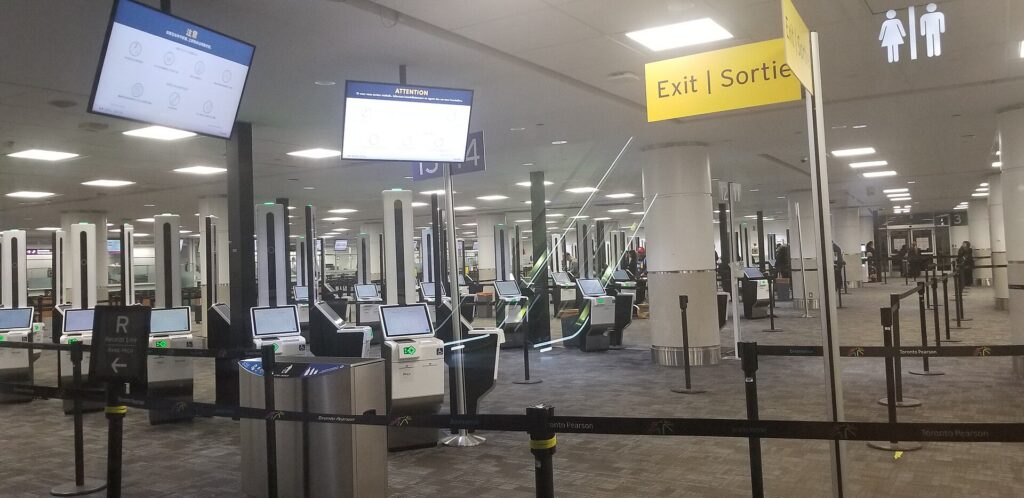
    Border inspection kiosks in the Terminal 3 arrivals hall at Toronto Pearson
    Pearson has the widest choice of flights, and international arrivals clear the border here (Photo: Silver Dovelet via Wikimedia Commons, CC BY-SA 4.0)

    Flying from within Canada

    Toronto is the biggest domestic hub in the country, with frequent flights from every major Canadian city. Air Canada, WestJet and Porter all fly to Toronto, and low-cost airlines serve some routes. A few things are worth knowing:

    • Busy business corridors. Routes such as Montreal, Ottawa, Calgary and Vancouver to Toronto carry many business travelers, so weekday peak flights are pricier. Midday, Saturday and midweek flights are often cheaper.
    • Compare airports on both ends. From Montreal or Ottawa, both Pearson and Billy Bishop are often options; from Vancouver or Calgary, you will almost always land at Pearson.
    • Check the train and the car for short trips. From Montreal and Ottawa, the train or a drive can compete with flying door to door. Our Toronto to Montreal and Toronto to Ottawa road trip pages cover those routes.
    • Know your protections. Canada’s Air Passenger Protection Regulations set out what airlines owe you for delays, cancellations and denied boarding.

    Canadian air fares are advertised with all mandatory taxes and fees included, but optional extras such as checked bags and seat selection are not, so compare totals with the extras you need. Our guide to carry-on size rules compares Canadian and U.S. airline limits.

    Flying from the United States

    Transborder flights to Toronto arrive from dozens of U.S. cities, with the heaviest traffic from the Northeast, Chicago, Florida and major hubs. The route from New York is one of the busiest in North America; our guide to cheap flights from New York to Toronto covers it in detail, including all six airport combinations.

    • Documents: the Government of Canada says U.S. citizens do not need an eTA but must carry proper identification such as a valid U.S. passport. U.S. lawful permanent residents are also eTA-exempt but need a valid passport and a valid green card. Check the official eTA page before you travel.
    • On arrival: you clear Canadian border formalities in Toronto. The Canada Border Services Agency explains what to bring and declare on its travel documents page.
    • On the way home: Toronto Pearson has U.S. preclearance, and Billy Bishop now offers it too, so you clear U.S. border formalities before departure. Arrive earlier than you would for a domestic flight.
    • Currency: fares may be shown in U.S. or Canadian dollars depending on where you book; compare in the same currency.

    Flying from overseas

    Toronto Pearson has nonstop flights from Europe, Asia, Latin America, the Caribbean and beyond, and many one-stop options through other hubs. For long-haul trips:

    • Book earlier. Two to six months ahead is a sensible window, and earlier still for summer and Christmas.
    • Compare nonstop and one-stop. A connection through a European or U.S. hub can be cheaper, but check transit rules; connecting through the United States means going through U.S. border formalities even in transit.
    • Check entry requirements. Most visa-exempt travelers need an eTA to fly to Canada, and some nationalities need a visitor visa. Apply well before you book nonrefundable travel.
    • Consider an open-jaw trip. Flying into Toronto and home from Montreal or Vancouver can be a smart way to see more of Canada.

    Our international flights booking tips cover routings, layovers and hidden costs in more depth, and our guide on how early to arrive for an international flight explains check-in deadlines.

    When to book

    TripSensible booking window
    Domestic Canada, ordinary datesAbout 1 to 3 months ahead
    From the U.S., ordinary datesAbout 1 to 3 months ahead
    Summer, long weekends, the film festival, holidaysAbout 2 to 4 months ahead, or as soon as plans are firm
    From overseasAbout 2 to 6 months ahead
    Last minuteSometimes fine on busy domestic routes midweek; rarely cheap on peak dates

    The method is the same everywhere: start searching early to learn what a normal fare looks like, set a price alert, and book when the fare meets that level. Our fare calendar on the flight search shows prices across the whole month so you can see the cheap days at a glance. Waiting for a last-minute deal on a popular date usually costs more, not less.

    A ferry crossing Toronto harbor to the Toronto Islands
    A ferry ticket buys the best skyline view in the city (Photo: Jason Zhang via Wikimedia Commons, CC BY-SA 3.0)

    Getting from the airport to downtown

    • UP Express from Pearson: the UP Express train runs between Pearson and Union Station downtown. The operator describes the trip as 28 minutes, with trains every 15 minutes. It is the fastest and most predictable way downtown.
    • TTC from Pearson: public buses connect Pearson with the subway. It is the cheapest option and slower, but useful if you are staying outside downtown. Routes and fares are on the TTC website.
    • Taxis and ride-hailing from Pearson: convenient with luggage or a group, but traffic on the highways into the city can be heavy at rush hour.
    • From Billy Bishop: walk through the pedestrian tunnel or take the short ferry to the mainland, then walk, take a streetcar, use the airport shuttle to Union Station or grab a taxi.

    Do you need a car? For a downtown trip, usually not: transit, walking and taxis cover most of what visitors want, and hotel parking is expensive. For day trips to Niagara or cottage country, a car helps. Our guide to renting a car or using transit in Toronto weighs it up, and you can compare prices on Toronto car rentals.

    Stopovers and connections in Toronto

    Many travelers pass through Toronto Pearson on the way somewhere else: between Europe and the Americas, between the Caribbean and Western Canada, or between smaller Canadian cities. If your itinerary includes a long connection, it can be worth turning it into a short stopover. The UP Express makes downtown easy to reach, so even a single night lets you see the waterfront, eat well and see the skyline from the CN Tower or the islands.

    • Check whether a stopover changes the fare. Sometimes adding a night or two in Toronto costs little or nothing extra; sometimes it prices the trip as two separate journeys. Search it both ways.
    • Know the entry rules. Leaving the airport means entering Canada, so you need the right documents, such as an eTA or visa where required. Some travelers in transit also need an eTA or transit visa even if they stay airside, so check the official rules for your passport.
    • Allow enough time on a tight connection. Pearson is large, and connections between international, transborder and domestic flights can involve border formalities and security. The airport’s connections page explains the process.
    • Stay near the airport for very early departures. Airport hotels make sense before a dawn flight; for anything longer, downtown is the better base.

    Traveling to Toronto with kids

    Toronto is an easy family city, with the aquarium at the foot of the CN Tower, the Royal Ontario Museum’s dinosaur galleries, the islands’ beaches and a children’s amusement area, and a zoo on the east side of the city. For families, timing matters even more than usual: flights and hotels are most expensive during summer holidays, March break and the Christmas period. If your children are young enough to travel outside school holidays, the savings can be substantial. Book family rooms early, because they sell first, and check seat selection rules on your fare so you can sit together. Our guide to the best time to book hotels for family vacations has more on timing.

    Where to stay

    AreaWhy stay there
    Entertainment DistrictClose to the CN Tower, theaters, Union Station and the waterfront; easy from both airports
    Financial District and waterfrontCentral, close to the island ferry and Billy Bishop; busy on weekdays, quieter at weekends
    Yorkville and the AnnexUpscale shopping, the Royal Ontario Museum, leafy streets
    Old Town and the Distillery DistrictHistoric streets, the St. Lawrence Market, restaurants
    Near PearsonConvenient for early flights and short stopovers, far from downtown sights

    Downtown business hotels are often cheaper on Friday and Saturday nights, when the weekday corporate guests have gone home, which makes Toronto a good weekend destination. Compare prices on our Entertainment District hotels page or all Toronto hotels, and book a refundable rate so you can rebook if the price drops. Our guide to booking hotels in Canada has more tips.

    A simple plan for a first long weekend

    If you are flying in for three or four days, a loose plan helps you choose the right hotel and the right flight times. Arrive early on the first day if you can, so you have an afternoon for the waterfront and the CN Tower area. Spend a day on culture, with the Royal Ontario Museum or the Art Gallery of Ontario in the morning and Kensington Market and Chinatown for lunch and a wander. Give another day to the Toronto Islands in warm weather, or to the Distillery District and the St. Lawrence Market in the colder months, and finish with a game, a show or dinner in one of the city’s many neighborhoods. Save Niagara Falls for a longer trip, or for a day when you have a car or a tour booked. Booking a late-afternoon or evening flight home gives you one more morning in the city, but on the way to the United States, leave time for preclearance.

    Keeping the whole trip affordable

    • Use transit. The TTC covers downtown and beyond; a day of subway and streetcars costs far less than taxis.
    • Take the ferry to the islands. The islands offer beaches, bike paths and the best skyline view in the city for the price of a ferry ticket.
    • Eat in the markets and neighborhoods. The St. Lawrence Market, Kensington Market and the city’s many neighborhood restaurants are good value.
    • Check free and discounted museum times. Some museums and galleries offer free or reduced admission at set times; check their websites.
    • Stay over a weekend. Downtown hotels are often cheaper on Friday and Saturday nights.
    • Travel light. A carry-on-only trip avoids checked bag fees on the cheapest fares.

    Common mistakes to avoid

    • Booking during the film festival or a festival weekend by accident. Check the events calendar first.
    • Ignoring Billy Bishop. For a downtown stay, it can save time and taxi fares.
    • Choosing a distant airport without doing the math. Hamilton and Buffalo only make sense with a large saving.
    • Forgetting the eTA. Most visa-exempt travelers who are not U.S. citizens need one to fly to Canada.
    • Underestimating the return. U.S.-bound travelers clear preclearance before departure; arrive early.
    • Renting a car for a downtown trip. Parking and traffic make it poor value.
    • Comparing base fares instead of totals. Add bags and seats before choosing.
    Brick streets and Victorian industrial buildings in Toronto's Distillery District
    Neighborhoods like the Distillery District make Toronto an easy weekend trip (Photo: Alonso Inostrosa Psijas from Santiago, Chile via Wikimedia Commons, CC BY-SA 2.0)

    Frequently asked questions

    What is the cheapest month to fly to Toronto?

    Winter months such as January and February are usually the cheapest, outside holiday weekends and school breaks. Late spring and October are good value with better weather.

    Which Toronto airport is cheaper to fly into?

    Pearson usually has the most flights and the widest range of fares, but Billy Bishop can be the cheaper trip overall if you are staying downtown, because the transfer is so short.

    How far in advance should I book a flight to Toronto?

    About one to three months ahead from within Canada or the U.S., and two to six months ahead from overseas. Book earlier for summer, holidays and the film festival.

    Do I need an eTA to fly to Toronto?

    U.S. citizens do not need an eTA, but they must carry proper identification such as a valid passport. Most other visa-exempt travelers do need an eTA, and some nationalities need a visa. Check the Government of Canada’s eTA page before you book.

    How do I get from Pearson to downtown Toronto?

    The UP Express train runs to Union Station in about 28 minutes, according to the operator, with trains every 15 minutes. TTC buses, taxis and ride-hailing are alternatives.

    Is Toronto expensive to visit?

    Hotels in peak season and during big events can be pricey, but winter and shoulder-season trips, weekend hotel rates, good transit and affordable neighborhood food make a budget trip very achievable.

    Are last-minute flights to Toronto ever cheap?

    Occasionally on busy domestic routes midweek, when airlines have seats to fill. On peak dates and weekends, prices usually rise as departure approaches.

    Can I combine Toronto with other Canadian cities?

    Yes. Montreal and Ottawa are close enough for a train or drive, and flights connect Toronto with every major Canadian city. See our guides to flying to Montreal and things to do in Ottawa.

    Ready to plan your Toronto trip? Search a whole month of fares on our Toronto flights page to find the cheapest days, check what is on with our Toronto events listings, and compare rooms for the same dates on our Toronto hotels page. For more on timing, read our guide to the best time to book cheap flights and hotels.