Tag: Car Rental

  • New York: Should You Rent a Car or Rely on Public Transit?

    New York: Should You Rent a Car or Rely on Public Transit?

    New York is the one city in America where the answer to “should I rent a car?” is almost always no. It has the largest rapid transit system on the continent, running around the clock, a street grid built for walking, a free ferry, a bike-share network across four boroughs and more taxis than anywhere else in the country. It is also the hardest, slowest and most expensive place in the United States to drive and park: garages charge by the hour at rates that would pay for a hotel room elsewhere, street parking is governed by rules that confound locals, and most of Manhattan now sits inside a congestion toll zone. Fewer than half of New York households own a car, and visitors have even less reason to, though a car does make sense for some day trips. This guide explains how the city is laid out, how the subway, buses, trains and ferries work and what they cost, what driving here is really like, when a car earns its keep, and gives you a straightforward way to decide.

    The short answer

    Skip the car for any trip based in Manhattan, Brooklyn or Queens, which is nearly every visit. The subway, your feet, the ferries and the occasional taxi will get you everywhere a first-timer wants to go, faster than a car and for a fraction of the cost. Rent a car only for the days it is genuinely needed: a trip to the Catskills, the Hamptons, the North Fork, Bear Mountain or somewhere else the trains do not reach well, a visit to family in the suburbs, or a longer road trip up the coast or into New England. Even then, pick it up on the morning you leave the city and return it when you come back, so that you never pay to park it overnight in Manhattan. If a car is on the list, compare rates for your dates on our car rental search.

    How New York is laid out

    New York is five boroughs spread across islands and a peninsula at the mouth of the Hudson. Manhattan, the long, narrow island at the center, is where most visitors spend most of their time. North of about 14th Street it is a grid: numbered streets run east to west and rise as you go north, and avenues run north to south, with Fifth Avenue dividing the East Side from the West Side. Below 14th Street, in the Village, SoHo and the Financial District, the older streets have names and wander. Twenty north-south blocks make roughly a mile, and crosstown blocks between avenues are much longer. Brooklyn and Queens share Long Island to the east, across the East River; the Bronx is the only borough on the mainland, to the north; and Staten Island sits in the harbor to the southwest. New Jersey is across the Hudson to the west, with Jersey City and Hoboken closer to Midtown by train than much of Queens.

    Hotels cluster in Midtown around Times Square and the theaters, in Lower Manhattan, in Chelsea and the Village, and increasingly in Long Island City, Downtown Brooklyn and Williamsburg, one or two subway stops from Manhattan. The best rule for choosing one is proximity to a station served by several lines. Our New York hotel search lets you compare them.

    Getting in from the airports

    New York has three major airports, and none of them is on the subway directly. From JFK, in southeast Queens, the AirTrain links every terminal to Jamaica station, where you can take the Long Island Rail Road to Penn Station or Grand Central Madison in about 20 minutes, or the E train into Midtown; a second AirTrain branch reaches the A train at Howard Beach. The AirTrain charges a separate fare when you leave or enter at Jamaica or Howard Beach. Yellow taxis charge a flat fare from JFK to anywhere in Manhattan, plus tolls, surcharges and tip; the drive takes 45 minutes to well over an hour. From LaGuardia, in northern Queens, the Q70 LaGuardia Link bus runs to the subway at Jackson Heights and Woodside, and a taxi to Midtown takes 25 to 45 minutes. From Newark, in New Jersey, the AirTrain runs to Newark Liberty International Airport station, where NJ Transit and Amtrak trains reach Penn Station in about half an hour. Every airport has rental counters, but unless you are driving straight out of the city, there is no reason to use them on arrival. The JFK airport site covers current ground-transport options; our JFK airport guide covers the layout.

    An A train at the 42nd Street station in Midtown Manhattan
    The subway runs 24 hours a day and is the fastest way around the city (Photo: 4300streetcar via Wikimedia Commons, CC BY 4.0)

    New York’s transit, explained

    The Metropolitan Transportation Authority runs the subway, the city buses and the two commuter railroads. The system is huge, busy and imperfect, with weekend service changes and the occasional delay, but it is the fastest way around the city at almost any hour, and for a visitor it is one of the great bargains of the trip.

    The subway

    More than 400 stations on some two dozen services, identified by a letter or a number and a color, reach every borough except Staten Island, and the system runs 24 hours a day. Most Manhattan lines run north to south, with a few crosstown connections, such as the 7 and the shuttle across 42nd Street and the L across 14th Street. The two things that trip up visitors are express and local trains, which share the same tracks and platforms but skip different stations, and uptown and downtown entrances, which at some stations are on opposite sides of the street with no connection underground. Check the sign above the entrance and the train’s letter or number before you board, and use a transit app or the maps on the platforms for weekend changes.

    Buses

    City buses cover every borough, including the crosstown routes across Manhattan that the subway lacks and the neighborhoods of Brooklyn and Queens between subway lines. Select Bus Service routes, marked with blue lights, run limited stops with bus lanes. They are slower than the subway in Midtown but useful for anyone who cannot manage stairs.

    Commuter rail and PATH

    The Long Island Rail Road, from Penn Station and Grand Central Madison, and Metro-North, from Grand Central Terminal, serve the suburbs, the Hudson Valley and Long Island, and are the way to the beaches and the day trips. Both sell a reduced-fare ticket for trips within the city limits. PATH trains, run by the Port Authority, cross under the Hudson to Hoboken, Jersey City and Newark from stations along Sixth Avenue and at the World Trade Center, and use their own fare system. NJ Transit runs trains and buses to New Jersey from Penn Station and the Port Authority Bus Terminal.

    Fares and tickets

    Pay for the subway and buses by tapping a contactless credit or debit card, a phone or a watch on the OMNY reader at the turnstile or the bus door; the old MetroCard is being phased out, and reloadable OMNY cards are sold for anyone who prefers cash. One fare covers a single trip of any length, with a free transfer between subway and bus, or bus and bus, within two hours. The fare cap is the best deal for visitors: tap the same card or device every time, and after a set number of paid rides in any seven-day period, the rest of the rides in that period are free, with no pass to buy in advance. Children 44 inches (112 cm) and under ride free with a paying adult. Express buses, the commuter railroads and the AirTrain charge separate, higher fares. Check the MTA’s site for current fares before you go.

    Accessibility

    Every city bus is low-floor and accessible, but only around a third of subway stations have elevators, and many of those are on a single line at a complex. The MTA is adding elevators steadily and its map marks accessible stations; if you are traveling with a wheelchair, a stroller or heavy luggage, choose a hotel near an accessible station and check the elevator status before setting out.

    Beyond the subway

    • Walking. Manhattan is the most walkable place in North America, and walking between neighboring areas, Midtown to Chelsea, the Village to SoHo, the Lower East Side to Chinatown, is often faster than going underground.
    • Citi Bike. The bike-share network has thousands of docking stations across Manhattan, much of Brooklyn and Queens, the Bronx, and Jersey City and Hoboken, with pedal and electric bikes, single rides and day passes. Protected bike lanes run along many avenues and the Hudson River Greenway.
    • The ferries. The Staten Island Ferry is free, runs around the clock, and passes the Statue of Liberty. NYC Ferry routes cross the East River to DUMBO, Williamsburg, Long Island City and Astoria, and reach the Rockaway beaches in summer, for a fare close to a subway ride and with far better views.
    • Taxis and ride-hail. Yellow cabs cruise Manhattan and the airports; Uber and Lyft operate everywhere. Both are quick late at night and competitive for three or four people on short trips, and painfully slow in Midtown traffic during the day. Surcharges apply to trips in the congestion zone.
    • Intercity trains and buses connect New York with Philadelphia, Washington, Boston and beyond from Penn Station, Grand Central and the Port Authority Bus Terminal. Amtrak runs the Northeast Corridor.

    The Staten Island Ferry crossing the harbor with the Statue of Liberty behind
    The Staten Island Ferry: free, around the clock, and past the Statue of Liberty (Photo: Daniel Schwen via Wikimedia Commons, CC BY-SA 4.0)

    Driving in New York: what it is really like

    Driving in New York is not dangerous so much as slow, expensive and stressful. Midtown traffic often moves at walking pace during the day. Streets are crowded with delivery trucks double-parked in the travel lane, taxis stopping without warning, cyclists, pedestrians who cross on the local interpretation of the signals, and construction that closes lanes with little notice. The highways in and out of the city, the FDR Drive, the West Side Highway, the Brooklyn-Queens Expressway, the Cross Bronx Expressway and the Long Island Expressway, are among the most congested roads in the country at rush hour and on summer weekends.
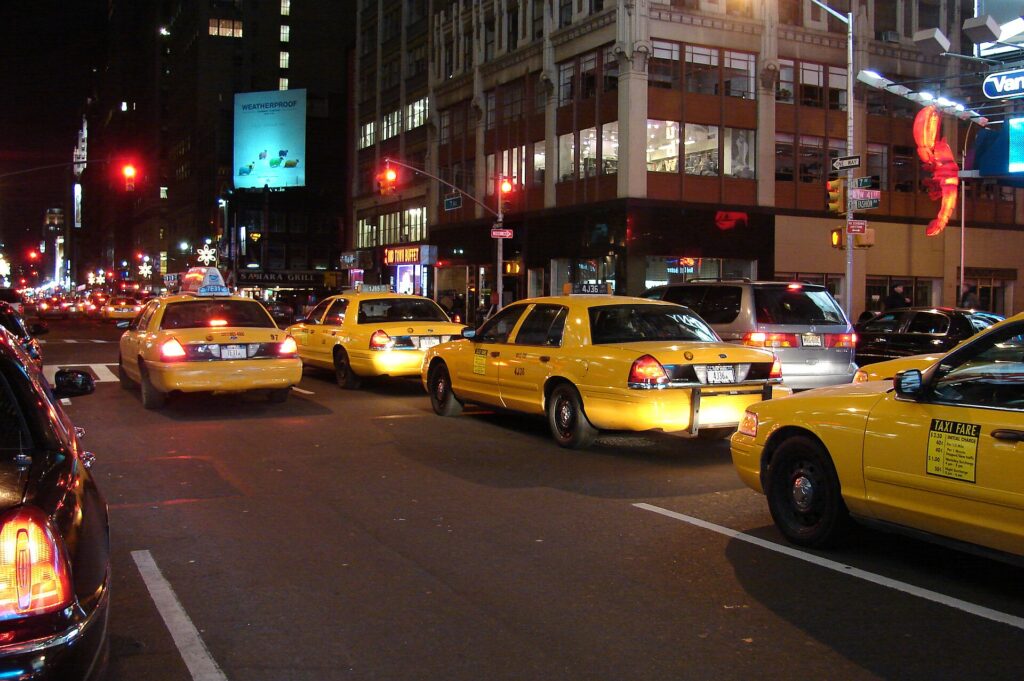
    Yellow taxis on a Manhattan street at night
    Yellow cabs in Manhattan: quick late at night, slow in daytime Midtown traffic (Photo: Loadmaster (David R. Tribble

    This image was made by Loadmaster (David R. Tribble).
    Email the author: David R. Tribble
    Also see my personal gallery at Google Photos via Wikimedia Commons, CC BY-SA 3.0)

    Parking

    Parking is where a car in New York becomes truly expensive. Manhattan garages charge by the hour at high rates, with the daily maximum at many Midtown garages rivaling a budget hotel room, and hotel valet parking is typically charged per night on top of the room. Street parking exists, but it is scarce, and every block has its own signs: alternate-side parking rules that require you to move the car for street cleaning on certain mornings, metered zones, commercial zones, no-standing zones and hydrants, with tickets and tows enforced aggressively. Booking a garage space in advance through a parking app is the most reliable way to control the cost if you must bring a car into the city.

    Rules and conditions worth knowing

    • Congestion pricing. Driving into Manhattan south of 60th Street incurs a daily congestion toll, charged automatically by license plate, on top of any bridge or tunnel toll. Check the MTA’s site for current rates and hours.
    • Tolls are cashless. Most bridges and tunnels into and out of the city charge tolls by transponder or by license plate. Rental companies pass these on, usually with a daily administration fee for their toll program; ask at the counter how it works and what it costs.
    • No right turn on red anywhere in New York City unless a sign specifically allows it, which is unlike the rest of the country.
    • Parkways ban commercial vehicles. The Henry Hudson, Taconic, Belt, Grand Central and other parkways have low stone bridges; cargo vans and trucks are prohibited, and that includes rental moving vans.
    • Speed and red-light cameras operate across the city, including school-zone speed cameras at all hours; fines follow the car, and the rental company will bill you with a fee on top.
    • Do not block the box. Entering an intersection you cannot clear is a ticketable offense, and gridlock enforcement is common in Midtown.
    • Young drivers. New York State requires rental companies to rent to drivers aged 18 and over, but the young-driver surcharge under 25 is steep.
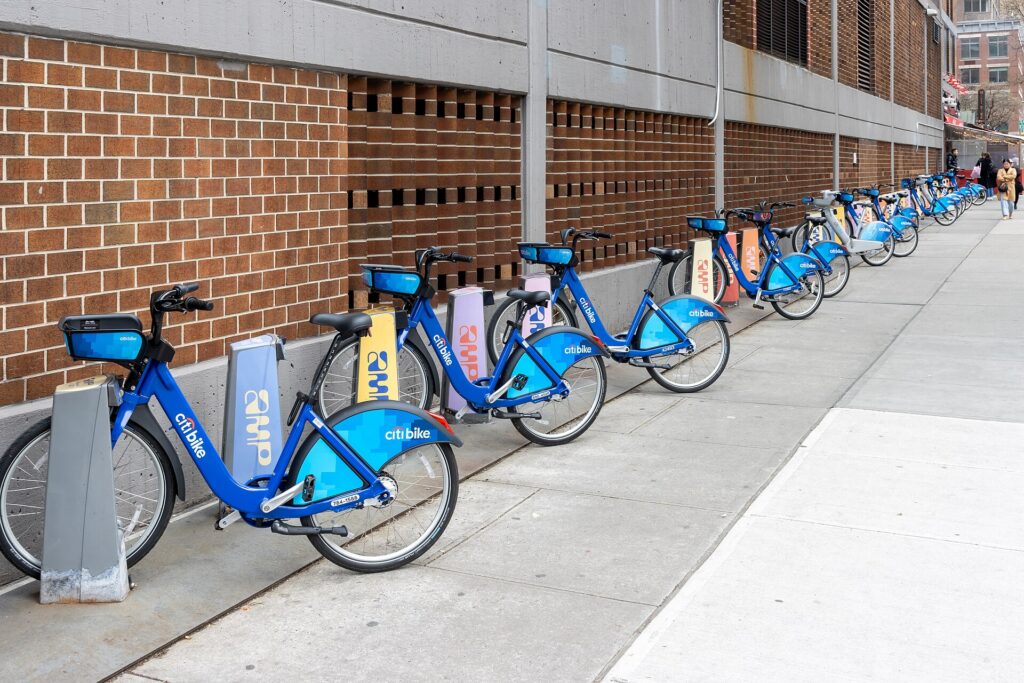
    A row of Citi Bikes docked on 42nd Street in Manhattan
    Citi Bike docks cover Manhattan, much of Brooklyn and Queens, and the Jersey waterfront (Photo: Photograph by Mike Peel (www.mikepeel.net). via Wikimedia Commons, CC BY-SA 4.0)

    When renting a car makes sense

    • The Catskills and the upper Hudson Valley. Hiking trails, small towns and farm stays are spread out and poorly served by transit.
    • The Hamptons, Montauk and the North Fork. The Long Island Rail Road reaches them, but a car makes it possible to move between beaches, vineyards and farm stands.
    • Bear Mountain, Storm King Art Center and Woodbury Common. All are an hour or so up the Hudson and easier by car.
    • Family in the suburbs. Visiting relatives in Westchester, Long Island or New Jersey often means a car.
    • Road trips. New York to New England, the Jersey Shore, or down to Philadelphia and Washington; our Philadelphia, Boston and Washington car rental pages cover onward trips.

    If any of those apply, our rental car booking tips cover insurance, deposits and the questions to ask at the counter, and our family car rental guide looks at vehicle choice.

    When it does not

    • You are staying in Manhattan, Brooklyn or Queens and your plans are the city itself.
    • You are in town for Broadway, museums, a conference, a concert or a game; every major venue is on the subway or the commuter rail.
    • Your day trips are to the Hudson Valley towns on the Metro-North line, the beaches on the LIRR or the subway, or Philadelphia, Washington and Boston by train.
    • You are traveling solo or as a couple, when even occasional taxis cost far less than a rental plus parking.

    The hybrid plan for a city-plus-country trip

    Go car-free for the city days and rent only for the days out of town, and think carefully about where you pick up. Rental locations in Manhattan are convenient but tend to be pricier, with limited hours at some branches, and driving out means crossing Midtown traffic and a toll bridge or tunnel. Locations near the edge of the city, in upper Manhattan, the outer boroughs, or across the Hudson in Jersey City and Hoboken, are often cheaper and put you straight onto the highway toward the Hudson Valley or New Jersey. The airports have the largest fleets and the longest hours, and a common pattern works well for travelers heading out at the end of the trip: spend the city days car-free, take the train or a taxi to the airport, pick up a car there for the country days, and return it at the same airport before your flight home. The worst option is renting on arrival and paying to park in Manhattan for days while riding the subway. Compare the rates for your country days on our car rental search against a full-trip rental and the difference is usually obvious.

    A worked cost comparison

    Numbers change with the season and the booking window, so treat this as a method rather than a quote, and check current rates before deciding. For a four-night city break in Midtown for two people, the car-free version costs the airport transfer, a week of subway rides that the fare cap limits automatically, and perhaps a couple of late-night taxis; the rental version adds four days of a compact car, four nights of hotel or garage parking at Manhattan rates, daily congestion tolls, bridge and tunnel tolls, the rental company’s toll-program fees and fuel. The transit option wins by a very wide margin. For the same four nights with one day in the Hudson Valley, the car-free version adds two Metro-North round trips to Beacon or Cold Spring; the hybrid version adds a one-day rental, tolls and fuel. For two people the train is usually cheaper and more relaxing; for four, a day rental from an edge-of-city location can be competitive, and it wins on flexibility if you want to combine several stops. For a week split between the city and the Catskills or the Hamptons, a rental for the country days is the practical answer, and the saving from not parking it in Manhattan for the city days more than pays for the extra trip to collect it. Run the rental rates for your dates on our car rental search and put them beside the train fares before you choose.

    Driving out of New York in each season

    The roads out of the city are where most visitors meet New York traffic, and timing matters more than route. In summer, the problem is the weekend exodus: the Long Island Expressway eastbound toward the Hamptons on Friday afternoon, the Garden State Parkway south to the Jersey Shore, and the Thruway north to the mountains all jam from early afternoon, with the return on Sunday afternoon just as bad. Leave before noon on Friday or early Saturday, and come back Sunday morning or Monday. Holiday weekends, Memorial Day, the Fourth of July and Labor Day, are the worst of the year. In fall, the foliage weekends in October bring the same pressure to the Hudson Valley and the Catskills, particularly on the Taconic and the Palisades parkways, which are beautiful drives and narrow, winding ones. In winter, snowstorms and nor’easters close roads and slow the highways, rental cars rarely come with winter tires, and the mountain roads in the Catskills and the Berkshires can be icy when the city is only wet; check 511NY for conditions before you leave, and be ready to postpone. In every season, avoid leaving or entering Manhattan between about 7 and 10 in the morning and 4 and 7 in the evening on weekdays, and budget far more time than a map suggests for any crossing of the Hudson or East River.

    Decision table

    Your tripRecommendationWhy
    City break in Manhattan, couple or soloNo carThe subway, walking and the fare cap cover everything; parking would cost more than it saves
    Family trip based in the cityNo carChildren ride free up to a height limit, and taxis fill the gaps
    Broadway, museums, a conference or a gameNo carEvery venue is on transit, and Midtown parking is the most expensive in the country
    City plus a Hudson Valley dayMetro-North, or a one-day rentalBeacon and Cold Spring are on the train; wider exploring suits a car
    City plus the Hamptons, North Fork or CatskillsHybrid: rent only for those daysPick up at the edge of the city or the airport, and never park in Manhattan
    Visiting family in the suburbsRent for the whole staySuburban distances make the car worthwhile daily
    Northeast road tripRent at the end of your city daysStart driving when you leave the city, not before
    Philadelphia, Washington or Boston side tripTrainAmtrak runs center to center, faster than driving in traffic

    Money-saving tips for both options

    • On transit: tap the same card or phone for every ride so the weekly fare cap kicks in; walk short hops; use the free Staten Island Ferry instead of a harbor cruise; and take the train, not a taxi, from JFK and Newark when traffic is heavy.
    • On a rental: compare Manhattan, outer-borough, New Jersey and airport pickups, rent only for the days you leave the city, ask how the toll program is charged, decline extras you already have through a credit card or home policy (check first), and book ahead for summer weekends and fall foliage season.
    • On the hotel: if you are driving, price parking into the room rate; hotels in Long Island City, Jersey City and Hoboken often have cheaper parking and fast trains to Manhattan.
    • On timing: avoid driving in or out of Manhattan in the weekday peaks and on Friday afternoons in summer; the best time to fly to New York guide lists the busiest weeks of the year.

    Frequently asked questions

    Is it worth renting a car in New York?

    Almost never for the city itself. Rent only for day trips or onward travel that the trains do not cover, and only for those days.

    Is the New York subway good for tourists?

    Yes. It runs 24 hours, reaches nearly everything a visitor wants to see, and the weekly fare cap makes it very cheap. Learn the difference between express and local trains and you will be fine.

    How do I pay for the subway?

    Tap a contactless card, phone or watch on the OMNY reader at the turnstile. Use the same one every time so the fare cap applies.

    How do I get from JFK to Manhattan?

    The AirTrain to Jamaica and then the Long Island Rail Road or the E train, or a yellow taxi at a flat fare plus tolls and tip.

    How much does parking cost in Manhattan?

    A lot. Garage rates in Midtown can rival a budget hotel room for a full day, and hotels charge per night. Booking a space in advance through an app is the cheapest reliable option.

    What is congestion pricing?

    A daily toll for driving into Manhattan south of 60th Street, charged automatically by license plate. Rental companies pass it on to you with their toll fees.

    Can I visit the Hudson Valley without a car?

    Yes. Metro-North trains from Grand Central reach Beacon, Cold Spring and other river towns, with Dia Beacon and hiking trails a short walk from the stations.

    Whichever way you go, start with the flight. Compare cheap flights to New York, choose a neighborhood with our New York hotel search, and for what to see once you arrive, read our first-timer’s guide to New York.

  • London: Should You Rent a Car or Rely on Public Transit?

    London: Should You Rent a Car or Rely on Public Transit?

    London is the easiest city in this series to answer. For almost every visitor, the honest answer to “should I rent a car?” is no, and it is not close. The city has one of the most extensive public transport networks in the world, run under one authority with one way of paying, and it reaches every sight, neighbourhood, station and airport a visitor is likely to need. Driving in central London, meanwhile, means a daily congestion charge, a city-wide emissions zone, streets laid out long before cars, parking that is scarce and priced accordingly, traffic on the left and journeys that are usually slower than the Tube. The exceptions are real but narrow: a road trip into the English countryside, a family visit deep in the outer suburbs, or a traveller for whom stairs and crowds are a genuine barrier. This guide explains how the city is laid out, how the Underground, buses and trains work and what they cost, what driving here is really like, when a car genuinely earns its keep, and gives you a straightforward way to decide.

    The short answer

    Do not rent a car for London itself. That covers the sights of Westminster, the South Bank, the City, the museums of South Kensington, the markets and neighbourhoods, Greenwich, Kew and Hampton Court, and it covers the classic day trips to Windsor, Oxford, Cambridge, Bath, Brighton and Canterbury, all of which are faster and less stressful by train. Tap a contactless card or phone at the gates, let the daily cap protect you from overpaying, and walk between the central sights. Rent a car only for the parts of a trip that leave London behind: the Cotswolds, the south coast, Devon and Cornwall, the Lake District or a rural cottage, where villages and trailheads sit beyond the railway. Even then, the smart move is to collect the car on the day you leave the city, never on the day you arrive. If a road trip is on the itinerary, compare pickup locations on our car rental search and read on for the details.

    How London is laid out

    London is not a grid but a collection of villages that grew together along the Thames, and it shows. The river curves east to west through the middle of the city; the West End (Soho, Covent Garden, Mayfair and the shopping streets), Westminster with Parliament and the palaces, and the City of London, the old walled Square Mile that is now the financial district, all sit on the north bank, while the South Bank, Southwark and Borough face them across the water. South Kensington’s museums and Hyde Park lie west of the centre, Camden and Regent’s Park to the north, Shoreditch and the East End to the east, and Greenwich downriver to the southeast. Beyond that, Greater London sprawls for more than 1,500 square kilometres inside the M25 orbital motorway, with Heathrow on its western edge. Transport fares are organised in zones, from Zone 1 in the centre out to Zone 6, where Heathrow sits, and beyond; nearly every sight a first-time visitor needs is in Zones 1 and 2.

    Hotels cluster in the West End and Covent Garden, around Paddington, King’s Cross and Victoria stations, in South Kensington and Earl’s Court, along the South Bank and in the City, and increasingly in Shoreditch, Canary Wharf and Stratford, where rates are lower and the Elizabeth line and Jubilee line put the centre within a few stops. Almost none of the central hotels have parking, which tells you something about how London expects its visitors to travel. Our hotel booking tips explain how to find the best rate by area.

    Getting in from the airport

    From Heathrow, the main long-haul airport, there are three good rail options and no good reason to drive. The Elizabeth line runs from the Heathrow stations straight through Paddington, Bond Street, Tottenham Court Road, Farringdon, Liverpool Street and on to Canary Wharf without a change, and is the best all-round choice. The Heathrow Express reaches Paddington in about fifteen minutes for a premium fare, best booked in advance. The Piccadilly line is the cheapest ride, slower and busier but direct to Earl’s Court, Knightsbridge, Piccadilly Circus, Covent Garden and King’s Cross. A black cab or a ride-hail car into central London takes 45 minutes to well over an hour depending on traffic and is expensive; it makes sense only for a group with heavy luggage or for a hotel far from a station. From Gatwick, the Gatwick Express runs to Victoria and Thameslink trains to London Bridge, Farringdon and St Pancras; from Stansted, the Stansted Express runs to Liverpool Street; from Luton, a shuttle connects to trains at Luton Airport Parkway; and London City sits on the DLR, a few stops from Canary Wharf and Bank. Every major rental company has desks at Heathrow and Gatwick, which is useful on the way out of the country, not on the way in. Our Heathrow airport guide covers the terminals.

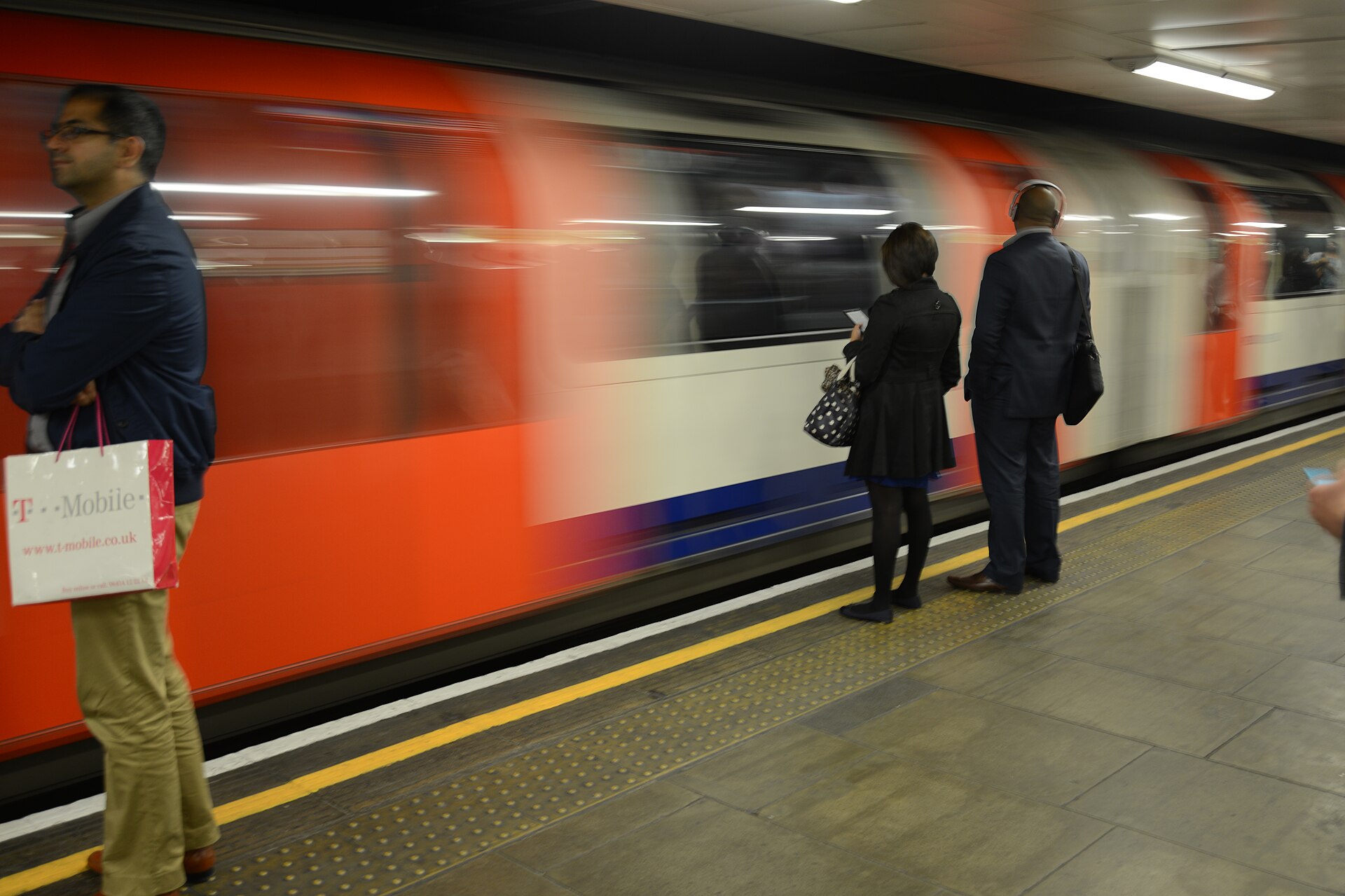
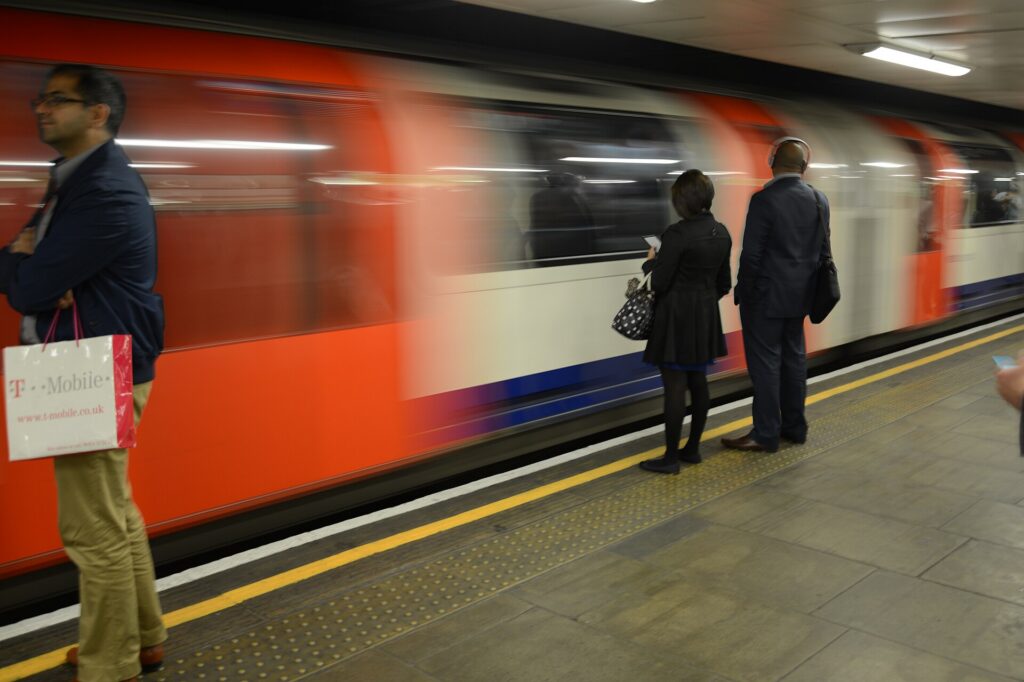
    A London Underground Central line train leaving Mile End station
    The Underground reaches almost every sight a visitor needs, with fares capped daily when you tap a contactless card (Photo: Aleem Yousaf via Wikimedia Commons, CC BY-SA 2.0)

    London’s public transport, explained

    Transport for London (TfL) runs the Underground, the Elizabeth line, the London Overground, the Docklands Light Railway, the trams and the bus network, and they all share one fare system. It is busy at rush hour and occasionally disrupted by engineering works at weekends, but it is frequent, extensive and easy to use, and for a visitor it removes any need for a car.

    The Underground

    The Tube is the oldest underground railway in the world and still the backbone of the city, with eleven lines, each with its own colour on the famous map, and around 270 stations. In central London, trains on the main lines come every two to five minutes through most of the day, and you rarely need to check a timetable. Some useful habits: stations in the centre are often closer together than the map suggests, and walking between Covent Garden and Leicester Square, or Charing Cross and Embankment, is quicker than riding; many central stations involve long corridors and stairs, so allow time; and the Victoria, Jubilee, Central, Northern and Piccadilly lines run the Night Tube on Friday and Saturday nights on all or part of their routes. Stand on the right on escalators and let passengers off before boarding, and you will blend in.

    The Elizabeth line, the Overground and the DLR

    The Elizabeth line, opened in 2022, is a fast, air-conditioned east-west railway that crosses the centre in a few minutes, linking Heathrow and Paddington to the West End, the City, Canary Wharf and Stratford; it is the most comfortable way across town. The London Overground, now divided into six named lines, circles the inner suburbs and reaches neighbourhoods such as Shoreditch, Dalston, Hackney and Camden Road that the Tube misses. The driverless Docklands Light Railway serves Canary Wharf, Greenwich and London City Airport, and a seat at the front of the train is one of the city’s best free views. Trams run in south London around Croydon and Wimbledon.

    Buses

    London’s red double-deckers run on hundreds of routes, many around the clock, and the top deck is the cheapest sightseeing tour in the city: routes through the West End, along the Strand and past St Paul’s cover many of the landmarks. Buses do not accept cash; you tap a contactless card, phone or Oyster card on boarding. The Hopper fare lets you make unlimited bus and tram journeys within one hour of the first tap for a single fare, and a bus fare is always cheaper than the Tube. Stops display the route numbers and a letter; the TfL journey planner and the common mapping apps show live arrivals.

    Fares and paying

    The simplest way to pay is to tap a contactless bank card or phone on the yellow readers at the gates and on buses, using the same card or device every time. Fares depend on the zones you travel through and the time of day, with higher peak fares on weekday mornings and late afternoons; the system caps what you pay automatically, both per day and, from Monday to Sunday, per week, so a heavy sightseeing day never costs more than a day pass would have. Check with your bank that your card does not charge foreign-transaction fees on each tap. An Oyster card, bought at stations, works the same way and suits visitors without a contactless card. Paper single tickets are far more expensive and not worth buying. Children under eleven travel free with a fare-paying adult. Check TfL’s site for current fares and caps before you go.

    Accessibility

    Accessibility is London’s weak point. The Elizabeth line, the DLR, the trams and every bus are step-free, and a growing share of Tube stations have lifts, but many older central stations still involve stairs and long passages. TfL publishes a step-free Tube map and its journey planner has a step-free option; for travellers with limited mobility, buses, the Elizabeth line and black cabs, which are all wheelchair accessible, cover most of what the Tube does.

    Beyond TfL

    • Walking. Central London is compact, and many of the best experiences, the South Bank from Westminster to Tower Bridge, the West End at night, the lanes of the City at the weekend, are walks. A first-time visitor can easily cover fifteen kilometres a day.
    • Cycling. The Santander Cycles docking bikes, known to everyone as Boris bikes, are available across the centre, and several dockless e-bike schemes operate through an app. Protected cycle routes now cross much of inner London, and Hyde Park and Regent’s Park are pleasant rides.
    • Black cabs and ride-hail. Licensed black cabs can be hailed on the street when the yellow light is on, are metered, and their drivers know the city by heart; Uber, Bolt and other apps operate everywhere. Both are expensive for long journeys in traffic but useful late at night or with luggage.
    • The river bus. Uber Boat by Thames Clippers runs a scheduled service along the Thames between west London, Westminster, the Tower, Canary Wharf and Greenwich, accepts contactless payment, and is the most enjoyable commute in the city.
    • National Rail. Mainline trains from the big termini (Paddington, King’s Cross, St Pancras, Euston, Victoria, Waterloo, London Bridge and Liverpool Street) serve the suburbs and every day-trip destination; National Rail has the timetables, and advance and off-peak tickets are much cheaper than buying on the day at peak.
    • Eurostar. High-speed trains from St Pancras reach Paris in a little over two hours and Brussels in about the same; Eurostar sells the tickets, and passport checks happen before you board.
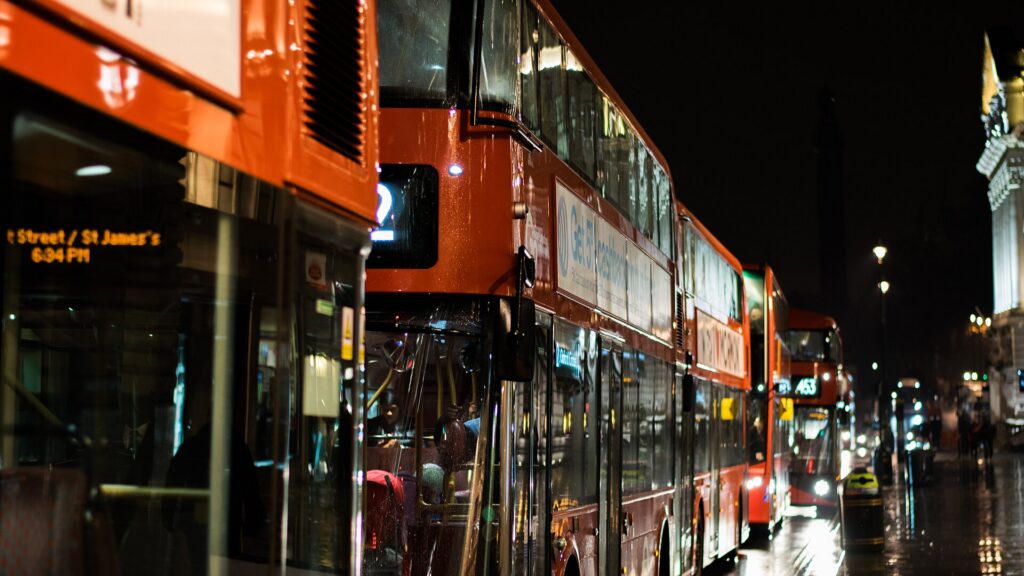
    A red double-decker bus on a London street at night
    London's buses are cashless, run around the clock on many routes, and the Hopper fare covers transfers within an hour (Photo: 0x010C via Wikimedia Commons, CC BY-SA 4.0)

    Driving in London: what it is really like

    Driving in central London is slow, expensive and stressful, and Londoners who own cars rarely use them to go into the centre. Traffic moves at walking pace for much of the day, the street plan is a medieval tangle of one-way systems, narrow lanes and junctions where five roads meet, and bus lanes, cycle lanes and red routes govern where you can drive and stop. On top of that, visitors drive on the left in cars that are usually manual unless they pay for an automatic, and navigate roundabouts clockwise. Two charges apply to drivers. The Congestion Charge is a daily fee for driving within the central zone during its operating hours, which cover the working day on weekdays and the afternoon and early evening at weekends and on bank holidays; it is charged per day however briefly you enter, and it has risen repeatedly. The Ultra Low Emission Zone (ULEZ) covers all of Greater London around the clock; most modern rental cars meet its standards, but confirm with the rental company, because a non-compliant car adds another daily charge. Neither charge is paid at a toll booth: cameras read the number plate and you pay online, and if you forget, the penalty goes to the rental company, which will pass it on to you with an administration fee.

    A Congestion Charge zone entry sign on a street in central London
    The Congestion Charge zone: cameras read every number plate, and the rental company passes on any penalty (Photo: Mark Ahsmann via Wikimedia Commons, CC BY-SA 3.0)

    Parking

    Parking is the other reason not to drive. Most central streets are controlled parking zones, reserved for residents with permits or metered by the hour at some of the highest rates in Europe and paid through apps rather than coins; commercial car parks in the centre charge by the hour at similar levels, and the few central hotels with garages charge heavily for them. Outside the centre, parking eases but rarely disappears: suburban high streets have short-stay limits, and the car parks at Kew, Hampton Court and the big parks fill on sunny weekends. If you do end up with a car in London, the cheapest option is often to leave it at a hotel or car park in the outer suburbs near a Tube or rail station and travel in by train.

    Rules and conditions worth knowing

    • Drive on the left and give way to traffic from the right at roundabouts. If you are not used to it, collect the car somewhere quieter than central London.
    • Licences. Visitors can drive in the UK on a valid Canadian or U.S. licence; ask the rental company whether it also wants an International Driving Permit, and note that many companies charge extra for drivers under 25.
    • Speed limits and cameras. A 20 mph limit now applies on many central and inner London roads, and fixed and average-speed cameras are everywhere; the fines follow the car.
    • Red routes and bus lanes. Red lines mean no stopping at all during their hours; bus lanes are camera-enforced during the hours on the sign.
    • River crossings. The Dartford Crossing on the M25 east of London charges a fee paid online, and the Blackwall and Silvertown tunnels in east London now charge as well.
    • The M25. The orbital motorway is the way around London and one of the busiest roads in Europe; allow extra time at rush hour, on Friday afternoons and on bank holiday weekends.
    • Fuel and cars. Fuel is expensive by North American standards and sold by the litre; rental cars are smaller than you may be used to, which is an advantage on country lanes.

    When renting a car makes sense

    • The Cotswolds. The honey-stone villages northwest of Oxford are served by a handful of stations, but moving between villages is far easier by car.
    • Stonehenge, Salisbury and Bath as a loop. Each is reachable by train and tour, but a car lets you combine them with Avebury and the Wiltshire countryside in a day or two.
    • The south coast, Devon and Cornwall. Coves, coastal paths and fishing villages sit well beyond the railway.
    • A countryside cottage or a wedding in a village. Rural England assumes a car, and taxis are scarce.
    • Family visits in the outer suburbs, where bus journeys can be long and the Tube does not reach.
    • Limited mobility. For travellers for whom stairs and crowds are a genuine barrier, a car for trips outside the centre can make sense, though black cabs are often the better answer within it.

    If any of those apply, our rental car booking tips cover insurance, deposits and the questions to ask at the counter, our family car rental guide looks at vehicle choice, and our note on car rental return timing helps you avoid late fees on the way to the airport.

    When it does not

    • Your trip is London itself, including Greenwich, Kew and Hampton Court.
    • Your day trips are Windsor, Oxford, Cambridge, Bath, Brighton, Canterbury or Paris, all faster by train.
    • You are staying anywhere in Zones 1 to 3, where parking alone would cost more than your transport.
    • You are travelling solo or as a couple, when rail tickets bought in advance are cheaper than a rental, fuel and charges.
    • You have never driven on the left and your first drive would be out of Heathrow in rush hour.

    The hybrid plan for a London-plus-countryside trip

    Spend the London days car-free, then collect a car on the day you leave the city, and think carefully about where you pick up. For the Cotswolds, Bath or the west, the best option is often to take the train to Oxford, Reading or Swindon and pick up a car there, skipping London traffic entirely. For the south coast or Kent, a pickup in a suburban branch or at Gatwick avoids the centre. Heathrow is a good choice at either end: collect a car there after your London days, heading west on the M4 or M40 without entering the city, or return it there before your flight home. Avoid collecting a car in central London, where you pay for parking before you have used it and start the trip in the most difficult driving conditions in the country. A pattern that works well: Elizabeth line from Heathrow into the city, four car-free days in London, a train to Oxford to pick up a rental, three days in the Cotswolds and Bath, and a return drop at Heathrow on the way to the flight. Book automatics early if you need one, because they are the first cars to sell out. Compare pickup locations on our car rental search before you fix the plan.

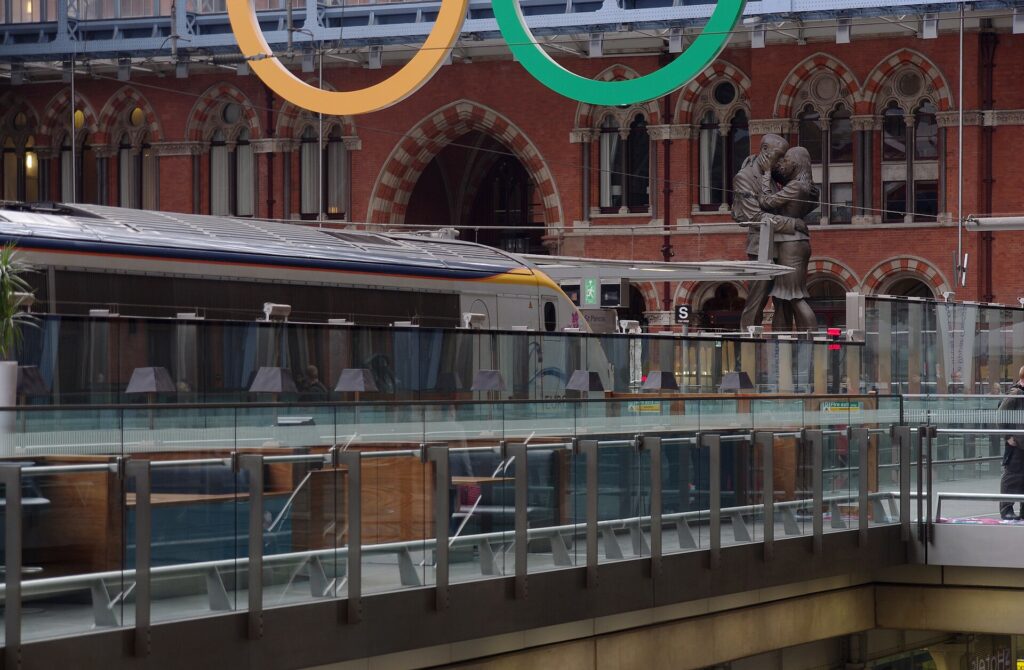
    Eurostar trains at London St Pancras International station
    St Pancras, where Eurostar trains leave for Paris and Brussels and fast domestic trains run to Kent (Photo: mattbuck (category) via Wikimedia Commons, CC BY-SA 3.0)

    A worked cost comparison

    Numbers change with the season and the booking window, so treat this as a method rather than a quote, and check current prices before deciding. For a five-night London trip for two people, the car-free version costs a return Elizabeth line or Piccadilly line journey from Heathrow for two, five days of capped contactless travel each, perhaps a river bus to Greenwich, and a black cab home after a late show; with the daily cap, even a heavy sightseeing day costs a modest fixed amount. The rental version adds five days of a car, five nights of central parking if you can find it, the Congestion Charge on every weekday and weekend afternoon you enter the zone, fuel, and journeys that are slower than the Tube. It is not a close contest, and the car-free option wins by a large margin. For the same five nights with day trips to Windsor, Oxford and Bath, the car-free version adds three rail return fares each, much cheaper when booked in advance for off-peak trains; driving adds the rental, fuel, parking in three busy tourist towns and the stress of leaving and re-entering London each day. The train still wins for two people, and usually for four. For a week split between London and the Cotswolds, the hybrid plan is the clear winner: car-free in the city, a train out to Oxford, and three or four days of a rental picked up there, with none of the London charges. Run the rental rates for your countryside days on our car rental search and set them beside the rail fares before you choose.

    Leaving London by road: the countryside in each season

    Once you are out of London, England is a pleasant place to drive, with good motorways, well-signed A-roads and country lanes that are narrow, hedged and beautiful. The challenge is getting out, and the timing matters in every season. In summer, the roads to the coast and the West Country are at their busiest on Friday afternoons and Saturday mornings, and the M25, the M4 and the A303 past Stonehenge can queue for hours on the bank holiday weekends at the end of May and August; leave early in the morning or mid-week. In spring, the Easter weekend brings the first big exodus, but otherwise April and May are ideal, with long days and quieter roads. In autumn, September is one of the best months for touring, with settled weather and the school holidays over, and the October half-term is the one busy week. In winter, snow is uncommon in the south of England, but fog, frost on country lanes and early darkness, with sunset before four in December, shorten the driving day; plan to be at your destination before dark. In any season, avoid leaving or returning to London in the weekday rush hours, allow for roadworks on the M25, and remember that a single-track lane with passing places is normal in the countryside. And in any season, the train to the edge of the region and a car from there will save you most of the hardest miles.

    Decision table

    Your tripRecommendationWhy
    City break in central LondonNo carThe Tube, buses and your feet reach everything; driving means charges, traffic and parking
    London with day trips to Windsor, Oxford, Bath or BrightonNo carTrains are faster, cheaper when booked ahead, and deliver you to the town centre
    London plus ParisNo carEurostar from St Pancras reaches Paris in a little over two hours
    London plus the Cotswolds or the West CountryHybrid: train out of London, rent thereCar-free city days, a car where villages and lanes need one
    Road trip around EnglandRent at Heathrow after your London daysHead west without entering the city; return it before your flight
    Family visit in the outer suburbsConsider a rental for those daysSuburban journeys can be long by bus; parking is easier outside the centre
    Travellers with limited mobilityBlack cabs and step-free transport in the centre, a car beyondMany older Tube stations have stairs; cabs and buses are all accessible
    Arriving jet-lagged at HeathrowNo car, Elizabeth line or Heathrow ExpressDriving on the left in rush hour after an overnight flight is a poor start

    Money-saving tips for both options

    • On transport: use the same contactless card or phone for every journey so the daily and weekly caps apply; take the bus when you can for the Hopper fare; travel after the morning peak when possible; and walk between neighbouring central stations.
    • On trains out of London: book advance tickets for day trips and travel off-peak; a railcard can cut fares further for some travellers staying longer.
    • On a rental: pick up outside central London, book an automatic early if you need one, check that the car is ULEZ-compliant, decline extras you already have through a credit card or home policy (check first), and pay any Congestion Charge or crossing fee yourself on the day to avoid penalties.
    • On the hotel: a room near an Elizabeth line or Jubilee line station in Zone 2 is often much cheaper than Zone 1 and only a few minutes further from the sights.
    • On timing: avoid driving out of London on Friday afternoons and bank holiday weekends; the best time to fly to London guide lists the busiest dates.

    For a broader comparison of the options in any city, see our guide to renting a car versus public transport versus taxis, and if Paris is next on the itinerary, our Paris transport guide covers the Métro, the RER and the same car question there.

    Frequently asked questions

    Is it worth renting a car in London?

    Not for the city. Public transport is faster, cheaper and easier than driving, and central London adds a congestion charge, an emissions zone and expensive parking. A car only makes sense for trips into the countryside, collected on the way out.

    Is London public transport good for tourists?

    It is excellent: the Tube, the Elizabeth line, the Overground, the DLR and the buses reach every sight, run frequently, and share one fare system with automatic daily caps when you tap a contactless card or phone.

    How do I get from Heathrow to central London?

    The Elizabeth line is the best all-round option, the Heathrow Express the fastest to Paddington, and the Piccadilly line the cheapest. A taxi takes 45 minutes to over an hour and costs far more.

    Do I need an Oyster card?

    Not if you have a contactless bank card or phone that works without foreign-transaction fees; it gets the same fares and caps. An Oyster card is the alternative if you do not.

    What is the London Congestion Charge?

    A daily fee for driving within central London during its operating hours, paid online and enforced by cameras. It is separate from the Ultra Low Emission Zone, which covers all of Greater London.

    Can I drive in the UK on a Canadian or U.S. licence?

    Yes, as a visitor. Check whether your rental company also asks for an International Driving Permit, and remember that traffic drives on the left.

    How do I get to Stonehenge or the Cotswolds without a car?

    For Stonehenge, take the train to Salisbury and the tour bus from the station, or book a coach tour from London. For the Cotswolds, trains reach a handful of towns, and local buses and tours cover the villages; a car gives you far more freedom there.

    Whichever way you go, start with the flight. Compare cheap flights to London, plan your days with our first-timer’s guide to London, and if the countryside is on the list, price a rental for those days on our car rental search.

  • Paris: Should You Rent a Car or Rely on Public Transit?

    Paris: Should You Rent a Car or Rely on Public Transit?

    Paris is the easiest question in this series. For a stay in the city itself, a rental car is not just unnecessary but a burden: the Métro puts a station within a few minutes’ walk of almost every address, the streets are being steadily handed over to buses, bikes and pedestrians, parking is scarce and expensive, and most hotels in the centre have no garage at all. Even the classic day trips, Versailles, Disneyland, Giverny, Fontainebleau and Reims, are faster and cheaper by train. But the question does not end at the Périphérique. If your trip continues to the Loire châteaux, the Normandy beaches, the Champagne vineyards or a road trip across France, a car becomes the right tool, and the trick is knowing where and when to pick it up so that you never have to drive in Paris at all. This guide explains how the city is laid out, how the Métro, RER, buses and tickets work, what driving here is really like, when a car earns its keep, and gives you a straightforward way to decide.

    The short answer

    Skip the car for any stay in Paris itself and for the day trips most visitors take; the Métro, the RER, the suburban trains, your feet and the occasional taxi cover all of it, and you will save on parking, fuel, tolls and stress. Rent a car only for the part of the trip that leaves the city: the Loire Valley, Normandy and Mont-Saint-Michel, the Champagne villages, Burgundy, or a longer road trip through France. Even then, the best plan is usually to take a fast train out of Paris and pick up the car at a station or airport on the way, rather than collecting one in the city. And if you arrive late at night with heavy bags, the fixed-fare airport taxi is the stress-free third option. Our guide to car, transit or taxi in a new city sets out the general trade-offs; this one applies them to Paris.

    How Paris is laid out

    The city of Paris proper is small by world-capital standards, about 10 kilometres across, enclosed by the Boulevard Périphérique ring road and home to around two million people, with another ten million in the suburbs beyond. The Seine flows east to west through the middle, dividing the Right Bank to the north, with the Louvre, the Marais, the Opéra, the Champs-Élysées and Montmartre, from the Left Bank to the south, with Saint-Germain, the Latin Quarter, the Eiffel Tower and Montparnasse. The city is divided into twenty arrondissements, numbered in a clockwise spiral from the 1st around the Louvre, and every address carries its number; the last digits of the postcode give it away, so 75004 is the 4th. The historic centre, roughly the first seven arrondissements, is compact enough to cross on foot in an hour.

    Hotels cluster in every central arrondissement, with the densest choice in the Marais and around the Opéra on the Right Bank and in Saint-Germain and the Latin Quarter on the Left. Very few have parking. Our Paris hotel search lets you compare them, and our guide to staying in Le Marais covers the most central, walkable option.

    Getting in from the airports

    From Charles de Gaulle (CDG), about 25 kilometres northeast, the RER B runs to Gare du Nord in about 35 minutes and continues through Châtelet, Saint-Michel and Denfert-Rochereau, connecting with most Métro lines; the Roissybus runs to Opéra; and taxis charge a fixed fare to anywhere in the city, one rate for the Right Bank and a slightly higher one for the Left. From Orly (ORY), about 14 kilometres south, Métro line 14 has run directly into the centre since 2024, reaching Châtelet in around half an hour, and fixed-fare taxis serve the city too. Public-transport trips to and from the airports need a specific airport ticket rather than a standard one, while a weekly Navigo pass covers them. Every major rental company has desks at both airports, but unless you are heading straight out to the regions, there is no reason to collect a car there. Check Paris Aéroport for current ground-transport details; our CDG airport guide covers the layout.

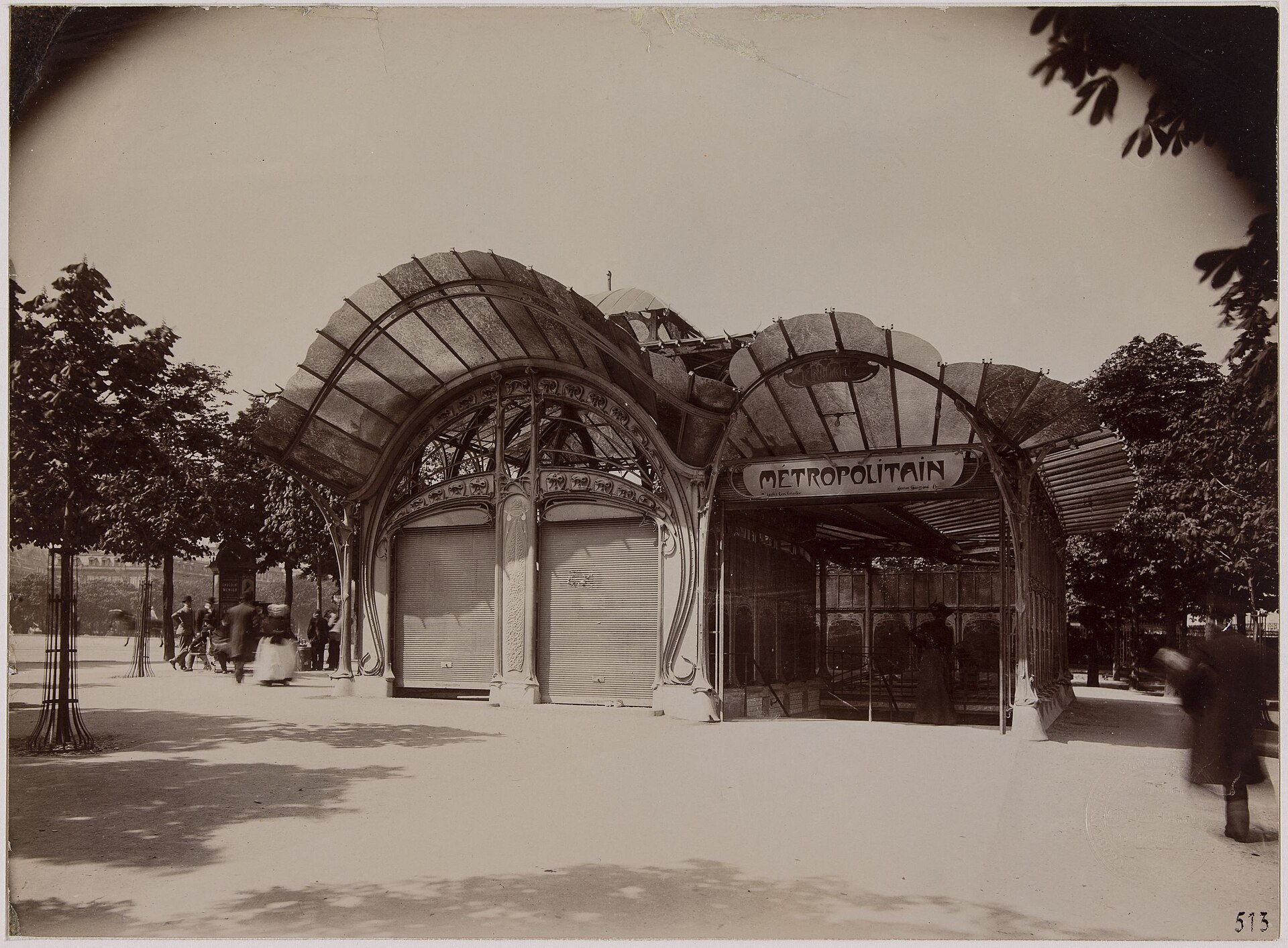
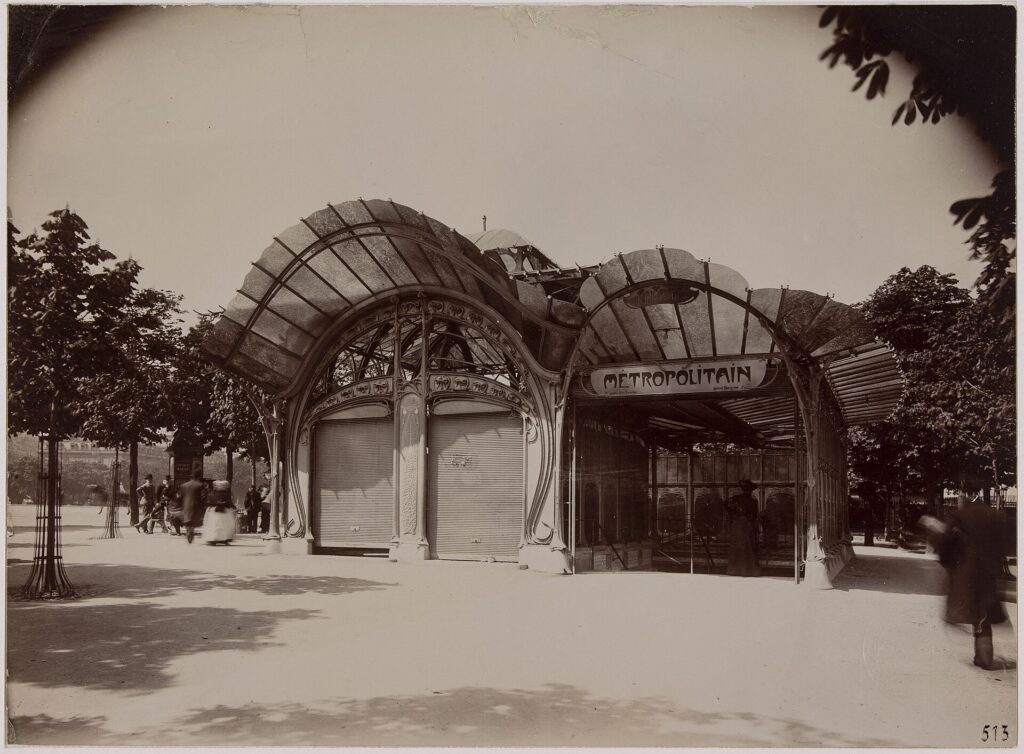
    The Art Nouveau Guimard entrance of Porte Dauphine Métro station in Paris
    A Guimard Métro entrance: in central Paris, the next station is rarely more than a few minutes' walk away (Photo: Maindron, Charles (Paris, 29–06–1861 – Saint-Cloud, en 15–07–1940 — 1940), photographe via Wikimedia Commons, CC0)

    Paris public transport, explained

    Public transport in Paris and the surrounding Île-de-France region is organised by Île-de-France Mobilités and run mainly by the RATP and the national railway, SNCF. It is dense, frequent and fast; its weaknesses are crowding at rush hour, a lot of stairs, and a ticketing system that has changed more than once in recent years.

    The Métro

    Sixteen lines, numbered 1 to 14 plus two short branch lines, 3bis and 7bis, with more than 300 stations, most of them only a few hundred metres apart. Lines are identified by number, colour and the name of the terminus in the direction you are travelling, which is what the signs show, so check the end station before you go down to the platform. Line 1, which runs east to west past the Louvre, the Tuileries, the Champs-Élysées and La Défense, and line 14, the fast line between Saint-Lazare, Châtelet, Gare de Lyon and Orly, are fully automated. Trains run from about 5.30 in the morning until after one at night, later on Friday and Saturday nights, and the Noctilien night buses fill the gap.

    The RER and suburban trains

    The five RER lines, A to E, are express trains that cross the city underground with few stops and then fan out into the suburbs. They are the fast way across Paris and the way to the main day trips: the RER B to CDG and the Stade de France, the RER A to La Défense and Disneyland, and the RER C along the Left Bank to Versailles. The Transilien suburban trains from the main stations reach further, including Chantilly, Fontainebleau and Giverny’s station at Vernon.

    Buses and trams

    More than 300 bus routes criss-cross the city and suburbs, and they are the scenic alternative to the Métro: routes along the Seine and across the centre pass one landmark after another, and every bus is step-free.

    Fares and tickets

    Since 2025, a single Métro-train-RER ticket covers any one journey by Métro, RER or suburban train anywhere in the region at one flat price, apart from the airports, which have their own airport ticket; a separate, cheaper bus-tram ticket covers journeys by bus or tram. The old paper tickets are being phased out. The simplest option for visitors is to buy tickets on a phone with the official Île-de-France Mobilités app, or to load them onto a Navigo Easy card, a reusable card sold for a small fee at station counters and machines. If you are staying a week, the Navigo weekly pass, which runs from Monday to Sunday, needs an ID photo and a Navigo card and covers unlimited travel across the whole region, including the airports, Versailles and Disneyland; it is usually the best deal if your dates fit. Children under four travel free, and reduced fares apply to young children. Check Île-de-France Mobilités for current fares before you go.

    Accessibility

    This is the Métro’s weak point. Most of the network dates from the early twentieth century, and only line 14 and the newest extensions are fully step-free; many stations have long corridors and stairs with no lift. The RER is better in places, and every bus is low-floor and accessible, so travellers with a wheelchair, a buggy or heavy luggage should plan bus routes. The RATP publishes accessibility information for each line.

    Beyond the Métro

    • Walking. Central Paris is made for it. Stations are so close together that walking between neighbouring ones is often quicker than changing lines, and the walk along the Seine from the Eiffel Tower to Notre-Dame passes most of the city’s great sights.
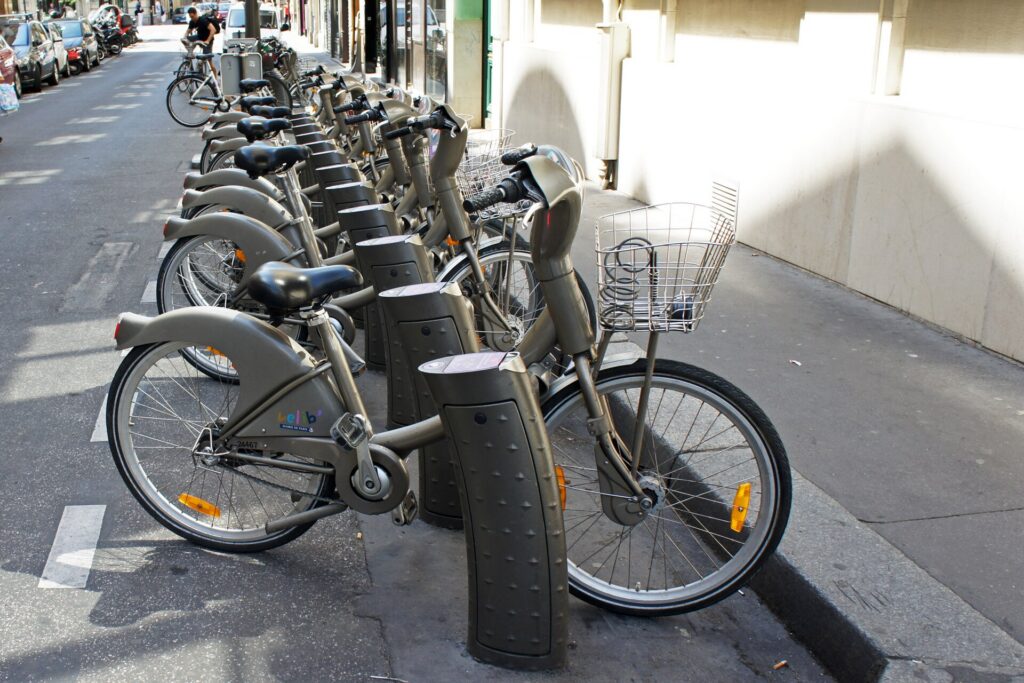
    • Vélib’ and cycling. Paris has transformed itself into a cycling city, with hundreds of kilometres of cycle lanes, the Rue de Rivoli largely given over to bikes and buses, and the Vélib’ bike-share system with classic and electric bikes at stations across the city and inner suburbs. Shared e-scooters were banned in 2023, but electric bikes from private operators remain.
    • Taxis and ride-hail. Licensed taxis, with a light on the roof, can be hailed or found at taxi ranks, and Uber and other ride-hail apps operate widely. Taxis can use the bus lanes, which helps at rush hour; for a group of three or four, a short ride can be competitive with Métro fares.
    • Trains beyond the region. High-speed TGV and Eurostar trains leave from the city’s big stations: Gare du Nord for London and Brussels, Gare de l’Est for Reims and Strasbourg, Gare de Lyon for the southeast, and Montparnasse for the Loire, Brittany and Bordeaux. SNCF Connect sells tickets for all of them.
    A row of Vélib' shared bikes at a docking station in central Paris
    Vélib', the city's bike-share system, with classic and electric bikes across Paris and the inner suburbs (Photo: Mariordo (Mario Roberto Durán Ortiz) via Wikimedia Commons, CC BY-SA 3.0)

    Driving in Paris: what it is really like

    Driving in Paris is not dangerous so much as slow, confusing and expensive, and the city has spent twenty years making it harder on purpose. The speed limit is 30 km/h on most streets and, since 2024, 50 km/h on the Périphérique; through traffic has been restricted in the four central arrondissements since late 2024; lanes have been converted to bus and bike lanes across the city; and on-street parking has become steadily more expensive for visitors. Add narrow one-way streets, delivery vans double-parked in the only lane, scooters threading between cars, and the famous roundabout at the Arc de Triomphe, where twelve avenues meet with no lane markings and traffic entering has priority, and you have a city where locals themselves increasingly leave the car at home.

    Parking

    On-street parking in Paris is paid almost everywhere, with the city’s highest rates in the central arrondissements, time limits for visitors, and a much higher visitor rate for heavier vehicles, including many SUVs. Payment is by card at the machines or through an app; there are no coin meters to feed. Underground public car parks are plentiful and easier, but a full day in one costs more than many museum tickets combined, and hotels that offer parking charge a substantial nightly fee. Parking fines are enforced and follow the car, and the rental company will pass them on with an administrative charge.

    Rules and conditions worth knowing

    • Crit’Air sticker. Paris and its inner suburbs operate a low-emission zone, and vehicles need a Crit’Air air-quality sticker on the windscreen. Cars rented in France normally have one; if you are driving in from another country, order it in advance from the official Crit’Air site, and check the current rules, which have been the subject of political debate.
    • Priority to the right. Unless signs say otherwise, traffic joining from the right has priority, including on some roundabouts; it catches out North American drivers more than anything else.
    • Manual gearboxes are still the default in rental fleets. Automatics are available but cost more and sell out first; book one specifically if you need it.
    • Tolls. The autoroutes out of Paris to Normandy, the Loire, Champagne and the south are mostly tolled. Toll booths take cards, and the cost is worth adding to any comparison.
    • Speed limits and cameras. 130 km/h on autoroutes, 110 in the rain; 80 or 90 km/h on two-lane roads depending on the department; 50 or less in towns. Fixed and mobile speed cameras are everywhere, and fines follow the car.
    • Licence. Visitors can drive on a valid Canadian, American or British licence for a short stay; an International Driving Permit alongside it is recommended. Rental companies often set a minimum age of 21 and charge a young-driver surcharge.
    • Alcohol. The limit is 0.5 grams per litre of blood, lower than in much of North America, and lower still for new drivers.
    A TGV high-speed train at Paris Gare de Lyon
    A TGV at a Paris terminus: take the train out and pick up the car in the regions (Photo: Jordi Verdugo via Wikimedia Commons, CC BY-SA 2.0)

    When renting a car makes sense

    • The Loire Valley châteaux. Chambord, Chenonceau, Cheverny and dozens more are spread across the countryside; take the train to Tours or Blois and pick up a car there.
    • Normandy. The D-Day beaches, the American Cemetery, Bayeux, Honfleur, Étretat and Mont-Saint-Michel are far apart and poorly served by public transport; the train to Caen or Bayeux plus a car is the classic plan.
    • The Champagne villages. Reims and Épernay are easy by train, but the vineyard villages and smaller champagne houses between them need a car and a designated driver.
    • Burgundy, Provence and the Dordogne. Rural France rewards a car, and the fast train gets you to within an hour of each.
    • Families with lots of luggage heading to the regions. A car from CDG, straight onto the autoroute, avoids hauling bags through Paris.
    • A road trip across France. Pick up on the day you leave Paris, not before, and consider a one-way rental to another city or airport.

    If any of those apply, our rental car booking tips cover insurance, deposits and the questions to ask at the counter, and our family car rental guide looks at vehicle choice.

    When it does not

    • You are staying in Paris, in any arrondissement, and your plans are the city.
    • You are visiting Versailles, Disneyland, Fontainebleau, Chantilly, Giverny or Reims as day trips, all of which are easy by train.
    • You are in town for a match at the Stade de France or the Parc des Princes, or a concert, when traffic and parking are at their worst and the RER and Métro run extra trains.
    • You are travelling solo or as a couple and only need a car for a day; a guided tour or a train plus a local taxi is often cheaper.

    The hybrid plan for a Paris-plus-regions trip

    Go car-free for the Paris days and rent only for the regional days, and think carefully about where you pick up. The worst option is collecting a car at an office in central Paris and driving out through the city traffic. Better is to take a high-speed train to the edge of the region you are visiting and collect the car at the station: Tours or Saint-Pierre-des-Corps for the Loire, Caen for Normandy, Reims for Champagne, Avignon for Provence, all of which have rental offices at or beside the station. If you are starting your trip in the regions straight off a long-haul flight, collect at CDG, where the autoroutes to the north, east and west are minutes away, or take a TGV directly from CDG’s own station. If you are finishing in the regions, drop the car at a station and take the train back into Paris, or return it at CDG or Orly on the way to your flight, which avoids driving into the centre entirely. Check one-way fees, which vary a great deal, and book an automatic early if you need one. Bison Futé, the official French road-traffic service, publishes forecasts of the busiest days on the autoroutes.

    A worked cost comparison

    Numbers change with the season and the booking window, so treat this as a method rather than a quote, and check current rates before deciding. For a five-night stay in Paris for two people, the car-free version costs the RER or a taxi from the airport, two weekly Navigo passes or a handful of tickets, and perhaps a couple of late-night taxis; the rental version adds five days of a car, five nights of hotel or underground parking at Paris rates, fuel, and the airport collection fee. The transport option wins by a wide margin. For the same stay plus a day at Versailles and a day at Giverny, the car-free version adds the RER C to Versailles, which is covered by a weekly Navigo pass, and return train tickets to Vernon with the shuttle bus to Giverny; a one-day rental for Giverny adds the car, fuel, tolls and parking, and the train is usually cheaper for two people and not much slower. For a week split between Paris and Normandy, the hybrid plan, a train to Caen and a three-day rental there, typically costs less than a week-long rental from Paris once parking and tolls are included, and spares you the drive out of the city. Run the numbers for your own dates, but the pattern is consistent: in Paris, pay for the car only on the days you are outside it.

    Driving out of Paris in each season

    The autoroutes that radiate from Paris are fast and well maintained, but the timing of your departure matters more than the season. The worst days of the year are the big French holiday getaways: the first and last weekends of July and August, when Bison Futé issues red and black warnings and queues on the A6 south and the A10 toward the Loire and Bordeaux can stretch for tens of kilometres, and the Friday afternoons before the May bridge weekends. In summer, leave early in the morning, avoid Saturdays in July and August, and expect heavy traffic back into Paris on Sunday evenings. In spring and autumn, the roads are quieter outside the school holidays, and the Loire and Normandy are at their most pleasant for driving, with fewer coaches at the châteaux. In winter, snow rarely affects the main roads; short daylight on rural roads is the bigger issue. In every season, the ring roads around Paris, the Périphérique and the A86, jam every weekday morning and evening, so time your departure outside the rush hour or pick up the car beyond them.

    Decision table

    Your tripRecommendationWhy
    City break in Paris, couple or soloNo carThe Métro reaches everything; parking is scarce and expensive
    Paris with day trips to Versailles, Disneyland or GivernyNo carRER and suburban trains are faster and cheaper
    Late arrival with heavy luggageFixed-fare taxiA known price to your door, and it can use the bus lanes
    Loire Valley châteauxTrain to Tours or Blois, then rentThe châteaux are spread out; the drive out of Paris is not worth it
    Normandy and Mont-Saint-MichelTrain to Caen or Bayeux, then rentBeaches and villages are far apart and poorly served by buses
    ChampagneTrain to Reims; rent or book a tour for the villagesThe cellars in Reims are walkable; the vineyards are not
    Family heading straight to the regionsRent at CDGStraight onto the autoroute without entering Paris
    Road trip across FranceRent on the day you leave Paris, ideally one-wayParis is the start, not the place for the car

    Money-saving tips for both options

    • On transport: buy a weekly Navigo pass if your stay runs Monday to Sunday; walk between nearby stations; take the bus for scenic routes; and use the airport ticket or pass rather than paying twice.
    • On a rental: pick up outside Paris, book early for July and August, reserve an automatic if you need one, check one-way fees, decline extras you already have through a credit card or home policy (check first), and budget for tolls.
    • On the hotel: if you must bring a car into Paris, choose a hotel with parking or near an underground car park and price the fee into the room rate.
    • On timing: avoid the big holiday getaway weekends and the Paris ring roads at rush hour; the best time to fly to Paris guide lists the holiday periods.
    • On day trips: compare a train-plus-taxi day with a one-day rental; for one or two people, the train usually wins.

    Frequently asked questions

    Is it worth renting a car in Paris?

    Not for the city or the usual day trips. Rent only for the Loire, Normandy, Champagne or a road trip, and pick the car up outside Paris.

    Is Paris public transport good for tourists?

    Excellent for coverage and frequency; the Métro and RER reach almost everything. The drawbacks are rush-hour crowding and stairs.

    How do I get from CDG to central Paris?

    The RER B to Gare du Nord and Châtelet in about 35 to 45 minutes, the Roissybus to Opéra, or a fixed-fare taxi.

    Can I visit Versailles without a car?

    Yes. The RER C runs to Versailles Château Rive Gauche, a short walk from the palace, and suburban trains from Saint-Lazare and Montparnasse serve the town too.

    Do I need an International Driving Permit in France?

    It is recommended alongside a Canadian, American or British licence, and some rental desks ask for one; it is cheap and quick to obtain at home.

    Is parking expensive in Paris?

    Yes. Street parking is paid and time-limited for visitors, heavier cars pay more, and underground car parks and hotel garages are costly.

    What is the best way to see the Loire or Normandy from Paris?

    Take the train to Tours, Blois, Caen or Bayeux and rent a car there, or join a guided day tour if you only have one day.

    Whichever way you go, start with the flight. Compare cheap flights to Paris, choose a neighbourhood with our Paris hotel search, and plan your days with our first-timer’s guide to Paris.

  • The Ultimate Guide to Business Travel Hotels in 2026

    The Ultimate Guide to Business Travel Hotels in 2026

    On a work trip, the hotel is your office, your bedroom and your base of operations, and it is chosen under constraints a leisure traveler never faces: a meeting at a fixed address, a travel policy with a nightly cap, a flight home that leaves before breakfast, and a need to be sharp on camera or in a boardroom the next morning. The right business hotel is not necessarily the most expensive one or the one with the grandest lobby. It is the one that removes friction: a short, predictable commute, a quiet room, reliable Wi-Fi, a desk you can actually work at, breakfast that opens early enough, and a receipt your finance team will accept without questions. This guide explains how to choose one, which amenities really matter and which are marketing, how to handle conference room blocks, airport stays and extended trips, how loyalty programs and corporate rates work, and the mistakes that cost business travelers the most time and money.

    The short answer

    Choose on location first: the shortest reliable door-to-door time to where you need to be, at the time you need to be there. Then check the work essentials: recent reviews that mention the Wi-Fi, a real desk, a quiet room and breakfast hours that suit your schedule. Book a flexible rate, because business plans change, and book through a channel that produces an itemized folio in your or your company’s name. Join the chain’s loyalty program even if you only travel a few times a year. For conferences, book inside the official room block through the organizer’s link. For early flights, stay at the airport. Compare options on our hotel search, and see our pillar guide to hotel booking tips for the fundamentals.

    What makes a hotel good for business travel

    Hotels market themselves to business travelers with business centers, meeting rooms and executive lounges. Some of that matters; much of it does not, because most professionals now travel with a laptop and a phone and never touch a business center. What actually decides whether a work trip goes smoothly is more basic.

    • Commute time. The hours you spend getting between the hotel and your meetings are the single largest variable in a business trip. Fifteen minutes on foot beats forty in a taxi at rush hour, every day.
    • Sleep. A quiet, dark room with a good bed and working climate control is the amenity that most affects your performance. It rarely appears in the marketing.
    • Connectivity. Wi-Fi that handles video calls from the room, not just email in the lobby.
    • A place to work. A desk at the right height, a chair you can sit in for an hour, and power outlets where you need them.
    • Timing. Breakfast that opens before your first meeting, a gym that opens before breakfast, a front desk that can store luggage after checkout, and late checkout when your flight is in the evening.
    • Clean billing. An accurate, itemized receipt with the right name and company on it.

    Everything else, from the lobby design to the rooftop bar, is secondary. When you compare two hotels, compare them on those six things.

    Location: how to choose it properly

    “Near the meeting” is not the same as “a short commute”. A hotel two kilometers away across a river with one congested bridge can take longer to reach than one five kilometers away on a direct subway line. Before booking, check the route at the actual time you will travel, on the actual day of the week, using a map app’s departure-time setting. Consider:

    • Walkability. If you can walk to your meetings, you remove traffic, taxi queues and ride-hail surge pricing from the equation, and you arrive with a clear head.
    • Transit. In cities with good rail systems, a hotel on the same line as your office, the airport train or the convention center is often better than one closer by distance. Our city transport guides, such as Toronto: car rental or public transit, explain how each system works.
    • Multiple meeting locations. If you are visiting several clients across a city, stay near the best transit hub or the center of gravity of your appointments, not next to any single one.
    • Evening plans. A hotel in an empty office district may be ideal at 8 a.m. and bleak at 8 p.m. If you are entertaining clients, a location near restaurants matters.
    • Parking and driving. If you are driving or renting, factor in hotel parking, which in downtown cores can be a significant nightly charge, often valet-only. Our car rental search compares airport and downtown pickups.

    A slightly more expensive hotel with a ten-minute walk frequently costs less in total than a cheaper one that requires two taxis a day, and it gives you back the time. Most travel policies care about total trip cost, and a short explanation of the saving will usually justify a higher room rate.

    A hotel lobby with a small business center
    Most business travelers now work from the room, not the business center (Photo: Opera Cadet from PARIS, FRANCE via Wikimedia Commons, CC BY-SA 2.0)

    The work essentials, and how to check them before you book

    Wi-Fi

    Almost every hotel advertises free Wi-Fi. What varies is whether it can handle a video call from your room at 9 a.m. when half the building is doing the same. The listing will not tell you; recent guest reviews will. Search the reviews for “Wi-Fi”, “internet” and “video call”, and weight comments from the last few months most heavily. Some hotels offer a faster paid tier or a faster tier for loyalty members. If a call or presentation matters, bring a backup: your phone’s hotspot, a travel eSIM with data, or a portable router. Public Wi-Fi, including hotel networks, should be treated as untrusted; use your company’s VPN, keep devices updated, and follow the guidance from the Canadian Centre for Cyber Security on connecting safely away from the office.

    The desk and the chair

    Room photos show whether there is a desk. They do not show whether it is a proper work surface or a narrow shelf beside the television. Look for photos taken by guests, and for rooms described as having a work desk or an ergonomic chair. Some newer select-service hotels have replaced desks with lounge seating and communal work areas; that suits some people and not others. If you need to take calls privately, check that the room, not only the lobby, is a usable work space.

    A quiet room

    Request a room away from the elevators, ice machines, the street side and any rooftop bar or event space, and on a higher floor. You can add this as a request at booking and repeat it at check-in. Loyalty members are more likely to have requests honored. If the room is noisy, ask to move on the first night rather than enduring it; it is much easier for the front desk to reassign a room before the hotel fills.

    Breakfast, gym and hours

    Check when breakfast opens. A hotel restaurant that starts serving at 7 a.m. is no use for a 7:30 meeting across town. Many select-service hotels offer a grab-and-go option from early morning. If you exercise, check the gym’s hours and equipment in recent photos. A 24-hour gym with two treadmills is different from a proper fitness center.

    Check-in and checkout

    Mobile check-in and digital room keys, now offered by the major chains through their apps, let you go straight to your room after a late arrival. Late checkout is often available on request, especially for elite members, and is invaluable when your flight is in the evening. If you cannot get it, ask the front desk to store your bags and find out whether the gym or lounge has showers you can use before the flight.

    A neatly made hotel room with a king bed and bedside lamps
    A quiet, dark room with a good bed matters more on a work trip than any lobby (Photo: PattayaPatrol via Wikimedia Commons, CC BY-SA 4.0)

    Types of business hotel, and when each makes sense

    Hotel typeBest forWatch for
    Downtown full-service hotelClient meetings, entertaining, trips with evening eventsHigher rates on weekdays, paid parking, paid breakfast
    Select-service hotelSolo trips with a tight budget cap; practical rooms and included breakfast at many brandsLimited dining, smaller desks at some brands, no room service
    Airport hotelEarly departures, late arrivals, meetings held at the airportIsolation from the city; shuttle schedules; noise on some sides
    Convention or attached hotelMulti-day conferences and trade showsRates rise sharply outside the official block; lines at peak times
    Extended-stay or apartment-hotelProjects of a week or more; relocations; training coursesFewer staff and services; housekeeping may be weekly
    Boutique or independent hotelCharacter, neighborhood locations, shorter tripsVariable Wi-Fi and desks; may not earn chain points or accept corporate rates

    Airport hotels: when they are the right call

    For a 6 a.m. departure, an airport hotel can be the difference between a normal night’s sleep and a 3:30 alarm and a taxi in the dark. They also work for late arrivals, for one-day trips where the meeting is near the airport, and as a fallback when a flight is cancelled. Several major Canadian airports have hotels connected to the terminal: at Toronto Pearson the Sheraton Gateway is linked to Terminal 3, Vancouver International has the Fairmont Vancouver Airport inside the terminal, Montreal-Trudeau has an in-terminal Marriott, and Calgary International has one as well. Elsewhere, airport hotels are usually a short shuttle ride away; check the shuttle’s hours, because some stop overnight or start after the first flights leave.

    Before booking, compare the total trip. An airport hotel plus a quick walk to security may cost less than a downtown hotel plus a pre-dawn taxi, and it buys you sleep. Our airport arrival time guide explains how early you need to be at the airport for different kinds of flight.

    Conferences, trade shows and room blocks

    Large events negotiate a block of rooms at one or more hotels near the venue, at an agreed group rate, and publish a booking link or housing service to attendees. Book inside that block when you can:

    • The block rate is often lower than what the same hotel charges the public during a big event, and it sometimes includes Wi-Fi or other extras.
    • The block has a cut-off date, usually weeks before the event, after which unsold rooms return to general inventory at regular prices. Book early.
    • Organizers rely on the block. Events often commit to filling a certain number of rooms, and attendees booking inside the block help keep registration prices and future venues viable.
    • Beware of unofficial housing offers. Exhibitors and attendees at large events are sometimes contacted by companies claiming to be the official housing provider. Book only through the link on the event’s own website or in the organizer’s official communications, and be suspicious of anyone who calls or emails you offering rooms.

    If the block is full, look at hotels one transit stop away rather than paying peak rates next door, and remember that during a citywide convention, rates across the whole city rise. Canada’s major convention centers, including the Metro Toronto Convention Centre, the Vancouver Convention Centre, the Palais des congrès de Montréal and the Shaw Centre in Ottawa, all have hotels within walking distance; our neighborhood pages for the Toronto Entertainment District, Old Montreal and the ByWard Market show nearby options.

    The Fairmont Vancouver Airport hotel inside the YVR terminal
    The Fairmont Vancouver Airport sits inside the terminal at YVR, ideal before an early flight (Photo: BriYYZ from Toronto, Canada via Wikimedia Commons, CC BY-SA 2.0)

    Rates, policies and paying for the room

    Corporate and negotiated rates

    Many companies negotiate rates with specific hotels or chains in the cities their staff visit most, often through a travel management company. If your employer has negotiated rates, use them: they are usually flexible, sometimes include breakfast or Wi-Fi, and keep you inside policy. Some chains also offer a general corporate rate to anyone traveling for business; it is not always cheaper than the best public rate, so compare. Government employees and contractors have their own rate programs.

    Per diems and policy caps

    If your employer sets a nightly cap, check it against the destination before you book; a cap that works in a mid-size city may not cover a downtown hotel in a major city during a busy week. Government per diem tables are a useful public benchmark for what lodging reasonably costs in a given place: the US General Services Administration publishes per diem rates by city, and the Government of Canada’s National Joint Council publishes its Travel Directive for public servants. If you have to exceed your policy, document why, such as a citywide event, before you book.

    Flexible rates

    Business plans change: meetings move, projects slip, a client cancels. For most work trips, a flexible rate with free cancellation until a day or two before arrival is worth the small premium over a prepaid rate. Note the deadline and time zone. If your trip is truly fixed and your company accepts the risk, prepaid rates can save money, but a no-show on a non-refundable rate is a cost nobody wants to explain.

    Fees, deposits and receipts

    Compare totals, not nightly rates: taxes, destination or resort fees, parking and paid Wi-Fi can change the ranking. At check-in, hotels usually place a hold on a card for incidentals. If you use a corporate card, make sure it is the card on file for the room and incidentals, and ask the front desk to email you an itemized folio at checkout. Expense teams generally need the folio, not just a credit card slip or a booking confirmation, and in Canada, a business registered for GST/HST may be able to recover the tax paid on accommodation; ask your finance team what documentation they need.

    Loyalty programs: worth it even for occasional travelers

    Joining a hotel chain’s loyalty program is free and pays off even at a few stays a year. Members typically get the best available rates on the chain’s own site, free or faster Wi-Fi at many brands, mobile check-in and digital keys, and a better chance of having room requests honored. Frequent travelers who reach elite status add late checkout, upgrades, lounge access and breakfast at some brands, depending on the program and tier. The largest programs include Marriott Bonvoy, Hilton Honors, World of Hyatt and IHG One Rewards; check each program’s current terms, because benefits change.

    Two practical points. First, if you want points and elite credit, book in a way that the program recognizes: usually directly with the hotel or through your company’s approved channel. Stays booked through some third parties may not earn. Second, do not let points override judgment. A hotel of your preferred chain that adds thirty minutes of commuting each way is not a good trade for the points it earns.

    Extended stays and project work

    For a week or more in one place, the math changes. An extended-stay hotel or apartment-hotel with a kitchen, a proper table and in-room laundry can cost less per night than a standard hotel and makes long trips far more livable. Ask about weekly or monthly rates, which are often not shown in standard searches, and about how often housekeeping comes. For very long stays, check whether your company has a preferred provider, and whether there are tax implications for stays beyond a certain length in the destination.

    Extending a work trip into the weekend

    Downtown hotels that are full of business travelers from Monday to Thursday often drop their rates on Friday and Saturday nights, when the business crowd leaves. That makes adding a weekend to a work trip, with a partner or family joining you, better value than it looks. Check your company’s policy on mixing personal and business travel: usually the employer pays for the business nights and you pay for the rest, and the flight change must not cost the company more. If your family is joining, our guide to booking hotels for family vacations covers room sizes and occupancy.

    Crossing the Canada-US border for work

    Business travel between Canada and the United States is routine, but the entry requirements are not the hotel’s problem, they are yours. Frequent cross-border travelers should look at NEXUS, the joint trusted-traveler program, and US citizens who travel internationally should consider Global Entry. Visa-exempt visitors flying to Canada from countries other than the US generally need an Electronic Travel Authorization. Rules about what counts as permitted business activity differ by country and change over time, so confirm on the official pages before you travel. For hotel advice specific to Canada, see our guide to hotel booking in Canada.

    The Metro Toronto Convention Centre in downtown Toronto
    The Metro Toronto Convention Centre: book inside the official room block before the cut-off (Photo: Raysonho @ Open Grid Scheduler / Grid Engine via Wikimedia Commons, Public domain)

    Safety and security on the road

    • Protect your room number. A good front desk writes it down rather than announcing it. If yours says it aloud in a busy lobby, ask for a different room.
    • Use the door’s secondary lock and check that connecting doors are locked.
    • Use the room safe or keep your laptop with you; do not leave devices unlocked.
    • Treat unexpected calls to your room with caution, especially ones asking you to confirm card details. Go to the front desk in person instead.
    • Know your exits. Take thirty seconds on arrival to find the nearest stairwell.
    • Share your itinerary with your company’s travel team if it has one; many employers have a duty-of-care process that relies on knowing where staff are staying.

    Common mistakes business travelers make

    Booking on price alone

    The cheapest hotel that meets policy can cost more once taxis, parking and lost time are counted. Compare the whole trip.

    Trusting “free Wi-Fi” without checking

    Free and usable are different things. Read recent reviews and bring a backup connection for anything important.

    Missing the conference block

    Booking after the cut-off, or outside the official link, often means paying more for a worse location.

    Forgetting the folio

    Ask for an itemized receipt at checkout, check it for errors before you leave, and file it with your expenses right away.

    A pre-trip checklist

    • Map the commute from each shortlisted hotel at the time you will travel.
    • Read recent reviews for Wi-Fi, noise and the desk.
    • Check breakfast and gym hours against your schedule.
    • Book a flexible rate within policy, under your loyalty number, with the right name and company.
    • For a conference, book through the organizer’s official link before the cut-off date.
    • Add requests: quiet room, high floor, late checkout if needed.
    • Book the flight on our flight search and, if needed, a car on our car rental search.
    • Save the hotel’s direct phone number and the cancellation deadline.

    Frequently asked questions

    What should I look for in a business travel hotel?

    A short, reliable commute to your meetings, a quiet room, Wi-Fi that handles video calls, a real desk, breakfast that opens early enough, flexible cancellation and an itemized receipt.

    Is it better to stay near the airport or downtown for a business trip?

    Downtown if your meetings are there and you have daytime flights. At the airport if you have a very early departure or a late arrival, or if your meeting is near the airport.

    How far ahead should I book a hotel for a work trip?

    As soon as the trip is confirmed, on a flexible rate. For conferences, book inside the official block well before its cut-off date. During citywide events, book as early as you can.

    Are hotel loyalty programs worth joining for occasional business travel?

    Yes. They are free, member rates are often the best available on the chain’s site, and members typically get better Wi-Fi and are more likely to have requests honored.

    Should I book the conference hotel or somewhere nearby?

    The official block is usually the best value and the most convenient. If it is full or over budget, look one transit stop away rather than paying peak public rates next to the venue.

    What receipt do I need for expenses?

    Usually the hotel’s itemized folio showing each night, taxes and any extras, in your name. Ask for it at checkout and check it before you leave.

    Why are downtown hotels cheaper on weekends?

    Because their weekday guests are business travelers who go home on Friday. With fewer guests on Friday and Saturday nights, many downtown hotels lower their rates.

    Ready to book your next work trip? Compare downtown, airport and convention-area options on our hotel search, find the right flight on our flight search, and price a rental on our car rental search. Headed to Canada’s biggest business city? Start with hotels in Toronto, and see our tips on finding the best hotel deals online and last-minute hotel booking for trips that come up at short notice.

  • Does It Matter If You Return Your Car Rental a Few Hours Early or Late

    Does It Matter If You Return Your Car Rental a Few Hours Early or Late

    Does it matter if you return a rental car a few hours early or a few hours late? Yes, and more than most travelers expect. The return time on your agreement is not a rough guide; it is the point at which the price you agreed to ends. Bring the car back a couple of hours late and you can pay for a whole extra day, often at a higher rate than the one you booked. Bring it back a day or two early and, depending on the rate and the company, you may get nothing back, or even pay more. This guide explains how rental companies count time, how grace periods and late charges typically work, why early returns can backfire, how to extend properly, what happens with after-hours drop-offs, and how much time to allow when you are returning a car at the airport before a flight.

    Policies differ between companies, locations and countries, and they change, so treat this as a guide to the questions to ask. Your rental agreement and the company’s own terms are what count. If you are still at the booking stage, our car rental search shows the pickup and return times for every offer, and it is worth playing with them before you commit.

    The short answer

    • Late: expect a short grace period at best, then hourly charges, then a full extra day once you are a few hours over. Extra days of add-ons such as coverage, child seats and toll programs are usually charged too.
    • Early: on a prepaid rate, unused days are often not refunded. On a pay-later rate, the company may recalculate your price at a different rate for the shorter rental, which can wipe out the saving or even raise the total. Some companies charge an early-return fee.
    • Either way: call or use the app before your return time. Changes agreed in advance almost always cost less than surprises.

    How rental companies count time

    Most car rentals in North America, and many elsewhere, are priced in 24-hour periods starting from the pickup time, not in calendar days. If you pick up at 10 am on Monday and return at 10 am on Thursday, that is three rental days. Return at 1 pm on Thursday and you have started a fourth period, and after any grace period you will be charged for part or all of it.

    This has two practical consequences. First, the pickup time you choose sets the return time for the whole rental, so choosing sensibly at booking is the cheapest decision you will make. Second, the clock is indifferent to your reasons: a slow breakfast, a traffic jam or a detour to fill the tank all count.

    A few details vary:

    • Weekly and weekend rates. Many companies offer weekly rates that are cheaper per day than daily rates, and some price weekend rentals differently. The rate you are charged depends on the length of the rental and sometimes on the days it spans, which is why changing the length, in either direction, can change the rate itself.
    • Some local and international rentals count calendar days or have their own rules. Read the agreement.
    • The recorded return time is normally when the car is checked in, by an agent with a handheld device or by the location’s system. For after-hours drop-offs this can be different, as explained below.
    Rental car return signage at Toronto Pearson International Airport
    The return time on your agreement is when the price you agreed to ends, so plan to arrive early (Photo: formulanone from Huntsville, United States via Wikimedia Commons, CC BY-SA 2.0)

    Grace periods: what to expect, and why not to rely on one

    Many major companies allow a short grace period before late charges begin, commonly around half an hour at US locations, but it is not universal, it is not always written in the same way, and it can differ between corporate and franchise locations and between countries. Some locations have none. Some apply a grace period to the time charges but not to add-ons. And a grace period is not an extension; it is a tolerance for small delays.

    The safe assumption is that there is no grace period. If you want to know for certain, ask at the counter when you pick up, and check the terms on the company’s own site, such as Hertz, Avis, Budget or National. Write down what you are told and who told you.

    Returning late: what typically happens

    The first few hours

    After any grace period, many companies charge an hourly rate for each hour, or part of an hour, that you are late. Once the hourly charges reach a threshold, commonly after a few hours, they stop charging hourly and charge a full extra day instead. So returning three or four hours late often costs the same as returning twenty hours late.

    The rate you pay for the extra time

    The extra day may not be charged at the discounted rate you booked. Agreements often allow the company to charge its standard or current rate for additional time, which can be higher, especially at busy periods. If you booked a weekly rate and go over the week, the extra time may be charged at the daily rate.

    Add-ons are charged too

    Anything priced per day, such as a collision damage waiver, supplemental liability, a child seat, a GPS unit or a toll program with a daily fee, is usually charged for the extra day as well. On a family rental with coverage and two car seats, the add-ons can cost more than the car.

    Late fees and knock-on effects

    Some companies add a separate late-return fee. If the car was due for another customer, the location may not be pleased, but that is their problem to solve, not a charge you should see. What you do need to watch is coverage: if your rental agreement has ended and you have not extended, the company’s waiver may no longer apply, and your credit card’s rental benefit may only cover the rental period you agreed. Keeping the car without authorization for a long time can eventually lead a company to treat it as overdue or unreturned, with far more serious consequences. That is rare and avoidable: just call.

    How to avoid late charges

    1. Set the return time with a buffer. If your flight leaves at 3 pm, do not book a 2 pm return at an airport where the rental center is a shuttle ride away.
    2. Plan the fuel stop and allow for it in your timing.
    3. Check traffic for the drive back, especially on a Friday or a Sunday afternoon near a big city.
    4. Call before your return time if you will be late, and ask whether it is cheaper to extend formally.

    Returning early: why it does not always save money

    It seems logical that returning a car early should cost less. Sometimes it does. Often it does not, for three reasons.

    Prepaid rates

    If you paid in advance, many companies and booking platforms do not refund unused days, or refund them only minus fees. The terms of prepaid rates are usually stricter than pay-later rates for exactly this reason.

    Rate recalculation

    Your price was calculated for the rental you booked. If you shorten it, the company may recalculate at the rate for the new length. The classic example is a weekly rental returned after four or five days: the weekly rate no longer applies, the daily rate does, and four or five days at the daily rate can cost as much as, or more than, the full week. Pay-later rentals are usually recalculated this way.

    Early-return fees

    Some companies charge a flat fee for returning a car significantly earlier than agreed, and some count an early return as a change to the reservation. The terms, and whether a location applies them, vary.

    When early returns make sense

    • A few hours early on the last day, within the same 24-hour period: usually no effect on price, and it gives you a buffer.
    • A day or more early on a pay-later daily rate, where no weekly or special rate applies: often a genuine saving.
    • When your plans have changed and the car would cost you parking, tolls or a hotel garage fee for days you do not need it.

    Before you return early, call or check the reservation online and ask exactly what the new total will be. If it is higher, keep the car, or at least keep the reservation, and simply return at the original time.

    Scenarios at a glance

    SituationWhat typically happensWhat to do
    Return 15 minutes lateOften within a grace period, but not guaranteedDo not rely on it; call if you are running behind
    Return one to three hours lateHourly charges, plus per-day add-ons, possibly a late feeCall before the return time; compare an extension
    Return more than a few hours lateA full extra day, possibly at a higher rateExtend formally before the return time
    Return a few hours early, same dayUsually no changeFine; use the buffer
    Return a day or more early, pay-later rateRate may be recalculated; may or may not save moneyAsk for the new total before deciding
    Return early on a prepaid rateUnused days often not refundedCheck the prepaid terms; there may be nothing to gain
    After-hours drop-offYou remain responsible until check-inPhotograph everything; ask how the time is recorded
    Return to a different locationDrop fee or a recalculated one-way rateChange the reservation before, not after
    Flight delayed at pickupCar may be released if you are a no-showAdd your flight number; call if very late
    A road sign directing drivers to rental car return at the Las Vegas airport
    Return entrances are often signposted separately from departures, and easy to miss on the last morning (Photo: Michael Dorausch from Venice, USA via Wikimedia Commons, CC BY-SA 2.0)

    Extending a rental the right way

    If you need the car longer, extend before your return time. Most companies let you do it by phone, in their app or at any branch. Ask for:

    • The new rate and the new total, including taxes and add-ons for the extra days.
    • A new return time recorded on the agreement, and a confirmation by email or in the app.
    • Whether your coverage continues. If you bought the company’s waiver, confirm it is extended. If you rely on a credit card benefit, check the maximum rental length it covers; many cards cap coverage at a set number of consecutive days, and a long extension can push you past it.
    • Whether a longer rental unlocks a cheaper rate. Extending a five-day rental to seven can sometimes trigger a weekly rate and cost little more.

    If the location cannot extend, for example because the car is reserved for someone else, they may ask you to swap it at a branch. That is inconvenient but far better than an unauthorized overrun.

    After-hours drop-offs

    Many airport locations are open late or around the clock, but many neighborhood branches are not, and most offer a key drop box. Returning after hours is convenient, but it shifts some risk to you:

    • You are usually responsible for the car until staff check it in, often the next morning. Damage, vandalism or theft overnight can become your problem.
    • The return time may be recorded at check-in, not when you dropped it, depending on the company. Ask at pickup how after-hours returns are timed.
    • Fuel and mileage will be recorded when they check it in, so your own record matters.

    Protect yourself: park in the designated return area, take a time-stamped video walkaround and dashboard photos showing fuel and mileage, photograph the car in its spot with the branch sign visible, photograph the key going into the drop box, remove all your belongings and keep the fuel receipt. If the branch has a return app or a self-service check-in, use it.

    Returning at the airport before a flight

    This is where timing problems are most costly, because a late return can mean a missed flight as well as extra charges.

    Know where the return is

    At some airports the rental return is in a garage next to the terminal. At many large US airports it is a consolidated rental car center reached by a shuttle bus or an automated train, which adds time. San Francisco International, for example, connects its Rental Car Center to the terminals by AirTrain, and Miami International links its Rental Car Center to the terminal by the MIA Mover, as the airport’s site explains. At other airports, individual companies run their own shuttle buses from off-site lots. Check the airport’s own website, or our airport guides such as SFO, Miami and Denver, before your last day.

    A rental car shuttle bus at Detroit Metropolitan Airport
    Where the rental return is a shuttle ride from the terminal, add that time to your airport buffer (Photo: Dwight Burdette via Wikimedia Commons, CC BY 3.0)

    How much time to allow

    Start with the time your airline and airport recommend you arrive for your flight; our guide to how early to get to the airport covers domestic and international flights. Then add time for:

    • The fuel stop, which can take longer than expected if the stations nearest the airport are busy.
    • Finding the return entrance, which is often signposted separately from departures and easy to miss.
    • The check-in, which is usually quick but can queue at peak times.
    • The shuttle or train to the terminal, including waiting for it.
    • Unloading children, car seats and luggage, which always takes longer than you think; our guide to car rentals for family vacations has more on traveling with kids.

    As a rule of thumb, add at least 30 minutes on top of the normal recommendation at an airport where the return is next to the terminal, and more where a shuttle is involved or you are traveling with a family. Set the rental return time on your agreement with that in mind, so that you are early for the car and on time for the flight.

    Don’t forget the pickup side

    Return timing starts with pickup timing:

    • Add your flight number to the reservation. If your flight is delayed, many locations will hold the car; without it, a late arrival can be treated as a no-show and the car released.
    • Know the location’s hours. If your flight lands after the counter closes, you may not be able to collect the car until morning.
    • Choose times that fit the whole trip. If you land at 11 pm and fly home at 8 am a week later, a 10 am pickup the morning after you land might save you a day and a night of hotel parking.

    Use timing to lower the price

    • Keep pickup and return at the same time of day to avoid starting an extra 24-hour period.
    • Test slightly longer rentals. Five or six days sometimes cost as much as, or more than, seven if a weekly rate applies.
    • Test weekend pickup and return days, which some locations price differently.
    • Rent only for the days you need the car. In a transit-friendly city, start the rental on the day you leave town. Our guide to car versus transit versus taxi helps decide.
    • Book on a free-cancellation rate and rebook if you find a better combination of times or a lower price.

    Fuel, charging and tolls around the return

    On a full-to-full rental, the car must come back full, and the refueling charge for a car returned short is usually far above the pump price. Plan a fuel stop within a few miles of the return location, and keep the receipt. Some companies ask for it if the needle sits just below full.

    For an electric car, ask what charge level is required at return and plan charging time into your last day; a fast charger can still take a meaningful amount of time, and chargers near airports can be busy. The US Department of Energy’s Alternative Fuels Data Center has a station locator.

    If you accepted the company’s toll program, remember that its daily fee often applies to each day of the rental, so an extension extends that charge too. Toll-by-plate charges can arrive weeks after the trip; keep your agreement until they have settled.

    A car fuel gauge reading close to empty
    A car returned short of full on a full-to-full rental is refueled at a rate well above the pump price (Photo: Icomparioimages via Wikimedia Commons, CC BY-SA 4.0)

    What to do at the return

    1. Remove everything: glove box, door pockets, under the seats, the trunk, the charging cable and any toll transponder you brought.
    2. Record the car: a video walkaround and dashboard photos showing fuel or charge and mileage.
    3. Wait for check-in if an agent is present, and ask for a closed receipt showing the final charges. If the location uses an emailed receipt, check it arrives before you leave the airport or city.
    4. Query anything unexpected immediately, while you are still there with the car.
    5. Watch your card statement for the following weeks for fuel, damage, toll or ticket charges, and dispute anything you cannot match to your records.

    When things go wrong

    • Your flight home is canceled or delayed: call the rental company as soon as you know and extend, rather than returning the car and then needing another one.
    • The car breaks down: call the roadside assistance number on the key tag or agreement. A breakdown that is not your fault should not lead to late charges, but document the call and the time.
    • Bad weather closes roads: call, explain, and ask them to note it on the agreement. Keep screenshots of road closure notices.
    • You have an accident: make sure everyone is safe, follow local rules on reporting, photograph everything and notify the rental company. Timing charges are the least of your concerns, but still tell them if you cannot return on time.

    Our complete guide to rental car booking tips covers insurance, fuel policies, inspections and fees in more detail.

    Frequently asked questions

    Is there a grace period for returning a rental car late?

    Many companies allow a short one, commonly around half an hour at US locations, but it varies by company, location and country, and some have none. Ask at pickup and do not rely on it.

    How much does it cost to return a rental car late?

    Typically an hourly charge for the first few hours, then a full extra day, plus per-day add-ons and sometimes a late fee. The extra day may be charged at a higher rate than the one you booked.

    Do I get money back if I return a rental car early?

    Not always. Prepaid rates often do not refund unused days, and pay-later rentals may be recalculated at a different rate, which can make a shorter rental cost as much as or more than the original.

    Can I return a rental car after hours?

    Often, using a key drop box. You usually remain responsible for the car until staff check it in, so photograph the car, the dashboard and the drop, and ask how the return time is recorded.

    How early should I return a rental car before a flight?

    Take the airport’s recommended arrival time for your flight and add at least 30 minutes, more if the return is a shuttle ride from the terminal or you are traveling with children.

    Can I extend my rental without going back to the counter?

    Usually, yes, by phone or in the company’s app. Do it before the return time, get the new total and return time confirmed in writing, and check that your coverage extends too.

    What if my flight is delayed and I pick up the car late?

    If your flight number is on the reservation, many locations will hold the car. The agreement is usually opened when you collect the car, but check the return time printed on it before you drive away, because it may still reflect your original booking.

    The simplest way to avoid timing charges is to choose the right times at the start. Compare rates and pickup windows on our car rental search, match them to your flight times, and if you land late, consider a night near the airport with our hotel search and a fresh start at the counter in the morning.

  • Should You Rent a Car, Use Public Transport, or Take a Taxi to Explore a New Place?

    Should You Rent a Car, Use Public Transport, or Take a Taxi to Explore a New Place?

    How you get around once you land shapes a trip more than most people expect. It decides how much of your day goes to logistics, what you can realistically see, where it makes sense to stay, and a surprisingly large share of the budget. The choice is usually framed as three options, rent a car, use public transport or take taxis and ride-hail, but the best answer for most trips is a mix, chosen deliberately rather than by default. This guide explains how to make that call for any destination: the factors that actually decide it, what each option really costs and demands, how to learn an unfamiliar transit system quickly, how to use taxis and ride-hail without overpaying, and a table that matches the right approach to the kind of trip you are taking.

    The short answer

    Rent a car when the places you want to see are spread out, when transit is thin, when you are traveling as a family or group with luggage, or when the trip is about national parks, coastlines, small towns or a road trip. Use public transport when you are staying in a dense city with a real rail or metro network, when parking is scarce and expensive, and when most of your plans are within the city. Use taxis and ride-hail for the gaps: airport runs with bags, late nights, short hops where transit is awkward, and days when time matters more than money. And for many trips, the winning combination is transit and walking for the city days, a rental for the day trips, and an occasional taxi when it is late or raining. You can compare rental rates for just the days you need on our car rental search.

    The seven factors that decide it

    1. The shape of the destination

    This matters more than anything else. Cities built before the car, or rebuilt around rail, such as New York, London, Paris, Rome, Toronto, Montreal and Washington, reward going car-free; their attractions are close together, their transit is frequent, and driving and parking are slow and costly. Cities that grew up around the freeway, such as Los Angeles, Phoenix, Houston, Dallas and Orlando, spread attractions across huge distances and run transit that works for commuters more than visitors. Rural areas and national parks often have no useful transit at all.

    2. Where you are staying

    The same city can be a car trip or a transit trip depending on the hotel. A downtown hotel near a metro station makes a car unnecessary; a resort, a suburban rental or a relative’s house can make one essential. If you are flexible, it is often cheaper overall to pay a little more for a central, well-connected hotel than to pay for a car and parking to reach a cheaper one. Our hotel search lets you compare by neighborhood.

    3. What is on the itinerary

    List the places you want to go and ask how you would reach each one without a car. If most are in the center, transit wins. If two or three are an hour or more outside the city, consider renting only for those days. If most are spread out, rent for the trip.

    4. Who is traveling

    A solo traveler or couple with carry-ons can use any system. A family with a stroller, car seats and four suitcases, a group of five, or a traveler with limited mobility may find a car or taxis far easier, and the cost per person of a rental falls as the group grows.

    5. The real budget

    Transit is almost always the cheapest option per trip. A rental can be good value for a group, but its cost is more than the daily rate, as the next section shows. Taxis and ride-hail are the most expensive per mile and the cheapest overall only when you take very few trips.

    6. Your comfort with driving there

    Driving on the other side of the road, in a manual car, through narrow historic streets, in snow or in heavy city traffic is a real cost in stress and risk. Be honest about it. If you would not enjoy it, the trip will be better without it.

    7. Time

    On a short trip, time is the scarcest resource. A car can save hours when destinations are far apart; transit can save hours in a city where driving means traffic and parking hunts; a taxi can save the last hour before a flight.

    What each option really costs

    People tend to compare the rental rate with a transit fare and a taxi quote, which misleads in both directions. A fair comparison adds up everything for your actual plans.

    A rental car costs the daily rate, plus taxes and airport fees, plus any young-driver or additional-driver fees, plus insurance you need to buy, plus fuel or charging, plus tolls and the rental company’s toll-program fees, plus parking at the hotel each night and at each stop during the day. In a big downtown, overnight hotel parking alone can rival the daily rate. Our rental car booking tips explain how to read the full price.

    Public transport costs the fares, or a day or weekly pass, plus the airport link if it charges a premium, plus the occasional taxi for the trips transit does not cover. Many systems cap what you pay in a day or week when you tap with the same card, which makes it hard to overspend.

    Taxis and ride-hail cost the fare, which rises with distance, time in traffic and demand, plus tips where customary, plus airport or event surcharges. A few rides a day across a big city add up fast.

    To compare, sketch your days, estimate how many trips you would take and how far, and total each option. For a couple spending four days in a transit-rich city, transit plus two or three taxis will usually come out well ahead. For a family of five spending a week touring a spread-out region, the rental usually wins.

    London Underground platforms at Whitechapel station
    In a transit-rich city such as London, the train is usually faster and far cheaper than a car (Photo: TheFrog001 via Wikimedia Commons, CC0)

    Renting a car: freedom, with overhead

    Where it shines

    • Flexibility. Leave when you want, stop where you want, change the plan halfway through the day.
    • Reach. Trailheads, beaches, wineries, small towns and viewpoints that no bus serves.
    • Luggage and gear. Strollers, skis, coolers and beach chairs travel with you, and you can leave things in the trunk between stops (out of sight).
    • Families and groups. One vehicle carries everyone, and the per-person cost drops with each passenger.
    • Privacy and comfort. Your own climate control, music and schedule, which matters on long days with children.

    Where it hurts

    • Parking in dense cities is expensive, scarce and time-consuming, and hotels often charge for it nightly.
    • Traffic in large cities can make a car slower than the train at the times you want to travel.
    • Unfamiliar rules: right turns on red (legal in most of the US and Canada, but not on the island of Montreal), camera-enforced restricted zones in European historic centers, toll roads that only take transponders, and roundabout etiquette.
    • One designated driver means one person who cannot relax, drink at dinner or watch the scenery.
    • Responsibility: damage, tickets, fuel, return times and insurance are all yours to manage.

    Make a rental work better

    Rent only for the days you need it, from a neighborhood branch if you are starting in the city. Choose a hotel with reasonable parking, or one on the edge of the center with easy transit in. Download offline maps. Learn how tolls are charged before you drive. And read our guide to car rental return timing so an extra hour does not turn into an extra day.

    A winding road through the mountains on the Icefields Parkway in Alberta
    Scenic drives and national parks are where a rental car earns its keep (Photo: m01229 from USA via Wikimedia Commons, CC BY-SA 2.0)

    Public transport: cheap, fast in the right places, and easier than it looks

    Where it shines

    • Cost. Usually the cheapest way to move around, often dramatically so.
    • Speed in dense cities. A metro line under a congested downtown beats any car at rush hour.
    • No parking, no driving stress. You arrive, walk out of the station and start exploring.
    • A view of local life, and in some cities, such as the ferries in Vancouver or Halifax, genuinely scenic rides.
    • Lower emissions per traveler than a car or a taxi.

    Where it falls short

    • Coverage. Fixed routes and timetables do not reach everything, and service thins out at night, on weekends and away from the center.
    • Luggage. Stairs, crowded trains and turnstiles are hard with big suitcases and strollers.
    • Crowding at rush hour, and a learning curve in an unfamiliar language.
    • Accessibility varies. Some older systems have many stations without elevators; check before you rely on them.

    How to learn a new system in 20 minutes

    1. Look at the official map before you travel. Identify the lines near your hotel and the main sights, and note the line colors or numbers.
    2. Find out how to pay. Many large systems now take contactless bank cards and phones at the gate or on the bus, including London, New York, Toronto, Vancouver and Chicago, and many cap daily or weekly spending when you tap with the same card. Others use their own card or an app. The operator’s site, such as Transport for London, the MTA in New York or the TTC in Toronto, explains fares and passes.
    3. Check the airport link. Many airports have a direct rail connection, such as the Elizabeth line and Piccadilly line at Heathrow, the RER B at Paris Charles de Gaulle, the UP Express at Toronto Pearson, the Canada Line at Vancouver and the Blue Line at Chicago O’Hare, but some charge a premium fare. Our airport guides, such as Heathrow and Toronto Pearson, cover the options.
    4. Use a journey planner. The operator’s own app or a general map app will give live times; download the offline map in case you lose signal underground.
    5. Learn the late-night picture. Know when the last train runs and whether night buses replace it, so you are not stranded after dinner.

    Taxis and ride-hail: convenience on demand

    Where they shine

    • Door to door, with no transfers and no parking.
    • Airport runs with luggage, children or an early flight.
    • Late nights, bad weather, and neighborhoods transit does not reach.
    • Short trips across awkward gaps, where the transit route would take three times as long.

    Where they fall short

    • Cost adds up quickly, especially over longer distances or several trips a day.
    • Surge pricing on ride-hail apps at peak times, after concerts and games, and in bad weather.
    • Traffic slows them as much as a rental.
    • Waits can be long at busy times or in less populated areas, and in some rural places there are simply no drivers.

    Taxi or ride-hail?

    In most US and Canadian cities, Uber and Lyft operate alongside licensed taxis, and outside North America you will find Uber in many countries alongside strong local apps. Ride-hail shows the price before you book, which helps in a new city; taxis can be quicker to find at a rank and are sometimes cheaper during surges. Some airports set flat taxi fares into the city, including JFK to Manhattan and the Paris airports into central Paris; check the current amount on the official airport or city site, such as the NYC Taxi and Limousine Commission, before you get in.

    Using them safely and fairly

    • At airports, use the official taxi rank or the designated ride-hail pickup zone, and decline offers from people approaching you in the arrivals hall.
    • For ride-hail, match the plate and driver in the app before getting in.
    • For taxis, make sure the meter is running or agree the fare first where fares are fixed.
    • Know the tipping norm: customary in the US and Canada, less so in much of Europe.
    • If you have children who need car seats, know that rules for taxis vary by place and that most taxis and ride-hail cars will not have one; bring your own or plan around it.
    A yellow New York City medallion taxi
    Taxis and ride-hail fill the gaps: airport runs with bags, late nights and awkward cross-town trips (Photo: S5A-0043 via Wikimedia Commons, CC BY 4.0)

    The options people forget

    • Walking. In compact centers, the best way to see a city is on foot, and it costs nothing.
    • Bike share and scooters. Most large cities have docked bike share; they are ideal for short hops along waterfronts and park paths. Check the local rules on helmets and where you may ride.
    • Car share by the hour. In some cities, members can book a car for a few hours, which can beat a full-day rental for a single errand or excursion; sign-up usually takes time, so arrange it before the trip.
    • Airport and park shuttles. Scheduled coaches from airports to resort towns and national parks, and in-park shuttle systems, can replace a car for the part of the trip where it would be hardest to park.
    • Intercity trains and buses. For city-to-city legs, a train can be faster than driving once you count traffic and parking at both ends.
    • Day tours. For one remote sight, a tour with transport included can cost less than a day’s rental with fuel and parking.
    A row of Citi Bikes docked on 42nd Street in Manhattan
    Bike share is the option visitors forget, and often the quickest way to cover a short hop (Photo: Photograph by Mike Peel (www.mikepeel.net). via Wikimedia Commons, CC BY-SA 4.0)

    Match the approach to the trip

    Trip typeUsually bestWhy
    City break in a transit-rich cityTransit and walking, taxis at nightFrequent service, expensive parking, sights close together
    City break in a spread-out cityRental car, or ride-hail if staying centralLong distances, thin transit away from the core
    City plus day tripsTransit in the city, rent for the day-trip daysPay for the car only when it earns its keep
    Road trip or national parksRental carNo practical alternative for most routes
    Beach or theme-park resortDepends on the resort; a car for spread-out areas, shuttles where providedSome resorts are self-contained, others spread over many miles
    Family with young childrenRental car in most places; transit and taxis in the densest citiesCar seats, luggage, naps and flexibility
    Solo traveler on a budgetTransit and walkingCheapest per trip; a rental does not divide
    Group of four to six adultsRental or a large ride-hail carCost per person falls sharply
    Business trip, downtown hotelTaxis or ride-hail, airport rail linkTime matters, parking is costly, trips are short
    Traveler with limited mobilityTaxis or accessible ride-hail; transit where fully accessibleDoor to door, fewer stairs and transfers

    City examples

    A few illustrations of how the balance shifts:

    • New York: the subway and your feet cover almost everything; a car in Manhattan is a burden. See our New York guide.
    • Toronto: transit and walking work well downtown, and a rental earns its keep for Niagara, cottage country or a drive to Montreal. See our Toronto guide.
    • Washington, DC: Metro and walking cover the Mall and the main neighborhoods. See rent a car or take the Metro.
    • Los Angeles and Phoenix: distances are large and a car is the default for most visitors. See our guides to Los Angeles and Phoenix.
    • Las Vegas: the Strip is walkable and served by taxis and ride-hail, while a car makes sense for Red Rock, Hoover Dam or the Grand Canyon. See do you need a rental car in Las Vegas.
    • Calgary: transit covers the core, but most visitors are headed for Banff and the Rockies. See our Calgary guide.
    • Rome and Paris: historic centers restrict traffic, and a car is only worth it for countryside days. See our guides to Rome and Paris.

    Mix and match: three sample plans

    Four days in a big transit city

    Take the airport train or a taxi to a central hotel. Use a contactless card or a multi-day pass for the metro and buses, walk as much as possible, and budget for a taxi or two at night. No rental.

    A week split between a city and the countryside

    Spend the first days in the city on transit. On the morning you leave, pick up a rental from a neighborhood branch near your hotel, drive out for the countryside days, and return it at the airport before your flight, pricing the one-way fee first.

    A family week in a spread-out destination

    Rent at the airport so the car seats go in once, choose a hotel or vacation rental with free parking, and plan each day around one or two areas to limit driving. Use ride-hail for a night out if the drivers want to relax. Our guide to car rentals for family vacations covers the vehicle and seat questions.

    Common mistakes

    • Renting for the whole trip by default, then paying for a car that sits in a garage for three days.
    • Ignoring parking when comparing hotels and rentals.
    • Relying on ride-hail in remote areas, where drivers are scarce and you can be stranded after a hike or a late dinner.
    • Taking unofficial taxis offered inside airport terminals.
    • Not checking the last train, and paying a surge fare at midnight.
    • Underestimating the airport journey, whether by traffic, a rental return shuttle or a transfer; our guide to how early to get to the airport helps plan the buffer.

    Frequently asked questions

    Is it cheaper to rent a car or use taxis?

    It depends on how many trips you take. For a few short rides a day in a city, taxis are often cheaper once you count parking, fuel and fees on a rental. For long distances, many stops or a group, a rental usually wins.

    Is public transport safe for tourists?

    In most major cities, yes, and it is used by millions of residents daily. Use normal city sense: keep valuables secure, stay aware late at night, and prefer busier cars and stations.

    Should I rent a car at the airport or later?

    If your first days are in a transit-friendly city, rent later from a neighborhood branch. If you are heading straight out of town or traveling with kids and luggage, rent at the airport.

    Are Uber and Lyft available everywhere?

    They are widely available in US and Canadian cities, and Uber operates in many other countries, but coverage is thin in rural areas and some countries favor local apps or licensed taxis. Check before you rely on them.

    Can I use my credit card to pay for transit?

    In many large cities, yes, by tapping a contactless card or phone at the gate or farebox. Check the operator’s site before you go.

    What is the best option for a family?

    In most destinations, a rental car, because of car seats, luggage and flexibility. In the densest cities, transit, walking and the occasional taxi are often easier.

    Do I need a car to visit national parks?

    Usually, yes, though some parks run shuttles and some gateway towns have coaches from the nearest airport. Check the park’s own site for current options and any vehicle reservation rules.

    Once you have picked your approach, build the trip around it: compare cheap flights, choose a well-connected base with our hotel search, and price a rental for only the days you need on our car rental page.