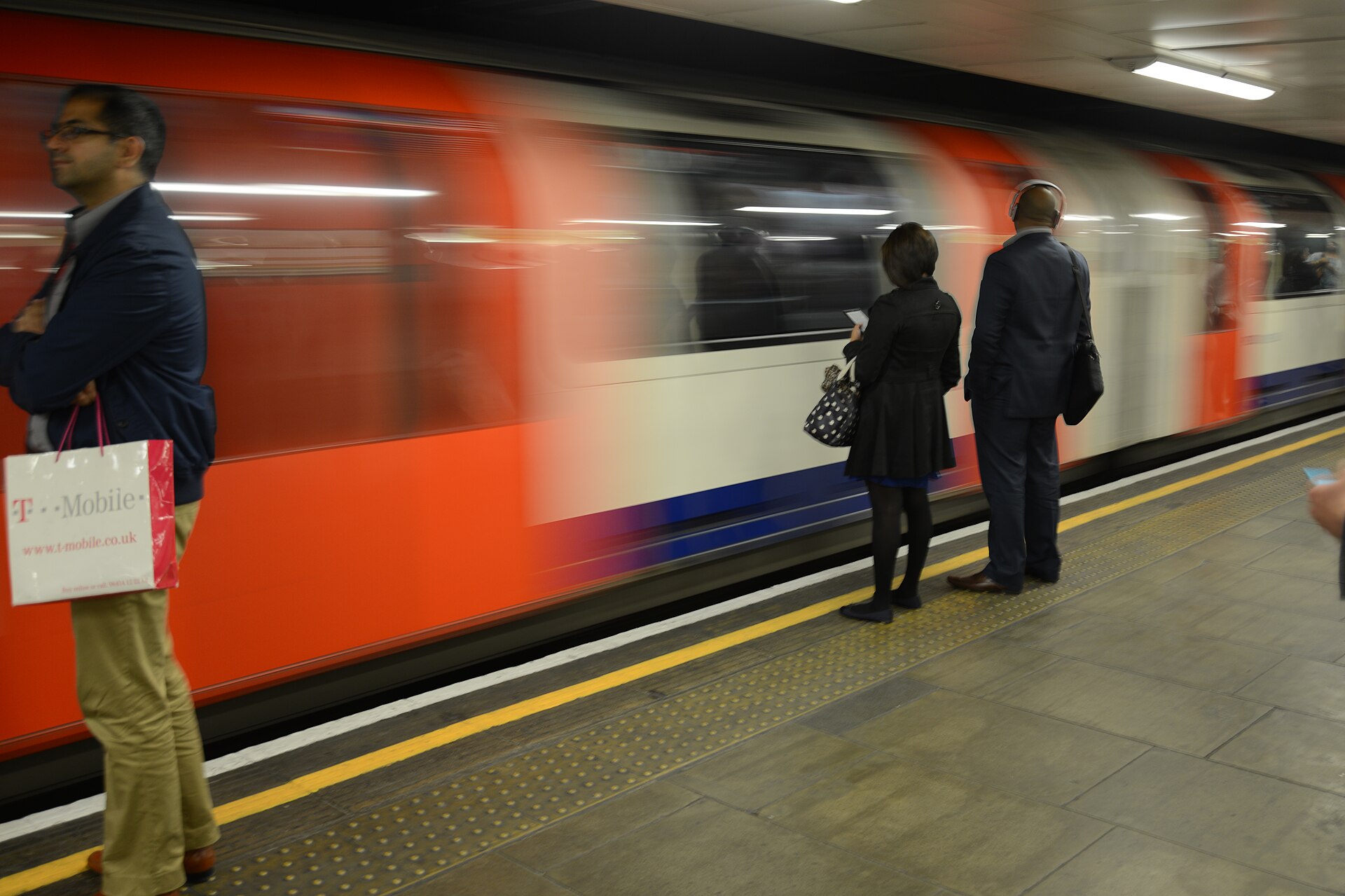
London is the easiest city in this series to answer. For almost every visitor, the honest answer to “should I rent a car?” is no, and it is not close. The city has one of the most extensive public transport networks in the world, run under one authority with one way of paying, and it reaches every sight, neighbourhood, station and airport a visitor is likely to need. Driving in central London, meanwhile, means a daily congestion charge, a city-wide emissions zone, streets laid out long before cars, parking that is scarce and priced accordingly, traffic on the left and journeys that are usually slower than the Tube. The exceptions are real but narrow: a road trip into the English countryside, a family visit deep in the outer suburbs, or a traveller for whom stairs and crowds are a genuine barrier. This guide explains how the city is laid out, how the Underground, buses and trains work and what they cost, what driving here is really like, when a car genuinely earns its keep, and gives you a straightforward way to decide.
The short answer
Do not rent a car for London itself. That covers the sights of Westminster, the South Bank, the City, the museums of South Kensington, the markets and neighbourhoods, Greenwich, Kew and Hampton Court, and it covers the classic day trips to Windsor, Oxford, Cambridge, Bath, Brighton and Canterbury, all of which are faster and less stressful by train. Tap a contactless card or phone at the gates, let the daily cap protect you from overpaying, and walk between the central sights. Rent a car only for the parts of a trip that leave London behind: the Cotswolds, the south coast, Devon and Cornwall, the Lake District or a rural cottage, where villages and trailheads sit beyond the railway. Even then, the smart move is to collect the car on the day you leave the city, never on the day you arrive. If a road trip is on the itinerary, compare pickup locations on our car rental search and read on for the details.
How London is laid out
London is not a grid but a collection of villages that grew together along the Thames, and it shows. The river curves east to west through the middle of the city; the West End (Soho, Covent Garden, Mayfair and the shopping streets), Westminster with Parliament and the palaces, and the City of London, the old walled Square Mile that is now the financial district, all sit on the north bank, while the South Bank, Southwark and Borough face them across the water. South Kensington’s museums and Hyde Park lie west of the centre, Camden and Regent’s Park to the north, Shoreditch and the East End to the east, and Greenwich downriver to the southeast. Beyond that, Greater London sprawls for more than 1,500 square kilometres inside the M25 orbital motorway, with Heathrow on its western edge. Transport fares are organised in zones, from Zone 1 in the centre out to Zone 6, where Heathrow sits, and beyond; nearly every sight a first-time visitor needs is in Zones 1 and 2.
Hotels cluster in the West End and Covent Garden, around Paddington, King’s Cross and Victoria stations, in South Kensington and Earl’s Court, along the South Bank and in the City, and increasingly in Shoreditch, Canary Wharf and Stratford, where rates are lower and the Elizabeth line and Jubilee line put the centre within a few stops. Almost none of the central hotels have parking, which tells you something about how London expects its visitors to travel. Our hotel booking tips explain how to find the best rate by area.
Getting in from the airport
From Heathrow, the main long-haul airport, there are three good rail options and no good reason to drive. The Elizabeth line runs from the Heathrow stations straight through Paddington, Bond Street, Tottenham Court Road, Farringdon, Liverpool Street and on to Canary Wharf without a change, and is the best all-round choice. The Heathrow Express reaches Paddington in about fifteen minutes for a premium fare, best booked in advance. The Piccadilly line is the cheapest ride, slower and busier but direct to Earl’s Court, Knightsbridge, Piccadilly Circus, Covent Garden and King’s Cross. A black cab or a ride-hail car into central London takes 45 minutes to well over an hour depending on traffic and is expensive; it makes sense only for a group with heavy luggage or for a hotel far from a station. From Gatwick, the Gatwick Express runs to Victoria and Thameslink trains to London Bridge, Farringdon and St Pancras; from Stansted, the Stansted Express runs to Liverpool Street; from Luton, a shuttle connects to trains at Luton Airport Parkway; and London City sits on the DLR, a few stops from Canary Wharf and Bank. Every major rental company has desks at Heathrow and Gatwick, which is useful on the way out of the country, not on the way in. Our Heathrow airport guide covers the terminals.
London’s public transport, explained
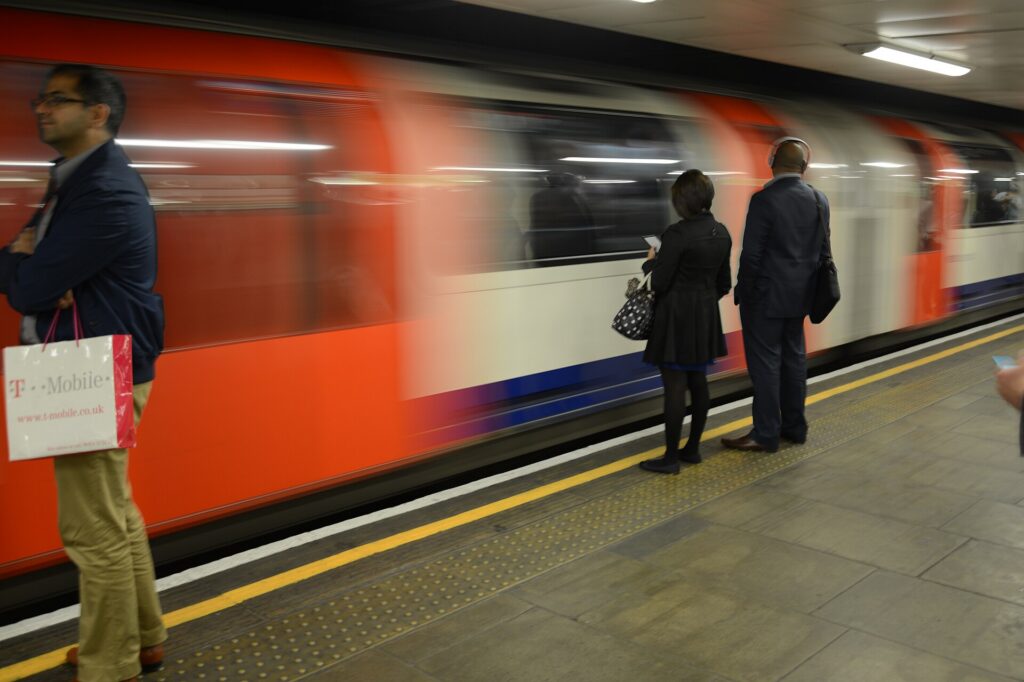
Transport for London (TfL) runs the Underground, the Elizabeth line, the London Overground, the Docklands Light Railway, the trams and the bus network, and they all share one fare system. It is busy at rush hour and occasionally disrupted by engineering works at weekends, but it is frequent, extensive and easy to use, and for a visitor it removes any need for a car.
The Underground
The Tube is the oldest underground railway in the world and still the backbone of the city, with eleven lines, each with its own colour on the famous map, and around 270 stations. In central London, trains on the main lines come every two to five minutes through most of the day, and you rarely need to check a timetable. Some useful habits: stations in the centre are often closer together than the map suggests, and walking between Covent Garden and Leicester Square, or Charing Cross and Embankment, is quicker than riding; many central stations involve long corridors and stairs, so allow time; and the Victoria, Jubilee, Central, Northern and Piccadilly lines run the Night Tube on Friday and Saturday nights on all or part of their routes. Stand on the right on escalators and let passengers off before boarding, and you will blend in.
The Elizabeth line, the Overground and the DLR
The Elizabeth line, opened in 2022, is a fast, air-conditioned east-west railway that crosses the centre in a few minutes, linking Heathrow and Paddington to the West End, the City, Canary Wharf and Stratford; it is the most comfortable way across town. The London Overground, now divided into six named lines, circles the inner suburbs and reaches neighbourhoods such as Shoreditch, Dalston, Hackney and Camden Road that the Tube misses. The driverless Docklands Light Railway serves Canary Wharf, Greenwich and London City Airport, and a seat at the front of the train is one of the city’s best free views. Trams run in south London around Croydon and Wimbledon.
Buses
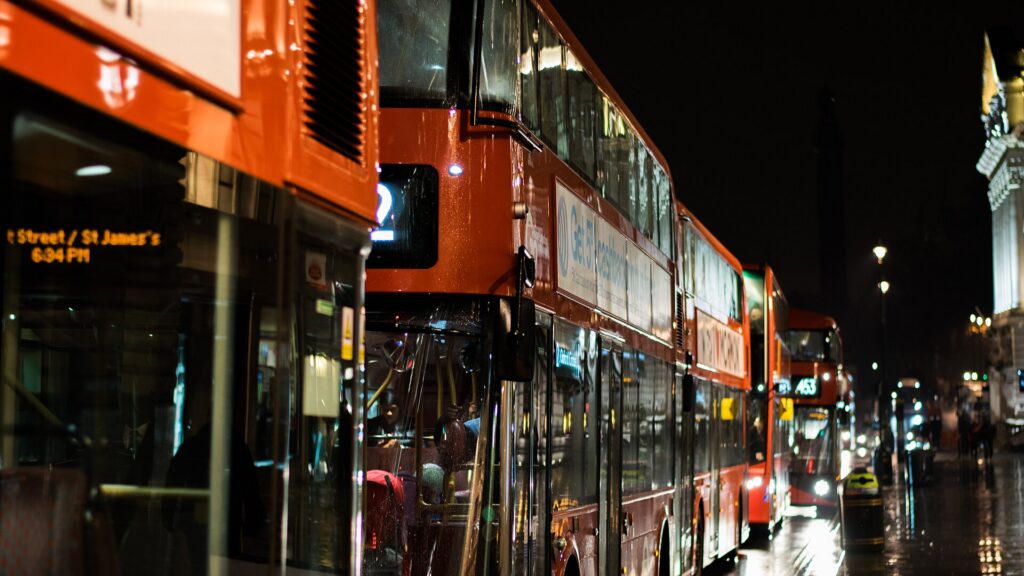
London’s red double-deckers run on hundreds of routes, many around the clock, and the top deck is the cheapest sightseeing tour in the city: routes through the West End, along the Strand and past St Paul’s cover many of the landmarks. Buses do not accept cash; you tap a contactless card, phone or Oyster card on boarding. The Hopper fare lets you make unlimited bus and tram journeys within one hour of the first tap for a single fare, and a bus fare is always cheaper than the Tube. Stops display the route numbers and a letter; the TfL journey planner and the common mapping apps show live arrivals.
Fares and paying
The simplest way to pay is to tap a contactless bank card or phone on the yellow readers at the gates and on buses, using the same card or device every time. Fares depend on the zones you travel through and the time of day, with higher peak fares on weekday mornings and late afternoons; the system caps what you pay automatically, both per day and, from Monday to Sunday, per week, so a heavy sightseeing day never costs more than a day pass would have. Check with your bank that your card does not charge foreign-transaction fees on each tap. An Oyster card, bought at stations, works the same way and suits visitors without a contactless card. Paper single tickets are far more expensive and not worth buying. Children under eleven travel free with a fare-paying adult. Check TfL’s site for current fares and caps before you go.
Accessibility
Accessibility is London’s weak point. The Elizabeth line, the DLR, the trams and every bus are step-free, and a growing share of Tube stations have lifts, but many older central stations still involve stairs and long passages. TfL publishes a step-free Tube map and its journey planner has a step-free option; for travellers with limited mobility, buses, the Elizabeth line and black cabs, which are all wheelchair accessible, cover most of what the Tube does.
Beyond TfL
- Walking. Central London is compact, and many of the best experiences, the South Bank from Westminster to Tower Bridge, the West End at night, the lanes of the City at the weekend, are walks. A first-time visitor can easily cover fifteen kilometres a day.
- Cycling. The Santander Cycles docking bikes, known to everyone as Boris bikes, are available across the centre, and several dockless e-bike schemes operate through an app. Protected cycle routes now cross much of inner London, and Hyde Park and Regent’s Park are pleasant rides.
- Black cabs and ride-hail. Licensed black cabs can be hailed on the street when the yellow light is on, are metered, and their drivers know the city by heart; Uber, Bolt and other apps operate everywhere. Both are expensive for long journeys in traffic but useful late at night or with luggage.
- The river bus. Uber Boat by Thames Clippers runs a scheduled service along the Thames between west London, Westminster, the Tower, Canary Wharf and Greenwich, accepts contactless payment, and is the most enjoyable commute in the city.
- National Rail. Mainline trains from the big termini (Paddington, King’s Cross, St Pancras, Euston, Victoria, Waterloo, London Bridge and Liverpool Street) serve the suburbs and every day-trip destination; National Rail has the timetables, and advance and off-peak tickets are much cheaper than buying on the day at peak.
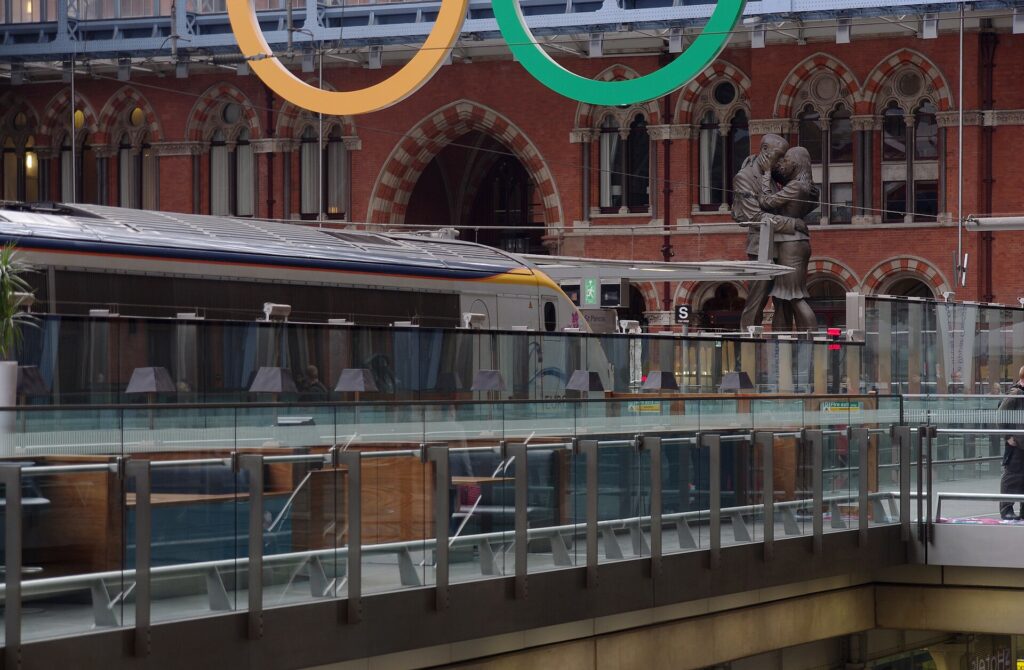
- Eurostar. High-speed trains from St Pancras reach Paris in a little over two hours and Brussels in about the same; Eurostar sells the tickets, and passport checks happen before you board.
Driving in London: what it is really like
Driving in central London is slow, expensive and stressful, and Londoners who own cars rarely use them to go into the centre. Traffic moves at walking pace for much of the day, the street plan is a medieval tangle of one-way systems, narrow lanes and junctions where five roads meet, and bus lanes, cycle lanes and red routes govern where you can drive and stop. On top of that, visitors drive on the left in cars that are usually manual unless they pay for an automatic, and navigate roundabouts clockwise. Two charges apply to drivers. The Congestion Charge is a daily fee for driving within the central zone during its operating hours, which cover the working day on weekdays and the afternoon and early evening at weekends and on bank holidays; it is charged per day however briefly you enter, and it has risen repeatedly. The Ultra Low Emission Zone (ULEZ) covers all of Greater London around the clock; most modern rental cars meet its standards, but confirm with the rental company, because a non-compliant car adds another daily charge. Neither charge is paid at a toll booth: cameras read the number plate and you pay online, and if you forget, the penalty goes to the rental company, which will pass it on to you with an administration fee.
Parking
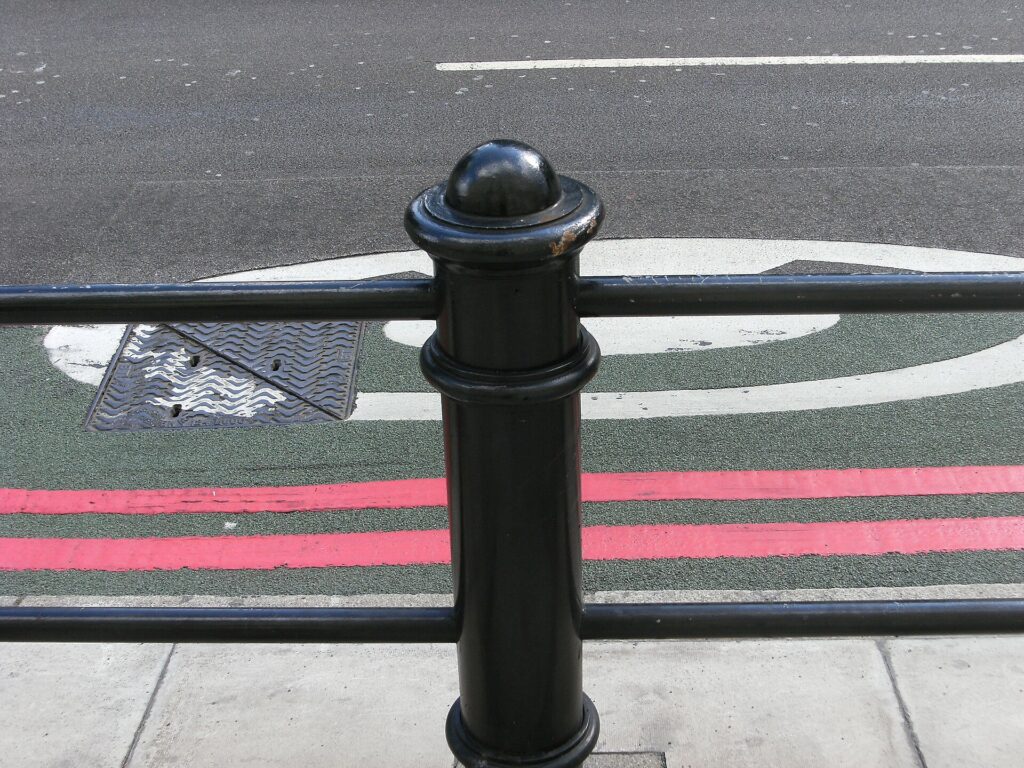
Parking is the other reason not to drive. Most central streets are controlled parking zones, reserved for residents with permits or metered by the hour at some of the highest rates in Europe and paid through apps rather than coins; commercial car parks in the centre charge by the hour at similar levels, and the few central hotels with garages charge heavily for them. Outside the centre, parking eases but rarely disappears: suburban high streets have short-stay limits, and the car parks at Kew, Hampton Court and the big parks fill on sunny weekends. If you do end up with a car in London, the cheapest option is often to leave it at a hotel or car park in the outer suburbs near a Tube or rail station and travel in by train.
Rules and conditions worth knowing
- Drive on the left and give way to traffic from the right at roundabouts. If you are not used to it, collect the car somewhere quieter than central London.
- Licences. Visitors can drive in the UK on a valid Canadian or U.S. licence; ask the rental company whether it also wants an International Driving Permit, and note that many companies charge extra for drivers under 25.
- Speed limits and cameras. A 20 mph limit now applies on many central and inner London roads, and fixed and average-speed cameras are everywhere; the fines follow the car.
- Red routes and bus lanes. Red lines mean no stopping at all during their hours; bus lanes are camera-enforced during the hours on the sign.
- River crossings. The Dartford Crossing on the M25 east of London charges a fee paid online, and the Blackwall and Silvertown tunnels in east London now charge as well.
- The M25. The orbital motorway is the way around London and one of the busiest roads in Europe; allow extra time at rush hour, on Friday afternoons and on bank holiday weekends.
- Fuel and cars. Fuel is expensive by North American standards and sold by the litre; rental cars are smaller than you may be used to, which is an advantage on country lanes.
When renting a car makes sense
- The Cotswolds. The honey-stone villages northwest of Oxford are served by a handful of stations, but moving between villages is far easier by car.
- Stonehenge, Salisbury and Bath as a loop. Each is reachable by train and tour, but a car lets you combine them with Avebury and the Wiltshire countryside in a day or two.
- The south coast, Devon and Cornwall. Coves, coastal paths and fishing villages sit well beyond the railway.
- A countryside cottage or a wedding in a village. Rural England assumes a car, and taxis are scarce.
- Family visits in the outer suburbs, where bus journeys can be long and the Tube does not reach.
- Limited mobility. For travellers for whom stairs and crowds are a genuine barrier, a car for trips outside the centre can make sense, though black cabs are often the better answer within it.
If any of those apply, our rental car booking tips cover insurance, deposits and the questions to ask at the counter, our family car rental guide looks at vehicle choice, and our note on car rental return timing helps you avoid late fees on the way to the airport.
When it does not
- Your trip is London itself, including Greenwich, Kew and Hampton Court.
- Your day trips are Windsor, Oxford, Cambridge, Bath, Brighton, Canterbury or Paris, all faster by train.
- You are staying anywhere in Zones 1 to 3, where parking alone would cost more than your transport.
- You are travelling solo or as a couple, when rail tickets bought in advance are cheaper than a rental, fuel and charges.
- You have never driven on the left and your first drive would be out of Heathrow in rush hour.
The hybrid plan for a London-plus-countryside trip
Spend the London days car-free, then collect a car on the day you leave the city, and think carefully about where you pick up. For the Cotswolds, Bath or the west, the best option is often to take the train to Oxford, Reading or Swindon and pick up a car there, skipping London traffic entirely. For the south coast or Kent, a pickup in a suburban branch or at Gatwick avoids the centre. Heathrow is a good choice at either end: collect a car there after your London days, heading west on the M4 or M40 without entering the city, or return it there before your flight home. Avoid collecting a car in central London, where you pay for parking before you have used it and start the trip in the most difficult driving conditions in the country. A pattern that works well: Elizabeth line from Heathrow into the city, four car-free days in London, a train to Oxford to pick up a rental, three days in the Cotswolds and Bath, and a return drop at Heathrow on the way to the flight. Book automatics early if you need one, because they are the first cars to sell out. Compare pickup locations on our car rental search before you fix the plan.
A worked cost comparison
Numbers change with the season and the booking window, so treat this as a method rather than a quote, and check current prices before deciding. For a five-night London trip for two people, the car-free version costs a return Elizabeth line or Piccadilly line journey from Heathrow for two, five days of capped contactless travel each, perhaps a river bus to Greenwich, and a black cab home after a late show; with the daily cap, even a heavy sightseeing day costs a modest fixed amount. The rental version adds five days of a car, five nights of central parking if you can find it, the Congestion Charge on every weekday and weekend afternoon you enter the zone, fuel, and journeys that are slower than the Tube. It is not a close contest, and the car-free option wins by a large margin. For the same five nights with day trips to Windsor, Oxford and Bath, the car-free version adds three rail return fares each, much cheaper when booked in advance for off-peak trains; driving adds the rental, fuel, parking in three busy tourist towns and the stress of leaving and re-entering London each day. The train still wins for two people, and usually for four. For a week split between London and the Cotswolds, the hybrid plan is the clear winner: car-free in the city, a train out to Oxford, and three or four days of a rental picked up there, with none of the London charges. Run the rental rates for your countryside days on our car rental search and set them beside the rail fares before you choose.
Leaving London by road: the countryside in each season
Once you are out of London, England is a pleasant place to drive, with good motorways, well-signed A-roads and country lanes that are narrow, hedged and beautiful. The challenge is getting out, and the timing matters in every season. In summer, the roads to the coast and the West Country are at their busiest on Friday afternoons and Saturday mornings, and the M25, the M4 and the A303 past Stonehenge can queue for hours on the bank holiday weekends at the end of May and August; leave early in the morning or mid-week. In spring, the Easter weekend brings the first big exodus, but otherwise April and May are ideal, with long days and quieter roads. In autumn, September is one of the best months for touring, with settled weather and the school holidays over, and the October half-term is the one busy week. In winter, snow is uncommon in the south of England, but fog, frost on country lanes and early darkness, with sunset before four in December, shorten the driving day; plan to be at your destination before dark. In any season, avoid leaving or returning to London in the weekday rush hours, allow for roadworks on the M25, and remember that a single-track lane with passing places is normal in the countryside. And in any season, the train to the edge of the region and a car from there will save you most of the hardest miles.
Decision table
| Your trip | Recommendation | Why |
|---|---|---|
| City break in central London | No car | The Tube, buses and your feet reach everything; driving means charges, traffic and parking |
| London with day trips to Windsor, Oxford, Bath or Brighton | No car | Trains are faster, cheaper when booked ahead, and deliver you to the town centre |
| London plus Paris | No car | Eurostar from St Pancras reaches Paris in a little over two hours |
| London plus the Cotswolds or the West Country | Hybrid: train out of London, rent there | Car-free city days, a car where villages and lanes need one |
| Road trip around England | Rent at Heathrow after your London days | Head west without entering the city; return it before your flight |
| Family visit in the outer suburbs | Consider a rental for those days | Suburban journeys can be long by bus; parking is easier outside the centre |
| Travellers with limited mobility | Black cabs and step-free transport in the centre, a car beyond | Many older Tube stations have stairs; cabs and buses are all accessible |
| Arriving jet-lagged at Heathrow | No car, Elizabeth line or Heathrow Express | Driving on the left in rush hour after an overnight flight is a poor start |
Money-saving tips for both options
- On transport: use the same contactless card or phone for every journey so the daily and weekly caps apply; take the bus when you can for the Hopper fare; travel after the morning peak when possible; and walk between neighbouring central stations.
- On trains out of London: book advance tickets for day trips and travel off-peak; a railcard can cut fares further for some travellers staying longer.
- On a rental: pick up outside central London, book an automatic early if you need one, check that the car is ULEZ-compliant, decline extras you already have through a credit card or home policy (check first), and pay any Congestion Charge or crossing fee yourself on the day to avoid penalties.
- On the hotel: a room near an Elizabeth line or Jubilee line station in Zone 2 is often much cheaper than Zone 1 and only a few minutes further from the sights.
- On timing: avoid driving out of London on Friday afternoons and bank holiday weekends; the best time to fly to London guide lists the busiest dates.
For a broader comparison of the options in any city, see our guide to renting a car versus public transport versus taxis, and if Paris is next on the itinerary, our Paris transport guide covers the Métro, the RER and the same car question there.
Frequently asked questions
Is it worth renting a car in London?
Not for the city. Public transport is faster, cheaper and easier than driving, and central London adds a congestion charge, an emissions zone and expensive parking. A car only makes sense for trips into the countryside, collected on the way out.
Is London public transport good for tourists?
It is excellent: the Tube, the Elizabeth line, the Overground, the DLR and the buses reach every sight, run frequently, and share one fare system with automatic daily caps when you tap a contactless card or phone.
How do I get from Heathrow to central London?
The Elizabeth line is the best all-round option, the Heathrow Express the fastest to Paddington, and the Piccadilly line the cheapest. A taxi takes 45 minutes to over an hour and costs far more.
Do I need an Oyster card?
Not if you have a contactless bank card or phone that works without foreign-transaction fees; it gets the same fares and caps. An Oyster card is the alternative if you do not.
What is the London Congestion Charge?
A daily fee for driving within central London during its operating hours, paid online and enforced by cameras. It is separate from the Ultra Low Emission Zone, which covers all of Greater London.
Can I drive in the UK on a Canadian or U.S. licence?
Yes, as a visitor. Check whether your rental company also asks for an International Driving Permit, and remember that traffic drives on the left.
How do I get to Stonehenge or the Cotswolds without a car?
For Stonehenge, take the train to Salisbury and the tour bus from the station, or book a coach tour from London. For the Cotswolds, trains reach a handful of towns, and local buses and tours cover the villages; a car gives you far more freedom there.
Whichever way you go, start with the flight. Compare cheap flights to London, plan your days with our first-timer’s guide to London, and if the countryside is on the list, price a rental for those days on our car rental search.
Keep planning with TicketScanner
- Cheap flights to London
- Car rental search — for countryside days, collected outside central London
- Things to do in London: a first-timer's guide
- Best time to fly to London: month by month
- London Heathrow (LHR) airport guide
- Events in London — shows, concerts and matches, all reachable by Tube
- Rental car booking tips
- Car, transit or taxi in a new city?
- Paris: rent a car or use public transit?
Leave a Reply