
London is one of the busiest air destinations on earth, and that shapes the “best time” question in a way that is different from almost anywhere else. There is never a month when the city is empty, never a month when the museums close or the theatres go dark, and never a month when the weather is genuinely bad enough to keep people away. What changes through the year is the price of getting there and, even more, the price of sleeping there. Transatlantic fares follow the North American holiday calendar, London’s hotels follow the British school holidays and the city’s enormous events diary, and the two do not always line up. Add a climate that is mild, grey and changeable in every season, with summer evenings that stay light until after nine and December afternoons that are dark before four, and you have a city where the right answer depends on what you want to trade. This guide walks through the weather month by month, the fare seasons, the events that move prices, the airports, and the timing tricks that work for London.
The short answer
For the best balance of weather and value, aim for late April to early June, when the parks are in blossom, the days are long and the summer crowds and fares have not yet arrived, and September to mid-October, when the weather is often settled, the schools are back and the city’s cultural season is starting. The cheapest fares come in January, February and early March, outside the school half-term week in February, and in November, when transatlantic demand is at its lowest and London hotels are at their most reasonable. The most expensive stretches are late June to the end of August, when North American summer travel and the British school holidays overlap, and the two weeks around Christmas and New Year, when fares from Canada and the U.S. peak even though London’s hotels are relatively quiet in the days after Christmas. Whatever you choose, run a flexible-date search on our London flights page; with so many daily departures from North America, a shift of two or three days can move the fare more than a change of month.

London’s weather, season by season
London has a temperate maritime climate: mild winters, warm rather than hot summers, and rain spread fairly evenly through the year, usually as light showers rather than downpours. Snow is rare and seldom settles for long; heatwaves have become more frequent, and a few days above 30 °C now happen in most summers. The figures below are approximate seasonal patterns based on the long-term climate averages published by the UK Met Office; check the current forecast before you pack, because a London day can include sunshine, a shower and a cold wind in the space of an afternoon.
| Month | Typical daytime high | Typical overnight low | What it feels like | Fare pressure |
|---|---|---|---|---|
| January | around 8 °C | around 2 °C | Grey, damp and short days; frost on clear nights, snow only occasionally | Low after the first week |
| February | around 9 °C | around 2 °C | Similar, with more light by the end of the month; the first daffodils | Low; rises for the half-term week |
| March | around 12 °C | around 4 °C | Changeable; blustery days, early blossom, cold snaps still possible | Low to moderate; Easter can fall late in the month |
| April | around 15 °C | around 6 °C | Spring proper; showers and sunshine, parks in full blossom | Moderate; Easter holidays push it up |
| May | around 18 °C | around 9 °C | Often lovely; long, green and one of the drier months | Moderate; bank holiday weekends busy |
| June | around 21 °C | around 12 °C | Warm, light until after nine in the evening | High from mid-month |
| July | around 24 °C | around 14 °C | The warmest month; occasional heatwaves, and the Tube gets hot | Peak |
| August | around 23 °C | around 14 °C | Warm, with thundery showers some years; many Londoners are away | Peak |
| September | around 20 °C | around 11 °C | Often settled and mild; a good month for walking | Moderate, falling after the first week |
| October | around 16 °C | around 9 °C | Autumn colour, cooler evenings, more rain toward the end | Moderate; half-term week busier |
| November | around 11 °C | around 5 °C | Damp, grey and dark by half past four; the Christmas lights go on | Low |
| December | around 9 °C | around 3 °C | Cool, festive and dark before four on the shortest days | Low until mid-month, then peak from North America |
Three things the table cannot show. First, the light: London sits at roughly the same latitude as Calgary, so the difference between seasons is dramatic, with around sixteen and a half hours of daylight in late June and fewer than eight in late December. A summer evening on the river at half past nine is one of the great pleasures of the city; a December visit means planning outdoor sights for the middle of the day. Second, the rain: London’s reputation is worse than its record, and the typical wet day is a drizzle or a passing shower rather than a washout, but it can come in any month, and a light waterproof jacket is more useful than an umbrella in the wind. Third, the heat indoors: many older buildings, hotels and much of the Underground have no air conditioning, so a 30 °C day in July feels hotter in London than the number suggests.
How London’s fare seasons work
Three calendars drive the cost of a London trip. The first is the North American holiday calendar, which sets transatlantic fares: summer and the Christmas holidays are expensive, spring break lifts March, and the autumn and late winter are cheap. The second is the British school calendar, which fills the city’s hotels and attractions during the Easter holidays, the half-term weeks in February, late May and late October, and the long summer holiday from late July to early September. The third is London’s events diary, which is so crowded that some part of the city is always hosting something: Wimbledon, the big stadium concerts, the Chelsea Flower Show, the fashion weeks and the major conferences all push up hotel rates on their dates. The result is a long, expensive summer, a sharp Christmas spike on the flights, and two shoulders in spring and autumn that are the sweet spot for most visitors.
Peak season
Mid-June to the end of August, plus roughly December 18 to January 3 for flights from North America. Summer is the most expensive time for both flights and hotels, and the queues at the Tower, the London Eye and Buckingham Palace are at their longest; July, when Wimbledon, the start of the Proms and the first week of the British school holidays overlap, is often the tightest month for rooms. The Christmas weeks are unusual: transatlantic fares peak as North Americans fly home or on holiday, but London’s hotels, emptied of business travellers, can be good value between Christmas and New Year’s Eve. If you must travel in summer, book early, fly mid-week, and stay slightly outside the centre near a good Tube or Elizabeth line station.
Shoulder season
April to mid-June and September to October. Spring gives you blossom, long evenings and the parks at their best, with fares that step up through May; autumn gives you settled weather in September, autumn colour in October and the start of the theatre, gallery and concert seasons. Watch the Easter holidays, the two May bank holiday weekends, the late-May half-term and the late-October half-term, when British families travel and attractions fill.
Low season
November, and January to mid-March outside the February half-term. Transatlantic fares are at their lowest, hotel rates in the centre drop noticeably, and the museums, theatres and restaurants are full of Londoners rather than visitors. January brings the sales and short, grey days; November brings the Christmas lights and markets before the December crowds. The weather is cool and damp rather than harsh, so the main cost of a winter trip is daylight.
As elsewhere, mid-week departures and overnight flights from North America usually price below Friday and Sunday departures on the same route, and a search across a whole month reveals cheaper pairs of dates close to your first choice. Our guide to the best times to book explains how to read those patterns, and our international flight booking tips cover the long-haul specifics.
London month by month
January
After New Year’s Day, one of the two cheapest months of the year to fly and the cheapest for hotels. The days are short and grey, but London is built for winter: the national museums are free and uncrowded, the January sales fill Oxford Street and the department stores, and the West End runs discount schemes on theatre tickets to fill seats in the quiet weeks. The New Year’s Day Parade through the West End closes the holidays. A good month for a city-focused trip built around museums, theatre and restaurants.
February
Still cheap outside the half-term week in mid-February, when British families take a short break and attractions fill. The first blossom and daffodils appear in the parks, Chinese New Year brings one of the biggest celebrations outside Asia to the West End and Trafalgar Square in late January or February, and the Six Nations rugby championship fills Twickenham and the pubs on match weekends. London Fashion Week, held in February and September, lifts hotel rates in the centre for a few days.
March
Changeable, with blustery days and the parks beginning to bloom. Fares stay low for most of the month, but spring break in Canada and the U.S. lifts transatlantic prices for a fortnight, and when Easter falls in March, the school holidays begin with it. St Patrick’s Day brings a festival to Trafalgar Square, and the clocks go forward to British Summer Time on the last Sunday of the month, adding an hour of evening light overnight.
April
Spring proper, with blossom along the streets and cherry trees in the Royal Parks and at Kew. The Easter holidays, usually two weeks in late March or April, fill the attractions and lift prices; outside them, April is good value. The London Marathon, usually on a Sunday in late April, closes a large part of the city and fills hotels near the route and the finish on the Mall. The Boat Race between Oxford and Cambridge rows the Thames in late March or early April.
May
Often the best month of the year for weather and value together: long days, fresh green parks, some of the lowest rainfall of the year, and fares that are still below summer levels. There are two bank holidays, on the first and last Mondays of the month, and the late-May half-term follows the second; these are the dates to book around. The Chelsea Flower Show in late May is the high point of the gardening year and books out well ahead.
June
Warm, light until after nine in the evening, and increasingly busy. Trooping the Colour, the King’s official birthday parade, marches down the Mall on a Saturday in June, open-air theatre starts in Regent’s Park, and the summer exhibitions open at the galleries. Wimbledon begins in the last week of June and runs for two weeks; fares and hotels climb steeply from mid-month as North American summer travel begins. Early June is the value play.
July
Peak season. Wimbledon runs into the first half of the month, the Proms begin their nightly concerts at the Royal Albert Hall in mid-July, the big outdoor concerts fill Hyde Park, and the British school holidays start in the third week. It is the warmest month and the most crowded; the parks, the river and the long evenings are the reward. Book the hotel before the flight, and expect the queues at the headline sights to be at their longest.
August
Still peak, although many Londoners are away and the City is noticeably quieter on weekdays. The Proms continue, the parks host open-air cinema and concerts, and the Notting Hill Carnival takes over west London over the August bank holiday weekend at the end of the month, drawing crowds in the hundreds of thousands. Fares from North America ease slightly in the last week as schools there go back.
September
The month many Londoners would send you to. The weather is often mild and settled, the summer crowds thin out once the schools return in the first week, and fares fall steadily through the month. The Proms end with the Last Night in mid-September, London Fashion Week and the design festival fill the calendar, and Open House weekend opens hundreds of normally closed buildings to the public. Business travel returns, so mid-week hotel rates in the centre can be firmer than the season suggests.
October
Autumn colour in the parks, cooler evenings and moderate prices, with the half-term week in late October the one to book around. The BFI London Film Festival brings premieres to Leicester Square and cinemas across the city, the galleries open their big autumn exhibitions, and the clocks go back on the last Sunday of the month, bringing the dark afternoons in suddenly.
November
One of the cheapest months of the year. It is grey and damp, and dark by half past four, but the Christmas lights are switched on across the West End early in the month, the markets and ice rinks open, Bonfire Night fireworks light up the parks around the fifth, and the Lord Mayor’s Show parades through the City on the second Saturday. Before the December crowds, this is the best-value way to see festive London.
December
Two months in one. The first half continues November’s low transatlantic fares, with the city at its most festive and the markets and Winter Wonderland in Hyde Park in full swing, though weekend hotel rates in the centre rise with Christmas shopping and office parties. From about December 18, fares from North America peak for the holidays. London itself goes quiet on Christmas Day, when almost all public transport stops, and the New Year’s Eve fireworks on the Thames are a ticketed event with limited viewing areas along the river.

Events that move London flight and hotel prices
Cross-check these against your dates before you book. Exact dates shift each year; Visit London keeps the current calendar, and the UK government’s bank holiday page lists the public holidays.
- School half-terms in mid-February, late May and late October, and the Easter holidays in late March or April.
- London Marathon (usually a Sunday in late April).
- Chelsea Flower Show (late May).
- Wimbledon (two weeks from the last week of June); the official site explains the ballot and the queue.
- The Proms (mid-July to mid-September) and the big summer concerts in Hyde Park and at Wembley.
- British school summer holidays (late July to early September), which overlap with North American summer travel.
- Notting Hill Carnival (August bank holiday weekend, the last weekend of August).
- London Fashion Week (February and September) and major trade fairs, which can fill central hotels mid-week.
- Christmas to New Year, when transatlantic fares peak.
- Premier League, rugby and NFL games, stadium tours and West End openings. Our London events page shows what is on sale for your dates.
Getting in from the airport
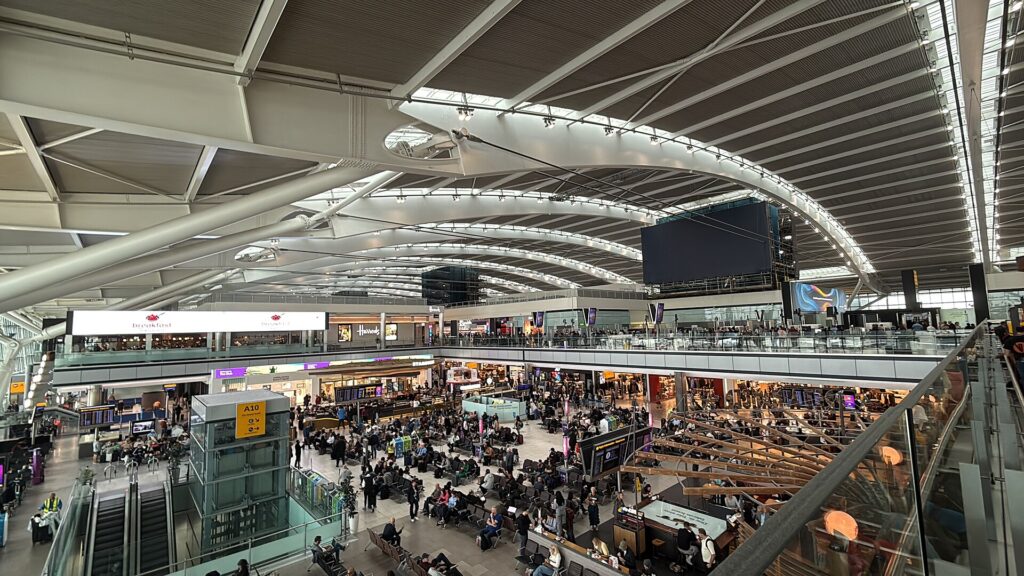
London has six airports, and which one you land at matters more than in most cities. Heathrow (LHR), about 24 kilometres west of the centre, is the main long-haul gateway, with the widest choice of nonstop flights from Canada and the U.S. on British Airways, Air Canada and the major North American airlines. It is also the best connected: the Elizabeth line runs straight through the West End and the City without changing, the Heathrow Express reaches Paddington in about fifteen minutes for a premium fare, and the Piccadilly line is the cheapest ride into central London, slower but direct to Knightsbridge, Piccadilly Circus and King’s Cross. Gatwick (LGW), south of the city, handles some transatlantic flights and a great deal of European and holiday traffic, with the Gatwick Express to Victoria and Thameslink trains to London Bridge, Farringdon and St Pancras. Stansted and Luton, to the north, are the low-cost airports for Europe, linked by the Stansted Express and by Thameslink and East Midlands Railway trains; London City, in Docklands, is the business airport on the DLR, a few stops from Canary Wharf; Southend is the smallest. For a North American visitor, the practical rule is to compare Heathrow and Gatwick on price and then weigh the transfer: Heathrow is almost always the easier arrival. Our Heathrow airport guide covers the terminals, and our London transport guide explains why nobody should pick up a rental car at the airport.
Timing tricks that work for London
- Search the whole month. With dozens of daily departures from North America, the fare calendar has deep dips mid-week. A calendar search on TicketScanner shows them instantly.
- Price the hotel first in summer. A good fare into Wimbledon fortnight or the late-July school holidays is not a good deal once a London hotel room is added. Check rates for the same dates before you commit to either, and read our hotel booking tips.
- Compare Heathrow and Gatwick. The fare difference between the two can be significant on some routes; the Gatwick Express or Thameslink closes most of the gap in convenience.
- Fly overnight, arrive in the morning. Eastbound transatlantic flights arrive early, so book a hotel that will store luggage and plan a gentle first day on foot in the fresh air, which is the best cure for jet lag.
- Consider an open-jaw ticket. Flying into London and home from Paris or Rome, with the Eurostar or a short flight in between, often costs little more than a return; see flights to Paris and our guide to multi-city trips in Europe.
- Avoid the British school holidays if your dates are flexible; the half-term weeks and the Easter holidays fill attractions and lift hotel rates even when transatlantic fares are low.
- Allow time at the airport on the way home. Heathrow security and long walks to the gates mean a generous buffer; our guide to how early to arrive covers what to allow.
- Flying out of London instead? The same seasonality applies in reverse; see cheap flights from London.

What to pack, by season
Winter (December to February): a warm, waterproof coat, a scarf and gloves, and shoes that can handle wet pavements; you will rarely need snow boots, but you will want layers, because the Tube and the museums are warm and the streets are raw. Spring (March to May): layers, a light waterproof jacket and something warm for the evenings, which are cool even when the afternoons are bright. Summer (June to August): light clothing, a light jacket or jumper for the evenings and for air-conditioned theatres, sunglasses, and a compact umbrella for the showers; in a heatwave, a refillable water bottle for the Tube. Autumn (September to November): layers again, a proper waterproof by late October, and a warm coat by November. In every season, bring the most comfortable walking shoes you own; London is a city you see on foot, and a first-time visitor easily walks fifteen kilometres a day.
The best time to fly to London for…
Sightseeing on foot
Late April to early June, or September, for long days, mild weather and manageable queues.
Theatre, museums and restaurants
January to early March and November, when fares and hotel rates are low, the West End runs ticket promotions, and the galleries are quiet.
Festive London
Late November and the first half of December, for the lights, the markets and the ice rinks before the Christmas fare spike.
The lowest fares
January after New Year, February outside half-term, and November. Pair with a city-focused itinerary and plan outdoor sights for the middle of the day.
Families
If your children’s school calendar allows, March Break in Canada and many U.S. spring breaks fall in mid-March, often a week or more away from the British Easter holidays, which is the window to aim for; otherwise, the last week of August into early September, when London’s own schools are about to return.
International visitors
Canadian, American and most other visa-exempt visitors now need an Electronic Travel Authorisation (ETA), applied for online before travel. The UK government’s visa checker explains what applies to your passport, and Transport for London has the journey planner and fare information for your arrival.
Frequently asked questions
What is the cheapest month to fly to London?
January and November are consistently the lowest from North America, followed by February outside the half-term week and early March before spring break.
What is the best month to visit London for weather?
May and September offer the best combination of mild temperatures, long days and fewer crowds; June and July are warmer but busier and more expensive.
How rainy is London?
Less than its reputation. Rain is spread through the year, usually as showers or drizzle rather than heavy downpours, and most days have dry spells. Carry a light waterproof in every season.
Is London expensive in summer?
Yes. Mid-June to August is the most expensive time for both flights and hotels, and July, with Wimbledon and the start of the school holidays, is often the tightest month for rooms.
Should I fly into Heathrow or Gatwick?
Heathrow for convenience, with the Elizabeth line, the Heathrow Express and the Tube direct to the centre; Gatwick if the fare saving is worthwhile, with the Gatwick Express and Thameslink covering the transfer.
How far ahead should I book?
Well ahead for summer, the Christmas holidays and any major event date, when fares and hotel rates tend only to rise; for the low season, fares are stable enough that finding the right days of the week matters more than booking early.
Does it snow in London?
Occasionally, usually between December and February, and it rarely lasts more than a day or two in the city. A cold, damp week is far more likely than a snowy one.
Ready to pick your dates? Compare fares across the whole month on our London flights page, then see what is on in London for your trip. For what to do when you land, start with our first-timer’s guide to London.
Keep planning with TicketScanner
- Cheap flights to London — compare fares across the whole month
- Events in London — West End shows, concerts and matches on sale
- Things to do in London: a first-timer's guide
- London: rent a car or use public transport?
- London Heathrow (LHR) airport guide
- Best times to book flights and hotels
- International flight booking tips
- Cheap flights to Paris — for an open-jaw trip with London
- Cheap flights from London
Leave a Reply