Tag: London

  • London: Should You Rent a Car or Rely on Public Transit?

    London: Should You Rent a Car or Rely on Public Transit?

    London is the easiest city in this series to answer. For almost every visitor, the honest answer to “should I rent a car?” is no, and it is not close. The city has one of the most extensive public transport networks in the world, run under one authority with one way of paying, and it reaches every sight, neighbourhood, station and airport a visitor is likely to need. Driving in central London, meanwhile, means a daily congestion charge, a city-wide emissions zone, streets laid out long before cars, parking that is scarce and priced accordingly, traffic on the left and journeys that are usually slower than the Tube. The exceptions are real but narrow: a road trip into the English countryside, a family visit deep in the outer suburbs, or a traveller for whom stairs and crowds are a genuine barrier. This guide explains how the city is laid out, how the Underground, buses and trains work and what they cost, what driving here is really like, when a car genuinely earns its keep, and gives you a straightforward way to decide.

    The short answer

    Do not rent a car for London itself. That covers the sights of Westminster, the South Bank, the City, the museums of South Kensington, the markets and neighbourhoods, Greenwich, Kew and Hampton Court, and it covers the classic day trips to Windsor, Oxford, Cambridge, Bath, Brighton and Canterbury, all of which are faster and less stressful by train. Tap a contactless card or phone at the gates, let the daily cap protect you from overpaying, and walk between the central sights. Rent a car only for the parts of a trip that leave London behind: the Cotswolds, the south coast, Devon and Cornwall, the Lake District or a rural cottage, where villages and trailheads sit beyond the railway. Even then, the smart move is to collect the car on the day you leave the city, never on the day you arrive. If a road trip is on the itinerary, compare pickup locations on our car rental search and read on for the details.

    How London is laid out

    London is not a grid but a collection of villages that grew together along the Thames, and it shows. The river curves east to west through the middle of the city; the West End (Soho, Covent Garden, Mayfair and the shopping streets), Westminster with Parliament and the palaces, and the City of London, the old walled Square Mile that is now the financial district, all sit on the north bank, while the South Bank, Southwark and Borough face them across the water. South Kensington’s museums and Hyde Park lie west of the centre, Camden and Regent’s Park to the north, Shoreditch and the East End to the east, and Greenwich downriver to the southeast. Beyond that, Greater London sprawls for more than 1,500 square kilometres inside the M25 orbital motorway, with Heathrow on its western edge. Transport fares are organised in zones, from Zone 1 in the centre out to Zone 6, where Heathrow sits, and beyond; nearly every sight a first-time visitor needs is in Zones 1 and 2.

    Hotels cluster in the West End and Covent Garden, around Paddington, King’s Cross and Victoria stations, in South Kensington and Earl’s Court, along the South Bank and in the City, and increasingly in Shoreditch, Canary Wharf and Stratford, where rates are lower and the Elizabeth line and Jubilee line put the centre within a few stops. Almost none of the central hotels have parking, which tells you something about how London expects its visitors to travel. Our hotel booking tips explain how to find the best rate by area.

    Getting in from the airport

    From Heathrow, the main long-haul airport, there are three good rail options and no good reason to drive. The Elizabeth line runs from the Heathrow stations straight through Paddington, Bond Street, Tottenham Court Road, Farringdon, Liverpool Street and on to Canary Wharf without a change, and is the best all-round choice. The Heathrow Express reaches Paddington in about fifteen minutes for a premium fare, best booked in advance. The Piccadilly line is the cheapest ride, slower and busier but direct to Earl’s Court, Knightsbridge, Piccadilly Circus, Covent Garden and King’s Cross. A black cab or a ride-hail car into central London takes 45 minutes to well over an hour depending on traffic and is expensive; it makes sense only for a group with heavy luggage or for a hotel far from a station. From Gatwick, the Gatwick Express runs to Victoria and Thameslink trains to London Bridge, Farringdon and St Pancras; from Stansted, the Stansted Express runs to Liverpool Street; from Luton, a shuttle connects to trains at Luton Airport Parkway; and London City sits on the DLR, a few stops from Canary Wharf and Bank. Every major rental company has desks at Heathrow and Gatwick, which is useful on the way out of the country, not on the way in. Our Heathrow airport guide covers the terminals.
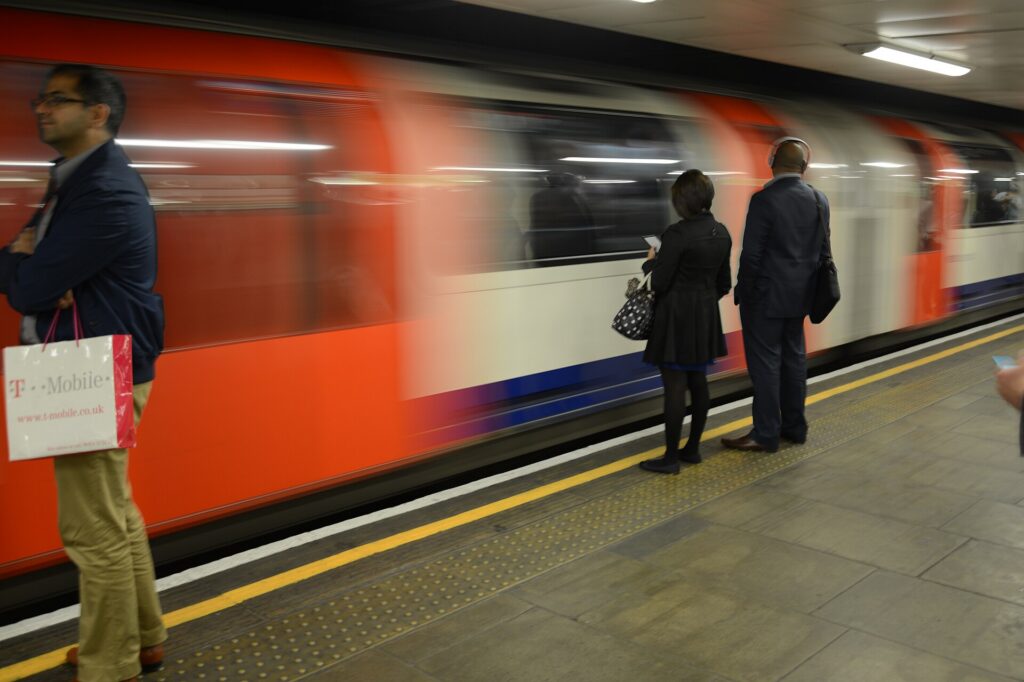
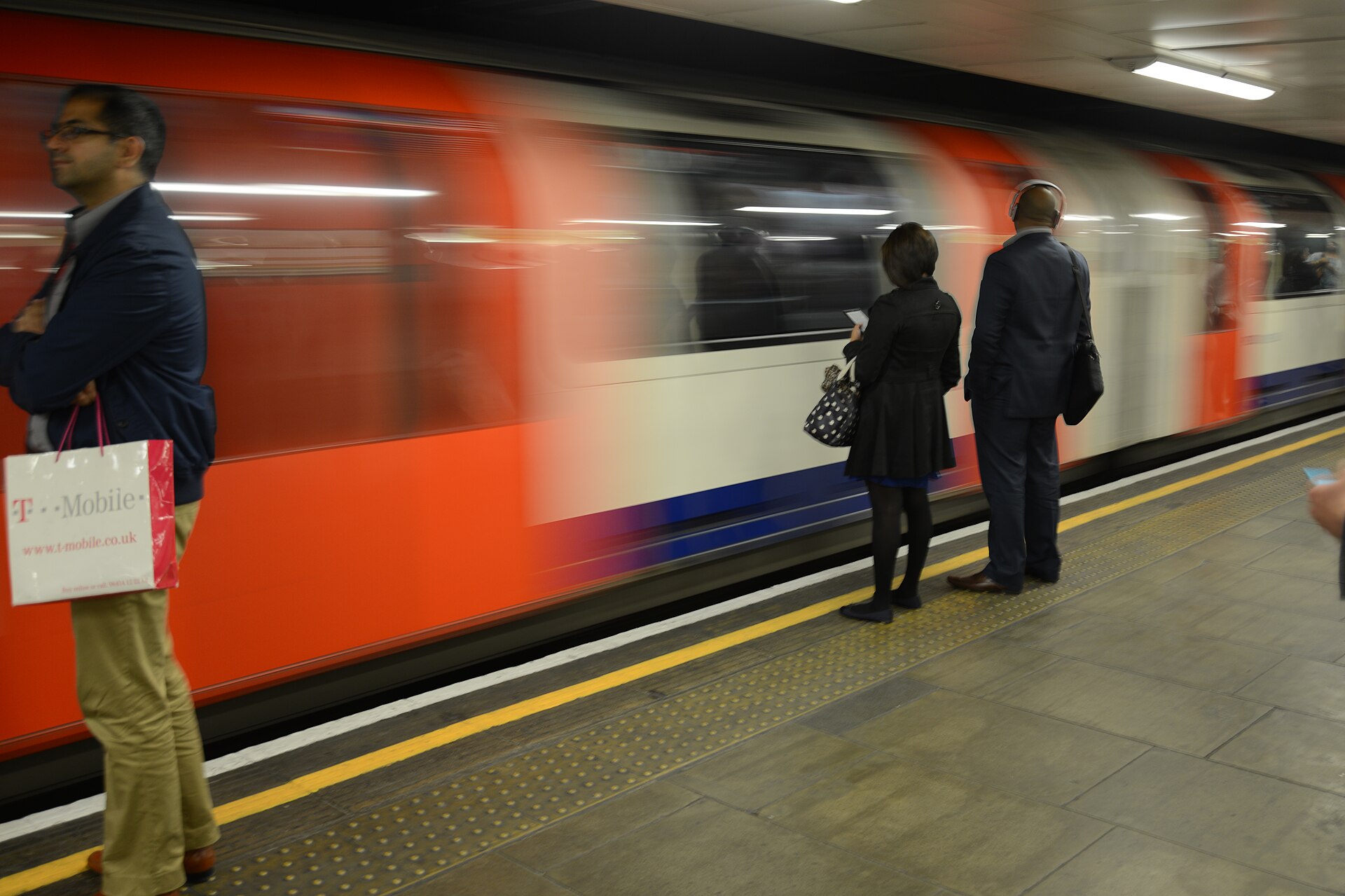
    A London Underground Central line train leaving Mile End station
    The Underground reaches almost every sight a visitor needs, with fares capped daily when you tap a contactless card (Photo: Aleem Yousaf via Wikimedia Commons, CC BY-SA 2.0)

    London’s public transport, explained

    Transport for London (TfL) runs the Underground, the Elizabeth line, the London Overground, the Docklands Light Railway, the trams and the bus network, and they all share one fare system. It is busy at rush hour and occasionally disrupted by engineering works at weekends, but it is frequent, extensive and easy to use, and for a visitor it removes any need for a car.

    The Underground

    The Tube is the oldest underground railway in the world and still the backbone of the city, with eleven lines, each with its own colour on the famous map, and around 270 stations. In central London, trains on the main lines come every two to five minutes through most of the day, and you rarely need to check a timetable. Some useful habits: stations in the centre are often closer together than the map suggests, and walking between Covent Garden and Leicester Square, or Charing Cross and Embankment, is quicker than riding; many central stations involve long corridors and stairs, so allow time; and the Victoria, Jubilee, Central, Northern and Piccadilly lines run the Night Tube on Friday and Saturday nights on all or part of their routes. Stand on the right on escalators and let passengers off before boarding, and you will blend in.

    The Elizabeth line, the Overground and the DLR

    The Elizabeth line, opened in 2022, is a fast, air-conditioned east-west railway that crosses the centre in a few minutes, linking Heathrow and Paddington to the West End, the City, Canary Wharf and Stratford; it is the most comfortable way across town. The London Overground, now divided into six named lines, circles the inner suburbs and reaches neighbourhoods such as Shoreditch, Dalston, Hackney and Camden Road that the Tube misses. The driverless Docklands Light Railway serves Canary Wharf, Greenwich and London City Airport, and a seat at the front of the train is one of the city’s best free views. Trams run in south London around Croydon and Wimbledon.

    Buses

    London’s red double-deckers run on hundreds of routes, many around the clock, and the top deck is the cheapest sightseeing tour in the city: routes through the West End, along the Strand and past St Paul’s cover many of the landmarks. Buses do not accept cash; you tap a contactless card, phone or Oyster card on boarding. The Hopper fare lets you make unlimited bus and tram journeys within one hour of the first tap for a single fare, and a bus fare is always cheaper than the Tube. Stops display the route numbers and a letter; the TfL journey planner and the common mapping apps show live arrivals.

    Fares and paying

    The simplest way to pay is to tap a contactless bank card or phone on the yellow readers at the gates and on buses, using the same card or device every time. Fares depend on the zones you travel through and the time of day, with higher peak fares on weekday mornings and late afternoons; the system caps what you pay automatically, both per day and, from Monday to Sunday, per week, so a heavy sightseeing day never costs more than a day pass would have. Check with your bank that your card does not charge foreign-transaction fees on each tap. An Oyster card, bought at stations, works the same way and suits visitors without a contactless card. Paper single tickets are far more expensive and not worth buying. Children under eleven travel free with a fare-paying adult. Check TfL’s site for current fares and caps before you go.

    Accessibility

    Accessibility is London’s weak point. The Elizabeth line, the DLR, the trams and every bus are step-free, and a growing share of Tube stations have lifts, but many older central stations still involve stairs and long passages. TfL publishes a step-free Tube map and its journey planner has a step-free option; for travellers with limited mobility, buses, the Elizabeth line and black cabs, which are all wheelchair accessible, cover most of what the Tube does.

    Beyond TfL

    • Walking. Central London is compact, and many of the best experiences, the South Bank from Westminster to Tower Bridge, the West End at night, the lanes of the City at the weekend, are walks. A first-time visitor can easily cover fifteen kilometres a day.
    • Cycling. The Santander Cycles docking bikes, known to everyone as Boris bikes, are available across the centre, and several dockless e-bike schemes operate through an app. Protected cycle routes now cross much of inner London, and Hyde Park and Regent’s Park are pleasant rides.
    • Black cabs and ride-hail. Licensed black cabs can be hailed on the street when the yellow light is on, are metered, and their drivers know the city by heart; Uber, Bolt and other apps operate everywhere. Both are expensive for long journeys in traffic but useful late at night or with luggage.
    • The river bus. Uber Boat by Thames Clippers runs a scheduled service along the Thames between west London, Westminster, the Tower, Canary Wharf and Greenwich, accepts contactless payment, and is the most enjoyable commute in the city.
    • National Rail. Mainline trains from the big termini (Paddington, King’s Cross, St Pancras, Euston, Victoria, Waterloo, London Bridge and Liverpool Street) serve the suburbs and every day-trip destination; National Rail has the timetables, and advance and off-peak tickets are much cheaper than buying on the day at peak.
    • Eurostar. High-speed trains from St Pancras reach Paris in a little over two hours and Brussels in about the same; Eurostar sells the tickets, and passport checks happen before you board.
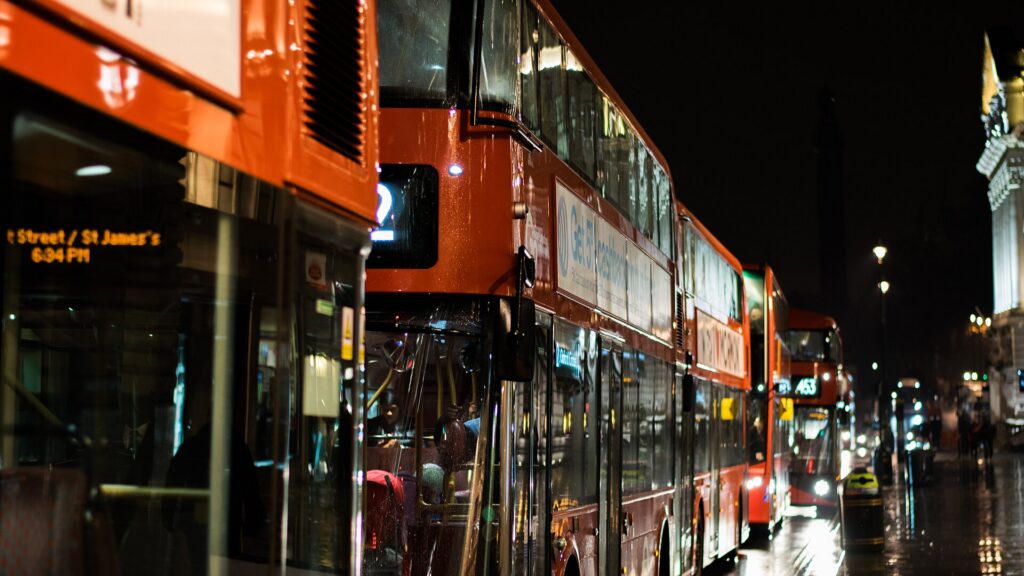
    A red double-decker bus on a London street at night
    London's buses are cashless, run around the clock on many routes, and the Hopper fare covers transfers within an hour (Photo: 0x010C via Wikimedia Commons, CC BY-SA 4.0)

    Driving in London: what it is really like

    Driving in central London is slow, expensive and stressful, and Londoners who own cars rarely use them to go into the centre. Traffic moves at walking pace for much of the day, the street plan is a medieval tangle of one-way systems, narrow lanes and junctions where five roads meet, and bus lanes, cycle lanes and red routes govern where you can drive and stop. On top of that, visitors drive on the left in cars that are usually manual unless they pay for an automatic, and navigate roundabouts clockwise. Two charges apply to drivers. The Congestion Charge is a daily fee for driving within the central zone during its operating hours, which cover the working day on weekdays and the afternoon and early evening at weekends and on bank holidays; it is charged per day however briefly you enter, and it has risen repeatedly. The Ultra Low Emission Zone (ULEZ) covers all of Greater London around the clock; most modern rental cars meet its standards, but confirm with the rental company, because a non-compliant car adds another daily charge. Neither charge is paid at a toll booth: cameras read the number plate and you pay online, and if you forget, the penalty goes to the rental company, which will pass it on to you with an administration fee.
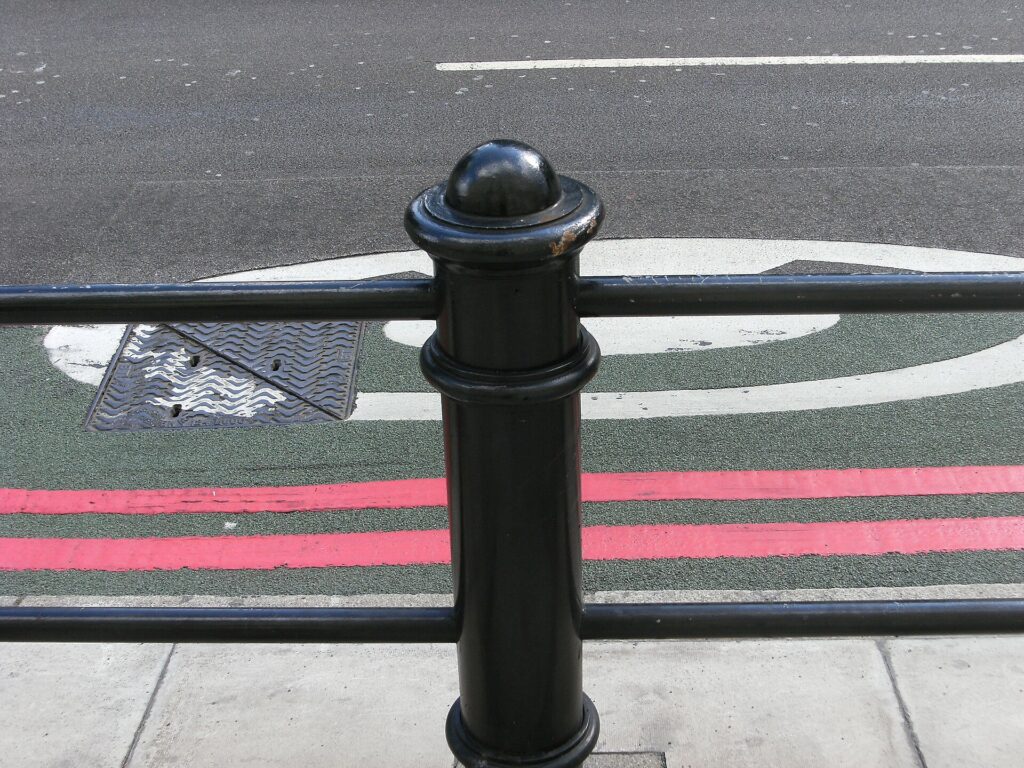
    A Congestion Charge zone entry sign on a street in central London
    The Congestion Charge zone: cameras read every number plate, and the rental company passes on any penalty (Photo: Mark Ahsmann via Wikimedia Commons, CC BY-SA 3.0)

    Parking

    Parking is the other reason not to drive. Most central streets are controlled parking zones, reserved for residents with permits or metered by the hour at some of the highest rates in Europe and paid through apps rather than coins; commercial car parks in the centre charge by the hour at similar levels, and the few central hotels with garages charge heavily for them. Outside the centre, parking eases but rarely disappears: suburban high streets have short-stay limits, and the car parks at Kew, Hampton Court and the big parks fill on sunny weekends. If you do end up with a car in London, the cheapest option is often to leave it at a hotel or car park in the outer suburbs near a Tube or rail station and travel in by train.

    Rules and conditions worth knowing

    • Drive on the left and give way to traffic from the right at roundabouts. If you are not used to it, collect the car somewhere quieter than central London.
    • Licences. Visitors can drive in the UK on a valid Canadian or U.S. licence; ask the rental company whether it also wants an International Driving Permit, and note that many companies charge extra for drivers under 25.
    • Speed limits and cameras. A 20 mph limit now applies on many central and inner London roads, and fixed and average-speed cameras are everywhere; the fines follow the car.
    • Red routes and bus lanes. Red lines mean no stopping at all during their hours; bus lanes are camera-enforced during the hours on the sign.
    • River crossings. The Dartford Crossing on the M25 east of London charges a fee paid online, and the Blackwall and Silvertown tunnels in east London now charge as well.
    • The M25. The orbital motorway is the way around London and one of the busiest roads in Europe; allow extra time at rush hour, on Friday afternoons and on bank holiday weekends.
    • Fuel and cars. Fuel is expensive by North American standards and sold by the litre; rental cars are smaller than you may be used to, which is an advantage on country lanes.

    When renting a car makes sense

    • The Cotswolds. The honey-stone villages northwest of Oxford are served by a handful of stations, but moving between villages is far easier by car.
    • Stonehenge, Salisbury and Bath as a loop. Each is reachable by train and tour, but a car lets you combine them with Avebury and the Wiltshire countryside in a day or two.
    • The south coast, Devon and Cornwall. Coves, coastal paths and fishing villages sit well beyond the railway.
    • A countryside cottage or a wedding in a village. Rural England assumes a car, and taxis are scarce.
    • Family visits in the outer suburbs, where bus journeys can be long and the Tube does not reach.
    • Limited mobility. For travellers for whom stairs and crowds are a genuine barrier, a car for trips outside the centre can make sense, though black cabs are often the better answer within it.

    If any of those apply, our rental car booking tips cover insurance, deposits and the questions to ask at the counter, our family car rental guide looks at vehicle choice, and our note on car rental return timing helps you avoid late fees on the way to the airport.

    When it does not

    • Your trip is London itself, including Greenwich, Kew and Hampton Court.
    • Your day trips are Windsor, Oxford, Cambridge, Bath, Brighton, Canterbury or Paris, all faster by train.
    • You are staying anywhere in Zones 1 to 3, where parking alone would cost more than your transport.
    • You are travelling solo or as a couple, when rail tickets bought in advance are cheaper than a rental, fuel and charges.
    • You have never driven on the left and your first drive would be out of Heathrow in rush hour.

    The hybrid plan for a London-plus-countryside trip

    Spend the London days car-free, then collect a car on the day you leave the city, and think carefully about where you pick up. For the Cotswolds, Bath or the west, the best option is often to take the train to Oxford, Reading or Swindon and pick up a car there, skipping London traffic entirely. For the south coast or Kent, a pickup in a suburban branch or at Gatwick avoids the centre. Heathrow is a good choice at either end: collect a car there after your London days, heading west on the M4 or M40 without entering the city, or return it there before your flight home. Avoid collecting a car in central London, where you pay for parking before you have used it and start the trip in the most difficult driving conditions in the country. A pattern that works well: Elizabeth line from Heathrow into the city, four car-free days in London, a train to Oxford to pick up a rental, three days in the Cotswolds and Bath, and a return drop at Heathrow on the way to the flight. Book automatics early if you need one, because they are the first cars to sell out. Compare pickup locations on our car rental search before you fix the plan.
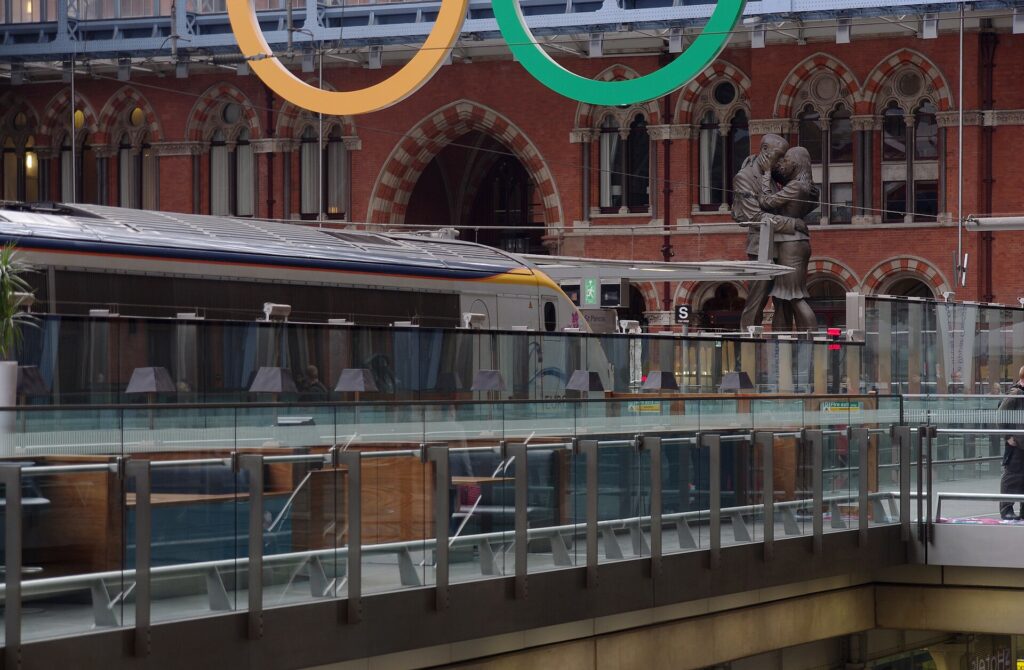
    Eurostar trains at London St Pancras International station
    St Pancras, where Eurostar trains leave for Paris and Brussels and fast domestic trains run to Kent (Photo: mattbuck (category) via Wikimedia Commons, CC BY-SA 3.0)

    A worked cost comparison

    Numbers change with the season and the booking window, so treat this as a method rather than a quote, and check current prices before deciding. For a five-night London trip for two people, the car-free version costs a return Elizabeth line or Piccadilly line journey from Heathrow for two, five days of capped contactless travel each, perhaps a river bus to Greenwich, and a black cab home after a late show; with the daily cap, even a heavy sightseeing day costs a modest fixed amount. The rental version adds five days of a car, five nights of central parking if you can find it, the Congestion Charge on every weekday and weekend afternoon you enter the zone, fuel, and journeys that are slower than the Tube. It is not a close contest, and the car-free option wins by a large margin. For the same five nights with day trips to Windsor, Oxford and Bath, the car-free version adds three rail return fares each, much cheaper when booked in advance for off-peak trains; driving adds the rental, fuel, parking in three busy tourist towns and the stress of leaving and re-entering London each day. The train still wins for two people, and usually for four. For a week split between London and the Cotswolds, the hybrid plan is the clear winner: car-free in the city, a train out to Oxford, and three or four days of a rental picked up there, with none of the London charges. Run the rental rates for your countryside days on our car rental search and set them beside the rail fares before you choose.

    Leaving London by road: the countryside in each season

    Once you are out of London, England is a pleasant place to drive, with good motorways, well-signed A-roads and country lanes that are narrow, hedged and beautiful. The challenge is getting out, and the timing matters in every season. In summer, the roads to the coast and the West Country are at their busiest on Friday afternoons and Saturday mornings, and the M25, the M4 and the A303 past Stonehenge can queue for hours on the bank holiday weekends at the end of May and August; leave early in the morning or mid-week. In spring, the Easter weekend brings the first big exodus, but otherwise April and May are ideal, with long days and quieter roads. In autumn, September is one of the best months for touring, with settled weather and the school holidays over, and the October half-term is the one busy week. In winter, snow is uncommon in the south of England, but fog, frost on country lanes and early darkness, with sunset before four in December, shorten the driving day; plan to be at your destination before dark. In any season, avoid leaving or returning to London in the weekday rush hours, allow for roadworks on the M25, and remember that a single-track lane with passing places is normal in the countryside. And in any season, the train to the edge of the region and a car from there will save you most of the hardest miles.

    Decision table

    Your tripRecommendationWhy
    City break in central LondonNo carThe Tube, buses and your feet reach everything; driving means charges, traffic and parking
    London with day trips to Windsor, Oxford, Bath or BrightonNo carTrains are faster, cheaper when booked ahead, and deliver you to the town centre
    London plus ParisNo carEurostar from St Pancras reaches Paris in a little over two hours
    London plus the Cotswolds or the West CountryHybrid: train out of London, rent thereCar-free city days, a car where villages and lanes need one
    Road trip around EnglandRent at Heathrow after your London daysHead west without entering the city; return it before your flight
    Family visit in the outer suburbsConsider a rental for those daysSuburban journeys can be long by bus; parking is easier outside the centre
    Travellers with limited mobilityBlack cabs and step-free transport in the centre, a car beyondMany older Tube stations have stairs; cabs and buses are all accessible
    Arriving jet-lagged at HeathrowNo car, Elizabeth line or Heathrow ExpressDriving on the left in rush hour after an overnight flight is a poor start

    Money-saving tips for both options

    • On transport: use the same contactless card or phone for every journey so the daily and weekly caps apply; take the bus when you can for the Hopper fare; travel after the morning peak when possible; and walk between neighbouring central stations.
    • On trains out of London: book advance tickets for day trips and travel off-peak; a railcard can cut fares further for some travellers staying longer.
    • On a rental: pick up outside central London, book an automatic early if you need one, check that the car is ULEZ-compliant, decline extras you already have through a credit card or home policy (check first), and pay any Congestion Charge or crossing fee yourself on the day to avoid penalties.
    • On the hotel: a room near an Elizabeth line or Jubilee line station in Zone 2 is often much cheaper than Zone 1 and only a few minutes further from the sights.
    • On timing: avoid driving out of London on Friday afternoons and bank holiday weekends; the best time to fly to London guide lists the busiest dates.

    For a broader comparison of the options in any city, see our guide to renting a car versus public transport versus taxis, and if Paris is next on the itinerary, our Paris transport guide covers the Métro, the RER and the same car question there.

    Frequently asked questions

    Is it worth renting a car in London?

    Not for the city. Public transport is faster, cheaper and easier than driving, and central London adds a congestion charge, an emissions zone and expensive parking. A car only makes sense for trips into the countryside, collected on the way out.

    Is London public transport good for tourists?

    It is excellent: the Tube, the Elizabeth line, the Overground, the DLR and the buses reach every sight, run frequently, and share one fare system with automatic daily caps when you tap a contactless card or phone.

    How do I get from Heathrow to central London?

    The Elizabeth line is the best all-round option, the Heathrow Express the fastest to Paddington, and the Piccadilly line the cheapest. A taxi takes 45 minutes to over an hour and costs far more.

    Do I need an Oyster card?

    Not if you have a contactless bank card or phone that works without foreign-transaction fees; it gets the same fares and caps. An Oyster card is the alternative if you do not.

    What is the London Congestion Charge?

    A daily fee for driving within central London during its operating hours, paid online and enforced by cameras. It is separate from the Ultra Low Emission Zone, which covers all of Greater London.

    Can I drive in the UK on a Canadian or U.S. licence?

    Yes, as a visitor. Check whether your rental company also asks for an International Driving Permit, and remember that traffic drives on the left.

    How do I get to Stonehenge or the Cotswolds without a car?

    For Stonehenge, take the train to Salisbury and the tour bus from the station, or book a coach tour from London. For the Cotswolds, trains reach a handful of towns, and local buses and tours cover the villages; a car gives you far more freedom there.

    Whichever way you go, start with the flight. Compare cheap flights to London, plan your days with our first-timer’s guide to London, and if the countryside is on the list, price a rental for those days on our car rental search.

  • Things to Do in London: A First-Timer’s Guide

    Things to Do in London: A First-Timer’s Guide

    London does not need selling, but it does need editing. It is a city of nine million people spread across more than 1,500 square kilometres, with two thousand years of history layered on top of each other, a dozen world-class museums that charge nothing to enter, a theatre district that runs more shows in a week than most countries stage in a year, and neighbourhoods so different from one another that Greenwich, Notting Hill and Shoreditch could be three separate cities. First-time visitors tend to make one of two mistakes: they try to see all of it and spend the trip on the Underground, or they stay within a mile of Big Ben and never find out why Londoners love the place. This guide is the edit. It covers the sights that earn a day, the neighbourhoods worth a half-day, the free museums, the parks and the river, the theatre and the football, the food, the day trips that England makes easy, and the practical details that turn a long-haul flight into a good trip.

    If you are still comparing cheap flights to London, read this alongside our guides to the best time to fly to London and whether you need a car (you almost certainly do not). Between the three you can plan the whole trip.

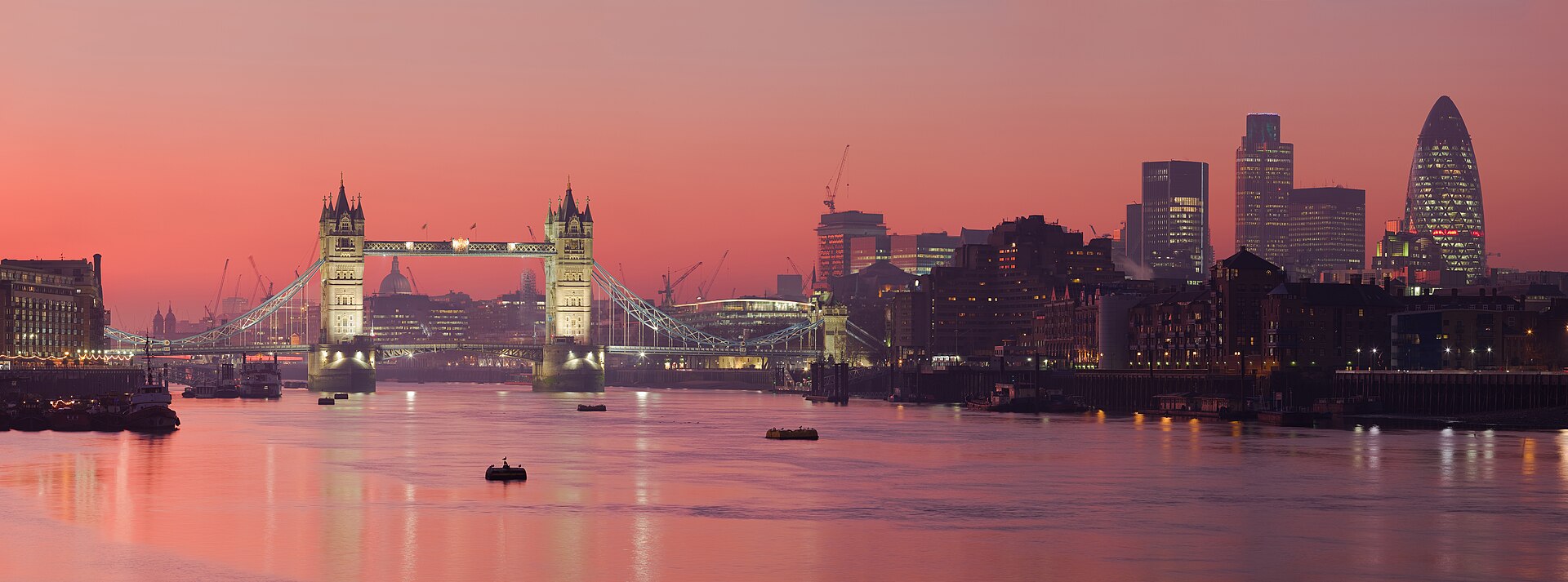
    Tower Bridge and the towers of the City of London across the Thames
    Tower Bridge and the City of London from the south bank of the Thames (Photo: Diliff via Wikimedia Commons, CC BY 3.0)

    London at a glance for first-timers

    • Airports: Heathrow (LHR), the main long-haul gateway, is about 24 km west of the centre and connected by the Elizabeth line, the Heathrow Express and the Piccadilly line; Gatwick, Stansted, Luton and London City handle much of the European and low-cost traffic. See our Heathrow airport guide.
    • Getting around: the Underground, the buses and the Elizabeth line reach everything in this guide, and you pay by tapping a contactless card or phone with an automatic daily cap. Walking between central sights is often faster than the Tube. Nobody needs a car in London; our transport guide explains why.
    • Money: pounds sterling. Contactless payment is accepted almost everywhere, including on buses, which no longer take cash. Prices include 20 percent VAT, and a service charge of around 12.5 percent is usually added to restaurant bills, so no further tip is expected. Tipping in pubs is not customary.
    • Weather: mild, grey and changeable in every season, with cool summers and wet, rarely freezing winters. A light waterproof layer is more useful than an umbrella. Our month-by-month guide has the detail.
    • Where to stay: Westminster, St James’s and Covent Garden for the sights on foot; South Bank and Southwark for the river and the theatres; Kensington for the museums and the parks; Shoreditch or Camden for nightlife; King’s Cross for a value base with the best transport links in the city. Our hotel booking tips cover how to get the rate down.

    Westminster: Big Ben, the Abbey and the palaces

    Start where the postcards do. The Houses of Parliament, properly the Palace of Westminster, fill the north bank of the Thames between Westminster Bridge and Lambeth Bridge, and the clock tower that everyone calls Big Ben (the name belongs to the bell) is best seen from the south end of Westminster Bridge in the early morning before the crowds arrive. Across Parliament Square, Westminster Abbey has crowned every English and British monarch since 1066 and holds the graves of Newton, Darwin, Dickens and Chaucer; it is one of the few major sights in London that charges admission, and it is worth it, particularly with the audio guide. A ten-minute walk up Whitehall passes the Cenotaph, Downing Street behind its gates, and the Horse Guards, where the mounted sentries change through the morning, before reaching Trafalgar Square and Nelson’s Column. Off Whitehall, the Churchill War Rooms, the underground complex from which the Second World War was directed, is one of the best museums in the city. From Trafalgar Square, the Mall runs through St James’s Park to Buckingham Palace; the Changing of the Guard takes place on set mornings, the State Rooms open to visitors in summer, and the park itself, with its pelicans and its view of the palace across the lake, is the prettiest in central London.

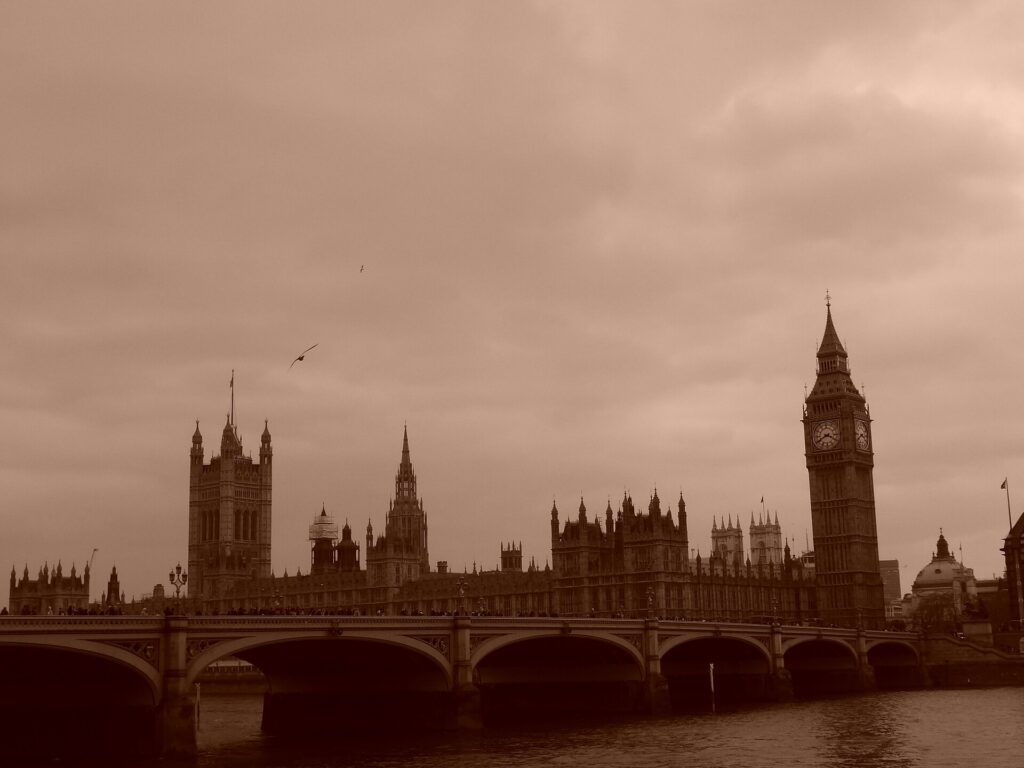
    The Houses of Parliament and the Elizabeth Tower beside Westminster Bridge
    The Palace of Westminster and Big Ben from the South Bank (Photo: Mikey from Wythenshawe, Manchester, UK via Wikimedia Commons, CC BY 2.0)

    The South Bank and Bankside: the river walk everyone should take

    The south bank of the Thames between Westminster Bridge and Tower Bridge is the best walk in London, and it takes about an hour without stops, which nobody manages. It begins at the London Eye, the observation wheel opposite Parliament, passes the National Theatre and the concrete arts complex of the Southbank Centre, with its skateboarders, book market under Waterloo Bridge and riverside bars, and continues past the Oxo Tower to Tate Modern, the power station turned gallery whose Turbine Hall is free to walk into and whose viewing terrace gives one of the best free views of St Paul’s across the river. Next door, Shakespeare’s Globe is a faithful reconstruction of the 1599 theatre; the summer season plays to standing “groundlings” in the open yard for a few pounds, which is the best theatre bargain in the city. Beyond it, under the railway arches by London Bridge, Borough Market has been feeding the city for centuries and is now its most famous food market, at its best on a weekday morning. The walk ends at Tower Bridge, with HMS Belfast moored below it and the Shard, the tallest building in Britain, rising over London Bridge station behind you.

    The City and the Tower

    The Tower of London is the essential paid attraction, a thousand-year-old fortress that has been a palace, a prison, a mint and a zoo and that still houses the Crown Jewels; book a timed ticket through Historic Royal Palaces, arrive at opening, go straight to the jewels before the queue forms and then join a Yeoman Warder tour. From the Tower, the Square Mile of the City of London, the financial district on the site of the Roman town, is a place of contrasts: medieval churches and livery halls between glass towers with nicknames (the Gherkin, the Walkie-Talkie, the Cheesegrater). The Sky Garden at the top of the Walkie-Talkie is free to visit with an advance booking and gives a better view than most paid decks. St Paul’s Cathedral, Wren’s masterpiece after the Great Fire of 1666, charges admission but the climb to the Whispering Gallery and the dome is one of the great London experiences. The City empties at weekends, which makes Saturday the best day to walk its lanes and the worst to look for lunch; Leadenhall Market and the streets around the Bank of England are at their most atmospheric on a weekday.

    The great free museums

    London’s national museums are free, which changes how you use them: instead of one exhausting day, visit two or three for an hour or two each. The British Museum in Bloomsbury holds the Rosetta Stone, the Parthenon sculptures and the Egyptian galleries under Norman Foster’s glass Great Court; go early and pick three rooms. The National Gallery on Trafalgar Square has Van Gogh’s Sunflowers, Turner, Constable and the great Italian collection, with the National Portrait Gallery around the corner. In South Kensington, three museums sit on one street: the Natural History Museum, with its dinosaurs and its cathedral-like Romanesque hall, the Science Museum, and the V&A, the world’s largest museum of design and decorative art, whose café and courtyard are worth the visit alone. Across the river, Tate Britain holds the Turner collection and Tate Modern the contemporary art, with a boat linking the two. Smaller and stranger: the Wallace Collection in Marylebone, Sir John Soane’s Museum in Lincoln’s Inn Fields, the Imperial War Museum in Lambeth, and the Museum of London Docklands on the history of the port. Most charge for special exhibitions and all are busiest on wet weekend afternoons.

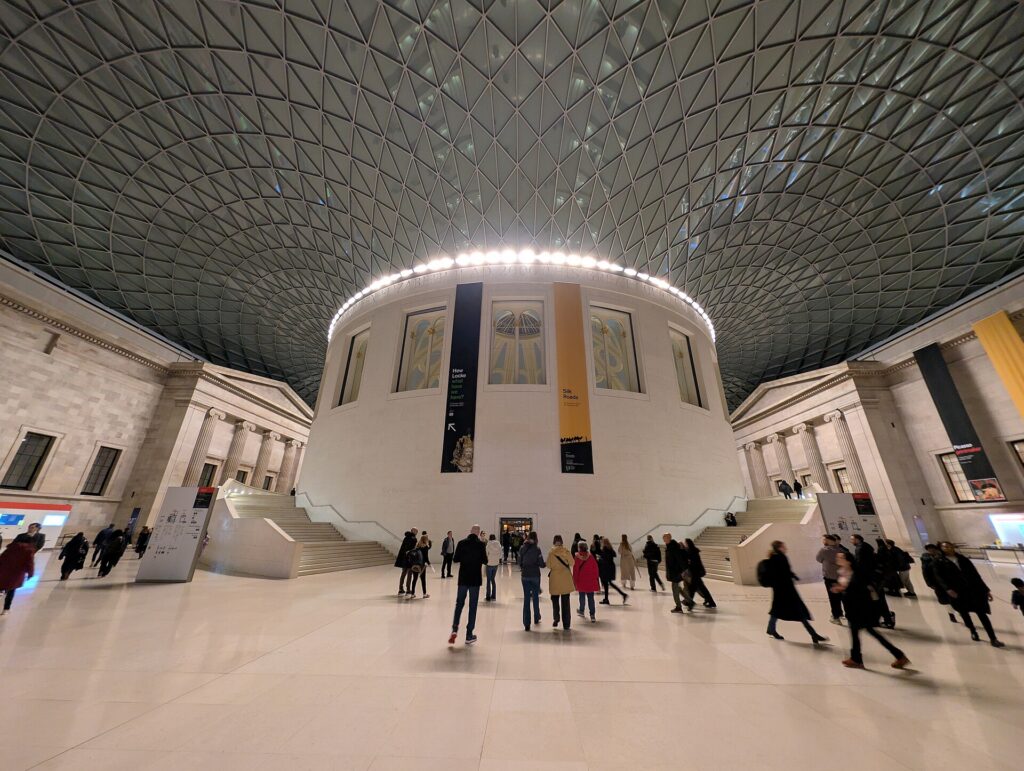
    The glass-roofed Great Court of the British Museum in Bloomsbury
    The Great Court of the British Museum, free to enter like all of London's national museums (Photo: Andy Li via Wikimedia Commons, CC0)

    Neighbourhoods worth a half-day

    Soho and Covent Garden

    The West End’s two liveliest districts sit side by side. Covent Garden’s piazza and covered market have street performers, the London Transport Museum and the Royal Opera House; Soho, to the west, is the city’s restaurant, bar and theatre village, with Chinatown at its southern edge and Carnaby Street on its western one. Come for dinner and a show and stay for the pubs.

    Notting Hill and Portobello Road

    West of Hyde Park, Notting Hill’s pastel terraces and the Saturday antiques market on Portobello Road are the reason the area is so photographed. Go on a Saturday morning for the market, or on a weekday for the quiet streets and the independent shops of Westbourne Grove; in late August the Notting Hill Carnival takes over the whole district.

    Shoreditch, Spitalfields and the East End

    East of the City, Shoreditch is the street-art, bar and independent-shop quarter, Spitalfields has a covered market and Georgian streets, and Brick Lane has the curry houses, the Sunday market and the bagel bakeries that stay open all night. Columbia Road’s Sunday flower market is a half-hour’s walk north. This is the London that changes fastest, and the best area for a night out.

    Camden and Regent’s Park

    Camden Town’s markets along the canal are chaotic, touristy and still fun, and the music venues around it launched half of British rock. Walk south along the Regent’s Canal to Regent’s Park, the rose garden and London Zoo, or climb Primrose Hill for the skyline view.

    Greenwich

    Downriver by boat or on the DLR, Greenwich is a day on its own: the Cutty Sark, the Royal Observatory on the hill where the Prime Meridian is marked in the courtyard, the National Maritime Museum, the Old Royal Naval College and its Painted Hall, the covered market, and the park with the best view of Canary Wharf and the Thames in the city.

    Kensington and Chelsea

    The museums of South Kensington, Kensington Palace and its gardens, the Royal Albert Hall, the shops of the King’s Road and the riverside at Chelsea Embankment: this is the grand, expensive, well-kept London of the guidebooks, and it is at its best on a sunny afternoon.

    Parks, palaces and the river

    London has more green space than any comparable capital, and the Royal Parks are the core of it. Hyde Park and Kensington Gardens together form a two-mile stretch of lawns, the Serpentine lake, Speakers’ Corner and the Diana memorial fountain; Regent’s Park has the rose garden and the zoo; St James’s Park and Green Park frame Buckingham Palace; and Richmond Park, in the southwest, is a genuine deer park of ancient oaks and bracken that feels a hundred miles from the city. Hampstead Heath has the swimming ponds and the view from Parliament Hill. The palaces are spread along the river: Kensington Palace in the park, Hampton Court, Henry VIII’s Tudor palace with its maze and gardens, about 35 minutes by train from Waterloo, and Kew Gardens, the world’s most important botanic garden, with its Victorian glasshouses and treetop walkway, on the District line. The Thames itself is a transport route: Uber Boat by Thames Clippers runs a scheduled river bus from Putney in the west past Westminster and the Tower to Greenwich and beyond, accepts contactless payment, and is the most enjoyable way to travel between Westminster, the Tower and Greenwich.

    Theatre, music and sport

    The West End runs around forty theatres within a few streets of Shaftesbury Avenue and the Strand, with musicals, new plays and the long-runners, and the National Theatre, the Old Vic, the Globe and the Almeida stage the serious drama. Buy on the day at the TKTS booth in Leicester Square or through the theatres’ own sites; matinees are cheaper. Classical music runs at the Barbican, the Southbank Centre, Wigmore Hall and the Royal Albert Hall, where the Proms fill every night from mid-July to mid-September with cheap standing tickets. The O2 in Greenwich is the big arena, and Wembley Stadium and the Tottenham Hotspur Stadium host the stadium shows. For sport, London usually has six or seven clubs in the Premier League, with Arsenal, Chelsea and Tottenham the biggest names and Crystal Palace, Fulham, Brentford and West Ham among the others, and the England national side at Wembley. Rugby is at Twickenham, cricket at Lord’s and the Oval, and the two weeks of Wimbledon in late June and early July are the most famous tennis tournament in the world; the daily ballot and the queue still give walk-up fans a chance. For what is on stage and in the stadiums during your dates, our London events page lists concerts, shows and matches on sale.

    What to eat, and where

    London’s food has two faces, and both are good. The first is the pub: a Sunday roast with Yorkshire pudding, fish and chips, a pie, a pint of cask ale, in a room that has served the same purpose for two or three hundred years. The riverside pubs in Hammersmith, Wapping and Greenwich, the ancient ones off Fleet Street and in Southwark, and any well-run local in Bloomsbury or Islington will do. The second is the city of immigrants: Indian and Bangladeshi food on Brick Lane and, better, in Tooting and Southall; Turkish grills on Green Lanes and in Dalston; Vietnamese on Kingsland Road; Chinatown and the dim sum houses of Soho; Caribbean in Brixton; Portuguese in Stockwell. Add the markets, with Borough for produce and lunch, Maltby Street for the arches, Broadway Market and Brixton Village at weekends, and the food halls that have opened in every district; the afternoon tea rituals of the grand hotels and the department stores; and a restaurant scene that ranges from the chains everyone loves to some of the world’s best tasting menus. Coffee is now excellent everywhere, and the bakeries of Hackney and Bermondsey are worth a detour on a Saturday morning.

    London through the seasons

    London works in every season, which is one reason it is among the most visited cities in the world. Winter (December to February) is dark by four but the city dresses for it: the Christmas lights on Regent Street and Oxford Street, the markets on the South Bank, the seasonal ice rinks at Somerset House and elsewhere, Winter Wonderland in Hyde Park, and the January sales. It is also when the museums and the theatres are quietest and the hotel rates lowest. Spring (March to May) brings blossom to the parks, daffodils to St James’s, the Boat Race on the Thames, the London Marathon in April, and the Chelsea Flower Show in late May; the days are long by May and the weather is at its most reliable in the second half of the season. Summer (June to August) is the crowded, expensive, glorious version: Wimbledon, the Proms, open-air theatre in Regent’s Park, the Buckingham Palace State Rooms, swimming on the Heath, and long evenings on the river. Autumn (September to November) is the local favourite, with the parks turning gold, Open House weekend opening buildings that are normally closed, the film festival in October, Bonfire Night fireworks on the fifth of November and the Lord Mayor’s Show on the second Saturday of November. Our month-by-month guide matches the seasons to the fare patterns.

    London with kids

    London is an outstanding city for children, and much of it is free. The Natural History Museum, with the blue whale in the hall and the dinosaur gallery, and the Science Museum next door, with its hands-on floors and flight gallery, are the obvious full day in South Kensington, and the Diana Memorial Playground in Kensington Gardens is next to them. The Tower of London, with its ravens, armour and Crown Jewels, and HMS Belfast, the warship moored by Tower Bridge, cover a day in the east. The London Transport Museum in Covent Garden lets children climb on old buses and Tube trains. London Zoo in Regent’s Park, the Cutty Sark and the Observatory in Greenwich, a ride on the London Eye, the top deck of a red bus and the front seat of a driverless DLR train through Docklands all work for younger children; the Changing of the Guard is a hit if you arrive early enough to see. The Warner Bros. Studio Tour, the Harry Potter film sets at Leavesden northwest of the city, needs a timed ticket booked well ahead and a train to Watford Junction. Children under eleven travel free on the Tube and buses with an adult, and most restaurants are relaxed about families before seven in the evening.

    London on a budget

    London is expensive to sleep in and cheap to see. The national museums, the parks, the river walk, the Changing of the Guard, the Sky Garden, the markets, the street art of Shoreditch, the view from Primrose Hill and the ceremonial streets of Westminster all cost nothing. Pay for the Tower, the Abbey and one view, and skip the rest of the ticketed attractions unless one really matters to you. Travel with a contactless card and the daily cap means you will never overpay on transport, and the bus, with its Hopper fare, is the cheapest tour in the city. Eat at the markets, in the pubs and in the neighbourhoods rather than in the West End, and use the supermarket meal deal for lunch, as the locals do. Theatre on the day from TKTS, standing tickets at the Globe and the Proms, and the cheaper seats booked directly with the theatres are far below the headline prices. Hotels are the cost that matters, and the answer is location: stay in Zone 2 near a good Tube or Elizabeth line station rather than in Zone 1, book well ahead for summer, and read our guide to the best times to book before you commit.

    Day trips from London

    England is small and its railways start in London, which makes the day trips easy and the car unnecessary. Windsor, with the castle that is the monarch’s weekend home and the town beneath it, is under an hour by train from Waterloo or Paddington. Oxford and Cambridge are each about an hour by train, from Paddington and King’s Cross respectively, and both are best seen on foot with a walking tour of the colleges. Bath, the Georgian spa city with its Roman baths, is about an hour and a half from Paddington. Brighton, the seaside city with the pier, the Royal Pavilion and the Lanes, is an hour from Victoria or London Bridge. Canterbury and its cathedral are an hour on the high-speed line from St Pancras. Stonehenge is the one that needs a tour or a train to Salisbury and a bus; English Heritage runs the site and sells timed tickets. Further afield, Paris is a little over two hours by Eurostar from St Pancras, close enough for an overnight, and our Paris guide and Paris flights page cover it; our guide to multi-city trips in Europe explains how to combine the two. For any of these, buy train tickets in advance through National Rail and travel after the morning peak for the cheapest fares. VisitBritain covers the rest of the country.

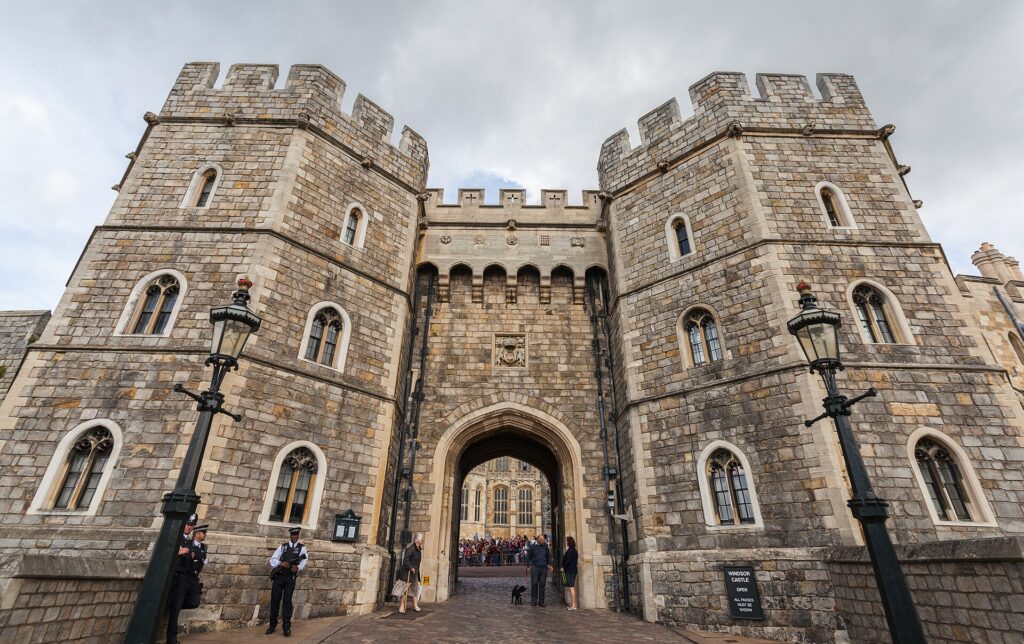
    Windsor Castle above the town of Windsor, west of London
    Windsor Castle, under an hour by train from central London (Photo: Diego Delso via Wikimedia Commons, CC BY-SA 4.0)

    Two sample itineraries

    Two days, on foot and by Tube

    Day one: Westminster Bridge at eight for Big Ben without the crowds, the Abbey at opening, Whitehall and the Churchill War Rooms, lunch in St James’s, Buckingham Palace and the park, the National Gallery for an hour, then dinner in Soho and a West End show. Day two: the Tower of London at opening, a walk across Tower Bridge and along the South Bank past Borough Market for lunch, Tate Modern and the Globe, the river bus back to Westminster or on to Greenwich, and a pub dinner by the river.

    Four days, with the neighbourhoods

    Add a morning in the British Museum and an afternoon in Bloomsbury and Covent Garden, then a day split between South Kensington’s museums, Hyde Park and Notting Hill; finish with Greenwich by boat, or a day trip to Windsor, Oxford or Brighton, and a final evening in Shoreditch.

    Practical details

    • Transport: tap a contactless card, phone or Oyster card at the gates and on the bus; fares cap automatically each day and each week. Transport for London has the maps and the journey planner; our transport guide explains the zones, the peak hours and the airport options.
    • From Heathrow: the Elizabeth line to Paddington and the West End, the Heathrow Express to Paddington in a quarter of an hour, or the Piccadilly line for the cheapest ride. Heathrow’s site covers the terminals, and our Heathrow guide the layout.
    • Weather: a waterproof layer in every season, comfortable shoes always, and a warm coat from November to March. The Met Office forecast is the one to trust.
    • Time zone: Greenwich Mean Time in winter and British Summer Time from late March to late October; five hours ahead of Toronto and New York and eight ahead of Vancouver for most of the year.
    • Entry requirements: Canadian, American and most other visa-exempt visitors now need an Electronic Travel Authorisation before boarding, applied for online in advance. The UK government’s visa checker is the authoritative source and tells you what applies to your passport.
    • Safety: a safe city by the standards of any capital; the practical risks are phone-snatching from bikes in the centre and pickpockets on crowded Tube platforms, so keep phones out of sight at the kerb.

    Frequently asked questions

    How many days do you need in London?

    Three full days covers Westminster, the South Bank, the Tower and two or three museums; five lets you add the neighbourhoods and Greenwich; a week gives you a day trip or two and a proper feel for the city.

    What is the number one thing to do in London?

    Walk the South Bank from Westminster Bridge to Tower Bridge with stops at Tate Modern and Borough Market. It is free, it takes a morning, and it shows you more of London than any single ticketed attraction.

    Is London walkable?

    The centre is, and most first-time itineraries cover Westminster, the West End, the City and the South Bank on foot with a few Tube rides between them. The outer neighbourhoods need the Tube, the bus or the boat.

    Do I need a car in London?

    No. Driving in central London involves a congestion charge, an emissions zone, scarce and expensive parking and slower journeys than the Tube. Day trips go by train. Our car-versus-transport guide explains the exceptions.

    Is London expensive?

    Hotels and drinks are; almost everything else can be done cheaply. The major museums are free, transport is capped, and the markets and pubs feed you well for less than the West End restaurants.

    What is London known for?

    The monarchy and its palaces, Parliament and Big Ben, the Tower and the Crown Jewels, the West End theatres, the red buses and black cabs, the pubs, the free museums, the Premier League, and a mixture of cultures that makes it one of the most cosmopolitan cities on earth.

    Ready to go? Compare flights to London, check the best month to travel before you pick dates, and see what is on in London while you are there, from West End shows to Premier League matches.

  • Best Time to Fly to London: Seasons, Weather & Prices

    Best Time to Fly to London: Seasons, Weather & Prices

    London is one of the busiest air destinations on earth, and that shapes the “best time” question in a way that is different from almost anywhere else. There is never a month when the city is empty, never a month when the museums close or the theatres go dark, and never a month when the weather is genuinely bad enough to keep people away. What changes through the year is the price of getting there and, even more, the price of sleeping there. Transatlantic fares follow the North American holiday calendar, London’s hotels follow the British school holidays and the city’s enormous events diary, and the two do not always line up. Add a climate that is mild, grey and changeable in every season, with summer evenings that stay light until after nine and December afternoons that are dark before four, and you have a city where the right answer depends on what you want to trade. This guide walks through the weather month by month, the fare seasons, the events that move prices, the airports, and the timing tricks that work for London.

    The short answer

    For the best balance of weather and value, aim for late April to early June, when the parks are in blossom, the days are long and the summer crowds and fares have not yet arrived, and September to mid-October, when the weather is often settled, the schools are back and the city’s cultural season is starting. The cheapest fares come in January, February and early March, outside the school half-term week in February, and in November, when transatlantic demand is at its lowest and London hotels are at their most reasonable. The most expensive stretches are late June to the end of August, when North American summer travel and the British school holidays overlap, and the two weeks around Christmas and New Year, when fares from Canada and the U.S. peak even though London’s hotels are relatively quiet in the days after Christmas. Whatever you choose, run a flexible-date search on our London flights page; with so many daily departures from North America, a shift of two or three days can move the fare more than a change of month.

    The Palm House at Kew Gardens seen across the summer gardens
    Kew Gardens in July, when long days and warm weather make London's peak season expensive (Photo: Daniel Case via Wikimedia Commons, CC BY-SA 3.0)

    London’s weather, season by season

    London has a temperate maritime climate: mild winters, warm rather than hot summers, and rain spread fairly evenly through the year, usually as light showers rather than downpours. Snow is rare and seldom settles for long; heatwaves have become more frequent, and a few days above 30 °C now happen in most summers. The figures below are approximate seasonal patterns based on the long-term climate averages published by the UK Met Office; check the current forecast before you pack, because a London day can include sunshine, a shower and a cold wind in the space of an afternoon.

    MonthTypical daytime highTypical overnight lowWhat it feels likeFare pressure
    Januaryaround 8 °Caround 2 °CGrey, damp and short days; frost on clear nights, snow only occasionallyLow after the first week
    Februaryaround 9 °Caround 2 °CSimilar, with more light by the end of the month; the first daffodilsLow; rises for the half-term week
    Marcharound 12 °Caround 4 °CChangeable; blustery days, early blossom, cold snaps still possibleLow to moderate; Easter can fall late in the month
    Aprilaround 15 °Caround 6 °CSpring proper; showers and sunshine, parks in full blossomModerate; Easter holidays push it up
    Mayaround 18 °Caround 9 °COften lovely; long, green and one of the drier monthsModerate; bank holiday weekends busy
    Junearound 21 °Caround 12 °CWarm, light until after nine in the eveningHigh from mid-month
    Julyaround 24 °Caround 14 °CThe warmest month; occasional heatwaves, and the Tube gets hotPeak
    Augustaround 23 °Caround 14 °CWarm, with thundery showers some years; many Londoners are awayPeak
    Septemberaround 20 °Caround 11 °COften settled and mild; a good month for walkingModerate, falling after the first week
    Octoberaround 16 °Caround 9 °CAutumn colour, cooler evenings, more rain toward the endModerate; half-term week busier
    Novemberaround 11 °Caround 5 °CDamp, grey and dark by half past four; the Christmas lights go onLow
    Decemberaround 9 °Caround 3 °CCool, festive and dark before four on the shortest daysLow until mid-month, then peak from North America

    Three things the table cannot show. First, the light: London sits at roughly the same latitude as Calgary, so the difference between seasons is dramatic, with around sixteen and a half hours of daylight in late June and fewer than eight in late December. A summer evening on the river at half past nine is one of the great pleasures of the city; a December visit means planning outdoor sights for the middle of the day. Second, the rain: London’s reputation is worse than its record, and the typical wet day is a drizzle or a passing shower rather than a washout, but it can come in any month, and a light waterproof jacket is more useful than an umbrella in the wind. Third, the heat indoors: many older buildings, hotels and much of the Underground have no air conditioning, so a 30 °C day in July feels hotter in London than the number suggests.

    How London’s fare seasons work

    Three calendars drive the cost of a London trip. The first is the North American holiday calendar, which sets transatlantic fares: summer and the Christmas holidays are expensive, spring break lifts March, and the autumn and late winter are cheap. The second is the British school calendar, which fills the city’s hotels and attractions during the Easter holidays, the half-term weeks in February, late May and late October, and the long summer holiday from late July to early September. The third is London’s events diary, which is so crowded that some part of the city is always hosting something: Wimbledon, the big stadium concerts, the Chelsea Flower Show, the fashion weeks and the major conferences all push up hotel rates on their dates. The result is a long, expensive summer, a sharp Christmas spike on the flights, and two shoulders in spring and autumn that are the sweet spot for most visitors.

    Peak season

    Mid-June to the end of August, plus roughly December 18 to January 3 for flights from North America. Summer is the most expensive time for both flights and hotels, and the queues at the Tower, the London Eye and Buckingham Palace are at their longest; July, when Wimbledon, the start of the Proms and the first week of the British school holidays overlap, is often the tightest month for rooms. The Christmas weeks are unusual: transatlantic fares peak as North Americans fly home or on holiday, but London’s hotels, emptied of business travellers, can be good value between Christmas and New Year’s Eve. If you must travel in summer, book early, fly mid-week, and stay slightly outside the centre near a good Tube or Elizabeth line station.

    Shoulder season

    April to mid-June and September to October. Spring gives you blossom, long evenings and the parks at their best, with fares that step up through May; autumn gives you settled weather in September, autumn colour in October and the start of the theatre, gallery and concert seasons. Watch the Easter holidays, the two May bank holiday weekends, the late-May half-term and the late-October half-term, when British families travel and attractions fill.

    Low season

    November, and January to mid-March outside the February half-term. Transatlantic fares are at their lowest, hotel rates in the centre drop noticeably, and the museums, theatres and restaurants are full of Londoners rather than visitors. January brings the sales and short, grey days; November brings the Christmas lights and markets before the December crowds. The weather is cool and damp rather than harsh, so the main cost of a winter trip is daylight.

    As elsewhere, mid-week departures and overnight flights from North America usually price below Friday and Sunday departures on the same route, and a search across a whole month reveals cheaper pairs of dates close to your first choice. Our guide to the best times to book explains how to read those patterns, and our international flight booking tips cover the long-haul specifics.

    London month by month

    January

    After New Year’s Day, one of the two cheapest months of the year to fly and the cheapest for hotels. The days are short and grey, but London is built for winter: the national museums are free and uncrowded, the January sales fill Oxford Street and the department stores, and the West End runs discount schemes on theatre tickets to fill seats in the quiet weeks. The New Year’s Day Parade through the West End closes the holidays. A good month for a city-focused trip built around museums, theatre and restaurants.

    February

    Still cheap outside the half-term week in mid-February, when British families take a short break and attractions fill. The first blossom and daffodils appear in the parks, Chinese New Year brings one of the biggest celebrations outside Asia to the West End and Trafalgar Square in late January or February, and the Six Nations rugby championship fills Twickenham and the pubs on match weekends. London Fashion Week, held in February and September, lifts hotel rates in the centre for a few days.

    March

    Changeable, with blustery days and the parks beginning to bloom. Fares stay low for most of the month, but spring break in Canada and the U.S. lifts transatlantic prices for a fortnight, and when Easter falls in March, the school holidays begin with it. St Patrick’s Day brings a festival to Trafalgar Square, and the clocks go forward to British Summer Time on the last Sunday of the month, adding an hour of evening light overnight.

    April

    Spring proper, with blossom along the streets and cherry trees in the Royal Parks and at Kew. The Easter holidays, usually two weeks in late March or April, fill the attractions and lift prices; outside them, April is good value. The London Marathon, usually on a Sunday in late April, closes a large part of the city and fills hotels near the route and the finish on the Mall. The Boat Race between Oxford and Cambridge rows the Thames in late March or early April.

    May

    Often the best month of the year for weather and value together: long days, fresh green parks, some of the lowest rainfall of the year, and fares that are still below summer levels. There are two bank holidays, on the first and last Mondays of the month, and the late-May half-term follows the second; these are the dates to book around. The Chelsea Flower Show in late May is the high point of the gardening year and books out well ahead.

    June

    Warm, light until after nine in the evening, and increasingly busy. Trooping the Colour, the King’s official birthday parade, marches down the Mall on a Saturday in June, open-air theatre starts in Regent’s Park, and the summer exhibitions open at the galleries. Wimbledon begins in the last week of June and runs for two weeks; fares and hotels climb steeply from mid-month as North American summer travel begins. Early June is the value play.

    July

    Peak season. Wimbledon runs into the first half of the month, the Proms begin their nightly concerts at the Royal Albert Hall in mid-July, the big outdoor concerts fill Hyde Park, and the British school holidays start in the third week. It is the warmest month and the most crowded; the parks, the river and the long evenings are the reward. Book the hotel before the flight, and expect the queues at the headline sights to be at their longest.

    August

    Still peak, although many Londoners are away and the City is noticeably quieter on weekdays. The Proms continue, the parks host open-air cinema and concerts, and the Notting Hill Carnival takes over west London over the August bank holiday weekend at the end of the month, drawing crowds in the hundreds of thousands. Fares from North America ease slightly in the last week as schools there go back.

    September

    The month many Londoners would send you to. The weather is often mild and settled, the summer crowds thin out once the schools return in the first week, and fares fall steadily through the month. The Proms end with the Last Night in mid-September, London Fashion Week and the design festival fill the calendar, and Open House weekend opens hundreds of normally closed buildings to the public. Business travel returns, so mid-week hotel rates in the centre can be firmer than the season suggests.

    October

    Autumn colour in the parks, cooler evenings and moderate prices, with the half-term week in late October the one to book around. The BFI London Film Festival brings premieres to Leicester Square and cinemas across the city, the galleries open their big autumn exhibitions, and the clocks go back on the last Sunday of the month, bringing the dark afternoons in suddenly.

    November

    One of the cheapest months of the year. It is grey and damp, and dark by half past four, but the Christmas lights are switched on across the West End early in the month, the markets and ice rinks open, Bonfire Night fireworks light up the parks around the fifth, and the Lord Mayor’s Show parades through the City on the second Saturday. Before the December crowds, this is the best-value way to see festive London.

    December

    Two months in one. The first half continues November’s low transatlantic fares, with the city at its most festive and the markets and Winter Wonderland in Hyde Park in full swing, though weekend hotel rates in the centre rise with Christmas shopping and office parties. From about December 18, fares from North America peak for the holidays. London itself goes quiet on Christmas Day, when almost all public transport stops, and the New Year’s Eve fireworks on the Thames are a ticketed event with limited viewing areas along the river.

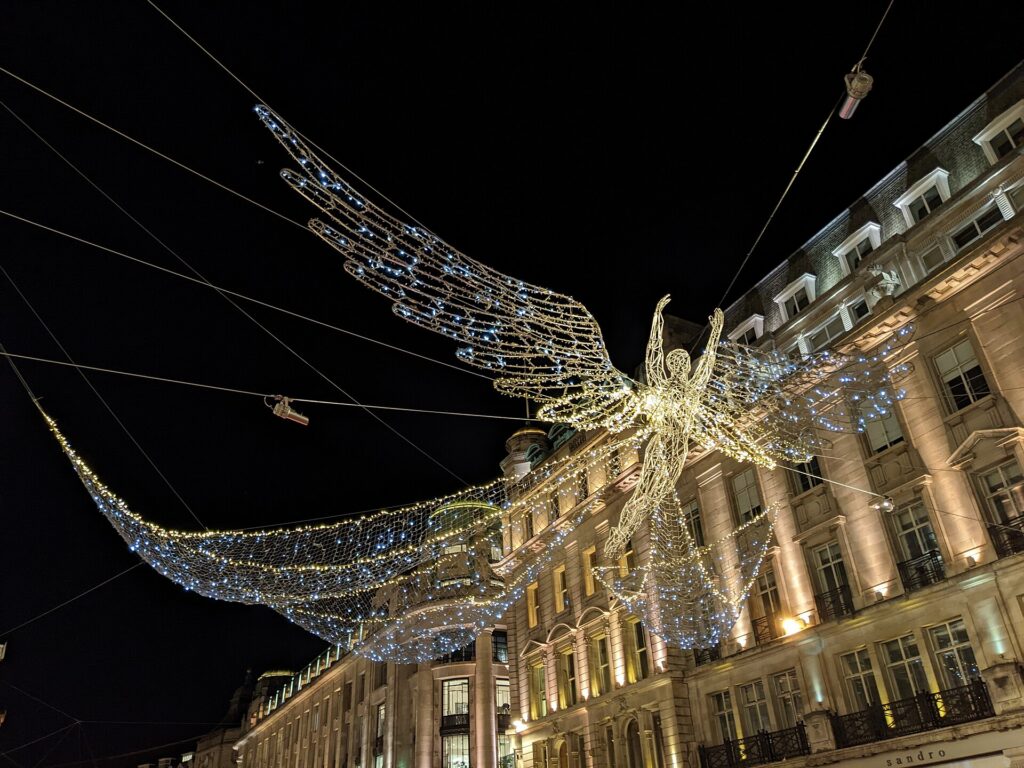
    Christmas lights strung above Regent Street in London's West End
    Regent Street's Christmas lights, switched on in November, before the December fare spike from North America (Photo: The wub via Wikimedia Commons, CC BY-SA 4.0)

    Events that move London flight and hotel prices

    Cross-check these against your dates before you book. Exact dates shift each year; Visit London keeps the current calendar, and the UK government’s bank holiday page lists the public holidays.

    • School half-terms in mid-February, late May and late October, and the Easter holidays in late March or April.
    • London Marathon (usually a Sunday in late April).
    • Chelsea Flower Show (late May).
    • Wimbledon (two weeks from the last week of June); the official site explains the ballot and the queue.
    • The Proms (mid-July to mid-September) and the big summer concerts in Hyde Park and at Wembley.
    • British school summer holidays (late July to early September), which overlap with North American summer travel.
    • Notting Hill Carnival (August bank holiday weekend, the last weekend of August).
    • London Fashion Week (February and September) and major trade fairs, which can fill central hotels mid-week.
    • Christmas to New Year, when transatlantic fares peak.
    • Premier League, rugby and NFL games, stadium tours and West End openings. Our London events page shows what is on sale for your dates.

    Getting in from the airport

    London has six airports, and which one you land at matters more than in most cities. Heathrow (LHR), about 24 kilometres west of the centre, is the main long-haul gateway, with the widest choice of nonstop flights from Canada and the U.S. on British Airways, Air Canada and the major North American airlines. It is also the best connected: the Elizabeth line runs straight through the West End and the City without changing, the Heathrow Express reaches Paddington in about fifteen minutes for a premium fare, and the Piccadilly line is the cheapest ride into central London, slower but direct to Knightsbridge, Piccadilly Circus and King’s Cross. Gatwick (LGW), south of the city, handles some transatlantic flights and a great deal of European and holiday traffic, with the Gatwick Express to Victoria and Thameslink trains to London Bridge, Farringdon and St Pancras. Stansted and Luton, to the north, are the low-cost airports for Europe, linked by the Stansted Express and by Thameslink and East Midlands Railway trains; London City, in Docklands, is the business airport on the DLR, a few stops from Canary Wharf; Southend is the smallest. For a North American visitor, the practical rule is to compare Heathrow and Gatwick on price and then weigh the transfer: Heathrow is almost always the easier arrival. Our Heathrow airport guide covers the terminals, and our London transport guide explains why nobody should pick up a rental car at the airport.

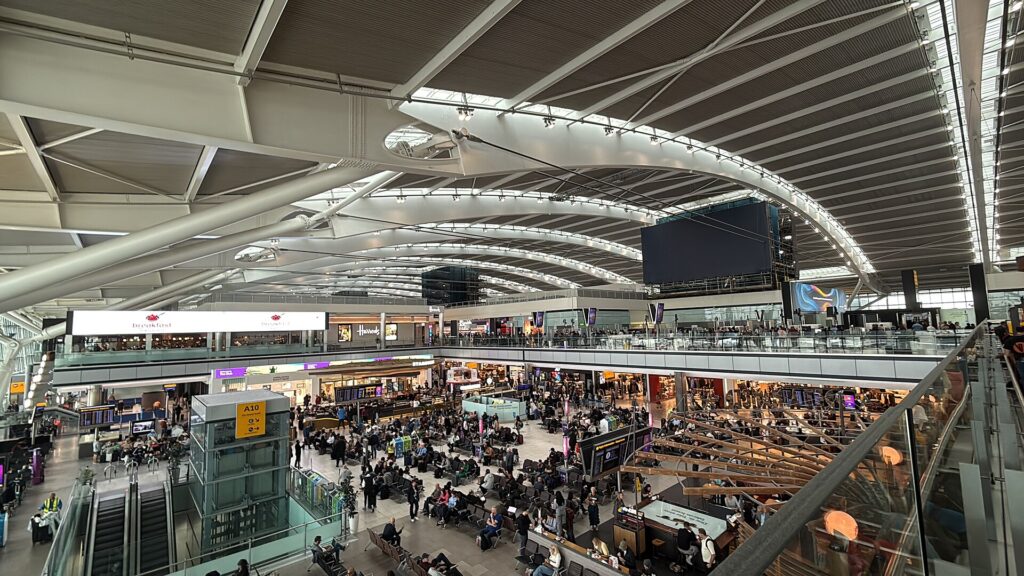
    Terminal 5 at London Heathrow Airport
    Heathrow, London's main long-haul gateway, linked to the centre by the Elizabeth line, the Heathrow Express and the Tube (Photo: CedarGlen86 via Wikimedia Commons, CC0)

    Timing tricks that work for London

    • Search the whole month. With dozens of daily departures from North America, the fare calendar has deep dips mid-week. A calendar search on TicketScanner shows them instantly.
    • Price the hotel first in summer. A good fare into Wimbledon fortnight or the late-July school holidays is not a good deal once a London hotel room is added. Check rates for the same dates before you commit to either, and read our hotel booking tips.
    • Compare Heathrow and Gatwick. The fare difference between the two can be significant on some routes; the Gatwick Express or Thameslink closes most of the gap in convenience.
    • Fly overnight, arrive in the morning. Eastbound transatlantic flights arrive early, so book a hotel that will store luggage and plan a gentle first day on foot in the fresh air, which is the best cure for jet lag.
    • Consider an open-jaw ticket. Flying into London and home from Paris or Rome, with the Eurostar or a short flight in between, often costs little more than a return; see flights to Paris and our guide to multi-city trips in Europe.
    • Avoid the British school holidays if your dates are flexible; the half-term weeks and the Easter holidays fill attractions and lift hotel rates even when transatlantic fares are low.
    • Allow time at the airport on the way home. Heathrow security and long walks to the gates mean a generous buffer; our guide to how early to arrive covers what to allow.
    • Flying out of London instead? The same seasonality applies in reverse; see cheap flights from London.
    Performers in costume at the Notting Hill Carnival in west London
    The Notting Hill Carnival fills west London over the August bank holiday weekend (Photo: David Sedlecký via Wikimedia Commons, CC BY-SA 4.0)

    What to pack, by season

    Winter (December to February): a warm, waterproof coat, a scarf and gloves, and shoes that can handle wet pavements; you will rarely need snow boots, but you will want layers, because the Tube and the museums are warm and the streets are raw. Spring (March to May): layers, a light waterproof jacket and something warm for the evenings, which are cool even when the afternoons are bright. Summer (June to August): light clothing, a light jacket or jumper for the evenings and for air-conditioned theatres, sunglasses, and a compact umbrella for the showers; in a heatwave, a refillable water bottle for the Tube. Autumn (September to November): layers again, a proper waterproof by late October, and a warm coat by November. In every season, bring the most comfortable walking shoes you own; London is a city you see on foot, and a first-time visitor easily walks fifteen kilometres a day.

    The best time to fly to London for…

    Sightseeing on foot

    Late April to early June, or September, for long days, mild weather and manageable queues.

    Theatre, museums and restaurants

    January to early March and November, when fares and hotel rates are low, the West End runs ticket promotions, and the galleries are quiet.

    Festive London

    Late November and the first half of December, for the lights, the markets and the ice rinks before the Christmas fare spike.

    The lowest fares

    January after New Year, February outside half-term, and November. Pair with a city-focused itinerary and plan outdoor sights for the middle of the day.

    Families

    If your children’s school calendar allows, March Break in Canada and many U.S. spring breaks fall in mid-March, often a week or more away from the British Easter holidays, which is the window to aim for; otherwise, the last week of August into early September, when London’s own schools are about to return.

    International visitors

    Canadian, American and most other visa-exempt visitors now need an Electronic Travel Authorisation (ETA), applied for online before travel. The UK government’s visa checker explains what applies to your passport, and Transport for London has the journey planner and fare information for your arrival.

    Frequently asked questions

    What is the cheapest month to fly to London?

    January and November are consistently the lowest from North America, followed by February outside the half-term week and early March before spring break.

    What is the best month to visit London for weather?

    May and September offer the best combination of mild temperatures, long days and fewer crowds; June and July are warmer but busier and more expensive.

    How rainy is London?

    Less than its reputation. Rain is spread through the year, usually as showers or drizzle rather than heavy downpours, and most days have dry spells. Carry a light waterproof in every season.

    Is London expensive in summer?

    Yes. Mid-June to August is the most expensive time for both flights and hotels, and July, with Wimbledon and the start of the school holidays, is often the tightest month for rooms.

    Should I fly into Heathrow or Gatwick?

    Heathrow for convenience, with the Elizabeth line, the Heathrow Express and the Tube direct to the centre; Gatwick if the fare saving is worthwhile, with the Gatwick Express and Thameslink covering the transfer.

    How far ahead should I book?

    Well ahead for summer, the Christmas holidays and any major event date, when fares and hotel rates tend only to rise; for the low season, fares are stable enough that finding the right days of the week matters more than booking early.

    Does it snow in London?

    Occasionally, usually between December and February, and it rarely lasts more than a day or two in the city. A cold, damp week is far more likely than a snowy one.

    Ready to pick your dates? Compare fares across the whole month on our London flights page, then see what is on in London for your trip. For what to do when you land, start with our first-timer’s guide to London.