New York is the one city in America where the answer to “should I rent a car?” is almost always no. It has the largest rapid transit system on the continent, running around the clock, a street grid built for walking, a free ferry, a bike-share network across four boroughs and more taxis than anywhere else in the country. It is also the hardest, slowest and most expensive place in the United States to drive and park: garages charge by the hour at rates that would pay for a hotel room elsewhere, street parking is governed by rules that confound locals, and most of Manhattan now sits inside a congestion toll zone. Fewer than half of New York households own a car, and visitors have even less reason to, though a car does make sense for some day trips. This guide explains how the city is laid out, how the subway, buses, trains and ferries work and what they cost, what driving here is really like, when a car earns its keep, and gives you a straightforward way to decide.
The short answer
Skip the car for any trip based in Manhattan, Brooklyn or Queens, which is nearly every visit. The subway, your feet, the ferries and the occasional taxi will get you everywhere a first-timer wants to go, faster than a car and for a fraction of the cost. Rent a car only for the days it is genuinely needed: a trip to the Catskills, the Hamptons, the North Fork, Bear Mountain or somewhere else the trains do not reach well, a visit to family in the suburbs, or a longer road trip up the coast or into New England. Even then, pick it up on the morning you leave the city and return it when you come back, so that you never pay to park it overnight in Manhattan. If a car is on the list, compare rates for your dates on our car rental search.
How New York is laid out
New York is five boroughs spread across islands and a peninsula at the mouth of the Hudson. Manhattan, the long, narrow island at the center, is where most visitors spend most of their time. North of about 14th Street it is a grid: numbered streets run east to west and rise as you go north, and avenues run north to south, with Fifth Avenue dividing the East Side from the West Side. Below 14th Street, in the Village, SoHo and the Financial District, the older streets have names and wander. Twenty north-south blocks make roughly a mile, and crosstown blocks between avenues are much longer. Brooklyn and Queens share Long Island to the east, across the East River; the Bronx is the only borough on the mainland, to the north; and Staten Island sits in the harbor to the southwest. New Jersey is across the Hudson to the west, with Jersey City and Hoboken closer to Midtown by train than much of Queens.
Hotels cluster in Midtown around Times Square and the theaters, in Lower Manhattan, in Chelsea and the Village, and increasingly in Long Island City, Downtown Brooklyn and Williamsburg, one or two subway stops from Manhattan. The best rule for choosing one is proximity to a station served by several lines. Our New York hotel search lets you compare them.
Getting in from the airports
New York has three major airports, and none of them is on the subway directly. From JFK, in southeast Queens, the AirTrain links every terminal to Jamaica station, where you can take the Long Island Rail Road to Penn Station or Grand Central Madison in about 20 minutes, or the E train into Midtown; a second AirTrain branch reaches the A train at Howard Beach. The AirTrain charges a separate fare when you leave or enter at Jamaica or Howard Beach. Yellow taxis charge a flat fare from JFK to anywhere in Manhattan, plus tolls, surcharges and tip; the drive takes 45 minutes to well over an hour. From LaGuardia, in northern Queens, the Q70 LaGuardia Link bus runs to the subway at Jackson Heights and Woodside, and a taxi to Midtown takes 25 to 45 minutes. From Newark, in New Jersey, the AirTrain runs to Newark Liberty International Airport station, where NJ Transit and Amtrak trains reach Penn Station in about half an hour. Every airport has rental counters, but unless you are driving straight out of the city, there is no reason to use them on arrival. The JFK airport site covers current ground-transport options; our JFK airport guide covers the layout.
New York’s transit, explained
The Metropolitan Transportation Authority runs the subway, the city buses and the two commuter railroads. The system is huge, busy and imperfect, with weekend service changes and the occasional delay, but it is the fastest way around the city at almost any hour, and for a visitor it is one of the great bargains of the trip.
The subway
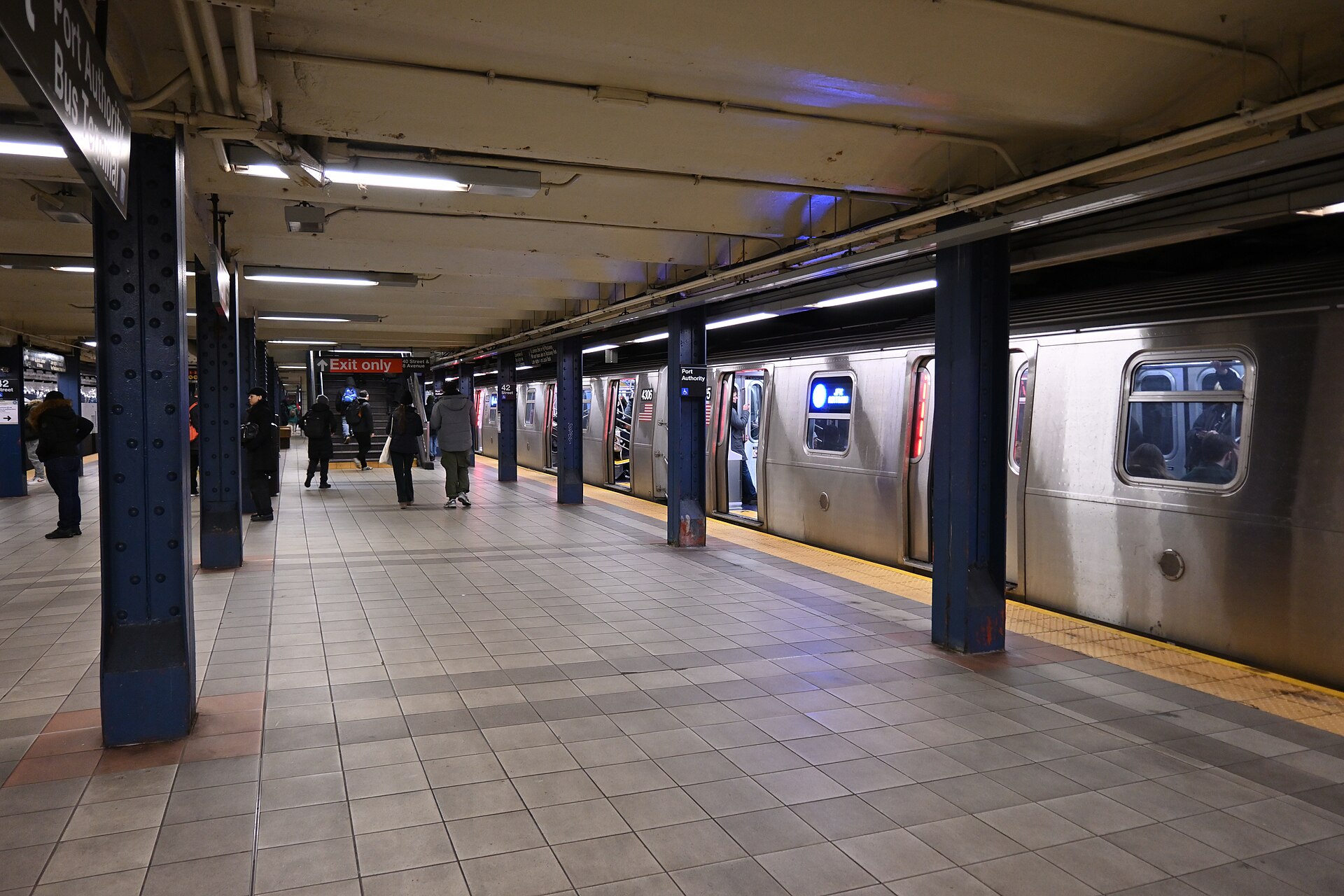
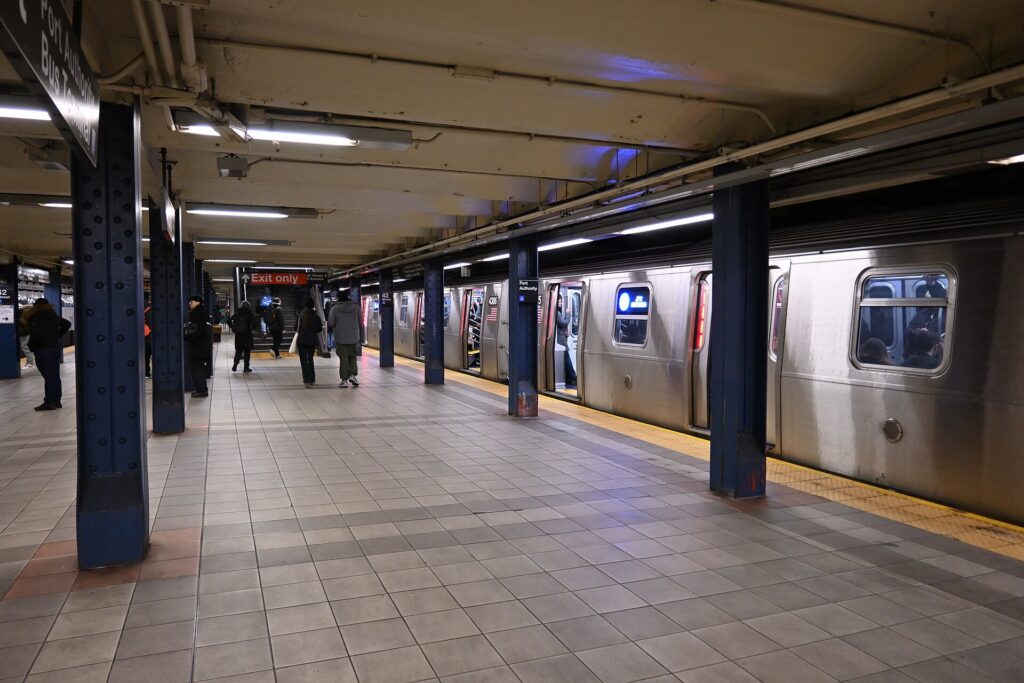
More than 400 stations on some two dozen services, identified by a letter or a number and a color, reach every borough except Staten Island, and the system runs 24 hours a day. Most Manhattan lines run north to south, with a few crosstown connections, such as the 7 and the shuttle across 42nd Street and the L across 14th Street. The two things that trip up visitors are express and local trains, which share the same tracks and platforms but skip different stations, and uptown and downtown entrances, which at some stations are on opposite sides of the street with no connection underground. Check the sign above the entrance and the train’s letter or number before you board, and use a transit app or the maps on the platforms for weekend changes.
Buses
City buses cover every borough, including the crosstown routes across Manhattan that the subway lacks and the neighborhoods of Brooklyn and Queens between subway lines. Select Bus Service routes, marked with blue lights, run limited stops with bus lanes. They are slower than the subway in Midtown but useful for anyone who cannot manage stairs.
Commuter rail and PATH
The Long Island Rail Road, from Penn Station and Grand Central Madison, and Metro-North, from Grand Central Terminal, serve the suburbs, the Hudson Valley and Long Island, and are the way to the beaches and the day trips. Both sell a reduced-fare ticket for trips within the city limits. PATH trains, run by the Port Authority, cross under the Hudson to Hoboken, Jersey City and Newark from stations along Sixth Avenue and at the World Trade Center, and use their own fare system. NJ Transit runs trains and buses to New Jersey from Penn Station and the Port Authority Bus Terminal.
Fares and tickets
Pay for the subway and buses by tapping a contactless credit or debit card, a phone or a watch on the OMNY reader at the turnstile or the bus door; the old MetroCard is being phased out, and reloadable OMNY cards are sold for anyone who prefers cash. One fare covers a single trip of any length, with a free transfer between subway and bus, or bus and bus, within two hours. The fare cap is the best deal for visitors: tap the same card or device every time, and after a set number of paid rides in any seven-day period, the rest of the rides in that period are free, with no pass to buy in advance. Children 44 inches (112 cm) and under ride free with a paying adult. Express buses, the commuter railroads and the AirTrain charge separate, higher fares. Check the MTA’s site for current fares before you go.
Accessibility
Every city bus is low-floor and accessible, but only around a third of subway stations have elevators, and many of those are on a single line at a complex. The MTA is adding elevators steadily and its map marks accessible stations; if you are traveling with a wheelchair, a stroller or heavy luggage, choose a hotel near an accessible station and check the elevator status before setting out.
Beyond the subway
- Walking. Manhattan is the most walkable place in North America, and walking between neighboring areas, Midtown to Chelsea, the Village to SoHo, the Lower East Side to Chinatown, is often faster than going underground.
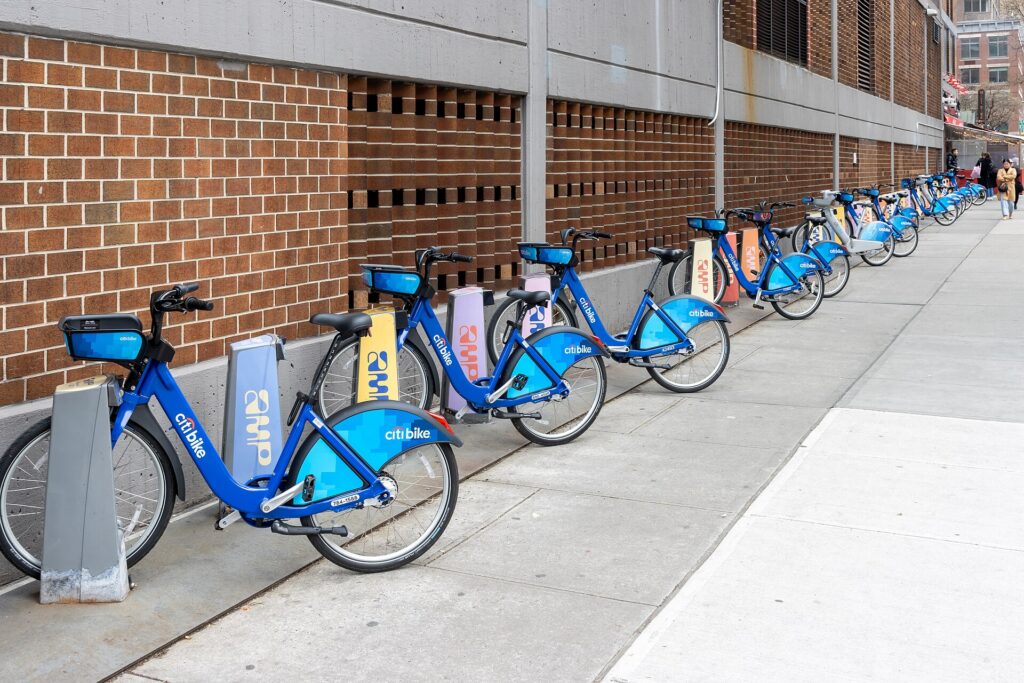
- Citi Bike. The bike-share network has thousands of docking stations across Manhattan, much of Brooklyn and Queens, the Bronx, and Jersey City and Hoboken, with pedal and electric bikes, single rides and day passes. Protected bike lanes run along many avenues and the Hudson River Greenway.
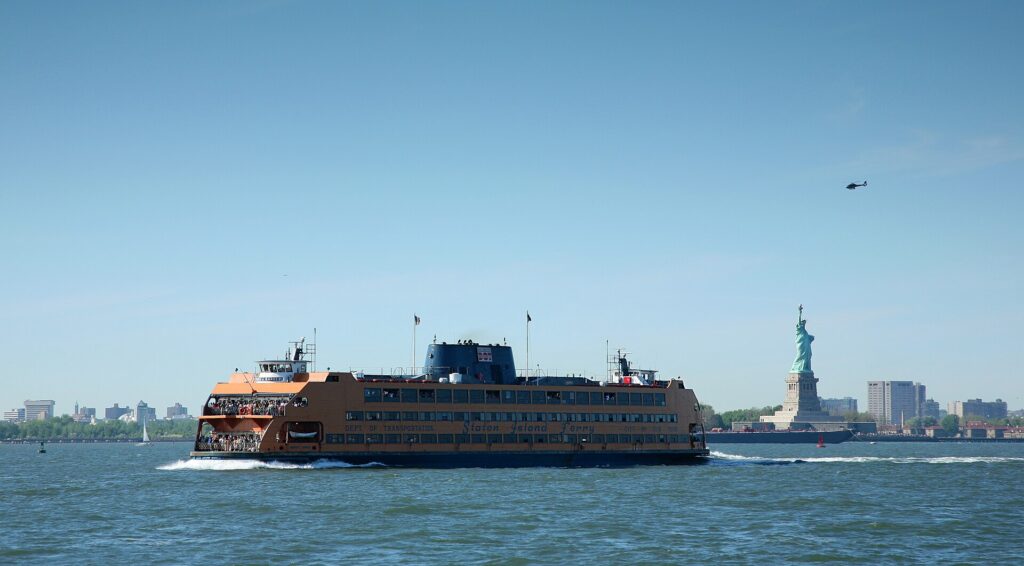
- The ferries. The Staten Island Ferry is free, runs around the clock, and passes the Statue of Liberty. NYC Ferry routes cross the East River to DUMBO, Williamsburg, Long Island City and Astoria, and reach the Rockaway beaches in summer, for a fare close to a subway ride and with far better views.
- Taxis and ride-hail. Yellow cabs cruise Manhattan and the airports; Uber and Lyft operate everywhere. Both are quick late at night and competitive for three or four people on short trips, and painfully slow in Midtown traffic during the day. Surcharges apply to trips in the congestion zone.
- Intercity trains and buses connect New York with Philadelphia, Washington, Boston and beyond from Penn Station, Grand Central and the Port Authority Bus Terminal. Amtrak runs the Northeast Corridor.
Driving in New York: what it is really like
Driving in New York is not dangerous so much as slow, expensive and stressful. Midtown traffic often moves at walking pace during the day. Streets are crowded with delivery trucks double-parked in the travel lane, taxis stopping without warning, cyclists, pedestrians who cross on the local interpretation of the signals, and construction that closes lanes with little notice. The highways in and out of the city, the FDR Drive, the West Side Highway, the Brooklyn-Queens Expressway, the Cross Bronx Expressway and the Long Island Expressway, are among the most congested roads in the country at rush hour and on summer weekends.
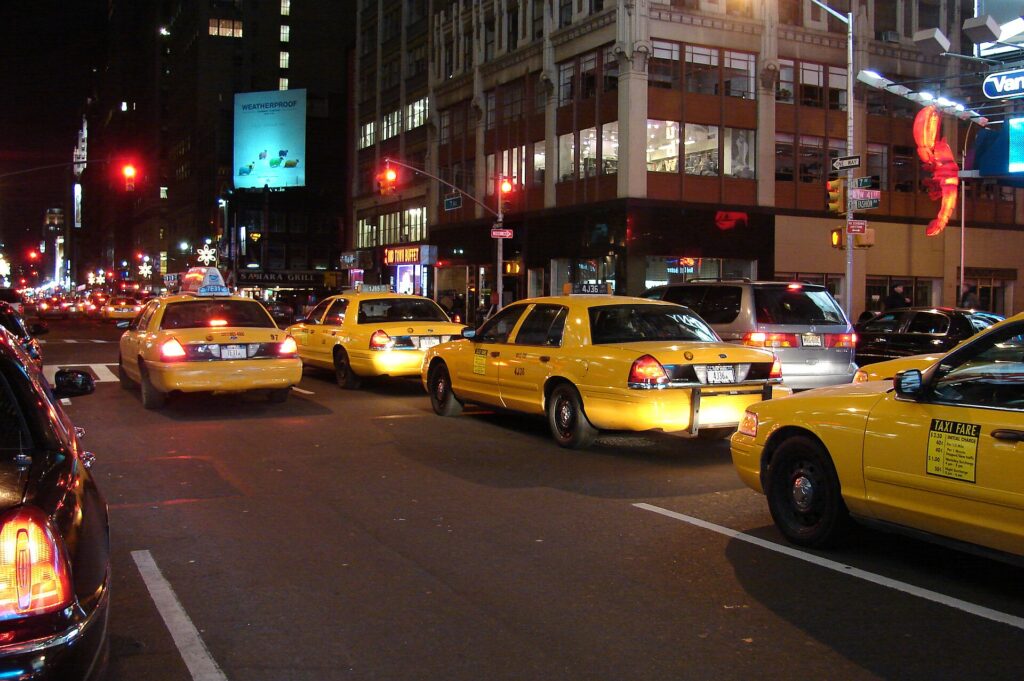
This image was made by Loadmaster (David R. Tribble).
Email the author: David R. Tribble
Also see my personal gallery at Google Photos via Wikimedia Commons, CC BY-SA 3.0)
Parking
Parking is where a car in New York becomes truly expensive. Manhattan garages charge by the hour at high rates, with the daily maximum at many Midtown garages rivaling a budget hotel room, and hotel valet parking is typically charged per night on top of the room. Street parking exists, but it is scarce, and every block has its own signs: alternate-side parking rules that require you to move the car for street cleaning on certain mornings, metered zones, commercial zones, no-standing zones and hydrants, with tickets and tows enforced aggressively. Booking a garage space in advance through a parking app is the most reliable way to control the cost if you must bring a car into the city.
Rules and conditions worth knowing
- Congestion pricing. Driving into Manhattan south of 60th Street incurs a daily congestion toll, charged automatically by license plate, on top of any bridge or tunnel toll. Check the MTA’s site for current rates and hours.
- Tolls are cashless. Most bridges and tunnels into and out of the city charge tolls by transponder or by license plate. Rental companies pass these on, usually with a daily administration fee for their toll program; ask at the counter how it works and what it costs.
- No right turn on red anywhere in New York City unless a sign specifically allows it, which is unlike the rest of the country.
- Parkways ban commercial vehicles. The Henry Hudson, Taconic, Belt, Grand Central and other parkways have low stone bridges; cargo vans and trucks are prohibited, and that includes rental moving vans.
- Speed and red-light cameras operate across the city, including school-zone speed cameras at all hours; fines follow the car, and the rental company will bill you with a fee on top.
- Do not block the box. Entering an intersection you cannot clear is a ticketable offense, and gridlock enforcement is common in Midtown.
- Young drivers. New York State requires rental companies to rent to drivers aged 18 and over, but the young-driver surcharge under 25 is steep.
When renting a car makes sense
- The Catskills and the upper Hudson Valley. Hiking trails, small towns and farm stays are spread out and poorly served by transit.
- The Hamptons, Montauk and the North Fork. The Long Island Rail Road reaches them, but a car makes it possible to move between beaches, vineyards and farm stands.
- Bear Mountain, Storm King Art Center and Woodbury Common. All are an hour or so up the Hudson and easier by car.
- Family in the suburbs. Visiting relatives in Westchester, Long Island or New Jersey often means a car.
- Road trips. New York to New England, the Jersey Shore, or down to Philadelphia and Washington; our Philadelphia, Boston and Washington car rental pages cover onward trips.
If any of those apply, our rental car booking tips cover insurance, deposits and the questions to ask at the counter, and our family car rental guide looks at vehicle choice.
When it does not
- You are staying in Manhattan, Brooklyn or Queens and your plans are the city itself.
- You are in town for Broadway, museums, a conference, a concert or a game; every major venue is on the subway or the commuter rail.
- Your day trips are to the Hudson Valley towns on the Metro-North line, the beaches on the LIRR or the subway, or Philadelphia, Washington and Boston by train.
- You are traveling solo or as a couple, when even occasional taxis cost far less than a rental plus parking.
The hybrid plan for a city-plus-country trip
Go car-free for the city days and rent only for the days out of town, and think carefully about where you pick up. Rental locations in Manhattan are convenient but tend to be pricier, with limited hours at some branches, and driving out means crossing Midtown traffic and a toll bridge or tunnel. Locations near the edge of the city, in upper Manhattan, the outer boroughs, or across the Hudson in Jersey City and Hoboken, are often cheaper and put you straight onto the highway toward the Hudson Valley or New Jersey. The airports have the largest fleets and the longest hours, and a common pattern works well for travelers heading out at the end of the trip: spend the city days car-free, take the train or a taxi to the airport, pick up a car there for the country days, and return it at the same airport before your flight home. The worst option is renting on arrival and paying to park in Manhattan for days while riding the subway. Compare the rates for your country days on our car rental search against a full-trip rental and the difference is usually obvious.
A worked cost comparison
Numbers change with the season and the booking window, so treat this as a method rather than a quote, and check current rates before deciding. For a four-night city break in Midtown for two people, the car-free version costs the airport transfer, a week of subway rides that the fare cap limits automatically, and perhaps a couple of late-night taxis; the rental version adds four days of a compact car, four nights of hotel or garage parking at Manhattan rates, daily congestion tolls, bridge and tunnel tolls, the rental company’s toll-program fees and fuel. The transit option wins by a very wide margin. For the same four nights with one day in the Hudson Valley, the car-free version adds two Metro-North round trips to Beacon or Cold Spring; the hybrid version adds a one-day rental, tolls and fuel. For two people the train is usually cheaper and more relaxing; for four, a day rental from an edge-of-city location can be competitive, and it wins on flexibility if you want to combine several stops. For a week split between the city and the Catskills or the Hamptons, a rental for the country days is the practical answer, and the saving from not parking it in Manhattan for the city days more than pays for the extra trip to collect it. Run the rental rates for your dates on our car rental search and put them beside the train fares before you choose.
Driving out of New York in each season
The roads out of the city are where most visitors meet New York traffic, and timing matters more than route. In summer, the problem is the weekend exodus: the Long Island Expressway eastbound toward the Hamptons on Friday afternoon, the Garden State Parkway south to the Jersey Shore, and the Thruway north to the mountains all jam from early afternoon, with the return on Sunday afternoon just as bad. Leave before noon on Friday or early Saturday, and come back Sunday morning or Monday. Holiday weekends, Memorial Day, the Fourth of July and Labor Day, are the worst of the year. In fall, the foliage weekends in October bring the same pressure to the Hudson Valley and the Catskills, particularly on the Taconic and the Palisades parkways, which are beautiful drives and narrow, winding ones. In winter, snowstorms and nor’easters close roads and slow the highways, rental cars rarely come with winter tires, and the mountain roads in the Catskills and the Berkshires can be icy when the city is only wet; check 511NY for conditions before you leave, and be ready to postpone. In every season, avoid leaving or entering Manhattan between about 7 and 10 in the morning and 4 and 7 in the evening on weekdays, and budget far more time than a map suggests for any crossing of the Hudson or East River.
Decision table
| Your trip | Recommendation | Why |
|---|---|---|
| City break in Manhattan, couple or solo | No car | The subway, walking and the fare cap cover everything; parking would cost more than it saves |
| Family trip based in the city | No car | Children ride free up to a height limit, and taxis fill the gaps |
| Broadway, museums, a conference or a game | No car | Every venue is on transit, and Midtown parking is the most expensive in the country |
| City plus a Hudson Valley day | Metro-North, or a one-day rental | Beacon and Cold Spring are on the train; wider exploring suits a car |
| City plus the Hamptons, North Fork or Catskills | Hybrid: rent only for those days | Pick up at the edge of the city or the airport, and never park in Manhattan |
| Visiting family in the suburbs | Rent for the whole stay | Suburban distances make the car worthwhile daily |
| Northeast road trip | Rent at the end of your city days | Start driving when you leave the city, not before |
| Philadelphia, Washington or Boston side trip | Train | Amtrak runs center to center, faster than driving in traffic |
Money-saving tips for both options
- On transit: tap the same card or phone for every ride so the weekly fare cap kicks in; walk short hops; use the free Staten Island Ferry instead of a harbor cruise; and take the train, not a taxi, from JFK and Newark when traffic is heavy.
- On a rental: compare Manhattan, outer-borough, New Jersey and airport pickups, rent only for the days you leave the city, ask how the toll program is charged, decline extras you already have through a credit card or home policy (check first), and book ahead for summer weekends and fall foliage season.
- On the hotel: if you are driving, price parking into the room rate; hotels in Long Island City, Jersey City and Hoboken often have cheaper parking and fast trains to Manhattan.
- On timing: avoid driving in or out of Manhattan in the weekday peaks and on Friday afternoons in summer; the best time to fly to New York guide lists the busiest weeks of the year.
Frequently asked questions
Is it worth renting a car in New York?
Almost never for the city itself. Rent only for day trips or onward travel that the trains do not cover, and only for those days.
Is the New York subway good for tourists?
Yes. It runs 24 hours, reaches nearly everything a visitor wants to see, and the weekly fare cap makes it very cheap. Learn the difference between express and local trains and you will be fine.
How do I pay for the subway?
Tap a contactless card, phone or watch on the OMNY reader at the turnstile. Use the same one every time so the fare cap applies.
How do I get from JFK to Manhattan?
The AirTrain to Jamaica and then the Long Island Rail Road or the E train, or a yellow taxi at a flat fare plus tolls and tip.
How much does parking cost in Manhattan?
A lot. Garage rates in Midtown can rival a budget hotel room for a full day, and hotels charge per night. Booking a space in advance through an app is the cheapest reliable option.
What is congestion pricing?
A daily toll for driving into Manhattan south of 60th Street, charged automatically by license plate. Rental companies pass it on to you with their toll fees.
Can I visit the Hudson Valley without a car?
Yes. Metro-North trains from Grand Central reach Beacon, Cold Spring and other river towns, with Dia Beacon and hiking trails a short walk from the stations.
Whichever way you go, start with the flight. Compare cheap flights to New York, choose a neighborhood with our New York hotel search, and for what to see once you arrive, read our first-timer’s guide to New York.
Keep planning with TicketScanner
- Car rental search — rent only for the days you leave the city
- Cheap flights to New York
- New York hotels — choose one near a busy subway station
- Things to do in New York: a first-timer's guide
- Best time to fly to New York: month by month
- John F. Kennedy International (JFK) airport guide
- Philadelphia car rentals — for onward road trips
- Rental car booking tips
- Car, transit or taxi in a new city?
Leave a Reply