Paris is the city everyone thinks they already know, and that is exactly why a first visit can disappoint the people who plan it badly. They queue for the lift at the Eiffel Tower at noon, walk the Louvre from end to end in one exhausted afternoon, eat a mediocre croque-monsieur beside the Champs-Élysées and leave wondering what the fuss was about. Plan it well and Paris repays every hour: a medieval island with a rebuilt cathedral at its heart, the world’s greatest concentration of art, twenty arrondissements that each feel like a separate small town, a food culture built around the daily bread run and the neighbourhood market, and a river that ties it all together. This guide covers the landmarks that earn their queues, the museums worth booking, the neighbourhoods worth a slow half-day, the food, the calendar and the sport, the day trips to Versailles, Giverny and Champagne, and the practical details that turn a checklist into a trip.
If you are still comparing cheap flights to Paris, read this alongside our guides to the best time to fly to Paris and whether you need a car. Between the three you can plan the whole trip.
Paris at a glance for first-timers
- Airports: Charles de Gaulle (CDG), about 25 km northeast of the centre, handles most long-haul flights; Orly (ORY), about 14 km south, handles many European and domestic routes. The RER B train, Métro line 14 from Orly, or a fixed-fare taxi gets you in. See our CDG airport guide.
- Getting around: the Métro reaches within a few minutes’ walk of almost everything, the RER trains cross the city and run to Versailles and Disneyland, and the centre is compact enough to walk from the Louvre to the Latin Quarter in twenty minutes. A car is a liability inside the city.
- Money: euros. Cards, including contactless, are accepted almost everywhere, though a few bakeries and market stalls still prefer cash for small sums. Service is included in restaurant prices by law, so tipping is optional; rounding up or leaving a euro or two for good service is plenty.
- Weather: mild and changeable, with grey, damp winters, a soft spring, warm summers that can turn to heatwaves, and a golden early autumn. Rain is frequent but rarely heavy. Our month-by-month guide has the detail.
- Where to stay: Le Marais for walking everywhere and a lively evening; Saint-Germain or the Latin Quarter for the classic Left Bank; the 7th near the Eiffel Tower for calm; Montmartre or the Canal Saint-Martin for a more local feel and lower prices. Our Paris hotel search covers them all.
The Eiffel Tower, the Trocadéro and the Seine
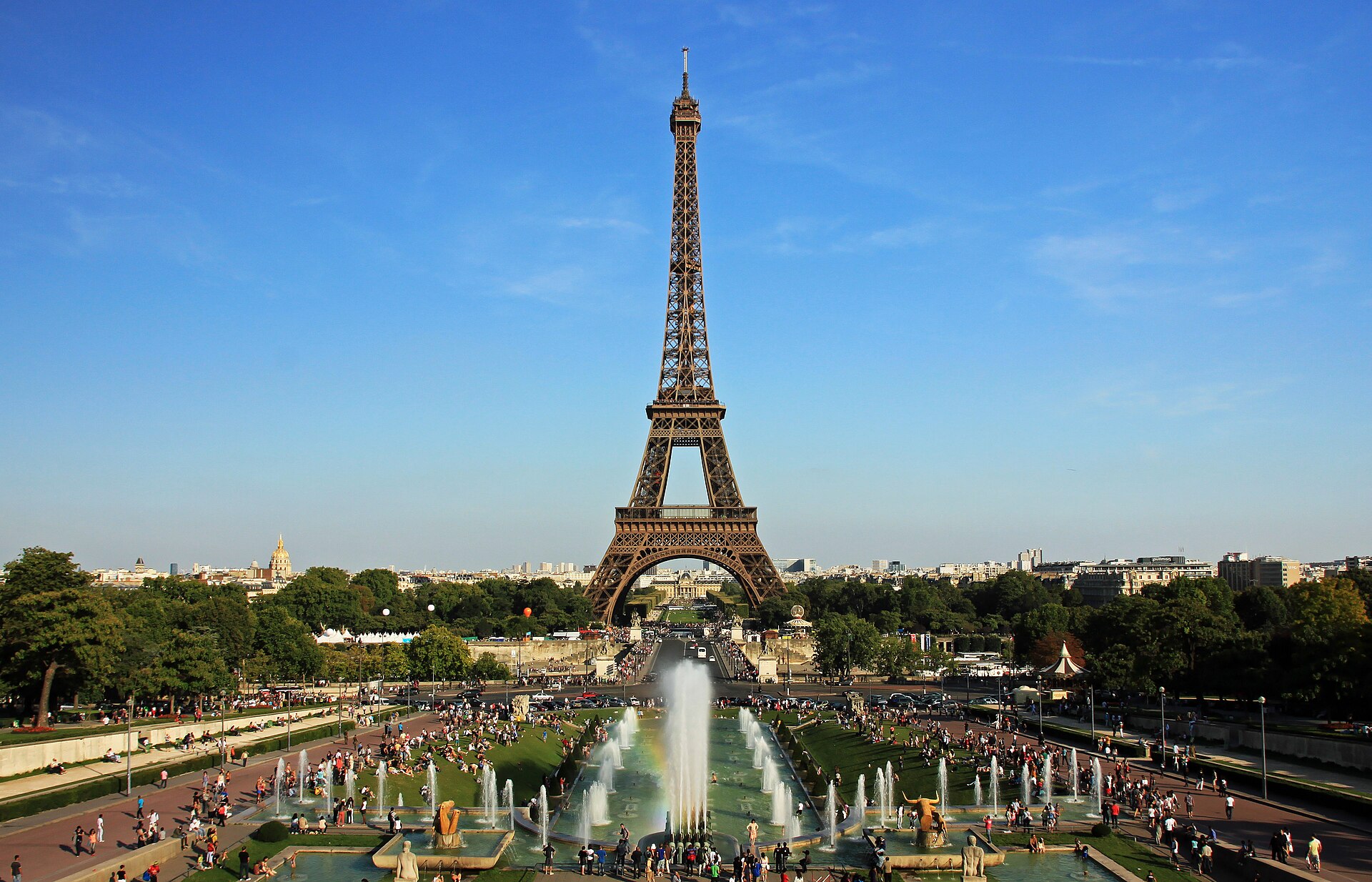
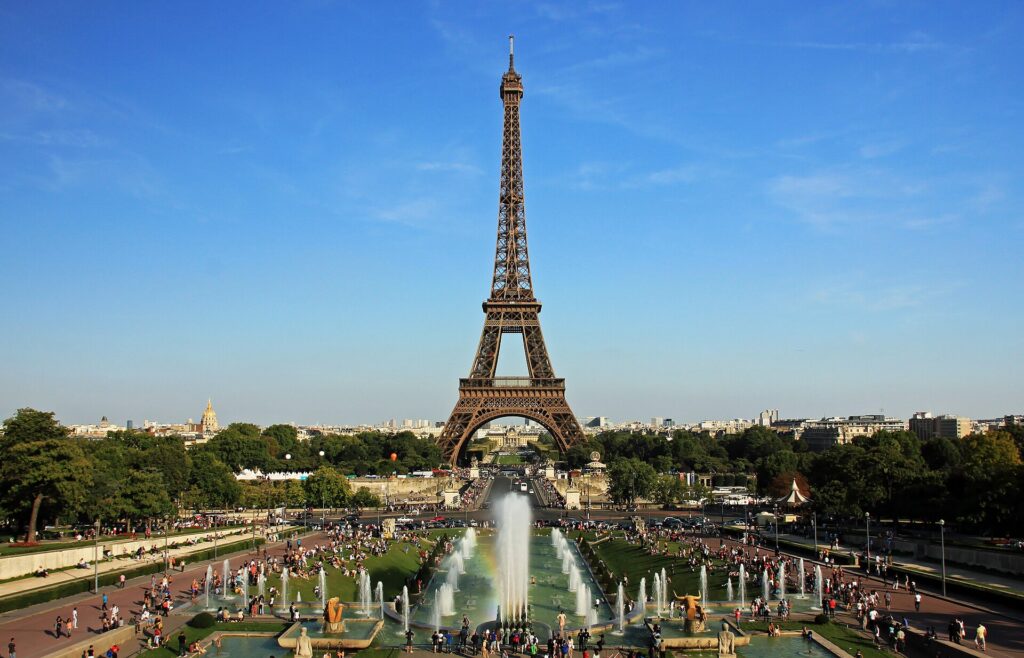
Start where everyone starts, but do it properly. The Eiffel Tower was built for the 1889 World’s Fair and was meant to be temporary; it is now one of the most visited paid monuments in the world, and the queue is the only thing that can spoil it. Book a timed ticket online, go early in the morning or after dark, and consider walking the stairs to the second floor, which is quicker than the lift queue and more interesting. For the classic photograph, cross the river to the terraces of the Trocadéro, and come back after dark, when the tower sparkles with thousands of lights for five minutes at the start of every hour. The lawns of the Champ de Mars below it are the city’s favourite summer picnic ground. From the foot of the tower, a Seine cruise is the laziest and one of the best introductions to the city: an hour on the water passes the Musée d’Orsay, the Louvre, Notre-Dame and a string of bridges, of which the gilded Pont Alexandre III is the grandest.
The islands: Notre-Dame, Sainte-Chapelle and the Île Saint-Louis
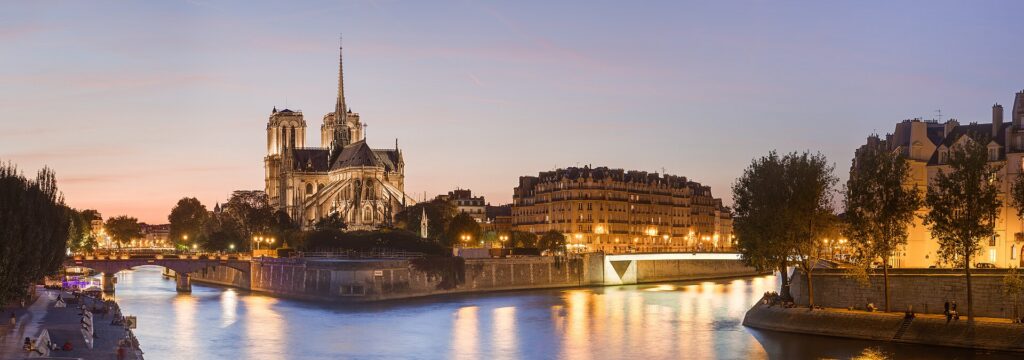
Paris began on the Île de la Cité, and the island is still its symbolic centre. Notre-Dame reopened in December 2024 after the fire of 2019 and a five-year restoration that rebuilt the spire and the roof and cleaned the interior to a pale, luminous stone that few living Parisians had ever seen; entry to the cathedral is free, the queue moves quickly, and you can reserve a time slot online to skip most of it. The climb up the towers is ticketed separately. A few minutes’ walk away, Sainte-Chapelle, the royal chapel built in the 1240s to hold relics, is the single most beautiful interior in the city: the upper chapel is almost entirely walls of thirteenth-century stained glass, and on a sunny morning it glows. The Conciergerie next door is the prison where Marie Antoinette spent her last weeks. Cross the footbridge behind Notre-Dame to the Île Saint-Louis, a quiet island of seventeenth-century mansions, small shops and the famous Berthillon ice cream, and walk its quays at sunset.
The Louvre, the Tuileries and the great museums
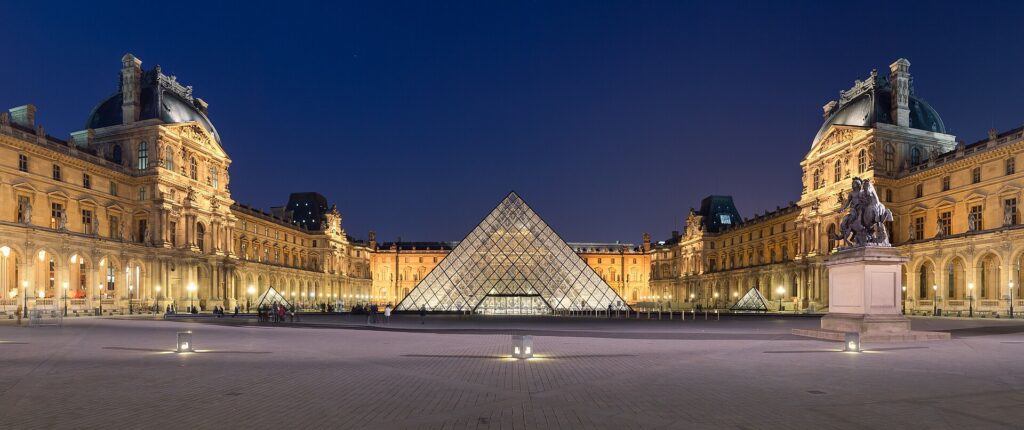
The Louvre is the largest art museum in the world, a former royal palace with more than eight centuries of history behind I. M. Pei’s glass pyramid, and no one sees it in a day. Book a timed ticket online, which is required; arrive at opening; and choose a wing rather than trying to cover the whole building. The Mona Lisa, the Venus de Milo and the Winged Victory of Samothrace are the big three and draw the crowds; the Egyptian antiquities and the Napoleon III apartments reward walking further. It is closed on Tuesdays. From the Louvre, the Tuileries Garden runs west to the Place de la Concorde, and at its far end the Musée de l’Orangerie holds Monet’s Water Lilies in two oval rooms designed for them, one of the most serene half-hours in Paris. Across the river, the Musée d’Orsay, in a former Beaux-Arts railway station, has the world’s finest Impressionist and Post-Impressionist collection: Monet, Renoir, Degas, Van Gogh, Cézanne and Manet’s Luncheon on the Grass. It is closed on Mondays. If you plan to visit several major museums, the Paris Museum Pass, sold for two, four or six days, covers most of them.
Neighbourhoods worth a half-day
Le Marais
Straddling the 3rd and 4th arrondissements on the Right Bank, the Marais is the best-preserved quarter of pre-revolutionary Paris and the most rewarding neighbourhood to wander. The Place des Vosges, laid out in the early 1600s, is the oldest planned square in the city; the streets around it hold aristocratic mansions turned into museums, the Musée Picasso and the Musée Carnavalet, the museum of the history of Paris, whose permanent collection is free. Rue des Rosiers, the heart of the old Jewish quarter, is where to queue for falafel, and the Marché des Enfants Rouges, the city’s oldest covered market, is the lunch stop. Many of its boutiques open on Sundays.
Saint-Germain and the Latin Quarter
The Left Bank of legend. Saint-Germain-des-Prés has the literary cafés, the Café de Flore and Les Deux Magots, and the city’s best-dressed shop windows; the Luxembourg Gardens, with the Senate palace, the Medici fountain and the green metal chairs, are the most Parisian park in Paris. East of them, the Latin Quarter climbs past the Sorbonne to the domed Panthéon, where Voltaire, Victor Hugo and Marie Curie are buried, and down the market street of rue Mouffetard.
Montmartre
The hill in the north of the city, crowned by the white domes of the Sacré-Cœur, still feels like the village it was when Renoir, Picasso and Toulouse-Lautrec lived there. Entry to the basilica is free and the view from its steps takes in the whole city; the funicular saves the climb and takes a standard transit ticket. The Place du Tertre is crowded with portrait painters, but the lanes behind it, the vineyard, the Musée de Montmartre and the Rue de l’Abreuvoir, are quiet and lovely. Ignore anyone offering to tie a string bracelet on your wrist at the bottom of the steps.
Canal Saint-Martin and Belleville
In the northeast, the tree-lined Canal Saint-Martin, with its iron footbridges and locks, is where young Parisians picnic on summer evenings, and the streets around it are full of independent cafés, bakeries and bars. Uphill, Belleville is one of the most diverse neighbourhoods in the city, with Chinese, Vietnamese and North African restaurants, street art and the Parc de Belleville, which has one of the best free views of Paris. Père Lachaise, the cemetery of Chopin, Oscar Wilde and Édith Piaf, is a short walk south.
The Champs-Élysées and the Arc de Triomphe
The grand avenue itself is mostly flagship stores and chains now, but the walk from the Place de la Concorde to the Arc de Triomphe is still one of the great urban axes. Climb the arch, about 280 steps, for a rooftop view straight down the twelve avenues that radiate from it, and come at dusk, when the flame over the Tomb of the Unknown Soldier is rekindled.
More museums, culture and landmarks
Beyond the big three, Paris has more first-rate museums than any visitor can manage. The Musée Rodin, in an eighteenth-century mansion with a rose garden, has The Thinker and The Kiss, and the garden alone is worth the small entry fee. Les Invalides houses the army museum and Napoleon’s tomb under its golden dome. The Palais Garnier, the nineteenth-century opera house, can be toured by day and is as extravagant inside as out. The Fondation Louis Vuitton, Frank Gehry’s glass sailing ship in the Bois de Boulogne, and the Bourse de Commerce are the two big contemporary art addresses. The Centre Pompidou, the home of modern art, closed in 2025 for a renovation expected to last until around 2030, so check before you plan around it. Underground, the Catacombs at Denfert-Rochereau, a kilometre and a half of tunnels lined with the bones of six million Parisians, sell out days ahead; book online. For music, the Philharmonie de Paris in the Parc de la Villette is one of the world’s best concert halls, and for what is on stage and in the stadiums during your dates, our Paris events page lists concerts, shows and games. The Paris tourist office has current opening hours and exhibition listings.
The Paris calendar: Bastille Day and the big events
The biggest day of the Paris year is 14 July, the national holiday the rest of the world calls Bastille Day: a military parade down the Champs-Élysées in the morning, with a fly-past trailing the tricolour, firefighters’ balls in fire stations across the city the night before, and fireworks over the Eiffel Tower after dark, watched by crowds on the Champ de Mars and along the Seine. On 21 June, the Fête de la Musique puts free concerts on every street corner until the small hours. From mid-July to late August, Paris Plages brings sand, deckchairs and activities to the riverbanks and the Bassin de la Villette, and since the 2024 Olympics, supervised swimming spots have opened in the Seine itself in summer. The Journées du Patrimoine, on the third weekend of September, open ministries, palaces and private mansions that are closed the rest of the year. Fashion Weeks in late winter and early autumn fill the hotels and the smartest restaurants, and from late November the department stores on Boulevard Haussmann unveil their Christmas windows and the Champs-Élysées lights up. If you are coming for any of these, book the hotel before the flight.
Sports
Paris Saint-Germain, the city’s football club, plays at the Parc des Princes in the southwest of the city, and a match there is one of the loudest nights in European sport; tickets are scarce and sold mainly to members, so plan ahead. The Stade de France in Saint-Denis, reached by RER, hosts the French national football and rugby teams, the Six Nations in February and March, and the biggest stadium concerts. Roland-Garros, the French Open, runs for a fortnight from late May into early June at the clay courts beside the Bois de Boulogne, and ground passes for the outer courts are the best-value tickets in tennis. The Tour de France traditionally finishes in Paris on a Sunday in late July, and watching the riders race past on the Champs-Élysées is free. Check what is on sale in Paris for your dates before you book flights.
What to eat, and where
Paris eats around the day’s rhythm, and the best meals are often the simplest. Start at the boulangerie: a croissant in the morning, a baguette tradition at lunchtime, and a pastry in the afternoon; the city holds an annual competition for the best baguette, and the winner supplies the Élysée Palace for a year. At lunch, look for the formule, the fixed-price two- or three-course menu that most bistros offer on weekdays and that is far better value than dinner. The revived bouillons, huge, noisy dining rooms with low prices, serve the classics. The street markets, from the Marché d’Aligre near Bastille to the market streets of rue Cler and rue Mouffetard, are the place to assemble a picnic of cheese, charcuterie, fruit and bread. Beyond French food, eat falafel in the Marais, Vietnamese and Chinese food in the 13th arrondissement, couscous in Belleville, and Breton crêpes around Montparnasse, where Brittany’s trains arrive. Ask for a carafe d’eau and tap water is free; many restaurants close on Sundays or Mondays and for part of August.
Paris through the seasons
Paris is a different city in each season, and the best things to do change with it. Winter (December to February) is grey and damp, rarely freezing: the museums are at their least crowded, the Christmas windows fill December, and a long bistro lunch is the answer to a wet afternoon. Spring (March to May) is the season of the songs: the chestnut trees flower along the boulevards in April, the cafés put their tables back out, and the May public holidays give Parisians a string of long weekends. Summer (June to August) is long evenings that stay light until ten, the Fête de la Musique, Bastille Day, Paris Plages and open-air cinema at La Villette; in August many Parisians leave town, some small shops and restaurants close, and the city feels oddly quiet. Autumn (September to November) is the local favourite: the rentrée brings new exhibitions and restaurant openings, the light is golden on the river, the Journées du Patrimoine open closed doors, and November is quiet and cheap. Our month-by-month guide has the fare patterns that go with each season.
Paris with kids
Paris is better with children than its reputation suggests. The Luxembourg Gardens have a large playground, a puppet theatre and the pond where children push wooden sailboats with sticks; the Jardin d’Acclimatation in the Bois de Boulogne is an old-fashioned amusement park with rides, animals and play areas. The Jardin des Plantes combines a small historic zoo with the Grande Galerie de l’Évolution, a parade of stuffed animals under a glass roof that children love. The Cité des Sciences at La Villette has hands-on galleries for every age. National museums, including the Louvre and Orsay, are free for under-18s, which makes short visits painless. For a day out, Disneyland Paris is 40 minutes away on the RER A, and Parc Astérix, the French alternative, is north of CDG. Buggies are hard work on the Métro, which has many stairs; the buses are step-free.
Paris on a budget
Paris is expensive, but much of its best is free. Notre-Dame and the Sacré-Cœur cost nothing to enter; the permanent collections of the city’s own museums, including the Carnavalet and the Petit Palais, are free; the gardens, the Seine quays, Père Lachaise and the view from the Parc de Belleville cost nothing; and the rooftop terrace of the Galeries Lafayette department store has a free view of the Opéra and the Eiffel Tower. Several national museums are free on the first Sunday of certain months, EU residents under 26 get into national collections free, and the Museum Pass pays for itself if you visit three or four major sites. Eat the lunchtime formule rather than dinner, picnic from the markets, and drink wine at the counter rather than at a table. Stay in the 10th, 11th or 18th rather than the 1st or 7th. Compare rates by neighbourhood on our Paris hotel search.
Day trips from Paris
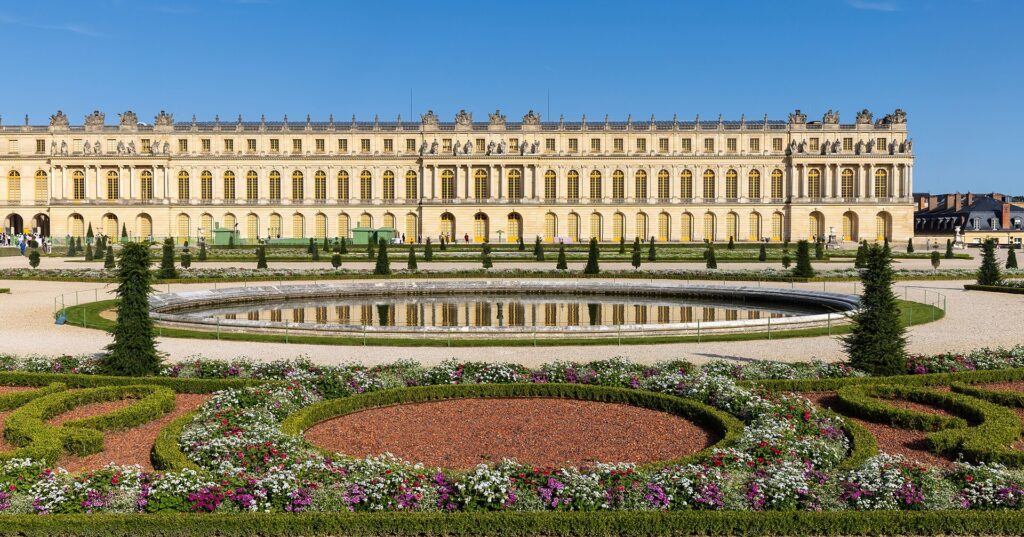
Versailles is the essential one: the Château de Versailles, the Hall of Mirrors, the vast formal gardens, Marie Antoinette’s hamlet and the Trianon palaces, 40 minutes away on the RER C. Book a timed ticket, avoid Mondays, when it is closed, and Tuesdays, when it is busiest, and allow a full day. Giverny, Monet’s house and water garden, is an hour by train from Saint-Lazare to Vernon plus a shuttle, and is open from spring to autumn only. Disneyland Paris is at the end of the RER A. Fontainebleau, a royal château many visitors prefer to Versailles, with a huge forest for walking, is 40 minutes from Gare de Lyon. Reims, the champagne capital, with its Gothic cathedral and the great champagne houses’ cellars, is about 45 minutes by high-speed train from Gare de l’Est. Chartres, with the finest medieval stained glass in Europe, is about an hour from Montparnasse. Mont-Saint-Michel and the Normandy D-Day beaches are possible as long day trips but much better with a night away. All of these work by train; our car-versus-transport guide explains when a rental earns its keep. And London is little more than two hours away by Eurostar; see our guide to things to do in London.
Two sample itineraries
Three days, first visit
Day one: Notre-Dame and Sainte-Chapelle at opening, the Île Saint-Louis, lunch in the Marais and an afternoon among its squares and museums, then dinner in the Latin Quarter. Day two: the Louvre at opening, a walk through the Tuileries to the Orangerie, the Champs-Élysées to the Arc de Triomphe, and the Eiffel Tower after dark with a timed ticket. Day three: the Musée d’Orsay in the morning, lunch in Saint-Germain and an afternoon in the Luxembourg Gardens, then Montmartre for sunset from the Sacré-Cœur and dinner on the hill.
Five days, with day trips
Add a full day at Versailles, and a fifth day for Giverny in season, Reims for champagne, or the Canal Saint-Martin, Belleville and Père Lachaise for the Paris most visitors never see.
Practical details
- Transit: load tickets onto a Navigo Easy card or your phone through the official app; a weekly Navigo pass runs Monday to Sunday and covers the airports, Versailles and Disneyland. The RATP has maps; our transport guide goes into detail.
- From the airports: the RER B from CDG to Gare du Nord and Châtelet, Métro line 14 from Orly, or a fixed-fare taxi from either. Paris Aéroport covers ground transport for both.
- Weather: pack layers and a compact umbrella in every season. Météo-France is the forecast to check, including heatwave warnings in summer.
- Time zone: Central European Time, one hour ahead of London and six ahead of New York.
- Entry requirements: Canadian, American, British and most other visa-exempt travellers can spend up to 90 days in any 180 in the Schengen area without a visa. The EU’s Entry/Exit System now records non-EU travellers’ fingerprints and photo at the border, and the ETIAS travel authorisation is due to follow; check the official EU travel page for what applies to you.
- Safety: violent crime against visitors is rare; pickpocketing on Métro line 1, around the Eiffel Tower and at the Sacré-Cœur is not. Keep bags closed and ignore petition-signers and the “found” gold ring.
Frequently asked questions
How many days do you need in Paris?
Three full days covers the essential landmarks, two major museums and two neighbourhoods; five lets you add Versailles and a slower day, and a week barely scratches the surface.
What is the number one thing to do in Paris?
For the view, the Eiffel Tower after dark. For the experience, a slow walk along the Seine from the Île Saint-Louis past Notre-Dame and the Louvre, ending with dinner on the Left Bank.
Is Paris walkable?
Very. The historic centre is compact, and walking between the Louvre, Notre-Dame, the Marais and Saint-Germain is faster and more pleasant than the Métro for short hops.
Do I need a car in Paris?
No. The Métro and RER cover the city and the main day trips, and parking is scarce and expensive. Rent only for the Loire, Normandy or a road trip, and pick it up on the way out.
Do I need to book the Louvre and the Eiffel Tower in advance?
Yes. The Louvre requires a timed ticket, and booking the Eiffel Tower online saves hours in summer. Versailles, the Catacombs and Sainte-Chapelle also sell out.
Is Paris expensive?
Hotels and dinners are; transport, bread, markets, parks and many museums are not. Lunch menus and a weekly transit pass stretch a budget a long way.
Ready to go? Compare flights to Paris, find a place to stay with our Paris hotel search, and see what is on in Paris during your dates.
Keep planning with TicketScanner
- Cheap flights to Paris
- Paris hotels — by arrondissement
- Events in Paris — PSG, concerts, shows and sport on sale
- Best time to fly to Paris: month by month
- Paris: rent a car or use public transport?
- Paris Charles de Gaulle (CDG) airport guide
- Where to stay: Le Marais
- Things to do in London — little more than two hours away by Eurostar
- Things to do in Rome
Leave a Reply