Tag: Paris

  • Paris: Should You Rent a Car or Rely on Public Transit?

    Paris: Should You Rent a Car or Rely on Public Transit?

    Paris is the easiest question in this series. For a stay in the city itself, a rental car is not just unnecessary but a burden: the Métro puts a station within a few minutes’ walk of almost every address, the streets are being steadily handed over to buses, bikes and pedestrians, parking is scarce and expensive, and most hotels in the centre have no garage at all. Even the classic day trips, Versailles, Disneyland, Giverny, Fontainebleau and Reims, are faster and cheaper by train. But the question does not end at the Périphérique. If your trip continues to the Loire châteaux, the Normandy beaches, the Champagne vineyards or a road trip across France, a car becomes the right tool, and the trick is knowing where and when to pick it up so that you never have to drive in Paris at all. This guide explains how the city is laid out, how the Métro, RER, buses and tickets work, what driving here is really like, when a car earns its keep, and gives you a straightforward way to decide.

    The short answer

    Skip the car for any stay in Paris itself and for the day trips most visitors take; the Métro, the RER, the suburban trains, your feet and the occasional taxi cover all of it, and you will save on parking, fuel, tolls and stress. Rent a car only for the part of the trip that leaves the city: the Loire Valley, Normandy and Mont-Saint-Michel, the Champagne villages, Burgundy, or a longer road trip through France. Even then, the best plan is usually to take a fast train out of Paris and pick up the car at a station or airport on the way, rather than collecting one in the city. And if you arrive late at night with heavy bags, the fixed-fare airport taxi is the stress-free third option. Our guide to car, transit or taxi in a new city sets out the general trade-offs; this one applies them to Paris.

    How Paris is laid out

    The city of Paris proper is small by world-capital standards, about 10 kilometres across, enclosed by the Boulevard Périphérique ring road and home to around two million people, with another ten million in the suburbs beyond. The Seine flows east to west through the middle, dividing the Right Bank to the north, with the Louvre, the Marais, the Opéra, the Champs-Élysées and Montmartre, from the Left Bank to the south, with Saint-Germain, the Latin Quarter, the Eiffel Tower and Montparnasse. The city is divided into twenty arrondissements, numbered in a clockwise spiral from the 1st around the Louvre, and every address carries its number; the last digits of the postcode give it away, so 75004 is the 4th. The historic centre, roughly the first seven arrondissements, is compact enough to cross on foot in an hour.

    Hotels cluster in every central arrondissement, with the densest choice in the Marais and around the Opéra on the Right Bank and in Saint-Germain and the Latin Quarter on the Left. Very few have parking. Our Paris hotel search lets you compare them, and our guide to staying in Le Marais covers the most central, walkable option.

    Getting in from the airports

    From Charles de Gaulle (CDG), about 25 kilometres northeast, the RER B runs to Gare du Nord in about 35 minutes and continues through Châtelet, Saint-Michel and Denfert-Rochereau, connecting with most Métro lines; the Roissybus runs to Opéra; and taxis charge a fixed fare to anywhere in the city, one rate for the Right Bank and a slightly higher one for the Left. From Orly (ORY), about 14 kilometres south, Métro line 14 has run directly into the centre since 2024, reaching Châtelet in around half an hour, and fixed-fare taxis serve the city too. Public-transport trips to and from the airports need a specific airport ticket rather than a standard one, while a weekly Navigo pass covers them. Every major rental company has desks at both airports, but unless you are heading straight out to the regions, there is no reason to collect a car there. Check Paris Aéroport for current ground-transport details; our CDG airport guide covers the layout.
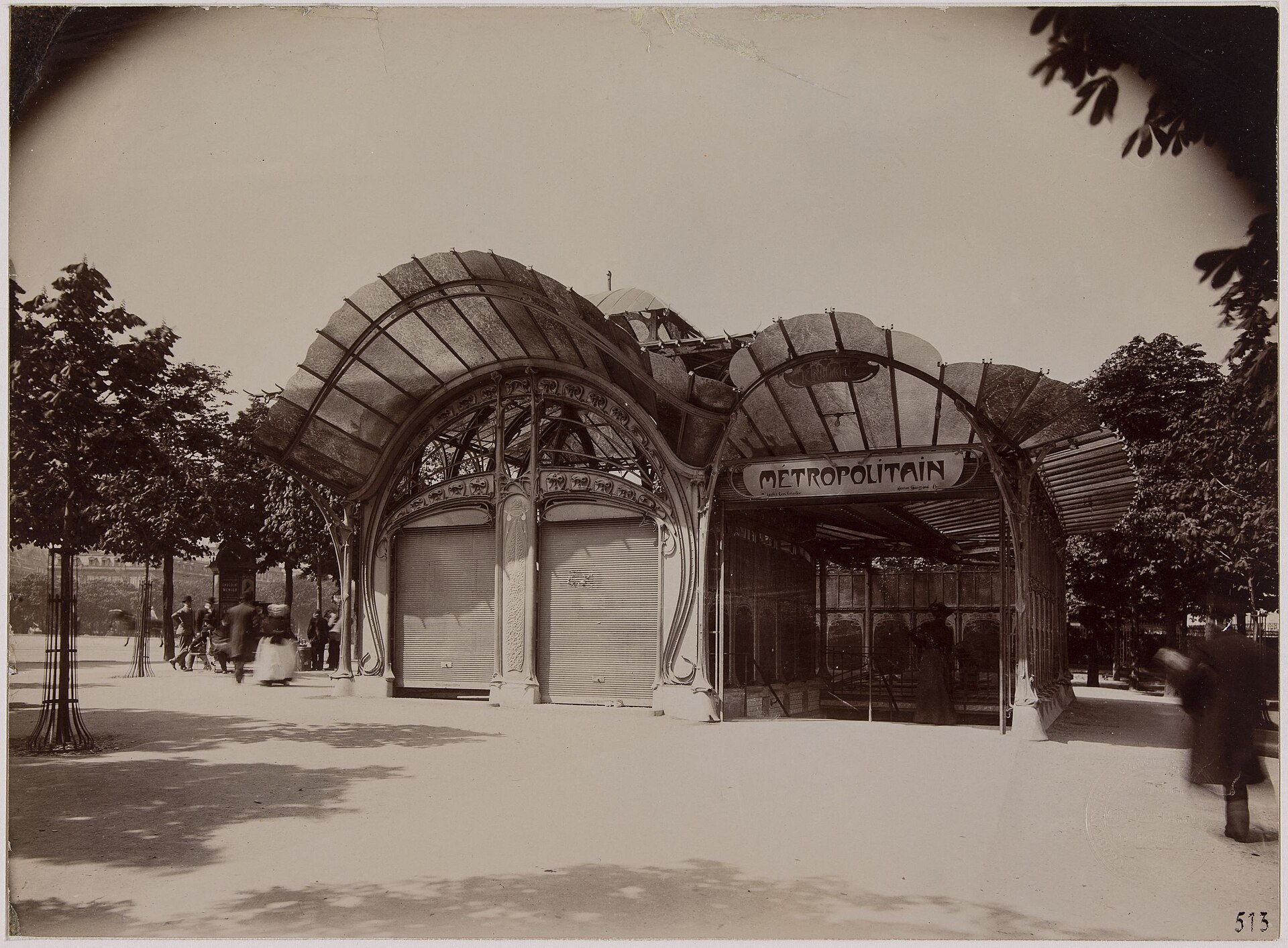
    The Art Nouveau Guimard entrance of Porte Dauphine Métro station in Paris
    A Guimard Métro entrance: in central Paris, the next station is rarely more than a few minutes' walk away (Photo: Maindron, Charles (Paris, 29–06–1861 – Saint-Cloud, en 15–07–1940 — 1940), photographe via Wikimedia Commons, CC0)

    Paris public transport, explained

    Public transport in Paris and the surrounding Île-de-France region is organised by Île-de-France Mobilités and run mainly by the RATP and the national railway, SNCF. It is dense, frequent and fast; its weaknesses are crowding at rush hour, a lot of stairs, and a ticketing system that has changed more than once in recent years.

    The Métro

    Sixteen lines, numbered 1 to 14 plus two short branch lines, 3bis and 7bis, with more than 300 stations, most of them only a few hundred metres apart. Lines are identified by number, colour and the name of the terminus in the direction you are travelling, which is what the signs show, so check the end station before you go down to the platform. Line 1, which runs east to west past the Louvre, the Tuileries, the Champs-Élysées and La Défense, and line 14, the fast line between Saint-Lazare, Châtelet, Gare de Lyon and Orly, are fully automated. Trains run from about 5.30 in the morning until after one at night, later on Friday and Saturday nights, and the Noctilien night buses fill the gap.

    The RER and suburban trains

    The five RER lines, A to E, are express trains that cross the city underground with few stops and then fan out into the suburbs. They are the fast way across Paris and the way to the main day trips: the RER B to CDG and the Stade de France, the RER A to La Défense and Disneyland, and the RER C along the Left Bank to Versailles. The Transilien suburban trains from the main stations reach further, including Chantilly, Fontainebleau and Giverny’s station at Vernon.

    Buses and trams

    More than 300 bus routes criss-cross the city and suburbs, and they are the scenic alternative to the Métro: routes along the Seine and across the centre pass one landmark after another, and every bus is step-free.

    Fares and tickets

    Since 2025, a single Métro-train-RER ticket covers any one journey by Métro, RER or suburban train anywhere in the region at one flat price, apart from the airports, which have their own airport ticket; a separate, cheaper bus-tram ticket covers journeys by bus or tram. The old paper tickets are being phased out. The simplest option for visitors is to buy tickets on a phone with the official Île-de-France Mobilités app, or to load them onto a Navigo Easy card, a reusable card sold for a small fee at station counters and machines. If you are staying a week, the Navigo weekly pass, which runs from Monday to Sunday, needs an ID photo and a Navigo card and covers unlimited travel across the whole region, including the airports, Versailles and Disneyland; it is usually the best deal if your dates fit. Children under four travel free, and reduced fares apply to young children. Check Île-de-France Mobilités for current fares before you go.

    Accessibility

    This is the Métro’s weak point. Most of the network dates from the early twentieth century, and only line 14 and the newest extensions are fully step-free; many stations have long corridors and stairs with no lift. The RER is better in places, and every bus is low-floor and accessible, so travellers with a wheelchair, a buggy or heavy luggage should plan bus routes. The RATP publishes accessibility information for each line.

    Beyond the Métro

    • Walking. Central Paris is made for it. Stations are so close together that walking between neighbouring ones is often quicker than changing lines, and the walk along the Seine from the Eiffel Tower to Notre-Dame passes most of the city’s great sights.
    • Vélib’ and cycling. Paris has transformed itself into a cycling city, with hundreds of kilometres of cycle lanes, the Rue de Rivoli largely given over to bikes and buses, and the Vélib’ bike-share system with classic and electric bikes at stations across the city and inner suburbs. Shared e-scooters were banned in 2023, but electric bikes from private operators remain.
    • Taxis and ride-hail. Licensed taxis, with a light on the roof, can be hailed or found at taxi ranks, and Uber and other ride-hail apps operate widely. Taxis can use the bus lanes, which helps at rush hour; for a group of three or four, a short ride can be competitive with Métro fares.
    • Trains beyond the region. High-speed TGV and Eurostar trains leave from the city’s big stations: Gare du Nord for London and Brussels, Gare de l’Est for Reims and Strasbourg, Gare de Lyon for the southeast, and Montparnasse for the Loire, Brittany and Bordeaux. SNCF Connect sells tickets for all of them.
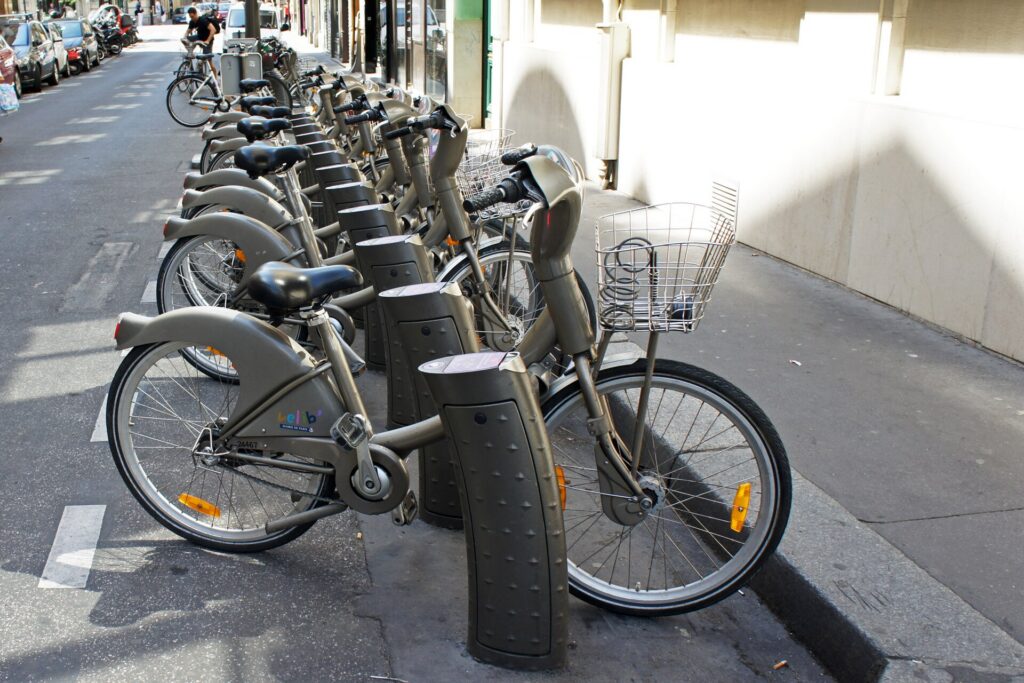
    A row of Vélib' shared bikes at a docking station in central Paris
    Vélib', the city's bike-share system, with classic and electric bikes across Paris and the inner suburbs (Photo: Mariordo (Mario Roberto Durán Ortiz) via Wikimedia Commons, CC BY-SA 3.0)

    Driving in Paris: what it is really like

    Driving in Paris is not dangerous so much as slow, confusing and expensive, and the city has spent twenty years making it harder on purpose. The speed limit is 30 km/h on most streets and, since 2024, 50 km/h on the Périphérique; through traffic has been restricted in the four central arrondissements since late 2024; lanes have been converted to bus and bike lanes across the city; and on-street parking has become steadily more expensive for visitors. Add narrow one-way streets, delivery vans double-parked in the only lane, scooters threading between cars, and the famous roundabout at the Arc de Triomphe, where twelve avenues meet with no lane markings and traffic entering has priority, and you have a city where locals themselves increasingly leave the car at home.

    Parking

    On-street parking in Paris is paid almost everywhere, with the city’s highest rates in the central arrondissements, time limits for visitors, and a much higher visitor rate for heavier vehicles, including many SUVs. Payment is by card at the machines or through an app; there are no coin meters to feed. Underground public car parks are plentiful and easier, but a full day in one costs more than many museum tickets combined, and hotels that offer parking charge a substantial nightly fee. Parking fines are enforced and follow the car, and the rental company will pass them on with an administrative charge.

    Rules and conditions worth knowing

    • Crit’Air sticker. Paris and its inner suburbs operate a low-emission zone, and vehicles need a Crit’Air air-quality sticker on the windscreen. Cars rented in France normally have one; if you are driving in from another country, order it in advance from the official Crit’Air site, and check the current rules, which have been the subject of political debate.
    • Priority to the right. Unless signs say otherwise, traffic joining from the right has priority, including on some roundabouts; it catches out North American drivers more than anything else.
    • Manual gearboxes are still the default in rental fleets. Automatics are available but cost more and sell out first; book one specifically if you need it.
    • Tolls. The autoroutes out of Paris to Normandy, the Loire, Champagne and the south are mostly tolled. Toll booths take cards, and the cost is worth adding to any comparison.
    • Speed limits and cameras. 130 km/h on autoroutes, 110 in the rain; 80 or 90 km/h on two-lane roads depending on the department; 50 or less in towns. Fixed and mobile speed cameras are everywhere, and fines follow the car.
    • Licence. Visitors can drive on a valid Canadian, American or British licence for a short stay; an International Driving Permit alongside it is recommended. Rental companies often set a minimum age of 21 and charge a young-driver surcharge.
    • Alcohol. The limit is 0.5 grams per litre of blood, lower than in much of North America, and lower still for new drivers.
    A TGV high-speed train at Paris Gare de Lyon
    A TGV at a Paris terminus: take the train out and pick up the car in the regions (Photo: Jordi Verdugo via Wikimedia Commons, CC BY-SA 2.0)

    When renting a car makes sense

    • The Loire Valley châteaux. Chambord, Chenonceau, Cheverny and dozens more are spread across the countryside; take the train to Tours or Blois and pick up a car there.
    • Normandy. The D-Day beaches, the American Cemetery, Bayeux, Honfleur, Étretat and Mont-Saint-Michel are far apart and poorly served by public transport; the train to Caen or Bayeux plus a car is the classic plan.
    • The Champagne villages. Reims and Épernay are easy by train, but the vineyard villages and smaller champagne houses between them need a car and a designated driver.
    • Burgundy, Provence and the Dordogne. Rural France rewards a car, and the fast train gets you to within an hour of each.
    • Families with lots of luggage heading to the regions. A car from CDG, straight onto the autoroute, avoids hauling bags through Paris.
    • A road trip across France. Pick up on the day you leave Paris, not before, and consider a one-way rental to another city or airport.

    If any of those apply, our rental car booking tips cover insurance, deposits and the questions to ask at the counter, and our family car rental guide looks at vehicle choice.

    When it does not

    • You are staying in Paris, in any arrondissement, and your plans are the city.
    • You are visiting Versailles, Disneyland, Fontainebleau, Chantilly, Giverny or Reims as day trips, all of which are easy by train.
    • You are in town for a match at the Stade de France or the Parc des Princes, or a concert, when traffic and parking are at their worst and the RER and Métro run extra trains.
    • You are travelling solo or as a couple and only need a car for a day; a guided tour or a train plus a local taxi is often cheaper.

    The hybrid plan for a Paris-plus-regions trip

    Go car-free for the Paris days and rent only for the regional days, and think carefully about where you pick up. The worst option is collecting a car at an office in central Paris and driving out through the city traffic. Better is to take a high-speed train to the edge of the region you are visiting and collect the car at the station: Tours or Saint-Pierre-des-Corps for the Loire, Caen for Normandy, Reims for Champagne, Avignon for Provence, all of which have rental offices at or beside the station. If you are starting your trip in the regions straight off a long-haul flight, collect at CDG, where the autoroutes to the north, east and west are minutes away, or take a TGV directly from CDG’s own station. If you are finishing in the regions, drop the car at a station and take the train back into Paris, or return it at CDG or Orly on the way to your flight, which avoids driving into the centre entirely. Check one-way fees, which vary a great deal, and book an automatic early if you need one. Bison Futé, the official French road-traffic service, publishes forecasts of the busiest days on the autoroutes.

    A worked cost comparison

    Numbers change with the season and the booking window, so treat this as a method rather than a quote, and check current rates before deciding. For a five-night stay in Paris for two people, the car-free version costs the RER or a taxi from the airport, two weekly Navigo passes or a handful of tickets, and perhaps a couple of late-night taxis; the rental version adds five days of a car, five nights of hotel or underground parking at Paris rates, fuel, and the airport collection fee. The transport option wins by a wide margin. For the same stay plus a day at Versailles and a day at Giverny, the car-free version adds the RER C to Versailles, which is covered by a weekly Navigo pass, and return train tickets to Vernon with the shuttle bus to Giverny; a one-day rental for Giverny adds the car, fuel, tolls and parking, and the train is usually cheaper for two people and not much slower. For a week split between Paris and Normandy, the hybrid plan, a train to Caen and a three-day rental there, typically costs less than a week-long rental from Paris once parking and tolls are included, and spares you the drive out of the city. Run the numbers for your own dates, but the pattern is consistent: in Paris, pay for the car only on the days you are outside it.

    Driving out of Paris in each season

    The autoroutes that radiate from Paris are fast and well maintained, but the timing of your departure matters more than the season. The worst days of the year are the big French holiday getaways: the first and last weekends of July and August, when Bison Futé issues red and black warnings and queues on the A6 south and the A10 toward the Loire and Bordeaux can stretch for tens of kilometres, and the Friday afternoons before the May bridge weekends. In summer, leave early in the morning, avoid Saturdays in July and August, and expect heavy traffic back into Paris on Sunday evenings. In spring and autumn, the roads are quieter outside the school holidays, and the Loire and Normandy are at their most pleasant for driving, with fewer coaches at the châteaux. In winter, snow rarely affects the main roads; short daylight on rural roads is the bigger issue. In every season, the ring roads around Paris, the Périphérique and the A86, jam every weekday morning and evening, so time your departure outside the rush hour or pick up the car beyond them.

    Decision table

    Your tripRecommendationWhy
    City break in Paris, couple or soloNo carThe Métro reaches everything; parking is scarce and expensive
    Paris with day trips to Versailles, Disneyland or GivernyNo carRER and suburban trains are faster and cheaper
    Late arrival with heavy luggageFixed-fare taxiA known price to your door, and it can use the bus lanes
    Loire Valley châteauxTrain to Tours or Blois, then rentThe châteaux are spread out; the drive out of Paris is not worth it
    Normandy and Mont-Saint-MichelTrain to Caen or Bayeux, then rentBeaches and villages are far apart and poorly served by buses
    ChampagneTrain to Reims; rent or book a tour for the villagesThe cellars in Reims are walkable; the vineyards are not
    Family heading straight to the regionsRent at CDGStraight onto the autoroute without entering Paris
    Road trip across FranceRent on the day you leave Paris, ideally one-wayParis is the start, not the place for the car

    Money-saving tips for both options

    • On transport: buy a weekly Navigo pass if your stay runs Monday to Sunday; walk between nearby stations; take the bus for scenic routes; and use the airport ticket or pass rather than paying twice.
    • On a rental: pick up outside Paris, book early for July and August, reserve an automatic if you need one, check one-way fees, decline extras you already have through a credit card or home policy (check first), and budget for tolls.
    • On the hotel: if you must bring a car into Paris, choose a hotel with parking or near an underground car park and price the fee into the room rate.
    • On timing: avoid the big holiday getaway weekends and the Paris ring roads at rush hour; the best time to fly to Paris guide lists the holiday periods.
    • On day trips: compare a train-plus-taxi day with a one-day rental; for one or two people, the train usually wins.

    Frequently asked questions

    Is it worth renting a car in Paris?

    Not for the city or the usual day trips. Rent only for the Loire, Normandy, Champagne or a road trip, and pick the car up outside Paris.

    Is Paris public transport good for tourists?

    Excellent for coverage and frequency; the Métro and RER reach almost everything. The drawbacks are rush-hour crowding and stairs.

    How do I get from CDG to central Paris?

    The RER B to Gare du Nord and Châtelet in about 35 to 45 minutes, the Roissybus to Opéra, or a fixed-fare taxi.

    Can I visit Versailles without a car?

    Yes. The RER C runs to Versailles Château Rive Gauche, a short walk from the palace, and suburban trains from Saint-Lazare and Montparnasse serve the town too.

    Do I need an International Driving Permit in France?

    It is recommended alongside a Canadian, American or British licence, and some rental desks ask for one; it is cheap and quick to obtain at home.

    Is parking expensive in Paris?

    Yes. Street parking is paid and time-limited for visitors, heavier cars pay more, and underground car parks and hotel garages are costly.

    What is the best way to see the Loire or Normandy from Paris?

    Take the train to Tours, Blois, Caen or Bayeux and rent a car there, or join a guided day tour if you only have one day.

    Whichever way you go, start with the flight. Compare cheap flights to Paris, choose a neighbourhood with our Paris hotel search, and plan your days with our first-timer’s guide to Paris.

  • Things to Do in Paris: A First-Timer’s Guide

    Things to Do in Paris: A First-Timer’s Guide

    Paris is the city everyone thinks they already know, and that is exactly why a first visit can disappoint the people who plan it badly. They queue for the lift at the Eiffel Tower at noon, walk the Louvre from end to end in one exhausted afternoon, eat a mediocre croque-monsieur beside the Champs-Élysées and leave wondering what the fuss was about. Plan it well and Paris repays every hour: a medieval island with a rebuilt cathedral at its heart, the world’s greatest concentration of art, twenty arrondissements that each feel like a separate small town, a food culture built around the daily bread run and the neighbourhood market, and a river that ties it all together. This guide covers the landmarks that earn their queues, the museums worth booking, the neighbourhoods worth a slow half-day, the food, the calendar and the sport, the day trips to Versailles, Giverny and Champagne, and the practical details that turn a checklist into a trip.

    If you are still comparing cheap flights to Paris, read this alongside our guides to the best time to fly to Paris and whether you need a car. Between the three you can plan the whole trip.

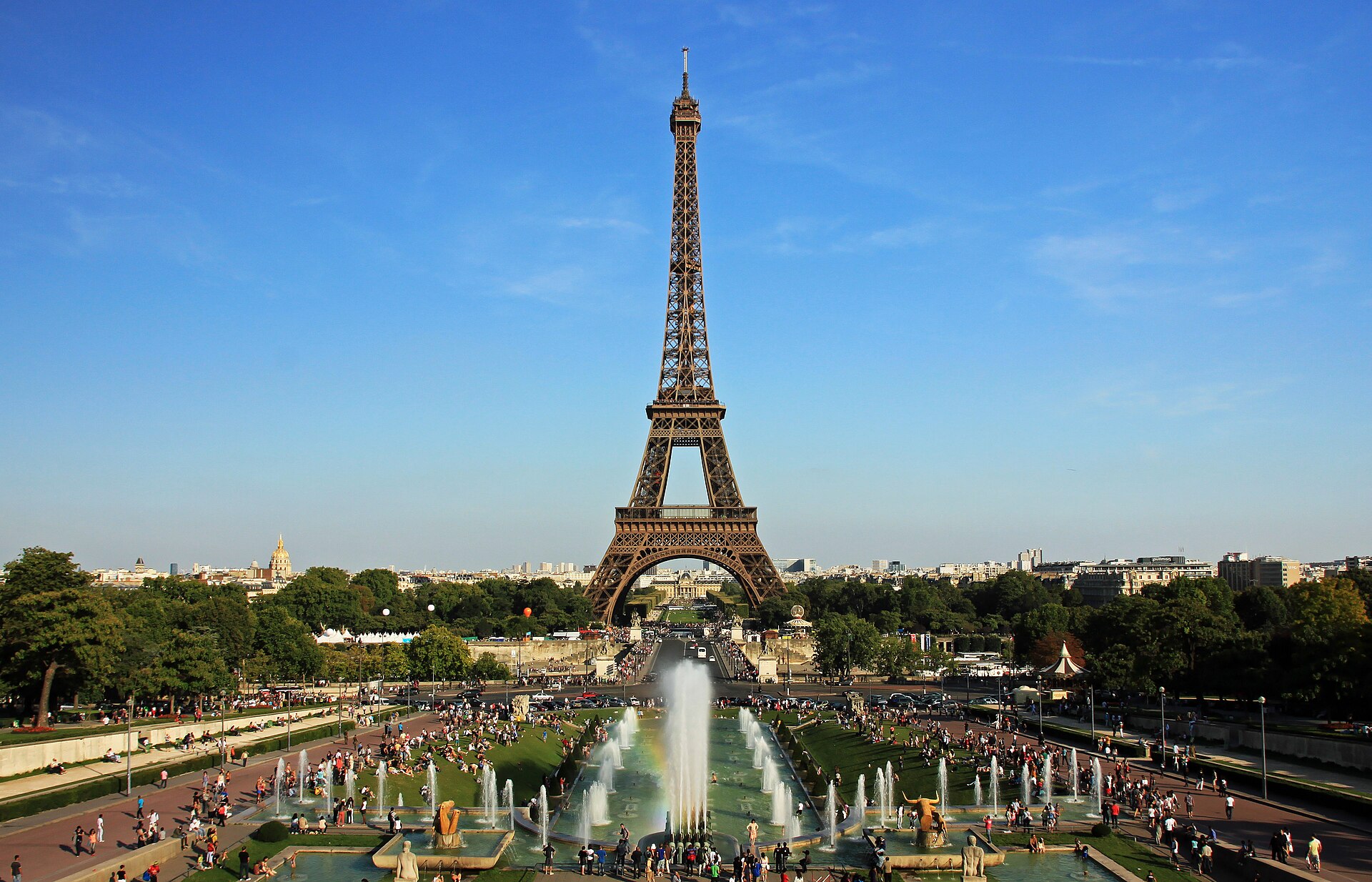
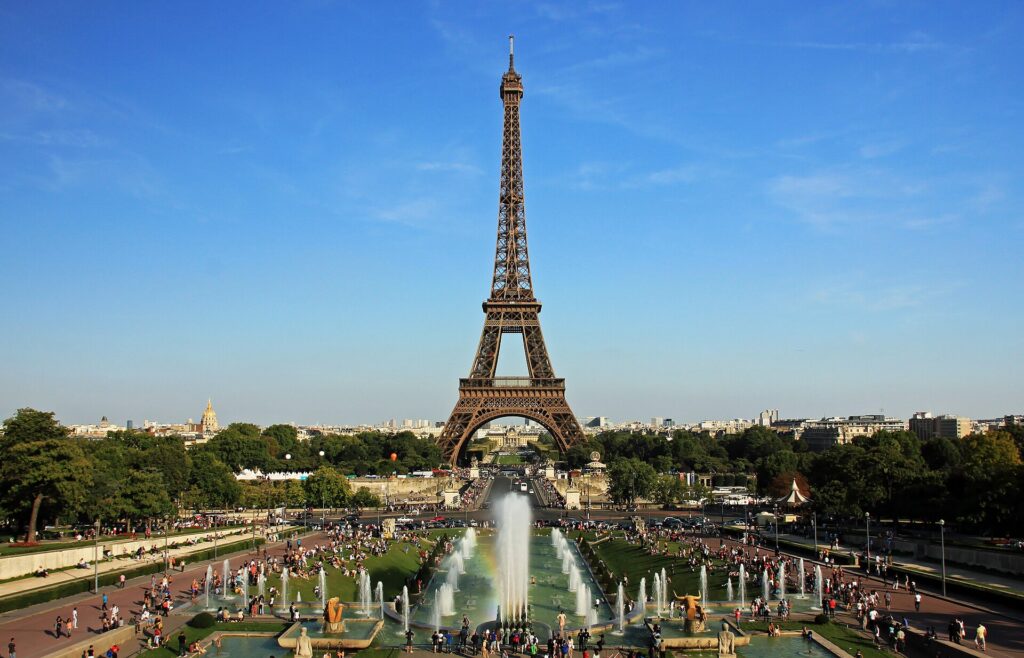
    The Eiffel Tower seen across the Trocadéro gardens in Paris
    The Eiffel Tower from the Trocadéro, the classic first view of Paris (Photo: NonOmnisMoriar via Wikimedia Commons, CC BY-SA 3.0)

    Paris at a glance for first-timers

    • Airports: Charles de Gaulle (CDG), about 25 km northeast of the centre, handles most long-haul flights; Orly (ORY), about 14 km south, handles many European and domestic routes. The RER B train, Métro line 14 from Orly, or a fixed-fare taxi gets you in. See our CDG airport guide.
    • Getting around: the Métro reaches within a few minutes’ walk of almost everything, the RER trains cross the city and run to Versailles and Disneyland, and the centre is compact enough to walk from the Louvre to the Latin Quarter in twenty minutes. A car is a liability inside the city.
    • Money: euros. Cards, including contactless, are accepted almost everywhere, though a few bakeries and market stalls still prefer cash for small sums. Service is included in restaurant prices by law, so tipping is optional; rounding up or leaving a euro or two for good service is plenty.
    • Weather: mild and changeable, with grey, damp winters, a soft spring, warm summers that can turn to heatwaves, and a golden early autumn. Rain is frequent but rarely heavy. Our month-by-month guide has the detail.
    • Where to stay: Le Marais for walking everywhere and a lively evening; Saint-Germain or the Latin Quarter for the classic Left Bank; the 7th near the Eiffel Tower for calm; Montmartre or the Canal Saint-Martin for a more local feel and lower prices. Our Paris hotel search covers them all.

    The Eiffel Tower, the Trocadéro and the Seine

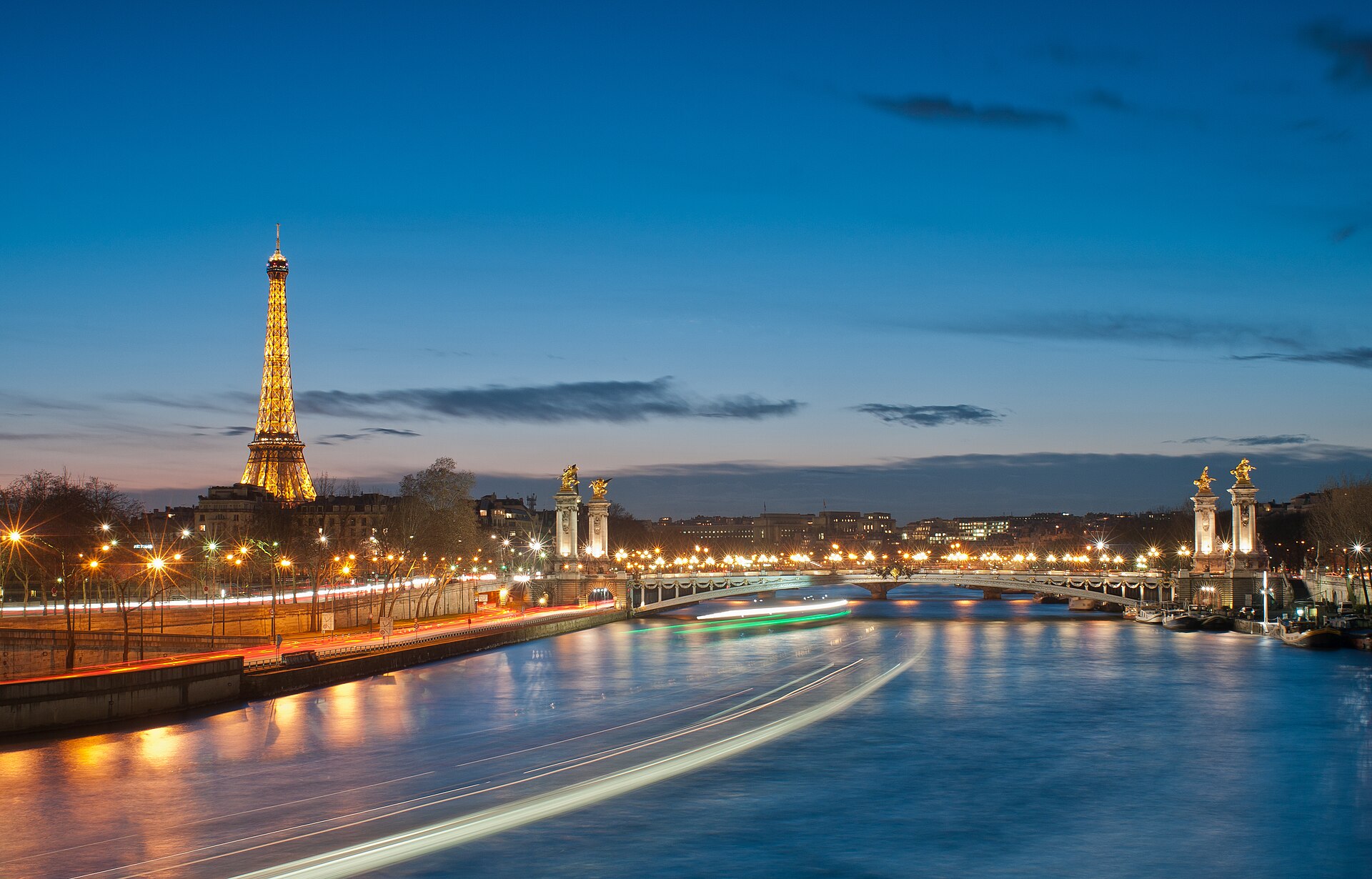
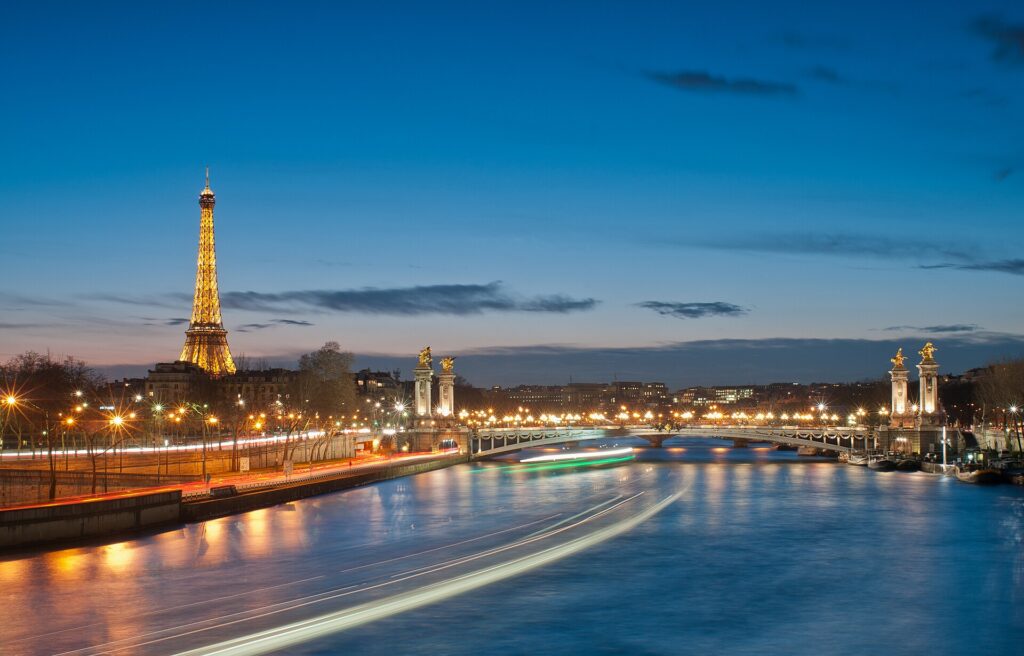
    Start where everyone starts, but do it properly. The Eiffel Tower was built for the 1889 World’s Fair and was meant to be temporary; it is now one of the most visited paid monuments in the world, and the queue is the only thing that can spoil it. Book a timed ticket online, go early in the morning or after dark, and consider walking the stairs to the second floor, which is quicker than the lift queue and more interesting. For the classic photograph, cross the river to the terraces of the Trocadéro, and come back after dark, when the tower sparkles with thousands of lights for five minutes at the start of every hour. The lawns of the Champ de Mars below it are the city’s favourite summer picnic ground. From the foot of the tower, a Seine cruise is the laziest and one of the best introductions to the city: an hour on the water passes the Musée d’Orsay, the Louvre, Notre-Dame and a string of bridges, of which the gilded Pont Alexandre III is the grandest.

    The islands: Notre-Dame, Sainte-Chapelle and the Île Saint-Louis

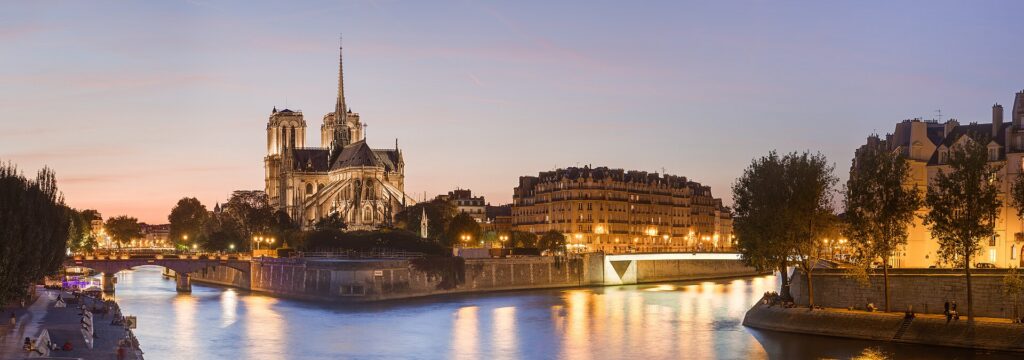
    Paris began on the Île de la Cité, and the island is still its symbolic centre. Notre-Dame reopened in December 2024 after the fire of 2019 and a five-year restoration that rebuilt the spire and the roof and cleaned the interior to a pale, luminous stone that few living Parisians had ever seen; entry to the cathedral is free, the queue moves quickly, and you can reserve a time slot online to skip most of it. The climb up the towers is ticketed separately. A few minutes’ walk away, Sainte-Chapelle, the royal chapel built in the 1240s to hold relics, is the single most beautiful interior in the city: the upper chapel is almost entirely walls of thirteenth-century stained glass, and on a sunny morning it glows. The Conciergerie next door is the prison where Marie Antoinette spent her last weeks. Cross the footbridge behind Notre-Dame to the Île Saint-Louis, a quiet island of seventeenth-century mansions, small shops and the famous Berthillon ice cream, and walk its quays at sunset.

    Notre-Dame de Paris on the Île de la Cité at dusk, seen from the Pont de la Tournelle
    Notre-Dame, reopened in December 2024 after five years of restoration (Photo: Benh LIEU SONG via Wikimedia Commons, CC BY-SA 4.0)

    The Louvre, the Tuileries and the great museums

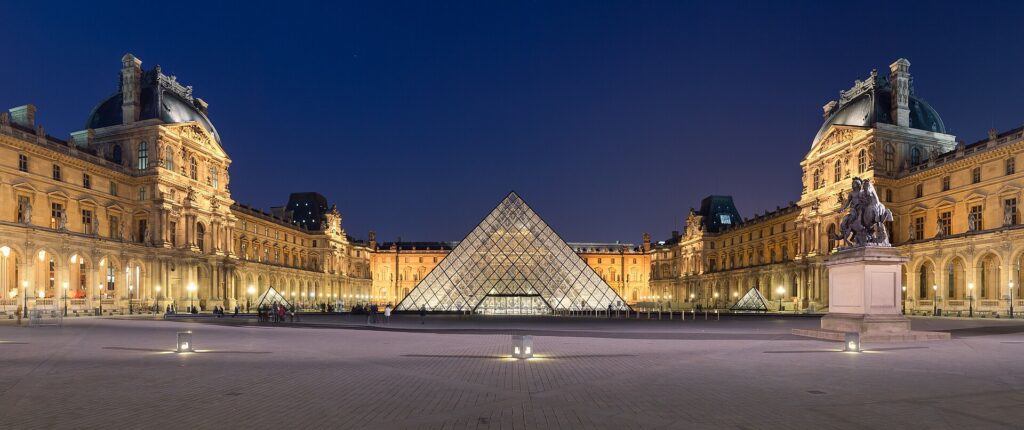
    The Louvre is the largest art museum in the world, a former royal palace with more than eight centuries of history behind I. M. Pei’s glass pyramid, and no one sees it in a day. Book a timed ticket online, which is required; arrive at opening; and choose a wing rather than trying to cover the whole building. The Mona Lisa, the Venus de Milo and the Winged Victory of Samothrace are the big three and draw the crowds; the Egyptian antiquities and the Napoleon III apartments reward walking further. It is closed on Tuesdays. From the Louvre, the Tuileries Garden runs west to the Place de la Concorde, and at its far end the Musée de l’Orangerie holds Monet’s Water Lilies in two oval rooms designed for them, one of the most serene half-hours in Paris. Across the river, the Musée d’Orsay, in a former Beaux-Arts railway station, has the world’s finest Impressionist and Post-Impressionist collection: Monet, Renoir, Degas, Van Gogh, Cézanne and Manet’s Luncheon on the Grass. It is closed on Mondays. If you plan to visit several major museums, the Paris Museum Pass, sold for two, four or six days, covers most of them.

    The glass pyramid in the Cour Napoléon of the Louvre
    The Louvre's glass pyramid; book a timed ticket and choose one wing (Photo: Benh LIEU SONG (Flickr) via Wikimedia Commons, CC BY-SA 3.0)

    Neighbourhoods worth a half-day

    Le Marais

    Straddling the 3rd and 4th arrondissements on the Right Bank, the Marais is the best-preserved quarter of pre-revolutionary Paris and the most rewarding neighbourhood to wander. The Place des Vosges, laid out in the early 1600s, is the oldest planned square in the city; the streets around it hold aristocratic mansions turned into museums, the Musée Picasso and the Musée Carnavalet, the museum of the history of Paris, whose permanent collection is free. Rue des Rosiers, the heart of the old Jewish quarter, is where to queue for falafel, and the Marché des Enfants Rouges, the city’s oldest covered market, is the lunch stop. Many of its boutiques open on Sundays.

    Saint-Germain and the Latin Quarter

    The Left Bank of legend. Saint-Germain-des-Prés has the literary cafés, the Café de Flore and Les Deux Magots, and the city’s best-dressed shop windows; the Luxembourg Gardens, with the Senate palace, the Medici fountain and the green metal chairs, are the most Parisian park in Paris. East of them, the Latin Quarter climbs past the Sorbonne to the domed Panthéon, where Voltaire, Victor Hugo and Marie Curie are buried, and down the market street of rue Mouffetard.

    Montmartre

    The hill in the north of the city, crowned by the white domes of the Sacré-Cœur, still feels like the village it was when Renoir, Picasso and Toulouse-Lautrec lived there. Entry to the basilica is free and the view from its steps takes in the whole city; the funicular saves the climb and takes a standard transit ticket. The Place du Tertre is crowded with portrait painters, but the lanes behind it, the vineyard, the Musée de Montmartre and the Rue de l’Abreuvoir, are quiet and lovely. Ignore anyone offering to tie a string bracelet on your wrist at the bottom of the steps.

    Canal Saint-Martin and Belleville

    In the northeast, the tree-lined Canal Saint-Martin, with its iron footbridges and locks, is where young Parisians picnic on summer evenings, and the streets around it are full of independent cafés, bakeries and bars. Uphill, Belleville is one of the most diverse neighbourhoods in the city, with Chinese, Vietnamese and North African restaurants, street art and the Parc de Belleville, which has one of the best free views of Paris. Père Lachaise, the cemetery of Chopin, Oscar Wilde and Édith Piaf, is a short walk south.

    The Champs-Élysées and the Arc de Triomphe

    The grand avenue itself is mostly flagship stores and chains now, but the walk from the Place de la Concorde to the Arc de Triomphe is still one of the great urban axes. Climb the arch, about 280 steps, for a rooftop view straight down the twelve avenues that radiate from it, and come at dusk, when the flame over the Tomb of the Unknown Soldier is rekindled.

    More museums, culture and landmarks

    Beyond the big three, Paris has more first-rate museums than any visitor can manage. The Musée Rodin, in an eighteenth-century mansion with a rose garden, has The Thinker and The Kiss, and the garden alone is worth the small entry fee. Les Invalides houses the army museum and Napoleon’s tomb under its golden dome. The Palais Garnier, the nineteenth-century opera house, can be toured by day and is as extravagant inside as out. The Fondation Louis Vuitton, Frank Gehry’s glass sailing ship in the Bois de Boulogne, and the Bourse de Commerce are the two big contemporary art addresses. The Centre Pompidou, the home of modern art, closed in 2025 for a renovation expected to last until around 2030, so check before you plan around it. Underground, the Catacombs at Denfert-Rochereau, a kilometre and a half of tunnels lined with the bones of six million Parisians, sell out days ahead; book online. For music, the Philharmonie de Paris in the Parc de la Villette is one of the world’s best concert halls, and for what is on stage and in the stadiums during your dates, our Paris events page lists concerts, shows and games. The Paris tourist office has current opening hours and exhibition listings.

    The Paris calendar: Bastille Day and the big events

    The biggest day of the Paris year is 14 July, the national holiday the rest of the world calls Bastille Day: a military parade down the Champs-Élysées in the morning, with a fly-past trailing the tricolour, firefighters’ balls in fire stations across the city the night before, and fireworks over the Eiffel Tower after dark, watched by crowds on the Champ de Mars and along the Seine. On 21 June, the Fête de la Musique puts free concerts on every street corner until the small hours. From mid-July to late August, Paris Plages brings sand, deckchairs and activities to the riverbanks and the Bassin de la Villette, and since the 2024 Olympics, supervised swimming spots have opened in the Seine itself in summer. The Journées du Patrimoine, on the third weekend of September, open ministries, palaces and private mansions that are closed the rest of the year. Fashion Weeks in late winter and early autumn fill the hotels and the smartest restaurants, and from late November the department stores on Boulevard Haussmann unveil their Christmas windows and the Champs-Élysées lights up. If you are coming for any of these, book the hotel before the flight.

    Sports

    Paris Saint-Germain, the city’s football club, plays at the Parc des Princes in the southwest of the city, and a match there is one of the loudest nights in European sport; tickets are scarce and sold mainly to members, so plan ahead. The Stade de France in Saint-Denis, reached by RER, hosts the French national football and rugby teams, the Six Nations in February and March, and the biggest stadium concerts. Roland-Garros, the French Open, runs for a fortnight from late May into early June at the clay courts beside the Bois de Boulogne, and ground passes for the outer courts are the best-value tickets in tennis. The Tour de France traditionally finishes in Paris on a Sunday in late July, and watching the riders race past on the Champs-Élysées is free. Check what is on sale in Paris for your dates before you book flights.

    What to eat, and where

    Paris eats around the day’s rhythm, and the best meals are often the simplest. Start at the boulangerie: a croissant in the morning, a baguette tradition at lunchtime, and a pastry in the afternoon; the city holds an annual competition for the best baguette, and the winner supplies the Élysée Palace for a year. At lunch, look for the formule, the fixed-price two- or three-course menu that most bistros offer on weekdays and that is far better value than dinner. The revived bouillons, huge, noisy dining rooms with low prices, serve the classics. The street markets, from the Marché d’Aligre near Bastille to the market streets of rue Cler and rue Mouffetard, are the place to assemble a picnic of cheese, charcuterie, fruit and bread. Beyond French food, eat falafel in the Marais, Vietnamese and Chinese food in the 13th arrondissement, couscous in Belleville, and Breton crêpes around Montparnasse, where Brittany’s trains arrive. Ask for a carafe d’eau and tap water is free; many restaurants close on Sundays or Mondays and for part of August.

    Paris through the seasons

    Paris is a different city in each season, and the best things to do change with it. Winter (December to February) is grey and damp, rarely freezing: the museums are at their least crowded, the Christmas windows fill December, and a long bistro lunch is the answer to a wet afternoon. Spring (March to May) is the season of the songs: the chestnut trees flower along the boulevards in April, the cafés put their tables back out, and the May public holidays give Parisians a string of long weekends. Summer (June to August) is long evenings that stay light until ten, the Fête de la Musique, Bastille Day, Paris Plages and open-air cinema at La Villette; in August many Parisians leave town, some small shops and restaurants close, and the city feels oddly quiet. Autumn (September to November) is the local favourite: the rentrée brings new exhibitions and restaurant openings, the light is golden on the river, the Journées du Patrimoine open closed doors, and November is quiet and cheap. Our month-by-month guide has the fare patterns that go with each season.

    Paris with kids

    Paris is better with children than its reputation suggests. The Luxembourg Gardens have a large playground, a puppet theatre and the pond where children push wooden sailboats with sticks; the Jardin d’Acclimatation in the Bois de Boulogne is an old-fashioned amusement park with rides, animals and play areas. The Jardin des Plantes combines a small historic zoo with the Grande Galerie de l’Évolution, a parade of stuffed animals under a glass roof that children love. The Cité des Sciences at La Villette has hands-on galleries for every age. National museums, including the Louvre and Orsay, are free for under-18s, which makes short visits painless. For a day out, Disneyland Paris is 40 minutes away on the RER A, and Parc Astérix, the French alternative, is north of CDG. Buggies are hard work on the Métro, which has many stairs; the buses are step-free.

    Paris on a budget

    Paris is expensive, but much of its best is free. Notre-Dame and the Sacré-Cœur cost nothing to enter; the permanent collections of the city’s own museums, including the Carnavalet and the Petit Palais, are free; the gardens, the Seine quays, Père Lachaise and the view from the Parc de Belleville cost nothing; and the rooftop terrace of the Galeries Lafayette department store has a free view of the Opéra and the Eiffel Tower. Several national museums are free on the first Sunday of certain months, EU residents under 26 get into national collections free, and the Museum Pass pays for itself if you visit three or four major sites. Eat the lunchtime formule rather than dinner, picnic from the markets, and drink wine at the counter rather than at a table. Stay in the 10th, 11th or 18th rather than the 1st or 7th. Compare rates by neighbourhood on our Paris hotel search.

    Day trips from Paris

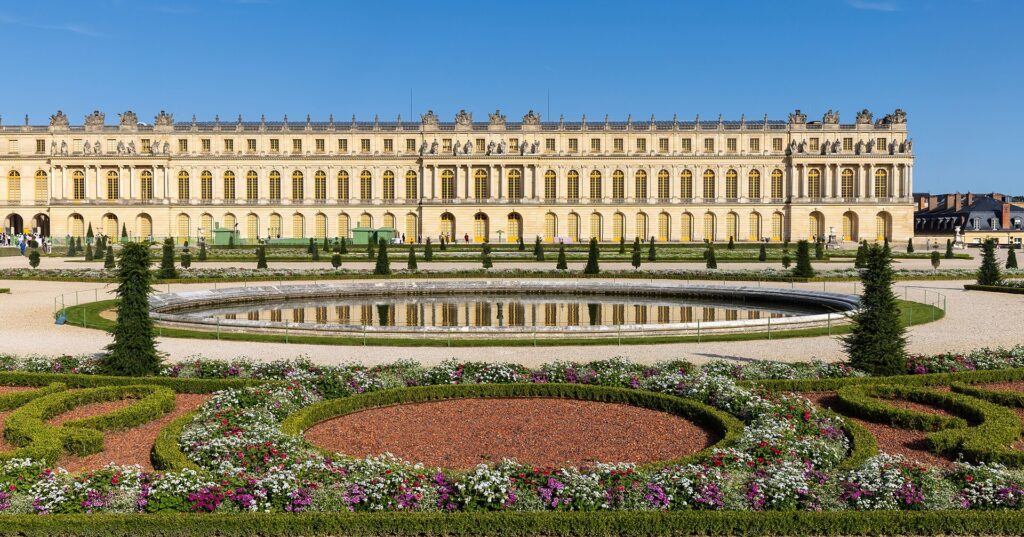
    Versailles is the essential one: the Château de Versailles, the Hall of Mirrors, the vast formal gardens, Marie Antoinette’s hamlet and the Trianon palaces, 40 minutes away on the RER C. Book a timed ticket, avoid Mondays, when it is closed, and Tuesdays, when it is busiest, and allow a full day. Giverny, Monet’s house and water garden, is an hour by train from Saint-Lazare to Vernon plus a shuttle, and is open from spring to autumn only. Disneyland Paris is at the end of the RER A. Fontainebleau, a royal château many visitors prefer to Versailles, with a huge forest for walking, is 40 minutes from Gare de Lyon. Reims, the champagne capital, with its Gothic cathedral and the great champagne houses’ cellars, is about 45 minutes by high-speed train from Gare de l’Est. Chartres, with the finest medieval stained glass in Europe, is about an hour from Montparnasse. Mont-Saint-Michel and the Normandy D-Day beaches are possible as long day trips but much better with a night away. All of these work by train; our car-versus-transport guide explains when a rental earns its keep. And London is little more than two hours away by Eurostar; see our guide to things to do in London.

    The Palace of Versailles seen from its formal gardens
    Versailles, 40 minutes from central Paris on the RER C and the essential day trip (Photo: Basile Morin via Wikimedia Commons, CC BY-SA 4.0)

    Two sample itineraries

    Three days, first visit

    Day one: Notre-Dame and Sainte-Chapelle at opening, the Île Saint-Louis, lunch in the Marais and an afternoon among its squares and museums, then dinner in the Latin Quarter. Day two: the Louvre at opening, a walk through the Tuileries to the Orangerie, the Champs-Élysées to the Arc de Triomphe, and the Eiffel Tower after dark with a timed ticket. Day three: the Musée d’Orsay in the morning, lunch in Saint-Germain and an afternoon in the Luxembourg Gardens, then Montmartre for sunset from the Sacré-Cœur and dinner on the hill.

    Five days, with day trips

    Add a full day at Versailles, and a fifth day for Giverny in season, Reims for champagne, or the Canal Saint-Martin, Belleville and Père Lachaise for the Paris most visitors never see.

    Practical details

    • Transit: load tickets onto a Navigo Easy card or your phone through the official app; a weekly Navigo pass runs Monday to Sunday and covers the airports, Versailles and Disneyland. The RATP has maps; our transport guide goes into detail.
    • From the airports: the RER B from CDG to Gare du Nord and Châtelet, Métro line 14 from Orly, or a fixed-fare taxi from either. Paris Aéroport covers ground transport for both.
    • Weather: pack layers and a compact umbrella in every season. Météo-France is the forecast to check, including heatwave warnings in summer.
    • Time zone: Central European Time, one hour ahead of London and six ahead of New York.
    • Entry requirements: Canadian, American, British and most other visa-exempt travellers can spend up to 90 days in any 180 in the Schengen area without a visa. The EU’s Entry/Exit System now records non-EU travellers’ fingerprints and photo at the border, and the ETIAS travel authorisation is due to follow; check the official EU travel page for what applies to you.
    • Safety: violent crime against visitors is rare; pickpocketing on Métro line 1, around the Eiffel Tower and at the Sacré-Cœur is not. Keep bags closed and ignore petition-signers and the “found” gold ring.

    Frequently asked questions

    How many days do you need in Paris?

    Three full days covers the essential landmarks, two major museums and two neighbourhoods; five lets you add Versailles and a slower day, and a week barely scratches the surface.

    What is the number one thing to do in Paris?

    For the view, the Eiffel Tower after dark. For the experience, a slow walk along the Seine from the Île Saint-Louis past Notre-Dame and the Louvre, ending with dinner on the Left Bank.

    Is Paris walkable?

    Very. The historic centre is compact, and walking between the Louvre, Notre-Dame, the Marais and Saint-Germain is faster and more pleasant than the Métro for short hops.

    Do I need a car in Paris?

    No. The Métro and RER cover the city and the main day trips, and parking is scarce and expensive. Rent only for the Loire, Normandy or a road trip, and pick it up on the way out.

    Do I need to book the Louvre and the Eiffel Tower in advance?

    Yes. The Louvre requires a timed ticket, and booking the Eiffel Tower online saves hours in summer. Versailles, the Catacombs and Sainte-Chapelle also sell out.

    Is Paris expensive?

    Hotels and dinners are; transport, bread, markets, parks and many museums are not. Lunch menus and a weekly transit pass stretch a budget a long way.

    Ready to go? Compare flights to Paris, find a place to stay with our Paris hotel search, and see what is on in Paris during your dates.

  • Best Time to Fly to Paris: Seasons, Weather & Prices

    Best Time to Fly to Paris: Seasons, Weather & Prices

    Paris is one of the most visited cities on earth in every month of the year, which means there is no truly empty season and no truly cheap one. What changes is the balance. Transatlantic demand peaks in summer, when North American families and students arrive in their millions; hotel prices, by contrast, are driven as much by the trade-fair and fashion calendars, which can fill every room in the city in the dead of winter; and the French school holidays and the string of May public holidays reshape demand on European routes. The weather is mild and changeable rather than extreme, though summer heatwaves are now a regular feature. The result is a city where the “best time” depends on whether you are optimising for the fare, the hotel, the weather or the crowds. This guide walks through the weather month by month, the fare seasons, the events that move prices, and how to handle the airports.

    The short answer

    For the best balance of weather, prices and crowds, go in late April to early June, avoiding the May bridge weekends if you can, or from early September to mid-October, when the summer crowds have gone, the city is back at work and the light is golden. The cheapest fares usually come from early January to mid-March, outside the February school holidays and Fashion Week, and in November and the first half of December. The most expensive stretches are June to August for flights from North America, Christmas and New Year, Easter, and the Fashion Weeks and big trade fairs, which push hotel rates to their annual highs without much warning to outsiders. August is a curious case: flights stay expensive, but hotels often soften as business travel stops and Parisians leave town. Whatever you choose, run a flexible-date search on our Paris flights page; a shift of a few days either side of a holiday weekend can change the fare band entirely.

    The Pont Alexandre III across the Seine in central Paris
    The Seine in central Paris, busy in every month of the year (Photo: Getfunky Paris via Wikimedia Commons, CC BY 2.0)

    Paris weather, season by season

    Paris has a temperate, oceanic climate: no dry season, no real wet season, rain spread across the year in frequent light showers rather than downpours, mild winters in which snow is rare and rarely settles, and warm summers with long evenings. The figures below are approximate seasonal patterns based on the long-term climate normals published by Météo-France for central Paris; check the current forecast before you pack, and watch for its heatwave warnings in summer.

    MonthTypical daytime highTypical overnight lowWhat it feels likeFare pressure
    Januaryaround 8 °Caround 3 °CGrey, damp and short-dayed; frost some nights, snow rareLow, except New Year and the fashion and trade-fair weeks
    Februaryaround 9 °Caround 3 °CSimilar, with the light returning; occasional bright cold spellsLow; rises for school holidays and the agriculture show
    Marcharound 13 °Caround 6 °CChangeable; the first mild days and the first café terracesLow to moderate; Fashion Week at the start
    Aprilaround 16 °Caround 8 °CSpring proper, blossom and showers in equal measureModerate; Easter spike
    Mayaround 20 °Caround 11 °COften lovely; the gardens at their bestModerate to high; public-holiday bridge weekends
    Junearound 23 °Caround 14 °CWarm, long evenings light until about ten; thunderstorms possibleHigh
    Julyaround 26 °Caround 16 °CWarm to hot; heatwaves can push well above 35 °CPeak
    Augustaround 25 °Caround 16 °CWarm and quiet; many Parisians leave; storms break the heatHigh for flights, softer for hotels
    Septemberaround 21 °Caround 13 °COften settled and warm; the city returns to workModerate to high; Fashion Week at the end
    Octoberaround 16 °Caround 10 °CCrisp, golden, then wetter; autumn colour in the parksModerate; trade fairs and the autumn holidays
    Novemberaround 11 °Caround 6 °CGrey and damp; the quietest monthLow
    Decemberaround 8 °Caround 4 °CCold, damp and festive; the lights go upLow until mid-month, then peak

    Three things the table cannot show. First, heatwaves: Paris set its all-time record above 40 °C in July 2019, and several recent summers have brought spells of 35 °C or more; many older hotels and apartments have no air conditioning, and the Métro can be stifling, so check whether your room is air-conditioned if you are travelling in July or August. Second, the rain: it falls on roughly one day in three across the year, but usually as drizzle or a passing shower, and it rarely spoils a whole day; an umbrella and a museum plan are enough. Third, the light: in June the sun sets after half past nine and the evenings seem endless, while in December it is dark before five, which changes how much you can fit into a day more than the temperature does.

    How Paris fare seasons work

    Three calendars drive demand into Paris. The first is leisure travel from outside Europe, which peaks in summer and around Christmas and Easter and sets the price of long-haul flights. The second is the French and European holiday calendar: the staggered school holidays in February, April, late October and at Christmas, and the public holidays in May, which move prices on flights and trains within Europe. The third is business and the trade fairs: Paris is one of the world’s great exhibition cities, and the Fashion Weeks and the big salons at the Porte de Versailles and Paris Nord Villepinte exhibition centres can push hotel rates to peak levels in otherwise quiet months. A cheap flight into a trade-fair week is not cheap once the hotel is added.

    Peak season

    June to August, plus roughly December 20 to January 2, and Easter. Transatlantic fares are at their highest from mid-June to mid-August, and July is the busiest month at the big sights, with long queues at the Eiffel Tower, the Louvre and Versailles even with timed tickets. Hotels are expensive in June and July but often soften in August, when business travel stops. If you must travel in peak, book early, book timed entry to everything, fly mid-week, and consider an air-conditioned room.

    Shoulder season

    April to May and September to October. Spring gives you blossom and long days before the summer crowds; the catch is Easter and the May bridge weekends, when Parisians and neighbouring Europeans travel and prices jump. Early autumn is the connoisseur’s choice, with settled weather, new exhibitions after the summer break and the restaurants back from holiday; the catch is Fashion Week at the turn of September and October and a heavy trade-fair calendar that can fill hotels mid-week.

    Low season

    Early January to mid-March and November to mid-December, outside the fashion and trade-fair weeks. Fares from North America are at their lowest, the museums are at their least crowded, the January sales are on, and hotel rates in quieter weeks can be half the summer level. The trade-off is grey, damp weather and short days. Watch the February school holidays and the International Agriculture Show at the turn of February and March.

    As elsewhere, mid-week departures and overnight transatlantic flights on less popular days usually price below Friday and Sunday departures on the same route, and a search across a whole month reveals cheaper pairs of dates close to your first choice. Our guide to the best times to book explains how to read those patterns.

    Paris month by month

    January

    Grey, cool and, after New Year, one of the cheapest months to fly. The winter sales, the soldes, start in the second week and run for a month, and the department stores on Boulevard Haussmann are at their busiest. The museums are quiet, the bistros are warm, and the Epiphany galette des rois fills every bakery window. Menswear and haute couture fashion weeks and the Maison & Objet design fair can push up hotel rates for a few days mid-month; outside those, this is the value window.

    February

    Similar weather with longer days, and low fares outside the French winter school holidays, which are staggered by region across roughly four weeks from mid-February. The Six Nations rugby brings match weekends at the Stade de France, and the International Agriculture Show at the Porte de Versailles, late February into early March, fills the hotels in the south of the city.

    March

    Changeable, occasionally mild, and still good value, apart from women’s Fashion Week in the first days of the month, when the smarter hotels are booked solid. The first café terraces come out on sunny afternoons and the city’s gardens start to turn green by the end of the month.

    April

    Spring arrives properly, with blossom in the parks and along the boulevards and plenty of showers. Easter and the French spring school holidays push fares and hotel rates up for two or three weeks, and the Paris Marathon on a Sunday in April closes central streets. Outside Easter, April is one of the best-value spring months.

    May

    Often the loveliest month, with warm days and the gardens at their peak, and one of the trickiest to book. May has several public holidays, the first and eighth of May, Ascension Thursday and often Whit Monday, and when they fall close to a weekend the French take a long “bridge” weekend and prices on European routes and in hotels jump. Roland-Garros begins in the last week of the month. Book early and aim for mid-week.

    June

    Long, warm and busy, with evenings that stay light until ten. The Fête de la Musique on 21 June fills the streets with free concerts, the end of Roland-Garros, the menswear shows and, in odd-numbered years, the Paris Air Show at Le Bourget lift hotel rates. Transatlantic fares climb steeply through the month as North American schools finish; early June is the value play.

    July

    Peak season. Bastille Day on 14 July brings the military parade on the Champs-Élysées and fireworks at the Eiffel Tower, the Tour de France traditionally finishes on the Champs-Élysées on a Sunday late in the month, and Paris Plages turns the riverbanks into a beach from mid-July. Flights and the big sights are at their busiest, and a heatwave is always possible. Book everything early.

    August

    The month Paris empties of Parisians. Many small restaurants, bakeries and shops close for two or three weeks, usually around the 15 August holiday, while the museums and big sights stay open and crowded with visitors. Flights stay expensive until the last week, but hotel rates often dip as business travel disappears, which makes August better value for the room than for the fare.

    September

    The rentrée: the city comes back to work and school, the new exhibitions open, and the weather is often the most settled of the autumn. The Journées du Patrimoine on the third weekend open buildings closed the rest of the year. Fares fall after the first week, but women’s Fashion Week at the turn of the month and a busy trade-fair calendar can make mid-week hotels surprisingly expensive.

    October

    Crisp and golden early, wetter later, with autumn colour in the Luxembourg and the Tuileries. Fashion Week spills into the first days of the month, the Paris Motor Show fills the Porte de Versailles in even-numbered years, and the autumn school holidays, the two weeks around 1 November, lift family demand at the end of the month. Mid-October is a sweet spot.

    November

    Grey, damp and the quietest month of the year, with some of the lowest fares and hotel rates. The Beaujolais nouveau arrives on the third Thursday, the Christmas lights go up on the Champs-Élysées and the department stores unveil their windows late in the month, and the museums are wonderfully uncrowded.

    December

    Two months in one. The first half keeps November’s prices with the festive lights and the Christmas markets; from about 20 December, fares and hotel rates jump for Christmas and New Year, when Paris is one of the most popular city breaks in Europe. New Year’s Eve on the Champs-Élysées draws huge crowds.

    Christmas lights on the Champs-Élysées in Paris
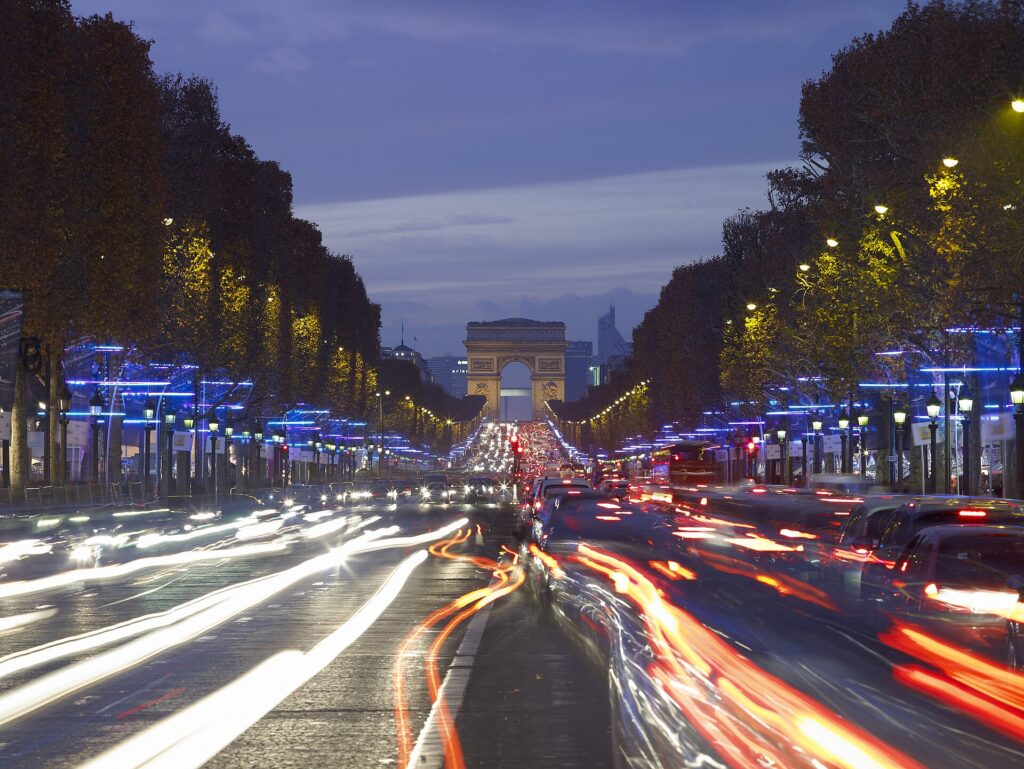
    The Champs-Élysées in December: festive and good value until the holiday fortnight (Photo: photo by Didier Boy de la Tour copyright ACT lighting design 20011 via Wikimedia Commons, CC BY 3.0)

    Events that move Paris flight and hotel prices

    Cross-check these against your dates before you book. Exact dates shift each year; the Paris tourist office keeps the current calendar.

    • Fashion Weeks: menswear and haute couture in January and late June to early July; women’s collections in late February to early March and late September to early October.
    • French school holidays: winter (mid-February to mid-March, by region), spring (April), summer (July and August), autumn (around 1 November) and Christmas.
    • International Agriculture Show (late February to early March) and the other big salons at the Porte de Versailles and Villepinte.
    • Easter and the May public holidays with their bridge weekends.
    • Roland-Garros (late May to early June).
    • Fête de la Musique (21 June) and, in odd-numbered years, the Paris Air Show in June.
    • Bastille Day (14 July) and the Tour de France finale (a Sunday in late July).
    • Journées du Patrimoine (third weekend of September).
    • PSG and Stade de France fixtures, the Six Nations and stadium concerts. Our Paris events page shows what is on sale for your dates.
    • Christmas to New Year, the most expensive fortnight of the winter.

    Getting in from the airports

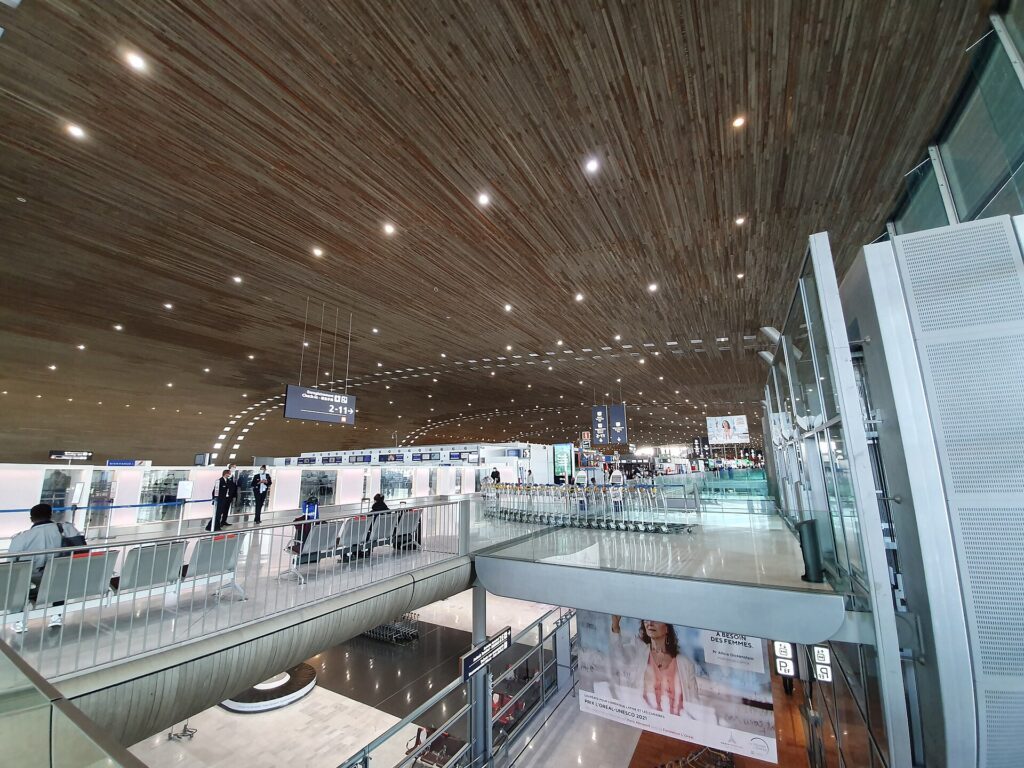
    Paris has two main airports, both run by Paris Aéroport. Charles de Gaulle (CDG), about 25 kilometres northeast of the centre, is Air France’s hub and one of the largest airports in Europe, with three terminals, Terminal 2 split into several halls, and an automated shuttle train, CDGVAL, linking them. Nonstop flights arrive from every major North American city and most of the world. The RER B train runs from the airport to Gare du Nord in about 35 minutes and continues through Châtelet, Saint-Michel and Denfert-Rochereau; the Roissybus goes to Opéra; and taxis charge a fixed fare to the Right Bank and a slightly higher fixed fare to the Left Bank. Terminal 2 also has a high-speed rail station with direct TGV services to Lyon, Bordeaux, Marseille, Brussels and beyond, which means you can connect straight from a long-haul flight to the regions without entering Paris. A dedicated express rail link from CDG to Gare de l’Est is under construction. Orly (ORY), about 14 kilometres south, handles many European, domestic and some long-haul flights, and since 2024 Métro line 14 has run directly from Orly into the heart of the city at Châtelet in around half an hour; fixed-fare taxis also serve Orly. Beauvais, about 85 kilometres north, is used by some low-cost airlines and connected to Porte Maillot by a coach that takes over an hour, so price that time in before booking the cheaper fare. Trips to and from the airports on public transport carry a separate airport fare; see our Paris car-versus-transport guide for how tickets work, and our CDG airport guide for the layout.

    A terminal at Paris Charles de Gaulle Airport
    Paris Charles de Gaulle (CDG), Air France's hub and the main long-haul gateway (Photo: Syced via Wikimedia Commons, CC0)

    Timing tricks that work for Paris

    • Search the whole month. Holidays, bridge weekends and Fashion Week create sharp edges in the fare calendar. A calendar search on TicketScanner shows them instantly.
    • Price the hotel before the flight. Trade fairs can make a quiet-looking week the most expensive of the season for rooms. Run a Paris hotel search for the same dates before you commit.
    • Compare CDG and Orly. Both are well connected now that line 14 reaches Orly, so include both in your search; avoid Beauvais unless the saving outweighs the coach.
    • Fly mid-week. Friday and Sunday departures are the priciest on most routes; Tuesday and Wednesday are usually the value.
    • Use August for the hotel, not the fare. If you are flexible, late August combines softening hotel rates with falling fares in the last week.
    • Consider an open-jaw ticket. Fly into Paris and home from London, Rome or Amsterdam to build a multi-city trip; our guide to travelling Europe multi-city explains how, and London is little more than two hours away by Eurostar.
    • Allow time at CDG. Terminal changes and security queues can be long in summer; our guide to how early to arrive covers what to allow.
    • Flying out of Paris instead? The same seasonality applies in reverse; see cheap flights from Paris.
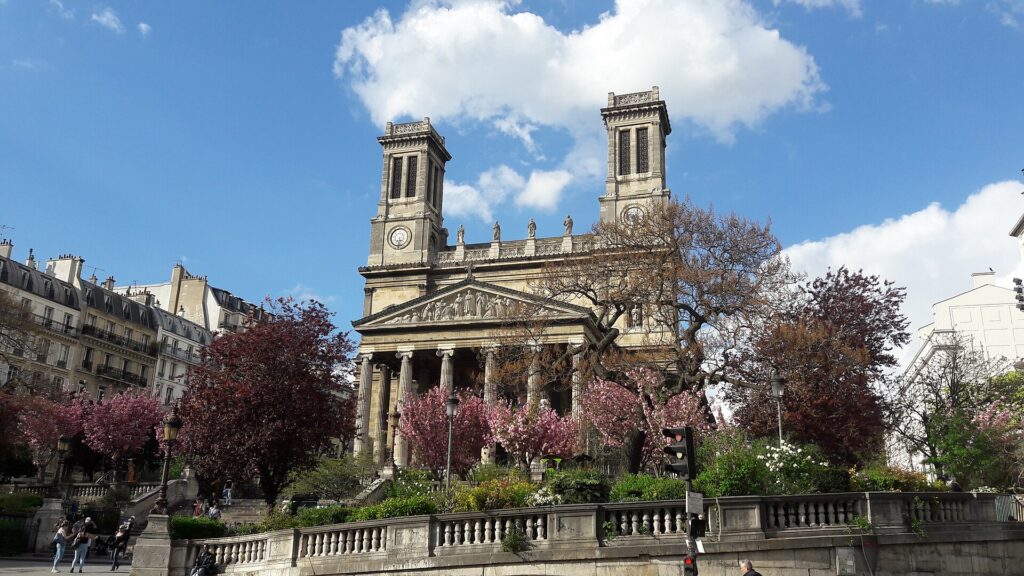
    Spring blossom in front of the church of Saint-Vincent-de-Paul in Paris
    Spring in Paris: blossom and showers, and some of the best value of the year outside Easter (Photo: Tomdesp via Wikimedia Commons, CC BY-SA 4.0)

    What to pack, by season

    Winter (December to February): a warm, water-resistant coat, a scarf, layers, and comfortable waterproof shoes for long days on wet cobblestones. Spring (March to May): layers, a light raincoat and a compact umbrella; a sunny April afternoon can turn to a cold shower in minutes. Summer (June to August): light, breathable clothing, sun protection, a refillable water bottle for the public fountains, and one smarter outfit for dinner; if you are visiting churches, something to cover your shoulders. Autumn (September to November): layers again, a warmer jacket by late October, and an umbrella. In every season, bring shoes you can walk ten or fifteen kilometres in; Paris is a walking city and the Métro has a lot of stairs.

    The best time to fly to Paris for…

    First-time sightseeing

    Late April to early June or September to mid-October, with timed tickets booked for the Louvre, the Eiffel Tower and Versailles.

    The lowest fares

    Early January to mid-March and November, outside the fashion weeks and school holidays. Pair a cheap fare with a museum-heavy itinerary.

    Summer events

    June for the Fête de la Musique and Roland-Garros, July for Bastille Day and the Tour de France finish, booked as early as possible.

    Christmas in Paris

    The first two weeks of December, for the lights and the markets without the holiday prices.

    Families

    Late June before the European school holidays begin, or late August, when hotels soften and the crowds thin in the last week.

    International visitors

    Canadian, American, British and most other visa-exempt travellers can spend up to 90 days in any 180 in the Schengen area without a visa. The EU’s Entry/Exit System now records non-EU travellers’ fingerprints and photo at the border, which can lengthen queues at CDG, and the ETIAS travel authorisation is due to follow; check the official EU travel page for what applies to you, and France-Visas if you need a visa.

    Frequently asked questions

    What is the cheapest month to fly to Paris?

    January and February, outside New Year, the school holidays and the fashion weeks, are consistently the lowest from North America, with November close behind.

    What is the best month to visit Paris for weather?

    May, June and September are the most reliable for warm, pleasant days. July and August are warmer but can bring heatwaves.

    Is August a good time to visit Paris?

    It can be. Hotels are often cheaper and the city is calm, but some small restaurants and shops close, flights stay expensive, and heat is a risk.

    Which airport is better, CDG or Orly?

    Both are well connected. CDG has more long-haul flights and the RER B; Orly is closer and now on Métro line 14. Choose on fare and flight times.

    How far ahead should I book flights to Paris?

    Earlier for summer, Christmas, Easter and the May holidays, when fares tend only to rise; for January to March and November, finding the right dates matters more than booking months ahead.

    Does it snow in Paris?

    Occasionally, for a day or two in some winters, but it rarely settles for long. Expect cold rain rather than snow.

    When is Paris least crowded?

    November and January to early March, when even the Louvre can feel calm on a weekday morning.

    Ready to pick your dates? Compare fares across the whole month on our Paris flights page, then find a room with our Paris hotel search. For what to do when you land, start with our first-timer’s guide to Paris.