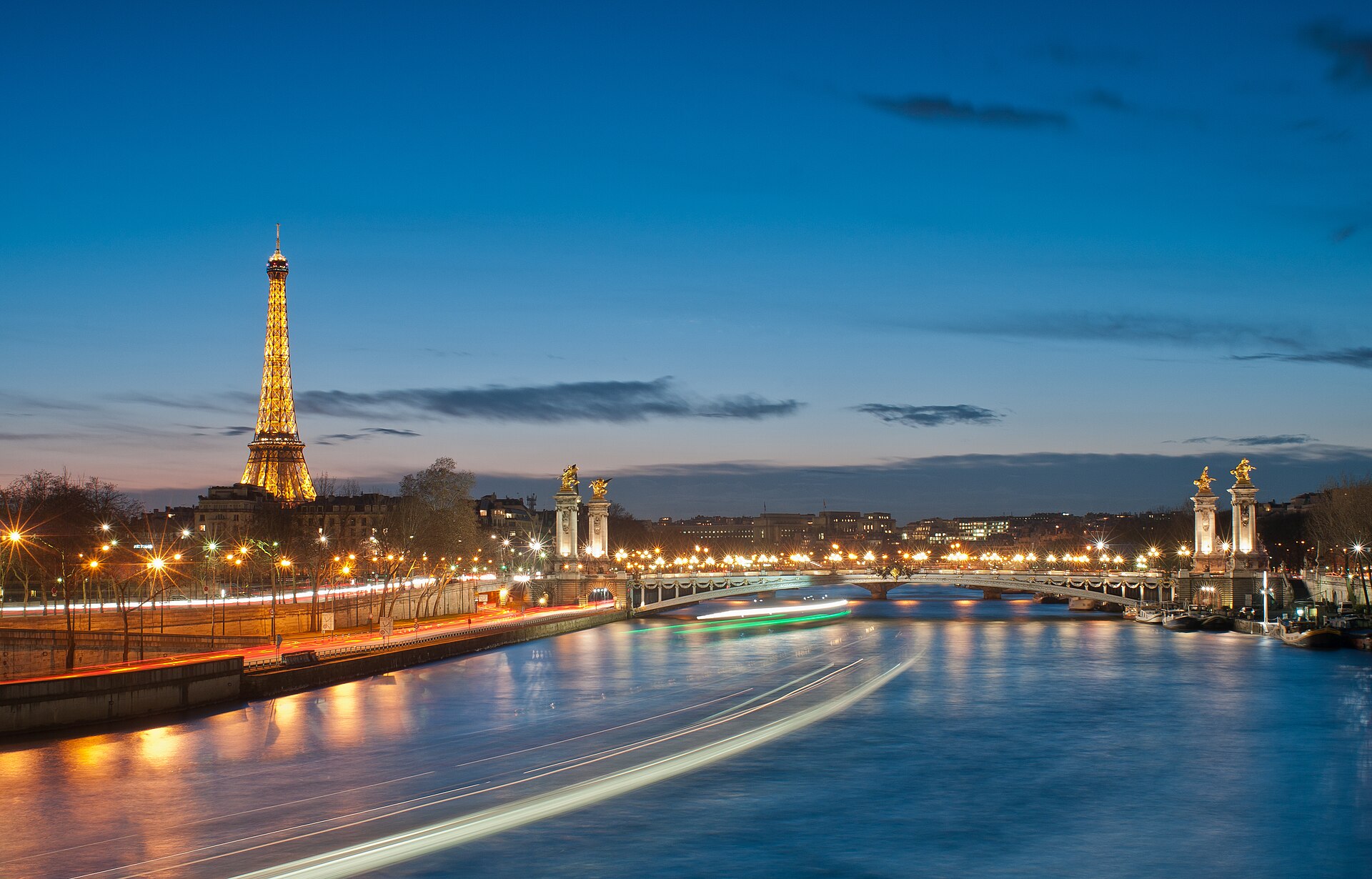
Paris is one of the most visited cities on earth in every month of the year, which means there is no truly empty season and no truly cheap one. What changes is the balance. Transatlantic demand peaks in summer, when North American families and students arrive in their millions; hotel prices, by contrast, are driven as much by the trade-fair and fashion calendars, which can fill every room in the city in the dead of winter; and the French school holidays and the string of May public holidays reshape demand on European routes. The weather is mild and changeable rather than extreme, though summer heatwaves are now a regular feature. The result is a city where the “best time” depends on whether you are optimising for the fare, the hotel, the weather or the crowds. This guide walks through the weather month by month, the fare seasons, the events that move prices, and how to handle the airports.
The short answer
For the best balance of weather, prices and crowds, go in late April to early June, avoiding the May bridge weekends if you can, or from early September to mid-October, when the summer crowds have gone, the city is back at work and the light is golden. The cheapest fares usually come from early January to mid-March, outside the February school holidays and Fashion Week, and in November and the first half of December. The most expensive stretches are June to August for flights from North America, Christmas and New Year, Easter, and the Fashion Weeks and big trade fairs, which push hotel rates to their annual highs without much warning to outsiders. August is a curious case: flights stay expensive, but hotels often soften as business travel stops and Parisians leave town. Whatever you choose, run a flexible-date search on our Paris flights page; a shift of a few days either side of a holiday weekend can change the fare band entirely.
Paris weather, season by season
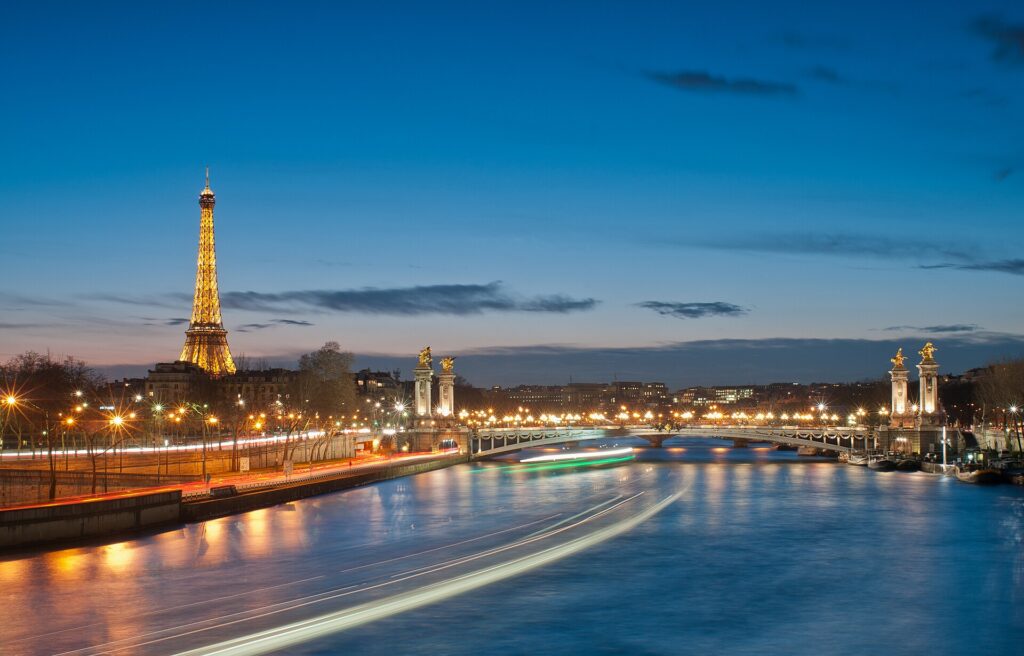
Paris has a temperate, oceanic climate: no dry season, no real wet season, rain spread across the year in frequent light showers rather than downpours, mild winters in which snow is rare and rarely settles, and warm summers with long evenings. The figures below are approximate seasonal patterns based on the long-term climate normals published by Météo-France for central Paris; check the current forecast before you pack, and watch for its heatwave warnings in summer.
| Month | Typical daytime high | Typical overnight low | What it feels like | Fare pressure |
|---|---|---|---|---|
| January | around 8 °C | around 3 °C | Grey, damp and short-dayed; frost some nights, snow rare | Low, except New Year and the fashion and trade-fair weeks |
| February | around 9 °C | around 3 °C | Similar, with the light returning; occasional bright cold spells | Low; rises for school holidays and the agriculture show |
| March | around 13 °C | around 6 °C | Changeable; the first mild days and the first café terraces | Low to moderate; Fashion Week at the start |
| April | around 16 °C | around 8 °C | Spring proper, blossom and showers in equal measure | Moderate; Easter spike |
| May | around 20 °C | around 11 °C | Often lovely; the gardens at their best | Moderate to high; public-holiday bridge weekends |
| June | around 23 °C | around 14 °C | Warm, long evenings light until about ten; thunderstorms possible | High |
| July | around 26 °C | around 16 °C | Warm to hot; heatwaves can push well above 35 °C | Peak |
| August | around 25 °C | around 16 °C | Warm and quiet; many Parisians leave; storms break the heat | High for flights, softer for hotels |
| September | around 21 °C | around 13 °C | Often settled and warm; the city returns to work | Moderate to high; Fashion Week at the end |
| October | around 16 °C | around 10 °C | Crisp, golden, then wetter; autumn colour in the parks | Moderate; trade fairs and the autumn holidays |
| November | around 11 °C | around 6 °C | Grey and damp; the quietest month | Low |
| December | around 8 °C | around 4 °C | Cold, damp and festive; the lights go up | Low until mid-month, then peak |
Three things the table cannot show. First, heatwaves: Paris set its all-time record above 40 °C in July 2019, and several recent summers have brought spells of 35 °C or more; many older hotels and apartments have no air conditioning, and the Métro can be stifling, so check whether your room is air-conditioned if you are travelling in July or August. Second, the rain: it falls on roughly one day in three across the year, but usually as drizzle or a passing shower, and it rarely spoils a whole day; an umbrella and a museum plan are enough. Third, the light: in June the sun sets after half past nine and the evenings seem endless, while in December it is dark before five, which changes how much you can fit into a day more than the temperature does.
How Paris fare seasons work
Three calendars drive demand into Paris. The first is leisure travel from outside Europe, which peaks in summer and around Christmas and Easter and sets the price of long-haul flights. The second is the French and European holiday calendar: the staggered school holidays in February, April, late October and at Christmas, and the public holidays in May, which move prices on flights and trains within Europe. The third is business and the trade fairs: Paris is one of the world’s great exhibition cities, and the Fashion Weeks and the big salons at the Porte de Versailles and Paris Nord Villepinte exhibition centres can push hotel rates to peak levels in otherwise quiet months. A cheap flight into a trade-fair week is not cheap once the hotel is added.
Peak season
June to August, plus roughly December 20 to January 2, and Easter. Transatlantic fares are at their highest from mid-June to mid-August, and July is the busiest month at the big sights, with long queues at the Eiffel Tower, the Louvre and Versailles even with timed tickets. Hotels are expensive in June and July but often soften in August, when business travel stops. If you must travel in peak, book early, book timed entry to everything, fly mid-week, and consider an air-conditioned room.
Shoulder season
April to May and September to October. Spring gives you blossom and long days before the summer crowds; the catch is Easter and the May bridge weekends, when Parisians and neighbouring Europeans travel and prices jump. Early autumn is the connoisseur’s choice, with settled weather, new exhibitions after the summer break and the restaurants back from holiday; the catch is Fashion Week at the turn of September and October and a heavy trade-fair calendar that can fill hotels mid-week.
Low season
Early January to mid-March and November to mid-December, outside the fashion and trade-fair weeks. Fares from North America are at their lowest, the museums are at their least crowded, the January sales are on, and hotel rates in quieter weeks can be half the summer level. The trade-off is grey, damp weather and short days. Watch the February school holidays and the International Agriculture Show at the turn of February and March.
As elsewhere, mid-week departures and overnight transatlantic flights on less popular days usually price below Friday and Sunday departures on the same route, and a search across a whole month reveals cheaper pairs of dates close to your first choice. Our guide to the best times to book explains how to read those patterns.
Paris month by month
January
Grey, cool and, after New Year, one of the cheapest months to fly. The winter sales, the soldes, start in the second week and run for a month, and the department stores on Boulevard Haussmann are at their busiest. The museums are quiet, the bistros are warm, and the Epiphany galette des rois fills every bakery window. Menswear and haute couture fashion weeks and the Maison & Objet design fair can push up hotel rates for a few days mid-month; outside those, this is the value window.
February
Similar weather with longer days, and low fares outside the French winter school holidays, which are staggered by region across roughly four weeks from mid-February. The Six Nations rugby brings match weekends at the Stade de France, and the International Agriculture Show at the Porte de Versailles, late February into early March, fills the hotels in the south of the city.
March
Changeable, occasionally mild, and still good value, apart from women’s Fashion Week in the first days of the month, when the smarter hotels are booked solid. The first café terraces come out on sunny afternoons and the city’s gardens start to turn green by the end of the month.
April
Spring arrives properly, with blossom in the parks and along the boulevards and plenty of showers. Easter and the French spring school holidays push fares and hotel rates up for two or three weeks, and the Paris Marathon on a Sunday in April closes central streets. Outside Easter, April is one of the best-value spring months.
May
Often the loveliest month, with warm days and the gardens at their peak, and one of the trickiest to book. May has several public holidays, the first and eighth of May, Ascension Thursday and often Whit Monday, and when they fall close to a weekend the French take a long “bridge” weekend and prices on European routes and in hotels jump. Roland-Garros begins in the last week of the month. Book early and aim for mid-week.
June
Long, warm and busy, with evenings that stay light until ten. The Fête de la Musique on 21 June fills the streets with free concerts, the end of Roland-Garros, the menswear shows and, in odd-numbered years, the Paris Air Show at Le Bourget lift hotel rates. Transatlantic fares climb steeply through the month as North American schools finish; early June is the value play.
July
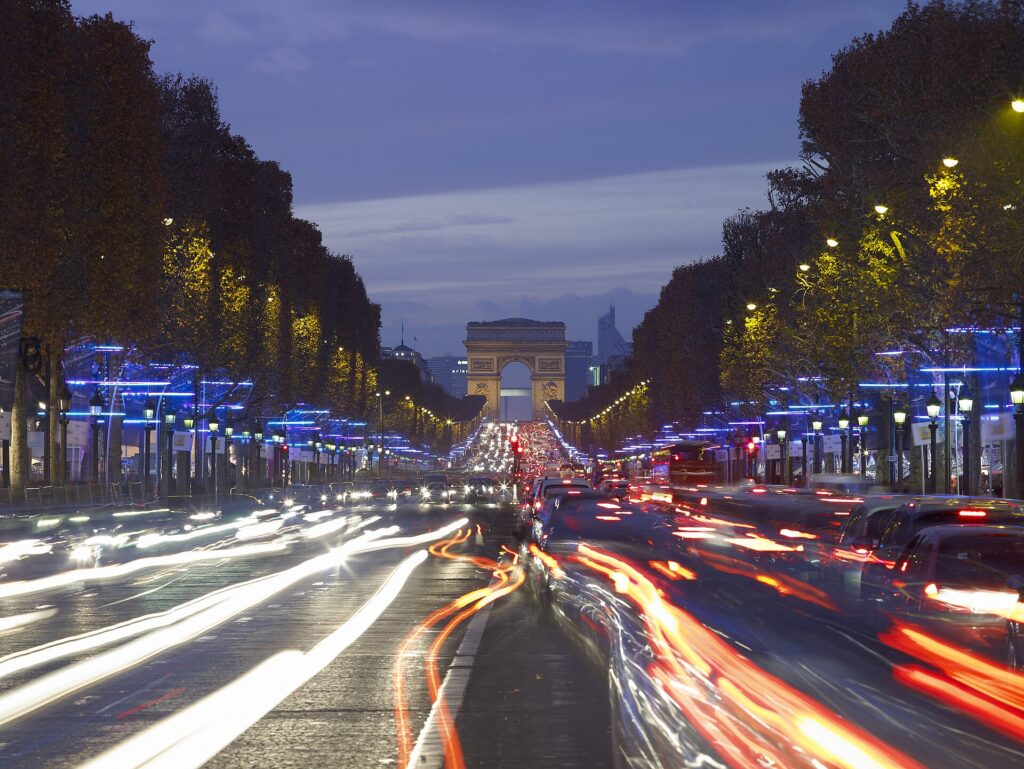
Peak season. Bastille Day on 14 July brings the military parade on the Champs-Élysées and fireworks at the Eiffel Tower, the Tour de France traditionally finishes on the Champs-Élysées on a Sunday late in the month, and Paris Plages turns the riverbanks into a beach from mid-July. Flights and the big sights are at their busiest, and a heatwave is always possible. Book everything early.
August
The month Paris empties of Parisians. Many small restaurants, bakeries and shops close for two or three weeks, usually around the 15 August holiday, while the museums and big sights stay open and crowded with visitors. Flights stay expensive until the last week, but hotel rates often dip as business travel disappears, which makes August better value for the room than for the fare.
September
The rentrée: the city comes back to work and school, the new exhibitions open, and the weather is often the most settled of the autumn. The Journées du Patrimoine on the third weekend open buildings closed the rest of the year. Fares fall after the first week, but women’s Fashion Week at the turn of the month and a busy trade-fair calendar can make mid-week hotels surprisingly expensive.
October
Crisp and golden early, wetter later, with autumn colour in the Luxembourg and the Tuileries. Fashion Week spills into the first days of the month, the Paris Motor Show fills the Porte de Versailles in even-numbered years, and the autumn school holidays, the two weeks around 1 November, lift family demand at the end of the month. Mid-October is a sweet spot.
November
Grey, damp and the quietest month of the year, with some of the lowest fares and hotel rates. The Beaujolais nouveau arrives on the third Thursday, the Christmas lights go up on the Champs-Élysées and the department stores unveil their windows late in the month, and the museums are wonderfully uncrowded.
December
Two months in one. The first half keeps November’s prices with the festive lights and the Christmas markets; from about 20 December, fares and hotel rates jump for Christmas and New Year, when Paris is one of the most popular city breaks in Europe. New Year’s Eve on the Champs-Élysées draws huge crowds.
Events that move Paris flight and hotel prices
Cross-check these against your dates before you book. Exact dates shift each year; the Paris tourist office keeps the current calendar.
- Fashion Weeks: menswear and haute couture in January and late June to early July; women’s collections in late February to early March and late September to early October.
- French school holidays: winter (mid-February to mid-March, by region), spring (April), summer (July and August), autumn (around 1 November) and Christmas.
- International Agriculture Show (late February to early March) and the other big salons at the Porte de Versailles and Villepinte.
- Easter and the May public holidays with their bridge weekends.
- Roland-Garros (late May to early June).
- Fête de la Musique (21 June) and, in odd-numbered years, the Paris Air Show in June.
- Bastille Day (14 July) and the Tour de France finale (a Sunday in late July).
- Journées du Patrimoine (third weekend of September).
- PSG and Stade de France fixtures, the Six Nations and stadium concerts. Our Paris events page shows what is on sale for your dates.
- Christmas to New Year, the most expensive fortnight of the winter.
Getting in from the airports
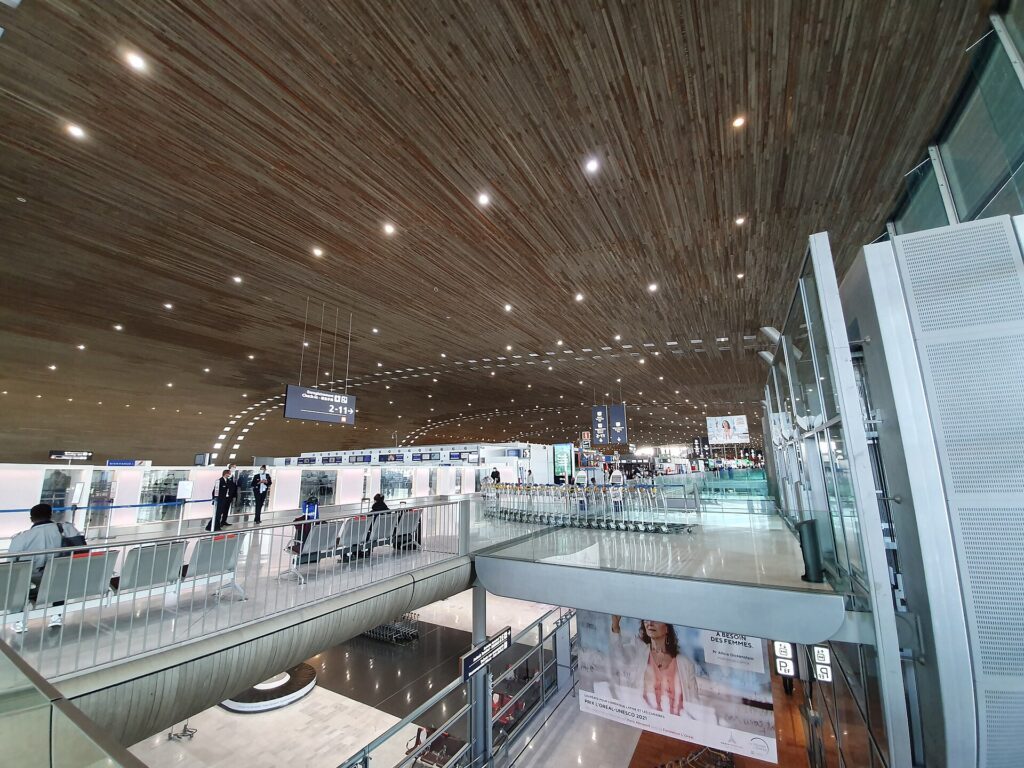
Paris has two main airports, both run by Paris Aéroport. Charles de Gaulle (CDG), about 25 kilometres northeast of the centre, is Air France’s hub and one of the largest airports in Europe, with three terminals, Terminal 2 split into several halls, and an automated shuttle train, CDGVAL, linking them. Nonstop flights arrive from every major North American city and most of the world. The RER B train runs from the airport to Gare du Nord in about 35 minutes and continues through Châtelet, Saint-Michel and Denfert-Rochereau; the Roissybus goes to Opéra; and taxis charge a fixed fare to the Right Bank and a slightly higher fixed fare to the Left Bank. Terminal 2 also has a high-speed rail station with direct TGV services to Lyon, Bordeaux, Marseille, Brussels and beyond, which means you can connect straight from a long-haul flight to the regions without entering Paris. A dedicated express rail link from CDG to Gare de l’Est is under construction. Orly (ORY), about 14 kilometres south, handles many European, domestic and some long-haul flights, and since 2024 Métro line 14 has run directly from Orly into the heart of the city at Châtelet in around half an hour; fixed-fare taxis also serve Orly. Beauvais, about 85 kilometres north, is used by some low-cost airlines and connected to Porte Maillot by a coach that takes over an hour, so price that time in before booking the cheaper fare. Trips to and from the airports on public transport carry a separate airport fare; see our Paris car-versus-transport guide for how tickets work, and our CDG airport guide for the layout.
Timing tricks that work for Paris
- Search the whole month. Holidays, bridge weekends and Fashion Week create sharp edges in the fare calendar. A calendar search on TicketScanner shows them instantly.
- Price the hotel before the flight. Trade fairs can make a quiet-looking week the most expensive of the season for rooms. Run a Paris hotel search for the same dates before you commit.
- Compare CDG and Orly. Both are well connected now that line 14 reaches Orly, so include both in your search; avoid Beauvais unless the saving outweighs the coach.
- Fly mid-week. Friday and Sunday departures are the priciest on most routes; Tuesday and Wednesday are usually the value.
- Use August for the hotel, not the fare. If you are flexible, late August combines softening hotel rates with falling fares in the last week.
- Consider an open-jaw ticket. Fly into Paris and home from London, Rome or Amsterdam to build a multi-city trip; our guide to travelling Europe multi-city explains how, and London is little more than two hours away by Eurostar.
- Allow time at CDG. Terminal changes and security queues can be long in summer; our guide to how early to arrive covers what to allow.
- Flying out of Paris instead? The same seasonality applies in reverse; see cheap flights from Paris.
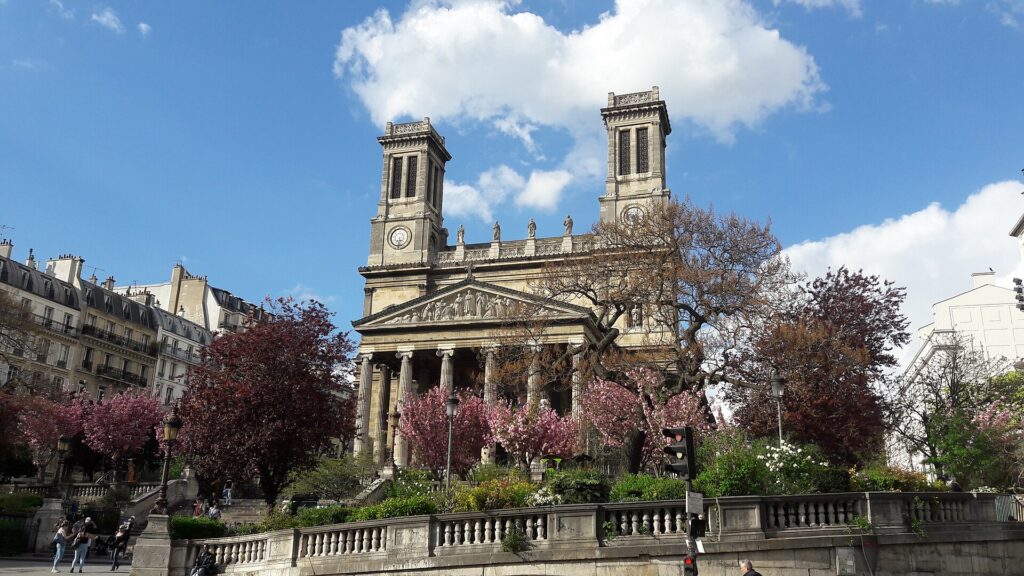
What to pack, by season
Winter (December to February): a warm, water-resistant coat, a scarf, layers, and comfortable waterproof shoes for long days on wet cobblestones. Spring (March to May): layers, a light raincoat and a compact umbrella; a sunny April afternoon can turn to a cold shower in minutes. Summer (June to August): light, breathable clothing, sun protection, a refillable water bottle for the public fountains, and one smarter outfit for dinner; if you are visiting churches, something to cover your shoulders. Autumn (September to November): layers again, a warmer jacket by late October, and an umbrella. In every season, bring shoes you can walk ten or fifteen kilometres in; Paris is a walking city and the Métro has a lot of stairs.
The best time to fly to Paris for…
First-time sightseeing
Late April to early June or September to mid-October, with timed tickets booked for the Louvre, the Eiffel Tower and Versailles.
The lowest fares
Early January to mid-March and November, outside the fashion weeks and school holidays. Pair a cheap fare with a museum-heavy itinerary.
Summer events
June for the Fête de la Musique and Roland-Garros, July for Bastille Day and the Tour de France finish, booked as early as possible.
Christmas in Paris
The first two weeks of December, for the lights and the markets without the holiday prices.
Families
Late June before the European school holidays begin, or late August, when hotels soften and the crowds thin in the last week.
International visitors
Canadian, American, British and most other visa-exempt travellers can spend up to 90 days in any 180 in the Schengen area without a visa. The EU’s Entry/Exit System now records non-EU travellers’ fingerprints and photo at the border, which can lengthen queues at CDG, and the ETIAS travel authorisation is due to follow; check the official EU travel page for what applies to you, and France-Visas if you need a visa.
Frequently asked questions
What is the cheapest month to fly to Paris?
January and February, outside New Year, the school holidays and the fashion weeks, are consistently the lowest from North America, with November close behind.
What is the best month to visit Paris for weather?
May, June and September are the most reliable for warm, pleasant days. July and August are warmer but can bring heatwaves.
Is August a good time to visit Paris?
It can be. Hotels are often cheaper and the city is calm, but some small restaurants and shops close, flights stay expensive, and heat is a risk.
Which airport is better, CDG or Orly?
Both are well connected. CDG has more long-haul flights and the RER B; Orly is closer and now on Métro line 14. Choose on fare and flight times.
How far ahead should I book flights to Paris?
Earlier for summer, Christmas, Easter and the May holidays, when fares tend only to rise; for January to March and November, finding the right dates matters more than booking months ahead.
Does it snow in Paris?
Occasionally, for a day or two in some winters, but it rarely settles for long. Expect cold rain rather than snow.
When is Paris least crowded?
November and January to early March, when even the Louvre can feel calm on a weekday morning.
Ready to pick your dates? Compare fares across the whole month on our Paris flights page, then find a room with our Paris hotel search. For what to do when you land, start with our first-timer’s guide to Paris.
Keep planning with TicketScanner
- Cheap flights to Paris — compare fares across the whole month
- Paris hotels — check for trade-fair weeks before you book
- Events in Paris — PSG, concerts, shows and sport on sale
- Things to do in Paris: a first-timer's guide
- Paris: rent a car or use public transport?
- Paris Charles de Gaulle (CDG) airport guide
- Where to stay: Le Marais
- Cheap flights from Paris
- Best times to book flights and hotels
- How to travel Europe multi-city
Leave a Reply