Category: General

  • Choosing England, Italy, and France for a Single, Unforgettable European Vacation

    Choosing England, Italy, and France for a Single, Unforgettable European Vacation

    England, France and Italy are the three countries most North Americans picture when they first imagine a trip to Europe, and for good reason. Between them they hold London’s museums and theaters, Paris’s boulevards and galleries, Rome’s ancient ruins, the Renaissance art of Florence, the canals of Venice, the vineyards of Bordeaux and Tuscany, and some of the most famous food in the world. The question most travelers face is not whether these countries are worth it, but how to handle them: pick one and go deep, pair two, or try to see all three in a single vacation. Each approach works, but only if the length of the trip, the route and the season match what you actually want from it. This guide explains what each country does best, how to choose between them, how to combine them without spending half your vacation in transit, and how to plan the flights, trains, rooms and paperwork so the trip runs smoothly.

    The short answer

    If you have a week or less, choose one country, or at most two cities that are connected by a fast train, such as London and Paris. If you have ten days to two weeks, combining two countries is comfortable and all three is possible if you limit yourself to one base in each: London, Paris and Rome. If you have three weeks, you can add a second base in Italy or France, such as Florence or Provence. Fly into one city and home from another so you never backtrack, take the Eurostar between London and Paris, and fly between Paris and Rome unless you have a full day to spend on the train. Remember that the UK and the EU have separate entry rules: most visitors from Canada and the United States need a UK electronic travel authorization before flying to Britain. Compare fares into London, Paris and Rome on our flight search to see which open-jaw combination is cheapest for your dates.
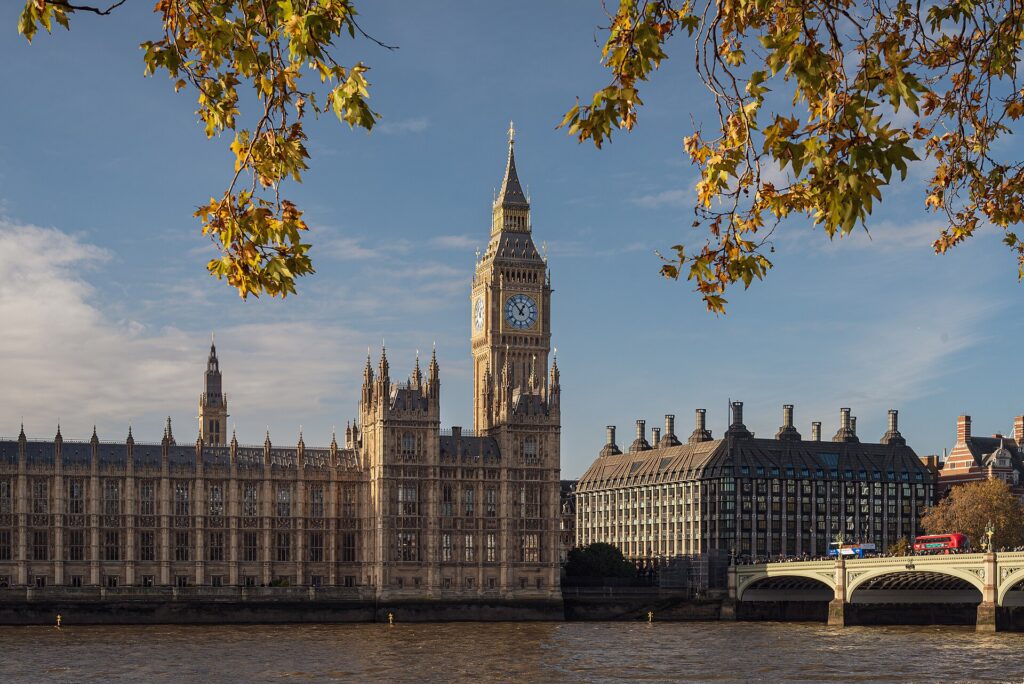
    The Palace of Westminster and Westminster Bridge on the River Thames in London
    The Palace of Westminster in London, the classic first stop on a trip that combines England, France and Italy (Photo: Julian Herzog (Website) via Wikimedia Commons, CC BY 4.0)

    How the three countries compare

    All three have world-class sights, so the real differences come down to pace, food, getting around and what kind of days you enjoy.

    FactorEnglandFranceItaly
    Best forMuseums, theater, royal history, countryside villagesArt, food and wine, elegant cities, varied regionsAncient history, Renaissance art, food, coast and hill towns
    Signature cityLondonParisRome
    LanguageEnglishFrench; English common in tourist areasItalian; English common in tourist areas
    CurrencyPound sterlingEuroEuro
    Getting aroundDense rail network; driving on the leftFast TGV network radiating from ParisFast trains on the main north-south line; slower regional routes
    PaceBrisk, organized, easy for first-timersRelaxed meals, busy capitalLively, sometimes chaotic, long lunches
    Best monthsMay to SeptemberApril to June, September to OctoberApril to June, September to October
    Entry for most North AmericansUK ETA required before travelSchengen area rulesSchengen area rules

    England: what it does best

    England is the easiest of the three for a first trip abroad. There is no language barrier, the public transport is well signposted, and London alone can fill a week without repeating itself.

    London

    The original version of this guide started in London, and that still makes sense. The essentials are Buckingham Palace and the Changing of the Guard, the British Museum, the Tower of London and the Crown Jewels, Westminster Abbey and the Houses of Parliament, and a walk along the South Bank from the London Eye to Tower Bridge. Many of the city’s major museums, including the British Museum, the National Gallery, the Natural History Museum and Tate Modern, have free general admission, which offsets London’s high hotel prices. The State Rooms at Buckingham Palace open to visitors only for part of the year, mainly in summer, so check before you plan around them. Evenings are for the West End theaters, historic pubs and the city’s enormous restaurant scene.

    Our guide to things to do in London goes neighborhood by neighborhood, the best time to fly to London explains when fares and crowds ease, and our guide to getting around London covers the Underground, contactless payment and airport transfers. Most transatlantic flights land at London Heathrow, which is connected to central London by the Underground and faster rail links.

    Beyond London

    England rewards a few days outside the capital. Bath has Roman baths and Georgian crescents; Oxford and Cambridge have their colleges; the Cotswolds are a string of honey-colored stone villages; York has a medieval wall and a great cathedral; and Stonehenge sits on Salisbury Plain, an easy day trip by tour or rental car. Trains from London reach Bath, Oxford, Cambridge and York comfortably in a day trip or an overnight. For the Cotswolds and the countryside, a car helps, but remember that Britain drives on the left and village roads are narrow.

    VisitBritain, the national tourism agency, has regional guides and itinerary ideas for England, Scotland and Wales.

    France: what it does best

    France combines the most famous city on the continent with a countryside that changes completely from region to region: châteaux on the Loire, D-Day beaches and Mont-Saint-Michel in Normandy, lavender fields in Provence, glamour on the Riviera, and wine country around Bordeaux and in Burgundy.

    Paris

    Paris is the obvious anchor. The original itinerary listed the Eiffel Tower, the Louvre and Notre-Dame Cathedral, and all three still belong on a first visit; Notre-Dame reopened to visitors after the long restoration that followed the 2019 fire. Add the Musée d’Orsay for Impressionist art, Sainte-Chapelle’s stained glass, Montmartre and Sacré-CÅ“ur, a walk through the Marais, and an evening along the Seine. Book timed tickets for the Louvre and the Eiffel Tower in advance, especially in summer; the Louvre’s official website is the place to reserve and to check opening days.

    Plan with our guides to things to do in Paris, the best time to fly to Paris and getting around Paris, which explains why the metro beats a car in the city. Compare Paris hotels, including central, walkable areas like Le Marais. Most long-haul flights arrive at Paris Charles de Gaulle, northeast of the city.

    Beyond Paris

    France’s high-speed TGV network makes it easy to add a region. The Loire Valley châteaux are close enough for a day trip or a night away; Normandy’s beaches and Mont-Saint-Michel work best as a two- or three-day loop; Lyon is France’s great food city; and Provence and the Riviera are a few hours south by fast train, where a rental car opens up the hill villages. Versailles, the royal palace just outside Paris, is reached by suburban train and deserves most of a day. France.fr, the official tourism site, covers every region, and train tickets can be booked through SNCF Connect, the national rail operator’s booking platform.
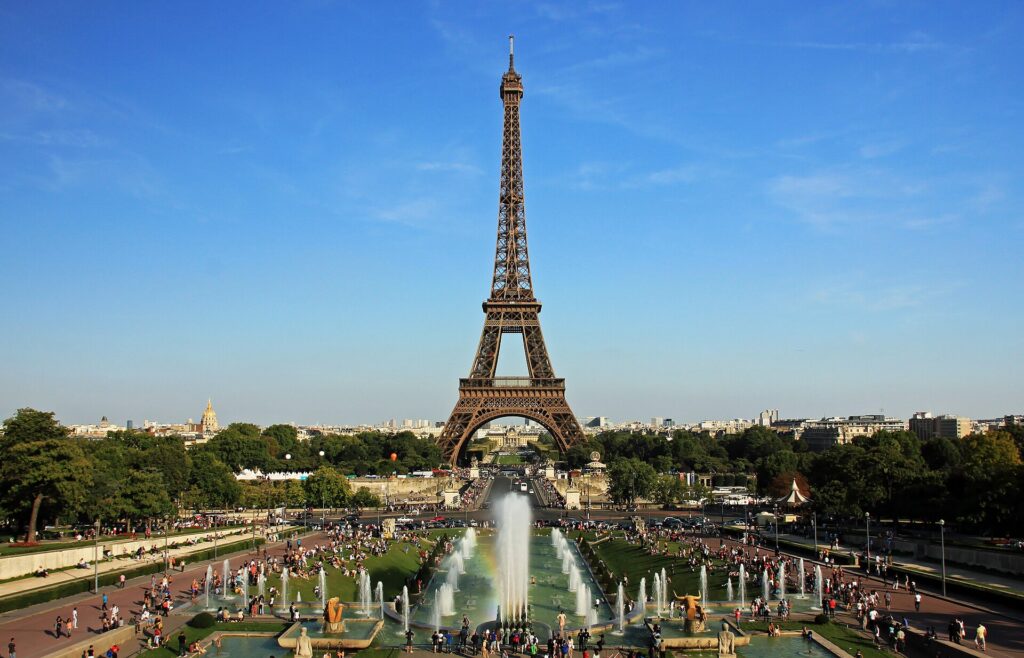
    The Eiffel Tower seen across the Trocadéro gardens in Paris
    The Eiffel Tower from the Trocadéro: book timed tickets ahead in busy months (Photo: NonOmnisMoriar via Wikimedia Commons, CC BY-SA 3.0)

    Italy: what it does best

    Italy packs more famous art and history into a small area than almost anywhere else, and it adds some of the best food on earth and a coastline that ranges from the Amalfi cliffs to the villages of the Cinque Terre.

    Rome

    Rome was the second stop in the original itinerary, and the essentials have not changed: the Colosseum, the Roman Forum and the Palatine Hill, the Pantheon, the Trevi Fountain, the Spanish Steps, and Vatican City, where the Vatican Museums lead to the Sistine Chapel and St. Peter’s Basilica. Reserve timed entry for the Colosseum and the Vatican Museums well ahead in busy months, since walk-up availability is limited. Churches, including St. Peter’s, expect covered shoulders and knees, so carry a light scarf or layer.

    Our guides to things to do in Rome, the best time to fly to Rome and getting around Rome cover the details, including the limited traffic zones that make driving in the historic center a bad idea. Compare Rome hotels, including neighborhoods such as Trastevere, and look at car rentals in Rome only for trips out into the countryside. Most transatlantic flights arrive at Rome Fiumicino, which has a direct train into the city.

    Beyond Rome

    Italy’s high-speed trains run the length of the main north-south line, which makes a classic route easy: Venice, Florence and Rome are each a couple of hours apart or less by fast train. Florence has the Uffizi Gallery, Michelangelo’s David and the cathedral dome; Venice has its canals, St. Mark’s Basilica and the islands of the lagoon; Tuscany’s hill towns, Siena and the Chianti vineyards are best explored by car. South of Rome, Naples is the gateway to Pompeii and the Amalfi Coast. Venice charges day-trippers an access fee on its busiest days, so check the city’s rules if you plan a day visit rather than an overnight stay. Italia.it, the official tourism portal, has regional itineraries, and Trenitalia, the national rail operator, sells tickets for the fast and regional trains.

    How to choose: match the country to the traveler

    First trip to Europe

    England, or England plus Paris. The shared language takes the stress out of the first days, and the Eurostar puts Paris a short train ride away. You get two great capitals with very different personalities and only one transfer.

    Food and wine lovers

    Italy or France, and ideally both. Italy wins on regional variety and casual eating: pizza in Naples, pasta in Rome, steak in Florence, risotto in the north. France wins on markets, bakeries, cheese and wine regions. If food is the point, spend less time in capitals and more in places like Bologna, Lyon, Tuscany or Burgundy.

    History and art

    Italy for the ancient world and the Renaissance, France for the great museums and royal palaces, England for medieval and royal history. Any of the three works, which is why so many history-minded travelers try to combine them.

    Couples and honeymooners

    Paris and the Italian coast or hill towns are the classic romantic pairing: a few days of museums and dinners in Paris, then slow days in Tuscany, on the Amalfi Coast or by one of the northern lakes. If you want warm water and no itinerary at all, our Cayman Islands honeymoon guide offers the opposite kind of trip.

    Travelers on a budget

    None of the three is cheap, but you can control the cost. Travel in the shoulder season, stay a few metro stops from the landmarks, use free museums in London and free-entry days at some state museums in Paris and Rome, and eat your main meal at lunch. Our guide to budget travel destinations explains how to make these expensive favorites more affordable, and our guide on how to save money for a trip helps you build the fund.

    Can you see all three in one vacation?

    Yes, and many travelers do. The trick is to limit the number of bases, not the number of days. Each move between hotels costs you roughly half a day once you count packing, checking out, getting to the station or airport, traveling and checking in. Three bases in two weeks is relaxed; five bases in ten days is a blur.

    Getting between the three

    LegBest optionWhy
    London to ParisEurostar trainCity center to city center in roughly two and a half hours, with no airport transfers
    Paris to RomeFlightAbout two hours in the air; the train takes most of a day with a change in northern Italy
    London to RomeFlightFrequent flights from several London airports
    Rome to FlorenceHigh-speed trainWell under two hours on the fastest services
    Florence to VeniceHigh-speed trainRoughly two hours
    Paris to the Loire, Lyon or ProvenceTGV trainFast, frequent and central

    The Eurostar runs from London St Pancras to Paris Gare du Nord through the Channel Tunnel. You go through UK and French border checks at the departure station before boarding, so arrive with time to spare. Book early for the best fares, since prices tend to rise as trains fill.
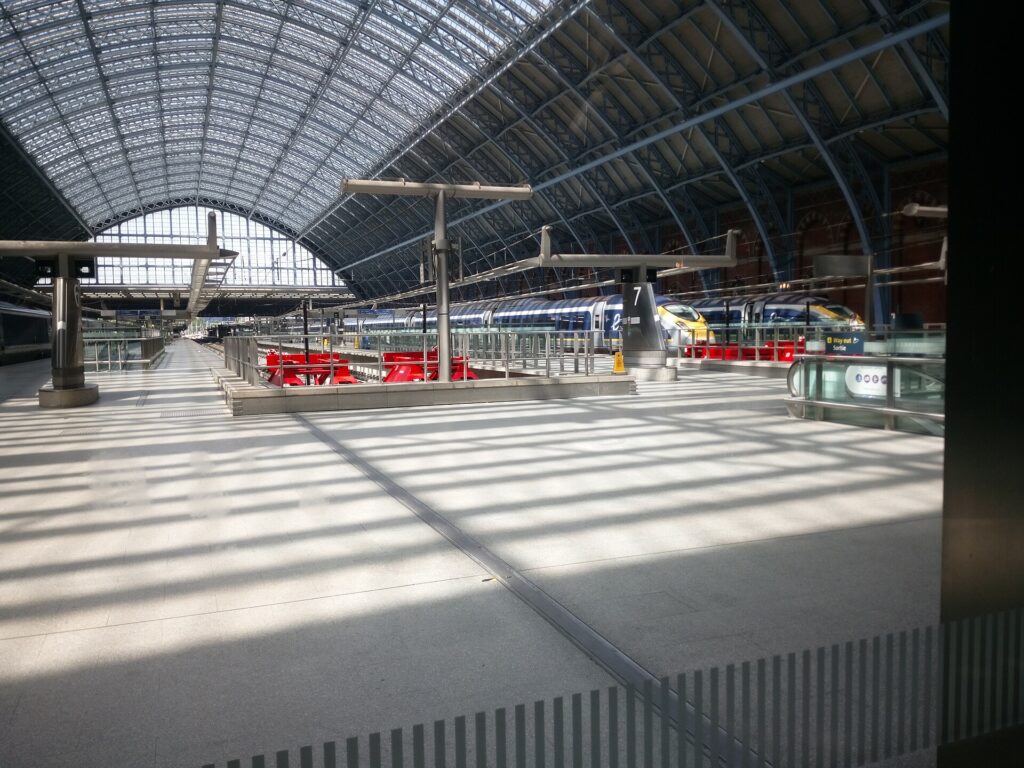
    Eurostar high-speed trains at the platforms of London St Pancras International station
    Eurostar trains at London St Pancras link England and France city center to city center (Photo: Someone Not Awful via Wikimedia Commons, CC BY-SA 4.0)

    Sample itineraries

    Ten days, all three countries. Fly into London and spend three nights, take the Eurostar to Paris for three nights, then fly to Rome for three nights and fly home from Rome. This is the original version of this itinerary, and it works if you accept that you will see the highlights of each city rather than the countryside.

    Two weeks, all three countries. London for four nights with a day trip to Bath, Oxford or Windsor; Paris for four nights with a day at Versailles; then Florence for two nights and Rome for three, flying home from Rome. The Paris to Florence leg is usually a flight, and Florence to Rome is a short train ride.

    Two weeks, two countries. Paris for four nights, then Provence or the Riviera for three by fast train, then fly to Rome for four nights and add two in Florence or on the Amalfi Coast. Dropping England buys you time outside the capitals.

    Three weeks, all three countries. London and a few nights in the English countryside, Paris and one French region, then Venice, Florence and Rome by train before flying home from Rome. At this length you can include slower days and still see all three at a comfortable pace.

    Our guide to traveling Europe on a multi-city itinerary covers how to sequence cities, when to take the train and when to fly, and how to handle luggage between stops.

    Booking the flights

    Fly open-jaw

    The single most useful decision for a multi-country trip is to book an open-jaw ticket, flying into one city and home from another, for example into London and home from Rome. It saves a day of backtracking and often costs little more than a round trip. Search both directions: London in and Rome out, and Rome in and London out, since fares and schedules can differ significantly. Your airline’s multi-city search, or ours, can price these combinations.

    Where to start

    From North America, London and Paris have the widest choice of nonstop flights, and Rome is well served from major hubs. If you are in Canada, compare fares from Toronto, from Montreal and from Vancouver; our international flight booking tips explain how to compare connections and baggage rules. For the short hops within Europe, check what is included, because the cheapest fares often exclude carry-on bags larger than a small personal item.

    Entry rules: the UK and the Schengen area are separate

    This is the part of the trip most likely to catch travelers out, because England and the other two countries follow different systems. Rules change, so treat this as a guide to the principles and confirm on the official pages before you book and again before you fly.

    • The United Kingdom requires an electronic travel authorization (ETA) for most visitors who do not need a visa, including travelers from Canada, the United States and most of Europe. Every traveler needs their own, including babies and children, and you may need one even if you are only passing through a UK airport and going through border control. Apply only through the UK government’s official ETA page, since look-alike websites charge extra fees. An ETA does not guarantee entry.
    • France and Italy are in the Schengen area, which has common rules for short stays. Visa-exempt visitors can generally stay up to 90 days in any 180-day period across all Schengen countries combined, and time in the UK does not count toward that limit because the UK is outside the Schengen area.
    • The EU is introducing new digital border systems. The Entry/Exit System registers non-EU travelers’ details at the external border, and a separate travel authorization for visa-exempt visitors, known as ETIAS, is scheduled to follow. Check the EU’s official ETIAS and EES site for the current status before you travel.
    • Check your passport’s validity. Schengen countries require a passport that remains valid for a period beyond your planned departure; the official pages set out the exact rule for your nationality.
    • Read your government’s travel advice. Canadians can check the Government of Canada’s advice for the United Kingdom and the matching pages for France and Italy.

    Money, customs and practical details

    • Two currencies: England uses the pound, France and Italy use the euro. Use a card without foreign transaction fees, and always choose to pay in the local currency when a card terminal offers to convert.
    • Contactless everywhere: London’s transport and most shops accept contactless cards and phones. Paris and Rome are increasingly card-friendly, but carry some euros for small cafés, markets and tips.
    • Tipping: service is often included or modest in all three; check the bill for a service charge, and treat rounding up as a courtesy rather than an obligation.
    • Tourist taxes: Paris, Rome and many other cities add a per-person, per-night tax to hotel bills, sometimes collected at check-in. Include it when you compare rooms.
    • Plugs: the UK uses a different plug from France and Italy, so pack a multi-country adapter.
    • Pickpockets: busy metro lines and crowded landmarks in all three capitals attract pickpockets. Keep phones and wallets zipped away; a money belt or an anti-theft backpack helps.

    Where to stay

    With a few nights in each city, location beats everything. Stay near a metro or Underground station on a line that serves your sights: Bloomsbury, the South Bank or King’s Cross (next to the Eurostar terminal) in London; the Marais, the Latin Quarter or Saint-Germain in Paris; the historic center, Trastevere or the area near Termini station in Rome. Compare total prices including taxes and check cancellation terms; our hotel booking tips go through it step by step.

    Car or no car?

    In London, Paris and Rome a car is a liability: congestion charges, camera-enforced traffic zones, costly parking and excellent transit all point the same way. Rent only for countryside stretches such as the Cotswolds, Provence or Tuscany, pick up at a station or airport on the edge of town, and check the rules and fees for one-way or cross-border rentals first. Our comparison of renting a car, public transport and taxis and our rental car booking tips cover the rest. Remember that Britain drives on the left.

    What to expect season by season

    Spring (April to June) is one of the best times for all three: long days, gardens in bloom and crowds that build toward summer, though Easter is very busy in Rome. Summer brings the biggest crowds and real heat in Paris and Rome, and some small Parisian businesses close in August. Fall is warm in Italy and the south of France in September, full of harvest food in October, and quiet and cheaper in November; our guide to the best places to visit in Europe in fall covers the season in detail. Winter, outside the Christmas and New Year holidays, has the lowest crowds and rates; days are short and damp, but museums, theater and December’s Christmas markets carry the trip. For a festive break closer to home, see our guide to the best cities for Christmas in the USA.

    Packing and preparation

    The three countries have different weather and customs, so pack layers rather than bulk: a light waterproof jacket for London, a smarter outfit for dinners in Paris, and a cover-up for churches in Rome. Comfortable walking shoes matter most, and a bag light enough to carry up station stairs saves a lot of grief; our guide to travel luggage helps. Save your passport details, ETA approval, insurance, bookings and train tickets offline on your phone.

    The Colosseum and the ruins of the Roman Forum in Rome
    The Colosseum and Roman Forum: reserve timed entry well ahead in spring and summer (Photo: Wilfredor via Wikimedia Commons, CC0)

    Common mistakes to avoid

    • Too many bases. Every hotel change costs half a day. One base per country is plenty on a ten-day trip.
    • Booking a round trip. Returning to your arrival city wastes time and money; book open-jaw.
    • Forgetting the UK ETA. Travelers who have been to France or Italy before are often surprised that Britain needs a separate authorization.
    • Not reserving major sights. The Colosseum, the Vatican Museums, the Louvre, the Eiffel Tower and the Last Supper in Milan all sell timed tickets that can run out in busy months.
    • Driving into historic centers. Italian limited traffic zones in particular are camera-enforced, and fines can arrive months later.
    • Arriving at the airport late. European airports can be crowded in summer; our guide to airport arrival times for international flights explains how much time to allow.

    Frequently asked questions

    Is ten days enough for England, France and Italy?

    It is enough to see the highlights of London, Paris and Rome with three nights in each, but not much else. If you want countryside, day trips or a second Italian city, allow two weeks or drop one country.

    Which country should I visit if I can only choose one?

    Choose England for an easy first trip, museums and theater; France for art, food and variety; Italy for history, food and scenery. If you are still undecided, look at which city you most want to see and build around that country.

    What is the best order to visit them?

    London, then Paris, then Rome is the most efficient, because the Eurostar links the first two and a flight covers the long leg to Rome. You can reverse it just as easily. Choose the order that gives you the cheapest open-jaw flight.

    Do I need a visa for England, France and Italy?

    Canadian and US citizens do not need a visa for short tourist stays in these countries, but most visitors do need a UK electronic travel authorization before flying to Britain, and the EU is introducing its own digital entry systems. Check the official UK and EU pages for your nationality before you book.

    Is it better to take the train or fly within Europe?

    Take the train when the journey is under about four or five hours, since stations are central and there is less security hassle. Fly longer legs such as Paris to Rome or London to Rome.

    When is the cheapest time to visit all three?

    Late fall and winter, outside the holidays, usually bring the lowest hotel rates and fares. Late spring and early fall offer a better balance of price, weather and crowds.

    Ready to plan your trip? Compare open-jaw fares into London, Paris and Rome on our flight search, then line up rooms on our hotel search. For more ways to make a big trip affordable, start with our guide to budget travel destinations.

  • Why You Need to Take Time Out from Work and Book a Vacation with Family

    Why You Need to Take Time Out from Work and Book a Vacation with Family

    Most working parents know the feeling. The calendar fills with meetings, school runs, practices and deadlines, the weekends disappear into errands, and months go by in which the family is in the same house but rarely in the same moment. A family vacation is one of the few things that reliably breaks that pattern. It is not a reward you earn after the work is done, because the work is never done. It is a deliberate decision to step out of the routine, spend unhurried time with the people you are working for in the first place, and come back with a clearer head. This guide makes the case for taking that time, and then gets practical: how to actually get the days off, how to plan a trip that fits your children’s ages and your budget, how to book flights, hotels and cars without the stress eating the benefit, and how to return to work without undoing it all in the first week.

    The short answer

    A family vacation matters for work-life balance because it gives you something ordinary weeks cannot: long stretches of shared, unscheduled time, a real break from work, and new experiences your children will remember. To get the benefit, plan it early so the time off is protected, choose a trip that suits the youngest traveler rather than the most ambitious one, keep the pace slow, and genuinely disconnect from work for most of it. Book the flight first with flexible dates, then a hotel or rental with space for everyone, and a car only if the destination needs one. Start with a date-flexible search on our flight search, and use the rest of this guide to shape the trip around it.

    Why family time away is different from family time at home

    You can love your family and still spend very little real time with them. At home, time together tends to be fragmented: dinner between activities, a movie while someone answers email, a weekend morning that turns into chores. A vacation removes the obligations that crowd out attention. Nobody has to leave for work, there is no homework to supervise, and the day’s only agenda is the one you set together.

    That shift changes how families talk. Children and teenagers often open up in the in-between moments: a long drive, a walk back from the beach, waiting for a table. Those moments are rare in a scheduled week and common on a trip. Parents notice things about their children they had missed, siblings who bicker at home find themselves teaming up to explore a new place, and shared experiences become family stories that get retold for years. “Remember the time we got lost looking for that waterfall” is worth more than another quiet weekend at home.

    Rest that actually restores

    Many people find that a change of scenery helps them rest in a way a weekend at home does not. At home, the laptop is on the kitchen table and the to-do list is on the fridge. Away, the reminders are gone. A few days of sleeping in, walking more, eating at a slower pace and not thinking about work lets most people come back feeling noticeably better. You do not need a scientific study to recognize that; you need to notice how you feel on the last day of a good trip compared with the Friday before it.

    Learning your children cannot get in a classroom

    Travel teaches children in ways that stick. Seeing a place they read about, hearing a different language at a market, tasting food they would never have ordered at home, working out a subway map, or counting coins in a foreign currency builds curiosity and confidence. It does not have to be international: a national park, a big city, a historic town or a coastline a few hours away offers plenty of new things. What matters is that children see the world is bigger and more varied than their daily routine.

    Better work, not just less work

    Taking time off is sometimes framed as a cost to your career. In practice, many people return from a real break more focused, more patient and better at the parts of their job that need judgment and creativity. Stepping back also shows you which of your tasks were truly urgent and which only felt that way. And modeling healthy boundaries matters: children who watch a parent protect family time learn that work is important but not everything.

    How to actually get the time off

    The biggest obstacle to a family vacation is rarely money. It is the feeling that there is never a good time to leave work. There will not be one, so you have to make one.

    • Know your entitlement. Vacation rules vary widely. In the United States, federal law does not require employers to provide paid vacation; as the U.S. Department of Labor explains, it is a matter of agreement between employer and employee, so your company’s policy is what counts. In Canada, provinces and territories set minimum vacation entitlements for most workers, and federally regulated employers follow the federal labor code. Read your policy, check how much time you have, and find out whether unused days carry over or expire.
    • Pick the dates early and put them in writing. Request time off months ahead, before other people claim the popular weeks, and put it on the shared calendar as soon as it is approved. A trip booked in advance is much harder to cancel for a meeting.
    • Plan around school calendars. School breaks are when most families can travel and when prices are highest. If your children are young enough that a few missed days will not matter, or your school allows it, traveling just before or after a holiday week can save a lot of money and crowds.
    • Hand off, do not just leave. Two weeks before you go, list your open projects, decide who covers each, and brief them. Set an out-of-office message that names a contact for urgent issues. The better the handoff, the less likely you are to be pulled back in.
    • Decide your disconnection rules before you leave. Some people need total silence; others feel calmer with a fifteen-minute email check every other morning. Pick a rule, tell your manager and your family, and stick to it. Remove work apps from your phone for the week if you cannot trust yourself.
    • Protect the day after you return. If you can, come home on a Friday or Saturday and keep the first workday light. Landing on a Sunday night and walking into a full Monday is how a vacation gets erased in one day.

    Choosing the right kind of trip for your family

    The best family vacation is the one that works for everyone, which usually means the one that works for the youngest and least patient traveler. A trip that is wonderful for adults and exhausting for a toddler is not restful for anyone.

    Children’s agesWhat tends to workWhat to watch
    Babies (under 1)One base, short flights or drives, a room or rental with a separate sleeping spaceNap and feeding schedules; bring or rent the gear you need
    Toddlers (1 to 3)Beaches, lakes, gentle nature, a pool, a place with easy foodLong travel days and crowded sightseeing; build in downtime every afternoon
    Young children (4 to 7)Theme parks, zoos, aquariums, easy hikes, beach resortsOvertired afternoons; one big activity a day is plenty
    Older children (8 to 12)City trips, national parks, road trips, first international tripsLet them help plan; they engage more when they chose part of it
    TeenagersAdventure trips, big cities, cultural trips, active holidaysGive them some independence and a say; allow some Wi-Fi time

    Beach and resort trips

    For pure rest, it is hard to beat a beach. Children dig and swim for hours, parents actually sit down, and there is little to organize. Places like the Bahamas and Hawaii are classic choices for exactly this reason; the official Bahamas tourism site is a good starting point for comparing islands. Closer to home for many North American families, Cancun offers direct flights from many cities and a long strip of beach hotels in the Hotel Zone, and San Diego combines beaches with a famous zoo, a big city park in Balboa Park and mild weather much of the year. If rest is the whole point, our guide to relaxing vacations for doing absolutely nothing has more ideas.

    Theme parks

    Theme parks are a rite of passage for many families, and Orlando is the obvious name. They are also the trips most likely to become exhausting. Plan fewer park days than you think you want, schedule a pool day between them, go early in the morning when lines are short and the heat is lower, and base yourself somewhere with easy access, such as International Drive. Compare flights to Orlando across a whole month, since school-holiday weeks price very differently from the weeks around them.

    Adventure and nature trips

    For active families with school-age children and teenagers, adventure trips create the strongest memories. Costa Rica, with rainforests, volcanoes, wildlife and zip lines, is a favorite; Visit Costa Rica lists regions and activities. New Zealand is a longer and more expensive trip but offers hiking, glaciers and beaches in a compact country. Closer to home, national and state parks offer the same sense of adventure for far less money; our guide to America’s most unique state parks is a good place to look, and Calgary is the gateway to Banff and the Rockies.

    City and cultural trips

    Cities work well once children are old enough to walk all day and curious enough to care. Rome and Tokyo blend ancient history with modern life and are both extraordinary with older children; Italy’s official tourism site and the Japan National Tourism Organization are the places to start. In North America, Washington, DC has free museums that children love, Quebec City feels European without the long flight, and New York is endlessly interesting to a ten-year-old. The trick with city trips is pacing: alternate a museum morning with a park afternoon.

    Budgeting without stress

    Money worries can undo the benefits of a vacation before it starts. A clear budget turns a vague anxiety into a plan.

    • Start early. Booking ahead gives you more choice of flights and rooms, and for peak family weeks, the best-value options disappear first. Our guide to the best time to book flights and hotels goes into timing in detail.
    • Set a total, then split it. Decide what the whole trip can cost, then allocate it: flights, lodging, car or transfers, food, activities, and a buffer of ten to fifteen percent for the things you forgot. Families usually underestimate food and activities.
    • Compare prices across dates, not just sites. Moving a trip by a few days, or flying on a Tuesday instead of a Saturday, often matters more than which site you book on. A fare calendar shows this at a glance.
    • Price the whole trip, not the headline. A cheaper flight with a long layover and bag fees for four can cost more than a direct fare. A hotel that includes breakfast and parking can beat a cheaper one that charges for both.
    • Save on purpose. A dedicated savings account with an automatic transfer each payday turns the trip into a goal the whole family can watch grow. Our guide on how to save money for a trip has a step-by-step plan.
    • Consider the shoulder season. The weeks just before and after the peak often have good weather, lower prices and far fewer crowds. Our list of budget travel destinations is organized with this in mind.

    Booking the trip, step by step

    1. Flights first

    For most trips, the flight is the biggest single cost and the least flexible piece, so settle it first. Search with flexible dates, compare nonstop and one-stop options, and weigh the real cost of connections with small children; a nonstop that costs a little more is often worth it. Check each airline’s rules on seat selection, because families are not always seated together on the cheapest fares, and pay to choose seats if needed. Our guide to reading flight details explains what to check before you pay.

    2. A place with room for everyone

    Space is the difference between a restful trip and a cramped one. Look at family rooms, suites with a separate bedroom, or apartment-style hotels with a kitchenette so the children can sleep while the adults stay up. A pool, free breakfast and a location near the things you plan to do are all worth paying for with children. Family weeks book up early; our guide on the best time to book hotels for family vacations covers timing and room types, and you can compare options on our hotel search.

    3. A car only if you need one

    In walkable cities with good transit, a car is often a burden. For beach towns, theme parks, national parks and road trips, it is usually essential. If you rent, reserve child seats ahead or bring your own, choose a vehicle with room for luggage as well as people, and read the insurance terms before you reach the counter. Our guide to the best car rental options for family vacations covers vehicle choice and seats, and our rental car booking tips cover the fine print. Compare rates on our car rental search.

    4. Documents and rules

    Children need their own passports for international flights. In the United States, applications for children under 16 are made in person, generally with both parents or guardians present, as the State Department’s child passport page explains. In Canada, the Government of Canada’s travelling with children page covers passports and custody documents, and it strongly recommends a consent letter when a child travels abroad with only one parent or with another adult. Processing times change, so apply well before you book nonrefundable travel and confirm current requirements before you fly.

    A WestJet Boeing 737 parked at a gate at Calgary International Airport
    Travel day: settle the flight first, with flexible dates, then build the rest of the trip around it (Photo: Milan Suvajac via Wikimedia Commons, CC BY-SA 4.0)

    Packing for children without overpacking

    Families tend to pack for every possible scenario and then haul it all through the airport. Pack for the trip you are taking, and remember that most destinations have stores.

    • Give each child their own small bag. A child who rolls their own suitcase is more invested in the trip and less likely to leave things behind. Our guide to kids’ suitcases covers sizes, wheels and airline rules.
    • Pack the flight bag separately. Snacks, a change of clothes, wipes, medications, chargers and entertainment belong in the bag at your feet, not in the overhead bin.
    • Bring screen-free entertainment. Books, sticker books and activity books fill hours without battery anxiety. Our list of the best traveling books for kids is sorted by age.
    • Plan feeding for babies. Formula, breast milk and baby food are allowed through security in larger quantities than other liquids, and a portable warmer makes feeds on the go far easier; our travel bottle warmer guide covers the options and the safety rules.
    • Know the security rules. The TSA’s traveling with children page explains strollers, car seats and screening for children in the United States; rules change, so check before you go.
    • Consider a car seat on the plane. The FAA does not require child restraints on commercial flights but strongly recommends an approved seat or device for young children, which requires buying the child a seat.

    Keeping the pace slow once you arrive

    The most common family-vacation mistake is trying to see everything. Children do not need an itinerary packed from breakfast to bedtime, and neither do you. A simple rule works for most families: one main activity a day, a long lunch, downtime in the afternoon, and something easy in the evening.

    • Keep sleep roughly on schedule. A tired child makes for a hard day for everyone. Adjust to a new time zone gradually and protect naps for little ones.
    • Stay in one place longer. Moving hotels every two nights eats hours in packing and checking in. Two bases on a week-long trip is plenty; one is often better.
    • Let everyone choose something. Give each family member one pick for the trip. It spreads ownership and cuts down on complaints.
    • Build in unplanned time. Some of the best vacation memories come from the afternoon with nothing scheduled.
    • Put the phones away at meals. Including yours. The point was to be together.

    Mistakes that undo the benefit

    • Working through it. Checking email “just for a minute” several times a day keeps your mind at the office. Set rules and keep them.
    • Overscheduling. A trip that feels like a series of appointments is not a break.
    • Choosing a trip for the adults. Long drives between sights and hours in museums are hard on young children, and that makes them hard on you.
    • Booking too late for peak weeks. Family rooms, nonstop flights and minivans run out first during school holidays.
    • Skipping the buffer. A tight connection, a late check-out fee or a surprise resort charge is far less stressful when the budget has room for it.
    • Going straight back to work. A day at home to unpack, do laundry and reset makes the return much easier.
    A mother and two young children playing at the water's edge on a beach in Punta Cana
    The small moments at the water's edge are often what children remember most (Photo: Ed Yourdon via Wikimedia Commons, CC BY-SA 2.0)

    Smaller breaks count too

    Not every year allows a week away, and work-life balance is not only about the big trip. A long weekend at a lake, a city two hours’ drive away, or a night in a hotel with a pool can give a family a real reset. Short trips are easier to plan, cheaper, and less disruptive at work, and many families find that two or three small breaks spread across the year do as much for their well-being as one large one. The same rules apply: protect the time, disconnect from work, and keep the plans simple. Our Toronto guide and Chicago guide are good starting points for a city weekend.

    Coming home well

    The last part of a vacation is the return. Try to land with a buffer day before work, and do a short “re-entry” the evening before your first day back: skim your inbox for anything urgent, write a list of priorities for the week, and resist answering everything at once. At home, keep one small habit from the trip alive, whether it is a family walk after dinner, a weekly game night, or phones off at the table. And while the memories are fresh, talk about where you might go next. Having the next trip on the horizon is one of the easiest ways to keep the benefit going.

    Frequently asked questions

    How long should a family vacation be?

    Long enough to actually relax. For many families that is five to seven nights, because the first day or two are spent unwinding and the last is spent thinking about home. That said, a well-planned long weekend is far better than no break at all.

    What is the best age to start traveling with children?

    There is no wrong age. Babies are surprisingly portable, and the planning gets easier as children grow. What changes is the kind of trip that works; the age table above is a guide.

    How can I afford a family vacation on a tight budget?

    Travel in the shoulder season, drive rather than fly for closer destinations, choose lodging with a kitchen, set a firm budget with a buffer, and save for it automatically each month. Flexible dates are the single biggest lever on flight prices.

    How do I stop thinking about work on vacation?

    Hand off properly before you go, set a clear out-of-office message, agree on a limited check-in rule if you need one, and remove work apps from your phone for the week. The first two days are the hardest; it gets easier.

    Is it okay to take children out of school for a vacation?

    Policies vary by school and district, and some schools discourage it. Talk to the teacher in advance, ask about work to take along, and weigh the savings against what they will miss.

    Should we rent a car on a family vacation?

    Rent for beach towns, theme parks, national parks and road trips. Skip it for walkable cities with good public transit, where parking is expensive and a car mostly sits in a garage.

    What documents do children need to fly?

    For international trips, every child needs a passport. For domestic flights, rules for minors differ by country and airline. A consent letter is recommended when a child travels abroad without both parents. Confirm current requirements with the official government pages before you fly.

    The time will never feel perfect, so choose it. Compare dates across the month on our flight search, find a room with space for everyone on our hotel search, and if the trip needs wheels, price a family-sized vehicle on our car rental search. Then put it on the calendar and protect it.

  • Travel to Japan: The Ultimate Guide to Exploring the Land of the Rising Sun

    Travel to Japan: The Ultimate Guide to Exploring the Land of the Rising Sun

    Japan is one of those rare destinations that lives up to its reputation. You can spend the morning among the neon and crowds of Tokyo, ride a bullet train that leaves on the minute, and spend the evening in a quiet wooden inn in Kyoto with a garden outside your room. The food is extraordinary at every level, from convenience-store rice balls to counter-seat sushi; the cities are clean, safe and easy to navigate; and the landscapes run from the snowfields of Hokkaido to the beaches of Okinawa. For a first-time visitor, the challenge is not finding things to do, but making sense of the practical side: entry rules, when to go, how to get around, whether a rail pass is worth it, and how to fit Tokyo, Kyoto and everything else into a trip of reasonable length. This guide walks through all of it, from booking the flight to bowing at the temple gate.

    The short answer

    For a first trip, plan on ten days to two weeks and build it around Tokyo, Kyoto and Osaka, with side trips to Nara, Hiroshima and Miyajima, or the Mount Fuji area. The best seasons are spring (late March to May) and fall (October to November); avoid the rainy season in June and early July and the national holiday weeks if you can. Fly into Tokyo and out of Osaka, or the reverse, to save a day of backtracking. Get a rechargeable IC transit card for city travel, and price your train journeys before buying a Japan Rail Pass, since it no longer pays off for every itinerary. Check the official entry rules for your passport before you book, and compare fares from your home airport on our flight search.

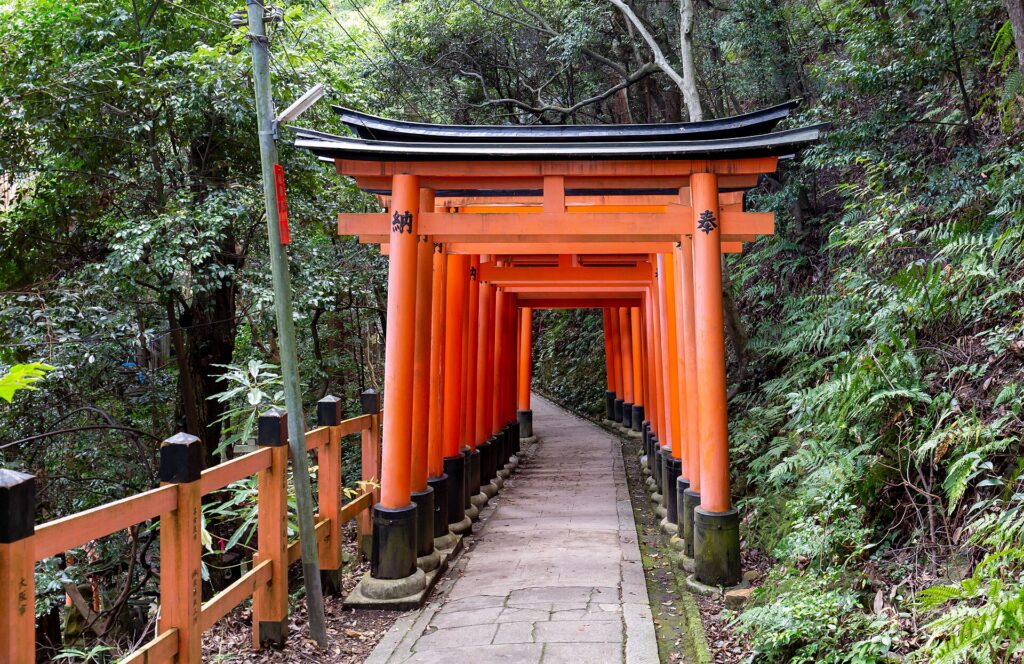
    A tunnel of vermilion torii gates at Fushimi Inari Shrine in Kyoto
    The torii gates of Fushimi Inari Shrine in Kyoto are at their most peaceful early in the morning (Photo: Balon Greyjoy via Wikimedia Commons, CC0)

    Before you book: entry rules and paperwork

    Entry rules depend on your nationality and change from time to time, so treat this section as a guide to the principles and confirm on the official pages before you travel.

    • Visa exemption for short stays. Citizens of many countries, including Canada and the United States, can visit Japan for short tourist stays without a visa, provided they do not engage in paid work. The permitted length of stay depends on your nationality. Check the Ministry of Foreign Affairs of Japan’s visa exemption page for your passport, and remember that the officer at the border decides on entry.
    • Arrival formalities online. Japan’s Visit Japan Web service lets you complete immigration and customs information before you land, which usually speeds up arrival. It is an official government service; avoid third-party sites that charge for it.
    • Medications. Japan controls the import of medicines closely. Travelers can generally bring a limited personal supply of prescription medicine, but larger quantities need advance import confirmation, and some medications that are legal at home, including certain stimulants and strong painkillers, are restricted or prohibited. Read the Ministry of Health, Labour and Welfare’s guidance on bringing medicines into Japan well before you fly, and talk to your doctor or pharmacist if anything you take might be affected.
    • Government travel advice. Canadians can read the Government of Canada’s travel advice for Japan, which also covers earthquakes, typhoons and emergency preparedness. US citizens should check the State Department’s country page.
    • Insurance. Japanese hospitals are excellent, but visitors pay for care. Buy travel insurance with medical coverage before you leave.

    When to go: Japan season by season

    Japan stretches a long way from north to south, and the seasons shape everything from crowds and prices to what you will see.

    SeasonWhat to expectHighlightsWatch out for
    Spring (March to May)Mild, mostly dry, very popularCherry blossoms, usually late March to early April in Tokyo and KyotoPeak demand during blossom season and Golden Week (late April to early May)
    Early summer (June to mid-July)Rainy season across much of the countryLush gardens, hydrangeas, fewer visitorsFrequent rain and humidity; Hokkaido is the main escape
    Summer (mid-July to August)Hot and humid in the citiesFestivals and fireworks, mountain hiking, HokkaidoHeat, and heavy domestic travel around Obon in mid-August
    Early fall (September)Still warmFewer crowds after the summer holidaysPeak of typhoon season, which can disrupt flights and ferries
    Fall (October to November)Crisp, clear and comfortableAutumn leaves, usually peaking in Kyoto from mid to late NovemberKyoto is very busy on peak foliage weekends
    Winter (December to February)Cold and dry in Tokyo and Kyoto, snowy in the northSkiing in Hokkaido and the Japan Alps, snow festivals, winter illuminationsBusinesses close and transport is busy around New Year

    Cherry blossom season

    The blossom front moves from south to north: it typically arrives in Okinawa in winter, in Tokyo and Kyoto around late March to early April, and in Hokkaido weeks later. The exact timing shifts each year with the weather, and peak bloom lasts only about a week in any one place, so build some flexibility into your dates. The Japan National Tourism Organization publishes a cherry blossom forecast as the season approaches. Book rooms early for this period, especially in Kyoto. Classic viewing spots include Ueno Park and the Meguro River in Tokyo, and the Philosopher’s Path and Maruyama Park in Kyoto.

    Autumn leaves

    Fall color also moves across the country, starting in the mountains of Hokkaido in late September and reaching Tokyo and Kyoto in November. Temple gardens in Kyoto, the lakes around Mount Fuji and the mountains of Nikko are classic viewing areas. If you are weighing an autumn trip to Japan against one to Europe, our guide to the best places to visit in Europe in fall covers the other side of the decision.

    Holiday weeks to avoid

    Three periods are especially busy with domestic travel: Golden Week, a cluster of national holidays from late April to early May; Obon in mid-August; and the New Year period at the start of January. Trains, flights and hotels fill up and prices rise. If your dates are flexible, work around them.

    Getting there

    Tokyo has two major airports: Haneda, which is close to the city center, and Narita, which is farther out but connected by fast trains. For Kyoto and Osaka, Kansai International Airport is the main international gateway. There are nonstop flights to Tokyo from several North American gateways, including Vancouver and Toronto and major US West Coast hubs such as Seattle, San Francisco and Los Angeles. Compare fares from Vancouver, from Toronto, from Seattle, from San Francisco and from Los Angeles; from other cities, one connection is usually needed.

    • Book an open-jaw ticket. Flying into Tokyo and home from Osaka’s Kansai airport, or the reverse, saves the time and cost of returning to your arrival city.
    • Search a whole month. Transpacific fares vary a lot by day and season; flexible dates can make a real difference, and our guide to planning a trip with TicketScanner shows how to read a fare calendar. Our guide to the best time to book cheap flights and hotels covers booking windows, and our international flight booking tips cover connections and baggage.
    • Plan for the long flight. It is a long day in the air from anywhere in North America. Our guide to what to wear on a flight helps with comfort, and choosing an arrival in the afternoon or evening makes it easier to adjust to the time difference.

    Budgeting for Japan

    Japan is often assumed to be very expensive, but many travelers find it more affordable on the ground than they expected. Exchange rates move, so check the current rate as you plan, and think about where the money actually goes.

    • Accommodation is usually the largest cost. Japan’s business hotels offer small, spotless rooms with everything you need at reasonable rates, and they are often near train stations. Ryokan (traditional inns) cost more but often include an elaborate dinner and breakfast, so they are worth one or two nights.
    • Food can be remarkably good value. Convenience stores sell fresh, high-quality meals; set lunches at restaurants are much cheaper than dinner; and noodle shops, food courts in department store basements and standing sushi bars are excellent and inexpensive.
    • Transport is efficient but adds up, especially long Shinkansen journeys. Plan your route first, then decide between individual tickets and a pass.
    • Sights are often inexpensive. Many shrines and parks are free, and temple entry fees are usually modest. Some of the best views in Tokyo come from free observation decks, such as the one at the Tokyo Metropolitan Government Building.

    Our guide on how to save money for a trip shows how to turn a target budget into a savings plan, and our pillar guide to budget travel destinations explains how to weigh the flight against daily costs.

    Getting around Japan

    IC cards for city travel

    Rechargeable IC cards such as Suica and PASMO work on trains, subways and buses in Tokyo and on most urban networks across the country, and they can also pay for purchases at convenience stores and vending machines. On many phones you can add one to your digital wallet. Tap in and tap out, and top up at station machines.

    The Shinkansen

    Japan’s bullet trains are fast, frequent and punctual. Tokyo to Kyoto takes a little over two hours on the fastest services, and Kyoto to Hiroshima is a similar distance. Reserve seats in busy periods. If you are carrying a large suitcase on the Tokaido, Sanyo or Kyushu Shinkansen lines, you need to reserve a seat that comes with an oversized baggage area; check the size limits before you travel.

    Is the Japan Rail Pass worth it?

    The nationwide Japan Rail Pass gives unlimited travel on most JR trains for 7, 14 or 21 consecutive days. It was repriced substantially in recent years, and for many first-time itineraries, such as Tokyo, Kyoto and Osaka with a day trip or two, individual tickets now cost less. It still makes sense for travelers covering long distances in a short time, for example Tokyo to Hiroshima and back with stops along the way, or a trip that includes Hokkaido or Kyushu. The fastest trains on some lines require a supplement with the pass. Add up the cost of your planned journeys and compare it with the pass price on the official Japan Rail Pass website. Regional passes covering areas such as Kansai or eastern Japan can be better value for more focused trips.

    Send your luggage ahead

    Japan’s luggage delivery services (takkyubin) can send your suitcase from one hotel to the next, usually arriving the following day. Pack a small overnight bag, send the big case ahead, and ride the trains unencumbered. Ask at your hotel’s front desk.

    Do you need a car?

    Not for the cities. Public transport is excellent and parking is expensive and scarce. A car can make sense in rural Hokkaido, Okinawa or the countryside. You will need an International Driving Permit issued in your home country, and Japan drives on the left. Our comparison of renting a car, public transport and taxis can help you decide.

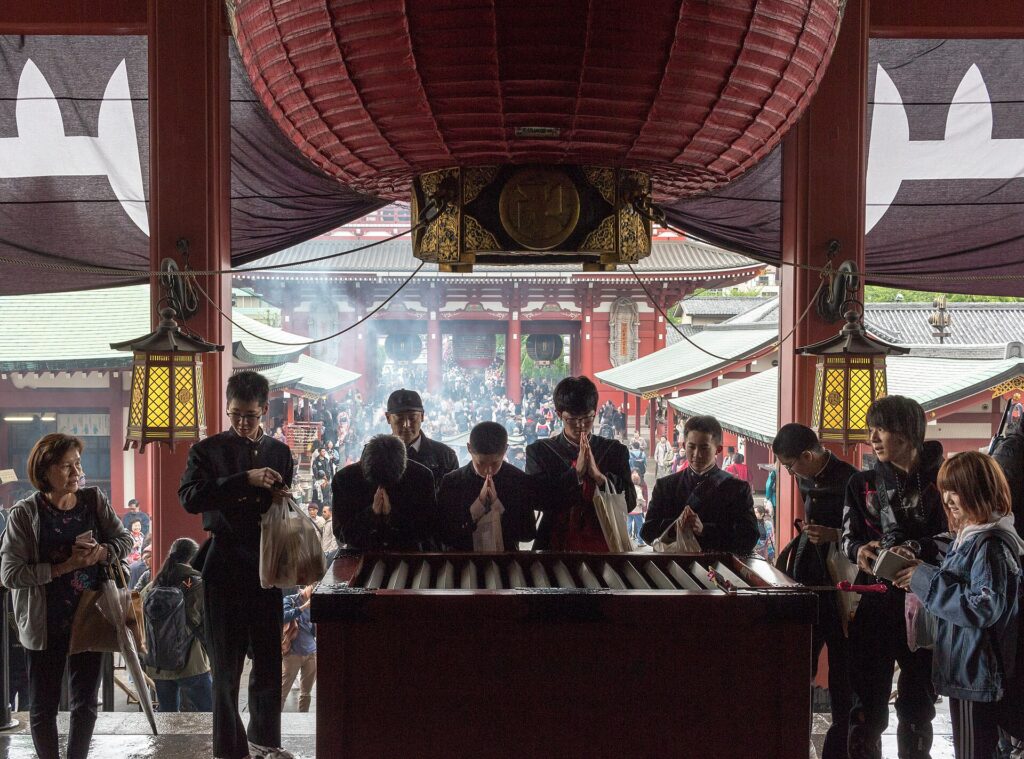
    The main hall and pagoda of Senso-ji temple in Asakusa, Tokyo
    Senso-ji in Asakusa, Tokyo's oldest temple and a classic first stop in the city (Photo: . Ray in Manila via Wikimedia Commons, CC BY 2.0)

    Where to go

    Tokyo

    Tokyo is not one city center but many. Visit Asakusa for Senso-ji, the city’s oldest temple, and its market street; Shibuya for the famous scramble crossing; Shinjuku for skyscrapers, nightlife and the gardens of Shinjuku Gyoen; Harajuku for youth fashion and the forested Meiji Shrine next door; and Ueno for its park and major museums. The original version of this guide recommended the Tsukiji Fish Market: the wholesale market and its auctions moved to Toyosu in 2018, but the Tsukiji Outer Market still has stalls and small restaurants that are ideal for a seafood breakfast. For a view, go up Tokyo Tower, Tokyo Skytree or the free decks of the Metropolitan Government Building. Good bases for a first visit include Shinjuku, Shibuya, Ginza and the area around Tokyo Station for fast Shinkansen access.

    Kyoto

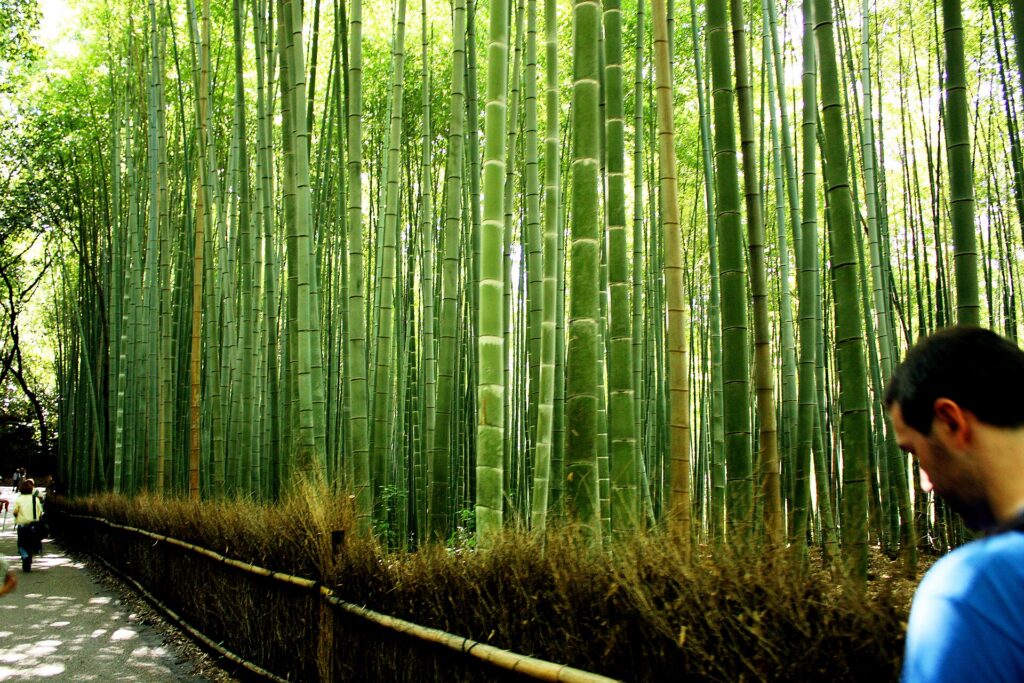
    The imperial capital for more than a thousand years, Kyoto is the heart of traditional Japan, with an enormous number of temples and shrines. Walk through the thousands of vermilion torii gates at Fushimi Inari Shrine, ideally early in the morning; explore the historic Gion district, where you may see geiko and maiko on their way to appointments; see Kinkaku-ji, the Golden Pavilion, and the wooden terrace of Kiyomizu-dera; and spend a morning in Arashiyama’s bamboo grove before the crowds arrive. Stay downtown near Kawaramachi or Gion for evenings, or near Kyoto Station for convenience. Please respect the rules in Gion: some private lanes are off limits, and photographing geiko and maiko without permission is not acceptable.

    Tall bamboo stalks lining a path in the Arashiyama bamboo grove in Kyoto
    Kyoto's Arashiyama bamboo grove: arrive early to enjoy it before the crowds (Photo: Andrea Schaffer from Sydney, Australia via Wikimedia Commons, CC BY 2.0)

    Osaka

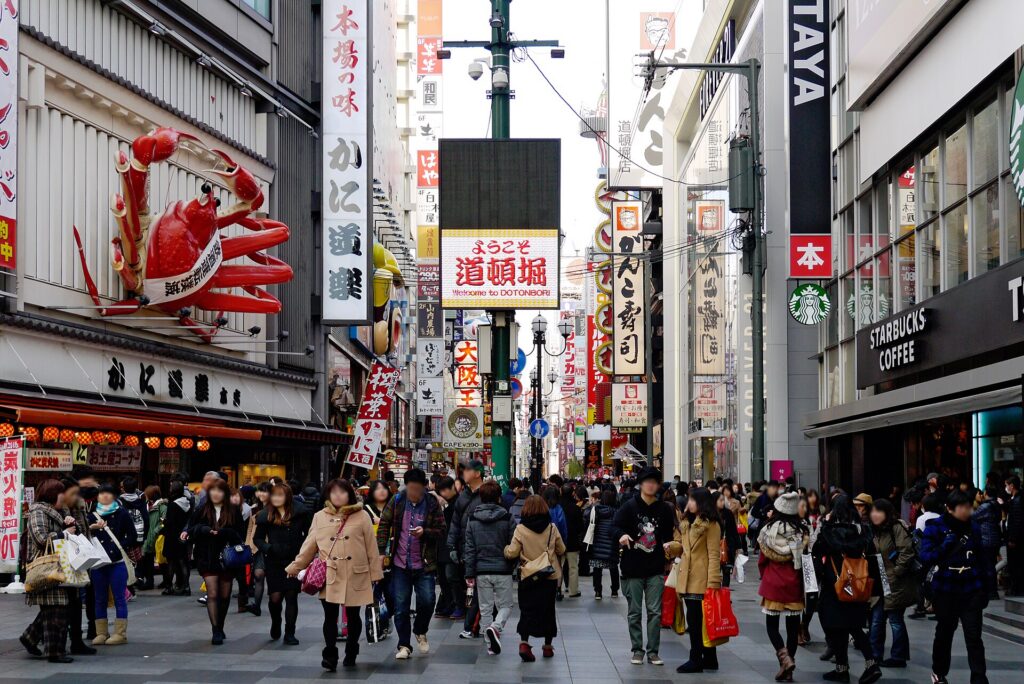
    Known as “the nation’s kitchen”, Osaka is where you eat. Head to Dotonbori at night for neon, crowds and street food such as takoyaki (octopus dumplings) and okonomiyaki (savory pancakes). Osaka Castle and the Kuromon Market are worth a visit, and Universal Studios Japan is popular with families. Osaka is under half an hour from Kyoto by fast train, so many travelers stay in one and day-trip to the other.

    Nara

    An easy day trip from Kyoto or Osaka, Nara has Todai-ji, whose great hall houses a giant bronze Buddha, and a park full of free-roaming deer that bow for crackers. Follow the posted rules about feeding them.

    Hiroshima and Miyajima

    Hiroshima’s Peace Memorial Park is a moving place to reflect on the atomic bombing of 1945, and the Atomic Bomb Dome within it is a UNESCO World Heritage Site. Allow a few hours for the Hiroshima Peace Memorial Museum. Nearby, the island of Miyajima is famous for the great torii gate of Itsukushima Shrine, which appears to float at high tide. Hiroshima is reachable by Shinkansen from Osaka or Kyoto, and many travelers stay overnight to see Miyajima in the quieter evening.

    Hakone and the Mount Fuji area

    Hot springs, lake cruises and, on clear days, views of Mount Fuji make Hakone and the Fuji Five Lakes region popular escapes from Tokyo. Fuji is often hidden by cloud, particularly in summer; your chances of a clear view are generally better in the colder months and early in the day. A night at a ryokan with its own onsen is one of the great Japanese experiences.

    Hokkaido

    Japan’s northern island is perfect for nature lovers: famous powder snow for skiing and snowboarding in winter, the Sapporo Snow Festival in February, and flower fields, national parks and cooler weather in summer. It is best reached by a domestic flight to Sapporo.

    More ideas for a second trip

    Kanazawa has one of Japan’s most celebrated gardens and well-preserved samurai and geisha districts; Takayama and the thatched villages of Shirakawa-go are beautiful in any season; Okinawa offers subtropical beaches and a distinct culture; and Kyushu has volcanoes, hot spring towns and excellent food.

    Sample itineraries

    Seven days: three nights in Tokyo, then the Shinkansen to Kyoto for three nights, with a day trip to Nara or Osaka, and fly home from Kansai. Fast-paced but rewarding.

    Ten days: four nights in Tokyo with a day trip to Hakone or Nikko, four nights in Kyoto, including a day in Nara, then one night in Hiroshima for Miyajima and one in Osaka before flying home from Kansai.

    Two weeks: add a night at a ryokan in Hakone between Tokyo and Kyoto, two nights in Kanazawa or Takayama, and a slower pace in Kyoto. With two weeks, a nationwide rail pass may start to pay off, so do the math.

    Experiences worth planning around

    Sumo

    Japan’s national sport is best seen at one of the six grand tournaments held each year: three in Tokyo, in January, May and September, and one each in Osaka, Nagoya and Fukuoka. Tickets sell quickly, so buy them through official channels as soon as sales open. Schedules are on the Japan Sumo Association’s website. Outside tournament times, some sumo stables allow visitors to watch morning practice through organized tours.

    Tea ceremony

    A traditional tea ceremony, often available in Kyoto and in some Tokyo hotels and cultural centers, is a calm, precise ritual that tells you a great deal about Japanese aesthetics. Many include a short explanation in English.

    Onsen

    Soaking in a natural hot spring is a highlight for many visitors. Learn the etiquette first: wash thoroughly at the shower stations before entering, keep towels out of the water, and bathe without swimsuits in gender-separated baths. Many public baths restrict tattoos, although some welcome them or offer private baths that can be booked. If rest is the whole point of your trip, our list of relaxing vacations for doing absolutely nothing has more ideas.

    Food

    Japanese food is far more than sushi and ramen. Try yakitori, tempura, tonkatsu, udon and soba, kaiseki (a seasonal multi-course meal), regional specialties such as Hiroshima-style okonomiyaki, and the endless variety of the convenience stores and department store food halls. Many small restaurants have picture menus or ticket machines, which makes ordering easy.

    Neon signs and crowds along the Dotonbori canal in Osaka
    Dotonbori in Osaka, the place to go at night for street food and neon (Photo: Oilstreet via Wikimedia Commons, CC BY 2.5)

    Etiquette and practical tips

    • Cash still matters. Cards and phone payments are widely accepted in cities, but smaller restaurants, temples and rural businesses may be cash only. Convenience store ATMs generally accept foreign cards.
    • No tipping. Tipping is not part of the culture and can cause confusion. Excellent service is the norm.
    • Quiet on trains. Keep your voice down, put your phone on silent, and avoid phone calls on board.
    • Carry your trash. Public trash cans are rare. Keep a small bag for rubbish and dispose of it at your hotel or at convenience store bins.
    • Shoes off. Remove your shoes at homes, ryokan, some restaurants and parts of temples. Wear socks without holes.
    • Stay connected. An eSIM or a pocket Wi-Fi router makes navigation and translation apps easy to use.
    • Plugs. Japan uses two-pin plugs like those in North America, at a lower voltage. Most phone and laptop chargers handle it, but check hair dryers and other high-power devices.
    • Tax-free shopping. Many stores offer tax-free purchases to foreign visitors who show their passport. Ask before you pay.

    Packing tips

    The original version of this guide had a good basic list, and it still applies: comfortable walking shoes, since you will walk a lot and take your shoes off often, so slip-ons help; a lightweight jacket or sweater for air-conditioned trains and cool evenings; a reusable water bottle; travel adapters if you are coming from outside North America; and a small backpack for day trips. Add a small towel or handkerchief, since many public restrooms have no paper towels; a coin purse, because you will collect a lot of coins; and a compact umbrella in the rainy season. Pack light: Japanese hotel rooms are small, and stations have long corridors and stairs. Our guide to travel luggage can help you choose a bag that suits train travel.

    Common mistakes to avoid

    • Trying to see too much. Three bases in ten days is comfortable; five is exhausting. Leave time to wander.
    • Buying a rail pass by default. Price your journeys first.
    • Arriving in Kyoto late in the morning. The famous sights are far more pleasant before the tour groups arrive, so start early.
    • Ignoring holiday periods. Golden Week, Obon and New Year bring crowded trains and higher prices.
    • Not checking your medications. Read the official guidance well before departure.
    • Over-planning restaurants. Some of the best meals are found by walking into a busy local place with a line of office workers.

    Frequently asked questions

    How many days do I need in Japan?

    Ten days to two weeks is ideal for a first trip covering Tokyo, Kyoto, Osaka and a couple of side trips. A week works if you limit yourself to Tokyo and Kyoto.

    Do I need a visa to visit Japan?

    Citizens of many countries, including Canada and the United States, can make short tourist visits without a visa. The permitted length of stay depends on your nationality, and rules can change, so check the Ministry of Foreign Affairs of Japan’s official visa exemption page before you book.

    Is Japan expensive?

    It can be, but it does not have to be. Business hotels, convenience-store and set-lunch meals, IC cards and free shrines and parks keep costs down. Exchange rates move, so check the current rate when you plan.

    When is the best time to visit Japan?

    Spring and fall are the most popular, with cherry blossoms from late March and autumn leaves in November. Winter is quieter and great for skiing in the north; early summer brings the rainy season, and late summer is hot and humid with a risk of typhoons.

    Is the Japan Rail Pass worth it?

    For many first-time itineraries built around Tokyo, Kyoto and Osaka, individual tickets now cost less. The pass is more likely to pay off if you travel long distances in a short time. Add up your journeys and compare.

    Can I get by in English?

    In the major cities, yes. Station signs and announcements are usually in English, and many restaurants have picture menus. A translation app helps in rural areas and small businesses.

    Is Japan safe for travelers?

    Japan is widely regarded as one of the safest countries for travelers. The main risks are natural hazards such as earthquakes and typhoons, so learn the basics of emergency procedures at your hotel and follow official alerts.

    Ready to start planning? Compare fares to Tokyo from your home airport on our flight search, then find rooms near the stations on our hotel search. For more ideas on where your money goes furthest, read our guide to budget travel destinations, and if you are weighing Japan against a first trip to Europe, see our comparison of England, Italy and France.

  • The Ultimate Guide to Mastering Your Next Travel Adventure with TicketScanner.ca

    The Ultimate Guide to Mastering Your Next Travel Adventure with TicketScanner.ca

    Planning a trip usually means a dozen open browser tabs: one for flights, a few for hotels, another for rental cars, one for the game or concert you want to catch, and a couple of travel guides you meant to read. TicketScanner was built to pull those steps into one place. You search flights, hotels and rental cars through our travel partners, browse event tickets from the TicketNetwork exchange, and read destination, airport and planning guides, all on the same site. This guide explains how each part works, how to search smartly with flexible dates, how to read the fares and calendars you will see along the way, and how to combine a flight, a room and a car into a trip that fits your plans and your budget. It is a practical manual, not a sales pitch: we explain what the site does, what it does not do, and what to check before you pay anyone.

    The short answer

    TicketScanner is a search and comparison site. You search once, compare options from our travel partners, then book directly with the airline, hotel, rental company or ticket provider you choose, under their terms and customer support. The best way to use it is in order: find the flight first, using flexible dates and nearby airports on our flight search; choose a hotel in the neighborhood where you will spend your time on our hotel search; add a rental car only for the days you need one on our car rental search; then browse concerts, sports and theater for your dates. Before you book, always check the final price, the fare or rate rules, and the entry and security requirements for your trip.

    The gate areas along the concourse of Terminal 1 at Toronto Pearson
    Start with the flight: it fixes your dates, and everything else is planned around it (Photo: Daniel Case via Wikimedia Commons, CC BY-SA 3.0)

    How TicketScanner works

    It helps to understand what happens behind the search box, because it shapes how you should use the results.

    1. You search once. Enter your route or destination, dates and travelers. Our partner search checks airlines, hotel suppliers and rental companies for you.
    2. You compare. Results show options side by side, so you can weigh price, schedule, stops, location and conditions.
    3. You book with the provider. When you choose an option, you complete the booking with that airline, hotel, booking partner or rental company. Your contract, payment, changes and customer support are with them, not with TicketScanner.

    Two points follow from this. First, the provider’s checkout page is the final word on price and conditions, so read it carefully. Second, the prices you see on our destination and route pages are recent fares that other travelers found, shown to help you plan. They are not live quotes. Always run a search for your exact dates to see the current price.

    Searching for flights, step by step

    The flight search lives on the home page and on our flights page. Here is how to get the most from each field.

    1. Choose round trip or one way, and your cabin

    Pick Round trip or One way, and Economy or Business. For trips where you will arrive in one city and leave from another, compare two one-way searches with a round trip; sometimes separate one-way tickets are cheaper, and sometimes a round trip is.

    2. Enter where you are leaving from and going to

    Type a city or an airport and choose from the suggestions. If your city has more than one airport, choosing the city lets you compare them all at once. Toronto, New York, Chicago, Washington, DC, Houston and several other cities have more than one major airport, and fares can differ noticeably between them. If you are flexible, also try a larger hub within driving distance of home. The swap button flips your origin and destination in one tap, which is handy for checking the reverse direction.

    3. Pick your dates

    The date picker shows a calendar so you can see weekdays at a glance. Departing on a Tuesday or Wednesday is often cheaper than a Friday or Sunday, so if your plans allow it, try a few combinations.

    4. Add travelers

    Set the number of adults, children and infants. On our search, children means ages 2 to 11 and infants are under 2, traveling on an adult’s lap, one per adult. Airlines apply their own rules on ages and seating, so check them if you are traveling with young children.

    5. Compare the results

    Results come from our flight partner and list options from different airlines and booking sites. Before you pick the cheapest line, compare:

    • The number of stops and the connection times. A short connection can be risky; a very long one wastes a day.
    • Departure and arrival times. An early departure might mean an expensive taxi to the airport.
    • What is included. Basic fares may exclude a carry-on, checked bags or seat selection. Add those costs before comparing.
    • Who you are booking with. Booking directly with the airline can make changes and disruptions simpler to handle; some travelers are happy to use a booking site for a lower price.

    6. Check everything on the provider’s page

    When you select a flight, you move to the airline or booking partner to finish. Confirm the total price, the fare rules for changes and refunds, the baggage allowance and the names on the booking before you pay. Our guide to reading your flight details explains the fine print.

    When to use flexible dates

    Being flexible is the single most reliable way to lower the cost of a flight. It is most useful when:

    • You are planning a leisure trip without fixed commitments at either end.
    • Your dates touch a holiday or long weekend. Leaving a day earlier or returning a day later can move you out of the peak.
    • You are flying a busy business route. Monday morning and Friday evening flights fill with business travelers; midday and midweek flights are often cheaper.
    • You are going long-haul. International fares can vary significantly from one day to the next.

    Flexibility matters less when you are going to a fixed event, such as a wedding or a game, or when your dates are dictated by school holidays. In those cases, book early instead. Our guide to the best time to book cheap flights and hotels covers booking windows, and each of our city guides, such as the best time to fly to New York, explains that destination’s seasons.

    How to read fare calendars and recent fares

    Many travel sites, including some of our partners’ results pages, show fares for a range of dates in a calendar or chart. On TicketScanner, destination and route pages also show recent fares that travelers have found. Here is how to read them without being misled.

    Understand what the number means

    • One way or round trip? A calendar may show one-way fares, round-trip fares, or the lowest fare departing that day. Check the label.
    • Cached or live? Calendar prices and “recent fare” figures are usually based on searches that were run earlier. On our route pages, recent fares are prices other travelers found in roughly the last 48 hours. They are a good guide to what is typical, but the live price for your dates can be higher or lower.
    • What is included? The lowest calendar fare is often a basic fare with no bags. Compare like with like.

    Look for patterns, not a single cheap day

    A calendar is most useful for spotting patterns: cheaper weekdays, a price jump around a holiday, or a season when fares fall. Use it to pick a window of a few days, then run a full search for those dates.

    Run a few searches around your ideal dates

    If you do not see a calendar, the same approach works manually. Search your ideal dates, then move the departure a day or two earlier and later, and do the same for the return. Five or six searches usually show you the shape of the market.

    Using destination, departure and route pages

    Beyond the search box, TicketScanner has planning pages for the cities we cover.

    • Destination pages, such as flights to New York or flights to Vancouver, list the cities with nonstop routes to that destination, recent fares where we have them, and a search box ready to go.
    • Departure pages, such as flights from Toronto or from Montreal, show every route we cover from that city, with recent fares where available. They are ideal when you know when you want to travel but not where.
    • Route pages for popular city pairs combine a live search with recent fares and nonstop details, and you can reach them from the destination and departure pages.
    • Airport guides, such as our Toronto Pearson guide, cover terminals, ground transportation and practical tips.

    On the flights page, the search is also prefilled with a major airport near you, based on your approximate location, so you can start from home with one less step.

    Searching for hotels

    Switch to the Stays tab on the home page, or go to our hotels page.

    Fill in the search

    • Where to? Enter a city or destination.
    • Check-in and check-out: pick your dates on the calendar.
    • Travelers: set adults, children (ages 0 to 17) and the number of rooms.

    Compare more than the nightly rate

    Hotel results come from our hotel partner. When comparing, look at:

    • Location. A cheaper hotel far from where you will spend your days can cost more once you add transit or taxis.
    • The total price. Taxes, resort or destination fees and parking vary widely; compare the total the provider shows at checkout.
    • Cancellation terms. Non-refundable rates are often cheaper but lock you in. A refundable rate gives you room to change plans or switch if prices fall.
    • Recent reviews. They tell you more about cleanliness and noise today than a star rating.

    Use our neighborhood guides

    For many cities, we publish neighborhood guides that explain what each area is like and who it suits, such as hotels around Times Square, Yaletown in Vancouver and Old Montreal. City hotel pages also show recent hotel prices where we have them. For more, read our hotel booking tips.

    A double bed with bedside lamps in a hotel room
    Choose the neighborhood first, then compare the total price and cancellation terms (Photo: JIP via Wikimedia Commons, CC BY-SA 4.0)

    Searching for rental cars

    The Cars tab, and our car rental page, use our rental partner’s booking engine. Enter your pickup location, dates and times, and compare suppliers and vehicle types.

    • Airport or city pickup: airport counters are convenient but often carry location fees. A city branch a short ride away can be cheaper for longer rentals.
    • One-way rentals: dropping off in a different city is possible with many suppliers, sometimes with a fee. Our one-way route pages, such as Toronto to Montreal or Seattle to Vancouver, show real distances and drive times.
    • Insurance and fuel: check what your credit card or auto policy already covers before pickup, and choose a full-to-full fuel policy where possible.
    • Do you need a car at all? In many big cities, transit is faster and cheaper. Each city in our series has a guide to the question, such as Toronto: rent a car or use transit?

    Our rental car booking tips cover the rest.

    A car rental counter in the arrivals area at Vancouver International Airport
    Airport counters are convenient, but a city branch can cost less for longer rentals (Photo: GoToVan from Vancouver, Canada via Wikimedia Commons, CC BY 2.0)

    Finding concerts, sports and theater tickets

    The events section lists tickets for concerts, sports, theater, comedy and family shows in cities across Canada and the US. Listings come from the TicketNetwork exchange, a resale marketplace, which means sellers set the prices. Tickets can be above or below face value depending on demand.

    • Browse by city: city pages such as events in Toronto and events in New York show what is on sale there.
    • Browse by category or performer: go straight to concerts, sports, theater, comedy or family shows from the events hub, or search for a specific artist, team or show.
    • Filter by date and price to find seats that fit your trip.

    Before you buy, check the event date, time and venue, the seat location, the total price including fees, and the delivery method for the tickets. For events far from home, buy the tickets first if they are the reason for the trip, then book travel around them.

    A hockey game in progress inside a packed Scotiabank Arena in Toronto
    If a game or concert is the reason for the trip, lock in the tickets first (Photo: Adam Bishop via Wikimedia Commons, CC BY-SA 4.0)

    Attractions, tours and travel guides

    Many city pages also feature attractions, museums and tours from Tiqets, our activities partner. These are priced in Canadian dollars and booked directly on the partner’s site. They are useful for timed-entry sights that sell out.

    The TicketScanner blog is where our travel guides live. For each major city we cover, you will find a trio of guides: things to do, the best time to fly, and whether to rent a car. Our planning series, starting with the pillar guide to budget travel destinations, helps you choose where to go and how to pay for it.

    Putting it together: how to combine flights, hotels and cars

    A trip comes together most smoothly when you book in a sensible order.

    StepWhere on TicketScannerWhat to check
    1. Pick the destination and windowDeparture pages, destination pages, travel guidesSeason, events, recent fares, nonstop options
    2. Lock in any fixed eventEvents sectionDate, venue, seats, total price
    3. Book the flightFlight searchTotal price with bags, fare rules, connection times
    4. Book the hotelHotel search and neighborhood guidesLocation, total price, cancellation terms
    5. Add a car if neededCar rental search and city car guidesPickup location, insurance, fuel, one-way fees
    6. Add attractionsCity pagesTimed entry, opening hours

    Why the flight comes first

    Flights have the least flexibility and the biggest price swings, and they determine your arrival and departure times. Once they are fixed, you know exactly which nights you need a room and which days you might need a car.

    Match the hotel to your plans

    Choose the neighborhood before the hotel. If you are going to a game or concert, staying near the venue can save transit time and late-night taxis. If you are arriving late, a hotel near the airport for the first night can make sense.

    Rent the car only for the days you need it

    For a city break with a day trip, you might go without a car for most of the stay and rent one for a single day. For a road trip, pick up at the airport on arrival.

    An example: a weekend in Chicago for a game

    Say you are in Toronto and want to catch a game in Chicago. Start with events in Chicago to find the date and seats. Then search flights from Toronto to Chicago, comparing O’Hare and Midway. Book a refundable room near the venue or in the Loop, skip the car because Chicago’s trains cover the city, and read our guide to things to do in Chicago for the rest of the weekend.

    Planning for families and groups

    Group trips add a few wrinkles. For flights, search with the full number of travelers, since the price per person can change when fewer seats are left in a fare class; if the result looks high, try searching for a smaller group to see whether splitting the booking helps, and make sure everyone can still sit together. For hotels, set the number of rooms in the search rather than assuming a single large room will fit everyone, and check the property’s occupancy rules for children. For cars, count luggage as well as people: a family of four with checked bags may need a larger vehicle than the seat count suggests. For events, buy seats together in one order where you can. Our guide to car rentals for family vacations covers car seats and vehicle sizes.

    Book with confidence

    Common mistakes to avoid

    • Treating a recent fare as a quote. Always run a live search for your dates.
    • Comparing base fares instead of totals. Bags, seats and fees can reverse the order of the results.
    • Booking the hotel before the flight. Unless the room is refundable, you risk mismatched dates.
    • Renting a car for a city trip by default. Check the city’s car-or-transit guide first.
    • Skipping the fine print. Change rules, cancellation terms and ticket delivery details are on the provider’s page. Read them before you pay.
    • Forgetting names and documents. The name on your booking must match your passport or ID exactly.

    Frequently asked questions

    Does TicketScanner sell flights, hotels or car rentals?

    No. TicketScanner helps you search and compare. You book with the airline, hotel, booking partner or rental company you choose, under their terms, pricing and customer support.

    Are the prices on TicketScanner live?

    The search checks our partners live when you run it. Fares and prices shown on destination, route and city pages are recent prices other travelers found, so always run a search to confirm today’s price.

    How do I find the cheapest dates to fly?

    Use flexible dates: search your ideal dates, then shift the departure and return by a day or two in each direction. Check destination and departure pages for recent fares, and look for patterns such as cheaper midweek days.

    Can I search flights from more than one airport?

    Yes. Choosing a city rather than a single airport lets you compare all of its airports. You can also run separate searches from nearby hubs.

    Where do event tickets come from?

    From the TicketNetwork exchange, a resale marketplace covering concerts, sports and theater across North America. Sellers set the prices, so they can be above or below face value.

    Who do I contact if my flight is changed or canceled?

    The airline or booking partner you booked with, since your booking and customer support are with them.

    Can I plan a whole trip on TicketScanner?

    Yes. You can search flights, hotels and rental cars, browse event tickets and attractions, and read destination and planning guides, then book each part with the provider you choose.

    More guides in this series

    This article is part of our destinations and planning series. Start with the pillar guide to budget travel destinations, then read how to save money for a trip, New York on a budget, the best cities for Christmas in the USA and how to travel Europe on a multi-city itinerary.

    Ready to plan your next trip? Start with a flexible-date search on our flight search, choose a room in the right neighborhood on our hotel search, and add a car on our car rental search only if your plans need one.