
Most vacations are secretly work. There are museums to see, restaurants to book, trains to catch and a list of sights that somebody told you not to miss. Sometimes what you need is the opposite: a place where the most demanding decision of the day is whether to swim before or after lunch. A do-nothing vacation sounds easy to plan, but it is surprisingly easy to get wrong. Pick a destination with a punishing journey, a resort that is not quite right, or the wrong season, and you spend half the trip recovering from the travel and the other half fighting the weather. This guide covers seven destinations that are built for doing absolutely nothing, from the overwater villas of the Maldives to a quiet lakeside cabin at Lake Tahoe, and explains how to choose between them, when to go, how to get there from North America, and how to protect the one thing you are really paying for: rest.
The short answer
For pure, barefoot, nothing-to-do luxury, the Maldives, Bora Bora and the Seychelles are the classics: turquoise water, private villas and resorts designed so you never need to leave. For relaxation with culture and good value, Bali is hard to beat. For sunsets and slow days with a glass of wine, Santorini in late spring or early fall. For big scenery and fresh air, Queenstown in New Zealand. And if you want rest without a long-haul flight, Lake Tahoe delivers mountains, a clear lake and quiet cabins within reach of much of the West. Whichever you choose, the rules are the same: go in the right season, minimize connections and transfers, stay long enough to get over the journey, and book a place where you will not need a car. Start by comparing fares across a whole month on our flight search, then look at rooms on our hotel search.
What makes a destination good for doing nothing
Not every beautiful place is restful. The best do-nothing destinations share a few traits, and it is worth checking a shortlist against them before you book.
1. The journey is manageable
A trip that takes two days each way eats into your rest. For a week off, a destination with one connection is more relaxing than a cheaper option with three. For very long journeys, such as the Maldives, Bali or French Polynesia from North America, plan on at least ten nights so the travel days do not dominate the trip. Our guide to booking international flights covers choosing connections and layovers.
2. You can stay put
A do-nothing vacation works best when everything you need is within walking distance: the beach, a pool, a couple of good restaurants and somewhere to buy sunscreen. On a private-island resort, that happens automatically. In a town, choose your base carefully so you are not driving every day.
3. The weather cooperates
Tropical destinations have wet seasons and, in some regions, cyclone or hurricane seasons. Mountain and Mediterranean destinations have shoulder seasons when prices fall but the weather is still good. Travel in the wrong month and you may still have a lovely time, but you will not be lying in a hammock every day.
4. There is nothing you “have to” see
This is the underrated one. In Paris or Rome, guilt drags you out of bed to see the sights. In the Maldives, the sight is the view from your deck. Choose a place where rest is the point, and nobody will ask what you did all week.
The seven destinations
1. The Maldives
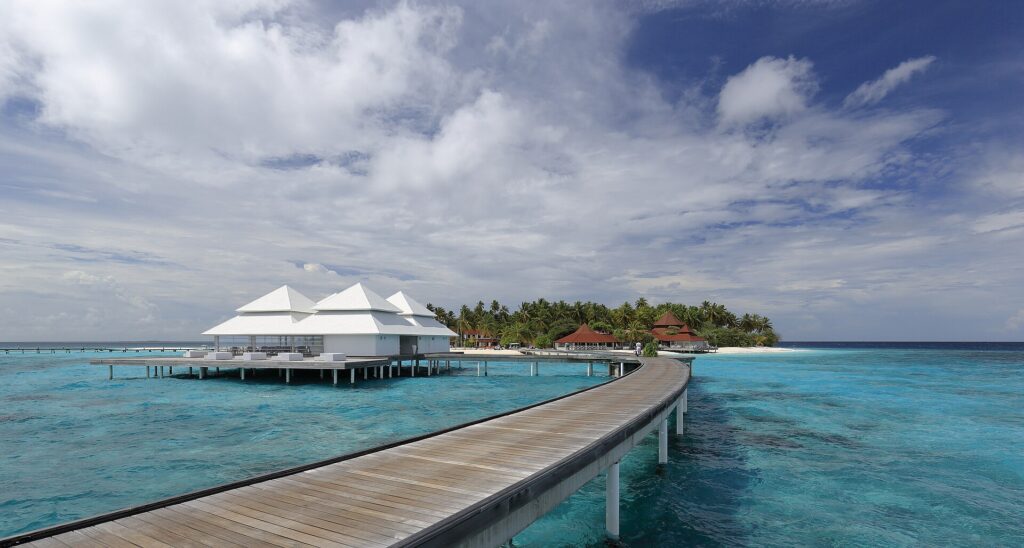
The Maldives is the archetypal do-nothing destination: a chain of low coral atolls in the Indian Ocean, where many resorts occupy an entire island of their own. The classic stay is an overwater villa with steps down into the lagoon, where snorkeling means walking out your door and looking down.
- Best time to go: the drier northeast monsoon season, roughly December to April, brings the calmest seas and most sunshine. May to November is wetter and windier, with lower prices; many travelers still find it worthwhile, especially for diving.
- Getting there: international flights land at Velana International Airport near Malé, usually via hubs in the Middle East, Europe or Asia. From there, resorts are reached by speedboat, domestic flight or seaplane. Seaplanes fly only in daylight, so if you land late you may need a night near the airport before the transfer.
- Budget reality: the Maldives is one of the most expensive destinations in the world, and on a private-island resort you pay resort prices for every meal and drink. Compare meal plans carefully; half-board, full-board or all-inclusive often works out cheaper than paying as you go. Transfers can also be a significant added cost.
- Entry: the Maldives has historically granted visitors a free visa on arrival, and requires an online traveler declaration through its IMUGA portal before arrival. Confirm the current rules before you fly.
The official tourism site, Visit Maldives, lists the atolls and resort types.
2. Santorini, Greece
Santorini’s white villages cling to the rim of a volcanic caldera, with views over the flooded crater and some of the most famous sunsets in Europe. It is a place for long breakfasts on a terrace, afternoon swims in a cave pool and a glass of the island’s Assyrtiko wine at dusk.
- Best time to go: May, early June, September and early October. July and August are hot, crowded and at peak prices, and cruise-ship days pack the village of Oia. Many hotels close in winter.
- Getting there: fly to Athens, then take a short domestic flight or a ferry. In summer, some European cities have direct seasonal flights to the island. Our guide to traveling Europe on a multi-city itinerary explains how to combine flights and ferries.
- How to actually relax: stay in Imerovigli or Firostefani for the caldera views without the Oia crowds, or on the quieter beach side of the island at Kamari or Perissa, where rooms cost less. Book a room with its own terrace; it becomes your living room.
The Greek National Tourism Organisation’s site, Visit Greece, covers Santorini and quieter islands such as Milos and Naxos. If you are also considering the mainland, our guide to the best places to visit in Europe in fall explains why September is so good in the Greek islands.
3. Bali, Indonesia
Bali offers a gentler, more affordable kind of relaxation: rice terraces, temples, yoga studios, spas and a food scene that ranges from roadside warungs to excellent restaurants. It is one of the few places on this list where a genuinely indulgent trip can be done on a moderate budget, since daily costs on the ground are low by North American standards.
- Best time to go: the dry season, roughly April to October, is the most reliable. The wet season brings heavy tropical downpours, but often in short bursts, and fewer crowds.
- Where to stay for rest: Ubud, in the hills, is the place for rice-field views, spas and yoga retreats. Sanur, on the east coast, is calm and family-friendly. Nusa Dua has large beach resorts. The busy southern areas, such as Kuta and Seminyak, are livelier and less restful.
- Getting there: fly into Denpasar via an Asian hub. Traffic on the island can be slow, so pick a base and stay there, or split the trip between two bases rather than moving every couple of days.
- Entry: Indonesia’s visa rules and Bali’s tourist levy apply to most international visitors and have changed in recent years; check the current requirements before you fly.
The official tourism site, Wonderful Indonesia, has regional guides. Bali is also one of the long-haul bargains in our pillar guide to budget travel destinations.

4. Queenstown, New Zealand
Queenstown is known as an adventure capital, with bungee jumping, jet boats and skiing, but it is also one of the most beautiful places in the world to sit still. The town sits on the shore of Lake Wakatipu beneath the Remarkables mountain range, and the surrounding region has vineyards, lakeside walks and some of New Zealand’s best scenery.
- Best time to go: the Southern Hemisphere summer, December to February, brings long days and warm weather; March and April add autumn colors and calmer crowds. June to August is ski season.
- How to do nothing here: skip the adrenaline. Stay in a lakeside apartment, take the gondola up for the view, have a long lunch at a winery in the Gibbston Valley, and take the short drive to the quieter towns of Arrowtown or Glenorchy.
- Getting there: fly to Auckland or an Australian city, then connect to Queenstown. New Zealand requires most visitors, including Canadian and US citizens, to hold an electronic travel authority; see the official NZeTA page.
5. Bora Bora, French Polynesia
Bora Bora is the South Pacific of the postcards: a green volcanic peak surrounded by a turquoise lagoon and a ring of small islets, called motus, where most of the luxury resorts sit. Like the Maldives, it is a place for overwater bungalows, snorkeling and staying put.
- Best time to go: the drier, cooler season runs roughly from May to October. November to April is warmer and more humid, with more rain.
- Getting there: international flights land at Faa’a International Airport near Papeete, on Tahiti, with service from Los Angeles and San Francisco among other cities. From there, a domestic flight takes you to Bora Bora, followed by a boat transfer to your resort. See our LAX airport guide if you are connecting through Los Angeles.
- Budget reality: Bora Bora is very expensive. To stretch the budget, consider splitting the trip with a less expensive island such as Moorea or Huahine, where you can have just as much quiet for less.
The official tourism board, Tahiti Tourisme, covers all the islands. For a Caribbean alternative with a shorter flight, see our Cayman Islands honeymoon guide.
6. The Seychelles
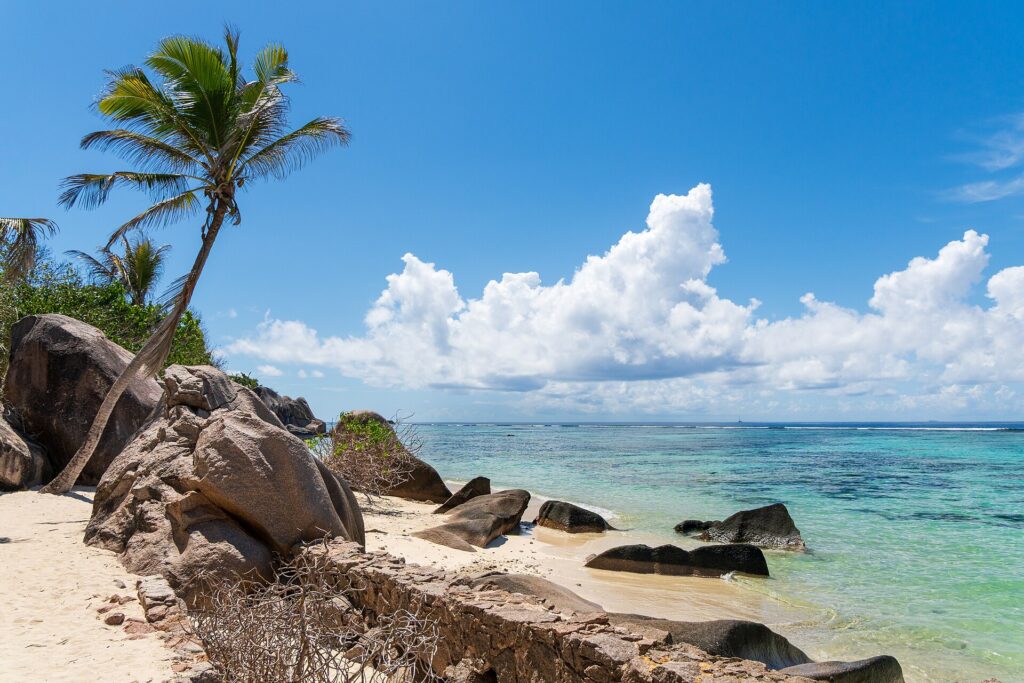
The Seychelles, an archipelago in the Indian Ocean off East Africa, has beaches that look unreal: white sand, clear water and giant granite boulders shaped by the sea. Anse Source d’Argent on La Digue is one of the most photographed beaches in the world, and La Digue itself is a quiet island where most people get around by bicycle.
- Best time to go: the transition months between the trade-wind seasons, roughly April to May and October to November, usually bring the calmest seas and clearest water. The islands are warm year-round.
- Getting there: fly into Mahé via a hub in the Middle East, Europe or Africa. Ferries connect Mahé with Praslin and La Digue, which are the best islands for a slow trip.
- How to relax: spend a few nights on Praslin or La Digue rather than only on Mahé, rent a bicycle, and let the day revolve around the tide and the beach.
- Entry: visitors must apply for a travel authorization online before arrival through the official Seychelles travel authorization portal.
7. Lake Tahoe, California and Nevada
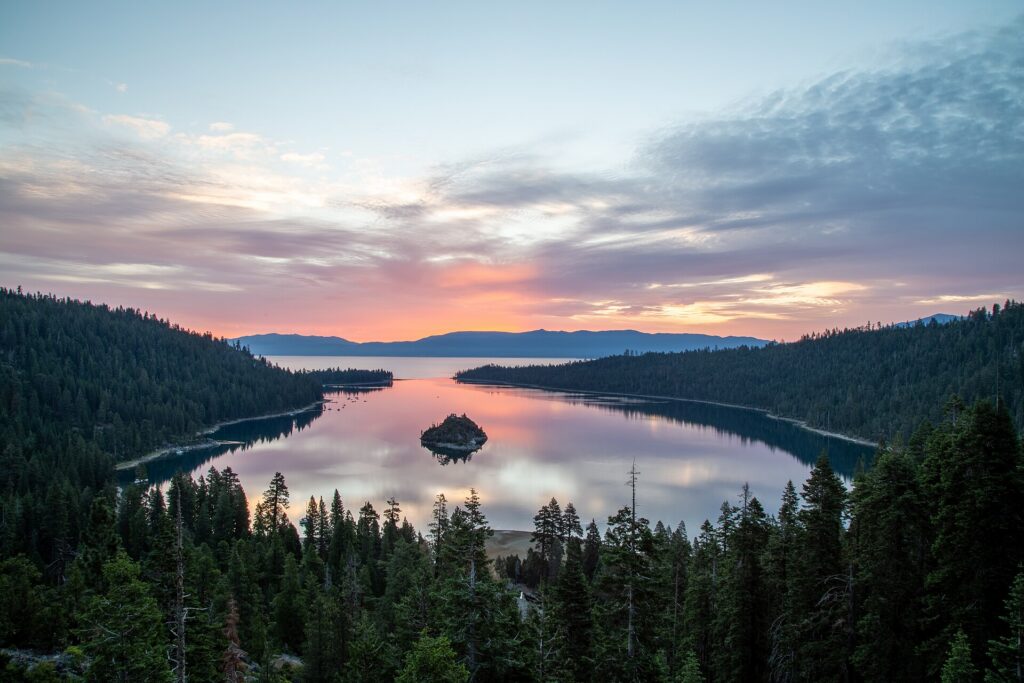
Lake Tahoe is proof that you do not need a passport to switch off. The lake is large, deep and famously clear, surrounded by pine forests and the peaks of the Sierra Nevada. In summer, it is a place for beaches, paddleboards and lakeside decks; in winter, cozy cabins, fireplaces and ski resorts.
- Best time to go: June to September for lake days; December to March for snow; September and early October are quieter, with warm days and cool nights.
- North shore or south shore: the north shore is generally quieter and more residential, with small beach towns. South Lake Tahoe is busier, with casinos just over the Nevada line and more nightlife. For a do-nothing trip, the north and west shores are usually the better fit.
- Getting there: Reno-Tahoe International Airport is the closest major airport. Sacramento and San Francisco are longer drives but have more flights; compare flights to San Francisco and San Francisco car rentals. In winter, check road conditions and chain requirements before driving into the mountains.
The regional tourism site, Visit Lake Tahoe, covers lodging and seasonal activities. If you are heading into the mountains, our guide to America’s most unique state parks includes other scenic escapes in the West.
Compare the seven at a glance
| Destination | Best months | Journey from North America | Relative cost | Best for |
|---|---|---|---|---|
| Maldives | December to April | Very long; one or two connections plus a resort transfer | Very high | Overwater villas, snorkeling, total seclusion |
| Santorini | May to June, September to early October | Long; usually via Athens or another European city | High in summer, moderate in shoulder season | Sunsets, wine, terraces |
| Bali | April to October | Very long; one or two connections | Low to moderate on the ground | Spas, yoga, rice fields, value |
| Queenstown | December to April; June to August for ski | Very long; usually via Auckland or Australia | Moderate to high | Scenery, wine, fresh air |
| Bora Bora | May to October | Long; via Papeete from the US West Coast | Very high | Lagoon views, honeymoons |
| Seychelles | April to May, October to November | Very long; one or two connections | High | Beaches, island-hopping by ferry |
| Lake Tahoe | June to September; December to March | Short from the West; drive from Reno or the Bay Area | Moderate to high in peak season | Cabins, lake days, no passport needed |
Closer to home: easy do-nothing trips from Canada and the US
If a week off does not justify a long-haul flight, look closer. From most of Canada and the eastern United States, the Caribbean and Mexico offer beaches and resorts within one flight. Cancún and the Riviera Maya are among the easiest: frequent nonstop flights, a huge range of all-inclusive resorts, and a hotel zone where you can walk to the beach. See our guide to things to do in Cancún, the best time to fly to Cancún, and hotels in the Hotel Zone. For Canadians, our pages for flights from Toronto and from Vancouver are the quickest way to see where nonstops go.
Even a city can be restful if you plan it that way. A few quiet days in a spa hotel, with one museum and a long dinner, is its own kind of doing nothing, but for real rest, water and nature win.
How to plan a trip where you really switch off
Choose the right kind of stay
| Stay type | Why it helps you relax | Watch out for |
|---|---|---|
| All-inclusive resort | No decisions about meals or money; everything is on site | Food variety on longer stays; what is excluded (premium drinks, spa, some restaurants) |
| Private-island resort | Total seclusion; the view is the entertainment | High meal and transfer costs; limited choice if you do not like the resort |
| Villa or apartment | Space, privacy and a kitchen; good for families and long stays | You may need a car; you do the shopping and some of the work |
| Small boutique hotel | Personal service, character, often in walkable towns | Fewer facilities; check noise and stairs |
Our hotel booking tips explain how to compare what is included, cancellation terms and location, which matter more than star ratings for a restful stay.
Protect the first and last days
Book flights that land in daylight when you can, so you are not navigating a transfer at midnight. On the way home, leave a buffer day before going back to work. Nothing undoes a relaxing week faster than landing on Sunday night and walking into a Monday meeting.
Make the flight easier
Long-haul flights are the cost of admission for most of these places, so make them as comfortable as you can: choose your seat early, bring a good neck pillow and noise-canceling headphones, and stay hydrated. Our guides to sleeping well on flights, airplane neck pillows and compression socks for long flights cover the details. If you want to treat yourself on the longest leg, see our business class upgrade tips.
Set up a real digital detox
Turn on an out-of-office reply with a clear return date, remove work email from your phone for the week, and agree in advance on the one way people can reach you in an emergency. Many travelers find that the first two or three days are the hardest; after that, the habit of checking fades.
Stay long enough
For a long-haul destination, jet lag alone can take several days to shake off. Ten nights or more is ideal for the Maldives, Bali, the Seychelles, Bora Bora or Queenstown. For closer destinations like Lake Tahoe or the Caribbean, a long weekend can be enough, although a full week is better.
Budgeting for a do-nothing trip
A relaxing trip does not have to be a luxury trip, but several of these destinations are expensive, and the costs are not always obvious at first glance.
- Price the whole trip, not the room. On island resorts, add meals, drinks, transfers and taxes. A cheaper room with an expensive seaplane transfer and pay-as-you-go meals can cost more than a pricier all-inclusive package.
- Travel in the shoulder season. The weeks just before and after peak season bring lower prices with weather that is usually still good.
- Mix a splurge with a saver. Spend a few nights in an overwater villa and the rest in a beach room, or pair Bora Bora with Moorea.
- Be flexible with dates. A few days’ shift can change the fare significantly, especially on long-haul routes.
- Save in advance. Our guide on how to save money for a trip helps turn a dream destination into a date on the calendar.
Safety, health and entry rules
- Check the official advisory for your destination before booking and again before departure. Canadians should use the Government of Canada travel advice and advisories; US citizens should check the State Department travel advisories.
- Confirm entry requirements. Several destinations on this list require an online authorization, declaration or visa before arrival, and the rules change. The official government sites are the only reliable sources.
- Buy travel insurance with medical and evacuation coverage. Remote islands may have limited medical facilities, and evacuation is expensive.
- Respect the sun and the sea. Tropical sun is strong, and currents can be dangerous even on calm-looking beaches. Swim where locals and resort staff advise, and use reef-safe sunscreen where it is required or encouraged.
Frequently asked questions
What is the most relaxing vacation destination?
For total seclusion, a private-island resort in the Maldives or Bora Bora is hard to beat, because there is nothing to do but rest. For a more affordable option with culture and spas, Bali is excellent. Closer to home, a cabin at Lake Tahoe or an all-inclusive resort in the Caribbean or Mexico can be just as restful.
How long should a relaxing vacation be?
For destinations with long flights and big time differences, aim for ten nights or more so you have time to recover from the journey. For closer destinations, a week works well, and a long weekend can help if that is all you have.
Is an all-inclusive resort good for a do-nothing trip?
Often, yes. Having meals and drinks included removes daily decisions and budgeting. Check what is excluded, such as premium drinks, à la carte restaurants or spa treatments, and read recent reviews for food quality.
When is the best time to visit the Maldives?
The drier season, roughly December to April, has the calmest seas and most sunshine. The wetter months, roughly May to November, bring lower prices and more rain, but many days are still sunny.
What is a good relaxing vacation without a long flight?
From Canada and the northern US, Cancún and the Caribbean offer beaches within one flight. In the West, Lake Tahoe is an easy drive from Reno or the Bay Area.
How do I actually relax on vacation?
Choose a destination where there is nothing you feel obligated to see, stay in one place, set up an out-of-office reply, and leave a buffer day before going back to work. Plan no more than one activity per day.
Are relaxing vacations expensive?
They can be, especially in the Maldives, Bora Bora and the Seychelles. Bali, Mexico and shoulder-season Santorini offer much better value, and traveling outside peak season lowers the cost almost everywhere.
More guides in this series
This article is part of our destinations and planning series. Start with the pillar guide to budget travel destinations, then see the best cities for Christmas in the USA if you want the opposite of a quiet holiday, our guide to traveling to Japan, New York on a budget, and our guide to planning and booking a trip on TicketScanner.
Ready to do absolutely nothing? Compare fares across a whole month on our flight search to find the dates that work, then choose a room with a view on our hotel search. If you want a beach within one flight, start with our Cancún flights page.
Keep planning with TicketScanner
- Budget travel destinations: the best-value picks
- A honeymoon in the Cayman Islands
- Best places to visit in Europe in fall
- How to save money for a trip
- Travel to Japan: planning a first trip
- Best cities for Christmas in the USA
- Compare flights — search a whole month of fares to find the best dates
- Compare hotel prices
- Things to do in Cancún
- Best time to fly to Cancún