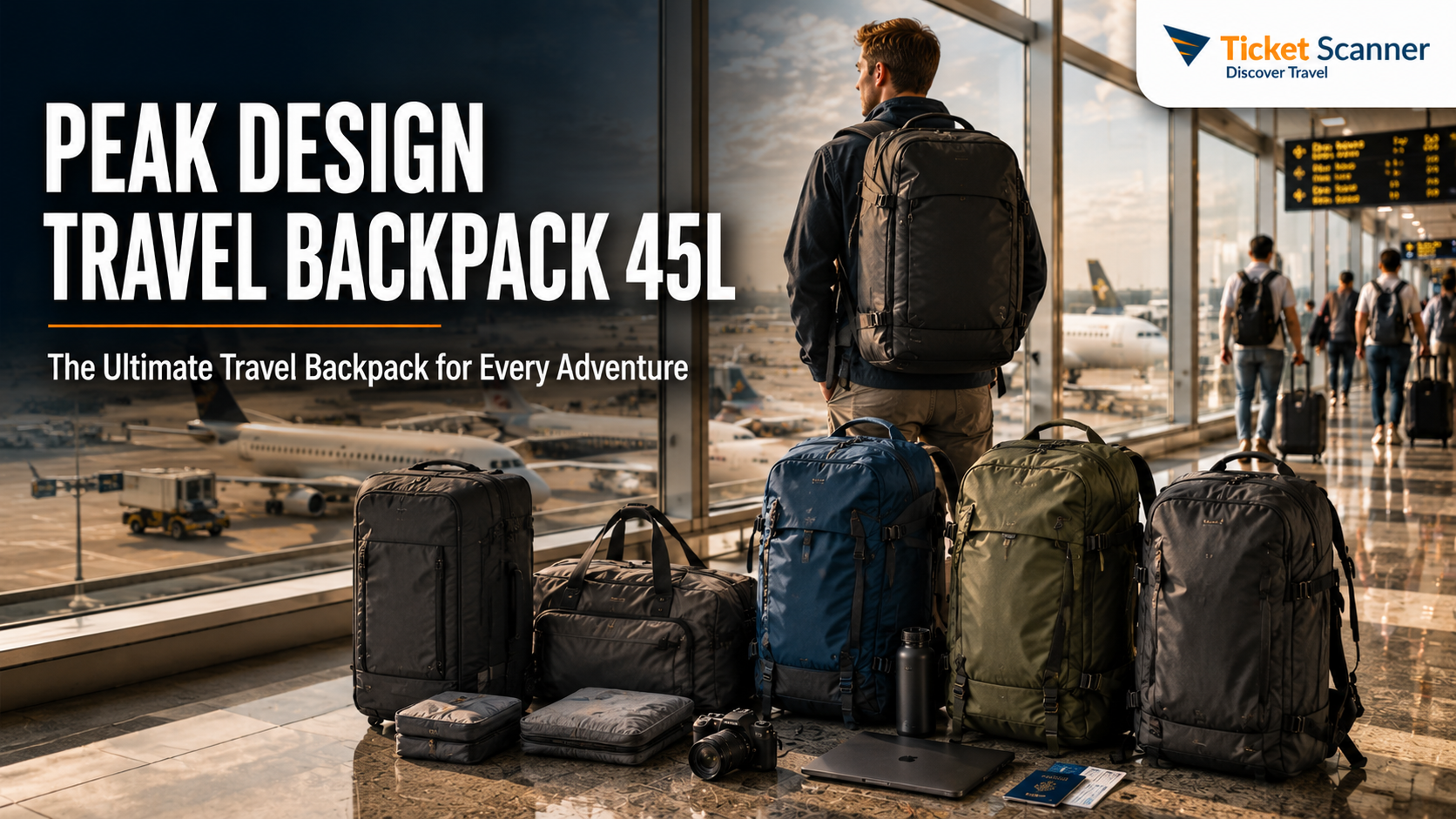
The Peak Design Travel Backpack 45L is one of the best-known bags built around a simple idea: carry everything for a trip in one bag on your back, and walk off the plane without waiting at a baggage carousel. It packs like a suitcase, carries like a backpack and works with a set of packing and camera cubes, which is why it shows up so often with photographers, remote workers and people who hop between cities by train. It is also a premium bag, and it is not the right answer for every traveler. This guide explains what the Travel Backpack 45L does well, how its expandable capacity and access points work, whether it fits airline carry-on rules, how it compares with Peak Design’s Travel Duffelpack and Outdoor Backpack 45L, and how to choose and pack any 40 to 45 liter travel backpack so a week of travel fits comfortably on your back.
The short answer
If you want a single carry-on bag for trips of up to a week or so, value organization and plan to walk, take trains or climb stairs with your luggage, the Peak Design Travel Backpack 45L is a strong choice. It compresses for shorter trips and expands for longer ones, opens wide like a suitcase, has a dedicated laptop sleeve and works with Peak Design’s cubes. If you need more volume for bulky or sports gear, the Travel Duffelpack is a better fit. If your trip is built around trails rather than terminals, look at the Outdoor Backpack 45L or a proper hiking pack. And if your shoulders or back do not enjoy carrying weight, a carry-on suitcase with wheels may simply be the better bag for you. Whichever you choose, check your airline’s current carry-on limits before you fly, since a 45 liter bag packed full sits at the edge of many allowances.

What the Travel Backpack 45L is designed to do
Most backpacks load from the top, which means the thing you need is always at the bottom. The Travel Backpack 45L is built the other way: it opens along the back panel like a clamshell suitcase, so you can lay it flat on a hotel bed and see everything at once. It adds side access to reach things without opening the whole bag, and a front section for smaller items. The bag’s capacity can be reduced with compression zips and straps when you pack light and expanded to its full 45 liters when you need the room, so the same bag works for a three-night work trip and a week-long holiday.
It is also designed as part of a system. Peak Design sells packing cubes, a camera cube, a tech pouch and a wash pouch sized to fit the bag, and the laptop sleeve sits against your back where it is protected and easy to slide out at security. The idea is that the backpack does the carrying and the cubes do the organizing. You can check current features, dimensions and accessory compatibility on Peak Design’s own site.
Key features, and why they matter
Adjustable capacity
The single most useful feature is that the bag changes size. Compressed, it is slimmer and easier to carry around a city, less likely to bump people on a train and more likely to fit tighter carry-on limits. Expanded, it holds enough for most people for a week, especially if you do laundry once. Peak Design lists the exact modes and dimensions for each, and those are the numbers to compare against your airline.
Suitcase-style opening and multiple access points
The clamshell opening makes packing and unpacking far easier than a top-loader, and it is quicker at a security checkpoint when you need to pull out a laptop or a bag of liquids. Side access lets you grab a jacket or a camera without unzipping the main compartment.
Laptop and tablet sleeves
A padded sleeve for a laptop and a separate slot for a tablet or documents keep electronics protected and separate from clothes. Check the listed laptop size against your machine, particularly if you carry a large 16-inch laptop.
Harness and hip belt
Padded shoulder straps, a sternum strap and a hip belt make a loaded bag much more comfortable. The harness and hip belt can be tucked away, which keeps them from snagging in overhead bins or on baggage belts if you ever have to gate-check it. For long walks with a full bag, use the hip belt: it moves weight from your shoulders to your hips.
Materials and weather resistance
The shell is a weather-resistant recycled nylon, with water-resistant zippers. That will keep a passing shower off your clothes, but it is not a waterproof dry bag. In heavy rain, pack electronics in the middle of the bag and consider a rain cover if you walk a lot between stations.
Warranty
Peak Design offers a lifetime warranty on its bags. That is part of what you are paying for with a premium pack, and it is worth reading the current terms on the manufacturer’s site so you know what it covers.
Is the Peak Design Travel Backpack 45L carry-on size?
It was designed with carry-on travel in mind, but “carry-on size” always depends on three things: the airline, the fare and how full you pack it. The principles:
- Compressed, it fits more airlines. A slimmer bag is more likely to meet stricter limits and to fit smaller overhead bins on regional jets.
- Fully expanded and stuffed, it sits at the edge. A 45 liter pack packed to bursting can exceed a carry-on depth limit, especially with full front pockets.
- Some fares only allow a personal item. Basic and ultra-low-cost fares may include only a small under-seat bag; a 45 liter pack is a full carry-on on any airline.
- Some airlines weigh cabin bags. A full backpack with a laptop and camera can be heavy, so check whether your airline has a cabin weight limit.
Always check the official page before you fly: Air Canada carry-on baggage, WestJet carry-on baggage and Delta carry-on baggage are good examples of how airlines publish their limits. For budget carriers in Europe, read the cabin bag rules closely; easyJet’s cabin bag page shows how a free allowance can be much smaller than a full carry-on. Our guide to Delta carry-on sizes goes deeper on one airline, and our main guide to travel luggage explains carry-on, personal item and checked allowances in general.
Who it suits, and who should look elsewhere
A good fit for
- One-bag travelers who want to skip checked bags and move fast between flights, trains and hotels.
- Multi-city trips with stairs, cobblestones, ferries and crowded platforms, where wheels are a liability.
- Remote workers who need a laptop, chargers and a week of clothes in one bag.
- Travel photographers who want a camera cube inside a bag that does not look like a camera bag.
- Business travelers who prefer a backpack to a roller and want something that looks tidy in a meeting.
Probably not the best choice for
- Travelers with back, neck or shoulder problems, who will usually be happier with a wheeled carry-on.
- Long trips in cold weather with bulky layers and boots, where the volume runs out quickly.
- Serious hiking, where a pack with a real load-bearing frame and a torso-length adjustment carries weight much better; see our guide to hiking backpacks.
- Tight budgets. The Travel Backpack 45L is a premium bag. Many simpler 40 liter travel packs do the core job for less, without the accessory ecosystem.
Travel Backpack 45L vs the alternatives
| Bag | Best for | Strengths | Trade-offs |
|---|---|---|---|
| Peak Design Travel Backpack 45L | One-bag carry-on travel, city hopping | Suitcase-style opening, adjustable capacity, laptop sleeve, cube system | Premium price; heavy when full; at the edge of some carry-on limits when expanded |
| Peak Design Travel Duffelpack | Road trips, sports and bulky gear, longer trips | Large duffel opening, more volume, stowable backpack straps | Too big for most carry-on limits when full; less organization |
| Peak Design Outdoor Backpack 45L | Hiking, outdoor photography, trips mixing trails and towns | Roll-top, hip belt and harness built for trail use, camera cube compatible | Less suitcase-like organization for city travel |
| Carry-on suitcase | Airport-to-hotel trips, travelers who prefer not to carry weight | Wheels take the load; easy to pack | Awkward on stairs, cobbles and crowded trains |
| Smaller 25 to 35 liter pack | Weekend trips, minimalists, strict airlines | Lighter, fits more carry-on limits, some fit personal-item limits | Needs disciplined packing for longer trips |
The Peak Design options worth considering
The original version of this guide listed five Peak Design products. Several are the same bag in different colors, so here they are grouped by model. Colors, capacities and specifications change between versions, so confirm the current details on the manufacturer’s site before you buy.
Peak Design Travel Backpack 45L (Black)
The flagship, and the bag this guide is named for. It is the most versatile of the group: carry-on focused, organized, and suited to everything from a work trip to a week in Europe. Black is the most understated color and looks at home in an office or a boutique hotel. Choose it if you want one bag that does most trips and you will use the laptop sleeve and cubes.
Peak Design Travel Duffelpack (Ocean, Black and Eclipse)
The Travel Duffelpack combines a duffel’s big, open main compartment with backpack straps that tuck away when you do not need them. The original guide listed it in three colors: Ocean, Black and Eclipse. It holds more than the Travel Backpack and is better for road trips, ski and sports gear, camera kits and longer trips where you plan to check a bag. It is less organized inside, so packing cubes matter more, and when full it is generally a checked bag rather than a carry-on. Choose it if you value volume and easy loading over carry-on compliance.
Peak Design Outdoor Backpack 45L (Kelp)
Part of Peak Design’s outdoor line, this pack uses a roll-top closure and a harness and hip belt designed for carrying on trails, and it works with the brand’s camera cubes. The original guide listed it in the Kelp color. It suits hikers, landscape photographers and travelers whose trip mixes trails with towns. For city travel it is less convenient than the Travel Backpack’s suitcase-style opening, and for multi-day backpacking with a tent and food, a dedicated trekking pack with an adjustable frame may still carry better.
Do you need the matching cubes and pouches?
Peak Design’s packing cubes, camera cube, tech pouch and wash pouch are shaped to fill the Travel Backpack neatly, and that fit is the main argument for buying them. They are not required, though. Any packing cubes of a sensible size will organize the bag, and many travelers already own a toiletry bag and a cable pouch that work fine. A reasonable approach is to start with the backpack alone, take one trip, and then buy only the pieces that would have solved a real problem: a camera cube if you carried a camera loose in your clothes, a tech pouch if you spent time hunting for a charger, or a set of cubes if the bag turned into a jumble by day three. That keeps the total cost down and avoids a closet full of accessories you do not use. If you carry a lot of electronics, our guide to 3-in-1 Apple chargers shows how to cut down the number of chargers you pack in the first place.
How to choose any 40 to 45 liter travel backpack
Whether you buy the Peak Design or another brand, the same questions decide whether a travel pack works for you.
- Capacity. About 40 to 45 liters is the practical maximum for most carry-on limits. Around 30 to 35 liters suits light packers and strict airlines. Adjustable-capacity bags give you both.
- Fit. A travel pack should sit close to your back with the weight resting on your hips via the hip belt. If you are short or tall, check the harness length; some brands offer sizes or adjustable harnesses.
- Opening. A full clamshell or wide U-shaped zipper packs like a suitcase. A top-loader is simpler and lighter but slower to live out of.
- Laptop access. A separate laptop compartment you can open without unpacking clothes saves time at security.
- Empty weight. Frames, padding and hardware add weight. A heavy empty bag makes airline cabin weight limits harder to meet.
- Materials. Tough, weather-resistant fabric and good zippers matter more than lots of pockets.
- Security. Lockable zippers and hidden pockets are useful in crowded cities; our guide to anti-theft backpacks covers what those features actually do.
- Warranty and repairability. A bag you will carry for years should come from a brand that stands behind it.
Packing a 45 liter backpack for a week
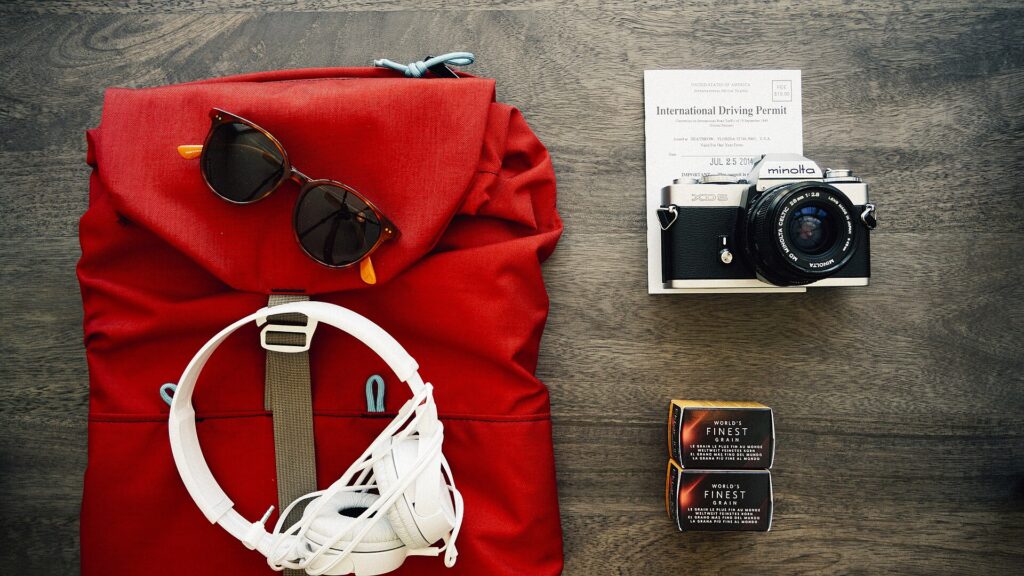
A week in a backpack is easy with the right approach. A typical warm-weather packing list for one person:
- Four or five tops and two or three bottoms that all work together; our guide to travel pants for men covers versatile options that dress up or down.
- Underwear and socks for five days, plus a plan to wash a load midweek.
- One warm layer and one light rain jacket.
- One pair of shoes on your feet and at most one more in the bag; see our guide to walking shoes for travel for a pair that does both.
- A small toiletry bag that meets liquid rules, and a tech pouch for chargers and cables.
- Laptop and tablet in the sleeves, and documents in a slim wallet or a passport holder.
Pack heavy items, like shoes and the toiletry bag, close to your back and in the middle of the bag, and light, bulky clothes toward the outside. Packing cubes compress soft clothing and keep the bag tidy when you open it at a checkpoint. Keep your liquids where you can reach them: in the United States, the TSA liquids rule sets the limits for cabin bags, and in Canada, CATSA explains what you can bring. For cables, adapters and chargers, our list of laptop travel accessories has ideas that pack small.
For travel photographers
Many people buy this bag for the camera cube: a padded insert that turns part of the backpack into a camera bag while the rest holds clothes. A few tips if you carry camera gear:
- Keep cameras and lenses in the cabin. Never check expensive gear if you can avoid it.
- Carry spare batteries in the cabin. Spare lithium batteries, including camera batteries and power banks, generally must not go in checked bags. The FAA’s PackSafe guidance on lithium batteries explains the rules, and airlines publish their own limits.
- Balance the load. Camera gear is dense; place the cube close to your back so the bag does not pull backward.
- Think about access. Side access to the camera cube lets you shoot without unpacking your clothes.
- Drones need extra checks. Airlines and destinations have their own rules about drones and their batteries; check both before you pack one.
Getting through the airport with a travel backpack
- Pack for the checkpoint. Laptop in its sleeve, liquids at the top, and nothing in pockets that will need to come out. A clamshell bag makes this easy.
- Tuck away straps before the X-ray. Loose straps snag on belts and bins. Use the stowable harness and hip belt if the bag is ever gate-checked.
- Board early if you can. A full-size backpack needs overhead space. Slide it in lengthwise with the top handle facing out, so you can reach it quickly.
- Keep a small bag for the seat. A light pouch or sling with your headphones, snacks and documents means you do not have to open the overhead bin mid-flight; our guide to noise-cancelling headphones for flying helps with the long legs.
- Arrive with time to spare. Our guide to airport arrival times for international flights has the details.
Caring for a premium travel pack
A good bag lasts longer with a little care. Empty it after each trip and let it air out before storing it. Spot-clean fabric with a damp cloth and mild soap rather than a washing machine, which can damage coatings and padding. Keep zippers free of grit, and do not force a zipper around an overstuffed corner. If something breaks, contact the manufacturer before attempting a repair yourself, since a DIY fix can affect a warranty claim.
Common mistakes with travel backpacks
- Packing to full expansion every time. If you always fill every liter, the bag will be heavy and at the edge of carry-on limits. Pack compressed by default and expand only when you need to.
- Ignoring the hip belt. Carrying 10 kg or more on your shoulders alone is tiring. Clip the belt and tighten it.
- Buying before measuring. Compare the bag’s real dimensions with the strictest airline you plan to fly.
- Carrying valuables in outer pockets. In crowds, keep your phone, wallet and passport in inner or body-side pockets.
- Treating weather resistance as waterproof. Heavy rain will eventually get in. Protect electronics.
- Forgetting the return trip. Leave room for anything you buy on the way.
Frequently asked questions
Is the Peak Design Travel Backpack 45L carry-on approved?
It is designed for carry-on travel and fits many airlines’ limits, especially when compressed. Whether it fits depends on the airline, the fare and how full you pack it, so check the airline’s current dimensions before you fly.
Is the Peak Design Travel Backpack 45L waterproof?
It is weather-resistant, not waterproof. The shell and zippers keep out light rain and splashes, but prolonged heavy rain can get in, so protect electronics in wet weather.
Can it hold a laptop?
Yes. It has a dedicated padded laptop sleeve plus a tablet slot. Check the listed laptop size on Peak Design’s site against your machine.
Is it good for photographers?
Yes, especially with Peak Design’s camera cube, which turns part of the bag into a padded camera compartment while leaving room for clothes.
What is the difference between the Travel Backpack and the Travel Duffelpack?
The Travel Backpack is built for carry-on travel with suitcase-style organization and a laptop sleeve. The Travel Duffelpack is a larger duffel with backpack straps, better for bulky gear, road trips and longer trips, and generally a checked bag when full.
Can I fit a week of clothes in a 45 liter backpack?
Most people can, especially with packing cubes, a mix-and-match wardrobe and a midweek laundry stop. Cold-weather trips are harder because of bulky layers.
Is a travel backpack better than a carry-on suitcase?
It depends on the trip and your body. Backpacks win on stairs, trains and rough streets; suitcases win in airports and for anyone who prefers not to carry weight.
With the bag packed, the next step is the trip. Search fares on our flight search, where flexible dates often save enough to cover a good bag, compare places to stay on our hotel search, and if the plan includes a road trip, check our car rental search. A one-bag trip suits city hopping in Europe perfectly: read our guide to traveling Europe on a multi-city itinerary, then compare flights to London or flights to Rome to start.
Keep planning with TicketScanner
- Top travel luggage bags: the buying guide — the travel gear guide
- Anti-theft backpacks for travel and commuting
- Hiking backpacks: how to choose and fit one
- Rolling laptop bags for business travel
- Laptop travel accessories
- Travel pants for men
- Comfortable walking shoes for traveling
- Search flights — compare fares across flexible dates
- How to travel Europe on a multi-city itinerary
Leave a Reply