Tag: Carry-On

  • Affordable Kids Suitcases for Boys Every Parent Will Love

    Affordable Kids Suitcases for Boys Every Parent Will Love

    A suitcase of their own changes how a child experiences a trip. Rolling it through the terminal, choosing what goes in it and being responsible for it at the hotel makes a boy feel like a real traveler instead of cargo, and it takes a little weight off the adults at the same time. The catch is that most children’s luggage is sold on looks: a favorite color, a truck, a rocket, a cartoon. Looks matter to a six-year-old, but the things that decide whether a kids’ suitcase actually works are size, weight, wheels, handle height and how it fits the airline’s rules. This guide explains what to look for at each age, how carry-on allowances work for children, hardside versus softside, spinner versus two-wheel, ride-on cases and backpacks, a few affordable sets worth considering, and how to get your son packing and pulling his own bag without a meltdown at the gate.

    The short answer

    For most boys between about four and ten, the right choice is a light carry-on size case, roughly 16 to 18 inches tall, with smooth wheels and a telescoping handle that adjusts low enough for his height, in a design he picked himself. Toddlers do better with a small backpack or a ride-on case that a parent can tow. Pre-teens can usually handle a standard adult carry-on. Keep the empty weight low, since your child can only pull what he can lift, and check your airline’s carry-on and personal-item rules before you buy, because a child with his own seat usually gets the same allowance as an adult. Affordable sets from brands like Rosamo, GYMAX and Travelers Club bundle a small spinner with matching bags, which is good value if you want a backpack and case together.

    Why a child’s own suitcase is worth it

    • Responsibility. A child who packs and pulls his own bag learns to keep track of his things, and he is more likely to notice when something is missing.
    • Excitement. A suitcase he chose turns the trip into something he owns. Many parents find that the bag comes out of the closet days before departure and gets packed and unpacked several times.
    • Fewer hands full. Families already juggle car seats, strollers, documents and snacks. One less bag for an adult to carry matters.
    • Organization. Each child’s clothes in their own case means less digging through a shared bag at the hotel, and a clear answer to “where are my pajamas?”

    It is also one of the small decisions that make a family trip smoother, which is the point of our broader guide on why a family vacation matters for work-life balance.

    Sizing by age

    Children grow fast, and the suitcase that is perfect at five will look tiny at nine. The table below is a practical starting point. Heights are the overall height of the case including wheels, which is how most retailers list them.

    AgeBest optionTypical sizeWhy
    2 to 3Small backpack or ride-on caseBackpack or about 18 in ride-onToddlers cannot steer a case for long; a parent tows the ride-on when they tire
    4 to 6Small spinner or two-wheel caseAbout 14 to 16 inLight enough to pull, low handle, fits under a seat on many aircraft
    7 to 10Kids’ carry-onAbout 16 to 18 inHolds a week of kids’ clothes; still manageable through a terminal
    11 and upStandard adult carry-onWithin the airline’s carry-on limitWill not be outgrown; handle height suits taller kids

    Two things matter more than the headline size. First, handle height: many small cases have a telescoping handle that is too long even at its lowest setting, which forces a small child to pull at an awkward angle. If you can, have your son try the handle before you buy. Second, empty weight: a heavy case filled with clothes becomes a bag the parent carries. Look for the lightest case in the size you need.

    How airline rules apply to children

    Airline baggage rules are the same for children as for adults in most cases, which surprises many parents. The principles:

    • A child with a paid seat usually gets the full cabin allowance of their fare: typically one carry-on for the overhead bin and one personal item under the seat. Basic economy fares on some airlines restrict the full-size carry-on, so check the fare rules.
    • Lap infants (usually under two, sitting on a parent’s lap) generally do not get their own carry-on, though many airlines allow a diaper bag and let you check or gate-check a stroller and car seat. Policies vary.
    • Size limits apply to the child’s bag too. A kids’ case that is within the airline’s carry-on dimensions can go in the overhead bin; a very small one may fit under the seat in front as the personal item, which keeps it within reach for snacks and toys.
    • Measure with the wheels and handle. Airline limits include wheels and handles, and a case that is fine on paper can be too deep once the pockets are full.

    Rules change and differ between airlines, so check the official pages before you fly: Air Canada, WestJet, Delta and American Airlines all publish their current limits. Air Canada also has a page on travelling with children that covers infant allowances. Our guide to Delta carry-on sizes goes into one airline in detail.

    Hardside or softside?

    Both work for children. The choice comes down to how the bag will be used.

    Hardside

    Hardside cases, made from ABS or polycarbonate plastics, protect contents from crushing, wipe clean easily and usually carry the bold printed designs that kids love. Most kids’ spinner sets are hardside. The downsides are that the shell scuffs, a cheap shell can crack if it is dropped hard or overpacked, and there is no give when you are trying to squeeze one more sweater in. Hardside cases also typically open like a clamshell into two halves, which needs floor space in a small hotel room.

    Softside

    Fabric cases are lighter for their size in many cases, have outside pockets for a book or a jacket, and flex to fit a tight overhead bin. They hide scuffs and are less likely to crack. They are harder to clean after a spilled juice box, and the designs tend to be less flashy, which matters to some children more than others.

    For a young child who will drag the case along the ground, bump it down stairs and sit on it at the gate, a sturdy hardside shell or a well-made softside case both last. Avoid the thinnest, cheapest shells if your son is rough on his things.

    Spinner wheels or two wheels?

    Most kids’ suitcases now come with four spinner wheels, and in a smooth airport terminal that is easiest for a child: the case glides beside him and he can push or pull it in any direction. Spinners are less happy on cobblestones, cracked sidewalks, carpet and gravel, where small wheels catch and the case tips. Two-wheel, or inline, cases are pulled behind at an angle; they roll better on rough surfaces and are less likely to roll away on a sloping floor or a moving train, but they take a little more coordination.

    For trips that are mostly airport, hotel and car, spinners are fine. For cities with old streets or a lot of walking between transit and the hotel, a two-wheel case, or a backpack, is often less frustrating. Whichever you choose, check that the wheels turn freely and quietly, and that the handle locks firmly at each height without wobbling.
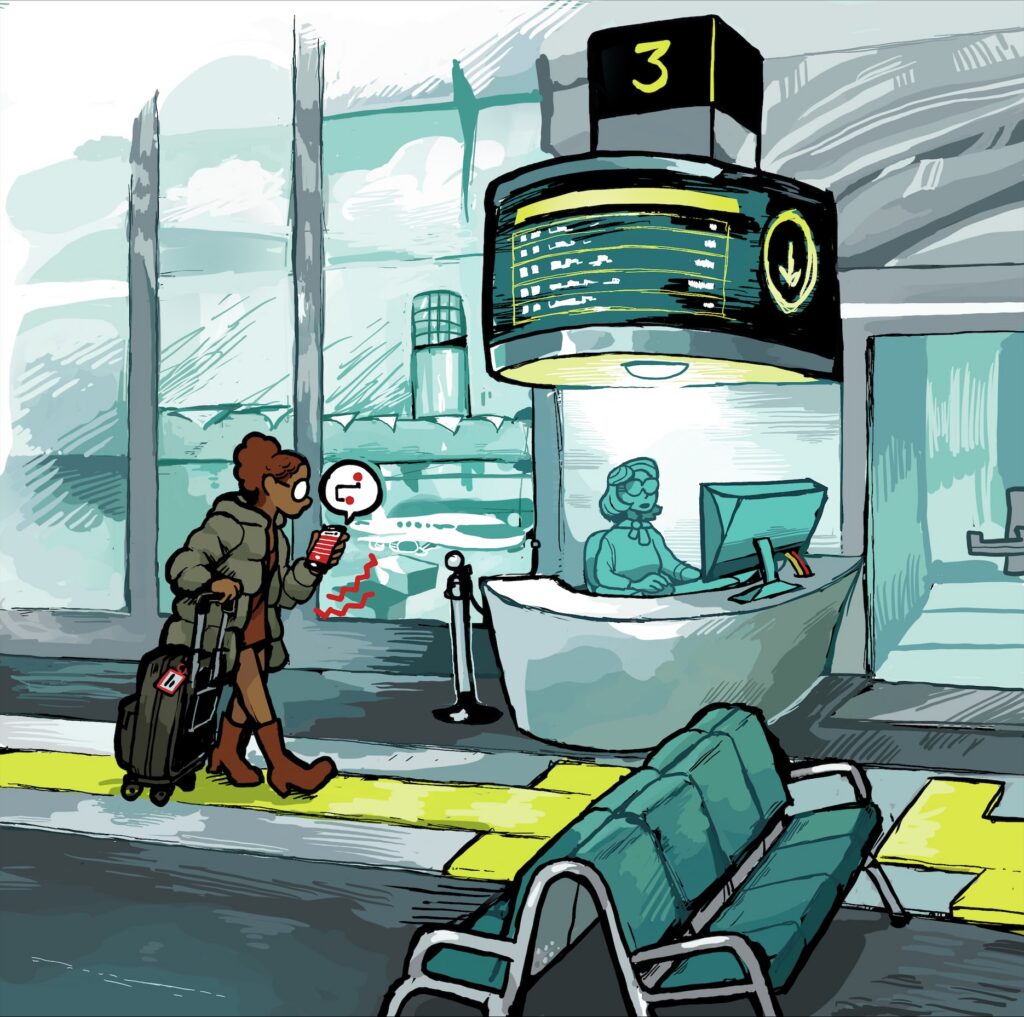
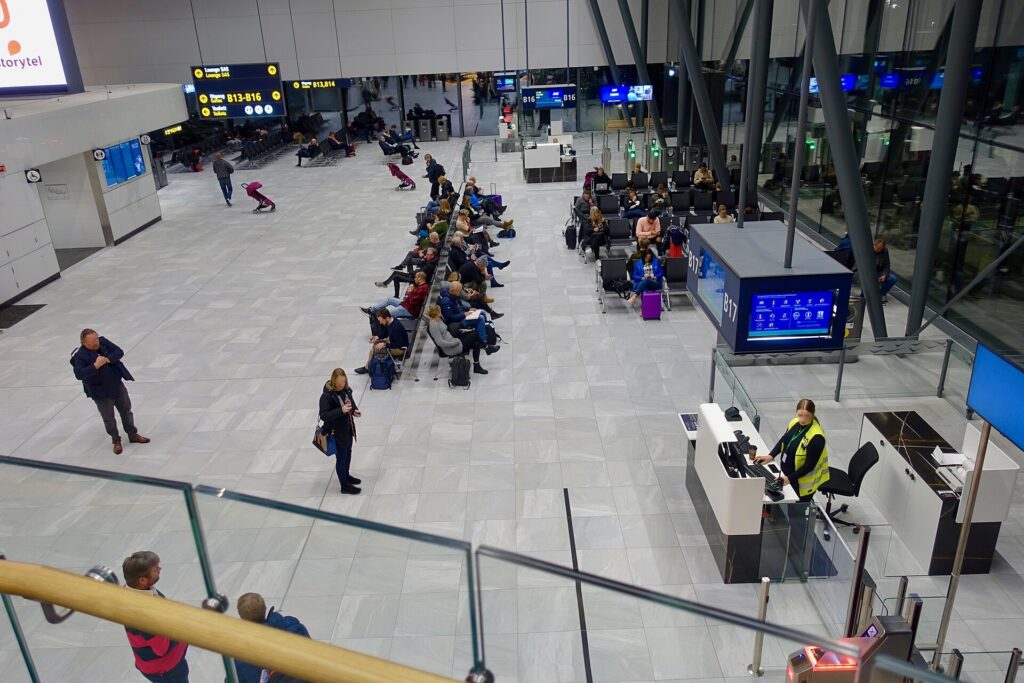
    A traveler pulling a small rolling suitcase through an airport terminal
    Smooth terminal floors are where spinner wheels shine; cobblestones and gravel are another story (Photo: Sherm for Disabled And Here via Wikimedia Commons, CC BY 4.0)

    Ride-on suitcases

    Ride-on cases, which a small child can sit on while a parent tows them by a strap, are a popular answer to the tired-toddler problem. Trunki is the best-known brand. They are fun, they give a three-year-old a place to sit at the gate, and they solve the problem of little legs that give out halfway down a long concourse. The trade-offs: capacity is small, the shape does not pack efficiently, and they are awkward for an adult to carry once the child outgrows riding. Use common sense on where to ride: never on escalators or moving walkways, and not in crowded security lines. They suit children roughly from two to five; beyond that, a normal small case is more practical.

    Backpacks as an alternative (or addition)

    Many families find that a good kids’ backpack is the most useful single bag for a young child. It keeps hands free for holding a parent’s hand, it goes up stairs and onto trains easily, and it can be the personal item under the seat with snacks, a book and headphones. For short trips, a backpack alone may be enough. For longer trips, a small case for clothes plus a backpack for the flight is the ideal combination, which is why so many kids’ luggage sets include one.

    Keep a child’s backpack light: a few kilograms at most for a young child, and adjust the straps so it sits high and close to the back.

    Affordable sets worth considering

    Kids’ luggage sets offer good value if you want coordinated pieces. The sets below are affordable options that suit boys who want a fun design without paying adult-luggage prices. Specifications, colors and designs change often, so check the current listing for dimensions and weight before you buy.

    Rosamo 16-inch Kid’s Luggage Set (6 pieces)

    Rosamo sells a 16-inch hardside spinner case bundled with several smaller matching pieces, such as a backpack and accessory bags, in a range of kid-friendly designs. It suits families who want everything in one purchase: the case for clothes, a backpack for the flight and extras for toiletries or toys. Check that the 16-inch case suits your son’s height and that the backpack is sized for his back.

    GYMAX Kids Carry-On Luggage Set (12-inch and 16-inch)

    This set pairs a 12-inch and a 16-inch rolling case. That makes it flexible: a younger sibling can take the small one while an older child takes the larger, or the same child can use the 12-inch for weekends and the 16-inch for longer trips. It is a practical buy for families with two young children close in age.

    Travelers Club 5-Piece Kids’ Luggage Set (First Responders theme)

    Travelers Club makes kids’ sets with themed graphics, including a first responders design with fire trucks, police cars and ambulances that appeals to many young boys. The multi-piece set gives a child a matching collection, and a theme he loves is a strong motivation to pack and pull his own bag.

    A plain case he will not outgrow

    For boys around ten and up, consider skipping kids’ designs altogether and buying a lightweight adult carry-on in a color he likes. It costs a little more, but it will last into the teenage years. Our guide to top travel luggage covers what to look for in an adult case.

    Design, themes and letting him choose

    A suitcase that a child loves is a suitcase he will actually pull. Let him choose the design from a shortlist you have already checked for size and weight. Dinosaurs, space, vehicles, sports and superheroes are perennially popular, but plenty of boys prefer a plain bold color, and interests change fast; a strong color or a simple pattern may last longer than a character he will be embarrassed by in two years. Bright or distinctive cases have a practical upside too: they are easy to spot on a baggage carousel and harder for another family to grab by mistake.

    Teaching kids to pack their own bag

    Packing is a skill, and a trip is a good time to teach it. For children around five and up:

    • Give a picture or written list. Number of shirts, shorts or pants, underwear and socks, pajamas, a sweater, a swimsuit, toothbrush. Younger children do well with pictures.
    • Lay it out first. Have your son put everything on the bed, then check it together before it goes in the case.
    • Roll clothes. Rolled clothes take less space and are easier for small hands to fit in.
    • One comfort item, chosen by him. A stuffed animal or small blanket goes in the backpack, not the checked bag.
    • Limit the toys. Two or three small toys and a couple of books are plenty. Our list of the best traveling books for kids has ideas that pack flat.
    • Leave room for souvenirs. A case packed to bursting on the way out has no room for the trip home.
    • The parent does the final check. Chargers, medications and anything that cannot be replaced should be packed or checked by an adult.

    Getting through security with a child’s suitcase

    A child’s carry-on goes through the X-ray just like an adult’s, and the same liquid limits apply to anything inside it. Toy guns, realistic replica weapons and some toys with sharp parts can be refused, and water bottles need to be empty at the checkpoint. Snacks are generally fine. Formula, breast milk and baby food are treated differently from other liquids; our travel bottle warmer guide explains those rules for families with babies.

    In the United States, the TSA’s traveling with children page explains screening for children, strollers and car seats, and the TSA “What Can I Bring?” list covers specific items. In Canada, Transport Canada publishes what not to bring on a plane. Pack the child’s bag so that anything the officers may want to check, like a tablet or a snack pouch, is easy to reach, and allow extra time at the airport when traveling as a family; our guide to airport arrival times has the details.
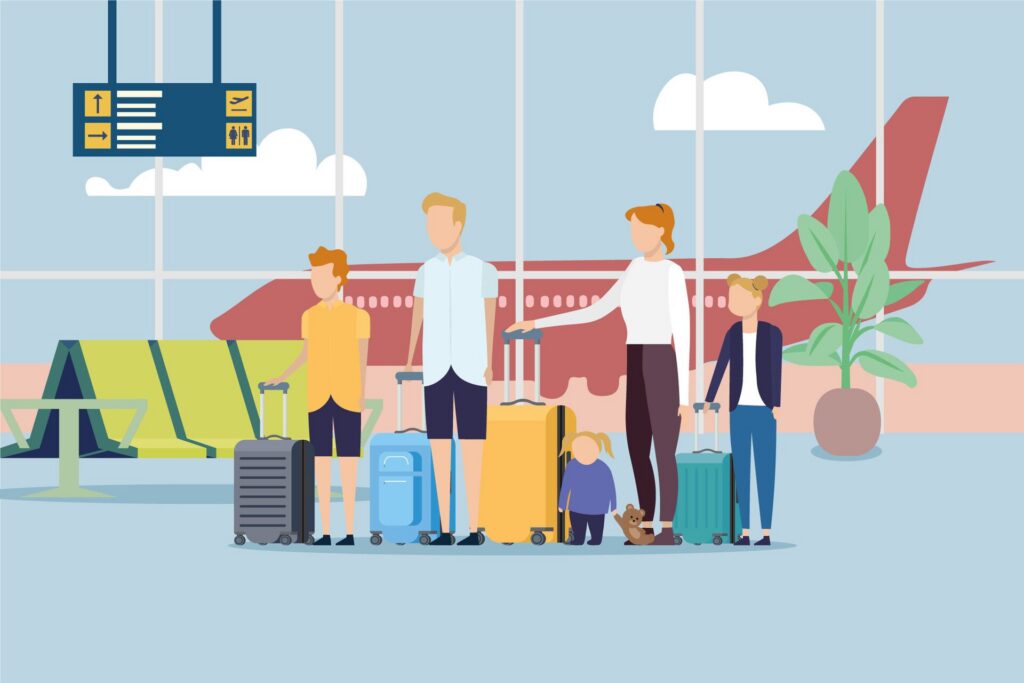
    Illustration of a family with rolling suitcases waiting at an airport gate
    A case for each child who can manage one, and a backpack each for the flight (Photo: Familydestinationsguide.com Images via Wikimedia Commons, CC BY 2.0)

    Siblings, longer trips and checked bags

    With two or three children, the question is whether everyone gets a case or whether the family shares. A workable pattern for many families: every child carries a backpack with their own flight essentials, children old enough to manage it pull a small case, and one larger checked bag holds the bulky items, such as jackets, extra shoes and beach gear, for everyone. That keeps each child’s load light while avoiding a line of five overhead-bin cases that all need lifting at boarding.

    For trips of more than a week, or trips that need winter clothes, a small child’s case will not hold everything, and that is fine. Pack the child’s case with the clothes he will need for the first couple of days plus his favorite things, and put the rest in the shared checked bag. If the checked bag is delayed, he still has what matters to him. On road trips, soft bags squash into a car trunk more easily than several hardside cases; our family car rental guide covers choosing a vehicle with enough room.

    An empty baggage claim carousel in an airport arrivals hall
    A bright, distinctive case is easier to spot on the carousel and harder for another family to take by mistake (Photo: Jo-Jo Eumerus via Wikimedia Commons, CC BY-SA 4.0)

    Labels, tracking and not losing it

    • Label inside and out. A luggage tag with a parent’s phone number outside, and a card with the same details inside, in case the tag is torn off. Do not put the child’s name on the outside.
    • Add a small tracker if you like. A Bluetooth tracker tucked in a pocket can help locate a case left at a gate or delayed by the airline.
    • Photograph it. A quick photo of the case, and of what is inside, makes a lost-baggage claim much easier.
    • Do a count. At every transition, gate, taxi, hotel lobby, count the bags. Give each child the job of counting his own.

    Making it last

    Children are hard on luggage. A few habits help a case survive several trips:

    • Push the handle all the way down before lifting the case by the side or top handle.
    • Do not let children stand on the case or sit on a spinner, which is not built for it. Ride-on cases are the exception.
    • Wipe hardside shells after the trip, and empty and air softside cases before storing them.
    • Check the wheels and zippers before each trip, not the night before departure.
    • Store the case somewhere dry; a damp garage is hard on zippers and fabric.

    Common mistakes

    • Buying too big. A case sized “to grow into” is too heavy and awkward for the child now, so an adult ends up carrying it.
    • Ignoring handle height. A handle that is too tall is the most common reason kids give up pulling their bag.
    • Assuming any kids’ case fits under the seat. Under-seat space varies by aircraft and seat. Measure against the airline’s personal-item limit if that is the plan.
    • Checking the child’s only bag. Keep a change of clothes and the comfort item in the cabin in case checked bags are delayed.
    • Buying on design alone. A great print on a flimsy shell with sticky wheels will not last one trip.

    Frequently asked questions

    What size suitcase does a child need?

    For about four to six, a case around 14 to 16 inches; for about seven to ten, 16 to 18 inches; from around eleven, a standard adult carry-on within the airline’s limit. Handle height and weight matter as much as size.

    Do kids get a free carry-on on flights?

    A child with their own paid seat usually gets the same cabin allowance as an adult on that fare. Lap infants usually do not get a separate carry-on, though many airlines allow a diaper bag. Check your airline’s rules.

    Are kids’ suitcases allowed as carry-on?

    Yes, as long as they are within the airline’s carry-on or personal-item dimensions, including wheels and handles. Many kids’ cases are well inside the limits, but measure before you fly.

    Is a hardside or softside suitcase better for kids?

    Both work. Hardside protects contents and wipes clean; softside is lighter, flexible and has outside pockets. Choose on weight, wheels and handle before material.

    What age can a child pull their own suitcase?

    Many children can manage a small, light case from about four, with help on stairs and escalators. Younger children do better with a backpack or a ride-on case a parent can tow.

    Are ride-on suitcases worth it?

    For children roughly two to five on trips with long walks through airports, many parents find them very useful. They hold less and are outgrown quickly, so older children are better served by a normal case.

    Should my child’s suitcase be a set with a backpack?

    If you do not already have a kids’ backpack, a set is good value: the case holds clothes and the backpack holds the flight essentials under the seat.

    With the bags sorted, the rest is the trip itself. Compare family fares across flexible dates on our flight search, find a room with space for everyone on our hotel search, and if you are driving from the airport, add a car with room for the luggage on our car rental search. Our guide to booking hotels for family vacations covers timing and room types, and a first family trip to Orlando or San Diego is a great first outing for a new suitcase.

  • Rolling Laptop Bag: 5 Best Picks for Business Travel & Daily Commutes in 2026

    Rolling Laptop Bag: 5 Best Picks for Business Travel & Daily Commutes in 2026

    A heavy laptop bag feels fine for the first ten minutes. By the time you have walked the length of a big-airport concourse, stood in a security line and crossed a convention center, the strap has dug a groove into your shoulder and you are shifting the bag from side to side every few steps. A rolling laptop bag solves that by putting the weight on wheels: a padded compartment for your computer, room for chargers and files, and a telescoping handle so you pull it instead of carrying it. It is not the right bag for everyone, though. Wheels add weight, a wheeled case can count as your full carry-on rather than your personal item, and stairs, cobblestones and crowded trains are much less friendly to wheels than airport floors. This guide explains the different kinds of rolling laptop bags, how airline size rules affect which one you should buy, what to look for in wheels, handles, materials and organization, how to get through security and pack batteries correctly, and the options from our original list with who each one suits. It is part of our travel gear series, which starts with our main guide to choosing travel luggage.

    The short answer

    If you fly often with a laptop and your shoulders object to a heavy tech bag, a rolling laptop bag is worth it, but choose the type carefully. For day commutes and short work trips, a compact wheeled briefcase with a padded laptop sleeve and a trolley strap is the most practical. For overnight trips, an overnight roller or laptop spinner with a separate clothing section can replace a suitcase entirely. If you already travel with a carry-on suitcase, consider a carry-on with a built-in laptop pocket plus a slim personal item instead of two wheeled bags. Before you buy, measure your laptop, not just its screen size, and compare the bag’s outside dimensions, wheels included, with the carry-on and personal-item limits of the airlines you use. Spare batteries and power banks always go in the cabin, never in a checked bag, and the rolling bag is a good place for them.

    Travelers walking with bags along a long concourse at Chicago O'Hare International Airport
    Long concourses are where wheels earn their keep: a rolling bag takes the laptop's weight off your shoulder (Photo: N i c o l a from Fiumicino (Rome), Italy via Wikimedia Commons, CC BY 2.0)

    What counts as a rolling laptop bag?

    The term covers several quite different bags. Knowing which kind you are looking at saves a lot of confusion when you compare product listings.

    Wheeled briefcase or laptop roller

    This is the classic design: a briefcase-shaped bag, usually upright, with two inline wheels, a telescoping handle and a padded laptop compartment. It holds a laptop, a tablet, files, a notebook and a charger or two, with perhaps enough spare room for a shirt. It is aimed at commuters and day trips, and it is often the smallest and lightest wheeled option.

    Laptop spinner

    A laptop spinner has four wheels that turn in every direction, so you can push it beside you rather than tow it behind. Spinners are easy to steer on smooth floors and in tight spaces like airplane aisles. They are usually a little taller and heavier than a two-wheel roller, and the exposed wheels are more vulnerable on rough ground.

    Overnight roller

    An overnight roller adds a clothing compartment to the laptop section. It is designed for one- or two-night business trips where you want a single wheeled bag for everything: laptop, chargers, a change of clothes and a toiletry kit. Many are sized close to a full carry-on, which matters for airline rules.

    Carry-on suitcase with a laptop pocket

    Many softside carry-ons now have a padded front compartment for a laptop. This is not a laptop bag in the strict sense, but for many business travelers it is the better answer: one wheeled bag for clothes and computer, and a small personal item for the flight.

    TypeBest forStrengthsWatch out for
    Wheeled briefcase (two wheels)Daily commutes, day trips, meetingsCompact, light for a wheeled bag, handles curbs wellLimited space; strains the wrist on long pulls
    Laptop spinner (four wheels)Frequent flyers, big airportsPushes beside you, easy in aisles and crowdsExposed wheels, rolls away on slopes and trains
    Overnight rollerOne- or two-night business tripsReplaces a suitcase; clothes and tech in one bagOften counts as your full carry-on
    Hardside rolling caseFragile gear, rainy climatesCrush and water protection, wipes cleanRigid, fewer pockets, can scuff
    Carry-on with laptop pocketTravelers who already use a carry-onOne wheeled bag for everythingLaptop pocket may be less padded than a dedicated case

    The airline question: personal item or carry-on?

    This is the most important thing to get right, and the one most product listings gloss over. Most airlines allow two cabin items on standard fares: a carry-on for the overhead bin and a smaller personal item that must fit under the seat in front of you. A slim laptop bag usually counts as the personal item. A wheeled laptop bag, because of the wheel housing and the handle, is often big enough to count as the carry-on instead.

    That has real consequences:

    • If the rolling bag is your carry-on, you cannot also bring a carry-on suitcase on most fares. That works for day trips and one-night stays, but not for longer trips unless you check a bag.
    • If you want the rolling bag as your personal item, it has to fit the airline’s personal-item dimensions and go under the seat. Only the most compact wheeled briefcases manage this, and under-seat space varies between aircraft and seat rows.
    • Basic and ultra-low-cost fares sometimes include only a personal item. A wheeled bag that counts as a carry-on may trigger a fee at the gate.
    • Measurements include wheels and handles. A bag listed as fitting a 15.6-inch laptop says nothing about its outside dimensions. Look for the full external measurements, or measure it yourself with the pockets packed.

    Rules differ between airlines and change often, so check the official page before you buy and again before you fly. Good starting points are Air Canada carry-on baggage, WestJet carry-on baggage and Delta carry-on baggage. Our guide to Delta carry-on size rules walks through one airline in detail, and the travel luggage guide explains how carry-on and personal-item limits fit together across a whole bag system.

    A practical rule: if you usually travel with a carry-on suitcase, look for a rolling laptop bag with a trolley sleeve that slides over the suitcase handle, or skip wheels on the laptop bag entirely and let the suitcase do the rolling. If the laptop bag is your only bag, a larger overnight roller makes sense.

    Passengers lined up at a TSA security checkpoint in a bright airport terminal
    Pack the laptop where it slides out in one move, since many checkpoints still ask for it in its own bin (Photo: Tony Webster via Wikimedia Commons, CC BY 2.0)

    How to choose a rolling laptop bag

    Laptop fit

    Screen size is only a rough guide. Two laptops with 15.6-inch screens can differ in width, depth and thickness, and a gaming or workstation laptop can be much thicker than an ultrabook. Measure your laptop’s actual width, depth and thickness and compare them with the internal dimensions of the laptop compartment if the maker lists them. The compartment should hold the laptop snugly, with padding on all sides and a raised or suspended floor so the laptop does not take the impact when the bag is set down hard.

    Wheels

    Two inline wheels are recessed into the frame, which protects them and handles curbs, gravel and uneven sidewalks better. Four spinner wheels let you push the bag upright beside you and turn in place, which is easier in terminals, aisles and elevators. Larger wheels roll more smoothly over cracks and thresholds. Replaceable wheels are a sign of a bag built to be repaired rather than thrown away.

    Handle

    A telescoping handle should lock firmly at more than one height and not rattle when extended. Twin-pole handles are generally steadier than single-pole designs. Tall travelers should check the fully extended height; a handle that is too short makes you stoop and swing the bag into your heels. Carry handles on the top and side matter every time you lift the bag into a bin or a trunk, and the wheels and handle add weight, so when two bags seem equal, choose the lighter one.

    Materials

    Higher-denier ballistic nylon and polyester resist abrasion well and hide scuffs. Water-resistant fabric and coated zippers protect electronics in a sudden downpour between a taxi and a lobby, which is more common than most people expect. Hardshell cases protect against crushing but scuff visibly.

    Organization

    Look for a front panel with slots for pens, cards and a phone; a zip pocket or pouch for chargers and cables; a file section for documents; and a quick-access pocket for a passport and boarding pass. Our guide to laptop travel accessories covers cable pouches, adapters and stands that fit inside.

    Security features

    Lockable zippers, a hidden pocket against the back panel and puncture-resistant zippers make a bag harder to open quietly. They are not a replacement for keeping the bag in sight. If theft in crowds is your main worry, our guide to anti-theft backpacks explains which features actually matter and why.

    Security screening with a rolling laptop bag

    Airport screening rules for laptops are not the same everywhere. At many checkpoints you still need to take a laptop out and place it in its own bin; at checkpoints with newer screening technology, or for travelers in trusted traveler programs, laptops can sometimes stay in the bag. The rule is whatever the officers at that checkpoint tell you, so pack for the strictest case:

    • Put the laptop in the compartment closest to the top or back, so it slides out without unpacking anything else.
    • Keep liquids, gels and aerosols in one clear bag in an outside pocket, ready to remove if asked. The TSA liquids rule covers US airports, and CATSA’s what-can-I-bring page covers Canadian ones.
    • Avoid dense clutter around the laptop. A tangle of cables and chargers packed tightly around the computer is more likely to need a second look.

    Allow enough time for all of this, especially on international departures. Our guide to airport arrival times for international flights explains how early to get there.

    Power banks, spare batteries and your laptop bag

    A laptop bag is where most travelers keep their power bank, a spare camera battery or a charging case, so the lithium battery rules matter here. The principles are consistent across North America, even though the details are set by each authority and airline:

    • Spare lithium batteries and power banks go in the cabin, never in checked baggage. Batteries installed in a laptop or phone are treated differently from spares, but the safest habit is to keep all battery-powered devices with you.
    • Size limits are based on watt-hours. Most phone power banks and laptop batteries sit under the common 100 Wh threshold. Larger batteries generally need airline approval, and very large ones are not allowed at all.
    • Protect the terminals. Keep spares in their original packaging, a protective case or a separate plastic bag, away from keys and coins.
    • If a rolling bag gets gate-checked, take the laptop, power bank and any spare batteries out before you hand it over. This is the most common way batteries end up in the hold by accident.
    • Airlines can be stricter. Some carriers have added their own limits on using or charging power banks during the flight, so read your airline’s page as well.

    Read the official guidance before you fly: the FAA’s PackSafe page on lithium batteries, the TSA’s power banks entry and CATSA’s guidelines for batteries. If you want fewer chargers in the bag to begin with, our guide to 3-in-1 Apple chargers shows how one charger can cover a phone, a watch and earbuds.

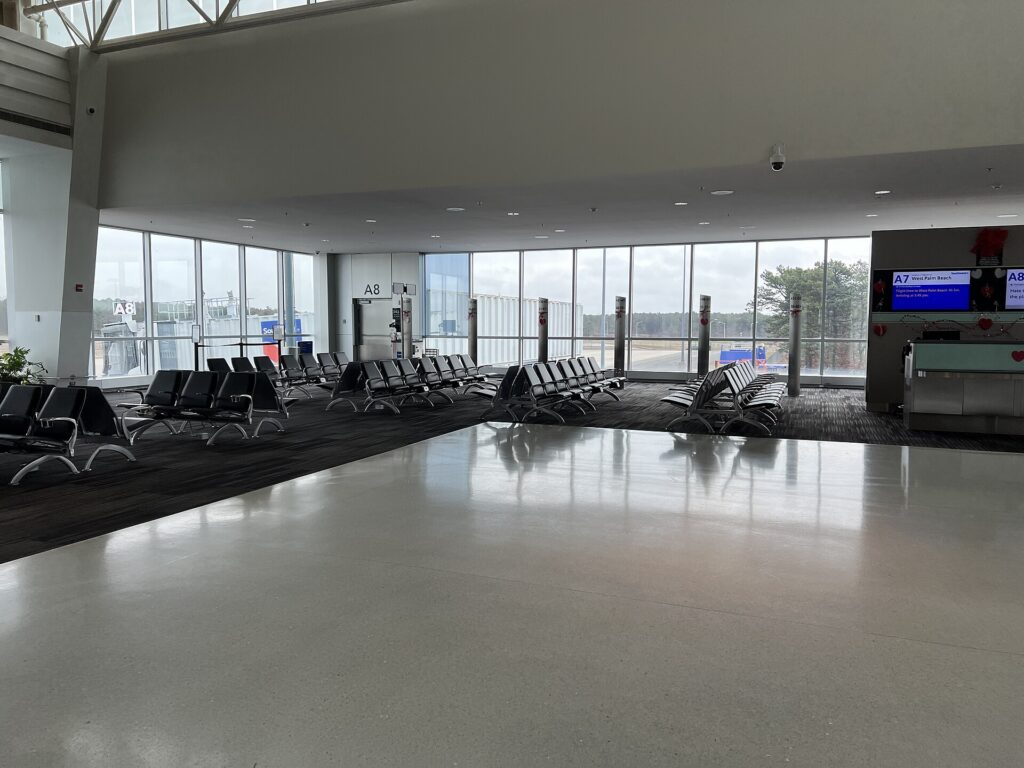
    Rows of seats in an airport gate area with large windows onto the airfield
    At the gate, a wheeled bag that counts as your carry-on may be the only cabin bag your fare allows (Photo: AITFFan1 via Wikimedia Commons, CC0)

    Options from our original list

    The bags below were featured in the original version of this guide. They cover different needs rather than a strict ranking, and designs, sizes and features change between versions and sellers, so confirm the current details and outside dimensions before you buy.

    Amazon Basics 15.6-inch rolling laptop bag

    Amazon Basics sells a simple wheeled laptop case designed for laptops up to 15.6 inches, with a telescoping handle and a main compartment for files and accessories. It is a budget option for commuters and occasional business travelers who want to get the weight off their shoulders without spending much. As with any budget bag, check the wheels and zippers when it arrives, and treat it as a commuting bag first and a heavy-duty travel bag second.

    Rockland Revolution hardside rolling computer case

    Rockland’s Revolution rolling computer case uses a hard shell instead of fabric, with wheels and a pull handle. A hardside case like this suits travelers who worry about crushing and rain more than about outside pockets, and people who like a clean, wipeable exterior. Check the outside dimensions against your airline’s carry-on limit, and remember that a rigid case will not flex to fit a tight under-seat space.

    Travelpro Maxlite 5 carry-on spinner

    The Travelpro Maxlite 5 21-inch expandable carry-on spinner is a suitcase rather than a laptop bag, but it earned its place on the original list as an alternative for people who want one wheeled bag for clothes and work gear. Travelpro describes the Maxlite line as one of its lightest wheeled carry-ons, with four spinner wheels and an expansion zipper, and notes that a fully expanded case may not meet airline carry-on limits. Pair it with a slim laptop sleeve or a small personal item and you have a complete business-trip setup.

    Kensington Contour 2.0 laptop spinner

    Kensington’s Contour 2.0 Executive Balance Laptop Spinner is a four-wheel laptop spinner for 15.6-inch laptops. Kensington describes it as a four-wheeled spinner made from water-resistant ballistic polyester, with a lockable zip and a trolley pass-through for stacking it on a larger roller. It suits frequent business travelers who want a dedicated, well-organized laptop spinner, and the line also includes larger overnight versions with a clothing compartment.

    BAGSMART 17.3-inch quilted rolling laptop bag

    BAGSMART’s rolling laptop bag pairs a quilted exterior with wheels and a compartment designed for laptops up to 17.3 inches. It is marketed mainly to women, but it suits anyone who carries a large laptop and wants a bag that looks more like a stylish tote than a standard black briefcase. With a laptop this large, check both the compartment size and the bag’s outside dimensions, since big-laptop bags often end up counting as your carry-on.

    Rolling bag, backpack or shoulder bag?

    Wheels are not always the answer. Here is how the three main ways to carry a laptop compare:

    • Rolling bag: best for heavy loads, long airport walks, flat cities and anyone who finds carrying weight on the shoulders uncomfortable. Weaker on stairs, cobblestones, crowded trains and anywhere without elevators.
    • Backpack: best for mixed terrain, public transit, multi-city trips and travelers who want their hands free. It spreads weight across both shoulders and is usually lighter than a wheeled bag. Our guide to the Peak Design Travel Backpack 45L covers carry-on travel packs with laptop compartments, and anti-theft backpacks add security features for busy cities.
    • Shoulder bag or briefcase: best for light loads and short carries, and it looks the most formal. It becomes uncomfortable quickly once it holds a heavy laptop, chargers and files.

    Many business travelers own both and pick by trip.

    How to pack a rolling laptop bag

    • Laptop first, in the padded compartment, with nothing hard pressing against the screen side.
    • Heavy items low and near the wheels: the power brick, a power bank in its pouch, a mouse. This keeps the bag stable and stops it tipping forward when you let go.
    • Cables and small chargers in one pouch so you can pull them all out at a hotel desk or a security bin in one move.
    • Documents and a notebook flat in the file section, away from anything that could leak.
    • Liquids bag and passport in outside pockets for quick access at security and check-in.
    • A layer and a snack on top for cold cabins and delayed flights.
    • Leave some room. An overstuffed laptop bag puts pressure on the laptop and makes zippers fail.

    If you type a lot on the road, a folding travel keyboard slips into the front panel and turns a tablet or a hotel desk into a proper workstation. For long flights, noise-cancelling headphones are the one extra most business travelers never leave behind.

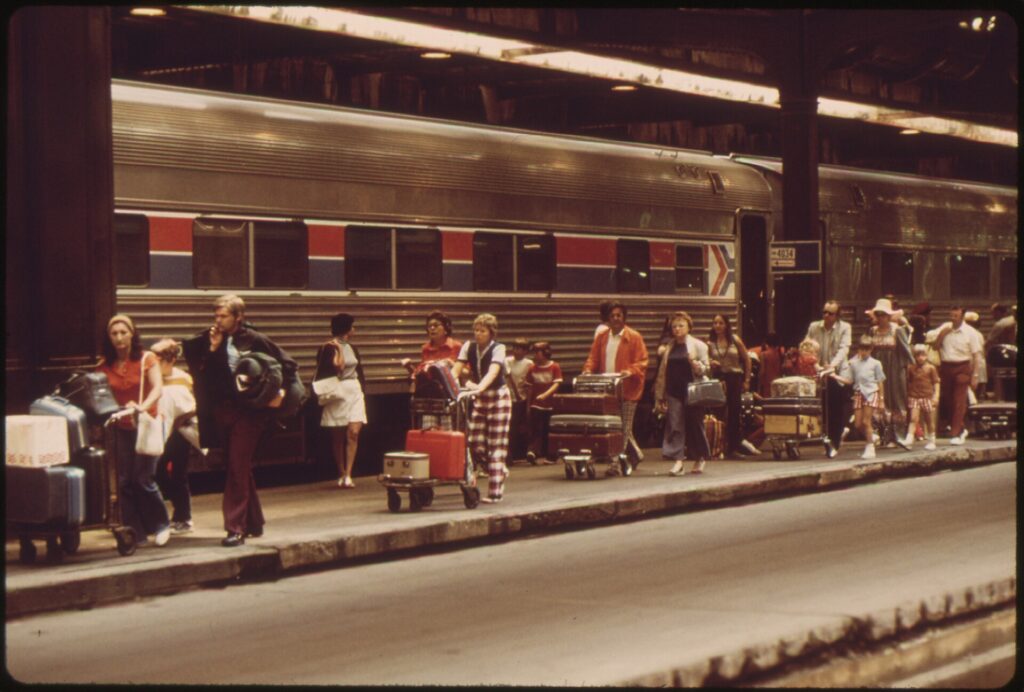
    Vintage photo of passengers with luggage walking along a platform beside a train at Chicago Union Station
    Platforms, stairs and moving trains are harder on wheels than airport floors; a two-wheel roller stands steadier (Photo: Charles O'Rear via Wikimedia Commons, Public domain)

    Using a rolling bag on real trips

    Trains and transit

    On trains and subways, a spinner will roll with every brake and curve. Lay it on its back, wedge it between your feet or choose a two-wheel roller that stands more steadily. Stairs at older stations are the weak point; a shoulder strap or a grab handle at the base makes carrying easier.

    Hotels and offices

    Rolling bags are at home on hotel corridors and office carpets. When you arrive, unpack the laptop and chargers onto the desk rather than working out of the bag; it is easier to see what you have and harder to leave something behind at checkout. If you are choosing where to stay for a work trip, our business travel hotels guide covers what to look for in a room you need to work from.

    Care, repairs and warranties

    Wheels, handles and zippers fail first, so check them a week before a trip rather than the night before. Wipe wheels clean after rain or grit, push the handle fully down before lifting by the side handle and never sit on a spinner. Many brands sell replacement wheels and handles, and a luggage repair shop can often fix a wheel for much less than a new bag. Warranties vary widely, from short defect-only coverage to long guarantees that include damage from travel. Keep the receipt, register the bag if the brand asks you to and read the warranty terms before you choose between two similar bags.

    Common mistakes

    • Buying by screen size alone. Measure the laptop, especially if it is thick or has a large power brick.
    • Forgetting that wheels change the category. A wheeled bag often counts as your carry-on, not your personal item.
    • Packing batteries loose. Keep power banks and spares protected and in the cabin, and remove them if the bag is gate-checked.
    • Ignoring the handle height. A short handle is tiring and makes the bag clip your heels.

    Frequently asked questions

    Is a rolling laptop bag allowed as a personal item?

    Sometimes, but not usually. Only compact wheeled briefcases that fit the airline’s personal-item dimensions and go under the seat qualify. Many rolling laptop bags are large enough to count as the carry-on. Check the airline’s official limits and measure the bag with wheels and handle included.

    Are spinner wheels or two wheels better for a laptop bag?

    Spinners are easier in airports and aisles and can be pushed beside you. Two inline wheels handle curbs, cobblestones and sidewalks better and are less likely to break. Choose based on where you roll most.

    What size rolling laptop bag do I need?

    Measure your laptop’s width, depth and thickness and compare them with the compartment, not just the listed screen size. Then choose the smallest bag that holds everything you carry on a typical trip.

    Can I keep my power bank in a rolling laptop bag?

    Yes, as long as the bag stays with you in the cabin. Spare lithium batteries and power banks are not allowed in checked baggage, so take them out if the bag is gate-checked. See the FAA, TSA and CATSA pages linked above.

    Do I have to take my laptop out at security?

    It depends on the checkpoint and your screening program. Many checkpoints still require it, while some newer ones do not. Pack the laptop where you can slide it out quickly and follow the officers’ instructions.

    Is a rolling laptop bag better than a backpack?

    For heavy loads and airport-heavy trips, often yes. For trains, stairs, old cities and hands-free travel, a backpack is usually better. Many frequent travelers own both.

    Once the bag is sorted, focus on the trip. Compare fares for your next work trip on our flight search, find a hotel with a proper desk on our hotel search, and pick up a car with room for your bags on our car rental search. If your next meeting is in Toronto, our guide to getting around Toronto will help you decide between a rental and transit, and flights to Toronto are a good place to start. For the rest of your kit, head back to our main guide to travel luggage.

  • Peak Design Travel Backpack 45L: 5 Best Picks

    Peak Design Travel Backpack 45L: 5 Best Picks

    The Peak Design Travel Backpack 45L is one of the best-known bags built around a simple idea: carry everything for a trip in one bag on your back, and walk off the plane without waiting at a baggage carousel. It packs like a suitcase, carries like a backpack and works with a set of packing and camera cubes, which is why it shows up so often with photographers, remote workers and people who hop between cities by train. It is also a premium bag, and it is not the right answer for every traveler. This guide explains what the Travel Backpack 45L does well, how its expandable capacity and access points work, whether it fits airline carry-on rules, how it compares with Peak Design’s Travel Duffelpack and Outdoor Backpack 45L, and how to choose and pack any 40 to 45 liter travel backpack so a week of travel fits comfortably on your back.

    The short answer

    If you want a single carry-on bag for trips of up to a week or so, value organization and plan to walk, take trains or climb stairs with your luggage, the Peak Design Travel Backpack 45L is a strong choice. It compresses for shorter trips and expands for longer ones, opens wide like a suitcase, has a dedicated laptop sleeve and works with Peak Design’s cubes. If you need more volume for bulky or sports gear, the Travel Duffelpack is a better fit. If your trip is built around trails rather than terminals, look at the Outdoor Backpack 45L or a proper hiking pack. And if your shoulders or back do not enjoy carrying weight, a carry-on suitcase with wheels may simply be the better bag for you. Whichever you choose, check your airline’s current carry-on limits before you fly, since a 45 liter bag packed full sits at the edge of many allowances.

    A traveler with a large backpack waiting on a railway platform
    Stairs, platforms and crowded carriages are where a travel backpack beats a roller (Photo: Clem Onojeghuo clemono2 via Wikimedia Commons, CC0)

    What the Travel Backpack 45L is designed to do

    Most backpacks load from the top, which means the thing you need is always at the bottom. The Travel Backpack 45L is built the other way: it opens along the back panel like a clamshell suitcase, so you can lay it flat on a hotel bed and see everything at once. It adds side access to reach things without opening the whole bag, and a front section for smaller items. The bag’s capacity can be reduced with compression zips and straps when you pack light and expanded to its full 45 liters when you need the room, so the same bag works for a three-night work trip and a week-long holiday.

    It is also designed as part of a system. Peak Design sells packing cubes, a camera cube, a tech pouch and a wash pouch sized to fit the bag, and the laptop sleeve sits against your back where it is protected and easy to slide out at security. The idea is that the backpack does the carrying and the cubes do the organizing. You can check current features, dimensions and accessory compatibility on Peak Design’s own site.

    Key features, and why they matter

    Adjustable capacity

    The single most useful feature is that the bag changes size. Compressed, it is slimmer and easier to carry around a city, less likely to bump people on a train and more likely to fit tighter carry-on limits. Expanded, it holds enough for most people for a week, especially if you do laundry once. Peak Design lists the exact modes and dimensions for each, and those are the numbers to compare against your airline.

    Suitcase-style opening and multiple access points

    The clamshell opening makes packing and unpacking far easier than a top-loader, and it is quicker at a security checkpoint when you need to pull out a laptop or a bag of liquids. Side access lets you grab a jacket or a camera without unzipping the main compartment.

    Laptop and tablet sleeves

    A padded sleeve for a laptop and a separate slot for a tablet or documents keep electronics protected and separate from clothes. Check the listed laptop size against your machine, particularly if you carry a large 16-inch laptop.

    Harness and hip belt

    Padded shoulder straps, a sternum strap and a hip belt make a loaded bag much more comfortable. The harness and hip belt can be tucked away, which keeps them from snagging in overhead bins or on baggage belts if you ever have to gate-check it. For long walks with a full bag, use the hip belt: it moves weight from your shoulders to your hips.

    Materials and weather resistance

    The shell is a weather-resistant recycled nylon, with water-resistant zippers. That will keep a passing shower off your clothes, but it is not a waterproof dry bag. In heavy rain, pack electronics in the middle of the bag and consider a rain cover if you walk a lot between stations.

    Warranty

    Peak Design offers a lifetime warranty on its bags. That is part of what you are paying for with a premium pack, and it is worth reading the current terms on the manufacturer’s site so you know what it covers.

    Is the Peak Design Travel Backpack 45L carry-on size?

    It was designed with carry-on travel in mind, but “carry-on size” always depends on three things: the airline, the fare and how full you pack it. The principles:

    • Compressed, it fits more airlines. A slimmer bag is more likely to meet stricter limits and to fit smaller overhead bins on regional jets.
    • Fully expanded and stuffed, it sits at the edge. A 45 liter pack packed to bursting can exceed a carry-on depth limit, especially with full front pockets.
    • Some fares only allow a personal item. Basic and ultra-low-cost fares may include only a small under-seat bag; a 45 liter pack is a full carry-on on any airline.
    • Some airlines weigh cabin bags. A full backpack with a laptop and camera can be heavy, so check whether your airline has a cabin weight limit.

    Always check the official page before you fly: Air Canada carry-on baggage, WestJet carry-on baggage and Delta carry-on baggage are good examples of how airlines publish their limits. For budget carriers in Europe, read the cabin bag rules closely; easyJet’s cabin bag page shows how a free allowance can be much smaller than a full carry-on. Our guide to Delta carry-on sizes goes deeper on one airline, and our main guide to travel luggage explains carry-on, personal item and checked allowances in general.

    Who it suits, and who should look elsewhere

    A good fit for

    • One-bag travelers who want to skip checked bags and move fast between flights, trains and hotels.
    • Multi-city trips with stairs, cobblestones, ferries and crowded platforms, where wheels are a liability.
    • Remote workers who need a laptop, chargers and a week of clothes in one bag.
    • Travel photographers who want a camera cube inside a bag that does not look like a camera bag.
    • Business travelers who prefer a backpack to a roller and want something that looks tidy in a meeting.

    Probably not the best choice for

    • Travelers with back, neck or shoulder problems, who will usually be happier with a wheeled carry-on.
    • Long trips in cold weather with bulky layers and boots, where the volume runs out quickly.
    • Serious hiking, where a pack with a real load-bearing frame and a torso-length adjustment carries weight much better; see our guide to hiking backpacks.
    • Tight budgets. The Travel Backpack 45L is a premium bag. Many simpler 40 liter travel packs do the core job for less, without the accessory ecosystem.
    A travel photographer taking a picture at a pagoda
    A camera cube turns part of a travel backpack into a padded camera bag without making it look like one (Photo: Jay.Jarosz via Wikimedia Commons, CC BY-SA 4.0)

    Travel Backpack 45L vs the alternatives

    BagBest forStrengthsTrade-offs
    Peak Design Travel Backpack 45LOne-bag carry-on travel, city hoppingSuitcase-style opening, adjustable capacity, laptop sleeve, cube systemPremium price; heavy when full; at the edge of some carry-on limits when expanded
    Peak Design Travel DuffelpackRoad trips, sports and bulky gear, longer tripsLarge duffel opening, more volume, stowable backpack strapsToo big for most carry-on limits when full; less organization
    Peak Design Outdoor Backpack 45LHiking, outdoor photography, trips mixing trails and townsRoll-top, hip belt and harness built for trail use, camera cube compatibleLess suitcase-like organization for city travel
    Carry-on suitcaseAirport-to-hotel trips, travelers who prefer not to carry weightWheels take the load; easy to packAwkward on stairs, cobbles and crowded trains
    Smaller 25 to 35 liter packWeekend trips, minimalists, strict airlinesLighter, fits more carry-on limits, some fit personal-item limitsNeeds disciplined packing for longer trips

    The Peak Design options worth considering

    The original version of this guide listed five Peak Design products. Several are the same bag in different colors, so here they are grouped by model. Colors, capacities and specifications change between versions, so confirm the current details on the manufacturer’s site before you buy.

    Peak Design Travel Backpack 45L (Black)

    The flagship, and the bag this guide is named for. It is the most versatile of the group: carry-on focused, organized, and suited to everything from a work trip to a week in Europe. Black is the most understated color and looks at home in an office or a boutique hotel. Choose it if you want one bag that does most trips and you will use the laptop sleeve and cubes.

    Peak Design Travel Duffelpack (Ocean, Black and Eclipse)

    The Travel Duffelpack combines a duffel’s big, open main compartment with backpack straps that tuck away when you do not need them. The original guide listed it in three colors: Ocean, Black and Eclipse. It holds more than the Travel Backpack and is better for road trips, ski and sports gear, camera kits and longer trips where you plan to check a bag. It is less organized inside, so packing cubes matter more, and when full it is generally a checked bag rather than a carry-on. Choose it if you value volume and easy loading over carry-on compliance.

    Peak Design Outdoor Backpack 45L (Kelp)

    Part of Peak Design’s outdoor line, this pack uses a roll-top closure and a harness and hip belt designed for carrying on trails, and it works with the brand’s camera cubes. The original guide listed it in the Kelp color. It suits hikers, landscape photographers and travelers whose trip mixes trails with towns. For city travel it is less convenient than the Travel Backpack’s suitcase-style opening, and for multi-day backpacking with a tent and food, a dedicated trekking pack with an adjustable frame may still carry better.

    Do you need the matching cubes and pouches?

    Peak Design’s packing cubes, camera cube, tech pouch and wash pouch are shaped to fill the Travel Backpack neatly, and that fit is the main argument for buying them. They are not required, though. Any packing cubes of a sensible size will organize the bag, and many travelers already own a toiletry bag and a cable pouch that work fine. A reasonable approach is to start with the backpack alone, take one trip, and then buy only the pieces that would have solved a real problem: a camera cube if you carried a camera loose in your clothes, a tech pouch if you spent time hunting for a charger, or a set of cubes if the bag turned into a jumble by day three. That keeps the total cost down and avoids a closet full of accessories you do not use. If you carry a lot of electronics, our guide to 3-in-1 Apple chargers shows how to cut down the number of chargers you pack in the first place.

    How to choose any 40 to 45 liter travel backpack

    Whether you buy the Peak Design or another brand, the same questions decide whether a travel pack works for you.

    • Capacity. About 40 to 45 liters is the practical maximum for most carry-on limits. Around 30 to 35 liters suits light packers and strict airlines. Adjustable-capacity bags give you both.
    • Fit. A travel pack should sit close to your back with the weight resting on your hips via the hip belt. If you are short or tall, check the harness length; some brands offer sizes or adjustable harnesses.
    • Opening. A full clamshell or wide U-shaped zipper packs like a suitcase. A top-loader is simpler and lighter but slower to live out of.
    • Laptop access. A separate laptop compartment you can open without unpacking clothes saves time at security.
    • Empty weight. Frames, padding and hardware add weight. A heavy empty bag makes airline cabin weight limits harder to meet.
    • Materials. Tough, weather-resistant fabric and good zippers matter more than lots of pockets.
    • Security. Lockable zippers and hidden pockets are useful in crowded cities; our guide to anti-theft backpacks covers what those features actually do.
    • Warranty and repairability. A bag you will carry for years should come from a brand that stands behind it.
    Clothes, shoes and travel items laid out next to a backpack ready for packing
    Lay it all out first: a week of clothes fits in 45 liters when every piece works with the others (Photo: www.Pixel.la Free Stock Photos via Wikimedia Commons, CC0)

    Packing a 45 liter backpack for a week

    A week in a backpack is easy with the right approach. A typical warm-weather packing list for one person:

    • Four or five tops and two or three bottoms that all work together; our guide to travel pants for men covers versatile options that dress up or down.
    • Underwear and socks for five days, plus a plan to wash a load midweek.
    • One warm layer and one light rain jacket.
    • One pair of shoes on your feet and at most one more in the bag; see our guide to walking shoes for travel for a pair that does both.
    • A small toiletry bag that meets liquid rules, and a tech pouch for chargers and cables.
    • Laptop and tablet in the sleeves, and documents in a slim wallet or a passport holder.

    Pack heavy items, like shoes and the toiletry bag, close to your back and in the middle of the bag, and light, bulky clothes toward the outside. Packing cubes compress soft clothing and keep the bag tidy when you open it at a checkpoint. Keep your liquids where you can reach them: in the United States, the TSA liquids rule sets the limits for cabin bags, and in Canada, CATSA explains what you can bring. For cables, adapters and chargers, our list of laptop travel accessories has ideas that pack small.

    For travel photographers

    Many people buy this bag for the camera cube: a padded insert that turns part of the backpack into a camera bag while the rest holds clothes. A few tips if you carry camera gear:

    • Keep cameras and lenses in the cabin. Never check expensive gear if you can avoid it.
    • Carry spare batteries in the cabin. Spare lithium batteries, including camera batteries and power banks, generally must not go in checked bags. The FAA’s PackSafe guidance on lithium batteries explains the rules, and airlines publish their own limits.
    • Balance the load. Camera gear is dense; place the cube close to your back so the bag does not pull backward.
    • Think about access. Side access to the camera cube lets you shoot without unpacking your clothes.
    • Drones need extra checks. Airlines and destinations have their own rules about drones and their batteries; check both before you pack one.

    Getting through the airport with a travel backpack

    • Pack for the checkpoint. Laptop in its sleeve, liquids at the top, and nothing in pockets that will need to come out. A clamshell bag makes this easy.
    • Tuck away straps before the X-ray. Loose straps snag on belts and bins. Use the stowable harness and hip belt if the bag is ever gate-checked.
    • Board early if you can. A full-size backpack needs overhead space. Slide it in lengthwise with the top handle facing out, so you can reach it quickly.
    • Keep a small bag for the seat. A light pouch or sling with your headphones, snacks and documents means you do not have to open the overhead bin mid-flight; our guide to noise-cancelling headphones for flying helps with the long legs.
    • Arrive with time to spare. Our guide to airport arrival times for international flights has the details.

    Caring for a premium travel pack

    A good bag lasts longer with a little care. Empty it after each trip and let it air out before storing it. Spot-clean fabric with a damp cloth and mild soap rather than a washing machine, which can damage coatings and padding. Keep zippers free of grit, and do not force a zipper around an overstuffed corner. If something breaks, contact the manufacturer before attempting a repair yourself, since a DIY fix can affect a warranty claim.

    Common mistakes with travel backpacks

    • Packing to full expansion every time. If you always fill every liter, the bag will be heavy and at the edge of carry-on limits. Pack compressed by default and expand only when you need to.
    • Ignoring the hip belt. Carrying 10 kg or more on your shoulders alone is tiring. Clip the belt and tighten it.
    • Buying before measuring. Compare the bag’s real dimensions with the strictest airline you plan to fly.
    • Carrying valuables in outer pockets. In crowds, keep your phone, wallet and passport in inner or body-side pockets.
    • Treating weather resistance as waterproof. Heavy rain will eventually get in. Protect electronics.
    • Forgetting the return trip. Leave room for anything you buy on the way.

    Frequently asked questions

    Is the Peak Design Travel Backpack 45L carry-on approved?

    It is designed for carry-on travel and fits many airlines’ limits, especially when compressed. Whether it fits depends on the airline, the fare and how full you pack it, so check the airline’s current dimensions before you fly.

    Is the Peak Design Travel Backpack 45L waterproof?

    It is weather-resistant, not waterproof. The shell and zippers keep out light rain and splashes, but prolonged heavy rain can get in, so protect electronics in wet weather.

    Can it hold a laptop?

    Yes. It has a dedicated padded laptop sleeve plus a tablet slot. Check the listed laptop size on Peak Design’s site against your machine.

    Is it good for photographers?

    Yes, especially with Peak Design’s camera cube, which turns part of the bag into a padded camera compartment while leaving room for clothes.

    What is the difference between the Travel Backpack and the Travel Duffelpack?

    The Travel Backpack is built for carry-on travel with suitcase-style organization and a laptop sleeve. The Travel Duffelpack is a larger duffel with backpack straps, better for bulky gear, road trips and longer trips, and generally a checked bag when full.

    Can I fit a week of clothes in a 45 liter backpack?

    Most people can, especially with packing cubes, a mix-and-match wardrobe and a midweek laundry stop. Cold-weather trips are harder because of bulky layers.

    Is a travel backpack better than a carry-on suitcase?

    It depends on the trip and your body. Backpacks win on stairs, trains and rough streets; suitcases win in airports and for anyone who prefers not to carry weight.

    With the bag packed, the next step is the trip. Search fares on our flight search, where flexible dates often save enough to cover a good bag, compare places to stay on our hotel search, and if the plan includes a road trip, check our car rental search. A one-bag trip suits city hopping in Europe perfectly: read our guide to traveling Europe on a multi-city itinerary, then compare flights to London or flights to Rome to start.

  • Top 10 Bag for Travel Pillows: Keep Comfort Clean and Convenient

    Top 10 Bag for Travel Pillows: Keep Comfort Clean and Convenient

    A travel pillow is one of the most useful things you can bring on a long flight and one of the most awkward to carry. It is too bulky to disappear into a backpack, too soft to protect itself, and it spends a surprising amount of time touching things you would rather it did not: airport floors, security trays, seat pockets and the bottom of a crowded overhead bin. A good pillow bag solves that. It shrinks the pillow down, keeps it clean, and lets you clip it to your luggage so your hands and your bag space stay free. This guide covers the kinds of bags and cases that work for travel pillows, from compression cases for memory foam neck pillows to totes for a full-size bed pillow, how to choose one, how pillow bags fit with airline carry-on rules, packing and hygiene tips, and the bags from our original list with who each one suits. It is part of our travel gear series, which starts with our main guide to choosing travel luggage.

    The short answer

    For a memory foam neck pillow, use a compression case with a clip, ideally the one designed for your pillow, so it squeezes down and hangs from your bag strap or suitcase handle. For an inflatable pillow, a small drawstring pouch is enough. If you travel with a full-size bed pillow for road trips, hotels or family visits, a zippered pillow tote with handles keeps it clean and easy to carry. If you want warmth as well as support, a blanket and pillow combo that packs into its own case is worth a look. Whatever you choose, make sure it is washable or wipeable, the clip is sturdy, and the bag does not push you over a strict airline’s carry-on limit.

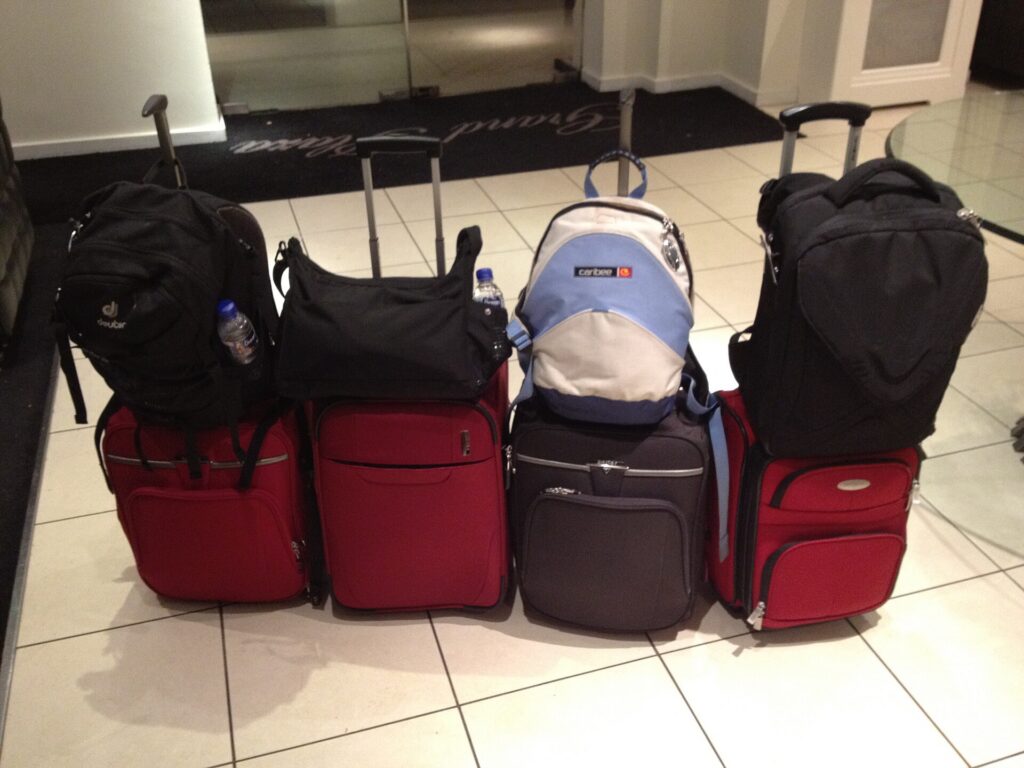
    Backpacks balanced on top of rolling carry-on suitcases in a hotel lobby
    A luggage sleeve or clip lets a pillow bag ride on your suitcase instead of in your hands (Photo: Kathryn Greenhill via Wikimedia Commons, CC BY-SA 2.0)

    Why use a bag for a travel pillow?

    • Hygiene. A pillow sits against your face and hair for hours. Keeping it in a bag between uses keeps it away from floors, trays and seat pockets.
    • Space. A compression case can shrink a memory foam pillow to a fraction of its size, which matters when you travel with one bag.
    • Free hands. A clip or luggage sleeve lets the pillow ride on your suitcase or backpack instead of being carried or worn around your neck through the terminal.
    • Protection. A bag keeps the cover from getting snagged, stained or wet.
    • Organization. Some bags have pockets for an eye mask, earplugs and a charging cable, so your whole sleep kit is in one place.

    Types of pillow bags and cases

    Compression cases for neck pillows

    Many memory foam neck pillows come with a case that squeezes the pillow down when you zip or cinch it closed, and has a clip or strap to attach it to a bag. These are the most practical option for neck pillows. Cabeau, for example, says the travel case included with its Evolution S3 pillow compresses the pillow to about a third of its size and has a quick-release clasp for attaching to luggage. If your pillow did not come with a case, or you lost it, check whether the maker sells a replacement before buying a generic one.

    Drawstring pouches and stuff sacks

    A simple drawstring pouch is all an inflatable pillow needs, because it packs flat once deflated. Stuff sacks, borrowed from camping gear, can also hold fiber or microbead pillows, compressing them a little as you stuff them in. They are light and cheap but offer little protection.

    Pillow cases designed for specific pillows

    Some bags are made to fit a particular pillow shape, such as wrap-style supports like the trtl Pillow. A shaped bag protects the pillow without crushing its internal support, and often includes a strap or clip.

    Pillow totes for full-size pillows

    If you bring your own bed pillow on road trips or to hotels, a zippered tote sized for a standard pillow keeps it clean and gives you handles to carry it. Totes are too big for most carry-on allowances, so they suit car travel and checked-bag trips better than tight flights.

    Blanket and pillow combos

    Some travel blankets fold into their own zippered case, which then works as a pillow. Others come with a separate pillow and a carry bag that has a luggage sleeve and backpack clip. These are useful on cold flights, long layovers, road trips and trains. They take up more room than a neck pillow alone.

    Packing cubes and compression bags

    Compression packing cubes are not made for pillows, but a larger cube can hold a small neck pillow or a compressible pillow inside your suitcase, keeping it separate from your clothes. Roll-down compression bags squeeze air out of soft items, and some compressible pillows are designed to be packed this way.

    Canvas storage bags

    Large zippered canvas storage bags, often sold for bedding, can hold several pillows at once for a family move, a long stay or a camping trip. They are too big for a flight, but useful in a car or for storage at home between trips.

    Bag typeBest forCarry-on friendly?StrengthsWatch out for
    Compression case with clipMemory foam neck pillowsYes, usually clipped to a bagShrinks pillow, frees handsClips can snap; foam needs time to re-expand
    Drawstring pouchInflatable pillowsYes, fits in a pocketTiny, lightLittle protection
    Shaped pillow caseWrap-style or specific pillowsYesFits properly, protects shapeOnly fits one pillow
    Pillow toteFull-size bed pillowsRarelyHandles, keeps a big pillow cleanBulky; best for car trips
    Blanket and pillow comboCold flights, layovers, trainsOften, if clipped or sleevedWarmth and support in oneTakes more room
    Packing cube or compression bagPillow packed inside a suitcaseInside your bagKeeps pillow separate and compactNot reachable mid-flight if packed deep
    Canvas storage bagSeveral pillows, family tripsNoHolds a lotCar or storage only
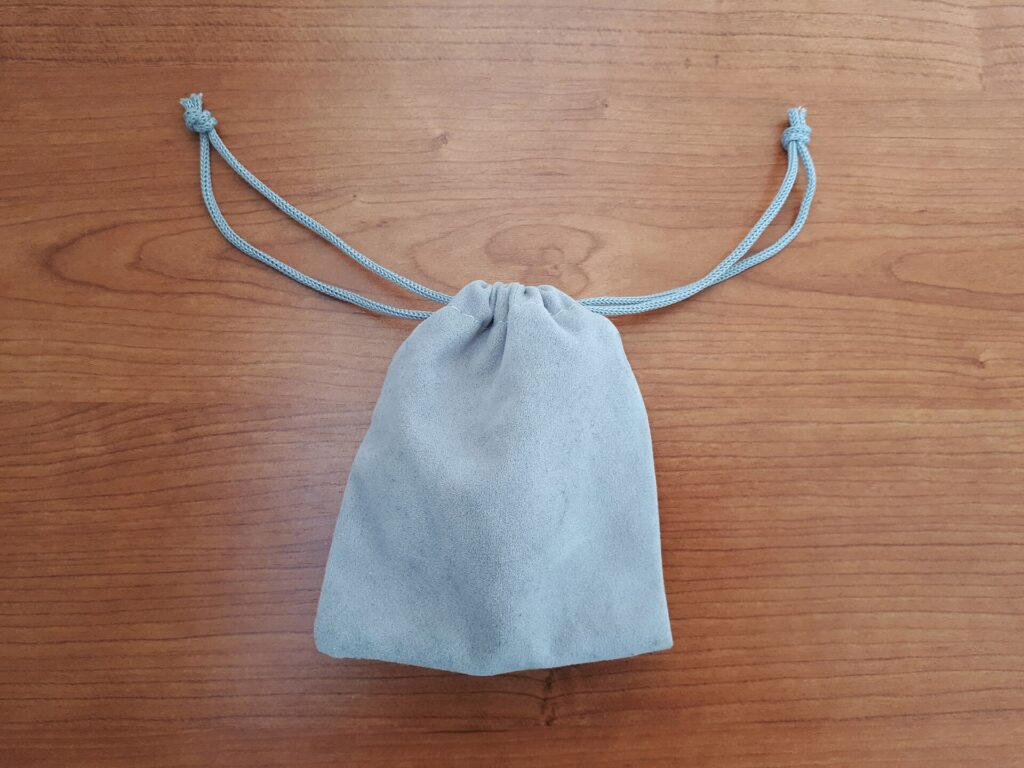
    A small gray fabric drawstring pouch on a plain background
    A simple drawstring pouch is all a deflated inflatable pillow needs (Photo: Fructibus via Wikimedia Commons, CC0)

    How to choose a pillow bag

    Match the bag to the pillow

    Measure your pillow, or better, try it in the bag. A case that is too small will not close without crushing the pillow; one that is too big lets it flop around and wastes space. If your pillow’s maker sells a case, it is the safest fit.

    Compression

    For memory foam, compression is the main reason to buy a case. Look for a zip or cinch that squeezes the pillow down evenly. Remember that foam needs a few minutes to regain its shape after it comes out, so take it out a little before you want to sleep.

    Attachment

    A strong clip, carabiner or strap lets you hang the bag from a backpack strap or suitcase handle. A luggage sleeve, which slides over the telescoping handle of a rolling suitcase, is even more secure. Check that the clip is sturdy; cheap plastic clips are the first thing to break. If a clip does break, a small carabiner is an easy fix.

    Material

    Water-resistant fabrics protect against spills and rain on the walk to the car. Mesh panels let a pillow breathe, which helps if you pack it slightly damp after cleaning the cover, although it is better to let it dry fully. Soft, brushed fabrics feel nicer if the bag doubles as a pillow cover.

    Washability

    A bag that goes in the washing machine or wipes clean is much easier to keep fresh. Check the care label.

    Extra pockets

    A small pocket for an eye mask, earplugs, lip balm and a charging cable makes the pillow bag into a sleep kit. Some bags include a pocket sized for a tracking tag, which can help if you are prone to leaving things behind.

    Visibility

    Pillows are among the items most often left behind on planes, in taxis and in hotel rooms. A bright color or a name tag makes the bag easier to spot, and a small luggage tag with your contact details gives it a chance of coming back.

    Bags from our original list

    The bags and cases below were featured in the original version of this guide. They cover different needs rather than a strict ranking. Designs, sizes and prices change, so check the current details from the maker or seller before you buy.

    EverSnug travel blanket and pillow with carry case

    EverSnug was featured for a combination travel blanket and pillow that packs into a carry bag with a luggage sleeve and backpack clip. It suits travelers who get cold on planes and at airports, and who want a blanket, a pillow and a bag in one item. Check the listing for the current size and washing instructions.

    Lincove pillow tote bag

    The Lincove pillow tote was featured as a zippered tote with handles sized for a standard bed pillow. It suits travelers who bring their own full-size pillow on road trips, family visits and hotel stays. It is too big for most carry-on allowances, so treat it as a car or checked-bag item.

    BlueHills travel blanket and pillow sets

    Two BlueHills items were on the list: a soft blanket and pillow set that folds into a compact bag with a backpack clip, and a similar set with a luggage belt that slides over a suitcase handle. They suit travelers who want warmth and a pillow in one package that attaches to their bags.

    Soft canvas storage bags with zipper

    These large zippered canvas bags, with handles and a label window, were featured for storing and carrying several pillows or bedding. They suit families, long stays and camping trips by car, and storage between trips.

    Gonex compression packing cubes

    Gonex compression packing cubes were featured as a flexible option. They are not made for pillows, but a larger cube can hold a small neck pillow or a foldable pillow inside your suitcase and keep it separate from clothes. They suit travelers who already pack with cubes.

    Cabeau pillow carrying case

    Cabeau’s carrying case for its neck pillows compresses the pillow and clips to your luggage, as described on the Evolution S3 product page. It suits owners of Cabeau memory foam pillows who want the case designed for them.

    Travel bag for trtl pillows

    The original list featured a third-party bag made to fit trtl pillows, with a strap and a clip for attaching to a backpack or carry-on. It suits owners of wrap-style trtl pillows who want to keep the pillow clean and attached to their bag. Check the listing for fit with your specific trtl model.

    Vera Bradley hanging travel organizer

    The Vera Bradley hanging organizer was included as a toiletry and accessory organizer that can also hold a small pillow or sleep accessories. It suits travelers who want one stylish bag for toiletries and a compact sleep kit. It is not a pillow bag as such, so check the size against your pillow.

    Compressible memory foam pillow with carry bag

    The list also included a compressible memory foam pillow sold with a washable cover and its own carry bag, suitable for camping and long flights. It suits travelers who want a pillow and bag designed together.

    A gray inflatable travel pillow lying on a woven mat
    Inflatable pillows fold flat, so they need the smallest bag of all (Photo: Vaughan McShane via Wikimedia Commons, CC BY-SA 2.0)

    Pillow bags and airline carry-on rules

    Airlines set their own carry-on rules, and they change. The principles are:

    • Most fares allow a carry-on bag and a personal item. Some basic and ultra-low-cost fares allow only the personal item.
    • Whether a pillow counts is up to the airline. Many airlines are relaxed about a neck pillow clipped to your bag or worn around your neck, but on strict fares, a bulky pillow bag or blanket set carried separately can be counted as an extra item.
    • Clipped items still add to the size. If your bag is right at the limit, a pillow clipped to the outside may push it over at a sizer.
    • When in doubt, pack it inside or wear it. A compressed neck pillow often fits inside a personal item.

    Check your airline’s official page before you fly, for example Air Canada carry-on baggage or Delta carry-on baggage. Our guide to Delta carry-on size rules goes through one airline in detail, and our luggage guide explains carry-on and personal-item allowances in general.

    At security, pillows and pillow bags are generally allowed. The TSA’s What Can I Bring? tool and CATSA’s What can I bring? page let you check items in the US and Canada. Put the pillow bag in a tray or leave it clipped to your bag, as the officers instruct.

    Packing strategies

    Carry-on only

    Use an inflatable pillow in a pouch, or a compressed memory foam pillow inside your personal item. Clip it outside only if the bag has room to spare under the airline’s limit. A travel backpack with an external strap system, like those in our guide to the Peak Design Travel Backpack 45L, can hold a clipped pillow securely.

    Rolling suitcase

    A pillow bag with a luggage sleeve slides over the suitcase handle and rides on top of the case. It is easy to grab as you board. On a rolling laptop bag, a small clipped case works the same way.

    Road trips

    Space is less of a problem in a car, so bring a full-size pillow in a tote for hotel nights and a neck pillow for passengers. Keep the pillow bag where passengers can reach it.

    Families

    Give each child a pillow bag in a different color, with a name tag, so nobody argues and nothing gets left behind. A canvas storage bag holds the whole family’s pillows in the car.

    Bringing your own pillow to a hotel

    Hotel pillows are a lottery. Some rooms have a choice of firm and soft pillows, some have a single pile of very soft ones, and people who sleep badly away from home often find that their own pillow is the fix. If that is you, a few habits help:

    • Ask first. Many hotels keep extra pillows, and some offer a choice of firmness on request. Ask at check-in before you haul your own across the country.
    • Use a bright pillowcase. Housekeeping strips white bedding every day, and a plain white pillow of your own can disappear with the laundry. A colored or patterned case makes yours obvious.
    • Pack it last and unpack it first. Keep the pillow in its tote until you are in the room, and put it back in the tote the night before you leave, so you do not forget it on the bed.
    • Consider a compressible pillow. Some pillows are designed to squash into a small bag and recover overnight, which is a good compromise for flights.

    If sleep quality decides your trip, choose the room carefully too. Our guide to hotel booking tips covers how to find a quieter room.

    Keeping pillow and bag clean

    • Keep the pillow in the bag whenever it is not in use, especially at security and in seat pockets.
    • Wash the pillow cover and the bag regularly, following the care labels, and let both dry fully before packing.
    • Air out memory foam after a trip before compressing it again.
    • Do not leave a pillow compressed for months. Store memory foam uncompressed at home so it keeps its shape.
    • Carry a spare cover on long trips, if one is available for your pillow.
    Passengers seated at a departure gate waiting to board a flight
    Take a memory foam pillow out of its case a few minutes before boarding so it can regain its shape (Photo: Wolfmann via Wikimedia Commons, CC BY-SA 4.0)

    Alternatives if you do not want another bag

    • Wear the pillow around your neck through the airport. It is not elegant, but it takes no bag space.
    • Use a pillowcase from home as a simple pouch; it is washable and weighs almost nothing.
    • Choose an inflatable that folds into a pocket.
    • Use a scarf or jacket as a pillow. A rolled fleece gives surprising support against a window.
    • Buy a pillow that includes a good case in the first place. Our guide to airplane pillows for neck support covers designs that come with compression cases.

    Building a complete sleep kit

    A pillow bag with a spare pocket is a natural home for the rest of your sleep kit: an eye mask, earplugs or noise-cancelling headphones, a small bottle of water bought after security, lip balm and a light layer. On long-haul flights, add compression socks if they suit you, and read our guide to sleeping on flights for routines that help. Keep it all in your personal item under the seat, not in the overhead bin, so you can reach it without standing up.

    Common mistakes

    • Buying a bag that does not fit the pillow. Try it, or buy the maker’s own case.
    • Relying on a flimsy clip. Replace a weak plastic clip with a small carabiner.
    • Clipping a bulky bag to a carry-on that is already at the limit. It may not fit the sizer.
    • Taking a full-size pillow tote on a strict budget flight. It will probably count as an extra item.
    • Never washing the bag. It touches the same surfaces the pillow would have.
    • Storing memory foam compressed. It can lose its shape over time.

    Frequently asked questions

    Can I use a regular bag to carry my travel pillow?

    Yes. Any clean bag or pouch works. Purpose-made cases compress the pillow and clip to your luggage, which saves space and frees your hands.

    Does a pillow bag count as a carry-on item?

    It depends on the airline and the fare. A neck pillow clipped to your bag is often fine, but strict fares may count a separate bag as an extra item. Check the airline’s rules before you fly.

    How do I clean a travel pillow bag?

    Most can be machine washed or wiped clean. Follow the care label and let the bag dry fully before packing.

    Will a pillow bag fit any travel pillow?

    No. Sizes and shapes vary a lot. Check the bag’s dimensions against your pillow, or buy the case made for your pillow.

    Can I bring a full-size pillow on a plane?

    Some airlines allow it and some count it toward your allowance. On strict fares, pack it in a checked bag or leave it at home. For road trips, a pillow tote is ideal.

    Is it bad to keep a memory foam pillow compressed?

    For a trip, it is fine. For long-term storage, keep memory foam uncompressed so it keeps its shape.

    How do I stop leaving my pillow behind?

    Use a brightly colored bag, add a name tag, and make a habit of checking your seat, the seat pocket and the floor before you leave the plane.

    With your pillow packed and clipped, the next step is the trip itself. Compare fares on our flight search, find a hotel on our hotel search, and for road trips where a full-size pillow comes along, book a car on our car rental search. Heading somewhere with a long flight and a scenic drive? Flights to Vancouver and our guide to things to do in Vancouver are a good place to start.

  • Top Travel Luggage Bags for Smooth and Stylish Air Travel

    Top Travel Luggage Bags for Smooth and Stylish Air Travel

    Your luggage is the piece of travel gear you touch the most and think about the least. It rides with you from the curb to the check-in desk, gets lifted into overhead bins, bounces over sidewalks and sits open on a hotel luggage rack for days. A good bag makes all of that quietly easy. A poor one breaks a wheel in the first terminal, blows past the airline’s size limit by an inch, or weighs so much empty that you hit the checked-bag limit before you pack your shoes. This guide explains how to choose travel luggage that actually fits the way you travel: carry-on versus checked, hardside versus softside, wheels, handles and weight, how airline size rules work, when a backpack beats a suitcase, and a short list of well-known suitcases and sets worth a look at different budgets. It is also the hub for our travel gear guides, so wherever a bag leads to a related question, from neck pillows to passport holders, you will find a link to the detailed guide.

    The short answer

    If you only buy one bag, make it a carry-on spinner that fits the strictest airline you fly regularly, with a light empty weight, a handle that locks firmly and wheels that roll quietly. Add a personal item, such as a backpack or tote that fits under the seat, for the things you need during the flight. Buy a checked case only if you regularly take trips longer than a week, travel with bulky gear or pack for a family. Choose hardside if you check bags often and want crush protection; choose softside if you want outside pockets, a little give for overstuffed bins and a lighter bag for its size. Before you buy anything, measure it against your airline’s published limits, including wheels and handles, and check those limits again before every trip, because they change.

    Start with how you travel, not with the bag

    Most luggage regret comes from buying for an imagined trip instead of the trips you actually take. Four questions settle most of the decision:

    • How long are your trips? Weekend and business trips of up to about five nights fit comfortably in a carry-on for most people. Trips of one to two weeks can still work carry-on only if you do laundry once; beyond that, or in cold weather, a checked bag starts to make sense.
    • Do you check bags or avoid it? If you want to walk off the plane and straight to the train, everything you own has to fit the carry-on and personal item limits. If you check bags anyway, you can choose a lighter, cheaper cabin bag and put the bulk in the hold.
    • What surfaces will you cross? Smooth airport floors and hotel corridors favor four-wheel spinners. Cobblestones, gravel, stairs, ferries and old train stations favor two-wheel cases or backpacks.
    • Which airlines do you fly? A bag that fits a major North American carrier’s carry-on limit may be too big for a European budget airline, and some basic fares only include a small under-seat item. Size the bag for the strictest airline you use often.

    Answer those honestly and the rest of this guide becomes a series of easy trade-offs rather than a wall of options.

    How airline size and weight rules work

    Every airline sets its own limits, and they change often enough that any number printed in a blog post can go out of date. The principles, though, are stable:

    • There are usually two cabin allowances. A carry-on for the overhead bin and a smaller personal item that must fit under the seat in front of you. Some basic or ultra-low-cost fares include only the personal item, and charge for the overhead bag.
    • Limits include wheels and handles. A case advertised as “22 inches” may measure more once you count the wheels, the handle housing and a full front pocket. Measure the real outside dimensions yourself.
    • Many large North American airlines publish a carry-on limit close to 22 x 14 x 9 inches (roughly 56 x 36 x 23 cm), while many European and low-cost carriers are smaller or add a weight limit for cabin bags. Treat that as a starting point only.
    • Checked bags have size and weight limits too. Economy checked bags are commonly limited to around 23 kg (50 lb), with fees or refusal beyond that, and a combined length plus width plus height limit. Premium cabins and elite status often allow more.
    • Gate agents have the final say. On a full flight, even a compliant carry-on may be gate-checked if the bins fill up. Keep medications, documents, chargers and valuables in your personal item so they stay with you.

    Check the official page for your airline before you buy a bag and again before you fly. Useful starting points: Air Canada carry-on baggage, WestJet carry-on baggage, Delta carry-on baggage and American Airlines carry-on bags. If you fly budget carriers in Europe, read their cabin bag pages closely, since the free allowance is often a small under-seat bag. Our guide to Delta carry-on size rules walks through one airline in detail.

    Overhead luggage bins in the cabin of a widebody airliner
    Carry-on limits are set by what fits in the bins, and those bins are smaller on regional jets (Photo: Andrey Filippov 安德烈 from Moscow, Russia via Wikimedia Commons, CC BY 2.0)

    Bag types compared

    There is no single best bag, only the best bag for a trip. This table sums up the main options and who each one suits.

    Bag typeBest forStrengthsWatch out for
    Hardside carry-on spinnerShort trips, airport-heavy travel, businessProtects contents, glides on smooth floors, easy to wipe cleanNo outside pockets, clamshell needs floor space, shell scuffs
    Softside carry-onFrequent flyers, packers who like pocketsOutside pockets, flexes into tight bins, often expandableLess crush protection, fabric can stain
    Travel backpackMulti-city trips, trains, stairs, cobblestonesHands free, goes anywhere, fits many carry-on limitsWeight sits on your back; hard to organize without cubes
    Duffel or duffel-backpackRoad trips, sports and outdoor gearHuge opening, squashes into car trunks and binsLittle structure; heavy loads are tiring to carry
    Large checked spinnerLong trips, cold weather, familiesHolds a lot, rolls easily when heavyEasy to overpack past the weight limit
    Under-seat bag or rolling laptop bagPersonal item, work tripsKeeps essentials and tech at your seatMust fit the personal-item limit, which is small

    Hardside or softside?

    Hardside

    Hardside cases are made from plastics such as polycarbonate and ABS, or from aluminum at the premium end. Polycarbonate is generally the better plastic: it flexes under impact and springs back, where cheaper ABS shells are lighter but more likely to crack. Aluminum cases are very tough and look great, but they are heavy, dent visibly and tend to be expensive. Hardside cases protect fragile items well, shrug off rain and wipe clean after a trip. The trade-offs are that most open like a clamshell, which needs space on a small hotel floor, they rarely have outside pockets, and the shell will scuff. Choose a textured or matte finish if scuffs bother you.

    Softside

    Softside cases use woven nylon or polyester fabrics. Higher-denier ballistic nylon resists abrasion best. Fabric bags usually have front pockets for a jacket, a book or a quart bag of liquids, they often expand with an extra zipper, and they compress slightly to squeeze into a full overhead bin. They hide wear well and are easy to repair. They offer less protection from crushing and can absorb water in heavy rain, so pack electronics in the middle and consider a light rain cover if you walk a lot outdoors.

    If you mostly carry on, softside is often the more practical choice. If you mostly check bags and worry about baggage handling, hardside earns its place.

    Wheels, handles and zippers

    These three parts fail first, so they deserve the most attention in the store.

    • Spinner wheels (four wheels that rotate in every direction) are easiest in terminals and let you push the case beside you without carrying weight on your wrist. Double spinner wheels roll more smoothly than single ones. They are less happy on rough ground and can roll away on a sloped platform or a moving train.
    • Two-wheel inline cases are pulled behind you. They handle curbs and cobbles better, the wheels are recessed and less likely to snap off, and you gain a little packing space inside. They put more strain on your wrist over long distances.
    • Handles should lock firmly at more than one height and not wobble. Tall travelers should check the fully extended height. Side and top carry handles matter every time you lift the bag into a bin or a car trunk.
    • Zippers should be large, run smoothly around corners and have sturdy pulls. A split zipper is one of the most common ways a bag fails mid-trip.

    If you can, test a bag in person: extend the handle, roll it in a circle, lift it by each handle and open it on the floor. Thirty seconds tells you more than a long product description.

    Weight: the spec people ignore

    Empty weight matters twice. On airlines with cabin bag weight limits, every kilogram the bag weighs is a kilogram you cannot pack. In the hold, a heavy empty case pushes you toward the checked weight limit, where fees get steep. A light bag is also simply easier to lift into an overhead bin, carry up station stairs and haul into a hotel without an elevator. When two bags seem equal, choose the lighter one. A cheap luggage scale is worth packing on long trips, since it lets you check the weight before you reach the airport.

    Illustration of a suitcase being weighed at an airport check-in desk
    A heavy empty case eats into your checked-bag allowance before you pack anything (Photo: Familydestinationsguide.com Images via Wikimedia Commons, CC BY 2.0)

    Suitcase or backpack?

    For many trips, the right main bag is not a suitcase at all. A travel backpack with a clamshell opening packs like a suitcase but carries on your back, which is a real advantage on multi-city trips with trains, ferries, stairs and old streets. Our guide to the Peak Design Travel Backpack 45L covers one of the best-known carry-on travel backpacks, plus how to size and pack any travel pack. If you are heading into crowded cities, look at anti-theft backpacks, which add locking zippers, hidden pockets and cut-resistant materials. For trips built around trails rather than terminals, a proper frame pack with a hip belt carries weight much better; see our guide to hiking backpacks.

    Business travelers often split the difference: a carry-on spinner for clothes plus a laptop bag as the personal item. If your shoulders object to a heavy tech bag, a rolling laptop bag can slide over the handle of your suitcase and roll through the terminal with it.

    Suitcases and sets worth a look

    The bags below are well-known models at different price points. They are starting points, not a ranked test: sizes, weights, colors and prices change between versions and retailers, so check the manufacturer’s current specifications against your airline’s limits before you buy.

    Budget carry-on: Wrangler 22-inch hardside spinner

    Wrangler’s hardside spinner carry-on is an affordable choice for occasional travelers who want a simple four-wheel case in the classic 22-inch carry-on size. It suits weekend trips and people who fly a few times a year. At this size, confirm the full outside dimensions against your airline’s limit, since 22-inch cases sit right at the edge of many carry-on allowances.

    Budget basics: Amazon Basics hardside carry-on and checked spinners

    Amazon Basics sells plain hardside spinners in carry-on and checked sizes, including a compact 21-inch expandable case and a larger 26-inch checked bag. They are no-frills options for travelers who fly now and then, want a matching carry-on and checked pair, and would rather spend their budget on the trip. Keep in mind that an expandable carry-on may no longer fit the airline’s limit once expanded.

    Compact carry-on: SwissGear 7366 hardside spinner

    The SwissGear 7366 is a compact 19-inch hardside spinner. A smaller case like this is a smart choice if you fly airlines with tight cabin limits, travel for short trips, or want a case that fits more easily in small overhead bins on regional jets. It holds less than a full-size carry-on, so it rewards light packers.

    Frequent-flyer softside: Travelpro Platinum Elite carry-on

    Travelpro has long been associated with flight crews, and the Platinum Elite is its well-known softside line for frequent travelers. A softside carry-on of this kind suits business travelers and anyone who likes outside pockets for quick access. Check which size of the carry-on fits the airlines you use, since the line comes in more than one cabin size.

    Premium spinner: Briggs & Riley 22-inch spinner

    Briggs & Riley sits at the premium end and is known for durable softside luggage backed by a lifetime guarantee. A 22-inch spinner from the brand is an investment for people who travel often enough that a bag lasting many years outweighs a much higher price. Read the current guarantee terms on the manufacturer’s site before you buy, so you know what is covered.

    Stylish set: Delsey Paris Chatelet two-piece set

    Delsey’s Chatelet line pairs hardside cases with vintage-inspired styling, and the two-piece set gives you a carry-on and a larger checked case that match. It suits travelers who care about how their luggage looks as much as how it rolls, and couples who want one cabin bag and one checked bag for longer trips.

    Value sets: five-piece expandable luggage sets

    Multi-piece sets bundle several sizes, often from a small carry-on up to a large checked spinner, at a price per bag well below buying separately. They are good value for families or anyone starting from nothing. The catch is that you may never use every size, sets often use lighter materials, and the “carry-on” in a set is not always within the airline’s limits. Check the dimensions of each piece, not just the set’s description.

    Build a system around the main bag

    A suitcase is only half of a comfortable trip. The small things you pack in and around it decide how the journey feels. Our travel gear guides go deeper on each of these:

    Tech and work

    Comfort in the air

    Clothes and shoes

    Documents and valuables

    Health and personal care

    Packing a bag so it works

    • Use packing cubes. Cubes keep a suitcase or backpack organized, compress soft clothing and make unpacking at a hotel a two-minute job.
    • Roll soft items, fold structured ones. Rolled T-shirts and knits take less space; shirts and blazers crease less when folded flat.
    • Heavy items at the wheel end. Shoes and toiletry bags near the wheels keep a rolling case stable and stop it tipping forward.
    • Liquids where you can reach them. Cabin liquids generally have to fit the security rules for your departure airport. In the United States, see the TSA liquids rule; in Canada, check CATSA’s what-can-I-bring page. Keep the bag of liquids in an outside pocket or at the top of your personal item.
    • Leave room. A bag packed to the zipper on the way out has nowhere to put anything you buy. Aim for about 80 percent full.
    • Keep a day in the cabin. If you check a bag, put a change of clothes, medication and chargers in your carry-on in case the checked bag is delayed.

    Locks, security and smart luggage

    If you lock a checked bag when flying to or within the United States, use a lock that security officers can open with a master key, usually labeled as TSA-accepted, so the lock is not cut if the bag needs inspection. The TSA’s What Can I Bring? tool covers specific items, and CATSA publishes the equivalent guidance for Canadian airports. A lock is mainly a deterrent against casual opening; for real valuables, the answer is to keep them in the cabin with you.

    So-called smart luggage with built-in power banks is a special case. Lithium batteries are regulated in aviation: spare lithium batteries generally must travel in the cabin, not in checked bags, and many airlines require a smart bag’s battery to be removable. The FAA’s PackSafe guidance on lithium batteries explains the rules. If a bag’s battery cannot be removed, you may not be able to check it or even gate-check it, so read the airline’s policy before buying. A small Bluetooth tracker tucked inside a pocket is a simpler way to keep tabs on a checked bag.

    An airport baggage claim carousel in an arrivals hall
    A bright tag or strap makes your bag easy to spot and harder to take by mistake (Photo: Larry D. Moore via Wikimedia Commons, CC BY 4.0)

    If your bag is delayed, damaged or lost

    • Report it before you leave the airport. Go to the airline’s baggage service desk, file a report and keep the reference number.
    • Photograph your bag and its contents before trips. Photos make a claim far easier, and a picture helps staff identify the bag.
    • Keep receipts for essentials you buy while waiting for a delayed bag; airlines often reimburse reasonable expenses within their policy.
    • Know your rights. For flights to, from and within Canada, the Air Passenger Protection Regulations set out airline obligations, including for baggage. International itineraries may also fall under international conventions with their own time limits for claims, so file promptly.
    • Label inside and out. A tag with your phone number and email outside, and the same details on a card inside, helps a bag find its way back if the outer tag is torn off.

    Care, repairs and warranties

    Luggage lasts longer with a little care. Empty and air out softside bags before storing them, wipe hardside shells after a trip, and store bags somewhere dry. Push the handle fully down before lifting by the side handle, and do not sit on a spinner. Check wheels and zippers a week before a trip, not the night before. Many manufacturers sell replacement wheels, handles and zipper pulls, and a local luggage repair shop can often fix a broken wheel for much less than a new bag. Warranties vary a lot: some cover only manufacturing defects, while some premium brands also cover damage from airline handling. Register the bag if the brand asks you to, keep the receipt, and read the warranty terms before you choose between two similar bags.

    Common luggage mistakes

    • Buying the biggest carry-on on the shelf. The biggest case that technically fits a North American airline’s limit may not fit a regional jet’s bins or a European carrier’s rules.
    • Ignoring empty weight. A heavy case eats into your weight allowance before you pack anything.
    • Expanding a carry-on and still carrying it on. Most expandable carry-ons exceed the limit once expanded.
    • Checking valuables. Laptops, cameras, jewelry, medication, passports and spare batteries belong in the cabin.
    • Choosing a black bag with no marking. Every third bag on the carousel is black. A bright tag or strap saves time and prevents mix-ups.
    • Skipping the personal item. A good under-seat bag holds your flight essentials and keeps the carry-on’s contents in reserve if it gets gate-checked.
    • Buying a set you do not need. Three bags at a bargain price is not a bargain if two of them live in the closet.

    Frequently asked questions

    What size luggage is allowed as a carry-on?

    It depends on the airline and the fare. Many large North American airlines publish a limit close to 22 x 14 x 9 inches including wheels and handles, while many European and budget airlines are smaller or include only an under-seat bag on basic fares. Always check the airline’s official page before you fly.

    Is hardside or softside luggage better?

    Neither is better for everyone. Hardside protects contents and resists rain; softside is flexible, has outside pockets and often weighs less for its size. Frequent checkers tend to prefer hardside, carry-on travelers often prefer softside.

    Are spinner wheels better than two wheels?

    Spinners are easier on smooth floors and let you push the bag beside you. Two-wheel cases handle rough ground and curbs better and their wheels break less often. Choose based on where you will be rolling.

    Should I buy a luggage set or individual pieces?

    A set is good value if you will use every piece, such as a family that needs several sizes. If you mainly want one carry-on and one checked bag, buying the two pieces you want lets you choose quality and size precisely.

    How long should good luggage last?

    It depends heavily on how often you fly and how much you check bags. Quality construction, replaceable wheels and a good warranty all extend a bag’s life, and basic care helps any bag last longer.

    Can I bring a backpack as a personal item?

    Usually yes, as long as it fits the airline’s personal-item dimensions and goes under the seat in front of you. A large travel backpack usually counts as the carry-on, not the personal item.

    Do I need a TSA-accepted lock?

    If you lock checked bags on flights in or to the United States, a TSA-accepted lock lets officers inspect the bag without cutting the lock. It is a deterrent, not real security, so keep valuables in the cabin.

    Is smart luggage allowed on planes?

    Often, but many airlines require the lithium battery to be removable, and spare batteries generally travel in the cabin. Check the airline’s policy and the FAA’s PackSafe guidance before you buy.

    Once the bag is sorted, the trip is the fun part. Compare fares on our flight search, including flexible dates that can make room in the budget for better gear, find a place to stay on our hotel search, and pick up a car with room for your luggage on our car rental search. Allow enough time for bag drop with our guide to airport arrival times for international flights, and if you are testing a new carry-on on a city break, a trip to Paris with our guide to things to do in Paris is a fine place to start.