
Booking a hotel for a family trip is a different problem from booking one for yourself. You need a room that legally and comfortably holds everyone, in a location that keeps the daily logistics short, at a price that still makes sense once parking, breakfast and the resort fee are added. And you usually need it during the exact weeks every other family wants it, because school calendars decide when you can travel. That is why timing matters more for families than for almost anyone else. Book a family room at the right moment and you get the layout you want at a fair rate; leave it too late in a busy week and you are choosing between two rooms, a sofa bed, or a hotel forty minutes from where you want to be. This guide explains when to book for each kind of family trip, why those windows work, how to protect yourself if prices drop after you book, what to look for in the room itself, and the mistakes that cost families the most.
The short answer
For most family trips, book the hotel as soon as your dates are fixed, on a refundable rate, and then keep watching the price. As a rule of thumb: one to three months ahead for a domestic trip outside the school holidays, three to six months ahead for an international trip, and four to eight months ahead for school holidays such as Christmas, March Break or spring break, and the peak of summer, especially if you need a suite, connecting rooms or a specific resort. Those ranges are not magic numbers; they are the point at which, in most destinations, the supply of family-sized rooms starts to run out faster than the price rises. Family rooms are the scarce part of any hotel’s inventory, and scarcity, more than the calendar, is what you are racing. Start comparing on our hotel search, and read our pillar guide to hotel booking tips for the fundamentals that apply to every stay.
Why timing matters more for families
Hotel pricing responds to demand. When a hotel expects to fill, its rates rise and its cheaper room types sell out first; when it expects empty rooms, it discounts. For a family, the bigger risk is that the room types that fit you disappear.
- Family inventory is small. A typical city hotel might have hundreds of rooms with one king or two queens, and only a handful of suites, family rooms or connecting pairs. Those go first in any busy week.
- Occupancy limits are real. Most standard rooms are rated for a maximum number of guests, often four, set by fire codes and the hotel’s own policy. A family of five cannot simply squeeze into a double queen at many hotels, and you may be refused a rollaway bed or a crib if the room is already at its limit.
- Your dates are not flexible. Families travel when school is out, which means everyone travels at once. The best tool most travelers have for saving money, shifting the dates, is the one you have least of.
- Location matters more. A cheap hotel far from the attractions costs a single traveler a longer ride. It costs a family a daily car, parking, extra meals out, and tired children at the end of every day.
The practical consequence is that the family traveler’s goal is to lock in the right room early, at a price you can cancel, rather than to gamble on a last-minute bargain. Our guide to last-minute hotel booking explains when waiting can work; it rarely works for a family of five in July.
When to book, by type of family trip
Domestic trips outside school holidays
A long weekend in a nearby city, a trip to visit relatives in October, a few days at a lake in late spring: for these, one to three months ahead is usually plenty. Demand is moderate, hotels have family rooms to spare, and prices tend to be stable. The exception is any weekend with a big local event, such as a marathon, a major concert, a hockey playoff run or a university graduation, which can fill a mid-size city’s hotels months ahead. Before you settle on dates, check the destination’s event calendar; our Toronto events page and the other city event listings show what is on sale.
International trips
For an overseas trip, book the hotel three to six months ahead, and at the same time as, or shortly after, the flights. International family trips have more moving parts: flights that set your arrival and departure days, passports and entry documents, and hotels in cities where family rooms are genuinely rare. In much of Europe, for example, older hotels have small rooms and few that sleep more than three, so a family of four or five may need connecting rooms, an apartment-hotel or two separate rooms, all of which are limited. Our guide to booking international flights covers the flight side of the plan.
School holidays and peak weeks
Christmas and New Year, March Break in Canada, spring break in the United States, the Easter weekend, the long summer holiday, and US Thanksgiving are the weeks when family demand concentrates. For these, four to eight months ahead is the safer window, and further ahead still if you need something specific: a two-bedroom suite at a beach resort, a family room at a hotel inside a theme park, a ski-in lodge at Christmas, or a cabin-style hotel in a national park. These are the stays where the right room, not the price, is the real constraint.
Theme parks, beaches and national parks
Destinations built around families behave differently from ordinary cities. In Orlando, hotels near the parks and along International Drive price around school calendars on both sides of the border, so the weeks when Canadian and American breaks overlap are the busiest of all. Beach resorts in places like the Cancun Hotel Zone peak from Christmas to Easter, when northern families escape the winter. National park lodges, including those in and around Banff, Jasper and the big American parks, have limited rooms and a short summer season, and the best-located ones can sell out close to a year ahead. For any of these, book as early as your plans allow.

Booking-window cheat sheet
| Trip type | Book the hotel | Why |
|---|---|---|
| Domestic city trip, off-peak | 1 to 3 months ahead | Plenty of family rooms; prices usually stable |
| Domestic trip on a big-event weekend | As soon as dates are set | Concerts, marathons and playoff games fill hotels early |
| International trip | 3 to 6 months ahead | Family rooms are scarcer abroad; flights set the dates |
| Christmas, March Break, spring break, summer peak | 4 to 8 months ahead | Every family travels at once; suites and connecting rooms go first |
| Theme-park or beach resort in peak season | 6 to 10 months ahead | Family-oriented inventory sells out around school calendars |
| National park lodge in summer | As early as bookings open | Few rooms, short season, high demand |
| Shoulder season, flexible dates | 2 to 6 weeks ahead can work | Lower demand leaves room to wait, if you have a backup |
The strategy that beats timing: book refundable, then watch
No one can reliably predict the lowest price for a given hotel on a given night. What you can do is take the price risk off the table. The approach that works best for families is simple:
- Book early on a refundable rate. As soon as your dates are firm, reserve the room type you actually need on a rate with free cancellation. You have now secured the inventory, which is the scarce thing.
- Note the cancellation deadline. Free cancellation usually ends a set number of days or hours before arrival. Put that date in your calendar, along with the time zone of the hotel.
- Keep checking the price. Every couple of weeks, and more often in the last month, search the same dates, same room type and same terms. If the rate drops meaningfully, book the cheaper rate first, confirm it, and then cancel the original.
- Consider switching to prepaid only close to the trip. Non-refundable rates are cheaper for a reason. They make sense once your plans are truly fixed, such as a week or two out, if the saving is worth the risk. For a family, where a sick child can cancel a trip overnight, the flexibility is often worth the premium all the way to arrival.
This approach turns timing into a one-way bet: if prices rise, you are protected; if they fall, you rebook. The only way to lose is to miss the cancellation deadline. Our guide to finding the best hotel deals online goes deeper on comparing rates and reading rate conditions.
Choosing the right room for your family
Price is only half the booking. The other half is making sure the room works for your family on the third night, when everyone is tired.
Room types, from smallest to largest
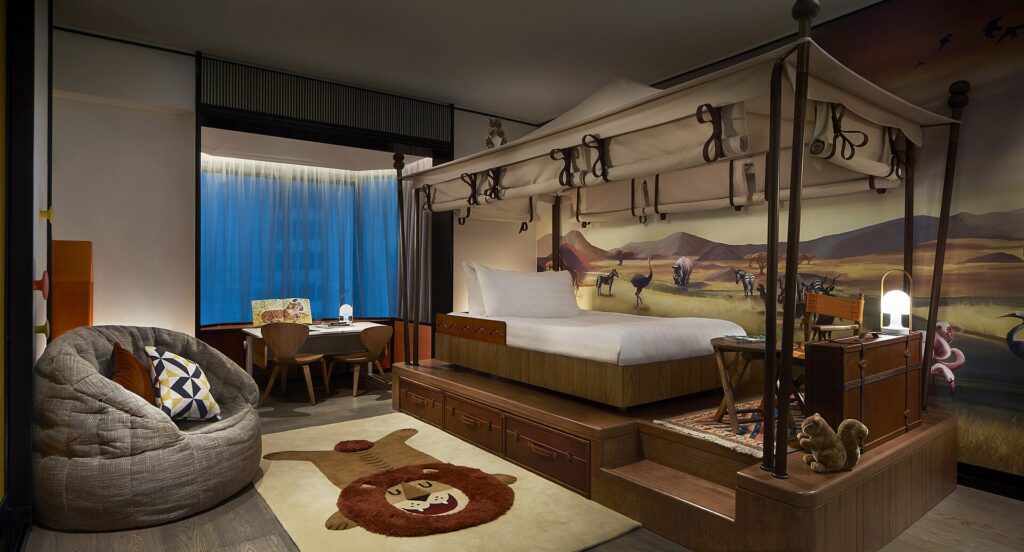
- Two queens or two doubles. The standard family room in North America. Fine for two adults and two young children. Check the maximum occupancy before booking for a family of five.
- King with a sofa bed. Common in newer hotels. Works for one child, less well for two, and sofa beds vary enormously in comfort.
- Family room or quad. Some hotels, especially in Europe and at resorts, offer rooms with a double plus bunks or singles. Search specifically for them.
- Connecting rooms. Two rooms with an internal door between them. Connecting rooms share a door; adjoining rooms may only mean next to each other, so use the word “connecting” when you ask. Most hotels treat connecting rooms as a request rather than a guarantee unless you book a specific connecting-room product, so call the hotel after booking.
- Suites. A separate bedroom, often with a sofa bed in the living area and a door that lets parents stay up after the children are asleep. Worth paying for on longer stays.
- Apartment-hotels and extended-stay hotels. Rooms with a kitchen or kitchenette, often a separate bedroom and sometimes laundry. For a week or more, being able to make breakfast and pack lunches can offset a higher nightly rate.
Questions to answer before you book
- What is the maximum occupancy, and do children count? Policies differ; some count infants, some do not.
- Do kids stay free? Many chains let children under a certain age share their parents’ room at no extra charge, but the age cut-off varies by brand and hotel, and it may not include breakfast.
- Is a crib or rollaway available, and is there a charge? Request it at booking and confirm it a few days before arrival; hotels have a limited number.
- Is breakfast included? For a family of four eating out every morning, an included breakfast can be worth far more than a small difference in the nightly rate.
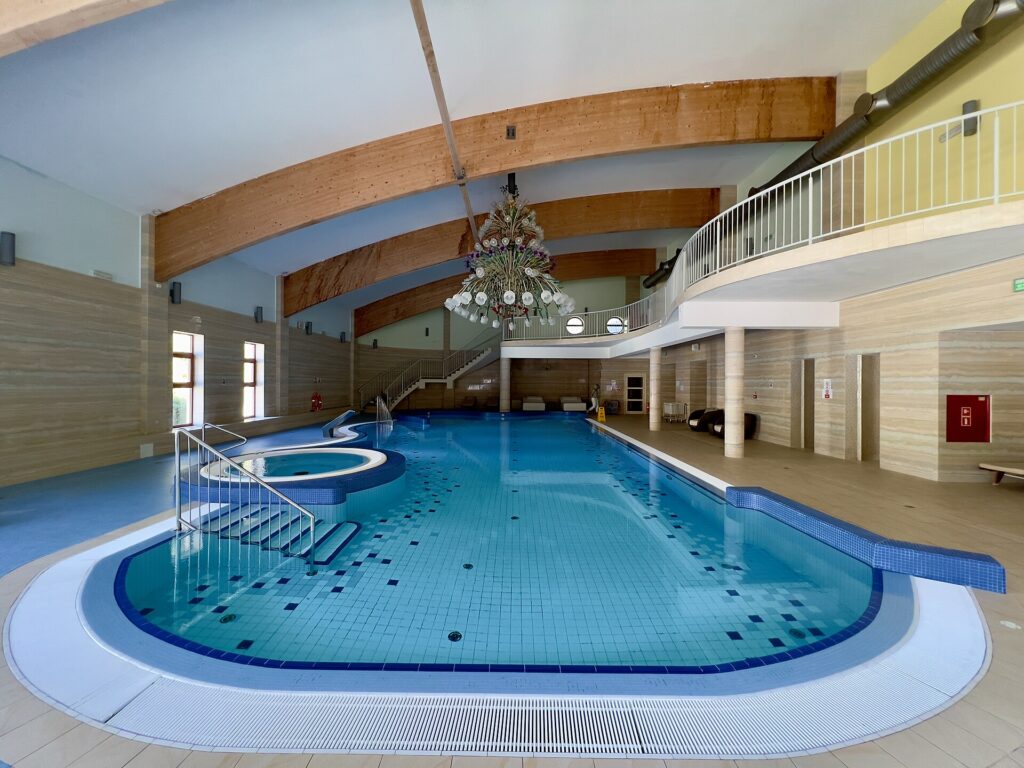
- Is there a pool, and when is it open? Indoor pools matter in winter; outdoor pools may close for the season or have limited hours. Some pools close for maintenance, so check recent guest reviews.
- Is parking included, and is it on site? Downtown hotels often charge a nightly parking fee, sometimes valet-only, that can change the total significantly.
Where to stay: location beats a lower rate
Families feel distance more than anyone. A hotel a short walk from the aquarium, the beach or the park entrance means naps can happen in the room, forgotten items can be retrieved, and a tired four-year-old is ten minutes from bed, not forty. When you compare hotels, compare the whole cost of the location, not just the nightly rate:
- Transport. A cheaper hotel that requires a rental car, parking at the attractions and fuel every day may cost more overall. If you do need a car, our family car rental guide covers car seats and vehicle size, and our car rental search compares pickup locations.
- Time. An extra hour of driving each day is an hour less at the destination, and families have fewer productive hours to begin with.
- Food. A hotel near supermarkets and family restaurants, or with a kitchenette, saves money over a week. A resort with only on-site restaurants can be convenient but expensive.
Traveling within Canada? Our guide to hotel booking in Canada covers provincial taxes, seasons and city-by-city advice. Use the map view when you search and plot the three or four places you will visit most. The best-value hotel is often the one in the middle of them, not the cheapest one on the list. Our city guides, such as things to do in Toronto, explain which neighborhoods suit families.
The real cost: fees, taxes and extras
The advertised nightly rate is rarely what a family pays. Before you compare two hotels, bring both to the same basis: the total for your dates, for your number of guests, including everything that is mandatory.
- Taxes. Accommodation taxes vary by country, province, state and city, and some are added only at checkout. The total at the final booking step is the figure to compare.
- Resort and destination fees. Common in resort areas, Las Vegas, Orlando and many beach destinations. They are charged per room, per night, and may cover things like pool access, Wi-Fi or a shuttle whether you use them or not. Regulators in both the United States and Canada have moved against hiding mandatory fees from the advertised price, so the total should be shown before you pay; if it is not, treat that as a warning sign.
- Parking. Nightly parking at a downtown hotel can be a meaningful share of the room rate.
- Extra-person charges. Some hotels charge per additional adult, and some count teenagers as adults.
- Breakfast. If it is not included, price four breakfasts a day into the comparison.
- Deposits and holds. Hotels usually place a hold on a card for incidentals at check-in. It is released after checkout, but it reduces your available credit during the trip.
Travel off-peak when you can
The single biggest saving available to families is traveling just outside the peak. Hotels in family destinations price their busiest weeks at a premium and discount the weeks on either side. If your children’s schools and your work allow any flexibility at all, these are the windows to look at:
- The first week or two after school ends, or the last week of August, rather than the middle of summer, in many destinations.
- The week after a major holiday. Early January after New Year is traditionally quiet in cities and at many resorts.
- Shoulder seasons. Late spring and early fall are often the sweet spot for weather and prices in North America and Europe.
- Sunday to Thursday in leisure destinations. Beach towns, theme-park areas and lake resorts are busiest on weekends.
- Weekends in business districts. Downtown hotels that fill with business travelers during the week often drop their rates on Friday and Saturday nights, which suits a family city break; our business travel hotels guide explains why.
Your destination’s school calendar matters as well as your own. March Break in Ontario, spring break in the US states, and school holidays in Europe fall on different dates, and a destination is at its busiest when several of them overlap. For flights, our guide to the best time to book cheap flights and hotels covers fare timing, and city guides like the best time to fly to Toronto explain each destination’s seasons.

Plan the whole trip together
A family hotel booking does not exist on its own. The flight sets the arrival and departure days, the arrival time decides whether you need an early check-in or a late checkout, and your transport plan decides whether you need hotel parking. Book in this order:
- Fix the dates around school calendars, work and any event you are traveling for.
- Price the flights for those dates and a day or two either side; a cheaper flight a day earlier may be worth an extra hotel night. Search on our flight search.
- Reserve the hotel on a refundable rate for the dates the flights support.
- Decide on ground transport. If you need a car, compare it on our car rental search and make sure the hotel’s parking works. If not, check the hotel’s distance from transit and the airport.
- Book the tickets for anything that sells out, such as theme parks, timed-entry attractions and shows.
- Revisit the hotel price periodically until the cancellation deadline.
Standard check-in is usually mid-afternoon, so a family landing on a morning flight faces hours in a lobby. Ask about early check-in when you book, or, after an overnight flight, book the previous night so the room is ready when you arrive.
Documents and practical details for traveling with children
Hotels do not usually ask about the relationship between adults and children, but borders and airlines can. If one parent is traveling alone with a child, or grandparents are traveling with grandchildren, carry a consent letter from the absent parent or parents; the Government of Canada provides a recommended consent letter for children traveling abroad and general guidance on traveling with children. Every child needs their own passport for international travel. Visitors flying to Canada from visa-exempt countries other than the United States generally need an Electronic Travel Authorization, and Americans traveling abroad should check the State Department’s travel pages. Entry rules change, so confirm the current requirements for every traveler before you book non-refundable elements.
Common mistakes families make
Booking a room that does not fit
Booking a standard room for five and hoping the hotel will add a bed is a gamble; many will refuse. Check the maximum occupancy and book the room type that officially fits everyone.
Waiting for a last-minute deal in peak season
Last-minute discounts exist when hotels have empty rooms. In a school-holiday week, family rooms rarely go empty. The wait is more likely to cost you the room than save you money.
Locking into a non-refundable rate too early
A non-refundable rate booked eight months out removes your ability to rebook if the price falls and leaves you exposed if plans change. For families, flexibility is usually worth paying for until close to the trip.
Comparing nightly rates instead of totals
A hotel with a lower headline rate and a nightly resort fee, parking charge and no breakfast can easily cost more than a slightly higher rate with those things included.
Not confirming requests
Cribs, connecting rooms, early check-in and accessible rooms are requests until the hotel confirms them. Call or message the hotel directly a few days before arrival.
Frequently asked questions
How far in advance should I book a hotel for a family vacation?
As a rule of thumb, one to three months ahead for a domestic off-peak trip, three to six months for an international trip, and four to eight months for school holidays and peak summer. Book as soon as your dates are firm if you need a suite, connecting rooms or a specific resort.
Is it cheaper to book a hotel early or at the last minute?
It depends on demand. Last-minute rates can be lower when a hotel has empty rooms, but in the weeks families travel, family rooms rarely go unsold. Booking early on a refundable rate and rebooking if the price drops gives you most of the upside with little risk.
Can five people stay in one hotel room?
Sometimes. Many standard rooms are limited to four guests, and some hotels count infants. Look for family rooms, suites or apartment-style hotels, or book connecting rooms.
How do I make sure we get connecting rooms?
Book both rooms in one reservation if the hotel allows it, choose a connecting-room product where offered, and call the hotel after booking to confirm. Otherwise, treat connecting rooms as a request rather than a guarantee.
Should I book a refundable or non-refundable rate?
For most families, refundable until close to the trip. Children get sick and plans change, and a refundable rate also lets you rebook if the price falls.
Are suites worth it for families?
On stays of three nights or more, often yes. A separate bedroom lets parents stay up after children sleep, and many suites include a sofa bed, a fridge and more space for luggage.
Ready to plan? Compare family-friendly stays on our hotel search, check fares for your school-holiday dates on our flight search, and if you need wheels, price them on our car rental search. For a family favorite, start with hotels in Orlando or hotels in Toronto.
Keep planning with TicketScanner
- Hotel booking tips: the complete guide
- How to find the best hotel deals online
- Last-minute hotel booking: when waiting works
- Hotel booking in Canada: 7 hacks
- The business travel hotels guide
- Compare hotels — filter for family rooms and free cancellation
- Family car rentals: what to book
- Orlando hotels — book early for school breaks
- Things to do in Toronto
Leave a Reply